Vibe Ride is the sixth release of Adam Rudolph's Hu Vibrational project and marks his 60th release as a leader or co-leader. Comes with insert and download code.
“With every record, the goal is to explore new creative territory,” explains Rudolph. Vibe Ride continues a deeper exploration of a trance-like groove and a conceptual framework known as Sonic Mandala. This album marks the most complete realization of that idea, partly due to the group's experience touring beforehand. That time on the road helped to refine ideas and strengthen musical chemistry. The recording process unfolded organically—likely due to the long-standing collaboration within ensembles like Go: Organic Orchestra and Moving Pictures, where the musicians have developed a deep familiarity with the shared musical language.
Sonic Mandala refers to a musical approach distinct from traditional linear structures of theme and development. Found in cultures across the globe, it may represent one of the oldest forms of musical expression—predating written history by tens of thousands of years. Today, it is most vividly preserved in the music of the Ituri Forest peoples (Aka, Baka, Ba Benzele, Mbuti), whose sound traditions revolve in cyclical, orbit-like patterns. Vibe Ride seeks to bring that ancient sense of circularity into a contemporary—and perhaps even futuristic—context.
The ensemble of Vibe Ride—Alexis Marcelo, Jerome Harris, Harris Eisenstadt, Neel Murgai, Tim Kieper, and Tripp Dudley—brings exceptional creativity and skill to the project. While grounded in the sonic languages of today, their performance channels an ancient vibrational lineage, connecting with ancestral sound makers who were attuned to the rhythms of the sun, moon, stars, and seasons. Human beings have always been deeply responsive to natural cycles.
Like a mandala, where the circle reveals itself as a spiral—always returning, but never to the exact same point—the Sonic Mandala musical experience spirals through motion. Refined signal patterns emerge through overtone-rich instrumentation. The groove becomes a threshold, shifting the listener from passive observation into active, even transcendent, participation. With open ears and an open mind, the sound spirals inward—toward a primal center—and outward into the cosmos. When this elevated state is shared among participants, it creates what mystics describe as resonance.
Vibe Ride thrives on the distinctive sonic voices of its players, interwoven with care and nuance into the compositions. Hu Vibrational merges elements of world music, electronica, and improvised jazz into something both funky and spiritual, intense and soothing.
Using signature techniques of organic orchestration, layered arrangement, and electronic processing, the compositions are sculpted from percussion, electronics, and ethereal textures. Rhythmic foundations drawn from diverse traditions serve not as endpoints, but as building blocks. As the saying goes, “Orchestration is the key.” In shaping the sound, the aim was to discover fresh ways of balancing structure and sonic color. As Don Cherry once said: “The swing is in the sound.”
The audiophile LP was carefully recorded, mixed, and mastered by James Dellatacoma—longtime engineer for both Bill Laswell and Rudolph—at Laswell’s Orange Studio.
“This crew artfully blends together to create a seamless tapestry of rhythm… the end results are mesmerizing. Hu Vibrational is all about communing with the groove spirits and creating worlds where earthy rhythms and other-worldly sounds are one.”
— Dan Bilawsky, All Music Guide
“You can be sure that when Adam Rudolph and an ensemble of breathtaking drummers get together mystical and wonderful things will happen.”
— Raul da Gama,
“A stunning effort, enjoyable and grows with repeated listening.”
— Stefan Wood, Freejazzcollective
Search:id ensemble
- A1: Perot Ft. Seth Troxler & John Camp
- A2: World Keeps Changing
- A3: Midtown Mirage Ft. Taylor Bense & John Camp
- A4: Bond Ft. Taylor Bense, John Camp & Dillon Cooper
- A5: Nrg
- A6: Real Job Ft. Taylor Bense
- B1: Hat Down Ft. No Regular Play
- B2: $1000 Ft. Taylor Bense
- B3: Hold Dear
- B4: Carousel Ft. No Regular Play
- B5: Sometimes It's About Us Ft. John Camp & Michael Feinberg
A DJ, producer and prolific collaborator, Greg Paulus’s musical career has led to a truly enviable discography. Born in Minnesota and now an essential part of New York’s sprawling musical landscape, Paulus has taken the foundations of an organic childhood education by his father, the composer Stephen Paulus, and seen it blossom into an unpredictable musical journey encompassing house, soul, jazz and hip-hop.
While touring as a trumpet player with indie band Beirut, as well as in Matthew Dear’s live ensemble, back home he was helping to redefine New York’s underground dance scene as one half of No Regular Play. Alongside childhood friend Nick DeBruyn, the pair brought their deeply musical sound to no less than fifty countries across the world. A decade on, and Paulus arrives on Seth Troxler’s Slacker 85 imprint for his long-awaited debut solo LP, ‘Close To Home’, a deeply felt long-play celebration of his personal cornerstones; family, trust and hope.
From the opening, organic swell of ‘Perot’, arranged with Seth Troxler himself alongside John Camp, ‘Close To Home’ introduces itself as a focused, conscious trip, it’s languid trumpet spilling over into the reflective ‘World Keeps Changing’, which introduces Paulus’s philosophy of music as a constant. ‘Midtown Mirage’ meanwhile leans into the idea of the city itself as a collaborator, resisting pressure and finding its own restful groove. Back over the river, ‘Bond’ roots itself in Brooklyn with a contribution from resident Dillon Cooper, flipping rap standards amid psychedelic flourishes.
Paulus nods toward his dancefloor form on ‘NRG’, a slinky, lo-slung club groove that seamlessly evolves to meld the artist’s nocturnal and studio instincts. In contrast, ‘Real Job’ switches the tempo on Paulus’s MPC to embody an old-school, beatdown flavour, subtly teased out alongside composer and sound designer, Taylor Bense. Doubling down on this languorous groove, ‘Hat Down’ introduces a full-scale No Regular Play reunion, the first of two collaborative tracks that recall the duo’s imperial phase of confidently minimal productions, while evolving their craft.
Following a few missed calls made with love taken from Paulus’s answering machine on ‘$1000’ the minimal, reflective arrangement of ‘Hold Dear’ finds the artist stripping back his layered sound for a skittering, vulnerable exploration of intimacy and life’s devotions.
For a memorable finale, Paulus recruits jazz prodigy Michael Feinberg to deliver upright funk on the deliciously rich ‘Sometimes It’s About Us’. A purely celebratory collage of bopping rhythms and vocals, sharply plucked guitars and archive samples, ‘Close To Home’ concludes with Paulus leading his friends, ensemble and many influences in rare harmony.
- A1: Rare Pleasure - Let Me Down Easy
- A2: The Family Tree - 150Th Psalm
- A3: Roslyn &Amp; Charles - Come Go With Me
- A4: Hyla Parker - Joe
- A5: The Julius Brockington Ensemble - Let The Holy Spirit
- A6: Vera Powell - I Didn&Apos;T Know How Happy I Could Be
- B1: The Family Tree - As
- B2: Roslyn &Amp; Charles - Told To Tell You
- B3: Sherm Reb Nesbary - Don&Apos;T Make Me Sorry For Loving You
- B4: The Julius Brockington Ensemlbe - Light Of My Soul
- B5: Brooklyn People - Boogie People
- B6: Roslyn &Amp; Charles - God Is
- B7: The Family Tree - Brand New Day
This is the story of how a tiny label from New Jersey changed the course of music history not once but twice.
Cheri Records was established in 1974 in New Jersey and run by one Boo Frazier. Cheri's output was limited, producing a catalogue of just eleven releases between the years 1974 and 1982. On the face of it, this appears to be insubstantial output. However, if you dig a little deeper, the quality released on Cheri Records reveals an exceptional legacy of groundbreaking music.
A dark horse in the world of record labels, a true unsung legend that would go on to alter the course of musical history and intersect with a remarkable array of talented artists, bands and DJs. From Rare Pleasure; Sandy Barber; Julius Brockington; Boo Frazier; Patrick Adams; Tom Moulton; Larry Levan and MF Doom: Cheri Records has directly impacted their artistry in significant ways. Cheri's influence even extends into the present, with DJ icons like David Morales, Dave Lee, Danny Krivit, and Colin Curtis continuing to champion its contributions.
This compilation brings together the most compelling tracks from the Cheri Records catalogue, shedding light on the label's extraordinary story and underscoring the idea that music, no matter how unassuming its origins, can transcend boundaries and reshape, influence and inform music to come for future generations.
This collection also represents the start of a new series here on Miles Away, a series that will delve into the labels and studios that were responsible for leaving a lasting imprint on the musical world. We've named this seriesEchoes From,and this compilation will be the first of many.
The vinyl package comes in a gatefold sleeve with in-depth liner notes and features interviews with Colin Curtis and David Morales. Also available on CD and digitally.
This album is not just a homage — it’s a gentle act of remembrance. A way of tuning in to what Lucier showed us: that listening is an art in itself. A meditation on resonance, memory, and the quiet power of pure sound. Or to quote Alvin Lucier himself: “I guess I’m trying to help people hold shells up to their ears, and listen to the ocean again.”
The influence of Alvin Lucier’s work on acoustic phenomena and the interplay between sound and space is difficult to overstate. His legacy continues to echo through the work of countless composers and sound artists today. Lucier’s music is marked by a sense of childlike wonder and sonic simplicity - shifting our perception from what we hear to how we listen.
At the heart of his compositions lies the sine wave: the purest, most elemental form of sound. Clarinetist Dries Tack pays tribute to this master of minimalism with an album centered around two works Lucier composed as intimate ‘In Memoriams’ for friends. Both pieces explore a single, elegant idea: the interaction between an instrumental tone and a sine wave.
Out of that interaction, ‘beatings’ emerge — a pulsating rhythm that accelerates or decelerates as the waves draw nearer or drift apart. Though built on the same concept, the two works are like mirrored reflections of one another: In Memoriam Jon Higgins, the sine wave glides in a slow glissando while the clarinet holds steady tones. In Memoriam Stuart Marshall, it’s the clarinet that dances around a fixed sine wave.
Dries Tack is a clarinetist specializing in contemporary performance practices. He performs with ensembles such as Nadar Ensemble, Curious Chamber Players, and Ensemble Fractales. As co-artistic director of the GLoW Collective, he explores collaborative practices across artistic disciplines in the broadest sense. In addition to his ensemble work, Dries curates solo projects that offer fresh perspectives on existing repertoire or give rise to entirely new works at the intersection of composition and improvisation.
Wrong Filament embodies Robert Piotrowicz's creation of fictional traditional music - not studied but invented, a utopian and oniric construct that becomes tangible in sound. These imagined traditions act as communal forces of music-making, resisting dominant structures of power.
The album unfolds in six dense compositions built on rhythm, repetition and minimal melodic gestures that draw on archetypal patterns of Eastern European traditions. Entirely synthetic yet strikingly instrumental in character, they develop as autonomous sound events, expanding into multi-part forms that evoke the physicality of ensemble performance - as if played by an imagined community of musicians.
Rather than reconstruction, Piotrowicz invents forged dances - a pre-techno of sorts, where complex meters and dense textures point to a parallel history of collective sound beyond industrial uniformity. They imagine a utopian and fictional genealogy of collective sound: one where industrial modernity yields to more unstable, communal energies.
This is celebratory music with invocatory charge: calls to dance, echoes of ceremony, microtonal melodies shaped by emotional weight, and traces of Eastern ornamentation stretched through synthetic means. Wrong Filament sacralises performance through sound alone, spinning a world where spectres of collective experience vibrate against the limits of rupture and resistance.
These pieces confront the traces of violence inscribed in body and memory, yet also affirm freedom, emancipation and integration. They manifest celebration, identity and resistance while opening a path toward liberation and shared needs that exceed social, private and intimate categories.
Lucy Duncombe and Feronia Wennborg compose a modern symphony for virtual choir on 'Joy, Oh I Missed You', muddling sound poetry with Nuno Canavarro and ‘Systemische'-style machine-damaged surrealism. Like a mashup of Lee Gamble's 'Models', Akira Rabelais' 'Spellewauerynsherde' and Robert Ashley's timeless 'Automatic Writing’ screwed to perfection.
Duncombe and Wennborg have been chewing over ‘Joy, Oh I Missed You’ for four long years, working their process until they were "queasily intimate" with their arsenal of artificial voice tools. Tracing the history of the technology, from voice synthesisers and chatbots to AI voice analysis tools, the duo experiment relentlessly to develop a digital-age response to IRL extended vocal technique - think François Dufrêne, Yoko Ono or Phew. Less interested in replicating human sounds exactly, they instead test how various tools might cough up their own idiosyncratic tics as they stretch and stutter through attempts to mimic their "fleshware" counterparts.
Duncombe's got prior form here, most recently re-synthesising her voice on the brilliantly oily 'Sunset, She Exclaims' 45 for Modern Love, following a stunner for 12th Isle in 2021. Wennborg brings along experience from her tenure as one half of microsound duo soft tissue, whose 2022 LP 'hi leaves' (Students of Decay) was a haptic treasure. These approaches mesh remarkably well on their first collaborative full-length, with Duncombe's eerie bio-electronic incantations providing the ideal foil for Wennborg's carbonated hardware processes. It's not completely clear where the human voice ends and the zeroes and ones begin on 'Your Lips, Covering Your Teeth', as rolling cyborg syllables tumble over OS-startup womps and surprisingly svelte outcroppings of glassy, synthetic glitches. The music is surprisingly mannered, a sonic reflection of the cover, where a mouth is pixellated until only colour swatches remain. Duncombe and Wennborg trace the gradual erosion of their voices, leaning into the chaos as their various tools veer off into unique patterns of failure.
What sounds like a far-off, ghosted folk rendition (we're reminded of the Icelandic laments that Rabelais chewed up on 'Spellewauerynsherde') is offset by gnarled, bitcrushed machine faults and pneumatic lip smacks on the brilliant 'Residue', and on 'Brushed My Hair', the duo massage the voice until it sounds like a flute. Assembling stutters and barks and sighs into a celestial chorus alongside time-stretched moans, they create a levitational atmosphere on 'Smell It', freezing the energy from bizarre pitch steps to configure a zonked vocal ensemble.
'Joy, Oh I Missed You’ is an album that, like its source material, constantly morphs, testing the boundaries of its concept repeatedly without bubbling over into conceptual goo. In fact, it's remarkably euphonious, even at its most theoretically abrasive; Duncombe and Wennborg wring out uniquely angelic formations through a process of trial and error that packs a surprising, hefty emotional punch.
- A1: Reise Der Schatten (Titles)
- A2: Sans Visages #1
- A3: The Wind Comes From The East #1
- A4: U?Berwacht #1
- A5: Pyrapulse
- A6: The Silver Tree #1
- A7: Tod Und Der Affe #1
- A8: The Wind Comes From The East #2
- A9: U?Berwacht #2
- A10: Candle With Wings #1
- A11: Tage Ohne Stunden #1
- A12: City Symphony
- B1: Candle With Wings #2
- B2: A Friend From The Deep #1
- B3: The Silver Tree #2
- B4: Paper Moon
- B5: Mechanocrab #1
- B6: Tage Ohne Stunden #2
- B7: Mechanocrab #2
- B8: Island Interlude
- B9: Mechanocrab #3
- B10: U?Berwacht #3
- B11: A Friend From The Deep #2
- B12: Mechanocrab #4
- B17: Tod Und Der Affe #2
- B13: Sans Visages #2
- B14: U?Berwacht #4
- B15: Assimilation
- B16: Sans Visages #3 (Credits)
»Reise der Schatten« (»Journey of Shadows«) is the soundtrack to the eponymous debut feature-length animation film by Swiss artist Yves Netzhammer. Composed by Anthony Pateras and released as a stand- alone album through Hallow Ground, the 29 pieces are based on »weird folk melodies ornamented with electro-acoustics to give the film a more fantastical, fairy-tale feeling,« as the composer puts it. His extensive international recording sessions with a slew of guest musicians results in a record imbued with a sense of mystical surrealism, otherworldly and haunting.
»Reise der Schatten« tells the abstracted story of a genderless being coming to terms with its identity and place in a world full of conflicts and systems of control. »The film was made with old animation software that only works on Mac OS 9. So already, we are in a very hermetic, unique space,« says Pateras. Having tried (and failed) to compose something »typically experimental,« he went for long walks in the Australian bushlands and came home with something else: the idea to create a soundtrack that would create »a kind of distance, or perceptual shift, but also a narrative drive and emotional context which is not always clear.«
While recording the album, the tētēma co-founder did not use digitally generated sound, instead workingwith live instrumentation whose sound palette was enriched by the use of feedback, tape delay, analogue synthesizers, and samples from vinyl records. Wanting to work primarily with acoustic instruments suchas the clarinet made Pateras embark on a complicated journey of his own. The initial recording sessions took place in Basel on metallophones that were designed by Domenico Melchiorre’s Lunason company and laid the foundation for everything that came after.
Pateras recorded with musicians such as guitarist Alexander Garsden, viola player Erkki Veltheim, clarinetist Aviva Endean, multi-instrumentalist Justin Marshall and Lizzy Welsh on the viola d’amore among other instruments. He recorded percussion and recorders with Rohan Rebeiro and Natasha Anderson in his hometown of Castlemaine, double bass with Benjamin Ward in Sydney, bass and flutes with Jon Heilbron and Rebecca Lane in Berlin, and electronics in Zürich with Netzhammer. »Reise der Schatten« was thus a literal journey, made with a »big, international electro-acoustic ensemble.«
As a stand-alone album, »Reise der Schatten« opens up a space of its own. Its stylistic diversity makes it atmospherically and emotionally multi-faceted. As its composer notes, »music for screen can be very virtuosic, sophisticated, and variegated!« His own work is a testament to that claim.
ele
Having carved out a place in the contemporary club scene with releases on Glitterbox/Defected, Boogie Angst & Lovemonk Records amongst others, Madrid's Casbah 73 recently shed his skin and is now ready to introduce The Jade, a live ensemble that prioritises emotion, excitement and the art of the song. Led by Oli Stewart (Casbah 73), the project brings together a remarkable group of players. At its core, this is about people: musicians in dialogue, shaping rhythms and melody, singing songs from the heart, that shared pulse based on a timeless musical vocabulary.
Opening with the exuberant 'Let The Light In', this is sizzling hi-jazz and sunny soul, shot through with a dose of funky Afro-Latin rhythms for good measure. Josh Hoyer leads the charge, delivering a powerhouse vocal performance, while Nia Martin and Deborah Ayo bring that gospel glow. As, indeed, they continue to do so throughout, especially on the deep, soulful standout 'When Love Left' or the shimmering, street soul meets Brit-funk feel of 'Change!' Experience the spontaneity and playful nature of tracks like 'Si No Me Quieres Esperar' (with Cuban maestro Ale Gutiérrez on vocals) infused with funky Latin and Brazilian rhythms, as well as sparkling, alien disco dub in the form of 'Space Lines'. There's no-holds, hands-in-the-air, fluid disco club grooves on 'What It Takes' and driving, riotous soul-jazz on 'Being Seen'. Just when you think you've got it figured out, the band change it up and stretch out with beautiful jazz-funk instrumentals like 'At The Queensboro' or lush sonic gem 'On That Strange', a track that feels like a long, blissful afternoon fading into evening, with things left unspoken in the air and mystery in its kinky grooves.
The Jade's sound is post-pout, studs up, raw soul, free from modern dancefloor tyranny.It's intimate disco, dead-selfie freedom, Afro-Latin jazz-dance and Iberian funk all rolled into one, rooted in emotion and shot through with a healthy dose of funky bad ass groovism. Genres that blend and bleed into each other following one simple idea: songs and the expressive power of live instrumentation.
- A1: Cloud Nine
- A2: I Heard It Through The Grapevine
- B1: Run Away Child, Running Wild
- C1: Love Is A Hurtin’ Thing
- C2: Hey Girl
- C3: Why Did She Have To Leave Me (Why Did She Have To Go)
- C4: I Need Your Lovin’
- D1: Don’t Let Him Take Your Love From Me
- D2: I Gotta Find A Way (To Get You Back)
- D3: Gonna Keep On Tryin’ Till I Win Your Love
The Temptations Get High on Psychedelic Soul: Cloud Nine Soars with Ambitious Arrangements and Production, Features Standout Vocal Performances and Instrumentation by the Funk Brothers
The Temptations’ Cloud Nine announced that Motown — and “The Sound of Young America” — would never be the same. Influenced by the emergence of cutting-edge rock and pop currents, as well as increasing sociopolitical turmoil, the album broke down barriers between rock, psychedelia, and soul while heralding the arrival of visionary arrangements and production techniques. Bookended by traditional R&B numbers, the 1969 record sent the Temptations in bold new directions and signaled the advent of psychedelic soul.
Sourced from the original master tapes, strictly limited to 3,000 numbered copies, pressed at Fidelity Record Pressing, and housed in a Stoughton gatefold jacket, Mobile Fidelity’s 180g 45PM 2LP set presents Cloud Nine in audiophile sound for the first time on a domestic pressing. This collectible reissue bestows Norman Whitfield’s extraordinary production with the grand-scale dynamics, natural tonality, expansive openness, and low-end weight it deserves. The timbre of each of the five members’ voices is readily identifiable — even within the group harmonies — bestowing a realism never experienced outside the recording studio.
Making its debut on 45RPM, the album further benefits from the wide groove space by playing with greater separation and more realistic presence than prior editions. Everything from the brassiness of the horns to the dry snap of the snare comes across with reference-grade clarity and positioning. And since Motown’s renowned Funk Brothers backing band plays on many of the cuts, you’ll want to savor every note. The imaging, soundstaging, and organic bloom-and-decay of the notes make that possible.
Amid Cloud Nine, the instrumentation and architecture stand out as much as any element. Never before had a Motown album contained such ambitious patterns and complex passages. Seemingly conscientious of the departure from their past methods, the Temptations and Whitfield bunched together the tracks that mark a deep dive into psychedelic territory and counterbalance them with seven sterling soul cuts that dovetail with Motown tradition drenched with heartfelt vocals, swelling strings, and finger-snapping beats.
On the original 33RPM release, traditional Motown soul — laden with heartfelt vocals, swelling strings, and finger-snapping beats — occupies Side Two. These songs reveal an ensemble still very much on top of delivering pristine pop-soul material graced with romantic sweetness, persuasive insistent, and soaring highs. Re-energized after the departure of lead singer David Ruffin, who was fired for a variety of reasons in June 1968, the Temptations seamlessly meld with his replacement, Dennis Edwards, on one melodic gem after another.
The collective tackles five songs co-written by the legendary Motown team of Barrett Strong and Whitfield. Not the least of which are the smooth, shuffling “Why Did She Have to Leave Me (Why Did She Have to Go)” and deceptively simple, horn-spiked “Gonna Keep on Tryin’ till I Win Your Love.” On these tracks, as well as on a lush rendition of the ballad “Love Is a Hurtin’ Thing” and pleading, tender send-up of the Gerry Goffin-Carole King classic “Hey Girl,” Edwards and Paul Williams take turns on the lead with the estimable Eddie Kendricks, Melvin Franklin, and Otis Williams providing backing support.
All five vocalists trade-off leads on the simmering title track, a groundbreaking composition shot through with wah-wah-pedal effects, liquid funk, deep bass lines, Cuban percussion, saturated reverb, and gang choruses. Whitfield mines each member’s natural vocal range with spectacular results, keeps time with cymbals, and channels both the heated temperatures and escapist desires of a society embroiled in war, conflict, and experimental drugs.
Amazingly, the Temptations top themselves on the similarly revealing “Run Away Child, Running Wild.” Nearly 10 minutes in length, the song explodes R&B parameters and harbors a cinematic scope. Urgent pianos, distorted guitars, stripped-down percussion, steamy Hammond organs, minimal bass motifs, five distinct voices narrating the tale of a boy who fled home and now finds himself amid the scary, unforgiving external world: They combine to give the urgent tune a walls-closing-in atmosphere where fear and desperation reign. Bolstered by an extended instrumental section that precedes a climactic return of the singers’ voices, “Run Away Child, Running Wild” equaled the success of the record’s title track, with both reaching No. 6 on the pop charts.
Voom Voom Records and Fred Spider presents, The Future Is Now, along with The Tune Recreation Committee. Mandla Mlangeni's project, co-produced and including some compositions from the virtuoso Afrika Mkhize, this masterwork transcends boundaries, weaving South African jazz heritage with global influences into a tapestry of sound that feels both timeless and revolutionary.
The formidable core ensemble expands its sonic palette with extraordinary guest collaborators including classical flautist Khanyi Mthethwa and 2020 Standard Bank Young Artist Sisonke Xonti, and Mark Fransman, Reza Khota, Yonela Mnana, Nick Williams, Haile Supreme...The album pays heartfelt tribute to giants who shaped their journey—Bra Hugh Masekela in the stirring “Wena Fela” and trumpet innovator Roy Hargrove in the soulful “RH”—while confidently establishing TRC’s distinctive musical identity.
These ten compositions represent the pinnacle of creative exploration and ensemble interplay. The Tune Recreation Committee continues to push boundaries and reimagine the possibilities of South African jazz with uncompromising vision and breathtaking artistry.
Remastered for the vinyl by Simbad.
- A1: Iron Butterfly - Iron Butterfly Theme
- A2: Rare Bird - Devil's High Concern
- A3: Paul St. John - Flying Saucers Have Landed
- A4: Chris Hodge - We're On Our Way (2010 Remaster)
- B1: Juantrip - Shadows
- B2: 62 Miles From Space - Time Shifts
- B3: White Trash - Road To Nowhere
- C1: Blue Phantom - Diodo
- C2: The Mannheim Rock Ensemble - Hungarian Dances
- C3: Limousine - Barriers
- D1: Ugo Busoni - Rullio
- D2: Bernard Estardy - Cha Tatch Ka
- D3: Kate - Shout It
- D4: Dyna-Might - Need You
- D5: La Metamorfosi - Scusa, Eh!
"Throughout all my time as a musician and producer, ever since Jack the Tab, I've been focused on developing a single idea: Blending psychedelic sounds and effects with rhythm." Richard Norris, Strange Things Are Happening White Rabbit 2024
Over the past few years Eskimo Recordings have invited some of thebest crate diggers around to curate compilations that don't just reveal the hidden contents of their record bags but something about themselves too. Now, following in the footsteps of the likes of Bill Brewster and Psychemagik, producer, musician, DJ, writer and more, Richard Norris, takes us on a globetrotting psychedelic journey with the epic 42 track collection, Mr Norris Changes Brains.
For over forty years Richard has played a part in many of the UK's most important music subcultures. Whether sharing stages with the likes of Tracey Thorn as a pubescent punk in St. Albans, or running freakbeat nights in Liverpool and working at the pioneering psychedelic label Bam Caruso, co-producing the UK's first acid house inspired LP with Throbbing Gristle's Genesis P. Orridge or riding the wave of creativity that the second summer of love unleashed all the way to the Top of the Pop studios as The Grid, Richard's career has continually seen him work to expand both his own and the public's musical horizons.
With Mr Norris Changes Brains it's the most recent part of his mercurial career that he's focused on. Drawing inspiration from his post 2006 adventures as one half of Beyond the Wizard's Sleeve, alongside Trash's Erol Alkan, this compilation shows how a more connected world has blown the dust off a paradoxically sometimes straightjacketed scene. The result is a dizzyingly wide-ranging collection that explores the further out there reaches of worldwide psychedelia and dancefloor mayhem.
"A lot of these tracks are fairly recent discoveries, things that I've discovered from around the time I started working with Erol and going right up to today," Richard explains. "Whether that's from going out to play and finding new records in places like Istanbul or just connecting with people online from all around the world. Psych can sometimes be a sort of narrow-minded field, with everything having to sit in its specific niche, but more and more people are open to new sounds and that's allowed for a much broader selection."
Despite their disparate origins what does unite these tracks is that they aren't just there to zone out to on a bean bag as projections of swirling coloured oils and psychedelic patterns wash over you. Mr Norris may change brains but his DJ sets also move feet, and whether it's their killer guitar riffs, oscillating synths floor shaking drums or soulful Hammond organs these are all cuts that from festival tents to underground clubs have proven time and time again to get people dancing.
"With a lot of these tracks there's a kind of fun element in them," says Richard. "It's still psychedelia, but they've also got these solid, funky grooves. They sound phenomenal on the dancefloor and as much as these records might excite old psych heads, this compilation is also for a new generation out there who might have never heard anything like this before and, just like when I was 18 and heard The 13th Floor Elevators for the first time, think 'Oh, my God, what on earth is this and more importantly what else is out there?'"
Laibach und A/POLITICAL präsentieren 'Alamut' - ein brandneues Album mit symphonischen Originalwerken, die auf dem gleichnamigen Roman basieren - veröffentlicht als Doppel-Vinyl und 2CD via Mute.
Das Album wurde von Laibach und den Musikern aufgenommen, die 'Alamut' im Jahr 2022 in einer ehemaligen Kreuzritterburg in Ljubljana live aufführten. Zu den beteiligten Musikern gehören das RTV Slovenia Symphony Orchestra, die Vokalgruppe Human-Voice Ensemble aus Teheran, der Gallina Women's Choir und AccordiOna, ein Frauen-Akkordeon-Orchester, das von zusätzlichen Akkordeonspielern unterstützt wird und vom iranischen Dirigenten Navid Goharib geleitet wird.
'Alamut' ist ein symphonisches Originalwerk von Laibach, das auf einer berühmten Geschichte aus dem Persien des 11. Jahrhunderts basiert, die der slowenische Schriftsteller Vladimir Bartol in seinem 1938 erschienenen gleichnamigen Roman erzählt. Im Mittelpunkt steht Hassan-i Sabbah, der charismatische religiöse und politische Führer der Nizari-Ismailiten und Gründer einer geheimnisvollen militärischen Formation, die als die Assassinen bekannt ist und deren Name noch heute gefürchtet und respektiert wird. Hassan-i Sabbah ist ein selbsternannter Prophet, der von seinem Horst - der Burg von Alamut - aus einen heiligen Krieg gegen das Seldschukenreich führt. 'Alamut' befasst sich mit den Mechanismen der Propaganda zu der Zeit, als der slowenische Autor Bartol den Aufstieg des Faschismus in Triest, Italien, wo er lebte, miterlebte.
In Laibachs 'Alamut' verweben sich die Ideen des radikalen Nihilismus mit der klassischen persischen Poesie von Omar Khayyam, die sinnlichen Verse von Mahsati Ganjavi verschmelzen mit minimalistischen Orchesterfarben, die aus der iranischen Tradition stammen. Hassan-i Sabbahs Propagandamechanismen finden ihren Widerhall im industriellen Prinzip der Arbeitsweise des Orchesters und im einzigartigen Klang von Laibach.
While they’ve been active for more than two decades, it’s only been in recent years that the Berlin and New York based contemporary sonic arts platform, Soundwalk Collective, has begun to gather the accolades and attention that they rightfully deserve. Firmly rooted within a multi-disciplinary practice that engages the narrative potential of sound within the contexts of visual art, dance, music and film, as well as tapping anthropological, ethnographic, and psycho-geographic research, they’ve gained great note for collaborations with Jean-Luc Goddard, Nan Goldin, Sasha Waltz, Charlotte Gainsbourg, and numerous others.
Building on the back of 2023’s brilliant “All the Beauty and the Bloodshed”, Soundwalk Collective now returns with “Khandroma”, one of their most fascinating and singular endeavours to date, which re-engages their enduring creative partnerships with Patti Smith. Issued by Ubi Kū, a brand new imprint founded by the Italian Buddhist Union dedicated to the relationships between Buddhist cultures, music, and sound, across the album’s stunning two sides this incredible ensemble draws inspiration from and conjures Tibetan deities, the Himalayan Plateau, the valleys of Nepal and the highest peaks where the most ancient Buddhist temples reside, culminating as a sprawling sonic tapestry like little else. Issued as a beautifully produced, limited edition vinyl LP and CD, mixed and mastered by Giuseppe Ielasi, complete with a booklet featuring liner note essays penned by Chiara Bellini and Filippo Lunardo, and images by Stephan Crasneanscki, it’s hands down among our favourite releases by Soundwalk Collective to date and not to be missed!
An international experimental sound art collective founded in 2001 by the artists Stephan Crasneanscki, who was joined in 2008 by producer Simone Merli, Soundwalk Collective is a contemporary sonic arts platform, featuring a rotating constellation of artists and musicians, that, in vastly varied number of ways, has continuously explored the remarkable potential of sound within the contexts of visual art, dance, music and film, offering particular emphasis to anthropological, ethnographic, and psycho-geographic research, examining conceptual, literary or artistic themes. In addition to their many collaborations and accolades that attend to an increased ambitious catalog of releases, they scored Laura Poitras’ film, “All the Beauty and the Bloodshed”, which won the Golden Lion at the 2022 Venice Film Festival, as well performed and exhibited at Berghain, CTM Festival, documenta, Manifesta, New Museum, and Centre Pompidou, where they notably opened “Evidence”, a exhibition with Patti Smith comprising an audio-visual journey from the work of French poets Arthur Rimbaud, Antonin Artaud and René Daumal. While Soundwalk Collective’s output and use of sonority - sometimes original composition and others manipulated archival recordings - and context is varied, the project’s endeavours are unified by a focus on sound as material that is both tactile and poetic, pursuing layered narratives that address ideas of memory, time, love and loss. Their latest, “Khandroma”, enlisting Patti Smith’s contribution on one of its tracks, stands among the most exciting and rich of these explorations yet.
Perhaps the best way of approaching “Khandroma” is through Soundwalk Collective’s longstanding focus on the discipline of psycho-geography - a practice that interrogates the impact of an environment’s embedded histories and meanings on the psychology of the present - as well as the group’s integration of observations of nature, and uses of non-linear narrative, as a vehicle for recording and the synthesis of meaning. Like previous projects that have encountered them traveling extensively across the world, occupying diverse environments for long periods of investigation and fieldwork, during which they source materials for subsequent works, the material roots of “Khandroma” are a body of field recordings made by Crasneanscki, Francisco López, and Merli at altitudes between 2,760 and 4,500 meters, in varying locations across Upper Mustang during 2016.
Drawing the album’s title from the Tibetan feminine deity who reigns the skies, the album’s two compositions weave a stunning sonic tapestry from collaged sounds of nature, bells, drones, unplaceable tones and vocals, and in the case of its second piece, “Chasing the Demon”, the voice of Patti Smith, culminating as a deeply emotive and imagistic expanse that taps something far more profound than any of its single parts. As the collective states: “the album traces the continuous morphing of the wind into sound expressions. The Himalayan Plateau seems designed to amplify and echo the encounter of the breaths, the prayers, and the chants emerging from around and within those temples; amid the sounding of bells, the turning of prayer wheels, and the billowing of flags. A resonant musical body that we recorded so as to capture its boundless mutations; an unstoppable force that cries, whispers, and blows through and over stones, wood, empty halls and monastic robes, etching an ever-changing sonic landscape onto the surfaces it encounters.”
Immersive, stunningly beautiful, and haunting, “Khandroma” draws the ancient and distant into the consciousness of the present, close to home, bordering on the profound. Issued by Ubi Kū as a beautifully produced, limited edition vinyl LP and CD, mixed and mastered by Giuseppe Ielasi, complete with a booklet featuring liner note essays penned by Chiara Bellini and Filippo Lunardo, and images by Stephan Crasneanscki, we can’t recommend it enough.
Ring the alarm - multi-instrumentalist Jimi Jules scheduled for the album „+“ in 2022, executive produced by Innervisions label boss Dixon. The album features the most sought after and requested tracks of the last month including „My City's On Fire“, revolutionary „Der Aufstand“, dancefloor romance „Burning“ and „Clinomania“ featuring Joy Tyson, and fabulous Lily Allen / Elton John drummer Nathan Curran. The artwork concept is developed and designed by iconic graphic artist Trevor Jackson, whose multi-disciplinary works formed the graphical identities of design, music, fashion, and art by the likes of Soulwax, HFD / Comme des Garcons or Apple Music. Jimi Jules’ second album signifies his return to future-focussed album concepts. A welcomed novelty and venture. Exploring themes such as free thoughts and togetherness after a period of interpersonal absence. Better Together Forever.
A unique character in the electronic music scene, Jimi Jules is a multi-instrumentalist and school-trained musician with much more to offer than the standard four-to-floor sound. Jimi plays nearly everything from drums to trumpet and sings almost all the vocals himself. The talent probably lies in his roots, as many of his family members are known for their playing in jazz bands and classical ensembles. Most recently awarded a silver disk marking 200,000 copies of the 2020 track “Pushin On” in the UK, Jimi Jules also commenced a new collaborative partnership with Berlin-based booking agency, Temporary Secretary, earlier this year.
As the new era is underway for Innervisions, Jimi Jules “+” takes center stage of the label’s fundamental core - artist first, label second. For Jimi Jules especially, this new project represents the beginning of a whole new platform and innovative space for collaborations and symbiosis of mixed media.
2025 Repress on clear orange Vinyl!
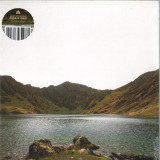
"Cadair Idris is one of the Southernly peaks of Eryri (Snowdonia). It sits magnificently at the head of the Tal-y-Llyn pass, and above Dolgellau to the North, with its craggy slopes rising above the tree-line towards the mystical clouds that so o�ften shroud its summit. This mountain is rich with mythology and legend; meaning 'Chair of Idris', it takes its name from the mythical giant king 'Idris Gawr' who was once said to sit atop the mountain and marvel at the heavens. The lake found at the centre of the seat is said to be bottomless, and the surrounding slopes to be the hunting grounds of the Welsh king of the underworld, Gwyn ap Nudd and his Cŵn Annwn. But one of the most intriguing legends owes its existence to the great bardic heritage of Wales. This legend comes as a warning to any wandering soul that might find themselves upon the mountain's slopes at night, for anyone that spends the night on the mountain will come down either a madman or a poet.’"
Cadair Idris by Awen Ensemble, released 12 April 2024, includes the following tracks: "UNSETTLED", "IONAWR", "IF I FALL", "UPON LEAVING THE DREAM" and more.
This version of Cadair Idris comes as a 1xLP.
Dejan Dex from 005 is back but with Blagoj in their mischievous music duo: Son Kota. From Misla to Termos, Dejan brings forth a new level of artistry with his right hand partner in this sizzling 3 track compilation. Literally sizzling, Termos isn’t shy in sound, waking up the listener with profound, sexy yet soothing beats in a humble, homemade kind of way.
“Our inspirations range from day to day activity. From 80’s pop rock music and good movies to tv shows and live sets from artists that we admire, together we combine all the sounds we hear into one full package.” - Son Kota
Son Kota - A story of two artists meeting halfway, making an alias to expand their music horizons. Focused on finely shaped sounds, and digging deeper as they can into the house music world.
Producing for 13 years running, Son Kota began paving their way around the same time. Coincidence? We think not. Destined to work together, Blagoj and Dejan were passionate pioneers on the Macedonian music scene with their like minded approach to genre identity and track ideation. Officially born in 2017, Son Kota was given its project name meaning “sounds of happiness” in French/Japanese dialect.
The two exude a sense of genuine awe and wonder for minimalism, and the blissful feeling it evokes.
Echoing the 90s once again, Son Kota offers a fresh batch of 3, including a remix by Arapu, each having its own musical idiosyncrasies.
Top of the track list is the dark and moody Vroche: a somewhat psychedelic ensemble of broken beats and synth stabs for the adventurous minimal listener. Up next is Termos, a marvelous piece that embodies classic house qualities peppered with nostalgic melodic elements. Finally, Arapu spins this record further with his own interpretation of Termos, bringing his signature touch to the table. Any Satya fan and production nut will be sure to appreciate his groovy minimal hypnotic flavors.
The second instalment from London Odense Ensemble digs deeper into the group's vision of what modern psychedelic jazz should sound like. Cut from the same sessions as Jaiyede Sessions vol. 1, released last summer, vol. 2 presents a more nuanced approach to the material. On this set the ensemble focuses on shorter, layered pieces - travelling from deep spiritual jazz grooves to gorgeous free-flowing minimalism to full-on acid jazz. There's echo-drenched flutes being absorbed into layers of analog synth pads and guitars, bossa beats and double bass sequences merging with electronics. It’s an intoxicating mélange of sounds and styles, spanning wide temporal and geographical distances. London Odense Ensemble came together when two of the finest exponents of London's flourishing jazz scene, flautist and saxofonist Tamar Osborn and keyboard specialist Al MacSween, came over to Denmark to explore new sounds with Causa Sui's Jakob Skøtt and Jonas Munk, as well as local bass player Martin Rude. For two days the group laid down grooves and ideas and experimented in the studio, and later the best segments were edited and mixed by Jonas Munk, who took a somewhat liberal approach to the mixing process, often dyeing the material with external effects and synthesizers. Jaiyede Sessions are the kinds of records that defy genre-terms, yet have its own instantly recognizable fingerprint. It carries a unique shared vision between the players of what modern psychedelic jazz sounds like. bios: Tamar Osborn: Saxophonist, composer and multi-wind instrumentalist is the creative force behind modal jazz ensemble Collocutor (On The Corner Records). She is a member of the Dele Sosimi Afrobeat Orchestra, performs and collaborates regularly with Sarathy Korwar, Jessica Lauren, Emanative, Ill Considered and DJ Khalab. Al MacSween: Keyboard player & founding member of Kefaya. Collaborations include American jazz legend Gary Bartz, Syrian qanun master Maya Youseff, London Community Gospel Choir, Palestinian jazz singer Reem Kelani & kora player Kadialy Kouyate. Martin Rude: Multi-string instrumentalist & lead singer in Sun River & Edena Gardens with members of Papir & Causa Sui. Jakob Skøtt: Drummer in Causa Sui with a slew of side projects on El Paraiso, including Chicago Odense Ensemble, as well as being responsible for the label’s visuals. Jonas Munk: Guitarist in Causa Sui & studio wizard on most releases on El Paraiso. Also works with a wide palette of electronic music.
For an aesthetic of (dis)obedience. The impressions Richard Siegal and his company Ballet of Difference gathered on a trip to Japan in September 2022 now find their way into a full-length dance evening. Siegal and his team had set off for Tokyo to learn the practice of Shuudan Koudou, also known as "Japanese Precision Walking". The strictly synchronised group choreographies are astonishing in their radical stringency and have become a secret YouTube hit, not least because of their peculiar subtle humour. Siegal recognises in the extreme disciplining of the bodies an analogy to the training practice of classical ballet. In the mutual exchange of these movement cultures, questions are raised about individual and collective thinking, about personal decision-making power and social responsibility. For this extraordinary project, Richard Siegal has invited a special guest: Nazareth Panadero, long-time companion of Pina Bausch, who has long since become an icon of Wuppertal dance theatre and will be on stage with the BoD ensemble.
The production BALLET OF (DIS)OBEDIENCE is sponsored by Goethe Institut, with the kind support of Sissel GmbH.
CHOREOGRAPHY & STAGE: RICHARD SIEGAL
COSTUME: FLORA MIRANDA
LIGHT & VIDEO: MATTHIAS SINGER
MUSIC: ALVA NOTO
DRAMATURGY: TOBIAS STAAB
more info to: Shuudan koudou
'Shuudan koudou' Shuudan Koudou Is the Japanese #art of Synchronized Precision ...YouTube · Boson TV: Tech Marvels & Cool Discoveries22 Dec 2022
Kottke.org https://kottke.org › shuudan-koud...Shuudan Koudou Is the Japanese Art of Synchronized Precision Walking
On the other hand, hybrid 3 is inspired by Noh Play - Japanese performances and deals with the refusal of rules musically, hybrid three continues the two previous albums and weaves both rhythmic and beatless musical pieces into a holistic work.
The idea for me has always been that these albums are not only perceived as individual tracks, but as a whole piece, which is why I find the possibility of experiencing and listening to these albums in the right order and as a whole particularly important. For me, the pieces are not only closely related to the ballet that was created for them, but also function as individual pieces as pure, musical pieces and mark a new quality for me, which is very strongly focussed on producing electronic sounds and structures in such a way that they can develop a sculptural quality.
It’s approximately been a year since Antoine lost what would have been his debut album, ironically dubbed ‘Humour. Positivity & Affection’. In its wake, stemmed the idea for the producer to reform his conceptually based project (Mise En Place) into a vinyl only label.
The Land Down Dunder EP being the first, of hopefully, many releases throughout this new imprint. The label head feels there is no better way to start this campaign, than with a body of work, entirely inspired by the modern, timeless TV Sitcom - The Office (US).
The opener ‘Australian Reds’ looks to bridge the gap between Progressive House and Antoine interpretation of Minimal. Matched with Ghanian inherited grooves of course.
‘Colombian Whites’ as suggested by its title, widens the eyes and warms the soul with its textbook, 90’s House inspired Kicks, Hi’s and Baseline. Synthy melodies run throughout the mid(s) of the track to marry the ensemble together. Fitting for all terrains, but would be highly favoured in the Summer.
The B-Side flips the script in tone, tempo and texture - pulling on Antoine’s repertoire for groove laden Techno - ‘Cafe Disco (AK’s Rare Groove Dub)’ brings you to the after hours of any setting with it’s full bodied percussive rhythms, beautifully automated soundscapes and highly persuasive swing. Lastly, the EP is capped off by ‘Threat Level Midnight’. A nod to Antoine’s versatility within the realms of House and Techno. An incredibly versatile track, structurally inspired by the producers love of Hip-Hop. A cacophony of ethereal chord progressions run throughout the track alongside one moody baseline, as well as solemn drum patterns which progress in both body-feel and stature.
Repress.
MFM044 sees the reissue of the cult Spanish studio project Música Esporádica with their incredible one off, self-titled album.
Another Suso Saiz side project, this one grew out of his work with his band Orquesta De Las Nubes, who were themselves the subject of a Music From Memory compilation last year.
The idea of getting Orquesta De Las Nubes to collaborate with Glen Velez and Layne Redmond arose after the two American musicians visited Spain during a series of seminars on frame drum techniques in 1985. Having met Glen Velez some years before in Madrid whilst Glen was performing with the Steve Reich Ensemble, Suso Saiz and Glen Velez quickly formed a strong friendship over their mutual love of non-Western music and the potentials of repetition within music. The two would play, talk and drinks for many hours in Suso’s studio space whenever Glen was in Madrid.
During one such session in 1985, Glen and Suso would be joined by Orquesta De Las Nubes and Spanish friend and musician Miguel Herrero. With exciting new ideas flowing quickly and easily, Suso decided to immediately call Track Studios in Madrid to see if they might have a space to record some of the material. With just a few days available the group would record for about 12, with what Suso would describe as ‘incredible fluency’, by which time they would have recorded the album they would later title Música Esporádica.
After its release 34 years ago Música Esporádica sounds as stunning as ever and Music From Memory are delighted to be able to share the fluency, spontaneity and close friendship which fuelled the recording of this amazing album.