Mark Fell inaugurates his new label – The National Centre for Mark Fell Studies – with his first solo electronic material in years; a slinky, ravishing volley of unique dance drills that have been in the works for over a decade, feeling somehow like Derek Bailey dissecting Singeli, or Autechre and Hermeto Pascoal dancing in hyperspace. There’s nothing else quite like it.
Back on the floor for the first time since dealing a pair of deep house 12”s with DJ Sprinkles, sending a contemporary classic in »Protogravity« with Errorsmith, plus a lauded collab with Gábor Lázár – all in 2015 – Fell taps back into core club concerns last explored to this uncompromising extent on his string of »Sensate Focus« EPs released between 2012–2013. He’s hardly been slacking since then, with a slew of far-reaching avant collabs with everyone from Rian Treanor to Limpe Fuchs, Okkyung Lee to Pat Thomas, Explore Ensemble to Will Guthrie – each one blurring distinctions between producer, composer, and conductor.
The »Nite Closures« EP is worth the wait – and then some. As ever, Fell manages to retain a highly distinctive, instantly identifiable sound while also tracing and mapping new bends in the continuum. His exploration of contemporary styles and patterns is here distilled and articulated with a rare, daring playfulness and sinuous intricacy – for over half an hour he flows from frantic to almost emotional at the drop of a snare. Trust it’s not your everyday / everynight club music, with an asymmetric angularity bound to wrong-foot fresher feet, but also the type of absolutely future-facing, skewed machine funk that clubs are crying out for, even if they don’t quite realise it.
As someone who’s witnessed the dominance of colouring-book Jive Bunny DJs recycle tested ideas ad infinitum, the message is a firm do-one to myopic ravers in »Nite Closures«. From the displaced anticipations tested in its extended dub and ravishing, tweaked polymetrics on its version, through a »Large Modulos #3« teeming with organismic details, to the hair-kissing swang of »auchterhouse (inversion)« and its clipped, cascading 2.1-step reprise, Fell offers thrilling new options for the loosey-gooseyest dancers at each turn. For us, it’s perhaps his greatest record this century.
Search:id ensemble
- A1: Cadux Plectere I
- A2: Lacinia Off Axis
- A3: Maris Stella Plectere Ii
- A4: Ere
- B1: Arborea Plectere Iii
- B2: Eve
- B3: Sidereus Plectere Iv
- B4: Lacinia In Axis
- C1: Veris Plectere V
- C2: Nova Pt I
- C3: Eve For String Orchestra
- C4: Nova Pt Ii
- D1: Matrix Plectere Vi
- D2: Maris Stella Plectere Vii
- D3: Lacinia Off Axis
- D4: Cycle Plectere Viii
Returning to Die Schachtel with his fourth full-length with the label, the Genoa born, Bologna based, guitarist and electroacoustic composer, Stefano Pilia, delivers “Lacinia”, a new, immersive cycle of compositions, delving deeper into the realm of metaphysical, spiritual, and divine meaning, weaving astounding arrangements of sonority from a palette of synths, strings, brass, organ, various electroacoustic instruments, and percussion. Resting at a refined intersection of the acoustic and electroacoustic, drone, and chamber music - overwhelmingly beautiful, delicate, and bold, - “Lacinia” stands as a high-water mark in Pilia’s already remarkable and forward-looking career.
Since its founding in Milan during the early years of the new millennium, Die Schachtel has occupied a singular place in the landscape of experimental music, issuing a carefully curated body of reissues and archival releases by historically significant figures and projects like Christina Kubisch, Luciano Cilio, Marino Zuccheri, Prima Materia, Claudio Rocchi, Lino Capra Vaccina, Gruppo di Improvvisazione Nuova Consonanza, Roland Kayn, and numerous others, balanced against bristling contemporary counterparts by the likes of Jim O'Rourke, Giovanni Di Domenico, Nicola Ratti, Luigi ArchettI, Valerio Tricoli, etc. Running like a spine through the label’s output is a deep dedication to the work of the Italian guitarist and electroacoustic composer Stefano Pilia. Now Die Schachtel returns with “Lacinia”, Pilia’s forth full-length with the label and their first release of 2024. Building on the ground of deeply personal engagement with metaphysical, spiritual, and divine meaning, explored within his previous LP with Die Schachtel, 2022’s “Spiralis Aurea”, “Lacinia” encounters the composer working in close calibration with various ensembles, including the Bologna based Ensemble Concordanze and Comunale di Bologna String Orchestra, weaving synths, strings, brass, organ, various electroacoustic instruments, and percussion into an astounding reconfiguration of immersive, contemporary minimalism that stands among Pilia’s most noteworthy releases to date. Issued by Die Schachtel in two special double vinyl editions and a CD edition, “Lacinia” features artwork by Bruno Stucchi/Dinamomilano, and is an absolute marvel that draws you in and doesn’t let go.
First emerging during the early 2000s, over the past two decades – via solo releases and numerous collations with artists like Oren Ambarchi, Valerio Tricoli, Alessandra Novaga, Z'EV, Andrea Belfi, David Grubbs, and numerous others - the Genoa born, Bologna based, guitarist and electroacoustic composer, Stefano Pilia has presented a singular voice within Italian experimental music, harnessing visceral energy and hands-on immediacy within delicately woven tapestries of sonority, each investigating the sculptural properties of sound and illuminating its relationship to space, memory, and the suspension of time. “Lacinia”, Pilia’s forth solo venture with Die Schachtel, encounters the composer reentering his longstanding practice of collaboration with various ensemble forms, including the Bologna based Ensemble Concordanze, for the albums central piece, “Lacinia Off Axis”, spinning stunning string confirmations by Pietro David Carami and Elena Maury on violin, Alessandro Savio on viola, and Mattia Cipolli on cello.
A new, important cycle of compositions by Pilia, “Lacinia” (meaning "lace" in Latin) builds upon the exploration of the metaphysical, spiritual, and divine dimensions through numbers, geometry, and the creation of tonal forms explored by 2022’s “Spiralis Aurea”, mirroring archetypal, immutable forms at the juncture of the abstract realm of mathematics and architectural structures in the physical world, expands the poetics and compositional ideas featured in its predecessor. Regraded by Pilia as both a series of individual compositions and a single work, “Lacinia” was conceived to “define a circular path (a sort of "rhizomatic lace") where the beginning and end touch, suggesting the concept of time not only as linear but also cyclical and ritualistic—an eternal return, a process of transformation where matter changes, its state changes, but without altering the invisible internal principle of mutation”, embarking upon a a series of “steps, degrees, and energetic quanta in a progression of archetypal whole numbers and transcendent creation.”
The resulting 16 tracks unfold as a series of complex sonic meditations. While deeply resonant with the minimalism of composers like Arvo Pärt, LaMonte Young, Pauline Oliveros, and Eliane Radigue, Pilia digs deep and moves far beyond the predictable tonal relationships and structures of that idiom, echoing the ancient liturgical and devotional music of composers like Gesualdo da Venosa, Monteverdi, and John Dowland, at a refined intersection of the acoustic and electroacoustic, drone, and chamber music.
Fascinatingly structured as a whole to include a number of motif returns, across which we encounter works like “Lacinia Off Axis” appearing in slightly different rendering, states, or evolutions three times, and compositions like “Eve” appearing twice in subtly different forms and arrangements - first for four oscillators, guitar and voice and then for string orchestra - as well “Maris Stella”, which similarly makes two appearances, first for horn trio, organ and percussion, and then for string orchestra, with “Lacinia” Pilia delves further into the world of chamber music than ever before, creating a deeply inward, mediative body of work the totality of which, guided by its rich string arrangements of arching, sorrowful tone, feels almost like a mass for some unproclaimed loss; simultaneously locked in the nuances of a moment, while managing to suspend time.
Perhaps most remarkable is Pilia's ability to create a remarkable sense of sonic cohesion while using such a varied number of ensembles and instrumentation. From the sprawling string arrangements delivered by Comunale di Bologna String Orchestra, under the direction of Paolo Mancini, and Ensemble Concordanze, and a flute trio (Cadux / Plectere) brilliantly played by Manuel Zurria, to pieces for sax, organ and percussion, violin duo and percussion, organ and percussion, Pilia manages to create a sense of singular, encompassing world that flows forward like a shifting stream.
Overwhelmingly beautiful, delicate, and bold, “Lacinia” is unquestionably a high-water mark in Stefano Pilia’s already remarkable, forward-looking career. Nothing short of a marvel of contemporary Minimalism that, through its shifting arrangements of harmonics, tonality, and texture draws flickering images of ancient forms of music into the present day, “Lacinia” is Issued by Die Schachtel in two special editions on double vinyl and a CD edition, featuring artwork by Bruno Stucchi/Dinamomilano. This is an immersive all-consuming listen that can’t be missed.
IDO returns with the second chapter of Transcendental Movements - a series dedicated to active meditation and deep listening. Active meditation is a practice of fully inhabiting the movement of sound. Instead of seeking absolute silence, it invites you to dive into textures, to be carried by frequencies, to follow oscillations like a breath. Every vibration becomes an anchor point, every resonance a gateway inward. In a world saturated with noise and anxiety, this approach offers a space to refocus the body and calm the mind. Here, listening is not passive: it's an awakened trance where tensions shift and dissolve, leaving only a pure sense of presence. For this second volume, Valentino Mora has gathered a new ensemble of artists exploring the frontier between intimate perception and sonic landscape. The compositions - slow and organic - unfold like micro-universes, at times ethereal, at times dense, designed to guide the listener on a sensory journey that transforms anxiety into movement, and movement into inner peace. Transcendental Movements Vol. 2 is an invitation to listen differently: not to escape, but to return to yourself.
- Not Not Not
- Du Na
- Sayonara
- Ça Commence Par
- Marafon 15
- Tea + Lu Na
- Plans
- Telefon
- If Anyone's Sleepy
- Outro
"Room for the Moon Live" dokumentiert einen ekstatischen Abend, den die facettenreiche Produzentin und Performerin Kate NV ins Leben gerufen hat. Das Album wurde während einer einmaligen Show aufgenommen, die einige Jahre nach der Veröffentlichung von "Room for the Moon" (2020) stattfand. NV malt innerhalb und außerhalb der expressionistischen Linien ihrer Solo-Persönlichkeit und steht an der Spitze einer eklektischen achtköpfigen Band, die Material aus ihrem skurrilen und endlos faszinierenden zweiten Album aufgreift und weiterentwickelt. Für NV ist "Room for the Moon Live" mehr als nur ein Meilenstein, der die fünf Jahre seit der Veröffentlichung ihres zweiten Albums markiert. Die Aufnahme dokumentiert einen wichtigen und seitdem einmaligen Abend, an dem der Sound und die Seele des Albums und ihrer musikalischen Vertrauten einen Raum der Zuflucht in einer besonders schweren und isolierenden Zeit schufen. ,Das wichtigste Thema des Konzerts war, ein Team zu sein - zusammen", sagt NV. ,Musik zu spielen und zu versuchen, in dunklen Zeiten Freude zu verbreiten. Das war für mich sehr wichtig." Die Band wurde von NV aus einer eng verbundenen Gruppe von Musikerfreunden und häufigen Kollaborateuren zusammengestellt, wobei der Kern aus Mitgliedern von Glintshake besteht, der Post-Punk-Band, die sie 2012 mitbegründet hat. Unter NVs leichtfüßiger Leitung begann das Ensemble, die Richtung der Performance zu skizzieren und sich vorzustellen, wie sie einige der synthlastigeren Stücke von Room mit neuen Ideen und akustischen Texturen neu gestalten könnten, unterstützt durch ihre Offenheit für Improvisation, ,Jam"-Ästhetik und vor allem durch ihren freigeistigen Spaß an der Sache. ,Der Ansatz war in etwa: ,Leute, wir spielen Songs, aber hier können wir richtig wild werden`", erinnert sie sich. ,Ich hatte einige ,Musts`, die wir so originalgetreu wie möglich nachbilden mussten, weil sie für die Songs entscheidend waren, aber es war nie eine Priorität, alle in einen Käfig der Originale zu stecken. Die Tracks haben dadurch nur gewonnen und klingen kraftvoller als die Originalversionen." NV hebt ,Marafon 15" und ,Telefon" als besonders eindrucksvolle Beispiele für die tief groovenden, groovigen Art-Rock-Kräfte hervor, die die Originale auf der Bühne belebten. Aber auch über diese beiden Tracks hinaus sind alle Songs weiter ausgelegt und fließen freier, oft eine Minute oder mehrere Minuten länger als die Originale, da die Band einige der eher poporientierten Arrangements von Room aufbricht. NV verweist auch auf die ausgedehnten Solo-Passagen in ,Ça commence par" und die euphorische Coda von ,Lu Na", die während einer Probe der Band entstanden sind und dann für immer Teil des Songs geblieben sind, als einige der verspieltesten Momente des Albums. Live-Alben folgen, sei es aus Notwendigkeit oder aus Gewohnheit, meist einem altbewährten Muster: Sie dokumentieren eine Reihe von Abenden auf Tournee, an denen Künstler vor einem aufgeschlossenen, aber oft verschwommenen Publikum in fremden Städten spielen, die in einem impressionistischen Nebel aus Orten, Räumen, Bildern und Geschmäckern vorbeiziehen. Die Performance auf "Room for the Moon Live" ist etwas ganz anderes. Es ist Musik, die von Freunden für Freunde gemacht wurde, um zu heilen und zu fühlen, voller Freude und grenzenloser Großzügigkeit. Kate NVs "Room for the Moon Live" erscheint fast genau fünf Jahre nach der Veröffentlichung des Originalalbums, als limitierte Doppel-LP und in unbegrenzter digitaler Auflage.
- A1: Malavoi - Te Traigo Guajira
- A2: Los Caraibes - Donde
- A3: Tropicana - Amor En Chachacha
- A4: Ryco Jazz - Wachi Wara
- A5: Eugene Balthazar - Dap Pignan
- A6: Roger Jaffort - Oye Mi Consejo
- A7: Les Kings - Oriza
- B1: Les Supers Jaguars - Tatalibaba
- B2: Super Combo De Pointe A Pitre - Serrana
- B3: L'ensemble Abricot - Se Quedo Boogaloo
- B4: Henri Guedon - Bilonga
- B5: Les Aiglons - Pensando En Ti
- B6: Los Martiniquenos - Caterate
In Guadeloupe, many people think that jazz and ka music are like a ring and a finger. To some extent, the same could be said about so called Latin music and the music played in the French West Indies.
Both aesthetics were born in the Caribbean and bear so many connections that they can easily be considered cousins. In constant dialogue, there are lots of examples of their fruitful alliance and have been for a while. The English country dance that used to be practiced in European lounges came to be called kadrille in Martinique and contradanza in Cuba. They both featured additional percussion instruments inherited from the transatlantic deportation. Drawing from shared feelings about the same traumatized identity – later to be creolized – it would be hard not to assume that they were meant to inspire each other. The golden age of the orchestras that graced the Pigalle nights during the interwar period further proves the point. As soon as the 1930s, Havana-born Don Barreto naturally mixed danzón and biguine music in a combo based at Melody's Bar. In the following decade, Félix Valvert, a conductor who was born and raised in Basse-Terre in Guadelupe, also worked wonders in Montparnasse with La Coupole, which was an orchestra made up of eclectic musicians. Afro- Caribbean performers of various origins were often hired on rhythm and brass sections in jazz bands, which used to enliven the typical French balls of the capital. In the 1930s and onwards, Rico’s Creole Band was one of them.
Martinican violinist-clarinettist Ernest Léardée, who would become the king of biguine music as well as the main figure of French Uncle Ben's TV commercials (a dark stigma of post-colonial stereotypes), had musicians from the whole Caribbean sphere play at his Bal Blomet – and they all enchanted "ces Zazous-là" (according the words of Léardée's biguine-calypso piece). In les Antilles (French for French West Indies), music history started to speed up in the 1950s, when trade expanded and radio stations grew bigger. The Guadelupean and Martiniquais youth tuned in their old galena radio sets to South American and Caribbean music. As for the women traders, les pacotilleuses, they bought and sold goods across different islands (the "passing of items through various hands" was thought to be most pleasurable) and brought back countless sounds in their luggage. Such was the case of Madame Balthazar, who once returned from Puerto Rico with the first 45rpm and 33rpm to ever enter Martinique.
Out of this adventure was created the famous Martinican label La Maison des Merengues, a music business she opened and undertook with her husband and which proved to be a major landmark. At the end of the 1950s, in Puerto Rico, Marius Cultier competed in the Piano International Contest playing a version of Monk's Round 'Midnight. He won the first prize and this distinction foreshadowed everything that was to come. Cultier, the heretic Monk of jazz, was quickly praised for writing superb melodies, always tinged with a twist that conferred a unique sound to his music. It didn't take long for the gifted self-taught musician to get to play with Los Cubanos, making a name for himself thanks to his impressive maestria on merengues.
The rest is history. Besides, in the late 1950s, Frantz Charles-Denis, born into the upper middle class in Saint-Pierre and better known by his first name Francisco, went back home after working at La Cabane Cubaine – a club located rue Fontaine where he had caught the Latin fever. Francisco's music was therefore heavily marked by his Cuban cousins' influence, which gave the combos he led a specific style and also led to renewal. Things were swinging hard in La Savane, located in the main square in Fort-de-France. He set up the Shango club close by and tested out the biguine lélé there, a new music formula spiced up with Latin rhythms. Soon afterwards, fate had him fly to Puerto Rico and Venezuela.
As for percussionist Henri Guédon (percussions were only a part of his many talents), he was born in Fort-de-France in May 22nd 1944, the day marking the celebration of the abolition of slavery. As an old man, he could remember that in " his father's Teppaz, a lot of hectic 6/8 music was constantly playing...". In the opening lines of his Lettre à Dizzy, a small illustrated collection of writings published by Del Arco, he highlighted the huge impact that cubop had on him as a teenage boy, around 1960. He eventually turned out to be the lider maximo in La Contesta, a big band steeped in Latin jazz. He was also the one who originated the word zouk to describe music which brought the sound of the New York barrio to Paris. It was the culmination of a journey that started in Sainte-Marie: "a mythical place for bélé, the equivalent of Cuban guaguancó". In the early 1960s, the tertiary economy developed to the detriment of agriculture. Yet rural life was where roots music emerged in Martinique and in Guadeloupe.
Record companies played a major part in the process of Latin versions sweeping across the islands – before reaching everywhere else. Producer Célini, boss of the great Aux Ondes label, and Marcel Mavounzy, both the head of Émeraude records - a firm which was founded in 1953 - as well as the brother of famous saxophonist Robert Mavounzy, were big names to bear in mind. Although there were many of them - all of whom are featured on this record - Henri Debs was definitely the major figure in the recording adventure. He proved to be so influential that he even got compared to Berry Gordy. In the mid 1950s, when he acquired his first Teppaz, he worked on his first compositions: a bolero and a chachacha. Then, he became the one man who made people discover Caribbean music, from calypso to merengue. He was among the first ones to rush out to San Juan, Puerto Rico, to buy records and distribute them through a store run by one of his brothers in Fort-de-France. He had members of the Fania All Star come and perform there, which he was madly proud about. He was also the first one to pay attention to Haitian music, such as compas direct and various other rhythms which would soon flood the market. As a result, many of the combos hitting his legendary studio would end up boosted by widespread "Afro-Latin" rhythms. However, he never denied his identity: gwo ka drums were given a major role, although they were instruments which had long been banned from the "official" music spheres. The present selection bears witness to such a creative swarming. Here are fourteen tracks of untimely yet unprecedented cross-fertilization: all types of music rooted in the Creole archipelago have found their way, whatsoever, to the tracklisting. Whether originating from the city or being more rural, they all go back to what Edouard Glissant, in an interview about the place of West Indian music in the Afro-American scope, called "the trace of singing, the one which got erased by slavery." "It is so in jazz, but also in reggae, calypso, biguine, salsa... This trace also manifests through the drums, whether Guadelupean, Dominican, Jamaican or Cuban... None of them being quite the same. They all point to the idea of a trace, seeking it out and connecting to each other through it. This is the hallmark of the African diaspora: its ability to create something new, in relation to itself, out of a trace. It may be the memory of a rhythm, the crafting of a drum, a means of expression which doesn't resort to an old language but to the modalities of it." The opening track features one of the emblematic orchestras of this aesthetic identity, criscrossing many music types from the archipelago. The 1974 Ray Barretto guajira – Ray Barretto was a major New York drummer influenced by Charlie Parker and Chano Pozzo – is magnificently performed by Malavoi, a legendary Fayolais group (i.e from Fort-de-France). Additionally, the compilation ends on a piece by Los Martiniqueños de Francisco. It symbolically closes the circle as it is a genuine potomitan of Martinique culture which also functions as a tireless campaigner for Afro-Caribbean music. Practicing the danmyé rounds (a kind of capoeiria) to the rhythm of the bèlè drum, it delivers a terrific Caterete, a kind of champeta of Afro- Colombian obedience which was originally composed by Colombian Fabián Ramón Veloz Fernández for the group Wgenda Kenya. The icing on the cake is Brazilian Marku Ribas, who found refuge in Martinique in the early 1970s, bringing his singing to the last trance-inducing track. These two "versions" convey the whole tone of a selection composed of rarities and classics of the tropicalized genre, swarming with tonic accents and convoluted rhythms. It is the sort of cocktail that the West Indians never failed to spice up with their own ingredients. For instance, the Los Caraïbes cover of Dónde, a famous Cuban theme composed by producer Ernesto Duarte Brito, has a typical violin and features renowned Martinique singer Joby Valente and his piquant voice.
The track used to be – or so we think – their only existing 45rpm. The meaningful Amor en chachachá by L'Ensemble Tropicana, a band which included Haitian musicians among whom was composer and leader Michel Desgrotte, also recalls how Latin music was pervasive in the tropics in the mid-1960s. They were the ones keeping people dancing at Le Cocoteraie in Guadelupe and La Bananeraie in Martinique. Around the same time, another "foreign" band, Congolese Freddy Mars N'Kounkou's Ryco Jazz, achieved some success on both islands by covering Latin jazz classics – such as their adaptation of Wachi Wara, a "soul sauce" by Dizzy Gillespie and Chano Pozo whose interweaving of strings and percussions can have anyone hit the dancefloor. How can you resist Dap Pinian indeed, a powerful guaguancó by Eugene Balthazar, performed by the Tropicana Orchestra and published by the Martinique-founded La Maison des Merengues? It also acts as a symbol of the maelstrom at work. Going by the name Paco et L'orchestre Cachunga, Roger Jaffory used to play guaguancó too: his Fania-inspired Oye mi consejo is one example of his style. Baila!!!!! Dancing was also one of the Kings' focus points. Oriza is a Puerto Rican bomba and a "classic" originally composed by Nuevayorquino trumpeter Ernie Agosto, which reserves major space for brasses, giving it a special sheen.
Emerging from the New York barrios crucible was also La Perfecta, a Martinique group originating from Trinidad, whose name directly references the totemic Eddie Palmieri figure as well as his own band, also called La Perfecta. Here they borrow Toumbadora from Colombian producer and composer Efraín Lancheros and interpret it by emphasizing percussions, which set fire to the track even more than the wind instruments. The same goes for Martinique's Super Jaguars, who use Tatalibaba – a composition by Cuban guitarist Florencio "Picolo" Santana which was made famous by Celia Cruz & La Sonora Matencera – as a pretext for sending their cadences into a frenzy. In a more typically salsa vein, the Super Combo, a famous Guadelupean orchestra from Pointe-Noire that was formed around the Desplan family and had Roger Plonquitte and Elie Bianay on board, adapt Serana, a theme by Roberto Angleró Pepín, a Puerto Rican composer, singer and musician also known for his song Soy Boricua. Here again, their vision comes close to surpassing the original. In the 1970s, L'Ensemble Abricot provided a handful of tracks of different syles, hence reaching the pinnacle of the art of achieving variety and giving pleasure. They played boleros, biguines, compas direct, guaguancó and even a good old boogaloo - the type they wanted to keep close to their hearts for ever, "pour toujours", as they sang along together in one of their songs. Léon Bertide's Martinican ensemble excelled at the boogaloo which had been composed by Puerto Rican saxophonist Hector Santos for the legendary El Gran Combo.
Three years later, in 1972, Henri Guédon, with the help of Paul Rosine on the vibraphone, tackled the Bilongo made famous by Eddie Palmieri. Such a classic!!!!! And so were the Aiglons, the band from Guadelupe: choosing to execute Pensando en tí, a composition by Dominican Aniceto Batista, on a cooler tempo than the original, they noticeably used a wonderfully (un)tuned keyboard in place of the accordion. On the high-value collectible single – the first one released by Les Aiglons under the Duli Disc label – there is a sticker classifying the track under the generic name "Afro". Now that is what we call a symbol. Jacques Denis
- Ida Red
- Glory In The Meetinghouse
- Flowery Girls
- I Had A Good Father And Mother
- Shady Grove
- Pretty Fair Maid
- Billy Button
- Puncheon Camps
- The Queen Of Rocky Ripple
- Boatsman
SEAWEED GREEN VINYL[22,27 €]
Old-time and traditional music stay exciting for their contrasts. Exacting instrumentation honed through mentorships and late-night jams at fiddler's conventions tangles with a community-sourced inventiveness that influences variants and new sounds. Joseph Decosimo is a master of this genre for this very reason, blending deep technique with an openness and curiosity that keep his music crackling with life. A "marvelous fiddler" (No Depression) and banjo player who braids "exultation and veneration" (INDY Week) into his music, on his third solo album Fiery Gizzard Decosimo gathers a close-knit ensemble of friends from his musical career to infuse his interpretations of fiddle and banjo pieces with a contagious communal joy. As an artist working with traditional music from the South and Appalachia, Decosimo chooses songs based not only on historical significance and lineage but also his own sensory approach. For Fiery Gizzard, his ear was tuned to otherworldly tones and mystery, sourcing from field recordings such as Virginia fiddler Luther Davis' hypnotic version of "Shady Grove" while amping up the music's psychedelic potential. On the middle Tennessee banjo composition "Flowery Girls," a VHS of bluesman Abner Jay inspired Decosimo to rig up a pickup inside a fretless banjo and play it thr ough a tube amp to capture some of Jay's edge and funkiness. But to round out the sound and keep it kinetic meant galvanizing a genre-eschewing crew to jam out - and not in a "spaced-out drooly" kind of way, he laughs, but as a sort of "responsive conversation." Decosimo has always been a community-minded artist. He began playing as a seventh graderin Tennessee, fostering relationships with older players at jams and in homes, a learning mode natural to his inquisitive nature and desire for musical connection. A folklorist by intuition, he later became one by profession, studying with old-time legend Clyde Davenport, teaching in East Tennessee State University's renowned bluegrass program, and receiving his PhD at the University of North Carolina with a dissertation titled "Catching the `Wild Note': Listening, Learning, and Connoisseurship in Old-Time Music." In North Carolina, Decosimo kicked about in the verdant environment of Durham and Chapel Hill's folk and indie scenes, collaborating with artists including Alice Gerrard, Hiss Golden Messenger, and Jake Xerxes Fussell. This community has influenced his own music, including his "sublime and strangely heartening" (Bandcamp Daily) 2022 release While You Were Slumbering and Beehive Cathedral, Decosimo's 2024 "Appalachian mountain music treasury" (New Commute) trio album with Luke Richardson and Cleek Schrey for Dear Life Records. Continuing on this path, Fiery Gizzard is home base for a loose outfit of mostly Tarheel-based musicians from within and beyond traditional music. Inspired by a tour with fiddler Stephanie Coleman (Nora Brown), guitarist Jay Hammond, and synth builder and multi-instrumentalist Matthew O'Connell, Decosimo assembled studiomates based on close friendships and comfort. Coleman, O'Connell, and Hammond contribute to Fiery Gizzard, along with bassist and producer Andy Stack (Helado Negro, Wye Oak), horn player Kelly Pratt (Beirut, David Byrne), Mipso and Fust's Libby Rodenbough, Joseph O'Connell (Elephant Micah), andtrad/experimental artist Cleek Schrey. Decosimo's fiddle and banjo work is virtuosic, intricate and simple simultaneously, a testament to his many years of study. On some tracks, his playing or lovely, plain-hearted singing is the centerpiece, such as on his interpretations of Texan street preacher Washington Phillips' 1929 recording "I Had a Good Father and Mother" or the Eastern Kentucky fiddle barn-burner "Glory in the Meetinghouse," famously played by Luther Strong for Alan Lomax. But there's also a trusting open-door policy, like where Southern Appalachian tune "Ida Red" relaxes into Coleman's sweet, confident fiddling and Hammond's loping guitar. As a bandleader, Decosimo's confidence and enthusiasm for the music reveal the heart of traditional music and how it can come to life through community. Fiery Gizzard is Joseph Decosimo as a powerful champion of traditional music - a sponge who soaks up as much as he squeezes out, a responsive artist who makes his genre accessible, and a magnet who can bring musicians of all sorts into his orbit with his same passion.
The Vestige is the first fruit of a new intergenerational collaboration between Giuseppe Ielasi, a quietly prolific key contributor to the European experimental music scene for over twenty years, and Jack Sheen, a young composer-conductor-sound artist from Manchester whose recent projects have seen him moving seamlessly from enigmatic chamber music composition and installations to conducting the London Symphony Orchestra. Their materials and working methods differ significantly, with Ielasi having focussed for many years on electro-acoustic techniques alongside his ongoing commitment to the guitar, and Sheen primarily composing for traditional instruments. More important, though, is what they share: a fascination with what Sheen calls “mysterious, liminal musical material,” using irregular repetition and cyclical forms to create structures at once alive with activity and almost static, as well as a rigorous exploration of spatial diffusion and the interaction of sound event and environment. Working individually with a library of acoustic instrument sounds from Sheen’s recent projects and Ielasi’s guitar, the pair eventually met for several days at Ielasi’s home studio in Monza, sculpting the fourteen pieces that make up The Vestige. Like Ielasi and Sheen’s solo works, the record shows an exquisite attention to details of sequencing and pacing, the sound palette and compositional approach consistent throughout while each piece asserts its own identity. The twenty-five seconds of the opening piece serve as an entrée into the record’s distinctive world of sound: repeated chirps fluctuate in volume as they move across the stereo spectrum, woven between strangled snatches of string glissando against a backdrop of percussive ticks, long tones, and white noise. Across the remaining thirteen pieces, Ielasi and Sheen sketch further dimensions of the ambiguous space, where distinctions between pitch and noise, repetition and irregularity, electronic and acoustic remain pointedly unclear. As the record’s title suggests, the origins of the sounds we hear have become remote: while at moments we get flashes of timbres and attacks that could come from wind instruments, bowed strings, or prepared guitar, these remain vestigial traces, glimpsed through a veil of shifting white noise textures. These textures are themselves difficult to trace, suggesting artefacts of the recording process, electronic synthesis, amplified room sound, rubbed instruments or objects. The Vestige shows an unusual degree of attention to frequency range as a compositional tool, something it shares with the hyper-subtle variations of Ielasi’s electroacoustic works and the deliberately ‘unbalanced’ midrange-heavy ensemble of Sheen’s Sub. Here, movement between episodes is as much about adding or removing a frequency band as it is about changes in density, harmonic content, or instrumental texture. Tracks are marked by the sudden appearance of subbass or exaggeration of high frequencies in otherwise similar material, contributing to our sense that these fourteen pieces are like different views on a scene that we can never quite see clearly. While calling up a range of past music, from the early works of Rolf Julius to Simha Arom’s recordings of layered polyrhythms embedded in the background sounds of central African villages to the temporal distortions and layered hiss of DJ Screw, the alluring and disconcerting world of The Vestige is entirely its own.
- Carrion Flowers
- Iron Moon
- Dragged Out
- Maw
- Grey Days
- After The Fall
- Crazy Love
- Simple Death
- Survive
- Color Of Blood
- The Abyss
INSOMNIA VINYL[42,23 €]
Classic black 2LP in gatefold! "Her darkest, heaviest and most personal album yet . . . a haunting, doomy exercise in loud-quiet dynamics." Rolling Stone Sleep paralysis plagues singer/songwriter Chelsea Wolfe, and that strange intersection of the conscious and the unconscious has inadvertently manifested itself within her work. Across the span of her first four albums, there is an underlying tension, a distorted and nebulous territory where dark shadows hover along the edges of the sublime and the graceful. But until now, Wolfe's trials and tribulations with the boundaries between dreams and reality have only been a subconscious influence on her work. With her fifth album, Abyss, she deliberately confronts those boundaries and crafts a score to that realm she describes as the "hazy afterlife. an inverted thunderstorm. the dark backward. the abyss of time." Chelsea Wolfe's material has always felt intensely private, from the almost voyeuristic bedroom-production aesthetic of her debut album The Grime and the Glow to the stark themes and atmospheres of 2013's Pain Is Beauty. "Abyss is meant to have the feeling of when you're dreaming, and you briefly wake up, but then fall back asleep into the same dream, diving quickly into your own subconscious," says Wolfe. To conjure this in-between world, Wolfe continued her ongoing collaboration with multi-instrumentalist and co-writer Ben Chisholm and drummer Dylan Fujioka, with Ezra Buchla brought on board to play viola and Mike Sullivan (Russian Circles) enlisted to contribute guitar. The ensemble traveled to Dallas, TX to record with producer John Congleton (Swans, St. Vincent). In the back of her mind burned the words of designer Yohji Yamamoto: "Perfection is ugly. Somewhere in the things humans make, I want to see scars, failure, disorder, distortion." The resulting eleven songs reflect that philosophy as they smoulder with human frailty, intimacy, quiet passion, anxiety, and deep longing. "Sleep and dream issues have followed me my whole life," remarks Wolfe as she revisits notes from the writing and recording sessions. In a way, these issues have become a part of Chelsea Wolfe's identity, for whom the notion of sleep as an escape has been subverted. Abyss captures this dichotomy, this battle between the soothing and the upsetting, and demonstrates why Chelsea Wolfe has become one of the most intriguing songwriters of the decade.
The discovery of Doris Dennison's score represents a genuine musicological breakthrough—what once would have been "a tree falling in the woods" thirty years ago now holds the potential to render "a thunderous clap in our minds." While researching Anna Halprin's lesser-known collaborators, scholar Tom Welsh uncovered the archives of AA Leath, one of Halprin's principal dancers. Buried within these materials was Dennison's handwritten score for Earth Interval, dated May 1956. Born in Saskatchewan, Canada, in 1908, and raised near Seattle, Dennison (1908-2009) encountered John Cage while teaching Dalcroze eurythmics at the Cornish College of the Arts. She joined Cage's earliest percussion quartet—alongside Margaret Jansen, the composer and his wife Xenia—in the group widely regarded as having performed the first complete concert of percussion music in the United States. This historic December 1938 concert was followed by tours and the landmark May 1941 performance at the California Club, comprising Cage and Lou Harrison's Double Music, the premiere of Cage's Third Construction, and Harrison's 13th Simfony.
As Bradford Bailey observes in his extensive liner notes, Earth Interval demonstrates "an extraordinary balance of elements that imbues the piece with a sense of clarity, directness, and constraint that is both distinct and ahead of its time." The work's most remarkable innovation lies in its approach to extended techniques, particularly Dennison's notation for the central movement: "In 2nd movement, 1st player lowers + raises a gong into a tub of water while beating." This technique, absorbed from Cage's experimental vocabulary, generates what Bailey describes as "fields of acoustic abstraction that bend and warp time through sustained resonances, beat, and space." The temporal sophistication of these manipulations anticipated Karlheinz Stockhausen's Mikrophonie I (1964) and Annea Lockwood's water-based sound investigations by over a decade. After joining Mills College as dance accompanist, Dennison maintained crucial connections to the Bay Area's experimental scene, collaborating with figures like Merce Cunningham and programming Cage's music throughout the 1950s.
Comprising three movements—Land Form, Air Tide, and Earth Play—Earth Interval is scored for recorder, drums, gongs, maracas, muted gongs, and bowl gongs. In total, the piece is just under eight minutes: "a fleeting glimmer of moment in time, a life spent at the cutting edge, and a singular creative vision that packs a powerful punch." When viewed in historical context, placed in contrast to roughly contemporaneous avant-garde percussion works by Cage, Harrison, Louis Thomas Hardin (Moondog), and Harry Partch, or important precursors like Edgard Varèse's Ionisation (1931) and Henry Cowell's Ostinato Pianissimo (1934), it's clear that Dennison was following her own path. Earth Interval is not derivative. It is a precursor to what was yet to come, alluding to developments of avant-garde and experimental music that wouldn't begin to appear on the cultural landscape until the 1970s and '80s, with the emergence of Post-Minimalism and more idiosyncratic artists and ensembles like Midori Takada, Ros Bandt, Peter Giger, Frank Perry, Christopher Tree, Michael Ranta, Gamelan Son of Lion, and Niagara.
This recording by Chicago's Third Coast Percussion, captured in March 2022, represents the first complete documentation of this pioneering work. The ensemble's interpretation reveals the piece's remarkable contemporaneity while maintaining its historical specificity. Where Cage, Harrison, and Partch employed "self-consciously off-kilter polyrhythms," Dennison's rhythmic sensibility anticipates minimalist developments by nearly a decade, yet integrates "forceful rests, as well as sharp shifts in sonic character, tempo, and meter, that break the momentum and breathe a sense of life into the piece's structure." This positions her work closer to Post-Minimalism decades before its emergence. The architectural approach demonstrates Dennison's understanding that "the composer almost entirely disappears" in favor of phenomenological listening experience, creating what might be called an egoless music that places its realities and meaning entirely in the ear of the beholder. The present recording, realized by Chicago's distinguished Third Coast Percussion ensemble, represents a significant achievement in experimental music scholarship and performance practice. As specialists in the Cage tradition and contemporary percussion repertoire, Third Coast Percussion approached Earth Interval with the historical sensitivity and technical precision required to illuminate Dennison's subtle compositional innovations. The March 2022 recording sessions, engineered by Colin Campbell, capture both the work's intimate chamber music qualities and its bold exploration of extended techniques. The ensemble's interpretation reveals the piece's remarkable contemporaneity—its ability to speak directly to current musical concerns while maintaining its historical specificity.
This recording serves multiple scholarly functions: it provides the first complete documentation of Dennison's compositional voice, offers insight into the broader network of experimental music practitioners surrounding Cage and Harrison, and demonstrates the sophisticated level of compositional thinking that was occurring within the Bay Area's dance-music collaborations of the 1950s. The work's emphasis on phenomenological listening—what might be called an "egoless" approach to musical experience—places it within a lineage of American experimental music that prioritizes perceptual process over compositional personality. The work's original obscurity—limited to AA Leath's performances at venues like the 1957 Pacific Coast Arts Festival at Reed College—paradoxically allowed it to remain "entirely on its own terms," free from the constraints of historical categorization. Drawing on Jacques Derrida's Archive Fever, the argument emerges that "the archive can acknowledge, celebrate, and resurrect" overlooked voices, transforming our understanding of experimental music history. The present Blume edition, featuring Third Coast Percussion's authoritative interpretation, includes a lavishly illustrated 16-page booklet designed by Bruno Stucchi / dinamomilano, containing complete scholarly apparatus, historical photographs, and detailed production notes. This recording enables "cross-temporal intersectionality," allowing Dennison to "belong to a newly formed and more dynamic understanding of the present and past," demonstrating how forgotten voices can reshape entire historical narratives when given proper scholarly attention and performance advocacy.
- I'm | Getting Sick
- Evicted | 05 24
- We've | Made It This Far
- Undercurrent
- King | Of Swords
- Omw
- Happy | Is Hard
- Tired
- Keep | Driving
- I'll | Be Here 03 56
Vines, the solo project of New York-based multi-instrumentalist and composer Cassie Wieland, offers a window into her inner world through expansive swaths of sound. She pieces together a celestial mix of synths, percussion, strings, and vocoded voice, making music that is at once deeply personal and cinematic in scope. This diaristic approach first took shape with her 2023 EP Birthday Party, and is crystallized on her debut LP, I’ll be here. With the sweeping and vulnerable I’ll be here, Vines arrives fully formed as an artist who crafts deeply resonant and open music–the kind that invites listeners in to listen, reflect, and share in the journey of learning through living.
“It was through making music that I was able to meet myself,” Wieland said. “Anything I’m going through or feeling is something that somebody else out there can relate to, and that’s really special to me.”
I’ll be here is both a culmination of years spent creating gossamer soundscapes and an opening to a new journey for Wieland as an artist. The album grew out of her years as a composer and songwriter, and builds on the language she developed on Birthday Party, which transformed the tumultuous feelings of the passing of time into minimalist meditations. It was just a start, though–a prologue, a development of the kind of language and ideas she wanted to express. With I’ll be here, she digs deeper and writes music that feels more sprawling, further solidifying her singular voice.
Wieland’s musical composition process is similar to journaling, lending itself to the music’s honesty. When she writes, she makes room for all the ideas she has; in these sessions, there are no wrong ideas, and she allows the music to be attuned to the experiences she’s having at the time. With I’ll be here, Wieland zeroes in on themes of anxiety, loneliness, navigating human connection, and having to grow up from a young age, ultimately coming to a place of acceptance. And though it began as a journal written in solitude, her collaborators shape the music with her.
Working with friends, in fact, was a crucial part of bringing the record to life. “Everything that was supposed to happen came together so easily because of the people involved,” Wieland said. I’ll be here was co-produced and recorded with Wieland’s longtime collaborator Mike Tierney, a four time Grammy-nominated engineer who has worked with artists across the contemporary classical and experimental scene like minimalist pioneer Steve Reich, LA’s preeminent classical ensemble Wild Up, and various bands on Bang on a Can’s Cantaloupe Music label. Percussionist and composer Adam Holmes and violinist Adrianne Munden-Dixon are two other longtime collaborators who are frequent fixtures of her live show. Holmes plays synths, drums, and banjo; in live settings, his kit is loaded with elements of the songs that are then triggered by MIDI, making the music an interactive, evolving experience. The album’s gentle, filamented edges are colored by Munden-Dixon, whose poignant string melodies elevate Wieland’s introspective compositions, as well as cellist Helen Newby, saxophonists Julian Velasco and Jordan Lulloff, and bassist Pat Swoboda.
Wieland takes an economic approach to writing music, building the swirling and immersive landscapes of Vines through short melodies, lyrics, and phrases. As each element layers and interweaves, they grow into sprawling webs of ghostly sound. Prior to Vines, Wieland composed pieces for other people to play using a minimalist’s sensibility, writing slowly unfolding melodies for instruments like violin and saxophone. In recent years, she sharpened her solo style across a variety of singles and covers which have garnered significant attention on social media for their emotional resonance (“being loved isn't the same as being understood” in particular went massively viral on TikTok in 2024). Birthday Party, her debut as Vines, brought her writing to a much more intimate space, centering on her vocoded voice cloaked in feathery reverb. A series of recent singles, meanwhile, including “I am my home,” showcase the way that Wieland’s music is born from the story of her innermost feelings, extending far beyond just the self.
Though Wieland’s music often deals with dark themes, it unfolds with tender melancholy, the kind that feels like a warm embrace. On “Evicted,” Wieland wonders if she’s getting sick or moving on, if she’s lost or found. Her vocals expand with each lyrical repetition, as the instrumentals slowly encircle and the music’s rhythm grows and bursts into a heart-wrenching, yet radiant wave reminiscent of post-rock bands like Explosions in the Sky. “Tired” follows a similar trajectory, building from a looping, melancholy rhythm and floating lyrics into a solemn resignation. Elsewhere, Wieland takes a more ruminative approach: “Omw” begins with twinkling piano and melancholy strings that gradually transform into an undulating mass. It is a song born out of the warm feeling of reminiscence, the slight return of hope that comes with nostalgia.
With any searching journey, there is also a point of understanding. The title track closes the album with the freedom of acceptance. A marching drum beats steadily beneath Wieland’s open vocals, moving forward, ever onward as it flies into the ether. In Wieland’s delicately textured music, there is room to come into yourself, and learn to love whomever that is. I’ll be here is a special space that can be all your own, one in which to feel what needs to be felt. “This is music for your story,” Wieland said. “I want you to use it how you need it.”
Recorded at the legendary Atlantis Studio in Stockholm, Words Were Coming Out Our Ears captures a unique musical encounter in the moment. Pianist Johan Graden, bassists Vilhelm Bromander and Pär Ola Landin, and drummer Nils Agnas entered the studio without a fixed plan – the music emerged organically through improvisation and attentive interplay.
What sets this album apart is the instrumentation. With two double bass players, the music gains an unusual depth and weight, where the bass not only supports the harmony but also takes on melodic and textural roles. This is no traditional piano trio – rather, it's an ensemble where roles shift constantly, and the sonic landscape is shaped by sensitivity and openness.
One track features additional layers of sound with guest musicians Katarina Agnas on contrabassoon and Emil Strandberg on trumpet.
With Words Were Coming Out Our Ears, the ambition is to create a cohesive sonic identity – to allow each piece to take its own shape while still belonging to a unified whole. The music invites deep listening, guided by intuition and presence in the moment.
One of Romania’s most important composers in the last half-century, Octavian Nemescu (1940-2020) is among the few that were not “part of the system”, managing to survive and compose in a world that felt more and more “empty”, fragile, confused and scarce in prophecies. The mystical approach to his art defines Octavian Nemescu as an essentialist who believed in the power of archetypes in which he found inspiration. His pieces always start from an idea that has spiritual, cosmogonic implications and often involves synthesizers, sounds from nature (buzz of bees) and the “ison” (drone). When defining “meta music” or “imaginary music”, Nemescu was an advocate of looking from above, from the top of the mountain. Silence is very important in his work in order to keep the sound flowing and to reflect on the sound from before, as a space, as a pause for thinking. Nemescu put forward another kind of music: a song that has not yet surfaced through human voice, any musical instrument, orchestra or other electro-acoustic means: an intimate, interior, introverted inner sound that focuses on the individual and the imagination. Imaginary music is a reaction, it comes in contrast to the spectacular, it is anti-show. For him, music had a ritualistic function, it served no cultural purpose.
This 3LP set collects eight pieces for variable ensemble, tape and electronics, composed between 1968 and 2015, selected together with Erica Nemescu, who also mastered the tracks. Most tracks have been previously released on different CD’s but never before on vinyl.
Moments of Solace is the introspective new EP from London-based artist, musical director, and producer Amane, released via Música Macondo.
Across six beautifully crafted tracks, Amane distills elements of ambient electronica, IDM, and jazz, creating music that evokes a deeply emotional journey through sound.
From the outset, Moments of Solace is contemplative and hypnotic, weaving together the pulse of electronic percussion, the glow of nocturnal pads, and the calming resonance of synths. Echoes fade and return like tides — forming ecstatic waves of sound that invite the listener into a space of reflection and emotional release.
For Amane, this collection serves as a creative response to a world that feels increasingly chaotic and dark — offering listeners a sonic refuge. The EP channels the ambient excursions of Boards of Canada, the rhythmic urgency of a Floating Points club set, and the cinematic sweep of night drives along the Pacific Coast Highway or meditative rides on Japan’s Shinkansen.
Despite an intense touring schedule, Amane found the time to craft this personal and globally resonant work. Moments of Solace mirrors his life experience as a nonstop traveling artist — soundtracking late nights, contemplative moments, and euphoric dance floors alike.
- Amane combines ambient textures, IDM structures, jazz influences, and club sonics into a cohesive sound.
- Inspired by artists like Boards of Canada and Floating Points.
- Reflects a global journey: from London nightlife to Pacific coastlines to Tokyo train rides.
- Released via Música Macondo, a label known for global, genre-blending innovation.
Amane is an East London-based musician, producer, and musical director whose career spans an eclectic range of genres and high-profile collaborations.
He has served as Musical Director for Little Simz, Jorja Smith, Amaarae, Ego Ella May, and Maverick Sabre; performed alongside global stars such as Ed Sheeran, Elton John, Anne-Marie, Sigrid, Dermot Kennedy, King Krule, and Ata Kak; and was a key member of the acclaimed London ensemble Maisha, whose debut was released via Gilles Peterson’s Brownswood label as part of the landmark We Out Here compilation.
In his solo work, Amane channels his deep musicality into soundscapes that reflect on the state of the world, offering listeners spaces for reflection, calmness, and emotional connection.
- Osmium 0
- Osmium 1
- Osmium 2
- Osmium 3
- Osmium 4
- Osmium 5
- Osmium 6
- Osmium 7
Limited edition white vinyl (800 copies) The self-styled ritualistic electro-mechanical ensemble OSMIUM is a veritable supergroup. Made up of Oscar-winning composer and instrumentalist Hildur Gudnadóttir, veteran engineer and producer James Ginzburg, Senyawa's idiosyncratic vocalist Rully Shabara and Grammy-winning sound designer / producer Sam Slater, while each member brings along a laundry list of accolades, the project is far greater than the sum of its parts. Alloying burnished electroacoustic soundscapes with dense, metallic drones, barbed rhythms and buckled, bio-mechanical vocalizations, OSMIUM's eagerly awaited debut album doesn't try to cast a rigid future. Rather, it tempers a viscous flow of unorthodox speculations that smolders through the distant past, blazing a trail all the way to the frontier of fate. Absorbed by questions about the relationship between humans and technology, tradition and progression, the individual and the group, OSMIUM channel their experience and expertise into a set of forward-thinking sonic interrogations that skewer established cultural preconceptions. And although genre is acknowledged - the album draws from folk, doom metal, 20th century minimalism, industrial music and extreme noise - there's never a sense that it's riveted firmly in place. Widely known for her soundtrack work (including `Joker' and `Chernobyl') Gudnadóttir plays the halldorophone, a unique cello-like electroacoustic instrument designed by Halldór Ulfarsson that allows the performer to harness unstable feedback loops. Taking his cues from this process, Slater (who has worked alongside Jóhann Jóhannsson, Ben Frost and others) generates rhythms using a self-oscillating drum he designed with KOMA Elektronik and Subtext boss and Emptyset member Ginzburg responds in kind, producing booming tambura-like sonorities from a device he developed himself based on the monocord, an ancient single- stringed resonator. OSMIUM synchronize the three unique instruments using a custom system of robotics to generate basic rhythms that underpin their improvisations and experiments, and Shabara's alien tones supply the band with their conceptual fulcrum. The vocalist is one of South Asia's most recognizable underground artists, and the sounds he's able to create using exhaustively rehearsed extended techniques are so distinctive that he's been studied by scientists back home in Indonesia. Never weighed down by needless sound design or modish ornamentation, it's music that feels authentically experimental; OSMIUM have figured out an awkward symmetry between their discrete approaches, concentrating their gaze on the outcome rather than the process. The result is a work of science fiction that's driven by interaction, conversation and sensation.
- 1: This Music
- 2: Endless Summer
- 3: Abe’s Flamenco (Ft. Franco Franco)
- 4: The Urban Solitude
- 5: E-System (Ft. Manonmars)
- 6: A Feeling
- 7: Close Ur Eyes (Ft. Birthmark)
- 8: Overdrive
- 9: Walking Home (Ft. D. Ham)
- 10: Sunday Morning
Love in the time of collectively assured techno-capitalist-nuclear holocaust! It’s the endless summer the Brits have been harping on about since they think they won the World Cup. The soundtrack is the debut album of the Content Provider; where Octatrack illbient and industrial chanson mesh in a singed postcard addressed to the UK Border Force and co-signed by aliens plucked from the petri dishes of Young Echo, Cold Light and Avon Terror Corps.
It’s a name she tried to keep anonymous, but Drowned By Locals and Bokeh Versions are breaking contract to reveal that the Content Provider is in fact the shock production alias of DALI DE SAINT PAUL. Patron saint of Bristol’s self-destructive improv idols EP/64 as well as post-feminist chamber collective Viridian Ensemble, avant-terror duo Harrga and constant collaborator with the likes of *breathe* Moor Mother, Valentina Magaletti, Mariam Rezaei, Vincent Moon, Maxwell Sterling, Ossia, Ben Vince.
And isn’t it such a strange release? And won’t people be surprised? Endless Summer is grubby and heartfelt, defiant and hopeful, with flecks of warped reggae on E-System nudging the freeform dream balladry of A Feeling and Sunday Morning, Kode9 & Spaceape-worthy dread poetry of Close Ur Eyes next to anthemic electro-crush of Overdrive. Even to those that know her well, and EVERYONE with their belly in the Bristol underground knows her, Endless Summer is a revelation. Perhaps the apex of the known Dali-verse……where her live gigs have boiled with an experimental volcanic vocal force, Endless Summer is twisted, syrupy, sultry, POP.
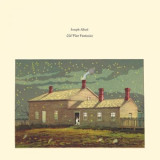
The songwriter Joseph Allred is always prolific, but breaks up their string of solo releases for one of the most orchestrated offerings since the excellent Branches And Trees. Allred’s often monastic guitar works are fleshed out here on Old Time Fantasias, turning them towards ensemble visions of country, Americana, and Appalachia. Album opener, “The Groundhog,” features the distinctive piano of Hans Chew, with bass from Daniel Kimbro and brass from Mikey Allred. Elsewhere the new album features Kelby Clark, Courtney Werner (Magic Tuber String Band), Evan Morgan (Magic Tuber String Band), Lydian Bramblia, and Jack Bird in the mix. “I started recording this album in Spring ‘23, thinking I might be making a mostly solo acoustic album with a couple of duets thrown in for good measure. I met Hans Chew at a Nashville show a few months earlier and sent him a few tracks to see if he wanted to add anything to them. Before long the ‘solo acoustic album’ had given way to what’s probably the most involved and densely orchestrated album I’ve made to date. “I enjoyed following some threads of influence that aren’t as easily discernible in my solo playing—I hear some classic country and psychedelic flourishes, baroque pop glockenspiel and horns, percussion ideas that may be cribbed from Danny Elfman and Tom Waits albums, nods to post-rock-filtered western guitar twang, and a little Cocteau Twins dreaminess. “All in all this was a satisfying record to make. I’m especially grateful to the collaborators for adding their touches and making it a less solipsistic affair than it would have been otherwise. The political climate has changed so much over the last two years that I find it hard to imagine I could make a record with this kind of fantastic mood if I started now. I hope that it can maybe re-enchant those of us who are felling disillusioned.” —Joseph Allred
- A1: Big Ideas
- A2: Linoleum
- A3: The Company Of Strangers
- A4: Imagining France
- A5: Weight Of It All
- A6: Erasure
- B1: In The Headlights He
- B2: Heron
- B3: Perfume
- B4: If You'd Seen Him
- B5: The Wave
- B6: Godspeed
"Godspeed" ist das vierte Album des sechsköpfigen Indie-Ensembles aus der Londoner Grassroots-Szene, The Golden Dregs um Frotmann/Sänger Ben Woods. Nach dem Vorgänger "On Grace & Dignity" 2023 auf 4AD, nach der Einrichtung von Kate Bush' altem Studio als neue Produktionsstätte, nach Auftritten mit Future Islands und Ezra Furmann, fährt die neue LP zwar bisherige Soundsignaturen fort, ist aber deutlich direkter. Die zwar konstanten Hooks greifen selten auf bekannte Tropen zurück und lassen so Raum für unvorhersehbare Wendungen. "Godspeed" markiert eine neue Souveränität, Unabhängigkeit und kreative Absicht der Golden Dregs.
- Intro/Dream Inducement 01:31
- Jackie 02:04
- Changes 00:41
- Speed Of Light 01:16
- Project 79 01:19
- No No 01:05
- Happenings 01:04
- Falling 01:20
- Grounded 01:24
- Heat Maps 00:54
- Mind Meeting 01:11
- Rainbow Eternity 02:17
- Do That Now! 01:00
- Stiff Arrow 01:09
- June 15 00:34
- Scroll 01:09
- Crying Games 01:42
- Lost In Osaka 02:03
- Nerd Nork 01:44
- Avalon Control 00:45
- What Is? 01:06
- Take Flight... 02:09
Illusive Bristolian producer Claude Cooper returns with ‘Friendly Sounds Vol 1’; part psychedelic trip, part romping beat tape, part party. The album was inspired by the vinyl discoveries made from Cooper’s months of digging and cataloguing the bulging inventory of Bedminster’s Friendly Records record shop. Cooper fed these myriad captured sounds through the studio and then, blurring the lines between sampling and performance, arranged and embellished them with keyboards, drum machines, bass guitar and more, also co-opting BEAK> bassist Billy Fuller and esteemed composer Ben Salisbury to contribute.
With most of the tracks in and out within 90 seconds, the album is best enjoyed as a continuous course. Play side A, play the B, then flip it back and listen all over again. Stand out moments include tremulous cut ‘n’ paste jam ‘Jackie’, the moody string-laden ‘Rainbow Eternity’, funky sitar workout ‘Nerd Nork’, and atmospheric closer ‘Take Flight’. Sharing a similarly broad and experimental sound palette as the likes The Avalanches, Madlib, The Go Team, and Edan; ‘Friendly Sounds Vol 1’ is the soundtrack to a wild joyride down South Bristol’s North Street, foot on the gas, hand on the horn, LPs spilling from the boot.
Cooper’s irrepressible debut album ‘Myriad Sounds' (Jan ‘22) caught the attention of the UK's press and radio alike. Mojo's four star review described it as “Bristol’s beat scene backdrops late night jams”, Uncut enjoyed the "rugged psych-funk romp" and Louder than War declared "it’s vital and vibrant and exactly what we need to kick start the year”. Bonus round 'More Myriad Sounds' (Apr ‘23) added Brooklyn vocalist Brain Fog to the melange with a bounty of pyretic vocal performances. DJ Mag called it “A fierce, kaleidoscopic trip” while Bandcamp Daily said “This album of cross-genre influences is as likely to get it included in any number of best-of columns, with the theme of serious fun as their common element”. Called a "mysterious Bristol breaks scientist" by Lauren Laverne, BBC radio DJs including Cerys Matthews, Gideon Coe, Huw Stephens, Jamie Cullum, Stuart Maconie, and Tom Ravenscroft have rinsed Cooper’s tracks, with Huey Morgan inviting Cooper to contribute a Block Party Mix for his show.
‘Stay A While’, the first showing of Cooper’s new shop sampling stunners, was released on 7” in January ‘24. Lush string flourishes sliced with 6Ts girl-group vocals and rollicking piano chords resulted in a dreamy, end of night, lights up anthem in-the-making that The Arts Desk called “A horn-fired, beatsy, chop-around that recalls The Avalanches”. Releasing the album is Friendly Records, the best little record shop in Bristol and now a burgeoning record label. Opened by Tom Friend on North Street in 2016, it’s gone on to become a hub of the local musical community. As well as Claude Cooper, the label has released LPs by Alison Cotton, Floating World Pictures, Christian Madden & The Enemy Chorus, Nick Craft, as well as handling the War Child series of 7”s with BEAK>, Idles, J Dilla, PJ Harvey, Portishead, and Sleaford Mods + Hot Chip.
Claude Cooper will DJ at the one-day Friendly Festival on 10th May in aid of War Child, which will feature Sleaford Mods, Katy J Pearson, The 45s, Zalizo and DJ sets by Ishmael Ensemble, Heavenly Jukebox and Friendly Records DJs.
- Placelessness I
- Placelessness Ii
Following nearly 20 years of working together as a trio, and numerous cross-collaborations in different configuration between them, Ideologic Organ presents Placelessness, the debut full-length by Chris Abrahams, Oren Ambarchi, and Robbie Avenaim, comprising two long-form works at juncture of ambient music, minimalism, rigorous experimentalism and improvisation, and machine music. Having carved distinct pathways across a diverse number of musical idioms for decades, Chris Abrahams, Oren Ambarchi, and Robbie Avenaim are each, respectively, among the most noteworthy and groundbreaking figures to have emerged from Australia's thriving experimental music scene. Ambarchi and Avenaim first encountered Abrahams when seeing the Necks - the project that has served as the primary vehicle for his singular approach to the piano since its founding in 1987 - together during the late 1980s, not long after having met in Sydney's underground music community. The pair's collaborations date back more than 35 years, criss-crossing Ambarchi's pioneering solo and ensemble work for guitar and Avenaim's visionary efforts for SARPS (Semi Automated Robotic Percussion System), robotic and kinetic extensions to his drum kit. In 2004, fate brought the three together in a trio performance at the What Is Music? Festival, the annual touring showcase of experimental music founded and run by Ambarchi and Avenaim between 1994-2012. For the nearly two decades since, Abrahams, Ambarchi, and Avenaim have intermittently reformed in exclusively live contexts, in Australia and abroad, cultivating and refining the fertile ground first tilled in that early meeting. Placelessness is the first album to present this remarkable trio's efforts in recorded form. Placelessness is the joining of three highly individualised streams, working in perfect harmony; the point at which friendship, mutual respect, and decades of creative exploration produce a singular spectrum of sound. Featuring Abrahams on piano, Ambarchi on guitar, and Avenaim on drums, the album's two sides draw on each artist's enduring dedication to long-form composition. Its two pieces, Placelessness I and Placelessness II, initially began as a single, 40 minute work, before being divided and reworked into distinct, complimentary gestures for the corresponding sides of the LP. Beginning with restrained clusters of reverberant piano tones, Placelessness I progresses at an almost glacial pace, with Abrahams' interventions increasing met by sparse responses, darting within vast ambiences, on guitar and percussion by Ambarchi and Avenaim. Remarkably conversational within its convergences of tonal, rhythmic, and textural abstraction, over the work's duration a progressive sense of tension unfurls and contracts, refusing release, as each of the ensemble's members contribute to an increasingly tangled sense of density at its resolve.While an entirely autonomous work, Placelessness II rapidly realises a distillation of the energy hinted at across the length of its predecessor. Following a luring passage of harmonious calm, Abrahams' launches into shimmering lines of repeating arpeggios, complimented at each escalation of tempo by Avenaim's machine gun fire percussion work and Ambarchi's masterful delivery of tonality and texture, as the trio collectively generate dense sheets of pointillistic ambience within which individual identity is almost lost, before slowly unspooling into unexpected abstractions and dissonances that deftly intervene with the work's inner logic and calm. What could easily be termed a maximalist take on Minimalism, Placelessness is a masterstroke of contemporary, real time composition, that blurs the boundaries between ambient music, experimentalism, free improvisation, and machine music. Drawing on Chris Abrahams, Oren Ambarchi, and Robbie Avenaim's decades of respective solo and collaborative practice, and the culmination of nearly twenty years of working together as a trio, it's two durational pieces - Placelessness I and Placelessness II - take form with a startling sense of effortlessness and grace, neither shying away from explicit beauty or rigorously tension within their forms
- A1: Equinox (Jon Lawton Remix)
- A2: After The Silence (Dorothy Bird Remix)
- B1: Avatars (The Orchestra Of The Northern Territories Remix)
- B2: Voices (Blood Of Achilles Remix)
‘Devotion to a Noble Ideal’ is the first EP release on vinyl from The Revolutionary Army of the Infant Jesus. Part retrospective and part reimagining of their work – the EP contains 4 tracks, each produced in collaboration with a different creative partner, offering a sometimes radical reinterpretation of three previous works as well as one new piece. It is a startling body of material from the Liverpool based art house collective that, nearly 40 years since its inception, continues to evolve. Formed in Liverpool in 1985, the Revolutionary Army of the Infant Jesus is a unique experimental ensemble whose work goes beyond music. Their mesmerising recorded material is influenced by diverse cultural perspectives and stimulates a deeply personal and subjective awakening. Ethereal vocals, ambient compositions, chants, acoustic instrumentation and field recordings generate beautiful and emotionally intense soundscapes. Includes a double sided 12” insert of illustrations by Mr John Varley, Mr Prince and Miss Macfarlane from the publication THOUGHT-FORMS by Annie Besant and C.W. Leadbeater