Seven Steps to Heaven arrived at a crucial junction in Miles Davis' career. Recorded at two separate locations in spring 1963, it served as Davis' first release in more than a year – a layoff that was then unprecedented for the jazz visionary who had issued at least one LP a year since debuting in the early '50s. Equally notable, Seven Steps to Heaven marks the point at which the core of Davis' Second Great Quintet started to assemble. The twice Grammy-nominated effort is also Davis' final studio record to blend standards with originals. And it happens to be one of the expressive, well-played albums in the jazz canon.
Sourced from the original master tapes, pressed at RTI, and housed in a Stoughton gatefold jacket, Mobile Fidelity's 180g SuperVinyl LP of Seven Steps to Heaven adds yet another step (or more) towards the bliss suggested by the album title. Playing with standout clarity, detail, tone, and balance, this audiophile reissue pulls back the curtain on the instrumentalists. Afforded the tremendous advantages of SuperVinyl – including a nearly inaudible noise floor, dead-quiet surfaces, and superb groove definition – this numbered-edition version presents Davis and Co. amid a wide, deep soundstage whose dimensions and solidity help bring the record's historical importance and musical merit into focus. Warm, organic, and present, the SuperVinyl LP of Seven Steps to Heaven is what great-sounding hi-fi is all about.
And there's nary a passage on this 1963 landmark that isn't great. That Davis manages to make it feel so cohesive and seamless is a testament to the inspired performances and engaging compositions. Davis didn't draw it up the way it unfolded. No matter. He held trump cards that stayed up his sleeve for the next three decades: A drive to be nothing less than superb, a refusal to settle for mediocrity, and standards to which nearly no other composer or player could match. "The toughest critic I got, and the only one I worry about, is myself," Davis wrote in the liner notes. "The music has to get past me."
Davis' demanding approach partly explains why he switched up his band between the first and second sessions – and underscores how fast his mind was racing with new ideas. Seven Steps to Heaven acts as the stable bridge between the transitional period that followed the dissolution of his First Great Quintet and formation of the Second; without it, Davis perhaps doesn't invite then-23-year-old Herbie Hancock and a still-teenage Tony Williams into the fold. The trumpeter not only got his men – he preserved in amber for the only time (well, magnetic tape anyway) the chemistry and vibe he achieved with pianist Victor Feldman, drummer Frank Butler, tenor saxophonist George Coleman, and bassist Ron Carter.
That line-up gels for half of the six songs on Seven Steps to Heaven. Captured in Los Angeles April '63, the quintet stretches out on a luxurious reading of the late '20s New Orleans staple "Basin Street Blues"; lays on the romance for a candlelit stroll through the '40s standard "I Fall in Love Too Easily"; and explores the rounded contours and melodic crevices of the early blues "Baby Won't You Please Come Home." The performances are refined, elegant, emotional; the band lets the feelings linger and gives the listener time to absorb the colours and textures.
A month later, Davis returned to New York City with Coleman and Carter, and partnered them with Hancock and Williams. Tellingly, the quintet tried its collective hand at the title track and "Joshua" – Feldman-penned songs already recorded in Los Angeles – as well as the yearning "So Near, So Far." Those are the tunes that comprise the other piece of Seven Steps to Heaven, with the revised quintet's liquid pulse, articulate dynamics, and timing shifts a harbinger of things to come.
It's also worth mentioning that the interpretations of the bounding "Seven Steps to Heaven" – a showcase for Davis' trumpet – and interlocking "Joshua" netted considerable radio airplay and attracted the attention of other contemporaries who covered the songs. Keeping Carter and Williams as the rhythmic engine, and Hancock as the anchor between solo flights and structural motifs, Davis would soon soon welcome Wayne Shorter into the family and transform jazz. Again. The aptly – and, in hindsight, perhaps prophetically titled Seven Steps to Heaven – is how he got there.
Cerca:idea 6
Sourced from the Original Master Tapes and Presented in Audiophile Sound for the First Time: Mobile Fidelity’s Numbered-Edition 180g SuperVinyl LP Plays with Riveting Detail
Three decades before he released The Philosophy of Modern Song — an insightful book devoted to 66 tunes that both impacted his career and the music world at large — Bob Dylan issued Good As I Been to You. The under-heralded 1992 album, Dylan’s first solo acoustic album in nearly 30 years and first all-covers effort in nearly 20 years, can be seen as a prophetic prelude to what has become the Nobel Laureate’s celebrated late-career arc. It’s also an absorbing continuation of the custom Dylan has embraced since he first picked up a guitar.
Sourced from the original master tapes, pressed at RTI, and housed in a Stoughton jacket, Mobile Fidelity's numbered-edition 180g SuperVinyl LP of Good As I Been to You reveals the immediacy, detail, and stripped-down nature of recording sessions that took place in Dylan’s garage studio in California. Simple, raw, and unplugged, the record presents Dylan in peak form — and showcases a diversity of vocal phrasing, soulful chording, harmonica accents, and close-up ambience that on this reissue emerge like never before. As the first-ever audiophile edition of this almost-lost classic, this LP also benefits from SuperVinyl’s extraordinary properties: a nearly inaudible noise floor, superb groove definition, and dead-quiet surfaces among them.
Recorded and mixed by Micajah Ryan, and supervised by Debbie Gold, Good As I Been to You took shape at Dylan’s home shortly after the singer-songwriter completed sessions in Chicago with a full band. Unaccompanied, he again gravitated to existing works — in this case, traditional folk music — and, with Gold serving as a trusted advisor, performed the songs in multiple keys and tempos until he arrived at what he desired. That careful, determined albeit loose, organic approach emanates from this reissue, on which each note, movement, and space come across more directly, fully, and immediately than on the original formats. It helps draw a through-line to Another Side of Bob Dylan (1964) as well as the similarly themed follow-up, World Gone Wrong (1993) and immersive old-world storytelling of Tempest (2012) and Rough and Rowdy Ways (2020).
Well before Dylan made those renowned 21st century LPs, however, he needed to find a way out of a funk that — save for his 1989 collaboration with Daniel Lanois, Oh Mercy — followed him for years. As author Clinton Heylin reported Dylan admitting in 1997: “My influences have not changed — and any time they have done, the music goes off to a wrong place. That’s why I recorded two LPs of old songs, so I could personally get back to the music that’s true for me.”
Truth: Few, if any, concepts better encapsulate Good As I Been to You. It resonates with the same originality, honesty, resolve, and age- and time-defying relevance as the seminal Anthology of American Folk Music that fired Dylan’s imagination as a kid in small-town Minnesota and, later, per Greil Marcus’ That Old Weird America book, informed Dylan and the Band’s Basement Tapes sessions. This record also contains the type of music Dylan was playing during his acoustic sets at his period Never Ending Tour shows; within a year of the record’s release, Dylan would play half the album’s songs live.
As for those songs: Rife with strange mystery, common circumstance, and epic adventure, the stories appeal to our base instincts. Their themes — jealousy, temptation, sacrifice, love, revenge, identity, opportunity — operate on a fundamentally human level immune to trends, generations, or eras. They’re ancient and modern, serious and comical, open and disguised, simple and multi-layered. They talk of vengeance and justice (“Frankie & Albert”; “Jim Jones”), romance and tenderness (“Tomorrow Night,” “Froggie Went a Courtin’”), the troubled and trouble-free (“Hard Times,” “Sittin’ on Top of the World”). They lend voice to lovers scorned and freed (“Blackjack Davey”), the used and users (“Diamond Joe”), the powerful and powerless (“Arthur McBride,” “Canadee-I-O”), the followed and followers (“Little Maggie”). And akin to much of Dylan’s finest output, things are not always what they appear to be.
Spanning country, folk, sea shanty, bluegrass, and blues motifs, Good As I Been to You re-confirms Dylan’s position as an elite interpreter and sculptor — not of just structure but emotion. Dylan delivers the tunes as if he’s known them forever. He plays with a subtle sense of mischievousness and retains a largely upbeat demeanour; his eyes seemingly twinkle as he sings and picks. His guitar serves as the guidepost for shuffles, boogies, ballads, and mess-arounds while his innate feel for each specific arrangement and melody helps inform pacing, tone, attack.
Like a great author, he understands the importance of adhering to concision, luring an audience, holding their attention, and maximizing the impact of details, actions, and unexpected turns. Though already coarse and ragged, his voice feels ideal for the subject matter and his phrasing — from the clever ways he stretches syllables to underline meanings on the surprise twists of “Canadee-I-O” to the sheer delight he gets from singing “rowdy-dow-dow” on the protest song “Arthur McBride” — outstanding.
- A1: When The World Is Feeling Blind (Feat Arya &Amp; Tahnee Rodriguez)
- A2: Cambio Di Stagione
- A3: Frastuono
- A4: Tipografia Miserere
- A5: Little Girl Ready For Big Dreams (Feat Mei &Amp; Tahnee Rodriguez)
- A6: Polibomber
- A7: Badanti
- A8: Bacigalupo
- A9: The Big White Shark
- A10: Dentro Fuori
- A11: Elena O Nadia Flashback
- B1: It`s Like Blanca
- B2: Epico Lirico
- B3: Carignano
- B4: Fatti Sentire
- B5: Nessun Dorma Da &Quot;Turandot&Quot; (Feat Francesca Biliotti)
- B6: Sampierdarena
- B7: Giostra
- B8: Sembra Ieri
- B9: Habibi Lullaby (Feat Rahma)
Calibro 35 unleash the new OST for the second season of TV series BLANCA, to be released on limited edition LP on December 1st 2023.
Italian cinematic cult outfit CALIBRO 35 announces the release of the ORIGINAL SOUNDTRACK of the second season of BLANCA, the TV series produced by Lux Vide in collaboration with Rai Fiction, broadcast in prime time on Rai 1 starting from Thursday, October 5th 2023 and directed byJan Maria Michelini and Michele Soavi. The soundtrack will be released worldwide on limited edition, crystal clear LP next December 1st via Milan based label Record Kicks.
The new thrilling episodes of Blanca Season 2 follows the success of the first season, that was aired worldwide on Netflix, M6 France and Telecinco Spain. Accompanying the journey is once again the original music of CALIBRO 35 the Italian "cult" cinematic combo active for over 15 years and with a fan base that includes superstars such as Dr.Dre, Jay-z and Damon Albarn. Made up of 20 tracks in total, the OST was entirely composed by CALIBRO 35 that created the sound universe of BLANCA: an impressive and choral work, which has engaged all the components of the band for a long time, giving the them the opportunity to develop a very vast soundscape.
"It's the first time that we deal with the creation of a 'season 2' and we discovered that the creative process can be very different" Calibro 35 says. "In the first season, we had to build from scratch a sound and musical world consistent with the idea that Jan had (Michielini, director and showrunner of the series); this time, however, we had to develop that already existing world further, in order to describe the new stories and new different characters of the second season. There had to be undiscovered musical territories, that forced us to step out of our comfort zone." The result is that on the 20 tracks of the ost, the heavy dose of Calibro's signature funk grooves of tracks such as "Badanti, "Carignano", "Cambio di Stagione" or "Sampierdarena" is mixed with more moody and soulful tunes, world music, opera and atmospheres à la John Carpenter. Amongst the album's highlights worth definitely a mention the Opening and End titles that feature the voices of Arya, MEI and Tahnee Rodriguez. Essential contribution to the recordings were made by Francesca Biliotti - mezzo soprano of the Monteverdi Choir, Valeria Sturba - exceptional multi-instrumentalist of the avant-garde music group OoopopoiooO, Rahma Hafsi and Elisa Zoot.
Described by Rolling Stone as "the most fascinating, retro-maniac and genuine thing that has happened to Italy in the past few years", Milan-based Calibro 35 enjoy a worldwide reputation as one of the coolest bands around. Active since 2007, during their long career they were sampled by Dr. Dre on Compton ("One Shot One Kill" feat. Snoop Dogg), Jay Z ("Picasso Baby"), The Child of Lov & Damon Albarn ("One Day") and Demigodz ("The Summer Of Sam"). They played major venues and festivals all over Europe and as unique musicians they collaborated with, amongst others, PJ Harvey, Mike Patton, John Parish, Stewart Copeland and Rokia Traoré. The BLANCA OST is the latest of many activities concerning cinema for CALIBRO 35: the band has been completely immersed in the world of soundtracks since the very beginning and they have recently worked on other productions as well, both as Calibro and individually. Last June, the band released their 8th studio album, NOUVELLES AVENTURES, recorded in Naples at Auditorium Novecento. With the new LP the group has made full use of their knowledge and resources, refined and enriched over the years, back to making "Calibro's music": a unique mix of funk, progressive rock, alternative jazz and wide-spectrum cinematic music the public has known them for in fifteen years of career.
This music unites our common love for the essence of music, which contains harmonic structures and emotionality without borders." — Musique Infinie
Musique Infinie, the new duo consisting of Noémi Büchi and Feldermelder, is rooted in a shared desire to intertwine two composing veins, and to merge them into a new, massive core. While Büchi combined her background in classical and electro-acoustic music with a bold approach to composition on her highly acclaimed debut album 'Matter' (-OUS, 2022), multi-disciplinary musician and artist Feldermelder has been expanding his artistic practice into unexplored realms for over 20 years. Mutually, they've challenged themselves to fully engage on an artistic exploration aimed at making use of the elementary forces that unfold between them.
Their debut album, simply titled 'I', is a musical hybridization. The compositions make use of simple motives that are radically transformed by expanding them into intricate structures and fantastic layerings. The overcoming of genres with eclectic elements from classical music, jazz, film music and traditional music, combined with the vocabulary of experimental electronic music, complete the vertical plunge into this thickness. The emerging pieces lead into a paradoxical world, both disturbing and euphoric. Pieces that don't give in to calculations and expectations, but progress through ruptures and repetitions. The richness of the compositions and their analog, acoustic and orchestral character reflect the density of the world with its violence, its decadence, its fragility, but also its power, its ingenuity and its beauty.
Composer and sound artist Noémi Büchi creates electronic, symphonic maximalism. Her music is defined by a delicate synthesis of textural rhythms and electroacoustic-orchestral abstraction. She explores the potential of consonance and dissonance, contrasts rhythmic physicality with disruption and playfully emphasizes irregularities, creating an expansive listening experience marked by detail and elevation.
Feldermelder is a polymathic creative whose artistry spans composition, sound design, installation and code. He is co-founder of -OUS Records and an active member of Encor.studio, a collective specialising in creating immersive audio-visual installations. Through his work, he explores the idea of secrecy and its impact on our lives, using music and sound to create a thought-provoking and immersive experience for his audience.
Tape
Vestigios, Aeondelit’s second full length record after recently releasing an EP of shifting club music influenced by postmodern philosopher Leotard on Tel Aviv’s Sadan records, tells a lucid, captivating story of heritage, transformation, vulnerability and healing. It will be released via Berlin-based art platform and record label Unguarded as a digital and tape release with an artwork created by Petra Hermanova, and will be accompanied by limited textile pieces by Diane Esnault. Aeondelit’s music is strongly influenced by the rocky surrounding of his hometown Manizales and fuses electronic sensibilities, ambient streams and avant-percussive rhythms that build his sound identity. Aeondelit's evocative music has previously been released via the Insurgentes imprint, Vienna-based Ashida Park and was recently featured on the 'Unguarded 2 – Entangled' compilation. Cortés describes the meaning of Vestigios as such: “The memories of past generations: the lives that burn within me, are the pillars of who I am. They constitute longings and traps, sin and strength, the temple that breaks down and rebuilds. The different dimensions of consciousness converge in the mind, which constantly tells us who we are, synthesizing and projecting our contradictions. The pain that comes with getting in touch with our vulnerabilities opens the doors to healing through confrontation. This lays the foundation for a more honest relationship with our past, present and future. 'Vestigios' is the bridge between the temporal and the eternal, the crystallized remnant of pain caused by transformation and recognition of the convulsive underworld of our psyche.” Aeondelit, birth name Sergio Cortés, is a Colombian music producer who explores themes related to technology and human condition in sound. He focuses on the creative use of sample manipulation techniques and digital sound synthesis to deepen the idea of a dialogue between computer and human, and how both influence each other. Deep in Colombia's Andes, surrounded by big mountains and the sacred Nevado del Ruiz, Aeondelit has been forging his own sound identity, exploring the intersection points between sparkly experimental club music and melodic ambient electronic. His first release Editing Destiny on the Colombian label Insurgentes was well received by the public and DJs, named one of the best albums of 2020 on Mixmag. His last release on Sadan Records, Anima Minima, was reviewed and premiered on platforms like DJ Mag, THE BRVTALIST and Orb Mag. He is also the co-founder of the independent record label Nvrclose, where his debut album as Æon Series: Dualidad, was released. About Unguarded: Unguarded is a Berlin based experimental electronic music label and art platform. In 2020 long-term collaborators Tim Roth aka Sin Maldita aka 1k Flowers and Phillipp Hülsenbeck founded Unguarded to foster forward thinking artists with a focus on exploring cross-disciplinary collaboration and embarking on sonic adventures. Unguarded was founded in a time of turmoil and uncertainty for artists and music, trying to keep personal connections alive through shared personal and collective experiences between doom and destruction and glistening hope. Amongst their own contributions, Hülsenbeck and Roth gather a collection of genre-defying works by longtime collaborators as well as artists they bonded with in recent years. Their releases constantly escape from definition but through entangling their unique artistic marks, this diversity remains absorbing and compelling throughout their sprawling sonic miasmas. Combining earth-shattering club cuts, equally elegant and bouncy, Unguarded contributes to and connects the experimental music scene in and outside of Berlin. We invite the curious to a deep, tense but rewarding experience.
- A1: Suprême Ntm Feat Lord Kossity - Ma Benz
- A2: Les Sages Poètes De La Rue - Qu'est-Ce Qui Fait Marcher
- A3: Rocca - Les Jeunes De L'univers
- A4: Ärsenik - Boxe Avec Les Mots
- A5: Busta Flex - J'fais Mon Job A Plein Temps
- B1: La Brigade Feat Lunatic - 16 Rimes (Le Chargeur Est Su
- B2: Beat De Boul - Dans La Sono
- B3: Ideal J Feat 116 & Intouchable - La Voie Que J'ai Don
- B4: Neg' Marrons - Le Bilan
- C1: Sefyu - Molotov 4
- C2: Mac Tyer - 9 3 Tu Peux Pas Test
- C3: Alibi Montana Feat Nubi, Ol'kainry, Dany Dan & Sefyu
- C4: Explicit Samouraï Feat Sly The Mic Buddah - Mode V-Vr
- C5: Nessbeal - Rap De Tess
- D1: Flynt - J'éclaire Ma Ville
- D2: Soprano - La Colombe
- D3: Zoxea - 60 Piges
- D4: Ol'kainry Feat Raekwon - De Park Hill À Xx Pise
- D5: Triptik - Panam
- E1: Kaaris - Zoo
- E2: Vald Feat Damso - Vitrine
- E3: Sasso Feat Kaza - Elle Veut
- E4: La Fouine - Du Ferme
- E5: Younès Feat Médine - V'là Les Problèmes
- F3: Georgio - Héra
- F4: Niska - Réseaux
- F5: Lacrim Feat French Montana - A.w.a
- F1: Furax Barbarossa - Qui M'demandef
- F2: Plk - Dingue
LP reissue of Collective Calls, the first duo LP from Evan Parker and percussionist Paul Lytton. Mythically alluded to as ‘An Improvised Urban Psychodrama In Eight Parts”, Collective Calls utilises electronics, pre-records and homemade instruments to wryly in/act self investigation. Having just recorded the cliff jumping Music Improvisation Company with Derek Bailey, Christine Jeffrey, Hugh Davies and Jamie Muir, Parker was at the point where he was thinking, ‘what’s the next thing?’ On Collective Calls, only the 5th release to appear on the newly minted Incus label, percussionist Paul Lytton arrives with an arsenal of sound making sources to push Parker into ever new territory. Recorded in the loft of The Standard Essenco Co on Southwark Street by Bob Woolford (Topography of the Lungs, AMM The Crypt), Collective Calls has more in common with noise or music concrete than with jazz; sitting comfortably alongside Italian messrs Gruppo di Improvvisazione Nuova Consonanza or the husband-wife duo of Anima Sound. According to Martin Davidson, it was a Folkways record that Lytton was obsessed with around the time of this release - Sounds of the Junkyard - its track titles like “Steel Saw Cutting Channel Iron in Two Places” working to give you a good idea of the atmosphere of Collective Calls. Paul Lytton had encountered the use of electronics in music in 1968 when he was invited to play drums on the recording of An Electric Storm by White Noise (along with David Vorhaus, Delia Derbyshire and Brian Hodgson). He had seen Hugh Davies using contact mics in the Music Improvisation Company, and soon set about assembling a Dexion frame akin to drummer John Stevens’, except that his own was armed with several single-coil electric guitar pickups, long wires and strings with connected foot-pedals to modulate pitch. Influenced as much by Stockhausen, Cage and David Tudor as he was by Max Roach and Milford Graves, Lytton’s percussion is abstract, expressionist and at times totally mutant. Sometimes rolling extremely fast, then screeching almost backwards over feedback, Lytton gives Parker room to play some of his weirdest work. Parker is listed as performing both saxophones, but also his own home made assemblages, including one dubbed the ‘Dopplerphone’ - a length of soft rubber tubing (activated by a saxophone mouthpiece and manipulated to alter the rate of airflow) attached to a longer length of clear plastic tubing (whirled around the head whilst being played) ending in a plastic funnel. Thickening the brew even more, Parker would also add a cassette recorder, on which he would play back collected sounds and previous recordings of the duo. Imagining the set up in a 70s loft, it’s an assemblage more akin to what today's free ears might see at a Sholto Dobie show, spread out on the floor of the Hundred Years Gallery, the shadow of Penultimate Press lurking in the corner. It’s a testament to Parker’s shape shifting sound - the ever present link to birdsong being at its most warped here - terrifically free and unfussy, wild and loose from any of the dogma that might come in later Brit-prov years
Hot Water Music singer Chuck Ragan and End Hits Records will collaborate to release the sought-after THE BLUEPRINT SESSIONS of the country/folk singer for the first time in a deluxe double vinyl version. Originally, these recordings were only available through a monthly 7" subscription offered by Florida punk rock cult label NO IDEA. For over sixteen years, these singles have been out of print and have become sought-after collector's items. That's why Chuck Ragan and End Hits Records have decided to make these songs available again, combined on a double LP. The 16-track collection is packaged in a deluxe gatefold sleeve and comes with printed inner sleeves. All versions of the sixteen songs included are exclusive to this release and have been specially remastered for vinyl. The double album will be released worldwide through End Hits Records and will be available in four extravagant vinyl configurations. Additionally, End Hits and Chuck Ragan are excited to offer eco-friendly, recycled vinyl for the first time. Each recycled record is unique and will have an individual look due to the recycling process.
Orphax & PONI (person of no importance) is a collaboration between the two Dutch brothers, Sietse (Orphax) and Tjeerd (PONI) van Erve. Since their early years they share a broad interest in music, fed mostly from their fathers’ record collection, ranging from early blues to Pink Floyd or Beethoven. But also listening to Belgian radio channel Studio Brussels (which during the late 80s and early 90s was a common listening close to the borders between The Netherlands and Belgium), and the late night Dutch radio inspired them in exploring the rough edges of underground music.
An exploration that gave them a common interest in indie and noise rock, but soon enough both followed their own path in music. Tjeerd moving more into underground guitar music, whilst Sietse developed a wider interest in (experimental) electronic and contemporary music. Both as listeners, but also exploring their own interests as musicians.
Now many years later these musical paths cross again in this album Inheritance (with a slight imagination, a translation of their last name van Erve). An album where Tjeerd brings in his dark and noisy lo-fi guitar songs and Sietse brings in his drones and electro-acoustic composition styles.
The album opens with its longest track, “As Received”. This combination results in a slow developing drone, with the intensity and tension of a well build-up post-rock track, that slowly unfolds Tjeerd his guitar layers and vocals. The title of the song refers to one of the PONI projects, where Tjeerd would send rough recordings to befriended musicians who than would rework those recordings without any restrictions which then would be released side by side with the original rough recordings. A project which actually sparked the idea of this collaboration (and that can still be listened to on PONI’s bandcamp-page).
On the flip side of the record, three shorter works give more room for regular song structures. In “Sunburns” this results in slowcore with subdued vocals, melancholic guitars and nasty synth and organ drones. When Tjeerd wrote the basis for the song, he actually had been listening to a lot of Codeine and Bedhead. One does not need much fantasy to recognize the influences of these bands.
“The Tears Are Necessary” is build up around various broken up piano tracks accompanied by moody drones to develop a fragile song.
The album closes with “Lockdown”, opening with silence as a moment of contemplation after the previous work but then quickly develops in a playful song where improvised play on piano, guitar and modular synthesizer create a lo-fi gem that clearly shows that both brothers still haven’t lost their love for Sentridoh or Guided By Voices.
All together resulting in an album that is an ode to the love of music, experiment, and creativity and a celebration of brotherhood.
Natural Bounce Is the Joint Venture of Melbourne Underground Record Stores: Natural Selection & Bounce Audio. the Idea Behind the Label Was to Celebrate Australian Dj's and Producers While Bridging the Gap With Their European Counterparts. for Their First Release, House Groove Master Binofski Delivers 3 Tracks Cut for the Dancefloor and Got Politics of Dancing on Remix Duties! All Stars Line Up for This First, Very Promising, Ep...
Temple, Bassey, MacLaine and now, Hurt; in a world of Shirleys, the name Sophia Ruby Katz has chosen for her music is perhaps prophetic as it captures her stunningly emotive vocal approach. And whilst Shirley Hurt might be the perfect nom de plume for the creative Toronto-based artist, it’s her self-titled debut album which positions her as protagonist of her own universe.
Traversing sonic landscapes, Shirley Hurt’s vocals ebb and flow like lyrical Ley lines tracking the contours of her own well-travelled map. By the age of 18, Hurt had travelled extensively, having lived in upwards of 20 different apartments and houses, as a result never really feeling “at home” anywhere. At this age was when Hurt found herself in New York, dipping her toes into various scenes and musical realms. The first and only place she ever felt at home, and a partial home-base for her, she travelled between Toronto and New York until the age of 26.When the project she was working on in New York reached a dead-end she returned West, moving in with musicians Harrison Forman (Hieronymus Harry, Zones) and Patrick Lefler (Roy, Possum). Being surrounded by their improvising at all hours, a new approach emerged. “Harrison is a virtuosic guitar player, and I hadn't picked up a guitar in any serious way since I was 16,” she says, “by osmosis I started playing again for fun.” Without agenda, the process grew organically from there.
Hurt and Forman decided to travel across the US and Canada in a trailer for half a year, with the entire album written in the final months of their trip. Hurt had been writing loose ideas here and there but felt blocked creatively. When the pair reached Berkley, they wound up house-sitting for a tuned-in friend who recommended she pray, in a very direct way, to remove the block. “I took her advice and to my surprise it worked. The album was conceptualized and finished within a couple of months.” Shapeshifting in tone and phrasing, Hurt’s music alchemizes the furthest corners of experimental indie folk, pop, and country into a singular sound with elegant unpredictability.
Whilst Shirley Hurt’s lyrical and structural ideas may have emerged on the road, the album was self-produced and recorded at Joseph Shabason (The War on Drugs)’s Aytche studio in Toronto’s West End. It was engineered by Nathan Vanderwielen and Chris Shannon (Bart), and Hurt enlisted collaborators Jason Bhattacharya, Nick Dourado, Patrick Lefler, and Harrison Forman to hone her vision. “I wasn’t sure what was going to happen with the songs until we returned to Toronto,” she recalls. “Joseph and I had been talking about working together after sending across some demos and Jason happened to recommend his studio at the exact same time, so everything came together naturally at that point.”
Whilst her most recent adventures may have seen Shirley Hurt bound for Texas as an official SXSW artist (hand-picked by Gorilla Vs Bear to perform at their own showcase), she currently resides in her native Canada, more specifically rural Ontario, close to friends and family, and is already working on her second album. The ties to lineage are interwoven in the fabric of the music. Hurt’s mother, artist Leala Hewak, instilled a lust for life and innate value of creativity in her from a young age as she explored the role of gallery owner, vintage jewellery show host, mid-century modern furniture expert, real estate agent, painter. Hurt’s father, a civil litigation lawyer and new-wave obsessed music lover with an extensive vinyl collection, introduced Hurt to a wide-range of artists at a young age such as Nina Hagen, Laurie Anderson, Tom Tom Club, and endless others.
In her video for ‘Problem Child’ Hurt’s grandmother walks her through a generationally revered pie-making process. One would be tempted to hear this, and other songs, as autobiographical. Yet, Hurt’s lyrics are rarely pulled from her relationships or personal history––at least not consciously. Rather, they arise from somewhere less tangible or defined. “Lyrics tend to come to me when I am doing non-musical things - washing dishes, brushing my dogs, walking to the grocery store. I have a lot of voice memos on my phone and half-filled notebooks and when I hear something, I have to stop what I'm doing to get the idea down. Usually it’s bits and pieces. It's rare a full song comes to me in one go, but it's great when they do, and those are often my favourites.”
Carving out a space of her own in an all-encompassing universe, Shirley Hurt is the introduction to a long artistic story, and if the journey so far is anything to go by, it will be stippled with evermore unpredictable chapters.
NOTON IS PLEASED TO RELEASE RAY COLLECTOR - A LIMITED EDITION VINYL FEATURING RECORDINGS SOURCED FROM TAPES PRODUCED BY CARSTEN NICOLAI' FOR HIS 2023 SOLO EXHIBITION STRAHLEN/RAGGI AT FONDAZIONE MODENA ARTI VISIVE.
IN FEBRUARY 2022, CARSTEN NICOLAI DISPATCHED TEN PARCELS FROM BERLIN TO VARIOUS DESTINATIONS. EACH PACKAGE CONTAINED A BLANK MAGNETIC TAPE CASSETTE, AN ILFORD DELTA 3200 ISO 1000 BLACK-AND-WHITE FILM, AND A KODAK ISO 800 COLOR NEGATIVE FILM. ALL PARCELS WERE ADDRESSED TO THE SAME RECIPIENT, MR. NEMO, THE UNFORGETTABLE CAPTAIN OF THE SUBMARINE NAUTILUS IN TWENTY THOUSAND LEAGUES UNDER THE SEA. THE IDEA WAS FOR THE RECIPIENTS TO RETURN THE PARCELS TO THE SENDER. EACH PACKAGE HELD MAGNETIC TAPES AND PHOTOSENSITIVE FILMS THAT WOULD BE EXPOSED TO ELECTROMAGNETIC WAVES AND RADIATION DURING THEIR JOURNEY. UPON THEIR RETURN TO THE SENDER, THE LATENT IMPRESSIONS WERE DEVELOPED, DIGITIZED, AND THUS MADE BOTH VISIBLE AND AUDIBLE.
After a decade-and-a-half of sustaining classic hip-hop and soul traditions and expanding them into the next generation, MMG has built a reputation as one of the last dependable bastions of quality. Its latest label compilation, Omakase, plays into the idea commonly found in the finest sushi restaurants: trust the chef. This time around Mello creates original songs across Hiphop, Jazz, RnB, and Soul featuring new songs from Kamaal Williams, Pale Jay, Chris Keys, Raheem DeVaughn, Marlowe, Apollo Brown, Fly Anakin, Denmark Vessey, Danny Brown, Stalley and more.
Channeling the spirit of the beach from radio waves echoing throughout space, Triptides began in the bohemian basements of Bloomington, Indiana in 2010, where Glenn Brigman and Josh Menashe shared ideas and influences before evolving to craft a complex yet cohesive range of lush, "psychedelic beach-pop" sounds. Originally released in 2013 (Stroll On records), Predictions is Triptides' third album. Taking production quality to a whole other level, it's their first professional studio recorded album evolving from home-made lo-fi production on Tascam 8-track cassette recorders. The snappy surf pop of the band's previous album has been replaced by tales of heartache alloyed with upbeat, exhilarating guitar pop a la The Byrds and their venerated lineage (Teenage Fanclub, Allah-Las, Temples). Predictions is another step closer to the West Coast where they'll relocate later, then becoming one of the most important Los Angeles Psychedelic pop bands. As part of Triptides' back catalog reissue series, Predictions has been carefully remixed, remastered, and repackaged and is now available in a limited deluxe edition colored LP.
Two previously unreleased collages for magnetic tape, both realized at the Studio di Fonologia Muisicale RAI in Milan. These pieces are precious testimonials to Aldo Clementi's intense and ongoing interest in electronic music in the 1960s. The electronic composition »Collage 2« from 1960 was his first experiment with electronic music. »Collage 3« dates back to 1966. It's an electronic collage on »Michelle« by The Beatles.
The composer wanted to replace old concepts and clichés which had become popular and common, through the use of "natural wells of timbre, live and organic, springing from a world of symmetry and fixed blocks." This original idea underwent a drastic transformation when the RAI (the Italian radio) commissioned Clementi to write a longer work. To his initial desire to start from scratch was added the problem of a longer duration. It was only when Clementi had almost completed the piece that he gave it its final title of "Dies irae," owing to the extreme tension that accompanied its composition.
- A
- B
- C
- D
- E
- F
- G
- H
- I
- J
- K
- L
- M
- N
- O
- P
- Q
- R
- S
- T
- U
A note from Lawrence English:
Occasionally ideas present themselves in ways that no one can expect. This recording from Australia’s Eugene Carchesio and the UK’s Adam Betts is one such unexpected presentation.
A couple of years ago, Eugene passed me a collection of recordings that he explained were in the orbit of his now legendary Circle Music series. The recordings, in Eugene’s particular manner, maintained an intensely rhythmic quality rooted in a deep and unwavering sense of minimalism. Eugene has a way of making a tiny cosmos from just the barest of materials. He wondered though, about mixing it up and adding something unexpected to the pieces, and asked about some drums being added.
At almost exactly the same moment, I had been reminded of the amazing work of Adam Betts, who I have been fortunate to be in the orbit of for more than a decade now. We’d first met at Bad Bonne, sharing a bill, and then crossed paths most recently in Tbilisi where he was performing with Squarepusher.
The reason Adam was on my radar though was entirely unrelated to music and it was down to the fact that he had just participated in a welsh toss competition and done quite brilliantly. Somehow, watching Adam lug those weights made me think he’d be the perfect candidate to work with Eugene on this project. To my delight, he agreed.
What results here is a melding of two incredible musical spirits, each of whom have an unerring sense of restrained energy and rhythmic ferocity. It is a parallel reading of how minimal motion can create giant affective waves of energy. It’s also a record of careful listening and generous exploration.
It’s not everyday music can emerge from such curious orbits of thought, but when it does it is a cause for celebration. With that in heart I am so pleased to share this incredible edition with you.
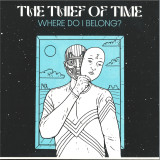
The first album release on Sprechen is a trip across the astral planes of electronica and through the neon soaked streets of South Manchester, where genres cross & styles meet on the creative peripherals away from the dance floor.
A life lived through clubs, comic books, cult movies, cosmic adventures & electronic musical endeavours have all played a role in the creation of 'Where Do I Belong?', the debut long player by The Thief Of Time, a new studio project from Sprechen founder Chris Massey.
What started as just very loose ideas and half started projects during lockdown resulted in a semi autobiographical collection of songs that draw on a lifetime love of electronic artists & synth heavy movie scores.
Nods are given, toes are dipped & caps are doffed in various sonic directions whilst still treading a truly unique path of its own making.
As Chris says: "it started really with me being in a headspace I've never really had in the studio. There was no pre-conceived ideas or agenda of what I wanted to achieve other than just going with what felt right and pursuing sounds & style I favour away from a smokey basement of ravers. Being a child of the 80's gave me a wealth of ever-evolving influences of sounds, styles, imagery, fashion, literature & art which all somehow seemed to direct this project.
It's the first time I've ever created something that contains personal reflections of my own life. Good & bad alongside the high & low points have all driven this creative process which reflects my own headspace will hopefully speak to everyone on some sort of level".
The album also features a host of Manchester artists including A Certain Ratio, Bay Bryan, Psychederek, NIIX & Love Letters From Space as well as Allison Rae from Causeway (Italians Do It Better) who were all instrumental in realising Chris' vision and bringing this exciting project into existence.
Golden Retriever returns to Omena with a release that is adventurous, pleasing and ethereal.
There's never been a more ideal time to revisit this artist and Nafasam is a testament to their enduring, transparent & unique compositions.
Six moving and ambitious songs. Absorbing, beatless rhythms blended with a beautiful light-touch and free-flowing feel for harmony, revealing true craftsmanship and a singular sound.
DJ Manny's new album 'Hypnotized' is full of fresh ideas which push the footwork format of 160bpm hyper-rhythmic music in really enjoyable new directions. He builds on the romantic themes of his last album 'Signals In My Head' and evolves them with shades of blue, taking very natural sounding experimentation into new moods and musical colour while never making the album inaccessible. Arguably this is a fine successor to the ground broken by DJ Rashad's 'Double Cup' album, which of course Manny also worked on. 'Hypnotized' solidifies Manny's style, from relaxed r'n'b rollers to moments of romantic distress - like 'WTF Goin On' and the reflective 'You N You (ft. DJ Phil)', to more intense moments like the dubstep inflected 'Ooh Baby' from the vaults, co-produced by DJ Rashad himself. Other tracks like 'Want U Bad' retool Robert Hood style minimal techno whereas dark, nervous belters like 'Turn Me Up' sound like Paul Johnson at his most wild but welded to footwork rhythms and a pumping jump up drum & bass-line. There are also moments of enjoyably hype daftness like the acid and diva head-fuck of 'Opera' or the old school Bukem style jungle homage 'Lost In Da Jungle'. 'Hypnotized' is an album that expands footwork's template with natural ease and outstanding skill.
'Ultrasound', the fifth release under the Banger Factory umbrella, is a further stride forward toward founder and trumpeter Mark Kavuma's vision of bringing together seemingly disparate elements from within the bubbling London jazz scene, uniting sounds, and players from across generations and creating a unique, exciting, and fresh sound all its own Marking the start of a new partnership with alto sax player Theo Erskine strengthening the imprints artistic reach and sparkling ever more creative ideas, Ultrasound is the product of hours and days spent practicing together during the pandemic - hours and days that turned into time spent plotting and planning future musical collaborations and projects when getting together in person became impossible. The recording itself captures the zeitgeist (spirit) of a unique moment in time when musicians starved of creative, collaborative music- making during the pandemic, were able to meet again and record, each track suffused with palpable joy, yet tinged with reflection. 'The Day After Tomorrow' promises respite from a hangover, 'The Return of Johnny Bravo' characterises a re-emergence in a whirlwind of excitement . 'June' describes the glinting skyline of a world- reopened and 'The Loneliest' explores how peace is drawn from inward sources in the loneliest of times. Personnel: Theo Erskin- tenor saxophone, Mark Kavuma - trumpet, Noah Stoneman - piano, Michael Shrimpling - double bass, Shane Forbes - drums