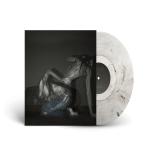
Following their 2023 LP Presents, Nathan Nelson's American Cream Band bring the Twin City heat back to Quindi with an album rooted in duality. From the yin and yang party-starting A side and meditative B side to the dual-attack boy-girl vocals, the nature of opposites and equals steer the expansive, artful strain of rock n' roll that spill out of this wholly unique Minnesotan export. For the ever intriguing Quindi, it's a strident step into Spring after the frosty introspection of Roudi Vagou & Läuten der Seele's Taghelle Nacht. While the world burns and injustice prevails, Twin is a celebration of unity and radical expression-all the more urgent against the backdrop of authoritarian overreach and righteous protest that has whipped through Minneapolis in recent times.
Twin continues Nelson's drive at the helm of American Cream Band to draw in a colourful cast of players to feed into his orgiastic sound, meshing the trance-induction of krautrock with the irrepressible funk of the post-punk-new-wave explosion. But principal among the cast of characters and forming a central tenet to the identity of this album is Liz Buhmann, lead vocalist and a formidable, playful foil to Nelson's own Midwestern twang. Around the electric spark between Buhmann and Nelson, a heavy duty ensemble wrangle guitar, bass, sax, a cornucopia of synths and a battery of percussion into all manner of sonic forms.
The double-sided concept manifests throughout Twin. On 'Call Me' Buhmann sings in French to contrast Nelson's English, while the strident strut of the NYC disco groove is offset by an inherent dreaminess that turns the track into a more cosmic kind of dancefloor workout. 'Ethical Vampire' is a spiky cut with a garage rock patina that spirals into a psychedelic, synth-soaked get-down. 'Don't Burn The House Down' is a loose and limber roller that captures Can at their funkiest along with the hypnotic vibe of other such esteemed long format jammers, but American Cream Band boils that energy into a hook-laden art pop sensibility before a gentle, drawn out landing.
Even the more pensive moments on Twin find space for friction. For all its tender, smoky temperament, 'Leda and the Swan' lets the electric piano and guitar fray at the edges and bleed into the red while Mat Heinrich's tumbling drums lurch with pent-up intensity on the one. 'No Funeral Necessary' skirts around the mellow pools of new age but prefers to let liberally doused Tape Echo tweak out Alex Meffert's honeyed sax inflections and Buhmann and Nelson's disparate sermons.
Nelson describes Twin as "an oppositorum coincidentia" - a reference to the mystical Latin concept of the coincidence of opposites that suggests contradictory ideas 'fall together' in a higher reality. Beyond the sound of the album, this idea also manifests in the cover photography by Sho Nikado and the swans on the LP labels by Autumn Garrington. As freewheeling and wide-open as American Cream Band feels, nothing appears by accident. The end result feels like a nourishing whole - rich with substance and nuance, deep enough to be explored and absorbed yet also so brazen and immediate you can't help but feel its surface charms from the first thrusts of 'The Hive Is Pissed' to the last ripples of 'We're Not So Sinister'.
Cerca:idea 6
Between electronic shadows and cinematic textures, this new album from QUENUM draws its influences from the likes of Massive Attack, Archive, and Burial. Started and produced in London, it reflects a change of time — both in the climate and within.
This project represents a personal and artistic turning point for QUENUM. He wanted to experiment with new ideas, not necessarily music for the club. The album was created in close collaboration with his son Zac, a talented musician who contributed both as a singer and instrumentalist on several tracks. They shared wonderful moments creating this album together.
He also worked hand in hand with his long-time friend Christophe Calpini, who played a key role in mixing and in developing the textures and atmospheres that shape the album’s sound. The result is an intimate, personal, and timeless journey, deeply rooted in the now.
Quenum elaborates: “The idea for my album was born during Covid in London, when concerts, museums, and social activities suddenly stopped. To cope, I started running daily and spending hours in the studio creating music. In our garden cabin I worked alongside my son Zac who was practicing piano, preparing for his entry into Trinity Laban Conservatoire. He listened to my tracks, and eventually contributed vocals with his ex-partner on two songs, ‘Blue Sky’ and ‘Never Like Before’. The album’s dark atmosphere reflects that period. Once it was complete, I asked my longtime friend Christophe Calpini to handle arrangements and mixing.”
A true pioneer of electronic music, QUENUM has been shaping the global techno and house scene for over two decades. One of his most celebrated tracks, “Orange Mistake”, co-produced with Luciano in 2001, became a turning point in his career. The success of this collaboration led them to launch the legendary Cadenza label, which rapidly grew into one of the most recognisable and respected imprints in the scene, known for its vital releases and unforgettable parties worldwide.
Over the years, QUENUM has continued to explore new creative paths and refine his artistic identity, constantly reinventing his sound while maintaining his unique musical signature. His insatiable curiosity and openness to new influences have kept him consistently in demand, from intimate underground venues to the world’s most respected festivals and clubs.
After a series of successful outings alongside sidekicks Ofofo and Zongamin, studio wizard MYTRON turns in his debut solo full-length for Multi Culti World Records. With contributions on Invisible Inc, Calypso, Bongo Joe, Kalahari Oyster Cult, LYO, Codek Records and Earthly Measures, Mytron has carved out a name for himself in a carefully-curated left-field quadrant of the indie-dance galaxy. Tuning his oscillators to myriad sounds — from dub and disco to krautrock — the London-based producer perhaps most notably channels the pristine compositional style of Kraftwerk. While most apparent in the use of vocoder, there’s a consistent efficiency of arrangement that recalls the man-machine in effervescent, idealistic fashion. Mytron manages to keep it simple, funky and musical — whimsical tunes that bop along with analog grit, wilderness, and wonk. There’s a warmth and wit that shine through every synth line, an understated confidence that speaks of years spent tangled in wires and waveforms, with an inclusive sonic eclecticism that flattens hierarchies between genres, geographies, and generations. Each influence is invited to the table, treated not as pastiche but invited to dine and dance in a space where kosmische dub disco and Afro rhythms can coexist without borders. The sleeve design echoes this philosophy: video-feedback patterns hinting at our modern screens, both portals and filters — coloured, distorted intermediaries through which we perceive the world. In the trippiest sense, the record is both reflection and refraction — a sonic mirror held up to an interconnected, glitchy reality. Tailored equally for DJ use and home-listening head trip, the album is meticulous, mischievous and merry.
BanBanTonTon review:
On Mytron’s debut long-player for Multi Culti groovy 21st Century leftfield house gear collides with Daniele Baldelli and Beppe Loda’s hugely influential `80s afro / cosmic. The 9 tracks are chunky, chugging and full of funky, funny noises. Old school B-lines mixing with eccentric electronics. Spinning, spiralling sounds.
Sugar is an electro-pop, vocoder confection, cut from the same sonic cloth as cult classics like Codek’s Tam Tam. Created from tough trap drums, splashing effects and a mutant Giorgio Moroder bass arpeggio. The title track, Propellor, pits Kraftwerk-esque hardware harmonised vocals against a bongo loop and a whistling hook. Playground has simian shrieks surround tumbling tom-toms. Highway Maintenance adds kosmische synths to a dance of woodblocks and buzzing bottom end. Keep On Dubbing is an organ-led, clip clopping percussive canter.
Tracks such as Speaker Can Talk, shot through with disco lasers blasts and recalling Curt Cress’ Dschung Tek, also lift the tempo up, but the bulk of the music here is a mid-tempo, techno drum circle. Squelchy sequences gurgling in and out of programmed percussion. On Quasar, spiky acid edges in and slowly takes over.
Key references that come to mind are Baldelli’s own turn-of-the-2000s Cosmic Sound Project productions, and Wolf Müller’s scene shaking sides on Themes For Great Cites, from around a decade later.
DJ Support: David Morales, Dimitri From Paris, Tedd Patterson, Dj Spen, Terry Hunter, Hector Romero, Dr Packer, Da Lukas, Sebb Junior, Jo Paciello, Shabi and many others.
The friendship between Sarah Jane Morris and Mario Biondi is the basis of this collaboration, born from the desire to pay homage to Roberta Flack. The idea, proposed by Sarah Jane, to reinterpret "Back Together Again" was born a few months before the death of the famous American singer. The original song, published in 1980 on the album "Roberta Flack Featuring Donny Hathaway", included the posthumous participation of Donny Hathaway, who died in 1979. Mario Biondi enthusiastically welcomed the proposal, and considering that the original song had a strong dance component, entrusted the production to Micky More & Andy Tee, one of the most important Soulful Disco House production teams on the contemporary world scene. The duo of DJs and producers from Ancona Italy have been at the top of the charts of digital dance stores for years. The package includes a fantastic DUB version of Jazz-N-Groove, Courtesy Of Brian Tappert & Marc Pomery, The legendary American Dance producers Duo. A MUST HAVE.
Tom Sharkett has been one to watch in the last year via his remix work for DFA, Sub Pop and more plus his edits that are quietly out there doing damage with those that know. Here he arrives on Test Pressing Recordings with ’25’. Hot on the heels of his remix of LCD Soundsystem’s ‘Home’ – ‘Easily one of the biggest records of the Summer’ (Phonica Records) – here is his first solo EP for the label. ‘Painting On Glass’ arrives and sets the mood. Heavy synths and breaks. ’25’ features the vocals of mui zyu and pulls from the likes of New Order but takes them somewhere new. The third track, 'Sleepwalk', sees mui zyu return — a love song that sets a mood then drops into a vocoder loop midway before a fitting finale. ‘I’ll Call If I Want You’ closes the EP with a vocal from Tom himself. It’s a perfect closer. This isn’t a straight up dance record. It’s an artist showing they’ve got big ideas and a home for them.
- 1: When Hamlet Left Town 0:32
- 2: Radio Four 05:45
- 3 34: E 03:34
- 4: Solid Ground 0:25
- 5: Arc 04:37
- 6: Aelita 03:12
- 7: All Tomorrows Past Part Ii 04:26
- 8: Interlude 03:26
- 9: Henry & The Ghosts 03:22
- 1: Space Minor 03:22
- 2: Loop D 03:36
- 3: Tomorrows Past Part I 0:11
- 4: Modest Farewell 03:5
- 5: Nordlead 03:3
- 6: Momo 03:12
On his new album, Micha Acher rearranged compositions for bands such as Tied & Tickled Trio and Ms. John Soda from previous years.
Why are we interested in ghosts? What fascinates us about the eerie? According to cultural theorist Mark Fisher, the allure that the eerie possesses is not captured by the idea that we „enjoy what scares us“. It has, rather, to do with a fascination for the outside. For that which lies beyond standard perception, cognition or experience, as he writes in his book „The Weird and the Eerie“.
In fact, also none of the 15 pieces from Henry and the Ghost is really scary. On the contrary, they all feel strangely familiar. Like revenants or doppelgängers, which in fact they are. They have all been released before. But in a different form. In different line-ups. With different band projects such as Tied & Tickled Trio, The Notwist or the Alien Ensemble.
With the „Songbook“, Micha Acher's aim was, as he says, to find out how the familiar pieces sound in a chamber music instrumentation. Therefore he met with Theresa Loibl (bass clarinet, piano), Timm Kornelius (bassoon), Markus Rom (guitar, banjo, electronics) and Simon Popp (drums, percussion) in his living room for a musical séance in the summer of 2022. The séance lasted two days. Afterwards, Markus Rom (Oh No Noh), added some haunting electronical ideas.
The mood of most of the pieces is melancholic. There are surprising twists and siren-like melodies. Just as ghost stories should be. However, most of the songs sound very light-footed. With their feet in pop, folk, jazz and classical music. Pieces such as „Johanna“ with its wheezing harmonium and spooky piano, or the dreamy „Modest Farewell“ on the other hand have a cinematic flair. Immediately faces and scenes arise in the mind. But at the beginning, there is „Hamlet“. It starts with ghostly electronics and merges into a calm, almost classical guitar piece. Could it be that the ghost of Hamlet's father is hiding between the strings?
„34E“ begins with a banjo. Then the deep humming of Micha Achers sousaphone and the other brass instruments kick in. In the slow, solemn „Aelita“, the sousaphone starts a dialogue with a children's piano. With the banjo and the other wind instruments acting as mediators. The title of „All Tomorrow's Past“ brings Velvet Undergrounds „All Tomorrow's Parties“ to mind. Another ghost from the past. What connects the two pieces is free-floating percussion, which accompanies the sumptuous melodies.
„Arc“ takes us on an exhilarating voyage at sea, with the sousaphone providing powerful propulsion. Towards the end, things get quite turbulent. With the clarinet stirring up the water, before the sea calms down again. „Henry and the Ghost“ is characterised by a ghostly mood change between major and minor. In „Radio Four“ the banjo with its stoic chords keeps the lively brass section in check. „Solid Ground“ is imbued with melancholy. „Space Minor“ takes us into outer space, with the power of sousaphone and percussion.
„Tomorrows“ is filled with cautious optimism. And the concluding „Nordlead“ turns out to be a revenant of the instrumental „N.L.“ from The Notwist's legendary album „Shrink“ from 1998. In the new version, the piece sounds like a distant echo. One that also brings to mind how Micha Acher's music has evolved. Which new worlds he explored and opened up since the nineties. And yet Acher's signature is recognisable in every single note of this fascinating „Songbook“.
- A1: From Loch Raven To Fells Point
- A2: Calliope Wailer
- A3: Tightroping
- B1: Critical Masses
- B2: Reservoir Drop > The Summer Song
Jeffrey Alexander and the Heavy Lidders return with their best album yet, and a UK tour this August. Press by Silver PR
‘’On the alternate timeline where the Meat Puppets inherited the bulk of the Grateful Dead’s tourheads when Jerry Garcia died in 1995, none of this would be necessary, because Jeffrey Alexander and the Heavy Lidders are a household name for evolving their own musical space that overlays dusty folk, cosmic jazz, deep psych, free improv, and even (gasp!) indie rock, building an audience that ranges from open-eared curiosity seekers to deep committed music weirdos that’s also yielded the Heavy Lidders, an infamous sub-cult of concert tapers that you’re already sick of hearing about. A lot of other things are better over on that timeline, too.
But in this consensus reality (and probably the other one, too), Liquid Donnon catches the Lidders at their heaviest, “heavy” in the Lidderverse being far from a monolithic musical idea. There’s heavy like the album-opening “From Loch Raven to Fells Point,” one of several tracks with elegant and gnarled conversational jams featuring the core Lidders lineup of Alexander alongside guitarist Drew Gardner and bassist Jesse Sheppard (both of Elkhorn) and drummer Scott Verrastro. But there’s heavy, too, like “Calliope Walker” and “Tightroping,” featuring Gardner shifted to dream-space vibraphone, the former with saxophonist Tacuma Bradley, the latter with Christina Carter of Texas noise-psych legends Charalambides on veil-crossing wordless vocals, her first collaboration with Alexander in some 20 years.
But then there’s also heavy like the cover photo of Alexander’s late friend and album namesake Donnon, taken at a Dead show at Rich Stadium in Buffalo in 1989, a spirit threading through the songs and weaving unexpectedly into Alexander’s life decades later, emerging especially when Alexander passed through a near-death experience of his own. But, taken together, the different heavies of Liquid Donnon add up into a state of musical grace, where all the Heavy Lidders from all the universes come together as one. Just, like, imagine.
Convened in 2019 on Alexander’s relocation back to his native east coast, the Heavy Lidders are the latest hard-touring expression for the guitarist’s music, joining a vast and tangled discography (and tape list) that includes the beloved long-running west coast Dire Wolves Just Exactly Perfect Sisters Band and, before them, the Iditarod and Black Forest/Black Sea, as well as a bushel of solo play-all-the-instruments projects, a stint with Jackie-O Motherfucker, sessions with Kemialliset Ystävät and Avarus and others, and you’ll have to keep digging for the rest.
And while it’s not hard to find tapers at Lidders gigs (and they encourage you to be one), or to track themes and songs over Alexander’s many live releases, Liquid Donnon makes a new primary text, the original versions of six new pieces for the repertoire. The album closes with a devastating pairing of “Reservoir Drop” into “The Summer Song,” floating into a duo between Alexander’s guitar and Carter’s voice. Catch a half-dozen Lidders shows this summer, and you might not ever catch them playing it like that again, but you just might open the doorway back to that better place." - Jesse Jarnow (writer, WFMU DJ, producer and host of The Good Ol’ Grateful Deadcast)
- A1: ) | Anuradha Paudwal – Gayatari Mantra
- A2: ) | Baba Zula – Arsiz Saksagan (Cheeky Magpie)
- A3: ) | Orchestra Tout Puissant Marcel Duchamp – So Many Things (To Feel Guilty About)
- A4: ) | Christopher Martin – Playing Games With My Heart
- B1: ) | Geir Sundstøl – C’est Vide En Ville
- B2: ) | Brother Ah – Transcendental March (Creation Song)
- B3: ) | Les Abranis – Therrza Rathwenza
- B4: ) | Sparkels – That Boy Of Mine
- C1: ) | Maximum Joy – Stretch (7” Mix)
- C2: ) | Chillera – Schax
- C3: ) | Elijah Minnelli – I Hope The Goats Come Back (Ze-Hood De-Sham Lichdal)
- C4: ) | Siti Muharam – Pakistan
- D1: ) | Muriel Grossmann – Traneing In
- D2: ) | Catford Gyrations – Land Of 1000 Presets **
- D3: ) | Living Daylights – Let’s Live For Today
- D4: ) | Natalie Bergman – Shine Your Light On Me
Yellow / Pink Vinyl[49,37 €]
Crate digger and music enthusiast James Endeacott compiles ‘Unlock Your Mind With Morning Glory’ for Two-Piers Records – A glorious heady mix of the weird and wonderful eclectic music from his radio show ‘Morning Glory’
“One weekday afternoon towards the end of 2017 I sat in The Lyric pub on Great Windmill Street, Soho with my dear friend Raf. I’d just finished another of my weekly Soho Radio shows and was starting to think about the next one. Raf had been on as a guest playing some of his favourite tunes of the day. We had a few drinks, told a few stories and started to plot and scheme. It was always a dream of mine to have a daily radio show. Radio had always informed and excited me from my early teens listening to John Peel under the blanket when I should’ve been either sleeping or revising right up to the present-day musical excursions of NTS, WFMU and numerous internet based stations.
We decided to speak to Adrian and Dan who ran Soho Radio to see if they’d be up for us doing a daily morning show. To our surprise they were into the idea and within 5 minutes Adrain came up with the name Morning Glory. We all liked it. We were all excited. It was all systems go. In December 2017 Raf and myself started a daily 2 hour show. We did the show together, got guests in and the musical policy was whatever we felt like that day. After several months Raf found the mornings too much. Off he went into the distance occasionally coming back with a smile, and a bag of new music. I carried on alone and then suddenly in March 2020 the world stopped, and we went into lockdown.
We set up in my house in Catford, Southeast London and carried on. The show became 3 hours a day and I started to invite friends, record labels, record shops, bands etc.. to supply me with hour long mixes that I played every day. The show took off during this time. My musical tastes expanded as I spent all day long searching for new sounds from around the globe. People started to send me more and more music. I became obsessed with the show. The audience started to take to social media and ask for certain tracks or artists to be played. I got listeners to make me mixes to play on the show and I did several phone interviews with musicians while playing some of their favourite tunes.
I was grateful that Soho Radio left me to my own devices. They never told me what to do or what to play – they trusted ma and I trusted my instincts.
The music on this compilation is not a ‘best of’ it’s just how I felt when I compiled it at the start of 2025. Apart from a couple of tracks they are all things I’ve come across since the show started in December 2017. If I did a list of tracks now I’m sure it would be completely different. Surely that’s the point. We never stick in one place. We are always moving and searching. Always trying to unlock our minds. Put it on. Take your time and let it take you somewhere” James Endeacott 2025
- A1: E Mto Fod3 E Mnto Mete Feat Mc Barbi & Mc India
- A2: Piquezin Do Nelhe Feat Dj Nelhe
- A3: Ta Me Machucando Feat Mc Dibizinha & Me Xangai
- A4: Ele Vai Bota Feat Mc Dl 22
- A5: Xota Piska Feat Wr Original & Mc Pl Alves
- A6: Zn Da Porra Feat Mc Kitinho, Mc Vk Da Vs, & Mc Luis
- B1: Respira Feat Mc Lean
- B2: Sei Q Tu Gosta Feat Dj Leal Original & Mc Vuk Vuk
- B3: Cuidado Bandida Feat Meno Saaint & Mc Torugo
- B4: Qvts Feat Mc Zkw
- B5: Vem Tacando Feat Mc Vk Da Vs & Mc Mr Bim
- B6: No Grelinho (Brothers Na Brisa) Feat Dj Gomes & Mc Vuk Vuk
Born to Dominican and Brazilian parents, xavi grew up bouncing from place to place, picking up inspiration wherever he landed. His first love was baile funk, but he was raised on classic hip-hop, eventually notching up production and songwriting credits for Vince Staples, Demi Lovato and Ariana Grande. But the major label life wasn’t giving; sick of the industry, he headed back to São Paulo to soak up the atmosphere and connect with artists on the ground. Before long, he started uploading quickfire bangers to SoundCloud – at this point there are over 350 of them on his feed – an »evolutionary playlist« in his own words, bursting with ideas.
»balança e paixão« is his debut release, proper, a 12-cut snapshot of chaotic, trailblazing, turbulent genius – bending thrashed rhythms into relentless vocal chops from a laundry list of young brazillian MCs. Built on ear-zizzing »tuin« hits and razor’s edge cuts, he creates hypnotic ripples that wedge themselves between São Paulo’s weirdo fringe (artists like JLZ and Iguana) and the percussive, MC-heavy sound of funk ritmado, one of the contemporary scene’s most vital and recognisable strains. Crucially, you can hear a Photek-like approach to space in his productions too, filling the gaps with metallic clangs to lend his rhythms their own unique dimension. The flipside takes it slower, deeper. On »sei q tu gosta« (I know you like it), DJ Leal Original and MC Vuk Vuk’s voices are transformed into ghosted sibilances next to xavi’s sonar pings and woodblock hits with an almost avant-dancehall slant, like some choice Equiknoxx dub, while on »cuidado bandida« (be careful bandit), he deploys bone-rattling trills that bite down on atmospherics that wouldn’t be out of place on Akira Yamaoka’s »Silent Hill« OST.
- A1: Late Flowering Lust (Phil Kieran Remix)
- A2: Beglammered (Justin Robertson's Deadstock 33S Remix)
- B1: Skwatch (Black Merlin?S Reel To Reel Remix)
- B2: Never There (Hardway Bros Remix)
- C1: Another Lonely City (Daniele Baldelli And Dj Rocca Remix)
- C2: Beglammered (Richard Sen Remix)
- D1: We Are The Axis (Scott Fraser Remix)
- D2: One Minute's Silence (Ivan Smagghe Remix)
Andrew Weatherall never wakes up in the morning and decides to start a new album that day. Instead, recording music is a continuous process usually working with different collaborators and seeing where the muse takes him. Somewhere down the line the rewards of a collaboration will coalesce into a body of work between thirty minutes and an hour long and he will put a call into the Rotters' team to say he has a new release ready to go.
We were visiting the studio catching up on new tracks in various states of readiness when he offered up some remixes of tracks from his recent "Ruled by Passion…" he'd been sent by fellow musicians. Tim Fairplay, Andrew's partner in The Asphodells, Sean Johnston from A Love From Outer Space and Scott Fraser live and work in the area and all popped in at various points.
Andrew's black book reads like the who's who of contemporary music but rather than plunder it for remixers he'd let drop the idea of a remix with friends and neighbours. These plus a couple a swaps with musical friends who were new to the concept of remixing, gave Andrew an hour of music he thoroughly enjoyed listening to.
It goes without saying none of the tracks are duds but our ears always prick up when Justin Robertson's take on "Beglammered" ups the heart rate or Daniel Avery's own unscrewing of "… the Axis" ruffles the neck hairs. We've stopped arguing in the office about which is the best track. They all are.
This release represents the musical union of two friends who, despite the distance, have always found in music the place where they stay close. This EP is the proof that when the connection is real, sound becomes common ground - a space to share moments, ideas, and energy beyond geography.
Both artists have been devoted to physical formats from the very beginning, especially vinyl. They have always been record collectors, and that passion shapes the intention behind this project: a work conceived with the depth, respect, and materiality that only vinyl can convey. This EP is more than music; it is a cultural object that preserves a way of understanding techno.
Creatively, Truncate and Pushmann set out to merge their sonic identities. The result is an EP charged with strength, built for the dancefloor, and defined by a clear aesthetic: raw energy, firm rhythm, and a contemporary reading of hardgroove and jackin. These are intense, direct tracks - the kind that emerge when two visions complement each other effortlessly.
In a scene often driven by speed and overstimulation, this release stands out for its authenticity. It is fast, funky techno, yes, but crafted with soul, intention, and emotional depth. It does not chase trends; it delivers groove, substance, and a recognisable sonic character from the first bar.
Inspired by rave culture and the pure roots of hardgroove, this EP offers a journey that blends functionality, sensitivity, and force. A project that reinforces LILA's philosophy: preserving the essence of techno and supporting those who create it with passion.
Berlin lo-fi crooner Der Assistent returns with "Ultramarin", a sun-faded suite of soft-focus pop, Balearic grooves and late-night yacht moods drifting between languages, moods and references – slightly surreal, and quietly melancholic.
Following the tropical haze of its predecessor "Amnesie am Amazonas", his third album makes a slightly bigger splash: classic late-80s digital pianos, downbeat grooves and flashes of dub-reggae intertwine with subtle soprano and alto saxophone lines that drift between lounge melancholy and nocturnal jazz.
Laid-back opening cut “Wenn der Scirocco weht” pays homage to Japanese lovers rock, while the dubby downbeat title track celebrates the color blue in French, English, Italian and German, echoing situationist slogans and painter Yves Klein’s idea of “the invisible becoming visible.” Lead single “Mann am Telefon” dives into hazy yacht-pop and lo-fi soul, gradually unfolding into an instrumental outro that recalls the early synth romanticism of Vangelis.
Across the album, Der Assistent traces a playful tale of split personalities – with subtle nods to Fight Club and Blade Runner – culminating in the lush closing 80s R&B ballad “Total Confusion”.
Written, recorded, produced and mixed entirely by Der Assistent, Ultramarin also inaugurates his new imprint of the same name.
RIYL: Fishmans, Eddie Chacon, The Zenmenn.
- 1: Punk Art
- 2: Someone’s Tuning Up
- 3: Punk Rock Daze
- 4 1: 2-3-4
- 5: Mal-One’s Out To Lunch
- 6: The Ballad Of Punk Rock
- 1: Holiday In Other People’s Misery
- 2: Future Nostalgia
- 3: Welcome To The Punk Rock Disco
- 4: The Ballad Of Johnny Rotten
- 5: Those New York Dolls
- 6: Punky Rocking Xmas
Yes here we are 50 years on from year zero 1976 (where did that go!!!). To celebrate this and the fact we are all still here and talking about the importance of the Punk Rock movement i put together an album under the banner Punk Rock Daze. The title reflects it was all such a daze, as it ran by so fast and also as a reminder of an old Malcolm McLaren remark that came to mind. That when the band and management were discussing the look and name of the Sex Pistols forthcoming album ‘Never Mind The Bollocks’. Malcolm remarked, lets sell it as you would sell washing powder, bright, simple and with fluorescence colours. Great idea so here is my homage to that thought.
So I hope you enjoy the gesture and here’s to another 50 years of Alchemy, Joyousness and
instruction (Anarchy, Chaos and Destruction).
Peace and Punk Mal-One
2026 Repress
White Marble Vinyl
Dutch electronic music trio, Noisia, have announced the release of their long awaited new album, 'Outer Edges' on their own label, Vision. The 18 track album is their first in six years, and the band's second in total.
With a peerless reputation and countless awards under their belts, Noisia have transcended their genre and grown into a phenomenon in their own right. Drum & Bass is at the core of Noisia's sound, but Nik, Martijn, and Thijs's visceral brand has always ventured further.
"It's called Outer Edges because it's us exploring the outer edges of what Noisia, the three of us together, is. It's about the idea that all the songs are little islands that we take to their individual edge... They're all like expeditions to far sides. That doesn't mean that it's everything; it's just that every song, if it goes in a certain direction, we've taken it all the way there. There's no real concessions, we haven't been super DJ- or radio-friendly at all and we've done no collaborations or hardly any vocals on the album." - Noisia
The new album by the collective that for
over 25 years has been among the most
representative names of the Italian dance
and electronic scene worldwide.
“BLOOOM”, this is the title of the new release,
will be available in all traditional stores and
on digital platforms starting January 16.
Set against the soundscapes that have become
the Planet Funk trademark, the lyrics by Dan
Black attempt to give voice to a fragile and
contradictory condition of our time: an
intensified sensitivity that, instead of
turning into openness and connection, often
becomes emotional overload. A generation
constantly overwhelmed by excessive stimuli,
relentless information, anxieties, and fears,
called upon to find its way in a world thaoffers neither pauses nor silence. In this paradox, sensitivity is no longer just a natural gift, but
a daily effort: staying open and receptive without being overwhelmed, trying to preserve a human and
vulnerable gaze in order, despite everything, to fully appreciate life and the present moment.
The single’s artwork—like that of the album—curated by Nationhood, visually conveys this tension: the
distant sirens of a city that amplifies feelings of disorientation and loneliness even when we are
surrounded by thousands of people.
“BLOOOM”, preceded by the single “FEEL EVERYTHING”, arrives at the end of an intense, creative year
full of music, which saw Alex Neri (DJ, keyboards, synthesizers), Marco Baroni (keyboards, piano,
programming), Dan Black (vocals and guitar), and Alex Uhlmann (vocals and guitar) engaged between
studio work, collaborations, and live performances in Italy and abroad. A journey that today
transforms into new energy, into an even more open vision oriented toward the future.
Exactly one year ago, PLANET FUNK released “Nights in White Satin”, a single that reached the top
positions of the radio charts and launched a season rich in concerts and DJ sets in Italy and around
the world. The subsequent “I Get a Rush”, the collaboration with Alfa and Manu Chao on the remix of
their hit “A me mi piace”, and the track “È Naturale” together with Francesca Michielin, confirmed
Planet Funk’s ability to renew themselves and engage with different musical worlds while always
remaining true to their own identity.
Throughout this journey, music has inevitably intertwined with life. The memory of Sergio Della Monica
and Domenico “Gigi” Canu, pillars and founding souls of the PLANET FUNK project, is a living part of
this new chapter. Their vision, creative spirit, and way of understanding music continue to be a
constant guide, a deep root from which new ideas and new directions can grow.
“BLOOOM” is also this: a personal and artistic blossoming that, starting from the legacy left by
Sergio and Gigi, transforms into a living process of growth, metamorphosis, and discovery. An album
that does not look back with nostalgia, but forward with awareness, momentum, and a desire for
renewal.
Founded in 1999, for over 25 years PLANET FUNK have represented one of the most important, solid, and
influential realities in the international electronic music scene. Born from the meeting of Souled
Out! (Domenico “GG” Canu and Sergio Della Monica) and Kamasutra (Marco Baroni and Alex Neri), and
following their debut with “Non Zero Sumness” in 2002 (a gold record and a turning point for the
band), PLANET FUNK have managed to reinvent themselves over time while maintaining a unique sonic
identity. This has led them to collaborate with internationally renowned artists, deliver iconic
performances around the world, create soundtracks and international advertising campaigns, and
continue to demonstrate constant creative vitality
Although he's released on numerous labels since debuting almost a decade ago, Eduardo Barbi aka Gledd returns to his own reliable imprint Saint Wax. On his fourth vinyl missive for the imprint, My Church Is On Fire, the Italian producer delivers a quartet of cuts that happily boast samples from vintage gospel cuts. It's a simple idea, brilliantly executed, as proved by the righteous, spiritual, organ-rich stomp of opener 'Let It Shine', featuring guest lead vocals from Steve Salmaso. Elsewhere, 'Mama Don't Preach' is a whirlwind of sampled gospel soul vocals, expansive piano solos and chunky deep house beats, 'Be Real' is a heavily electronic slab of gospel-house deepness, and 'Back on My Stay' is a locked-in, late-night delight with an effortlessly soulful finish.
Strut proudly presents the debut album from producer, songwriter and multiinstrumentalist, Momoko Gill. Fresh from her critically acclaimed collaboration Clay recorded with cult electronic artist Matthew Herbert, Momoko steps forward in her own right for the first time with her remarkable debut solo album. Momoko has long been one of the UK electronic and jazz scene’s best-kept secrets.
A self-taught drummer, producer, songwriter, and vocalist, she has brought her unique touch to collaborations with Alabaster DePlume, Matthew Herbert, Coby Sey, Tirzah, and Nadeem Din-Gabisi (her musical foil in An Alien Called Harmony). Extensive touring behind the drum kit, at the keys and in front of the mic have honed her compositional and production instincts. With Momoko, Gill emerges into the spotlight with an album that is entirely her own. Throughout, you can hear the stylistic flavours of jazz musicians as much as singer-songwriters, experimental artists and electronic producers. Though Gill rejects imitation, sculpting her sound through feel and expression rather than tradition. Based in London and having grown up in Japan and the US, Gill channels her breadth of perspective through her musical ideas and storytelling, with a unique voice developed through instinct, collaboration and solitary study.
The album’s eleven tracks take in a wide spectrum with the jazz-infused groove of ‘No Others’ and harmony-drenched, reflective ‘Heavy’ contrasting with the dark, confrontational sound of 'Shadowboxing' leading into an eerie left-field instrumental beat, ‘Test A Small Area' and the impressive 50-person choir on ‘When Palestine Is Free’ (which includes heavyweights Shabaka Hutchings, Soweto Kinch, Alabaster DePlume, Coby Sey, Marysia Osu and more). It is a deeply personal and poetic recording and showcases the full uncompromising range of Momoko’s vison, presented in her own voice. Momoko was produced by Momoko Gill, recorded at Total Refreshment Centre, mixed by Matthew Herbert and mastered by Alex Gordon at Abbey Road Studios.
In spring 2025, Abul Mogard and Rafael Anton Irisarri created the source material for their second album, Where Light Pauses in the Silence of the Sun, during a three-day residency at Morphine Raum in Berlin. Functioning as both recording studio and performance venue, the space has no stage, with the audience gathered around the performers. Working within an open framework, the duo reshaped the music each evening while recording the performances live to multitrack. Rotary speakers, modular synthesizers and bowed guitar formed the core of their sonic language, captured through a 1970s mixing console and microphones placed around the room.
Back in Mogard’s studio in Rome, the material was further crafted as motifs were stretched, fragments isolated, and tempos dissolved. Irisarri recorded additional guitar textures and treatments in New York, while passages recorded by Martina Bertoni and Andrea Burelli in Berlin reinforced the harmonic centres and brought breath, refinement and a new sensibility to their compositions. The process continued as Mogard’s layering and subtraction reassembled everyone’s parts into the final arrangement.
The album opens with “In the Eastern Wild,” building from a sparse outline into a monumental formation of low-frequency weight, its internal motion shaped by the rotating Leslie speaker. “Over the Domes” widens into a broader acoustic field, where sustained modular tones meet waves of softly plucked guitar. The music then turns inward with “A Blue Descent,” centred on Bertoni’s cello, whose growling timbre introduces a melancholic depth.
At the album’s centre, “In a Quiet Radiance” unfolds around a slow guitar ostinato, its luminous stillness opening into a more expansive and reflective state. Across its ten-minute span, Burelli’s violin lines and Bertoni’s lower cello phrases gradually surface, weaving through the harmonic field. Mogard brings Burelli’s processed voice to the fore, its emotive, operatic presence becoming one of the record’s pivotal moments. “Of Blessed Ages” suspends the sonic flow, shifting between parallel major and minor chords as lingering, slowly decaying melodies shape the music’s internal drift. The closing “Among Shadows” settles into a darker resonance as layered textures recede.
Mogard and Irisarri’s shared language balances restraint and maximalism. UK magazine Crack describes the music as “a tidal wave held in suspension,” while Dutch newspaper de Volkskrant writes, “What a colossal sound, and how this music strikes at the emotions.” Reflecting on the residency sessions, Irisarri recalls: “At moments I genuinely couldn’t tell if a sound was coming from me or from Abul. It stopped feeling like two people making decisions and began to feel like we were inside a system moving on its own."
Marja de Sanctis’ cover artwork revisits the vessel sculpture from the duo’s first album, Impossibly Distant, Impossibly Close. There it appeared as raw, unfired clay. Here it has been fired in the kiln and finished with a glaze. Light gathers on its polished surface and spills into the surrounding space. As she explains, “I wanted to convey the idea of continuity within the duo, and the vessel became a kind of container for that idea. However, their music felt different this time, and with the collaboration of Martina and Andrea, I felt it should have a sleeker, softer, more glamorous look, very distant from the first raw appearance.” The transformation of the vessel from raw clay to fired form suggests a passage from immediacy toward permanence, mirroring the music’s gradual expansion.
In spring 2025, Abul Mogard and Rafael Anton Irisarri created the source material for their second album, Where Light Pauses in the Silence of the Sun, during a three-day residency at Morphine Raum in Berlin. Functioning as both recording studio and performance venue, the space has no stage, with the audience gathered around the performers. Working within an open framework, the duo reshaped the music each evening while recording the performances live to multitrack. Rotary speakers, modular synthesizers and bowed guitar formed the core of their sonic language, captured through a 1970s mixing console and microphones placed around the room.
Back in Mogard’s studio in Rome, the material was further crafted as motifs were stretched, fragments isolated, and tempos dissolved. Irisarri recorded additional guitar textures and treatments in New York, while passages recorded by Martina Bertoni and Andrea Burelli in Berlin reinforced the harmonic centres and brought breath, refinement and a new sensibility to their compositions. The process continued as Mogard’s layering and subtraction reassembled everyone’s parts into the final arrangement.
The album opens with “In the Eastern Wild,” building from a sparse outline into a monumental formation of low-frequency weight, its internal motion shaped by the rotating Leslie speaker. “Over the Domes” widens into a broader acoustic field, where sustained modular tones meet waves of softly plucked guitar. The music then turns inward with “A Blue Descent,” centred on Bertoni’s cello, whose growling timbre introduces a melancholic depth.
At the album’s centre, “In a Quiet Radiance” unfolds around a slow guitar ostinato, its luminous stillness opening into a more expansive and reflective state. Across its ten-minute span, Burelli’s violin lines and Bertoni’s lower cello phrases gradually surface, weaving through the harmonic field. Mogard brings Burelli’s processed voice to the fore, its emotive, operatic presence becoming one of the record’s pivotal moments. “Of Blessed Ages” suspends the sonic flow, shifting between parallel major and minor chords as lingering, slowly decaying melodies shape the music’s internal drift. The closing “Among Shadows” settles into a darker resonance as layered textures recede.
Mogard and Irisarri’s shared language balances restraint and maximalism. UK magazine Crack describes the music as “a tidal wave held in suspension,” while Dutch newspaper de Volkskrant writes, “What a colossal sound, and how this music strikes at the emotions.” Reflecting on the residency sessions, Irisarri recalls: “At moments I genuinely couldn’t tell if a sound was coming from me or from Abul. It stopped feeling like two people making decisions and began to feel like we were inside a system moving on its own."
Marja de Sanctis’ cover artwork revisits the vessel sculpture from the duo’s first album, Impossibly Distant, Impossibly Close. There it appeared as raw, unfired clay. Here it has been fired in the kiln and finished with a glaze. Light gathers on its polished surface and spills into the surrounding space. As she explains, “I wanted to convey the idea of continuity within the duo, and the vessel became a kind of container for that idea. However, their music felt different this time, and with the collaboration of Martina and Andrea, I felt it should have a sleeker, softer, more glamorous look, very distant from the first raw appearance.” The transformation of the vessel from raw clay to fired form suggests a passage from immediacy toward permanence, mirroring the music’s gradual expansion.
In spring 2025, Abul Mogard and Rafael Anton Irisarri created the source material for their second album, Where Light Pauses in the Silence of the Sun, during a three-day residency at Morphine Raum in Berlin. Functioning as both recording studio and performance venue, the space has no stage, with the audience gathered around the performers. Working within an open framework, the duo reshaped the music each evening while recording the performances live to multitrack. Rotary speakers, modular synthesizers and bowed guitar formed the core of their sonic language, captured through a 1970s mixing console and microphones placed around the room.
Back in Mogard’s studio in Rome, the material was further crafted as motifs were stretched, fragments isolated, and tempos dissolved. Irisarri recorded additional guitar textures and treatments in New York, while passages recorded by Martina Bertoni and Andrea Burelli in Berlin reinforced the harmonic centres and brought breath, refinement and a new sensibility to their compositions. The process continued as Mogard’s layering and subtraction reassembled everyone’s parts into the final arrangement.
The album opens with “In the Eastern Wild,” building from a sparse outline into a monumental formation of low-frequency weight, its internal motion shaped by the rotating Leslie speaker. “Over the Domes” widens into a broader acoustic field, where sustained modular tones meet waves of softly plucked guitar. The music then turns inward with “A Blue Descent,” centred on Bertoni’s cello, whose growling timbre introduces a melancholic depth.
At the album’s centre, “In a Quiet Radiance” unfolds around a slow guitar ostinato, its luminous stillness opening into a more expansive and reflective state. Across its ten-minute span, Burelli’s violin lines and Bertoni’s lower cello phrases gradually surface, weaving through the harmonic field. Mogard brings Burelli’s processed voice to the fore, its emotive, operatic presence becoming one of the record’s pivotal moments. “Of Blessed Ages” suspends the sonic flow, shifting between parallel major and minor chords as lingering, slowly decaying melodies shape the music’s internal drift. The closing “Among Shadows” settles into a darker resonance as layered textures recede.
Mogard and Irisarri’s shared language balances restraint and maximalism. UK magazine Crack describes the music as “a tidal wave held in suspension,” while Dutch newspaper de Volkskrant writes, “What a colossal sound, and how this music strikes at the emotions.” Reflecting on the residency sessions, Irisarri recalls: “At moments I genuinely couldn’t tell if a sound was coming from me or from Abul. It stopped feeling like two people making decisions and began to feel like we were inside a system moving on its own."
Marja de Sanctis’ cover artwork revisits the vessel sculpture from the duo’s first album, Impossibly Distant, Impossibly Close. There it appeared as raw, unfired clay. Here it has been fired in the kiln and finished with a glaze. Light gathers on its polished surface and spills into the surrounding space. As she explains, “I wanted to convey the idea of continuity within the duo, and the vessel became a kind of container for that idea. However, their music felt different this time, and with the collaboration of Martina and Andrea, I felt it should have a sleeker, softer, more glamorous look, very distant from the first raw appearance.” The transformation of the vessel from raw clay to fired form suggests a passage from immediacy toward permanence, mirroring the music’s gradual expansion.