„Twio“ hieß das fünfte Studioalbum des US-amerikanischen Tenorsaxofonisten Walter Smith III, das im
Februar 2018 bei Whirlwind Recordings veröffentlicht wurde. Der Titel war eine spielerische Wortschöpfung
aus „Trio“ und „Two“. Downbeat schrieb damals: „‘Twio‘ präsentiert den großartigen Tenorsaxophonisten in einem kompakten Trio-Setting. Sein Ton und seine Melodik sind umwerfend, gepaart mit reichem,
packendem Ideenreichtum“.
Für sein drittes Blue-Note-Album greift der Musiker jetzt das Konzept wieder auf und präsentiert mit
„Twio Vol. 2“ ein äußerst gelungenes Album mit klassischen Jazzstücken voll swingender Spielfreude. Das
Album besticht durch eine neue, wechselnde Besetzung mit Bassist Joe Sanders und Schlagzeuger Kendrick
Scott sowie Gastauftritten der Jazzlegenden Ron Carter am Bass und Branford Marsalis am Tenorsaxofon.
Suche:iii smith
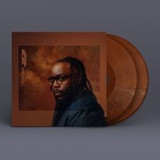
Saxophonist Walter Smith III pays homage to his hometown of Houston, Texas on his sophomore Blue Note album, three of us are from Houston and Reuben is not, the follow-up to 2023’s return to casual. The album’s wry title signifies the lineup, which includes fellow Houston natives – pianist Jason Moran and drummer Eric Harland – while bassist Reuben Rogers, who hails from the Virgin Islands, rounds out the quartet. Together they enliven 10 compelling Smith originals and an imaginative rendering of a Sam Rivers composition – all of which speaks to Smith’s ascending status as one of modern jazz’s most engaging talents of his generation.
Neu auf Blue Note: Walter Smith III, 1980 in Houston, Texas, geborener US-amerikanischer Jazz-Tenorsaxofonist, der bereits mit Roy Haynes, Bilal, Destiny’s Child, Herbie Hancock, Wayne Shorter u.a. zu hören war.
2006 erschien sein erstes Soloalbum „Casually Introducing“, 2007 spielte er auf Christian Scotts Album „Rewind That“, das für einen Grammy nominiert wurde. Mit “Return To Casual” greift Smith jetzt erneut sein 2014 veröffentlichtes Album “Still Casual” auf und stellte dafür ein Spitzenensemble zusammen, in dem auch die Blue-Note-Kollegen Ambrose Akinmusire und Kendrick Scott glänzen.
Walter Smith III and Matthew Stevens are two musicians at the forefront
of developments in jazz and improvised music, listing the likes of
Terence Blanchard, Ambrose Akinmusire, Esperanza Spalding and
Christian Scott as collaborators
The pair started working together in 2017, and four years later, they're back for
the third iteration of their highly commended In Common project. Previous guests
include Nate Smith, Linda May Han Oh and Marcus Gilmore; on 'In Common 3',
Kris Davis takes the piano chair vacated by Micah Thomas, and completing the
lineup are two legends of the game - Dave Holland and Terri Lyne
Carrington.What's new, third time around? "It's longer, freer, and yet more
spontaneous," says Smith. The successful In Common formula - inventive 'onepage songs' written with specific musicians in mind - disguises the through-line
that uniquely shapes this record: "The spotlight is on the community of musicians
as a whole," Smith comments. "The general vibe is sculpted by the musicians'
interpretations of what we bring in." Davis' influential presence means the project
leans into the aesthetics of free improvisation for the first time; the resulting
soundworld lends itself to electronic manipulation, another first for the series.
The span of fifteen tracks showcases the duo's knack for reinvention, slipping
into unfamiliar contexts without losing sight of the album's focused essence.
Smith is keen to emphasise the standalone nature of the divergent In Common
recordings. Some aspects carry through though, like their commitment to
remembering lost influences - opener 'Shine' serves as both a thank you and an
acknowledgement to McCoy Tyner, Wallace Roney, Chick Corea, Jimmy Health
and Ellis Marsalis. That introduces the remaining fourteen tracks, that divide
nearly exactly into spontaneously constructed ideas that introduce fully
composed tracks.
When Walter Smith III released his fourth solo album ‘Still Casual’ in 2014,
people listened, and the album was heralded as one of the top
releases of the year.
Now, fans of the saxophonist and composer can experience the tenorist’s wideranging release on vinyl for the first time on this special 2xLP, 180 gram limited
edition pressing with gatefold artwork.
Smith’s discography is pleasingly joined-up. As ‘In Common 2’ follows ‘In Common’, ‘Still Casual’ references his 2006 solo debut ‘Casually Introducing’. The
title might be another one of Smith’s trademark riffs, but the album is as committed to exploration as any other. Over the course of ten original tracks, Smith
covers a swathe of musical and emotional ground.
The players assembled for ‘Still Casual’ speak volumes for the quality of Smith’s
company. Trumpeter Ambrose Akinmusire joins Smith for explosive soloing on
‘Fing Fast’ and ‘Something New’. In Common co-convenor Matthew Stevens
provides reflective harmonic support and muted solo colours alongside the
understated backings of Taylor Eigsti. Together, Harish Raghavan and Kendrick
Scott provide moments of tension and intrigue from the backline, adding suitable punch to the opener ‘Foretold You’.
Chronologically, the album precedes the In Common projects, and comes right
as Smith hits his stride as a composer and arranger. From the elaborate (‘About
360’, ‘Processional’) to the personal (‘Greene’ is dedicated to saxophonist Jimmy Greene, whose daughter was killed in the Sandy Hook school shootings in
2012), Smith shines across fast-flowing vernacular and reflective, tender tones.
Still Casual showcases a group stretching themselves in a way that never seems
hurried, delving into a powerful collective energy to test their limits instead.
- Glorious Mahalia: I. Hold On
- Glorious Mahalia: Ii. Stave In The Ground
- Glorious Mahalia: Iii. Are You Being Treated Right
- Glorious Mahalia: Iv. Sometime I Feel Like A Motherless Child
- Glorious Mahalia: V. This World Will Make You Think
- God Shall Wipe All Tears Away
- Peace Be Till: I. Doors Of Justice
- Black Thread
- Peace Be Till: Ii. Protest
- Peace Be Till: Iii. Copter
- Peace Be Till: Iv. Symphony Of Social Justice
- Peace Be Till: V. Tell 'Em About The Dream
Midway through Martin Luther King, Jr's historic speech at the 1963 March on Washington, a voice rang out from behind him: "Tell them about the dream, Martin!" That voice belonged to Mahalia Jackson, King's close friend and one of the most revered gospel singers of the 20th century - Glorious Mahalia, a visionary tribute to Jackson's life by the internationally renowned Kronos Quartet, uses that moment as a springboard to explore the depth of Jackson's musical craft and its impact on the Civil Rights Movement, including her relationship with Clarence Jones and Studs Terkel, other luminaries of the time
It might seem tongue-in-cheek on the surface, but the fact that the title of Eldritch Priest's sprawling debut vinyl release, Omphaloskepsis, is the Greek translation for “navel-gazing” unlocks something essential to the Vancouver-based composer and writer's singular outlook.
Perhaps even more telling is the title of Priest's 2013 book Boring Formless Nonsense: Experimental Music and the Aesthetics of Failure (Bloomsbury), whose 300-odd pages read as though you've been dosed with potent hallucinogens. Throughout the text Priest addresses—celebrates, even—the titular elements via various musical examples, including that of his peers. What's so bewildering it is that his descriptions of how boredom, formlessness, and nonsense manifest are laced with the very tactics he's depicting. Passages tie themselves in knots, footnotes engulf the “primary text,” he even deliberately misleads the reader.
The restless stasis of Omphaloskepsis could be regarded as an extension of this book's wayward spirit. Things unfold fairly slowly and consistently but it'd be a stretch to describe it as properly contemplative. Like attempting to meditate with a high fever, any sense of tranquility is constantly derailed as one succumbs to queasy agitation. The piece's foundation is a seemingly endless guitar melody; an organic meander that neither seems to repeat or offer any concessions to narrative directionality. Priest unfurls this rambling cantus firmus in a rich, clean, jazz-like tone, but as it's played, it's repeatedly tangled with snarls of dense digital processing and shadowed by stumbling virtual “band.” These strident interjections blatantly contrast with the guitar, yet they aren't so violent as to offer more than a faint itch of distraction. As such, the distinctive amorphousness that this piece asks us to inhabit for its 54-minute duration leaves a strong impression, but also feels utterly intangible.
In addition to his recorded forays, Priest's disorienting music has also been performed by top-tier interpreters such as the Arditti Quartet, Quatuor Bozzini, Philip Thomas, Anton Lukoszevieze, and Continuum. While living in Toronto he co-founded the collective neither/nor with John Mark Sherlock, which featured a cross section of musician-composers playing each other's work including Eric Chenaux, Doug Tielli, Eric KM Clark, Heather Roche, and Rob Clutton. “Though the name refers specifically to a loosely knit group of composers and performers,” remark's the collective's website “neither/nor is also a sensibility that refuses art’s messianic pretensions and the gaping maw of commercialized society, opting instead for art’s right to be esoteric.” In 2021, when Eric Chenaux and Martin Arnold relaunched their neither/nor-adjacent Rat-drifting imprint, an album by Priest, Many Traceries, was among the first to be released. Perhaps unsurprisingly, Priest was a student at the University of Victoria, a school that's come to be known for fostering such staunch individualists as Arnold, Linda Catlin Smith, Allison Cameron, and Anna Höstman.
As a scholar, Priest writes from a 'pataphysical perspective and deals with topics such as sonic culture, experimental aesthetics and the philosophy of experience. Priest brings these interests to his job as an Associate Professor in the School for the Contemporary Arts at Simon Fraser University, interests that also inform his work as a member the experimental theory group The Occulture. In addition to Omphaloskepsis, his new book, Earworm and Event: Music, Daydreams and Other Imaginary Refrains,
- Hasiera 00:50
- 2: Iratzarri 0:37
- Sarrakio 02:10
- Dantza Bihurritua 03:50
- Desagertu 03:18
- Meditazioa I 02:09
- Besarkatu Ninduzun (Cdr Y Basandere Ahotsak) 03:50
- Meditazioa Ii 02:53
- Ametza Iii 02:06
- Oroipen 04:04
- Fallen Gaza 03:09
- Atseginzale Dantza 02:14
- Sua Eta Heriotza 00:59
- Agur Maria (Cdr Y Basandere Ahotsak) 03:55
- Bukaerako Dantza 04:03
- Amaiera 00:36
Una interpretación de Soinuarenbidea II debería partir de esta premisa: todo es posible, nada es aleatorio, y en sí mismo es un imposible de aleatoriedades. El escenario planteado explora la idea de realidad aumentada desde una percepción sonora, ambiental y colectiva. La obra transita hacia adelante y hacia atrás recreando experiencias extintas de porvenir incierto, tratando de facilitar un fin pacificador. Cada pieza sonora se crea, se despliega, se repliega y se destruye, en una torsión permanente de toda la realidad que hace posible cada fragmento musical, cada identidad acústica, cada espacio sonoro. Lo onírico, la ficción, y el viaje están continuamente presentes, y es en el transitar de cada fragmento donde se produce el diálogo de la exposición musical. Los elementos de esta ficción se recrean continuamente, en un continuum donde se entrelazan y se van contorsionando a medida que crecen o decrecen con cada fragmento de síntesis concreta. Los temas explícitamente musicales son el magma que conduce a dar voluptuosidad al disco, siendo la piel un contexto o límite que en sí mismo fluctúa indefinidamente en texturas y configuraciones posibles. Y la urdimbre del silencio es la síntesis que está continuamente presente y que trata de cohesionar los fragmentos en continua colisión expresiva. Las grabaciones de campo proporcionan el material sonoro concreto, y como un fractal sonoro cada una de ellas ofrece diferentes grados de interpretación que a su vez conduce a nuevos fragmentos y nuevas creaciones. Así que se puede pensar que esta es una síntesis de una posible realidad, pero interpretable en infinidad de maneras. Un movimiento y una estaticidad implícitas que generan estructuras y dinámicas acústicas. Lo que se escucha no es real, pero en sí mismo forma parte de la realidad, creando un escenario expectante. Lo cinematográfico, plástico y teatral, danzante y dinámico cobra importancia en este juego, porque se trata de contar una historia, una experiencia recreada desde los puntos de vista del arte visual. Es a su vez hilo conductor y entretenimiento, discurso político y puro divertimento. Es desde este espacio de convivencia artística que tiene sentido la totalidad y justifica el formato sonoro planteado. La contradicción de la obra es patente en el formato, y es a su vez el planteamiento de una accidentalidad en el devenir vital. Contenedor de Ruido recoge todas estas contradicciones y las manifiesta en la obra Soinuarenbidea II. Es una historia sonora, es un cuento acústico. Es un fragmento de vitalidad en imágenes audibles. Es una invitación a la reflexión, a la crítica, al disfrute, a la meditación, a la celebración. Y sobre todo es esperanzadora apreciación de la realidad como algo maleable que confeccionamos colectivamente, que requiere de una paciente observación y la participación colectiva global, en un mundo finito pleno de diversidades y del que ignoramos prácticamente todo, al que deberíamos volver con respeto y devoción.
Soinuarenbidea II-ren interpretazio batek premisa honetatik abiatu beharko luke: dena da posible, ezer ez da ausazkoa, eta, berez, ausazkotasun ezinezko bat da. Planteatutako agertokiak errealitate areagotuaren ideia aztertzen du, soinu-, ingurumen- eta talde-pertzepzio batetik abiatuta. Lanak aurrera eta atzera egiten du, etorkizun zalantzagarriko esperientzia desagertuak birsortuz eta helburu baketsua lortzen saiatuz. Soinu-pieza bakoitza sortu, hedatu, tolestu eta suntsitu egiten da, musika-zati bakoitza, identitate akustiko bakoitza eta soinu-espazio bakoitza ahalbidetzen dituen errealitate osoaren etengabeko bihurdura batean. Onirikoa, fikzioa eta bidaia etengabe daude presente, eta pasarte bakoitzaren joan-etorrian gertatzen da musika-erakusketaren elkarrizketa. Fikzio honen elementuak etengabe birsortzen dira, continuum batean, non sintesi zati zehatz bakoitzarekin hazi edo txikitu ahala elkar lotzen eta bihurritzen diren. Esplizituki musikalak diren gaiak diskoari atsegintasuna ematera eramaten duen magma dira, azala testuingurua edo muga izanik, testura eta konfigurazio posibleetan mugarik gabe aldatzen dena. Eta isiltasunaren irazkia etengabe presente dagoen sintesia da, zatiak etengabeko adierazpen-talkan kohesionatzen saiatzen dena. Landa-grabazioek soinu-material zehatza ematen dute, eta soinu-fraktal batek bezala, horietako bakoitzak interpretazio-maila desberdinak eskaintzen ditu, eta horrek, aldi berean, zati eta sorkuntza berrietara eramaten du. Beraz, pentsa daiteke errealitate posible baten sintesia dela, baina hamaika modutan interpreta daitekeena. Egitura eta dinamika akustikoak sortzen dituzten mugimendu eta estatikotasun inplizitu bat. Entzuten dena ez da erreala, baina, berez, errealitatearen parte da, eta agertoki espektakularra sortzen du. Zinematografikoak, plastikoak eta antzerkikoak, dantzariak eta dinamikoak garrantzia hartzen dute joko honetan, ikusizko artearen ikuspegitik birsortutako istorio bat, esperientzia bat, kontatzea baita helburua. Aldi berean, hari gidaria eta entretenimendua da, diskurtso politikoa eta dibertimendu hutsa. Elkarbizitzarako espazio artistiko honetatik osotasunak zentzua du eta planteatutako soinu-formatua justifikatzen du. Obraren kontraesana nabarmena da formatuan, eta, aldi berean, bizi-bilakaeran istripu-tasa bat planteatzea da. Zarata-edukiontziak kontraesan horiek guztiak jasotzen ditu eta Soinuarenbidea II obran adierazten ditu. Soinu istorio bat da, ipuin akustiko bat. Bizitasun zati bat da, irudi entzungarrietan. Hausnarketarako, kritikarako, gozamenerako, meditaziorako eta ospakizunerako gonbidapena da. Eta, batez ere, itxaropentsua da errealitatea modu kolektiboan egiten dugun gauza xaflakor gisa hautematea, behaketa pazientea eta partaidetza kolektibo globala eskatzen dituena, dibertsitatez betetako mundu mugatu batean, ia guztia kontuan hartzen ez duguna, eta errespetuz eta debozioz itzuli beharko genukeena.
An interpretation of Soinuarenbidea II should start from this premise: everything is possible, nothing is random, and in itself is an impossible randomness. The proposed scenario explores the idea of augmented reality from a sonic, environmental, and collective perception. The work moves back and forth, recreating extinct experiences of an uncertain future, seeking to facilitate a peaceful end. Each sound piece is created, unfolds, retreats, and is destroyed, in a permanent twisting of all reality that makes each musical fragment, each acoustic identity, each sonic space possible. The dreamlike, the fictional, and the journey are continually present, and it is in the transit of each fragment that the dialogue of the musical exposition takes place. The elements of this fiction are continually recreated, in a continuum where they intertwine and contort as they grow or diminish with each fragment of concrete synthesis. The explicitly musical themes are the magma that leads to the work's voluptuousness, the skin being a context or boundary that in itself fluctuates indefinitely in possible textures and configurations. And the warp of silence is the synthesis that is continually present and seeks to unite the fragments in a continuous expressive collision. The field recordings provide the concrete sound material, and like a sonic fractal, each one offers different degrees of interpretation that in turn lead to new fragments and new creations. So one can think of this as a synthesis of a possible reality, but interpretable in an infinite number of ways. An implicit movement and staticity that generate acoustic structures and dynamics. What is heard is not real, but in itself is part of reality, creating an expectant scenario. The cinematic, plastic and theatrical, dance and dynamic aspects take on importance in this game, because it is about telling a story, an experience recreated from the perspective of visual art. It is at once a common thread and entertainment, political discourse and pure entertainment. It is from this space of artistic coexistence that the whole makes sense and justifies the proposed sound format. The contradiction of the work is evident in its format, and it is, in turn, the presentation of an accidentality in the course of life. Noise Container gathers all these contradictions and manifests them in the work Soinuarenbidea II. It is a sound story, an acoustic tale. It is a fragment of vitality in audible images. It is an invitation to reflection, to critique, to enjoyment, to meditation, to celebration. And above all, it is a hopeful appreciation of reality as something malleable that we collectively craft, requiring patient observation and global collective participation, in a finite world full of diversity and of which we know practically nothing, to which we should return with respect and devotion.
Paisajes sonoros, diseño sonoro, drones y música grabada, realizada y arreglada para Contenedor de Ruido por David Aranaz. Coro: Basandere Ahotsak. Producido y mezclado por David Aranaz. Mástering: Estanis Elorza. Fotografía: David Aranaz. Texto: David Aranaz. Traducción: Saioa Aranaz Oreja. Trabajo y Diseño artístico: Cristina Martinez. Edición: Contenedor de Ruido Producciones y Sarbide Music. Distribución: Contenedor de Ruido.
Contenedor de Ruido agradece el apoyo en la realización de Soinuarenbidea II al coro Basandere Ahotsak y en especial a Eva Orbara Goicoa.
Soinuarenbidea II está dedicado al pueblo palestino.
Paisajes y objetos Sonoros, samplers y otras músicas transformadas para Soinuarenbidea II
Burlada: Paseos sonoros matinales por Merindad de Sangüesa, Calle Mayor, Capuchinas, Parque Uranga y varias iglesias y plazas. Pasajes del cotidiano: basura de papel, cristal y plástico.
Pamplona: Cementerio de San José. CEIP Sanduzelai /// Quinto Real: Fábrica de Armas, Puerto de Urkiaga y alrededores. Suite del silencio, bosques en movimiento /// Fábrica de armas de Orbaiceta: regatas, biosques, paseo sonoro hasta regata /// Belate: Puerto de Belate y alrededores. Vacas en pradera junto a las turberas /// Bardenas Reales: Suite de guitarra y Suite del silencio, estepa desértica /// Austria: Tranvías de Graz y Viena. Muchedumbre del metro de Viena.
Voces cinematográficas de: Matanza en Texas, Robocop, Espíritu Sagrado, Solo los Amantes Sobreviven, Voces de Gaza, Yojimbo, Terciopelo Azul, Los 7 Magníficos.
La pista A2 está dedicada a la memoria de David Lynch.
La pista B4 está dedicada a Eva Orbara Goicoa.
Pista A4: Contiene interpretaciones de piano de Three Piano Pieces Op.11 de Arnold Schoenberg.
Pista A5: Es una interpretación expandida con síntesis FM del Concerto Op. 24 - Etwas lebhaft - de Anton Webern.
Pista A7: Contiene la canción Besarkatu ninduzun (Letra de Josune López y música de Josu Elberdin) en interpretación de Basandere Ahotsak en la iglesia de Burutain bajo la tormenta.
Pista B2: Contiene la canción Recuerdos de la Alhambra (Fernando Tárrega) en interpretación torsionada de David Aranaz Sarasa.
Pista B14: Contiene la canción Agur María (Letra y Música de Estíbaliz Robles “Estitxu” y arreglo exclusivo de Alfonso Ortiz para Basandere Ahotsak) en interpretación de Basandere Ahotsak.
Equipamiento para Soinuarenbidea II.
Micros de condensador SE7, configuración XY y ORTF; Micros de cinta ORTIZ LUTHIER configuración XY y Blumlein; Grabadoras MARANTZ y ZOOM; Sintetizadores y samplers Elektron MONOMACHINE SPS-1, MACHINEDRUM SFX6 y MODEL:SAMPLES. Dave Smith MOPHO. Torso Electronics S-4. Sintetizador Modular 333 DIY; Guitarra clásica ALHAMBRA 6P; Esculturas Sonoras tipo Baschet, cristal y metales; Mesa Soundcraft FX16ii; Interface de Audio RME Babyface Pro FS; DAW Logic Pro; Procesamiento de modelado analógico con Acústica Audio, Waves, Softube, Brainworx, Sonible, Analog Obsesion, Tokio Dawn. Metering de Logic y RME DigiCheck . Amplificación Hafler PRO2400. Monitorización BW DM602 S3. Mezcla digital; Mastering híbrido.
»Hug of Gravity« is the second solo album by Raphael Loher and his first for Hallow Ground. The Swiss pianist and composer uses piano preparations, tape machines, and digital means to forge an aesthetic of playful reduction and rhythmic abstraction. The source material for these four sprawling pieces was culled from recordings of the artist performing the album’s predecessor, 2022’s »Keemuun.« Loher used them in a painstaking two-part working process to create an album that is both a product of and an ode to transformation, exploring themes of alternative temporalities and spatialities. »Hug of Gravity« oscillates between experimental electronic music, ambient, and minimal music and calls to mind the work of artists like William Basinski, Linda Catlin Smith, or label mate Andrius Arutiunian.
Loher laid the foundation for »Hug of Gravity« in 2020 with ten solo performances at his studio, during which he presented the pieces from his debut album. For these intimate concerts, he prepared the piano with modelling clay in order to move beyond the well-tempered tuning that dominates most of Western music. He then used a consecutive three-month residency in the Blenio Valley to refine the recordings. »I cut up and rearranged the material, then transferred the results—around 30 pieces—to a varispeed tape machine and then back to the computer. After that was done, I cut them up and rearranged them again,« he laughs. By radically reworking the material, he created an album that eschews traditional notions of time and space.
Loher points out the influence that his surroundings had on him. »The process created the music—and the place was essential to the process.« he says. He wandered through the mountains for up to nine or ten hours a day, which gave him a sense of what he calls expanded temporality. »Time just felt longer, my experiences seemed more diverse and nuanced, and it was as if I perceived my environment more clearly,« he explains. This shift in Loher’s perception of time and space—the latter also expressed in the album’s title—influenced his work with the varispeed tape machine. It allowed him to change the pitch of different recordings while layering them to let interference patterns emerge and emphasise the emotional qualities of the unconventional tunings he had used.
In this way, Loher constructed numerous interlocking narrative arcs throughout »Hug of Gravity,« an album that is ever-changing; an exercise in calm ecstasy that provides its audience with the feeling of being removed from conventional time and space. This approach is also reflected in the artwork for »Hug of Gravity,« which is based on drawings Loher made during his residency at Blenio Valley. Their fine hand-drawn lines run in parallel and let incidental patterns emerge, an effect that is only multiplied when the six different drawings that accompany each vinyl copy of the album are overlapping, forming ever-new visual constellations.
Enjoy The Ride Records in conjunction with Lionsgate, SModco & Destro Films proudly presents the Clerks III Soundtrack. Curated exclusively for vinyl and cassette tape by Kevin Smith and Enjoy The Ride Records, the Clerks III Soundtrack contains a selection of James Lewis Venable's score to the film, along with a collection of songs played throughout the film.
The vinyl release features Matt Taylor's art on the gatefold jacket and has a double-sided full-color insert, featuring stills from the film and additional art from Matt Taylor. Pressed across 5 colorful themed variants RST THC, Clerks III Swirl, Quick Stop, Smoke (Secret Stash), and a Mondo Exclusive Split, this pressing is limited to 1,500 copies.
- A1: Alton & Eddie - Muriel
- A2: Jiving Juniors - Dearest Darling
- A3: The Echoes & Celestials - Are You Mine
- A4: Jimmy Cliff - Dearest Beverley
- A5: Keith & Enid - Send Me
- A6: The Downbeats - Midnight Love
- A7: Chuck & Dobby - `Til The End Of Time
- B1: The Mellowlarks - Album Of Memory
- B2: Horthens & Stranger - True Love
- B3: Dobby Dobson - Diamonds &Amp; Pearls
- B4: The Charmers - I`m Going Back
- B5: The Blues Busters - Pleading For Mercy
- B6: Owen & Millie - Do You Know
- B7: Laurel Aitken - Heavenly Angel
- C1: Lloyd Clark Smithie`ssextet - Now I Know The Reason
- C2: The Charmers & Prince Buster - Now You Want To Cry
- C3: The Rhythm Aces & The Caribs - A Thousand Teardrops
- C4: Jiving Juniors - Have Faith In Me
- C5: Chuck & Dobby - I Love My Teacher
- C6: The Blues Busters - Call Your Name Forever
- C7: The Echoes Celestials - I Love You Forever
- D1: Wilfred Jackie Edwards - Hear My Cry
- D2: Jiving Juniors - Valerie
- D3: The Magic Notes - Why Did You Leave Me
- E1: Higgs & Wilson - When You Tell Me Baby
- E2: Lloyd Adams - I Wish Your Picture Was You
- E3: The Moonlighters - Don&Apos;T You Know
- E4: Ricketts & Rowe - Dream Girl
- E5: Annette & Shenley - The First Time We Met
- E6: Belltones - I`ll Always Call Your Name
- E7: Ruddy & Sketto - Little Schoolgirl
- F1: Derrick & Patsy - Crying In The Chapel
- F2: The Blues Busters - I`ve Done You Wrong
- F3: Jiving Juniors - My Sweet Angel
- F4: Higgs & Wilson - Change Of Mind
- F5: Wilfred Jackie Edwards - Never Go Away
- F6: Rupert Edwards - Guilty Convict
- F7: Keith & Enid - Worried Over You
- D4: The Moonlighters - Julie
- D5: Higgs & Wilson - How Can I Be Sure
- D6: Jiving Juniors - Sweet As An Angel
- D7: Alton & Eddie - My Heaven
Death Is Not The End together all three LP volumes of the critically acclaimed If I Had a Pair of Wings LP compilation series for a bundled edition.
"...all of the music on this compilation is the result of the forward-thinking artists and producers that realised the worth of local Jamaican artistry during a time when the island's leading political figures had not yet managed to throw off the colonial yolk. These are sounds with a certain innocence and the optimistic promise of better to come, with the influence of American pop ballads and doo-wop looming large, yet already pointing to the innovations of the future. Listen keenly and take in the sounds of the Jamaican music industry at its very beginnings, its singers and players drawing from the popular styles of the island's larger neighbour and already changing those styles into something their own." - David Katz
Lauren Laverne's comp of the week on BBC Radio 6 Music w/c 11th Jan.
THIRD EAR BAND stammen aus Canterbury und begannen als psychedelische Band namens THE GIANT SUN TROLLEY, die in Südlondoner Clubs lange und improvisierte Sets spielte. Nach einem Auftritt wurde der Band fast die gesamte Ausrüstung gestohlen. So wurden sie aus purem Zufall und offensichtlicher Notwendigkeit eine Akustikband und nahmen den Namen THIRD EAR BAND an. Von 1969 bis 1972 veröffentlichte die Band drei Alben auf dem progressivem Harvest-Label, "Music From Macbeth" (1972) war davon das bekannteste und kommerziell erfolgreichste. Am 24. April 1970 traten die Third Ear Band beim 2. Essener Pop & Blues Festival. Aus welchen Gründen auch immer tauchten sie aber weder auf dem offiziellen Plakat zur Veranstaltung noch in den Programmheften zum Festival auf. Das Billing des Tages war mit Acts wie The Flock, Ekseption, Rhinocerous, The Groundhogs, It"s A Beautiful Day und den noch unbekannten Black Sabbath, die gerade ihr erstes Album veröffentlicht hatten, prall gefüllt. Das Essener Konzert in der Quartettbesetzung mit Sweeney am Schlagzeug, Minns an der Oboe, Coff an der Violine und Smith am Cello fand nur wenige Wochen vor der Veröffentlichung des zweiten Albums statt, das die Fans als "Elements" kennen, obwohl es schlicht "Third Ear Band" heißt und im Juni 1970 erschien. Von den vier Elementen spielte die Band an dem Abend "Earth" und "Water", aber in einer kürzeren Fassung im Vergleich zu den Albumversionen. Erst vor kurzem sind die professionellen Tonaufnahmen vom Festivalauftritt der Third Ear Band wieder aufgetaucht und jetzt restauriert, klanglich aufgearbeitet und gemastert worden.
III is the third studio album by French DJ Bob Sinclar. First release February 2003, and reached number 24 on the French albums chart. It features the hits : "The Beat Goes On" and "Kiss My Eyes" An Uncut review from May 2003 found that while Sinclar"s music is "frothier and camper than ever" on III, he "has a new-found focus and vitality ... Whereas so much electroclash lacks melodic thrills, there"s an abundance of crisp, pulsating tunes here. And despite the disco flashbacks, Le Friant favours twisted re-interpretations over dead-handed pastiches". The review concluded by noting that "fans of Daft Punk"s Discovery will love it". Jack Smith, writing for BBC Music, felt that III is Sinclar"s homage to French disco artist Cerrone, given Sinclar"s compilation Cerrone by Bob Sinclar (2001), and his collaboration with songwriters Lene Lovich and Alain Wisniak on III, both of whom previously composed several songs for Cerrone. While acknowledging Sinclar"s intention for a "new sound" after being an "international man of mystery" on his first two records, Smith opined that "herein lies the problem... III, his latest opus, is nothing less than average, and at times dull", summarising that the album"s "pluses are few and far between".
- A1: Mondial Scoop (Number Iii) 2 04
- A2: Phasing Percussions A 2 23
- A3: Phasing Percussions B 1 41
- A4: Phasing Percussions C 1 27
- A5: Phasing Percussions D 1 59
- A6: Phasing Leitmotive A 2 40
- A7: Phasing Leitmotive B 1 10
- A8: Phasing March 2 07
- B1: Devil Dance A 2 31
- B2: Devil Dance B 2 30
- B3: Flower Dance A 2 42
- B4: Flower Dance B 1 08
- B5: Happy Smith (Number Ii) 1 14
- B6: Phasing Cymbals 1 56
- B7: Phasing Winds 0 51
- B8: Phasing Suspense A 1 46
- B9: Phasing Suspense B 1 23
Volume 1[23,49 €]
Every once in a while, a library record's absurd level of perfection will be enough to throw up your hands and pack it all in. "How will I ever find this record in the wild?!", you may despair. And, yes, up until now, Michel Gonet's Phasing News Volume 2 was such a work of this ridiculous standard. Not just hyper-rare, but hyper-brilliant. Its high points transcend the "library" genre. This is a record that has always been so so hot on secondary markets. And it's easy to hear why! It's a big big French library classic with mad crazy demand.
Opening with "Mondial Scoop (Number III)", it continues on from where the dramatic tracks of Phasing News Volume 1 left off. The group of "Phasing Percussions" get under your skin, sample material for days here. "Phasing Leitmotive A" and "Phasing Leitmotive B" hypnotise with their analogue synth loops. Yet it's "Phasing March", closing out the side, that is absolutely sensational. Timpani drums merge with open breaks making for an irresistible neck-snapping tour de force.
Side B starts with "Devil Dance A", an unbelievably infectious bass instrumental whilst "Devil Dance B" adds more percussion and bass flourishes and is all the more funky for it.
And now for the main event. "Flower Dance A". What can we even say? An instantly captivating, sparkling keys loop and glittering percussion neatly arranged atop a very strong bassline and drums, all lean and potent. The melody was lifted wholesale by The Soulsavers for "Rumblefish" back in 2002 and you can't really blame them. "Flower Dance B" removes the bassline for a lighter feel but that loop still burrows inside your brain. It's perfect.
"Happy Smith (Number II)" was used by Madlib for Erykah's "My People" (!!!) whilst the set closes out with a group of tense, phased workouts.
The audio for Phasing News Volume 2 has been remastered by Be With regular Simon Francis, ensuring this release sounds better than ever. Cicely Balston's expert skills have made sure nothing is lost in the cut whilst the original, iconic Tele Music house sleeve has been restored here at Be With HQ as the finishing touch to this long overdue re-issue.
Timechild ist zurück mit ihrem lang erwarteten zweiten Album "Blossom & Plague", das am 1. September 2023 weltweit über Mighty Music veröffentlicht wird. Die Vision dieses Albums ist es, zu zeigen, wie Heavy Rock auch im Jahr 2023 noch herausfordern und überraschen kann.
Der schwere und dynamische Sound und die Texte der dänischen Band haben sich auf diesem Album in eine progressivere und dunklere Richtung entwickelt. Obwohl das Fundament des Sounds der Band eindeutig von den Giganten der Vergangenheit gelegt wurde, wird die Inspiration sowohl durch die Zeit als auch durch die Genres gezogen. Genau diese Möglichkeit, in die vergangenen Jahrzehnte der Musikgeschichte einzutauchen und dadurch ihren eigenen Sound zu definieren, war ein wichtiger Teil des Songwriting- und Aufnahmeprozesses.
Das Artwork wurde von Travis Smith (Opeth, Megadeth, Katatonia, Avenged Sevenfold) entwickelt, der Timechild dabei half, die perfekte visuelle Darstellung der Platte zu erreichen.
Produziert, gemischt und gemastert wurde das Album erneut von Soren Andersen (Glenn Hughes, Phil Campbell, Jesper Binzer). Mit seiner großen Erfahrung in diesem Genre, sowohl als Produzent als auch als Musiker, war Soren eine natürliche Wahl, als es darum ging, die neuen Visionen der Band zum Leben zu erwecken. Das Ergebnis sind acht starke und einzigartige Tracks, die die dynamische Bandbreite und die künstlerischen Visionen der Band aufzeigen.
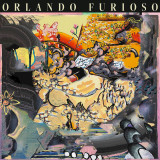
“Orlando Furioso is a haunting, one-of-a-kind statement, from an important new voice in improvised music.” - Steve Lehman
“…imagining instruments that haven’t been invented yet: space harps, cosmic gamelan, Venusian banjo. It’s the purest distillation of Atria’s musical language, simultaneously grounded and unearthly.” - Stewart Smith for The Wire (November 2022)
“Making liberal use of microtonal harmony and hypnotic, ostinato rhythms – as well as the occasional stylistic smash-cut, reminiscent of John Zorn – Orlando Furioso announced itself on Wednesday as a punchy, creative force on the New York scene. (…) Atria’s rhythms had a welcoming, social propulsion, and the microtonality of his writing for keyboard proposed an individual – even insular – language.” - Seth Colter Walls for The New York Times.
Early European composers felt that their work reflected in its structure the divine nature of the material world. Via tuning, form, and contrapuntal alchemy, these musicians sought to illuminate and edify the complex and perfect order of existence. The music recorded here also reflects the contours of an ordered world, but it is no place any of us has ever visited. By assembling far-flung building blocks from the detritus of a 21st-century musical vocabulary, Orlando Furioso brings the listener into a bizarre new cosmos. The result is deeply expressive music that speaks not with the voice of a narrator or memoirist, but with that of a cartographer.
Like a science-fiction Dante, the listener is taken on a tour of many diverse and colorful provinces of an alien world. Though each composition references its own set of real-world musical locales (from the Andes to Indonesia to Italy to New Orleans), they are bound by stylistic consistency into a coherent, continuous geography. Permeating this world is an uncompromising commitment to microtonal harmony, rhythmic intensity, and an ability to deploy the esoteric (Nicola Vicentino's notorious 31-tone temperament) and the head-smackingly obvious (a surprise djent breakdown) with equal conviction. Though Vicente's compositions are steering the ship, serious recognition is due to all the players on the record for their ability to meet these demands.
Our omnivorous musical diets offer real abundance. They enrich our craft by providing access to limitless approaches from which to choose - more masters to study, traditions to absorb, and techniques to hone than is possible in multiple lifetimes. They can also inflict heavy and often contradictory burdens of influence. When every corner of the map has been charted, it becomes difficult to find a new direction in which to travel. One solution I hope to see more often is the one pursued on this record: breaking down distinct musical worlds into component parts and reassembling them into a language. When completed with precision and with no stone left unturned, the seams between the pieces vanish and the listener is deposited somewhere beautiful and strange, left to assign their sensations meanings of their own. - Mat Muntz
Orlando Furioso is led by Vicente and features David Acevedo, David Leon, Andrew Boudreau, Alec Goldfarb, Daniel Hass, Simón Willson, and Niña Tormenta. Orlando Furioso celebrated its release at Roulette Intermedium in Brooklyn, NY, as a part of Wet Ink Ensemble's 24th Season opening concert, a performance which The New York Times heralded as "virtuosic", "punchy, creative" and "even revelatory."
Winner of the Deutscher Jazz Preis: Best International Debut Album 2023
Audiophile reviews rave about saxophone master John Coltrane's immortal Impulse! records, A Love Supreme (1964) and Ballads (1963). In fact, jazz critics have lauded A Love Supreme as Coltrane's most important recording. The rave reviews which appeared in the magazines Downbeat, Jazz Hot, Jazz Podium and Swing-journal reflected this: critics all over the world, in America, Europe and Japan recognized that Coltrane's deep religious belief had influenced both his approach to life and his music-making.
You're about to experience A Love Supreme at its peak of vinyl perfection — in UHQR format on Clarity Vinyl, with the added bonus of a double 45 RPM cut by Ryan K. Smith at Sterling Sound. Ryan's cut has his characteristic clarity and transparency all set against Quality Record Pressing's usual noiseless backgrounds on 200-gram flawless records. Each UHQR will be packaged in a deluxe box and will include a booklet detailing the entire process of making a UHQR along with a hand-signed certificate of inspection. This will be a truly deluxe, collectible product.
For this 45 RPM 2LP edition you'll also receive a 12" x 12" 12-page booklet featuring liner notes by Ashley Kahn and images from the Coltrane home.
The original master tape is available but it's not in the best shape. This LP was cut from a flat tape copy made by Rudy Van Gelder and used for cutting in the UK in April of 1965. Of course, the original recording was in December '64, so only a handful of months later. This tape was discovered at Abbey Road and had been untouched between 1965 and 2002. So while the original tape is available and while we would always opt for the original whenever we can, in this case this copy was the better choice as the tape has incurred less overall wear and sounds much better than the original.
A Love Supreme was Coltrane's pinnacle studio outing that at once compiled all of his innovations from his past, spoke of his current deep spirituality, and also gave a glimpse into the next two and a half years (sadly, those would be his last). Recorded at the end of 1964, Trane's classic quartet of Elvin Jones, McCoy Tyner, and Jimmy Garrison stepped in and created one of the most thought-provoking albums of their relationship.
The album not only enabled Coltrane to express himself with great intensity but also lent him the necessary inner peace to conceive a work of almost 40 minutes in length and to lead his quartet along the same path as himself.
Bislang gab Blue-Note-Schlagzeuger Kendrick Scott in seiner Band Oracle den Ton an. Jetzt hat er sie zu einem schlagkräftigen Trio geschrumpft!
“Kendrick Scott ist zum Art Blakey, Elvin Jones und Tony Williams seiner Generation geworden”, hat Trompeter Terence Blanchard einmal gesagt, in dessen Band der Schlagzeuger lange spielte. “Er ist ein brillanter Kopf, der nicht nur die Musik erneuert, sondern in seiner Band auch jungen Talenten Gelegenheit gibt, sich zu entwickeln und zu wachsen.”
Mit der Band Oracle hat Kendrick Scott bislang zwei Blue-Note-Alben eingespielt, “We Are The Drum” (2015) und “A Wall Becomes A Bridge” (2019).
Mit dem dritten Werk “Corridors“ geht der in Houston
geborene Schlagzeuger und Komponist einen neuen Weg, indem er erstmals auf die beiden melodieprägenden Instrumente Piano und Gitarre verzichtet und allein auf ein Trio mit Saxofonist Walter Smith III und Bassist Reuben Rogers setzt.
He may not have known it before, but Toronto-born, New York-based
guitarist Matthew Stevens, prized for his forceful, distinctive electric
sound was an ideal candidate to make an album fully devoted to solo
acoustic guitar: the intimate, unadorned, straightforwardly titled
'Pittsburgh'
September 2020, Stevens was hunkering down in his wife's family's hometown of
Pittsburgh, while navigating his way through the crisis. He had with him a vintage
Martin 00-17, a small- body mahogany guitar. Practicing daily on the Martin, he
began generating a series of short song "starts" - ideas and sketches he thought
might lead somewhere. Then one rainy Pittsburgh day, Stevens' bike slid out from
under him and he broke his right elbow. Rather than getting derailed musically, he
became immersed in a creative process that led straight to 'Pittsburgh': a
document of those short song "starts" from the notebook, now hatched as
completed compositions. "Playing this music became a big part of my rehab,"
Stevens recalls.
As the album took shape, it became clear to Stevens that he was headed in the
direction of a wholly unaccompanied recital, with no overdubs or sound layering
of any kind. Just him and this special Martin, two Neumann U89 mics and enough
peace of mind across two separate sessions to make 'Pittsburgh' the triumph that
it is.
In addition to his extensive high-profile work with Esperanza Spalding (serving as
co- producer on 'Exposure' and '12 Little Spells'), Stevens is also a member,
songwriter and co-producer of Terri Lyne Carrington's GRAMMY-nominated Social
Science band. He has made vital contributions to groups led by Dave Douglas,
Linda May Han Oh, Christian Scott aTunde Adjuah, Ben Williams and more. With
tenor saxophonist Walter Smith III he co-leads the In Common collective. Stevens
has also amassed many credits beyond the jazz world, collaborating on
forthcoming releases by Anna B Savage, Jamila Woods, Tyler Armes
(Murdagang) and Berlin-based electronic artist Robag Wruhme.
- 1: The Believer (Live)
- 2: Intro (Live)
- 3: Oracle (Feat. Kendrick Scott)
- 4: Law & Order (Live)
- 5: Walter Speaks (Feat. Walter Smith Iii)
- 6: New Gospel (Live)
- 7: Lullaby (Feat. Joel Ross)
- 1: Perpetual (Feat. Harish Raghavan)
- 2: Autumn (Live)
- 3: The Thump (Live)
- 4: New Paths (Live)
- 5: Farewell (Feat. James Francies)
- 6: A Portrait Of Fola (Live)
New Gospel Revisited is the new album from the fearless and formidable American composer and trumpeter Marquis Hill. A live recording that revisits and reinterprets his debut 2012 album New Gospel, this time round employing a band of super-heavyweight musicians including Walter Smith III, Joel Ross, James Francies, Kendrick Scott and Harish Raghavan. Marquis Hill’s rise over the last few years has been striking and there’s no letting up. Since winning the prestigious Thelonious Monk Institute Jazz Composition award he has demonstrated full command of his art and built a reputation for synthesizing what he describes as the essential elements of the Africa-American creative heritage including contemporary and classic jazz, hip-hop, R&B, house and neo-soul. Now, his sights are set even higher. New Gospel Revisited, is an extraordinary live recording that reimagines his debut as a leader with a new band, a new focus and a sharpened ear as a bandleader, composer and performer. The set is breathtakingly good with a band that sounds as inventive and creative as it reads on paper. “… New Gospel was my debut album and my first completed production. To revisit this music in a fresh way, with a new band has been uniquely invigorating —and hugely rewarding.” Marquis Hill