Legacy Chicago craftsman Mark Nelson’s latest offering as Pan. American is less a distillation or divergence than it is a return to his musical and spiritual beginnings. Spare, subdued, and largely acoustic, A Son unfurls like late summer dusk on the edge of town, expansive but intimate.
Motivated by notions of “moving backward” and tracing roots – as well as a couple years of hammered dulcimer lessons – the album’s nine songs were written and recorded in his home in Evanston, Illinois, and honed during a recent solo tour in Europe. The emphasis on uncluttered arrangements and the centrality of the guitar and vocals reveal these songs as the most direct and emotional statement of his career.
Nelson cites everything from June Tabor, The Carter Family, Suicide and Jimmy Reed as oblique inspirations, though his truest muse was creative self-inquiry: “What does music do, Where does music start? How simple can it be? How honest can it be?”
After decades of mining post-rock pathways and latticework electronics in Labradford and early Pan. American, A Son strips away ornament and distraction in favor of a direct gaze into the heart of what is.
Buscar:il
For it’s second-release, Planisphere returns once more to the Berlin studio of Swiss-Turkish producer Mehmet Aslan, who has fast become one of the most fiercely individual and increasingly prolific emerging artists in some time.
This three-track EP is arguably Aslan’s most-refined work to date, aiming squarely at heads-down dancefloors, riding on sophisticated and hypnotic grooves. On ‘Comme II Faut’, a minimal beat unravels Aslan’s textural, traditional samples, delivering a woozy and intoxicating atmosphere.
Meanwhile, ‘Lobster Is Coincidence’ christens the EP with its title and a stop-start slice of unpredictable, cut-up psychedelia, utilizing obscure samples to generate esoteric funk. On the contrary, Aslan executes a tapestry of tightly-wound and no less entrancing rhythms on ‘Kakusui’, which evolves intriguingly with a subtle half-step and further echoes of Aslan’s unique musical heritage.
The mostly anonymous producer FSS joins Veyl with ‘MMXX_FFS’, a collection of nine raw, mangled numbers that manage to make lo-fi sound hi-fi. Built in moments stolen from working with DIY punk bands and artists producing for Warp, UNO, True Panther, Lucky Me and Tri Angle.... Originally from New Mexico, now living in London, with NYC on the horizon, FSS is no newcomer, and this isn’t your usual debut.
Inspired by a need to release the rage and disillusionment brought on by the extreme shit show the world has become, the writing of ‘MMXX_FSS’ — “it’s nearly 2020, for fuck’s sake” — doubled as a cathartic process for the artist, providing much-needed relief from the constant struggle of living on this planet.
Urged to push into the wild and off the beaten path, the record’s sound is iltered through an ongoing battle with tinnitus, a heavy fascination with distortion, and a treasure of inspired electronics. Memories of clear, bright landscapes play like loops, bombarded with the shock and suffering of urban action. Based on the constantly vacillating reality between moments of familial bliss to existential terror in white hot flashes, ‘MMXX_FFS’ is a snapshot of this process. Generating more.
FSS’ debut is out this December on cassette and digital, as always featuring artwork by Tomaso Lisca.
Per questa versione siamo lieti di proporre il duo chiamato, Spleen Underground.
sul lato A ci viene offerta una canzone Nu Funk - Casa con contaminazione afro. Il lato B una canzone che riprende l'anima e funk sicuramente adatto per gli amanti della musica sofisticata.
Hardcore punk pioneers 'Bad Brains' released their sixth full-length 'God Of Love' in 1995. The original line-up was back together and the album was promoted with a big tour and concerts on the Beastie Boys’ Ill Communication tour.
The album consists of a mix of reggae, hardcore, punk, and hard rock tracks. The band continued to evolve and created such a versatile album that people from different backgrounds felt attracted to it.
'God Of Love' is available as a limited edition of 1000 individually numbered copies on coloured (transparent green & yellow mixed) vinyl and the package includes an insert.
Total Refreshment Centre is proud to present a brand new mini-LP from Neue Grafik Ensemble entitled 'Foulden Road'. French producer, instrumentalist and DJ, Neue Grafik, has been building a strong rep for himself over the past few years, releasing records previously on labels such as Rhythm Section, 22a, CoOp Presents and Wolf Music.
His sound is a hybrid of jazz, house and hip hop, all with his unique geographical flavours of African ethnicity, Parisian roots and a love for London sounds like broken beat & grime thrown into the mix. In his own words "this mini album has been conceived as a journey from Deptford to Dalston, right through Peckham. During a personal period of transition, I put this music forward at a crossroad of all my influences, taking the time to share and experiment with a band more than that, an ensemble. The idea is to incorporate musicians with their own sensibilities, collaborating together as a reflection of our society; unreal & rebellious, but with magic moments, and full of hope.
The best representation of that is Total Refreshment Centre. This building and its community were a perpetual source of inspiration for me over the past two years & gladly allowed the creation of this project". Having been first properly introduced to the community of the TRC during an after-hours jam, it came to TRC founder Lex Blondel's attention that New design had some exquisite compositions of his own. A few weeks later, it was decided that Neue Grafik would form a band and that they would do their first gig at TRC, a week after the first day of rehearsals. No pressure … Lex continued; "we paired him up with Emma-Jean Thackray, to arrange his compositions for a quartet, added Vels Trio's Dougal Taylor on drums, Matt Gedrych from MaddAddam on bass and Jordan Saintard on sax.
Then the band got to work…" Title track 'Foulden Road' commences the session in truly energetic fashion, named after the street in North London where TRC is based, and where these sessions were largely laid down. Keeping with the geographical vibe, next we have 'Dalston Junction', a two-part affair starting on a sci-fi boom-bap tip, before switching to the ethereal flute playing of Brussels musician Esinam, and the first outing on the collection for Brother Portrait.
'Voodoo Rain' is next, a sweet slice of afro-funk, featuring the incredible talents of London's own Nubya Garcia on sax, and the tempo picks up once again for 'Something Is Missing' - this live version comes from the afore-mentioned infamous first gig at TRC.
The goosebump-enducing vocals of Melbourne soulstress, Allysha Joy, set off the second half of the record with the beautiful downtempo track 'Hotel Laplace', recorded at a live session at Giant Steps, before kicking the energy levels back up with 'Hedgehog's Dilemma', once again featuring the vocals of Brother Portrait, as does the closing track, 'Dedicated to Marie Paule', a mid-tempo piece akin to 90's golden era jazz-hop, bringing the set to its conclusion.
This collection of tracks reflect the many moods and various genres indicative of Neue's creative approach illustrated above.
- A1: Pinta Manta - António Sanches
- A2: Dia Ja Manche - Dionisio Maio
- A3: Morti Sta Bidjàcu - José Casimiro
- A4: Pontin & Pontin - Bana
- B1: That Day - Fany Havest
- B2: Odio Sem Valor - Pedrinho
- B3: Mino Di Mama - Quirino Do Canto
- B4: Mundo D'margura - Tchiss Lopes
- C1: Po D'terra - Joao Cirilo
- C2: Corre Riba, Corre Baxo - Abel Lima
- C3: Ilyne - Os Apolos
- C4: Sintado Na Pracinha - Americo Brito
- D1: Capchona - Elisio Vieira
- D2: Djal Bai Si Camin - Antonio Dos Santos
- D3: Stebo Cu Anabela - Abel Lima
repress
2LP 140G VINYL + 12 PAGE BOOKLET.
"Space Echo - The mystery behind the "Cosmic Sound" of Cabo Verde finally revealed!" is the 20th release by the fabulous Analog Africa Label.
In the spring of 1968 a cargo ship was preparing to leave the port of Baltimore with an important shipment of musical instruments. Its final destination was Rio De Janeiro, where the EMSE Exhibition (Exposição Mundial Do Son Eletrônico) was going to be held.
It was the first expo of its kind to take place in the Southern Hemisphere and many of the leading companies in were all eager to present their newest synthesisers and other gadgets to a growing and promising South American market, spearheaded by Brazil and Colombia.
The ship with the goods set sail on the 20th of March on a calm morning and mysteriously disappeared from the radar on the very same day.
One can only imagine the surprise of the villagers of Cachaço, on the Sao Nicolau island of Cabo Verde, when a few months later they woke up and found a ship stranded in their fields, in the middle of nowhere, 8 km from any coastline.
After consulting with the village elders, the locals had decided to open the containers to see what was inside - however gossip as scintillating as this travels fast and colonial police had already arrived and secured the area.
Portuguese scientists and physicians were ordered to the scene and after weeks of thorough studies and research, it was concluded that the ship had fallen from the sky. One of the less plausible theories was that it might have fallen from a Russian military air carrier. The locals joked that again the government had wasted their tax money on a useless exercise, as a simple look at the crater generated by the impact could explain the phenomena. "No need for Portuguese rocket scientists to explain this!" they laughed.
What the villagers didn't know, was that traces of cosmic particles were discovered on the boat. The bow of the ship showed traces of extreme heat, very similar to traces found on meteors, suggesting that the ship had penetrated the hemisphere at high speed. That theory also didn't make sense as such an impact would have reduced the ship to dust. Mystery permeated the event.
Finally, a team of welders arrived to open the containers and the whole village waited impatiently.
The atmosphere, which had been filled with joy and excitement, quickly gave way to astonishment. Hundreds of boxes conjured, all containing keyboards and other instruments which they had never seen before: and all useless in an area devoid of electricity. Disappointment was palpable. The goods were temporarily stored in the local church and the women of the village had insisted a solution be found before Sunday mass.
It is said that charismatic anti-colonial leader Amílcar Cabral had ordered for the instruments to be distributed equally in places that had access to electricity, which placed them mainly in schools.
This distribution was best thing that could have happened - keyboards found fertile grounds in the hands of curious children, born with an innate sense of rhythm who picked up the ready-to-use instruments. This in turn facilitated the modernisation of local rhythms such as Mornas, Coladeras and the highly danceable music style called Funaná, which had been banned by the Portuguese colonial rulers until 1975 due to its sensuality!
The observation was made that the children who came into contact with the instruments found on the ship inherited prodigious capabilities to understand music and learn instruments. One of them was the musical genius Paulino Vieira, who by the end of the 70s would become the country´s most important music arranger. 8 out of the 15 songs presented in this compilation had been recorded with the backing of the band Voz de Cabo Verde, lead by Paulino Vieira, the mastermind behind the creation and promulgation of what is known today as "The Cosmic Sound of Cabo Verde".
The field of electronic music were involved. Rhodes, Moog, Farfisa, Hammond and Korg, just to name a few.
- A1: Zan Lyons – The Mirror Ii
- A2: Audeka – Mondus
- A3: War – Nadir
- B1: Balatron – Machina Puta
- B2: Culprate – Beat Down
- B3: Subp Yao – Blah
- C1: Exept – Collision Detect
- C2: Current Value – Isotropy
- D1: Disphonia – Careful
- D2: Barbarix & Volatile Cycle – Bottle Opener
- D3: Grey Code & Submarine – Flamingo Club
- E1: Disprove – Override
- E2: Missin – Split
- E3: Ihr & Merikan – Dead End
- F1: Woulg – In Camera
3x12"
The SENTINEL LP represents the manifesto of one part of the spectrum of MethLab's club-oriented sound. Featuring a cross section of our forward-thinking artists and special guests and illustrating a dynamic set of sonic aesthetics to usher in a new era of diverse music and an open-minded approach to the dancefloor. Expect searing audio that resides on the very cutting edge of bass music.
Cynosure returns with OHMS, a playfully uplifting collaboration from Mike Shannon and Ohm Hourani. The three-track EP features two originals laced with twisted drums and slippery synths, equally fitting for intergalactic exploration or a beachside sunrise. The original tracks’ intimately minimal production is complimented by a remix from Akufen of elegant deep house, making for a record that is both contemporary and classic. “Hightower PSA" slips out the gate with a carefree ambling baseline over a slow, swelling tide-like pad. Breezy, pulsing synth stabs pull the groove together while precise, quick hats and snares weave around buzzing tones like alien chatter. “Nova In The Sun” moves into steadier and darker territory: the bass hops between a stark kick-snare, with hats tastefully drizzled on top.
But when singer Ilhem’s sultry voice cues subtle hand drums and squiggly echoes, the track transforms from a slick minimal affair into a soulful throwback. “Nova In The Sun (Akufen’s Aldo Nova In The Sun mix)” takes the female voice of the original and jumps right in with an upbeat staccato piano and swirling violins. A full-blown house arrangement ushers in lush strings, electric piano chords, and loosely fitting open hats and snares, all conspiring to bring a splash of joy to any peak-time crowd. On the whole, OHMS deliver a versatile EP that swaggers with a smile.
Walking through a forest of hyper-technologic buildings inhabited by a dehumanised civilisation, he opened the gate of a damp and dark place from which he could hear thudding sounds. Behind the heavy door, he entered a room, slighty illuminated by neon lights shining through clouds of smoke. The place was filled with bodies moving to what sounded like the future. Here, making her way through the electrified tribe, like a flower cracking through a block of raw concrete, she came to him "you're too late but it's ok"Paradygme is a brand new label by VERTV dedicated to dreamy and abstract electronic club music.E00 is the new moniker of VERTV’s cofounder Eva 00 (releases on Neon Violence, The Other Planet, Special Species, Dream Raw…)
Voluptuous and catchy, Bronswick creates hauntingly electro songs and realistic sound fiction, with hints of both pastel and charcoal. Together, immersed in a creative connection revealed by their first EP Errances (Lisbon Lux Records), Catherine Coutu and Bertrand Pouyet are creating timeless pop sounds, between new-wave urban electro and synth-pop.
They Say: “Documentary and industrial underlays for current themes of modern life”.
We say: Mind-blowing, percussion-heavy, Afro-tinged, cosmic-disco library bomb.
This is the one. An absolutely outstanding record from 1983 and definitely one of the hardest to find on the collectable German library label, Coloursound. The Now Generation (Percussive Underscores) is comfortably one of the very best library records full stop.
The record comes galloping out the gate with a pair of rapid synthy-eurodisco bombs - the title-track and “Panama” - before slowing down to a woozy pace on “Inorganic Matter”. “African Nightclub” sounds like it reads, and is a particular favourite of Prins Thomas. Indeed, it was used to great effect on his seminal Cosmo Galactic Prism mix for Eskimo back in 2007. It’s followed by the dark, druggy, slow motion industrial groove of “Grease Plant” before “Southerly” lifts the tempo to close out side A with its Latin funk strut of bells and melancholic keys.
For us, though, it’s all about the opener to side B: “Mechanical Heart”. Seven minutes of building, mid-tempo disco-funk joy, deceptively explosive, club-ready gear for body and soul. The back cover dryly describes the track as “Guitar and percussion, light industrial underlay”. Hmmm. How about, “after finally emerging from a particularly heavy week jamming in a sunless, lawless German warehouse, Chic warily press record on a wayward, illicit instrumental for basement gatherings”. Just wait for those drums at the 3 minute mark…
The beatless ambience and menacing stabs of the proto-electro “Chemical Threat” follows, before the open drums and incredible fills of the metronomic “Steady Going” and fantastically monotonous funk breaks of “Nepal Trek” round out this sensational set.
This is a library masterpiece in no uncertain terms, full of synth funk, afro beats, exotica, leftfield madness, dance floor dynamite and all-around greatness.
As with our KPM and Themes re-issues, the audio for The Now Generation comes from the original analogue tapes and has been remastered for vinyl by Be With regular Simon Francis. Richard Robinson has brought the original Coloursound sleeve back to life in all its metalic silver glory.
“We seem to be caught! Trapped, somehow…”
Published for the first time on audio, Demon Records presents a narrated full-cast TV soundtrack, starring William Hartnell as the Doctor in one of his most weird and wonderful adventures!
In this vintage 6-part adventure, first shown on BBC TV in February and March 1965, a strange magnetic force pulls the TARDIS down to the craterous surface of Vortis. The Doctor and his friends learn that the planet has been invaded, and the parasitic Animus is slowly enveloping it in a web-like domain. The giant ant-like Zarbi are under its control, whilst the butterfly-like Menoptra are battling to reclaim their planet.
Presented across 3 x heavyweight 180g pieces of pink vinyl, this narrated TV soundtrack evokes a classic Doctor Who adventure in all its aural magnificence. The alien ambience of Vortis, the insistent chirruping of the Zarbi, and the supernatural voice of the Animus are all accompanied by the eerie sonics of Ron Grainer & Delia Derbyshire’s theme tune.
Written by Bill Strutton, this was the Doctor’s most exotic and lavish adventure yet. Linking narration is provided by Maureen O’Brien (Vicki) and the cast includes William Russell as Ian, Jacqueline Hill as Barbara, Martin Jarvis as Hilio and Roslyn de Winter as Vrestin. Accompanying the pink vinyl LPs are full episode billings, cast and credits, and eight illustrated
panels form a superb artwork montage. This is a first-time audio release for this very special
adventure. Dummedy-dum, Dummedy-dum, Dummedy-dum, Dum-dum…
2024 Backstock
After having released several solo works of both artists, Dauw announce the first collaborative full album by The Humble Bee & Benoît Pioulard; 'I suppose I'm your future'.
Both artists hold a very special place in the history of the label. The Humble Bee was already present from the very beginning and, in hindsight, definitely has put an important mark on the musical aesthetics we've been developing throughout the years. On the other hand, we crossed paths with Benoît Pioulard several years ago through our ongoing Living Room Concert Series in which he offered one of the most magical evenings to date. Given their mutual love for the tape medium and melancholic compositions, we only had to connect the dots as we were pretty sure that some magic was up in the air.
It goes without saying that we were uttermost happy when they both accepted our invitation to work on a collab album. Even though we didn't know where their efforts would end, it already felt like a victory that we, as a label, were able to link these artists. Above all, the art of curating can be considered as an essential feature of running a label but for us it is also the most wonderful part about it. Linking artists to each other, like we also did in our Dialog Tapes or Illuminine Reworks series, even goes a step further as it makes new connections, pushes boundaries and ultimately can result in an unexpected enrichment of the musical field.
"I always look forward to the Dauw collaboration releases. Most of the creativity for these lays within their curation: it brings together artists that, although arc in the same orbit but somehow never cross paths. The beauty of collaborating is that we learn from having to give space to another creative force, working alone we fall back on what we know and what we have already done. Although I wasn't paired with Tom for earlier projects, the guys at Dauw thought (and rightly so) that it was about time we crossed our musical paths for an lp." (The Humble Bee)
Oh, Juan! We love thee, we love but thee with a love that shall not die ‘till the sun grows cold and the stars grow old.
Once in a blue moon, there is a star for whom we see limitless possibilities, whose inevitably long and fruitful œuvre all but insists we do everything in our power to nurture and provide support.
We diligently examine that sky, seeking rarefied meaning from an often desperate and banal universe, and over this past decade you have surely proven one of the brightest, most wondrous and tenacious cosmic forces we’ve encountered.
Your kaleidoscopic wealth of personality, your emotionally urgent storytelling, your obsessive-compulsive weaving of voices siphoned from the pop culture æther, your ability to synthesize teachings from the Atlantic Northeast, Caribbean and Fatherland to pen an ever-evolving musical autobiography; these superhuman strengths are not lost on us.
The 'Oxford House' EP is particularly special, as 'Fahrt Im Himmel' was our fateful introduction to your work, and though that meeting in a writhing maniacal pit of half-naked sweaty bodies was nearly five years ago, it still lives romantically close to our hearts. We just know the world will fall in love and 'Let It Go', just as we did.
It’s exciting to see you merge a musical adolescence with the now evolved Juan Ramos of 'Oxford House', recognizing your significant coming-of-age and never shying away from your roots, but rather confronting and embracing them at your every turn.
We will continue to champion your creative process and output, in hopes of fueling your inherent quest to illuminate uncharted regions of your vision.
... With all our love, always and forever, the ESP Institute.
The vitality you hear on Antique Blacks is a testament to the unique energy of the community around The Foxhole Cafe in Philadelphia, as Ra honed his unique brand of Afro-Futurism through the late 60';s and 70's. Cosmic theatre, spiritual chants, and experimental electronics make this record an essential document that was ahead of its time. Ancient to future! BIG TIP !
The 1970s saw change in Sun Ra's recorded output, and as far as we can tell, the content of his live performances. By the middle of the decade, Sun Ra's music no longer seemed comprehensible as part of the jazz New Thing – quirkier, more idiosyncratic elements were more to the fore.
At this time, 1974, every Sun Ra record still surprised, and seemed radically different from everything else he had released up to then. The musical universe proposed by free jazz had never circumscribed Sun Ra. He had been part of the movement, but was able to use the possibilities it suggested without being limited by its conventions.
The Antique Blacks illustrates this well. Recorded as a radio broadcast in Philadelphia, according to Dale Williams, it has a well defined but oddball structure. Sun Ra was a master architect, very concerned to use the unfolding of an album, a broadcast or a live performance to create a satisfying structure.
Song No 1 starts on an upbeat note, it's a lively, tonal introduction, featuring John Gilmre on tenor saxophone, Sun Ra on roksichord, Dale Williams, then aged 15, on guitar, and Akh Tal Ebah on trumpet.
Sun Ra's poetry is featured on There Is Change In The Air, a track which has on occasion been used for the album title: in its original incarnation as a Saturn LP, there was no dedicated sleeve artwork, and this record appeared under many names. Ra's poetry is allusive, elusive and paradoxical, and this was its first major appearance on a record. During instrumental passages, Dale Williams' guitar is heard, along with the saxophones of Marshall Allen and Danny Davis.
The Antique Blacks is a similar setting for a Sun Ra poem, which encompasses "spiritual men", and Lucifer as a dark angel. The Arkestra is heard in conducted improvisational ensembles, in between the sections of the poem.
This Song Is Dedicated To Nature's God has Arkestral vocals, with John Gilmore's voice in th foreground. Williams' guitar is once again prominent in the instrumental passages.
Sun Ra's poetic declamations provide the structire for The Ridiculous I and The Cosmos Me, which also has a fine unaccompanied tenor solo by John Gilmore, keyboard improvisations by Sun Ra, and closes with bass clarient from Eloe Omoe.
Sun Ra's keyboards are heard with minimal Arkestra support on Would I For All That Were – a fine synthesiser improvisation, with electric piano left hand accompaniment.
Tension is resolved by Space Is The Place, which rounds the album out in an upbeat mood, with Akh Tal Ebah, James Jacson and Sun Ra prominent among the vocalists. The closing section includes the chant Sun Ra And His Band From Outer Space, often used at the close of live performances. This isn't strictly live, though: in one line the vocal is played backwards on tape!
Hamburg based Label Mantra Mantra drops its first EP by 11Schnull.
"IMPERIA" is not only the first release by 11Schnull, Hamburg-based Dj and producer, but also marks the birth of a new record and design label named MANTRA MANTRA. It will release electronic music from up-and-coming artists as well as handcrafted merchandising items, created specifically for each new output.
On this first EP the title track spans over an epic length of 10 minutes and combines an ecclesiastical sample field-recorded in the basilica of Imperia, Italy, with trippy choral soundscapes and hard crashing drums. The B side contains "Jam des Terrorglobus", a rough uncut session he held with his friend Baxmann, and a dark and quaky electro piece called "Roofies on fire", a harsh club banger that could potentially be the last track played at an illegal rave before the "Polizei" shows up. But this part of the story will be told on vinyl only.
Neka Neka' (on General Purpose) is the first solo release by multi-disciplinary artist, Ex Ponto (Ivan Mašic). Coming of age during the mid-90s Melbourne rave scene, Ivan was infected with music by the legendary Kate Bathgate on 3RRR community radio.
Hearing music by the likes of Oliver Lieb, Will E Tell, HMC & and other producers of the time, an infection quickly turned into a music obsession that lives on today.
In the following years Ivan would go on to manage one of Melbourne's longest running record stores (Dixons Records) and in 2005 built a recording studio, aptly named The Womb. From 2005-15, he produced and played on over 20 albums for improvisation collective, Council of Elders and experimental, no-wave band, Wunderlust.
'Neka Neka' is a nod to ex-Yugoslavian experimentalists of the 80s (Rex Ilusivii, Kozmetika, Miha Kralj etc) and the thriving, late-night hedonism of Belgrade's Club 20/44.
- A1: Laurent Garnier - Water Planet
- A2: Mono Junk - Beyond The Darkness
- B1: Psychick Warriors Ov Gaia - The Valley
- B2: Melody Boy 2000 - Plenty Of Love
- C1: Drax Ltd Ii - Amphetamine
- C2: Dan Curtin - 3Rd From The Sun
- C3: Front 242 - U-Men
- D1: The Prince Of Dance Music - E3 E6 Roll On
- D2: Pan Sonic - Lahetys/Transmission
- D3: Burial - Archangel
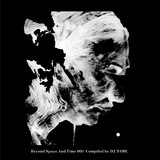
Beyond Space And Time is the new record label from Japanese music festival, Rainbow Disco Club (RDC). RDC has been welcoming music loving people to Japan for over a decade. Throughout the festival's history, RDC have been fortunate to constantly encounter performers and DJs who've collaborated with them in establishing a beautiful dance floor year in, year out. These relationships have lead RDC to start their own label, and now gives them the opportunity to reveal one of the best-kept secrets: What is in a DJ's record bag?
This time around, festival regular DJ Nobu kindly opens up his collection and shares the music he loves with us all. On visual duty we welcome Senekt - his representational yet contemporary drawing illustrates the emotion we feel from DJ Nobu.
We have much more music to come in future from artists that we trust and respect.
▼ DJ Nobu describes 10 tracks this way ▼
A1. Laurent Garnier - Water Planet
Highly respected French DJ/Producer Laurent Garnier has been releasing tracks for decades capturing the very essence of Detroit Techno and Breakbeat. He always manages to create something truly emotional. This is not his biggest hit, but it's my favorite.
A2. Mono Junk - Beyond The Darkness
This track represents the very early days of Techno with it's ravey atmosphere. It has a primitive feel, and the obscure mixdown sounds almost unbalanced. That said, this one really stands out when DJing. Very cool.
B1. Psychick Warriors Ov Gaia - The Valley
It was always my intention to include this track in a compilation if were I ever to do one. It has a fat underlying groove, with some indigenous spices thrown in. The whole thing is put together beautifully. No complaints!
B2. Melody Boy 2000 - Plenty Of Love
I wanted to include a track that had Jacking feel to it - that is my definition of dance music. This track mixes well in both Techno and House DJ sets.
C1. Drax Ltd. II - Amphetamine
This is my all time favorite track by Thomas P Heckman. It asks questions and strikes down all the boring 'wanna be cool' techno tracks. It is obviously a well known tune already, but I include it here because I'm often asked for it's track ID from new kids in the game. This is a classic that should be passed down.
C2. Dan Curtin - 3rd From The Sun
Curtin's refined synth grooves and bass lines make this a true timeless classic. It do not get tired of listening to his rhythms and melodies - he always gets it just right.
C3. Front 242 - U-Men.
The originator of Electric Body Music. Their husky vocals, hard rhythms and strong synth basslines made the group very popular at the time, and they are still to this present day. To me, this track represents what the Belgian New Beat scene is all about.
D1. The Prince Of Dance Music - E3 E6 Roll On
This is the track I played the most up until around 2006. It is a genuine house track that cuts through trends in music. A hidden floor killer.
D2. Pan Sonic - Lähetys / Transmission
Electronic music has existed for decades, and if you are to choose some of the best from all scattered & hidden places, Pan Sonic's 'Lähetys / Transmission' must be considered. The track emerges beautifully - breaking structures and transcending the past. Every layer of the piece is produced with such delicacy and care, that as a whole it magically drags you into the world of the unknown.
D3. Burial - Archangel
This track merges melancholic emotions with technological prowess at the highest level, and deeply impacted the dance music scene on it's release. I recently played this track at the end of my set at the forward thinking Terraforma Festival in Milan. It faded out to huge applause from the open minded crowd. A moment to be remembered.
When acclaimed South African musician Guy Buttery first sought out Dr. Kanada Narahari in late 2016, it was as his patient.
“It was a dark time.” Buttery recalls, “I had been bedridden for months and had been suffering from debilitating bouts of fatigue which no diagnosis or medication could help me get to the bottom of. When I first met Kanada, I was at the stage where even picking up my guitar to make music had become a joyless and taxing exercise.”
As Buttery’s searched for a cure, a family member recommended he see Kanada an Ayurvedic doctor who had relocated to South Africa from India and set up a practice in Durban. It was during this consultation, that the musician first experienced how Narahari infused the healing properties of Indian Classical music into his practice. Rather than treating him with a smorgasbord of pharmaceuticals, Narahari played his sitar and set Buttery on a strict daily diet of Raga’s to fast track his recovery.
Buttery was not only struck by his doctor’s musical talents but by the powerful healing properties inherent in his sitar compositions. When he left Narahari’s doctors room that afternoon, he asserts he was feeling decidedly clearer, lighter and stronger.
“Diving into Kanada’s music was definitely one of the reasons I'm still here today.” he admits. “The consistent tonal centre at the heart of Indian Classical Music, literally became my support pillar over this period. A central core of sorts in which to fall back on, strengthen and discover.”
Narahari as it turned out, was not only a prominent music therapist (and one of the only Ayurvedic doctors practicing in South Africa) but like Buttery, a highly accomplished musician with a devoted following back in his homeland.
Born in a small village along the Western Ghats in Karnataka, India, Narahari, at the age of nine, had enrolled to study Carnatic classical vocal and developed an interest in Hindustani Classical music with a particular passion for the sitar. While Buttery had secured his reputation as one of South Africa’s musical treasures, a multi-instrumentalist who commands sold-out performances both locally and internationally and more recently had been awarded the prestigious 2018 Standard Bank Young Artist for Music.
From this consultation, a friendship developed between the two musicians with Buttery soon inviting Narahari to join him in his studio. But it wasn’t all plain sailing in the beginning. While Buttery and Narahari’s sensibilities were very much aligned, there were a range of cultural and musical influences, nuances and inflections that first needed to be navigated and understood.
“I suppose we had to find a common ground.” Buttery says, before adding, “Which in the end turned out to be pretty "uncommon ground" for the both of us.”
It was after a few intensive sessions together that something exhilarating began to emerge. What began as a few idle improvisations soon evolved into feverish and lengthier jams. Whenever time permitted, the musicians would meet, descending deeper into the emerging sounds, while reimagining the realms that existed between their African and Indian heritages.
Over the next few months, the duo would rack up over fifteen hours of recordings in studio, and it was up to Buttery to shape the material into an album which they collectively titled Nāḍī, which Narahari translates from the Sanskrit as "The Channel" or "An Internal River".
During this period, Narahari bestowed upon Buttery, the moniker Guruji while Guy would refer to him, in affectionate return, as Panditji. Each time the musicians would meet, the studio space would be cleared by an impromptu ritual, with Guruji burning African Imphepho while Panditji would chant a Sanskrit mantra dusting Indian Agarbatti clouds over their instruments.
Once the room had been made hazy with this aromatic alchemy (with the ancestors welcomed in) the musicians would pick up their instruments and plunge into shimmering tides of sound. Reflecting on these sessions, Narahari recalls the immense creative freedom he felt throughout: “Guy and I tried to wander as much as possible, without any speculative, preoccupied ideologies or limitations. Love remained at the forefront of our journey together.”
“Those evenings we spent together in the studio” adds Buttery, “felt incredibly rich with purpose and a profound sense of freedom. While improvising, anything could happen and mostly did.”
On a first listen, the tracks on Nāḍī emerge as salty, humid invocations to the inscrutable depths and misty myths of the Indian ocean-- that vast body of water that stretches between, and laps the shorelines, of the artists’ respective homelands.
When asked to describe the sound him and Narahari refined, Buttery prefers to relay a series of evocative images.
“For me” he explains, “Nāḍī is a lighthouse, a beacon that resides at the bottom of the ocean.” As Buttery envisions it, “what once offered light to guide ships to safety, has been submerged and re-purposed by marine life as a coral-reef temple. Similarly, this sunken lighthouse exists as a concealed cenotaph, memorializing the ancient sea-routes and passages that once connected the two distant lands.”
On paper this may sound obscure but listening to the songs, it serves as an apt metaphor.
Across each meditative movement, listeners are able to relive the journey, immersing themselves in a series of incantations, replete with high dynamics, delicate African-Indian inflections and virtuoso string playing of an entirely new order. Further complimenting the fusion of musical dialects are a range of guest artists including Shane Cooper on bass, Thandi Ntuli on vocals, Chris Letcher on organ, Ronan Skillen on tabla and percussion and Julian Redpath on guitar, synth and backing vocals.
Now like the submerged lighthouse, the recordings stand as a monument, a marker and snapshot of this fortuitous meeting, a tribute to the healing gifts of Guruji and Panditji in performance. It’s a process that already, both musicians look back on with reverence and nostalgia.
Buttery ruminates in closing, that when he first met Kanada his illness correlated with the biggest drought South Africa had experienced in many years “…for whatever reason, whenever we would connect and make music together, the sky would tend to open. Even if it was just a few drops. This went on for months, until finally the drought dissipated and my health had been restored.”
By the time the heavens did open across the East Coast, a deep friendship had been forged and with it abundant musical offerings poured down. A treasured sample of which we able to share in every time we press play and immerse ourselves in the sacrosanct musical universe that is Nāḍī.