
Search:il

2
also available
Gui La Testa[41,13 €]
For a few dollars more[41,13 €]
L'assoluto naturale[41,13 €]
Gamma[41,13 €]
Cosi' come sei[41,13 €]
Green Vinyl[33,57 €]
"Il mio nome è Nessuno" (My name is Nobody) is an a typical western,
difficult to classify as it's placed halfway between the founders of the
genre of the '60s and the comedies of the following decade
Sponsored and partly directed by Sergio Leone, it came out in 1973 and received great success, thanks to the presence of the actors Terence Hill and Henry Fonda, in perfect balance between a light- hearted comedy and the more serious 'spaghetti western' genre.
The music is written by the genius of Ennio Morricone, who writes and
orchestrates a varied soundtrack, which lends itself to the various scenes. There is everything: tense soundscapes, epic symphonic rides - directly referring to the "Dollar Trilogy", frivolous and light- hearted moments, all mixed with esoteric sounds.
Given the popularity of the film, its soundtrack has been released several times, but 35 years have passed since the previous vinyl release. A must buy for fans of the Maestro Morricone but also for all film lovers!
Limited edition on crystal clear vinyl

The original soundtrack for “Il Casanova di Federico Fellini” (1976) sees Nino Rota putting into music Federico Fellini’s opus on the legendary Venetian icon and “tombeur des femmes” Giacomo Casanova.
Winner of an Oscar for Best Costumes in 1977, the film is one of Fellini's finest, a grotesque and hyperbolic take on the life of Casanova that is matched by Rota’s compositions.
“Il Casanova di Federico Fellini” possibly is one of Rota’s most eerie and enigmatic scores, as if the Maestro had finally poured into a soundtrack all of his love for esotericism.
The music wraps you up like the Venetian mist. The compositions are constantly on the edge of classical music with playful nuances and the use of instruments like viola and cello. Vocals become a cornerstone, echoing the tradition of 18th century Italian opera. However, Rota also leaves room for more experimental and estranging vibes that make the soundtrack a one-of-a-kind voyage into the creativity of the Maestro.

With this release the label celebrates the return to the ranks of the founder Worg. A triumphant homecoming comparable to that of Jason, the main character of the Argonautica, who travelled in search of the Golden Fleece (Il Vello d'Oro) aboard the ship Argo. After many vicissitudes, the hero returned to Iolco, his homeland, to reclaim the throne usurped by his half-brother Pelias.
This new chapter in the Lykos saga focuses on the deeds of Jason and the Argonauts, but also on a key figure who was indispensable to the success of this quest, Medea. Thanks to her and her magical skills, the fellowship of heroes succeeded in grabbing the Golden Fleece. Through careful sound design, hinted melodic cells and complex rhythms, Il Piano di Medea by Worg, sums up details and facts related to this extraordinary legend. Starting from the prophecies of the Oracles, to the tragic and bloody ending of the epic poem, which took place with the death of King Pelias by his own daughters, hypnotized and manipulated by Medea's magic.
The narrative begins with the track Oracolo, characterized by a syncopated groove, nebulous atmospheres and the presence of a dark anthropomorphic synth, which alludes to the solemn, grave and authoritative voice of an entity. A prophetic spirit that warns the listener of the dangers that lurk for those who dare to enter this new sonic adventure. In order to foretell the future and to spread their word, the gods took possession of the bodies of priests who had fallen into ecstasy, using them as intermediaries. In his reinterpretation of Oracolo Neel, the grand Maestro of techno, in a similar way uses musical elements such as a harsh and acid bass line or a tight rhythm to lead the listener into a psychic state of suspension and mystical elevation.
In the music piece Il Vello d'Oro, Worg draws attention to the rare preciousness of this magical relic, rumored to have the power to heal all wounds and for this reason longed by Jason. To evoke the purity of the golden mantle, the artist uses shimmering percussion, radiant textures and the omnipresence of an FM synth bass, full of brilliant harmonics. All enhanced by sound details scattered throughout the arrangement.
Eryx, the record's final track, has a fluid and sinuous flow, with sound elements that recall water, a natural element, protagonist of the Argonauts' journey to the remote Colchis. A melody echoes in the distance, disappears and resurfaces to then collide, like waves on the rocks, with the complex and jagged rhythms that mark the gradual evolution of the
track.
9
Italian, French-speaking and blessed with a Belgian accent Christophe Clébard brings a coherence that prevails both for his person and for his music: a wobbly mound, which sometimes resembles a series of explosions, sometimes a pile of layers cut by a flood of words from which parts can be distinguished. Relying on the amplified intonation of a saturated microphone, a pounding rhythm box and a synthesizer, his performances absorb the hearing to spit it out in a universe where nothing has any meaning, except "we're going to die". A punchline that he chants far from the cliché darkness of the dark wave, since for him death is jubilant and colorful, with the grim reaper as the owner of the nightclub. A nightclub well anchored in his head, without a future, with the upcoming emptiness and the hazy memory of his Christian upbringing.
All tracks composed and recorded by Christophe Clébard at les ateliers claus. The album was recorded during a residency at Les Ateliers Claus during the month of April 2021, mixed by Piccolo Bruno and Christophe Clebard, mastered by Elvin Vanzeebroeck at Rare Sound Studio. Photos and Cover projects by Jonas Meier.

13
2022 Repress
From Piero Umiliani, legendary soundtrack composer for numerous Italian movies of the 60s and 70s, and the man behind Mah nà Mah nà' (Muppet Show, Benny Hill, Sesame Street), the Omnicron label ("sound library' works) and the Sound Work Shop recording studio. - For fans of experimental music, avant-garde, synth experimentations, Ennio Morricone, Riz Ortolani, Giallo movies, Mondo movies, soft erotica, and wonderfully weird stuff. - The album is fully remastered for new levels of enjoyment. We Release Whatever The Fuck We Want Records is thrilled to announce the vinyl re-release of sought-after experimental gem Il Mondo Dei Romani by soundtrack and avant-garde maestro Piero Umiliani, remastered straight from the original reels and available for the first time since 1972! Originally recorded for a TV documentary about ancient Rome and released on Omnicron (Umiliani's label), Il Mondo Dei Romani finds Piero Umiliani experimenting with electronic instruments (his oscillators") to offer a fascinating rendition of what synthesizer-based avant-garde ancient Roman music would sound like - a weird and extremely hypnotizing retro-futuristic experience where faux cithara, lyre, organ, and trumpet sounds are driven by proto-techno sequences and minimalist rhythms. This brilliant electronic oddity is the perfect companion to WRWTFWW's previous Piero Umiliani release, Tra scienza e fantascienza, and is a limited edition of 500 orange vinyl LPs (no digital).

6
Barbara, die Frau ohne Gedächtnis, irrt durch die malerischen Straßen Hamburgs. Eine zwielichtige Hypnosesitzung und ein nichts ahnender Liebhaber bringen ans Licht, was sich hinter ihrer unschuldigen Schönheit verbirgt. Die Erlösung scheint in greifbarer Nähe, doch der Drang, weiteres Unheil anzurichten, ist unwiderstehlich... Erst der Tag entblößt das wahre Grauen: GIALLO COME IL GIORNO, das fünfte Genre-Album von MONDO SANGUE setzt dort an, wo die vielbeachtete Giallo-LP ROSSO COME LA NOTTE (2021) endete. MONDO SANGUE und ihre Leidenschaft für die Musik und das Kino der italienischen 1960/70er ziehen Kreise. Auf GIALLO COME IL GIORNO sind die Genreliebhaber und Italien(Be)kenner Bela B, Eric Pfeil, Dirk von Lowtzow und Rocko Schamoni auf schwarzem Gold vereint. Die Vinyl 10"-EPs, von Adrian Keindorf illustriert, sind inkl. farbigem Beileger, Texte und Downloadcode auf 444 Stück limitiert und handnummeriert. Über MONDO SANGUE Das Stuttgarter Duo MONDO SANGUE (Christian Bluthardt & Yvy Pop), gegründet 2015, produziert Cinematic Pop in Anlehnung an das italienische Genrekino der 1960/70er. Nach einem Ausflug in den Dschungel (L"ISOLA DEI DANNATI - Die Insel der Verdammten; Soundtrack zu einem fiktiven Kannibalenfilm, 2016), einem Ritt durch den Spaghettiwestern (NO PLACE FOR A MAN - Il Villaggio delle Donne, 2018) und einer Reise ins All mit dem Science?Fiction-Abenteuer VEGA-5 (Avventure nel Cosmo, 2020) feiern MONDO SANGUE das legendärste Italo-Genre, den Giallo, gleich zweifach: mit ROSSO COME LA NOTTE (2021) und GIALLO COME IL GIORNO (2022).

- A1: Ilg003 Celeste Sensibile
- A2: Futurismo Luminescente
- B1: Selvatico
- B2: Teoria Della Meta?
- B3: Baco Elettrico
- C1: Leggere Nell Animo
- C2: Allosauro
- D1: Strada Feller
- D2: Canale Dei Misteri
- D3: Tra Due Onde
- D4: Viaggiare A Vuoto
- D5: Opera Abbuiata
- A1: Ilg003X E-Bear (R Epee / Grauzone)
- B1: Eleventh Movement (R.epee)
14
2022 Repress
1x12" Maxi (ILG003X)
2x12" LP (ILG003)
For it's third release Infoline showcases never heard compositions
of Marco Repetto (former Grauzone). La Luna Sotto Il Ponte is a 2x12' compilation and a never used alias of Marco Repetto. The compilation features tracks written between 1983-1989.
Some years after his break up with Grauzone (1981), Marco went on
a darker and more industrial path, which was a common route for experimental composers at that time. Expect a solid mixture of unreleased Industrial/EBM cuts. The bonus EP replaces La Luna Sotto Il Pontes grim and dark compositions for a much more utopian mind-set and movement in it's heyday. It's 1988/1989 - Acid House is everywhere.


- 1: Connais Tu L'animal Qui Inventa Le Calcul Integral?
- 2: Evariste Aux Fans
- 3: Les Pommes De Lune
- 4: La Chasse Au Boson Intermédiaire
- 5: Dans La Lune
- 6: La Faute À Nanterre
- 7: Ma Mie
- 8: Wo I Nee
- 9: Si J'ai Les Cheveux Longs C'est Pour Pas M'enrhumer, Atchoum!
- 10: La Révolution
- 11: Je Ne Pense Qu'a Ça
- 12: Je Chante Pour Vous Faire Marcher
- 13: Je Ne Suis Pas Simple
- 14: Si Les Étoiles Pouvaient Parler
14
Évariste is one of the rare specimens of artist-cum-scientists. Among his kind stand others like Pierre Schaeffer, a Polytechnique graduate (an engineer but also the father of musique concrète) and the eccentric Boby Lapointe (graduate of the École centrale and inventor of the Bibi-binaire system, patented in 1968). Évariste's songwriting, joyful and full of energy (albeit extremely critical), shrouds an original tragedy: born in 1943 among résistants, Joël Sternheimer (aka Évariste) grew up without a father, lost to Auschwitz. Although he makes little reference to Jewish culture in his music, his origins leave their mark: in 1974, he sings a Hebrew song on television. In 1966, the young Joël sports Princeton's colourful paraphernalia - that's because he's freshly returning from the US, where he was sent to pursue his research on "particle mass and the interpretation of observed regularities, such as the effects of a wave" (will understand who may). When he gets there the country's in the midst of the Vietnam War. With McNamara keen to find an alternative to the nuclear weapon and calling upon the country's biggest brains to undertake the task, there's a "fund shift" within the university - a diplomatic way to give notice to whoever may not be disposed to follow the government's scheme. Joël, who's under the supervision of a rebellious physician, is dismissed. He regardless keeps following the prestigious seminaries of the Institute for Advanced Study, chaired by Oppenheimer, inventor of the atomic bomb. Likely inspired by the hippie movement and music, Joël buys a guitar and starts playing in Washington Square - after all, Bob Dylan himself started there. He blithely skips Oppenheimer and receives a warm (though surprised) welcome from a crowd thoroughly unfamiliar with French. When the ageing physicist questions him about his decreasing attendance, Joël explains how drawn he is to music, and how he thinks it could help him in self-financing his research. Évariste recalls seeing the sickened man, his face torn by remorse, lighten up to his words and say: "What's keeping you - go for it! If I was still young that's exactly what I'd do." The student takes these words as a testimony from his professor - and it's enough to convince him . And so he takes the leap during the Christmas vacations he spends in Paris. A journalist friend he often sees around the Sorbonne introduces him to the artistic director of Disques AZ. The latter passes the tapes on to the label's boss, Lucien Morisse, also program manager on Europe N°1. Morisse is blown away - and signs him onto the label right away. Michel Colombier, arranger for Serge Gainsbourg and co-author of "Psyché Rock", with Pierre Henry, contributes some of his original ideas to the 7 inch "E=mc2": Évariste's preoccupation with the percussion sound on the track "Le calcul intégral" is that it goes "poom poom" and not "tock tock" - Colombier is aware of the issue and records Évariste's guitar like a percussion in an isolated booth. The organist Eddy Louis, who is to participate, in 1969, to the success of Claude Nougaro's "Paris mai", also appears on the record. It's 1966 and the Antoine phenomenon (signed on Vogue) storms through France. The two singers share similarities: Antoine is an engineer of the École centrale, gifted with a great originality in his song-writing. A godsend for the two labels who turn this resemblance into a commercial strategy, setting them out as rivals. To this day though, Évariste still denies what was little more than slushy tabloïd gossip. Success comes around swiftly and in 1967 Évariste launches into a second 7 inch, "Wo I nee", again arranged by Michel Colombier. Quantum mechanics fans finally get their anthem with "La Chasse Au Boson Intermédiaire" (or the "Intermediary Boson Pursuit"). To sum up what's a boson, say he's a close pal of the meson, photon and other gluons. A few months later, it's May 68 and everything's turned upside down. Évariste writes a series of songs inspired by the events, which he immediately submits to Lucien Morisse. When the man behind "Salut les copains", once married to Dalida, hears the song "La révolution" - a father and son dialogue - he can't take any more: AZ simply cannot release this. But there and then Lucien Morisse makes a gesture which will remain engraved in French music's history: sorry to be unable to officially stand by the singer, he encourages him to self-produce the record, but with his tacit support. He calls the pressing factory and asks they apply the same rate for Évariste as they would for AZ. The singer and his musicians use the same studio as for the previous record, all of them playing for free awaiting a return on investment. Évariste keeps singing at the Sorbonne with "Jussieu's gang" and "the young Renaud" he nicknames "le p'tit gavroche" (or "street urchin"). Renaud volunteers to type the lyrics of the song "La révolution" so that the chorus can be sung and recorded. A boy in the group is related to Wolinski and introduces them. The two get along so well that Wolinski ends up drawing the cover for the record "La révolution", for free. The self-released 7 inch "La révolution / La faute à Nanterre" is sold under the table and door-to-door for half the price of a standard record, on and around the boulevard Saint-Michel; and it runs out fast. In the end, there will be 6 releases of the record, and 25000 copies sold. When the theatre director Claude Confortès decides to adapt Wolinski's drawing series titled "Je ne veux pas mourir idiot" ("I don't want to die a fool"), he asks Évariste to write the original soundtrack. His friend, now cartoonist for Hara-Kiri Hebdo, often promotes him in accordance with a principle dear to him by virtue of which he gives a special place to his friends. Dominique Grange (writer of the song "Nous sommes les nouveaux partisans") soon joins the team. After 150 performances, Évariste leaves his place to Dominique Maurin (brother of Patrick Dewaere). Évariste composes the songs for Claude Confortès' next play, "Je ne pense qu'à ça" ("That's all I think about"), co-wrote with Wolinski in 1969. The comedians of the play record the songs on a 7 inch, with a cover signed, again, by Wolinski. In 1971, French television produces the documentary "Évariste et les 7 dimensions", but doesn't air it. Indeed, the scientific sub-comity of the programming comity (sic) censors the show. The given justification is that "Évariste dangerously mixed science with science-fiction, numerology and other non-scientific disciplines". The underlying motive might have been a will to censor the singer-mathematician's political discourse. In the documentary and among other things, Évariste discusses hierarchy, alienation and revolution. Half a century later the documentary remains invisible, though some excerpts resurfaced in 1992 in the cult show "L'oeil du cyclone", on Canal +. Though flourishing, Évariste's career is nearing its end. 1970 is the beginning of a decade in the course of which he is to make a decisive discovery in the musical and scientific domains. Following this breakthrough, he moves away from self-produced music and gaucho magazines to focus on science. He keeps Oppenheimer's encouraging words in mind, now freely pursuing his research thanks to the sales of his records. Joël realises that when decoding protein sequences, one finds musical sequences recognisable to humans. He names them "proteodies". If, when listening to a proteody, one responds by being so sensitive as to finding it beautiful, then it reveals a deficiency of the related protein - and this peculiar music may be the cure. We could trace back the music history in light of proteins lacking in a given artist, or within a public's majority. You always thought these hysterical groupies who'd throw their underwear with passion and faint in the pit had miraculously appeared because they had never heard anything as wonderful as the Beatles? Make no mistake! For Évariste, it all boils down to an intro's protein content. Indeed, the beginning of their first hit "Love Me Do" corresponds to dopamine, the neurotransmitter linked to compulsive buying. An intro like this could only unleash the fervour of groupies, victims of fashion and biology. Évariste's success is such that the income from his sales gives him the autonomy to which he had aspired when confiding to Oppenheimer. It made it possible for him to pursue his research without any institutional constraints. He now devotes himself to his proteodies, sat in the offices of the European University for Research, just around the corner from the Sorbonne he knew so well. Évariste is no more. Joël regained control of this strange and comical beast.

The latest offering from French shape-shifter Maxime Primault (High Wolf, Black Zone Myth Chant, etc.) is both a distillation and deepening of psychedelic soundsystem strategies honed across a decade plus of production and performance, in crisscrossing trenches of vibrational exploration. The four cuts comprising IN D EV IL were born of bass and syrup, designed as anthems for baser desires: “I just wanted to make bangers really.” Alien squelches and insectoid chatter pulse above thick swells of low end, intercut with sirens, screwed voices, and seasick wobble, alternately pummeling and prismatic. Masterfully disorienting, flickering with FX, drops, and narcotic murmuring, at the threshold of dissociative and dubstep.
Recent years spent performing in clubs influenced Primault’s listening habits, both in taste and production methods, skewing towards a starker contrast of highs and lows. IN D EV IL encapsulates this evolution, hallucinatory but urgent, like DJ tools for an underworld afterhours: tight, tripped, and lightless. The EP’s tracks vary in energy and density but share Primault’s premise of “tunes that sound fat and heavy.” Club music as dimensional gateway, booming and liminal, rippling with tremors, texture, and undertow. Whether deployed in public or private, these designs manifest vividly altered states, testament to their creator’s omnivorous vision of rhythm and sound.

13
Die Berliner Band il Civetto ist am vorläufigen Ende einer kreativen Reise bei sich selbst angekommen, indem sie sich neu erfunden hat: Auf ihrem dritten Album »Späti del Sol« gelingt der Band mit sehnsuchtsvollen Melodien und mitreißender Gute-Laune-Musik eine neue Pop-Internationale. Fühl- und Erlebbarkeit ist auf »Späti del Sol« der Schlüssel. Die wehmütige Ballade »Barbazan« führt direkt in die Spätsommertage der französischen Pyrenäen, das elegant flirrende »Couscous mit Auberginen« lässt ohne Umwege die Aromen im Kopf explodieren, die durch ein Wechselbad der Gefühle swingende »Viel zu viel« zieht einen aus dem täglichen Hamsterrad direkt auf den Dancefloor. Der Titelsong »Späti del Sol« vertont Fernweh, Sehnsucht und das Gefühl, unterwegs zu sein ebenso wie die positive Energie einer lauen Sommernacht bei Rotwein mit gutem Essen und noch besseren Gesprächen. Kein Zufall: Der Mikrokosmos Späti hat in der Geschichte dieser Band eine zentrale Bedeutung: »Als wir früher in der U-Bahn gespielt haben, war vorher immer Treffpunkt am Späti«, sagt Sänger Leon Keiditsch, »und auch jetzt haben wir uns während der Pandemie mit Vorliebe am Späti versammelt.« Mit dieser von Liebe und Wärme erfüllten Musik haben sich il Civetto nun gewissermaßen einen eigenen Späti gebaut: Es ist ein utopischer Ort, an dem alle willkommen sind und wo der spielerisch-poetische Umgang mit Sprache und Musik den Gästen für einen Moment die Schwere nimmt - und sie sie leicht und beschwingt gen Himmel steigen lässt. Wie Friedenstauben. Da il Civetto ihre gesellschaftlichen und politischen Anliegen ebenso wichtig sind, wie die Musik selbst, sind die neuen Songs auf Deutsch getextet. Durchaus ein künstlerisches Wagnis, das aber voll und ganz aufgegangen ist. il Civetto haben für »Späti del Sol« eine derart hochpoetische, tänzelnde und sehnsuchtsvolle Pop-Sprache entworfen, dass man sich diese Lieder gar nicht mehr anders vorstellen kann. il Civetto sind auf »Späti del Sol« durchgehend »En Route«, also unterwegs, so der Titel eines weiteren, besonders gelungenen Songs, der die Bewegung mit hymnischer Kraft in sich aufgesogen hat, in der die Musiker sich zu großen Teilen der Produktion dieses Albums befanden.Es ist noch nicht so lange her, als nicht Protektionismus und Abschottung, sondern Ideen von einer gerechteren und besseren Welt die Diskurse beherrschten. il Civetto erinnern uns wieder daran - mit unwiderstehlichen Hits, zu denen man auf die Straße rennen, im Regen tanzen, wildfremde Menschen umarmen und im »Späti del Sol« Bier trinken will. Am Sehnsuchtsort »Späti del Sol« werden Visionen von einer gerechteren Welt im Geiste des Pop wahr, deshalb ist diese Musik so gut. Die Reise von il Civetto ist längst noch nicht zu Ende!"Späti del Sol" ist in Zusammenarbeit mit den Produzenten Ralf Christian Mayer (Cro, Clueso, Mark Forster) und Tim Tautorat (AnnenMayKantereit, Faber, Provinz) entstanden und ist ab 20.05.22 als CD & limitierte Vinyl & digital als Stream und im Download erhältlich und ab sofort vorbestellbar. Im Sommer ist die Berliner Band deutschlandweit auf der Späti del Sol Tour & Festivals live erlebbar.

What started as a duo in 2017, merging a core of
sludge, stoner and audio effects, soon became a
trio, adding a third member to accomplish their
enthralling fusion of monolithic sounds with a
visual concept.
Both musical and philosophical, Italian band
Pachiderma add a special and unique touch to the
heavy music world, while combining various movie
samples and vibrant effects, inspired by the dark
myths and reality of humanity yet driven by the
soul of heavy stoner rock and sludge metal.
Pachiderma’s ‘Il Diavolo, La Peste, La Morte’ is a
concept album, divided in four acts, and was
inspired by the philosophy previously issued in
Bergman’s filmography. The album was recorded
in a ‘one shot’ weekend session by Andrea Lenoci
at Molotov Recordings.
For fans of Bongripper, Electric Wizard, Sleep,
Weedeater, Dopethrone, Bongzilla, Acid King.
LP pressed on yellow vinyl.

- A1: Yvré-L'evêque Feat. C.a.r, Tolouse Low Trax Broken Pleasure Remix
- A2: Les Mystères De Lorient Feat. Narumi Herisson, Khidja Remix
- A3: Marilyn Drum, Golden Bug & In Fields Remix
- B1: Yvré-L'evêque Feat. C.a.r, Krikor Remix
- B2: Bar A Gwin Feat. Macdara, Rubin Steiner Remix
- B3: Les Mystères De Lorient Feat. Narumi Herisson, Marvin & Guy Remix
- B4: Phare Ouest Feat. Yula Kasp, Narumi Rework
7
After the release of their first album, Il Est Vilaine ask to artists and friends to deliver a series of high-flying remixes: Tolouse Low Trax, Krikor, Khidja, Marvin & Guy, Golden Bug, Rubin Steiner, C.A.R…
Tolouse Low Trax opens the ball with a destructured version of Yvré- L'évêque while keeping the darkness of the track. We can hear a nod to the track "Holland Tunnel Dive" anthem of the Salon des Amateurs.
For the eponymous track Khidja were inspired by the sounds of the land of the rising sun which is a good thing to accompany the song of Narumi Hedgehog! A bright version and influenced by YMO's era Sakamato.
Golden Bug & In Field proposes an alternative just as trippy as the original version of Marilyn Drum, a trip between neighborhood hospitals and crazy guru.
Another version of Yvré-l'Evêque this time Krikor takes care of it and takes out his sampler for a digi-dancehall version that only he has the secret, Faya !
Rubin Steiner delivers a version back to the roots of Bar à Gwin mixing deep house texture and 80's-NY-hip-hop/electro.
The two Italians of Marvin & Guy bring out the hits, the guitars and the arpeggios for an epic version of Mystères de Lorient.
To close the album, we find Narumi Hérisson at the controls of her piano for a dreamy and sensitive version of Phare Ouest where her voice and that of Yula Kasp are mixed in the greatest harmony!
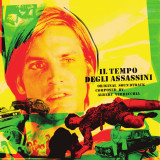
11
Between the 60s and 80s, Albert Verrecchia played a major role in Italian pop music and on the European disco and Afro-cosmic scene, both under his own name and under the monikers Albert Weyman and Albert Prince. He was the keyboardist of legendary Italian-French r'n'b band I Pyranas, served as a session Hammondist for singer and TV star Raffaella Carrà, and produced the disco trio Belle Epoque as well as the debut album of singer-songwriter Alan Sorrenti. Among his many incarnations, in the early and mid-70s he also composed a few soundtracks for Italian genre cinema, including for movies such as the poliziottesco Roma drogata, la polizia non può intervenire (Hallucinating Trip, 1975, Lucio Marcaccini) and the erotic drama Tecnica di un amore (1972, Brunello Rondi).
The score he wrote in 1975 for Il tempo degli assassini (Season of Assassins, a film about a gang of criminal youths who terrorize the city of Rome in the already violent 70s) is certainly his most accomplished work in the genre. Conceived for a small ensemble, it was written almost entirely on the spot in the recording studio. Verrecchia himself played the Moog, and his dynamic and percussive approach to the instrument resulted in a style midway between funk and proto-disco. A modern rhythmic style - or Ritmico Moderno, which is the title chosen by CAM for the LP containing the soundtrack and released two years later as part of a promotional library music series only distributed to film professionals and radio and TV programmers (CML series, cat. no. 131). One is led to wonder whether it was thanks to that LP that, in 1977, three pieces from the soundtrack found their way into another film about youth gangs, the Spanish Perros callejeros (Street Warriors), written and directed by Jose Antonio de la Loma. On a side but important note, there's the added bonus of popular 70s and 80s entertainer Sammy Barbot singing on Gang Leader alongside female vocal group Baba Yaga. What a pity that Verrecchia's career as a film composer ended here!

- A1: The Day Of The Cobra
- A2: Escape
- A3: Remember
- A4: Downstairs
- A5: Revenge
- A6: Clash
- A7: Flight
- A8: Revenge (Dark Side Of The City)
- A9: Suspicion (Sexy Lady)
- A10: Run To Live (The Cobra Spies)
- B1: Fear
- B2: Suspicion
- B3: Upstairs
- B4: The Day Of The Cobra (2° Vers.)
- B5: Run To Live
- B6: Hanged Up
- B7: Encounter
- B8: Astonishment
- B9: Spy
- B10: Tim
20
Cinedelic Records is proud to present Paolo Vasile’s score to Enzo Castellari’s 1980 poliziottesco fim, Il Giorno Del Cobra. This record features one of maestro Vasile’s most iconic themes as featured on various polizio compilations. This release will include three bonus tracks and will be pressed in a limited quantity. The cues on this soundtrack feature a wonderful mix of cool keyboards, horns, funky basslines, and driving kick drums — a perfect reverb-fueled accompaniment to Franco Nero’s onscreen antics. (Alfonso Carrillo)

11
Digitmovies proudly presents on LP another musical jewel by Ennio Morricone from the TV movie broadcasted by Italian Rai Television in 1978 "Il prigioniero" (aka "The Prisoner”). Ennio Morricone has composed an extremely serious score which reflects the whole sentimental and dramatic side of the historic atmosphere, in which the protagonist is immersed. The author varies the main theme with different orchestrations: the romantic, but nostalgic "L'estate è finita" for flute, harpsichord and orchestra, reprised with harpsichord chromatism and with harpsichord and orchestra. The second motif "I due prigionieri" is introduced by the solo flutes in an almost experimental context, later accompanied by cellos and basses and then reprised as a background to psychological suspense with brass, piano and vibes and with fascinating variations. This painful atmosphere is broken up by "source music" which re-creates the sound of that era, like the Sicilian folk song for voice and guitar "Si l'ammuri" and the romantic old- fashioned romantic tune for male voice, piano and guitar "Dove sei amore".
[a] a1 L'estate È Finita [Versione Singolo Lato A]
[b] a2 I Due Prigionieri [Versione Singolo Lato B]
[d] a4 I Due Prigionieri [Versione 2]
[e] a5 L'estate È Finita [Versione 2]
[g] b1 L'estate È Finita [Versione 3]
[h] b2 I Due Prigionieri [Versione 3]
[i] b3 Dove Sei Amore [Versione Vocal]
[j] b4 I Due Prigionieri [Versione 5]
[k] b5 L'estate È Finita [Versione 5]

If you mention the name of Metamorfosi in front of any fan of Italian progressive rock, you get a unique effect: awe, wonder, united to the memory of the masterpiece that firmly established them as fundamental exponents of the genre. We are obviously talking of "Inferno", published in January 1973 and inspired by the eponymous first poem of the Divine Comedy by Dante Alighieri.
But the musical maturity of "Inferno" had not come immediately, at least not in discographic terms, as it happened for example in the case of Alphataurus, Biglietto per l’Inferno and Campo di Marte, typical meteors of Italian prog that made their debut with a bang and then dissolved into thin air for decades. In fact, Metamorfosi debuted with a work that was indeed less complete, but not negligible.
“...e fu il sesto giorno” is born after two years of gestation, since the singer Jimmy Spitaleri joined the band I Frammenti in 1970. It is the period of maximum splendour for the music which at the time was called ‘avant-garde pop’ and that only later would be labeled as ‘progressive rock’, a music scene in which the Metamorfosi of the beginning just partially fit in as they were partly still anchored to old beat styles, and as they engaged in the exaltation of the Catholic faith at the textual level. The religious content of the album is substantially unequivocal from the cover, in which Jimmy Spitaleri is portrayed in a symbolic laying on of hands to the rest of the band, his disciples and fellow adventurers.
If it is true that the weakness of the Italian prog scene has always been found in the singing, Spitaleri is a notable exception, who does not show any shortcoming throughout the disc. In addition, some elements - the guitar solos, the interventions of flute and keyboards, a solid rhythmic base, a sometimes unpredictable song structure - anticipate what will come from there after a few months. "...e fu il sesto giorno" is, therefore, contrary to what is often said, a major premise, a flower waiting to bloom and show everyone its own beauty.

12
After severals EPs on labels such as Lumière Noir, Kill the DJs or Bahnsteig 23, here is the first album of french duo Il Est Vilaine, infused with a "Yellow Magic Orchestra-ish" touch, rooted in the french musical landscape.
A road trip in Brittany as a red thread, the two hooligans of Il Est Vilaine revisit Kawaii pop, crazy rock like DEVO and Detroit techno with a surprising coherence. An album long matured and awaited by the band's fans.
Il Est Vilaine aren’t Bretons, but they sure are tricksters. The Francophiles among you might have caught on to the corny pun in their name (beating a certain presidential candidate to the punch all while turning the name of the pastoral Ille-et-Vilaine region into, literally, “he’s a nasty woman,”) but the real takeaway is that these born-and-bred Parisians don’t take themselves too seriously – especially in an era in which there is much too much of that happening.
It was in 2014 (and on Dialect Recordings) that Florent and Simon tossed their debut 12” into the ring, the rightfully named Scandale – a tight little bombshell released that roused the electronic music scene out of its complacent little catnap.
So there we had it, two outcasts refusing to eat at the same table as the tech-house scene queens, serving up three whiplash-on-the-dancefloor cuts drenched in sweaty hedonistic disco and wrapped in a battered motorcycle jacket (with a gooey post-punk-pop core for good measure.) A clear mission statement right out of the gates, watermarked with mystical incantations and throbbing with rock ’n’ roll’s primitive drive. Everything and the kitchen sink, and a bag of chips – an invitation to just let lose that’s even better than the sum of its parts.

- 01: Il Vuoto - Seq. 1 (Night Jazz Per Vibrafono)
- 02: Il Vuoto - Seq. 2 (Night Jazz Per Sax Baritono)
- 03: Il Vuoto - Seq. 3 (Swing Per Sax Baritono)
- 04: Estasi
- 05: Il Vuoto - Seq. 4 (Cordovox In 6/8)
- 06: Evasione
- 07: Il Vuoto - Seq. 5 (Sud-America - Ritmico Per Voce Maschile)
- 08: Frenesia
- 09: Il Vuoto - Seq. 6 (Twist)
- 10: Il Vuoto - Seq. 7 (Blues Per Organo)
10
Four Flies is proud and excited to present the first full-album release of the long-forgotten soundtrack composed by Armando Trovajoli for Piero Vivarelli's 1964 movie Il Vuoto.
Rightly considered by many to be a key figure, if not the key figure, in the history of Italian jazz, Trovajoli was responsible for fostering an appreciation and understanding of jazz among the generation of music listeners and musicians raised under Mussolini and Fascist nationalism. His outstanding work as a pianist, composer and conductor contributed immensely to the popularization of the genre among the general public and to the reduction of institutional bias against it.
The collaboration between Trovajoli and Vivarelli did not happen by chance. The latter, now regarded as one of Italy's "kings of the B's" for his work in the 'exotic-erotic' genre (Il dio serpente, Codice d'amore orientale, etc.), was a great music expert, a skilled talent scout for the Italian music industry, and a true lover of jazz.
Most of Trovajoli's score for Il vuoto has a refined smoothness that is clearly reminiscent of cool jazz – many tracks on the soundtrack are performed by a sextet featuring Trovajoli himself on piano, Carlo Zoffoli on vibraphone, Gino Marinacci on baritone sax and flute, Enzo Grillini on electric guitar, Berto Pisano on double bass, and Sergio Conti on drums and percussion. At the same time, Trovajoli explores other jazz styles or sub-styles in faster, more rhythm-oriented tracks influenced by bossa nova, samba, and even rock'n'roll, where instruments like drums and percussion, electric guitar, or flute take center stage.
This stylistic variety demonstrates both the maestro's versatility as a composer and the fine skills of the musicians who performed on the soundtrack. Like Trovajoli, they were all pioneers of Italian jazz and played in Italy's very first 'institutional' jazz orchestra: the Orchestra di Musica Leggera of the RAI (the Italian public broadcasting company), formed under Trovajoli's leadership in 1956 and credited as "his orchestra" in public performances and in the album The Beat Generation (RCA Italiana, 1960).
By making available for the first time ever almost all of the music recorded by Trovajoli for Il vuoto, this LP fills an important gap in the maestro's discography. Most importantly, it offers further insight not only into the history of Italian jazz, but also into the penetration of the genre into Italian film music, which was possible thanks to Trovajoli's mastery as a composer and to the virtuosity of the pioneering musicians who performed in his orchestra.
