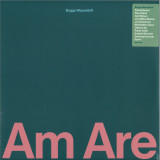
Bugge Wesseltoft has long been a shaper of his own jazz idioms, through his diverse solo albums, his group projects such as New Conception of Jazz, OKWorld! and RYMDEN, and collaborations with artists such as Sidsel Endresen, Henning Kraggerud or Henrik Schwarz.
"Am Are" features special constellations of superb musicians that spans both generations and styles, and is an exploration of sonic textures, dynamic contrasts of mood and style, and ranges from sparse arrangements through to complex layers of dubs and loops and improvisational interplay.
The album begins with Bugge alone on "How?" with layers of undulating atmospheric synth, brought into focus by Bugge's piano at the forefront, creating a minimalist miniature that is both emotive and serene. For "Villrein" Bugge is joined by Elias Tafjord on drums, beginning with a santur-like synth figure, floating over ominous formant sci-fi bass synths bubbling and pulsing, and overlaid by phrenetic piano that only stops to lock into the santur figure before relaunching on its own journeys, all underpinned by Elias Tafjord's expressive drumming. "Is Anyone Listening?" demonstrate's Bugge's songcraft, layering muted percussive piano behind Rohey's distinctive and beautiful vocals punctuated by Martin Myhre Olsen's tenor saxophone, creating a soulful mood tinged with desperation.
"BAG" presents the first classic piano trio of the album - Bugge on piano and synths, Arild Andersen on bass, and Gard Nilssen on drums - announcing itself with an insistent riff, chattering drums, breaking into a progressive rock-style passage of bass and piano in unison. "Reel", the second track from this trio, is a mellow soundscape that evolves to become hazy urban downbeat jazz.
The second piano trio of Bugge (Rhodes and Korg MS20 synth), Sveinung Hovensjø (Electric Bass), and Jon Christensen (Drums and Bells) offers a completely different perspective. The first track "Render" features Bugge's Zawinul-esque Rhodes and monosynth leads, Sveinung's fuzz bass in something of a leading role, all carried with chattering gusto by Jon Christensen's dynamic drumming that brings texture and space as well as rhythm to the piece. "Vender" begins as an atmospheric piece, with reed organ-like synth washes, and octave-processed bass with a somewhat sitar-like tone, meandering until the track breaks down into drums and bass weaving around an insistent drum machine loop, dripping with synth pads and monosynth lead.
"JazzBasill" introduces the third piano trio - featuring Bugge (Piano), Jens Mikkel Madsen (Acoustic Bass) and Øyunn (Drums) - and offers a classic piano trio style with urban sophistication, that is lyrical, and interspersed with staccato cadences, giving a feeling of broken swing, slightly staggered yet driving forwards. The title track "AM ARE" is late night jazz, with baroque whispers, and distinctly melodic.
The final track, "Think Ahead" features the non-standard trio of Bugge (Piano/Organ), Oddrun Lilja (Guitar) and Sanskriti Shrestha (Tablas/Harp). Beginning with a minimalist piano figure, table, and sustained guitar, the track breaks down to a noise surge and ambient windscape, with guitar birds and abstract grinding, before returning to minimalist melodicism.
The shifting personnel across the album, as well as the three different studios in which it was recorded - Village Recording in Copenhagen, Rainbow Studios in Oslo, and his own Buggesroom Studio - creates a feeling of dynamic change and musical variety that is unified by Bugge's piano and keyboards. His playing moves between foreground, where he allows the music to elevate him, and background, where he move gently like a beneficent presence, tending to the demands of the spirit of the musical moments he has captured. It is an album powered by restless exploration and shaped by distinctive musical personalities; it is a journey through different moods, illuminated and brought into focus by Bugge's measured approach and guiding hand.

Search:il
- A1: Montego Bay - Everything (Paradise Mix) 04 59
- A2: Atelier - Got To Live Together (Club Mix) 06 06
- A3: Golem - Music Sensations 04 56
- B1: The True Underground Sound Of Rome Feat. Stefano Di Carlo - Gladiators 05 26
- B2: Eagle Parade - I Believe 04 26
- C1: Dj Le Roi - Bocachica (Detroit Version) 05 28
- C2: Green Baize - Synthetic Rhythm 01 41
- C3: M.c.j. Feat. Sima - Sexitivity (Deep Mix) 05 30
- D1: Kwanzaa Posse Feat. Funk Master Sweat - Wicked Funk (Afro Ambient Mix) 06 31
- D2: Progetto Tribale - The Bird Of Paradise 06 29
- D3: Mbg - The Quite 06 59
Vol 1[28,99 €]
Googling “paradise house”, the first results to pop up are an endless list of European b&b’s with whitewashed lime façades, all of them promising “…an unmatched travel experience a few steps from the sea”. Next, a little further down, are the institutional websites of a few select semi-luxury retirement homes (no photos shown, but lots of stock images of smiling nurses with reassuring looks). To find the “paradise house” we’re after, we have to scroll even further down. Much further down.
It feels like yesterday, and at the same time it seems like a million years ago. The Eighties had just ended, and it was still unclear what to expect from the Nineties. Mobile phones that were not the size of a briefcase and did not cost as much as a car? A frightening economic crisis? The guitar-rock revival?! Certainly, the best place to observe that moment of transition was the dancefloor. Truly epochal transformations were happening there. From America, within a short distance one from the other, two revolutionary new musical styles had arrived: the first one sounded a bit like an “on a budget” version of the best Seventies disco-music – Philly sound made with a set of piano-bar keyboards! – the other was even more sparse, futuristic and extraterrestrial. It was a music with a quite distinct “physical” component, which at the same time, to be fully grasped, seemed to call for the knotty theories of certain French post-modern philosophers: Gilles Deleuze, Félix Guattari, Paul Virilio... Both those genres – we would learn shortly after – were born in the black communities of Chicago and Detroit, although listening to those vinyl 12” (often wrapped in generic white covers, and with little indication in the label) you could not easily guess whether behind them there was a black boy from somewhere in the Usa, or a girl from Berlin, or a pale kid from a Cornish coastal town.
Quickly, similar sounds began to show up from all corners of Europe. A thousand variations of the same intuition: leaner, less lean, happier, slightly less intoxicated, more broken, slower, faster, much faster... Boom! From the dancefloors – the London ones at least, whose chronicles we eagerly read every month in the pages of The Face and i-D – came tales of a new generation of clubbers who had completely stopped “dressing up” to go dancing; of hot tempered hooligans bursting into tears and hugging everyone under the strobe lights as the notes of Strings of Life rose up through the fumes of dry ice (certain “smiling” pills were also involved, sure). At this point, however, we must move on to Switzerland.
In Switzerland, in the quiet and diligent town of Lugano, between the 1980s and 1990s there was a club called “Morandi”. Its hot night was on Wednesdays, when the audience also came from Milan, Como, Varese and Zurich. Legend goes that, one night, none less than Prince and Sheila E were spotted hiding among the sofas, on a day-off of the Italian dates of the Nude Tour… The Wednesday resident and superstar was an Italian dj with an exotic name: Don Carlos. The soundtrack he devised was a mixture of Chicago, Detroit, the most progressive R&B and certain forgotten classics of old disco music: practically, what the Paradise Garage in New York might have sounded like had it not closed in 1987. In between, Don Carlos also managed to squeeze in some tracks he had worked on in his studio on Lago Maggiore. One in particular: a track that was rather slow compared to the BPM in fashion at the time, but which was a perfect bridge between house and R&B. The title was Alone: Don Carlos would explain years later that it had to be intended both in the English meaning of “by itself” and like the Italian word meaning “halo”. That wasn’t the only double entendre about the song, anyway. Its own very deep nature was, indeed, double. On the one hand, Alone was built around an angelic keyboard pattern and a romantic piano riff that took you straight to heaven; on the other, it showcased enough electronic squelches (plus a sax part that sounded like it had been dissolved by acid rain) to pigeonhole the tune into the “junk modernity” section, aka the hallmark of all the most innovative sounds of the time: music that sounded like it was hand-crafted from the scraps of glittering overground pop.
No one knows who was the first to call it “paradise house”, nor when it happened. Alternative definitions on the same topic one happened to hear included “ambient house”, “dream house”, “Mediterranean progressive”… but of course none were as good (and alluring) as “paradise house”. What is certain is that such inclination for sounds that were in equal measure angelic and neurotic, romantic and unaffective, quickly became the trademark of the second generation of Italian house. Music that seemed shyly equidistant from all the rhythmic and electronic revolutions that had happened up to that moment (“Music perfectly adept at going nowhere slowly” as noted by English journalist Craig McLean in a legendary field report for Blah Blah Blah magazine). Music that to a inattentive ear might have sounded as anonymous as a snapshot of a random group of passers-by at 10AM in the centre of any major city, but perfectly described the (slow) awakening in the real world after the universal love binge of the so-called Second Summer of Love.
For a brief but unforgettable season, in Italy “paradise house” was the official soundtrack of interminable weekends spent inside the car, darting from one club to another, cutting the peninsula from North to centre, from East to West coast in pursuit of the latest after-hours disco, trading kilometres per hour with beats per minute: practically, a new New Year’s Eve every Friday and Saturday night. This too was no small transformation, as well as a shock for an adult Italy that was encountering for the first time – thanks to its sons and daughters – the wild side of industrial modernity. The clubbers of the so-called “fuoriorario” scene were the balls gone mad in the pinball machine most feared by newspapers, magazines and TV pundits. What they did each and every weekend, apart from going crazy to the sound of the current white labels, was linking distant geographical points and non-places (thank you Marc Augé!) – old dance halls, farmhouses and business centres – transformed for one night into house music heaven. As Marco D’Eramo wrote in his 1995 essay on Chicago, Il maiale e il grattacielo: “Four-wheeled capitalism distorts our age-old image of the city, it allows the suburbs to be connected to each other, whereas before they were connected only by the centre (…) It makes possible a metropolitan area without a metropolis, without a city centre, without downtown. The periphery is no longer a periphery of any centre, but is self-centred”.
“Paradise house” perfectly understood all of this and turned it into a sort of cyber-blues that didn’t even need words, and unexpectedly brought back a drop of melancholic (post?)-humanity within a world that by then – as we would wholly realise in the decades to come – was fully inhuman and heartless. A world where we were all alone, and surrounded by a sinister yellowish halo, like a neon at the end of its life cycle. But, for one night at least, happy."
- Love In Store
- Can’t Go Back
- That’s Alright
- Book Of Love
- Gypsy
- Only Over You
- Empire State
- Straight Back
- Hold Me
- Oh Diane
- Eyes Of The World
- Wish You Were Here
If every significant artist has an underrated gem in its catalog, then Mirage is that album for Fleetwood Mac. An obvious return to relative simplicity after the dramatic tension of Rumours and experimental ambitions of Tusk, the 1982 album finds the band re-grouping after a brief hiatus and again climbing to the top of the charts. Extremely well-crafted, well-produced, and well-performed, the double-platinum effort distills the group’s hallmark strengths into a filler-free set that never runs short of addictive pop hooks or daft accents.
Sourced from the original analog master tapes, pressed at Fidelity Record Pressing in California, and housed in a Stoughton jacket, Mobile Fidelity’s numbered-edition 180g 45RPM 2LP set presents Mirage in reference sound for the first time. The efforts co-producers/engineers Ken Caillat and Richard Dashut went to capture the splintered albeit formidable band can be heard with stunning accuracy, range, depth, and detail.
Though Rumours understandably gets a permanent spot in the audiophile hall of fame, the smooth, clear, and dynamic sonics on Mirage confirm that the record that stood as Fleetwood Mac’s last effort for five years deserves a place in the same vaunted arena. The presence and imaging of Mick Fleetwood’s percussion alone on this reissue might have you wondering how this slice of soft-rock bliss has gone under-noticed for decades. Other prized aural aspects — separation, definition, impact, tonal balance — are also here in spades.
Like much surrounding Fleetwood Mac in the 1980s, arriving at Mirage was not easy. Caillat searched for studios located outside of Los Angeles on a mission to change up the vibe of the band’s prior recording sessions. Everyone settled on Le Chateau in France, where relations between some members remained icy — and cooperation with the producers strained. Battles with exhaustion, bitterness, and addiction further informed the proceedings at the 18th century complex in the French countryside, where even communal meals were allegedly eaten in silence.
Inevitably, the feelings that co-producer Lindsey Buckingham, Stevie Nicks, Christine McVie, and company harbored — as well as the situations in which they found themselves — drifted into the songwriting. In its rapid ascent to rock-star royalty status, Fleetwood Mac drifted apart, embarked on solo pursuits, and found it was lonely at the top. Emptiness, the illusion of dreams, the longing for love, the want to escape to bygone times of innocence and happiness: Such themes inform a majority of the narratives. Even if the lyrics regularly take a back seat to easygoing arrangements that allow Mirage to come on like a refreshing breeze on a sunny summer afternoon.
Home to three Top 25 singles in the U.S. and having occupied the pole position of the Top 200 album charts for five weeks, Mirage rightfully resonated with the mainstream and attracted listeners on both sides of the pond. And how, via a smart blend of sugary melodies, warm harmonies, interlaced notes, nimble rhythms, taut structures, and passionate vocals. Not to mention the presence of what arguably remains Nicks’ signature song, the biographical “Gypsy,” a meditation on the loss of her close friend Robin Anderson that teems with majesty, mystery, and mysticism — and which gets an assist from Buckingham’s shaded tack piano and richly strummed guitar chords.
Its ranking as an all-time classic aside, that No. 12 hit has plenty of company when it comes to brilliant pop turns on Mirage. On the subject of Nicks, the raspy singer gets a little bit country on “That’s Alright.” Its clip-clopping pace and two-stepping progression complement subtle vocal swells that emerge during the final verse of a tune that is ostensibly about leaving but still conveys forgiveness and grace. And what would a Fleetwood Mac record be without Nicks drawing on the tools of the supernatural — cards, dreams, wolves, and the like — on the twirling “Straight Back.”
Despite the potency of Nicks’ primary contributions, Mirage seemingly unfolds as a tight competition between Buckingham and McVie — and one that ultimately ends in a draw. Buckingham’s salvos include the contagious “Can’t Go Back,” a yearning to time-travel back to the past that’s complete with hall-of-mirrors backing vocals; “Oh Diane,” out-of- left-field ear candy sweetened with hiccupped vocals and salt-and-pepper-shaken grooves; the chiming “Eyes of the World”; and “Empire State,” a delightfully fluttering track whose high-range vocals, lap harp notes, and ringing xylophones hint at the galaxies of sound that would erupt on Tango in the Night.
Then there’s McVie. As elegant, understated, and coolheaded as she’s ever been on record, she pours her heart out on cuts that revolve around her inevitable split with Beach Boy Dennis Wilson. In the process, she punctuates Mirage with a characteristic not always associated with catchy pop music: emotional weight, and the sense of dreaded acceptance in the face of dreams deferred.
“I wish you were here/Holding me tight,” McVie sings over a delicate melody on the album-closing piano ballad “Wish You Were Here.” Though they hoped otherwise, for the members Fleetwood Mac, distance and separation were always close at hand. Believing otherwise, inviting nostalgia, and pretending everything was fine only amounts to a mirage.
- A1: Mama
- A2: That's All
- B1: Home By The Sea
- B2: Second Home By The Sea
- C1: Illegal Alien
- C2: Taking It All Too Hard
- C3: Just A Job To Do
- D1: Silver Rainbow
- D2: It's Gonna Get Better
In the spring of 1983, members of Genesis reconvened at their studio, named The Farm in Chiddingfold, Surrey, to start work on a new studio album, their first since Abacab (1981). Genesis became their first album written, recorded, and mixed in its entirety at the studio room; previously they had to write in an adjoining space. Having the group work in their own space without the additional pressure of booking studio time and fees resulted in a more relaxed environment. They were joined by engineer Hugh Padgham, who had also worked on Abacab,
AllMusic writes: "Moments of Genesis are as spooky and arty as those on Abacab — in particular, there's the tortured howl of "Mama," uncannily reminiscent of Phil Collins' Face Value, and the two-part 'Second Home by the Sea' — but this eponymous 1983 album is indeed a rebirth, as so many self-titled albums delivered in the thick of a band's career often are. ... Anybody who paid attention to 'Misunderstanding' and 'No Reply at All' could tell that this was a good pop band, primarily thanks to the rapidly escalating confidence of Phil Collins, but Genesis illustrates just how good they could be, by balancing such sleek, pulsating pop tunes as 'That's All' with a newfound touch for aching ballads, as on 'Taking It All Too Hard.'" AllMusic reviewer Stephen Thomas Erlewine gives the album 4.5 Stars.
For fans who appreciate the evolution of the band's music over the years, owning this album is important as it represents a distinctive phase in their career.
This is the definitive deluxe 45 RPM 2LP Analogue Productions (Atlantic 75 Series) reissue of the classic Genesis. A classic for all true Genesis fans!
The Crystal Hum is the debut vinyl release by Taiwan-based artist Yuching Huang and her first release for Night School.
A beguiling dreamscape of crackles, spluttering, love-struck Casios presided over by the the spectral vocal and guitar work of Huang, Yuching sings love songs at the end of this world and the beginning of the next. Recorded during a hiatus from her group Aemong (a duo with artist Henrique Uba) in Berlin, these songs elevate Huang’s unique vocal style and grasp of atmospherics. The Crystal Hum deconstructs balladry, Garage, guitar music and reforms it into a
unified ghostly otherworld version of these languages.
The Crystal Hum thrums with buried desire, trails of nocturnal reverb seeping out of apartment windows, diaristic vocal performances and deeply emotive, evocative Western-style strings. Formulated by Yuching Huang after periods of frustration and experimentation, the album is an exercise in minimalism and paring back, with some tracks like JohnJohn featuring little else than an elastic bass, spring reverb trails, an interjecting vocal and swelling, dislocated synths. The effect is spellbinding, the soundtrack to getting lost in the labyrinthine, closed streets of Venice, Taipei, Hong Kong, or mirror versions of them in the imagination.
On opener Fly! Little Black Thing, a subterranean funk bassline roots Huang’s singing, a rudimentary, unreliable beat floundering in whimsy underneath. Demure, dream Dance music, Huang references classic lo fi experimenters Suicide and Arthur Russell as well as Night School label mates The Space Lady and Ela Orleans. In fact, after the release of Aemong’s third album Crimson, Huang credits the direction of The Crystal Hum to being enchanted by The Space Lady’s Greatest Hits,
the landmark lo-fi recording made by Susan Dietrich Schneider in 1990. The new, minimalist approach to her sound world reveals and shrouds in equal measure. On the heart-melter Love, a sultry mid-tempo Casio + bass backing drops into the ether with Huang’s vocal swimming in preternatural void before emerging anew, in awe at the world. Every chord change heralds new perspectives, every guitar flurry swells and drips emotion, nothing is wasted and space billows out from between the grooves.
Huang never reveals more than necessary, making this an in-between love album: the right amount of mystery and darkened mirror shines wanely on The Crystal Hum while remaining fragile and vulnerable in the sweet spots. Turning over in pillowing smoke and night in the dark corners, Huang sings in both Mandarin and English. The songs speak of earthly matters seemingly at the edge of dissipating into nothing. Distorted, beguiling Sambas warble like sweating dancehalls in an imagined Lynchian 60s, as on Thoughts. Closer You, An Illusion warps a classic 60s Girlgroup bassline beloved of the likes of Les Rallizes
Denudes into a slight ballad on the edge of the void, held back by the teary-eyed, wistful and enveloping vocal cooed by Huang. Each song feels like a love song dedicated to the bits between worlds, between beats, the negative space between people where desires, feelings and loss hangs in the air, resolute and unresolved.
- Addicte Aux Heroines
- La Chance Jamais Ne Dure
- Le Jour Se Leve
- Une Derniere Fois
- Kabaret
- Faites Entrer Les Clowns
- Falling In Love Again
- Pigalle (Interlude)
- Solo
- Je T Aime Encore
- Et S Il Fallait Le Faire
- Mon Piano Rouge
Patricia Kaas' 2008 album Kabaret is a tribute to the glamorous world of 1930s cabaret, blending elements of French chanson, jazz, and pop. The album features a mix of original songs and covers, all delivered with Kaas' signature smoky vocals and dramatic flair. Standout tracks like "Et s’il fallait le faire" and "Le jour se lève" showcase her emotional depth and ability to evoke nostalgia, while the arrangements bring a modern twist to classic sounds. Inspired by legendary performers like Marlene Dietrich, Kabaret reflects themes of love, passion, and melancholy, all set against a backdrop of sophisticated, retro-inspired melodies. With its cinematic atmosphere and elegant production, Kabaret is a must-listen for fans of Patricia Kaas and lovers of classic French music, offering a timeless journey into the cabaret era. Kabaret is available as a limited edition of 1500 individually numbered copies on turquoise coloured vinyl.
Black Vinyl LP[21,81 €]
Das zwölfte Studioalbum von Arch Enemy, "Blood Dynasty", ist ein wütendes und unerbittliches Meisterwerk, das einige der härtesten und dynamischsten Arbeiten der Band bis dato bietet. Beginnend mit dem bösartigen Titeltrack ist das Album ein energiegeladener Angriff, der die Band auf dem Höhepunkt ihrer Macht zeigt. Zu den herausragenden Tracks gehören das rasante "Dream Stealer", das mit epischer Größe aufwartet, und "Illuminate The Path", eine hymnische Kraft mit einer intensiven, neuen Dynamik. Das knarzende, mittelschnelle "Don't Look Down" treibt den melodischen Death Metal zu schwindelerregenden Höhen, während "The Pendulum" mit einer Intensität aufwartet, die einem den Schädel zerbersten lässt.Das von Jens Bogren produzierte "Blood Dynasty" besticht durch kolossale Soundlandschaften, die eine detailverliebte Produktion mit rauem Metal verbinden und es zu einem der stärksten Alben von Arch Enemy machen. Egal, ob man ein eingefleischter Fan ist oder ihren Sound zum ersten Mal entdeckt, dieses Album bietet die unerbittliche Energie, Präzision und Brutalität, die Arch Enemy zu einer Legende gemacht haben.
LP + 12" + CD[75,21 €]
Das zwölfte Studioalbum von Arch Enemy, "Blood Dynasty", ist ein wütendes und unerbittliches Meisterwerk, das einige der härtesten und dynamischsten Arbeiten der Band bis dato bietet. Beginnend mit dem bösartigen Titeltrack ist das Album ein energiegeladener Angriff, der die Band auf dem Höhepunkt ihrer Macht zeigt. Zu den herausragenden Tracks gehören das rasante "Dream Stealer", das mit epischer Größe aufwartet, und "Illuminate The Path", eine hymnische Kraft mit einer intensiven, neuen Dynamik. Das knarzende, mittelschnelle "Don't Look Down" treibt den melodischen Death Metal zu schwindelerregenden Höhen, während "The Pendulum" mit einer Intensität aufwartet, die einem den Schädel zerbersten lässt.Das von Jens Bogren produzierte "Blood Dynasty" besticht durch kolossale Soundlandschaften, die eine detailverliebte Produktion mit rauem Metal verbinden und es zu einem der stärksten Alben von Arch Enemy machen. Egal, ob man ein eingefleischter Fan ist oder ihren Sound zum ersten Mal entdeckt, dieses Album bietet die unerbittliche Energie, Präzision und Brutalität, die Arch Enemy zu einer Legende gemacht haben.
Toy Tonics Music Berlin presents "Para Mytho Disco". The 2nd "Kapote" album of label founder and creative director Mathias Modica.
Keyboarder, DJ, producer, music nerd, graphic designer, multi-instrumentalist, sub-culture impressario and artist (formerly known as Munk of Gomma records.)
Kapote & Toy Tonics
In the last years Kapote was in the spotlight mainly for building the Toy Tonics label with his friends. Developing a platform for new positive quality dance music with a human touch. Toy Tonics is the opposite of the dark, druggy Techno and Trance sounds of the last years.
The warm inclusive music of Toy Tonics represents a new vibe that a young generation of diverse, stylish and culturally intersted generation of dancers loves now. Kapote's Toy Tonics became the key label for that vibe. (In 2024 Toy Tonics made 150 Toy Tonics events in 18 countries. With more than 150.000 people dancing. 90 millions streams on their music.)
Toy Tonics is more than a music label: It's a audio - visual universe. A community, almost a movement.
Based on a new positive attitude and aesthetic diversity. Mixing musicianship with DJ culture, analogue music with electronic, ideas from the past with sounds from now. To create something new. Connecting dance music with graphic design, art and underground fashion.
Kapote and his gang release vinyl, posters, shirts, art fanzines and make exhibitions and partys.
Toy Tonics started in Berlin as a underground niche project. But now became the key label of the new house, wild style disco and organic dance music scene.
Probably one of Berlin's biggest electronic music phenomena along with Keinemusik and Live from Earth.
It went fast: 2020 Kapote's crew started to make small parties in Berlin's off spaces. The "Toy Tonics Jams". The parties became "talk of the town", and Berlin clubs like Griesmühle and Panorama Bar invited the crew. Then international clubs and festival called. Toy Tonics were invited to SONAR (playing the mainstage with Kaytranada and DJ Tennis), KALA festival, Montreux Jazz festival.
Now TT has a residency at Panorama Bar Berlin and sold out events in Europe leading clubs like Phonox in London, Rex Club in Paris, Tunnel in Milan.
Toy Tonics now is the reference brand of a new generation of music loving dancers. Similar to Gomma records, Kapote's former label (2003 - 2015) that was one of the key labels of the "indie dance" scene of the Y2K years (along with DFA and Output Records).
Kapote created a multi-cultural movement with graphic designers, photographers, illustrators from the Berlin scene.
They publish the Toy Tonics Pocket Poster magazine, posters and design shirts. They organize the Toy Tonics Pop Up Galleries mixing music and art. In underground venues in Berlin and in new gallery spaces and museums around Europe.
Toy Tonics has been invited by Palais de Tokio museum in Paris, Triennale Museum Berlin, Design week Milano to create events.
The new Kapote album
The 12 tracks have a very own style. Based on dance music, but going much further. "Para Mytho Disco' is a futuristic mix of sounds. It's far away from the dark monotone techno and trance music from Kapote's hometown Berlin. Instead, he creates warm friendly atmospheres full of sonic colours and little musical surprises.
Kapote's knowlege of music history and his backround as a jazz piano student and son of classic music composer is clearly inside this music. Before turning into a DJ and electronic music producer he has been playing in bands since he was 13 years old.
The album is full of emotional chord progressions played by Kapote on various keyboards. Sometimes reminding music from the past, without being retro at all. The basslines and melodies are inspired by jazz fusion from the 1970ies. And he programmed syncopated grooves that come from afro-american dance music. There are influences from Japanese electronic music (Yellow Magic Orchestra), from 1980s Synthwave and from 1990s electronica (like Squarepusher and Luke Vibert).
Kapote plays keys, bass, flutes and percussions, he plays synth solos and sings on a few tracks. The complexity of the arrangements makes this music never boring. Lot of melodies and solos that catch the listener. Colourful soundscapes that make you want to listen or dance to this album more, and discover details also after you heard it several times.
Kapote background
Before starting Toy Tonics, Kapote used to run a label called Gomma. He produced four albums under the name Munk and music for other artists.
He produced music with Peaches, Franz Ferdinand founder Nick McCarthy, with New York street art legend The Rammellzee, Italian actress Asia Argento, the first three albums of WhoMadeWho and worked with LCD Soundsystem (listen to "Kick out the chairs", the Munk song with James Murphy )
In those "Gomma days" Kapote aka Munk was also one of the main DJs for VICE magazine parties and made music for art projects and fashion brands (Margiela, Prada, Colette).
In 2015 he stopped Munk and Gomma and started Toy Tonics. He found young producers and helped to develop their sound (Coeo, Cody Currie, Gee Lane, Barbara Boeing, Sam Ruffillo). Later he founded the sublabel Kryptox to release music by Berlin based bands that make new forms of jazz or neo classical sounds.
Under the name Kapote Mathias didnt release much:
Only his Kapote debut album "What it is" (2019) and an EP called "Electric Slide" (2022) and a collabo EP with Italian producer Sam Ruffillo ("Robot Salsa").
An although his Munk and Kapote music was an underground phenomena his music has always been a favourite of many great people from the scene.
Supported by DJs like Harvey, Chromeo, Moodymann, Jennifer Cardini, Gerd Janson, MYD, Andrew Weatherall to Blessed Madonna, Justice and Laurent Garnier… to name just a few.
- Sleep
- Never Rest
- Junior
- Emma
- Ladybug
- Kiss The Dice
- Doom
- Task
- Top Gun
- Patience, Moonbeam
- Ephemera
- Kid
AMBER CLOUD VINYL[22,27 €]
Sechs Jahre nach ihrer letzten Veröffentlichung melden sich Seattles Great Grandpa mit "Patience, Moonbeam" zurück - ein ehrgeiziges und tief bewegendes neues Album, das beinahe nicht zustande gekommen wäre. Ein Jahrzehnt des gemeinsamen Musizierens wpausierte, während die Bandmitglieder sich in verschiedene Richtungen entfernten Aber wie bei jeder guten Beziehung, die auf gegenseitiger Liebe, Vertrauen und einer gemeinsamen Geschichte aufbaut, fand das Quintett wieder zusammen, verwarf die meisten Ideen für Songs, die sie zusammengestellt hatten, und begannen die Arbeit an ihrem bisher besten Album. "Patience, Moonbeam" entstand langsam durch einen großzügigen Demoing-Prozess. Mit weniger Zwängen und mehr Kontrolle hatte die Band die Möglichkeit, zu experimentieren und sich Zeit zu nehmen. Das Ergebnis ist eine Sammlung, die sich selbstbewusst und vollständig anfühlt und anhört. "Patience" basiert auf einer ,Politik der offenen Tür" beim Schreiben und Aufnehmen, "Moonbeam" ist das Ergebnis der nahtlosen Zusammenarbeit aller fünf Mitglieder, die zur Entstehung des Albums beigetragen haben. Das Ergebnis ist eine Platte, die wie ein Pendel von schwer bis zart, von verspielt bis gewichtig schwingt und eine klangliche Illustration der Schmerzen und Freuden des Lebens in elf Songs. Was unter dem Ansatz einer Küchenschüssel leiden könnte kommt stattdessen brillant zusammen, ein Beweis für die musikalische und spirituelle Verbindung der Band. Mit "Patience, Moonbeam", hat Great Grandpa ein triumphales Dokument darüber, was passiert, wenn deine Mitmusiker zu deiner gewählten Familie werden.
BLUE VINYL[22,27 €]
Sechs Jahre nach ihrer letzten Veröffentlichung melden sich Seattles Great Grandpa mit "Patience, Moonbeam" zurück - ein ehrgeiziges und tief bewegendes neues Album, das beinahe nicht zustande gekommen wäre. Ein Jahrzehnt des gemeinsamen Musizierens wpausierte, während die Bandmitglieder sich in verschiedene Richtungen entfernten Aber wie bei jeder guten Beziehung, die auf gegenseitiger Liebe, Vertrauen und einer gemeinsamen Geschichte aufbaut, fand das Quintett wieder zusammen, verwarf die meisten Ideen für Songs, die sie zusammengestellt hatten, und begannen die Arbeit an ihrem bisher besten Album. "Patience, Moonbeam" entstand langsam durch einen großzügigen Demoing-Prozess. Mit weniger Zwängen und mehr Kontrolle hatte die Band die Möglichkeit, zu experimentieren und sich Zeit zu nehmen. Das Ergebnis ist eine Sammlung, die sich selbstbewusst und vollständig anfühlt und anhört. "Patience" basiert auf einer ,Politik der offenen Tür" beim Schreiben und Aufnehmen, "Moonbeam" ist das Ergebnis der nahtlosen Zusammenarbeit aller fünf Mitglieder, die zur Entstehung des Albums beigetragen haben. Das Ergebnis ist eine Platte, die wie ein Pendel von schwer bis zart, von verspielt bis gewichtig schwingt und eine klangliche Illustration der Schmerzen und Freuden des Lebens in elf Songs. Was unter dem Ansatz einer Küchenschüssel leiden könnte kommt stattdessen brillant zusammen, ein Beweis für die musikalische und spirituelle Verbindung der Band. Mit "Patience, Moonbeam", hat Great Grandpa ein triumphales Dokument darüber, was passiert, wenn deine Mitmusiker zu deiner gewählten Familie werden.
Transparent Orange-Blue-Green Vinyl[41,81 €]
Black Vinyl[23,32 €]
Oxblood Vinyl[24,58 €]
LTD Blue Vinyl[24,58 €]
Mint green vinyl, limited to 350 copies. Dead Meadow's highly anticipated tenth studio album Voyager to Voyager marks a defining moment in their illustrious 26-year journey. Revered as a pioneering force in the heavy psychedelic rock scene since their formation in the late '90s, the band delivers not only their most emotionally charged and sonically expansive album to date but also a powerful tribute to their brother, late bassist Steve Kille, whose battle against cancer and untimely passing in early 2024 has made it the poignant end of a chapter in the band's history. Written and recorded across three intense sessions in downtown LA's Ultrasound Studios, Voyager to Voyager perfectly encapsulates Dead Meadow's raw energy and creative chemistry. During the sessions, the band worked quickly, using only the first or second take to preserve the immediacy found in their live show, with drummer Mark Laughlin delivering some of his best performances to date.
Lonnie Liston Smiths 'Expansions' ist eines der einflussreichsten Alben aller Zeiten, dessen Sound viele verschiedene Genres streift. Es ist ein Grundpfeiler der Dance-Musik und eine Hymne für die britische Clubszene. Zum 50. Jubiläum feiert Ace Records diesen Einfluss mit einer hochwertigen Deluxe-Vinyl-Edition des Albums. Mit dem Original-Masterband haben sich die Mastering-Spezialisten ins East Londoner Carvery-Studio niedergelassen, um das Album komplett analog aufzunehmen - es hat noch nie besser geklungen! In einer laminierten Klapphülle verpackt, die Jack Martins Original-Illustration des Künstlers so erstrahlen lässt wie nie zuvor. Dazu kommt ein ausführlicher, illustrierter Covertext von Frank Tope, der die Reise der Platte durch das Universum von ihrer spirituellen Jazz-Tradition zur Club-Hymne erzählt. Diese Album-Story wird mit Unterstützung von Gilles Peterson, Norman Jay und anderen erzählt. Das Album als Ganzes ist unverzichtbar und geht über die Tanzbarkeit des Titeltracks hinaus. Mit seinen sieben Tracks zählt es zu den großen Jazzalben der 70er Jahre. Produziert von Lonnie Listen Smith und Bob Thiele, sollte es in keiner Plattensammlung fehlen.
- Restless
- Palm Readers
- Arizona
- No Receipt
- Shape I'm In
- Can't Slow Down
- Dishes
- Buffalo
- Stones Throw
- Carolina Wren
Die in Virginia ansässige Band Palmyra wird am 28. März 2025 ihr erstes Album Restless über Oh Boy Records veröffentlichen. Das zehn Songs umfassende Projekt zeichnet sich durch die einzigartige Mischung aus traditionellen Folk-Streicherarrangements, üppigen Harmonien und ernsthaftem Songwriting aus. Palmyras Sound, der von NPR als einer der ,Best New Artists of 2024" bezeichnet wird, wird oft als entfernter Cousin der Avett Brothers mit Einflüssen von Pine Grove und Houndmouth beschrieben. Sie nicken in Richtung Appalachian und Midwestern Americana, mit komplizierten Arrangements, die die Illusion eines vollen, größeren Ensembles erzeugen.
- 65: 66
- 48: 50
- 73: 74
- 54: 56
The debut album from Whitney Johnson & Lia Kohl has evolved over several years from their initial practice of free improvisation on viola and cello into (for the moment), this: a neophonic orchestral expression. At once stimulating and soothing, For Translucence is a living, breathing meditation in which layers of acoustic strings, synthesizers, field recordings, radio and sine waves illuminate each other as they twine and grow.
- Glistening
- She Emerges
- Bold And Undaunted Youth
- I’d Rather Be Tending My Sheep
- The Fancy Cannot Cheat So Well
- Only The Diceys
As a founding member of Dublin experimental folk group Lankum, Ian Lynch explores submerged leylines of music and song. Forging a musical path that is all at once dark, mysterious and foreboding, but ultimately transcendental. His new solo project One Leg One Eye sees him taking a fresh approach to musical arrangement culminating in a sound that is more rooted in the raw aesthetics of second wave black metal than contemporary folk. The project was born across 2021, a period in which Lynch was able to enjoy the freedom of experimenting and exploring different paths of sound design without expectation or pressure. Seeking out interesting settings to record music and gather field recordings, there are several environments, external and interior, whose respective essence have seeped into the spirit of the music and come to represent Lynch’s artistic approach and development with this singular debut album, …And Take The Black Worm With Me. Rediscovered spaces in Dublin and the familiar enclave of his bedroom are intrinsic to the distinct and sometimes harrowing atmosphere conjured throughout the album’s five enveloping compositions. One particular location, an abandoned factory where his father worked when Ian was a child, provided a space of great inspiration and intrigue during this time. Lynch frequently visited the large abandoned warehouse and sang with his shruti box, contented in his solitude. ‘I’d Rather Be Tending My Sheep’, grew into existence from those initial sessions, eventually finding a home as an emotive centrepiece to the album. Reflecting on the overall recording of …And Take The Black Worm With Me, Lynch says, “Everything I was doing with these songs was all kind of new to me; experimenting with different sounds, textures and palettes and seeing what I could come up with by piecing it all together. I spent about a year making the album. I loved the whole process because it was basically just me in my bedroom recording everything. The experience of recording like this and having my own time to do it was amazing. I could focus on recording a specific element and happily spend all day working on that one part, doing it as many times as I wanted. At the end of the day if it didn’t feel right, I could just try it again the next day. When you’re on your own you can spend as much time as you want on particular parts until you feel that it’s absolutely perfect. I found that to be a really liberating experience. It was probably my favourite experience recording music.” The collection of songs (and their chronology) featured on …And Take The Black Worm With Me tell a story unique to Lynch’s experiences with anxiety and recognising his shadow self. Whilst the album became an outlet of personal expression for Lynch, the overarching themes and subsequent journey to confront one’s internal dichotomy of light and dark before accepting this inherent duality is universally shared. The eerie and often unsettling world contained within the album’s texturally dense opener ‘Glistening, She Emerges’, driven by the captivating drone of distorted uilleann pipes, immediately immerses the listener in this transportive work. It descends with a great heaviness, yet woven throughout the arrangement is a fascinating and indescribable entity that draws you further into this otherworldly dimension. This mood continues as the tracklist progresses and transitions into Lynch’s haunting realisation of ‘Bold and Undaunted Youth’ which further demonstrates a cinematic influence to Lynch’s compositional style. Sonically, Lynch effectively builds an impressively vast terrain with brilliantly murky lo-fi recording techniques and an unshakable curiosity to move beyond conventional structures and play with the timbre of the instruments available to him. From recording hurdy-gurdy or concertina to tape and experimenting with loops and effects pedals to stitching field recordings together, there’s an intimacy established between Lynch and his audience established through the simultaneously eerie and beautiful tones courting through …And Take The Black Worm With Me. This culminates in ‘Only the Diceys’, the extraordinary closing track in which we reach a place of resolution mapped into the album’s narrative structure. Mixed by longtime collaborator John ‘Spud’ Murphy in his Dublin-based Guerrilla Sounds Studio and mastered by Harvey Birrell …And Take The Black Worm With Me features contributions from Ruth Clinton (Landless) on church organ and vocals by Laurie Shanaman (Ails, Ludicra). Of Shanaman’s participation, in particular, which further illustrates the lo-fi and DIY ethos to the recording, Lynch says, “Laurie is my favourite black metal vocalist of all time and so I reached out to her hoping to have her involved in some way. She did, and she features on the opening track by providing some incredible screams. She recorded them into her phone and sent them over to me; what appears on the album is literally a phone recording of her screaming in her kitchen!” …And Take The Black Worm With Me continues Ian Lynch’s groundbreaking work with Lankum; recontextualising traditional forms and generating new spheres of music in his wake, confirming his status as one of the most interesting and innovative artists working in Ireland today.
- Infinity
- Moses Promise
- Namaste (Feat. Sweata)
- Medina (Feat. Pharoahe Monch)
- Black Eminence (Feat. Prodigy Of Mobb Deep)
- Beautiful Trip
- Chuuch (Feat. Jalisa)
- Enjoy Ya Life
- Shine (Feat. Ralph Tresvant)
- Just Stay! (Feat. Conway The Machine)
- On My Soul (Feat. Buckshot & Yountie Strickland)
- Heard About Me (Feat. Sean Price & Maverick Saber)
- Elephant In The Room
- Bad Guy
Fresh from the triumphant return of a successful domestic and international tour, Smif-N-Wessun's new album is a cumulative reflection of their life experiences. Executive produced by college professor and world-renowned producer 9th Wonder and the Soul Council, 9th explains the thought process with the album. “I wanted to make sure that it didn't sound dated. It sounds like them (Smif-N-Wessun), but it's also new. They are our generation's version of Thelonious Monk, Charlie Parker, Donald Byrd.”
Illustrious MCs featured on the album include Buckshot, Pharoahe Monch, Conway the Machine, legendary artists Sean Price and Prodigy, multi-platinum RnB legend Ralph Tresvant, along with rising stars Sweta and Jalisa. Scheduled for release January 10th, 2025, Infinity cements Smif-N-Wessun's status as creators of nothing but classics. This is their eighth album and the second collaboration with 9th Wonder and the Soul Council. Showcasing buttery beats from Council members, 9th Wonder himself, Khrysis, SND*TRK, Kash, Mu'aath, and Nottz, the album delivers a sonic smash that will satisfy everyone from the rap purist to new school connoisseurs.
- Throne
- Roam
- Axe
- Dawn
- Forest
An air of ancient ritualism cloaks Modern Love’s midnight meeting between UK producer MOBBS and French-Egyptian spellcaster Susu Laroche, carving out a channel between hexed trip hop and shoegaze that’s one part DJ Screw, one part MBV, operating within a long shadow of influence cast by Curve, Leila, Cocteau Twins, Nearly God.
Clasping chiral energies on their debut collab, MOBBS brings a history spanning shadowy production work for big name artists to the grimly stylised vein of performance art and musick explored by Susu Laroche, an Egyptian-French with strong binds to chthonic contemporary London.
Their maiden sacrifice heightens the senses to blends of monotonic, sandalwood scented incantations and carpet-burned downbeats swept in slurred dub. Songs are subtly variegated in tone to spell out shifting plays of light evoking bedsit antechambers and warehouse innards lit by iPhone candle or extractor hood and emergency light bulbs on their last lumens.
It's music that's as elaborately serrated and blemished as early MBV, but positioned in a vastly different cultural landscape, drawing from hip-hop, drone, psych and basement noise. The pair’s range of cultural obsessions maintains a precarious balance between shadowy histories and an asphyxiating present; all too often, when the past is projected it's thru a mollifying, nostalgic lens, so their critical, prudent hybrid sound is a vital, chilling corrective.
From the bell-ringing, chain-rattle jag of ‘Throne’ thru the sleepwalker drift of ‘Roam’, and concrete plangency of ‘Forest’, the marriage of MOBBS’ illusive textures with Laroche’s feel for analog image and film (as evinced in her art for the likes of Blackhaine and Mica Levi) imprints their sound in gauzy layers that leave fleeting impressions on the mind’s eye. At their heaviest, Laroche’s arcane declarations descend in impressive enactments, undressing the excesses of over-glossed trip hop to reveal and revel in the sound at its starkest, sexiest, for new waves of washed up souls.


