Reggae music in many ways reminds us of America’s Motown records. The music comes out of its stable fast and furious we tend to know the songs, the artists, the
studio but who? are the players. The unsung heroes that in many cases, cut most of our favourite tracks One such band this applies to in the Reggae field is the Soul Syndicate Band.
Each Jamaican record producer would have their favourite set of musicians they would use, availability permitting. Although several musicians crossed over into different named bands. For example, a set of players working with Producer Bunny 'Striker' Lee would go under the guise of The Aggrovators. The same group working with Producer Joe Gibbs would work under the name The Professionals. Soul Syndicate were the band of choice for Producer Niney the Observer, who used them for his own recordings and when you put that aside the other artists Niney produced, Dennis Brown, Max Romeo, Michael Rose, I Roy, The Ethiopians, Barry Brown, Gregory Issacs and Freddie McGregor. To name a few and not necessary all, you begin to see the amount of material this set of musicians played on.
Built around the rhythm section of Calton 'Santa' Davis and George 'Fully' Fullwood, drums and bass respectfully. They were usually accompanied by Earl 'Chinna' Smith, Tony Chin on guitars, Keith Sterling, Gladstone 'Gladdy' Anderstone, Bernard 'Touter' Harvey, organ/keyboards and Noel 'Skully' Simms, percussion. Niney's tracks tended to be rhythm heavy and thus Sound System favourites.But when brass was needed/called for ,this was provided by the likes of Tommy McCook, Bobby Ellis, Felix ' Deadley Headley' Bennett. Niney not having a studio of his own at the time used most of Kingston's studios, again availability and money providing. But most of these cuts
selected for this release were cut at Channel 1 and a few exceptions at Randy's Studio 17 and at Joe Gibbs studio at Burns Avenue.
Niney also worked closely with King Tubby on his dub plates, so tracks after the recording sessions were taken to King Tubbys for reconstruction and sometimes
re-voicing over an existing rhythm. These were then used as version sides to the vocal cuts, but most importantly used to nice up the dances, being played out on King Tubbys Hometown Hi-Fi Sound System. We have pulled together a selection of such dub plate specials cut by the Soul Syndicate band for this release. Dub sides that emphasise how well the band worked together, and with Niney at the reigns and the added bonus of some Tubby magic sprinkled on top. Please see our Niney the Observer at King Tubbys 1973-1975 (JRO11) for further examples of this work.
We at Jamaican Recordings hope we are not alone in saluting the musicians, that played such a big part in producing many of our favourite Reggae Sounds. Having released titles by The Revolutionaries (JR003), The Aggrovators (JR005), Sly and Robbie (JR006), we are now pleased to release a selection of rare Dub cuts by another one of Jamaica's finest, the Soul Syndicate band to our catalogue...
Respect Jah Floyd.
out of Stock
Last delivered 7 months ago available to reorder, subject to availability
After appearances on Freakadelle’s ’44’ compilation series as well as on a Night Defined Recordings 12inch alongside Mesak, Even Tuell and Mary Yalex, Nurah presents his debut album, which will also be the last release of the Freakadelle imprint before entering new waters.
CTRL aims to point out that the world of perception is strongly guided by frequencies in music. CTRL combines modified sounds with minimal sonic structures and creates rhythms that transcend genres. From an artistic point of view, CTRL auditorily as well as visually hints at the versatility of earthly sensations.
Nurah explores electronic music in its many facets and places his ever-gro-wing, musical challenges at the forefront of his work.
out of Stock
Last delivered 3 months ago available to reorder, subject to availability
In 1999, on December 23 to be precise, the electronic music landscape changed forever. On that day, the now legendary Icelandic band múm released their debut album “Yesterday Was Dramatic – Today Is OK”. The thing is though, back in the day, hardly anybody realized. It was Christmas after all, people were busy with potentially more important things and didn’t pay attention to some kids selling records on Reykjavík’s high street. Little did those shoppers know.
Thankfully, those 10 tracks weren’t overlooked for long. On the contrary: the album went on to become one of the most influential building blocks of what back then was called electronica and today is considered an art form playing a crucial and important role in shaping and defining the rich electronic music culture of the 21st century. Now, 20 years after the record dropped onto planet Earth, Morr Music is re-issuing the remastered album with its original artwork, adding newly commissioned re-works: A note-for-note representation of “Smell Memory“ by Kronos Quartet (with additional drums by múm’s Samuli Kosminen), a gentle reinterpretation of “Random Summer” by acclaimed pianist and composer Hauschka and an otherworldly new version of “Ballad Of The Broken String” recorded by label mate Sóley. Additionally, four remixes produced in the early 2000s are made available for the first time ever on vinyl here.
In 1999, electronic music was in full bloom. The dance floors were thriving worldwide.Yet the concept of using electronic sounds in acoustic-based productions (or vice versa) was still in its infancy. Many producers were trying, most of them failed. The results felt often forced, fabricated, unimaginative, random and forgettable. New ideas require new mindsets after all. With “Yesterday Was Dramatic – Today Is OK”, múm established a new approach in music production. Instead of setting a fixed agenda and working with a distinct hierarchy for their sonic palette, Gyða Valtýsdóttir, Kristín Anna Valtýsdóttir, Gunnar Örn Tynes and Örvar Smárason let each instrument and sound source be true to itself, creating an ever-evolving universe of sonic bliss. Listening to the album in 2019 still makes every music lover’s heart jump. Combining Drill-and-Bass-inspired beat-chopping, future-informed DSP-programming, ethereal vocal work, indie rock’s boominess, folk music’s soulful brittleness and a lofty feeling for melody and arrangement, the album is a rare example of musical transcendence and remains impossible to categorize.
Many of the ideas formulated and recorded for the album quickly became an integral part of the canonical self-conception musicians around the world were and still are aspiring to. How these ideas really came about, though, is not known – the dynamics, the struggles, the qualms, the sudden realization of having achieved something which might actually stick. Maybe that is a good thing. Örvar Smárason remembers that most of the album “was recorded in a tiny, sweaty room in the summer of 1999 with carpenters banging nails around us, but sometimes we put on headphones so we couldn’t hear them.” It is a good thing they did. As is often the case with classics, all one can do is listen closely and let the magic sink in – again and again.
out of Stock
Last delivered 7 months ago available to reorder, subject to availability
A chance meeting in Mexico City set Points of Inaccessibility into motion. When Ibero-American composer Rafael Anton Irisarri crossed paths with Dutch media artist Jaco Schilp at MUTEK in 2024, a conversation about how technology shapes perception revealed an unexpected common ground. Schilp invited Irisarri to a spring 2025 residency at Uncloud, the Utrecht-based collective he co-founded, where Irisarri's sound began to take form amid an environment shaped by Schilp’s visual research.
The Uncloud studio was located inside the former Pieter Baan Centre, a forensic psychiatric prison where suspects of violent crimes were once confined. Its long history of silence and containment shaped the atmosphere in which the project developed. Within this setting, Irisarri coaxed long bowed-guitar tones through a network of pedals and looping systems. The raw gestures thickened into a vaporous and architectural field of sound. Schilp processed the material through a custom point-cloud software patch that produced images in continuous flux. The visuals flickered, dissolved and reformed like memories that resist coherence, functioning as a digital Rorschach that reflected the observer’s own perception.
Amid these spectral echoes, the project evolved into an examination of how the past persists within present signals. Memory endures as residue and interference, continually shaping perception even when its source has faded.
Schilp’s visual process required a continuous stream of sound in real time. Irisarri improvised throughout the residency, generating material that allowed the visuals to develop in parallel. Once back in his New York studio, he began shaping the recordings by carving pathways through the improvisations and mapping selected passages into MIDI. This process allowed him to build outward from the bowed-guitar material with minimal overdubs, adding Prophet 5 textures, Moog bass and strings that expanded the harmonic field while keeping the original performances at the center. To refine the structure, Abul Mogard provided editorial input, working with Irisarri’s stems to guide transitions and strengthen the overall pacing. The material, originally created under conditions of immediacy and constraint, evolved into a fully realized work through careful revision, patience and sustained reworking.
The title engages the geographic concept of the Poles of Inaccessibility, locations defined solely by their distance from all surrounding points. Irisarri adapts this idea to the conditions of digital life, where new forms of inaccessibility arise through the informational enclosures that structure perception. What appears to be a fully connected network often produces a deeper kind of separation, one shaped by the filtering logic of the systems that mediate experience. In this sense, the digital sphere mirrors its geographic counterpart. We inhabit spaces saturated with signals, yet the possibility of genuine contact becomes increasingly remote.
At its core, Points of Inaccessibility considers what can be understood as the new rituals of capitalist realism. Irisarri uses the term digital shamanism to describe the forms of simulated connection that organize contemporary life. These systems promise comfort through algorithms, influencers and AI interlocutors, yet they often reproduce the same conditions that generate loneliness in the first place. What appears as connection becomes the echo of connection, a sequence of gestures that imitate solidarity while withholding it. Like the geographic poles, these rituals are defined by distance. They pull us into environments where everything is illuminated, yet meaningful proximity becomes increasingly rare. In this sense, the work approaches a hauntology of the present, a reflection on futures that have stalled and intimacies that have been thinned by the algorithmic infrastructures that surround us.
This thematic tension unfolds across the album’s four movements. Faded Ghosts of Clouds introduces the work with textures that rise and dissipate in slow cycles, creating an atmosphere that resists clear definition. Breaking the Unison occupies a pivotal position in the sequence and focuses on the moment when the individual and the system fall out of alignment. Its shifting patterns trace the scattering of signals that once suggested connection, revealing the instability at the heart of contemporary perception. Signals from a Distant Afterglow forms the center of the album and features vocals by Karen Vogt, whose presence enters the sound field like a fragile transmission shaped by distance and delay. The closing piece, Memory Strands, follows motifs that appear, recede and briefly intersect before returning to quiet. Across these movements, the album outlines a landscape in which emergence and disappearance continually inform one another.
Listening to Points of Inaccessibility is an encounter with a sound field that is constantly in flux. Elements surface briefly, shift position and recede, creating a sense of motion that resists stable interpretation. The music moves between closeness and vastness, carrying traces of memory while withholding a clear point of resolution.
The album’s visual identity completes the project’s conceptual arc. In Mexico City, where Irisarri and Schilp first met, Daniel Castrejón transformed stills from Schilp’s point-cloud visuals into the cover image. The final artwork captures a single suspended frame of the digital material, a moment extracted from a field that is normally in constant motion. Its surface recalls the texture and abstraction found in the work of Catalan artist Antoni Tàpies, where material presence and erasure coexist within the same plane.
What emerges is a work that examines the tension between technological systems and human presence. Points of Inaccessibility asks whether connection is still possible within environments shaped by mediation and delay, or whether we have become isolated points within the very networks that promise proximity. What possibilities for relation persist within environments organized by algorithms and interruption? And how are we meant to understand presence when so much of it is constructed at a distance?
Points of Inaccessibility will be released on BioVinyl on February 6, 2026, with audiovisual performances planned throughout 2026.
Mastered by Stephan Mathieu
Artwork by Jaco Schilp
Design and layout by Daniel Castrejón
Artist photo by Iulia Alexandra Magheru.
out of Stock
Last delivered 7 months ago available to reorder, subject to availability
“Short Story” is the new album by Restive Plaggona. Eight new tracks of industrial techno beats and raw atmospheres. Over the course of 40 minutes the album takes us through different territories and landscapes of immense bass weight sound, sometimes dark and raw, sometimes droning and minimal, always energic.
Restive Plaggona is the music project of the Corfu-based artist Dimitris Doukas, known for his heavy and deep industrial soundscapes with subtle traces of darker forms of techno music. Dimitris is a particularly productive musician, having released more than a dozen records including his own imprint Several Minor Promises.
out of Stock
Last delivered 6 months ago available to reorder, subject to availability
Water can retain or wash away memory; flowing or freezing. It gives life and shapes earth, while frozen imprints of an ancient past are waiting to melt – back into sound or fluid motion, or simply to dissipate and disappear. For their split release, Yoichi Kamimura and Olli Aarni offer two distinct reinterpretations of a performance recorded live at the Temppeliaukio Kirkko – a church in Helsinki built directly into solid rock and bathed in natural light – meditating on glacial landscapes and water cycles, using shared field recordings that bifurcate into two sonic visions of “ice journey”.
Yoichi Kamimura’s extensive recordings formed the bedrock of the original performance, notably from time spent on Suomenlinna Island just outside Helsinki in 2021, aiming to capture the remnants of the glacial movements that formed the area’s geology. Elsewhere, the voices of ringed seals, underground waterways of Kyoto, and icy rivers in Lapland from Kamimura’s library float in as well. “The small, charming, and gentle islands floating in the Baltic Sea—some with little cottages and restaurants—reminded me of the drifting ice in the Sea of Okhotsk between Japan and Russia,” describes Kamimura. Fragments of a Christmas choir creep in too, recorded at the church on Suomenlinna Island. Titled Kōri no ryokō , Kaimimura’s reinterpretation of the performance emphasises a shared future across all icy sea regions of the world: thawing ancient memories and the threat of disappearing entirely.
On Jäämatkailu, Olli Aarni presents his own expansive reworking of the same source material, heavily processed alongside his own field recordings from Vantaanjoki river and Suontee lake in Finland. “I was thinking about the processes of erosion, water carving rock, the prehistoric glaciers over the landscape in my own environment,” explains Aarni. The soundscape hums with both intimate details and macrocosmic flow, and a submersible bass rumble hinting at an iceberg far below the tip, morphing at time scales beyond human comprehension.
Side A is composed by Yoichi Kamimura using field recordings of drift ice (Shiretoko, Hokkaido, 2019–2022), the Lake Biwa Canal (Kyoto, 2020), the Therme Vals baths (Vals, 2017), spring water (a fountain next to Saint Benedict Chapel, 2017), a Christmas choir (Suomenlinna Church, Helsinki, 2021), ice in the Juutuanjoki River (Inari, 2021), and recordings from Yoichi’s and Olli’s concert (Temppeliaukion kirkko, Helsinki, 2021), KORG iPolysix, and KORG minilogue xd.
Side B is composed by Olli Aarni using the aforementioned sounds + field recordings of the river Vantaanjoki and the lake Suontee, sampled sounds, and a computer.
out of Stock
Last delivered 7 months ago available to reorder, subject to availability
You don’t need to be Freud to regard teeth as a delicate issue. They can make joy look joyous and pain look painful, and on the cover of the new múm album they do both at the same time. As »Yesterday Was Dramatic – Today Is Okay« (2001), »Finally We Are No One« (2002) and »Sing Along To Songs You Don’t Know« (2009) »Smilewound« is another example of the band’s art of juxtaposing two conflicting meanings and taking advantage of the energy created through the tension between both.
Sparser in sound than many of its predecessors, »Smilewound« is an airy, relaxed record. The múm-core-duo of Örvar and Gunni doesn’t make you laugh out loud (except maybe for the quirky vintage Arcade-sound-start of »When Girls Collide«), but it will make you smile often - despite the heavenly voices singing about violence in one form or another in most songs. Musically, múm’s capability to build playful electronic sound-ornaments around simple melodies is in full bloom. And these days they know that trimming the ornamentation can strengthen the melody. Take »The Colorful Stabwound«: an aguish drum’n’bass piece and »Smilewound« gets close to a straight pop-song. Even that isn’t very close, but it combines its rhythmic strength with a simple yet effective piano-line and the soothing lushness of a female voice to something compelling that follows you like the smell of a delicate eau de toilette. Or »Candlestick« which started out as a little ditty strummed on an acoustic guitar many years ago and has grown into this bouncy piece of synth-pop that changes its musical colours every couple of beats until you feel comfortably dizzy. Perfect pop in very fancy clothes. No wonder that antipodean pop-princess Kylie Minogue wanted to collaborate with múm on the »Whistle«, the main song in 2012-movie »Jack & Diane«.
Recorded in, among other places, the band’s practice-space, an old baltic farmhouse and on the kitchen-table after dinner, the album was produced by múm themselves. And being the revolving collective they are, it comes as no surprise that we see the return of former member Gyda. Defining satellites as part of the core fits nicely with the band’s penchant for ambivalence - in fact that's part of the album's charm.
out of Stock
Last delivered 7 months ago available to reorder, subject to availability
A year and a half has passed since Slovak-Hungarian artist Adela Mede self-released her debut album ‘Szabadság’. Its liner notes described it as “a navigation”, a search through “the personal, familial, cultural, folkloric and geographic of her past and present.” Her second album, ‘Ne Lépj a Virágra’ no longer searches; here, she puts down roots and delves deeper into the earthy reality of her home, Central Europe. Mede sings in three languages with newfound conviction and grace – this is an album of profound faith and confidence in the potential of this fertile soil.
Composed and recorded during the last 18 months in Bratislava, Slovakia – a city where three countries meet, where the East and the West collide – 'Ne Lépj a Virárga' translates to “don't step on the flower”. Its themes – budding potential, recognizing the beauty in the ordinary, solidarity, turning despair into hope – emerged through Mede's wholehearted involvement with her community, teaching singing to both children and adults, and various grassroots volunteering initiatives. It features collaborations with local artists, Mede's singing students, as well as fellow Eastern European contemporary artists Martyna Basta and Wojciech Rusin.
Adela Mede embellishes carefully crafted songs with minimalist and folklore influences, but also embraces more experimental approaches. The result is a collection of quite varied yet consistent pieces which highlight Mede's proficiency as a singer, arranger, producer and improviser. It is a grounded, confident next step for the Bratislava-based artist. Whether her vocals are naked, heavily processed, warped and reversed, or looped and layered; whether the production is sparse and minimalist or overwhelming and swampy; none of that changes the fact that the gentle tentativeness of her debut is gone. This is “Central European music”, at its most striking and meaningful: patient, determined, embracing both complexity and possibility.
out of Stock
Last delivered 7 months ago available to reorder, subject to availability
To decay is also to transform. Rusting metal is the visible traces of passing time, as the oxidation process accumulates dampness in our atmosphere and imprints it as unpredictable patterns onto hard iron and steel. Working in construction for a year now, Kensho Nakamura sees rust all the time, clambering up ageing chunks of material. Normally discarded as waste, Nakamura began discerning beauty in the phenomenon, organically spiralling around and consuming some of the very hardest of manufacturing stuffs into unique new forms.
‘Electric Rust’ continues the conceptual electronic composition mode of Nakamura’s previous works with a series of fractured musical dioramas. These scurrying notes, sparse hums, and quivering bleeps explore the topics of rust and the accumulation of time. The music ticks like a clock, drips like a tap, and manifests unknowable inorganic shapes. Recognisable musical snippets of bells, pianos, or murmured voices are buried inside counterintuitive synthetic rhythms and tension.
On ‘wet air’ piano notes tinkle and pipes gargle, digital detritus tap dances and arpeggios stumble. On ‘unique faces’, idle marimbas and malfunctioning animalistic squeaks flounder. This is music from the promethean space between being forgotten and being conceived. ‘Electric Rust’ is a topography of a world of rust, where corroding structures evolve into new — and beautiful — patterns of life.
out of Stock
Last delivered 7 months ago available to reorder, subject to availability
Inspired by the soundtrack from the motion picture American Graffiti, this 3LP collection captures the sound of late night cruising, jukebox romance and early rock ’n’ roll rebellion. Spanning doo wop, rockabilly and classic pop, the set brings together era defining hits from the mid 1950s to early 1960s, featuring timeless favourites by Chuck Berry, The Beach Boys, Dion, Little Richard, Sam Cooke, The Platters and many more. Pressed across three vividly coloured vinyl records, red, blue and yellow, this set is both a nostalgic listening experience and a striking collector’s piece, celebrating the golden age of American rock and pop in authentic style.
out of Stock
Last delivered 7 months ago available to reorder, subject to availability
Der in Berlin lebende syrische Musiker Khaled Kurbeh gibt sein Debüt bei Research Records mit Likulli Fadain Eqaéh Jedem Raum seinen eigenen Rhythmus, einem Klangteppich aus Sounds, die er über vier Jahre im Rahmen seiner Praxis muhawalat Versuche, Variationen und hawamesh Ränder geschrieben, aufgeführt und aufgenommen hat: ein Ausdruck von Gesten, klanglichen Fußnoten und Beobachtungen aus dem Alltag.
Kurbehs erste Veröffentlichung seit sieben Jahren weicht von seinem weitgehend akustischen Debüt "Aphorisms" ab, einer Zusammenarbeit mit dem Oud-Spieler Raman Khalaf und einem Ensemble mit Elementen aus Maqam und Jazz.
Likulli Fadain Eqaéh Jedem Raum seinen eigenen Rhythmus präsentiert eine Sammlung zehn elektroakustischer Kompositionen – grübelnd und experimentell mit Anklängen an Musique concrète. Die Trackliste impliziert eine Reisebeschreibung. Feldaufnahmen von Schwalben und dem Knacken und Entschalen von Sonnenblumenkernen im Zwischenspiel Nuzha I Exkursion I werden durch eine spärliche Komposition aus Low-End-Synth, Harmonium, Klavier und präpariertem Fender Rhodes, gespielt mit Schlägeln, auf Darb I–II Pfad I–II kontrastiert. Beckenmuster und bewegte Glockenklänge erklingen auf Jauqét Ajras Chor der Glocken, während Streichinstrumente auf al-Ajraf [Die Klippen] zittern und stottern. Die Veröffentlichung fängt vier Jahre sich überschneidender Klangwanderungen ein und balanciert fein die Spannungen von Harmonie und Dissonanz, Stille und Resonanz, Textur und Rhythmus – aufgenommen im Innen- und Außenbereich.
Das Gatefold-Cover zeigt Kunstwerke von Ida Lawrence und enthält ein Booklet mit zehn gemalten Variationen einer Szene. Auf der Außenseite erstrecken sich Wege unter einem dramatisch akzentuierten und lebendigen Himmel; im Inneren erscheint dieselbe Landschaft immer wieder in unterschiedlichem Licht.
Likulli Fadain Eqaéh [Jedem Raum seinen eigenen Rhythmus] erscheint im Sommer 2025 bei Research Records, Naarm/Melbourne. Ein weiteres Solo-Klavieralbum von Kurbeh, aufgenommen in seinem Studio in Berlin-Kreuzberg, erscheint noch in diesem Jahr.
out of Stock
Last delivered 7 months ago available to reorder, subject to availability
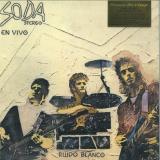
After the success of Soda Stereo’s three albums and their impressive Signos tour, the band released their first live album,
Ruido Blanco - En Vivo. This live album was recorded in Argentina, Chile, Peru, Venezuela and Mexico.
This shows how the band's already has a substantial fanbase across Latin America after just three studio albums.
The album features some of their biggest early hits, such as "Prófugos", "Persiana Americana", and "Signos",
and these live recordings give the songs really an extra kick.
Ruido Blanco - En Vivo is one of the most iconic live albums in Latin rock history, celebrating Soda Stereo’s status as pioneers of the Rock en Español movement and their enduring legacy.
out of Stock
Last delivered 7 months ago available to reorder, subject to availability
When you listen to birds, they usually talk about food, sex/family, or anxiety. If they knew about the true nature of humanity's cruel and exploitative relationship with birds, they would be discussing rebellion. Humanity's current trajectory about birds is to cause the extinction of one-third of all bird species by the end of this century.
This record crystallises the borders between memory, beauty, and anxiety. At the core is an amalgam of all the birds we have met and heard, their sounds synthesised from a blend of memories. Esthetically it simulates the qualities of bird sounds, hitting similar frequential sweet spots. There is a great variety of birds captured here, from high to low frequencies, from solo voices to groups, from birds standing on their own to complex world-building, where the bird voices are part of an ecosystem, becoming one of the instruments.
You could stop there, enjoying this record on a musical level, but it invites us to do one step further, to consider reconfiguring our relationship with the Earth and its inhabitants. To question our impact, and to ask why we need synthetic bird music. Is it just a visionary endeavour or is it because we are failing at fostering a world in which organic birds and other creatures can thrive?
32 artists from the whole world, including our favourite artists from Eastern Europe, have contributed to this compilation both with new and previously released music. Their music is ordered from dawn to dusk and into the night. For many of the artists it's their first time on mappa, but some have previously released an album with us.
out of Stock
Last delivered 7 months ago available to reorder, subject to availability
Released by Fair Weather Friends Records, "Woven" marks a new chapter for the acclaimed Thessaloniki-based ensemble, featuring special guests Harris Lambrakis on ney and James Wylie on saxophone. Their collaboration expands the trio’s sound with new colors and textures, weaving together tradition and modern expression.
Its cover art is designed by the internationally celebrated and award-winning design studio Beetroot, giving the project a distinctive visual identity that mirrors its sonic depth.
This new quintet formation is a vision that Yako Trio have long aspired to bring to life. The collaboration with Lambrakis and Wylie adds new layers of texture and expression to the band’s music. The mystical, meditative tone of the ney intertwines with the emotive voice of the saxophone, expanding the trio’s sound into new territories. The result is a dialogue full of color, energy, and imagination — connecting tradition with modernism, East with West, and collective memory with contemporary creation.
Mutant, in partnership with Studio Ponoc, is proud to present a limited-edition 7-inch 45-rpm single featuring original theme song "Nothing's Impossible" from The Imaginary (now streaming on Netflix worldwide) From the studio that brought you Mary and The Witch’s Flower (2017) and Modest Heroes (2019) comes the sweeping and epic animated feature film based on the novel by A.F. Harrold.
Studio Ponoc’s The Imaginary tells the story of Rudger, a boy no one can see imagined by young Amanda, to share her thrilling make-believe adventures. But when Rudger, suddenly alone, arrives at The Town of Imaginaries, where forgotten Imaginaries live and find work, he faces a mysterious threat. The anthemic closing track of the film, "Nothing's Impossible", is composed by Ian Axel and Chad Vaccarino (A Great Big World) and performed by A Great Big World featuring Rachel Platten.
Continuing an on-going 7-inch series with Studio Ponoc, this release will fit nicely side-by-side with their previous release of the main themes from the studio's debut film, Mary and the Witch's Flower and future releases.
Side A Nothing’s Impossible performed by A Great Big World featuring Rachel Platten Side B Nothing’s Impossible (Drums Version) performed by A Great Big World featuring Rachel Platten
"The Grotesque Within" is what we proudly call our first true self-produced album. Recorded in the winter of 2025 between Outside Inside Studio in Treviso and our own home studio, it marks a raw and uncompromising chapter in our sound. The record weaves a dense narrative inspired by the unsettling atmosphere found in the works of Thomas Ligotti - where reality constantly threatens to unravel, and horror seeps into the everyday. Much like Ligotti's existential tales, The Grotesque Within doesn't simply portray darkness - it observes how the absurd and the horrific have become indistinguishable from our modern reality. Each track is a confrontation - with the bizarre, the dissonant, and the disturbingly familiar.This is not just an album. It's a descent into the uncanny that already surrounds us.
Neon Green Vinyl. Limited to 350 copies. "The Grotesque Within" is what we proudly call our first true self-produced album. Recorded in the winter of 2025 between Outside Inside Studio in Treviso and our own home studio, it marks a raw and uncompromising chapter in our sound. The record weaves a dense narrative inspired by the unsettling atmosphere found in the works of Thomas Ligotti - where reality constantly threatens to unravel, and horror seeps into the everyday. Much like Ligotti's existential tales, The Grotesque Within doesn't simply portray darkness - it observes how the absurd and the horrific have become indistinguishable from our modern reality. Each track is a confrontation - with the bizarre, the dissonant, and the disturbingly familiar.This is not just an album. It's a descent into the uncanny that already surrounds us.
Belgian electronic duo schntzl, known for their fearless live improvisation and playful fusion of jazz, Dada, and ’90s trance kitsch, invite listeners to hear sound anew with their latest album.
On their new album Fata Morgana, an illusory trip of emotion and confrontation, Belgian duo schntzl conjure mirages of fleeting realities while diving headfirst into a trance-driven, confrontational digital sound.
Fata Morgana unfolds like a hyper-visual journey, constructing enveloping dreamworlds through trance-infused live electronica. Yet trance here is present not in form but in essence—an intensity, a state of being. It may stir the same emotions as club music, but schntzl express them in a language entirely their own. Kitsch loops, improvisation, and distortion bend their music into illusions that dissolve and reappear, creating sonic worlds that never settle into habitual patterns.
For over a decade, Hyunhye Seo a core member of Xiu Xiu, in her solo work navigates the precarious edges where composition dissolves into pure gesture. Through ecstatic piano improvisations, restless percussive attacks and an expansive use of acoustic space, she constructs layered sonic environments that move across the boundaries of noise, avant-garde jazz, ambient and contemporary classical music. Her performances reveal an unfiltered process of listening and creation - a practice in which thinking becomes the enemy, and surrender the only viable strategy.
Continuation captures one such surrender. Recorded live at MAO - Museo d'Arte Orientale in Turin during the exhibition Rabbit Inhabits the Moon – The Art of Nam June Paik in the Mirror of Time, this cascading piano improvisation unfolds as a dialogue between performer, space and the particular acoustics of a museum built to house contemplative objects. Jamie Stewart processes the sound in real time; Giuseppe Ielasi shapes the final mix. What emerges is a work of charged immediacy - restless gestures giving way to passages of unexpected tenderness, noise and silence trading places in continuous exchange. The title is precise: this is music that refuses conclusion, that exists in a state of perpetual becoming. On Side B, Continuous Extension offers an unprecedented response. Phew - the pioneering figure of Japanese avant-garde music since the late 1970s - was invited by curators Chiara Lee and Freddie Murphy to reinterpret Seo's performance. Working with synthesizer and subtle processing, Phew distills the resonances of Continuation into a new electronic landscape - waves of abstraction that echo like reflections in sound, tracing the harmonic tensions of Seo's playing into territories she herself did not visit.
The accompanying booklet includes an essay by Bruno Lo Turco exploring the deep connections between improvisation and Buddhist thought, and a written reflection by Seo on her own practice of surrender and listening.
Continuation is released on Ubi Kū, the record label of the Unione Buddhista Italiana. The cover reproduces Avalokitesvara "Water and Moon" from the Museo d'Arte Orientale "E. Chiossone" in Genoa - the bodhisattva of compassion gazing at the reflection of the moon in water. Like that reflection, this music exists fully in the present, complete and unrepeatable.
"Chuck Roth’s music wanders. The New York-based guitarist’s inquisitive style builds from rippling patterns that center the physicality of his instrument, roaming wherever they take him. watergh0st songs, his Palilalia debut, collects songs from the past half-decade, presenting an intimate snapshot of his music that draws from an eclectic background in classical guitar, electronic music, and improvisation." "The mark of watergh0st songs is its exploratory nature. Roth began his musical journey as a classical guitarist studying the canon works for the instrument, but he was never interested in playing fast or flashy. Instead, he wanted to roam down musical paths and see where they led him. He eventually became more interested in electronic music, where he found inspiration in subtractive properties and patterning. The music of watergh0st songs translates that electronic music to the guitar: many of the songs began as synth tones and later branched out through the physicality of his instrument." "When writing music, Roth wants melodies to feel comfortable in the body, focused less on setting a structure and more on letting music unfold how it happens in any given moment. His songs are fluid and his melodies are clear, plucked with careful attention but never too deterministically. His is the music of a traveler, floating around the strings of the guitar. It is about embracing the banal, or the everyday moments that shape a life." "Though Roth’s music often feels quite direct, there is a dreaminess that lives inside of it. His lyrics don’t feel too hot or cold, instead they have a wistfulness and melancholy of what it feels like to live through every passing day. His exploratory style bolsters these lyrics, giving the music its sense of ennui, as does his focus on texture. Each track takes on a different structure: 'Bunny Hop' unfolds like a squirrel jumping from branch to branch of a tree, while 'Private Boy' has a slower approach, growing from delayed harmonics that almost sound like bowed strings. His textures range from metallic and bristling to soft and feathery, evolving with gentleness. It is about ending up somewhere different than where it started, and watching the notes that fall in-between." The embrace of the routine colors Roth’s music. In it, there is a sense of presence, of admiring the smallest details and moments. Roth loves to take walks and look around, observing the beauty of his surroundings. Similarly, watergh0st songs feels like moving through the world at the pace of a comfortable trot and soaking in every sound as it emerges. It is a quiet evolution—but one that stays."—Vanessa Ague
Nachdem Ásgeir jahrelang mit Übersetzern wie John Grant zusammengearbeitet und die Poesie seines Vaters, Einar Georg Einarsson, vertont hat, betritt er nun neues Terrain: Zum ersten Mal in seiner langen und gefeierten Karriere hat er die Texte komplett selbst verfasst.
Ásgeir wird seit Langem für seinen detailreichen Folk-Pop, die opulente Produktion und sein sehnsüchtiges, gefühlvolles Falsett gefeiert. „Julia“ markiert eine Wende – nicht nur hin zu lyrischer Eigenständigkeit, sondern auch zu kathartischer Direktheit, mit Songs, die nicht nur meisterhaft vorgetragen, sondern auch durchlebt wirken. „Das war irgendwie das erste Mal, dass ich die Texte völlig allein geschrieben habe“, erzählt er. „Es war beängstigend. Ich versuche immer noch, mich darin zu finden. Aber ich habe versucht, mich zu öffnen, und habe in diesem Prozess viel gelernt. Es war auf jeden Fall therapeutisch für mich.“
Dieses neue Gefühl der Verletzlichkeit zieht sich durch die zehn Stücke des Albums, die über einen Zeitraum von fast zwei Jahren geschrieben und aufgenommen wurden. Viele der Songs entstanden zunächst auf der Gitarre, wobei Ásgeir auf Schlichtheit setzte und Melodie, Klarheit und Bedeutung in den Vordergrund stellte. Die Produktion, gemeinsam mit seinem langjährigen Weggefährten Guðm. „Kiddi“ Kristinn Jónsson entwickelt, bleibt organisch und zurückhaltend – und gibt so Ásgeirs Stimme, und vor allem seiner Stimme als Songwriter, den nötigen Raum.
Der aus Nashville stammende Cellist Nathaniel Smith, den Ásgeir als „Zauberer“ beschreibt, steuert hier und im gesamten Album atmosphärische Klangteppiche bei. Mit improvisierten Melodien verleiht er den Stücken Leben und Tiefe – auf eine Weise, die Ásgeir sich zuvor nicht vorgestellt hatte.
Shake Stew ist mehr als eine Band - sie ist ein Ereignis. Seit ihrer Gründung durch Bassist und Komponist Lukas Kranzelbinder umweht die Formation ein Hauch von Magie und Energie, der sich live in eine hypnotische Kraft verwandelt. Zwei Schlagzeuge, zwei Bässe und drei Bläser erzeugen einen Sound, der zwischen tranceartigen Basslinien, eruptiven Grooves und fragilen Klanggebilden oszilliert. Die Jury des Preises der deutschen Schallplattenkritik sprach von "etwas Kultischem", das den Jazz bereichert, während MOJO begeistert: "Shake Stew twists, blisters and burns like a fevered dream!" Ob im Club oder im Wiener Konzerthaus - die Band zieht alle in ihren Bann. Mit dem Jubiläumsprojekt TEN ONE TWO öffnet sich Shake Stew noch weiter: neue Klangfarben, freie Improvisationen, Kooperationen und eine Besetzung, die mit Yvonne Moriel eine aufregende Stimme integriert. Nach zehn Jahren, zahllosen Konzerten und internationalen Auszeichnungen ist klar: Shake Stew definiert Jazz als lebendige Kunstform - kompromisslos, visionär und voller Dynamit.
APORIAMOR noun 1. The death of love’s contradiction.
| “Embody APORIAMOR”
Etymology
aporia-: an irresolvable internal contradiction or logical disjunction in a text, argument, or theory. from Greek aporos ‘impassable’, from a- ‘without’ + poros ‘passage’
-amor: love. Sentimiento intenso del ser humano que, partiendo de su propia insuficiencia, necesita y busca el encuentro y unión con otro ser. Del latín amor.
-mor: latin for death.
APORIAMOR explores the affective ontological and organic processes of love and lust in the turmoil of an urban existence, through the female lens. It expresses the process of strengthening through heartbreak in its various forms.
With her debut EP The Art of the Concrete, elsas knew that by giving that name to a record which was ironically expansive and experimental, she would be calling for a distilled and clearer path further down the line. This is what she’s been incorporating into the sonic world of this new EP, APORIAMOR, signifying the birth of a more matured and distilled version of herself as an artist.
With APORIAMOR (“the death of love’s contradiction”) elsas conveys a personal process of healing in the romantic space. Through different experiences of heartbreak, elsas builds a language - a coping mechanism attached to its subsequent artistic expression – that isn’t founded on hardness or a closing-off, but instead, on a playful but profound reckoning, and learning of self-worth.
APORIAMOR embraces the complexities of being a lover-girl: of moving through life with an open heart. It celebrates the clarity, sweet hindsight, and detachment that come from processing emotion. APORIAMOR is both an affirmation and a release.
elsas makes canonical blends with a forward boundary-bending vision. Her sound in this record is naturally referential of both her Mediterranean heritage and UK alternative music — intrinsic parts of her lived experience. She has had the opportunity to collaborate with artists she deeply admires, each exchange enriching her creative world.
The experience of working hand-in-hand with Sampha for the last 3 years and ongoingly has been a core of her evolution as an artist. She has also collaborated in many forms with artists like Florence + the Machine, Little Simz, Jordan Rakei, Jockstrap, Obongjayar, Black Country New Road, Genevieve Artadi (KNOWER) and Duval Timothy. Additionally, her ongoing work with the Idrîsî Ensemble, of which she is a core member, continues to inform her artistic depth.
The making of this largely self-produced record unfolded over four years — “it’s a well-kneaded dough,” she says. These songs evolved through exposure to multiple environments: from early writing sessions in her childhood home in the Spanish countryside, to stages across the U.S. while on tour supporting Sampha.
Experimentation and modulation are an intrinsic part of elsas’ method, conceiving songs as organisms that respond to their surroundings. Collaborators on this collection of songs include Shrink, Will Lister, Gabriel Gifford, Ethan P. Flynn and more. The record was mixed by David Wrench (a long-time supporter of elsas’) and Nathan Boddy, and mastered by Matt Colton.
With APORIAMOR, elsas creates a visual world from the fabulation of the past, as an act of playful historical revisionism in which she embeds herself as both subject and storyteller. The songs function like an archive of her experiences across various years, each one unearthed and presented as some sort of archaeological artifact. Through this body of work, elsas begins to conceptualize herself as a legacy artist: one who honors the archive of her own becoming while emerging as a distinct and resonant voice in today’s musical landscape.
Iconic hip-hop duo The High & Mighty, composed of rapper Mr. Eon and producer DJ Mighty Mi, make their long-awaited return with Sound of Market, their first studio album in over twenty years. The release marks a powerful comeback for one of underground hip-hop’s most celebrated duos — a project steeped in nostalgia, boom-bap grit, and the timeless energy of East Coast rap.
Named in honor of Sound of Market Street, the legendary Philadelphia record store that served as a hub for crate diggers, DJs, and hip-hop heads for decades, the album pays homage to the culture that shaped The High & Mighty’s sound and identity. Much like the store itself, the record celebrates deep cuts, rare finds, and the shared love of vinyl that connects generations of hip-hop fans.
Across 17 tracks, Sound of Market revives the duo’s trademark wit and sharp lyricism while showcasing an impressive lineup of collaborators, including Kool Keith, The Alchemist, Your Old Droog, Large Professor, O.C., Chubb Rock, King T, Skillz, and many more. The result is a cohesive, sample-driven experience that bridges the classic and contemporary — reaffirming The High & Mighty’s status as true architects of independent hip-hop.
From the opening anthem “Two Man Crew” and the surreal swagger of “Pinky Tuskadero” with Kool Keith, to the cinematic boom of “Mighty’s Big 5 (Live from The Palestra)”, the record moves effortlessly through sharp lyricism, layered production, and a shared reverence for the foundations of the genre. Sound of Market is both a return and a reminder — a record that feels timeless in its authenticity.
Crystal Tides’ long-awaited debut album Toothpaste is the sound of a band truly coming into their own. Written and recorded completely independently, the record embodies the spirit of resilience, creativity, and raw honesty that has carried the Portsmouth outfit through their journey so far. “We wanted the focus of this album to showcase our independence as a band. We felt it important, given our journey thus far, that it come from us in as raw form as possible.” The seeds of Toothpaste were planted back in 2022 with rough voice notes on lead singer Billy’s phone, evolving into a collection of songs that capture both the band’s infectious energy and their most personal reflections to date. From collaborative writing sessions in the practice room to late-night home demos, every track carries the DNA of Crystal Tides’ unity and determination. Working with long-time collaborator and producer David Evans, the result is a bold, heartfelt body of work that celebrates their independence while delivering polished, stadium-ready anthems. The album takes its name from one of its most intimate tracks. Toothpaste was born out of Billy’s battle with Ulcerative Colitis, which led to life-changing surgery. A passing joke about naming the album after the song became a moment of clarity. It's unusual, striking title felt like the only choice, a symbol of the band’s authenticity and ability to find meaning even in the unexpected.
Much more than just another punk band, Ideal Victim is a wildfire fueled by fury, grit, and defiance. Formed in Porto in 2022, this young outfit proposes a seemingly improbable formula that proves to be both unique and cohesive: over the raw, unyielding energy of 1980’s British hardcore, they layer the hypnotic vibes of surf rock and the nervous tension of rockabilly—crafting a taut and irresistible balance between atmosphere and aggression.
At the forefront stands the fierce and outspoken roar of vocalist Mariana, supported by the driving cadence of drums and bass, and by a guitar that writhes as it drowns in distortion.
Ideal Victim belong to a lineage of bands that never asked for permission to exist: from Discharge to Bikini Kill, from The Cramps to Dead Kennedys, their influences are undeniable. Yet, Ideal Victim refuse to echo them in exercises of nostalgia. Their music is urgent, combative, and strikingly current—a visceral response to the shackles of patriarchy and the open wounds of a world in accelerated collapse.
Propelled by the impact of their demo Diary of a Pig and a considerable amount of stage experience, Ideal Victim now presents Rage Letters, a debut album that reflects the band's evolution through a set of six brief tracks—where nothing is left unsaid, nor unshouted.
With Rage Letters, Ideal Victim extend us an invitation to insubordination—and it's one we can't help but accept.
La Margarita (1994) is an unforgettable collaboration between iconic Uruguayan musician Jaime Roos and legendary writer and playwright Mauricio Rosencof. Blending the rich musical traditions of Uruguay-candombe, murga, tango, and milonga-with elements of folk and rock, as he is known for, Roos sets to music a cycle of sonnets that tell a tender, naive love story. These poems were written by Rosencof under harrowing conditions during his imprisonment by the Uruguayan dictatorship in the 1970s. Includes 16-page booklet. Jaime Roos and Mauricio Rosencof are two of Uruguay's most beloved and influential artists. Roos, a groundbreaking musician, redefined Uruguayan music in the 1980s with his signature fusion of deep-rooted local rhythms and cosmopolitan flair. Rosencof, a celebrated writer and playwright who emerged in the early 1960s, was also a prominent figure in the historic Tupamaros guerrilla movement. Their paths converged in 1987, when Roos composed the score for Rosencof's play El Regreso del Gran Tuleque. During this collaboration, Roos discovered a series of sonnets Rosencof had written while imprisoned under Uruguay's brutal dictatorship. Held in solitary confinement for over eleven years, Rosencof composed these poems as a lifeline-scribbled on cigarette papers and hidden in the hems of clothes his family collected for laundering. Against all odds, both the author and his poems survived. The sonnets tell a delicate, moving love story set in 1950s Montevideo. Roos, inspired and captivated, rose to the challenge of transforming them into music. The result was La Margarita-a groundbreaking project in which Roos masterfully fused Uruguay's rich musical traditions-candombe, murga, tango, and milonga-with elements of folk and rock, creating a deeply evocative set of songs as only he could deliver. Beyond its beautiful music, La Margarita stands as a testament to resilience, creativity, and the enduring power of love and art.
Somewhere between jazz, progressive rock and cinematic soundscapes, Kabasse unfolds a world of intricate arrangements, bold sonic textures and heartfelt improvisation. The brainchild of Munich-based musician Sigmund Perner (also member of Carpet), this sextet blends composed structure with free exploration, layering lush harmonies, unexpected rhythms and a rich palette of wind, mallet and keyboard instruments. What began as decades of musical ideas-gathered quietly, never written down-found its shape through a group of close-knit musicians from Munich and Augsburg, including Perner's own son on drums. Together, they recorded in a live studio session, embracing risk and spontaneity. The result: a deeply personal debut album that feels both mature and raw, contemplative and gripping. Rather than demanding attention, the pieces invite it: About Sitting on Fences captures the art of waiting-for ideas to grow, evolve and resonate. Just like the name Kabasse, inspired by the calabash: a vessel, a resonator, a home for sound.
Jackie Mittoo, organ and piano maestro, was also one of the founding members of Jamaica's top session band The Skatalites. Musical arranger for Studio One he provided the backbone to so many of Jamaica's finest tunes. The invention of Ska music and the sounds that rode through the Rocksteady and Reggae period all carry his stamp. Whether it be in his various incarnations, the aforementioned Skatalites, The Soul Brothers, Soul Vendors and the Sound Dimension or under his own name, his distinctive organ and piano sound and musical arrangements have all played a major part in Jamaica's musical history.
Jackie Mittoo (born 1948, Kingston, Jamaica) began playing musical instruments at a very early age. Taught piano by his grandmother he was performing live by the age of 10 and recording by the age of 15. Two Kingston bands that he played with the Rivals and the Sheiks brought him to the attention of Studio One's founder Coxsone Dodd. Who at the time was putting a group of musicians together to be his studio band. Impressed by his skills on both the organ and the piano, Jackie was asked to join in what would become Jamaica's foremost band The Skatalites. The fellow band members were Lloyd Brevett (bass), Lloyd Knibbs (drums), Don Drummond (trombone), Tommy McCook, Roland Alphonso and Lester Sterling (Sax), Johnny Moore (trumpet), Jah Jerry (guitar) and Mr Mittoo (piano). This line up ruled the Jamaican scene between 1964 - 1965 as well as inventing the Ska sound, they also performed the backing duties for the other top labels of the time including Duke Reid's Treasure Isle and Justin Yap's Top Deck label.
1965 saw The Skatalites disband and Jackie Mittoo move on to his next musical project The Soul Brothers. Formed with fellow Skatalite Roland Alphonso, this band would back all the hits coming out of Studio One for the next three years with Jackie Mittoo working as band leader and musical arranger. Around this time Jackie also had his own single released, a Ska underground classic called 'Got My Bugaloo'. Rare, as it also features Jackie in the unusual role for him, as lead singer!!!!.
1966 saw the Ska sound evolve into Rocksteady, again with Jackie's band at the helm, and his first hit single the Rocksteady cut 'Ram Jam'. The success of which would lead to a solo career and album releases under his own name such as 'Now', 'Macka Fat', 'Evening Time', 'In London' and 'Keep on Dancing', to name but a few. In1967 the hits at Studio One were still flowing when The Soul Brothers morphed into The Soul Venders and began backing such luminaries as Ken Boothe, Alton Ellis, Delroy Wilson, The Heptones, The Cables, The Wailers and many other of the labels solo artists.
By 1968 Jamaican music was ready for another change and Rocksteady rolled into a slower groove soon to be called Reggae. Jackie Mittoo would be at the forefront with his latest band The Sound Dimension. A line up that included Leroy Sibbles (bass), Roland Alphonso and Cedric Brooks (saxophone), Eric Frater and Ernest Ranglin (guitar) and Bunny Williams (drums). Being the house band at Studio One they backed all the leading names of the time, John Holt, Horace Andy and Alton Ellis, all of Studio One's output carried his sound.
Jackie Mittoo emigrated in the late 60's to Canada, but travelled to Jamaica and London to record with many of the big new names, who were trying to redress Studio One's supremacy and needed his magic touch. Such Producers as Bunny Lee used Jackie Mittoo on many of his sessions, Sugar Minott among others were always glad of his services.
We have captured some fine 1970's cuts that feature Jackies numerous talents, showing his ability to embellish tracks with a feel that few could better, Musical arranger, band leader all round studio ace. We hope you enjoy the set and I'm sure you'll agree with us Jackie Mittoo does indeed Ride On.........
Wigwam's previously unreleased rare live recording from 1976 out in February via Svart Records In the summer of 1976, Wigwam performed not only in Finland but also in Sweden, Denmark, the Netherlands, and Germany. However, the pace slowed down afterward. The early autumn tours planned for European countries were cancelled, and even the replacement shows in Finland had to be postponed due to bassist Måns “Måsse” Groundstroem's sick leave. In October 1976 an opening appeared in the schedule for a studio session, during which Jim Pembroke’s third solo album, Corporal Cauliflower’s Mental Function, was recorded. After that, Wigwam played five gigs in Denmark at the end of November, followed by an equal number in Sweden. No exact information has survived about the concert setlists, but the band was in a stable phase, and certain songs had become staples in their live repertoire. Albums from Wigwam's deep-pop era, which began in autumn 1974, as well as Pembroke’s first solo records had already been released, and rehearsals were underway for what would become the Dark Album, released in 1977. It can be said that this concert, recorded for Danish Radio, is a strong representation of the band’s era at the time. The recording took place in northern Denmark, in a district called Lundtofte in Lyngby. Before this, Wigwam had performed in Køge and Århus, and after Lundtofte, gigs in Ballerup and Copenhagen awaited. Lundtofte was home to the Danish Technical University (DTU), where a student venue called “Studenterhuset” (Building 101) hosted a one- to two-day music events known as Polyjoint during the 1970’s. The events typically featured Danish bands, but also visiting acts like Wigwam. Most importantly, Danish Radio was sometimes present at these events. Wigwam had performed a studio concert for Danish Radio the previous year, but this particular recording is considered the more energetic of the two. Details have faded with time — for example, the identity of the second act at the concert is unknown. In any case, both guitarist Pekka “Rekku” Rechardt and keyboardist Pedro Hietanen remember the band being in high spirits, in top form, and highly motivated.
Wigwam's previously unreleased rare live recording from 1976 out in February via Svart Records In the summer of 1976, Wigwam performed not only in Finland but also in Sweden, Denmark, the Netherlands, and Germany. However, the pace slowed down afterward. The early autumn tours planned for European countries were cancelled, and even the replacement shows in Finland had to be postponed due to bassist Måns “Måsse” Groundstroem's sick leave. In October 1976 an opening appeared in the schedule for a studio session, during which Jim Pembroke’s third solo album, Corporal Cauliflower’s Mental Function, was recorded. After that, Wigwam played five gigs in Denmark at the end of November, followed by an equal number in Sweden. No exact information has survived about the concert setlists, but the band was in a stable phase, and certain songs had become staples in their live repertoire. Albums from Wigwam's deep-pop era, which began in autumn 1974, as well as Pembroke’s first solo records had already been released, and rehearsals were underway for what would become the Dark Album, released in 1977. It can be said that this concert, recorded for Danish Radio, is a strong representation of the band’s era at the time. The recording took place in northern Denmark, in a district called Lundtofte in Lyngby. Before this, Wigwam had performed in Køge and Århus, and after Lundtofte, gigs in Ballerup and Copenhagen awaited. Lundtofte was home to the Danish Technical University (DTU), where a student venue called “Studenterhuset” (Building 101) hosted a one- to two-day music events known as Polyjoint during the 1970’s. The events typically featured Danish bands, but also visiting acts like Wigwam. Most importantly, Danish Radio was sometimes present at these events. Wigwam had performed a studio concert for Danish Radio the previous year, but this particular recording is considered the more energetic of the two. Details have faded with time — for example, the identity of the second act at the concert is unknown. In any case, both guitarist Pekka “Rekku” Rechardt and keyboardist Pedro Hietanen remember the band being in high spirits, in top form, and highly motivated.
BBE Music’s acclaimed J Jazz Masterclass returns with its 20th release, a super rare private press from one of the more laudable female jazz figures of Japan, saxophonist and composer Sachi Hayasaka, together with her band, Stir Up! Released in 1988 on the private label Mobys, Free Fight was Hayasaka’s debut album and announced the arrival of an essential and primal force onto the Japanese jazz scene. Part free jazz, part post-bop, and part heavy groove, Free Fight is one of the most varied yet engaging albums BBE Music has reissued in the J Jazz Masterclass Series, showcasing Hayasaka’s inventive and muscular playing as well as her highly original and surprising compositional powers. Given the album’s eclectic yet cohesive sound, it’s no surprise that it originally found a home at Mobys, the label established by esteemed jazz critic and promoter Teruto Soejima. Mobys only issued a handful of albums from some of the leading free and open players including J Jazz Masterclass alumnus, pianist Aki Takase, as well as free jazz guitar icon Masayuki Takayanagi, and free jazz figureheads Itaru Oki and the great Masahiko Satoh. Born in Tokyo in 1960, Hayasaka took lessons from saxophonist and recording artist Toki Hidefumi and fully immersed herself in the jazz life, working part-time at various jazz kissas including Peter-Cat, a kissa managed by novelist Haruki Murakami. She has performed regularly across Japan at venues like the famous Pit Inn and formed a strong alliance with the classic Tokyo jazz kissa Paper Moon, which continues to this day. Heavily influenced by players such as Roland Kirk, David Murray and Ornette Coleman, Hayasaka has played with free jazz legend Yosuke Yamashita and performed around the world (as well as up Mount Fuji!). In the late 1980s she moved to New York for several years and worked with notable musicians including drummer Pheeroan akLaff and pianist Cliff Korman. She has recorded a number of albums to her name for Japanese jazz labels such as Three Blind Mice and Kitty as well as leading European imprints such as Enja.
With Spam Vol.2, KVR - Niels Broos, Dries Laheye & Lander Gyselinck - delivers its second statement.
Recorded in a beautiful studio tucked beneath a bridge in Rotterdam, the album distills a week of free improvisation into vivid, shape-shifting pieces. A beautiful chaos of bass guitars, synths stacked on clavs, drums and machines to get lost in, in between coincidence and intention. Jungle rhythms, elastic time, open structures and organic textures come together in a lively sound that feels playful as well as restless and deeply intuitive.
KVR is Niels Broos (Jameszoo, Binkbeats) on keys, Dries Laheye (STUFF., Selah Sue) on bass and Lander Gyselinck (STUFF., Lander & Adriaan, BeraadGeslagen) on drums.
For fans of Thundercat, Hudson Mohawke, The Comet Is Coming, Jameszoo, etc.
out of Stock
Last delivered 8 months ago available to reorder, subject to availability
Ein Album, das das Herz höher schlagen lässt. Nikolai Kapustin war ein russischer Komponist, der Klaviermusik in einem ausgesprochen jazzigen Stil schrieb, mit all der Spontaneität, die man mit Improvisation
assoziieren könnte – mit dem einzigen Unterschied, dass die Musik vollständig und akribisch notiert war.
Seine Musik ist heute regelmäßig in Konzertsälen als publikumswirksame Zugaben zu hören, aber zum
Zeitpunkt der Aufnahme (2003) war sie noch relativ unbekannt. Marc-André Hamelin war einer der ersten
Fürsprecher Kapustins, und diese Aufnahme (praktisch Marcs meistverkauftes Album) trug wesentlich dazu
bei, die Musik des Komponisten einem breiteren Publikum bekannt zu machen. Gramophone schrieb bei
der ursprünglichen Veröffentlichung: „Alles auf dieser bemerkenswerten CD wird mit einer nonchalanten
Gelassenheit und magischen Fingerfertigkeit gespielt, die man sich von keinem anderen Pianisten vorstellen
kann.“
The late pedal-steel guitarist Susan Alcorn leaves a final surprise hinting at new directions left underexplored on her collaboration with Nomad War Machine, the improvising metal duo of drummer Julius Masri and guitarist James Reichard. Their death-metal-influenced pummel adds new fire to her molten flow across a suite of improvised tracks that show off the vast range and simpatico of the trio. Julius Masri and James Reichard of Nomad War Machine: “An unexpected opportunity arose out of a catching-up conversation where Susan had revealed a recent fascination with death metal, confessing, ‘I’m 70 years old—I think about death!’ She had learned a couple of Arch Enemy songs on her pedal steel, particularly compelled by their frontwoman’s intensity and vigor as a performer. Voicing an appreciation for the hook-oriented sound of Swedish death metal made sense for a melodic thinker whose roots as veteran pedal steel player reached into the Texan Western swing circuit in the ’60s and ’70s. For her, ever the explorer, metal was a new, appealing point of departure into fresh musical territory. When she expressed an interest in playing with Nomad War Machine, it felt like there was a whole world of shared or complementary interests to explore.” Though known for her fluency in jazz, country, and free improvisation, Alcorn had also studied Arabic, the oud, and maqam, with all holding a deep curiosity for her. Pre-’70s country & western music had also been a lifelong presence for both members Nomad War Machine. Masri, a Lebanese free-jazz and metal drummer, and devoted fan of Texas swing legends like Speedy West, Jimmy Bryant, Leon Rhodes, and Joe Maphis, was also steeped in Arabic music traditions. James Reichard, before coming to “freely” improvised metal, xenharmonic music, and non-Western tuning systems, had grown up being subjected to countless singalongs to numerous pre-’70s country records, entranced by the pedal steel.
STORY OF THE YEAR have been influential in shaping the post-hardcore scene since their debut album “Page Avenue” – one of the first of its kind to sell a million copies back in 2003, and the St. Louis quartet have only grown even more impressive throughout the years.
Fans have seen the band hit the road with LINKIN PARK, MY CHEMICAL ROMANCE, and DEFTONES, as well as tear up Warped Tour Stages and festival performances at When We Were Young, and more. The band’s 2023 album “Tear Me To Pieces” was their first with SharpTone, and we couldn’t be more thrilled to reveal “A.R.S.O.N.” to the world!
wHIMSY finds DESTIN CONRAD at his most free, playful, and musically adventurous yet. Blending smooth R&B with touches of jazz, neo-soul, and laid-back groove, the project feels like a late-night jam session with friends—loose, soulful, and full of feeling. Across the tracklist, Destin lets his voice glide effortlessly over warm production, exploring themes of love, curiosity, and self-discovery with a wink of humor and a lot of heart. Following the success of LOVE ON DIGITAL, wHIMSY shows Destin leaning deeper into his artistry, embracing imperfections, and finding beauty in the in-between moments. It’s intimate, imaginative, and unmistakably him. 1xLP, black vinyl, housed in a gatefold jacket and cut at 45 RPM.
Joe Allotta's solo project (drummer, composer, and singer) was born from his need for freedom of expression after numerous experiences
as a session musician for artists such as Davide Shorty, Johnny Marsiglia, Funk Shui Project, Mario Biondi, Leburn Maddox, Giles Robson,
Amy True, and Imaani (Incognito).
His compositions embody the desire to make jazz, in its various forms and influences, accessible to the widest possible audience without sacrificing the impact of an engaging and captivating live performance.
Joe Allotta blends hip hop, funk, and drum 'n' bass with contemporary jazz, perfectly blending vocals with his performances. He combines
his rhythmic exploration with a sweet and surprising voice, capable of lending further emotional depth to his music.
"Transition" is a musical journey that reflects a life in constant motion, where everything seems fleeting, fast, and fleeting, immersed in the
frenetic rhythms that surround us every day. The title also encompasses a more intimate dimension: the growth of his artistic identity. Joe is
no longer just a drummer and composer, but also a singer. His intense and surprising voice intertwines with his drumming in a continuous
dialogue, opening up new expressive possibilities and adding further depth to his musical language.
The album was produced in the studios of the Sghetto Club in Bologna, where Joe, together with his producer Jacopo Trapani, spent weeks
researching and experimenting: rehearsing, playing, processing and synthesizing sounds, developing and arranging ideas, thanks also to
the collaboration of extraordinary musicians. The result is a work that blends instinct and research, intimacy and openness, movement and
transformation: exactly what Transition aims to convey.
CREDITS
Giuseppe "Joe" Allotta: Compositions, Vocals, Drums, Bass, Keyboards
Jacopo Trapani: Compositions, Recording, Mixing
Chicco Allotta: Piano (Track 1)
Giovanni Galdo: Bass (Track 1)
Riccardo Dalle Vedove: Trombone (Track 1)
Piergiorgio Perrella: Guitar (Tracks 2, 5, 8, 9)
Elijah Lee Last Jacinto: Piano (Track 6)
Matteo Diego Scarcella: Sax (Track 6) Francesco Brini: Master
Me vs Me, Vol. 1 is the debut album by Joe Allotta, a drummer, singer, and multi-instrumentalist active as a session musician for various
artists (Davide Shorty, Johnny Marsiglia, Funk Shui Project, Mario Biondi, Nick The Nightfly, etc.). The album was conceived in London,
Trapani, and Bologna and features performances by various musicians Joe has worked with in recent years.
The EP embodies a sound rich with emotion, expressed through four tracks that blend jazz with cutting-edge urban rhythms, with drums as
the central element of his compositions.
The four tracks on the EP thus have distinct personalities inspired by soul, breakbeat, and funk, souls that coexist in the artist's emotional
experience: the song "Lullaby" is a hip-hop beat with a funk flavor, while "The Mess You Left" moves through dreamlike sounds that crystallize
into a drum 'n' bass storm. House Party is very reminiscent of UK club sounds, it is full of synths and with a square drumming, it closes the
EP She Sad, a sort of skit that leaves room for an improvisation of guitar and drums.
The album begins with the title track (Blossom) a light and immediate song composed by Besson. Also composed by Besson are 'Kyoto dans la brume', inspired by a stay in Japan's imperial city, and 'La Course', originally written for three slapstick short films by Fatty Arbuckle starring Buster Keaton. Suarez's composition ' Sans laisser d'adresse' , was initially written for a stage play titled ' Ici Nougaro' , and his ' Le jour J a l'heure H' for a film by director Jean- Henri Meunier. 'Les Tuiles Bleues' is a nod to Suarez's late friend, Malagasy accordionist and singer, Regis Gizavo.
There are also three covers on the album, 'Answer Me' by Gerhard Winkler and Fred Rauch, a composition recorded by Keith Jarrett during his 2016 European tour; Besson cites Jarrett as a major influence. There is also Carla Bley's ' Ida Lupino' and Pat Metheny and Lyle Mays' ' Au Lait'. These and their own compositions result is Blossom' ', a highly accomplished album on which trumpet and accordion shine in equal measure.