Cerca:impressions
Nobody thinks it is strange anymore that an artist changes his nom de plume to reflect a new direction; a metamorphosis of his art. As listeners, we must resist the temptation to compare a new expression with previous works but instead allow the artist the necessary leeway to follow where his muse leads. So it is with Lone Wolf & Friends. There is a departure from his previous work that is his alone to define. We are simply recipients and must let the work wash over us like waves on the beach and be slightly moulded by the force of each one.
By definition, a Lone Wolf has no friends so we are left with the nagging question of why the name has significance. Perhaps Lone Wolf’s friends are his previous artistic incarnations and although he alone created this work, those earlier versions were there to encourage his creative drive. We are never truly loners, are we?
Written, composed and produced in Vancouver, Canada, by Lone Wolf & Friends.
Mastered in Groningen, the Netherlands, by Johanz Westerman at Balyhoo Studio Mastering.
Designed in London, UK, by Irene Fo + Agente Morillas + Positivland.
- 1: Gypsy Woman
- 2: Grow Closer Together
- 3: Little Young Lover
- 4: You've Come Home
- 5: Never Let Me Go
- 6: Can't You See
- 7: For Your Precious Love
- 8: Minstrel And Queen
- 9: I Need Your Love
- 10: I'm The One Who Loves You
- 11: Sad, Sad Girl And Boy
- 12: As Long As You Love Me
- 13: Twist And Limbo
- 14: At The County Fair
Impressions marks Budapest based independent label Blue Sun’s 6th release. Hungarian multi-instrumentalist, Fingerfisher guitarist Adam Gollob's debut solo LP carries forward the musical direction set by the label’s founders (Hanussen & Kozmo D) by presenting tracks that are built around concentrated, listening-based music consumption, deliberately crossing, possibly defying genres.
Impressions is a profound reflection of transformation, embracing imperfection along the way. As a former student of jazz guitar at Bartók Conservatory, Gollob evokes the wandering spirit of John Coltrane with the title, at the same time inviting the listener into a brief but intensive creative period of the artist’s own life. Music listened to, festivals visited, thoughts and conversations - all echoing through-and-throughout the composition, questioning, dismantling, and rearranging them into a piece.
The record is a rich and evocative work that blends elements of new wave, indie rock, alternative electronic, and neo-psychedelic styles. The introspective lyrics and unrefined vocals explore different aspects of existence, placing the perpetual tension between uncertainty and confidence at the center. The hypnotic synthesizers, raw drum textures, and the structurally interwoven songs provide a complex listening experience. The material reforms with each replay into an ever-changing musical landscape, with a strikingly unique, fuzzy yet soothing atmosphere.
Helena Casella is a Belgian-Brazilian vocalist with a multicultural background who vocalizes her thoughts in her own passionate, soulful, and tasteful manner. She grew up in an incredibly musical family with strong ties to the broader artistic world. This rich background is clearly audible in her musical approach, where she blends genres such as R&B, soul, hip-hop, and modern jazz without breaking the connection to the vibrant sounds of Brazil, where part of her roots lie. The depth of her soft, warm voice pulls you into her story, floating between the realms of the intimate and the ethereal.
With her debut album 'Pit Of Impressions,' Helena shows that she is an artist from whom we have yet to hear the best.
File under: neo soul, nu jazz, R&B
Sounds like: The Internet, Hiatus Kaiyote, Michi, Solange, Erykah Badu, Charlotte Dos Santos, ...
Released in July 1963, "Impressions" is a compilation of recordings from various sessions between 1961 and 1963 of John Coltrane. The album showcases the range of Coltrane's musical interests, from modal jazz and hard bop to ballads, reflecting his evolving style during the early 1960s and received positive reviews for its adventurous spirit and technical brilliance. Critics and fans alike praise the album for capturing a pivotal moment in Coltrane's career as he moved towards more experimental and spiritual jazz. The early 1960s were a period of significant evolution for Coltrane. Having recently left Miles Davis's sextet, Coltrane was delving deeper into modal jazz, a style that focuses on scales (or modes) rather than traditional chord progressions. This period saw Coltrane pushing the boundaries of jazz with extended solos, complex improvisations, and a deeper spiritual search, which would later culminate in his iconic album "A Love Supreme."
"15 sizzlin’ surf guitar cuts recorded at the crest of the genre! Brothers Richard and Thomas Frost, more known for their work as Powder, shred through these surf-rockin’ standards – all tucked away until now!
Turning in a smoking rendition of studio guitarist Jan Davis’ “The Fugitive,” later covered by the Ventures (and much later, Laika & the Cosmonauts), they also lay down a hot version of “Opus Twist” – also by way of the Ventures, written by Tommy Allsup and J.I. Allison of the Crickets. Three other instrumentals came from the Let’s Hide Away & Dance Away With Freddy King album: “San-Ho-Zay,” “Just Pickin’,” and “Sen-Sa-Shun.” He delivers a lovely “Sleep Walk” sans Santo & Johnny’s steel guitar, and converts pianist Floyd Cramer’s “Last Date” to guitar.
Balancing out the program are live tracks from Big Al’s Gas House in neighboring Belmont, showing the emergence of British Invasion along with credible renditions of R&B warhorses “Linda Lu” and “Come On.” “Route 66” is obviously the Stones version, with Rich playing the Keith Richards guitar solo – “and ‘Roll Over Beethoven,’ you could tell it was the Beatles’ version because my guitar licks are George Harrison.”
Vividly illustrating the band’s meld of R&B and surf are the two versions of “San-Ho-Zay” – the relaxed groove in the bedroom versus the furious live rave. Lord knows what’s going on in “The Fight” – a typical set-opening/closing riff breaking up a brawl?
Though they never released even a 45, these live cuts and “Bedroom Tapes” prove without a doubt that they’d have been up to the task had the opportunity presented itself."
Black Vinyl[20,97 €]
"The recordings that make up Afro Blue Impressions were acquired by jazz impresario/auteur Norman Granz during the tours he produced for many jazz artists during the 1960s, though they weren't issued until 1973. Recorded at shows in Berlin and Stockholm, the John Coltrane Quartet -- with pianist McCoy Tyner, bassist Jimmy Garrison, and drummer Elvin Jones -- is in tremendous form here, using a familiar repertoire in order to expand upon the group's own building blocks in creating the new post-harmonic system that the saxophonist was developing. Reissued on vinyl by Craft Recordings, released as part of the Craft Jazz Essentials series. "
Drittes Studioalbum der amerikanischen Rockband mit 14 Titeln, die den Kern des Sounds von The Strokes zeigen: stakkatoartige, poppige, einprägsame Hooks, die von Julian Casablancas' Stimme begleitet werden. Das 2005 erschienene Album landete auf Platz 1 der UK-Albumcharts und brachte die Hitsingles "Juicebox", "Heart in a Cage" und "You Only Live Once" hervor. Jetzt erhältlich auf Hazy Red Vinyl in limitierter Auflage.
- A1: Samba De Orfeu
- A2: Manha De Carnaval
- A3: Nosso Amor
- A4: Felicidade
- B1: Cast Your Fate To The Wind
- B2: Moon River
- B3: Alma-Ville
- B4: Since I Fell For You
- C1: Samba De Orfeu (Short Version: Take 1, Set 3, Previously Unreleased)
- C2: Samba De Orfeu (Long Version: Take 1, Set 3, Previously Unreleased)
- C3: Manha De Carnaval (Take 1, Set 3, Previously Unreleased)
- C4: Manha De Carnaval (Take 2, Set 3)
- D1: Nosso Amor (Take 1, Set 3, Previously Unreleased)
- D2: Nosso Amor (Take 2, Set 4, Previously Unreleased)
- D3: Felicidade (Take 2, Set 2)
- D4: Felicidade (Take 4, Set 3 Previously Unreleased)
- E1: Cast Your Fate To The Wind (Take 2, Previously Unreleased)
- E2: Cast Your Fate To The Wind (Take 3)
- E3: Cast Your Fate To The Wind (Take 5, Previously Unreleased)
- E4: Alma-Ville (Take 2, Previously Unreleased)
- E5: Since I Fell For You (Take 3, Previously Unreleased)
- F1: Jitterbug Waltz (Take 1, Previously Unreleased)
- F2: Jitterbug Waltz (Take 1A, Previously Unreleased)
- F3: Jitterbug Waltz (Take 2A, Previously Unreleased)
Diese luxuriöse 3-LP erweitert das bahnbrechende Werk des Vince Guaraldi Trios, zu dem auch der Grammy®-gekrönte Hit ”Cast Your Fate to the Wind” gehört, erweitert um 16 Bonustracks, darunter
alternative Takes und bisher unveröffentlichte Musik und neue Linernotes.
Die Aufnahmen wurden von Plangent Processes übertragen und von Paul Blakemore neu gemastert. Die Sammlung enthält außerdem
neue, ausführliche Liner Notes des Jazz-Autors Andrew Gilbert (San Francisco Chronicle, San Jose Mercury News, KQED Arts).
Auch ohne sein Lied ”Cast Your Fate to the Wind”, ein echter und allzu seltener Instrumentalhit, war Guaraldis Album ”Jazz Impressions of Black Orpheus” von 1962 ein Meilenstein, der ein Trio mit einem
einzigartig verführerischen Sound vorstellte. Die Kombination aus geschliffener Lyrik, rhythmischer Subtilität und exquisiter dynamischer Kalibrierung zeichnete es aus, aber die Wirkung der Gruppe ergab sich auch aus ihrem Repertoire.
Guaraldi war nicht der erste amerikanische Jazzkünstler, der sich mit dem brasilianischen Liedgut auseinandersetzte.
Aber Jazz Impressions war ein früher Vorbote der allgegenwärtigen, beispiellosen und dauerhaften Übernahme des Bossa Nova (was auf Portugiesisch ”neue Sache” oder ”neue Welle” bedeutet) durch die Jazzszene.
Vinyl re issue of The Strokes critically acclaimed gold certified third album, ahead of the bands headline performance at All Points East later this year. The album (originally released in December 2005) debuted at number 1 on the UK Official Albums Chart and spawned the singles ‘Juicebox', ’Heart In A Cage’ and ‘You Only Live Once'. A track album pressed on single black vinyl. Marketing activity.
Back in stock
'Island Impressions' depicts the moments and visions of Australian house producer Sonny Ism's year living on an Island in Stockholms Archipelago during the Covid 19 Pandemic. Littered with Kitchy melancholic vocal house tracks to alternative ambient electronica, Island Impressions is a journey of movement and documented moodswings in the underground house music genre.
This album could easily have turned top-heavy. After all, here’s a record which, in just under 40 minutes, covers anything from Arabic scales to Japanese sounds, from free jazz references to concepts by Finnish pianist Kari Ikonen’s favourite painter Vasiliy Kandinsky.
To realise his vision, Ikonen even personally developed a device allowing him to play micro-intervals on his piano. And yet, things turned out differently: If anything, the results sound dream-like and mesmerising rather than stodgy and severe.
The album’s genesis may serve to explain this paradox. In August of 2019, Ikonen suddenly found himself with a month of free time. Without thinking twice and as if in a premonition of the Covid-lock-down, he recorded ‘Impressions, Improvisations and Compositions’ at his own home. His only companion was his beloved Steinway, captured by a personal selection of high-end microphones. Just a few days after the final session, the pieces landed on the desk of ECM- and Blue-Note-engineer Johannes Lundberg who mixed the album at his Gothenburg Epideminstudios. Clearly then, the music is spontaneous. But it’s also refined and deep. The influence of Kandinsky inspired
Ikonen to write some of his most complex and monumental pieces.
- A1: Impressions Of Copenhagen/R.v
- A2: The Northstar
- A3: I’ll Say No This Time
- B1: Quiet Dawn
- B2: Why Am I Here?
- B3: Lush Life (Bonus Track)
Re-mastering by: Ray Staff at Air Mastering, Lyndhurst Hall, London
Originally released by Theresa in 1981, this frequently exquisite set features the McCoy Tyner-inspired piano of Joe Bonner on four originals, Cal Massey's "Quiet Dawn," and "Lush Life." Bonner and a rhythm section are joined by a string quartet, trumpet, trombone, and flutist Holly Hofmann (the leader provided the arrangements) for music that is both lyrical and often passionate. Bonner is an underrated talent, and this is one of his finest recordings. by Scott Yanow
Bonner is only the second-most famous pianist born in Rocky Mount, N.C., behind Thelonious Monk. It’s indicative of Bonner’s lack of fame and appreciation that Monk is listed as a notable resident on Rocky Mount’s Wikipedia page, but Bonner is not.
But the pianist Bonner was most often compared to was not Monk but McCoy Tyner. Scott Yanow’s allmusic review of Impressions of Copenhagen said Bonner’s piano playing was “McCoy Tyner-inspired.” Bonner’s admittedly biased drummer, Tom Tilton, even felt Bonner surpassed Tyner. “Joe Bonner has all the power of McCoy, he has all the capability of McCoy, but he’s so much more romantic,” Tilton said, according to westword “I mean, I’ve been there time after time where there were tears running down people’s faces when he would play a ballad. He could captivate a room like nobody I’ve ever experienced before.”
Bonner did most of his playing over the last two decades in Denver, where he was beloved and appreciated. Even Gov. John Hickenlooper was a Bonner fan. “He was without question, the most talented piano player I’ve ever heard,” the governor told the website heyreverb in a remembrance of Bonner. “… I want people to know that I loved Joe Bonner.”
Second EP of the label Lowlife Cartel. An all star, six-track release from sixl key artists in various genres, from cutting edge techno to leftfield house, confirmes the versatility of Lowlife Cartel.
The EP begins with "Butt Dub Pregost", dubby downtempo atmospheric track, by one of most innovative and versatile artist of the last years: Buttechno (Rassvet records, Collapsing Market..)."Out For A Walk" by Fmy (Too Rough 4 Radio) is a leftfield house track, face covered and steps muffled through a deadening blizzard of tape saturation and white noisey envelops that find a balance between deepening the sense of immersion and a retained rhythm. "Unusual Mondai", hypnotic track by Sammy T Thompson, an alias of S.Olbricht (UIQ, Opal Tapes..), fits with an introspective melody and atmosphere.
"Mr Hodge Appreciation Society" is a quintessential Machine Woman (Ninja Tune, Peder Mannerfelt, Where to Now) club track, spanning sexy house and bold techno.
"Celestial Body" by PRESENTE oscillates between jungle and drone like a futuristic comet.
"Y'alll" by the rising producer Voyd, is a abstract house piece. Setting skittish drums and altered vox sample, smothered against a grey-ish canvas of blurry, washed-out pads.
Raw and indisputable quality of production.
For a label that wasn't around long, Strata East achieved the same sort of label recognition that Impulse! or Blue Note managed to build. In other words, you knew what you were getting when you bought a record on the label, even if you didn't know the names on the outside of the cover. This is no exception. Who is Shamek Farrah Who knows Who cares It's the music that's important. This is the standard spiritually intense new jazz one learns to expect from the label, soaked in some Eastern influences but always with its ear to the street. Musicians took their roles as leaders and spokesmen very seriously back then. This very adult statement from a group of very serious men is no exception. However, what might be an average, forgettable session is rescued by the propulsive engine of Milton Suggs' bass. He adds the fire and the drive that keeps things interesting and prevents the music from wandering into a circular spiritual morass. For fans of the sound or the label, this can be heartily recommended.
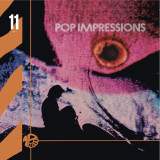
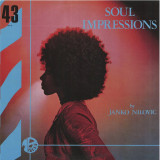
Following the recent reissues of Pop Impressions (UR000651) and
Super America (UR000651), Underdog Records label follows-up
to the series with another brilliant album by French underrated
composer and producer, JANKO NILOVIC.
JANKO NILOVIC certainly was one of the greatest studio talents of
Europe in the 70s!
He is a musician who devotes himself to music, which resulted in a
great number of published works, but most of them made for library
music labels and also not available for sale.
His oeuvre stretches from classical, jazz and funk to pop, psyche
and easy listening. And has been sampled many times by hip-hop
artists such as JAY-Z, DAFUNIKS or GUTS...
- A1: Untitled Original 11383 (Take 1)
- A2: Nature Boy
- A3: Untitled Original 11386 (Take 1)
- A4: Vilia (Take 3)
- B1: Impressions (Take 3)
- B2: Slow Blues
- B3: One Up, One Down (Take 1)
- C1: Vilia (Take 5)
- C2: Impressions (Take 1)
- C3: Impressions (Take 2)
- C4: Impressions (Take 4)
- D1: Untitled Original 11386 (Take 2)
- D2: Untitled Original 11386 (Take 5)
- D3: One Up, One Down (Take 6)
In 1963, John Coltrane recorded a studio album that has Remained unknown and unheard until now. The album was recorded at Van Gelder Studios, the 'Abbey Road' of Jazz, with Coltrane's Classic Quartet and at the height of his career. The music on this album represents one of the most influential groups in music history performing in a musical style it had perfected and reaching in new, exploratory directions that would affect the trajectory of jazz from then on. In short, this is the holy grail of jazz.
In 1963, John Coltrane recorded a studio album that has remained unknown and
unheard until now. The album was recorded at Van Gelder Studios, the 'Abbey Road' of Jazz, with Coltrane's Classic Quartet and at the height of his career. The music on
this album represents one of the most influential groups in music history performing in a musical style it had perfected and reaching in new, exploratory directions that would affect the trajectory of jazz from then on. In short, this is the holy grail of jazz.
- A1: Mongolian Chant
- A2: Misperception
- A3: Joy
- B1: Falcon
- B2: Impressions Of Charles Mingus
Extrem seltene japanische Originalaufnahme des Bassisten Isao Suzuki von 1980. Bei Sammlern sehr begehrt, Originalausgaben erzielen Höchstpreise!
DUSTY GROOVE schreibt: "Eine wirklich originelle kleine Platte des japanischen Bassisten Isao Suzuki – und ein Album, das sich, wie die meisten seiner besten Werke der 70er Jahre, jeder einfachen Kategorisierung entzieht! Suzukis Musik ist von einer wunderbaren Bandbreite an Ideen geprägt – einerseits eine sehr intime und persönliche Interpretation des Basses, die zu wunderschönen Soli führt (darunter auch Piccolo-Bass) – andererseits eine umfassendere Bandvision, bei der die Instrumente auf unerwartete Weise zusammenwirken, mit wirklich kreativen Rhythmen, die für Abwechslung sorgen. Stellenweise schwingt eine gewisse Energie mit, die einigen Stücken Fusionsounds verleiht – jedoch auf eine ganz andere Art und Weise als bei üblichen Fusion-Alben. Auf dem Album sind ferner Gastbeiträge von Shigeharu Mukai an der Posaune und Toshiyuki Honda am Sopransaxophon und an der Flöte zu hören."
WRWTFWW Records is very happy to announce the release of Interwoven, the deeply moving collaborative album from Ken-ichiro Isoda and aus (Yasuhiko Fukuzono) — now available on limited edition transparent sea green colored vinyl LP housed in a heavyweight sleeve with selective-varnish 3D print, as well as in digipack CD and digital formats.
Recorded between Hachijo Island and Tokyo, Interwoven distills two visionary voices of Japanese ambient and electronic music into a single breath of feather-light and quietly luminous meditative sound.
Isoda is a revered figure of New-age and environmental music whose work on Oscilation Circuit – Série Réflexion 1 (originally released on famed label Sound Process) has long attained mythic status. He composes, notably with harp and wind instruments, produces contemporary music and video game scores, and crafts his very own brand of ambient music from the volcanic island of Hachijo-jima. Tokyo-based electronic composer and synth master aus is known for tender, melody-driven soundscapes. From the two artists comes a dialogue suspended between land and sea, bridging the generation gap and the physical distance between them.
What began as a series of sketches — impressions of water, islands, and shifting light — gradually evolved into an exchange without explanation, a correspondence of sound that dissolved boundaries. In that anonymity, both artists discovered an uncommon freedom: a place where each could move lightly and intuitively, without expectation. The music drifts with a gentle, intuitive grace: lingering piano, soft cinematic synths, and field recordings that unfold like whispered recollections, while flute and saxophone lines pass through like occasional breezes — a human presence felt as warmth more than form.
Interwoven is music for those who cherish stillness and the delicate beauty of the everyday. It’s music for admirers of Satoshi Ashikawa, Midori Takada, Satsuki Shibano, Hiroshi Yoshimura, Takashi Kokubo, Brian Eno, and all who seek a quiet refuge in sound.
Guests is the home recording project of Jessica Higgins and Matthew Walkerdine. Vaguely named as such to avoid any problems with the poster if they pull out of a gig (which has only happened once, about a year and half before any songs were actually written to be fair) but also to capture a sense of reverse hospitality. That is, arriving at your door with a bottle of good wine (can’t turn up empty handed) or a fist full of savoury or sweet snacks (time of day dependant); oversharing at the afters (and then passing out on your couch); reading to your toddler while you make their lunch or put everything back where it was meant to go (only to get torn apart again). So, something about what happens when private worlds meet each other, making or having been made a space for. But at times, it’s a different kind of intimacy, a temporal or material one, like the feeling of crisp fresh sheets, and abundant and soft, body-part appropriate towels in a hotel in a city you’ve been to before and love to go back to.
Their debut record, “I wish I was special”, was variously described as “a collage of concrète experiments and outerzone pop gestures, music that sounds as if it’s been written from the depths of a dream”; “music for people who love music but also hate it too”; “something like chasing ghosts or befriending a wild animal”; “pulling apart nervous sensations with haphazard ease and requisite humour”; and “a melody of refusal, of being all-in (…) finding the exact right WRONG sound to express the discontent”. Common Domestic Bird continues in this vein, layering synthesiser, keyboards and samples over rudimentary drum rhythms and field recordings, which are in turn sung or spoken with to create nine new songs.
Written and recorded between autumn 2024 and summer 2025 in Reading, Berkshire, the music has matured since its last outing, in a way, leaning less into collage and more toward structured composition and melodic depth, yet retains a healthy dose of indeterminacy and off-kilter rhythms for the forever-amateur. The songs on Common Domestic Bird hint at some “about”-ness through a series of discrete vignettes which sound a bit like architecture or end of year lists, gossip or over-thinking subjectivity, like disappearances and impressions, the support structure of the spine, letters and signs offs, things you could really do without and where they should go, hoping you’ll see something that isn’t there, pretences and performance. At times they feel kind of funny, others kind of sad or a bit angry and annoyed, a bit like you really.
„ behind horizons at the end of a breath why I love luna parks *_* „
Ben Kaczor debuts his first LP on St. Odes. Sirene showcases a more experimental and cinematic approach to sound. Tracks such as Amusement Impressions and Phantom Blues emerged from his fine art studies, while Sirene and Oval Waves reflect his work with the Buchla Easel. The artwork features a photograph by the artist himself, making the record one of his most personal works to date.
artwork by : Ben Kaczor / mastering by : Isabel Schröer
“We know what jazz is when we hear standards or music that is close to the same source, to a recognized pattern. But what is jazz? Here, a starting point. "Blow" showcases an accumulated CITIZEN:KANE techno vocabulary but it quickly tones down the sensation by introducing frequent breaks in the rhythm, as in "Peiote". But even there we are able to "feel" techno by recalling Wolfgang Voigt's M:I:5 and its parallel yet contrasting rhythmic grids. Elsewhere, manifestations of opposite forces: the beat keeps a body firm on the floor, eminently physical but not commanding; and melodies, cosmic threads, suggest ascension as well as a drive towards the within, creating space for feelings and/or rationalization. "The Fence" or "Montreal" stand as good examples. One less evident aspect of beauty in this record is the apparent coldness of the music, almost rigid and devoid of passion, and thus we declare it more true. As the mind performs a synthesis of what was learned after a class, last track "Family" (expressively) gathers impressions of what went before, adding poetry to the moment. "Blow" may be a reference to the most familiar instruments used in jazz but it can also figuratively mean an explosion, an aesthetic liberation, even with (our) knowledge that for now, and theoretically, the artist chose to concentrate on this thing called jazz.”
The long-overdue recognition of a songwriting genius The lyrics of Dan Treacy"s band Television Personalities transport listeners to a parallel universe consisting of unique mixtures of euphoric Sixties references and harsh social realism: brightly coloured, psychedelic worlds in which Syd Barrett, Salvador Dalí, Andy Warhol and the young Woody Allen meet, or a dreariness of marital crises, unpaid bills, loneliness and depression. Nuances: rather rare, and when they do occur, so subtle that they take the listener"s breath away. Admired by Kurt Cobain and Pavement, praised by Alan McGee, covered by the Tindersticks and musically immortalised by MGMT ("Song for Dan Treacy"); the Television Personalities are one of, if not the reference band of indie pop, which - the world has never been fair - was denied major chart success. "If I Could Write Poetry" now brings together for the first time the lyrics of 100 of Dan Treacy"s most important songs. But this book is much more than a collection of lyrics; it also contains very personal impressions, anecdotes and tributes from around 50 musicians, friends and fans. Contributors from the German-speaking world include artists such as Carsten Friedrich (Superpunk, Die Liga der gewöhnlichen Gentlemen), Bachmann Prize winner Tex Rubinowitz, and musicians Phillip Boa and Klaus Cornfield (Throw that Beat in the Garbagecan). The book is published and edited by Gregor Kessler, who emphasises that he found it difficult to maintain his professional neutrality towards Dan Treacy, as he has been an avid listener of Television Personalities records for four decades now. An English-language publication
- 1: John Holt - You’ll Never Find Another Love Like Mine (3.48)
- 2: Cornell Campbell - Be Thankful (3.58)
- 3: Elizabeth Archer & The Equators - Feel Like Making Love (.4)
- 4: The Chosen Few - People Make The World Go Round (3.22)
- 5: Dave & Ansel Collins - Single Barrel (3.17)
- 6: The Now Generation - Shaft (3.19)
- 7: The Marvels - Some Day We’ll Be Together (3.05)
- 8: The Darker Shades Of Black - War (2.41)
- 9: Winston Curtis - Private Number (3.42)
- 10: Lee Perry & The Upsetters - Bathroom Skank (4.30)
- 11: Slim Smith - Watch This Sound (2.43)
- 12: Winston Francis - Sitting In The Park (3.29)
- 13: The Sensations - If I Don’t Watch Out (2.57)
- 14: Carl Bert & The Cimarons - Slipping Into Darkness (3.04)
- 15: The Darker Shades Of Black - Ball Of Confusion (3.10)
- 16: Jah Youth - Ain’t No Sunshine (2.35)
Sixteen killer 70s reggae funk and soul cuts from the likes of John Holt, Lee Perry, Cornel Campbell, The Cimarons, The Chosen Few and more featuring superb reggae takes on songs by artists including The Jackson 5, William DeVaughn, Diana Ross and The Supremes, War, The Temptations, Roberta Flack, The Stylistics and others!
Well-documented is the influence of American black music on Jamaican styles of the 1960s – from the birth of ska music, when The Skatalites ska-ified the jump-up southern USA rhythm and blues music of Rosco Gordon, Louis Jordan and Fats Domino, through to the creation of rocksteady when Jamaican artists like The Techniques, The Paragons, Alton Ellis and The Melodians turned to the slower rhythms and soulful harmonies of groups such as The Impressions and The Drifters for inspiration.
Less-well established is that in the 1970s Jamaicans didn’t (shock!) stop listening to American black music styles, with many 70s reggae artists as invested in soul, funk and the proto-disco sounds of Philadelphia, as was the case with rhythm and blues in the previous decade. In the 1970s, while Jamaica promoted its own roots reggae styles around the world, powerhouse USA soul labels such as Motown, Philadelphia International and Stax Records were at the same time all popular on the island.
This interaction between American and Jamaican music was not limited to Jamaica. In Britain, first-generation Caribbean-émigré children in the 1960s and early 70s grew up with an equal love of both soul and reggae, which manifested itself in the home-grown arrival of lovers rock in the mid-1970s.
Soul Jazz Records’ new ‘Reggae Island Soul’ tells this story of how soul and funk-infused reggae in the 1970s united the sounds of Jamaica, USA and the UK into a highly addictive cultural hybrid of styles.
Don’t Trust The Snippets – Play The Full Track Before Buying A Record is a finely tuned four-track compilation from NOREPRESS Records, exploring a broad emotional and rhythmic spectrum — from atmospheric breaks to dub-infused tech house. Each piece invites deep listening, rewarding full attention rather than surface impressions.
A1. Osman Oz & SUBLIMINAL. – Johto opens with a beautifully crafted breaks track — rich in ambient layers and cinematic depth, setting a contemplative tone. A2. Pat Jensenn – Heaven Tapes follows with crisp percussion and hypnotic melodies, shifting the mood into uplifting, forward-driving territory. The young Argentinian producer blends instinct and elegance in equal measure.
On the flip, B1. Genning & Kirill Matveev – Orbiter lifts off with bounce and finesse — tight, articulate, and designed for that moment when the dancefloor begins to bloom. B2. Neptuna, also by Genning & Matveev, closes the record with sensual dub textures and refined detail — balancing movement and stillness in perfect harmony.
Led by visionary Kirill Matveev, with strong contributions from Genning, Pat Jensenn, and the always-excellent Osman Oz & SUBLIMINAL, NRP005 serves as a reminder: the full track always tells the real story.
NOREPRESS is a division of MixCult Records
Armand is the debut of a sound collage project called PVNCTVM, which refers to Roland Barthes' term "Punctum". A handful of field recordings, taken during extensive walks through nature and landscapes of certain places, evoke memories in a similar way as sometimes photographs do. Based on this material, personal impressions, literature, photographs, sketches and more a process of various sound experiments begins to create soundscapes which reflect the deterioration of memories between various states of mind. Instruments and other sound sources are used symbolically, as are elements of musique concrete, ambient, glitch and drone.
“Less than a month after one of the most violent fire events in the history of the continent, new shoots had burst through the scorched hardpan, nourished by the still-vital roots of those flayed and blackened trees.” John Vaillant, Fire Weather.
Loscil (aka Scott Morgan) returns to kranky with Lake Fire, a nine-track offering of ash-laden sonics that mine the tension within the cycle of destruction and rejuvenation.
Lake Fire is the result of a disjointed creative process. Originally conceived as a suite for electronics and ensemble, most of the original compositions were deserted, save for Ash Clouds, featuring James Meager on double bass. The remaining tracks were reshaped and remixed, built anew out of the remnants of the abandoned work. The result is a phoenix, an album burnt to the ground only to be reassembled out of its cinders. Fragments of the original lurk beneath a densely overpainted canvas of sound.
Infused into the resulting rearrangements are impressions from a road trip into the mountains marking a personal half-century milestone, surrounded by the ominous proximity of wildfires and dense smoke; celebrating life while the world burns. The album’s title comes from the striking irony that forest fires are often named after regional lakes - perhaps subconsciously referencing ancient lore. The cover photos were taken from this same trip, while sitting in a rowboat staring into the grey abyss of an opposing mountainside outside of Revelstoke, BC, obfuscated by smoke from a nearby lake fire.
Press quotes for previous solo release “Clara”:
"The sound sculptor Scott Morgan continues to astound.” Pop Matters
"A beautifully nuanced work, Clara is both revealing and mysterious -- and loscil fans wouldn't expect anything less.” Allmusic
press quotes for previous collaboration release with Lawrence English “Colours of Air”:
"As you might expect from the steady hands at the tiller, this is a cortex-hugging drone record of beauty and depth.” The Quietus
"One of the thrills of listening to this record is how its initially predictable veneer fades on subsequent listens to reveal layers of mischief underneath.” Resident Advisor
Exploring the water engineering relationship between Japan and the Netherlands across a trilogy of experimental releases, the third and final part of Field Records' Waterworks series is courtesy of Yui Onodera. Pairing delicate synthesis and instrumentation with field recordings and negative space, the accomplished artist and sound architect examines the impact of water engineering on Japan's Kiso Three Rivers.
The location refers to the confluence of the Kiso, Nagara and Ibi rivers on the Nōbi plain in Gifu prefecture. In the late 19th century, Japanese authorities collaborated with Dutch engineer Johannes de Rijke to separate the three rivers at the lower part of the Kiso delta. These extensive improvements, which were finalized in 1912, successfully shielded the city of Nagoya from regular flooding.
Onodera's minimalist palette and detailed approach to spatial sound design balances microscopic field recordings and tonally-rich traditional instruments, which he applies with stark focus to the subject of the Kiso Three Rivers across eight extended pieces of music arranged into two distinct parts. The A side's shorter tracks are delicately sculpted miniatures interweaving chiming bell tones, treated guitar impressions and hushed pads. The B side's two longer suites are more overtly minimal in nature, emphasising sampled water sources accented with patient brush strokes of synthesis.
This project is supported by the Embassy of the Kingdom of the Netherlands in Tokyo, Japan.
The album SATO was made by the Ukrainian Crimean Tatar pianist and composer Usein Bekirov.
SATO was created during the difficult wartime for Usein’s motherland Ukraine and for the author himself.
Despite circumstances, the compositions of SATO express the ideas of the beauty and revival of Ukrainian music, a part of which is Crimean Tatar folklore.
The uniqueness of the release is caused both by the concept of the album and by the performers' star crew.
The jazz sound of the compositions of SATO is directed to the stylistic course of ethno-jazz and world music.
Rhythms and melodies of colorful Crimean Tatar folk music became the main source of inspiration in the creation of the album.
We can find both Usein's original author's themes, skillfully stylized to the oriental sound,
and referenced to the classic jazz vocabulary in its juicy riffs and grooves with features of fusion and funk music.
The name of the album reflected the inheritance of generations through music.
Sato is not only a folk instrument but also the name of the first Crimean Tatar jazz band, which made the first jazz arrangements of Crimean Tatar songs.
The music of this band became the basic musical experience of Usein Bekirov, because one of the members of the group was his father Riza Bekirov, to whom the album is dedicated.
The author and producer of the album is Usein Bekirov - Ukrainian pianist, composer, arranger, sound producer, and author of music for a number of films and theater performances.
Usein Bekirov cooperates with both foreign and Ukrainian musicians of the highest rank.
This is evidenced by the participants of the album Sato: Dennis Chambers, Randy Brecker, James Genus, Mike Stern, Ada Rovatti (USA), Hadrien Feraud (France), and Cenk Erdogan (Turkey).
Each performer reinterprets the author's material of Usein Bekirov through the prism of his own experience, character, and manner of performance, which was expressed in the daring stylistic combinations within a jazz style.
A special role in the creation of the album was taken by the participants of the recordings, especially, legendary jazzmen Dennis Chambers, Randy Brecker, James Genus, Mike Stern.
Their ideological and creative support became an important part of the creativity process.
Musicians expressed their impressions in small addresses for the audience.
One of the reviews of the musicians:
"The process of recording compositions was really exciting! This music reflects Usein's national origin and sense of his native culture.
It is full of real emotions. Actually, this music is quite difficult, but it is very well written and produced!
I sincerely hope you will notice this album, which also took part in Dennis Chambers, James Genus, Mike Stern, Ada Rovatti, and others.
I think it's going to be a really special album, can't wait to hear the final version.
When you hear about the premiere, I highly recommend listening to this new album created by Usein Bekirov.
It will be great!" Randy Brecker