Originally released by Victory Music in 1991, Tin Machine II is the second and final studio album by Tin Machine. After this album and the supporting tour, frontman David Bowie resumed his solo career.
Tin Machine II’s reputation has only increased over the years. Uncut magazine placed the album on their list of 50 Great Lost Albums (their list of great albums not currently available for purchase), calling the album “extraordinary”.
As with all Bowie albums, there are plenty of strong tracks here to make this a must have. Opening track “Baby Universal” is pure Bowie. He re-recorded this track in 1996 for his 1997 album Earthling, but the track was not released on the album. It was eventually released in 2020 on the Bowie EP Is it Any Wonder?. The first single “You Belong in Rock n’ Roll” was released ahead of the album and peaked at No. 33 in the UK. The second single “Baby Universal” achieved success on the Modern Rock chart in the USA, where it reached No. 21, and the third and last single “One Shot” became an even bigger hit, reaching No. 3.
RELEASE: 17-7-2020
• 180 GRAM AUDIOPHILE VINYL
• INSERT
• SPECIAL SPOT VARNISHED SLEEVE
• SECOND AND FINAL STUDIO ALBUM BY THE SUPERGROUP TIN MACHINE, ORIGINALLY
RELEASED IN 1991
• TIN MACHINE = DAVID BOWIE, REEVES GABRELS, TONY SALES & HUNT SALES
• LIMITED EDITION OF 5000 INDIVIDUALLY
NUMBERED COPIES ON SILVER COLOURED VINYL
SIDE A
1. Baby Universal
2. One Shot
3. You Belong In Rock N’ Roll
4. If There Is Something
5. Amlapura
6. Betty Wrong
The album’s cover (which was censored for its original USA release!) was created by Edward Bell, who had previously worked with Bowie in making artwork for Scary Monsters. The MOV cover features a spot varnish finish.
Music On Vinyl gives Tin Machine II its first vinyl re-release since the 1991 original, and it’s pressed on coloured vinyl for the very first time. The initial pressing is a limited edition of 5000 individually numbered copies on silver coloured vinyl.
quête:in da place
Twice JUNO-nominated and two-time Polaris Prize listed, Toronto's soul songstress Tanika Charles unveils her album "Papillon de Nuit: The Night Butterfly".
"Papillon de Nuit: The Night Butterfly" is the third studio album from Canadian Soul/R&B powerhouse Tanika Charles and is slated to be released worldwide on Milan-based Record Kicks label on April 08th. Composed and recorded while in and out of lockdowns, "Papillon de Nuit" is an album anchored in growth and maturity. The thematic inspiration came from an unlikely source, a creature that soars after the sun sets, but often goes unnoticed until the light shines on it. It is the "papillon de nuit" to some, but drably referred to as a moth by others, revealing a bias in language alone.
"I always thought it was a strange insect. Once while in Paris, a friend swatted at one and I asked: 'Was that a moth?'. I was told: 'No, that's a papillon de nuit.' I thought that was the most beautiful description for this otherwise overlooked creature. When I later learned of the symbolism associated with it, I felt that really spoke to both my own situation and also what we've all been going through." Production on "Papillon de Nuit" was helmed by a mixture of old and new collaborators. The Safe Spaceship Records production team, consisting of Scott McCannell (Lydia Persaud, Claire Davis), Ben MacDonald and Chino de Villa (re.verse, Jessie Reyez), produced four songs on the album. The group also assisted as session musicians for songs produced by newcomer Todd "HiFiLo" Pentney (Allison Au Quartet, JUNO Award winner). "The Gumption" contributor Kevin Henkel ("Tell Me Something", "Look At Us Now") returned with three compositions, and old friend Jesse Bear (Sean Kingston, Stan Walker) contributed to one song.
Following the success of "Soul Run" (2016/17) and "The Gumption" (2019), Tanika had found a comfortable pace of releasing albums then hitting the road the following year to bring her show to new markets far and wide. So when things changed for all of us, and plans of touring "The Gumption" properly fell through, there was a realization that getting to work on the next project was the healthiest choice to make.
"I was in some dark places. My energy was stagnant and the only reliable constant was this perpetual uncertainty. I had gone from feeling like I was everywhere to only being in one place. From seeing so many new faces, to only my own, in the mirror, everyday and having to face that. Getting back to work on music allowed me to explore these feelings through the format I know best. And I wanted to make sure that when things were ready to resume, I'd be ready with something new for my audience too."
Tanika, who took part in the writing of most of the album, was also assisted by regular co-writer Robert Bolton ("Soul Run", "Remember to Remember") and accomplished solo performer Tafari Anthony (Priyanka, of RuPaul's Drag Race). Featured guests include the multi-disciplinary artist Khari McClelland and rising Toronto rapper, DijahSB. Both Dakarai Morris-James (Joanna Majoko, BeBe Zahara Benet) and Sean "D/SHON" Henderson ("Love Overdue", Serena Ryder) assisted with vocal arrangements across multiple songs.
"I think this album represents my best work to date. And yet, it also represents me coming to terms with who I am as an artist. For the first time I think I've actually accepted my own voice. I can hear beyond the imperfections, and I realized that when paired with the right music, it can sound pretty good. I still have my doubts and my dark places, but a little less of them."
Having been previously released digitally and on CD back in 2009. We decided RSD 2022 was a great opportunity to release this seminal album on Red Transparent vinyl for the first time.
‘Don’t You Remember The Future’ is the debut artist album from Jamie Jones, peering into the coming apocalypse with a body-shaking, teeth-grinding, tripped out fusion of sound on Crosstown Rebels.
There are some talents that remain inconspicuous and then there are some you can’t ignore. Jamie Jones is the latter, quickly rising to superstar status in underground dance circles over recent years. Releases on Crosstown Rebels Hot Creations, Defected, Cocoon, Get Physical and BPitch have catapulted him to become a cult figure and he is widely admired for his true originality. From his debut single ‘Amazon’, to his albums' anthem ‘Summertime’, his unique sound has won him worldwide audiences and this album has been widely anticipated as one to change the face of current house music.
With ‘Don’t You Remember The Future’ Jamie Jones delivers an album of “intergalactic techno house, where old school prince meets cybertron.” A seamlessly blended up-tempo mix filled with eerie and energetic moments. Featuring ten brand new tracks from Jamie Jones, alongside this years dance floor anthem ‘Summertime’ and the current ‘Galactic Space Bar’ - which features the vocals of Egyptian Lover - the album’s twelve tracks are stitched together in an entangled web of beats and bleeps, available digitally as separate edits.
Cosmic cuts such as ‘Mars’ and ‘Deep In The Ghetto’ create a new dimension through soaring synths and idiosyncratic samples while the sonic dance floor weapons ‘Half Human’ and ‘This Is How’ release the lethal disco master within Jamie Jones. The jacking, peak time moments of ‘Summertime’ and ‘Sand Dunes’ produce a current take on the early acid house sound and each step of this peculiar story solidifies the strange notion of being within an undiscovered time and place. ‘Don’t You Remember The Future’ features the guest vocals of a variety of musical souls, checking off some of Jones’ remote influences and revealing the greater versatility of this skillful artist. Norwegian oddball duo Ost & Kjex feature on the anthem, ‘Summertime’.
The seductively charged ‘Absolute Zero’ unmasks the talent of London based DJ, producer and vocalist Alison Mars (AKA Alison Marks), resulting in a beautifully epic and mysterious after hours track, and the toxic ‘Galactic Space Bar’ features live vocals from one of the creators of the electro scene, The Egyptian Lover, an old hero to Jamie Jones through early rap cuts like ‘Egypt, Egypt’ and ‘I Need a Freak .’ ‘Don’t You Remember The Future’ vinyl release is the album that brought the future into the present."
Combining machine-like accuracy with jazz-influenced improvisational sensibilities, Richard Spaven's
drumming has landed him gigs with vastly varied artists such as Flying Lotus, José James and
Mala, as well as recent recordings with Jordan Rakei, Alfa Mist and Sandunes. Unveiling his
forthcoming EP 'Spirit Beats', Spaven's musical talent is further demonstrated beyond his world-class
performance abilities, weaving his incredible technical skills into unique textured productions and powerful
compositions.
First single 'Hoodie Beats' begins amidst instant urgency. Atmospheric in mood, whilst relentless with its
accuracy, sub-bass locking into place with tight drums for a euphoric dance floor drop. Second single
'Nova' sees a continuation of the collaboration between Spaven and Jordan Rakei. Soul and substance
abound. Jordan delivers a delicate performance over the captivating harmony. Spaven says 'this is a
crazy beat to play. If you want to get technical - call it micro timing. If you don't - just call it hip hop'. 'Icarus
'88' brings a MC Barney Artist into the mix. Barney flows effortlessly over the micro shifted groove as
the tale unfolds. - synonymous with previous Spaven records, this ancestral drum beat of 'Spirit Beat'
soundtracks the sonic journey through this spiritual piece the harmony takes form, carrying the listener to
higher ground.
Spaven Will Release "Spirit Beats" Via Fineline Records On 25th of March 2022
PR Handled by Josh Byrne (DeepMatter, First Word, Gondwana...)
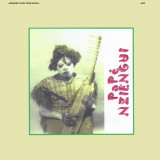
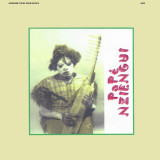
Kadi Yombo, published in 1989, is the most successful album in the quest for a fusion between tradition and modernity in Bwiti harp music of the Tsogho people of Gabon. Combining beating rattles with a layer of synthesizers, Papé Nziengui blends in a contrapuntal dialogue characteristic of harp playing: male song in appeal and female choir in response, male voice of the musical arc and rhythms of female worship. But above all it’s Tsogho ritual music and modern studio orchestration. The result is an initiatory itinerary of 10 musical pieces which are all milestones likely to be simultaneously listened to, danced, meditated on, and soon acclaimed. In the years since, Nziengui has traveled he world from Lagos to Paris, from Tokyo to Cordoba, from Brussels to Mexico City to become a true icon, the emblem of Gabonese music.
Like Bob Dylan, "electrifying" folk and Bob Marley mixing rock with reggae, some purists have criticized Nziengui for having distorted the music of harp by imposing a cross with modern instruments. They even went so far as to claim that Nziengui was just an average harpist covering his shortcomings with stunts that were only good for impressing neophytes; like playing a harp placed upside down behind his back or playing two or three harps simultaneously. Sincere convictions or venomous defamations, in any case, Nziengui never gave in to such attacks, imposing himself on the contrary to pay homage to the elders (Yves Mouenga, Jean Honoré Miabé, Vickoss Ekondo) while instructing the maximum of young people. He is thus the promoter of many young talents, the most prominent of which is certainly his nephew Jean Pierre Mingongué. In a conservative society where the sacred is confused with secrecy, exposing the mysteries of Bwiti in broad daylight can be punished by exclusion or even execution.
Papé Nziengui has always claimed that he faces such risks because he never felt enslaved to a community that governs his life, that regulates his conduct, that has a right of censorship over his activities. Like Ravi Shankar, the famous sitarist, Papé Nziengui is a man of rupture but also of openness, a transmitter of culture. As proof, he has established himself in Libreville, Gabo’s capital, as the main harpist for sessions and concerts, accompanying the greatest national artists (Akendengué, Rompavè, Annie-Flore Batchiellilys, Les Champs sur la Lowé, etc.) as well as foreign artists (Papa Wemba, Manu Dibango, Kassav', Toups Bebey, etc.). In 1988, he was the first harpist to release an album in the form of a cassette produced by the French Cultural Center (Papé Nziengui, Chants et Musiques Tsogho). At the same time, he created his own group (Bovenga), combining traditional music instruments (musical bow, drums, various percussion instruments, etc.) in the framework of a true national orchestra, which gave the first concert and the first tours of a traditional music that was both modern and dynamic, thus "democratizing" the harp, to the dismay of certain purists.
On the other hand, in modern music, dominated by the logic of profit or even commercialism, artistic creation must often be adjusted for a specific audience based on reason rather than heart. But instead of allowing himself to be distorted, Papé Nziengui has always tried to produce music that is not a caricature, worthy in its expression as in its content, of the sacredness and transcendence of the music of the Origins. This is what makes Nziengui not only the musician, but the man someone whose age hasn’t altered any of his freshness or authenticity
Kadi Yombo, published in 1989, is the most successful album in the quest for a fusion between tradition and modernity in Bwiti harp music of the Tsogho people of Gabon. Combining beating rattles with a layer of synthesizers, Papé Nziengui blends in a contrapuntal dialogue characteristic of harp playing: male song in appeal and female choir in response, male voice of the musical arc and rhythms of female worship. But above all it’s Tsogho ritual music and modern studio orchestration. The result is an initiatory itinerary of 10 musical pieces which are all milestones likely to be simultaneously listened to, danced, meditated on, and soon acclaimed. In the years since, Nziengui has traveled he world from Lagos to Paris, from Tokyo to Cordoba, from Brussels to Mexico City to become a true icon, the emblem of Gabonese music.
Like Bob Dylan, "electrifying" folk and Bob Marley mixing rock with reggae, some purists have criticized Nziengui for having distorted the music of harp by imposing a cross with modern instruments. They even went so far as to claim that Nziengui was just an average harpist covering his shortcomings with stunts that were only good for impressing neophytes; like playing a harp placed upside down behind his back or playing two or three harps simultaneously. Sincere convictions or venomous defamations, in any case, Nziengui never gave in to such attacks, imposing himself on the contrary to pay homage to the elders (Yves Mouenga, Jean Honoré Miabé, Vickoss Ekondo) while instructing the maximum of young people. He is thus the promoter of many young talents, the most prominent of which is certainly his nephew Jean Pierre Mingongué. In a conservative society where the sacred is confused with secrecy, exposing the mysteries of Bwiti in broad daylight can be punished by exclusion or even execution.
Papé Nziengui has always claimed that he faces such risks because he never felt enslaved to a community that governs his life, that regulates his conduct, that has a right of censorship over his activities. Like Ravi Shankar, the famous sitarist, Papé Nziengui is a man of rupture but also of openness, a transmitter of culture. As proof, he has established himself in Libreville, Gabo’s capital, as the main harpist for sessions and concerts, accompanying the greatest national artists (Akendengué, Rompavè, Annie-Flore Batchiellilys, Les Champs sur la Lowé, etc.) as well as foreign artists (Papa Wemba, Manu Dibango, Kassav', Toups Bebey, etc.). In 1988, he was the first harpist to release an album in the form of a cassette produced by the French Cultural Center (Papé Nziengui, Chants et Musiques Tsogho). At the same time, he created his own group (Bovenga), combining traditional music instruments (musical bow, drums, various percussion instruments, etc.) in the framework of a true national orchestra, which gave the first concert and the first tours of a traditional music that was both modern and dynamic, thus "democratizing" the harp, to the dismay of certain purists.
On the other hand, in modern music, dominated by the logic of profit or even commercialism, artistic creation must often be adjusted for a specific audience based on reason rather than heart. But instead of allowing himself to be distorted, Papé Nziengui has always tried to produce music that is not a caricature, worthy in its expression as in its content, of the sacredness and transcendence of the music of the Origins. This is what makes Nziengui not only the musician, but the man someone whose age hasn’t altered any of his freshness or authenticity
Kadi Yombo, published in 1989, is the most successful album in the quest for a fusion between tradition and modernity in Bwiti harp music of the Tsogho people of Gabon. Combining beating rattles with a layer of synthesizers, Papé Nziengui blends in a contrapuntal dialogue characteristic of harp playing: male song in appeal and female choir in response, male voice of the musical arc and rhythms of female worship. But above all it’s Tsogho ritual music and modern studio orchestration. The result is an initiatory itinerary of 10 musical pieces which are all milestones likely to be simultaneously listened to, danced, meditated on, and soon acclaimed. In the years since, Nziengui has traveled he world from Lagos to Paris, from Tokyo to Cordoba, from Brussels to Mexico City to become a true icon, the emblem of Gabonese music.
Like Bob Dylan, "electrifying" folk and Bob Marley mixing rock with reggae, some purists have criticized Nziengui for having distorted the music of harp by imposing a cross with modern instruments. They even went so far as to claim that Nziengui was just an average harpist covering his shortcomings with stunts that were only good for impressing neophytes; like playing a harp placed upside down behind his back or playing two or three harps simultaneously. Sincere convictions or venomous defamations, in any case, Nziengui never gave in to such attacks, imposing himself on the contrary to pay homage to the elders (Yves Mouenga, Jean Honoré Miabé, Vickoss Ekondo) while instructing the maximum of young people. He is thus the promoter of many young talents, the most prominent of which is certainly his nephew Jean Pierre Mingongué. In a conservative society where the sacred is confused with secrecy, exposing the mysteries of Bwiti in broad daylight can be punished by exclusion or even execution.
Papé Nziengui has always claimed that he faces such risks because he never felt enslaved to a community that governs his life, that regulates his conduct, that has a right of censorship over his activities. Like Ravi Shankar, the famous sitarist, Papé Nziengui is a man of rupture but also of openness, a transmitter of culture. As proof, he has established himself in Libreville, Gabo’s capital, as the main harpist for sessions and concerts, accompanying the greatest national artists (Akendengué, Rompavè, Annie-Flore Batchiellilys, Les Champs sur la Lowé, etc.) as well as foreign artists (Papa Wemba, Manu Dibango, Kassav', Toups Bebey, etc.). In 1988, he was the first harpist to release an album in the form of a cassette produced by the French Cultural Center (Papé Nziengui, Chants et Musiques Tsogho). At the same time, he created his own group (Bovenga), combining traditional music instruments (musical bow, drums, various percussion instruments, etc.) in the framework of a true national orchestra, which gave the first concert and the first tours of a traditional music that was both modern and dynamic, thus "democratizing" the harp, to the dismay of certain purists.
On the other hand, in modern music, dominated by the logic of profit or even commercialism, artistic creation must often be adjusted for a specific audience based on reason rather than heart. But instead of allowing himself to be distorted, Papé Nziengui has always tried to produce music that is not a caricature, worthy in its expression as in its content, of the sacredness and transcendence of the music of the Origins. This is what makes Nziengui not only the musician, but the man someone whose age hasn’t altered any of his freshness or authenticity
2023 Repress
"banging piece of sound art" - The Observer
"...a fascinating piece of Brutalist techno that pivots between crisp machine-like minimalism and granulated noise." - Clash
"A piece of immediately engaging techno it reveals more of itself with each listen." - CMU Daily
Nik Colk Void is well established with her work as one half of Factory Floor, one third of Carter Tutti Void (alongside Chris Carter and Cosey Fanni Tutti) and with the late Peter Rehberg as NPVR, but perhaps surprisingly, "Bucked up Space" is her first solo album release.
Void explains, "When Peter Rehberg initially asked me to produce a record for Editions Mego, I didn't feel quite ready and asked if we could make a record together instead. Collaboration is so ingrained into what I do, I only felt ready to make this album after working through ideas live, using the audience in place of the collaborator."
Bucked Up Space combines Void's love of improvisation with the driving force of beat-driven music absorbed from performing in galleries, residencies and clubs across the UK and Europe. She goes on to say, "You find out more about yourself when you explain your ideas to others, and that's how I felt the live performance worked for me."
The process steadily teased out a language and Void employed a variety of tactics in the recording process including a methodical approach of collecting data at her home studio in a manner not dissimilar to keeping a diary. Her microscopic focus on raw instrumental noise, layered and reformulated, resulted in a sound catalogue that Void divided into groups for their tone, density and texture.
These initial pieces were taken to a studio in Margate to put them into a more cohesive compositional context. Something that pragmatically started as cold and detached was given warmth, unity and emotion in the studio. Via improvised repetition co-existing alongside organised production, Void conjures new sonic muscle with tracks such as 'Interruption Is Good' and 'FlatTime'. Initial recordings are rendered into sequences initiating the organic rhythms, triggering awkward jerks of high hats and percussion, or used to activate the margins of post effects detectable in the tracks like 'Demna', 'Big Breather' and 'Oversized'.
Void explains: "It was important to me that the simplicity in the work disguised a lot of complexity, I want this work to be absorbed instinctively."
The sleeve image, a still from We Are City by Brazilian artist Maria de Lima, was chosen to illustrate Bucked Up Space, which Void describes as "a distorted reality, the space that lives at start of an idea, then floats in public view, before returning to inform my understanding of the idea. Once the idea is out in the world, it moves and morphs into something else entirely."
Written, performed and produced by Nik Colk Void, the album was engineered by James Greenwood, mastered by Rashad Becker and tracks 1, 4, 5, 7 and 9 were mixed by Marta Salogni.
Bucked up Space is the result of the ideas and resulting sounds of free exploration morphing into a personal structured album that fearlessly moulds patience, listening and restraint. It's a sharp focussed work embracing collective action through the lens of the self. All this, and also one of the best abstract dance records you will hear in some time!
- A1: Tie Me Up
- A2: The Craft
- A3: Sirène
- A4: All Nerve
- A5: Plastic Drama
- B1: Marinela2017
- B2: Aklr
- B3: Profile Anxiety
- B4: Truth
- B5: Truce
- C1: Sirène (Cut_ Remix)
- C2: The Craft (Old Joel Dilla (Wolf Alice) Remix)
- C3: Profile Anxiety (Crystal Fighters Remix) – Watch Here
- C4: Marinela2017 (Delaporte Remix)
- C5: Tie Me Up (Hinds Remix)
- C6: All Nerve (Las Tea Party Djs Remix)
- D1: Aklr (Bonnz Remix)
- D2: Plastic Drama (Yoann Intonti (The Vaccines) Remix)
- D3: Marinela2017 (Asier Bilbao Remix)
- D4: Profile Anxiety (Dream Wife Remix)
- D5: Sirène (Guarda Remix)
- D6: Aklr (Josu Ximun Remix)
Spain’s fastest-rising band, Belako are announcing a very specialedition of their 2020 album ‘Plastic Drama’. The new, deluxe double LP will be released on 8th April via BMG and includes exclusive remixes by the likes of Wolf Alice, The Vaccines, Hinds and Crystal Fighters.
Hailing from the small town of Mungia near Bilbao, Belako have been playing non-stop in Spain and beyond these past few years, building a dedicated fanbase in their native country, which has quickly been spilling out into other parts of Europe and the US.
2020’s ‘Plastic Drama’ was the band’s fourth record, but the first since signing a major international record deal, and certainly their most ambitious to date. Self-produced by the band, ‘Plastic Drama' searches for “the real meaning of things in a world that translates everything into assembly lines, manufacturing and the exploitation of living beings,” say the band. “It’s about the harsh reality our generation is facing and the only good use of new technology, which is the ability to spread the word and call for action. The title of the album has another message, as it also reminds us the first world issues we’ve come so keen to complain about. We can only hope for a more responsible human legacy”.
They were named best new band by Rolling Stone Magazine (ES) and ‘Plastic Drama’ picked up top UK support from the likes of 6 Music, Clash, DIY, Dork, The Line Of Best and NME who hailed the record as ‘a bold next step from a band who have never been afraid of the weird or the wonderful. Belako step up and earn their place among the major players of the scene’.
Relentless in their craft and a ferocious live act at their core, Belako were the first band to tour Europe in the summer of 2020, breathing new life into old forgotten Spanish cinema drive-ins across the country for their live shows. The ‘Belako Pandemic Tour’ documentary was premiered at the San Sebastian International Film Festival and will soon arrive on digital platforms.
Having supported the likes of DMA’s, QOTSA and Liam Gallagher at Finsbury Park, and played major international festivals such as Primavera, SXSW, Rock En Seine & Benicassim, Belako’s explosive live performances have excited crowds from small dive bars in their early days to huge international festivals. Their anything-can-happen stage attitude showcases the power, electricity and punk ethos of this exciting young band, which also lead to them being the first ever Spanish act to be booked for the main stage at Reading & Leeds Festival.
Fast forward to 2022, Belako reinvigorate ‘Plastic Drama’ with a 50-date world tour to be announced shortly, kickstarted with the release of their new deluxe edition album in April, featuring remixes by some of alternative music’s biggest names. The band will also celebrate the release with an album launch party on the rooftop of Madrid’s prestigious Riu Plaza on April 6th. Details for all UK dates this summer will be revealed in the coming weeks.
Lowe’s 1994 The Impossible Bird is a low-key, easy-going album which has a
lot more to do with 1956 country music than with his ‘70s punk roots.
Nonetheless the 13 songs--10 Lowe originals and three country chestnuts--are
marked by the sort of no-frills arrangements and unpretentious passion that
made pub-rock so special in the first place.
When Lowe sings a ballad such as “The Beast in Me,” “Withered on the Vine,”
and “Lover Don’t Go,” the arrangements are so minimalist--just a hint of guitar
and drums behind the organ--that the song lives or dies by the vocal.
Fortunately, Lowe pulls off the difficult trick of sounding lonely and desperate
without sounding self-pitying. Whether it’s a tongue-in-cheek rocker such as
“12-Step Program (To Quit You Babe)” or one of the many ballads, Lowe hits
the mark. The 2021 reissue of The Impossible Bird is newly remastered from
the original tapes.
The idiosyncratic musical style and production practices by Sheldon, Sidney Thompson (aka Sid Le Rock) are shaped by the DIY electronic-music movement that has encouraged his creativity to develop and thrive since the late ’90s. This is a contributing factor to his impressive discography that currently stands at twelve albums under his various aliases, including Sid’s collaborations with artists from various fields and musical genres such as Depeche Mode, DJ Koze, Placebo, and persistent impressions of the journeys he has made throughout the world as a result of his live music performances.
These invaluable experiences are the supplements for his next important leap forward as follows: As a tribal member of the Algonquin First Nations, Sid seeks to explore his ancestral heritage to uncover the traditional, ceremonial soundscapes of the Native American indigenous peoples as an integral component for his new solo album project – Invisible Nation. It is his respectful endeavour to bind this seamlessly together through his knowledge of music theory and his own distinctive production sound. Sid Le Rock’s current album concept is a fusion of traditional music and organic elements utilised by the Aboriginal peoples of Canada, combined with the modernisation of electronic-based music. Mixing of both sound styles achieve balance with a shared importance to rhythm as a source of impulse and functionality. It is his equitable attempt to produce and deliver a complementary synthesis of sonic peculiarities, modern electronic methods and the repurposed use of ceremonial music, to showcase a profound pride and pay homage to his forebears.
The Algonquin First Nations otherwise referred to as Anishinaabe, are a group of indigenous peoples present in the Great Lakes region of Canada. They consider music and dance to be sacred and an integral part of their lives. It is a culture in which it heavily relies on rich oral traditions to pass on its stories, teachings, history, and cultivates their verbal language. Membranophone, idiophone, aerophone, and chanting are traditionally essential components to our sacred sound, "Drumming is the heartbeat of Mother Earth, chanting is the heart”. This musical connection produces a narrative depth that can transport an effective atmosphere to dance-floors, bridged by the unconventional virtues, to which electronic music permits limitless possibilities. Sid Le Rock’s latest release, marks his eighth studio album – Invisible Nation, is an exploration into his cultural roots, combining myth and musical expression to bring forth a prideful nation.
- A1: Wind Legend
- A2: To The Far Place ... (~ Nausicaa's Theme ~)
- A3: Meve
- A4: Majin Soldier - Torumecian Army - His Highness
- A5: Corroded Sea
- B1: Royal Mortal
- B2: Return Of The Demon Army
- B3: Combat
- B4: The Way To The Valley
- B5: Distant Days (~ Nausicaä's Theme ~)
- B6: Bird People (~ Nausicaä's Theme ~)
A work collection which can be said as the origin of Nausicaa's film music which was created based on the image of the original cartoon in film production. Jacket illustration is an illustration of director Miyazaki Hayao drawn for Animage's appendix poster Tolumekia Campaign
The Carpi-Chicago connection is back to work. Sometimes it just takes a simple riff of a funk guitar to wreak havoc in Soul People minds and that's exactly what happened here. A riff you hear your mate playing one night while having the very last drink and the next day a project is born. Deep vocals, strings stabs, subtle motherf... Fender Rhodes and driving basslines. A Philly inspired dancer you'll can't wait to throw on your decks.
As many of you will probably know, on the flip side of our releases we are use to place the plain instrumental version of the main side. This time it's different. We have worked on "Open Up" with a different approach. Synths, special effects, a pinch of electro claps all marching on a groovy breakbeat inspired by the great James Gadson and backed by an 808 kick. Listen from the Youtube link below and judge by yourself.
- A1: Janai̚na Cesar Da Silva Reads Fernando Anto̚nio Nogueira Pessoa - Nuvens (Part One)
- A2: Sergio Fernandez Pan, Lebison, Aznar - Si Conociera Brasil
- A3: Faraualla - Masciare (Eraldo Bernocchi Mix)
- A4: Dj Pippi Ft. Antonio Jimenez Mun╠Âoz - Ibiza World Inspiration (Dub Version)
- B1: Infradisco Ft. Giovanni Santucci - Mother Earth
- B2: Djale - World Tour (O Mundo Inteiro)
- B3: Jose̚ Soberanes - Espo̚ra
Sounds move across the limits of space and time to leave imprinted in the mind an album of memories full of colors and emotions, a travel journal that from the farthest corners of the world burns every kind of distance and returns through warm and strongly evocative sounds the colors, scents, rhythms, the atmospheres of distant lands. The result is a rich and evocative soundscape, where images become sounds and sounds images, where the elements of nature echo voices of different places and cultures, distant in space but deeply similar and intimately connected.
Imaginária Records has commissioned the refined experience of Giovanni Santucci and LucaEffeSunset a journey through the sounds of the world, which from the enveloping wave motion of the warm Iberian beaches carry us to the crystalline dripping of waters and voices of the Mexican jungle, crossing Balearic rhythms and Brazilian brilliance, letting ourselves be captured by the persuasive voices and the chasing rhythm of the magical formulas of the masciare, ancient mysterious witches of southern Italy. In this journey, which represents the first stage of a wide-ranging project (a trilogy that will take the shape of new musical experiences gathered around the themes of the places first and then of the return), an exciting centrifugal movement that attracts towards a single center: the beating heart of a single Mother Earth; voices, suggestions, rhythms, emotions from the far/near, in order to confirm, together with Raymond Murray Schafer, that in the end "the whole world is sound".
Merrin Karras’ 2020 foray into extended compositions combining his Berlin School tendencies and expansive ambient is finally pressed-up on cloudy transparent 12”. Remastered by Rafael Anton Irisarri and featuring revisited art by Noah M / Keep Adding.
~
Conceived and composed in two days, Silent Planet is Brendan's first attempt at a fully continuous piece of music. Normally, albums under his Merrin Karras guise take many months, if not years, to put together:
"I wanted to challenge myself to create a mini-album in a short amount of time, not to think too much about it, but just to let it flow and see what happened. Everything was created in one project, but it's comprised of six distinct sections. Several motifs and elements are re-used at various points throughout the work. It's also the first time that I've used percussion elements in a Merrin Karras work".
The mood spans from brooding to almost Balearic at points, with strong elements of Berlin School and Space Music, classic Trance, and Ambient all intertwined.
General Ludd sculpt bizarre auditory mazes built within the fracturing constraints of western dance musics. These tremors ripple from the dear green place of Glasgow, Scotland; beguiling a physical cathartic experience for the dancer disillusioned with the horror and folly of our times.
Joe Tatton, keyboard player with UK/US funk/soul jazz kings The New Mastersounds, releases this new 7 inch single in March 2022 and this time there is a lovely double A-side 7" physical vinyl option. Two tracks that showcase Joe's skills as a pianist and vocalist and confirm his talent for writing quality original compositions.
"Timeline" is Joe's spotlight on today's social media obsessed society delivered in the style of his musical hero Mose Allison. The latter was the legendary Mississippi born/New York based jazz/blues musician and singer whose wry and intelligent lyrics married to amazing original music shone a light on society and the world from the mid-1950s until his death in 2015. Mose was a huge influence on musicians like Georgie Fame, Van Morrison and Ben Sidran and was and still is one of Joe Tatton's favourite musicians of all time. This song is the title track for Joe's debut solo album due for release later this year on Rodina Music.
"Stomp" is a slow bluesy instrumental funk burner that has a New Orleans swagger about it and features Joe's grand piano solo followed by JTQ band member Gareth Lockrane cutting loose on the flute. If you like music by Allen Toussaint, Ramsay Lewis and Herbie Mann, you'll be feeling this one.
Joe Tatton has been a member of The New Mastersounds now for 16 years now and has recorded over a dozen albums and many singles with them playing organ, piano and keyboard. Annually, he tours 8-9 months a year with the band, mainly in the USA but also across Europe and Japan too. Prior to joining The New Mastersounds, Joe held down the keyboard role with UK jazz-funk kings The Haggis Horns appearing on their first two albums "Hot Damn!" and "Keep On Movin". He's also featured on piano/keyboards on the worldwide hit single "Put Your Records On" by Corinne Bailey Rae.
Over the years he has played live sets with Maceo Parker and Fred Wesley as well as Art Neville, George Porter Jr and Zigaboo Modeliste of The Meters. He's always maintained his own trio under his own name as a side project, releasing singles and EPs via ATA Records (UK) and Color Red Music (USA).
A few years ago, he needed to find the time and place to record them. So in 2020, between New Mastersounds gigs, he managed to book a few days at a studio near Nashville USA, "The Rockhouse", run by Grammy winning engineer Kevin Mckendree. He hooked up with a couple of Nashville session musicians, Steve Mackie (double bass - longtime Dolly Parton bassist) and Kenneth Blevins (drums), and put down all his original songs and also a cover of Mose Allison's "Ever since the world ended", the first single released last year
Now comes the second double A-side single and a further taste of what's in store from Joe and the band later this year when the "Timeline" album drops later in the year. However this time, there's a lovely little black vinyl offering for all the record lovers out there. Just a small first pressing which will no doubt sell out very quickly so people need to jump on it super fast. Once they're gone, they're gone.
"Time line / Stomp" double A-Side single by the Joe Tatton Trio. Released worldwide on Rodina Music - March 31st March 31st 2022.
In the vast musical archive that is Roman Flügel’s discography, Ro70 holds a special place. Written, performed and produced between January and July 1995, it is his debut album as a full-fledged solo artist. Enquired and inspired by a certain David Moufang from Heidelberg, who used to share a classroom with Jörn Elling Wuttke at the SAE Institute and revealed himself to be an Acid Jesus fan and also of the Roman IV 12“ project, it seemed like a good fit for his (and Jonas Grossmann’s) Source Records label.
In the days before file sharing that meant going back and forth with various DATs in his mom’s Volkswagen Polo Fox for actual listening sessions between Darmstadt and Heidelberg. The time was as special and idiosyncratic one as was the sound of Source Records and of course Ro 70 itself. While the rave-olution was ready to eat its kids with the commercial outlook of former underground phenomena looked bright and the scene’s prophecy seemed grim, enterprises like Source and artist like Roman Flügel were defying any competition out of those corners with their own means.
Listening back to the ten tracks of Ro 70, it proves them, their taste and artistic vision right. Probably still being put into the ambient, downtempo, electronica or chill out sections of most record shops, this music could have been made, relished and cherished anytime between 1995 and now. Made in Roman’s home studio in his parent’s house or in the Klangfabrik studio in Egelsbach, this was made for before or after the rave – or for people who din’t want to have to do anything with it at all. His signature is all over it. Well balanced soundscapes with an almost uncanny presence and clarity. Bittersweet symphonies that doesn’t seem to be in an inferior position to modern classical or electronic studies.
It is also a very personal testament to a time in the artists’s life that was ready to get caught in the maelstrom of the oscillating techno city called Frankfurt am Main and its halcyon days between the Delirium record shop, Sven Väth’s marathon sets, the early days of the label triumvirate Playhouse, Klang & Ongaku. In a musical journal without lyrics, those memories will have to stay pantomimic and private. All for the better, that we can at least still listen to them.
In September 2021, VOLA performed an intimate show in a stunning live setting
'Live From The Pool' took place at the swimming pool of the abandoned Auderød military camp in North Zealand near Copenhagen, Denmark. Designed by the world-famous architect Henning Larsen this defunct building has become part of the Auderød nature park. A place where nature encounters the mysteries of a
once existing military base, ready to be explored.
Creating a unique experience, the bands' genre-melding music collaborates with visionary Danish audio-visual artist collective Vertigo, where light, nature, music, and concrete meet.
Back in stock !
There is geological time and deep-space time. The natural world's time, and quantum time. Humans started measuring time with the stars and seasons. Then came hourglasses and sundials. The first mechanical clocks weren't in Europe until the late 13th century. Then came industrial time, a wristwatch for all and then everything had a time. A time for everything. All feeding into our recently digitised time and its marching nanoseconds. Let us not forget however another way to measure time: That would be K&D time.
Yes, you can rush, but isn't it so much nicer to amble? This onception of time may well have its roots in those smoke mists, softly blowing through the pre-history of 1995, and if that was time - then we need space. In particular, one Viennese front room that has turned its bass bins out to the cosmos. That sweet smoke, shrouding the desk and sampler. A few old keyboards (as a friend skins up at the back) unnoticed on the couch - just passing through...
Those days of K&D time had been thought to have gone. But one of times tricks is to hide itself in music. Not long ago (after a box of DATs had been found, and a DAT player prised back into service) back through the music wormhole our heroes fell into that smoke laden room of 1995. The remix time hadn't arrived nor the intense touring schedule. It was before the K&D sessions release and all that came with it, before the solo projects of the Peace Orchestra and Tosca. This was a time before all of that. A time for literally living in the studio and experiencing the joy of creating tune after tune. Just the sound and the smoke and no boundaries.
It was before people started asking about when the album was coming out. Which developed its own time specific answers. The 90s answer was soon, 00s answer was not sure and then: never! from 2010 onwards. The truth was, an album had been finished by the spring of '95 and all recorded onto DAT and placed in a box. K&D pressed up 10 copies and gave 4 away to some suitably eccentric individuals. Then the room's doors opened and in a tremendously big cloud of smoke time rushed in, K&D rushed out, and the years went rolling by. The days got filled with remixes, touring and life.
Then in early 2020 that chance moving of a box at the back of a room exposed the DATs and their time transporting properties. As K&D went through them they ended up comfortable and back in the room and that wonderful haze of 1995. The music was transferred from the DATs and K&D painstakingly rebuilt every molecule that made up the original 10 copies. From the very first takes of the mixes printed onto tape, to the solid slab of black virgin vinyl, to the abused by many plays, white cover. Even down to the labels that says "'Unverkäufliche Musterplatte" (Testpressing - Not For Sale) in rather rude German.
It now looks, feels and sounds pretty much exactly the same as those original 10 copies did in 1995. The only thing that couldn't be don is the original clouds of smoke those 10 copies were bathed in. That will be left to the listener to wrap it in the fresh harvest of 2020. In one way it's a musical time warp space travel. In another, if the music becomes classic and timeless, then it's of its time, whatever the time. So as the rooms bass bins are once again turned out towards the cosmos, K&D are happy and proud to release what they thought were lost moments. Drop through the worm hole, take your place on the couch. The friend who is skinning up, always just passing through, listening to an album for the future called 1995. It all makes sense if you measure in K&D time.