Buscar:in da place

Estilos
Todo
Anderson .Paak - Malibu (10 Year Anniversary) (2x12")
  • A1: The Bird
  • A2: Heart Don't Stand A Chance
  • A3: The Waters (Feat. Bj The Chicago Kid)
  • A4: The Season / Carry Me
  • B1: Put Me Thru
  • B2: Am I Wrong (Feat. Schoolboy Q)
  • B3: Without You (Feat. Rapsody)
  • B4: Parking Lot
  • C1: Lite Weight (Feat. The Free Nationals United Fellowship Choir)
  • C2: Room In Here (Feat. The Game & Sonyae Elise)
  • C3: Water Fall (Interlude)
  • C4: Your Prime
  • D1: Come Down
  • D2: Silicon Valley
  • D3: Celebrate
  • D4: The Dreamer (Feat. Talib Kweli & Timan Family Choir)

Ten years ago, Anderson .Paak didn't just release an album; he staged a full-scale takeover of the soul and hip-hop landscape. Released on January 15, 2016, Malibu served as the definitive arrival of an artist who had spent years grinding in the underground before a star-making turn on Dr. Dre’s Compton. While his previous work hinted at his potential, Malibu was the moment the world met the "Cheeky Andy" persona in full—a virtuosic drummer, a raspy-voiced crooner, and a sharp-witted rapper all rolled into one. The album is a sprawling, sun-drenched journey through the Southern California coast, blending 1970s funk, church-reared gospel, and gritty boom-bap into something that feels both nostalgic and entirely futuristic. With a heavyweight production lineup including 9th Wonder, Madlib, Kaytranada, and Hi-Tek, the record maintains a warm, analog texture that was a breath of fresh air in an increasingly digital era. It’s an album that breathes, full of intentional imperfections and the kind of "in-the-pocket" groove that can only come from a seasoned live performer. Beyond the infectious, dance-floor-ready energy of tracks like "Am I Wrong" and "Come Down," the album is a deeply autobiographical masterwork. .Paak uses the 65-minute runtime to unpack his life story with startling clarity, touching on his mother’s gambling addiction, his father’s incarceration, and his own brushes with homelessness with a sense of resilience that never feels heavy-handed. He weaves these heavy themes through a lens of triumph, grounded by vintage surfing documentary samples that give the project its cinematic, coastal atmosphere. It’s a celebratory record born out of struggle, anchored by his impeccable technicality on the drums and a guest list—featuring ScHoolboy Q, Rapsody, and The Game—that feels hand-picked to complement his specific brand of West Coast swagger. A decade later, Malibu stands as a modern classic and the blueprint for the soulful revivalism that would eventually lead .Paak to global superstardom and Grammy-winning heights. It remains a testament to the idea that the most profound music often comes from the most personal places, proving ten years on that the best way to move forward is to stay rooted in the groove.

Reservar17.04.2026

debe ser publicado en 17.04.2026

97,44
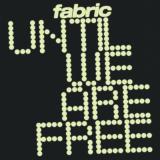
fabric - Until We Are Free LP

fabric

Until We Are Free LP

12inchFLIES78
Four Flies
17.04.2026
  • 01: Taste This Sound
  • 02: Make Me Dance
  • 03: Go Let Your Freedom Grow
  • 04: Fight!
  • 05: Tic Toc
  • 06: No More
  • 07: Once Again
  • 08: Feel It
  • 09: Aria
  • 10: Falling Down

Until We Are Free is the debut album from fabric, a collective of musicians from diverse backgrounds united by a shared goal: to fuse irresistible rhythms and grooves with a direct, socially conscious message that draws vital attention to the contradictions of modern life. The project's name itself evokes the idea of a living, dynamic ensemble—a creative intertwining of different threads, from musical genres to founding musicians and guest collaborators, all actively woven into the social fabric.

The record blends funk, soul, and Afrobeat with a sharp, contemporary urban attitude, resulting in a sound that functions simultaneously as sonic resistance and an invitation to the dancefloor.

It finds its place in a lineage that runs from Fela Kuti and ESG to The Comet Is Coming, Sault and Jungle.

At its core is the conviction that music and civic engagement can coexist seamlessly without being didactic. While the lyrics—entirely in English—tackle themes of rights, equality, and freedom, the groove remains the heartbeat: constant, pulsing, and relentless.

Mixed by Tom Campbell (whose credits include Sault, Little Simz, Adele, Michael Kiwanuka, and Jungle) and featuring art direction by Raissa Pardini, Until We Are Free is a soundtrack for complex times. It is an invitation to refuse neutrality and isolation, and to imagine—together—new possibilities for movement, resistance, and the future.

fabric's singles "Taste This Sound" and "Fight!" have been featured in FIP's Spotify Playlists "FIP Radio (en live)" and KEXP's "New This Week" and "KEXP Rotation".

Reservar17.04.2026

debe ser publicado en 17.04.2026

28,99
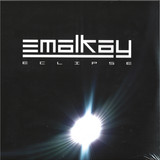
Emalkay - Eclipse 3x12"

Emalkay

Eclipse 3x12"

3x12inchDP055
Dub Police
17.04.2026
  • A1: Flesh & Bone
  • B1: Metropolis 4 34
  • C1: Keep Moving On
  • D1: True Romance 4 52
  • E1: Space Hopper 7 00
  • F1: When I Look At You 4 32
 
1

Please Note: This format is 3×12' Vinyl in a gatefold sleeve with the full 11 track CD inside. Dub Police are proud to announce the release of their first artist album courtesy of Birmingham-based producer Emalkay, who is set to release his hotly anticipated debut LP 'Eclipse' this Spring. First making a name for himself with early releases on his own Morphic Sounds imprint, Emalkay has continued to push the boundaries of underground bass music ever since, delivering a slew of huge releases on the way. Having been an integral part of the Dub Police stable ever since his 'Explicit / Heroics' 12' for the label in 2009, Emalkay has gone from strength to strength with a series of heavyweight tracks that includes the phenomenal 'When I Look At You' and recent smash 'Crusader'. Comprised of 11 tracks, 'Eclipse' is a bold and powerful album encapsulating perfectly everything that makes Emalkay such a prodigious talent, effortlessly showcasing the depth and diversity of his sound while always remaining true to his inimitable style. As addictive as it is hard-hitting, the album doesn't just provide a collection of dancefloor tracks, but a confident and coherent artistic statement. A brilliantly confident and varied debut album, 'Eclipse' is set to cement Emalkay's place as one of the biggest and most exciting producers working in bass music today.

a Emalkay - Flesh & Bone
b Emalkay - Metropolis
c Emalkay - Keep Goin On
d Emalkay - True Romance
e Emalkay - Space Hopper
f Emalkay - When I Look At You

No en stock

Haga su pedido ahora y le encargaremos el artículo en nuestro proveedor.

28,99

Ültimo hace: 6 Años
TIGA - HOTLIFE LP 2x12"

TIGA

HOTLIFE LP 2x12"

2x12inchSCRLP189
Secret City
17.04.2026

Die Montrealer Ikone Tiga kehrt mit seinem vierten Album HOTLIFE zurück und läutet damit eine neue Ära in seiner unsterblichen Techno-Reise hin zu absoluter geistiger Freiheit ein. Mit Beiträgen von Boys Noize, Matthew Dear, Fcukers, MRD, Gesloten Cirkel, Paranoid London, Maara und den neuen Studio-Experten seiner Heimatstadt Priori und Patrick Holland befindet sich Tiga mit HOTLIFE auf dem Gipfel des Musikbergs und versetzt die Zuhörer mit ansteckenden Dancefloor-Klängen in Begeisterung: ,Wenn ich die Catharsis Machine einschalte", sagt der berühmte Sänger und Produzent, ,spielt es keine Rolle, ob Sie reich oder arm sind, denn Sie werden ein freier Mensch sein ..." Die Rückeroberung seines Platzes an der Spitze des himmlischen Firmaments der zeitgenössischen Tanzmusik verlief nicht ohne eine fesselnde und nachvollziehbare Erzählung. Nach einem mühsamen Kampf mit einer neurologischen Erkrankung, die er entdeckte und ,Vibe Fog" nannte, befand sich Tiga an einem Scheideweg: ,An einem bestimmten Punkt hieß es entweder, das Exoskelett zu kaufen und meine Virgin Megastore-Aktien zu verkaufen, oder Tiga City von Grund auf neu aufzubauen, Stein für Stein, Wasserspeier für Wasserspeier." Das Ergebnis ist ein Tiga, den langjährige Tiga-Beobachter als ,engelsgleich" und ,furchteinflößend" bezeichnen, was zu einem Album geführt hat, das die destillierte Essenz eines Trendsetters einfängt, der über alle menschlichen Grenzen hinausgeht. ,Meine Ja/Nein-Reaktionszeit bei künstlerischen Entscheidungen ist außergewöhnlich", fügt Tiga hinzu. ,Wir haben jede Sekunde, die wir bei jeder kreativen Entscheidung eingespart haben, in die Laufzeit des Albums reinvestiert. 12 Songs. 60 Minuten. Bemerkenswert."

No en stock

Haga su pedido ahora y le encargaremos el artículo en nuestro proveedor.

26,01

Ültimo hace: 3 Días
Various - Naive Melodies (Tape)

Various

Naive Melodies (Tape)

CassetteBBE424CTP
BBE Music
17.04.2026

Naive Melodies is a bold and visionary tribute to the music of Talking Heads, reinterpreted through the lens of Black musical innovation. Curated by Drew McFadden — the creative mind behind BBE’s acclaimed Modern Love (David Bowie tribute album) — this new collection dives deep into the Afro-diasporic rhythms and experimental soul roots that helped shape Talking Heads’ unmistakable New Wave sound. Inspired by artists like Fela Kuti, Parliament, and Al Green — whose influences loomed large in the band’s rhythmic DNA — Naive Melodies shines a light on the Black music traditions that underpinned their artistry. Far from a conventional tribute, Naive Melodies reframes the band’s catalog through the voices and visions of a new generation of genre-defying artists. These interpretations illuminate the foundational grooves and sonic textures that fueled Talking Heads’ rhythm-forward aesthetic, bringing them full circle with authenticity. “With Naive Melodies, I wanted to spotlight the deep and often overlooked influence of Black music on the sound of Talking Heads, drawing from the rhythmic foundations of Afro-diasporic traditions, soul, gospel, Latin, and spiritual jazz. This project is a chance to reimagine Talking Heads’ legacy through the lens of the very innovations that helped shape it, bringing those influences to the forefront through the voices of today’s most forward-thinking artists.” — Drew McFadden The album features a globally minded lineup, including Liv.e, Bilal, Rogê, Miguel Atwood-Ferguson, Aja Monet, Georgia Anne Muldrow, Theo Croker, Kenny Dope, Rosie Lowe, Pachyman, W.I.T.C.H., and more — spanning Afrobeat, jazz, soul, funk, gospel, dub, electronica, orchestral, and Latin styles. It reflects not only the boundary-pushing ethos of Talking Heads, but also the influence of Black music as a cultural force that helped shape it. This is not just a tribute album — it’s a recontextualization. A cultural conversation. A rhythmic reawakening.

Reservar17.04.2026

debe ser publicado en 17.04.2026

25,17
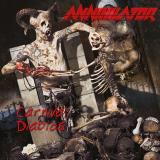
Annihilator - Carnival Diablos (2x12")

Annihilator

Carnival Diablos (2x12")

2x12inch4029759175254
Ear Music
17.04.2026
  • A1: Denied
  • A2: Battered
  • A3: Hunter Killer
  • A4: Time Bomb
  • A5: Carnival Diablos
  • B1: The Perfect Virus
  • B2: The Rush
  • B3: Insomniac
  • B4: Epic Of War
  • B5: Liquid Oval
  • B6: Shallow Grave
  • B7: Chicken And Corn (Hidden Track)

Carnival Diablos is an album of red-blooded metal that connected Annihilator’s legacy to their present-day and re-established Jeff Waters’ place in the thrash pantheon. From the frenzied call-and-response of album opener ‘Denied’ to the progressively-edged mid-tempo sway of the title track, Carnival Diablos is a wholly satisfying offering of steak and potatoes heavy metal thrash – more heavy metal, less thrash, but 100% Annihilator at one of their many peaks.

Reservar17.04.2026

debe ser publicado en 17.04.2026

25,59
BCUC - The road is never easy

BCUC – Bantu Continua Uhuru Consciousness – have been channeling the spirit of Soweto for over twenty years. Indigenous funk, hip-hop consciousness, and punk rock energy fused into something utterly original and deeply rooted. Their mantra: Music for the people, by the people, with the people. From humble beginnings rehearsing in a shipping container, a stone's throw from the church where Desmond Tutu organized the escape of the most wanted anti-Apartheid activists, they kept believing in their dream of self-empowerment. Today they command festival stages worldwide: Glastonbury West Holts, Roskilde, Afropunk Brooklyn, WOMAD, Fusion, Sziget, FMM Sines, Beaches Brew, Boomtown, Colours of Ostrava, Couleur Café – to name just a few. In 2023, BCUC were honoured with the prestigious WOMEX Artist Award, an accolade usually reserved for more established artists, in recognition of their fearless work and transcendent live performances.

THE ROAD IS NEVER EASY

The Road Is Never Easy is BCUC's fifth album and their debut on Outhere Records. On this new offering, BCUC take listeners on another Afro-psychedelic journey into the soul of Soweto. It feels like a gospel sermon colliding with a punk concert, "guaranteed to touch untapped corners of your soul" (OkayAfrica). BCUC's music is deeply rooted in history and echoes the voices of the ones who came before. The road was never easy for the people of Soweto who originally came to work in the mines of Egoli, the City of Gold, Johannesburg. When apartheid finally ended after a long struggle, it was hoped that life would improve. But more than 30 years later, many of those initial hopes and dreams are still waiting to be fulfilled. This album is about that struggle. The album contains 10 brand new songs – a record for BCUC, whose previous albums featured an average of 3 songs. It represents the culmination of more than two decades of performing together and building a reputation as a powerful live act. These ten songs encapsulate that same live energy, each one building gradually and drawing you into BCUC's Afro-psychedelic stream of consciousness. It's a seismic tour de force through life in Soweto today. Songs like Amakhandela (Breaking All the Chains) connect history to daily life: "How is this precious metal inflicting so much pain in us," sing BCUC, "this government has been telling us we are free, but we don't benefit from being free." The album also talks about all the hopes and dreams that remain: "I have too many wishes and dreams in my head," BCUC sing in Um duma khanda, "I think I am losing my mind". The album ends with the soothing Matla a rona ke Bophelo, "our strength is life", praising the spirits and thanking the elders for protection. The Road Is Never Easy is about the harsh reality of life in Soweto, where "people always carry heavy loads". BCUC are street poets trying to deal with that burden: sometimes revolutionary, sometimes soothing, but always hopeful and compassionate. "When you are from Soweto you can't retreat nor surrender." (Sebenzela)

RECORDING

The album was largely recorded in Munich, Germany during tour breaks over two sessions, each three days long. It took place in a small studio located in a German WW II bunker converted into rehearsal spaces. The songs were recorded in one take altogether in one room, with only a few overdubs added, mainly backing vocals, by BCUC at Fourways studio in Johannesburg. BCUC have created their own distinctive way of writing, or rather, finding and creating their songs. The recording process is like an improvised live performance. They bring their ideas into a zone where the music, the rhythm and the spirits take over until the song starts to form. In this Afro-psychedelic zone BCUC create their unique poetry that feeds on the dreams still dreamt, the hopes, the fears and the temptations lingering everywhere. BCUC's songs need to breathe and time to build. The right take was the one when the song took over, and just like their live performances, no one knew beforehand where the song would take them. During the recording, BCUC just let it all flow out: inner turmoil, cries of rebellion, but also resilience and a search for healing, love, unity and compassion. You don't have to be from Soweto to feel the deep meaning and impact of this music. In these times of so much hate and division, BCUC are like a campfire for people to gather around.

PRODUCTION & ARTWORK

"BCUC have a unique magic," says Outhere's Jay Rutledge, who produced the album. "It blew our minds. It's like punk and pure gospel at the same time. Their music can make you dance and it can make you cry, all at the same time. And when the song is over, you feel you're not alone in this world anymore. We felt compelled to do this." The album cover is based on a matchbox design, matches being a common household item in South Africa even today. "These were the matches people used to burn government buildings and cars," explain BCUC. Little messages, addresses, or phone numbers used to be scribbled on the back of these boxes; each one a reminder of the strength, resilience, and resistance that once drove the struggle for freedom in Soweto. BCUC keep this flame burning. The Road Is Never Easy is a heavy spiritual road trip, a deep dive into the subconscious of Soweto and a quest for truth, justice and sanity in this crazy world. BCUC tackle the harsh realities of the voiceless, guided by the spirit world of their ancestors. Rather than reinforcing stereotypes of poverty, BCUC's portrayal of Africa is one rich in tradition, rituals and beliefs. "We bring fun and Afro-psychedelic fire from the hood," says vocalist Kgomotso Mokone.

No en stock

Haga su pedido ahora y le encargaremos el artículo en nuestro proveedor.

19,75

Ültimo hace: 2 Días
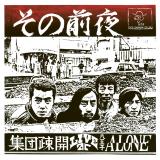
Shūdan Sokai - Live At 八王子 Alone

First time reissue of JP free jazz rarity, pre-Seikatsu Kōjyō Iinkai group.

The single album self-released by the quartet Shūdan Sokai in 1977 is one of the most vital documents of mid-seventies Japanese free jazz, documenting Tokyo’s free scene at the precise moment when it began to shift to a handful of tiny venues on the western fringes of the city. In Free Jazz in Japan, Teruto Soejima identifies the extant venue Aketa no Mise in Nishi-Ogikubo as the pioneer of this decamping from the centre: a cramped basement beneath a rice shop, seating just 20 people. Musician-run, operated on a shoestring, these spaces offered a vital site for community, creativity, and a small measure of financial independence — “even though it was in a basement, in spirit it was a loft.”

Among the most active of the new venues was Alone in Hachiōji, nearly an hour from Shinjuku, in a district shaped by universities, lower rents, and a thriving counterculture. Originally opened in 1973 as a jazu kissa, Alone was unusually spacious and equipped with a stage, grand piano, and drum kit. Around 1974, Junji Mori and Yasuhiro Sakakibara began working there, booking free jazz players on weekends and establishing the venue as a crucial hub. Mori recalls early appearances by figures including Kazutoki Umezu, Toshinori Kondo, and others who would define the scene.

In early 1976, Umezu and pianist Yoriyuki Harada — recently returned from New York’s loft jazz environment, where they had played with musicians such as David Murray and William Parker — formed Shūdan Sokai with Mori and drummer Takashi Kikuchi. The name, meaning “mass evacuation,” pointed to their self-chosen exile in Hachiōji. With Alone as their home base, the quartet developed a music characterized by an infectious sense of enjoyment and a willingness to integrate free jazz with elements of song structure. Harada switched between piano and bass; the group experimented with rap-like vocal pieces, jabbering nursery rhymes over bass rhythms.

They returned to Alone on December 24 to record Sono zen’ya (Eve), releasing it on their own Des Chonboo Records, partially funded by advertisements from local businesses printed on the rear cover. The closing “Ballad for Seshiru,” dedicated to Harada’s newborn son, unfolds over a delicate piano melody that moves into emphatic chords as intertwining alto lines rise and spiral.

Alone closed in September 1977, and Shūdan Sokai soon dissolved, later morphing into the expanded Seikatsu Kōjyō Iinkai Orchestra. What remains is a recording rooted in a specific place and moment: a fiercely independent scene sustained by small rooms, close listening, and collective commitment.

No en stock

Haga su pedido ahora y le encargaremos el artículo en nuestro proveedor.

28,15

Ültimo hace: 2 Días
BEAU - BEAU LP

BEAU

BEAU LP

12inchTDP54072
Trading Places
14.04.2026
  • A1: Welcome
  • A2: Imagination
  • A3: 1917 Revolution
  • A4: Soldier In The Willow
  • A5: Fishing Song
  • A6: The Painted Vase
  • A7: Pillar Of Economy
  • B1: A Nation's Pride
  • B2: The Sun Dancer
  • B3: Rain
  • B4: Morning Sun
  • B5: The Summer Has Gone
  • B6: The Ways Of Winter
  • B7: Welcome-Tag Piece
  • B8: Sleeping Town (Bonus Track)
  • B9: Time (Bonus Track)

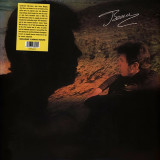
Leeds-born folk-rocker John Trevor Midgely, alias Beau, was known for his deft twelve-string guitar work, his poignant voice and distinctive song-writing, which brought him onto the roster of John Peel’s Dandelion label in 1969. His self-titled debut album is arguably his best and includes the outstanding single ‘1917 Revolution,’ said to have inspired America’s smash, ‘Horse With No Name,’ the LP ably demonstrating that all the artist needed was his voice, his guitar, and his individual approach to song writing, the work bearing his haunting hallmarks throughout. In short, an unjustly obscure release that is ripe for current reappraisal. Including 2 Bonus Tracks

No en stock

Haga su pedido ahora y le encargaremos el artículo en nuestro proveedor.

13,40

Ültimo hace: 4 Días
DAGMAR ZUNIGA - IN FILTH YOUR MYSTERY IS KINGDOM / FAR SMILE PEASANT IN YELLOW MUSIC

Nicaraguan-American artist Dagmar Zuniga makes music that feels both intimate and expansive: songs drift like disrupted signals, carried by harmony, tape hiss, and a strong sense of touch. Her debut solo album in filth your mystery is kingdom / far smile peasant in yellow music — written and recorded in New York, Norway, and Athens, Georgia over a period of five years on her longtime companion, the Tascam 424 — was uploaded to Bandcamp and YouTube in January 2025, quickly garnering over two hundred thousand views and the attention of artists such as Mount Eerie, who invited her to tour with them that summer. This year, what was once a jewel of tapped-in algorithms and message boards will meet the world at large, with in filth arriving digitally on March 4, and physically on April 10, via AD 93.

in filth is an atmospheric, devotional collage where one voice multiplies into a chorus of selves, sometimes delicate, sometimes severe; an effect created by Zuniga’s masterful layering of texture and complex harmonies. Synths glitter out like spears of sunlight from beneath clouds of moody, time-distorted guitars, and songs spin about themselves like tightly-wound music boxes, making use of a kind of hypnotic repetition, before melting apart into their components or slipping into the following track.

Zuniga began recording to tape as a teenager, drawn to the physicality of the medium — how a tape recording is fragile, mutable, and alive. Though her ethereal sound may draw easy comparisons to other female pioneers of psychedelic folk, she is influenced just as much by the darker sounds of Syd Barrett and The Fall. Like Barrett, Zuniga is a painter, and she is interested not only in recording music but in creating a full, self-contained artistic universe: she creates her own artwork, merchandise, music videos, and bootleg tapes of new and unfinished music that she exclusively sells at live shows (“If something is not material, it does not exist,” she insists). Her world has not gone unvisited, garnering her a monthly show on NTS Radio ‘World of Pain’, as well as a forthcoming appearance at Rewire Festival in April 2026.

Though Zuniga’s work explores themes of solitude and suffering, the suffering in her songs is not borrowed or displayed; it is held, then opened outward through empathy — an exacting practice of attention that insists on shared ground. Solitude, in her work, is not withdrawal but a starting point for connection. Likewise, over time, her recording process has become increasingly communal, with in filth featuring musicians Hayes Hoey, Austyn Wohlers (Tomato Flower), and Zach Phillips (Fievel Is Glauque). Newer recordings widen the circle even more. For Zuniga, collaboration is a way to “find a place between worlds,” echoing Badiou’s idea of love as a vision refracted through the prism of difference. Meaning emerges there — in the space between voices, between artist and listener. “I hope my music helps people work through difficult experiences,” she says. “The same way it helps me.”

No en stock

Haga su pedido ahora y le encargaremos el artículo en nuestro proveedor.

23,11

Ültimo hace: 5 Días
DAGMAR ZUNIGA - IN FILTH YOUR MYSTERY IS KINGDOM / FAR SMILE PEASANT IN YELLOW MUSIC (TAPE)

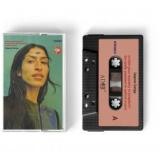
Nicaraguan-American artist Dagmar Zuniga makes music that feels both intimate and expansive: songs drift like disrupted signals, carried by harmony, tape hiss, and a strong sense of touch. Her debut solo album in filth your mystery is kingdom / far smile peasant in yellow music — written and recorded in New York, Norway, and Athens, Georgia over a period of five years on her longtime companion, the Tascam 424 — was uploaded to Bandcamp and YouTube in January 2025, quickly garnering over two hundred thousand views and the attention of artists such as Mount Eerie, who invited her to tour with them that summer. This year, what was once a jewel of tapped-in algorithms and message boards will meet the world at large, with in filth arriving digitally on March 4, and physically on April 10, via AD 93.

in filth is an atmospheric, devotional collage where one voice multiplies into a chorus of selves, sometimes delicate, sometimes severe; an effect created by Zuniga’s masterful layering of texture and complex harmonies. Synths glitter out like spears of sunlight from beneath clouds of moody, time-distorted guitars, and songs spin about themselves like tightly-wound music boxes, making use of a kind of hypnotic repetition, before melting apart into their components or slipping into the following track.

Zuniga began recording to tape as a teenager, drawn to the physicality of the medium — how a tape recording is fragile, mutable, and alive. Though her ethereal sound may draw easy comparisons to other female pioneers of psychedelic folk, she is influenced just as much by the darker sounds of Syd Barrett and The Fall. Like Barrett, Zuniga is a painter, and she is interested not only in recording music but in creating a full, self-contained artistic universe: she creates her own artwork, merchandise, music videos, and bootleg tapes of new and unfinished music that she exclusively sells at live shows (“If something is not material, it does not exist,” she insists). Her world has not gone unvisited, garnering her a monthly show on NTS Radio ‘World of Pain’, as well as a forthcoming appearance at Rewire Festival in April 2026.

Though Zuniga’s work explores themes of solitude and suffering, the suffering in her songs is not borrowed or displayed; it is held, then opened outward through empathy — an exacting practice of attention that insists on shared ground. Solitude, in her work, is not withdrawal but a starting point for connection. Likewise, over time, her recording process has become increasingly communal, with in filth featuring musicians Hayes Hoey, Austyn Wohlers (Tomato Flower), and Zach Phillips (Fievel Is Glauque). Newer recordings widen the circle even more. For Zuniga, collaboration is a way to “find a place between worlds,” echoing Badiou’s idea of love as a vision refracted through the prism of difference. Meaning emerges there — in the space between voices, between artist and listener. “I hope my music helps people work through difficult experiences,” she says. “The same way it helps me.”

Reservar11.04.2026

debe ser publicado en 11.04.2026

16,77
Guilty Razors - Complete Recordings 1977 - 1978

UILTY RAZORS, BONA FIDE PUNKS.


Writings on the topic that go off in all directions, mind-numbing lectures given by academics, and testimonies, most of them heavily doctored, from those who “lived through that era”: so many people today fantasize about the early days of punk in our country… This blessed moment when no one had yet thought of flaunting a ridiculous green mohawk, taking Sid Vicious as a hero, or – even worse – making the so-called alternative scene both festive and boorish. There was no such thing in 1976 or 1977, when it wasn’t easy to get hold of the first 45s by the Pistols or the Clash. Few people were aware of what was happening on the fringes of the fringes at the time. Malcolm McLaren was virtually unknown, and having short hair made you seem strange. Who knew then that rock music, which had taken a very bad turn since the early 1970s, would once again become an essential element of liberation? That, thanks to short and fast songs, it would once again rediscover that primitive, social side that was so hated by older generations? Who knew that, besides a few loners who read the music press (it was even better if they read it in English) and frequented the right record stores? Many of these formed bands, because it was impossible to do otherwise. We quickly went from listening to the Velvet Underground to trying to play the Stooges’ intros. It’s a somewhat collective story, even though there weren’t many people to start it.
The Guilty Razors were among those who took part in this initial upheaval in Paris. They were far from being the worst. They had something special and even released a single that was well above the national average. They also had enough songs to fill an album, the one you’re holding. In everyone’s opinion, they were definitely not among the punk impostors that followed in their wake. They were, at least, genuine and credible.

Guilty Razors, Parisian punk band (1975-1978). To understand something about their somewhat linear but very energetic sound, we might need to talk about the context in which it was born and, more broadly, recall the boredom (a theme that would become capital in punk songs) coupled with the desire to blow everything off, which were the basis for the formation of bands playing a rejuvenated rock music ; about the passion for a few records by the Kinks or the early Who, by the Stooges, by the Velvet mostly, which set you apart from the crowd.
And of course, we should remember this new wave, which was promoted by a few articles in the specialized press and some cutting-edge record stores, coming from New York or London, whose small but powerful influence could be felt in Paris and in a handful of isolated places in the provinces, lulled to sleep by so many appalling things, from Tangerine Dream to President Giscard d’Estaing...
In 1975-76, French music was, as almost always, in a sorry state ; it was still dominated by Johnny Hallyday and Sylvie Vartan. Local rock music was also rather bleak, apart from Bijou and Little Bob who tried to revive this small scene with poorly sound-engineered gigs played to almost no one.
In the working class suburbs at the time, it was mainly hard rock music played to 11 that helped people forget about their gruelling shifts at the factory. Here and there, on the outskirts of major cities, you still could find a few rockers with sideburns wearing black armbands since the death of Gene Vincent, but it wasn’t a proper mass movement, just a source of real danger to anyone they came across who wasn't like them. In August 1976, a festival unlike any other took place in Mont-de-Marsan – the First European Punk Festival as the poster said – with almost as many people on stage as in the audience. Yet, on that day, a quasi historical event happened, when, under the blazing afternoon sun, a band of unknowns called The Damned made an unprecedented noise in the arena, reminiscent of the chaotic Stooges in their early adolescence. They were the first genuine punk band to perform in our country: from then on, anything was possible, almost anything seemed permissible.

It makes sense that the four+1 members of Guilty Razors, who initially amplified acoustic guitars with crappy tape recorder microphones, would adopt punk music (pronounced paink in French) naturally and instinctively, since it combines liberating noise with speed of execution and – crucially – a very healthy sense of rebellion (the protesters of May 1968 proclaimed, and it was even a slogan, that they weren’t against old people, but against what had made them grow old. In the mid-1970s, it seemed normal and obvious that old people should now ALSO be targeted!!!).
At the time, the desire to fight back, and break down authority and apathy, was either red or black, often taking the form of leafleting, tumultuous general assemblies in the schoolyard, and massive or shabby demonstrations, most of the time overflowing with an exciting vitality that sometimes turned into fights with the riot police. Indeed, soon after the end of the Vietnam War and following Pinochet’s coup in Chile, all over France, Trotskyist and anarcho-libertarian fervour was firmly entrenched among parts of the educated youth population, who were equally rebellious and troublemakers whenever they had the chance. It should also be noted that when the single "Anarchy in the UK" was first heard, even though not many of us had access to it, both the title and its explosive sound immediately resonated with some of those troublemakers crying out for ANARCHY!!! Meanwhile, the left-wing majority still equated punks with reckless young neo-Nazis. Of course, the widely circulated photos in the mainstream press of Siouxsie Sioux with her swastikas didn’t necessarily help to win over the theorists of the Great Revolution. It took Joe Strummer to introduce The Clash as an anti-racist, anti-fascist and anti-ignorance band for the rejection of old-school revolutionaries to fade a little.

The Lycée Jean-Baptiste Say at Porte d’Auteuil, despite being located in the very posh and very exclusive 16th arrondissement of Paris, didn’t escape these "committed" upheavals, which doubled as the perfect outlet for the less timid members of this generation.
“Back then, politics were fun,” says Tristam Nada, who studied there and went on to become Guilty Razors’ frontman. “Jean-Baptiste was the leftist high-school in the neighbourhood. When the far right guys from the GUD came down there, the Communist League guys from elsewhere helped us fight them off.”
Anything that could challenge authority was fair game and of course, strikes for just about any reason would lead to increasingly frequent truancy (with a definitive farewell to education that would soon follow). Tristam Nada spent his 10th and 11th unfinished grades with José Perez, who had come from Spain, where his father, a janitor, had been sentenced to death by Franco. “José steered my tastes towards solid acts such as The Who. Like most teenagers, I had previously absorbed just about everything that came my way, from Yes to Led Zeppelin to Genesis. I was exploring… And then one day, he told me that he and his brother Carlos wanted to start a rock band.” The Perez brothers already played guitar. “Of course, they were Spanish!”, jokes their singer. “Then, somewhat reluctantly, José took up the bass and we were soon joined by Jano – who called himself Jano Homicid – who took up the rhythm guitar.” Several drummers would later join this core of not easily intimidated young guys who didn’t let adversity get the better of them.

The first rehearsals of the newly named Guilty Razors took place in the bedroom of a Perez aunt. There, the three rookies tried to cover a few standards, songs that often were an integral part of their lives. During a first, short gig, in front of a bewildered audience of tough old-school rockers, they launched into a clunky version of the Velvet Underground's “Heroin”. Challenge or recklessness? A bit of both, probably… And then, step by step, their limited repertoire expanded as they decided to write their own songs, sung in a not always very accurate or academic English, but who cared about proper grammar or the right vocabulary, since what truly mattered was to make the words sound as good as possible while playing very, very fast music? And spitting out those words in a language that left no doubt as to what it conveyed mattered as well.
Trying their hand a the kind of rock music disliked by most of the neighbourhood, making noise, being fiercely provocative: they still belonged to a tiny clique who, at this very moment, had chosen to impose this difference. And there were very few places in France or elsewhere, where one could witness the first stirrings of something that wasn’t a trend yet, let alone a movement.

In the provinces, in late 1976 or early 1977, there couldn’t be more than thirty record stores that were a bit more discerning than average, where you could hear this new kind of short-haired rock music called “punk”. The old clientele, who previously had no problem coming in to buy the latest McCartney or Aerosmith LP, now felt a little less comfortable there…
In Paris, these enlightened places were quite rare and often located nex to what would become the Forum des Halles, a big shopping mall. Between three aging sex workers, a couple of second-hand clothes shops, sellers of hippie paraphernalia and small fashion designers, the good word was loudly spread in two pioneering places – propagators of what was still only a new underground movement. Historically, the first one was the Open Market, a kind of poorly, but tastefully stocked cave. Speakers blasted out the sound of sixties garage bands from the Nuggets compilation (a crucial reference for José Perez) or the badly dressed English kids of Eddie and the Hot Rods. This black-painted den was opened a few years earlier by Marc Zermati, a character who wasn’t always in a sunny disposition, but always quite radical in his (good) choices and his opinions. He founded the independent label Skydog and was one of the promoters of the Mont-de-Marsan punk festivals. Not far from there was Harry Cover, another store more in tune with the new New York scene, which was amply covered in the house fanzine, Rock News (even though it was in it that the photos of the Sex Pistols were first published in France).
It was a favorite hang-out of the Perez brothers and Tristam Nada, as the latter explained. “It’s at Harry Cover’s that we first heard the Pistols and Clash’s 45s, and after that, we decided to start writing our first songs. If they could do it, so could we!”
The sonic shocks that were “Anarchy in the UK”, “White Riot” or the Buzzcocks’s EP, “Spiral Scratch” – which Guilty Razors' sound is reminiscent of – were soon to be amplified by an unparalleled visual shock. In April 1977, right after the release of their first LP, The Clash performed at the Palais des Glaces in Paris, during a punk night organised by Marc Zermati. For many who were there, it was the gig of a lifetime…
Of course, Guilty Razors and Tristam were in the audience: “That concert was fabulous… We Parisian punks were almost all dressed in black and white, with white shirts, skinny leather ties, bikers jackets or light jackets, etc. The Clash, on the other hand, wore colourful clothes. Well, the next day, at the Gibus, you’d spot everyone who had been at this concert, but they weren’t wearing anything black, they were all wearing colours.”

It makes sense to mention the Gibus club, as Guilty Razors often played there (sometimes in front of a hostile audience). It was also the only place in Paris that regularly scheduled new Parisian or Anglo-Saxon acts, such as Generation X, Siouxsie and the Banshees, the Slits, and Johnny Thunders who would become a kind of messed-up mascot for the venue. A little later, in 1978, the Rose Bonbon – formerly the Nashville – also attracted nightly owls in search of electric thrills… In 1977, the iconic but not necessarily excellent Asphalt Jungle often played at the Gibus, sometimes sharing the bill with Metal Urbain, the only band whose aura would later transcend the French borders (“I saw them as the French Sex Pistols,” said Geoff Travis, head of their British label Rough Trade). Already established in this small scene, Metal Urbain helped the young and restless Guilty Razors who had just arrived. Guitarist for Metal Urbain Hermann Schwartz remembers it: “They were younger than us, we were a bit like their mentors even if it’s too strong a word… At least they were credible. We thought they were good, and they had good songs which reminded of the Buzzcocks that I liked a lot. But at some point, they started hanging out with the Hells Angels. That’s when we stopped following them.”

The break-up was mutual, since, Guilty Razors, for their part, were shocked when they saw a fringe element of the audience at Metal Urbain concerts who repeatedly shouted “Sieg Heil” and gave Nazi salutes. These provocations, even still minor (the bulk of the skinhead crowd would later make their presence felt during concerts), weren’t really to the liking of the Perez brothers, whose anti-fascist convictions were firmly rooted. Some things are non-negotiable.
A few months earlier (in July 1978), Guilty Razors had nevertheless opened very successfully for Metal Urbain at the Bus Palladium, a more traditonally old-school rock night-club. But, as was sometimes the case back then, the night turned into a mass brawl when suburban rockers came to “beat up punks”.

Back then, Parisian nights weren’t always sweet and serene.

So, after opening as best as they could for The Jam (their sound having been ruined by the PA system), our local heroes were – once again – met outside by a horde of greasers out to get them. “Thankfully,” says Tristam, “we were with our roadies, motorless bikers who acted as a protective barrier. We were chased in the neighbouring streets and the whole thing ended in front of a bar, with the owner coming out with a rifle…”
Although Tristam and the Perez brothers narrowly escaped various, potentially bloody, incidents, they weren’t completely innocent of wrongdoing either. They still find amusing their mugging of two strangers in the street for example (“We were broke and we simply wanted to buy tickets for the Heartbreakers concert that night,” says Tristam). It so happened that their victims were two key figures in the rock business at the time: radio presenter Alain Manneval and music publisher Philippe Constantin. They filed a complaint and sought monetary compensation, but somehow the band’s manager, the skilful but very controversial Alexis, managed to get the complaint withdrawn and Guilty Razors ended up signing with Constantin with a substantial advance.

They also signed with Polydor and the label released in 1978 their only three-track 45, featuring “I Don't Wanna be A Rich”, “Hurts and Noises” and “Provocate” (songs that exuded perpetual rebellion and an unquenchable desire for “class” confrontation). It was a very good record, but due to a lack of promotion (radio stations didn’t play French artists singing in English), it didn’t sell very well. Only 800 copies were allegedly sold and the rest of the stock was pulped… Initially, the three tracks were to be included on a LP that never came to be, since they were dropped by Polydor (“Let’s say we sometimes caused a ruckus in their offices!” laughs Tristam.) In order to perfect the long-awaited LP, the band recorded demos of other tracks. There was a cover of Pink Floyd's “Lucifer Sam” from the Syd Barrett era – proof of an enduring love for the sixties’ greats –, “Wake Up” a hangover tale and “Bad Heart” about the Baader-Meinhof gang, whose actions had a profound impact on the era and on a generation seeking extreme dissent... On the album you’re now discovering, you can also hear five previously unreleased tracks recorded a bit later during an extended and freezing stay in Madrid, in a makeshift studio with the invaluable help of a drummer also acting as sound engineer. He was both an enthusiastic old hippie and a proper whizz at sound engineering. Here too, certain influences from the fifties and sixties (Link Wray, the Troggs) are more than obvious in the band’s music.

Shortly after a final stormy and rather barbaric (on the audience’s side) “Punk night” at the Olympia in June 1978, Tristam left the band ; his bandmates continued without him for a short while.

But like most pioneering punk bands of the era, Guilty Razors eventually split up for good after three years (besides once in Spain, they’d only played in Paris). The reason for ceasing business activities were more or less the same for everyone: there were no venues outside one’s small circuit to play this kind of rock music, which was still frightening, unknown, or of little interest to most people. The chances of recording an LP were virtually null, since major labels were only signing unoriginal but reassuring sub-Téléphone clones, and the smaller ones were only interested in progressive rock or French chanson for youth clubs. And what about self-production? No one in our small safety-pinned world had thought about it yet. There wasn’t enough money to embark on that sort of venture anyway.

So yes, the early days of punk in France were truly No Future!

No en stock

Haga su pedido ahora y le encargaremos el artículo en nuestro proveedor.

21,43

Ültimo hace: 8 Días
Aziz Balouch - Spanish Cante Jondo And It's Origin In Sindhi Music (BOOK)

66 pages, 175 x 129mm paperback w/ litho printed cover & french flaps.

The second outing for our short run book publishing imprint, The End books, takes the form of a reprint of Spanish Cante Jondo and Its Origin in Sindhi Music, originally published in Spanish in 1955 under the name Cante Jondo: Su Origen y Evolución and later in this English translation.

Aziz Balouch here presents his theory on the roots of flamenco's 'deep song' in modern-day Pakistan, a cultural journey that mimics the routes of his own life, having been brought up among the Islamic mysticism and devotional songs of Sindh before travelling to Gibraltar in the early 1930s and becoming transfixed with the cante jondo across the border in southern Spain. Positing this concept through personal accounts rather than solid theoretical backing, this text provides a valuable account of an extraordinary existence that crossed remarkable geographical, musical, and spiritual boundaries. Issued here with a new introduction from anthropologist of sound, the senses and Islam, Stefan Williamson Fa.

"It would be easy to place Balouch on the fringes, as an eccentric footnote in flamenco history. But that misses the shape of his life and work. He was a figure who moved intuitively across boundaries that our present categories of nation, genre, discipline tend to fix in place. His work predates the founding of the academic discipline of ethnomusicology, the global circuits of world music, and the marketplace logic of fusion projects by decades. He was not an ethnographer or a proto–world musician, but someone for whom the deep song of Andalusia and the devotional song of the subcontinent resonated along the same fault lines of feeling, and who spent his life trying to trace them.

This book is one of the few surviving traces of that attempt. To read it now is to encounter a perspective that resists tidy narratives of influence or origin, despite its title and what he claims to do. It stands instead as evidence of an idiosyncratic musical imagination, one that relied less on proof than on listening, and on the belief that certain echoes carry farther than history can easily explain."

— Stefan Williamson Fa

Reservar10.04.2026

debe ser publicado en 10.04.2026

19,12
WILD NOTHING - LIFE OF PAUSE (LENTICULAR SLEEVE) [SIGNED PRINT ED]
  • 1: Reichpop
  • 2: Lady Blue
  • 3: A Woman's Wisdom
  • 4: Japanese Alice
  • 5: Life Of Pause
  • 6: Alien
  • 7: To Know You
  • 8: Adore
  • 9: Tv Queen
  • 10: Whenever I
  • 11: Love Underneath My Thumb

White vinyl. Signed Print Edition. When Jack Tatum began work on Life of Pause, his third full-length to date, he had lofty ambitions: Don't just write another album; create another world. One with enough detail and texture and dimension that a listener could step inside, explore, and inhabit it as they see fit. "I desperately wanted for this to be the kind of record that would displace me," he says. "I'm terrified by the idea of being any one thing, or being of any one genre. And whether or not I accomplish that, I know that my only hope of getting there is to constantly reinvent. That reinvention doesn't need to be drastic, but every new record has to have its own identity, and it has to have a separate set of goals from what came before." What came before: a rightfully acclaimed, much beloved display of singular pop craftsmanship. Tatum's dreamy, unexpected 2010 debut, Gemini, was written while he was still a student at Virginia Tech University. Its equally disarming follow-up, 2012's Nocturne, marked the first time he'd been able to bring his bedroom recordings into a studio, to be performed and fully realized with the help of other musicians. There has been a set of wonderfully expansive EPs in between_each hinting at new directions and punctuating previous ideas_but with Life of Pause, Tatum delivers what he describes as his most "honest" and "mature" work yet, an exquisitely arranged and beautifully recorded collection of songs that marry the immediate with the indefinable. "I allowed myself to go down every route I could imagine even if it ended up not working for me," he says. "I owe it to myself to take as many risks as possible. Songs are songs and you have to allow yourself to be open to everything." After a prolonged period of writing and experimentation, recording took place over several weeks in both Los Angeles and Stockholm, with producer Thom Monahan (Devendra Banhart, Beachwood Sparks) helping Tatum in his search for a more natural and organically textured sound. In Sweden, in a studio once owned by ABBA, they enlisted Peter, Bjorn and John drummer John Ericsson and fellow Swedish Radio Symphony Orchestra veteran Pelle Jacobsson, to contribute drums and marimba. In California, at Monahan's home, Tatum collaborated with Medicine guitarist Brad Laner and a crew of saxophonists. From the hypnotic polyrhythms of "Reichpop" to the sugary howl of "Japanese Alice" to the hallucinogenic R&B of "A Woman's Wisdom," the result is a complete, fully immersive listening environment. "I just kept things really simple, writing as ideas came to me," he says. "There's definitely a different kind of `self' in the picture this time around. There's no real love lost, it's much more a record of coming to terms and defining what it is that you have_your place, your relationships. I view every record as an opportunity to write better songs. At the end of the day it still sounds like me, just new."

Reservar10.04.2026

debe ser publicado en 10.04.2026

26,01
G-Dragon - Übermensch

G-Dragon

Übermensch

12inchERE1119
EMPIRE
10.04.2026

Repress 2025
The King of K-Pop Returns!

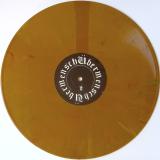
To those unfamiliar, G-Dragon is regarded by many as the Godfather of K-Pop. Rising to fame in the mid-00’s with his group, Big Bang, that later went on to become one of the world’s biggest selling boy groups. He quickly stood out with his unique and intricate songwriting as the leader of the group. A talented songwriter and trendsetter within the youth culture and fashion space, G-Dragon has received a bevy of awards, nominations for his music and fashion sense from the World Music Awards, to Hypebeast’s 100 list, to Forbes’ 30 Under 30 list, it’s apparent that G-Dragon has cemented his place in cultural relevance.

After serving his mandatory South Korean military service and a brief hiatus from music, the global superstar, G-Dragon has returned! He announced that he signed with indie-powerhouse, EMPIRE, and released his first comeback single on October 31, 2024 with POWER to immediate global fanfare and buzz, with the music video garnering over 44 MILLION views in a month and over 115 MILLION global streams. He soon followed that up with an electrifying performance at the 2024 MAMA Awards show in Osaka coupled with the release of his new single, Home Sweet Home which has garnered 100 MILLION global streams since release.

2025 will see the release of his first full length album since 2017 entitled Übermensch along with global tour dates. The album is expected to make a huge impact globally and further cement his place in music history!

No en stock

Haga su pedido ahora y le encargaremos el artículo en nuestro proveedor.

23,11

Ültimo hace: 7 Meses
Nathan Fake - Evaporator LP

Nathan Fake

Evaporator LP

12inchIF1104STD
Infine
10.04.2026

As Nathan Fake rises from the nocturnal subterranea and rave catharsis of his previous records, on Evaporator, he resurfaces into the domain of daylight, bringing a tangible sense of air rushing against your face, of big skies, and endless landscapes.

The idea of pop accessibility that trickled into 2023’s Crystal Vision is refracted here through the prism of sweeping ambient, deep electronica, and trance uplift. Evaporator is Fake’s idea of “airy daytime music”, with each track a different barometer reading across the album’s varying atmospheres, which range from vibrant sunbursts, bracing rainscapes, and fine mists of clement melodics. “It’s not overtly confrontational electronic club music,” states Fake. “It’s quite pleasant, it’s accessible. As I was progressing through making the tracklist, I called it a daytime album. It doesn’t feel like an afterparty album.” For the past decade Fake has been gingerly introducing collaborations with heroes and friends alike into his lone, idiosyncratic working process.

Border Community alumni Dextro AKA Ewan Mackenzie transmutes his ferocious drumming for Pigs Pigs Pigs Pigs Pigs Pigs Pigs into the blurred choral thump of ‘Baltasound’. ‘Orbiting Meadows’, meanwhile, is his second collaboration with Clark, an eerily idyllic duet where microtonal 18EDO piano clangs slowly twirl around wailing pads. Evaporator marks the junction point of old technology and ever fresh creativity for Nathan. The trusty “dinosaur” age software, particularly Cubase VST5, that has powered two decades of music is rarely updated. “I used to sort of feel a bit ashamed of using such old software, and then I kind of had an epiphany – that’s just how I work”, comments Fake. “That’s just how I play. I’m very fond of these old tools, and I get the most joy out of them, but now I’ve incorporated new technology too.” When an artist accumulates so much synergy with their instrument, music making becomes instinctual. By Fake’s account, much of Evaporator just fell into place. The album title arrived randomly in his head (“it felt completely perfect. Airy.”), ideas looped and developed until things locked into place and just felt right. ‘The Ice House’ is a fleeting glimpse of the sonic world he taps into in this creative state, its glassy FM synths built around a counterpoint between rough-hewn crystalline arpeggios and sparse yet gravitas-bearing bass. “That riff I just wrote out on the keyboard, I just played it forever and ever and ever.

The original track ended up being really short. Here you go, and it’s gone!” These unplanned channellings of sound call forth records from Fake’s past while he looks ahead, perhaps getting at the very essence of his musicianship. The opener ‘Aiwa’ (“the breeziest,” he muses) reminds of the introspection that characterised Providence, excited by the fire and grit of Steam Days’ textural experiments, its chunky slams and clatters surging into a flood of harmonic buzzing as they reach out for old wisdom. ‘Hypercube’ stampedes in a similar chronological confluence, infusing an incessant synth line reminiscent of the golden age of rave with the crackling, ecstatic energy of modern festival anthems. Like the vaporisation of liquid to particles, everything that Evaporator presents has a mutant desire to be amorphous. Sounds rarely settle; the irradiated garage beat of ‘Bialystok’ is pitched downwards to driving, rebounding effect, while ‘You’ll Find a Way’ warps static into shivering energy, cinematic synth strings building anticipation into a gradual gush of chords. This translates into a more expansive stereo field than Fake has explored before.


‘Slow Yamaha’ saves the wildest, most kinetic transformations for last with a cornucopia of crispy melodies and fried drums; a sibilance of cymbals on the left, a susurrus of shakers on the right, and kaleidoscopic lasers pulsing and fizzing all around. Evaporation culminating in pure excited atoms.

No en stock

Haga su pedido ahora y le encargaremos el artículo en nuestro proveedor.

24,08

Ültimo hace: 8 Días
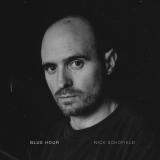
Nick Schofield - Blue Hour LP

Nick Schofield

Blue Hour LP

12inchLPBKWRD040
Backward Music
10.04.2026
También disponible

Clear Vinyl[22,65 €]


Blue Hour is Nick Schofield’s first foray into ambient jazz music. The album is an ambient ode to Miles Davis’ In A Silent Way, and opens up Schofield’s sonic palette to introduce his childhood instrument, drums, with his contemporary ambient-electronic practice. Blue Hour features the intuitive, and totally improvised, trumpet playing of Scott Bevins (No Cosmos, Busty and the Bass).

Schofield grew up playing drums, but turned to creating experimental-electronic music when studying Electroacoustics at Concordia University. Well-known for his signature ambient aesthetic, Schofield has been called a “dazzling electronic artist” by Aquarium Drunkard and a “synth maven” by Constellation Records. Blue Hour marks the first time that he has merged his percussion practice with his ambient electronic explorations, and it is all in the service of reinterpreting Miles Davis’ 1969 watershed recording In a Silent Way.

Schofield improvised all of the drumming and main synthesizer parts over the course of a single day, recording in a church in Ottawa. These foundational layers comprise tender Moog pulses and Roland Juno-6 pads, some of which would not be out of place on the back half of Another Green World or Music Has the Right to Children.

If this was to be a reflection of In a Silent Way, of course there would need to be trumpet. Schofield invited Bevins to record the missing piece of the album during a one day recording session, where Bevins improvised all his trumpet parts having never heard the songs before. Scott Bevins’ contribution gives the music a leading instrumental voice, and his intuitive approach shows a perfect understanding of how to both integrate and elevate the compositions.

Blue Hour is itself a profound reference, an ambient adaptation, a dream realized and an uncanny synthesis of sounds, styles, and personal history.

Reservar10.04.2026

debe ser publicado en 10.04.2026

20,97
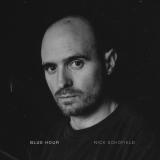
Nick Schofield - Blue Hour LP

Nick Schofield

Blue Hour LP

12inchLPBKWRD040C
Backward Music
10.04.2026
También disponible

Black Vinyl[20,97 €]


Blue Hour is Nick Schofield’s first foray into ambient jazz music. The album is an ambient ode to Miles Davis’ In A Silent Way, and opens up Schofield’s sonic palette to introduce his childhood instrument, drums, with his contemporary ambient-electronic practice. Blue Hour features the intuitive, and totally improvised, trumpet playing of Scott Bevins (No Cosmos, Busty and the Bass).

Schofield grew up playing drums, but turned to creating experimental-electronic music when studying Electroacoustics at Concordia University. Well-known for his signature ambient aesthetic, Schofield has been called a “dazzling electronic artist” by Aquarium Drunkard and a “synth maven” by Constellation Records. Blue Hour marks the first time that he has merged his percussion practice with his ambient electronic explorations, and it is all in the service of reinterpreting Miles Davis’ 1969 watershed recording In a Silent Way.

Schofield improvised all of the drumming and main synthesizer parts over the course of a single day, recording in a church in Ottawa. These foundational layers comprise tender Moog pulses and Roland Juno-6 pads, some of which would not be out of place on the back half of Another Green World or Music Has the Right to Children.

If this was to be a reflection of In a Silent Way, of course there would need to be trumpet. Schofield invited Bevins to record the missing piece of the album during a one day recording session, where Bevins improvised all his trumpet parts having never heard the songs before. Scott Bevins’ contribution gives the music a leading instrumental voice, and his intuitive approach shows a perfect understanding of how to both integrate and elevate the compositions.

Blue Hour is itself a profound reference, an ambient adaptation, a dream realized and an uncanny synthesis of sounds, styles, and personal history.

Reservar10.04.2026

debe ser publicado en 10.04.2026

22,65
Various - Roche Musique: Back to the Groove LP 2x12"

To celebrate over ten years of groove and sonic elegance, Roche Musique presents its “BEST OF” compilation, available exclusively on vinyl. A handpicked selection of 20 essential tracks tracing the label’s DNA — a refined blend of modern soul, nuanced electronics, and timeless groove.


Featuring the label’s cornerstone artists — FKJ, Darius, Kartell, Zimmer, Cezaire, Crayon, Dabeull, Lossapardo — alongside acclaimed collaborators such as Reva De Vito, Darianna Everett, Ayelle, Leven Kali, Panama, Chester Watson, Sølv, and more. From “Vibin’ Out” to “Espoir”, through “Wildflowers” and “I Can’t Stop”, this compilation captures the very essence of Roche’s sound: warm, heartfelt, and endlessly groovy. A pure analog listening experience designed for true music lovers and vinyl collectors — every groove telling the story of a decade of passion and sound.

No en stock

Haga su pedido ahora y le encargaremos el artículo en nuestro proveedor.

33,57

Ültimo hace: 8 Días
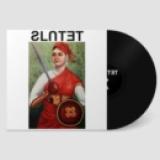
SLUTET - Jihad LP

SLUTET

Jihad LP

12inchCRYPTMETAL039
Crypt Of The Wizard
10.04.2026out soon
  • 1: Match Questions - Gasoline Truth
  • 2: Goddess Of Paradox (Tiamat Yawns Awake)

Crypt of the Wizard is proud to make available two legendary underground albums by Slutet on vinyl and digital formats.
Slutet originated in Uppsala well over a decade ago, first emerging as a loose idea around 2010. The original cluster of strangely like minded individuals - Dingir, Ryttersson, J.P., Sviatopolk, were equally set on starting a cult as they were a band, the former emerging as a loose collective known as The End Commune, while the latter eventually began rehearsing together as Slutet on September 1, 2013.
From this constellation three notorious demo tapes sprung which were self-released in very limited numbers, and only available by trading bodily fluids, blood, and/or hair for the cassettes. “A very loose guess but we made probably around 20-30 hand-drawn/custom demo tapes of the first three releases. We got blood and hair from many places, actually the very first offering was from INDONESIA. Slovakia, Germany, USA, Argentina, Norway, Canada, Finland followed.... if my memory serves..... hazy years indeed”
J.P. left early 2015. Later that year, after trying the band as a bass-drum-vocals outfit for a while, Fjalar joined on guitar. This is the classic constellation. Dingir, Ryttersson, Fjalar, Sviatopolk. The same troupe playing to this very day.
Following on from the compilation Slutet began work on their next offering entitled Jihad. While the departure of J.P. left them temporarily without a guitarist, a chance meeting with Fjalar at a rave ushered in a new era for the band. “I met the drummer and the bass player at a psytrance rave in the forest. I didn’t have any band and I wanted to play music and I saw this fucking weirdo with long dreads and a Hellhammer shirt and I just went up to talk to him”.
After Fjalar joined the rather chaotic fray, songwriting duties were spread out more broadly and Jihad was rehearsed and recorded in a haze. First released as a cassette by Manifest Of Hate Creations, and later on vinyl in an edition of 100 by Goatowarex the release quickly sold out and became as legendary, and as incredibly difficult to obtain as the previous releases. “It has got some psychedelic improvs, some very unorthodox and quite genius vocal work, some electronic undertones, some noisy ambience, a message of existentialism; all this wrapped up in some sloppy but very authentic and intense black metal-ish music.”
“After the vinyl compilation was out (early 2015) we felt probably a bit directionless, and, having parted ways with a befriended and talented guitar player, we felt maybe a bit morally weakened to continue. First, for a year almost, we toiled on without the 6-strings and rehearsed quite lengthy material for a proposed upcoming LP. However, that material never surfaced. Then we got a new guitar player (Fjalar) and created and recorded this mess”.
It is with great pride that we make these albums available to a general audience and in a wider pressing without need for bloodshed.

Reservar

El artículo no se ha publicado. Tú puedes reservar ahora el artículo y después de ser pagado se te será enviado.

25,00
Artículos por página
N/ABPM
Vinyl