"The Concert" is the first discographic collaboration between percussionist Alexandre Babel and visual artist Latifa Echakhch. The record is intimately linked to the eponymous exhibition presented at the Swiss Pavilion during the 59th Venice Art Bienniale.
For her exhibition in the Swiss Pavilion, Latifa Echakhch created an orchestrated and enveloping experience, a rhythmic and spatial proposal that allowed the visitor a complete perception of time and of his own body. What is the origin of rhythm? How does the body perceive time? How does the mind rearrange it? Can we substitute one perception for another, the visual for the sound? Can fragments of memory go back in time and recreate a different story?
Her proposal entered a dialogue with the building around it, designed by Bruno Giacometti. The artist revisited its architectural programme as well as the prototypical progression of these exhibition spaces, originally defined for the display of classical art. She appropriated the entirety of the spaces, simultaneously exploring continuity, movement and sequence. Their relationship to light, and the different sounds that emerge from them. Yet the exhibition was entirely silent and the musical composition "The Concert" functions as its sound rendering, by following a similar path.
This one-sided vinyl is a complementary and inseparable partner piece to the exhibition and its eponymous catalogue, the latter having been published in April 2022 by Sternberg Press. The music features field recordings made at the Swiss Pavilion itself as well as pre-recorded percussion sounds and significant contributions by the Berlin-based musicians Jon Heilbronn, Rebecca Lenton, Theo Nabicht, Nikolaus Schlierf.
The record, available only after the closing of Latifa Echakhch’s exhibition offers a concluding phase to the project. The resonance of its sensory score. It reactivates the experience of the physical journey of the installation, without imposing itself as a transcription or an illustration. Through texture, temporality and its totality, the record stands as a resonance of the rhythms that have structured the pavilion, the harmonies that have composed it and the sounds that have inhabited it.
Latifa Echakhch Lives and works in Vevey, Switzerland. She graduated from the École nationale supérieure d’arts in Cergy-Pontoise and the École nationale des beaux-arts in Lyon. Galleries representing her include kamel mennour (Paris and London), kaufmann repetto (Milan and New York), Dvir Gallery (Tel Aviv/Brussels) and Pace (New York). She took part in the main exhibition of the Venice Biennale Arte in 2011 and was awarded the prix Marcel-Duchamp in 2013 and the Zurich Art Prize in 2015. Through her interdisciplinary installations, Latifa Echakhch is recognized for the fine balance between forcefulness and fragility of her visual language, inserting surrealist and conceptual elements, and her use of symbols that–in her own words–are both "political and poetic".
Alexandre Babel Lives and works in Berlin. He is a drummer, composer, and curator. His projects redefine the boundaries of musical convention, confounding listener expectations in the conquest of new contexts. Babel has been the artistic director of the contemporary percussion group Eklekto 2013–2022. In 2020, the monographic Festival Les Amplitudes in La Chaux-de-Fonds focused on Babel’s compositional and curatorial work. He is a laureate of the Swiss Music Prize from the Federal Office of Culture 2021.
Suche:in phase
Soave Records dusts off the psych/synth album by Doctor Steven T. Birchall recorded in 1973 in Indiana, U.S.A. with the following equipment: VCS-3 (The Putney) by EMS, Ampex MM-1000 16 trk, dbx noise reduction, SpectrasSonics Console, Studer A80 Recorder, Eventide Clockworks, Instant Phaser, Cooper Time Cube, EMT Reverb. The absolutely penetrating high tones of the opening track 'Music Of The Spheres' announce us that we are on board, passengers in the hands, or perhaps better to say in the mind, of Birchall who aims to go beyond those "normal" boundaries that we call reality. It is a new world of music that still amazes after half a century. A higher stage of truth projected into the cosmos. Cover art by Earl. E. Hokens.
Black Moon Circle is a psychedelic space rock band from Trondheim,
Norway
Since the beginning in early 2014 we have released 9 albums and are soon ready
with our tenth effortnamed "Leave the Ghost behind".When the world entered
lockdown a few years ago, so did we in Nautilus Studio with our new team mate,
drummer Tomas Järmyr (Motorpsycho, Årabrot) and entered a creative phase
with song writing and jamming, colored by fuzz, delays and crazy drum breaks.
The resulting album was once again produced and recorded by the band which in
addition to Tomas alsoinclude the brothers Vemund Engan (baritone guitar) and
Øyvin Engan (bass guitar, vocals) together with Scott Heller aka Dr.Space from
Öøresund Space Collective (synthesizer). Thevinyl edition is once again released
by the renowned Trondheim label Crispin Glover Records.The music on the
upcoming album resembles a tug of war between the unpredictable and chaotic
forces of free spaced out improvisation and the more grounded side of structure
provided by the means of songwriting.
180g blue smoke and pink smoke coloured double vinyl, limited to 500 copies for
the world. Lasercut sleeve, and includes a CD insert.
Repress!
Using an old door, 17 strings, chopsticks and combining them with phasers, echo units and amplification, the new device was to become his signature sound, mixing Irish folk influences with Asian and North African sounds in a mesmerising and soulful new way that brought him to the attention of the leading improvisers of his day - Alice Coltrane, Ravi Shankar, Don Cherry and more.
A logical follow up to AllChival's recent reissue of Stano's debut LP, Michael O'Shea's self titled LP was originally released on Wire's Dome Imprint in 1982.
The background to the album is as interesting and inspiring as the artist who created it - born in Northern Ireland but raised in the Republic, O'Shea was keen to travel and escape the troubles of his home.
Wandering throughout Europe and the Middle East, O'Shea found himself living and working as a relief aid in Bangladesh in the mid Seventies where he learned to play sitar while recovering from a bout of hepatitis. A later period spent busking in France accompanied on zelochord by Algerian musician Kris Hosylan Harp led to O'Shea's idea of combining both instruments as a homebuilt instrument - Mo Chara (Irish for "My Friend").
He later described the process on the back of the LP himself saying:
"Having sold my sitar in Germany and being desperate for money to travel to Turkey, I conceived of the idea of combining both sitar and zelochord. The first Mo Cara was born, taken from the middle of a door, which was rescued from a skip in Munchen"
A combination of dulcimer, zelochord and sitar, O Shea would play it with a pair of chopsticks, striking the strings softly using Irish folk rhythms mixed with the rich, nostalgic sounds of of the many Asian artists he'd encountered on his travels.
It was a pan cultural sound standing at an unusual crossroads of folk, traditional, rock, progressive, jazz, electronic and post-punk worlds without hesitation.
Perfecting the instrument on the streets, there were further spells spent busking in the underground stations and cafes of London's West End and Covent Garden during the heady days of the 1970s when they were full of eccentric street entertainers, jazz improvisers and musical pioneers.
His work with Rick Wakeman never saw the light of day but O'Shea's contact with the world of post-punk London ensured his name would live on.
Introduced to Wire's Bruce Gilbert and Graham Lewis via cartoonist Tom Johnston, O'Shea eventually acquiesced to an open invite to record at their studio. Turning up unannounced in the summer of 1981 the LP was recorded in a day in the legendary Blackwing Studios and released on Dome the year after.
The first side features the fifteen minute masterpiece "No Journeys End" with the B side featuring more input from Wire in processing the Mo Chara sound.
Lewis himself said years later of the forgotten masterpiece: 'I always said it was the best job we ever did.'
After an aborted LP with The The's Matt Johnson the following year, O'Shea quietly disappeared from the formal recording world and his brief but unique contribution to the music world came to a sad end in 1991 when O'Shea was struck by a post van and died a few days later in hospital in London.
This repress on All City's AllChival imprint has been remastered and reissued with the approval of both Dome and his surviving siblings.
Limited Edition RED Vinyl – 100 units Hand numbered
Omid's parents were Iranian but he spent his childhood in Putney, London. He grew up listening to rock music, and listed Jimi Hendrix, Neil Young and the Cure among his favourite artists – after Robert Smith became a fan Omid would later remix various Cure songs. He learnt to play guitar and formed a rock band, but after hearing hardcore records played on pirate music stations he began making his own tracks on basic equipment that he had bought. Beginning in 1995, his early house and techno singles were released on his own Alola and Disclosure labels under the names of 16B and Phaser, but they soon attracted the attention of big-name DJs such as Derrick Carter, François Kevorkian and Sasha, and he signed to Sven Väth's Eye Q label to release his debut album Sounds from Another Room in March 1998, which was described by the Independent on Sunday as "avant-garde" and by Muzik as "quite breathtaking".
Although he started out as a producer, Omid gradually moved into DJing, at the request of friends who asked him to play records at parties. He secured a regular spot playing the Elements club night run by Hooj Choons record label boss Red Jerry. In October 2001 Omid released The Witch/Which Equation under the alias of the Sixteen Million Dollar Man.Inspired by Prince initially releasing his Planet Earth album as a covermount with a British newspaper, Omid released his third studio album Like 3 Ears and 1 Eye (Part 1) in a similar manner as a covermount with the November 2007 issue of DJ Mag.
Omid also formed the SOS collective of DJs, consisting of him, Desyn Masiello and Demi. The trio secured a residency at London's Ministry of Sound nightclub, and were asked to produce the club's first mix CD in 2010
hat happens when one's mind wanders in between waking and dream state? Hypnagogia is a phase leading into the dream state, in which people can have visions and rather creative ideas.
In between dreaming and being awake, people are traveling in the bordersland of consciousness. Reality is still experienced, but the logic of real life is not present anymore. People can see shadows and colors around them, hear voices, or get surprising ideas.
It it said that hypnagogia is the shortest road to your own subconscious and intuition. We can be immensely creative on hypnagogic states, because the rational mind is not present anymore.
Empath is exploring those hidden states of subconsciousness with six sound collages in his album Music For Hypnagogia. Ideas and visions for this music have been born from his own hypnagogic experiences and they could be a fascinating path to lead (greek: Agogo) listeners into dreams (greek: Hypnos).
Repress!
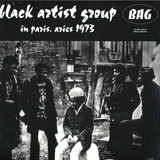
Outstanding free jazz session recorded in 1973 in Paris by Chicago outfit BAG.
It was Lester Bowie, trumpeter with the Art Ensemble of Chicago, who suggested that the Black Artists' Group (BAG) should head for Paris. In 1972 several members of BAG took his advice and flew to France for an extended stay. The following year a concert featuring saxophonist Oliver Lake, trumpeters Baikida Carroll and Floyd LeFlore, drummer Charles Bobo Shaw and trombonist Joseph Bowie (Lester's younger brother) was recorded and subsequently issued as In Paris, Aries 1973, a strictly limited edition LP on the group's own label.
Since the formation of Black Artists' Group in 1968, the home of this multidisciplinary arts collective had been St Louis, Missouri, the city where the Bowie brothers had grown up. It was there that Lester Bowie had started to investigate the expanding horizons of jazz before moving, in 1966, to Chicago where he joined the recently established Association for the Advancement of Creative Musicians (AACM). His close friend Oliver Lake visited Bowie, attended AACM concerts and meetings and was inspired not only by their artistic vision and integrity but also by their efficient organisation. In Chicago musicians were making things happen for themselves, taking control of their own destinies and giving shape to their lives as creative artists.
In June 1969, the Art Ensemble of Chicago had taken their music to France. During the preceding decade Paris had established a reputation for audiences that were unusually well-informed and open-minded, receptive to the uncompromising music of black American innovators such as Cecil Taylor, Ornette Coleman, Albert Ayler and Sun Ra. The city that had nurtured not only Cubism and Surrealism, but also Jean-Luc Godard and contemporary cinema's Nouvelle Vague was well prepared for the sonic collage forms and stylistic dislocations of the Art Ensemble. During that same month violinist Leroy Jenkins, trumpeter Leo Smith and saxophonist Anthony Braxton also arrived in Paris, three further emissaries from the AACM.
The adventure of collective improvisation resonated with the Parisian zeitgeist. Enthusiastic audiences attended their concerts and coverage in the media. In Paris, Aries 1973 offers an isolated and fascinating glimpse into that phase of the group's existence. The album is dedicated to the memory of Kada Kayan, a bassist who had hoped to make the trip from St Louis to France but, tragically, had grown ill and died. His absence adds special poignancy to the sound of the bass when it appears on this recording, played by Baikida Carroll. Listeners keen to hear Kayan himself in the company of Lake, Bowie, Shaw, LeFlore and Carroll should seek out Red, Black and Green by the 10-piece Solidarity Unit, Inc. That album, recorded on 18th September 1970 and dedicated to Jimi Hendrix, who died on that day, features an earlier version of Shaw's composition 'Something to Play On.'
In Paris, Aries 1973 reveals BAG's musical affinities with the Art Ensemble of Chicago. Both groups preserved an independently minded approach to the notion of free jazz and a carefully filtered awareness of pan-African musical practices, while their creative interest in space, mobile structure, chance occurrences and simultaneity also suggests parallels with the concerns of leading experimental composers working at that time. These performances in Paris of Shaw's 'Something to Play On' and Lake's 'Re-Cre-A-Tion,' plus two collective compositions/improvisations, display the dedication to structural fluency and sensitivity to coloration that accompanied BAG's unorthodox group dynamics and their unconventional instrumental combinations. In this case the musicians embrace congas, log drums, marimbas, woodblocks, cowbells and gongs. This is not a showcase for solos, but a shape-shifting and multi-centred statement of togetherness, quest and discovery. Removed from BAG's original multidisciplinary context the music still exudes an exhilarating spirit of collaborative exploration and shared excitement.
A gorgeous and gripping portrait of Fenne's last two years, Big Picture was pieced together in an effort to self-soothe. Tracked live in co-producer Brad Cook's North Carolina studio, the album delineates the phases of love and becomes a map of comfort vs claustrophobia. Though its creation took place amid personal and global turmoil, the ruminative yet candid Big Picture is Fenne's most cohesive, resolute work to date, both lyrically and sonically. "This isn't a sad album _ it's about as uplifting as my way of doing things will allow," she says. "These songs explore worry and doubt and letting go, but those themes are framed brightly." With confidence and quiet strength, each track provides an insight into Fenne's ever-changing view of love and, ultimately, its redefinition _ love as a process, not something to be lost and found. While the album was written alone in Fenne's Bristol flat - a fact intentionally reflected in its compact sonic quality - Big Picture was transformed from a solitary venture into a unifying collaboration during the recording process when she was joined by her touring band, Melina Dutere of Jay Som (mixing), Christian Lee Hutson (guitar and co production), and Katy Kirby (vocals). Notably, these 10 songs are Fenne's first and only to have been written over the course of a relationship; 2018's On Hold and 2020's BREACH both confront the pain of retrospection, saying goodbye to a love that's gone. Big Picture does the exact opposite _ rooted firmly in the present, it traces the narrative of two people trying their hardest not to implode, together. "This album is an observation of the way I think about love, the selfexamination that comes with closeness and the responsibilities involved in being a big part of someone else's small(er) world," summarizes Fenne. "It was written in a place of relative emotional stability - stability that felt unstable because of its newness, but also because of the global context. 2020 was the year of letting go, but we'd all already let go of so much and nothing felt like mine anymore. Writing always did, though, so that's what I chose to do."
ULTRAMARINE VINYL
A gorgeous and gripping portrait of Fenne's last two years, Big Picture was pieced together in an effort to self-soothe. Tracked live in co-producer Brad Cook's North Carolina studio, the album delineates the phases of love and becomes a map of comfort vs claustrophobia. Though its creation took place amid personal and global turmoil, the ruminative yet candid Big Picture is Fenne's most cohesive, resolute work to date, both lyrically and sonically. "This isn't a sad album _ it's about as uplifting as my way of doing things will allow," she says. "These songs explore worry and doubt and letting go, but those themes are framed brightly." With confidence and quiet strength, each track provides an insight into Fenne's ever-changing view of love and, ultimately, its redefinition _ love as a process, not something to be lost and found. While the album was written alone in Fenne's Bristol flat - a fact intentionally reflected in its compact sonic quality - Big Picture was transformed from a solitary venture into a unifying collaboration during the recording process when she was joined by her touring band, Melina Dutere of Jay Som (mixing), Christian Lee Hutson (guitar and co production), and Katy Kirby (vocals). Notably, these 10 songs are Fenne's first and only to have been written over the course of a relationship; 2018's On Hold and 2020's BREACH both confront the pain of retrospection, saying goodbye to a love that's gone. Big Picture does the exact opposite _ rooted firmly in the present, it traces the narrative of two people trying their hardest not to implode, together. "This album is an observation of the way I think about love, the selfexamination that comes with closeness and the responsibilities involved in being a big part of someone else's small(er) world," summarizes Fenne. "It was written in a place of relative emotional stability - stability that felt unstable because of its newness, but also because of the global context. 2020 was the year of letting go, but we'd all already let go of so much and nothing felt like mine anymore. Writing always did, though, so that's what I chose to do."
Tape
A gorgeous and gripping portrait of Fenne's last two years, Big Picture was pieced together in an effort to self-soothe. Tracked live in co-producer Brad Cook's North Carolina studio, the album delineates the phases of love and becomes a map of comfort vs claustrophobia. Though its creation took place amid personal and global turmoil, the ruminative yet candid Big Picture is Fenne's most cohesive, resolute work to date, both lyrically and sonically. "This isn't a sad album _ it's about as uplifting as my way of doing things will allow," she says. "These songs explore worry and doubt and letting go, but those themes are framed brightly." With confidence and quiet strength, each track provides an insight into Fenne's ever-changing view of love and, ultimately, its redefinition _ love as a process, not something to be lost and found. While the album was written alone in Fenne's Bristol flat - a fact intentionally reflected in its compact sonic quality - Big Picture was transformed from a solitary venture into a unifying collaboration during the recording process when she was joined by her touring band, Melina Dutere of Jay Som (mixing), Christian Lee Hutson (guitar and co production), and Katy Kirby (vocals). Notably, these 10 songs are Fenne's first and only to have been written over the course of a relationship; 2018's On Hold and 2020's BREACH both confront the pain of retrospection, saying goodbye to a love that's gone. Big Picture does the exact opposite _ rooted firmly in the present, it traces the narrative of two people trying their hardest not to implode, together. "This album is an observation of the way I think about love, the selfexamination that comes with closeness and the responsibilities involved in being a big part of someone else's small(er) world," summarizes Fenne. "It was written in a place of relative emotional stability - stability that felt unstable because of its newness, but also because of the global context. 2020 was the year of letting go, but we'd all already let go of so much and nothing felt like mine anymore. Writing always did, though, so that's what I chose to do."
The triumvirate of Roky Erickson, Tommy Hall and Stacy Sutherland had to feature. Transcendent slower songs (often) don’t feature full band performances – so, no Splash One. The song had to be a band original. So, no Baby Blue. 13 unlucky for some. This compilation launches a new phase in the 13th Floor Elevators catalogue and previews the forthcoming series THE QUEST FOR PURE SANITY: the release in optimal quality of all surviving source material for all of the band’s recordings. ‘13 OF THE BEST’ has been mastered separately to vinyl, CD, digital and streaming for the best possible sound quality for each format. Each original source has been referenced to the earliest vinyl pressing and meticulously transferred at 96khz 24- bit resolution. Multitrack tapes of the original recording sessions have been newly mixed in strict accordance with the records as first released. ‘You’re Gonna Miss Me’, the band’s seminal single, is presented here for the first time in true stereo. Taken from the original multitrack session tape, the song has been mixed to stereo in accordance with the iconic mono 45 as recorded and engineered by Walt Andrus. ‘Slip Inside This House’ viewed by fans and critics alike as the Elevators’ masterpiece and one of the key psychedelic recordings of the era, is included on the LP as the edited mono single mix so the loudest possible cut can be achieved. The eight-minute stereo version is included on all other formats. ‘Never Another’, ‘Dr Doom’ and ‘Livin’ On’ from the band’s final sessions have been newly mixed but without the overdubs added almost a year after recording. While the session tapes survive, the overdubs do not. ‘Livin’ On’ features Roky Erickson’s original superior vocal performance instead of the overdub used on the ‘BULL OF THE WOODS’ LP. What is uniquely presented here is 100% Elevators as mixed and intended for the LP. No embellishments! ‘13 OF THE BEST’ is produced by 13th Floor Elevators official archivist and historian Paul Drummond who has also written sleeve notes with full track-by-track information.
White Vinyl
Did you know that miracles happen every day? We don't always see it that way We look at the state of the world and think, "It'll be a miracle if we make it out alive." But miracles are what humans do. We're Earth's most inventive and unpredictable species, when we're allowed to be. Also the most destructive. Miracle-Level is Deerhoof's mystical manifesto on creativity and trust. It celebrates the infinite small wonders of existence that spontaneously present themselves, when not obstructed by our death-driven masters. Musically, Miracle-Level is vulnerable, brave, and brimming with spicy surprises. Deerhoof's 19th album is also their their first to be recorded and mixed in a recording studio. Production was entrusted to Mike Bridavsky, at No Fun Club in Winnipeg, Manitoba. This is also their first album written entirely in Satomi's native language. Deerhoof once again speak in a secret code that only their fans understand, in which hooks abound, and genre is nonexistent.
- A1: Cosmic Neman & Prins Emanuel - La Plainte Du Pouce
- A2: Jaakko Eino Kalevi & Nabihah Iqbal - Nab
- A3: Jaakko Eino Kalevi & Maria Spivak - Messy
- A4: Maria Spivak & Prins Emanuel - Kiriaki
- A5: Prins Emanuel & Cosmic Neman - Le Chant De Teodosia
- A6: Maria Spivak & Cosmic Neman - Ne Oxi
- B1: Jaakko Eino Kalevi & Maria Spivak - Sadcrying
- B2: Jaakko Eino Kalevi & Prins Emanuel - No One Knows
- B3: Maria Spivak & Prins Emanuel - Allazo
- B4: Jaakko Eino Kalevi & Cosmic Neman - Adieu Spatial
- B5: Nabihah Iqbal & Prins Emanuel - Eels In The Auditorium
- B6: Nabihah Iqbal & Maria Spivak - Ritual
Extra Muros is an annual itinerant artistic residency initiated in 2017. The third edition was co-organised during the winter 2021-2022 by the FLEE art collective in collaboration with the Music Department of the Museum of Ethnography, Geneva (MEG). Five artists participated in this residency including: Prins Emanuel, Nabihah Iqbal, Jaakko Eino Kalevi, Cosmic Neman, and Maria Spivak.The residency was held at the MEG in two phases. The first part of the residency and encounter represented an opportunity for the artists to explore the museum’s archives, collections, and exhibition spaces. The second phase was dedicated to the composition and production of original musical content in an ephemeral studio set up in the auditorium of the Genevan institution.
In this context, the pieces presented in this album were all conceived during this residency. Having never worked together, the five artists and musicians, each with their own distinct musical path, discovered a variety of sound resources at the Museum. These included eleven traditional instruments from the African continent, Asia and Oceania from the MEG collections, as well as synthetisers, audio effects units, amplifiers and several other vintage emblematic analog electronic devices from the collection of the Swiss Museum and Center for Electronic Music Instruments (SMEM) in Fribourg. In addition, recordings of traditional music from the five continents belonging to the museum’s International Archive of Folk Music (IAFM) were also made available to the artists.
In pairs, the residency’s participants were able to combine their respective creative worlds with the museum’s historical instruments as well as sound archives. This compilation is the result of this rich dialogue.
Tape
Did you know that miracles happen every day? We don't always see it that way We look at the state of the world and think, "It'll be a miracle if we make it out alive." But miracles are what humans do. We're Earth's most inventive and unpredictable species, when we're allowed to be. Also the most destructive. Miracle-Level is Deerhoof's mystical manifesto on creativity and trust. It celebrates the infinite small wonders of existence that spontaneously present themselves, when not obstructed by our death-driven masters. Musically, Miracle-Level is vulnerable, brave, and brimming with spicy surprises. Deerhoof's 19th album is also their their first to be recorded and mixed in a recording studio. Production was entrusted to Mike Bridavsky, at No Fun Club in Winnipeg, Manitoba. This is also their first album written entirely in Satomi's native language. Deerhoof once again speak in a secret code that only their fans understand, in which hooks abound, and genre is nonexistent.
Recommended If You Like: Boredoms, OOIOO, Blonde Redhead, Guerilla Toss, Rolling Stones, Liars, Marnie Stern, Yoko Ono, Battles. Cover by acclaimed photographer and artist Kunie Sugar White Vinyl / White Cassette available while stocks last. Did you know that miracles happen every day? We don’t always see it that way. We look at the state of the world and think, “It’ll be a miracle if we make it out alive.” But miracles are what humans do. We’re Earth’s most inventive and unpredictable species, when we’re allowed to be. Also the most destructive. Miracle-Level is Deerhoof’s mystical manifesto on creativity and trust. It celebrates the infinite small wonders of existence that spontaneously present themselves, when not obstructed by our death-driven masters. Musically, Miracle-Level is vulnerable, brave, and brimming with spicy surprises. Deerhoof’s 19th album is also their their first to be recorded and mixed in a recording studio. Production was entrusted to Mike Bridavsky, at No Fun Club in Winnipeg, Manitoba. This is also their first album written entirely in Satomi’s native language. Deerhoof once again speak in a secret code that only their fans understand, in which hooks abound, and genre is nonexistent.
Luke Slater and Ashley Burchett return as Roog Unit for new EP on Mote-Evolver.
Following a string of collaborative EPs throughout the years, Mote-Evolver boss Luke Slater and Ashley Burchett (Ø Phase) return under Roog Unit to Slater's imprint, delivering another set of mind-bending, boundary-pushing techno tracks tried and tested in their back to back sets under the alias.
Leading the release, 'Bash Box' brings a high-energy stomper peppered with menacing kicks and siren-esque leads, coming in at a blistering 156bpm. 'Don't Let Go' follows with tripped-out vocals and tweaked basslines making for a heads-down cut. On the flip, 'Koox' sees the duo reach for wonky, twinkling synths atop a fierce sizzling drum hook. 'Sanity Regard' takes the B2 spot, rounding out another stellar EP from two of techno's most revered talents.
The releases arrives as part of Mote-Evolver's new series of in-person artist collaborations, with each EP capturing the creative moment as it happens, with results aimed squarely at the dance floor. Each release has artwork combining one item from each artist, which means something to them, into one new image.
2023 Repress
Sasha continues to make this year his own as he drops his debut EP on Watergate, 'GameOvr'. The EP features two original tracks, including the long-awaited 'Trigonometry', and first class remixes from Cassy and La Fleur. After his recent critically acclaimed sell-out live shows at the Barbican and his 'Out Of Time' EP on Kompakt, not to mention gearing up for his RESISTANCE residency with John Digweed in Ibiza, Sasha officially confirms his debut release on Watergate Records. 'Trigonometry' has been a highlight in Sasha's sets in recent months and has sparked many a heated debate online, from excited pleas for a Track ID, to urgent demands for a release date. The track is as ethereal as it is compelling, constantly building up to the sublime break down and those iconic chords that have left ravers spellbound worldwide. Swedish born Berlin-based La Fleur puts her stamp on the remix, keeping the riff but adding gravitas with a rhythmic bassline. She's fast become a key player on the house and techno circuit, with a string of releases on the likes of Cocoon, Watergate, and Sasha's own Last Night On Earth imprint. 'GameOvr' shows the producer's tougher side; a strong techno track in keeping with Sasha's constant focus on the future, always exploring new directions, though his signature groove is still on board. Revered Panorama Bar resident Cassy, whose stunning album 'Donna' was one of 2016's outstanding releases, turns her hand to remixing the title track, delivering a harder edged driving cut with a heavier kick drum, echoing chords and hypnotic percussion. This EP marks yet another creative landmark in this, one of the most fruitful and exciting phases in Sasha's distinguished career.
Black Honey's third album. Written and Directed, the bands second record (released in 2021) charted at #1 UK indies and #7 Overall, their self titled first, charted at #33. Since the end of the Written & Directed campaign the band played a sold out UK Tour including a night at Heaven, immediately followed by shows supporting IDLES, tours with Nothing But Thieves and The Vaccines across the UK and Europe. More in the touring section. The first track from this 3.0 phase of the Honeys, sees the rip roaring "Charlie Bronson", a nod to "I Like The Way You Die" and this track is the killer opener to their upcoming third record "A Fistful Of Peaches" which will be released in 2023.
For Erika's second album "Anevite Void", she explores her live process as it permeates everything she does, including documenting the process of life in the elaborate sci fi mythology she created. Erika began performing live in Ectomorph in 1997 when she was gifted a TR-606 by BMG and asked to join the group. This grew to her building her own studio, performing solo as Erika, collaborating with people like Jay Ahern and Noncompliant, and performing as a member of Circle of Live. Her depth of thought and clarity of vision has led to her mentoring people on live performance through the In Bloom platform, where she has made a large impact on many up and coming musicians. "Anevite Void", Erika's new album, finds her organically writing songs for her live shows, allowing them to take shape through performance, and later recording them in the studio, making this the first album she has entirely written and produced on her own. Mixed by long time collaborator BMG, she finds this record as the launching point for a new process for her. Conceptually, this album was inspired by "the irregular life cycles created by three suns circling over a planetary organism that presents two major biomes: rocky crystalline desert, and deep layered forest, each of which exists above and/or below ground, depending on what phase the suns are in." From this realm the album took shape. She also chronicled this concept in drawings but found this painting by Detroit puckish punk legend Nai Sammon perfectly visually explained the concept, and chose it for the cover. She describes "each track is about an organic process that occurs: acts of survival of the biomes, or what happens between them and the multitude of other beings that they host." Erika is currently splitting her time between being based in Berlin and Detroit, is part of the triumvirate that runs Interdimensional Transmissions (BMG, Erika and Amber) that are releasing this record and produce legendary events such as No Way Back, Samhain and Return to the Source. She performs live and DJs and collaborates and oozes sonic truth in its many forms. Visit the "Anevite Void" in early 2023.