OK EG are a quietly influential force in electronic music, renowned for their masterful sound design, organic textures and meticulous arrangements. Forward thinking, always explorative and genre agnostic, the duo are at the leading edge of the Australian sound. Now entering the 10th year of their collaboration, Melbourne based producers Lauren Squire and Matthew Wilson have arrived with their own imprint called GEKO. GEKO is a platform for the duo to stretch out, freed from outside influences and in total control of the creative vision. This is high functioning dance music that bristles with confidence, expressed in vivid colour. Hypnotic, transportive and completely their own. The process is hybrid, analog machines connected directly to digital workflows. Two minds in sync.
Suche:in sync
As the man who basically brought the conga into the modern age with his innovative multipercussion set-ups and tunable congas, and as a former member of Dizzy Gillespie and Stan Kenton’s bands, Cándido Camero Guerra a.k.a. Candido already had a long and storied career when he cut Dancin’ and Prancin’ for the Salsoul label in 1979 at the age of 58. So, you might have been excused at the time for assuming this was just another case of an old-timer trying to cash in on the disco craze, right? But you would have been very, very wrong…the record was pure brilliance, as the infusion of Candido’s Latin conga beats into the disco-fied 4 x 4 syncopated rhythm proved irresistible, revolutionizing the sound of underground disco while pointing the way to the house music to come. Indeed, both “Jingo” (an unstoppable version of the Olatunji classic) and “Thousand Finger Man” are still DJ favorites. Speaking of DJs, we’re putting this one out on black vinyl, perfect for queueing up and spinning. for A must for any dance music library!
Killer Groove Records proudly presents the debut 45 by Italian cinematic funk trio Atabasca. A syncopated journey where funk, psychedelia, and cinematic groove merge into a timeless narrative suspended between rhythm and vision.
"Cacopoulos" and "Kundela Mawedi" mark the birth of Atabasca's sonic universe: the first two singles from the upcoming self-titled debut album,which will be released on March 27 in limited-edition LP, CD digipack, and digital formats.
On the A-side, "Cacopoulos" is an impetuous, visionary ride that fuses the power of instrumental groove with the evocative imagery of library music and Italian golden-age soundtracks. From the first beat, listeners are drawn into a dry, dusty landscape driven by a primal drum groove and the acid twang of a guitar that evokes the spirit of classic Westerns. Indeed, "Cacopoulos" pays homage to I Quattro dell'Ave Maria (Ace High) and to the legendary Eli Wallach, the sly outlaw who turns deception into revenge, a subtle yet powerful nod that ties the trio's sound to imagery steeped in dust, dreams, and redemption.
On the flip side, the sound of an old lap steel guitar evokes the gentle waves of the sea, opening the doors to "Kundela Mawedi", a dreamy track with exotic tones and heavenly atmospheres. The sonic journey unfolds through hypnotic rhythms and echoes of ancient cultures, where ethereal voices and warm, entrancing bass lines intertwine with psychedelic riffs and evocative guitar melodies, merging into a soundscape rich in warmth and mystery. The chorus, with its unexpected choral chant, adds a spark of magic. An elegant twist that gently stirs the dreamlike mood and transports the listener into a new sonic dimension, steeped in mysticism and tribal vibrations. "Kundela Mawedi" is more than just a song: it's a sensory experience, a musical ritual where tradition meets psychedelia, sand meets sea, and the soul dances upon the waves of time.
Recorded in a single take, the session captures the raw energy and natural atmosphere of the performance. Artistic production was handled by the trio alongside Andrea Fabrizii (digger, musician, producer, and catalogue curator for CAM Sugar), while Riccardo Ricci mastered the tracks at Velvet Room Mastering Studio in Brighton.
A killer double-sider, blending psychedelic and funk moods with percussive, jazzy textures. A must-have gem for every groove-loving DJ.
Like a desert blooming within the evergreen forests of the planet's far north, a unique, alien, disruptive environment: this is the vision behind Atabasca, the project of Luca Mongia (guitars, lap steel, keyboards, vocals), Paolo Mazziotti (bass, keyboards, vocals), and Valerio Pompei (drums, percussion, vocals). Individually active for over twenty years on both national and international scenes, the three musicians came together in 2023 to create a project that merges experience, experimentation, and creative freedom. Their music is imaginative and at times dreamlike, blending the classic concept of the instrumental trio with the worlds of film scoring and sound design.
Atabasca's sound moves through jazz-funk, world, and cinematic territories, weaving together afrobeat, desert, and psychedelic influences into a personal and timeless language. Each piece is a scene; each sound, a fragment of a world, a journey between reality and imagination where groove, texture, and organic timbre merge into a singular sonic ecosystem: a perpetually shifting balance that generates new inner landscapes.
Fans of Khruangbin, Surprise Chef, and instrumental psych-funk, take note!
- A1: Robert Pico - Le Chien Fidèle
- A2: Annie Girardot - La Femme Faux Cils
- A3: Spauv Georges - Je Suis L'état
- A4: Zoé - Zoé
- A5: Jacques Da Sylva - Fou
- A6: Valentin - Je Suis Un Vagabond
- A7: Jacques Malia - Histoire De Gitan
- A8: Bernard Jamet - Raison Legale
- B1: Jean-Pierre Lebort - Barbara Au Chapeau Rose
- B2: Les Concentrés - Fils De Dégénérés
- B3: Les Missiles - Publicité
- B4: Hegessipe - Le Credi D'hegessipe
- B5: Marechalement Votre - Ethero Disco
- B6: Mamlouk - Decollez Les
- B7: Mozaique - L'amour Nu
- B8: Jean-Marc Garrigues - Je Dis Non
- B9: Penuel - Astronef 328
The journey through French-speaking pop archives continues with this fifth volume, packed with fuzz, gimmicks, and dissent. Far from the charts, the selected tracks display a great creative freedom, often backed by corrosive humor. Welcome to the surprising, kaleidoscopic, and colorful world of the late sixties and early seventies, Wizzz!
Born in Montauban, Robert Pico stumbled into music by chance when he met René Vaneste, then artistic director at Pathé-Marconi. René brought him to Paris to record his first 45 RPM EP in 1964. A year later, Pierre Perret introduced him to Vogue, where he recorded his second album with Claude Nougaro’s orchestra. Sylvie Vartan then introduced him to RCA, where he recorded four singles, including the astonishing "Chien Fidèle," a track backed by a hair-rising fuzz guitar. Alongside his solo career, he also composed for other artists like Alain Delon (the song was recorded but remains unreleased), Magali Noël, Bourvil, and Georges Guétary. In the Paris of the sixties, he mingled with Mireille Darc, Elsa Martinelli, Marie Laforêt, France Gall, Françoise Hardy, Petula Clark, Régine, Dani, Serge Gainsbourg, Joe Dassin, Franck Fernandel, Charles Level, and Roland Vincent. Despite his efforts and winning a Grand Prix Sacem for his final record, Robert Pico didn’t achieve the expected success in show business and decided to leave Paris and return to the Southwest, where he devoted himself to writing. He is the author of 23 books (including Delon et Compagnie, Jean-Marc Savary Editions 2025, a memoir about his youth and his many encounters). Today, he is relieved to never have become a celebrity and devotes himself to his work with passion.
In 1969, the Franco-Italian movie Erotissimo was released, directed by Gérard Pirès (who later directed Taxi in 1998, written and produced by Luc Besson). This pop comedy features Annie Girardot, Jean Yanne, Francis Blanche, Serge Gainsbourg, Nicole Croisille, Jacques Martin, and Patrick Topaloff. The soundtrack was written by Michel Polnareff and William Sheller, with lyrics by Jean-Lou Dabadie. "La Femme Faux-cils," performed by Annie Girardot. It recounts the feelings of a rich CEO's wife who seeks to develop her sex appeal under the influence of advertisement and magazines. Groovy, sparkling and light, this track, with ITS lush arrangements humorously critiques consumer society and feminine beauty standards.
“Je suis l’Etat” (1967) is the flagship track of the first EP by singer-songwriter Spauv Georges, aka Georges Larriaga, better known as Jim Larriaga (1941-2022). Born into a family of bakers, the young man was initially planning to become a hairdresser when he discovered English-speaking music through Elvis Presley and the Beatles. After this revelation, he decided he would become a songwriter and gave himself five years to succeed. He recorded his first two EP’s independently for RCA under the pseudonym Spauv Georges; meaning “that poor George”, a nickname given to him by the mother of her friend Jean-Pierre Prévotat (future drummer of the Players, Triangle, or Johnny Hallyday). Portraying a depressed and eccentric young man, Spauv Georges created corrosive and amusing songs that didn’t reach a wide audience, despite a TV appearance with Jean-Christophe Averty.
Supported by his loyal friend and fellow songwriter Jean-Max Rivière, Georges Larriaga met the future singer Carlos in the early '70s, then Sylvie Vartan’s assistant. He wrote songs for Carlos, including the popular "La vie est belle," "Y’a des indiens partout," and "La cantine", which went onto become a huge hit in 1972. He also composed for Claude François (“Anne-Marie”, 1971), Charlotte Julian (“Fleur de province”, 1972), helped launch child singer Roméo (who sold 4 million records), and later wrote the hit "Pas besoin d’éducation sexuelle" (1975) for the young Julie Bataille. In 1971, Jim recorded an album for Disc'Az: “L’univers étrange et fou de Jim Larriaga”, which featured pop gems like “La maison de mon père”.
The story of the song "Zoé" began when Pierre Dorsay, artistic director at Vogue Records, asked Swiss singer and musician Pierre Alain to write a song for a new female singer. The inspiration came when he realized that Zoé (the artist's name) was also the name of France's first atomic battery, created in 1948, which consisted of uranium oxide immersed in heavy water! The lyrics reflect a bubbling energy that must be handled with caution, while the instrumentation echoes this atomic theme, notably with the use of a theremin.
Zoé’s career lasted only as long as a single 45 RPM, but it seems Christine Fontane was the vocalist behind this pseudonym, who is known for several EPs, a good "popcorn" album in 1964, and a handful of children’s singles in the '70s. Regardless, the photograph on the cover is of a different girl entirely.
Later, Pierre Alain continued his career, writing songs for himself, Marie Laforêt, Danièle Licari, Alice Dona, Arlette Zola (3rd place in Eurovision 1982), and achieving multiple gold and platinum records in Canada. Also an inventor with several patents, president of the Romande Academy, and head of the French Alliance in Geneva, he now composes atonal music, books, and poetry. Moreover, he is also the host of "Les Mardis de Pierre Alain" at "Le P'tit Music'Hohl" in Geneva.
Filled with oriental choruses and fuzz guitar, "Fou" is from Jacques Da Sylva's only EP released by Vogue in 1967. Despite the quality of this recording, all traces of this singer disappear after this first effort.
Valentin is a baroque pop singer born in Belgium. He is the songwriter and composer of most of the tracks on his three singles released in the late 60s in Canada. A legend says that he reincarnated himself as Jacky Valentin during the 1970s for a rock'n'roll revival career in Belgium, but his older brother sadly debunked this story. Valentin's first two singles were arranged by Claude Rogen, a Parisian session pianist who had come to Canada to promote the song “Mister A Gogo”, a cover of David Bowie’s “Laughing Gnome”, adapted by singer Delphine, his wife at the time. Far from his usual network, Claude Rogen arranged music for Polydor, including the arrangements for “Je suis un vagabond” in 1969, a jerk tune with string arrangements and a furious optimism.
Jacques Malia wrote, composed, and recorded his only 45 EP for Festival in 1966. “Histoire de gitan” is an incredible beat track with bohemian scat that tells the story of a gypsy musician who came to Paris to make it in the Music-Hall, to no avail. The hero of the song and its author probably shared a similar fate, as Jacques Malia faded into anonymity after this remarkable attempt.
Bernard Jamet recorded two EPs for Barclay in the late sixties and co-wrote several songs with Christine Pilzer, Pascal Danel, and prolific songwriters Michel Delancray and Mya Simile. The track “Raison Légale” (1968), his masterpiece, immerses the listener in a courtroom right when a murderer is being judged, with jerk rhythm and free arrangements. A unique, paranoid, judicial, and psychedelic oddity.
Jean-Pierre Lebrot-Millers started his career in show business in 1967 as a singer and songwriter for the Philips label. After three singles, he wrote several songs of a new kind with his friend Pierre Halioche, in the midst of the sexual liberation movement and the democratization of drugs. With provocative lyrics, “Les filles du hasard” and “Barbara au Chapeau Rose” were released on a Philips singles in 1968. The character of Barbara was inspired by a queen of Parisian nightlife during the psychedelic years: model Charlotte Martin, who dated Eric Clapton from 1965 to 1968, then Jimmy Page from 1970 to 1983. Jean-Claude Petit’s arrangements, with a table-filled intro, soul brass, and Hendrixian guitar, emphasize the flamboyance of a hedonistic and sexy character, whose dog is named Junkie because “Junkie est un nom exquis”! The track was recorded live in three takes with a full orchestra.
Upon its release, the record was censored by Europe 1 and RTL due to its references to drug use. Jean-Pierre Lebrot was then banned from the airwaves and later dismissed by his record label. He changed his artist name to Jean-Pierre Millers, while his companion Pierre Halioche became D. Dolby for a new dreamy composition, “Chilla”, which Jean-Pierre produced himself with arrangements by Jean Musy. Once again, the song was immediately censored everywhere. After this setback, he decided to stop singing and started taking on odd jobs to support his Swedish wife and their son until the day he met Jean-Pierre Martin, then production manager at Decca, who had worked with Manu Dibango. Martin offered Jean-Pierre Lebrot-Millers, then employed at Rank Xerox, the position of artistic director at Decca. He accepted and became, a year later, promotion director (radio, press, TV). He worked on Julio Iglesias’s first album for Decca, which became a massive hit and allowed him to meet Claude Carrère. The latter asked him to write new songs and find their performers, much like a “talent scout.” It’s through him that Jean-Pierre discovered Julie Pietri and Corinne Hermès. He composed “Ma Pompadour” for Ringo, Sheila’s husband, and took the microphone again for the syncope hit “Rendez-Vous” in 1982.
That same year, Jean-Pierre Lebrot-Millers tried to release a track for which he had heavily gone into debt: “Si la vie est un cadeau”. Having recorded it in London, he presented it to numerous professionals, all of whom refused to get involved. The same thing happened with Antenne 2 and the Sacem when he proposed the song as France’s entry for Eurovision. He then met Haïm Saban, who was producing cartoon soundtracks and had just launched the Goldorak theme song. Saban, having listened to the song, declared it had the potential to become a hit. He sent Jean-Pierre and Corinne Hermès to meet the CEO of the Luxembourg radio and television network. The latter received them, asked to hear a verse and chorus a cappella in his office, and immediately hired them to represent Luxembourg at Eurovision 1983. They reworked the arrangements and recorded a new version with Haïm Saban as co-producer. The song ended up winning Eurovision 1983, a great comeback for our hero. He continued producing and hung out with the band Nacash in Belgium when a couple came to introduce their daughter for an impromptu audition in a hotel room. The girl sang “Les démons de minuit” while dancing to a radio cassette. Impressed, he had her take singing lessons for a year and composed a song for her (for which he had the melody and title, but no lyrics). This required him to go on the hunt for a lyricist, who ended up being Guy Carlier. They recorded the song, which was initially a ballad, at Bernard Estardy’s CBE studio, and gave the singer a new name: Melody. They showed the song around their industry network without success. Later, Estardy called Jean-Pierre to suggest changing the rhythm and making it pop-rock. Orlando, Dalida’s brother, liked the result and decided to co-produce the track. “Y’a pas que les grands qui rêvent » became a classic hit. The song has since been covered by Juliette Armanet (as a ballad, like the original) and Valentina.
Born into an aristocratic Breton family, Hervé Mettais-Cartier worked as a DJ at Queen Kiss, a nightclub in Poitiers, where he formed the band Les Concentrés with Michel (an actor) and Christian (a radio technician). Together, they created a repertoire of whimsical songs (“Ma bique est morte”, “J’suis un salaud”, “Fils de dégénéré”...) that they performed on stage dressed in white (in homage to “concentrated milk”). They performed at Bliboquet and Olympia in 1968 for the 10th edition of the “Relais de la chanson Française” organized by L’Humanité-Dimanche and Nous les Garçons et les Filles, sponsored by Pepsi Cola. Winners in the author-composer category, alongside Danish singer Dorte, their visibility allowed them to record a 45, and appear on television in Jean-Christophe Averty’s show. The A-side of the disc features Bruno le ravageur, a casatchok dedicated to Bruno Caquatrix, the director of Olympia, nicknamed in the song “Coq Atroce” or “croque-actrices”. The B-side is dedicated to “Fils de dégénéré”, a quirky tribute to Hervé's aristocratic roots, mixing absurdity with sophisticated vocal harmonies.
After Les Concentrés, Hervé Mettais-Cartier formed the duo La Paire et sa Bêtise with his friend Olivier Robert. They performed in Parisian cabarets and toured with Pierre Vassiliu. In the late 1970s, Hervé began a solo career. He recorded two albums for the Motors label in 1978 and 1979, which did not achieve their anticipated success due to lack of promotion. In 1980, he met Bernadette, with whom he started a family and created a “Chansons à voir” (songs to see) show that he performed until his death at the end of 2024.
Publicité comes from the final EP by the Missiles (Ducretet Thomson, 1966), a disc that also includes “La (nouvelle) guerre de cent ans”, featured on Volume 4 of our Wizzz! series. Please refer to the booklet for the story of the band.
“He’s 1.82 meters tall, 28 years old, weighs 135 kg, is black and Belgian”: this is the description of singer Hegesippe on the back of his sole single (Decca, 1967). He appears on the album cover wearing a Greek toga, like a hippie gag – we are at the end of the year 1967. In “Le crédo d’Hegesippe”, this former bodyguard of Antoine and the Charlots plays the delightful card of the thick brute converted to Flower-Power and non-violence, with arrangements by Jean-Daniel Mercier, aka Paul Mille.
“Ethéro-disco” was released on a promotional record for clients of the Maréchal company (Liège, Belgium) for the New Year 1979. Over a funky rhythm, celebrity impersonations (Brigitte Bardot, Jacques Dutronc, Fernandel…) deliver an enigmatic text about pharmaceutical products like ether, bismuth, and aspartate. The track was composed by Dan Sarravah (responsible for Joanna's “Hold-up inusité” featured on Wizzz! Volume 3) and Tony Talado, who was also a singer (one 45 in 1967), songwriter (with over a dozen credits between 1964 and 1985 in various styles from surf music to disco), author (Devenez Végétarien, Dricot Editions, 1985), ad designer, and psychologist.
Décollez-les is on the A-side of Mamlouk's only single, a pseudonym for Marsel Hurten, who is known for his work on several EPs in the late sixties, as well as composing music for Hervé Vilard’s “Capri, c’est fini”, Claude Channes' “La Haine”, Annie Philippe’s “On m’a toujours dit”, and Nancy Holloway’s “Panne de Cœur”.
This strange song, with Afrobeat horns and absurd dialogues between a chef and his kitchen staff, is the result of a collaboration between Marsel Hurten and one of his neighbors, a photographer from Pavillon-sous-Bois (93), where the musician settled after returning from the Algerian War. A music video was shot to promote the record.
Marsel Hurten was born in Tourcoing (59) into a musical family. At a young age, he joined the brass band founded by his grandfather, playing the piston before studying trumpet at the conservatory, as well as teaching himself how to play the guitar. As an orchestra musician, he toured in France, Belgium, Germany, and England. He released a series of solo 45’s between 1965 and 1968 for the DMF and Az labels before stopping recording to focus on working for other artists (Gilles Olivier, Noëlle Cordier…).
“L’amour nu” (Vogue, 1971) is the work of the short-lived Belgian band Mozaïque. The track, written by singer Jacques Albin, closely resembles another of his compositions, “Carré Blanc”, which he recorded in 1969 for Disc’AZ.
Represented by the Lumi Son micro-label based in Marignane (Côte d'Azur), Jean-Marc Garrigues released two 45 RPMs in the late sixties, defending the French jerk sound. The song “Je dis Non” is a short, joyful ode to youth, pop music, and rebellion.
Songwriter and performer Jacques Penuel released three singles. The first one, “Astronef 328” (Fontana, 1969), features a dizzying series of chords punctuated by sound effects, a sci-fi story, and arrangements by Jean-Claude Vannier.
We would like to sincerely thank Pierre Alain, Moon Blaha, Marsel Hurten, Bastien Larriaga, Jean-Pierre Lebrot-Millers, Bernadette Mettais-Cartier, Robert Pico, Olivier Robert, Claude Rogen, Micky Segura.
Two years after their debut on Berlin-based Mannequin Records, Parisian duo Leroy Se Meurt returns with their second full-length album, Hier Pour Toujours. Far from any sense of nostalgia, this record offers no illusion of hope—history repeats itself, the future looks bleak, and their brand of electronic punk is the perfect soundtrack to it all.Drum machines dictate the pace while synths saturate the space, looping sequences grind relentlessly, and vocals lead this machine orchestra straight into the heart of the chaos. Drawing from their roots, Leroy Se Meurt pushes their fierce electronics further than ever—experimenting with bold slogans, spoken passages, and powerful sing-along choruses.The album opens with Pas Ma Croix, a commanding anthem built for the stage. It flows into Du Plafond à La Terre, driven by a monstrous electro beat and bassline, flirting with emotional vulnerability in its chorus before exploding into a synth solo. Alevlere Karşı once again taps into the duo’s EBM-meets-Turkish vocals signature style, hitting the mark with dancefloor precision.The title track, Hier Pour Toujours, closes side A with a more intimate, drumless moment—solemn but no less intense.That brief calm is shattered by Déviance, marking the return of guitars and an eruptive chorus brimming with raw energy. From there, the album launches into the furious Révolte Ardente, with its syncopated rhythm and vocals drenched in distortion, and continues with Pro Déclin, a stripped-down rhythmic skeleton carrying anti-growth mantras straight to the point. In a world clouded by confusion, the most direct messages often land the hardest.For a change of scenery, Fütürsüz dives into John Carpenter-esque territory—no drums, eerie night-streaked synths, and, for the first time in the band’s history, nearly clean vocals.Closing the record, Encore crawls at a BPM so slow it’s nearly in reverse. But what it lacks in speed, it makes up for in weight—a crushing incantation capable of toppling sound systems.With Hier Pour Toujours, Leroy Se Meurt isn’t offering optimism, but rather persistence. Nothing is settled yet—and perhaps, just perhaps—there’s still light at the end of the tunnel.
The frankly ridiculous Burnski is back as Instinct with more face-melting garage and bassline slammers that update the classic sound with just the right amount of evolution. All of these on his latest for his self-title label are 10/10 weapons: 'Halt' is hurried, swinging and syncopated to perfection. 'Choose One' is less streamlined; instead, there are warped and squelchy lines, bursts of static and a more futuristic twist getting you going. 'Crazy' brings brilliantly chosen and well-deployed samples to the fore over a beat that harks back to percussive UK funky at its finest. The flip side offers a trio of slick bouncers, body-popping movers and brightly lit vibes. Superb.
Multidisciplinary Brussels-based artist Sagat steps up with a new mini album on the Basic Moves side label, Gems Under The Horizon, featuring a remix by Slovenian ambient bird e/tape. A few years ago, Wiet Lengeler, aka Sagat was invited by Basic Moves to create a live visual show using an analogue video synth setup to accompany a 5-hour dj set by e/tape at Face B in Brussels. From that moment on, the synchronicity between the two artists was clear - and this EP is the result.
Besides his visual work, Wiet Lengeler is also known for his contemporary techno music, primarily released on Brussels’ cult label Vlek Recordings. For this mini-album, Gems Under The Horizon 003, he presents four grainy ambient and textured electro-acoustic explorations. The tracks unfold organically — like ivy — gradually revealing layers of sound and hidden textures beneath babbling streams of electronics. e/tape’s remix feels like a natural continuation of Sagat’s sonic universe, together forming a mesmerising whole that explores the fringes of ambient music. In addition to the release, a limited run of the release + 30 x 3 riso printed posters from the visual show at Face B, made by Sagat and hand numbered are made available.
Mastering and lacquer cut was done by Frederic Alstadt at Angstrom Mastering. Artwork & inserts are designed by renowned Ghent-based visual artist Dieter Durinck.
Sit back and enjoy the wonderful aural world of Sagat and e/tape.
Sincerely,
The Basic Moves team.
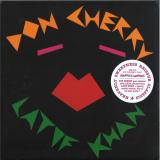
Don Cherry, armed with a voracious musical appetite and boundless imagination, first made a name for himself - though not always fully understood - alongside Ornette Coleman, playing trumpet or cornet. In Los Angeles and then New York, he stood at the heart of a revolutionary approach to improvisation based on melody rather than harmony, later baptized "Free Jazz," the final structural development of American jazz. Over time, he became a champion of improbable fusions - gradually integrating into his style a whole array of "exotic" instruments, and more importantly, the cultures from which they originated. Among them: India, Brazil, Africa, Indonesia, and even China. The time had come for the emergence of "world music": in hindsight, a patchwork rich in imagination and seduction, but once the novelty wore off, often lacking in substance.
In Don Cherry's case, however, the commitment ran deep - tied to his personal engagement with a global vision of art and the human condition. Ustad Ahmed Latif Khan, from the Delhi gharana (a musical lineage), was part of a new generation of accompanists - percussionists, sarangi players, flutists, etc. - who had extended both the technical and conceptual possibilities of their predecessors to gain recognition as soloists and soon to venture onto the international scene. Among them, Latif stood out for his taste for irregular, highly syncopated rhythmic patterns - rich in variety and originality. Don and Latif had never met before the recording session, but the two quickly recognised one another as kindred spirits - calm, focused... and full of laughter. Don clearly knew what he wanted to create, and nothing seemed to pose a challenge for Latif, who grasped the American's intentions immediately, warmed up his fingers at astonishing speed, and with his perfect pitch, naturally took on the role of tuning Don's diverse instrument collection to match whatever was found in the studio - from concert piano and Hammond B3 organ to chromatic orchestral timpani.
Michael Mayer returns to the Speicher series for his first release since last year’s brain-bursting The Floor Is Lava album. And yes, the floor is indeed lava when Mayer is on peak form, as he is here, with three tracks that oscillate, effortlessly, between the twin poles of Mayer’s music: dancefloor detonation and heart-wrenching beauty. To be fair, there’s more of the former here, but there’s beauty in generous discipline, too, and the unrelenting “Cry Me A Raver” feels, somehow, like it brings together decades of Kompakt pleasure in six giddy minutes – disco-fied arpeggios, glistening and hand-burnished textures, abstruse patterns that fall in and out of step. “Don’t Sync With My Tag” stomps with destructive glee, a beat as undeniable as the shaker cross-rhythms are silkily sexy. There’s always been something practical, functional, and utilitarian about Speicher, but it doesn’t get more everyday DJ-life than this: Mayer tells us the title is “a super-annoying message that pops up every time you open Rekordbox. Nobody knows what it means. It’s a DJ mystery.” But who needs answers, anyway? By the time you’ve started to get close to solving the riddle, Mayer’s taken you to Detroit via Cologne with “It Isn’t What It Isn’t”, a little doffing of the cap to Rhythim Is Rhythim. “You’re May, I’m Mayer, I used to tell him,” Michael chuckles. This made one of our cats almost jump out of its skin, with its stealthy slyness – creeping, amorphous electro noise; percussives that just won’t quit; the whole thing flooded with twitchy strip-light energy and silver-machine flare- outs.
Speicher is as Speicher does, and this is a damn good one. Make Mine Mayer!
Michael Mayer returns to the Speicher series for his first release since last year’s brain-bursting The Floor Is Lava album. And yes, the floor is indeed lava when Mayer is on peak form, as he is here, with three tracks that oscillate, effortlessly, between the twin poles of Mayer’s music: dancefloor detonation and heart-wrenching beauty. To be fair, there’s more of the former here, but there’s beauty in generous discipline, too, and the unrelenting “Cry Me A Raver” feels, somehow, like it brings together decades of Kompakt pleasure in six giddy minutes – disco-fied arpeggios, glistening and hand-burnished textures, abstruse patterns that fall in and out of step. “Don’t Sync With My Tag” stomps with destructive glee, a beat as undeniable as the shaker cross-rhythms are silkily sexy. There’s always been something practical, functional, and utilitarian about Speicher, but it doesn’t get more everyday DJ-life than this: Mayer tells us the title is “a super-annoying message that pops up every time you open Rekordbox. Nobody knows what it means. It’s a DJ mystery.” But who needs answers, anyway? By the time you’ve started to get close to solving the riddle, Mayer’s taken you to Detroit via Cologne with “It Isn’t What It Isn’t”, a little doffing of the cap to Rhythim Is Rhythim. “You’re May, I’m Mayer, I used to tell him,” Michael chuckles. This made one of our cats almost jump out of its skin, with its stealthy slyness – creeping, amorphous electro noise; percussives that just won’t quit; the whole thing flooded with twitchy strip-light energy and silver-machine flare- outs.
Speicher is as Speicher does, and this is a damn good one. Make Mine Mayer!
- A1: Get Up I Feel Like Being A Sex Machine
- A2: Brother Rapp (Part I & Part Ii)
- A3: Bewildered
- A4: I Got The Feeling
- B1: Give It Up Or Turnit A Loose
- B2: I Don’t Want Nobody To Give Me Nothing
- B3: Licking Stick
- C1: Lowdown Popcorn 9.Spinning Wheel
- C2: If I Ruled The World
- C3: There Was A Time
- C4: It’s A Man’s Man’s Man’s World
- D1: Please, Please, Please
- D2: I Can’t Stand Myself (When You Touch Me)
- D3: Mother Popcorn
James Brown wants to know one thing before he and his band begin Sex Machine. “Can I get into the thing, really?,” he asks. His cohorts enthusiastically respond in the affirmative. And for the next hour and change, Mr. Dynamite gets into it and more, turning in a sweat-soaked, feet-moving, hip-swiveling, emotion-purging, in-the-red, drop-everything-you’re-doing-and-dance performance for the ages. Ranked by Rolling Stone among the 500 Greatest Albums of All Time, the sweeping 1970 effort towers as a testament to Brown’s inimitable legacy as well as the peak powers of his voice, vibrancy, and bands.
Sourced from the original master tapes, pressed at Fidelity Record Pressing, and housed in a Stoughton gatefold jacket, Mobile Fidelity’s numbered-edition 180g 33RPM 2LP set presents Sex Machine in audiophile sound for the first time. It explodes with the energy the lightning-strike music demands. Dynamic, immediate, present, airy: Everything from the brassiness and fluidity of the horns to the snap and decay of the snare to the swell and carry of the organ comes across in full-range perspective.
Then there’s Brown’s superhuman singing, which here emerges with a purity, naturalism, and transparency that ensure you feel everything. Screeching, shouting, pleading, moaning, preaching, stinging, commanding, testifying, crooning, humming: The Godfather of Soul contributes one of the finest vocal performances known to man. This definitive 55th anniversary reissue of Brown’s monster funk statement further exhibits a combination of clarity, solidity, separation, and imaging that helps bring to light what he and his crack ensembles committed to tape. Both in the studio and on the stage.
Just how lifelike does this reissue sound? Senior Mobile Fidelity Sound Lab engineer Krieg Wunderlich, who handled the remaster, notes: “There were some artifacts that sounded a bit like mistracking. But they turned out to be breath blasts on the vocal microphone. That is part of history. JB was workin' hard, and breathin' hard. And there was an edit the timing of that was truly strange. Again, a part of history.”
Originally marketed as a live album, Sex Machine contains six songs recorded in the studio and later overdubbed with canned crowd noise and reverberation. Save for “Low Down Popcorn,” the tracks on the latter half stem from a phenomenal performance captured in October 1969 at Bell Auditorium in Brown’s adopted hometown of Augusta, GA. The special relationship between the singer, the audience, and the location is palpable.
As the 1960s gave way to a new decade, Brown experienced immense success and dealt with unexpected change. Soul Brother Number One soon expanded his idea for an official live album captured in Augusta when the ensemble that backed him on that date morphed into the original version of the world-famous J.B.’s just months after the show. The virtuosic abilities, sticky chemistry, and rhythm-forward nature of the J.B.’s prompted him to book a one-off session in Cincinnati, OH, on a late July night.
Anchored by brothers William “Bootsy” Collins and Phelps “Catfish” Collins, the group — as well as two different drummers — laid down a nearly 11-minute rendition of “Get Up I Feel Like Being Like a Sex Machine” and a thrilling medley of “Bewildered,” “I Got the Feeling,” and “Give It Up or Turnit a Loose.” A pair of then-recent studio singles cut in separate locations in 1969, “Brother Rapp” and “Low Down Popcorn,” each featuring his prior group, took care of the second LP worth of material that complements the originally planned live set.
Complicated? Somewhat. Unusual? Definitely. But just as he elevated the expectations for all present and future R&B artists, Brown not only makes it all work. He makes it positively electrifying.
“Get Up I Feel Like Being Like a Sex Machine” is alone deserving of a dissertation on the art of funk music, seeing it moves up and down akin to an oil derrick, witnesses Brown unleashing a trademark series of grunts, squeaks, and “good god” asides, and glides to a hypnotic groove that won’t quit. Or look to the syncopated rhythms of “Brother Rapp (Part I and Part II),” one of multiple pieces here that signify the point where Brown began viewing every instrument as a percussive tool. Brown closes the three-song medley with his new band with a skedaddling “Give It Up or Turnit a Loose,” which provides jolts on the order of sticking your finger into a socket.
Not that the actual live material falls short in any way. Setting an insistent tempo for the vitality that follows, “I Don’t Want Nobody to Give Me Nothing” positions Brown as a role model, leader, and self-sufficient entrepreneur. All simmer and boil, the short and sweet “Licking Stick” dares you to keep pace. The floating, almost comforting “Spinning Wheel” spotlights the instrumental prowess of Maceo Parker and company, and functions as a seamless segue into the tender, horn-saluted “If I Ruled the World.”
And Brown and his mates still aren’t done. Just try to resist the one-two closing punch of “I Can’t Stand Myself (When You Touch Me)” and “Mother Popcorn.” Mercy.
Ain’t it funky? Sure ‘nuff.
- 1: Fanfare
- 2: Magical 8Bit Tour
- 3: Pastel Candy Is The Devil's Whisper
- 4: Darling
- 5: Pow*Pow
- 6: Interlude
- 7: S!O!C!O!P!O!G!O!G!O! (Ymck Version)
- 8: Synchronicityside
- 1: Tetrominon ~From Russia With Blocks~
- 2: Does John Coltrane Dream Of Carousels?
- 3: Yellow, Magenta, Cyan And Black (Ymck Theme)
- 4: Your Quest Is Over
The debut album by the 8-bit music unit YMCK, which caused a sensation when it was released in 2004, is now available on vinyl! This classic album, which laid the foundation for 8-bit music/chiptune, is a collection of pop music that combines retro game sounds with cute whispery vocals and stylish melodies!
Italian duo Marsupials returns on Cut My Records with a two-track EP that blends the sophistication of deep house with the pulsating energy of afrodisco roots.
On side A, “Kaurna” opens with an elegant homage to the Detroit scene of the early 2000s: an intense and enveloping track, built on deep live bass, velvety strings, warm keys, and a groove that builds hypnotically until it completely captivates the listener.
“Sokoni”, meanwhile, takes the dance outdoors: a sunny and percussive track, animated by choruses recorded live at a Tanzanian market, intertwined with a driving and syncopated guitar enriched by played parts of bass and rhodes riffs. An explosion of rhythm and vitality that effortlessly blends tradition and club culture.
A very limited vinyl release (edition of 200 hand stamped and numbered copies) that speaks to the body and soul, designed for the dance floor but crafted from heart and with an increasingly mature and recognizable sensibility.
- 1: Workaround One
- 2: Workaround Two
- 3: Workaround Three
- 4: Workaround Four
- 5: Workaround Five
- 6: Clouds Strum
- 7: Workaround Six
- 8: Workaround Seven
- 9: Workaround Eight
- 10: Workaround Nine
- 11: Square Fifths
- 12: Workaround Bass
- 13: Pause
- 14: Workaround Ten
‘Workaround’ is the lucidly playful and ambitious solo debut album by rhythm-obsessive musician and DJ, Beatrice Dillon for PAN. It combines her love of UK club music’s syncopated suss and Afro-Caribbean influences with a gamely experimental approach to modern composition and stylistic fusion, using inventive sampling and luminous mixing techniques adapted from modern pop to express fresh ideas about groove-driven music and perpetuate its form with timeless, future-proofed clarity. Recorded over 2017-19 between studios in London, Berlin and New York, ‘Workaround’ renders a hypnotic series of polymetric permutations at a fixed 150bpm tempo.
Mixing meticulous FM synthesis and harmonics with crisply edited acoustic samples from a wide range of guests including UK Bhangra pioneer Kuljit Bhamra (tabla); Pharoah Sanders Band’s Jonny Lam (pedal steel guitar); techno innovators Laurel Halo (synth/vocal) and Batu (samples); Senegalese Griot Kadialy Kouyaté (Kora), Hemlock’s Untold and new music specialist Lucy Railton (cello); amongst others, Dillon deftly absorbs their distinct instrumental colours and melody into 14 bright and spacious computerised frameworks that suggest immersive, nuanced options for dancers, DJs and domestic play. ‘Workaround’ evolves Dillon’s notions in a coolly unfolding manner that speaks directly to the album’s literary and visual inspirations, ranging from James P. Carse’s book ‘Finite And Infinite Games’ to the abstract drawings of Tomma Abts or Jorinde Voigt as well as painter Bridget Riley’s essays on grids and colour. Operating inside this rooted but mutable theoretical wireframe, Dillon’s ideas come to life as interrelated, efficient patterns in a self-sufficient system.
With a naturally fractal-not-fractional logic, Dillon’s rhythms unfold between unresolved 5/4 tresillo patterns, complex tabla strokes and spark-jumping tics in a fluid, tactile dance of dynamic contrasts between strong/light, sudden/restrained, and bound/free made in reference to the notational instructions of choreographer Rudolf Laban. Working in and around the beat and philosophy, the album’s freehand physics contract and expand between the lissom rolls of Bhamra’s tabla in the first, to a harmonious balance of hard drum angles and swooping FM synth cadence featuring additional synth and vocal from Laurel Halo in ‘Workaround Two’, while the extruded strings of Lucy Railton create a sublime tension at the album’s palatecleansing denouement, triggering a scintillating run of technoid pieces that riff on the kind of swung physics found in Artwork’s seminal ‘Basic G’, or Rian Treanor’s disruptive flux with a singularly tight yet loose motion and infectious joy. Crucially, the album sees Dillon focus on dub music’s pliable emptiness, rather than the moody dematerialisation of reverb and echo. The substance of her music is rematerialised in supple, concise emotional curves
and soberly freed to enact its ideas in balletic plies, rugged parries and sweeping, capoeira-like floor action. Applying deeply canny insight drawn from her years of practice as sound designer, musician and hugely knowledgable/intuitive DJ, ‘Workaround’ can be heard as Dillon’s ingenious solution or key to unlocking to perceptions of stiffness, darkness or grid-locked rigidity in electronic music. And as such it speaks to an ideal of rhythm-based and experimental music ranging from the hypnotic senegalese mbalax of Mark Ernestus’ Ndagga Rhythm Force, through SND and, more currently, the hard drum torque of DJ Plead; to adroitly exert the sensation of weightlessness and freedom in the dance and personal headspace.
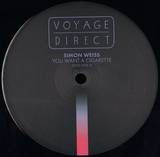
It was December 2015 when Simon Weiss delivered his first EP for Voyage Direct, an impressively intergalactic affair full of supersonic synthesizer arpeggio lines, Motor City influences and robotic drum machine hits. Two years on, the experienced Dutch producer returns to action for the first time since, in the process delivering another quartet of starry-eyed productions.
.
Through releases on Deepermotions, Rush Hour and Hometaping is Killing Music, Weiss has established a reputation for combining a deep understanding of dancefloor dynamics with a sci-fi inspired futurist aesthetic. Both of these complimentary traits are much in evidence on his second outing for Voyage Direct.
Weiss blasts off via Brain Fever', where raw, mind-altering arpeggio bass, fuzzy drum machine hits, spacey chords and alien electronics thrust our hero skywards. Think of it as techno for funk-fuelled, Italo-disco loving astronauts whose journey to the end of the universe is only just underway. This intergalactic funk blueprint is explored further on the deeper and more melodious You Want A Cigarette', where Weiss's vocoder vocals wrap themselves around mutant TB-303 lines, rush-inducing chords and clattering machine percussion.
On Space Ghetto (Booty)', our hero celebrates the discovery of previously unknown worlds in the only way he knows how. With kaleidoscopic, full-throttle electronic motifs and funk-fuelled synth-bass to the fore, Weiss offers his own unique take on electrofunk. Pleasingly fuzzy and tightly wrapped in the syncopated drum machine handclaps of ghetto-house, it's a typically far-sighted and attractive proposition.
With just two minutes to go until his spacecraft touches down on alien territory, Weiss rounds things off via the melancholic chord progressions and heartfelt vocoder vocals of Intro', a beat-free excursion just tailor made for dramatic set openings and spine-tingling mix endings. He may be stepping into unknown territory, but it won't be the last you'll hear from Simon Weiss.
- 01: New Grounds/Hollow (Pt.1)
- 02: Echostany (Feat. Piotr Piotr &Amp; Piotr Ratajczak)
- 03: Walking Is A Part-Time Job (Feat. Moonfeeder &Amp; Pola Piesak)
- 04: Ayee (Feat. Szatt &Amp; Sonar Soul)
- 05: Berberys (Feat. Prometh, Karbid, Ciechan &Amp; Kasia Dyda)
- 06: Cosmic Sync (Feat. Coachmotel &Amp; René Schier)
- 07: O Outro Lado (Feat. Konstanty Kostka &Amp; Groove Professor)
- 08: Tee Eight (Feat. Moo Latte &Amp; Roux Spana)
- 09: Mewy (Feat. Tropiki, Patryk Niedziela &Amp; Grzegorz Witczak)
- 10: Szabat (Feat. Nahmek &Amp; Beton)
- 11: Realnessmobb (Feat. Worstcase &Amp; S L I M E)
- 12: W Środku (Feat. Krisqu071 &Amp; 4Resh We7Akecare)
There are two versions - limited transparent (glass) hand numbered 100 copies or classic black wax. Both 180g.
Himalaya Collective is (probably) the biggest Polish beatmakers association. "Parantele 2" is their 4th album released by U Know Me Records.
A year after the first installment of the "Parantele" project (which involved inviting artists from outside the collective to collaborate), we have a dozen new tracks for you from members of the Himalaya Collective who didn't make it onto last year's album.
This time, you can once again hear the diversity of this largest Polish beatmaking crew. The album features classic beats, plenty of jazz, and live instruments, but fans of fresh, danceable electronica will also find something to enjoy.
"Parantele 2" is an album that deserves the attention of every fan of modern music. Himalaya Collective proves that collaboration and creativity can lead to incredible results. ✨
We encourage you to discover this extraordinary album and immerse yourself in its sounds!
[a] 01: New grounds/Hollow (pt.1) [feat. fravaer & Szymon Zdunek]
MAL welcomes Hiroshi Takakura aka Element & co-owner of Riddim Chango Records with a heavyweight session of deep roots mutations and dynamic steppers.
A truly unique and well loved character, Hiroshi is one of Japan’s key figures for dub wise experimentation and this release presents a decade of influence distilled into a selection that bridges Jamaican and UK lineages with a very personal slant.
The centrepiece, ‘Longest Summer Pt.1 & 2’, is a radical remake of the theme from Fruit Chan’s Hong Kong cult film. He flips the wistful, naïve melancholy of the original alongside deep bass weight and syncopated hats with a slink and roll that feels as well suited to the steaming tarmac of LA as any smoke laced, late night Blues dance.
Born from the momentum of live set preparation, the raw sketches that make up the ep were shaped into full-blown dancefloor weapons, particularly the percussion-heavy, tribal mayhem of the title track, ‘Motion Exchange’.
All in all the release captures a snapshot of heady obsessions: UK roots and dub pressure channeling echoes of Jah Shaka, Jamaican dancehall’s roughneck energy, and a wide selection of experimental electronic influences from the early 80’s to the present day.
Motion Exchange delivers a weighty steppers sound that honours its roots while pushing into bold, forward-thinking territory.
Like Element’s sets, this is music for the rig but has layers of detail that reveal themselves on repeat listens and in selector tradition, the EP offers multiple versions for extended play.
A further milestone in MAL’s journey, with Takakura charting heavy new territories in modern dub. RIYL 5 Gate Temple / Bokeh Versions / Lord Tusk / Seln etc.
Click here to see our current stocklist
You received this email because you requested to be added to our wholesale mailing list.
Our mailing address is:
Rubadub ltd
Unit 4, Carberry Court
28 Queen Elizabeth Ave
Glasgow, Scotland G52 4NQ
United Kingdom
Want to change how you receive these emails?
You can update your preferences or unsubscribe from this list.
20TH HlJACKER – die redigierte „Was wäre wenn“-Schleife der Doom Electronics, die die Kluft zwischen Tod als Opfer vs. Belohnung, Angst vor der Digitalisierung und universeller menschlicher Gemeinsamkeit seziert – die Angst vor lauten Geräuschen und dem Verlieben in die unausgesprochene verlorene 9/11-Generation. 20TH HlJACKER synchronisiert die Paradoxien der Post-Desert-Storm-Ära zwischen dem damals schnellsten unbewaffneten Überwachungsflugzeug der Welt und der Guerilla-Bewaffnung von Verkehrsflugzeugen – und deutet damit die Essenz des anhaltenden Krieges gegen den Terror an: die Verschmelzung von Spezialoperationen und Spionage innerhalb beider gegnerischer Gegner. In einem Klima der Unvermeidlichkeit – vergiss nie, dass Krieg eine Kraft ist, die uns Sinn gibt. – Mit Gastauftritt von Iggor Cavalera (Sepultura, Cavalera) und Mastering von Justin Broadrick (Godflesh, Jesu) – The 2nd Vatican Shadow erscheint als Album für 20 Buck Spin nach „Persian Pillars of the Gasoline Era“ (2020). – Die LP enthält einen farbigen Innencover-Druck und ein riesiges, doppelseitiges Farbposter.
b Speed of Sound (SR-71 Blackbird Pilots Practiced Survival in the Sahara) feat. Iggor Cavalera
[b] Speed of Sound (SR-71 Blackbird Pilots Practiced Survival in the Sahara) [feat. Iggor Cavalera]
[b] a2 | Speed of Sound (SR-71 Blackbird Pilots Practiced Survival in the Sahara) [feat Iggor Cavalera]
- Ésser De Llum
- L'aula Dels Dofins
- Futur Medieval
- Combats D'autoesgrima
- Res De Nou
- Festa D'una Persona
- Carnets De Punk
- Depressió Sota El Capó
- Nihilisme Pop
- Si Jo No Fos Tan Idiota
- Sota De Tot
- De Guix I De Ciment
- Presó Mental (Kitsch Cover)
ROYAL BLUE & HOT PINK VINYL[18,70 €]
Manche sagen, es sei Albert Einstein gewesen, der das gesagt hat, aber ich bin mir ziemlich sicher, dass es Hristo Stoichkov war: ,Glück gibt es nicht." Manche Bands leben ihre gesamte Karriere von einem einzigen Song, was Experten als One-Hit-Wonder bezeichnen. Hier würden wir es wahrscheinlich einfach als Strohfeuer bezeichnen, etwas, das uns etwas vertrauter ist. Andere Bands schaffen es, ein oder zwei großartige Alben herauszubringen, vielleicht sogar drei. Darüber hinaus wird es schwieriger, Bands mit mehr als vier soliden Alben zu finden. Diese Bands haben etwas Besonderes, eine Art Magie. Jeder, der sie kennt, hat eine klare Referenz, eine Grundlage, ein Konzept, eine Art, Dinge zu tun, die einen fesseln und in ihren Bann ziehen, genau wie in diesem Fall. CRIMs fünftes Album "Futur Medieval" hält die Flamme ihrer vorherigen vier Alben am Leben. Es ist ein Killer-Album, voller Energie und Leidenschaft. Wie immer gibt es Hymnen, Refrains zum Mitsingen, den charakteristischen synchronen Punch in jedem Song und diese elektrisierenden Gitarren, die von der ersten Note an ihre Trümpfe ausspielen. Wie es in einem ihrer Songs heißt: ,"Nichts Neues?" Na und? Erwachsenes Vergnügen ist genau das, - Jordi "Unclu" Sabatés Ametller CRIM wurde 2011 gegründet und sind wohl die größte Punkband Kataloniens/Spanien. Diese äußerst leidenschaftlichen Musiker haben sich lokal einen Namen gemacht, spielen mittlerweile immer wieder vor Tausenden von Leuten und haben starke Songs, die in vielerlei Hinsicht eine sehr florierende Szene in Nordspanien vorantreiben. Die Popularität von Crim außerhalb Kataloniens wächst rasant, da sich ihre Authentizität in ihrem Sound widerspiegelt und ihr kompromissloser Ansatz in vielerlei Hinsicht universell ist und für Fans leicht erkennbar und einladend, unabhängig davon, welche Sprache sie sprechen. Jeder, der diese Band live gesehen oder ihre Alben gehört hat, kann die Kraft und Energie bezeugen, die sie besitzt. FFO Cock Sparrer, Leatherface, Social Distortion CD, klassisch schwarzes oder mehrfarbiges Vinyl!
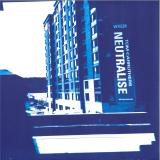
UK producer Tom Carruthers returns with a scorching 5-tracker for Skylax Records, diving headfirst into the primal roots of jackin’ house, proto-italo, and early machine funk. Known for his raw MPC-driven grooves on L.I.E.S., Clone Jack For Daze, Syncrophone, and Craigie Knowes, Carruthers channels the energy of the underground circa ’86—pure drum machine soul for the dancefloor faithful. Side A kicks off with the title track “Neutralise”, all sharp snares, warped synths and hypnotic repetition—a jack track in the truest sense. “Deep North” follows with ghostly pads and relentless drum programming, while “No More” brings metallic tension and stripped-down funk with a heavy nod to Chicago’s original blueprints. On the flip, “Pascals” weaves cosmic arps through rugged percussion, merging italo sensuality with bleep-era minimalism. The closer, “Cosmic Ride”, is exactly that: a journey through spacey chords, dusty rhythm boxes, and that unmistakable feeling of warehouse euphoria at 4 a.m. Neutralise EP is a raw, timeless record that strips dance music down to its essence—jacking, emotional, physical. To match the sonic purity and timeless aesthetic of the release, we enlisted the iconic H5 studio—a name synonymous with visionary design in music and culture. Known for their groundbreaking work with Daft Punk, YSL, and numerous award-winning visual campaigns, H5 brings a level of artistic sophistication that elevates this EP into a complete sensory object. Their clean, modernist design echoes the stripped yet futuristic vibe of Tom Carruthers’ sound—a perfect fusion of form and function, underground and high art. Vinyl only. No digital. No compromise. For fans of: Virgo Four, Baby Ford, Larry Heard, early Warp, Mr. Fingers, and Beppe Loda.
2025 Repress
DJ Koze exists both above and beyond club culture as we know it - his albums and remixes flying free from genre and trend - and symbiotically woven into its heart. Yes, he always abstracts and weirds out the principles of house, techno, hip hop, pop, psychedelia, exotica and so forth, but he does that because he understands them. And when it comes to club-demolishing tracks, he understands those principles as well as just about anybody on earth. Thus he could create an enduring club tune like 2015's 'XTC' that is strange, contemplative, even disturbing, bore little relation to anything around at the time, yet still got bodies moving and sweating better than way more obvious techno bangers. And thus the Knock Knock album, which melts a million genres and none into one another, can comfortably include 'Seeing Aliens". 'Seeing Aliens' unquestionably is a banger, its bass riff snaking around your body like a python, its high-drama strings, pianos and outbursts of noise designed for maximum crowd pressure release. But, again, it sounds like nothing else, and its dynamics and twists unfold over eight and a half minutes in ways that will mess with your head every time no matter how many times you hear it. The exclusive b-side track, 'Nein König Nein' ("No King No"!), meanwhile, is slightly gentler on the face of it: it's less about sonic pressure, more about hip-shaking syncopation. But it too tells strange fairytales in its peculiar and brain-tweaking accumulation of detail, and though you'll hear archetypal sounds from the heart of house and disco in it, every last one of them becomes new and otherworldly.
Australian artist Factory Preset dropped a killer album, Swingchronize Me, back in 2022 and it was an ode to the DIY acid wave scene of 90s Sydney DIY made using a 'swingchronizer,' aka a homemade box that "bypassed the temporal rigidity of other units allowing the freedom to create consistent swing effects." Now, four of the cuts get reworked into deep, groove-driven and masterfully well swung sounds that are fluid, loopy and could unfold endlessly without ever growing stale. Some are slow and predatory, others are more light and colourful, all of them perfect for dropping into long-form sets where both body and mind get locked in.
Crystal Clear vinyl[43,66 €]
"As iconic as she was discreet, Françoise Hardy established herself in the '60s as a major artist in the genre of ""French chanson."" Her voice, songwriting, and ability to surround herself with talented collaborators helped her seduce the whole world and, over the decades, shape a discography of the highest caliber.
This brand-new Best Of compilation is the very first to cover Françoise Hardy’s entire career, spanning from her 1962 debut to her final recordings in 2018. Featuring a timeless 1960s-inspired cover, it brings together her most iconic songs, from early classics like ""Tous les garçons et les filles"" and ""Le temps de l’amour"" to signature hits such as ""Comment te dire adieu"" (a streaming and sync favorite), ""Message personnel,"" the viral sensation ""Voilà"" (#1 viral hit, with over 300k TikTok creations), and ""Le large."""
Black vinyl[35,17 €]
"As iconic as she was discreet, Françoise Hardy established herself in the '60s as a major artist in the genre of ""French chanson."" Her voice, songwriting, and ability to surround herself with talented collaborators helped her seduce the whole world and, over the decades, shape a discography of the highest caliber.
This brand-new Best Of compilation is the very first to cover Françoise Hardy’s entire career, spanning from her 1962 debut to her final recordings in 2018. Featuring a timeless 1960s-inspired cover, it brings together her most iconic songs, from early classics like ""Tous les garçons et les filles"" and ""Le temps de l’amour"" to signature hits such as ""Comment te dire adieu"" (a streaming and sync favorite), ""Message personnel,"" the viral sensation ""Voilà"" (#1 viral hit, with over 300k TikTok creations), and ""Le large."""
Manche sagen, es sei Albert Einstein gewesen, der das gesagt hat, aber ich bin mir ziemlich sicher, dass es Hristo Stoichkov war: ,Glück gibt es nicht." Manche Bands leben ihre gesamte Karriere von einem einzigen Song, was Experten als One-Hit-Wonder bezeichnen. Hier würden wir es wahrscheinlich einfach als Strohfeuer bezeichnen, etwas, das uns etwas vertrauter ist. Andere Bands schaffen es, ein oder zwei großartige Alben herauszubringen, vielleicht sogar drei. Darüber hinaus wird es schwieriger, Bands mit mehr als vier soliden Alben zu finden. Diese Bands haben etwas Besonderes, eine Art Magie. Jeder, der sie kennt, hat eine klare Referenz, eine Grundlage, ein Konzept, eine Art, Dinge zu tun, die einen fesseln und in ihren Bann ziehen, genau wie in diesem Fall. CRIMs fünftes Album "Futur Medieval" hält die Flamme ihrer vorherigen vier Alben am Leben. Es ist ein Killer-Album, voller Energie und Leidenschaft. Wie immer gibt es Hymnen, Refrains zum Mitsingen, den charakteristischen synchronen Punch in jedem Song und diese elektrisierenden Gitarren, die von der ersten Note an ihre Trümpfe ausspielen. Wie es in einem ihrer Songs heißt: ,"Nichts Neues?" Na und? Erwachsenes Vergnügen ist genau das, - Jordi "Unclu" Sabatés Ametller CRIM wurde 2011 gegründet und sind wohl die größte Punkband Kataloniens/Spanien. Diese äußerst leidenschaftlichen Musiker haben sich lokal einen Namen gemacht, spielen mittlerweile immer wieder vor Tausenden von Leuten und haben starke Songs, die in vielerlei Hinsicht eine sehr florierende Szene in Nordspanien vorantreiben. Die Popularität von Crim außerhalb Kataloniens wächst rasant, da sich ihre Authentizität in ihrem Sound widerspiegelt und ihr kompromissloser Ansatz in vielerlei Hinsicht universell ist und für Fans leicht erkennbar und einladend, unabhängig davon, welche Sprache sie sprechen. Jeder, der diese Band live gesehen oder ihre Alben gehört hat, kann die Kraft und Energie bezeugen, die sie besitzt. FFO Cock Sparrer, Leatherface, Social Distortion CD, klassisch schwarzes oder mehrfarbiges Vinyl!
- E1: In Need
- E2: Riding My Bike Across The Lake In Wintertime
- E3: Sorry Jack
- E4: Step Man/Stat Man/Scat Man
- E5: Breate Yes. Breathe No
- F1: This Used To Not Be This Way, Or If So I Cannot Remember
- F2: Are We Sorry?
- F3: Reasonable Prices
- F4: Coffee Coin
- F5: We Did It
- F6: Clap
In 2023, k.d.b lived in a crumbling farmhouse on the edge of the River Maas. Each morning, he’d wake at 6:00 and walk along the river’s bank with his dogfriend Miemel, pausing at sunrise for a cup of coffee.
It’s 6:34, and a thick rug of mist rolls out across the river. It’s so dense that k.d.b can’t see the water beneath it. Then comes the sun: a single ray cutting through the mist like a tube of light, landing on Miemel’s face. In her mouth is a CD she’s picked up, and on the CD is the title Instrumental Romance.
'What is Instrumental Romance?' thinks k.d.b. 'Romantic instrumentals? Or a romance used instrumentally? As in, a romance used to get something—like love?'
Miemel drops the CD and turns her attention to a stray purple grape on the path. Grapes are poisonous to dogs, and as she bends toward it, k.d.b. shouts, “NO!” At that precise moment, a large fish rises from the mist. It launches into the air, mouth wide open, and hangs there above the clouds. His shout, having traveled across the river, bounces back towards k.d.b with a “NO,” and in perfect synchrony, it appears the fish is also shouting at Miemel. The timing is so perfect, they can’t be sure it isn’t.
The fish falls back down, entering its watery world with an eerie, splashless silence, leaving k.d.b and Miemel standing open-mouthed on the bank. Before they can register the perfection of this duet, another fish (or maybe the same one again) rises from the mist in the exact same spot and launches into the air. Without thinking, k.d.b shouts again. The word “ROMANCE” comes out. This time, however, he is slightly too late, and the word is too long, so “ROMANCE” lingers on after the fish has already fallen back down.
'What even is romance?' thinks k.d.b. 'The construction of mystery or excitement with dead red flowers and timing?'
A foghorn sounds behind him, and k.d.b turns 180 degrees to see a boat moving freight, right to left, along the River Maas. 'That’s strange', he thinks. 'If the river is there, then what’s that behind me, below the mist?'
Staring at the boat and its shipping containers as they float out of sight, k.d.b imagines a man. The man is standing at the bottom of a small valley, holding a fish. 'Who is this man, and what does he want?'
- Jacob Dwyer
FOSTER SYLVERS / PAT & ANGIE SYLVERS / FOSTER SYLVERS
Montego Bay / Misdemeanor (Omakase's 3Min Cooking) 7"
- A1: Montego Bay
- B 1: Misdemeanor(Omakase's 3Min Cooking)
DJ KENTA and DJ SOULJAH have launched a new B2B (Back-to-Back) style DJ unit, "OMAKASE"!
This is the second 7-inch of DJ-friendly edits, dubbed "OMAKASE 3-Minute Cooking," featuring a superb on-the-ground feel!
The opening break, "Montego Bay," is a DJ favorite, featuring synchronized bass and cowbell for a hip-pumping groove.
It's also featured on Usher's "Good Kisser"
And on the B-side, we've got the long-awaited DJ edit of a classic break from "Ultimate Breaks & Beats"! They've cooked up Foster Silvers' "Misdemeanor,"
which also samples The D.O.C. and Aaliyah!
Jon Porras verfügt über eine seltene Fähigkeit, den Puls einer Klanglandschaft zu lokalisieren und ihren emotionalen Kern herauszuarbeiten. Seine Arbeit speist sich seit langem aus der Reibung zwischen organischen Formen und elektronischer Verarbeitung, doch mit Achlys bewegt er sich weiter in Richtung Textur, Erosion und Gewicht. Diese Musik ist von Zusammenbruch durchdrungen - nicht als Spektakel, sondern als langsamer Prozess. Diese Stücke entfalten sich nicht, sie sammeln sich. Gitarre, Subbass, modulare Synthese und verarbeitete Geräusche sammeln sich wie Sedimente an und schichten sich zu Kompositionen, die sich eher wie Wettersysteme als wie traditionelle Songs bewegen. Das Album navigiert durch eine Abfolge von fragmentierten Klangvignetten: zerfallende Umgebungen, monumentale Stille und reale wie auch innere Landschaften. Die Struktur wird durchlässig. Jedes Stück deutet sowohl auf Präsenz als auch auf Verschwinden hin. Häufig wurden mehrere Stücke isoliert geschrieben und ohne Synchronisation übereinandergelegt, sodass absichtliche Dissonanzen die resultierenden Texturen bestimmten. Dieser Ansatz begünstigt Drift und Reibung, wobei Melodien durch verschwommene Intervalle geistern und eine Spannung zwischen Erinnerung und Verzerrung erzeugen. Das Album beginnt mit ,Fields", wo schwache Gitarrenphrasen in hohlen, resonanten Tönen versinken, die eher erinnert als gespielt wirken. An den Rändern flackert Wärme, gefiltert und entfernt, wie Licht, das sich durch Ruß drängt. In ,Holodiscus" treiben elegische Linien über einer sanften Unterströmung von Dissonanzen und widerstehen leise dem Sog in Richtung Zusammenbruch. Der Titeltrack gleitet zwischen Klarheit und Verzerrung und verwandelt harmonische Fragmente in ein schimmerndes Gitter aus Verfall. Während des gesamten Albums dehnen anhaltende Töne die Zeit zu einer Unschärfe, während bearbeitete Gitarrenklänge wie Echos aus benachbarten Räumen auftauchen und wieder verschwinden. Jedes Stück trägt eine emotionale Prägung, ohne eine Richtung vorzugeben, und hinterlässt Texturen, die sich sowohl taktil als auch unruhig anfühlen. Diese Dualität der Größenordnung - immens und winzig - fließt in die Klangpalette des Albums ein. In ,Sea Storm" brodelt und zieht der tiefe Klang nach unten und verstreut dabei Gitarrenfragmente. ,Before the Rite" schwillt mit abrasiver Dichte und verzerrten Obertönen an - ein Moment der fast überwältigenden Intensität, der sich gerade noch im Gleichgewicht hält. Die Klänge bleiben in der Schwebe und weigern sich, sich aufzulösen.Achlys bewegt sich durch ein Gebiet wechselnder Schwellen - wo Licht und Schatten, Struktur und Erosion nebeneinander existieren, ohne sich in Gegensätze aufzulösen. Anstatt auf eine klare Schlussfolgerung abzuzielen, bietet das Album eine zyklische Form von Entstehung und Erosion. Es ist klanglich dicht und doch weitläufig, emotional resonant, aber losgelöst von jeder Erzählung. Nichts hier ist feststehend. Alles trägt die Spur davon, einmal etwas anderes gewesen zu sein. Während einige Fragmente verblassen und andere nachklingen, prägen sie alle die Atmosphäre.
In the two years since Parallel Minds’ Juno-Award-winning 5th release Homesick by label co-founder Ciel, we have taken our time reassessing our next moves as the larger dance music scene experienced a paradigm shift. What does it mean to release music made by underground artists from lesser-known scenes like Toronto at a time when bookers and A&Rs are taking fewer risks than ever before? How do we truly celebrate the musical diversity of electronic music when the bottom line threatens to reduce any and all forms of risk-taking?
You just do it, of course.
In truth, few artists have come to represent the music scene in the Big Smoke more than Phèdre, and having seen the duo’s progression from indie weirdo-pop to live hardware act to breakbeat wunderkind in the last decade has been nothing short of amazing. It’s really artists like these that inspired us to start the label in 2018, and we are super elated to usher in PM006 with their long-awaited album, Liquid Constancy.
On its face, Liquid Constancy is a breakbeat record. There are housier joints, to more bassy Baltimore club bangers, to breakneck footwork and jungle steeped in sunshine. All of them share a distinctly syncopated, dubwise rhythm that grounds the album’s tracks. With some having been developed as early as seven years ago, these tracks had their genesis in Phèdre’s mostly improvised live hardware sets from some of Toronto’s most notorious warehouse raves. Primarily powered by two Korg Electribe ESX-1s and the semi-modular Moog Mother-32, the jams found new life in the studio when the duo began recording them as tracks, which demanded a mindfulness of their permanence that Daniel Lee and apè Aliermo at first found intimidating.
Over time, the pair developed a synergistic workflow that pulls from Daniel’s background in drums and apè’s keen ear for texture and movement. They sourced samples featuring voices of BIPOC and feminist icons, drew from their shared love of sci-fi and kung fu movies, and from their Filipino, Chinese, German, and Surinamese backgrounds. Samples were manipulated via techniques like lowering bit rates and adjusting speed to maximize usage due to the Electribe’s limited sample time, which was a subtle way of injecting their interests into their music without being too on the nose. Growing up in the melting pot of the GTA, going to raves as teens, bumping post-punk, industrial, electro, hip-hop and 90s R&B — these experiences all had an undeniable influence on Liquid Constancy. As kids of immigrant parents, equally informed by both their adopted and native cultures, Phèdre makes music informed by sampling and defined by cultural hybridity. In times like these, what is more feel-good than believing in music as a universal language that brings our different backgrounds together?
Dub Spencer & Trance Hill once again realize their musical vision with their new release SYNCHRONOS: The perfect hybrid of dub and trance - analog, danceable and at the forefront of sound technology. With SYNCHRONOS, Dub Spencer & Trance Hill present an album that defies conventional categories. The new tracks surprise and guide the listener into a colorful world of sound - an acoustic kaleidoscope in which diversity becomes a principle. Musical components - dub, trance, dance, techno, rock, jazz - are put together by the musicians in new and unexpected ways. Experimental, multi-layered and always good for surprises, yet inevitably club-ready: That"s Dub Spencer & Trance Hill.
- A1: Waiting For The Sign (Feat Lispector)
- A2: Patch 1985
- A3: Count To 10 (Feat Domotic)
- A4: Godbot
- A5: Skyway
- A6: Le Robot Gentilhomme
- B1: Ufo (Feat Lispector)
- B2: Cosmic Battle
- B3: Olympus
- B4: Shoppers On The Run
- B5: Postcard (Feat Kumisolo)
- B6: Melchiator
Emile Sornin has a robot in his life. It's not love, but it's not friendship either, and Forever Pavot is releasing an album documenting the affair on Born Bad. After a bunch of bold pop studio albums and a small stack of soundtracks, Emile needed a break. To put an end to it, he embarked with handyman extraordinaire Jonas Euvremer on the manufacture of an automaton destined to make his musician’s life easier. Melchior, who gave his name to the record, has the face of a ventriloquist's dummy, two plastic left hands, preppy clothes and a primitive logic circuit. This goodie two-shoes cousin of Bender’s is supposed to be doing the interviews and deal with socials for Emile. The plan worked admirably : Melchior is a perfect cover-boy, and his very existence has put our man back to work.
They set a path for phat electronic ventures (and by the way, mostly english-speaking). Sub- continental bass & massive drums, heavy-footed and unabashed : as much appreciated as unexpected. The half-android shares songwriting credits and vocal parts vocoded to perfection. Not a jealous lad, Melchior makes way for a guest of choice on “UFO” and “Waiting for the sign” : Lispector. Julie Margat sings and collaborated on the lyrics for these two bangers that provide a lot of context (robot angst is real). Kumisolo, our favorite Japanese « it » girl in Paris, also sent her “Postcard”, more vapour than song, unreal musical cotton candy of arrangements.
Domotic, who mixes and co-produces, gives a nice spin to “Count to 10”, a hip-hop/kraut crossover with a BEAK> flavour. The Forever Pavot, once a big-band, will be touring as a bass/ drums/keys & vocals trio, with Melchior as guest.
Record after record, Emile Sornin has become an increasingly literate musical illiterate. When needed, his music can still become a thicket of ancient and modern finds. « Le robot gentilhomme », a skillful pastiche of baroque composer Jean-Baptiste Lully, would stand a few rounds against Wendy Carlos. His love for oldies also shines through “Skyway”, a nod to the late Pierre Arvay, France’s Colonel Sanders of library music nuggets.
Forever Pavot may have gone wild, but remains indebted vis-à-vis the golden age of film music. Forebears deluxe Ennio Morricone & François de Roubaix make Hitchcock-style cameos: discreet appearances that you’ll watch out for (those syncopated cascades of syllables at the end of « UFO », and I guess we can indulge with some clavichord/ondioline Victoria sponge). His new flirt is all but a toxic relationship. « Melchior, Vol. 1 »: the robo-bromance is not over yet.
Underground Macedonian techno rebel Stojche known for his no nonsense vibrant and dynamic Detroit schooled productions enters the dolly family! With releases on label like a.r.t.less, Syncrophone and Fuse Brussels he is an artist well in tune with his craft. 'Cause & Effect' is another consistent Stojche voyage, remaining true to his sound that stands for high quality techno with a heavy dose of funk and emotional content that simply never misses!
- Melkus
- Shining
- Give It A Try
- Sync Out
- C.ops
- Fueled By Fear
- Raus
- Follow Me
- A Common Problem
- Autobahn
- Alarm
"discografia due" ist Melkus' chaotischer Liebesbrief an das Verlieren: verdrehte Riffs, Verzerrung als Farbe und Monate, die damit verbracht wurden, Einflüsse zu entwirren und in rohe Meisterwerke zu verwandeln. Eine Mini-Diskografie von Chaos, Lärm und Freude am Scheitern. Keine Gewinner - nur eine Crew von Verlierern, die zwischen Wahnsinn und Nervenzusammenbrüchen tanzt.
- Retinal Rivalry
Retinal Rivalry ist der Soundtrack zu Cyprien Gaillards neuem stereoskopischen Film Retinal Rivalry (2024). ,Es ist eine faszinierende Reise durch die deutsche Stadtlandschaft und ihre vielschichtige historische und soziale Bedeutung. Aufbauend auf seiner früheren Erforschung der skulpturalen Qualitäten dreidimensionaler bewegter Bilder geht das Werk über die Grenzen der Leinwand hinaus. Durch die Ausschöpfung des vollen Potenzials modernster Technologie bietet Gaillard eine erweiterte, geschärfte und tief bewegende neue Sicht auf die Welt um uns herum. Retinal Rivalry ist nach dem Phänomen der visuellen Wahrnehmung benannt, das auftritt, wenn das Gehirn zwei widersprüchliche Bilder gleichzeitig empfängt. Anstatt zu einem 3D-Bild zu verschmelzen, wechselt das neuronale System zwischen der Priorisierung des einen Bildes und der Unterdrückung des anderen, was beim Betrachter Verwirrung und Unbehagen hervorruft. Gaillards Film setzt sich mit diesen Komplexitäten der visuellen Verarbeitung und den Grenzen der Technologie auseinander und sammelt visuelle Informationen durch außergewöhnliche, oft augenzwinkernde Aufnahmen, die das Innere und das Äußere, das Eingeschlossene und das Verstreute sowie das Natürliche und das Gebaute miteinander verflechten. Seine Kamera nimmt ungewöhnliche Blickwinkel ein, wechselt von sanften Luftperspektiven zu einem niedrigen Blickwinkel aus der Perspektive eines Nagetiers, zu schwindelerregenden Ein- und Ausblendungen auf der knolligen Nase einer Skulptur oder zu einer langen Einstellung eines Zuges, der durch eine Landschaft fährt, und zieht uns in eine vielschichtige Erfahrung hinein, die zwischen einem schlechten Trip und unerwarteter Schönheit, die Trost spendet, schwankt. In ,Retinal Rivalry" deuten verschiedene Treppen, Spiralen und Aufzüge auf einen Zustand des ständigen Auf- und Abstiegs hin und betonen das Wechselspiel zwischen Distanz und Nähe, abgrundtiefer Tiefe und lebendiger skulpturaler Darstellung. Der Film pulsiert rhythmisch mit Bildern, die anschwellen und sich zusammenziehen, sich aufblähen und entleeren. Er manipuliert das Gefühl der Zuschauer für Tiefe, Maßstab und Textur und lässt vertraute Materialien und Orte unheimlich erscheinen, wobei er die inhärenten Ungenauigkeiten und Verzerrungen der Darstellung hervorhebt. ,Retinal Rivalry" zeichnet die gewöhnliche Welt in großartigen Details auf und versucht dabei, unter die Oberfläche der Dinge zu blicken. Der Film ist eine Darstellung von Raum und Zeit, die Darstellungsweisen destabilisiert und eine neue Hyper-Vision-Version der Realität bietet. Mit 120 Bildern pro Sekunde aufgenommen und mit derselben Geschwindigkeit projiziert - fünfmal so schnell wie im Kino üblich - fängt Gaillard mehr ein, als das menschliche Auge natürlich wahrnehmen kann. Die Filmmusik greift auf verschiedene klangliche Elemente zurück und unterstreicht so die Erforschung von Dissonanz und Synchronität. Indonesische Instrumentalmusik wird überarbeitet und mit Feldaufnahmen von rumpelnden schweren Maschinen und seltsam melodischem Würgen kombiniert. Der Soundtrack enthält auch die ersten Zeilen aus Werner Herzogs Aguirre, der Zorn Gottes (1972) sowie die dazugehörige Ouvertüre der deutschen Band Popol Vuh. Die Klanglandschaft von Retinal Rivalry steht im Kontrast zu den Bildern - was wir sehen, steht oft im Widerspruch zu dem, was wir hören. Nur in einem Abschnitt verschmelzen Ton und Bild: Ein gebrochenes Bein betätigt das Pedal einer interaktiven Orgel, um ein Stück von Johann Sebastian Bach zu spielen, das immer wieder ins Stocken gerät.
Back from ‘96 — Abacus’ legendary The Abacus EP returns, now reissued as Erotic Illusions. Deep, soulful and hypnotic house at its finest, straight from the Guidance era. Pure timeless heat — grab it before it vanishes again.
DJ Feedbacks :
Laurent Garnier : Classic <3 <3
Nick Hoppner : OOOOOH YES
Dan Beaumont (Chapter 10 / NTS) : Decadent dub for me! lovely
Louise Chen (NTS) : Huge fan, this is a wonderfully sexy reissue!
Joel Martin (Quiet Village) : Timeless Classic from one of the masters - Essential!
Kölsch (IPSO / Kompakt) : Still sounds so fresh
Sven von Thuelen (SVT / Work Them) : Sublime!
Josh Wink (Ovum) : Sounds just as great as when it first came out!
Satoshi Tomiie (Abstract Architecture) : Soooo good! Every details tuned precisely
Carista : sickkkk
Crackazat (Freerange / Local Talk) : yes. of course
Anthony Collins (Frank & Tony / Scissor & Thread) : fantastic record
Hunee (Rush Hour) : classic!
Call Super (Houndstooth) : lovely thxxx
Erol Alkan (Phantasy Sound) : Downloading Thanks!
Radio Slave (Rekids) : Such a big fan !!! Full support and congrats on the re-release. Peeps need to know about "Abacus".
Ben Sims : Now downloading... will check asap!
nd_baumecker (Ostgut Ton) : YAAAAAS! Finally I have this in a better quality than my vinyl rip from the original 12". Vinyl is preordered. Thanks!
Jonnie Wilkes (Optimo) : SEMINAL.
Lawrence (Dial) : OMG Fave Classic!
Fouk (House of Disco / Razor N Tape / Room With A View / Heist) : Ooooh yes! <3
Hector Romero (Def Mix) : Love it. H
Aleqs Notal : Lovely repress
Alinka (Twirl / Classic / Crosstown Rebels / Batty Bass) : Beautiful tracks
Terry Farley : fantastic reissue for those that missed the golden era
Ian Pooley (Pooledmusic) : Sooooooooo good !
Marcia Carr : The Dub without a lot less of the sleazy vocal is cool.
Nick Holder : FIRE
DJ Bone (FURTHER) : Poetic Illusions and Decadent Dub both work for me.
Nat Wendell (Depth of My Soul / Courtesy of Balance / Love & Loops) : classy!!
Luke Solomon (Classic / Freaks / Music For Freaks) : absolute classic Kenny Hawkes special xxx
ROD / Benny Rodrigues : !!!!
Domenic Cappello (Subclub) : still sounds fresh
Alexkid (Rawax / FUSE / NG Trax) : Total Dopeness
Jimpster (Freerange) : An absolute classic from the golden era! Got the vinyl but I'm sure these new masters will sound better than my well worn vinyl rip! Will keep on banging this beauty.
Bake (All Caps / Rinse FM) : the best! thank you for reissuing :)
Dj Deep (Deeply Rooted) : Nice to see this beautiful release available again
Kai Alce (Real Soon) : CLASSIK!!
Mr. V (Sole Channel / Strictly Rhythm / Salter / Defected) : Solid work on this classic Thanks
Baby Rollen (Holding Hands / Slump / Futureboogie) : timeless
DJ Gregory (Point G / Faya Combo) : Alwayes loved that classic
Tom Esselle (YAM / Rhythm Section / WOLF Music) : Killer reissue!
Harri (Sub Club) : nice, will play and support
Hifi Sean (Defected / Plastique) : Diggin' this dub big time
Jenifa Mayanja (Bumako Recordings) : This reissue sounds just as good second time around. Straight dance floor magic. Moody and dubby perfect to zone out to in a dark corner somewhere.
Demuja (MUJA / Let's Play House / Madhouse / Freerange) : nice!!
Marcel Dettmann : thx
Kosh (Syncrophone) : doesnt get any better than this
Dj Hutch (Ambers / Rinse FM) : Lovely deep business! Thank you!
Geir Aspenes (G-Ha / Sunkissed) : Kool, thanks
D'Julz (Bass Culture) : classic alert!
"It may surprise some that, after two decades of silent films, when Alam Ara broke the silence in 1931, it and every South Asian talkie that followed was what we in the West think of as a "musical." Music had been integral to the culture's staged drama going back to the Gupta Dynasty — sometime between the 4 th and 6 th Century CE. Since its inception, South Asian cinema drew heavily from Marathi, Parsi, and Bengali musical theatre and silent film screenings were often accompanied by live music to mimic a live staged experience.
When sound films arrived, actors with serious singing skills became the next wave of stars. Songs were performed live while shooting, with musicians hidden off-camera, to the side or sometimes even in trees. Playback singing — the practice of dubbing a real singer's voice over a lip-syncing actor — didn't become standard until the 1940s.
Thus, the biggest stars of the 1930s were also the greatest singers, with some, like Govindrao Tembe and Pankaj Mullick, excelling as both composers and vocalists. None, however, were more beloved than K.L. Saigal, whose emotional, untrained crooning captivated audiences across the subcontinent. Saigal's voice inspired a young Lata Mangeshkar, who vowed to become India's greatest filmi singer to win his heart. Sadly, Saigal grew increasingly addicted to alcohol, unable to perform without it, and passed away at age 42, seven months before the Partition. Lata never married.
This collection features some of the earliest songs from South Asian cinema, sourced from CDs and LPs found in Jackson Heights, Queens, Coney Island Avenue in Brooklyn, Lexington Avenue in Manhattan, and Oak Tree Road in Iselin, New Jersey — areas home to vibrant immigrant communities. South Asian immigration to New York and New Jersey surged after the 1965 Immigration and Nationality Act, which lifted non-European quotas. By the 1990s and 2000s, the region's Indian, Pakistani, and Bangladeshi media outlets flourished, especially in Jackson Heights, where such stores outnumbered the total number of regular record shops throughout the five boroughs.
The nascent period of sound film featured a limited palette of musical styles, predominantly Marathi Bhagveet, like the Ghazal, but with greater flexibility of subject matter and rhythm, and Rabindra Sangeet, the approximately 2,000 songs and poems composed by Bengali Nobel laureate Rabindranath Tagore. But there was some evolution as well, with the success of South Asian cinema's first woman composer, the classically trained Saraswati Devi, and the introduction of Western instruments including the piano and Hawaiian guitar.
While much of the music was dark and brooding, perhaps exemplified best by Devika Rani's interpretation of Saraswati Devi's "Udi Hawa Mein" from 1936's Achhut Kannya (Untouchable Maiden), there were moments of brightness, such as R.C. Boral's "Lachhmi Murat Daras Dikhaye" sung by Kanan Devi in Street Singer, an otherwise thoroughly depressing film from 1938 that cemented Devi's and co-star K.L. Saigal's superstardom.
This selection was chosen to emphasise a range of expressivity, instrumentation and style achieved even within the decade's relatively limited scope, setting the listener up for the relative explosion of possibility in the 1940s, to be covered in the next installment of this series."
- A1: Do What You Gotta Do
- A2: Looking For A Fox
- A3: Slippin' Around
- A4: I'm Qualified
- A5: I Can't See Myself
- A6: Wind It Up
- B1: Part Time Love
- B2: Thread The Needle
- B3: Slip Away
- B4: Funky Fever
- B5: She Ain't Gonna Do Right
- B6: Set Me Free
Clarence Carter, blind from birth, was a blues singer with lascivious wit, a talented guitarist, a songwriter with a twinkle in his eye, and a champion of down-to-earth soul grooves who taught himself to play the guitar.
He sang in a gospel choir, completed a degree in music, and grounded the duo Clarence & Calvin but was not however very successful.
After a car crash involving Calvin Scott, Carter started on a solo career and signed a contract with Rick Hall and the Fame label as a soloist.
Among the earliest singles recorded at the Muscle Shoals studio were a few hits. After leaving Fame for Atlantic, he managed to enter the Top 20 of the R & B charts with "Looking For A Fox". His breakthrough came with "Slip Away", which sold a million copies and was awarded a Gold Record.
The legendary Fame Studios in Muscle Shoals remained the home basis, as it were, for Carter during his career with Atlantic. "This Is…" begins with a contemplative, soft sound. "Do What You Gotta Do", written by Jim Webb, is a lovely, melancholic mid-tempo ballad, saturated with Barry Beckett’s keyboard and smothered by lush, plaintive winds.
But the man is primarily funky here … as three danceable, finger-snapping tracks prove; "Wind It Up", with further witty improvisations and a fervid organ solo, the highly syncopated, playful "Thread The Needle", and the smoky, irresistible "Funky Fever" – all written by Carter himself.
Dan Penn’s and Spooner Oldham’s "Slippin’ Around" has an unorthodox bossa nova-like beat that is reminiscent of Ray Charles’s "What’d I Say", while Carter’s unmistakable chuckle is to be heard for the first time on the riotous funk-rock number "I’m Qualified", which has the very same unique, infectious groove as was to be heard on Wilson Pickett’s "In The Midnight Hour". "She Ain’t Gonna Do Right", composed by the same man, brings more Alabama Country to the mix, whereby Beckett contributes a catchy, persistent organ riff in the refrain.
Amsterdam label Spectral Bounce recruits French club stalwart Chris Carrier for SPEC06 — Perfect Encounter. Active since 1994, the Parisian artist has released a wellspring of records on Robsoul, Slapfunk and his own Sound Carrier recordings, parallel to his longtime career as a DJ. Characterised by swirling delays and progressive arrangements, Perfect Encounter shows the producer exploring the mesmeric corners of tech house, ideally fitted to the Spectral Bounce aesthetic.
Opener “XLR8” starts with rolling toms that make way for fluid, modulated tones; each bar ebbs and flows to the sweeping synths set in motion by Carrier. Processed with a multitude of delays, rhythmic FX boldly swish above the drums, making for an immersive soundstage. Second track “Light Side” retains the billowing echoes but moves more nimbly, cutting things back to make for a spacious and breezy number. Its croaking synths hop around the stereo field, accompanied by tight percussion and a walking bassline.
The hallucinogenic “Third Moon” sees Carrier step further into trance-inducing territory. The track’s pulsing, syncopated bass note thrums underneath an arpeggio that evolves into a heady prismatic drone. While the chugging beat is ever-present, melodic refrains rise up and evaporate like wisps of vapour, alongside a vocal that fades away as quickly as it appears. The EP’s eponymous “Perfect Encounter” dials up the tension and closes the record with a mysterious touch. Speedy 16th note patterns propel the beat, creating shifty rhythms that rattle and hiss. A rasping, gelatinous synth and squeaky detuned tones resemble extraterrestrial signals — alien morse code for an enraptured dancefloor.
Credits:
Drawing from over three decades in electronic music, DJ Rame (one third of the acclaimed Italian Pastaboys team) showcases his House Music expertise with this genre-blending original EP on Memento Records, going right back to the roots of club culture.
Title track Life 3 starts off with a dreamy pad intro and New York-house inspired piano chords, setting the mood for the dance floor and suddenly exploding into a bouncy, tension-and-release energetic swing, trippy percussions and rubberized synth rhythms.
Toyholic’s infectious bassline and syncopated beats match retro-futuristic synths and acid melodies, while Niwa’s faster pace and robotic vocal samples are drenched in 80s Electro Disco moods.
Stone Garden rounds off the release with a breakbeat groove, vintage analog sounds and mesmerizing stop-and-gos.
A visceral ode to the free spirit of the early warehouse parties that came to define an era of revolutionary music, these 4 tracks are one part raw emotion, one part contemporary sonic innovation.
cv313 and Federsen join forces again for the ‘Altering Dimensions Part One’ release, the initial drop in a series of collaborations which will later form together as one long player project.
Detroit-based dub techno pioneer cv313 (Stephen Hitchell of Echospace fame) and Federsen join forces on the forthcoming collaborative EP Altering Dimensions via Federsen’s own Alt Dub imprint. cv313, known for landmark releases such as Seconds to Forever and the deeply influential Dimensional Space LP, has been central to shaping the modern dub techno sound, blending immersive atmospheres with hypnotic rhythms. Federsen, celebrated for releases on Echospace Detroit, Grayscale, Synchrophone, Lempayung, Avant Roots and others. has also established himself as one of the genre’s most forward-thinking producers, bringing a meticulous, analogue driven warmth to his productions. Altering Dimensions marks a meeting of two highly respected producers in contemporary dub techno, bridging Detroit’s timeless legacy with Federsen’s cutting-edge sonic explorations.
The release comprises four alternate interpretations of the title-cut and leading the way is the original mix of ‘Altering Dimensions’, a seven-and-a-half-minute excursion through weighty low-end pulsations, spiralling atmospherics and ever unfolding nuance throughout. The ‘Redesign’ follows and shifts gears into a more robust deep techno realm as cavernous reverberations and shifting echoes ebb and flow alongside murky bass and sturdy drums.
The ’Dub’ mix follows on the flip-side, as the name would suggest laying focus on a more classic dub techno style with crisp percussion, billowing spaced out delays and vacillating subs before the ‘Reduction’ mix concludes the project, as the name would suggest stripping things down to the composition core atmospherics elements alongside oscillating percussive elements and fluctuating pads.