
- 1: Lucky Dimes
- 2: Into The Wild
- 3: These Arms
- 4: Bird On A Wire
- 5: Giving Up Air
- 6: Sungazer
- 7: Lifeline
- 8: Runaways
- 9: Halfway
- 10: Dystopia Radio
- 11: Kuru
vorbestellen10.07.2026
erscheint voraussichtlich am 10.07.2026
27,31 €
erscheint voraussichtlich am 10.07.2026
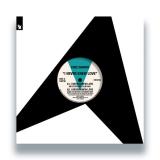
I Never Knew Love sees Detroit house mainstay Chez Damier return to the iconic KMS catalogue with a timeless house classic, now available again on fresh 12” vinyl.
A staple of the deeper side of Detroit house, the release combines soulful vocals, warm grooves and refined production, reflecting the signature sound that has defined Chez Damier’s work across decades.
This edition features standout versions including the MK Extended Club Mix from Marc Kinchen, alongside additional extended mixes and a reconstructed version of Help Myself by Carl Craig, offering strong depth and versatility for DJs.
As a key release from the KMS catalogue, this record continues to hold lasting appeal across both classic house collectors and DJs seeking authentic Detroit-rooted material.
Back on fresh 12" vinyl, this repress brings an essential Chez Damier release back into circulation for a new generation of listeners.
An essential catalogue piece for stores supporting classic house and Detroit heritage releases.
erscheint voraussichtlich am 10.07.2026
,Just Shoot Me Now" und ,Dollys Coat" - aufgenommen und produziert von MJ Lenderman. Ursprünglich als CD-R in Eigenregie veröffentlicht. Mit MJ Lenderman, Karly Hartzman, Colin Miller, Ethan Baechtold, Xandy Chelmis, Landon George und Jack Kraus. Produziert von MJ Lenderman. Aufgenommen von Colin Miller und MJ Lenderman. Abgemischt von Colin Miller und Jack Kraus. Gemastert von Amy Dragon.
erscheint voraussichtlich am 10.07.2026
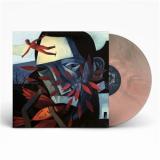
RED/BLACK MARBLED VINYL[26,01 €]
Pearl Flip Horizon Vinyl. Europa-Version, limitiert auf 500 Exemplare. Seit 2013 vergriffen, ist ,Never Ender" endlich wieder erhältlich! Mit neuem Artwork von SINC und remastert von Andy Clarke versammelt ,Never Ender" die Split- und EP-Veröffentlichungen von HWM aus den Jahren 1996 bis 1999.
erscheint voraussichtlich am 10.07.2026

Pearl Flip Horizon Vinyl. Europa-Version, limitiert auf 500 Exemplare. Seit 2013 vergriffen, ist ,Never Ender" endlich wieder erhältlich! Mit neuem Artwork von SINC und remastert von Andy Clarke versammelt ,Never Ender" die Split- und EP-Veröffentlichungen von HWM aus den Jahren 1996 bis 1999.
erscheint voraussichtlich am 10.07.2026

Classic Barrington Levy Album from 1984 restored and remastered for best ever sound.
Features the hit singles 'Money Move; and the Jah Shaka sound system anthem 'Praise His Name'. Unavailable for 40 years and first time ever released outside Jamaica.
Sleeve artwork design by the great Jamaican illustrator Limonius - highly collectable. Solid all-star roots backing from Sly & Robbie, Lloyd Parks.
Recorded and mixed at Dynamic Sounds and Channel One
erscheint voraussichtlich am 10.07.2026

‘Italo Disco Compilation V1’
Italo Hub delivers a refreshing various-artists compilation where four distinct voices reinterpret Italo Disco through their own lens.
Featuring contributions from Philipp Lauer, K!pz, Marta Paradise and Marcello Giordani, this release seamlessly blends nostalgia with forward-thinking production.
The A-side opens with Lauer’s “Buongiorno”, a sun-soaked anthem packed with signature grooves and an unmistakable Italo flair. K!pz follows with “Notte di Sicilia”, a darker, more introspective cut, fusing driving Hi-NRG basslines with sentimental melodies.
On the B-side, Marta Paradise delivers “Please Don’t Let Me Go (A-U-A-I)”, an irresistible floor weapon driven by a catchy vocal hook and shimmering synth work. Closing the record, Italo Deviance’s “Hyperactive (1983 Mix)” dives deep into nocturnal territory—an atmospheric electro piece built on repetition, texture, and immersive energy.
An essential release for lovers of contemporary Italo Disco with a deep respect for its roots—equally suited for the dancefloor and the record bag.
erscheint voraussichtlich am 10.07.2026

erscheint voraussichtlich am 10.07.2026
erscheint voraussichtlich am 10.07.2026

For our fourth release, we welcome Flits alongside For You founder Line-o.
Flits takes the A-side with two highly effective techno tools. Visionair cuts straight through with gritty textures, crunchy hats, and a driving groove. Kensington follows, tight and punchy, built to hit right.
Line-o returns on the B-side. Liminal opens deep and forward, driven by a steady momentum that locks you into its flow from the start. Fragments shifts into a more percussive direction, rolling and groove-led, rooted in the stripped-back rhythm Line-o is known for.
erscheint voraussichtlich am 10.07.2026

,Enigma" ist das zweite Studioalbum von Kira Roessler (Black Flag, dos). Nach ihrem Solo-Debüt von 2021 baut das Album ihren minimalistischen, bassbetonten Sound weiter aus und verbindet karge Arrangements mit einer zurückhaltenden emotionalen Intensität. Co-produziert mit ihrem Bruder Paul (Screamers) und mit Backing-Vocals von Petra Haden entfaltet sich ,Enigma" mit einer ruhigen Präzision, die Kiras einzigartige Stimme und ihre kompositorische Zurückhaltung hervorhebt.
erscheint voraussichtlich am 10.07.2026

erscheint voraussichtlich am 10.07.2026

Der Erfinder der "Infinite Guitar", der kanadische Musiker Michael Brook, schuf mit seinem 1992 bei 4AD erschienenen Album Cobalt Blue eine zeitlose und leise überwältigende Sammlung instrumentaler Stücke und schimmernder Klanglandschaften. Mit Beiträgen des Ambient-Pioniers Brian Eno, des Komponisten und Multiinstrumentalisten Roger Eno sowie des Grammy-prämierten Produzenten Daniel Lanois. Live at the Aquarium, später im selben Jahr aufgenommen, dokumentiert einen seltenen Soloauftritt Brooks in London und hebt das hypnotische Sustain und die atmosphärische Tiefe hervor, die sein Werk prägen. Über seine Alben hinaus komponierte Brook Filmmusiken für gefeierte Filme wie Into the Wild, Brooklyn und An Inconvenient Truth. Neu remastert von Rashad Becker und präsentiert als kristallklares 2LP-Set mit Artwork von Alison Fielding auf Basis der originalen v23-Designs, markiert diese Veröffentlichung die erste Vinyl-Wiederauflage von Cobalt Blue sowie das Vinyl-Debüt von Live at the Aquarium - eine längst überfällige Würdigung eines unterschätzten Juwels im 4AD-Katalog.
erscheint voraussichtlich am 10.07.2026

erscheint voraussichtlich am 10.07.2026

High-velocity modern techno tools for the Clone Repetitive Rhythm Research series. This four-tracker balances peak-time intensity with a sophisticated nod to classic dub-techno blueprints. Featuring the deep, moody atmosphere of "Infinitas" as the essential deep-mood closer on the b2 spot!
erscheint voraussichtlich am 11.07.2026

West Hill Music is a new sub-label from Periodica Records dedicated exclusively to productions curated by Mystic Jungle and conceived at West Hill Studio in Napoli, a longstanding creative hub active for more than a decade.
The project aims to reclaim and reimagine the language of mid-1980s music, drawing from both American and European New Wave through a personal filter that freely and instinctively blends elements of Italo Disco, Rock and Funk. The two tracks, moving within a dance-not-dance dimension, stand as a manifesto of this sonic synthesis and a further step in defining the aesthetic vision of the producer. On "Chasing Light", the collaboration with Igor Sekulovic continues, with the guitarist also appearing here as co-writer of the track, weaving together tense guitars, driving disco-rock bass-lines and slapback reggae-style vocals. "Under Pressure", on the other side, unfolds as a late-night electronic suite: minimal, aseptic and hypnotically repetitive.
erscheint voraussichtlich am 12.07.2026

Cosmo Dance is the artistic alias of Cosimo Mandorino, an Italian producer and DJ who has been active in the electronic music scene for more than twenty years, as well as the founder of the label Mirella. Produced and finalized in Napoli during a series of short stays, and developed with the contribution of Raffaele Arcella and Dario di Pace, "Cosmo-logic" unfolds within a parallel, plausible, and dystopian universe where humans and machines coexist in constant tension and perpetual conflict. A musical narrative shaped by rebellious computers, wars between binary systems, and universal unified languages, the record stands as a manifesto to the early era of Italo-Disco, while remaining deeply infused with influences from cosmic disco and stripped-down electronic funk. The tracks make extensive use of mechanical rhythms, voice modulators, vocoders, and analog effects, exploring sonic territories forged through iconic instruments such as the Korg MS-20.
erscheint voraussichtlich am 12.07.2026

Auf ,Reflections Vol. 3: Water Poems" bringen Félicia Atkinson und Christina Vantzou ihre Freundschaft und ihre atmosphärische Kunstfertigkeit in einem feierlichen Fokus zusammen. Gesprochene Worte und orchestrale Fantasie fließen wie Nebenflüsse in einen einheitlichen Strom und ergeben eine Sammlung traumhafter Lieder und Klanglandschaften, die im Meer, im Himmel und in den Steinen verankert sind. Mit elektroakustischen Instrumenten, Gesang und Umgebungsgeräuschen lädt Water Poems die Zuhörer in einen unbewussten Raum ein, irgendwo zwischen alltäglicher Intimität und dem Geheimnis des Ozeans, aus dem alles Leben entsteht. Atkinson und Vantzou haben sich 2009 kennengelernt und seitdem immer mal wieder zusammengearbeitet, aber ein Konzert 2019 in der Philharmonie in Paris hat dieses Projekt richtig in Gang gebracht. Da beide jetzt an der Küste leben (Félicia am Ärmelkanal, Christina am Mittelmeer), wurde das Meer natürlich zu ihrer Muse. ,Das Meer wurde nicht als monolithische Postkarte betrachtet", erklärt Atkinson, ,sondern eher als eine Person an sich; eine Energie, ein Geheimnis, ein komplexer Charakter, dem wir als Menschen, die am Meer leben, jeden Tag begegnen." Im Dialog mit dem Land und der Küste nahmen ihre Sprache und ihre Klänge einen sakramentalen Charakter an. ,Ein feierliches Gefühl, ein Gefühl des Dienens, zieht sich tief durch dieses Album", bemerkt Vantzou, ,ich habe das schon einmal gespürt, aber hier, in der Zusammenarbeit mit Félicia, ist es stärker." Stimme, Atem und wässrige Texturen prägen den Ton des maritimen Mysteriums von Water Poems. Neu in Vantzous Praxis und seit langem ein prägendes Merkmal von Atkinsons Werk, gewinnen ihre gesprochenen Worte hier an relationaler Intimität, indem sie sich gegenseitig und die Uferpromenade ansprechen. Die Texte wurden über zwei Jahre hinweg gemeinsam zusammengestellt. Mit radikaler Unschuld lenken sie das Bewusstsein auf die verborgene Auftriebskraft und die unbewussten Strömungen, die durch das Leben fließen: ,Wie kann ein Boot schwimmen? Wie kann ein Flugzeug fliegen? Wie kann ein Körper schwimmen? Wie kann ein Mensch träumen?" Was mit nah aufgenommenen Stimmen und Feldaufnahmen begann, wurde um Synthesizer, Gongs und Metallophone, Klavier, Vibraphon, Rhodes, Gitarren und Mellotron erweitert. Das Gezeitenklavier des Eröffnungstracks ,Film Still / The Sea" zieht uns in die unbewussten Gewässer des Albums. Enthalten sind Feldaufnahmen, die Vantzou in Delphi in der Nähe des legendären Orakels von Pythia aufgenommen hat - ihr griechisches Erbe verleiht diesem Ort der Vorfahren eine zusätzliche Dimension. Dieser Track und ,Water Poems" als Ganzes sind Ausdruck unseres geologischen Erbes und rufen zum Schutz der Küsten und zu einer Vertiefung unserer Beziehung zu unseren Küsten auf. Ein Teil der Einnahmen aus dem Album geht an Arion, ein gemeinnütziges Naturschutzprogramm für das griechische Mittelmeer. Der langjährige Freund und Mitstreiter John Also Bennett hat bei ,Scorpio Purple Skies", dem kosmischen Finale des Albums, mit E-Gitarre, Lap-Steel-Gitarre und Gesang mitgewirkt. Diese üppige Instrumentierung passt super zu den Science-Fiction-Visionen und der feierlichen Atmosphäre des Albums. Water Poems wurde in The Old Carpet Factory, einem Herrenhaus aus dem 18. Jahrhundert auf der griechischen Insel Hydra, in der Villa Medici aus dem 16. Jahrhundert in Rom und in Les Dunes, Atkinsons Heimstudio in der Normandie, aufgenommen. Mehr als das historische Prestige dieser Orte war es die spürbare Geschichte ihrer Landschaft, die die Musik geprägt hat. Atkinson sagt, dass sie sich zu ,Orten mit seltsamer Anziehungskraft" hingezogen fühlten. In der Villa Medici ,haben Steine und Mineralien das gesprochene Wort beeinflusst", bemerkt sie. ,Wir beide legen Wert auf Gefühl, Atmosphäre und Klang", fügt Vantzou hinzu, ,was er hervorruft und was er bewirkt. In unserem Fall konzentrieren wir uns auf die grundlegenden Elemente: Wasser, Luft, Fels, Kosmos - allesamt lebenswichtig.» Von der Insel Kreta aus arbeitete Vantzou den finalen Mix fertig und tauschte dabei Dateien mit Atkinson aus. Immer noch mit der Küste verbunden, verlief der Mixing-Prozess geduldig und wurde von wichtigen Pausen geprägt. Water Poems spiegelt wider, was die Meeresbiologin Rachel Carson uns in Erinnerung ruft: ,Am Rande des Meeres zu stehen bedeutet, Wissen über Dinge zu haben, die so nahezu ewig sind, wie es das irdische Leben nur sein kann." Es zelebriert rituell dieses ozeanische Gefühl als wichtige Quelle der Gelassenheit und Intelligenz. In einer Welt, die von hitzigen Meinungen und ökologischer Vernachlässigung geprägt ist, lenkt Water Poems unsere Aufmerksamkeit auf ,die Quellen der Quellen". Damit schafft es Raum, um uns wieder mit unseren elementaren, animalischen Instinkten zu verbinden und uns auf tiefere Strömungen einzustimmen. Water Poems von Félicia Atkinson und Christina Vantzou ist der dritte Band von Reflections, einer Reihe zeitgenössischer Kollaborationen von RVNG Intl..
Bei uns am Lager und sofort versandfertig

2025 Reissue.
Münchenbuchsee, a suburb of Bern, Switzerland. Stephan Eicher is the youngest of three children. His father, a radio and TV repairman, is also a jazz violinist and a sound tinkerer in his spare time. In the family home's converted fallout shelter turned studio, Mr. Eicher experiments with homemade sequencers, tortures handcrafted drum machines, and abuses reel-to-reel tape recorders—all under the fascinated gaze of young Stephan.
The boy quickly develops a musical curiosity, exploring sound through various experiments and wanderings. Alongside his younger brother Martin, Stephan crafts audio plays on a homemade multi-track recorder (essentially several cassette decks hooked together!), which they write, record, add sound effects to, and perform for family and friends. Just a couple of nice kids, really...
Then comes 1972, and Lou Reed's Transformer album changes everything for the Eicher kids. For 13-year-old Stephan, it's a revelation—especially "Vicious", the opening track, which he plays on repeat for months. He convinces his father to buy him an electric guitar. Not stopping there, his father also builds him a tube amp using an old radio.
Then comes adolescence. A rough one. Stephan leaves home at 16 and moves to Zurich. With obvious artistic talent, he persuades his art teacher to help him get into F+F, a radical, alternative art school—despite his young age. Accepted, he starts learning video techniques, determined to become a filmmaker.
At F+F, Stephan organizes Dada-style happenings and concerts with a group of friends known as the Noise Boys. Among them: one of his teachers on bass, Veit Stauffer on drums (who would later found ReR/Recommended Records), his girlfriend Sacha on vocals, and Stephan on guitar. In one of their early performances, they release a remote-controlled mouse covered in dull razor blades into the audience to create panic and chaos. Keeping with this aggressive, confrontational spirit, they once played a concert while wearing headphones blasting Tristan and Isolde, trying to perform their own songs simultaneously—to maximize the cacophony. The goal was always the same: clear the room.
Their “songs,” if you can call them that, followed suit. Take "Hungeriges Afrika", for instance—performed entirely with power drills and some drum feedback.
To make ends meet, Stephan returns to Bern on weekends to work as a waiter at the Spex Club, the city’s main punk venue. On September 16, 1980, during a show by proto-electro group Starter, the police raid the club and arrest everyone. Stephan, who manages to avoid arrest, seizes the opportunity to “borrow” Starter’s gear left behind. He suddenly finds himself in possession of a Roland Promars synth, a Korg MS20, and a gorgeous CR78 drum machine, which he runs through a Big Muff distortion pedal to get that perfect gritty sound.
He then sets out to reinterpret some Noise Boys tracks, reworking them during impromptu sessions recorded on a dictaphone (yes, a dictaphone—now the lo-fi sound makes more sense, doesn’t it?). He ironically titles the resulting cassette "Stephan Eicher spielt Noise Boys" ("Stephan Eicher plays Noise Boys"). This gem features seven tracks, which are the ones reissued here.
Back in Zurich, he visits his friends Andrew Moore and Robert Vogel, who have a DIY cassette duplication setup. They make 25 copies of Stephan Eicher spielt Noise Boys for Stephan and his friends. Robert encourages him to visit Urs Steiger of Off Course Records and play him the tape.
Without much hope, Stephan shows up at Urs’s office. But Urs is instantly hooked and suggests releasing a 7” single. Due to space constraints, they reluctantly drop two of the seven tracks ("Hungeriges Afrika" and "One Second"). As for the musical score featured on the cover—it was randomly chosen and remains a mystery to this day. Calling all music theory nerds!
The 7-inch is pressed in 750 copies and released in the first week of December 1980—a date Stephan remembers well, as it’s the same week John Lennon was killed. Smartly, Urs sends a promo copy to François Murner, Switzerland’s answer to John Peel, who hosts a show on alternative station Sounds. Murner falls in love with the record and starts giving it airtime. To Stephan’s surprise, sales follow—and people actually seem interested in his music.
Even this modest underground success scares Stephan a bit. He stops making music for a year and moves to Bologna, where he works as a programmer at Radio Città, a feminist radio station.
Meanwhile, Stephan’s younger brother Martin, who’s also involved in the punk scene, joins the band Glueams as a singer and guitarist. Glueams, named after the fanzine run by two of its members (drummer Marco Repetto and bassist GT), eventually rebrands as Grauzone. Stephan is invited to their shows to project hacked Super 8 visuals live on stage.
Urs Steiger, now working on a compilation titled Swiss Wave – The Album, asks Grauzone to contribute alongside bands like Liliput, Jack and the Rippers, The Sick, and Ladyshave (Fall 1980).
For the album, Martin tasks Stephan with producing their recording sessions. Under Stephan's artistic direction, two tracks emerge: "Raum" and "Eisbär". During "Eisbär", Martin plays a minimalist bass line borrowed from post-punk band The Feelies (just an open string). Drummer Marco Repetto struggles to keep time. Later that evening, unhappy with the takes, Stephan builds a four-bar drum loop from a ¼-inch tape and uses it instead of the flawed original. He then adds bleepy synths and wind sounds to complete the track’s icy vibe before handing it over to Urs.
The Swiss Wave – The Album compilation is released quietly at first, but things snowball thanks to "Eisbär", which eventually becomes a smash hit—selling over 600,000 singles.
Meanwhile, Stephan plays in a rockabilly band called SMUV (named after Switzerland’s social security agency) and begins producing artists, including the debut album of Starter (1981), which includes a more pop-oriented version of "Minijupe".
By early 1982, Stephan starts spending time with the post-punk girl band Liliput (formerly Kleenex). They’re older than him, and he happily drives them around in his Renault Major, acting as their roadie.
By 1983, Grauzone—signed to the major label EMI, which turned out to be a misstep—is falling apart. Stephan begins to pivot toward a more mainstream pop sound with his debut solo album Les Chansons Bleues.
But that... is already another story.
Bei uns am Lager und sofort versandfertig

2026 Repress
Akusmi is the project moniker of French-born, London based composer, multi-instrumentalist and producer Pascal Bideau, who signs to the new Tonal Union imprint for the release of his album 'Fleeting Future.' With its hallucinatory, genre-defying blend of minimalism, cosmic jazz and Fourth World influences, and in its quest for optimism in the face of unknown and limitless possibility. 'Fleeting Future' stands apart as an inventive and inspirational debut.
The creation of the album's richly colourful and multi-layered sound world was originally inspired by Bideau's journey to Indonesia, where he immersed himself in traditional Gamelan and gong music. Many of the themes, motifs and melodies on 'Fleeting Future' seed from the 'Slendro' scale, one of the essential tuning systems used in Gamelan. However it is not musical scales, but scales as in the size or extent of things that most fascinates Bideau, specifically he explains; "the compelling way things dramatically change when you shift from any given scale to another."
The album connects directly to nature and the wider world in its evocation of perceptive shifts and transitions from microscopic to macro scale, as evidenced by the opening title track 'Fleeting Future', on which a simple dotted saxophone line morphs and billows into synths, brass and strings, indicating the musical voyage that lies ahead. Like the start of a journey or adventure it is full of anticipation, its arborescent growth conveying the optimism of the unknown and of limitless possibility. The album centrepiece 'Neo Tokyo' is a vibrating, ebullient mass of colliding elements which feels like zooming in to the electron level, as it teeters on the edge of chaos. The title is a reference to Katsuhiro Otomo's Akira, a dizzying work of art set in a sprawling futuristic metropolis.
'Yurikamome', meanwhile, is an imaginary soundtrack inspired by Bideau's yearning to visit Japan which he fuels by watching Youtube videos of drives and rides through Japanese landscapes and cities. "It's amazing" he adds, "that we have the ability to access almost anywhere in the world and see what it's like, that people document it and upload it. It's never going to be any replacement for the real thing, but with places that really touch you, it works." The track is named after a Japanese monorail train line which rides from Shinbashi to Toyosu, a last journey that feels like a new beginning.
'Fleeting Future' was composed and recorded by Bideau between 2017 and 2019 in his North London studio and features additional contributions recorded in Berlin by Florian Juncker (trombone), Ruth Velten (saxophone) and regular collaborator Daniel Brandt of Brandt Brauer Frick (drums / electronic percussion). Having been living through uncertain times, one thing that keeps spiralling into the unknown is the future, about which Bideau leaves us with a final thought:
"The future is fascinating: It is constantly readjusting to new events. I feel we left a linear approach to the future to enter an arborescent one where all the data and information we have about what could happen is exponentially ever-growing. Following a branch might allow you to glimpse into what it may become, but the evolution of the whole picture might very well render the prediction totally obsolete, and even meaningless. In that sense, there is not one future but innumerable ones all cancelling each other. That's what makes it fleeting."
Bei uns am Lager und sofort versandfertig
