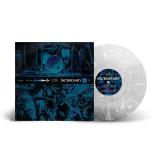
También disponible
Clear w/ Cyan Marble Vinyl[28,15 €]
Reservar26.06.2026
debe ser publicado en 26.06.2026
28,15 €
Clear w/ Cyan Marble Vinyl[28,15 €]
debe ser publicado en 26.06.2026
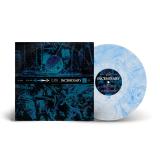
Clear w/ White Marble Vinyl[28,15 €]
debe ser publicado en 26.06.2026

Crystal Clear Vinyl. Incendiary Device (I.D.) was born from the ever-burgeoning hardcore and punk scene in New York City. Founded by NYHC journeyman, documentarian, and filmmaker Drew Stone (vocals), and Tristan D'Graves (bass), Incendiary Device's music is steeped in early hardcore and classic punk while inescapably maintaining the edge and grit of their New York roots. Produced once again by the band and Neal "Zum" Ostberg (Fryette and Sound City amplification) and mixed by Dan Korneff (My Chemical Romance, Lamb of God, The Devil Wears Prada).
debe ser publicado en 29.05.2026

debe ser publicado en 29.05.2026

debe ser publicado en 06.02.2026
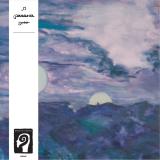
Second album of french incendiary fake big band Parasite Jazz. A krautrock, jazz-non-jazz, experimental album recorded along four seasons by three musicians (Alex Larsen, Tamara Goukassova & Théo Delaunay) from the french fringes ; members of Succhiamo, Diagonale des Yeux, Simple Music Experience, Violent Quand on Aime ... featuring Radio Hito, Kyle Knapp (Deliluh) & Hochiwah.
—
After its first release in 2023, the tiny big band Parasite Jazz brings its public iterations to fruition with “♫”, a testament to an alternate reality, matured voyaging across France over the span of four seasons.
It sees the music flee through exuberant forests and steep troglodytes ; a parallel genre movie with a soundtrack of diluvian rhythms, mocking chants, jazz noir and voodoo accidents. In this shifting, autonomous world, the elastic orchestra—whose members Radio Hito, Valentin Noiret, Kyle Knapp, and Hochiwah keep on appearing and disappearing—plays for nocturnal secrets and feverish cavalcades.
debe ser publicado en 05.06.2026

The Heartbreakers" "D.T.K" ("Down To Kill") is the incendiary live 1977 companion to "L.A.M.F." (Like A Mother Fucker), which is hailed as one of the classic punk albums. Formed by New York Dolls Johnny Thunders and Jerry Nolan in 1975, they influenced the UK punk scene, joining the Sex Pistols, Damned & Clash on the infamous "Anarchy" tour. "D.T.K" was recorded by Track Records on the Maison Rouge mobile studio on 15th March 1977 at the notorious musicians" nightclub and features Johnny infamously abusing the audience. It was a warm-up for the "L.A.M.F." sessions starting the following week. Originally released in 1982 as a 10-track album, it was remixed in 2005 and five more tracks were found on the 2" multi-track tapes. Now the album has the entire two sets played that night, 15 unexpurgated tracks in all. The sleeve has notes by journalist Kris Needs and contemporary photos.
debe ser publicado en 12.06.2026

Two legends from New York City here for the price of one, as Downside Up Recordings boss Brandon De Carla - noted for his incendiary PAs and DJ sets around the Big Apple from the 90s onwards, as well as releases for labels as luminary as Kevin Saunderson's KMS - enrols the even more celebrated Joey Beltram to add a remix to his three originals here. De Carla's productions sure are uncompromising, not so much as inviting you onto the dancefloor as prodding you on with their itchy, wriggly sense of metallic funk and spaced out atmospherics, especially the latter on the beatless but substantial, grungy DJ tool that is closing track 'Valley Of The'. Beltram's mix, meanwhile, is pinned down by handclaps that sound like they were forged in a steelworks, but again manage to wrangle a sense of irresistible funkiness from the heaviest duty ingredients. Proper 3am techno gear, make no mistake.
En el almacen y preparando para el envío

Following his incendiary debut, Ingo Hammer delivers four devilishly great burners on Industrial Lies.
This time, his satanic majesty drops the sleazy, pulsating ‘Kneejerk’ and ‘Insane’, rewires body music with the robotic ‘Chinois’ before riding the D train to hell and back on the breakin’ ‘New York’.
Each one is a guaranteed dance floor 'hammer'.
DJ support for ‘Hammer Time’ came from I-f; Intergalactic Gary, Legowelt, Marcel Dettmann and Sunil Sharpe.
Limited edition of 100 vinyl copies.
Written & Produced by Ingo Hammer
Mastering by Tom Haunstein (Rand Muzik)
Artwork by Jonny Costello (Adult Art Club)
Industrial Lies
Industrial Lies is the offshoot label of Dublin house and techno imprint in First Cut.
Established in 2023, the label is named after the B-side of Cybotron’s electro classic ‘Clear’.
Industrial Lies shines a light on left-of-centre music from the past and present, including proto-Chicago house, ebm/industrial, electro and adjacent sounds.
En el almacen y preparando para el envío

2025 Repress
DJ Europarking lands on UFO Inc. with his debut EP. Tongue-in-cheek and extremely danceable, this is an incendiary EP. 'Boompahpah' gets things rolling with dense beats, a high-octane tempo and a choir-driven breakdown. '20inch Chrome' is a madcap cut that uses a variety of hip hop-esque samples, sirens and a tribal chant. On the flip 'Bitte Everyday' utilises breakbeats and a mixture of rapping, chanting, and zany effects to enchant the listener. Finally 'Like Trampolines' features hefty beats alongside an incendiary riff that is sure to cause havoc on the dance floor.
En el almacen y preparando para el envío

In the humid static of early-’80s Tel Aviv, Chromosome emerged like a wiretap from the future. Formed in 1981 by provocateur Rami Fortis and sonic instigator Doron “Shultz” Eyal, the group fused punk abrasion, new wave architecture, avant-garde dissonance, and Middle Eastern textures. Joined by David Gervai and Rona Vered, they produced a singular 12" EP on their DIY imprint TOV Production - now a collector’s treasure.
This reissue of the Chromosome EP resurrects a raw, percussive artifact that slips between English, Arabic, and indecipherable phonetics like a busted shortwave signal. Anchored by “Makhtub” and backed with incendiary tracks such as “Show of Terrorism” and “Gazolina,” it is a vital document of Tel Aviv’s underground, mapping out a borderless, feral lineage for Israeli music.
En el almacen y preparando para el envío

Astropolis Records, the label born from the legendary Brest festival, marks a decade of electronic devotion with a sprawling, heartfelt anniversary compilation — slightly belated, but executed with undeniable flair.
It also comes in two EPs, showcasing the many facets of the Astropolis universe: in-house artists, long-time festival collaborators, and fresh talent from France’s ever-bubbling scene. Eighteen artists guide us through a sonic journey where rave heritage, electronic dreamscapes, and collective fervor intertwine — true to the spirit of a festival that has never recognized borders
The first EP bathes in warm tones across electronica, house, g-tech, old-school rave, and melodic techno.
It opens with grace and magic via Rone, whose electronic touch conjures the intimate and the infinite. Between electronica and downtempo, The Dolphin Ambassador delivers luminous melancholy, offering a gentle calm before the storm.
The unlikely pairing of Mézigue and Swooh catapults house into a g-tech vortex with the unrestrained Broken Roll To Venice, a compact fusion of groove, hybrid sounds, and playful inventiveness.
Belaria & Madben continue this alchemical thread on Into The Void, an incendiary anthem where 90s rave, EBM, and modern intensity collide in hypnotic trance.
For old-school dancefloor loyalists, KiNK finally resurrects a cult live set staple: Give Me, a bona fide banger merging breakbeat and vintage house, engineered for late-night sweat sessions.
Oniris & Benjamin Rippert revisit the melodic techno roots of the label on Sonate, demonstrating a masterful command of harmony.
This anniversary compilation underscores the label’s openness to new generations and recent sonic hybrids, while paying homage to the techno scene that shaped its early days. Much like the festival itself, it embodies the same sincerity and collective energy: a small manifesto connecting generations, aesthetics, and territories — celebrating roots without nostalgia, and the future without bowing to trends.
En el almacen y preparando para el envío

Three decades on from its original 1995 release, Todd Terry’s 'Devil’s Dance' still burns with the kind of manic, floor-filling energy that defined the early years of Hard Times. Now, Todd and the label return to the track, inviting a trio of today’s most vital club architects to rework one of Todd's most incendiary productions for a new generation of dancers.
Following a year that saw Chris Stussy and Dan Shake breathe new life into 'Bounce to the Beat,' Hard Times closes out 2025 with 'Devil’s Dance (Remixes),’ a collection that bridges old-school grit and new-school heat. Rossi., Demi Riquísimo, and Cinthie each bring their own distinct combustion to Todd’s iconic organ riffs and bulbous bassline, reframing the track through London, Berlin, and Balearic prisms.
Rossi. leans into the city that raised him: “It’s been a real pleasure to remix such an iconic inspiration for me as an artist. Todd is a legend and part of the reason why we have the culture of music we have today. I wanted to bring my remix back to my London roots - a UKG skippy, warpy approach that still carries those iconic chord riffs.”
En el almacen y preparando para el envío

SHDW's Mutual Rytm imprint is back with its third release of 2024, marking a full label debut from Sonic Propaganda with their 'Native' EP.
Sonic Propaganda comes from the collaborative minds of Earwax and Rosati, a pair who favour dark and intense techno sounds and take inspiration from Jeff Mills and Robert Hood. In the studio, they blend analog and digital technologies into smoky warehouse atmospheres and immersive journeys that connect with listeners on an emotive level, and this full EP lands following their contribution to the third instalment of the Mutual Rytm's Federation Of Rytm compilation series in February.
The powerful 'Native' opens up at high speed with tightly coiled drum loops that never let up. Sleek metal percussive sounds peel off the grooves and lock listeners into a perfect state of hypnosis. 'Soul Pressure' is just as absorbing, with a tense bassline keeping you on edge as the train-like drums march under incendiary hi-hat ringlets. There is plenty of perfect machine funk to 'Terminal', which has more rusty synth textures and chopped-up vocal fragments humanising the turbulent grooves. 'Basic Path' brings an extra skip to the kicks as they enter, scuffed up and flowing just above the groove, while vocal pulses and twitchy synth modulations bring the detail. 'Body Empire' closes the vinyl package with a deeper vibe and pensive synths that add warmth and soul to the brilliantly mechanical grooves, while digital bonus 'Acid Riot' closes with squelching acid lines amongst a swell of analog crunch and laser-sharp percussion.
En el almacen y preparando para el envío

180 G. BLACK VINYL WITH LINER NOTES IN CREOLE, FRENCH, ENGLISH
Originally released in 1979, "Spiritual Sound" lives up to its name, a soaring, triumphant album, six tracks of spirit magic from Guadeloupe.
Telluric, intense, terribly alive, the gwoka drums of Guadeloupe carry the identity of a painful and fervent island. Marked forever by the crime of slavery, Guadeloupe's créolité cherishes the ka drums and their natural environment: the low-pitched boula drum with male goatskin, the high-pitched soloist makè drum with female goatskin, the chacha, ti bwa, triangle, calabash and other percussion instruments that surround them, and the voices - the fiery, proud, timbred, urgent voices of the gwoka.
This album is also a legend for its voices: in his then dazzling youth, singer Lukuber Séjor was one of the first gwoka artists to largely feminize the chorus of répondè, who converse with his text delivered in a straight and powerful voice.
And everything here sets new standards. In 1979, Mizik Filamonik - Spiritual Sound proclaimed a spiritual patriotism of ferocious intensity. The album by Lukuber Séjor - whose spelling alone is a battle - sets out to give Guadeloupe the intangible weapons of self-respect and self-knowledge, through a singular practice of traditional music.
The genesis of gwoka music is less straightforward than one might imagine... The drums performed the servile task of accompanying the work of slaves in the fields and during the “corvées” imposed by the administration, before being freely practiced by the common people after the abolition of 1848. At the heart of the conviviality of the Guadeloupeans furthest from the cities - geographically and socially - the gwoka drums come out for carnival, funeral wakes and neighborhood celebrations, but also during strikes, fits of anger and armed vigils of the riots and revolts that have punctuated the island's history. For generations, governors of the colony and then the prefects of the overseas department of Guadeloupe have been viewing the gwoka as a potential for turbulence and a threat to public order.
But as the Beatlesmania, “chanson engagée” and rock revolutions unfolded in Europe, young people turned to the drums of mizik a vié nèg (“bad negro music”, in Creole), which Guadeloupeans had learned to despise by following the “assimilation” process advocated by the school system and most of the political class. At the end of the sixties, in a Guadeloupe mourning the deadly repression of the May 1967 social movement, they played traditional music, refusing to wrap it up in tourist prettiness and madras folk costumes. Instinctively, they played a rough and contemporary gwoka, led by the incendiary Guy Konkèt. This was the era of decisive 45 rpm records such as Robert Loyson's Kann a la richès, which brought to light the fieriest words of union rallies.
At his home in Sainte-Anne, Lukuber Séjor played with flautist Olivier Vamur and his brother Claude Vamur, who cobbled together a drum kit from tin crockery and became, a few years later, the most influential drummer in Kassav'.
These were the years of the Bumidom program, when young Guadeloupeans were encouraged to emigrate to mainland France. At the age of twenty, Lukuber Séjor embarked on the liner Irpinia, disembarking at Le Havre and taking the train to the Gare Saint-Lazare - the route taken by thousands of young West Indians who went on to study or looked for work, all the while trying to maintain a link with their homeland. In this case, it's at the Antony university residence, where Lukuber played the drum and participated in a thousand gwoka updates and aggiornamentos, while exile reinforced the need for a spiritual link with the native land.
In 1978, Guy Konkèt played at the Salle Wagram, a historic event for West Indian music. After serving as répondè - i.e. backing vocalist - on one of his home-recorded albums, Lukuber joined his live band. Little by little, he became one of the key artists on a circuit parallel to French show business. At a student party in Caen, he met a young woman from Martinique who, at the time, was more motivated by her ambitions as a visual artist than by her vocation as a musician. Her name was Jocelyne Béroard and, a few years before she plunged into the Kassav' adventure and became the greatest West Indian singer of her generation, she designed the cover of Lukuber Séjor's LP.
This ambition was obvious and imposed its will. A more or less regular band was formed, with Roger Raspail, Rudy Mompière and Éric Danquin on ka drums, Claude Vamur on ti bwa, Olivier Vamur and Françoise Lancréot on flutes and Annick Noël on keyboards. Lukuber Séjor is set on wanting to extend the gwoka palette to other instruments, as the jazz-rock revolution opens a thousand new doors. Annick Noël will play a wide range of timbres and textures on electric piano and synthesizer. Another novelty: the répondè are two men and two women, Roger Raspail, Olivier Vamur, Françoise Lancréot and Maryann Mathéus ...
Mizik Filamonik - Spiritual Sound is a self-production in which the singer and leader sank all his savings, allowing him no more than a single day in the studio. The first side is more of a musical manifesto, with the first two tracks, Éritage and Penn é plézi, being instrumentals. The third, Son, forcefully celebrates the need for Guadeloupeans to connect with the gwoka. In fact, Jocelyne Béroard's cover shows a tambouyé in the shadow of a cloudy sky, against which a radiant sun is rising and whose light will soon flood the entire landscape. The silhouette and face of this man strongly evoke the immense Vélo, master of the ka, rejected at the time on the fringes of society.
The second side of the LP is surprising. Formally, three tracks are explicitly linked like the three parts of a triptych. Primyé voyaj evokes the appalling tribulation of Africans deported as slaves to Guadeloupe; dézyèm voyaj speaks of the Bumidom program and the economic, political and social forces driving young Guadeloupeans towards the mirage of prosperity in France; twazyèm voyaj closes the cycle with the emigrants' return from Europe after years away from their island...
This gwoka, obsessed with the need to save Guadeloupe spiritually, appeals far beyond the politicized audience. Mizik Filamonik - Spiritual Sound instantly became a classic, although Lukuber Séjor never really made a career for himself as a musician.
After all, the album was released in 1980, with no promotional resources in France or Guadeloupe - and therefore no concerts. The thirty-two-year-old author, composer and performer made his own third trip back to Guadeloupe. He set up a small woodworking business, which he lost in Hurricane Hugo in 1989. His other activity, teaching in a medical-educational institute, became the core of his professional life. He continued to be an active campaigner - a campaigner for the Creole language, a campaigner for the reawakening of identity, a campaigner for special education, a campaigner for a thousand causes that he ignited with his generous and perceptive enthusiasm, such as the defense of breadfruit fries...
The echoes of his 1979 album have not died down. Of course, the use of Penn é plézi as the theme tune for Radio Guadeloupe's funeral notices from 1980 to 1992 kept him in the collective memory, but he continues to sing and compose sporadically, as with his all-female
vocal group Vwapoulouéka... Still convinced that music is a means of liberating the spirit, he continues the journey of a young man eager to deploy the power of Creole music and language.
Bertrand Dicale
En el almacen y preparando para el envío

Light Touches Records is devoted to shed new lights on hot rarities, unknown grooves as well as forgotten classics.
While the older numbers are much sought after on Discogs, Andrea Passenger digs deeper into the best shades of disco, afro, boogie and funk to deliver the 10th release on the highly revered Light Touches Records.
On A side, “Roots” is a relentless disco tune for incendiary peak times, while “Psych Afro Roller” keeps faith to the name going into crazier territories. On the flipside, “New Dance” adds some boogie tones and quirky synth arrangements, while “Feel The Feeling” rounds things up with its moody and deeper vibe.
All tracks have been carefully edited by Andrea Passenger without overdubs, in order to bring the spirit of classic disco manipulators to today’s dancefloors!
12” limited to 300 copies (no digital).
En el almacen y preparando para el envío
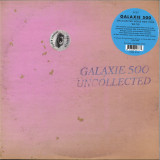
Black Vinyl[28,15 €]
The complete uncollected Noise New York studio recordings of Galaxie 500. A twenty-four track chronological journey through rarities and outtakes including never-before-heard songs, from the start of their incendiary career to their final studio session. Uncollected Noise New York ’88-’90 marks Galaxie 500’s first release of new archival material in nearly thirty years and their most comprehensive collection of unreleased and rare material ever. Produced and engineered by Kramer at Noise New York 1988-1990. • Complete uncollected Noise New York studio recordings of iconic indie band • Features rarities and outtakes, plus first release of new archival material in nearly thirty years • Historical photos and liner notes by the band
En el almacen y preparando para el envío
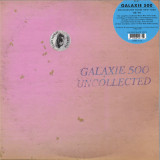
Colored Vinyl[33,82 €]
The complete uncollected Noise New York studio recordings of Galaxie 500. A twenty-four track chronological journey through rarities and outtakes including never-before-heard songs, from the start of their incendiary career to their final studio session. Uncollected Noise New York ’88-’90 marks Galaxie 500’s first release of new archival material in nearly thirty years and their most comprehensive collection of unreleased and rare material ever. Produced and engineered by Kramer at Noise New York 1988-1990. • Complete uncollected Noise New York studio recordings of iconic indie band • Features rarities and outtakes, plus first release of new archival material in nearly thirty years • Historical photos and liner notes by the band
En el almacen y preparando para el envío

Since we finally brought Countdown into the Acid Jazz orbit
four years ago, we have released a series of excellent records,
all tied to our own Ed Piller’s roots in the mod scene. After all,
Ed originally founded the label (with Maxine Forte and Terry
Rawlings), as an offshoot of Stiff Records, against the backdrop
of the mod revival of the early ‘80s.
Something that we have been looking to do for a while is launch
a special series of Countdown 7” singles, looking back at the
original Mod classics of the 1960s – and the time is now!
The first release is from the Fleur De Lys – who we have been
working with for some time – pairing their 1965 cover of Pete
Townshend’s ‘Circles’, with the first-time single release of their
cover of The Temptations’ ‘You’ve Got To Earn It’.
The band emerged from the vibrant Southampton scene with a
love of Soul and R&B, and were signed to the Immediate label
by Tony Calder, who had connections on the South Coast. Their
first single was ‘Moondreams’ (produced by Jimmy Page no
less), before their incendiary take on ‘Circles’ – a number
originally slated as The Who’s follow up to ‘My Generation’,
before getting caught up in legal matters. The Fleur De Lys
version remains one of the finest slices of the Pop Art Mod
sound, and is as fresh today as it was then. Originally released
to take advantage of The Who’s misfortunes, it was rushreleased and failed to chart. It proved to be their final release on
Immediate, before they signed with Frank Fenter.
‘You’ve Got To Earn It’ is from a tantalising, lost session from
1966 (which also included takes of The Impressions ‘Amen’ and
Don Covay’s ‘Sookie Sookie’). All that survived from the
session was an acetate of this amazing cut, found by group
member Gordon Haskell, from which this cut derives. We
originally released it as the title track of the first Fleur De Lys
compilation on Acid Jazz in 2013. It has never before been
available on 7” vinyl.
En el almacen y preparando para el envío

2024 Repress
Chontane returns to Mutual Rytm with a more raw and aggressive sound than before across six powerful new tracks on his latest EP, 'Permanent'.
Berlin-based Ukrainian DJ/producer Chontane has had a busy twelve months. Capped off by recently launching his own new TANE label, the exciting talent has been working hard to reinvent and refresh his sound in the studio. Mastering new techniques to push things to the next level, this EP and return to SHDW & Obscure Shape's Mutual Rytm proves he has succeeded and then some. Where previous works on the likes of ARTS and Rekids were full and more melodic, here he has restricted himself and gone for a more visceral sound. Developed and built in all new ways with an innovative approach to sound design and arrangement, the tracks on the package showcase a more serious and harder-hitting side to his sound as he unveils his impactful 'Permanent' EP.
Opener 'Graze' has a monstrous feel to it, with ghoulish synth loops and industrial textures all coming on strong and heavy. As it bangs along, incendiary hi-hats and lithe pads all bring extra weight and detail. 'Cumaru' is a highpaced techno workout with a frenzy of synths and percussion, all making for dense layers of heavily textured sound. 'Schima' brings some big techno bounce in the drums and more hurried, rusty synth loops that lock you into the darkness. Showing yet another side, 'Lauan' is a little more paired back with pounding tribal grooves and bright synths, bringing relentless yet funk-fuelled intensity. 'Vevis' is the most melodic of the lot - a heavy track but with subtle optimism in the rising background synths that will surely get hands in the air.
Last of all is digital bonus 'Makore', a cauldron of intensity with scraping hits and relentless drums, vastly oversized hi-hats and slamming bass. This high-impact, beautifully brutal yet groove-heavy techno takes Chontane's sound into new realms, and delivers an impressive return on a label continuing to push the genre forward.
En el almacen y preparando para el envío
