“This one might’ve been in us from the start”, says John Hancock. He’s talking about ‘Echos’ - his, Becky Williams, Finn Bjarnson & Ryan Raddon seventh Late Night Alumni longform. Predominantly known for blending electronic and organic elements into their music, the album represents a departure from the band’s largely house-led sound. An all-acoustic affair, in many ways though ‘Echos’ is a natural extension of LNA’s DNA. “Most of our songs”, John continues, “are written in the organic/acoustic realm and then produced with electronic flavours to create our sound. In those intimate song beginnings though, there’s a magic all its own. We’ve long wanted to do an album that captured and augmented that initial intimacy.” Which is indeed what Becky, John, Finn & Ryan have now done. The quartet have dug back into their twenty-year, six-album history and selected eleven tracks that they felt could most benefit from this song-spotlighting treatment. With their original acoustic intros as cues, they’ve taken them to their natural conclusions. A Sliding Doors-type feast for LNA enthusiasts both new and established, or indeed all lovers of downtempo, downtime, live instrumentation-led music, ‘Echos’.
Поиск:indeed
Все
Ross Mc Millan Aka Carlos Nilmmns Started His Career Over 10 Years Ago With Skylax Records. From His 1st Ep "Red" It Is a Statement. a Subtle Mix of House, Techno All Embellished With Striking Cinematographic Landscapes. There Followed a Multitude of Releases on Skylax (Blue Ep) but Also Ornaments, 4lux or Even Circus Company. He Has Just Recently Released 2 Fabulous Remixes for the Soul of the Makossa Man Project (Warehouse Classic 5 & 6). and It Is Logically in View of the Incredible Level He Has Reached in the Development of His Remixes That We Offered Him to Make a New Ep. There Is in This New 12 Inch His Very Personal Touch to the Deep and Sensual but Also Latin House Influences That Surely Would Not Have Denied the Maw but Also the Great David Mancuso (The Loft) Who if He Were Still Alive, We Think Would Have Loved This Ep (Rip). Indeed, Ross Also Manages to Integrate Into His Songs Cinematic Landscapes Worthy of Lalo Schifrin of the 1970s While Maintaining a Club Aspect. Latin Tapes Is One of the Most Beautiful House Bangers We've Heard in a Long Time, a Real Ode to Party and Life. No Love Lost Is Eyeing Moodymann, Mcde and the Brilliant and Forgotten Trus'me. Hootenanny Looks Nothing More or Less Than Isaac Hayes From His Blaxploitation Period. Everything Else Is on the Same Level: City of Love, Sunset Over Antoni De Portmany (Balearic Nights) & Life in the Loire. the Real Question Would Be to Know How He Manages to Obtain This Sound So Classy, the Impression That He Is Accompanied Throughout the Ep by the Philadelphia International Rhythm Section (Gamble & Huff) an Orchestra of Seasoned Musicians. Probably One of the Finest House Records (Or Even Just Music) to Be Released This Year by a Talent as Singular as It Is Elusive. This 12 Inch Is a Masterpiece of Elegance and Refinement....
This project should have been born in 2005. Indeed, hardock striker had just released his single control (with lyrics borrowed from Ian Curtis) and he recorded at the same time a cover of his favorite group Joy Division by imagining this track interpreted by new order and mixed by shep pettibone. Caught in a whirlwind of releases and dedicated exclusively to all artists signed at the time, this project was left aside. More than 15 years later, delighted to see a whole generation of producers greatly inspired by new wave and italo disco, he finally decides to release it realizing that the production hasn't aged a bit. As a bonus, it comes up with 2 monstruous remixes by the brilliant Spanish producer who is exploding everything at the moment, the future great Parissior.
Altered Circuits' next release comes by way of Bologna-to-Berlin transplant Jacopo Latini. On the Motherboard EP he combines stubby drums and sultry, efficient basslines with richly hued synth work. Once the cuts get going, a tapestry of melody reveals itself: gated leads are accompanied by burbling arpeggios, momentous chord progressions and bright pads that crawl in and out. The patches often incline to the bright and dreamy but are deployed with restraint; in the same vein, concealed and aloof vocal samples get sprinkled in. These techniques - staples for the artist - add an inscrutable quality to his work's mood. It is dance music that feels direct on the surface yet hides more ambiguous emotions underneath. Being a DJ was Latini's first approach to the electronic genres, and it arguably still is his main inspiration - it even occurs he writes tracks with a specific venue in mind. Since starting over a decade ago, and having meanwhile swapped the local Italian stages for the international ones, he has amassed a ton of analogue gear to help him do so. On this occasion, he plugged in his Roland D-50, Moog Sub 37 and microKorg XL, among other favorites, to take on progressive, trance and tech house. "Motherboard", "High Voltage", "It Comes In The Morning", and "Dual Effect" make for a diverse selection but have indeed the same objective: the club floor.
There’s a big clue to the pacific wisdom of The Orchestra in the Sky in the artist name – Hochzeitskapelle + Japanese Friends. For this is, indeed, music based in, and resonating with, friendship, camaraderie, collaboration, and creative exchange. Across two albums – one documenting recordings from Tokyo, the other an expansive double album of sessions from Kobe – Hochzeitskapelle gather around them some of the finest voices in Japanese independent and underground pop music, like Tenniscoats, Eddie Marcon, Yuko Ikema, and Kama Aina, and explore an open field of music, full of creative encounters.
You may already know Hochzeitskapelle as the German instrumental quintet formed by members of The Notwist, Alien Ensemble, and friends from the jazz scene. Across three albums, one a collaboration with Kama Aina (2018’s Wayfaring Suite), they’ve developed a way of playing together that’s intimate and playful, rich and human; it’s a music that’s deliberately rough around the edges, and that nestles cosily into the everyday. Their relationship with Japanese indie has developed over the years, doubtless encouraged by Saya´s „Minna Miteru“, compilations series of Japanese indie pop for Morr Music. A peripatetic gang, Hochzeitskapelle also recently backed Japanese singer-songwriter Makoto Kawamoto on her new album, Hikari.
In many ways, The Orchestra in the Sky feels like the culmination of a set of ongoing cross-cultural exchanges: the Minna Miteru compilations; tours of Japan by Hochzeitskapelle and The Notwist; and indeed, Markus Acher’s Spirit Fest group with Saya and Ueno of Tenniscoats. The latter are present throughout much of The Orchestra in the Sky, and Saya’s voice is particularly winning on songs like “Tsuki no oto”, where the two outfits are joined by brass ensemble Zayaendo. There are several lovely turns from singer-songwriter Yuko Ikema, and Eddie Marcon appear twice; their songs are still beautiful, spectral acid folk, but with Hochzeitskapelle filling the details with lush, sad brass and strings.
But it’s also the potentially lesser-known names that shine through The Orchestra in the Sky, like the frail folk of Gratin Carnival; the delightful, gentle pop songs by sekifu and Zayaendo member, Kanako Numata; a trio of beautiful, stumble-drunk melodies played in swaying consort with popo. That group, along with the presence of Zayaendo, Fuigo, and Mitamurakandadan?, make strong connections with the Japanese underground’s love of brass bands, partly informed by the tradition of chindon’ya, marching bands that walk the streets of Japanese cities. They also all appeared on the recent Alien Parade Japan compilation of such groups, assembled by Acher and Saya.
All things converge, then, on The Orchestra in the Sky, a smart, spirited collection of heavenly pop songs, intimate folk melodies, lungfuls of joyous brass, deep weeping strings, and swooning sighs. The last words go to Acher himself: “Many things we did in the last years come together here and it feels like something special was captured.” We hope you like what you hear.
- A1: Garden Of Peace - Hochzeitskapelle, Tenniscoats
- A2: Higasa Amagasa -Hochzeitskapelle, Gratin Carnival
- A3: Itsuno Manika Watashitachi - Hochzeitskapelle, Eddie Marcon
- A4: Kaze No Uta - Hochzeitskapelle, Tenniscoats
- B1: Kitakana St March - Hochzeitskapelle, Satomi Endo
- B2: Kuroganemochi - Hochzeitskapelle, Eddie Marcon
- B3: Poisong - Hochzeitskapelle, Tenniscoats
- C1: Big Park - Hochzeitskapelle, Kanako Numata
- C2: Unknown Street - Hochzeitskapelle, Gratin Carnival
- C3: Miracle Happy - Hochzeitskapelle, Mitamurakandadan?
- C4: Dep - Hochzeitskapelle, Popo
- C5: Gold Rush - Hochzeitskapelle, Popo
- D1: Boat - Hochzeitskapelle, Popo
- D2: Ashioto - Hochzeitskapelle, Kanako Numata
- D3: When The Wind Blows, The Bucket Maker Gains - Hochzeitskapelle, Satomi Endo
- D4: Coppepan - Hochzeitskapelle, Mitamurakandadan
There’s a big clue to the pacific wisdom of The Orchestra in the Sky in the artist name – Hochzeitskapelle + Japanese Friends. For this is, indeed, music based in, and resonating with, friendship, camaraderie, collaboration, and creative exchange. Across two albums – one documenting recordings from Tokyo, the other an expansive double album of sessions from Kobe – Hochzeitskapelle gather around them some of the finest voices in Japanese independent and underground pop music, like Tenniscoats, Eddie Marcon, Yuko Ikema, and Kama Aina, and explore an open field of music, full of creative encounters.
You may already know Hochzeitskapelle as the German instrumental quintet formed by members of The Notwist, Alien Ensemble, and friends from the jazz scene. Across three albums, one a collaboration with Kama Aina (2018’s Wayfaring Suite), they’ve developed a way of playing together that’s intimate and playful, rich and human; it’s a music that’s deliberately rough around the edges, and that nestles cosily into the everyday. Their relationship with Japanese indie has developed over the years, doubtless encouraged by Saya´s „Minna Miteru“, compilations series of Japanese indie pop for Morr Music. A peripatetic gang, Hochzeitskapelle also recently backed Japanese singer-songwriter Makoto Kawamoto on her new album, Hikari.
In many ways, The Orchestra in the Sky feels like the culmination of a set of ongoing cross-cultural exchanges: the Minna Miteru compilations; tours of Japan by Hochzeitskapelle and The Notwist; and indeed, Markus Acher’s Spirit Fest group with Saya and Ueno of Tenniscoats. The latter are present throughout much of The Orchestra in the Sky, and Saya’s voice is particularly winning on songs like “Tsuki no oto”, where the two outfits are joined by brass ensemble Zayaendo. There are several lovely turns from singer-songwriter Yuko Ikema, and Eddie Marcon appear twice; their songs are still beautiful, spectral acid folk, but with Hochzeitskapelle filling the details with lush, sad brass and strings.
But it’s also the potentially lesser-known names that shine through The Orchestra in the Sky, like the frail folk of Gratin Carnival; the delightful, gentle pop songs by sekifu and Zayaendo member, Kanako Numata; a trio of beautiful, stumble-drunk melodies played in swaying consort with popo. That group, along with the presence of Zayaendo, Fuigo, and Mitamurakandadan?, make strong connections with the Japanese underground’s love of brass bands, partly informed by the tradition of chindon’ya, marching bands that walk the streets of Japanese cities. They also all appeared on the recent Alien Parade Japan compilation of such groups, assembled by Acher and Saya.
All things converge, then, on The Orchestra in the Sky, a smart, spirited collection of heavenly pop songs, intimate folk melodies, lungfuls of joyous brass, deep weeping strings, and swooning sighs. The last words go to Acher himself: “Many things we did in the last years come together here and it feels like something special was captured.” We hope you like what you hear.
Purple Color Vinyl
We are really proud to introduce a new release on Mawimbi Records: "Mawimbi, Vol. 2”. Its title is a nod to “Mawimbi, Vol. 1”, which was the inaugural release of our record label back in 2015. A new compilation, at last, after a decade of music activism and a handful of EPs and albums which have helped unearth some of today’s talents from the new global music scene (Onipa, Loya, Afriquoi, Raz & Afla). It stays true to the driving principles of our artistic direction: support upcoming artists, e ncourage the breaking down of musical frontiers, help make happen new encounters between electronic music and so-called “afro” music. While these encounters can now be witnessed anywhere in pop music’s current zeitgeist, from Beyoncé to South African’s vibrant amapiano scene, we think there’s still plenty to explore.
“Mawimbi, Vol. 2” truly feels like the culmination of a long path for our record label. Because it includes artists who have been actively contributing to the Mawimbi adventure over the years, and also because it’s another convincing testimony of the fruitfulness of this musical intuition we have so heartily been defending for the last decade. Indeed, the 8 tracks of “Mawimbi, Vol. 2” resist all the usual labels. They sound like they stem more from human encounters and artistic dialogues launched in the moment than attempts to be associated with any music scene in particular. Each of the 8 pieces of this compilation presents in a unique way the search for this cross-pollinating sound.
The compilation opens with a really engaging rework of James Stewart’s classic track “Cotonou” by Lyon-based tropical music enthusiasts Voilaaa, who took Peter Solo’s voodoo soul lines on a trip across the Black Atlantic beginning with a horn-heavy cuban cha-cha-cha before falling into a savory triple time dance. As tireless sonic adventurers, Amsterdam-based duo Umoja have brought back a handful of hits from their numerous trips to Kenya meeting with local benga musicians. “Avana Va” is one of their compelling tunes, featuring Kenyan musician and producer Sidney Simila. This urge to collaborate with musicians from across the African continent is also to be found in Village Cuts’ ever expanding discography. On “Sentima”, they showcase their trademark London funky sound, introducing us to the talents of Congolese guitarist and singer Kissangwa.
Afriquoi’s 2020 hit “Ndeko Solo” is presented in a brand new shape, sprinkled with some French Touch flavours. “Djansa”, by Toulouse-based producers Mr. Boom, rides a distinct South African-inspired groove, while inviting us to a nighttime dance by the Balearic sea. On “Silent Runner”, French producer and musician Ozferti moulds his own musical galaxy where East African scales meet cutting edge global club beats. With “Nabi Kumi”, Anglo-Ghanaian duo Raz & Afla delivers their deepest piece, once again inducing a state of trance with a triple-time beat and an hypnotic kora loop. Closing the compilation, “It's Holy” is a unique collaboration between Tom Excell (Onipa, Nubiyan Twist, David Walters) and Dizraeli, one of the most interesting voices in British rap, which by making connections between broken beat, jazz and african music, illustrates the precious mixture of musical aesthetics that make up the current UK musical landscape.
Filled with aural magic and enchanting musical spells, Sorcerer is true to its name. The third of five albums devised by Miles Davis' legendary second quintet – and the second record in a still-unprecedented string of eight consecutive releases within a four-year period that forever changed the face of jazz – the 1967 magnum opus mesmerizes with instrumental colours, subdued musings, and subtle details.
This is a reference-standard reissue. You'll hear poetic lyricism pouring out of Wayne Shorter's horn, the breadth and definition of the notes spreading across an enormous soundstage. Never before have drummer Tony Williams' rim shots ricocheted with such purpose or his light percussive work mirrored that of a feather touching skin. Similarly, Herbie Hancock's piano runs now occupy their own space, where their relationship to the central rhythms and front line becomes clearer.
Prizing inflection and nuance more so than heady solos or uptempo flights, Sorcerer mesmerizes with cerebral properties and cascades of emotional interplay. Such beauty emerges in the mellow ballad "Pee Wee," an indelible statement of restrained authority and sophisticated expression. The swirling title track unfolds as jazz shadowplay, Hancock, Shorter, and Williams mirroring one another's moves with guile and purpose. The opening "Prince of Darkness" showcases the ensemble's reach and communication, every musician going in seemingly different directions yet ending up on the same page
A lasting example of Davis' visionary insight, Sorcerer is comprised entirely of pieces written by his band mates. Indeed, save for the closing "Nothing Like You" – a brief tribute to Davis' eventual wife, who also graces the cover, recorded in 1962 and adorned with vocals from Bob Dorough, the album represents a further maturation and refinement of a quintet that stands as one of the finest in jazz history.
In this collection, Piaf presents ten characteristic chansons in English. Whether in French or English her command of her art and of her audience are equally profound, and these songs present a fresh approach to Piaf’s work. Her singing of La vie en rose has already taken its place among the classic performances; this presentation is no less rewarding, and, being in English, has a slightly different atmosphere. Similarly, The Three Bells, loses no part of its drama. Indeed, all of Piaf’s performances in this collection brim over with the fervour that she brings to her singing, the controlled intensity that pervades her work
25th anniversary limited edition yellow 2LP, download card included. Praise for What Burns Never Returns after its original 1998 release: As the purveyor of brainy, muscular instrumental rock, Don Caballero spent most of its early years labelled the “Geeks from Pittsburgh who don’t sing.” Now that the rest of the indie-rock world has warmed up to instrumental rock (see the popularity of Tortoise, et al.), Don Caballero reemerges from hiatus with its third full-length, What Burns Never Re-turns. Staying ahead of the learning curve, the band employs little of the muscle that marked its earlier efforts, instead adopting a more high-brow, abstract approach to its music making. The band is not improvising per se, but creating meticulously arranged, post-Kind Crimson-like songs that attack odd time signatures. Stunning in its acrobatic musicianship, intriguing in its relentless experimentalism, What Burns… is indeed a welcome return. — Tad Hendrickson, CMJ New Music Report // The follow up to 1995’s monolithic “Don Caballero 2”, “What Burns Never Returns” is a study in industrial-strength grace, like some archaic machine heaving in exorable arabesques. The metallic guitars and grinding rhythm section interlock with mechanistic precision, yet a very human friction shoots sparks of real beauty. — AJ Sutton, Billboard // What superior minds conceived these eight amazing instrumentals, at once impossibly complex and yet powerfully direct, and what mere men have the strength and discipline to perform them? … There are no druggy lyrics or samples or ironic reappropriations of outré instruments here - just thrilling purity and exhilarating single-mindedness.
For Fans Of... Jerry Butler, Wee, Adrian Younge, Roy Ayers, Unlimited Touch. New York's Ben Pirani & The Means Of Production team up with Ohio's Wesley Bright to deliver a midtempo rider suitable for a breezy summer's night. Upon the Means pulsing mellow groove "The Honeyman" begins to make it sweet indeed. The tune opens with a bright Rhodes melody that sets the stage for Wesley's gentle tenor. The song archs upward - with professing of love and devotion - toward an irresistible hook punctuated with sweet soft harmonies. Six Minute Mile is backed with a spaced out part two. Swirling delayed synth melodies and acoustic guitar fill out the groove. Ben Pirani has begun to establish himself as a writer and producer in recent years. With the Means Of Production as house band you can expect much more from the Palmetto Street gang
Leatherette’s 2022 debut album Fiesta offered an intense, inspired and individualist take on post-punk, their caustic riffs, fevered saxophone blasts and impassioned vocals revealing the five-piece skilled purveyors of the form.
The group's second album Small Talk, however, is clearly the work of a group ready to take flight in a new direction all their own. As they toured Fiesta across Italy and Europe, Leatherette grew tired of the genre's constrictions and yearned to spread their wings. Small Talk transcends all the group have done before and coins a voice uniquely their own, driven by the same furies that propelled Fiesta, but finding fresh new forms for expression.
The album boasts some of Leatherette's most unabashed pop-songs to date – albeit pop that's deftly twisted, pointedly perverse and ready to explode when you least expect it.
It also contains some of the group's most challenging and uncompromising noise yet, the violent swinging back-and-forth between ugly din and nagging tunefulness a (molotov) cocktail that grows only more addictive with each listen. Where Fiesta saw the group enter the studio with a batch of anthems they'd honed on the road, their approach for Small Talk was very different, leaving the sessions open to moments of on-the-fly invention and sparks of mad genius. The interplay between the five musicians is so much stronger this time around, the group say, a result of the months of touring the band put in following the release of Fiesta.
Living out of rucksacks and spending hours on the motorway in a tour van might not be everyone's idea of a good time, but that's what Leatherette credit with sharpening their intra-group bond, their almost telepathic feel for the sounds that will complement what their bandmates are playing. “We were more free to play and to rearrange, because we knew each other better now,” says guitarist Andrea Gerardi, “and the interplay is more focused on this album as a result.” The sessions for Fiesta were frustrating, Andrea says, because “we were playing the same songs over and over”.
Their approach was radically different for Small Talk, however, which saw the group file into Bronson, a local club where they've often played before, and record the album on the premises. After the sessions, the album was mixed in Bristol by Chris Fullard (Idles) and mastered in Portland at the legendary Telegraph Audio Mastering by Adam Gonsalves. "We recorded live, all playing together at the same time, rather than overdubbing the instruments," says Michele. The process, he says, "made us more coherent, and the songs more spontaneous." "Our strength is live performance," adds Andrea, "so we tried to capture that interplay. Sometimes we made errors, but we didn't care, because it sounded great. This music is our lives - it doesn't need correction. We were free for the two weeks we recorded the album, and the ideas soared in the most amazing way." Indeed they did. The album's see-saw between angular noise and pop coherence is very much its strength, and very much the sonic identity of this singular group
Swingrowers (pronounced Swing Growers) released their second album REMOTE on 14th August 2014. Since then, it has been streamed over 13 million times on Spotify, while the official music videos for the two main singles have notched up over 10 million YouTube views. Now the album is being released on wax for the first time as we approach its 10th anniversary.
This is a highly desirable LIMITED EDITION pressing on WHITE VINYL with a free download card enclosed.
REMOTE itself is a revelation. It stood the test of time because it's one of very few complete and fully-realised Electro Swing albums that seamlessly blend 20's and 30's influences (violin, gypsy jazz guitar, saxophones, swing music) with polished contemporary production. Here superb musicianship meets great song-writing meets a unique modern sound. Plus jazz-inflected vocals.
It's the sound of a young band (and indeed an up-start young genre) maturing rapidly and would pave the way for the brilliant albums that followed and indeed for the on-going popularity of the genre.
It will be a sought-after release for fans who have bought the more recent two albums on vinyl, and by fans of other vintage influenced swing artists like Caravan Palace or Parov Stelar.
Vocal Shades And Tones is a miraculous leftfield library classic from the genius mind of celebrated UK composer/singer/vocal arranger Barbara Moore. It's a heavenly groove-based blend of jazz, Latin, soft-psych, folk-funk and gospel soul. Recorded for the legendary Music De Wolfe in 1972, it's an audacious start-to-finish listen, as dizzying as it is dazzling. It's a perfect snapshot of a musical era, supported by Moore's glorious vocal arrangements. Widely regarded among collectors, DJs, and lounge/easy-listening acolytes as an absolute essential it is viewed as the holy grail by many production music heads, rarely appearing for sale and disappearing in a flash when it does. Indeed, originals now go for over £300 and it's easy to see why. Just one of the reasons why this fresh Be With reissue, part of a wider De Wolfe reissue campaign, is so utterly crucial.
Racing out the gate, the driving "Hot Heels" is a bright, sophisticated scat groove which sounds Brazilian, richly produced as if coming by the hand of Arthur Verocai. Yes, *that* good. It's followed by "It's Gospel" which is, er, a wonderfully slow and deeply soulful gospel treasure. The appropriately monikered "Steam Heat" is a darker, breathy gem, one for salacious crates and one of the record's most infamous tracks. "Fly Away" is pastoral West Coast soft rock, very much in conversation with John Cameron and Keith Mansfield's epochal KPM recording, Voices In Harmony. "His Name Was" is a stop-you-dead-in-your-tracks Beach Boys accapella church-organ stunner, whilst "Swing Over" is another carefree, richly produced sun-dappled smasher. The gentle Bossa and sunshine soul of the aptly-titled "Touch Of Warmth" closes out a virtually perfect A-Side.
The B-Side opens with the easy grace and dramatic build of "Voice Force Nine". The jaunty "Very Fine Fellow" may be the only track to slightly grate so we advise heading to the slower, moody "Shades-Tones", eminently more compelling with sparkling, hypnotic piano throughout, underpinning the gorgeous wordless vocals. Just beautiful. It was sampled by Redman for his Method Man-featuring "Do What Ya Feel" on the great Muddy Waters. We're back in Brazilian territory with the cool, uptempo "I'm Feather" before swooning to the warm, relaxed "Drifting", another total highlight which was famously sampled by Koushik on his legendary remix of Madvillain's "America's Most Blunted (Doom's Verse)". The penultimate track, "Take Off" is a bright, organ lounge groove before this remarkable set is rounded out by the beaty "Fly Paradise". It's so so good, it sounds like Rotary Connection fronted by The Mamas & the Papas. As noted in a recent Guardian article on Moore's life, "there is a plushness and electricity in the tight vocal harmonies that spring out, sung with the precision of cathedral choristers decades before Auto-Tune." Amen.
In the 1960s, Barbara Moore was a member of Top of the Pops’ resident vocal-harmony group, The Ladybirds and sang backing vocals for Dusty Springfield’s TV show. Her own outfit, the Barbara Moore Singers, were regulars on TOTP, singing with Jimi Hendrix when he performed "Hey Joe" live in Lime Grove Studios. An important detail for Moore was the shepherd’s pie she bought Hendrix when she found him alone, looking emaciated, near the BBC canteen. By 1970, she was working as a session singer for De Wolfe and, by 1972, was composing her own tracks for De Wolfe and working within their tight creative strictures. Each short track had to evoke an obvious mood and theme, with no significant key or tempo changes. Her response, this very album, managed to stay between the lines while cohering as an overarching artistic masterpiece.
The audio for Vocal Shades And Tones has been carefully remastered by Be With regular Simon Francis, ensuring this release sounds better than ever. Cicely Balston's expert skills have made sure nothing is lost in the cut whilst the records have been pressed to the highest possible standard at Record Industry in Holland. The original, iconic sleeve has been restored here at Be With HQ as the finishing touch to this long overdue re-issue.
Vecchio's Afro-Rock is one big horn-heavy, bass-blasting, Latin groove funk-rock party. Only now, you're all invited because this, ladies and gentleman, is officially...a grail no more. With copies currently starting at 400 Euros for an original, this beautifully presented reissue, part of Be With's fresh campaign with Music De Wolfe, is well overdue. A magnificent and somewhat obscure library set that's just a total, cohesive joy from start to finish, this here is the soundtrack to all your smokin' summer BBQs and communal cookouts.
Afro-Rock is the debut album by Argentine keyboardist Luis Vecchio. Recorded for the sound library label De Wolfe, the album is frequently mentioned in hushed reverence among the beat digger DJ collecting crowd. It features fiery brass charts, funky bass lines, fluttering flute, choppy organ and additional hand tribal percussion. The band let loose too and jam hard; yet there's a certain thread of solidity that runs throughout, the tracks just belong together, not disparate sound and rhythm experiments like some library records; this is just straight up, no messin', consistent funk-rock FIRE! Hips will sway, heads will nod to the steady vibes. It's insanely good.
The humid, building funk of the appropriately titled "Megaton" is a dramatic explosion of swirling, dazzling organ lines, ferocious beats and heavy horns throughout. It just don't stop. The tempo slows slightly for the deep and deeply addictive "Renegade". It's all heavy jazz horn refrains, always triumphant, coupled with devastating percussive breakdowns and killer guitar riffing. It's an insistent organ-led juggernaut. The frenetic "Facade", up next, is no less driving, horns high up in the mix over rattling percussion and brilliant organs lines. Just sensational. The bright "Chabati" is another glorious extension of the optimistic Vecchio sound, the organs wilder than ever before. The moody "Green Hell" is a real highlight and closes out the A-Side with some outrageously funky refrains - be it horns, organ or guitars - and is complimented by gorgeous flute work that galvanises the piece, elevating it to downright heavenly status.
Knowing full well that he's on to a surefire thing, Vecchio opens the flipside in much the same vein. Indeed, "Boss" is yet another uptempo highlight, a sensual orgy of proud horns, hand percussion and melodic flute playing over driving organ and guitars. It's followed by "Nsambei", which is rightly adored for its briefly open drum break, fantastically propulsive percussion breakdowns throughout and the jazzy, loose organ and guitar shreds. The bright "Waboco" ups the tempo and the pressure, hanging on one hell of a guitar hook and infectious horn refrain. Perhaps foreseeing how this album would come to be viewed, the aptly-titled "Cult" is possibly the finest song on the record. Which is saying something, because this record is insanely good. Riding a steady, confident organ groove straight out the gate, the kinda melancholic flute line over the top serves as a beautiful counterpoint which the horns often come in and imitate/riff off. Goddamn this is so so good, it needs to be played everywhere. The overwhelmingly mighty 7-minute jam "Ngoma-ku" rounds out this quite staggering record brilliantly in its heavy, mid-tempo blues with countless extended solos.
The audio for Afro Rock has been meticulously remastered by Be With regular Simon Francis, ensuring this release sounds better than ever. Cicely Balston's expert skills have made sure nothing is lost in the cut whilst the records have been pressed to the highest possible standard at Record Industry in Holland. The original, iconic sleeve has been restored here at Be With HQ as the finishing touch to this long overdue re-issue.
Caz Plak İstanbul proudly presents...
ONE OF JAZZ'S ALL-TIME GREATS PLAYING TURKISH RHYTHMS!
Don Cherry delves into Turkish rhythms, accompanied by his long-time Don Cherry Trio members: Turkish drummer Okay Temiz and South African bassist Johnny Dyani.
The vinyl LP is manufactured in Istanbul under the guidance of Mr. Okay Temiz, the only living member of this iteration of the Don Cherry Trio. The LP has been remastered from original material housed in BYG Records' vaults by Okay Temiz & Mert Ucer and licensed from BYG Records, France.
This LP features the recording by the Don Cherry Trio in Paris 1971 for the Sound and Vision program at the legendary ORTF studios in Paris 1971. Serving as the second chapter of our 'Turkish Jazz Trilogy', it follows Okay Temiz's magnum opus, 'Okay Temiz's Oriental Wind at Montreux Jazz Festival 1982' LP. We present one of the paramount Jazz figures of all time interpreting Turkish rhythms in Don Cherry Trio - The ORTF Recordings Paris 1971 LP
This release also stands as one of the most important recordings prior to Don Cherry's legendary "Organic Music Society" album in 1973, in which Okay Temiz also plays drums.
"Don Cherry Trio as an 'Applied Universe of Thought.'
In the spring of 1971, while we were playing as the Don Cherry Trio in Paris, Don (Cherry) seamlessly flowed from the trumpet to the piano, with improvisation as the lighthouse of the melody. This approach opened up a realm of boundless freedom for Johnny and me. It is to be observed as a melody within a melody. From the Organic Music Society album we recorded a year after this concert, up until the ECM album we recorded before Don's final departure from this planet, this principle has been the gravitational force of the Don Cherry universe.
That, indeed, is the true legacy of the Don Cherry Trio."
Excerpt from the liner notes by Okay Temiz and Haluk Damar
T4T LUV NRG presents “Name It”, the latest album by Oakland’s Bored Lord, aka DJ Daria. The internationally beloved producer and DJ has created a truly stunning album of impeccably produced and mixed work, each song an enticing chapter in a complexly woven story about love. This album of uninhibited, hook-laden tracks conveys a narrative of love that is not only romantic and personal, but also communal and familial— a love that refuses to limit itself to just two people, but instead spills forth into the world, embracing everyone open to its power. With her emotive, tenacious album, Bored Lord reminds us that to truly allow yourself to be enveloped in desire, you have to endure the pain that comes alongside it. You have to adapt and stretch yourself in order to experience the immense growth love has to offer. You have to believe there's more to this world than suffering and isolation. You have to look within and accept whatever you find, even if it is ugly or difficult. Love is the peace you find amidst the chaos of living, and it doesn't just fall into your lap. You have to want it. You have to be ready for it. And if you are ready, you have to name it.
As a producer known in no small part for her edits, Bored Lord presents “Name It” as a work undeniable in its artistry, completely authentic in its messaging, and absent of the industrial notion of production. The songs on “Name It” have instant hooks and each is deeply inspired by the genres Bored Lord loves—broken beat, drum n’ bass, jungle, UK bass, Florida breaks and house among them—but rather than simply reproducing, these tracks expand each genre beautifully. Daria’s technique is decidedly hardcore, with samplers, romplers and a bone dry aesthetic, each song and sound all her own. In the artist's own words “I want the industry people to be confused while the ravers understand the very moment they press play. I want to challenge everyone to name it.” And we expect that indeed they will, play after play after play. Now, close your eyes and believe there is more, more, more….
Will Anderson believes in true love—as both concept and catalyst, aspiration and inspiration. During his 34 years, the Hotline TNT founder and architect has found such love perhaps half-a-dozen times. Each instance has prompted some enormous swing of commitment, like a cross-country move or simply being honest about his budding attraction. It is a hopeful and vulnerable way to exist, a way to ensure maximum bruising during the fall of the breakup. And so far for Anderson, that is how it has always ended, whether the air has slowly seeped out of some once-full balloon or whether it has simply popped, those expanded feelings expelled in an instant. This tension is the brain, blood, and beating heart of Cartwheel, Hotline TNT’s second LP and an endlessly romantic testament to reaching for something that slips forever out of grasp. The byproduct of Anderson’s decades-long quest to pin down the surging sound long in his head, Hotline TNT has come to notice in the last four years through loose association with a feverish surge of shoegaze revivalism. And Hotline TNT indeed trucks in the touchstones you might expect: skywriting guitars that bathe in fluorescent hazes of distortion, blown-out drums that pound as though they’re trying to escape a concrete box, and honeyed vocals that try to rise above the chaotic mess in true-to-life mimesis.
The undisputed Godfather of Boogie, Leroy Burgess’s Logg project is his grand masterpiece.
The self-titled LP, originally released on Salsoul in August 1981, is one of the greatest albums of the post-disco era. It’s one of Be With’s favourite ever LPs and so it’s a complete honour to be giving it our reissue treatment. With all the touchstones of Burgess’s finest work - breezy grooves, undulating synths, funk-drenched bass and life-affirming lyrics - delivered with gospel-derived vocals and harmonies - it’s a record to uplift both body and spirit.
Already a cult soul figure as lead singer of seminal vocal group Black Ivory, Leroy Burgess cut his teeth as arranger, vocalist and songwriter with legendary producer Patrick Adams on essential late-70s projects like Phreek and Dazzle. He went on to define the essence of “boogie”: the vibrant underground dance sound that stood in contrast to commercial disco. With its reduced speed - mid-90 to under 110 BPM - the cool boogie of Burgess has the disco bounce, just more laidback.
All six tracks here could have been stand alone 12" hits. Indeed, some of them were. But together they are also an incredibly cohesive album, where all the compositions are deeply relevant to each other. In short, it’s essential; a thrilling showcase for Burgess’s finest arranging and production work - with his vocals at their euphoric peak alongside the inventive rhythm section of Aaron (Sonny) T. Davenport on drums and James Calloway on bass.
Opener “(You’ve Got) That Something” is a balmy sunshine groover with an insistent chorus whilst the timeless vocal of “Dancing Into The Stars” - married to percolating synth and airtight drums - showcases the chemistry between Burgess and the rhythm section.
The fusion of funk and gospel-influenced harmonies which propels “Something Else” is remarkable - deep, joyous and bouncy. Infamously mixed by Larry Levan, “I Know You Will” is an easy glide, all rollicking electric piano underpinned by a precise and relentlessly upbeat groove. “Lay It On The Line” radiates smooth, understated brilliance, elevated by interstellar keys and finally album-closer “Sweet To Me” is a chilled-out gem of profound soulful elegance.
Logg has long been a hit with the likes of Kenny Dope and Dam-Funk whilst, in the last decade, MCDE and Harvey Sutherland have routinely cited it as a huge influence. Accordingly, finding original copies on vinyl at affordable prices has been a thankless task. This fresh Be With reissue ensures this legendary record now sounds, looks and feels as sensational as it deserves to.
Mastered brilliantly by Simon Francis, cut by Pete Norman and with lovingly reproduced artwork, we think this is a reissue that does justice to this classic LP.
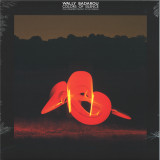
Synth pioneer and musical polymath, Wally Badarou is a genius. But you know that already. A vinyl version of his majestic Colors Of Silence has been craved by the Balearic cognoscenti ever since its low-key 2001 release. Indeed, when we first started work on Be With, we asked some pals with exquisite taste what their dream release would be. We asked Balearic legend Moonboots and, without hesitation, he said Colors Of Silence by Wally Badarou. We didn't know Wally had made this album. And most still don't. But that's about to change.
Colors Of Silence is ostensibly a new age album. As ever though, Wally's sophisticated synth textures and expressive keyboard runs are so full of character, so full of life, that this work of art transcends any easy genre categorisation. It's simply stunning, throughout. It sounds like A.r.t. Wilson or Suzanne Kraft, with traces of CFCF and Jonny Nash. But it was made a good decade earlier than the work of these modern giants. Sometimes, it doesn't seem far from some Larry Heard albums.
Island Records founder Chris Blackwell's friend Nathalie Delon asked Wally to provide music for the yoga DVD she was to release. Lack of time on both sides made them agree on using "quality demos" Wally had in his ideas bank. It's understandable why Colors Of Silence remains somewhat of a lost gem. As Wally explains: "Total lack of promotion made it an 'intimate' release, which was exactly what I was looking for: just a buzz-maker and time-buyer that would allow me to concentrate on the real thing as soon as I'd have time, which could also turn into a rare collecting item later, once the final versions made their way to success. You never know."
Over the years, Colors Of Silence has become a true cult record for the ambient/Balearic heads.
The beguiling but brief "Dance In The Dust" is the shuffling, hyper-percussive, hypnotic opener. It gives way to the deep serenity of "Amber Whispers". It's a gliding, divine, mini melodic masterpiece. It'll make you swoon in its extreme beauty. The bright and breezy "Where Were We" follows, a tropical, reggae-tinged bounce through the islands.
The uptempo groove is maintained on the keys-drizzled soca-funk of "The Lights Of Kinshasa" before Side A is rounded out with "Pictures Of You". It starts with stately, melancholic, unadorned piano and this alone would make for a beautiful song. But Wally always gives us that bit extra and he effortlessly introduces warm, dreamy pads and minimal, slo-mo percussion to augment a frankly stunning piece of work.
Ushering in Side B, Wally's mesmeric piano playing is to the fore again, in the intro to uber-chilled "Serendipity For Two". The playing becomes more mellifluous as the track progresses and adds warmth through exotic percussion, woodwind, sweeping synths and digi-drums. It has echoes of, er, Echoes. It segues seamlessly into the more propulsive, wavy "Smiles By The Millions". If you're not nodding and grinning along widely to the gently throbbing bassline underpinning this, we can't help you. The meditative "Higher Still" follows, cinematic in feel and ever so slightly sinister with the strings. It sounds particularly Badalamenti-esque, if you ask us.
That unmistakable, almost peculiar Badarou funk - so lyrical, so texturally rich and so rhythmically spacious - is all over "Oriental". Next up, "Days To Wonder" brings the serenity back, insistent yet melodic keys, as if played in a place of worship, coupled with birdsong, conjure a kind of instant nostalgia for halcyon days of youth. The contemplative "Dawn Of Europa" is a sombre, beatless, ambient journey whilst the glorious, too-brief "Crystal Falls" features soft percussion and sparkle before fully glistening with some gentle head-nod beats. Wally brings this incredible collection to a mellow, tender close with the graceful "Purple Lines".
There can be few artists more under-appreciated given their vast influence than Wally Badarou. His solo work practically defined the sound of the Balearic DJs of the 1980s, and thus the more sophisticated sound of dance culture thereafter. A synth specialist, Badarou was the long-time associate of Level 42. He was one of the Compass Point All Stars (with Sly and Robbie, Barry Reynolds, Mikey Chung and Uziah "Sticky" Thompson), the in-house recording team of Compass Point Studios responsible for a series of albums in the 1980s recorded by Grace Jones, Tom Tom Club, Mick Jagger, Black Uhuru, Gwen Guthrie, Jimmy Cliff and Gregory Isaacs. Badarou's keyboard playing could also be heard on albums by Robert Palmer, Marianne Faithfull, Herbie Hancock, M (Pop Muzik), Talking Heads, Manu Dibango and Miriam Makeba. He also produced Fela Kuti. Phew!
Meticulously remastered and cut by both Simon Francis and Cicely Balston respectively, it has been pressed to the highest possibly quality at Record Industry in Holland. Special thanks must go to Apiento from Test Pressing who first introduced us to Wally and facilitated all those early zoom meetings. It couldn't have happened without his help. Not least on pulling the art together, too, which features striking original photography by Mads Perch. Benji Roebuck of Roebuck Press did his thing brilliantly in art working the whole package to completion. All in all: essential.