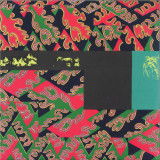
La grande vallée (1993/95), 20'41
Musical composition, design and sound production carried out at the INA grm Studios (Paris) in 1993/95
Original audio recordings in the Drôme and the Mont Ventoux areas
Voice: Hélène Bettencourt
Vocal occurrences: Frédéric Malenfer, Bruno Roche, Lionel Marchetti
Bass clarinet (for processing): Jean Andréo
Micro-climat (1989/90), 21'33
Micro-climat is the first movement of the Sirrus cycle (Micro-climat, Passerelle, Sirrus) composed in 1989/90
Musical composition, sound design and production, audio recordings in 1989/90 at the CFMI studios in Lyon (Lumière University, Lyon 2)
"I wonder if my fascination for clouds (without being an obsession) may have risen at the end of the 80s as, whilst composing Micro-climat, I would regularly wander between the Vercors mountains and the high plateaus of the Monts du Forez discovering, through my eyes, body, breath, active observation and walk, that natural forms when constantly changing and yet swollen with a unity of matter (in this instance, water) open one up to a deep, fundamental breath and a clear field for the mind. The sky and its forces: our ally.
A model for a natural music which, although fixed, as in musique concrète (a rule of the genre), moreover on a recording tape, will remain charged with such a poetic quality that (isn't it its role or rather its reality?) it will ensure a perpetual renewal for our senses, so as to reach another idea of the world, far more open and richer than what we could have imagined."
Lionel Marchetti, 2011
Lionel Marchetti is a major figure of the "third generation" of concrète musicians, a term he values. Listening to these works, imbued with poetry and traversed by micro-narratives, one can indeed retrieve the original concrète spirit, the one that draws from the sonic world, with ears wide open, so as to extract a fertile, rich and multiple substance then shaped and conveyed towards a formal and musical abstraction. Lionel Marchetti has mastered this process, but his real distinctive feature is a truly unique talent for setting climates (as one sets traps) and keeping us on constant alert. The two pieces in this record perfectly illustrate the entrancing dimension of Lionel Marchetti's music, whose charm leads us, through each successive listening, to become voluntary captives so as to better liberate ourselves.
François Bonnet, Paris, 2020
Search:indeed
On February 27, 2018, Chris Forsyth & The Solar Motel Band (comprised, in this iteration, of long-time SMB bassist Peter Kerlin and Kerlin’s Sunwatchers battery mate Jason Robira on drums) were close to wrapping up an 18-date tour of the EU and UK with a two-set, one hour and 45 minute show at Cafe OTO, London’s premier venue for adventurous music. Highlights of that show are included in this live release, RARE DREAMS: SOLAR LIVE 2.27.18, recorded before a packed house seated mere feet from the band’s amplifiers. These recordings reveal a band that is clearly in high spirits and high gear, operating with an expansive, improvisatory fleetness that allows them to stretch the material to almost ludicrous extremes and then let it to snap back to some semblance of form while somehow seemingly never wasting a note, a beat, a gesture. The four tracks included here comprise material culled from (at the time) the two most recent Solar Motel Band records DREAMING IN THE NON-DREAM (No Quarter, 2017) and THE RARITY OF EXPERIENCE (No Quarter, 2016) plus covers of two Neil Young songs - the autobiographical plaint “Don’t Be Denied,” lyrically relocated by Forsyth from Young's Canada and Hollywood to the more personally relevant geography of New Jersey and Philadelphia, and encore “Barstool Blues” (they’d run out of material to play, so another Neil Young tune it was). While the covers establish Forsyth’s basis, serving as an homage to Young and the quest for self-realization, the long tracks’ jams showcase the trance-inducing power of the Solar Motel Band as a performing entity. Kerlin’s gymnastically propulsive bass playing locks in with Robira’s relentless thud, each serving as counterpoint to some of the most blistering guitar work of Forsyth’s career. The telepathically dynamic interplay of the trio explodes with whiplash intensity across the 15-plus minute takes of “Dreaming In The Non-Dream” and “The First 10 Minutes of Cocksucker Blues,” each song’s structure serving as a framework for extended lava flows of energy. At one point late in the “Dreaming” jam, Forsyth unplugs the jack from his guitar, dragging it across the strings and lashing the body of his single-pickup “parts" Esquire, producing a desiccated barrage of percussive static. This is music beyond the notes; it is an expression of pure electric ecstasy, a simultaneous negation and celebration of rock music’s (indeed all musics’) essential energy. In contrast to the expansive but meticulously detailed guitar arrangements of his recordings, here Forsyth’s unhinged live guitar sound positively roars with a barely restrained vocal intensity, from liquid melodic lines to gnarled blasts of free jazz scree, to pulsating lead/rhythm vamping. I’ve had the pleasure of witnessing this band up close for a number of years now and I can authoritatively attest that while every show is different, when the SMB is running down a steep hill at full speed (as on these takes), they become a single leaderless vibrating sonic tornado, possibly beyond the control and logic of the players themselves, picking up listeners along the way and taking them along for the ride straight into a solar furnace of sound. - Jerome Onfront, Philadelphia
Scottish producer Gavin Sutherland revives his Other Lands alias with a collection of tracks that were crafted between 1997 and 2012, and were transferred straight from the original cassette.
"What Year Is It? Who Is The President?", is Sutherlands' first full offering with PULP. After multiple remixes for the label (under his Fudge Fingas alias), the release schedule for the Other Lands guise has picked up in the last few months. This resurgence of previously unreleased material will add to Sutherland's elaborate catalog, and confirm that even bits that never saw a release at the time, are sounding relevant and superbly produced.
"What Year Is It? Who Is The President?" (PULP13) starts with "The Caged Bird", which is a synth laden, lush sounding cut that is built around a playful bass sound and beautifully orchestrated chords. The drums are swinging as ever, and the hypnotic character of the lead is present throughout.
"Kaleidoscope" is a venture into the otherworldly. Deep splashes of synth and fx come together effortlessly to create an almost meditative state. The musicality of it all is remarkable, and hard to capture in a few words. The rhythm section is always the backbone, but the fx are equally as important. Fans of Sutherland's work will surely recognize and appreciate the ambiance that is set in Kaleidoscope.
The flipside starts with "It's Something Else". The main lead is indeed something refreshing. In a sense, it's reminiscent of a guitar, but it's clearly not that. The dance floor nature of everything else is supporting the wildness of the lead. Altogether this is something to space out to. On a dance floor, at home or perhaps even during a run.
The final track on the B-side is called "Mind Like A Steel Trap". This sample heavy, hazy sounding piece of beauty is blending soulful flutes, drums and the catchphrase of the song - no more mind games - together with an astonishing ease
Rich in musical associations yet utterly singular in its voice, joyous with an inner tranquility, the music of Natural Information Society is unlike any other being made today. Their sixth album in eleven years for eremite records, descension (Out of Our Constrictions) is the first to be recorded live, featuring a set from London’s Cafe OTO with veteran English free-improv great Evan Parker, & the first to feature just one extended composition. The 75-minute performance, inspired by the galvanizing presence of Parker, is a sustained bacchanalia of collective ecstasy. You could call it their party album.
This was the second time Parker played with NIS. Joshua Abrams: “Both times we played compositions with Evan in mind. I don’t tell Evan anything. He’s a free agent.”
The music is focused & malleable, energized & even-keeled, drawing on concepts of ensemble playing common to musics from many locations & eras without any one specific aesthetic realization completely defining it.
“The rhythms that Mikel plays are not an exact reference to Chicago house, but that’s in there,” Abrams says. “I like to take a cyclic view of music history, can we take that four-on-the-floor, & consider how it connects to swing-era music? Can we articulate a through line? I dee-jayed for years in Chicago & lessons I learned from playing records for dancing inform how I think about the group’s music. The listener can make connections to aspects of soul music, electronic music, minimalism, traditional folk musics, & other musics of the diaspora as well. It’s about these aspects coming together. I don’t need to mimic something, I need to embody it to get to the spirit, to get to the living thing.”
For jazz fans, the sound of Parker’s soprano & Jason Stein’s bass clarinet might evoke Coltrane & Dolphy, even though they didn’t necessarily set out to do that & they play with complete individuality. Abrams sees a bridge to the historical precedent, too. “Since we first met in the 1990s, one of the things that Evan and I connected on was Coltrane’s music,” he says. “I hoped that we would tap into that sound world intuitively. In this case, I think that level of evocation adds another layer of depth, versus a layer of reference.”
Indeed, this is a performance in which the connections among the ensemble & the creative tension between improvisation and composition build into a complex mesh of associations & interactions. While the band confines itself to the territory mapped out by Abrams’ composition, they are remarkably attentive & responsive, making adjustments to Parker’s improvisations. When Parker’s intricate patterns of notes interweave with the band, the parts reinforce one another & the music rockets upward. Sometimes, Parker’s lines are cradled by the group’s gentle pulse & an unearthly lyrical balance is struck.
Drummer Mikel Patrick Avery is locked-in, playing with hellacious long-form discipline, feel & responsiveness. Jason Stein’s animated, vocalized bass clarinet weaves in & out with Lisa Alvarado’s harmonium to state the piece’s thematic material; the pulsing tremolo on the harmonium brings a Spacemen 3 vibe to the party. Abrams ties together melody & rhythm on guimbri, a presence that leads without seeming to. Like his bandmates, he shifts modes of playing frequently, improvising & then returning to the composed structure.
“As specific as the composition is, the goal is to internalize it & mix it up,” Abrams says. “The idea is to get so comfortable that we can make spontaneous changes, find new routes of activity, stasis & byways every gig. It’s like a web we’re spinning. If someone makes a move, we all aim to be aware of it, make room for it. Experiencing & listening is what it’s about, & Evan supercharges that.”
& “supercharged” is the word for this album. With Parker further opening up their music, descension (Out of Our Constrictions) is the sound of Natural Information Society growing both more disciplined and freer, one of the great bands of its time on a deep run.
Aguirre edition: Mastered by Helge Sten, Audio Virus, Oslo. Lacquers by Dubplates & Mastering. Liner Notes by Theaster Gates. LPs pressed on premium audiophile-quality vinyl at Pallas Records. US 2xLP edition available thru Eremite records.
- A1: Ele 2 Intro (Feat Chris Rock, Rakim & Pete Rock)
- A2: The Purge
- A3: Strap Yourself Down
- A4: Czar (Feat Mop)
- A5: Outta My Mind (Feat Bell Biv Devoe)
- B1: Ele 2 The Wrath Of God (Feat Minister Louis Farrakhan)
- B2: Slow Flow (Feat Old Dirty Bastard)
- B3: Don't Go (Feat Q-Tip)
- B4: Boomp!
- B5: True Indeed
- B6: Master Fard Muhammad (Feat Rick Ross)
- C1: Yuuuu (Feat Anderson Paak)
- C2: Oh No
- C3: The Don & The Boss (Feat Vybz Kartel)
- C4: Best I Can (Feat Rapsody)
- C5: Where I Belong (Feat Mariah Carey)
- D1: Deep Thought
- D2: The Young God Speaks
- D3: Look Over Your Shoulder (Feat Kendrick Lamar)
- D4: You Will Never Find Another Me (Feat Mary J Blige)
- D5: Freedom? (Feat Nikki Grier)
- D6: Satanic
About:
As the first album from the legendary, Busta Rhymes in eleven years, Extinction Level Event 2: The Wrath of God, Rhymes enlisted Chris Rock to tease the album announcement. The art, done by world renowned contemporary artist, Chanelle Rose.
With 2 singles released so far; "The Don & The Boss" which features legendary Jamaican artist, Vybz Kartel; and YUUUU which features, and is produced ed by the musical savant, Anderson .Paak. The album also features many other heavyweight features that have not yet been revealed.
Extinction Level Event 2: The Wrath of God marks Rhymes' return with his star-studded follow up to the seminal 1998 three-time Grammy nominated, RIAA Certified Platinum album E.L.E. (Extinction Level Event): The Final World Front.
There’s something new under the sun. If you look at it closely,
something new is only (and always) created at crossroads –
when different and signi¦cant traditions are connected and
combined. On their own, these traditions have often existed
for a while. However, in this new form they have never
appeared together. The latest manifestation of something
new can now be found on the album “No Future Dubs”, the
interpretations of “No Future Days” – the most recent album
by German band Messer – by Finnish producer and old
friend of the group Kimmo Saastamoinen aka Toto Belmont.
The intentional traditions that merge on this grand and
digni¦ed album are post-punk, dub and techno. A new
chapter in the culturally constant narrative of dub is written
here. Through their past and parallel activities in hardcore
and post-punk bands, Messer drummer Philipp Wulf met and
befriended Kimmo, originally a drummer too. In their
continuous dialogue discussing their musical journey, Philipp
and Kimmo over the years more and more immersed
themselves in the aesthetic possibilities of dub and reggae.
Indeed, lots of musicians do not listen to the type of music at
home that they write and play in their respective projects
(Take me as an example: House is the music that I produce
and put on as a DJ. On my own, I listen to various stuff,
music by Monk and Messer for example). The same applies
to the protagonists involved here. By discussing dub und
through Toto Belmont’s steadily increasing producingexpertise, the idea of creating dub versions of selected
Messer tracks was born. The Messer album “No Future
Days”, released in 2020, proved to contain the perfect raw
material as the songs on this album are already produced in
a much more transparent way than on previous LPs – and
are hence more suitable for dub. Still, it’s a giant leap from
the originals to the dubs. These add a third dimension to the
described character of the post-punk/dub amalgam: techno.
The result is a sound that hasn’t existed before, especially
not with German lyrics (which scarcely, however, carry
meaning or messages here. Hendrik Otremba’s voice is used
more like an instrument, as if he was the ghostly ¦gure which
he often sings about and which now §oats and screams
through the sound space). The history of mutual contact and
in§uence of (post-)punk and dub (reggae), which Messer
have kept on writing, is glorious and reaches back far in
musical history. Still, it has always been a rather marginal
chapter not only in punk but also in dub history. But already
in the beginnings of punk (the British version, less the
American one), the presence and in§uence of reggae was
obvious in many places as both are united in their resolute
attitude as rebel music. This is how the two genres
recognized each other – especially the punks regarded
reggae as rebellious. As is known, already Johnny Rotten
mainly listened to dub in private. By using the name John
Lydon, he then – together with bass player Jah Wobble –
established the group PiL as one of the most exemplary
bands at the crossroads of dub and punk. The Slits, Pop
Group, Killing Joke, The Ruts and last but not least The Clash
along with the Mick Jones offshoot Big Audio Dynamite –
the thriving British music scene in the early 80s was full of
dub-in§uenced acts. The echoes meandered everywhere. In
the USA, it took longer until the in§uence of dub became
noticeable and it has never been as distinctive as in the UK.
The history of US hardcore, however, cannot be told without
bands like Bad Brains from Washington D.C. who on their
albums occasionally inserted conscious reggae and dub
tracks between breakneck hardcore tracks. Another
important group is Blind Idiot God who similarly included
dub tracks on their LPs – the contrast between densely
droning rock tunes and widely breathing dub versions can be
experienced very vividly here. In the 90s, dub’s in§uence on
post-punk decreased while turning up even more distinctively
somewhere else: Techno was in many respects susceptible
to dub, to say nothing of the music from the so-called British
hardcore continuum (jungle, drum & bass etc.), which directlydeveloped from dub and reggae. But also “pure” techno –
meaning techno without breakbeats – discovered its a¨nity
for the possibilities of dub at an early stage, in England for
instance in projects like Left¦eld or The Orb. In addition, the
project Rhythm & Sound was established in Berlin with close
ties to the Hardwax record store. With regard to this project,
you can’t really say where dub ends and where techno begins
(or vice versa) because of the interconnection of the two
genres here – everything is based on the steppers pulse
which links the two styles like a common DNA. With dub
techno a new genre was created. Until the present day, there
are producers who don’t produce anything else and DJs who
don’t put on any other music. The Messer dubs are
characterized by a grand majestic manner and force that
presumably someone like Mad Professor is able to produce
and that is also inherent in many Scandinavian productions
of the last 15 years; a crystal-clear aesthetic which locates
itself far away from Kingston or Brixton, but features a pulse
referring clearly to Berlin and Helsinki. The songs appear in a
completely new and deconstructed form, the instruments are
exclusively used as particles and raw material, not as riffs;
merely glaring guitar textures ¦ll the wide dub space. There
are many new elements that were added by Toto Belmont,
especially synthesizer sounds and drums. The ¦nal result
creates an enormous aesthetic power and dignity, and an
atmosphere you don’t want to leave anymore. “No Future” is
a well-chosen title as a reference to the protagonists’ punk
association; as a main thrust of the album, however, a
comma between these two words is imaginable as well.
- A1: You're No Good
- A2: Talkin New York
- A3: In My Time Of Dyin
- A4: Man Of Constant Sorrow
- A5: Fixin' To Die
- A6: Peggy
- B1: Highway 51 Blues
- B2: Gospel Plow
- B3: Baby, Let Me Follow You Down
- B4: House Of The Risin Sun
- B5: Freight Train Blues
- B6: Song To Woody
- B7: See That My Grave Is Kept Clean
- C1: Mixed-Up Confusion
- C2: Introduction
- C3: Poor Lazarus
- C4: Mean Old Southern Railroad
- C5: Fixin’ To Die
- D1: Smokestack Lightnin’
- D2: Hard Travellin’
- D3: The Death Of Emmett Till
- D4: Standing On The Highway
- D5: Baby Please Don’t Go
Robert Zimmerman, aka the rock-folk singer-songwriter Bob Dylan, was born in Duluth, Minnesota in 1941. His first three albums – Bob Dylan, The Freewheelin’ Bob Dylan, The Times They Are A-Changing – reoriented both folk music and rock. His early songs were largely inspired by Woody Guthrie, and in turn provided inspiration (and soon a religion) to many music fans around the globe.
There is no doubt that the baby-boomers of 1968 – a whole generation – were seeking an ideal, and the promise of change in Dylan’s first songs transformed a merely average nasal-toned folk singer into a figurehead of the protest movement, and later one of its high priests.
But there are also those who will remember how Dylan invented his own life-story as an orphan with Indian blood who spent his childhood in a circus/ Or how he happily explained to 'Time' why their magazine was pointless (and to CBS News why opinions expressed by media were useless and harmful.) Of course they were, and so Bob was there to change the world. Times, indeed, they were changing, and Bob began wearing silk shirts way before he was handed the Nobel Prize for Literature. We need more Jesus Christs and Bob Dylans as world-changers.
Lunar Tredd – Fimber Bravo’s first album on Moshi Moshi since the much acclaimed Con-Fusion – tells the tale. The highlife fusion of You Can’t Control Me resonates in the wake of the global Black Lives Matters protests. There is fire in these impactful clarion calls to resist oppression, recognise strength in resilience and fight against the corruption of power.
Bravo’s been a constant collaborative force - as his time as leader of 20th Century Steel Band, as musical director of Steel ‘n’ Skin, and appearances with everyone from Sun Ra Arkestra to Hot Chip, shows. Lunar Tredd reflects the influence of the music handed down to him by “ancestors” . Helped by an enviable cast of friends and collaborators, Fimber has shifted those touchstones to create something that sounds resolutely like the here and now.
Those friends that appear on Lunar Tredd, include Alexis Taylor of Hot Chip and The Horrors’ Tom Furse; The Invisible drummer Leo Taylor and Senegalese percussionist, Mamadou Sarr dropping in on rhythm duties, while there are also appearances from Susumu Mukai aka Zongamin, the brilliant Kora player Kadialy Kouyate, vocalist Cottie Williams, Vanishing Twin’s Catherine Lucas, and production from Lapo Frost and Ghostpoet producer Shuta Shinoda. Some, like Zongamin and Williams go way back with Fimber, other connections are newer, but all have quickly become part of the London-based musician’s musical family.
Indeed, Fimber never loses sight of where he’s come from on LUNAR TREDD - even as he looks to where he might go next. As a musician, he’s still finding new creative peaks nearly 50 years after he began.
The mighty Channel One Studios,Kingston, Jamaica, has its place set in Reggae's Musical History.Its distinctive sound the studio created on opening its doors in 1972 to its closure in the early 1980's made it the Producers, Singers and Musicians studio of choice during this furtive period. Achieving that vibe and clarity, separated it from the other Kingston establishments.
Run by the Hookim Family's four sons, Jo Jo the eldest followed by Paulie, Ernest and Kenneth. Their father originally came from China and married a Chinese Jamaican lady and settled in the St Andrews district before moving to Kingston Town itself. The family business was built on jukeboxes and one armed bandit machines in and around Kingston. A lucrative venture until the gaming laws changed in 1970, outlawing the gaming machines. So the music side of the business would have to be expanded. So it was decided to open a studio to make the music to supply their already established Jukebox enterprise. The four brothers opened Channel One Recording Studios in 1972 at 29 Maxfield Avenue, Kingston 13. Initially as we stated the purpose of the studio was for the brothers use only, but this would soon change when the various Producers all looking for that Channel One sound came asking for studio time.
The brothers had used the services of Bill Garnet a renowned and well respected technical engineer on setting up the studio. They spent a lot of time laying out the space to get the right acoustics and picking the right quipment. They went with a four track API desk and the best quality microphones such as Neuman, Sony and AKG, vital in obtaining the quality sound and track separation that would prove so worthwhile after the music was recorded to give the best flexibility on the final mix downs. Jo Jo would take over the production duties after the initial hiring of Syd Bucknor a producer who had worked closely with Coxonne Dodds Studio 1 stable. The first release on the Channel One label would be 'Don't Give Up The Fight' by Stranger Cole and Gladstone 'Gladdy' Anderson.The initial two thousand run being swallowed up by their Jukebox interests and so the steady flow of hits would run up to the brake through hit of 1975 'Right Time' by the Mighty Diamonds.
1977 saw Jo Jo extending his stays in New York to a semipermanent status, returning mainly to oversee recording sessions and then taking the results back to America for worldwide distribution. His brother Paulies senseless killing in that year also added to Jo Jo's decision to spend more time with his Hit Bound Manufacturing set up in New York. The Channel One studio would be upgraded in 1979 to sixteen tracks and although Jo Jo and Ernest still covered the mixing and engineering duties Kenneth would now supervise sessions. An often untold part of Channel Ones history is the involvement of Producer Niney The Observer. The mid to late 1970's were heavy times both musically and politically and Maxfield Avenue was in the heart of this crossfire. Some artists and musicians were weary of using the establishment especially when sessions ended late at night and exiting the studio at these times could be somewhat dangerous. But Niney’s fearlessness seen him over running and in many cases running the all night sessions with his trusted set of musicians loosely called The Soul Syndicate. Having the run of the mighty Channel One studio's allowed Niney to build up and work on a stockpile of rhythms that he still has yet to unleash on the world. We have been lucky to select a bunch of material from Niney's vaults for this release. Some great unreleased rhythms and some different cuts to some tracks you might already know. Niney's work with Dennis Brown and his own distinctive heavy roots style productions have been documented and indeed his work on Channel Ones Yellowman releases stand tall also. We hope this fine set of Niney Productions set inside the hollowed walls of Channel One will sit beside them as they so richly deserve.
Cardinal Fuzz and Feeding Tube Records are pleased to announce ‘DATALAND’, a collaboration between Dead Sea Apes, Black Tempest and Adam Stone achieved mainly through internet data transfer during the Covid lockdown of 2020. Insistent, evolving electronic sounds encounter a variety of guitars and percussion, from the clockwork kosmische of 'Lost Hours' to the stumbling nosie dub of 'Shop Soiled', while Adam Stone's words meditate on life in the post-industrial west, our increasingly atomised and data-driven society and its logical conclusion in a corporatised dystopia.
'Dataland' is a meditation upon the average existence of a 'developed-world' human in the early 21st century. Whilst not struggling with the harsh physical demands of industrial labour as we did in the recent past, our plight continues to embody the melancholia and confusion of alienation. Under the bewildering complexity of rationalised social and economic systems, we may indeed have become unwitting prisoners within, what the sociologist Max Weber termed, "the iron cage of bureaucracy" - tripping the minutes away in a daily pantomime of data-driven surrealism. This six song collection is a fusion of electronica, monologue, 'real drums' and guitar, and was recorded at various locations in sad old England over the last two years or so. An almost psychedelic sense of puzzlement, nausea and fatigue accompanies being lost in the omnipresent number-generating machines and anti-human modelling systems that now run our world. This is the realisation that defines the essence of the album - that your life is now only as real as what is displayed on the screen of your constant technological companion.
Next up on MOM is another exploration of the link between art and music. This time it is dance performance. The musical artist is Okkre (Uge Pañeda) producer of the Spanish duo LCC, who have released two albums on the celebrated Austrian imprint, Editions Mego. Okkre is a composer of soundtracks, DJ and she is currently immersed in researching her "landscapes series" project, connecting countries and cultures that are seemingly unconnected to each other through field recordings... MOM 012 is the soundtrack to a very special performance named ÉPICA. Directed by Barcelona based choreographer Aimar Pérez Galí, it was premiered at Sonar 2017. EPICA brings clubbing culture inside the theatre, to deliver a highly energetic performance, joining bodies, sound and voices of historic and political dissidence. It is about communication between bodies (without language) and the liberty of being on the dancefloor. Freedom of movement, expression and happiness through music! Okkre has provided a startling soundtrack. This soundtrack complements the performance of the dancers beautifully but also deserves to be listened on its own. It is both powerful and dramatic, fitting the title. The music of the soundtrack has been adapted for its imminent release on vinyl. The piece begins with the rhythmic movement of beats, which provides a structured backdrop. They are complemented by a swirling bassline. Overlayed percussion of differing styles comes in and out. Harsh almost metallic synths enter after a few minutes, which also have the sensation of breathing. Later on, powerful synths battle sturdy cymbal assisted percussion. In the latter stages, everything gets even more intense techno feel and the A Side ends with dense dark synths. The music is alive! While the other side gently mixes a melodic bassline that moves like the wind with intertwined chorus and voices, which appeal to the spirit of the artistic work, evoking space for feeling and touching. At the same time, insistent beats offer a club feeling. Scary yet empowering strings create a hypnotic atmosphere alongside falling keys and vocal impressions. The final few minutes provides a strong climax to the record. This features hammering beats, a circling bass and powerful keys. A mighty performance! ÉPICA is indeed epic.
In between acting as Producer on all of the Black Jazz label releases, keyboardist Gene Russell also cut two fine albums for the imprint, of which this is the second, released in 1973. Judging by the quality of their respective solo outings for the label, the fact that Russell’s band includes bassist Henry Franklin and guitarist Calvin Keys bodes very, very well for the quality of this record. And indeed, Talk to My Lady represents a sterling stylistic leap for Russell from his New Direction album, which was the first release issued on Black Jazz; here, he’s leading an electric band instead of the basic piano trio format found on the former record, and playing a number of original, soul jazz compositions like “Get Down” and the title tune. As for the covers, both “Me and Mrs. Jones” and “You Are the Sunshine of My Life” are heartfelt renditions given a little extra bounce by Russell’s ivory tickling and Franklin’s expressive bass playing in particular, while the version of “My Favorite Things” goes way out beyond what John Coltrane played on his original Atlantic studio version. It’s hard to go wrong with a Black Jazz album and you won’t on this one from the label’s creative helm. First-ever LP reissue!
Hawkwind have always been associated with music festivals, most notably the free festivals, where Dave Brock has said that, at
those events, the band is not shackled to appease an audience by giving them what they expect and have paid to see. With that obligation removed, the band can relax and experiment more than usual and gigs become even more fun. Their sessions, where they played for free, sometimes with the Pink Fairies, at Canvas City, outside the official site of the Isle Of White Festival in 1970, are a matter of legend and Nik Turner gained much attention when he painted his face silver and was much photographed as a result. During his set, Jimi Hendrix referred to him as 'the cat with the silver face'. However, when we think of Hawkwind and festivals, the word Stonehenge leaps to the fore.
The band always loved being there, enjoying the whole event as well as the freedom of how and when they played. This was not a time of business, but a time of fun. The most important one of these was Stonehenge 1984, which proved to be the last festival before the authorities moved in the following year to block the festival from being set up and Hawkwind ended up playing a few miles away instead. It was the sad end to an era. It had taken place twelve times and, had it been allowed one more time, it would have become a public event and the powers that be were determined to prevent that from happening. Happily, the 1984 festival was recorded and filmed and the Hawkwind Solstice Eve and Solstice Morning were both preserved...and we should be grateful for that.
The fact that Hawkwind were playing for free didn't mean it was a basic show. As well as the line-up of Dave Brock, Harvey Bainbridge, Huw Lloyd Langton (who played the evening session, but not the following morning), Nik Turner, Alan Davey and Danny Thompson, there were half a dozen dancers, a mime artist and fire spitting. A free event, it was the ideal time to introduce the new rhythm section to the band in the form of Danny Thompson on drums and Alan Davey on bass, with Harvey moved to keyboards. A move which was to have a long term affect in the way he made music, leading to his solo career, as well as years playing synths for Hawklords, in years to come, after his stint as the Hawkwind keyboards player came to an end.. Danny fitted the bill comfortably and drummed for the band until he left in 1988, to be replaced by Richard Chadwick. Danny went on to play for other bands including Bedouin and Pre Med. He also recorded a cassette album called Skinwalker. Alan made a good team alongside Dave Brock and it can be seen on the video just how pleased he was to be playing alongside Dave Brock, a man whom he had only met for the first time in November 1982, backstage at the Ipswich Gaumont. He went on to be the longest serving Hawkwind bass player, before moving on to pursue solo projects and form a nmber of bands. So in terms of the line-up, Stonehenge 1984 had a notable impact on the formation of the band for a number of years and, indeed, the destinies of Harvey, Danny and Alan. As if that were not enough to make the event special in the annals of Hawkwind, they played an interesting and varied main set in the evening, featuring a blend of old and new Hawkwind songs, along with numbers from Inner City Unit and
Bob Calvert's Lucky Leif And The Starfighters album. In keeping with the relaxed atmosphere, there was a considerably extended
version of Ghost Dance, lasting around ten minutes. The sunrise set was special too, with a long, laid-back, jam at dawn, in fitting with the occasion.
A lovely and relaxing start to the day and the kind of jam they couldn't really play to a paying audience. It's good to have the
memories of this significant festival gathered together in three formats.
Enjoy this special set, which commemorates a special event, not only in the history of Hawkwind, but of the saga of Stonehenge festivals.
Previously unreleased recordings by various lineups drawn from Derek Bailey, Tristan Honsinger, Christine Jeffrey, Toshinori Kondo, Charlie Morrow, David Toop, Maarten Altena, Georgie Born, Lindsay Cooper, Steve Lacy, Radu Malfatti and Jamie Muir.
Journalists often make the brief history of Free Improvisation conform to the idea that the history of music is a nice straight line from past to present: Beethoven… Brahms… Boulez. Thus Derek Bailey, Evan Parker and John Stevens — together with Brötzmann and co across the Channel — were the trailblazing ‘first generation’, forging a wholly new language alongside contemporary avant-garde and free jazz. Figures like Toshinori Kondo and David Toop, willing as they were to incorporate snippets of all kinds of music, were the pesky ‘second generation’, happily cocking a snook at the ‘ideological purity’ of Bailey’s non-idiomatic improvisation.
‘Company 1981’ shows up the foolishness — the wrongness — of such storylines. Check the eclectic collection of guests Bailey invited to Company Weeks over the years. He had clear ideas about the music, but he was no ideological purist.
One of the founders of Fluxus, Charlie Morrow injects blasts of Cageian fun into half the recordings here, whether blurting military fanfares from his trumpet, or intoning far-flung scraps of speech. Cellist Tristan Honsinger and vocalist Christine Jeffrey join in the joyful glossolalia, while Bailey, Toop and Kondo contribute delicious, delicate, hooligan arabesques, by turns.
The remainder are performed by a different ensemble: Bailey, bassist Maarten Altena, former Henry Cow members Georgie Born and Lindsay Cooper on cello and bassoon, the insanely inventive Jamie Muir on percussion, and trombonist Radu Malfatti, showing his mastery of extended technique. Were that not enough, there’s the inimitable purity of Steve Lacy’s soprano ringing high and clear above the melee. Glorious!
There’s always been this idea that Free Improvisation is somehow Difficult Listening, but when the doors of perception are thrown open and prejudice cast aside, you realise that it’s not difficult at all. “Is it that easy?” chirps Morrow, at one point. Indeed it is.
Enjoy yourself.
- L'eau A La Bouche
- Baudelaire
- La Javanaise
- Elaeudanla Teiteia
- New York Usa
- Couleur Cafe
- Qui Est "In", Qui Est "Out
- Docteur Jekyll Et Monsieur Hyde
- Comic Strip
- Chatterton
- Bonnie And Clyde (Brigitte Bardot)
- Initials B.b
- Ford Mustang
- Requiem Pour Un C
- Je T'aime Moi Non Plus (Ft. Jane Birkin)
- L'anamour
- 69: Annee Erotique (Ft. Jane Birkin)
- Sous Le Soleil Exactement
- Elisa
- Ballade De Melody Nelson (Ft. Jane Birkin)
- L'hotel Particulier
- La Decadance (Jane Birkin)
- Je Suis Venu Te Dire Que Je M'en Vais
- Comme Un Boomerang
- Ma Lou Marilou
- Aux Armes Et Caetera
- Lola Rastaquouere
"On March 2, 1991 Serge Gainsbourg bowed out and left France orphaned by one of the most important singer-songwriters of French song. Thirty years later, his songs are still with us, proof of their quality. Indeed, beyond the many successes that have marked a career spanning more than thirty years, Gainsbourg's repertoire is abundantly rich. Always at the forefront of innovation, he has been able to adapt his delicate and classical writing with the most modern musical styles: jazz, reggae, funk ... without ever losing his eloquence or his soul. This 2LP Set sends us back and shows how Serge Gainsbourg was an emblematic and major figure.Reviews L’Echo, London Macadam,
ADS - L’Echo, London Macadam"
When a synth master like Steve Moore joins forces with the legendary KPM, magic must materialise. And so it does with Analog Sensitivity: cinematic, enigmatic synthscapes to both haunt and heal.
New York-based multi-instrumentalist/producer/film composer Steve Moore is probably best known for his synthesizer and bass guitar work as Zombi, together with Anthony Paterra. But he is also part of Miracle and Titan as well as being a prolific solo artist releasing music as Gianni Rossi, Lovelock and under his own name. Steve’s music has found a home across labels like Future Times, Mexican Summer, LIES, Static Caravan, Relapse, Kompakt, Spectrum Spools, Death Waltz and Ghost Box, and much of his recent work has been scoring films like The Guest and Cub. Prolific indeed.
The story of Analog Sensitivity starts with those soundtracks, or more specifically the time in between them. Rather than being commissioned by KPM, this LP comes from music Steve was recording sporadically and tinkering with for over three years during the downtime between his film projects. There were no ideas about what it was nor a plan for how it would be released, or even if it was going to be released at all.
However, after Jon Tye invited him to play on the Ocean Moon project for KPM Steve realised that the hallowed library label might be the perfect home for what he had been working on. The people at KPM agreed. Finishing production in late 2019 in Albany, NY, he came up with the track sequencing and suddenly, he had an album: Analog Sensitivity.
The LP opens with the dystopian electronic minimalism of “Eldborg”, its dark synth bass unfolding to ominous synth pads, shadowy sustains and glistening arpeggios. “At The Edge Of Perception” brings an unsettling retro-future of edgy analogue leads and desolate FX. The sound of a robotic core tears through the sparse textures of the enigmatic “Rose Of Charon”. A chilling breeze blows through a persistent, hypnotic synth sequence on “Time Freeze”. Title track “Analog Sensitivity” is a sparkling transcendental synthscape of melody, drones and celestial synth. The brooding “Behind The Waterfall” winds down the first side, building subtle strings and a desolate sound beneath its haunting organ.
“Mirror Mountain” ushers in side two, its woozy bass and arpeggio unfolding to envelop the muffled, muted echos of its organic leads. "Syzygy" emerges you in bubbling sequences, airiness and ambient electric guitar tones. It’s followed by the cinematic minimalism of “Pentagram Of Venus” and its trickling FX. The wind swirls through the otherworldly “Of Dust Thou Art” kicking up clouds of unsettling, plodding synth sequences leading to the uneasy atmosphere of “Message From The Beast” which builds to the echo of the last refrain of some choral incantation. Closing track “Urge Surfing” is as cool a climax as you’d hope from something so brilliantly titled, riding along hushed waves of brooding electronics.
With the clue right there in the title, Analog Sensitivity is built up from the quieter aspects of the sound Steve has been exploring and evolving for over 20 years. It’s a layering of ambivalently dense and airy, muffled and echoing sounds from his collection of synthesizers and other electronic music hardware. And whilst some of Steve’s other work uses this vintage equipment to conjure the past, that wasn’t his intention here. Steve explains “I wanted Analog Sensitivity to feel atemporal, as though it could have been released any time over the past 30 or 40 years. While not specifically in the spirit of any particular album, I’m really into old KPM artists like Alan Hawkshaw and Brian Bennett”.
Green Marbled Vinyl
Polifonic Records is the melodic balance between antagonistic vibrations, spirits and energiesthat inhabit the land of Puglia since the dawn of time.
An harmonic exploration into colorful, vibrant sunrise atmospheres and emotional, introspectivesunset sensations. One Body. Many Souls.
PF001 // The Frst installment comes with four contributions by festival aliates and long timefriends - from the explorative psychedelia of Francis Inferno Orchestra and the introspectiveexotica of Simone de Kunovich, to the playful 707- ish mediterranean vibes of Jolly Mare and thebalearic uplifting arpeggios of Yanik Park.
The package represents indeed a tribute to Itria, the magic Valley placed between two seas,Adriatico and Ionio, in the earth of Regione Puglia.
- 1: Tenha Pena De Mim
- 2: Boato
- 4: Fala Baixinho
- 5: Marambaia
- 6: O Samba Está Com Tudo
- 7: Cadeira Vazia
- 8: Perdão
- 9: Beija-Me
- 10: O Bilhete
- 11: O Samba Brasiliero
- 12: As Polegadas Da Mulata
- 13: Eu Quero É Sorongar
One of the most shocking but ultimately uplifting stories of Brazilian music: Soares grew up in extreme poverty in a favela, at 13 was forced to marry a man who raped her, gave birth to three stillborn children - but still fought her way to the top of the industry, married Garrincha, lost him to booze & loose women, in addition to their son and her mother in car accidents. And is still going strong! This is probably her best album and indeed is absolutely lovely, grooves like nothing else. She sings with passion & fire in her lungs like the fabulously versatile singing magician she is. Her husky voice became her trademark. After finishing A Bossa Negra - her second album - Elza went to Chile to represent Brazil in the 1962 Football World Cup, where she met with Louis Armstrong personally.
Jupiter, the gas giant in our Solar System, with thunderstorms a thousand times more powerful than on Earth, rainfalls of diamonds in the atmosphere, temperatures below -100°C, plenty of hydrogen, 79 moons and a South pole that looks like an abstract painting, has just the kind of environment this music seems to emanate from.
Jupiter and Beyond, the second collaborative effort of composer/performer Rafael Toral and percussionist João Pais Filipe as a duo (after Saturn in 2016), is definitely not quite a record of Earth music. On the contrary, Jupiter and Beyond, is indeed gas music, unfolding over two long movements without solid body or any tangible outline, between ambient and noise. A music of sheer volume and beauty, icy, massive, in which the elements of Toral's signature, in particular his use of jazz-inspired electronics and feedback, dissolve to become a labile, nebulous, expansive material, occasionally struck by abyssal depressions and masterful densities, magnified by the return, after 17 years of silence, of the electric guitar in Rafael Toral's instrumentarium.
Towards the end of Beyond, the second piece on the record, lurking behind the volutes of feedback, a bell and a bass drum, one can detect from the distance... a barking dog, as a surreptitious and prosaic reminder of where we are here and now, a calling back to Earth. Between sadness and joy, anger and peace, movement and stillness, Jupiter and Beyond is indeed a mirror held out to us, music reflecting our times and that emotionally speaks first of all about us.
"While João Pais Filipe was drummer in the Space Quartet, we played a live duo set. During soundcheck we were jamming for a while on bowed gongs and feedback and lost track of time, it just flowed so well. I joked "we could make a whole record with this!". But later we took the idea seriously and set to record an improvised session at his cymbalsmith workshop (he made the gong on the cover and it was used in the recording). When we listened to the first take the mass of sound was amazing. At some point it reminded me of the complex clusters of sound in Ligeti's music as it appears on Kubrick's 2001 scene "Jupiter and Beyond the Infinite". In the end the title felt like an apt choice for Saturn's successor. Back at my studio I felt the need for some more layers of density in some sections. I thought of using trombones, but ended up picking up the electric guitar, which I hadn't used since 2003.” Rafael Toral
As has often been noted, psychedelic music can involve causal links between getting out of it and getting into it. Conversely, expansion of consciousness can be found by heading deep into the roots that a band explores, and journeying to the centre of their inspiration. Thus, a curious paradox is attained, whereby the traditional elements of an outfit’s sound are superseded by them blasting their core vibrations into unchartered territory. Such is the case with the new opus from third-eye visionaries Hills, a dizzying journey that traverses through the band’s origins and beyond to new dimensions.The Gothenburg-based Hills are entering their ninth year of existence, in which they’ve released two full-length albums, the second of which, ‘Master Sleeps’ saw a vinyl outing on Rocket last year. Part of a rich scene in their homestead also including friends and Rocket Recordings label mates Goat, they form the new chapter in a tradition of Swedish psychedelia that found its origins in late-’60s and early ‘70s freakouts and mind-melts by the likes of Baby Grandmothers and Älgarnas Trädgård - not to mention the unholy trinity of Pärson Sound, International Harvester and Träd Gräs och Stenar - before being developed by the likes of The Spacious Mind and Dungen in the last two decades. These inspirations make their mark on ‘Frid’ by journeying inward, via mantric repetition and hip-shaking pulsations as on the ten-minute monolith, ‘ Och Solen Sänkte Sig Röd’, yet they can also lurch into the unknown via the fuzz/wah odysseys of the aptly monikered ‘National Drone’ and the ceremonial exhortations of the closing ‘Death Will Find A Way.’As they also showed recently at a rare and spellbinding appearance at Liverpool International Festival Of Psychedelia, Hills have landed on a rich and intoxicating sound that sidesteps the cliches and humdrum stylistic foibles that often plague modern-day psych, in the process breathing new life into an approach that can sometimes seem in danger of appearing redundant through lack of imagination. ‘Frid’, their most out-of-mind and out-of-sight effort to date, crystallises everything that makes these Scandinavian satyrs stand out from the global herd; adventurous experimentation and fearless hallucinatory intensity, rendered with brass-knuckle fortitude. The end result is 38 minutes that translate into a feast for seasoned crate-diggers and fresh-faced converts alike. There is, indeed, gold in these here Hills.