From Wisdom Teeth’s recent compilation nagoyaka na kaze / 和やかな風 (quiet wind)—which cast a spotlight on the Japanese city of Nagoya—emerges “2++”, a new label launched by abentis, who curated the compilation alongside Facta and K-LONE as a central figure in the scene. Conceived as a series introducing facets of Nagoya’s underground electronic music to the world on vinyl, its inaugural release is abentis’ debut album, Dim Grow.
Across the album, intricately designed electronic mallet sounds—created using Ableton Live’s physical-modeling synthesizer—take center stage. Fresh and percussive like marimba or kalimba, yet simultaneously carrying an otherworldly, unreal quality, these tones form the core of the record’s sonic identity. In moments of near-silence, a crystalline resonance poised between glass and metal shimmers with subtle shifts in temperature, giving the album its distinctive texture.
While resonating with the sonic sensibilities of fellow Wisdom Teeth affiliates such as K-LONE, Tristan Arp, and Salamanda, abentis’ uniquely strange palette can be traced back to one of his strongest influences: Haruomi Hosono. In particular, Hosono’s mid-’70s tropical-infused solo albums — Tropical Dandy (1975), Bon Voyage Co. (1976), and Paraiso (1978) — serve as a key reference point. Symbolically reflected in Hosono’s marimba and vocal performance at a 1976 live show in Yokohama Chinatown, the marimba functioned as a central instrument for constructing imagined exotic landscapes inspired by Martin Denny and Hawaiian music.
For abentis—who worked at a local jazz bar before becoming active as a hip-hop beatmaker—the language of “tension chords,” a harmonic vocabulary rooted in jazz and R&B that hovers ambiguously between brightness and darkness, forms a consistent grammar throughout Dim Grow.
Behind the album’s core theme of “mallets + tension chords” lies a broad musical lineage: the harmonic sensibility of Claude Debussy, who anticipated the tensions of jazz; the proto-minimalist spirit of Erik Satie; the marimba-centered structures of Steve Reich; their continuation in Japan through Mkwaju Ensemble (with Midori Takada and production by Joe Hisaishi); and the subsequent branches into post-rock, electronica, and ambient music.
Growing up in Nagoya—an industrial city where creative independence is deeply valued—and being rooted in punk and hip-hop counterculture scenes naturally fostered abentis’ affinity with these predecessors. His practice between genres, combined with an encounter with the highly cross-pollinated musical perspective cultivated around Wisdom Teeth, provided the framework through which his own musical language crystallized. Dim Grow stands as the natural culmination of that journey.
quête:industrial strange
- 1
The return of Jonne Lydén aka 53X is an exhilarating welcome for Emotional Especial with 4 more seismic analogue psychedelic jams that are becoming recognisably a unique and hypnotic statement.
Lydén’s studio time is distillation for personal contemplation and perfection just 3 releases in 5 years that are worth the wait. The heady demand for his debut ‘Synapse’ and the following ‘Zen ‘23’ on Especial (limited repress incoming!) show constant development a sound of widescreen technoscope where dub beats trance pyrotechnics and 303 mind-melt swirling in a cosmic matter.
His return takes this further his music heritage in Finland’s hardcore punk scene to finding the techno of Detroit and Berlin before submerging in synths and drum programming jamming recording and mixing these trip-out electronic journeys live.
This heavy 4/4 jack is apparent on opening Sanctuary. Like his recent outings ‘Radar’ found on the Especial 50th “sampler” release ‘Gracias Especial’ (EES050) and also ‘Simulaato’ hidden away on blink and you miss it cult label Avidya (AVI003) this is a pure undiluted bang. Straight forward heavy bass kicking charged with acid 303 and monotonic vocal insights the track is a flourishing temple a call of embrace.
The eponymous Cyan Haze showcases 53X’s cinematic finest panoramic audio and sound design creating expansive phonics. BPMs drop samples flourish around break drops and rolling bass – breathing looping shouting lifting.
Owls enlightens. Hardware rumbles cerebral a temporal universe awakening. The collage of found sound successive sequential all encased by hypnotic broken chords rolling bass and melancholic piano refrain. Meta worming braindance ecstatic tribal industrial gliding by Shiva into the night.
Dust closes apt its basement collage pounds Lydén to techno genesis. Proto-zeitgeist steppa dark room incantation pulling and expanding the fantasy to strange dreamscapes. Reincarnation and hope in 2026.
- A1: Monsters
- A2: Alien Point Of View
- A3: Cardinal Newman
- A4: Fat Cow
- A5: Nothing To Hide
- A6: People Like You
- A7: Regress For You
- A8: Christian Lovers
- A9: Exorcism
- B1: Bathroom Sluts
- B2: Pie On A Ledge
- B3: Push, Push, Push
- B4: Alice's Song
- B5: Praise The Lord
- B6: My Mommy's Chest
- B7: Slave
- B8: Poets (Early Version)
- B9: Pretty Vacant
- C1: Miscarriage
- C2: Scandinavian Dilemma
- C3: Poets
- C4: Confession
- C5: She Works For Safeway
- C6: Bible Stories
- D2: Green Tile Floor
- D3: Bathroom Sluts (Demo)
- D4: Waterpiss
- D5: Baby Face
- D6: Berlin Red Head
- C7: Dyptheria
- D1: Castration
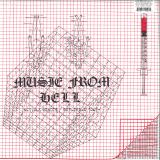
Nervous Gender’s legendary synthpunk LP Music From Hell burbles up from infernal depths to resurface on Dark Entries. Confrontational, unhinged, and unabashedly queer, Music from Hell is an unholy grail for fans of the strangest underbellies of post-punk, minimal synth, and early industrial music, and is presented here newly remastered and on expanded double LP.
Nervous Gender (de)formed in LA in 1978 at the hands of Phranc, Gerardo Velaquez, Edward Stapleton, and Michael Ochoa. Phranc, the androgynous embodiment of the band’s name, left in 1980. Following her departure, a wide cast of LA freaks would find themselves drawn into the band’s orbit, including Alice Bag of the Bags, Paul Roessler of the Screamers, the Germs’ Don Bolles, and an 8-year old drummer named Sven Pfeiffer. In 1980, Nervous Gender appeared on the seminal Live at Target compilation alongside Factrix, uns, and Flipper. With the band’s notoriety cemented, Music from Hell followed in 1981 on Subterranean Records (as no LA label would touch this material).
Side A, dubbed “Martyr Complex”, presents a more punk-forward sound with live drum salvos and slabs of aggressive synth. These twitchy, unsettling shockers ooze with the kind of snotty misanthropy that will endear them to fans of the Screamers or Crass.
Side B, known as “Beelzebub Youth”, is a live performance the band labeled "an electronic bruto-canto dissertation on the banality of spiritual transcendence." Mutant melodies cede way to synthesized clangs, whirs, bleeps, manipulated tapes, and howls of despair.
In addition to all the material from the original LP, we’re treated to a full disc of the band’s demos, the material from the Live at Target compilation, and early live recordings. Included are unrecognizable covers of Carly Simon and Lou Reed, and the Sex Pistols that are so despairingly skewed they fall into the void. This reissue of Music From Hell includes a 36 page lyric booklet, foldout poster, and gatefold sleeve with photos, flyers, and news-clippings designed by Eloise Leigh. Tackling taboo issues like sexual kinks, mental illness, drug use, and childhood molestation, Music From Hell is still surprising – even shocking - over 40 years after the album’s release. Nervous Gender stand as one of the most genuinely anti-establishment outfits in underground music, a colossal fuck you to social norms from religious strictures to gender essentialism.
Gladio Operations continues its expansion into the electro universe and, with this fourteenth release, lands in Viking lands, giving Danish producer Martin Stoffregen his debut on the label.
This artist, who releases his work under the alias Krypton 81, is no stranger to the scene, having released on major labels such as Bass Agenda and Mars Frequency, among others.
On this EP, entitled “Quantum Entanglement”, we sense a breath of fresh air in its three original tracks, which are refined and elegant. With strong sequences and adorned with sublime textures, we encounter “Binary Encoding”, the track that opens the EP and shows us the way to “Particle Proximity” and “Quantum Computing”. These two Kraftwerk-flavoured tracks are imbued with captivating melodies and subtle vocals, transporting us to an infinite emotional state of continuous well-being.
This EP is reinforced with two heavyweight remixes. The first is by producer Univac, who returns to the label and gives us his particular vision of “Binary Encoding”, once again showcasing his unmistakable and classic industrial sound, dark and emotive. The second remix is by German producer Vertical67, who gives “Quantum Computing” more hypnotic tones than the original
- A1: Shahrokh - Man Va Tou ("Me And You")
- A2: Shahram Shabpareh, Shohreh Solati - Ghesmat ("Fate")
- A3: Farzin - Eshgheh Man ("My Love")
- B1: Aldoush - Vay Az In Del ("Woe To This Heart")
- B2: Fataneh - Mola Mamad Jan ("Mola Mamad Jan")
- B3: Ebi - Kolbeh Man ("My Cottage")
- C1: Sattar - Khaak (
- C2: Susan Roshan - Nazanin ("Sweetheart")
- C3: Delaram - Gharibeh ("Stranger")
- D1: Black Cats - Rhythm Of Love
- D2: Leila Forouhar - Hamsafar ("Fellow Traveler")
- D3: Hassan Shojaee - Nazi Joon ("Dear Sweetheart")
Discotchari is delighted to release a first-of-its-kind various artists compilation: Tehrangeles Vice (Iranian
Diaspora Pop 1983–1993), fully licensed from Taraneh Enterprises. The album is a groundbreaking exposé of
the vibrant subcultural hub of Tehrangeles (portmanteau of Tehran + Los Angeles), and the action–packed, true
story of the Iranian diaspora music industry. Featuring 12 tracks remastered by award–winning Osiris Studio,
lyrics and translations to all featured songs, original cassette covers, a 20+ page album note booklet by Dr.
Farzaneh Hemmasi and more! Sprawling from Westwood to Glendale across the San Fernando Valley, the
Tehrangeles scene was cultivated by the same producers and artists who industrialized the “golden age” of
entertainment in pre–revolution Iran and fled from the 1979 Islamic Revolution along with millions of Iranian
citizens. Through music and visual media, Iranian producers and artists working out of Tehrangeles have
engaged in what the Iranian government calls a “cultural attack” against the Islamic Republic for over 40 years.
The album title Tehrangeles Vice underscores the illicit nature and daring circumstances from which
Tehrangeles pop music was born and compares its legacy within Persian media to one of the most significant
crime–drama TV shows of all time. In the same manner that Miami Vice and its aesthetics had a dynamic
impact on sonic, visual and cultural trends in the United States and around the world, Tehrangeles media was a
shock to the systems of Islamic Republic ideology and Iranian expatriate communities. Listening to these songs
in hindsight, the contribution of Tehrangeles can be better understood as a triumphant effort to preserve Iranian
identity by realizing it in conjunction with prevailing music genres of the ‘80s and ‘90s, and to rebel against the
oppressive regime of the Islamic Republic of Iran through the most seductive of means: dance music.
g C1. Sattar - Khaak ("Home Land")
One of contemporary ambient’s preeminent figures lands on its leading label, enacting a transition into a new phase of rhythmic noise and tonal shadowplay laced with peculiar sensitivities, wrangling Dilloway-influenced tape noise thru ASMR ambience, fritzed dub techno, layered vocal drone and ritualistic mantras.
Perila steps up solo with a heavily satisfying debut for West Mineral, investigating negative space and states of subconsciousness. The shift in tone feeds forward into arcane realms of resonant dark ambient and dream-pop, harnessed in amorphous structures using dub-as-method. It’s wholly immersive stuff in a way that’s long been Perlia’s calling card, but here more careful in its command of personalised, atmospheric physics from the Coil-esque ‘cheerleader’, thru the deeply smudged and sexy trip hop of ‘lava’, and the oozing, sloshing OOBE-like spectres of ‘give it all’.
The title of the album is a reference to Carl Jung’s phrase "all haste is of the devil” which informs Perila’s writing process here; she slows down in an attempt to feel more and tap into her shadow self. Album opener 'cheerbleeder' is a doomed, tremolo-heavy mass of ghost notes, while the rattling chains and strangulated voices on ‘metal snax' sounds like they belong on a Wolf Eyes tape. 'grain levy tep dusk' strikes closer to recently unearthed industrial plates from Tolerance and Mentocome, with rusted clangs threaded into deflated, half-speed pulses. The album keeps growing from there, shifting and expanding as Perila exhales and absorbs her cognitive blind spots. She credits "trance states" for helping her let go, and we broadly get to experience that on the mantra-like 'thunder me' and the blurry all-vocal highlight 'hold my leg', which sounds like it could have been snatched from Grouper's 'Way Their Crept' sessions.
As with all of Alexandra Zakharenko’s work under various aliases - Aseptic Stir, Baby Bong, Wedontneedwords, Perila - her allure is self-evident to lovers of textured, diffuse electronics, and never more so than on this lip-bitingly potent suite of delicacies and primordial urges, perfectly balancing ancient and techngnostic aspects with an x-amount of seductive strangeness left in the margins.
- A1: Talisman & Hudson - Warmth Re-Heated
- A2: Conscious - Morpheus
- B1: Treacle People - Rupununi Rhythm
- B2: The Obsession Project - The Dream
- C1: Interphaze - Aman
- C2: So-Low - The Hourglass (Time Mix)
- C3: Jay Trance - Ridiculous
- D1: Connective Zone - Multiple Sensory Contact
- D2: Cxx - The Comfort Of Strangers (Rhythm Doctor Mix)
- D3: C Hudd & P. Lazonby - The Colours (Mix 2)
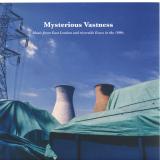
Barking-born Jane Fitz, and Transmigration label founder David Fogarty, curate a collection of tracks from East London and Essex’s rich but largely overlooked constellation of independent record labels and distributors operating from London’s E16 to the edges of the Thames estuary during the 1990s.
Mysterious Vastness documents a hidden and largely detached scene that only forms into something coherent with hindsight. From a time when record labels could press and hand-distribute 1000 copies locally, the late 80s acid house and outdoor rave scenes were moving from the fields to the clubs of London and DJs such as Colin Dale, Colin Faver and Darren Emerson were dominating the airwaves and parties with a distinct mix of other-worldly techno, trance and out-there house music. Among the seemingly bland post-war housing estates and factories, a scattered handful of producers were experimenting with early versions of music production software to create an exotic, end-of-the-century soundtrack to the suburban-meets-industrial landscape.
The compilation features a selection of finds from East London’s second hand record or charity shops over a period of 15 years. Many of which have featured in Jane’s sets over the years, most notably the “Beyond The A13" Podcast for Furthur Electronix. A mix she described at the time as the soundtrack to an area of London “totally bereft of natural beauty, but to me, somehow always full of mystery and wonder.”
- A1: What Lies Beneath 3 Arp 5 02
- A2: What Lies Beneath 2 5 43
- A3: Forrest Gump 3 01
- A4: Spiderman 2 08
- A5: Chilling Adventures Of Sabrina 2 35
- A6: Mad Men S04 1 1 46
- B1: Mad Men S04 2 1 18
- B2: Stranger Things S02 E07 3 55
- B3: Stranger Things 2 3 55
- B4: Stranger Things 3 4 00
- B5: Reacher S01 E07 2 03
- B6: Reacher S01 E08 2 44
- B7: Irma Vep S01 E05 2 31
LIMITED VINYL COMES IN CARDBOARD SLEEVE WITH BOOKLET!
OSTRANENIE is a collection of digitally manipulated, impressionistic piano miniatures — each named after blockbuster films and TV series. Improvised late at night as a reaction against passive media consumption, these pieces function as both homage and critique, navigating the space between classical impressionism and contemporary digital manipulation. They don’t just deconstruct traditional piano expression; they interrogate the emotional stakes of sound in an era where immersion culture flattens meaning and algorithmic logic erodes agency.
The album’s title references the Russian formalist Viktor Shklovsky’s concept of “ostranenie” (ɐstrɐˈnjenjɪj, estrangement/defamiliarization), a term he introduced in the early 1920s to describe art’s role in resisting the indifference of habitual perception.
“And so, held accountable for nothing, life fades into nothingness. Automation eats away at things, at clothes, at furniture, at our wives, and at our fear of war.”
—Viktor Shklovsky, Theory of Prose (1925)
Shklovsky saw art as a way to break through the anesthetizing effects of routine, stripping away the layers of habit that dull our senses. By making the familiar strange, art reclaims perception from the mechanical and the automatic. His argument wasn’t just a theoretical exercise — it was a response to a world rapidly consumed by industrialization, war machines, and the alienation of a technologically dominated modern life. In this context, he positioned artistic technique as something autonomous, distinct from mere social criticism or psychological reflection. Art seeks to remove “...the crust that the world of things deposits on our senses, with routine’s unending murder of the real.” Ben Ehrenreich on Serena Vitale’s Making Strange (The Nation, 2013)
This tension—between revolutionary/artistic and industrial technologies—defined the 20th century, and it continues to resonate today. The mechanization and automation that fueled the First World War’s devastation, alongside the social and economic turbulence of the 1920s, became central to the era’s self-conception. But just as technology was a source of alienation, it was also positioned as an agent of radical change. As the shock of modernity disrupted the human condition, it also became the driving force behind an ideological utopia — one that ultimately deformed into political totalitarianism — a paradox that remains unresolved.
OSTRANENIE plays within this contradiction. The music shifts seamlessly between an uncanny black MIDI dismantling of traditional piano virtuosity and moments of raw, fragile intimacy. The result is a work that resists automatic anonymity while questioning what it means to create in an era where the technological mediation of sound — and experience itself — is unavoidable: Art in the age of its technological constructedness.
2025 Repress
Mutual Rytm welcome back Swiss DJ/producer Chlär for a bustling, high-octane return as he unveils his latest six-track EP, 'Intrinsic Drive'.
Swiss artist and mastering engineer Chlär's last outing on Mutual Rytm, his 'Optimized Grooves' EP, was a standout success that made an impact far and wide across the techno realm. It was another big step for the fast-rising producer, who is also a dexterous DJ that plays across three and even four decks in the club. A craftsman of sounds, his take on techno is full throttle and has come on labels like Iceland's NIX and Stranger's Self Reflektion imprint. Always looking to improve his sounds, he hits a perfect sweet spot with a fresh and visionary approach across six fresh productions with his 'Intrinsic Drive' EP, again showcasing exemplary creative progression in his ever-impressing production skills.
Up first is 'Dopamine Rush', a quickened techno pumper with synths peeling off the straight-ahead drums and locking you into a state of hypnosis. The title track 'Intrinsic Drive' is a tightly woven mix of drums, hits and bass that never lets up, while the supple rhythm is overlaid with alien sound designs to up the intensity. 'For Marco' takes a heavier path with darkened and more weighty kick drums under eerie synth loops. There is a real swing in the drums of 'Steady Pace' as the crisp hits and vocal fragments all up the ante, before 'Greedy Man' delivers a tough panel beater with skewed synths and an industrial undertone. Digital bonus 'May I Dance?' rounds things out with raw textures and unhinged loops that take you to the heart of a strobe-lit dance floor, shaping up another
mighty fine statement of intent from the ever more vital Swiss native.
“Artifact” by Novo Line makes a departure from his Atari ST fueled FM synth journeys, here reimagining the soundtrack of our collective memory. Born from a live performance at a listening festival in Berlin by the Camp Cosmic crew, this LP transforms universally recognized pop anthems, beckoning listeners into a kaleidoscopic realm of sound, where familiar melodies fracture and our brains attempt to reconstitute them.
Using era-consistent equipment – turntable, 12″ maxi singles, classic samplers, and iconic drum machines – Novo Line deconstructs and reassembles songs etched into our cultural DNA. From the soaring emotions of “I’ve Had the Time of My Life” to the disco beat of “Heart of Glass,” these are melodies that have scored countless lives, now reborn in startling new forms.
Recorded live to tape, ‘Artifact’ doesn’t just play; it unfolds like an auditory hallucination. It taps into the deep emotional reservoirs these songs have built over decades, twisting familiar refrains into new shapes. One festival goer recollected that it uncovered “the dark inner universe of Kenny G, suddenly splayed out into a whole new cosmos.”
As the needle traces its path, ‘Artifact’ peels back layers of shared musical experience. It’s an aural alchemy that transmutes the known into the profoundly strange, yet achingly familiar. Listeners may find themselves adrift in a sea of frequencies, where every warped note triggers a cascade of personal and collective memories.
Rooted in the “copyriot” tradition of 1980s punk and industrial scenes, “Artifact” challenges notions of authorship while celebrating the universal language of pop. It doesn’t merely suggest a trip – it becomes a journey through the very fabric of our shared musical consciousness.
Mastered by Rude66, cut by Helmet Erler, and pressed at Objects Manufacturing.
Composed, produced and arranged by Evangelia VS, the artist behind Abyss X, Freedom Doll is the culmination of a year of emotional unloading through songwriting, offering an introspective journey into the ocean of her mind. Produced and recorded between an artist residency near the Mayan jungle in Mexico and her Berlin home, the album chronicles transformations the performer tackled mentally during the writing process, tracing the rollercoaster of falling in love during the pandemic, as well as the pleasures and tribulations of womanhood.
Freedom Doll encapsulates the romantic escapade between her voice and the guitar. The amalgamation of seduction, sexual tension, vulnerability and assertiveness pulses throughout the entirety of the album, spiralling out of the cracks spawned from her vocal chords. From the twirling dance between her lush harmonies and the progressions of the acoustic guitar in tracks such as Ascend and From Hot to Cold, to the explosive confrontation between the metallic and operatic qualities of her voice, the searing sound of the electric guitar in industrial rock / psychedelic anthems such as Torture Grove and Banyana and the cathartic momentum found in the gospel inclined chants in A CHEW - Freedom Doll untethers the dramatics and theatricality that defines Abyss X’s vocal performance and music production, while maintaining the sensual vibrations of her creative essence.
Freedom Doll is the encapsulation of the Minoan woman, the elusive harlequin tiptoeing her way through the “circus of terror” that is living and loving her way through womanhood. With this visual reference, Abyss X pays tribute to her ancestors and their groundbreaking ancient artistry. The back cover of the vinyl features a reiteration of depictions of bulls leaping found in Minoan frescoes; an inherently male cultural act that in the ancient Minoan times presumably gave expression to a tension that underlies man's somewhat tenuous mastery of nature. Freedom Doll’s artwork challenges this preconceived notion through an eco-feminist approach, bringing the Minoan woman slash Gaia in the seat of the bull leaper, taming the unhinged and predominantly male earth - threatening human force.
- 1-: Fire Graphics
- 2: Secret Speech
- 3: Ex-Human Shield
- 4: History's Biggest T-Shirts
- 5: Not A Sound In Heaven
- 6: Company Town
- 7: You Can't Say Dallas Doesn't Love You
Bristol experimental band SUGAR HORSE are delighted to announce that their third album, Not A Sound In Heaven, will be released on 10th April 2026 via Fat Dracula Records.
To celebrate the news, the band are sharing the bruising lead single ‘Secret Speech’, available to stream on all good digital service providers from 12th February 2026.
Also announced today are a run of April 2026 UK album headline tour dates and an appearance at StrangeForms Festival 2026, with tickets on sale now (see below for full listings).
“We are fortunate enough to live in what is generally known as ‘The West’,” says front man Ash Tubb of the lyrical themes behind the new track. “I say fortunate with gritted teeth, because I know—as I’m sure the reader knows—that living in the West isn’t always rosy. The vast majority of people struggle everyday to feed, clothe and house themselves. Let alone receive adequate healthcare, schooling and workers’ rights.”
“We are, however, where all the world’s wealth is hoarded. We are at the centre of Empire. The people outside of this empire—those of the Global South—have had their resources extracted and their populations exploited by our own governments, with very little given back in return. This won’t go on forever. It will inevitably end, as all great empires do.”
“We in The West have a choice to make in the meantime; either help create a new, fairer world, or let the greed of our ruling classes become the undoing of all of us.”
The first glimpse of new material from the quartet, ‘Secret Speech’ starts as Not A Sound In Heaven means to go on—a politically-charged wrecking ball of a song that smashes its way through the often unbelievable chaos and brutality of the 21st century with vitriolic malice.
How do you capture the machinations of the geo-political industrial war machine—and all the horrors that go with it—in the studio, without seeming trite or crass? That’s the question that Sugar Horse have posed themselves on their forthcoming third album Not A Sound In Heaven, and they must surely be one of the only bands in existence capable of delivering on just that premise with both musical substance and cutting philosophical insight.
“Ever since I was born I can remember visions of war, famine, and death being beamed directly into my living room via the magic of television,” says Tubb of the record. “These visions were accompanied by newsreader narratives designed to either humanise or dehumanise the people involved. We humanise our government’s allies and dehumanise their enemies. This is taken as common sense, or even wisdom to some degree. People watch the news and accept it as fact, simple and true.”
“As a person gets older they move in one of three different directions with this acceptance of reality; They embrace what they’re being told, they fall into a kind of trust free nihilism or they learn that there are deeper narratives at play.”
“Not A Sound In Heaven is an aged acceptance of the latter. An acceptance of sitting at the centre of a global empire of both military and economic dimensions. An acceptance that the stories we’re told as a nation, or what’s generally in the zeitgeist, isn’t necessarily reality itself.”
“How does a person cope with the weight—and, frankly, the guilt—of a society that perpetuates such distinct inequalities? A society that thinks a bit of killing abroad is fine, as long as it improves the lives of people at home. You can see why so many choose to embrace it. Hell, nihilism seems pretty sensible. Once a person decides upon pursuing a degree of truth however, things get a bit depressing. Beyond depressing...maddening.”
“This album explores this kind of breezy, frivolous subject matter in a manner that will no doubt be uplifting to the listener and massively financially rewarding for the artist.”
The new album follows on from their standalone AA single ‘What’s Your ETA? Let’s Have A Tear Up’/‘Would You Like Me To Be The Cat?’ which was released late last year as a surprise double drop.
- A1: Chris Liebing - Unfold
- A2: Chris Liebing, Charlotte De Witte - Symphonie Des Seins
- A3: Chris Liebing, The Advent - Subjective Immortality
- B1: Chris Liebing - Roy Batty
- B2: Chris Liebing - Evolver
- B3: Chris Liebing - John Connor
- B4: Chris Liebing, Luke Slater - Double Split
- C1: Chris Liebing, The Alte Stuben Modular Ensemble - Entangled Circuits
- C2: Chris Liebing - Higher Things
- C3: Chris Liebing, Speedy J - Shaping Frequencies
- D1: Chris Liebing - Brooks Ave
- D2: Chris Liebing - Eye C
- D3: Chris Liebing - Endtrack
Chris Liebing's first full solo techno LP, 'Evolver' is released on 27th March 2026, via his own CLR imprint. The German techno don's LP features a host of collaborators across music, images, and artwork. Luke Slater, Charlotte De Witte, Speedy J, The Advent, Terence Fixmer, Pascal Gabriel, Daniel Miller contribute to the music, while long-time collaborators Studio Bergfors deliver design, and legendary photographer Anton Corbijn shot Liebing for the project.
The Evolver LP is the sum total of Chris Liebing's three decades at the beating heart of techno. It's the record only someone whose first break as a techno DJ was playing five hours at Sven Väth's infamous Omen in Frankfurt - and who has ridden out every twist and turn of life and subcultures since, while remaining rooted in the true school, dark, sweaty techno sweat pits of the world - could have made. It's the result of deep introspection, but it's about utter immediacy. It's the sound of someone previously driven along by compulsion and happenstance at last finding the confidence to be utterly intentional about their practice, allowing them to take the most classic, familiar, proven elements from the past and render them completely new.
Evolver is also Liebing's first completely solo album. There are collaborations, yes: with old friends from the OG techno generation, Luke Slater, Speedy J, and The Advent, all on uncompromising form, and with new generation figurehead Charlotte De Witte, who provides a thrilling narration of total surrender to the moment on acid clarion call "Symphonie des Seins". But unlike all Liebing's albums to date, there's no co-pilot. Every structure, every mixdown, every choice serves his singular vision of how his untold immersion in the surging currents of the world's greatest clubs should sound. The elements are all those forged in the white heat of Omen and Tresor in the mid 90s - brutal repetition, titanium kick drums, industrial atmospherics, but also dark rave euphoria, ever present surging acid lines just on the cusp of trance, and just enough human voices to remind you of bodies on the dance floor - but rendered with all the extraordinary accumulated skill and technological developments since then.
It's Chris's vision entirely, his musings on sound, technology, and life birthing tracks like "Roy Batty." Inspired by thoughts of AI becoming sentient and hungering for more life like Rutger Hauer's titular Blade Runner character, it was one of the first tracks to emerge and a foundation stone for the album. And in pursuit of that vision, it's built like a "proper album". The anticipation and menace of intro "Unfold" tip over into the glowing hot high drama psychedelia of "Symphonie…" then the breathless headlong rush of The Advent collab and on through an unfolding narrative that goes deep, goes dark, opens out into grand vistas, takes strange turns before finally landing on the alien landscape of… well… "Endtrack".
Not everything is pummelling on Evolver - the dazzling title track feels like you've been welcomed into the courtly dance of a higher dimension civilisation, and the audacious Speedy J collab "Shaping Frequencies" is a beatless flow that tests the boundaries between signal and noise. But for all its complexity, conceptualism, and stylistic branching out, every last part unmistakably powered by that dark techno-cavern energy above all else. All of it positively radiates the qualities of Liebing's greatest work and sets to date - but somehow even more so than before. Whether you're listening for aesthetic inspiration, cerebral stimulation or just that raw physical power, this album will sweep you up into its momentum and won't let go of you until it's done.
- 1: Island Family
- 2: Natural Successor
- 3: The River It Runs Inside Of Me
- 4: In The Land Of The Dead
- 5: It Came Back
- 6: Thistle
- 7: Melody Something
- 8: Nuclear Sunflower Swamp
- 9: Green Mountain
- 10: Remote Control
Limited Green LP is for Indies only. all LPs include a DL card. Island Family is the fifth album from Isle-of-Eigg dwelling electro-acoustic psych-pop wonder Pictish Trail, AKA Johnny Lynch. A strange, unpredictable, sardonic and yet deeply personal record inspired by all from Fever Ray to The Flaming Lips, Liars, Mercury Rev and Beck, Island Family is Pictish Trail's contrarian view of arcadia; a search for the euphoric in the bucolic, bound up in sometimes conflicting ideas and feelings around nature and environment, sincerity and artifice, escapism and belonging. It's an album about how no man can remain an island, however hard he might try. Released by Fire Records, with support from Johnny's own label Lost Map, and produced by long-term collaborator Rob Jones (The Voluntary Butler Scheme, The Gene Dudley Group), 'Island Family' opens with its title track, a song of death, ghosts and the ties that bind, fusing abrasive electronic beats with a tongue-in-cheek fireside folk refrain and the haunted ice cream van melody of a digitally reincarnated traditional Scottish jig. A purgative surrender to nature's whim driven by a clattering machine drumbeat rolled in a puddle of filthy dirty fuzz, 'Natural Successor' is five-and-a-half-minutes of cathartic churning bass. 'In The Land of The Dead' is an eight-bit glitch-core reflection on island party excesses spasming into existential dread and regret, suitably accompanied by a funereal mariachi band. It's followed by the epic 'It Came Back', the understated verses and arms-aloft falsetto chorus of which are accompanied by a tense, foreboding bass-driven electro hip hop instrumental with (spoiler) a brain-shattering industrial-metal meltdown. 'Melody Something' is the album's purest moment, a cautiously uplifting solar-powered-ballad about losing track of time in the cycle of the seasons, and the gap between memory and reality. Shapeshifting closer 'Remote Control' is a channel hopping cabin-fever-dream flipping from warped boyband ballad to deep-fried fuzz pop. "One of my favourite artists" Lauren Laverne, BBC 6 Music
**Cassette release
SELN Recordings is proud to present DJ Gonz’s first solo outing on the label.
The label’s co-founder explores dissonant terrain over seven
tracks, all rooted within his own brand of techno.
From the pumping frontrunner “Who Do You Ride For?” to the
neo-noise industrial blackout title track “Magical Negro
Overdrive”, the EP lays out DJ Gonz’s talents in compact style.
- 1: Timeless
- 2: Peony Garden
- 3: Marrow
- 4: Moonflower
- 5: Linen
- 6: Boy Beneath
- 7: Mirrors
Intricate structures with an intertwining of spontaneity and randomness, meeting the diverse genre influences of the band members from mediaeval music to shoegaze to noise. That is Unravel, the new album, and first in six years, from Czech band Manon Meurt.
"Unravel reflects the different stages of dissociation, a person's thoughts, observations - whether of the environment or of oneself - and admiration for the beauty and cruelty that nature mirrors," multi-instrumentalist and lyricist Kateřina Elznicová says of the album.
Produced by Eddie Stevens (Freakpower, Zero 7, Moloko, Roisin Murphy) the album was pieced together from recorded fragments, meticulously pieced together. The title Unravel refers to the development of the band, unravelling what they are to find the full potential of their music as well as uncovering the layered nature of the songs and emotions.
"Eddie Stevens’ approach to recording was a big surprise. We understood that there was no one right version of the songs. Each of our themes carries a certain energy that can manifest and blossom in many ways. Compared to previous records, the vision of each member was much more evident, while we learned not to cling to our individual ideas of a signifying break or a nu-metal bounce at the end of an ambient song. The main thing was a common concept," adds keyboardist David Tichý on creating the seven songs on the record.
Abum producer Eddie Stevens describes the collaboration, “Each album is an adventure. You do some preparation, check the route over and over, prepare for any eventuality that your packing space and imagination will allow, plan some places to stop and rest en route, places to eat, sleep, then consider the challenges - the ice wall, the summit, even just finding your way in foreign land. But despite all that planning, you can never really say for sure what’s going to happen, what unexpected path you might take, what strangers might invite you in for a cup of tea and to what ends. So it was making Unravel with Manon Meurt and engineer and studio owner Lukas Martinek at Svárov studios and of course back home in the relative safety of my studio. Musicians who quickly became friends showed me more than I showed them, people with ideas, with creativity seeping from their pores. Music making the right way: no blinkers, no walls, no preconceptions, no barriers, no rules. What a pleasure, and what a magical, technicoloured,
kaleidoscopic album we’ve made together, “
The combination of industrial material with plant motifs in the work Untitled_1 by Ukrainian artist Liza Libenko, which adorns the cover of Unravel, strongly attracted the band. After all, floral motifs have always been close to Manon Meurt's music. Libenko, a student of the Academy of Fine Arts and a finalist of the prestigious Austrian Strabag Artaward International Prize, has recently been working on overcoming the narrative boundaries of the canvas, the paintings "attack"the viewer. Sunflowers are a powerful symbol of life and the sun; in Libenko's paintings they are black and burnt, serving as an allegory for contemporary conditions. The work was photographed by photographer and artist Marcel Rozhoň, and the final processing of the Unravel album was done by graphic artist Zuzana Malá.
- 1: Heatsick (Feat. Hilary Jeffery)
- 2: Plastic Fascist
- 3: Praya (Feat. Bendik Giske, Maria W.horn)
- 4: Past Blast
- 5: Mancini Sighs
- 6: Black Metal Rewind (Night Drive Astra, 200)
- 7: Death By Nostalgia, 1688
- 8: Passengers (Feat. Bendik Giske, Maria W Horn, Adam Betts)
Loaded with tension and anchored by bold textural and stylistic contrasts, Sam Slater’s third solo full-length finds the British sound artist, composer, and engineer grappling with his creative contradictions head-on.
Having spent a life time in bands and producing records, Sam transitioned somewhat by accident through his work with Johan Johansson into working as a composer on high profile projects such as his collaboration with Hildur Guðnadóttir on the Grammy Award-winning Joker and Chernobyl, and with Pulitzer Prize-winning journalist Mstyslav Chernov on the soundtrack to the lauded 2000 Meters to Andriivka. Having a vast set of interests and influences is an asset when helping realise a directors vision for a soundtrack, but one's own musical voice can end up being constrained. In Lunng, Slater has gone back to his wildly divergent range of influences and rather than shy away from the extremes, he's used them to create a singular vision.
Take the opening track “Heatsick”: Slater imagines an extravagant fusion of 2000s drone metal and vintage British brass, welding ear-splitting overdriven drones and blown-out choral vocals to stirring trombone swells from veteran player Hilary Jeffery. On paper, it’s hard to imagine—but Slater’s intentionality conducts these polarizing elements into a surreal blur of sonic extremes, with the guitars’ relative harshness softened by Jeffery’s eerily nostalgic colliery echoes.
His last solo album, I do not wish to be known as a Vandal (Bedroom Community, 2022), showcased this breadth by assembling a team of collaborators including Sam Dunscombe and Yair Elazar Glotman. On this record he’s linking up with acclaimed multi-instrumentalist Maria W. Horn, idiosyncratic sax virtuoso Bendik Giske, versatile percussionist Adam Betts, and the aforementioned Jeffery, Slater ushers these players toward a lattice of calculated confutations.
Working to explore the tension between the divergent practices of his collaborators—Lunng was meant to be challenging. On “Praya”, Giske’s familiar overblown horn phrases are almost vaporized, vanishing among Slater’s weightless synths and Horn’s chillingly hoarse vocals. There are traces of Horn’s Funeral Folk project, but Slater shifts the emphasis, letting her voice brush past the other elements like a hallucination.
Slater’s use of extremes isn’t just in the micro; dynamics drive the album’s overall flow. “Praya” sets the stage for the record’s heaviest, most prickly moment: “Passengers”. Here, Horn’s voice cracks, rasps, and gurgles over serrated synths and Betts’ ritualistic drums. Slater turns an industrial symphony into a folk opera—dark, dramatic, and strangely beautiful—etched with Giske’s fluttering phrases.
But the mood soon shifts. Slater careens toward chaos, unleashing double-time rhythms and piercing textures familiar to anyone with a soft spot for classic black metal. These grotesque incongruities are deliberate; Slater surveys years of musical conflict and leans in, using dissent as fuel to build kinetic energy.
The weight of sentimentality bears down on “Black Metal Rewind (Night Drive Astra, 2006)”, melting teenage memories into hypnagogic ambience—shoegaze dreams whirled with angelic choral delusions. On “Death by Nostalgia, 1688”, he ventures further into polarizing territory, distorting AutoTuned voices with cryptic strings and medieval tonalities, unsettling any stable sense of past or present.
In this record Slater focuses on pure energy, color, and mood. Lunng distills years of listening into a bracing brew—boiling each sound down to its essence, then serving it with unflinching intent.
John Twells, 2025
'The World in Air Quotes' is a genre-shifting style-melting kaleidoscope of art-rock, jazz, techno, folk & industrial. The God In Hackney sound like very little else from the early 2020's and whilst 'The World In Air Quotes' innovative progenitors are manifold - Eno, Coil, The Durutti Column, 1980s ECM jazz to name a few - it sounds beholden to none of them.
The God In Hackney's first album 'Cave Moderne' was Andrew Weatherall's album of the year for NTS Radio.
The God In Hackney's second LP, 'Small Country Eclipse', was album of 2020 for critic Sukhdev Sandhu of The Colloquium for Unpopular Culture: "Mordant music: stuttering, dread, black humour. A record that felt truly independent, beholden to no genre, out of step with all centres and signposted nodes."
'The World In Air Quotes' is The God In Hackney's 3rd album and their most musically emotive and lyrically inventive to date. It's an album that resonates with feelings about climate change, isolation, extinction, the social impact of technology, the flattening of history—and illuminates the darkness with imaginative rhythm, melody, noise & poetry. Songs range from widescreen, anthemic rock, to strange intricately arranged jazz-influenced songs, to abstract, textural electronic pieces. There's a strain of dark and surreal comedy too that runs through the lyrics and some of the choices the band makes in their sounds and arrangements.
The core God in Hackney quartet of Andy Cooke, Dan Fox, Ashley Marlowe and Nathaniel Mellors has expanded to include American multi-instrumentalists and composers Eve Essex (Eve Essex & The Fabulous Truth, Das Audit, Peter Gordon & Love of Life Orchestra, Peter Zummo, Liturgy) and Kelly Pratt (Father John Misty, David Byrne/St Vincent, Beirut, and Lonnie Holley among many others), signalling a new and ambitious direction for the band.
The album cover features original artwork by Iranian-American artist Tala Madani, recently the subject of a career survey exhibition at the Museum of Contemporary Art, Los Angeles.
Advertising:
The Wire, Maggot Brain
Reviews & features:
Maggot Brain - forthcoming feature
Hi-Fi+ Magazine - album review in April 2023 issue
Dereck Higgins (You Tube review)
Sonosphere - interview / feature
Weirdo Shrine - interview
It's Psychedelic Baby - interview
Spettacolo (Italy) - feature.
Ghettoblaster Magtazine (USA) - feature
Airplay:
Gilles Peterson - BBC Radio 6 Music
Steve Lamacq - BBC Radio 6 Music
Dublab - playlisted & featured in Dublab Recommends (Los Angeles)
Cian Ó Cíobháin - RTE Raidió na Gaeltachta (Ireland)
WFMU - playlisted
Resonance FM - The Wire presents Adventures In Sound & Music
Human Pleasure Radio (New Zealand)
Pete Wiggs & James Papademetie - The Seance (Repeater Radio, Sine FM & others)
Peter Hollo's Utility Fog - FBI Radio (Australia)
Jonathan Lethem & Sam Sousa on Radio Free Aftermath (KSP Claremont 88.7)
Life Elsewhere
WRPB Princeton
In Memory of John Peel
Mike Watt's Watt from Pedro Show
Editions Mego presents The Psychologist, the sophomore album by the Istanbul born and raised, Berlin based electronic music composer and sound artist Hüma Utku.
As the title suggests, The Psychologist, is a series of sonic essays based around themes of psychological phenomena and can be read as a musical enquiry into the human condition. With Utku’s background as a graduate of Psychology and her current practice as a conceptual music composer we see the two main threads in her professional career intertwine on this unique and ambitious release.
Including recordings of Buchla 200 from Utku’s Elektronmusikstudion residency in October 2020,The Psychologist is a genre aversive work that embodies elements of synthesiser music, electroacoustic, experimental techno, industrial, modern composition and spoken word. Piano, string compositions and vocals hold weight throughout a number of pieces providing a dramatic acoustic edge to the psychological explorations contained within.
The foreboding mood of much of this release is the product of investigation that lends the unsettling theme of anticipatory grief to the mood of the tracks Light of All Lights and Continuing Bonds. Islands of Consciousness refers to Jungian metaphor for consciousness whilst the unnerving Rüya twists around dream analysis in Gestalt psychology. Fuel For The Flames proceeds as a buzzing and swirling representation of alchemy and psychological symbolism. Dissolution of I is haunted by a strange sensation of dissociation whilst defense mechanisms support the sublime Sublimation. The bright shapes of Chironian Wound represent archetypes and analytical psychology whilst the fried soundscapes and rhythms of Ataxia encapture neurological states.
The results unravel with both the clockwork rhythms of the human body and the unpredictable nature of the psyche, the pieces follow arrhythmic patterns in a harmonious way. It tells the raw and intimate story of the human experience with a new work whereby the predictable operates in parallel with the unexpected and like human experience itself, is dark and complex.
Composed, Written & Produced by Hüma Utku
Piano by Hüma Utku
Vocals by Hüma Utku
Double Bass performed by Adam Pultz Melbye
Cello performed by Florina Speth (aka Schloss Mirabell)
Violin performed by Marta Forsberg
Cover photography & art by Gözde Güngör
Design by Eloise Leigh
- 1: Nothing Is Sacred ( 05:42 )
- 2: Wailing ( 04:3 )
- 3: At Dusk ( 05:40 )
- 4: When All Hope Is Gone ( 05:01 )
- 5: Wisdom ( 04:0 )
- 6: Dust To Dust ( 0:02 )
- 7: For My Days Are Vanity ( 06:25 )
- 8: I Am A Stranger In The Earth ( 06:52 )
- 9: Deliverance ( 05:50 )
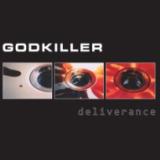
Formed in 1993 & hailing from Monaco, Godkiller was the vision of multiinstrumentalist & sole founding member, Duke Satanael, who between 1996 & 2000 released an EP & 2 studio albums under the Godkiller name, commencing with the black metal cult classic debut 'The Rebirth Of The Middle Ages'. Though initially more a death metal inspired act in the formative years, Godkiller quickly developed into a project fully engulfed in the spirit of 1990s black metal, bringing to mind acts like Emperor & Satyricon for the implementation of such strong atmospherics, though on later releases Godkiller incorporated more industrial & electronic elements into the compositions as part of its creative evolution. 'Deliverance' was Godkiller's second studio album & final release before the project was laid to rest & ventured into a more electronic & industrially metallic direction for what could be considered a more contemporary & expressive take on Godkiller's established brand of darkness.
The Heinz Beauvaix project dates back to the mid-1990’s when Niels Rønne and Flemming Kaspersen played in Danish ambient act Swimwear Catalogue. On an ever growing number of DAT tapes they recorded semi-improvised synth/sampler/sequencer jams that mixed influences from ambient, electro and industrial. Later they began working with more detailed studio productions.
The seven tracks on “Vision Man” combine complex synth pads, interweaving monophonic synth lines, discrete drum rhythms, and strange voice samples. The sound is experimental and melodic at the same time. Influences range from early industrial to IDM, techno and synth pop. Rønne and Kaspersen originally met through a shared obsession with Canadian industrial giants Skinny Puppy. And if there is one seminal album that has influenced the Heinz Beauvaix sound, it is the obscure Skinny Puppy side project Doubting Thomas and their solitary album “The Infidel”, released in 1990.
Others have mentioned influences from bands such as Coil, Severed Heads, Bill Leeb and Rhys Fulber’s Delerium and Future Sound Of London.
“Vision Man” is old school synthesizer music with tunes you can hum.
- Humble Eyes
- Wave Of Wisdom
- Into The Blue
- Zeros, Ones & Lies
- Bring Ur Bruises
- Crucify
- Change Change
- Nova
- W.d.i.f.l?
- Life Is Kind
NOVA ED. VINYL[26,01 €]
An enthralling weave of cathartic, introspective spirituality and thrumming, industrial darkness; The Wounded Healer is the first full-length from PREYRS, the new incarnation of Irish singer-songwriter Amy Montgomery and her band as one formidable entity. From the fourpiece's new janiform name; a twisting, conflicting play on the tenderness and innocence of prayer and the deadly dance of prey and predator to the band's fiercely independent journey, PREYRS is a project already steeped in story. After breathtaking album opener `Humble Eyes', lead single `Wave of Wisdom' immediately lays this concept bare as Amy's incandescent delivery of uncertainty, "lesson learned / don't know how / but here I am again / stronger than before", soars over a defiantly discordant clash of alt-folk slide guitar and Mormecha's pummeling industrial percussion. Elsewhere, the high-octane `Zeros, Ones & Lies' wrestles with the spiritual toll of being fed constant footage of atrocity and catastrophe by a media that accepts no responsibility for their part in the global race to the bottom. As such, the track bursts into furious life with urgent, double-time drums met by guitars distorted to the brink of destruction before the song all but caves in on itself as Amy quietly asks of us "Can you feel it? / like a river / it flows so silently / it flows so violently". By contrast, `Bring Ur Bruises' radiates resplendent, self-empowering positivity. Centred once again on the concept of the wounded healer, `Bring Ur Bruises' implores the listener to welcome their trauma in, to own it and wear it as a paradoxical means of ultimately letting it go as triumphant, reverb-soaked guitars soar ever higher. If it wasn't already clear, PREYRS are no strangers to doing things differently and, across every iteration, the band have always taken a DIY approach to every aspect of their existence. From covering themselves in paint and rolling over every single early album cover to, until recently, booking all of their own shows and festivals as diverse as Glastonbury, Green Man (UK), Blizzarrrd Rock (GER) and Bloodstock (UK), last year the band found themselves touring the UK as Amy Montgomery in support of musical heroes and British post-punk legends New Model Army. In November 2025 they will be joining New Model Army again on tour across Europe, but this time as PREYRS performing tracks from The Wounded Healer, the same four people but an entirely different beast. FOR FANS OF Nine Inch Nails, Chelsea Wolfe, Sonic Youth, Julie Christmas, Alanis Morissette, My Bloody Valentine, Siouxsie and The Banshees, Melvins
When it comes to dark, mesmerizing electronic music steeped in EBM, house, industrial, and electro, few artists delve as deep — or as strangely — as Timothy J Fairplay. A long-time underground stalwart and collaborator with the late Andrew Weatherall, Fairplay has carved out a sound that’s as cinematic as it is menacing.
His Melt the Chains EP pulses with slow, chugging rhythms, warped synths, and a kind of psychedelic paranoia that feels tailor-made for shadowy dancefloors and late-night headphone sessions alike.
Adding an extra touch to the release is DC Salas, who delivers an extraordinary remix that pushes the EP even further. Injecting his signature blend of sleek groove and cosmic flair, Salas reimagines “Runs Every 15 Minutes” into something both dancefloor-ready and deeply hypnotic — a perfect complement to Fairplay’s noirish sonic world.
- 1: I'm A Stranger Here/Stranger Blues
- 2: Nervous
- 3: I Just Want To Make Love To You
- 4: Born With The Blues
- 5: I Got My Eyes On You
- 6: John Henry
- 7: I Need Money
- 8: Everyday, I Have The Blues
- 9: Night Time Is The Right Time
- 10: My Own Fault
- 1: Baby, Won't You Please Come Home
- 2: Moanin
- 3: Money Honey
- 4: Kansas City
- 5: Bye Bye Baby
- 6: Medley : The Blues Ain't Nothin' But A Woman & Bye Bye Baby
- 7: Eyesight To The Blind*
- 8: Your Funeral & My Trial*
- 9: Bye Bye Bird*
- 10: Fattening Frogs For Snakes*
- 11: Bye Bye Blues*
- 12: Wake Up Baby**
The blues, born in the cotton fields of the American South, emerged from makeshift instruments and simple harmonies rooted in African heritage. It captured the struggles, hopes, and fleeting joys of laborers enduring harsh conditions, with its hallmark "blue note" adding a unique dissonance to this evocative musical style.
As industrialization progressed, the blues migrated to urban centers like Chicago and New Orleans, evolving with modern instruments and expanding themes to reflect urban struggles, sensual nights, and existential despair. This period birthed many of the musicians who later formed the American Folk and Blues Festival (AFBF), an initiative started in 1950s Germany to introduce Europe to the genre and counter its reductive reputation as a precursor to jazz.
The Lost Recordings celebrates these legendary artists through restored performances from the 1962 Olympia in Paris and the 1963 Stadttheater in Bremen. Featured artists include John Lee Hooker, Memphis Slim, Sonny Terry, Brownie McGhee, T-Bone Walker, Helen Humes, and others, showcasing the depth and evolution of the blues.
From intimate duos like Brownie McGhee and Sonny Terry’s harmonica-guitar interplay to T-Bone Walker’s electrifying group performances, each act demonstrates the genre's versatility and influence. John Lee Hooker’s solo mastery mesmerized audiences, while T-Bone Walker pioneered the electric guitar's place in blues, inspiring legends like B.B. King.
The album also highlights Sonny Boy Williamson, whose charismatic harmonica and profound sensitivity defined his performances. These concerts take listeners on a journey through the authentic sound of the blues, traversing America’s history and foreshadowing its transformative impact on global music.
- 1: This Music
- 2: Endless Summer
- 3: Abe’s Flamenco (Ft. Franco Franco)
- 4: The Urban Solitude
- 5: E-System (Ft. Manonmars)
- 6: A Feeling
- 7: Close Ur Eyes (Ft. Birthmark)
- 8: Overdrive
- 9: Walking Home (Ft. D. Ham)
- 10: Sunday Morning
Love in the time of collectively assured techno-capitalist-nuclear holocaust! It’s the endless summer the Brits have been harping on about since they think they won the World Cup. The soundtrack is the debut album of the Content Provider; where Octatrack illbient and industrial chanson mesh in a singed postcard addressed to the UK Border Force and co-signed by aliens plucked from the petri dishes of Young Echo, Cold Light and Avon Terror Corps.
It’s a name she tried to keep anonymous, but Drowned By Locals and Bokeh Versions are breaking contract to reveal that the Content Provider is in fact the shock production alias of DALI DE SAINT PAUL. Patron saint of Bristol’s self-destructive improv idols EP/64 as well as post-feminist chamber collective Viridian Ensemble, avant-terror duo Harrga and constant collaborator with the likes of *breathe* Moor Mother, Valentina Magaletti, Mariam Rezaei, Vincent Moon, Maxwell Sterling, Ossia, Ben Vince.
And isn’t it such a strange release? And won’t people be surprised? Endless Summer is grubby and heartfelt, defiant and hopeful, with flecks of warped reggae on E-System nudging the freeform dream balladry of A Feeling and Sunday Morning, Kode9 & Spaceape-worthy dread poetry of Close Ur Eyes next to anthemic electro-crush of Overdrive. Even to those that know her well, and EVERYONE with their belly in the Bristol underground knows her, Endless Summer is a revelation. Perhaps the apex of the known Dali-verse……where her live gigs have boiled with an experimental volcanic vocal force, Endless Summer is twisted, syrupy, sultry, POP.
- A1: Strange Little Consequence Carry The Blame
- B1: Be A Man Like I Loved You
Wenn drei visionäre Köpfe der elektronischen Musik aufeinandertreffen, entsteht ein Sound, der Grenzen sprengt. Demise Of Love ist das Projekt von Daniel Avery, James Greenwoods Ghost Culture und Working Men’s Club – eine Kollaboration, die aus gegenseitiger Wertschätzung und dem Streben nach neuen Klängen entstanden ist. Demise Of Love verbindet rohe Energie mit klanglicher Präzision. Das Ergebnis ist eine Fusion aus industriellen Klanglandschaften, pulsierendem Acid-House und melancholischen Melodien. Ihre Musik fordert heraus, fesselt und bleibt haften. Die EP, abgemischt von Alan Moulder, bringt das Beste der drei Musiker zusammen: Synthesizer, die den Raum aufbrechen, intensive Refrains und eine Soundästhetik, die sich nicht einordnen lässt. „Strange Little Consequence“ wechselt spielerisch zwischen Acid-Groove und monumental anmutendem Rock-Refrain. „Carry The Blame“ fängt die Weite des Detroit-Techno ein, „Be A Man“ verbindet Industrial-Punk mit düsterer Melancholie, und „Like I Loved You“ hebt mit hymnischem Gesang in elektronische Höhen ab. Auch inhaltlich geht die EP tief: Texte über Entfremdung, Kontrollverlust und die Suche nach Verbindung verleihen der Musik zusätzliche Schwere. Zeilen wie „Dead peasants excite you / Rewards of the plight fall / Into your hands“ aus „Strange Little
Consequence“ oder „Your ways are antiquated / And I’m bored now“ aus „Be A Man“ spiegeln das Unbehagen unserer Zeit wider. „Demise Of Love“ ist keine bloße Zusammenarbeit, sondern eine Verschmelzung dreier einzigartiger Klangwelten zu etwas völlig Eigenem. Hier trifft Innovation auf Emotion – kompromisslos, intensiv und von zeitloser Eleganz.
- Silver Bells
- Primeval Lite I-Iii
- Earthly Life
- Homemade Crucifix
- Harmonious Living
- Strange Paradise
- Perfect Etercuss
- Visible Darkness
- Choir Commencement
FOREST NIGHT VINYL[26,01 €]
Grails - the experimental rock institution who have cultivated a quarter-century career out of crate-plunging cultural curiosities - returns a mere two years after the lauded Anches En Maat with their most personal and emotionally resonant album to date. While the band still revel in rearranging bizarre and obscure sources into something often revelatory and surreal, Miracle Music does so with an ascendant melodic power that feels hallowed. The Miracle Music lineup includes cofounders Emil Amos (Om, Holy Sons, Lilacs & Champagne) and Alex Hall (Lilacs & Champagne), alongside returning members, AE Paterra (Zombi, Majeure), Jesse Bates, and Ilyas Ahmed. Produced by Amos, Miracle Music reunites the group with recording engineer Jason Powers and his Type Foundry studio in Portland, Oregon, where the earliest Grails records were made more than two decades ago. Replete with acoustic and electric guitars, synths, woodwinds, brass, samples, percussion - and featuring horn arrangements by Kelly Pratt (David Byrne, M. Ward) - Miracle Music unveils an exquisite new horizon for Grails. Creatively tireless as ever, Grails balance the boundary-pushing claustrophobia of early Industrial music with the airy melodies of Classical compositions to craft the heavy mood that is Miracle Music. In a catalog defined by mercurial departures, this is Grails' most sentimental and high-minded trip yet.
The Crippled Flower was a post-punk band from Düsseldorf - and they arrived late. However, unlike many young, unsuspecting, hairsprayed hopefuls from that time, in 1985 they could sense that the end of their era was approaching. They knew too much to want to take the world by storm. They were four individualists searching their own way. Each of the band members only found their calling after the time that they had spent together – but that's exactly what makes The Crippled Flower still seem really interesting today, this static energy that does not discharge, but is simply there.
Searching dreamers should sound like that and that's what they were. Singer Phil Elston, for example, had brought his love of Kraftwerk from England to Düsseldorf. Even his bandmates found this strange, but they were also entangled in their own longings. This is because the times were still so crazy and these searchers were "on fire". A fire that glows in the band's recordings.
Listening to the songs today, The Crippled Flower sound like they are hugely at the height of their game; think of Wire, Felt, Scritti Politti or Minimal Compact. The variety of musical themes, as well as different soundscapes, which the band created can only be listened to in amazement. Often, it is only Phil Elston's Sprechgesang that confirms that this is really the same band. However, it was back in 1985 when, importantly, the catalyst that brought the musicians together - the short lived eclectic record store "Heartbeat" in Düsseldorf Bilk - occured. It was there where post-industrial and pop, melodic minimal music and sound attacks awaited those who wanted to discover music by artists and bands they did not yet know.
Cassette releases. All recorded on 4-Track. The Crippled Flower succeeded in this medium. Firstly, with a cassette just entited The Crippled Flower, working from project-like studio recorded sketches. Four more tracks from the short-lived band appeared in 1986 on "A Heartbeat Rendezvous“. A demo tape submitted to Les Disques du Crépuscule, however, did not lead to a worldwide career and so, unfortunately, it was soon over.
Stefan Krausen moved on to the follow-up project Deux Baleines Blanches with Stefan Schneider, which, in 1994, gave rise to the band Kreidler. Krausen was already drumming with the I-Burnettes on AtaTak and much later he studied painting in Munich. Nina Ahlers moved from Düsseldorf to Paris to study art, because in the 80s it was still the case that Paris was the destination of choice for those really wanting to become an artist – and that's what she did. Her work is characterized by a non-academic minimalism focusing on everyday objects. Stefan Schneider remained connected to music. Only Phil Elston, who helped sabotage fox hunts in England and wrote these observant lyrics about environmental destruction and time travel, seems to have escaped the social-media world. Whether he found Kraftwerk-fulfilment in Düsseldorf or moved on disillusioned remains a mystery to us. And somehow this also fits in with that peculiar, special band. - Oliver Tepel, Köln 2025 (Translation by Philipp Elston)
During their short but prolific career, A2L released two albums & numerous EPs on labels such as 1st Bass / Big One and Force Inc between 1988 and 1990. This is a collection of early and rare underground British psychedelic house gems from 1989, blending the trippy, mind-expanding sounds of machine funk, new beat, industrial/ebm, samplers and turntables techniques, with the birth of acid house wonderlandand and captures the raw energy of the UK rave scene.
During their short but prolific career, A2L released two albums, one of which strangely landed on a South African label. They also dropped numerous EPs on labels such as 1st Bass / Big One (home to acts like Deskee, Longsy D, and King Bee) and the German label Force Inc (which hosted artists like Alec Empire, Porter Ricks, and Mike Ink), between 1988 and 1990.
While Acid House is synonymous with the Roland 303, A2L is unlikely an acid house act. Instead, they stand as one of the finest examples of British psychedelic house music from the late 80s, falling between the likesof S-Express, Funtopia, Eon, and Acid Angels. With standout tracks like "Even Though It's Make Believe" and "Come On," A2L delivers infectious grooves over strobelight sample jams.
This here is a collection of early and rare underground British psychedelic house gems from 1989, blending the trippy, mind-expanding sounds of machine funk, new beat, industrial/ebm, samplers and turntables techniques, with the birth of acid house wonderlandand and captures the raw energy of the UK rave scene.
This is one testament to the creative freedom and experimental nature of that era.
For fans of the burgeoning British psychedelic and acid house scene.
Bad news: Not much is known about pdqb, and what we do know is most likely either wrong or made up. The man who is credited for the productions is said to have gone insane due to being possessed by an alien parasite. His whereabouts remain unknown. Good news: Fortunately, Synaptic Cliffs owns about a dozen releases from whoever or whatever is behind the mysterious abbreviation and will publish every single one of them…because they are ultra awesome.
With the original tapes of this Mini-LP, pdqb left a fragmented note in the '90s stating that he decoded eight tracks originally produced with the NCO6.27 for test subjects who were all given some strange form of brain implants, and that a certain wetware could be unveiled in that manner, and that he conducted that research long before he developed a machine capable of hacking into the dreams of everyone who has ever lived.
However, the music could best be described as playful and dark, old-school Techno/Electro/Industrial blended with Chiptunes, IDM/Braindance, and Electronica. It is pressed on a beautiful green splatter vinyl.
The first 150 customers will be rewarded with a free leftover flexi disc from the '80s featuring two exclusive tracks composed by pdqb while he worked for Silvio Berlusconi's Mediaset TV production company. The flexi was originally included in the November 1985 issue of the Italian Playboy Magazine (cover girl: Grace Jones) and is extremely sought after.
Cindys petrochemical plant managed by her husband Norbert
He’s just half-eaten a sandwich, he’s got a little dino friend, a couple perhaps.
Surrounded by strange industrial structures and debris he’s quickly animated by inhuman images and sounds.
Fearful over a dream she had about sinking in quicksand she quickly remembered Pasolini’s words.
‘In a dense fog’ they read, no it was perhaps another instance.
She used to live on an island and swim off a beach at an isolated cove. She orders pizza often. Of all the rocks in the cove it seems that only one comes alive and sings to her.
In the voice of the core.
The factories wide consumption continues.
Twenty-two minutes per side.
Something good.
- 1: Get Lost Feat. Vas Kallas (Hanzel Und Gretyl)
- 2: I’m So Sick Feat. Mea Fisher Aka Dj Mea (Lords Of Chaos)
- 3: If You Don’t Know Me, You Cannot Judge Me
- 4: Eden Feat. Gabriel Lennox
- 5: Push Feat. Raymond Watts (Pig), Erica Dilanjian (Lords Of Acid) & Gabriel Lennox
- 6: Wahrhaftige Täuschung
- 7: Wumms Feat. Raymond Watts (Pig)
- 8: Do It Feat. Hope Nicholls (Pigface)
- 9: Yum Yum Beauty & The Nasty Thief Feat. Guenter Schulz
- 10: Epic Feat. Mea Fisher Aka Dj Mea (Lords Of Acid)
- 11: The Sweetest Aggravation Feat. Gabriel Lennox & Erica Dilanjian (Lords Of Acid)
- 12: The Sweetest Aggravation Feat. Gabriel Lennox & Erica Dilanjian (Lords Of Acid)
- 13: World Of Deceit
En Esch's corrosive new album decimates both standards and dance floors alike.
Anyone familiar with industrial luminary En Esch and his essential work in groups like KMFDM and PIG knows he is no stranger to political statements through his art. Now, on his first LP in eight years, Dance Hall Putsch, Esch decimates your standards and dance floors with vitriol. With carefully-sown and complimenting features from fellow KMFDM alumnus Raymond Watts, Guenter Schulz and Mark Durante, plus Vas Kallas (Hanzel und Gretyl), Mea Fisher and Erica Dilanjian (Lords of Acid), Hope Nicholls (Pigface) and more, Dance Hall Putsch delivers everything an industrial fan could want. From opener "Get Lost," with its categorically punishing industrial-metal riffs to the slicing EBM electronics of "Yum Yum Beauty & The Nasty Thief," it's all here and in no less than four languages throughout. En Esch's signature rasp is often contrasted by the sparkling vocals of his female counterparts, and the album is lush with brutal honesty, humor, and even a bonus En Esch-lullaby.
"I began work on Dance Hall Putsch in the early days of Covid-19. I was trying to create an upbeat, rather positive and very danceable album to leave the pandemic days behind us. Then it happened that a war began near where I live with tens of thousands of civilians killed and wounded so far. Everyone was caught by surprise and it influenced me, especially lyrically. "This current conflict is just 500 miles away from Berlin, and while that does not make it more horrific than other wars, it is very close to home. From living with this 'war next door,' the album turned out much more sinister than originally planned. It became a rather political album that reflects on the senselessness and nastiness of all the current wars around us. It's always the innocent and those who hold no power that suffer the most. Their fate isn't always death, but many times indescribable and long-term suffering. We must not forget them or turn a blind eye. "I’m very pleased that I had the opportunity to collaborate with different and interesting colleagues here. Thanx everybody for your interest in my musical works and for your love and support."
The dark lord of the dance returns to Sneaker with the 'No Favours' EP, another ominous set of non-conformist shellers rough-cut from obsidian and set in steel.
We first broadcast our love of Christoph de Babalon's distinctively destructive, hard-boiled hardcore via the Evident Ware compilation back in 2020, but a longer release has been an ambition of ours ever since. From his early years on Digital Hardcore through his prolific return in the 2010s across a broad tapestry of underground operators, de Babalon has left a fascinating trail of albums, EPs and scattershot tracks behind him that feed into the cult fervour around his music.
As this EP demonstrates in reliably gritty fashion, the magic in the German producer's music lies in his ability to take the tropes of jungle and hardcore and subvert them through signal chains which owe more to noise and industrial than dance music. The structure of his tracks is equally maverick, pushing and pulling according to its own whims rather than following the dancer-centric energetic flow of a standard club record. Somewhere in this alchemy between classic ingredients and confrontational experimentation, he evokes the original chaotic spirit of hardcore when it seemed anything was possible within the music.
'For Nothing' is the perfect example — a tunnelling odyssey of ferrous atmospheres, roundhouse drums and bass bloated into the red on a force-fed diet of saturation. 'Total Deceit' turns up the pressure on the break chopping science de Babalon is capable of, teasing gamelan flurries and elegiac swirls that hit at the emotional depth he can wrench amidst such bludgeoning material. 'Jaded Memory' funnels Mentasm bass into a strange new form amidst staggering, tightly clipped drumfunk, leaving enough space for haunting ballroom reveries stretching out across the mid-section. That leaves it to 'Dearth Mill' to mop up with gloriously creepy detuned piano notes slopping over each other in between the most ferocious blasts of drums on the whole record.
You didn't expect something straight-forward, did you?
- A1: Moon's Milk Or Under An Unquiet Skull (Part One)
- A2: Moon's Milk Or Under An Unquiet Skull (Part Two)
- B1: Bee Stings
- B2: Glowworms/Waveforms
- B3: Summer Substructures
- B4: A Warning From The Sun (For Fritz)
- C1: Regel
- C2: Rosa Decidua
- C3: Switches
- C4: The Auto-Asphyxiating Hierophant
- C5: Amethyst Deceivers
- D1: A White Rainbow
- D2: North
- D3: Magnetic North
- D4: Christmas Is Now Drawing Near * Featuring – Robert Lee, Rose Mcdowall
- E1: Copal
- E2: Bankside
- F1: The Coppice Meat
- F2: Ü Pel (Insense Offering)
Black Vinyl[54,58 €]
Red in Clear Vinyl. First compiled as a double CD in 2002, Moon's Milk (in Four Phases) is a suite of four EPs that Coil released seasonally via their in-house Eskaton imprint across 1998. The line-up for these sessions were John Balance, Peter "Sleazy" Christopherson, Drew McDowall, and William Breeze. Recorded primarily at their home studio in Chiswick, London on the eve of a permanent relocation to the small seaside town of Weston-super-Mare, the collection has long loomed as a pivotal and pinnacle work in the group's discography, but has never been officially reissued, or repressed on vinyl. Time has only ripened its tapestry of regal strangeness.Arranged sequentially in tribute to the equinoxes and solstices, Moon's Milk captures Coil at a revelatory crossroads, leaning deeper into improvisation, spontaneity, and sound design. "Moon's Milk or Under an Unquiet Skull" initiates the proceedings on Spring Equinox, a two-part netherworld organ séance woven from vocal drones, cathedral keys, seasick strings, and opiated undertow. From there, Summer Solstice skews lighter but no less incantational, with Balance embracing his voice-as-instrument across lucid dream torch songs ("Bee Stings"), purgatorial spoken word ("Glowworms/Waveforms"), sultry chamber pieces ("Summer Substructures"), and falsetto ravings ("A Warning From The Sun (For Fritz)").Autumn Equinox exudes more of a pensive and twilit mood, from the Rose McDowall-sung folk ballad "Rosa Decidua" ("I hear your voice sing near to me / I've put away the poisoned chalice (for now) / And lie down amongst the flowerbeds") to hall-of-lords hallucination "The Auto-Asphyxiating Hierophant" to the liminal string-plucked classic "Amethyst Deceivers," featuring excellent alien guitar by Breeze layered with Balance's oft-quoted couplet: "Pay your respects to the vultures / For they are your future."The album's final chapter, Winter Solstice, is its most swooning, remote, and ceremonial. Opener "A White Rainbow" stirs strings, layered choral vocals, and shivering rhythm into an imploding burial hymn. "North" oscillates bleakly, a ghost in the machine murmuring opaque prophecy ("This black dog has no owner / This black dog has no odour"), while "Magnetic North" is its inverse, a guided meditation of gently flickering software and surreal chakra poetics ("Red rose filling the skull / Yellow cube in the lower pelvis / Silver moon crescent below the navel"). The suite fades to grey with a traditional English carol ("Christmas Is Now Drawing Near"), rendered like an executioner's song by Rose McDowall's doomed, beautiful voice.The Dais box set includes the entirety of the rare Moon's Milk Bonus Disc CD-R / 2019 Threshold Archives CD, which includes three collaborations with Thighpaulsandra. This material is as rich and intoxicating as the previous four phases, ranging from electro-acoustic singing bowl rituals ("Copal") to dissonant electronic recitations of visionary Angus MacLise poetry ("The Coppice Meat") to ominous classical melancholia ("Bankside"). Once again, Coil confirm the vastness of their confounding, infinite alchemy, explored and refined across decades of experimentation - both sonic and bodily. From post-industrial to post-everything, theirs is an art untethered, in the wilds of its own design.
LINGUA IGNOTA, the solo project of multidisciplinary artist Kristin Hayter, takes a radical, unflinching approach to themes of violence and vengeance in ways that are moving, brutal, and harrowing. Her music is intentionally situated at specific and strange intersections, incorporating elements of power electronics, death industrial, and black metal alongside baroque classical, spiritual minimalism and folk. Relentless intensity and soaring dramatic arcs are informed by Hayter's background in classical music, and the major sonic locus of the project is her voice, a dynamic entity that rushes from unhinged screaming to lilting soprano to angular belting with an artistry and ferocity that has drawn comparisons to Diamanda Galas. She is notorious for confrontational live performances that can leave an audience breathless or in tears. Hayter began classical training at the age of ten with intent to pursue an operatic conservatory track. Instead she developed an interdisciplinary fine arts practice at The School of the Art Institute of Chicago. She continued with graduate work at Brown University, producing a controversial thesis titled BURN EVERYTHING TRUST NO ONE KILL YOURSELF. LINGUA IGNOTA was born out of this thesis which re-contextualized misogynist content as biblically vitriolic anthems for survivors of domestic violence and sexual assault. A survivor herself, Hayter seeks to give a singularly aggressive voice to the unheard, silenced, and dismissed.
- Edge Of Chainsaw
- The Door
- Imagine Devils
- The Devil Hunter
- Rain
- Nail-Biter
- Black Despair
- That's A Dream Come True
- Special Division 4
- Livingroom
- Side B
- Looking For Something
- Chainsaw Attacks!
- The Devil Appears
- Destroy Them All
- Good Night,Boy
- Sweet Dreams
- Eat.sleep.play
- 100: % Sales Tax
- Kick Ass!
- The Golden Bowlers
- Search And Destroy
- Death Cluster
- Humans Are Fools
- Side C
- Buddy
- Song For Unbirthday
- Verge Of Death
- Nmgeai
- Dream... Come True?
- You Were Here
- Ave Xxxxxx
- Sepia
- In The Bullet Train
- Brutal Life
- He's On The Back Foot
- Arg
- Pain In The Ass
- Side D
- Stranger In Paranoid
- Pong Pong Pong
- Stay In The Darkness
- Crawler
- Brotherhood
- Gun,Knife
- A Tombstone
- Tear Off
- Run
- Metal Riser
- Sword Of Hunter
- The End Of Childhood
- Confront
From the studio of Attack on Titan, comes a new show - CHAINSAW MAN. This vinyl includes score highlights by Kensuke Ushio from the hit series The soundtrack album by Kensuke Ushio taps into different styles whilst at the core reflecting the action-gore story with lots of electronic & industrial beats and fast-paced melodies. As a contrast, the focus track "that's a dream come true" is a slow-vibing piano track with electronic beats that shows the rare but intense emotional scenes in the show. Kensuke Ushio started his solo career in 2007 under “agraph”. and creates electronic music. He has worked on music for animation TV series, music in advertising and movies such as: A Silent Voice, Devilman Crybaby, Space Dandy, Liz and the Blue Bird, Japan Sinks 2020, Heike Story and now Chainsaw Man.
Repress
CRG020V1 and CRG020V2 are the vinyl samplers of the mix Cleric made for its 20th release.
To celebrate hitting their 20th release, Cleric's imprint pulls together 23 talents for a various artist mix compilation including tracks from the likes of Rebekah, Cleric, Stef Mendesidis, Remco Beekwilder & Stranger, Endlec, Kwartz, Setaoc Mass, Roman Poncet, Slam and many more.
Clergy has become synonymous with a balance of atmospheric and hard hitting brand of techno ever since 2014. The boss's own music has been key to that, with carefully curated releases from guests such as Dax J, Kwartz, Reflec and Cleric himself. Helping to make the label an underground favourite. "Clergy Visions 01" sees Cleric invite an array on techno heavyweights to contribute to this compilation that's mixed by the label boss himself.
The mix opens up with the bleak ambience and fizzing electric cables of Jokasti & Nek's "Grained" then Sept's "Artifical" lays down a tunnelling techno groove that immediately locks you in. The mysterious alias, Reizemann heads off to a cosmic realm with its deep space pads slowly building the momentum throughout the drums. The energy levels then stay high throughout tracks from Roman Poncet, Kwartz and Setaoc Mass, then leading onto the groove of Stef Mendesidis.
Testament to Cleric's skills as a DJ and sequencer is the fact this journey is constantly evolving while remaining coherent. A mid-section featuring the likes of Endlec, Sleeparchive and EAS keeps you on your toes with perfectly stripped back but hard dynamic drum programming and intense melody work. Remco Beekwilder & Stranger bring a more hard hitting and industrial style before Slam calm the fires once more allowing you to sink into a smooth, elongated roller. It's left to the dystopian darkness of Rebekah and atmospheric techno brilliance of Lerias to close out this most adventurous mix in real style
2024 Repress
CRG020V1 and CRG020V2 are the vinyl samplers of the mix Cleric made for its 20th release.
To celebrate hitting their 20th release, Cleric's imprint pulls together 23 talents for a various artist mix compilation including tracks from the likes of Rebekah, Cleric, Stef Mendesidis, Remco Beekwilder & Stranger, Endlec, Kwartz, Setaoc Mass, Roman Poncet, Slam and many more.
Clergy has become synonymous with a balance of atmospheric and hard hitting brand of techno ever since 2014. The boss's own music has been key to that, with carefully curated releases from guests such as Dax J, Kwartz, Reflec and Cleric himself. Helping to make the label an underground favourite. "Clergy Visions 01" sees Cleric invite an array on techno heavyweights to contribute to this compilation that's mixed by the label boss himself.
The mix opens up with the bleak ambience and fizzing electric cables of Jokasti & Nek's "Grained" then Sept's "Artifical" lays down a tunnelling techno groove that immediately locks you in. The mysterious alias, Reizemann heads off to a cosmic realm with its deep space pads slowly building the momentum throughout the drums. The energy levels then stay high throughout tracks from Roman Poncet, Kwartz and Setaoc Mass, then leading onto the groove of Stef Mendesidis.
Testament to Cleric's skills as a DJ and sequencer is the fact this journey is constantly evolving while remaining coherent. A mid-section featuring the likes of Endlec, Sleeparchive and EAS keeps you on your toes with perfectly stripped back but hard dynamic drum programming and intense melody work. Remco Beekwilder & Stranger bring a more hard hitting and industrial style before Slam calm the fires once more allowing you to sink into a smooth, elongated roller. It's left to the dystopian darkness of Rebekah and atmospheric techno brilliance of Lerias to close out this most adventurous mix in real style.
- A1: Empty Words (Rrose Remix)
- A2: Veneer Of Tolerance (Steve Bicknell Remix)
- B1: Veneer Of Tolerance (Samuel Kerridge Remix)
- B2: Empty Words (Huren Remix)
- C1: Human Nature (Reeko Remix)
- C2: Will All Be Done (Psyk Remix)
- D1: Veneer Of Tolerance (Zadig / Day Is Dying Remix)
- D2: The Stranger (Jk Flesh Revisit)
- D3: Veneer Of Tolerance (Steve Bicknell Outro Version)
"Veneer of Tolerance Remixes" is the nine-headed rebirth of KR3 Records' Chapter 07, signed by JK Flesh, an icon revered within the UK's alternative music realm for a trailblazing three-decade career.
Each track of this double-vinyl project unveils a unique reinterpretation, birthing a bespoke tapestry of techno music, a dark sorrowful ode to the genre's diverse landscape.
Traversing realms of power electronics, noise, breakbeat, industrial, gabber, and ambient drone, the 9 tunes are sculpting an evolution within the techno genre.
Returning from a period of intense and concentrated seclusion in its purest form, WRISTMEETRAZOR make their return in 2024 with their upcoming third album, Degeneration. The US metalcore outfit’s latest full length will be released via Prosthetic Records on March 29. Following the release of their 2021 sophomore effort, Replica of a Strange Love, the WRISTMEETRAZOR’s line-up went through of metamorphosis with Justin Fornhof abdicating his role on bass in favour of lead vocals - bringing Elaine Dalton (bass) and Nate Billmyer (guitar) to the fold in the process. Extensive North American touring soon followed with stints on the road among the likes of Seeyouspacecowboy, Traitors, Eighteen Visions and festival appearances at Furnace Fest and Code Orange’s Code World, respectively. Having solidified and fine-tuned the strengths of their latest incarnation onstage, the newly upgraded quintet found themselves with a renewed focus leading into Degeneration’s gestation period. During this moment of rare quiet for the group, WRISTMEETRAZOR sought the production skills of Randy Lebeouf (The Acacia Strain, Dying Wish, Kublai Khan). Ushering themselves into near total isolation in the woods of New Jersey, the writing and recording process for Degeneration was one of acute solitude, only leaving the studio’s cabin three times during the 30 day lock-in between almost non-stop 12 hour recording sessions. Degeneration’s backdrop of self-imposed seclusion bore fruit as the album’s lyrical focus began to develop. Whilst there are still traces of WRISTMEETRAZOR’s established world of Nietzchian philosophy and twisted romanticism, Fornhof found himself gravitating towards themes of misanthropy, apoplexy, and moral, political and religious hypocrisy within society. With WRISTMEETRAZOR’s ire pointed outwards rather than inwards, societal degeneration is explored through allegorical tales of mechanical decline and system failure that pull together to reveal a larger picture of the band’s disdain for humankind’s more repulsive traits. Songs such as Turn On, Tune In, Drop Dead, DogdayGod and The Greatest Love Offering in the History of the World reference intentional exits from society and sordid real life stories of assassination, against deftly woven industrial and EBM influences with groove based nu-metal flourishes at the fore. Degeneration’s post-apocalyptic production values lend a cold and methodically calculated quality to WRISTMEETRAZOR’s new skin, without losing the visceral core of their identity. Seeking to ensure a fully realised aesthetic to represent the absurdity of seeking justice in an unjust world, the cover was put together by Philadelphia, PA visual artist Alex Eckman-Lawn (END, Dim Mak, Woe).
Der Dark-Ambient-Pionier, die stygische Drone-Legende und das fast schon mythische Wesen LUSTMORD durchstößt mit "Much Unseen Is Also Here" einmal mehr den Schleier - die neueste Solo-Veröffentlichung des Künstlers in einer beeindruckenden, 40-jährigen kreativen Karriere an der Spitze der Industrial-Musik. Auf Drängen von Cosey Fanni Tutti und Chris Carter von Throbbing Gristle, Musik zu machen, die seine unverwechselbare Aura einfängt, übernahm Brian Williams 1980 Lustmord und begann mit Sounds zu arbeiten, weil die Musik, die er hören wollte, einfach nicht existierte. Lustmord veröffentlichte 1989 sein drittes Album "Heresy", das zu einem Meilenstein in der Industrial-Szene wurde und heute allgemein als Ursprung des Dark-Ambient-Genres gilt. 35 Jahre später führt Much Unseen Is Also Here" das Vermächtnis von Heresy" fort und knüpft an dessen fesselnden Erzählbogen an. "Much Unseen Is Also Here" besteht aus drei verschiedenen Teilen und ist dazu gedacht, in einer einzigen, ununterbrochenen Durchgang angehört zu werden; es entführt den Hörer in eine kompromisslose Parallelwelt, die nur in der Musik existiert, bevor es ihn am Ende für immer verändert wieder hinauswirft. Lustmord, der seit 1994 in L.A. lebt, hat auch als Komponist und Sounddesigner an der Musik für ikonische Film- und Fernsehproduktionen mitgewirkt, darunter "The Crow", "Strange Days", "From Dusk Till Dawn", "Underworld" und in jüngerer Zeit die FX-Serien "Fear The Walking Dead" und "First Reformed"von "Taxi Driver"-Autor Paul Schrader aus dem Jahr 2017. Immer noch entschlossen, die Grenzen von Sound, Genre und Medien zu erweitern, hat Lustmord auch zu den Soundlandschaften von Videospielen wie Assassin's Creed, League of Legends und, passenderweise, dem von H.R. Geiger inspirierten Survival-Horror-Spiel Scorn von 2022 beigetragen.
Der Dark-Ambient-Pionier, die stygische Drone-Legende und das fast schon mythische Wesen LUSTMORD durchstößt mit "Much Unseen Is Also Here" einmal mehr den Schleier - die neueste Solo-Veröffentlichung des Künstlers in einer beeindruckenden, 40-jährigen kreativen Karriere an der Spitze der Industrial-Musik. Auf Drängen von Cosey Fanni Tutti und Chris Carter von Throbbing Gristle, Musik zu machen, die seine unverwechselbare Aura einfängt, übernahm Brian Williams 1980 Lustmord und begann mit Sounds zu arbeiten, weil die Musik, die er hören wollte, einfach nicht existierte. Lustmord veröffentlichte 1989 sein drittes Album "Heresy", das zu einem Meilenstein in der Industrial-Szene wurde und heute allgemein als Ursprung des Dark-Ambient-Genres gilt. 35 Jahre später führt Much Unseen Is Also Here" das Vermächtnis von Heresy" fort und knüpft an dessen fesselnden Erzählbogen an. "Much Unseen Is Also Here" besteht aus drei verschiedenen Teilen und ist dazu gedacht, in einer einzigen, ununterbrochenen Durchgang angehört zu werden; es entführt den Hörer in eine kompromisslose Parallelwelt, die nur in der Musik existiert, bevor es ihn am Ende für immer verändert wieder hinauswirft. Lustmord, der seit 1994 in L.A. lebt, hat auch als Komponist und Sounddesigner an der Musik für ikonische Film- und Fernsehproduktionen mitgewirkt, darunter "The Crow", "Strange Days", "From Dusk Till Dawn", "Underworld" und in jüngerer Zeit die FX-Serien "Fear The Walking Dead" und "First Reformed"von "Taxi Driver"-Autor Paul Schrader aus dem Jahr 2017. Immer noch entschlossen, die Grenzen von Sound, Genre und Medien zu erweitern, hat Lustmord auch zu den Soundlandschaften von Videospielen wie Assassin's Creed, League of Legends und, passenderweise, dem von H.R. Geiger inspirierten Survival-Horror-Spiel Scorn von 2022 beigetragen. Other Woes Are Yet To Come Edition (single colored (pink) vinyl, ltd to 220 copies ww)
"HEALTH–the LA-based industrial-rock band of Jake Duzsik (vocals/guitar), John Famiglietti (bass/producer), and BJ Miller (drums)–today announced their new album RAT WARS will be released December 7th, 2023 via Loma Vista Recordings. The album’s first two singles are also out now at all DSPs: the menacing “CHILDREN OF SORROW,” featuring Lamb of God’s Willie Adler on guitar (YouTube link HERE), and the half-time hellscape “SICKO,” which samples Godflesh’s “Like Rats” (YouTube link HERE). Preview the singles’ upcoming visuals by James Markidis and Mynxii White via a new YouTube trailer.
The follow-up to 2019’s VOL. 4 :: SLAVES OF FEAR, HEALTH’s fifth album is the most violent yet vulnerable of their career. It is somehow fitting that such a brutal collection of songs is at the same time their most comprehensive artistic statement. Meticulously aggressive production detail collides with painfully personal confessions and a strange savage grace is paired with icy gallows humor… surprisingly it’s still fun as hell.
Produced by Stint (Oliver Tree, Demi Lovato) and mixed by Lars Stalfors (SALEM, The Neighbourhood), the 12-track LP joins the lineage of groundbreaking heavy acts like Nine Inch Nails and Ministry, which re-drew the borders between metal, electronic and pop music. It also speaks directly to the band’s young, fervent online subculture.
It’s The Downward Spiral for people with at least two monitors and a vitamin D deficiency.
Written during the most emotionally trying period of the band’s life, the album builds on their chaotic yet re-invigorating pandemic years. RAT WARS captures all the fury and ambition their LP’s have until now aspired to. It’s their boldest statement on the insanity and the insipidness of contemporary life.
HIGHLIGHT: Sleep Token Arena Support Tour (UK/EU) / Kerrang! Cover / Radio 1 Rock Show Session / Metal Hammer Feature / The Dome Album Release Underplay / 2024 Summer Festivals / Q4 2024 Headline"" "
After 8 years Georgian pioneer George Dzodzuashvili is back as Post Industrial Boys with a new album. It's his most personal record to date and opens up its own world: a world full of memories of a bygone time and observations so precise you almost feel like you are living and capturing them yourself with a Super8 camera.
This recorded autobiography of Catherine Howe, age 20, briefly appeared in 1971. Too young for memoirs, most artists have barely established any sort of musical competence by the age of legal adulthood, let alone compositions matching the maturity and complexity of Howe's. What A Beautiful Place, however, is a prodigious effort wrought from the melancholy ruminations of post-adolescence. The album's twelve songs unfold like a classic bildungsroman, beginning in the smoke-stained industrial county of Yorkshire, transformed by the electrified creative landscape of mid-century London, and retiring to the warm pastoral bliss of the county of Dorset on England's southern coast. Produced by noted jazz pianist Bobby Scott, the LP_oft-mistaken for a concept album_was available for only a month in the summer of 1971, disappearing after Reflection Records' shuttering in 1971.
Buckle up and fasten the spaceship seatbelts! The Third Room, the multidisciplinary techno project from the industrial heart of Germany, is about to fire another satellite in the orbit. A stunning various artists series between fierce meteors, bright suns, dark moons and shining comets will continue to define the Essen-based collective's sound vision which is as diverse and timeless as space itself. Convince yourselves of a well-considered, galactical curation that contains quality tracks from talents, locals and longstays.
On the first of four releases, established producers named Beste Hira, Stranger, Alarico and OFF/GRID put out a stunning yet humble peak-time record. Four laser-beaming tunes speak for themselves and mark the beginning of the next chapter in the T3R adventure.
Don't miss to ascend to higher spheres - secure your copy and pre-order one of the limited records now!
©️ 2023 The Third Room
Mastering by Ahmet Sisman (The Third Room Studios)
Artwork by Daniel Bornmann & Elisa Jauch (Duat Agency)
Limited to 300 copies, this 2x12" double vinyl VA is the third physical release of the industrial techno label, Askorn Records. Including 8 tracks ranging from dark and tortured slow beats to hard and industrial techno bangers, this release brings together 9 producers from Belgium, UK, Poland, Australia and France: Twan, Dahryl, Mickey Nox, Tripped, 14anger, Draugr, Hel.IV, Ogmah and Hatelove.
A1: Twan & Dahryl - Ammunition
Pure industrial techno banger. 142bpm bomb full of fast rolling drums and screaming synths, this collaboration between
Belgium based artist TWAN and Dahryl from United Kingdom, is a furious dancefloor destroyer.
A2: Mickey Nox - Switching Horsepower
Classic industrial hammer by Mickey Nox from Australia. A crazy 4-4 techno track with his famous stomping kick, strange FX sounds, chopped with some glitchy voices. Sounds like an unstoppable engine.
B1: Tripped - Fat Load
Tripped demonstrates the perfect mix between hardcore and techno into this track, using his famous and indescribable style. Industrial hardcore and destroyed 909 gabber kickdrums, scary synths, amen breaks and terror atmosphere.
B2: 14anger - Bachman
Heavily distorted bass-line, overdrived kickdrum, an acid break and some electrical noises: Bachman is the latest 14anger
banging track. This raw industrial techno track definitely brings some oldschool rave vibes to this project.
C1: Draugr - Discipline
A dark and groovy track by Draugr. He brings his famous threatening atmospheres, spooky bass and catchy drums on
this one. Crunchy kickdrum, radar noises and a perfectly chosen speech about order and discipline.
C2: Hel.IV - Brave & Thick
Hard, dark and punchy as usual, let's introduce Hel.IV from Paris. Deep and hard kickdrum with catchy drums patterns
surrounded by a screaming distorted vocal sample, and an epic and menacing synth.
D1: Ogmah - No Feelings, Pure Wrath
New harsh and scary bomb by Askorn's founder, Ogmah. A slashing and industrial beast with some shrill highs drums,
creaky and industrial FX sounds, and a long break with scary vocals about sins.
D2: Hatelove - Snakebyte
A slow and dark track with a deep as hell atmosphere, produced by the one and only Hatelove from Poland. Full of filters
automations, psycho and spooky noises, banging drums and crazy sound design. Angering af.
The artwork is an engraving by the artist Daniel Girault from Brittany in France. This is the result of a dark and disturbing
abstract design engraved on a hard metal surface, made by cutting grooves into it with differents sharp tools. After being
drowned into an acid bath, this metal plate is finally pressed with black ink on a thick paper sheet.
- 1: The Return Of The Russian Frogmen That Died And Came Back To Life (...)
- 1: 2 Sababa One
- 1: 3 Rhythm Of Hate
- 1: 4 At The Elvis Inn
- 1: 5 No Wave Exercise
- 1: 6 Existence
- 1: 7 The Wall Of Death
- 1: 8 U.s.f
- 1: 9 And Now I Wanna Drown In Your Dark Dreamy Eyes
- 1: 0 Boo
- 1: Beach Bums Must Die
- 1: 2 The Strange And Bizarre Tale Of The Boy Who Had One Testicle Too Many
- 1: 3 .333
- 1: 4 (Used To Be...) Psychic Youth
- 1: 5 Elvis Is Not Dead
- 1: 6 Smack Dab
- 2: 1 Beneath The Underground
- 2: Valley Of Tears
- 2: 3 Mao/Mao
- 2: 4 Here Comes Your Mama
- 2: 5 Ode To A Cocksucker
- 2: 6 Homesless Body
- 2: 7 Sababa?
- 2: 8 Freak Junior
- 2: 9 Psychic Youth
- 2: 10 Another No Wave Exercise
- 2: 11 Street Machine
- 2: 1 Da Homogreaser Stomp
- 2: 13 All Tuned Up And Ready To Go
- 2: 14 Je Ne Parle Pas Francais
- 2: 15 Dead Girl Blues
Frogmen Green Vinyl[33,15 €]
Provocative post-punk from Israel's undercover goth prince. Megira's lone album with the Modern Dance Club showcased a grimier, more driving vision of his brand of trashy no wave. Spread across 31 tracks and two LPs, Love Police schizophrenically mixes industrial soundscapes, surf ditties, hardcore, swamp pop, bubble grunge, screaming, ecstasy, and enough fuzz to warrant a needle check.
- 1: The Return Of The Russian Frogmen That Died And Came Back To Life (...)
- 1: 2 Sababa One
- 1: 3 Rhythm Of Hate
- 1: 4 At The Elvis Inn
- 1: 5 No Wave Exercise
- 1: 6 Existence
- 1: 7 The Wall Of Death
- 1: 8 U.s.f
- 1: 9 And Now I Wanna Drown In Your Dark Dreamy Eyes
- 1: 0 Boo
- 1: Beach Bums Must Die
- 1: 2 The Strange And Bizarre Tale Of The Boy Who Had One Testicle Too Many
- 1: 3 .333
- 1: 4 (Used To Be...) Psychic Youth
- 1: 5 Elvis Is Not Dead
- 1: 6 Smack Dab
- 2: 1 Beneath The Underground
- 2: Valley Of Tears
- 2: 3 Mao/Mao
- 2: 4 Here Comes Your Mama
- 2: 5 Ode To A Cocksucker
- 2: 6 Homesless Body
- 2: 7 Sababa?
- 2: 8 Freak Junior
- 2: 11 Street Machine
- 2: 1 Da Homogreaser Stomp
- 2: 13 All Tuned Up And Ready To Go
- 2: 14 Je Ne Parle Pas Francais
- 2: 15 Dead Girl Blues
- 2: 9 Psychic Youth
- 2: 10 Another No Wave Exercise
Black Vinyl[33,15 €]
Provocative post-punk from Israel's undercover goth prince. Megira's lone album with the Modern Dance Club showcased a grimier, more driving vision of his brand of trashy no wave. Spread across 31 tracks and two LPs, Love Police schizophrenically mixes industrial soundscapes, surf ditties, hardcore, swamp pop, bubble grunge, screaming, ecstasy, and enough fuzz to warrant a needle check.
Mysterious Dutch outfit Doxa Sinistra have been operating on the fringes of the industrial-experimental and sound collage tape scenes since the very early 1980s. Their output has long been coveted by fans of DIY and left-field music since their earliest transmissions, and this featured 1983 recording 'The Other Stranger' might well be one of their most known. A truly strange offering, the track is a cascading acidic and minimal stripped piece, bathed in disparate resonant sample sources that could possibly have been recorded straight from the TV set. Nobody really knows what it all means, but it doesn't matter as the end result is an engaging mesmerising hypnagogic masterpiece of sampling and rhythmic free sound. A true classic from the outer reaches of electronic music.
Midnight Drive label owner Brian Not Brian featured 'The Other Stranger' on his now infamous 'Holywell Session' cassette tape for the sadly missed Blackest Ever Black ever label in 2014, and the track was also a highlight of Boards Of Canada's cult 'Societas X Tape' for NTS in 2019. This special 7" vinyl only edition also features the more stripped back rhythm track version entitled 'Strange' on the b-side that is a slightly longer mix with a different arrangement and no samples, letting the minimalist acid and drum machine workout unfurl at its own steady woozy pace. This is the first time both versions have been remastered and have appeared together as a single and it is presented here with the blessing and involvement of Doxa Sinistra.
Industrial Hardcore Techno producer "Strange Arrival", hitting it slow, deep, rough & hard again on his 2nd 12" vinyl EP for PRSPCT Recordings.
If you thought his debut PRSPCT EP titled "Anticitizen" was special...
You were right to think that. It was!
On "Drainspeach" Thomas Visser aka Strange Arrival continues where he left off. Taking the listener/raver on a brutal yet beautiful 4 track Industrial hardcore (mushroom) trip.
Drainspeach features 3 solo tracks + 1 collab with none other than France's next top model Densha Crisis.
I was dancing when I was out, I was dancing when I was in. Is it strange to dance so late? Is it strange to dance so soon? Cosmic dancers always ball. Dancing with themselves, dancing space away. Right into the smallest hole a human brain can create: the inner cosmos, a psychedelic region, where time gets space and space turns to haze.
Berlin based producer TM Solver is such a kind of cosmic dancer. He has danced late. And so soon. Since 2008 he released yearly one, sometimes two albums via the German Berlin School dedicated label Syngate and its experimental subdivision Luna. Intensely meandering synthesizer journey music, that is pirouetting on inner universes, genuinely crafted in the tradition of Berlin School and Krautrock. You can catch the unearthly nuances of Can and the spaciously swinging psychedelic corners of Amon Dül, Embryo, Tangerine Dream, or Klaus Schulze. As TM Solver has been a lover of analog synthesizers for almost 30 years, all pulsates on analogue sound orbs under the zigzagging guidance of machines like Moog Prodegy, Korg MS20 and GRP A4, as well as state-of-the-art systems as ASM Hydrasynth and Korg Wavestate. When he got in touch with the Berlin club scene and all its propelling grooves in 2006, a new rhythmic universe joined his vast musical space of sound latitudes. “Tinkering around with sound structures is my thing. Leading the listener into a combination of music and sound spaces.“ he reveals on his emotive musical art. How affecting it works, is now displayed with four epic compositions for R.i.O., Berlin Wedding’s label of novel ways for caved rhythmic patterns. Grooving between 90 to 240 BPM, they offer a vast variety of emotional landscapes, slowing down, rolling up, drifting into genuinely layered tonality magic. Headspace music for vigilant wanderers. Utterly psychedelic and yet so clear. His R.i.O. debut “Subtraktiv Additiv“ comes with five additional remixes, fashioned by R.i.O. conspirator Benedikt Frey, Amsterdam based DJ and producer Mayo, “Die Orakel” magician O-Wells from Frankfurt, Siamese Twin Records co-runner Sunju Hargun, and the versatile club and beyond production duo Red Axes. They all respect TM Solver’s analogue zones and pitch them into the 115 to 130 BPM districts, while transcending his absorbing synth compositions into the world of nervous acid-laden ambient, slow-mo techno, industrial bass, post-trance, and all that hallucinogenic echo house. Nine subtle energy vibrations, epic and full of countless facets, shaped to turn on, tune in, and drop out.
Dark Industrial Hardtechno at Hardcore frontier... A new Label for more Industrial Tekno sound !
2023 Repress
Based in the industrial harbour of Rotterdam, the fresh started 'Self Reflektion' techno imprint presents its first release. The person responsible for starting the label is stranger, who also goes by the not-so-mysterious name of Mitchel Polderman in daily life. His debut release 'Warehouse Memoires' reflects his passion and interest for the 90's warehouse rave sound in various ways, all produced while living in a Warehouse down the docks of Rotterdam.
Featured on the release are the original mix, a recording which can be marked as a 2014 warehouse techno track. The 'UK Rave mix' probably speaks for itself, breakbeat influenced techno, 90's UK warehouse material. The US Revival mix takes you from Chicago to New York in 4 minutes, and closing off the release is the Bergweg mix - an additional DJ Tool for the hoover freaks.
Release is expected to be available on 12" by the end of October, with its digital release a few weeks later.
Hit-writing anti-icons, Das Koolies emerge to explode three decades of digression as Super Furry Animals with their electronic depth-charge debut EP: The Condemned. Huw Bunford, Cian Ciarán, Dafydd Ieuan and Guto Pryce restore original Furry vision with techno-inspired, heavy-tech sound inspired by illegal rave roots.
A past fades out for a future to begin as the long-running, secretive DAS KOOLIES ‘dream project’’, emanating from Cardiff’s post-industrial docklands, delivers its first consignment of complex, wired euphoria: The Condemned. Chains of decayed connection and shackles of genre-expectation are audibly broken as Huw Bunford, Cian Ciarán, Dafydd Ieuan and Guto Pryce re-route their paths as notorious scientists of sound, taking the outside lane to arrive close to where it all began for Super Furry Animals.
Soldering human touch to synths and samplers, Das Koolies come through on their manifesto pledge of incinerating acoustic guitars while unsafely loading as much noise- making machinery onto their studio mains supply as possible. The Condemned, a confrontational, synth-driven outsider anti-anthem comes through as a warm-blood-on-cold- steel rope act of strict automation and humanity, commanding computers and code to find compromise with Ieuan and Bunford’s vocals.
“This music is staggeringly original and innovative, and while it’s possible to locate it in a chain of circumstance that links it to ‘Industrial’ music, P16.D4 indulged in none of the empty cliches associated with the genre, worked incredibly hard, and seem to have been aiming at a form of sound art that was much more profound, varied, subversive, and potentially dangerous. Kuhe In 1/2 Trauer’s accompanying credits indicate their radical approach to making music: lots of improvisation, lots of live electronics, extensive use of tape-loops, some conventional instrumentation, and much that isn’t – like the milk churn on ‘Paris, Morgue’ or the use of baking tray and washing machine elsewhere. Even when guitars, drums or keyboards are used, they’re played very weirdly. It’s not even made clear who was doing what; the main credit is ‘Concept,’ which I assume means that one of the three devised the framework in which the noise would operate itself, and while RLW gets the lion’s share of these credits, a lot of the cuts are evenly divided among the team and I have no doubt that the group operated in a very democratic or libertarian manner. None of this prepares you for the insane and troubling sounds that reach your ears, composed with scant regard for conventional logic and following an exciting, absurdist path, especially in the matter of tape edits and juxtapositions of recordings.” - Ed Pinsent, The Sound Projector.
“Though this German group started out as a the new wave band P.D., by the time of Kuhe in 1/2 Trauer, their first LP under the P16.D4 name from 1984, they had developed far beyond into extremely experimental music similar to other post-industrial artists working with abstract avant-garde soundscapes. There’s a bleak industrial feel to the gritty, lo-fi electronics and tape loops, while the group throws in enough curve balls to keep it interesting. On some pieces, strange, looped choirs bubble out of throbbing pulses and drones of feedback, while others have clanging and clattering, and elements of musique concrète and improvisation blur the boundaries even further. The opening track, “Default Value,” is one of those disorienting pieces with noises flying everywhere, while “Paris Morgue” takes excerpts from one of their old P.D. tracks and messes it up with additional instruments, while the ungainly titled fourth track throws in a heavy texture of percussive noises to create an edgy ambience about to teeter off the edge, and the even darker and more ambient title track takes the tension even further. Arrhythmic and amorphous and capable at moments of becoming quite noisy and abrasive, while at others far more somber and quiet, Kuhe in 1/2 Trauer is quite a fascinating release.” - Rolf Semprebon / AMG
P16.D4 was a German electronic noise music collective, active primarily from 1980 to 1988. P16.D4 embraced tape cut-ups, musique concrète, endless recycling and transformation of previously published material, and many long-distance collaborations with like-minded artists such as DDAA, Vortex Campaign, Nurse With Wound, and Merzbow. Their active participation in the international industrial tape scene yielded collaborative output such as their release Distruct, where bands such as Nurse with Wound, Nocturnal Emissions, Die Tödliche Doris, and The Haters provided the source material. The longest-term collaboration was with the installation and conceptual artist Achim Wollscheid, who used P16.D4 sounds as the basis for LPs he recorded under the name SBOTHI. Ralf Wehowsky, the only constant member of the group, later released solo material under the alias RLW.
Members of P16.D4 were also involved with Selektion, a collective of people involved with sound as well as the visual arts. Selektion published LPs, CDs, books, visual art and design.
The collective worked in a strongly improvised, spontaneous and anti-professional way, using acoustic and electronic instruments, using existing sound fragments, duplicating and alienating them, using repetition, distortion, changes in speed and playing direction. For this they used not only sounds of other artists but also their own material from earlier productions. Late works of the collective are associated with musique concrete.
“On this, their second LP, P16.D4 solicited tapes from several artists from Europe, England, the U.S., Canada, and Japan, and mixed that with their own material. Though in the current digital age collaborations from artists thousands of miles apart is quite normal, this was a quite radical approach back in 1982, when work on this LP began – an interesting concept that actually works quite well, since these artists, which include Bladder Flask, DDAA, the Haters, Merzbow, Nocturnal Emissions, Nurse With Wound, and several others – work in a similar free-ranging experimentalism as P16.D4, and their particular elements, usually just vocals or one instrument or noise implement, blend well without diluting P16.D4’s own peculiar brand of avant-garde post-industrialism, but merely give it another facet. One of the best tracks, “Aufmarsch, Heimlich,” consists of a choir submitted anonymously from Eastern Europe phasing in and out of static while a skronky alto sax bleats away. Most of the pieces exist somewhere just beyond the borders of free jazz, industrial, and even classical avant-garde, full of jarring noises and strange transitions and with a heavy overlay of electronics. What started out as an experiment yielded one of P16.D4’s best albums.” - Rolf Semprebon / AMG
“Distruct is organized around sounds provided by the cream of experimental musicians of the early ’80s, from Nurse With Wound to Nocturnal Emissions, via De Fabriek, Die Todliche Doris, The Haters, Merzbow, and others. Obviously, there is no question of remixing here, and at no time do P16.D4 seek to hide its sources, clearly identifying the contribution of each artist in the liner notes. It would be futile to try to find the paw of each artist, the trio operating vis-à-vis its collaborators the same methods as in their own work. Reworked, distorted by various effects, cut, edited, aggregated with other sounds, produced by P16.D4 themselves, reprocessed. Exchange, communication, two other data that will constantly recur in the work of P16.D4, rich in external contributions and encounters of all kinds. Musically, and despite the diversity of sources treated, Distruct escapes the heterogeneous character, which often marks this type of collaboration, to offer a coherent whole: fragments of opera, Soviet speeches, out-of-tune guitar, saxophone, tattered violins, overdriven and metallic noisy attacks, jackhammers, field recordings, battered choirs, and many other less identifiable sounds. In addition to the desired dialogue between the artists, Distruct also offers a real reflection on listening, and on the expectations of the listener.” - Dissolve
P16.D4 was a German electronic noise music collective, active primarily from 1980 to 1988. P16.D4 embraced tape cut-ups, musique concrète, endless recycling and transformation of previously published material, and many long-distance collaborations with like-minded artists such as DDAA, Vortex Campaign, Nurse With Wound, and Merzbow. Their active participation in the international industrial tape scene yielded collaborative output such as their release Distruct, where bands such as Nurse with Wound, Nocturnal Emissions, Die Tödliche Doris, and The Haters provided the source material. The longest-term collaboration was with the installation and conceptual artist Achim Wollscheid, who used P16.D4 sounds as the basis for LPs he recorded under the name SBOTHI. Ralf Wehowsky, the only constant member of the group, later released solo material under the alias RLW.
Members of P16.D4 were also involved with Selektion, a collective of people involved with sound as well as the visual arts. Selektion published LPs, CDs, books, visual art and design.
The collective worked in a strongly improvised, spontaneous and anti-professional way, using acoustic and electronic instruments, using existing sound fragments, duplicating and alienating them, using repetition, distortion, changes in speed and playing direction. For this they used not only sounds of other artists but also their own material from earlier productions. Late works of the collective are associated with musique concrete.
If you find the time, please come and stay a while in abracadabra’s beautiful neighbourhood; a magically wonky wonderland where strangers leave as friends to a block party soundtrack as eclectic as it is infectious. The California duo’s album shapes & colors is a dazzling collage of psych-fuelled synthscapes and contemporary Baroque-pop of anti-capitalist movements and escapism, precisely pieced around their own working lives in a blue-collar town.
In the heart of Oakland’s industrial Jingletown above a former auto-repair shop in what was once a mechanics’ break room where poker rounds ensued, Hannah Skelton (Vocals, Synthesizers) and Chris Niles, (Bass, Synthesizers) constructed the angular 80s-tinged anthems (think John Hughes montages to Talking Heads) of their new album, to positively offset the pandemic’s amplification of dysfunctional society. “It reflects our current reality: a huge mess that is systematically broken but isn’t entirely lost,” Hannah tells. “We’re inviting listeners to conjure up every drop of hope and willpower left inside them, pour that into the giant vat of anger and frustration bubbling inside us all, and with this potion collectively enact the necessary change to bring love and light into this dark space.”
When Covid forced Hannah from her salon in San Francisco to become a backyard mobile hairdresser, what she saw inspired them both and the lyrical foundations for their new record. “I’d drive to mansions and people would complain about how hard the pandemic had been next to their swimming pool and tennis courts.” First meeting after the album’s co-producer Jason Kick (Mild High Club, Sonny and the Sunsets) recruited the pair for a Halloween band covering Eurythmics’ art-rock debut ‘In The Garden,’ the pair hit it off and shapes & colors is a product of the years that followed. It combines Chris’ own rhythmic demos following years on the road touring and opening for Amon Tobin, Matthew Dear and Generationals in Maus Haus with Hannah’s lyrical musings honed from project Cassiopeia, so even when topics are as heavy as the beats, they’re met with luminously positive arrangements of hope and warmth.
The by-product of a psychedelic New Year’s Eve escaping a monotonous 2020 reality, the title track itself captures fireworks over East Oakland as viewed from the pair’s couch whilst listening to Mort Garson’s Plantasia for 6 hours straight. The daydream collage of ‘inyo county’ is “a little souvenir taking me back into the bottled-up essence of a slow lazy morning, waking up in bed far from home,” Hannah tells recalling those enforced stay-at-home days. “It fell out of me because I was craving that blissful flavour.” Meanwhile ‘dawn of the age of aquarius’s new parallel reality evolved from a happy accident when their demos had reset to a drone which Jason reworked into a Laurie Anderson-esque breathy vocoder effect. Even bloops and beeps from a forgotten recording session at the Vintage Synthesizer Museum in Emeryville can be heard, where the pair used Mini Moog, Fairlight EMI and ARP 2600 to arrange their sound into shapes whilst distortion and dirt from mixing on 1979 Neve 5313 Console added to the recordings’ color.
Casting a brighter rainbow still, in all its pastel-hued glory, Hannah, also illustrated a self-portrait of the band for the album artwork. “It reflects our makeshift recording studio to encapsulate all aspects of that time and space,” she shares of their abode where, over an intense two-week period and fuelled by the aroma of fermenting vino from the winery below, their single chord, bass and drum-heavy, groove-first momentum took them on an unexpected journey whilst the next-door couple would fire pizzas in their yard and a grandfather across the road would sweep the street clean. “We’d drink coffee and start the day, consistently working, without interruption,” Chris tells of finding their flow. “The loft is a cool space with skylights, tall ceilings and no shared walls so we could be as loud as we wanted to be.”
Just as well. Diving into decades of electronica and crunchy sound effects, field recordings and animal sounds, blended with an infectious Latin influence, shapes & colors is bolstered by live percussionists Greg Poneris (drums), K. Dylan Edrich (Vocals, Percussion: congas, bongos, chimes, cow bells and wood blocks, tone drum and tri-tone whistle) and Tom Smith (Guitar, Synthesizers, Vocals).
NIMBY crews grab those earplugs now. abracadabra is your new noisy neighbour, and there’s no turning this party down.
During the 60s and 70s, three distinguished old gentlemen who had built their careers playing "made in France" exotic jazz - Roger Roger, Nino Nardini and Eddie Warner - met every evening in the Ganaro recording studio, playing like kids with their new toys: souped-up keyboards that looked more like prototypes of spaceships to explore the Milky Way. Flying high on whimsical and joyful inspiration, the improbable trio used their strange instruments to sketch out the beginnings of something that, at that time, resembled the future of music. Let's take a trip with them toward a pop, light-hearted and electronic future.
- A1: Hardy's Jet Band – Sorry, Doc! (3 12)
- A2: Hardy's Jet Band – Wind It Up (2 52)
- A3: Hardy's Jet Band – Safari Track (2 58)
- A4: Hardy's Jet Band – Look At Me (2 27)
- A5: Hardy's Jet Band – Blue Butterfly (2 44)
- A6: Hardy's Jet Band – What You Call To Be Free (3 03)
- B1: Orchestra Klaus Wuesthoff – Lady In Space (2 26)
- B2: Orchestra Klaus Wuesthoff – Big Beat (2 45)
- B3: Jan Troysen Band – A Blue Message (3 31)
- B4: Jan Troysen Band – Pop Happening (2 29)
- B5: Orchestra Gary Pacific – Ghetto Gap (2 43)
- B6: Orchestra Gary Pacific – Soft Wind (2 07)
- B7: Orchestra Gary Pacific – So Far (1 38)
Behold! Yes, Blue Butterfly, one of the absolute stunners on the revered Selected Sound, is finally available for all the beat-heads. Heavyweight library funk with a psychedelic touch, the super in-demand Blue Butterfly from *deep breath* Hardy's Jet Band, Orchestra Klaus Wuesthoff, Jan Troysen Band and Orchestra Gary Pacific - was originally released in 1971. Incredibly ahead of its time, it's been rare and sought-after for decades.
For many aficionados, this is the best Selected Sound release. Loaded with fuzzy wah-wah guitar, deep flute-lines atop soulful psych-rock breakbeats and huge organ action, its uncompromising funk will blow you away. Sampled for many hip hop beats and dropped by well known rare groove DJs around the world, one jewel in particular from this glorious German vault needs little introduction. The intro to Orchestra Gary Pacific's mesmeric "Soft Wind" rides the illest, crispest drum break you've perhaps never heard - like, the drum break to end them all - alongside a smooth, deep bass line from the heavens. It featured notoriously on the beloved Dusty Fingers comps of the 90s and was brilliantly sampled by Pacewon for his eternal "Sunroof Top". Just listen and be dazzled.
Beyond this mini-masterpiece, the other killer tracks offer brilliance in abundance. Hardy's Jet Band take control of the full A side, and it's full of dynamic psych-funk bombs. Hard, "big city" industrial groovers. In particular, the initial one-two of "Sorry, Doc!" and "Wind It Up" provide thrilling funky-blues rock instrumentals showcasing relentless guitars, flutes, sax and organ, the latter containing gorgeous, hypnotic breakdowns; these tracks just slay. The title track, "Blue Butterfly" is a real deep strut of a track with fantastic soloing from guitar and flute over crisp drums whilst the highway banger "What You Call To Be Free" certainly sounds a lot like unbridled, rhythmical liberty.
On the flip, the ghost-riding "Lady In Space" is a string-drenched acid-western foxtrot. Yep. “Pop Happening” by Jan Troysen Band is a heavy, druggy psych-fuzz organ groover whilst their slow beat-organ-flute gem "A Blue Message" is a gorgeous psych floater conjuring deeply strange frontier lands. Preceding their monster "Soft Wind", the soulful, uptempo groover “Ghetto Gap” by Orchestra Gary Pacific contains solo piano and flute whilst closing out the set is the free-and-easy samba beat of "So Far".
Founded in the late 60s by German composer and musician Klaus Netzle (who recorded under the alias Claude Larson for Sonoton) Selected Sound began as a production music company specialising in jazz, orchestral and electronic recordings. You can’t miss those early LPs in their iconic glossy metallic copper sleeves with minimal German typography. Serious, classy stuff.
The audio for Blue Butterfly has been remastered for vinyl by Be With regular Simon Francis whilst Richard Robinson has handled reproducing the glossy metallic (iconic) original Selected Sound sleeve. Essential.
WRWTFWW Records is deeply honored to announce the release of Chu Ishikawa & Der Eisenrost’s soundtrack for experimental action drama Tokyo Fist, released in 1995 and directed by legendary director/producer/writer Shin’ya Tsukamoto (Tetsuo: The Iron Man and its sequels, Bullet Ballet, Hiroki The Goblin, Nightmare Detective). Previously only published on CD in Japan, the cult movie soundtrack is available on vinyl for the first time ever and housed in a heavy 350gsm sleeve.
The Tokyo Fist soundtrack gorgeously blends explosive industrial music, heavy percussion, martial rhythms and noise experimentations with contemplative ambient and emotion-filled synth soundscapes, perfectly encapsulating the nihilistic pain felt by the characters of the movie and the brutally visceral rebirth they go through. Ishikawa and Der Eisenrost’s compositions hit hard, sometimes truly terrorizing, sometimes heart-gripping in gloomy and bewitching ways. This is no holds barred music, a venture into the darkest yet most strangely beautiful corners of the human mind (and heart).
The late great Chu Ishikawa was one of the innovators of the industrial and experimental scene in Japan and has collaborated with Shin’ya Tsukamoto on numerous movies. He also worked extensively with Takashi Miike, another visionary filmmaker from his home country. Ishikawa was the leader of groundbreaking Industrial-Metal-Percussion unit Der Eisenrost whose live performances around Japan left an indelible mark on the genre’s history.
This new project by WRWTFWW Records follows previous Japanese soundtracks from the catalogue: Ghost in the Shell, Patlabor 2, Evil Dead Trap…and more to come.
Emotional Response presents Elektronik Body Girl, a musical alter-ego of artist Shelbatra Jashari, with production by soFa elsewhere. Spontaneously born out of 2 souls in an imaginary industrial wasteland of earthly survivors, this Belgo-Albanian postpunk extravaganza is perfectly suited for our unreal times.
Infused with raw attitude and improvisational approach, Shelbatra is an artist, dancer, performer, and singer in search of challenges and expressive forms into new territory, with an individual way in dealing with the ""empowering feminine" and its representation - a vision central to her artistic creation.
Teaming up with Brussels based soFa DJ, they debut an EP of challenging story-telling comes backed with a wonderfully conjured beatdown remix by label associate, Tolouse Low Trax, to act as a seal of (dis)approval.
First known as a DJ and selector and then compilation curator of the "elsewhere" series of albums across multiple labels - including Emotional Response (ERS042) - soFa recent collaborations as Mameen 3 on Bongo Joe, CCCVVV on Strangelove Music and the highly praised album with Houschyar and Okay Temiz on Second Circle, has established him as a producer of repute in an incredibly short time space.
Taking a production backseat to underpin Jashari's performance, his percussive, atmospheric oeuvre allows her vocals to explore roots in both Kosova and Belgium, molding a focus on the art of "the other" or the outsider. Outside the "normality"", a different energy is heard. Exploring elements of the human body, the human condition and its representation in various "thinking" systems and political contexts, EBG is manifestation in sound and movement.
Wie ein Schneesturm unter einer Glaskugel Im Herbst 2003 erschien bei dem amerikanischen Indie-Label File 13 Records Martin Revs mittlerweile sechstes Soloalbum. Nachdem Rev bereits 2002 zusammen mit seinem musikalischen Partner Alan Vega und ihrem gemeinsamen Projekt Suicide mit dem Album "American Supreme" neue Wege beschritten hatte, setze sich diese Neuausrichtung auch in seinen Soloarbeiten fort. Klang das 2000er Werk "Strangeworld" noch wie ein aus der Zeit herausgelöstes, abstraktes Komposite aller musikalischen Einflusswelten Martin Revs, scheinen auf dem drei Jahre später veröffentlichten Album "To Live" auch kontemporäre Einflüsse hörbar zu werden. So kommen hier erstmals Gitarren-Samples zum Einsatz. "Der Sound von "To Live" war eigentlich einer, den ich schon seit ein paar Jahren live auf der Bühne benutzte. Die Inspiration kam nicht aus den 2000er Jahren, sondern wahrscheinlich aus einer viel früheren Zeit, obwohl ich nicht genau sagen könnte, woher. Es hängt auch mit der Rhythmus-Technologie zusammen, die ich verwendet habe." erinnert sich Rev. Die Anmutung dieses Sequence-gesteuerten und für die späten 1990er Jahre so typischen Industrial-Rocks scheint - zumindest für ein Rev-Album - ungewohnt und so fielen die Kritiken beim Erscheinen der Platte 2003 zunächst sehr gemischt aus. Wie bereits Anfang der 1970er Jahre als Suicide für ihren neuartigen Sound gleichermaßen gehasst und gefeiert wurden, polarisierte Rev mit seiner Musik auch 30 Jahre später noch immer. Doch auch wenn jene Tracks auf "To Live" weniger von Synthesizer-Drones und minimalistischen Keyboardfiguren geprägt sind als die vorherigen Platten, so sind dennoch alle Stücke des Albums getrieben von jener eigentümliche Formsprache, die Martin Revs Sound so prägnant und unverkennbar macht. Verhallte, sich überlagernden RhythmusSchleifen durchzogen von Revs sporadisch einsetzendem, zärtlich wie bedrohlichem Sprechgesang wachsen zu einem heftigen Schneesturm unter einer Glaskugel an, in dem verchromtes Glitzer und goldenes Konfetti wie wild durcheinander gewirbelt werden. Besonders beeindruckend ist dies auf dem Track "Gutter Rock" gelungen, das wie ein übersteuertes, hypnotisch betörendes Stück Lounge-Exotika anmutet. Und es ist speziell dieser Sound der Gegenpole zwischen harten Drummachine- und Gitarrensalven und dem Ungreifbaren von Revs Stimme, in dem mitunter auch jene Stimmung und Verunsicherung zu Beginn des neuen Jahrtausends zu hören ist, die insbesondere in eine Stadt wie Revs Heimat New York beherrschte, die erst zwei Jahre zuvor von den Ereignissen des 11. Septembers 2001 erschüttert wurde. So ist "To Live" ein widerspruchsvolles und schwer zu verdauendes Werk, das als vor allem als Kind seiner Zeit und Transition innerhalb Martins Revs Gesamtwerk einen ganz besonderen Platz einnimmt.
A fascinating Japanese Ambient Techno excursion finally reissued.
Takayuki Shiraishi is no stranger to Camisole Records. With projects like BGM, MLD (CAM022) or Tristan Disco (CAM023) he is considered as one of the most prominent figures of underground Japanese music.
Following those 80's industrial projects he continued his path and recorded numerous electronic tracks without forgetting his experimental roots.
After an EP on the highly revered label Apollo with his alias "Planetoid", he released on a very limited run his first album "Photon" only on cd in 1997.
Mixing Techno and Ambient, those works were recorded between 1987 and 1996 to create a trancey ride of dreamy tunes.
A journey through spectral dances and afterglows, dreamy incantations and Solar rituals devoted to euphoria.
Experimental techno who never forget to keep your mind and body aware.
We are really proud to give this album the attention it deserves with a Double Vinyl LP reissue remastered by Krikor Kouchian. 5
Emotional Rescue reaches its 100th reissue in its 10th year with a landmark, a collection of previously unreleased songs from Brenda Ray. Encouraged and cajoled since the label's inception, Brenda Ray's (Kenny) music has gone from cult curio to cult status in that time, as her mix of DIY/post punk, dub reggae, jazz and pop transcends reached admiring audiences.
Following the completion of Naafi Sandwich in 1985 and the subsequent recordings as Brenda And The Beach Balls - the sought after Volume 1 LP in 1986 and three singles on Siren/Virgin in 1987/88 - her releases might of stopped for almost two decades but she never stopped recording.
The 10 songs show not only continuous activity in her North-West home studio, but to be consistently creative, moving forward and relevant. Hip-Hop, Street Soul and House all feature alongside Brenda's unmistakeable Be-Pop-Dub-Pop song writing. Working as always with partner Gerry Kenny aka Sir Freddie Viadukt, plus a cohort of friends joining across the sphere.
Starting with 'Universal Purpose', poet and friend Eugene Lange delivers a lanquid breakbeat-dub sermon on struggle and love, as Brenda's vocals accompany. 'Spirit's So High' captures House music's dawning optimism to perfection, a swirling, uplifting 4.30 minutes as you'll ever hear. The doo-wop shuffle of 'MMMMoon Warp' experiments with Coldcut-lite sampledlica cut ups, alongside Brenda's unmistakable breathing-singing delivery, before 'Love's The Most' and 'Hope' are classic Ray love sentimental paeans, backed with latter day Balearic musicality.
Eugene Lange returns with the rap attack of 'Dancehall Exocet'. A conscious poetic stream over "Minister of Noise" industrial beats with backing and counter from Brenda, shows the breadth she was exploring at this time. Crude synth bass and chiming 4/4 percussion follow on 'This Was No Dream' with soft, humming vocals encapsulating some proto-house romantic escapism, before Eastern influences mix with flute, strings, bells and a doo-wop skiffle on the aptly named 'Tequila Sam'.
The album closes with a nod to what's gone before, in 'Return Of The Theme From A Tall Dark Stranger', an update on her "Volume 1" classic, all is replayed, overlayed and "mad"-mixed, Brenda's studio mastery shining through. An acoustic return of 'Love's The Most' bring the album to completion, but this is by no means the end but hopefully, the start of more undiscovered and discovered mini-masterpieces from Brenda Ray and friends to see the light of day.
Throughout the last decade, Strange Ranger have been crafting seamless
indie music that feels both already classic and precisely of its time
From Daymoon's strains of the Microphones by way of the Pacific Northwest-era
indie scene to the dark elation and Cure-reminiscent stylings of Remembering the
Rockets' they've become one of the rare standouts of a crop of bands that have
managed to grow up with us. More than just a stopgap along that progression,
the new mixtape entitled No Light In Heaven holds some of the band's most
experimental and ambitious work yet. Stitched together through a series of
sessions at both a house in rural NY and Strange Ranger's home studios in both
Philadelphia and NYC (where Eiger and Woodman moved in 2021, the mixtape
possesses something both abstract and astute; the product of a band in
transition and a group of people making something effortlessly transcendental
out of their new surroundings. Heralded as unpredictable and expansive, a
thrilling document of a band with an ever- changing muse,with songs that are
packed with hooks and an abundance of feeling (Stereogum). This outpouring of
evocative emotion makes the band's more traditional song structures read like a
new breed of pop music in its purest form. From Needing You 's effervescent
euphoria to string- laden album close It's You, the record seamlessly fuses
together a multitude of genres, where the industrial punch of In Hell sits
alongside the chopped up vocals and melodic keys of Get Right Up to the Mic.
"No Light in Heaven" marks the beginning of a bold new era for the band & the
groups first release with Fire Talk.
***The legendary Lebanese trio of trumpeteer Mazen Kerbaj (Karkhana, Johnny Kafta), guitarrist Sharif Sehnaoui (Calamita, Karkhana, Johnny Kafta ) and bassist Raed Yassin (Praed, Praed Orchestra) celebrates their 20th anniversary with The Binding Third on Unrock. They still create acoustic improvised drones that range from insistent, chiming resonances with emergency alarm bells to low, thrumming hums but with growing intensity. Avoiding conventional technique, A Trio manages to create sounds like motorized devices to generate rattling, metallic vibrations, building a mechanistic backdrop out of which the instruments’ true voices occasionally arise. This recording, taken at Sound Disobidience in Llubljana in 2019 reaches an exceptional electro-acoustic depth with strange sounds boiling down to a dark, heavy spiritual essence. Call it Acoustic-Industrial-Free-Jazz or call it unrock. The Binding Third is „A“Trio’s first full length album since their 2014 release „Live In Nickelsdorf“. In between they released a collaboration with Sun City Girl Alan Bishop and another with UK-electro-acoustic pioneers AMM. Recently A-Trio joined forces with agyptian composer Maurice Louca on his solo-album The Luck Hour, released on Sub Rosa. TRACKLIST: Side A : The Binding Third (part 1) Side B : The Binding Third (part 2)
A band who have never stood still creatively, EBM is a breathlessly heavy step up and Editors’ most leftfield material yet – a thrilling, unrelenting thrust of full-bodied electro-industrial rock. The album title is an acronym of Editors and Blanck Mass, but also a knowing reference to Electronic Body Music, the potent sound that originated in the 1980s and which has hugely influenced Editors’ new material, where the synths of bands like Nitzer Ebb, Front 242 and DAF hammer darkly amongst smoke machines, strobe lights and the smell of leather.
• Remastered for maximum fidelity.
• Features deluxe packaging, a fold out posted and a patch.
• Limited and individually numbered.
Fear Factory is an American Industrial Metal band formed in Los Angeles in 1990. Throughout their career they have released nine full-length albums with a tenth studio album coming in 2021. Soul Of A New Machine is the band’s debut album for Roadrunner Records, released on August 25, 1992.
AllMusic's Jason Birchmeier gave the album three stars out of five, remarking that "Fear Factory were quite ahead of their time in 1992". The critic also noted the diversity of the genres featured in the recording, saying that "Soul of a New Machine was so ground-breaking because it fused together some of the best aspects of numerous metal subgenres", which "[resulted] in a unique sound". Rock Hard rated the album highly, saying that the sound of the album was strange, indescribable yet required listening. Rock Hard also complimented the blending of various sub-genres, with particular note to Burton Bell for managing such an eclectic set of vocals.
Red Vinyl[22,48 €]
Cabaret Voltaire co-founder Stephen Mallinder's second solo outing for Dais further distills his signature fusion of minimal synth, oblique wordplay, and "wonky disco" into a riveting rhythm suite ripe for our Age of Escalation: Tick Tick Tick. Channeling the temporal malaise of lockdown through a lusher palette of modular electronics and stereo strings, the songs embrace ambiguity and plasticity, loose systems of percolating circuitry and airless funk. Recorded across a handful of sessions at Meme Tune Studios in Cornwall with frequent collaborator Benge (aka Ben Edwards), Mallinder cites no guiding aesthetic premise for the collection beyond "cowbell on every track, and entirely no reverb." From the first coiled cybernetic groove of opener "Contact," the album's spatial dynamics are disorienting and asymmetrical, alternately cold and sensual, opiated and claustrophobic. But, throughout, "rhythm is the default, the bedrock, the building block-even the melodies are rhythmic." Across 40-plus years of electronic musicianship, Mallinder's sense of timing and tempo has honed into a rare tier of mastery, limber and fluid but knotted with strange frictions. Shades of Detroit technoid industrial ("ringdropp," "Shock To The Body") crossfade into now avy punk-funk ("Guernica Gallery," "Galaxy," "The Trial"), bad trip IDM ("Wasteland"), and jittery vapor house ("Hush"), at the threshold of modes both familiar and foreign. Lyrically the record is equally evasive, rich with allusions and associative linguistics, surveying liquid notions of societal noise, ecological ruin, art world pretension, and the trials of daily life. But the lack of fixed meaning remains Mallinder's main muse: "Music should draw you in; lyrics should make you think. Most interpretation is misinterpretation." This is music of countdowns and comedowns, fleeting pleasures and opaque futures, observing the great decline while dancing on its ashes. Flux is deathless and forever; the rest, illusion: "I will be a constant figure / Flickering a moving picture / Turning in your head forever / Split apart but held together."
Black Vinyl[21,22 €]
Cabaret Voltaire co-founder Stephen Mallinder's second solo outing for Dais further distills his signature fusion of minimal synth, oblique wordplay, and "wonky disco" into a riveting rhythm suite ripe for our Age of Escalation: Tick Tick Tick. Channeling the temporal malaise of lockdown through a lusher palette of modular electronics and stereo strings, the songs embrace ambiguity and plasticity, loose systems of percolating circuitry and airless funk. Recorded across a handful of sessions at Meme Tune Studios in Cornwall with frequent collaborator Benge (aka Ben Edwards), Mallinder cites no guiding aesthetic premise for the collection beyond "cowbell on every track, and entirely no reverb." From the first coiled cybernetic groove of opener "Contact," the album's spatial dynamics are disorienting and asymmetrical, alternately cold and sensual, opiated and claustrophobic. But, throughout, "rhythm is the default, the bedrock, the building block-even the melodies are rhythmic." Across 40-plus years of electronic musicianship, Mallinder's sense of timing and tempo has honed into a rare tier of mastery, limber and fluid but knotted with strange frictions. Shades of Detroit technoid industrial ("ringdropp," "Shock To The Body") crossfade into now avy punk-funk ("Guernica Gallery," "Galaxy," "The Trial"), bad trip IDM ("Wasteland"), and jittery vapor house ("Hush"), at the threshold of modes both familiar and foreign. Lyrically the record is equally evasive, rich with allusions and associative linguistics, surveying liquid notions of societal noise, ecological ruin, art world pretension, and the trials of daily life. But the lack of fixed meaning remains Mallinder's main muse: "Music should draw you in; lyrics should make you think. Most interpretation is misinterpretation." This is music of countdowns and comedowns, fleeting pleasures and opaque futures, observing the great decline while dancing on its ashes. Flux is deathless and forever; the rest, illusion: "I will be a constant figure / Flickering a moving picture / Turning in your head forever / Split apart but held together."
Limited to 500 copies worldwide.
Heavy as f-ck and deep as hell, this devastating split album gleefully corrupts and corrodes Dub’s sunshine reflections. Celebrating rhythm & noise in its dank echo chamber, these demolition dub tracks are built from obsessive studies in distortion, overdrive and seriously ruff textures, amongst an absolutely insane amount of sub-bass level.
‘Disintegration Dubs’ is a three way low end collision, between G36 (The Bug aka Kevin Martin/Gorgonn’s rig torturing beat project) and JK Flesh (Justin Broadrick of Godflesh/Jesu etc…). As the album title suggests, this instrumental pile up of floor crawling, sound system crushers, is a clearer sign than ever, that these three producers crave their dub cuts to be mutant and heavyweight, totally damaged and completely atomised. Dub as sonic obliteration
Anyone previously smitten by Techno Animal’s deeply psychedelic face off with Porter Ricks, on the long out of print ’Symbiotics’, or who worshipped Zonal’s recent rhythmic wreckage via Relapse records, will surely gorge greedily on Disintegration Dubs’. Likewise, newbies, who have snapped up this year’s ‘Fire’ by The Bug or ‘New flesh in dub’ by Godflesh, will find endless pleasure within these dread-tech, annihilated dubs and Industrial strength steppas rhythms. Echoes of Basic Channel, early Iration Steppas, Public Image Limited or even Andy Stott can be heard within this collection’s haunted atmospherics and bulldozing rumble. Yet, these three individual producers have obviously found their own recognisably original sound, within these monolithic grooves, and what makes this album so utterly refreshing, is just how well the three disparate sound manipulators complement each other fully, as they collectively set their sights on some shared, relentlessly futuristic sci-fi vision, for a new form of dub.
Obviously, Martin as The Bug, and Broadrick with his colossal dubs of Godflesh and his filthy back catalogue of JK Flesh releases, have both long since subscribed to the genre, aesthetic and fragmentation of Dub. Meanwhile relative newcomer, Gorgonn, is The Bug’s long time, live soundman, and former bandmate with DJ Scotch Egg in Devil Man, as well as having formed Dokkebi Q with Kiki Hitomi (ex-King Midas Sound), so he is no stranger to the art of deviant dubs either…
G36 dropped their appropriately titled debut EP ’Floor Weapons’, in 2018, on PRESSURE, as well as providing the backing riddim for the first ever release from Jamaican MC phenomena Nazamba, with his startling debut, ’Vexed’. Alternately, Justin has previously released seven albums solo, as JK Flesh, that systematically contorted, distorted and completely bastardised techno for labels such as Hospital Productions, Downwards and Speedy J’s Electric Deluxe… (Next year will also see a full JK Flesh album on PRESSURE too…!)
This album is Mastered by Stefan Betke aka POLE, at Scape Mastering.
Unknown Pleasures Records, Industrial Complexx and Oráculo records co- release a tribute to one of the most legendary band of the all time darkwave-goth scene. New versions running away from the obvious classics by an amazing palette of brilliant acts such as Kill Shelter, A Wedding Anniversary, Swesor Bhrater, Years Of Denial or Chris Shape among others. This is expected to be an ultra searched vinyl collectible item.
After the release of DISSIDÆNCE Episode 1, warmly met with both critical and popular success, Vitalic keeps his promise and returns with a second instalment, darker and more techno than the first, and this time with a marked industrial aesthetic - cold and minimal. The composition and production style have a post-cold wave heritage, something that has always been part of the artist's DNA but is now brandished with renewed pride.
DISSIDÆNCE Episode 2 opens with Sirens, a towering tornado of synths and sweat, followed by Dancing in the Street, The Void and Light is a Train, sparse techno boiled down to its essence - mechanical, cold and alarming. Tempering this hostility are moments of grace and poetry like Marching, Friends & Foes and Winter is Coming, both melodic and melancholic.
A two-pronged project masterfully orchestrated by Vitalic, a strange cosmic voyage of implacable energy.
- A1: Tyrell (2021 Remaster) 03 42
- A2: Take The Bus (2021 Remaster) 05 14
- A3: Rollen Rink (2021 Remaster) 06 09
- A4: Close, But Not Quien (2021 Remaster) 06 01
- A5: The Official Gm Ski-Wm Theme (2021 Remaster) 01 07
- B1: Temko (2021 Remaster) 05 20
- B2: Boom (2021 Remaster) 06 33
- B3: Madshoes (2021 Remaster) 05 38
- B4: Obvious (2021 Remaster) 03 36
- C1: No Ketting (2021 Remaster) 05 30
- C2: Blob Return (2021 Remaster) 02 12
- C3: Bonden (2021 Remaster) 04 54
- C4: Mimi (2021 Remaster) 01 41
- C5: 11 25 (2021 Remaster) 04:40
- D1: Die Mondlandung (2021 Remaster) 11 00
First time vinyl issue of this 1997 Mego classic. General Magic, the duo of Ramon Bauer and Andi Pieper, who, alongside Pita, first pioneered the classic Mego sound on the Fridge Trax 12” in 1995. The following year proved to be formulative when Mego released Frantz alongside a slew of game changing releases from Farmers Manuel, Pita and Fennesz.
Originally released as MEGO 010 Frantz presented a thrilling digression from what was in vogue in music at the time. This was the advent of portable computing and the Vienna based label was at the forefront of harnessing the potential of audio within this new technology.
At once smart and playful these releases reconfigured once disparate genres such as industrial, techno, glitch and the avant garde, folding them into a bright, audacious and euphoric new system of sound. The music on Frantz (named after the Austrian skier, Franz Klammer) still pushes the boundaries of acceptable audio constructions with it’s startling fried electricity and twisted sensibility. The sense of joy in the audio discovery is palatable as techno laced explorations unfold a variety of unexpected and unprecedented sonic manoeuvres.
Tyrell launches proceedings as schizophrenic stuttering handclaps simultaneously slice into pieces as it propels forward. The bending of the brain is on display with the likes of ‘Obvious’ and ‘Close, But Not Quien’. Temko skewers digital debris in which a ghost melody comes to the fore. Brazen rhythms mobilize the tracks ‘No Ketting’ and ‘Bonden’ whilst the Official GM Ski-WM Theme is a short stab of priceless pop wizardry skittering about a strange exhilarating melody in homage to the finest of winter activities.
This reissue also includes ‘Die Mondlandung’ which was released as a 12” in 1995 (MEGO 002), and has never been released anywhere, physical or digital, since. This track is based on the live German TV coverage of the moon landing. An apt theme for the abundance of exploration contained within this classic release.
--
About Frantz ... and Peter (by Ramon Bauer & Andi Pieper, November 2021):
Listening to the test pressings of the remastered Frantz album for the first time on vinyl, 25 years after the original release on the then still young Mego label in 1997, felt like uncovering an ancient artefact. In those exciting days during the mid-1990s, together with the late Peter Rehberg, we founded a label called Mego to further explore the wonders of electronic music. And that is what we did for the next 10 years until everything became too much with the label in somewhat rough waters. So we dropped out of music business and pursued different things. It was Peter who continued producing and releasing music with the restarted label, now called Editions Mego. Until his unexpected death in July 2021, he developed Editions Mego into the grown-up and much acclaimed outfit for which it is known today. We will forever miss Peter’s inspiring personality and his uncompromising creativity. His legacy will live on in his music and in the vast and rich Mego and eMego catalogues. We are humbled and proud to have played a role in those formative years of the label.
Peter approached us in October 2020 with the idea to do a vinyl reissue of Frantz, just in time for the 25 year anniversary of its release. That came as a complete surprise for us, General Magic had not released any music or performed live for over 15 years. Anyway, we were delighted with the prospect of having that General Magic "classic" remastered (by the exceptional Russell Haswell) and released for the first time on vinyl on Editions Mego.
Frantz is a collection of tracks that we produced in 1995 and 1996 right after recording “Fridge Trax” (with Peter) and “Die Mondlandung” (which comes as a bonus track on this reissue). At that time, we started to migrate our analogue gear to 64 MB RAM computers and used almost every other digital thing that yielded a sound by any means. We even deliberately crashed our then so-called "Powerbooks" and scratched self-produced CD-Rs until they produced previously unheard sounds. Real time audio processing with computers was barely a thing back then (before SuperCollider was released), but cheerful massaging of sound files yielded interesting results and the future looked bright. Listening to Frantz today, with decades of distance, there are some parts that might appear dated by modern standards, but the energy and the general magic of that period is well captured.
All Frantz tracks were produced in Andi's studio in Berlin and at Mego Vienna. The Mego studio/office was a vivid place located in an old factory on the outskirts of Vienna. We shared the place with Tina Frank, who created most of the early Mego covers and videos. Other artists, musicians and friends were hanging out there almost every day. Many ideas on Frantz are a product of that particular environment. “Mimi”, for example, is based on a field recording in the backyard of the factory, where we also shot the video for “Tyrell”. “11.25” contains sounds from the Prague train station we regularly passed through on the night train travelling between Vienna and Berlin. Other sounds were sourced from the early internet and mangled on the computer, carefully preserving those early audio codec artefacts. While working on the Frantz tracks at the Mego Vienna studio, Peter was usually around, as he was literally working and living there. And so, of course, he also made an impact on that album: It might not be widely known but Peter even appeared on Frantz contributing his voice to the choir on “The Official Ski WM Theme”.
Let there be Frantz!
Following up on 2021"s highly acclaimed Hologram EP, the rebooted lineup'
vocalist/guitarist Oliver Ackermann plus drummer/vocalist Sandra Fedowitz and
bassist John Fedowitz (both of Ceremony East Coast)' delivers an overclocked
set of futuristic electronic punk music encoded with punishing industrial rhythms,
swirling voltage- starved guitars and unclassifiable auditory annihilation. Across
thirteen tracks recorded in seclusion throughout the nihilistic absurdity of the
coronavirus pandemic, See Through You is proof-positive that the group hailed as
'The Loudest Band in New York' is still finding new ways to push the needle
deeper in the red
His partnership with the label has already resulted in a collaboration with Modern Heads, as well as one of the first entries in the Monad series, and now a fascinating new EP that showcases his talent for testing the limits of perception.
Alistair Wells is a producer whose current work is synonymous with a kind of benevolent intensity: he excels at sculpting tonally rich and percussively complex tracks that seem to both enlighten and confront. Under his most well-known alias as Perc, he has established a deep roster on his Perc Trax label to carry out a similar-minded program, and has built up a formidable arsenal of EPs and singles in the wake of enigmatic LPs like 2011's Wicker & Steel. His 'eclectic-yet disciplined' methodology practically guaranteed he would eventually come into the orbit of Stroboscopic Artefacts. His partnership with the label has already resulted in a collaboration with Modern Heads, as well as one of the first entries in the Monad series, and now a fascinating new EP that showcases his talent for testing the limits of perception.
The ominously titled opener "Death of Rebirth" - a title hinting at some form of hellish repetition - starts things off with a sense of dark premonition. Yet, in signature Perc style, that aura of uneasiness beckons listeners to explore further rather than to flee from it: in this context, the reliable 4/4 kick drum throb is the only means of orienting oneself or angling through a glassy and metallic labyrinth where foreign objects conspire to make previously unimagined percussive noises. "Negative Space" is a variation upon this theme of trying to maintain focus within a foreign environment bristling with strange enticements and potential dangers: with the kick pattern from the previous pice still acting as a trusty guide, new sound forms arise at every turn: a novel sort of hybridized piano / gamelan tone, a shuddering assembly line, and snaking delay feedbacks. Like dub music meant to be listened to in a hall of mirrors, "Negative Space" induces a heady feeling of multiplying realities.
The closing "Ma", if translated into Japanese, can mean "space / pause" and thus acts as a nice complement to "Negative Space." However, this massive, side-long audio force field dispenses with the previous tracks' steady pulse, and suggests a rigorous act of ritual contemplation taking place in the midst of phenomenal chaos and challenging blows to the body. "Ma" succeeds in modernizing the industrial-era rhythmic invocations of artists like Z'ev, achieving an almost classical solemnity without sacrificing Perc's usual love for cleverly maniuplated electricity. Altogeher, 'Ma' is an eye-opening, ear-infliltrating statement that will warp your understandings of time and space in a most exquisite way.
‘Expressions of Interest’ is the debut album from Melbourne/Naarm post-punk group screensaver.
Sonically, the 10 track album is rich and detailed, and pays homage to its era of inspiration (late 70s-mid 80s post-punk and new wave) with gripping vocals, dissonant guitar, melodic basslines, washes of synths and motorik drumming. Engineered by Julian Cue alongside band member Chris Stephenson and recorded over multiple studio sessions between 2020-2021
The album opens with the ominously titled ‘Body Parts’, an immediately arresting song that showcases the bands penchant for blending classic post-punk elements, leaning into a sound somewhere between the Banshees and Protomartyr.
Maynard doubles down on these themes in the frenetic second track, ‘No Movement’. Guttural organ tones swim under overdriven guitar, jagged and intense. Additional textures and sound effects are used percussively to embellish the dynamics, creating a feverish atmosphere with some Martin Hannett like flourishes.
The album takes a surprising turn into electronic driven krautrock on track three with 'Buy, Sell, Trade' - a rollicking piece of danceable ephemera, dominated by swirling synth sounds and punctuated with electronics reminiscent of Sparks/Moroder collaborations. Chris Stephenson's masterful guitar work begins with Greg Sage-esque determination before a crescendo into a lush Frippertronics outro.
'MEDS' transports us back to the foundation established on 'Body Parts', a gothy piece, full of tribal toms and dirge-y synths. Industrial punk rock nearly swallowed whole by the keys in the middle and slowly building back to complimentary guitar and vocal hooks.
It's from this point in the album that the band let's their other influences rise to the surface, as they explore touches of EDM on 'Static State' - a brutal, death-disco style track, Krystal Maynard's lead synth and gloomy vocal complimenting the pounding drums and dub-esque bass line culminating in a track worthy of the dancefloor.
Opening side two we have 'Skin', beginning with a solid and simple backbeat, James Beck’s post-punk percussion provides a steady and minimal framework for the rest of the band to colour in with great depth and detail. Giles Fielke’s bass guitar wobbles brilliantly leading the verse melody, whilst Chris Stephenson’s guitar drives the chorus that folds neatly in on itself.
In ‘Attention Economy’, Krystal Maynard is flexible with her lyrical style, and knows how and when to lend her voice to the greater backdrop of the composition. ‘Attention Economy’ has an almost Kraftwerkian structure - repetitious, but engaging with its constant tom driven beat, lush synth lines and minimal bass tones.
Just when you thought things had slowed down, screensaver ramp things right back up again with ‘Overnight Low’ - a no holds barred thumper. Giles Fielke underpins the hard-edged sound with his bassline, keeping things smooth and tight. It brings to mind a hybrid of PiL’s ‘Annalisa’ and Wire’s ‘Two People In a Room.’
Before you can catch your breath, we have ‘Regular Hours’ - another industrial track, and perhaps the sister song to ‘Static State’ heard earlier on side one. Seething electronic drum samples cut through an abyss of growling synths, Giles Fielke hanging up the bass temporarily to accompany Krystal Maynard on synth duties.
The album closes with the fittingly titled ‘Soft Landing’, literally bringing the listener back down...softly. The song is heavy on atmos, and resembles the aesthetics previously encountered on ‘Attention Economy’ a few tracks earlier.
‘Expressions of Interest” was recorded at various locations across Melbourne, with a handful of songs being captured before the start of the Covid pandemic in January 2020. With the recording timeline being drastically altered, the band shifted focus to work on what would become their first single ‘Strange Anxiety’, throughout the first months of the Melbourne 2020 lockdown.
This recorded autobiography of Catherine Howe, age 20, briefly appeared in 1971. Too young for memoirs, most artists have barely established any sort of musical competence by the age of legal adulthood, let alone compositions matching the maturity and
complexity of Howe’s. What A Beautiful Place, however, is a prodigious effort wrought from the melancholy ruminations of post-adolescence. The album’s twelve songs unfold like a classic bildungsroman, beginning in the smoke-stained industrial county of Yorkshire, transformed by the electrified creative landscape of mid-century London, and retiring to the warm pastoral bliss of the county of Dorset on England’s southern coast. Produced by noted jazz pianist Bobby Scott, the LP—oft-mistaken for a concept album—was available for only a month in the summer of 1971, disappearing after Reflection Records’ shuttering in 1971.
“The Death Of Meaning” is the translated rendering of the new Gnod album’s title, and this also reflects its creation. As Paddy Shine of Gnod notes: “I think the title sums it up well because this album was coming together at a time when confusion was king for us all - still is. I think we can all relate to that. This record is a really strange beast because of the big change that happened between mixing and recording. I think the title really does sum up the vibe of ‘What the Fuck’? Maybe we should have called it that! ”Wielding the taut, stripped-down and bludgeoning sound that had evolved on 2017’s ‘Just Say No The Psycho Right-Wing Capitalist Fascist Industrial Death Machine’ and 2018’s ‘Chapel Perilous’, Gnod initially recorded the tracks for ‘La Mort Du Sens’ around the Christmas period of 2019. Nonetheless, the arrival of the pandemic took the record on another course, adding to a turbulent and cathartic vitality that electrifies the likes of the caustic Melvins-in-hell assault of ‘Pink Champagne Blues’ and the post-punk angularity of ‘The Whip And The Tongue’ with a fearsome elemental charge Masters of an approach which manages to be both unmistakeable and unpredictable. Gnod are now well established as prophets of the dispossessed. ‘La Mort Du Sens’ is no less than another relentlessly invigorating stop off on their wild ride to who knows where. “Got No Obvious Destination, innit”
This double album is a new collaboration between long-time Umor Rex artists Andreas Gerth (one half of Driftmachine) and Carl Oesterhelt (11 Pieces for Synthesizer). Both developed their shared musical cosmos during their time with the now defunct Tied +Tickled Trio. Oesterhelt is also known for his solo compositions for orchestras and for collaborations with Johannes Enders and Hans-Joachim Irmler of Faust.
As futurism seems inherent to electronic music, the backward-looking view is alien to its nature – consequently, a dialectical struggle between these principles is rarely expressed with the means of electronics. Especially today, its essence as a medium of progress stands in opposition to a sceptical position. By reconnecting us with history, The Aporias of Futurism seeks to define a critical location, that stands in opposition to the postmodern concept of interpretation, deconstruction and reformulation and the belief in progress that goes with it.
The working method for the album Andreas and Carl followed was the usual musique-concrète-technique – cut/assemble/edit/process pre-recorded sounds – but instead of deconstructing the concrete noises into an abstract sound entity, they followed a different path: the organic interweaving of orchestral structures with the electronically processed noise layers into a composition in the sense of classical modernism at the beginning of the 20th century.
Carl started with sketches recorded via a broken CD player, processed through a ring modulator, which sounded like old electronic music from the 1950s. To interact with these fragments Andreas recorded and processed a plethora of everyday noises, atmospheres, tonal fragments from the modular, industrial and shortwave radio noise, percussion in the form of door slamming, falling metal sheets, ball tracks, and so on. So, while they still played within the futuristic discipline, the reference to the past is actually unmistakable. One can hear it in the tonality of the contrasting orchestral passages, in the sound character of the processed samples and the sonic electronic layers. But it is precisely here, where a narrative tension develops. Theses and antitheses, extreme (unresolved) opposites, contrasts… essentially inner contradictions, or expressed in another word aporias… … but there is another factor at play here, something that plays a subordinate, almost ostracized role in the post-modern context: beauty (albeit the beauty of ruins) – beauty, the only refuge of the pessimist.
In the course of the process, a wide range of motifs and ideas emerged from the fog of memory. Free associations of concepts, books and authors from a wide period of time, such as Milton's Paradise Lost, William Blake, Robert Graves, ancient Rome, as well as Borges and Juan Rulfo. This flood of images is also incorporated on the album cover as a "free interpretation" of cultural objects and their relations in time.
The overarching motif of a sceptical rejection of the idea of Futurism is illustrated by a quote from Emile M. Cioran, the writer who most closely embodies the common spirit of the work presented here.
"But here comes the strangest thing: the Futurist idolizes becoming only until he has enforced that order for which he fought; then the ideal conclusion of time becomes apparent to him, the ‘always’ of utopia, which concludes and crowns the historical process. The conception of the Golden Age of Paradise par excellence, thus grips believers and unbelievers alike. But between the original paradise of the religions and the eschatological of the utopia there is the whole distance that separates a nostalgia from a hope, a repentance from a delusion, an achieved from an unrealized completion."
All music composed by Andreas Gerth and Carl Oesterhelt between Berlin and Munich, Germany in 2021. Produced and mixed by Andreas Gerth in Berlin. Mastered by John Tejada in Sherman Oaks, USA. Artwork by Daniel Castrejón in Mexico City.
Limited 7inch vinyl with a risograph hand-printed poster. Be sure to get in
fast as these will sell out. Gatefold jacket.
Death Racer is the first single from Auckland via Berlin cyborg rockers,
Data Animal.
The latest signing to Oliver Ackermann’s (A Place to Bury Strangers / Death by
Audio) new label, Dedstrange, Data Animal’s sound is said to be a mix of the
harsher sides of No-Wave, industrial and techno but in rock n roll format.
Taking sonic influence from groups like Suicide, Throbbing Gristle, Spaceman 3
and Boris, Death Racer deals with themes of nihilism, narcissism and the death
drive within a digital context.
Analogue rock is turned into full out digital and chemical annihilation as kick
drums slam up giant detuned synths and walls of fuzz. Mastered by NYC noise
legend Oliver Ackermann, Death Racer is Data Animal’s algorithm bug seeking
to destroy.
- A1: Backmask (Warning)
- A2: Bitches
- A3: Boomin’
- A4: Clarissa
- A5: Cocaine And Toupees
- A6: Dicks Are For My Friends
- A7: F
- A8: Faggot
- A9: Futures
- A10: Golden I
- A11: Harry Truman
- A12: Holy Shit
- A13: I Hate Jimmy Page
- A14: I’m Your Problem Now
- A15: J
- B1: Keepin’ Up With The Kids
- B2: Kick The Bucket
- B3: Kill The Rock
- B4: Last Time I Tried To Rock Your World
- B5: London Bridge
- B6: M
- B7: Masturbates
- B8: Planet Of The Apes
- B9: Played
- B10: Ready For Love
- B11: Royally Fucked
- B12: Seven-Eleven
- B13: Step Up Ghetto Blaster
- B14: Whipstickagostop
Frankenstein Girls Will Seem Strangely Sexy is the second album by the electropunk band Mindless Self Indulgence. The album contains 30 songs, all of which are ranked by their title, including “Bitches”, “Dicks Are For My Friends”, “Holy Shit” and “Royally Fucked”. Industrial madness mixed with hip hop and electronic rock (or, as the band like to call it: industrial jungle pussy punk) packed with crazy lyrics sang by falsetto singer Jimmy Urine. It’s a fascinating record where you’ll discover something new every time you listen to it.
Frankenstein Girls Will Seem Strangely Sexy is available as a limited edition of 1500 individually numbered copies on pink coloured vinyl.
Black vinyl repress
"A shield against death,
Blood, fire and power.
The purity of feelings,
For an eternal youth."
After more than 5 years in the techno scene as an organizer, label, and agency, RAW is launching their first vinyl compilation including 16 original tracks from a well-curated list of top producers. The release features several early label contributors as I Hate Models, Under Black Helmet or Hadone with respected and inspirational artists as Perc, Somniac One, Thomas P. Heckmann, or Clouds to name a few.
Entitled Gemstones, this V/A is divided into 4 colored vinyls representing precious stones, promoting a hard and harsh sound from industrial to emotional techno stompers.
Cindytalk is the mercurial, expressionist outlet of Scottish artist Cinder. An evolution of her early 1980's Edinburgh-based punk band The Freeze, she launched the project upon moving to London, inspired by the crossroads of exploratory UK post-punk and early European industrial. Her work thrives on chance and transformation, collaging elements of noise, balladry, soundtrack, catharsis, and improvisation. After a series of celebrated albums for the Midnight Music label as well as collaborations with This Mortal Coil and Cocteau Twins, Cinder migrated to the United States, becoming involved with various underground techno collectives around the Midwest and West Coast. Subsequent relocations to Hong Kong and Japan further expanded Cindytalk's horizons, resulting in a fruitful partnership with Viennese experimental institution Editions Mego, for whom she released five albums of swooning, granular atmosphere. 2021 finds her as engaged as ever, at the precipice of long-awaited back catalog reissues alongside multiple new works, guided by her lasting love of discovery and deviation: “new pathways always being uncovered.”
Across decades of activity Cinder’s body of work has forever followed its own elusive muse but nowhere is this restless spirit more apparent and ambitious than the 4th Cindytalk LP, Wappinschaw. Conceived as “a call to arms” inspired by Scotland and its struggle for independence, the title refers to an archaic Scottish battle inspection during which clan chieftains surveyed their group's weapons to ensure they were combat ready. A mindset of reflective preparation threads throughout the record, manifested in forms both naked and noisy, ancient and anguished.
Opening with an aching solo vocal rendition of the British folk standard “The First Time Ever (I Saw Your Face),” the album then surges into the Cindytalk classic, “A Song Of Changes,” sparkling and spiraling in strange waves of sorrow and joy. From there the mood fragments, tracing asymmetrical paths of feverish dirge, pensive spirituals, noir abstraction, spoken word (landmark Glaswegian writer Alasdair Gray guests on “Wheesht”), bagpipe drone, and apocalyptic post-punk. Given its aggressive eclecticism, it's not surprising that Cinder describes the creation of Wappinschaw as a “precarious” process, composed from “scraps” with abruptly shifting personnel – a situation only compounded by the impending dissolution of their label at the time, Midnight Music.
Cindytalk is the mercurial, expressionist outlet of Scottish artist Cinder. An evolution of her early 1980's Edinburgh-based punk band The Freeze, she launched the project upon moving to London, inspired by the crossroads of exploratory UK post-punk and early European industrial. Her work thrives on chance and transformation, collaging elements of noise, balladry, soundtrack, catharsis, and improvisation. After a series of celebrated albums for the Midnight Music label as well as collaborations with This Mortal Coil and Cocteau Twins, Cinder migrated to the United States, becoming involved with various underground techno collectives around the Midwest and West Coast. Subsequent relocations to Hong Kong and Japan further expanded Cindytalk's horizons, resulting in a fruitful partnership with Viennese experimental institution Editions Mego, for whom she released five albums of swooning, granular atmosphere. 2021 finds her as engaged as ever, at the precipice of long-awaited back catalog reissues alongside multiple new works, guided by her lasting love of discovery and deviation: “new pathways always being uncovered.”
Across decades of activity Cinder’s body of work has forever followed its own elusive muse but nowhere is this restless spirit more apparent and ambitious than the 4th Cindytalk LP, Wappinschaw. Conceived as “a call to arms” inspired by Scotland and its struggle for independence, the title refers to an archaic Scottish battle inspection during which clan chieftains surveyed their group's weapons to ensure they were combat ready. A mindset of reflective preparation threads throughout the record, manifested in forms both naked and noisy, ancient and anguished.
Opening with an aching solo vocal rendition of the British folk standard “The First Time Ever (I Saw Your Face),” the album then surges into the Cindytalk classic, “A Song Of Changes,” sparkling and spiraling in strange waves of sorrow and joy. From there the mood fragments, tracing asymmetrical paths of feverish dirge, pensive spirituals, noir abstraction, spoken word (landmark Glaswegian writer Alasdair Gray guests on “Wheesht”), bagpipe drone, and apocalyptic post-punk. Given its aggressive eclecticism, it's not surprising that Cinder describes the creation of Wappinschaw as a “precarious” process, composed from “scraps” with abruptly shifting personnel – a situation only compounded by the impending dissolution of their label at the time, Midnight Music.
The System 108 anniversary record sums up the label's five-year work without words. The new collection is an impression of everything that the team has become during its existence. System 108 has matured nominally and stylistically, defining for itself three main directions: post-industrial, techno and break-beat, disco and house. Each of the three parts of the new collection reveals one of the musical trajectories of System 108 development: Part 1 is a dark story that covers the genres of new beat, EBM, acid, new wave, with a light touch in Goa trance by Mashkov.
Discos Transgénero re-issue the Marnie Weber classic first solo LP, “Songs Hurt Me” originally from 1989. This seminal record was an important part of the Los Angeles post-punk performative art rock scene. Brooding synthesizers, heavy bass, strange melodies, and poetic lyrics lead you through an industrial journey. These songs were born from Weber’s earliest performance art characters: a deer, an old woman, a manic courtesan, and a butterfly. Songs Hurt Me was originally co-produced by Phillip Drucker AKA Jackson Del Ray of Savage Republic and 17 Pygmies fame.
Marnie is a pioneer in art rock from the 80’s in Los Angeles. She emerged early in the music scene as the bass player in the Party Boys, a formative and important Los Angeles post-punk downtown art scene band. During this period, the Party Boys performed shows with The Minute Men, Savage Republic, The Red Hot Chili Peppers, Fourwaycross, The Blue Daisies, Perry Farrell’s first band Psi Com, Camper Van Beethoven, and many more. Bruce Licher of Independent Project Records, whom Marnie met in art school, released the first Party Boys record. After performing with the Party Boys, Marnie went on to become a noted solo performative art musician in her own right. She has released five solo records and numerous group album releases.
As a visual artist Marnie created the cover of Sonic Youth’s A Thousand Leaves album – interesting to note Marnie is the hamster girl on the cover. She also designed posters for Sonic Youth and did a co-release of her second album with Thurston Moore on his label Ecstatic Peace. Expanding from her musical roots, Marnie exhibits artwork, films, sculptures, collages, sound installations, and costumes internationally in museums and galleries. She has had two extensive survey exhibitions of her artwork – most recently at the Museum of Contemporary Art in Geneva.
Songs Hurt Me was remastered by Mark Wheaton at Catasonic Studios Los Angeles using the original tapes for an unprecedented restoration of this historic album. Discos Transgénero has thoughtfully designed and pressed the reissued LPs in Germany. This unique edition of Songs Hurt Me is a limited release of 400 copies distributed worldwide.
Green Vinyl
Following breakout releases on Love-Hz, Heresy, Genosha and Meta4 Recordings, rising industrial hardcore producer Strange Arrival makes his debut on PRSPCT Recordings. Inspired by a range of science fiction literature, cinema and narrative video games, Anticitizen channels the eerie atmospheres of post-apocalyptic wastelands and the artist's own feelings of isolation into a moody, rollicking four-track self portrait in sound. This one is for all the anticitizens out there!
Repress
Punctual like a Swiss watch, Driftmachine presents a new album that once again astounds and delights. We know their trademark: solid mechanical percussions, forceful bass and melodies systematically built around circular patterns. "Spume & Recollection" is the sixth Umor Rex album by the Berlin duo, and what better way to celebrate the label's 15th anniversary than with a new record from the masters of labyrinthine cables and patches. Regarding "Nocturnes" (UR 2014), their debut album, we described their sound as precise and symmetrical, identical concrete blocks mounted and articulated in a random order. Their already obsessive style continued to evolve with their third record, "Colliding Contours" (UR 2016), now pushing further into abstract dub, ultra-tense grooves, and even more kinetic loops, moving further away from conventional musical structures. Between these two albums they released the remarkable "Eis Heauton" (UR 2015), a kind of hypnotic experiment informed by shadowy atmospheres, chance, and an intuitive dialogue with their musical machines, a unique situation in which they acted as bemused observers in hunt for epiphanies, resulting in an exquisite amalgamation of lucid dream-logic and mechanical precision. A one-of-a-kind soundtrack for minute and wordless scenes unfolding in pitch-black back alleys and hidden, alchemical basements. A similar map was explored with "Shunter" (UR 2018), a superb secret meeting between avant-garde phantasmagoria and concrete experimentation. "Radiations" (UR 2017) offered B-sides and bonus tracks, in addition to collaborations with Shackleton and The Sight Below, a kind of preamble that united Driftmachine’s different expressions and leanings.
When Andreas Gerth and Florian Zimmer come up with new material, one listens with high expectation. Looking back on their discography, one could safely anticipate a high quality album densely layered with their familiar leitmotifs. And yet, "Spume & Recollection" takes us by surprise and finds a new way to transfix. Fresh methods and ideas are introduced to their dynamics and formula. Yes, of course, you can still expect a healthy dose of kosmische, which is one of the dominant features in Driftmachine’s DNA; but this is now entwined with novel materials, semi-material patterns of alien code stretching over exhilaratingly tense and detailed grooves, clouds of gas shifting on top of deep dub architecture and blocking out the sun for prismatic effect. Even more of a surprise is the immediate, streamlined nature of these tracks, making "Spume & Recollection" their most accessible record and, perhaps, the most addictive (and this without sacrificing the essential mystery and strangeness at the core of Driftmachine’s sound).
We have previously described their work as post-industrial-dub; right now, we might just call it hypno-music for man and machine to dance and dream together. "Spume & Recollection" takes this concept as far as it can go without breaking, and finds some strange new feelings, and weirdly danceable grooves, to shed some light on this dark and dazzling ride.
All songs written & produced by Andreas Gerth & Florian Zimmer in Berlin Mastered by John Tejada Artwork & Photos by Daniel Castrejón
Joviale is a multidisciplinary artist from North London making otherworldly, immersive music that plays with “minimal textures, killer interjections and vocals that are equal parts restraint and rage.” (The Times) Looping these high vocals with heady, emotional chords, they weave a screen around the listener, pulling them into chaptered, strangely sweet variations of the artist, divided out across albums, and designed to generate a performative atmosphere, both on stage and through the recording.
For their forthcoming EP Hurricane Belle NEVER SEVEN, spring 2021, Joviale combines warm sensual exposure with a flash of teeth, as the fictional Hurricane Belle whirls onto the scene, an embodiment of the “sense of electric and spiralised chaos” erupting from the artist’s centre. Hurricane Belle is a Champion that was inspired by Peter Shenai’s “Hurricane Bell” experiment, in which he cast brass bells modelled on the five stages of Hurricane Katrina. Industrial, insatiable and metallic, Hurricane Belle is embedded in the album not only through sound, but also through sight; the first single of the project, Blow, will be accompanied by a self-directed video, reflecting Joviale’s increased interest in the visual arts, and in building multisensory experiences. As written in the accompanying prose for the album, “Let yourselves into my breath, my rhythm and my core. Take pleasure in the whiplash of this collection.”
2019 saw the release of the artist’s debut EP Crisis, in which Joviale wielded narrative and storytelling to build a dreamy, silk-wrapped universe across songs such as Dreamboat, and Taste of the Heavens. As with Hurricane Belle, Crisis was created in collaboration with the producer Bullion, and it has been widely supported by press, including interviews in The Face and Coeval, and features in Dazed, Line of Best Fit, Guardian, The Times, Fader, Crack and Clash, among others. The EP also merited radio support from Huw Stephens on BBC Radio 1, Jamz Supernova on BBC 1xtra, Selector FM, Matt Wilkinson on Beats 1, Tom Ravenscroft, Tom Robinson on BBC 6 Music, Dan Alani on Reprezent, and Worldwide FM, among others.
Joviale belongs to a generation of artists with a strong sense of collaborative, interdisciplinary practice. The artist leans into this skill-sharing, research-led community, valuing project-based work that allows for the development of concepts related to visual and sound culture. This is reflected in them having recently directed a video for Laura Groves, as well as running a bi-monthly radio show on NTS over a period of twelve months. They carry a deep interest in the connection between the arts, ecological sciences, and semi-fictive encounters, as well as the wider London scene. In 2019, The Face described Joviale’s sound and aesthetic as “building the London artist a loyal fan base”, an effect that encompasses their involvement in the city’s music circuit; Joviale built a reputation for their live shows before releasing any official music. They have played support shows for artists that include Celeste, Zsela, Kate Tempest, Nilufer Yanya, Babeheaven, Kindness, and Westerman, and, in 2019, Joviale sold out their first headline show at Folklore, Hackney.
“This is the time. And this is the record of the time.”
Laurie Anderson’s 1982 debut album, Big Science, will return to vinyl for the first time in 30 years with a new red vinyl edition on Nonesuch Records. The release includes the re-mastered original album first released on CD for the 25thanniversary in 2007.
In the early 1980s, Laurie Anderson was already respected as a conceptual artist and composer, adept at employing gear both high-tech and homemade in her often violin-based pieces, and she was a familiar figure in the cross-pollinating, Lower Manhattan music-visual art-performance circles from which Philip Glass and David Byrne also emerged. While working on her now-legendary seven-hour performance art/theater piece United States, Part I–IV, she cut the spare ‘O Superman (For Massenet)’, an electronic-age update of 19th century French operatic composer Jules Massenet’s aria ‘O Souverain’, for the tiny New York City indie label 110 Records. In the UK, DJ John Peel picked up a copy of this very limited-edition 33⅓ RPM 7” and spun the eight-minute-plus track on BBC Radio 1. The exposure resulted in an unlikely #2 hit, lots of attention in the press, and a worldwide deal with Warner Bros. Records.
’Cause when love is gone, there's always justice.
And when justice is gone, there's always force.
And when force is gone, there's always Mom. Hi Mom!
At the time of its original release, the NME wrote of Big Science, ‘There’s a dream-like, subconscious quality about her songs which helps them work at deeper, secret levels of the psyche.’ With instrumentation ranging from tape loops to found sounds to bag pipes, Big Science anticipated the tech-savvy beats, anything-goes instrumentation and sample-based nature of much contemporary electronic and dance music. On the album’s 25th anniversary, Uncut noted, ‘The broader themes of alienation and disconnection still resonate, while Anderson’s use of loops and traditional/synthesized instrumentation is prescient.’
“In the ’70s I travelled a lot,” Anderson recounts. “I worked on a tobacco farm in Kentucky, hitchhiked to the North Pole, lived in a yurt in Chiapas, and worked on a media commune. I had my own romantic vision of the road. My plan was to make a portrait of the country. Big Science, the first part of the puzzle, eventually became part two of United States I–IV (Transportation, Politics, Money, Love). My goal was to be not just the narrator but also the outsider, the stranger. Although I wasfascinated by the United States, this portrait was also about how the country looked from a distance. I was performing a lot in Europe, where American culture was simultaneously booed and cheered. But the portrait was also a picture of a culture inventing a digital world and learning to live in it. Big Science was about technology, size, industrialization,shifting attitudes toward authority, and individuality. It was sometimes alarmist, picturing the country as a burning building, a plane crash. Alongside the techno was the apocalyptic. The absurd. The everyday. It was also a series of short stories about odd characters – hatcheck clerks and pilots, preachers, drifters and strangers. There was something about Massenet’s aria ‘O Souverain’ – which inspired ‘O Superman’ – that almost stopped my heart. The pauses, the melody. “O souverain, ô juge, ô père” (O Lord, o judge, o father). A prayer about empire, ambition, and loss.”
Laurie Anderson is one of America's most renowned – and daring – creative pioneers. Her work, which encompasses music, visual art, poetry, film, and photography, has challenged and delighted audiences around the world for over 40 years. Anderson released her first album with Nonesuch Records in 2001, the critically lauded Life on a String. Her subsequent releases on the label include Live in New York (2002), Homeland (2010), the soundtrack to Anderson’s acclaimed film Heart of a Dog (2015), and her Grammy-winning collaboration with Kronos Quartet, Landfall (2018). Additionally, Anderson’s virtual-reality film La Camera Insabbiata, with Hsin-Chien Huang, won the 2017 Venice Film Festival Award for Best VR Experience, and, in 2018, Skira Rizzoli published her book All the Things I Lost in the Flood: Essays on Pictures, Language and Code, the most comprehensive collection of her artwork to date.
On "Neon Genesis: Soul Into Matter²" Meemo Comma (a.k.a. Lara Rix-Martin) takes Kabbalistic text and Jewish prayer and guides them through twinkling ambient synths, breakbeats and cranking industrial noise, full of strange wonder and drama. You can hear soft synths transmuted into choirs of seraphim and moments of occulted dancefloor rapture, from Aramaic chanting and ravey breakbeats to readings from the Zohar. It is quite beautiful at times. Jewish mysticism is at the root of Western esoteric beliefs and therefore has formed the structure of many films and books that explore the question of humanity. Inspired by the visuals of Evangelion and nineties anime soundtracks such as Ghost In The Shell (and its later Stand Alone Complex series), the new Meemo Comma album is a soundtrack to an imaginary anime that, like its real counterparts (e.g. Full Metal Alchemist), takes the beautiful parts of Kabbalah and sets them to science fiction stories. When asked about the themes that inform her new album, Lara Rix-Martin says "Judaism is filled with many tales and teachings that prevail in science fiction to this day - whether consciously or not. Sci-Fi is the genre best equipped to explore the immensity and challenges of human experience. Something that Judaism has also been attempting for over three thousand years." "I watched Ghost in the Shell when I was 14 and it was so striking, visually and sonically. The soundtrack has acted as a backdrop to explore my Jewish identity. I have been reading the Talmud since last year, discovering a deeper love for Jewish stories and teachings. There are some beautiful, hopeful ideas in Kabbalah too, which were a central inspiration to this album such as the idea that the first human was non-gendered and just this form made up from the qualities of HaShem (God) who performed 'Tzimtzum', contracted their form using their Ein Sof (eternal light) to create 'Adam Kadmon' whose form split into all human souls." Lara playfully subheads her album: "In the year 5781 humanity is ever closer to becoming a singular consciousness. A team of humans are forming an android, Adam Kadmon (CODENAME: UNIT KADMON). First, humans have to gain higher consciousness guided by the Sefirot." While you don't have to know about these influences to enjoy the music, it stands true that the intention is an irreverent love letter to the way grand myths are birthed into the future through new forms, retaining their beauty and elegance.
The term 'tourbillon' has two meanings - it is the French word for "whirlwind" and also a device used in watchmaking to improve the accuracy of a timepiece. Both definitions feel apt when listening to Tourbillon, the latest release on Central Processing Unit from Australian producer Tim Koch. Following on from Koch's CPU debut Spinifex back in 2018 - an album that initially emerged via minidisc - Tourbillon is a four-track EP which dazzles with its perpetual-motion post-IDM productions.
These tracks draw you into their webs by forming dense interlocking sonic patterns over the course of several minutes. While the rhythmic programming and lattice of alien percussion tones can appear discombobulating at first, Koch also bewitches the listener with the slyly melodic synth work that he laces throughout Tourbillon.
Opening track 'Estranger' is a fine example of this combination. The first section here is a blend of blown-out drum sounds which comes off like an industrial electro tune run through a meat grinder. However, the track soon blossoms with the introduction of some amazingly atmospheric synth pads, and the two contrasting elements come together for a strange and rather beautiful whole.
'Estranger' finds a mirror-image in Tourbillon's final cut 'Hankert', a track in which more of those gurgling percussive tones play off the rich chord progressions that chirrup away in the background. Between 'Estranger' and 'Hankert' we get two propulsive grooves in the form of 'Disfugue' and 'Dreitark'.
How, then, to contextualize such unique material? Calum Gunn's recent outing for CPU is a good point of comparison, and the electronics here bang and whirr in a manner which nods to the post-IDM innovations of artists like μ-Ziq. One can also see Tourbillon as descended from acts like Cabaret Voltaire, the industrial electronics innovators from CPU's home city of Sheffield. However, Tourbillon is ultimately an EP which exists in its own lane, an open-minded and open-hearted set which runs with the futurist spirit of CPU and Koch's previous home of Merck Records.
Australian producer Tim Koch returns to Sheffield's Central Processing Unit with Tourbillon, an EP of otherworldly post-IDM productions.
RIYL: μ-Ziq, Calum Gunn, Proswell, Modeselektor
„Well recommended for the freaks“ the Manchester based independent music specialist Boomkat once finished a review about a release of Düsseldorf based DJ and producer Tolouse Low Trax aka Detlef Weinrich (also known as one fourth of the German avant-band Kreidler). What a freak distinguished we do not really know - we just assume he walks this world on a different path. Tolouse Low Trax surely does!
The latest evidence of this fact are four tracks of whom two are remixes by befriended artists, and two are coming right out of the middle of Tolouse Low Trax’s very own sense for odd and catchy grooves. His friend Miles, also known as one-half of the experimental industrial techno and dark ambient duo Demdike Stare, puts hand on the track “Sussing”, originally released on Tolouse Low Trax’s latest album “Jeidem Fall” in 2012. He covers it with an enigmatic, shadowy veil in terms of sounds, space, and obscure driving arpeggios in order to give the track a “brighter haze” feeling. A subliminal hypnotic transformation that swings with a unique dark and demanding drive. The second remix was done by Wolf Müller, a Düsseldorf based musician that released two highly acclaimed EPs on the German DIY label Themes for Great Cities. His profession as a percussionist calls the tune as he mutates the original track “Jeidem Fall” into a tribal celestial dance tune that jacks with an Afro-Baroque elegance.
Also the two EP contributions of Tolouse Low Trax himself move on very different terrains but seem to come out of the same experimental laboratory. With “Vindeland” he delivers a track full of dark synthlines and drunken shuffled patterns that morphs into a nervous soigné sensation. In contrast his arrangement “Eisenbahnzunge” starts with a celestial arpeggio until a strange alienated voice appears and everything melts layer by layer into an elliptical ambient experiment beyond the usual definition. Both tracks are deeply rooted in Tolouse Low Trax’s very own spontaneous minimal hardware approach of producing bold, hypnotic dance-not-dance music that shall not only illuminate the so called freaks!
The sixth vinyl release of the Valencian label HC Records is signed by the legendary
brothers John & Paul Healy aka "Somatic Responses" in "Interlinked Ep". To talk about
them is to talk about real heroes of the history of the most personal, raw and abstract
electronic music born in Wales. Active since 1994, to this day they continue experimenting
with all their analogical stuff to compose with tremendous regularity.
The neural connection of wet cable with the Somatic Responses universe begins with "Satin
Armour", a stunning and beautiful electro melodic track surrounded by rough rhythms and
strange atmospheres like a rose protected by steel thorns. Raw, primitive and rough rhythms
are the presentation card of "Snake"; a track with a marked industrial influence where an
avalanche of beams and Martian LFOs, with a marked acid taste, develop along this
primitive discharge of high electric voltage. The mechanical and industrial force hits our
prefrontal cortex in "Interlinked (Cell Mix)", a sonic aggression that combines all the
violence of the Intelligent Hardcore Techno with an avalanche of mysterious and fatalistic
auras coming from a future Cyberpunk.
"Aria" inaugurates the B side of the vinyl in a demonstration of harmonic virtuosity and
synthesizer juggling, seasoned with a whirlwind of accelerated broken rhythms totally
saturated with emotion, passion and hope.
The album's farewell track is "Heading South", a strange emotional trip, with velvety
cadences and dreamy pads seen through a stereogram, a potential anthem.
Four digital bonus tracks complete the journey through the dark future designed by the
Healy brothers:
"Dolaucothiacid v2" is an advanced and sharp experiment in several layers of pressure and
distortion around the amalgam of possibilities of the stacking of corrosive sequences and
abstract structures.
"Automaton Reign" reinvents all the concepts of the most acidic and vengeful Techno
Industrial, a merciless brain-roller. Persistent Illusion infiltrates us in the middle of an epic
and decadent combat of space cruisers where nobody survives, rhythmic rage and metallic
histrionics. We don't abandon the forcefulness or the post-apocalyptic hysteria in "Cell
(Loquelic Mix)" a demolishing closure that connects us fully in the already tangible manmachine
connection.
For this special release, we have collaborated with the Valencian artist Manuel Monzonís,
who has been in charge of creating the cover illustration. A stunning work that perfectly
captures the spirit of this Interlinked EP.
Hypnoskull is part of the global anti-music conspiracy networkTM (since 1992). Hypnoskull was created in 1992 as a solo project in order to experiment in the area of electronic noise combined with rhythmical structures. In the first years of its existence, Hypnoskull was releasing cassettes and tracks on international labels in the so-called cassette network, a widely spread network of independent and experimental musicians and artists who expressed themselves throughout limited tape releases often including artworks, ideas, texts. In 1998, hypnoskull signed to the German label ant-zen and up to today he is still releasing his albums on this highly influential record label. That is not a coincidence: ant-zen stands for ‘anti-zensur’ (anti-censorship), one of the main starting points of the provocative hypnoskull project. Patrick Stevens does not limit himself to just producing music as such, albums always include a severe message, a thought-provoking underlying concept text, questions. The main philosophy: ‘the dance floors, the clubs, the festivals,… are staged warzones with a different set of rules – a therapeutic zone where hidden anger and even aggression of both the artists as well as the spectators can be released in a proper, human way. Music as a means to open up the deepest anger inside human beings, letting it out in a way which is not harmful to others. A strange symbiosis between the two worlds Patrick Stevens is a part of: the techno and the industrial scene. Techno being a genre promoting a peaceful yet hedonistic way of life, industrial on the other hand being a highly nihilistic, philosophic but pitch black reflection on society. The mix of both musical as well as content wise elements of these genres result in what hypnoskull is all about. Added to this an explosive mixture of post-war and contemporary western subversive philosophy – in a rather impulsive manner – makes the project what it is today, after 30 years of existence.
Conrad Van Orton and Jheal sign the third release for Eyes Have It, 30D sub-label that, as usual, explores the darkest, coldest and even suffocating side of the techno spectrum.
As it happened in the second release (‘Sei Tracce In Nero EP’ by Reeko & Group), the high contrast between both sides gives sense to the album, giving it a strange but perfect balance, this time quite more oriented to the dance floor. It’s for sure that some people will think that CVO and Jheal might use elements that at first sight might be familiar but, let’s be honest, both have the ability to make everything sound very original.
On the A side Conrad Van Orton, an Italian producer with a lot of experience in techno and the most experimental electronics, elevates the listening to a sonic musical experience, literally. The three tracks, although ‘Dysfunctional Organic Device’ is probably the best example, are pure techno brutality, as highly raw, energetic and obsessive as they are obviously functional. Three true ‘monsters’.
On the B side Jheal, a face already known to the label thanks to his brilliant participation in ‘Close Encounters 002’, brings melancholy (‘150 Wreaths’) and tons of introspection (‘Our Fathers’) to the record. It is not easy for industrial techno to sound as emotional as when Alejandro manipulates it, something especially remarkable for such a young producer. Congratulations.
30D Records sublabel ‘Close Encounters’ publishes its third release ‘Third Contact’ EP on April 24th 2020, (initially on digital release) bringing together a range of artists to express their musical vision as a virtual union, somewhat reflective of the globes current confinement. ‘Third Contact EP’ delivers four tracks from an alliance of artists who are at a peak in their careers; Denise Rabe clearly defines her dark, hypnotic trade-mark aesthetic in ‘We’ll Meet In Shanghai’, a timeless track even before its release. Geistform combines industrial-electro with a raw techno drive, continuously channelling his masterful energy in ‘3C 273’. A more dancefloor-oriented B side features ‘Stolen’ from Temudo, delivering rolling groove and distorted bass-lines, Adriana Lopez closing the EP with her high energy, spellbinding ‘SMV’, both B-side tracks perfectly geared toward a wide variety of DJ sets. 30D Records are thrilled to debut all four artists on this special release and all the artists are equally happy to be able to share their creativity and vision through music with you at these strange times.
At the end of 2019, label boss Juan Pablo Pfirter was talking about a busy year ahead for MindTrip and we know exactly what he had in mind. Fresh and new collaborative projects will debut on the label in 2020, starting with his powerful shared EP with Oliver Rosemann who is no stranger to our family.
Together they go as dark as they feel across 4 impressive cuts on their Alpha release, blending peak time intensity with Industrial grooves and dark side body music their own way.
Alpha becomes the first of a multiple collaborative concepts that will expand further over the year.
This is MindTrip!
The first vinyl on Strange Therapy by Matriarchy Roots. A highly engaging and confrontational project influenced by anti-patriarchy ideas and industrial music. Pressed on black vinyl, full cover artwork printed on rough sleeve. Every order includes 2 Strange Therapy stickers.
Includes digital pre-order of Changing Habits. The moment the album is released you’ll get unlimited streaming via the free Bandcamp app, plus a high-quality download in MP3, FLAC and more.
“Bandiera Di Carta” represents the ongoing collaboration between instrument builder and composer Pierre Bastien and the
London based experimental duo Tomaga (Valentina Magaletti and Tom Relleen).
Bastien has been called a “mad musical scientist with a celebrity following” by The Guardian (UK) having collaborated with the
likes of filmmaker Pierrick Sorin, fashion designer Issey Miyake, singer and composer Robert Wyatt as well as Aphex Twin,
who released three of his albums on his label Rephlex.
Tomaga have made more than a dozen records since forming in 2014, pursuing a path of fearless experimentation and sonic
brinksmanship that has won them fans and plaudits from far and wide, including Thurston Moore, with whom they collaborated
on the CAN Project with Malcolm Mooney, Deb Goodge and others in 2017, as well as Wire, Silver Apples and Stereolab, with
whom they toured extensively in summer 2019.
The artistic collaboration between Pierre and Tomaga began with two commissions: from Fructose Festival in Dunkirk and the
revered underground festival Supersonic in Birmingham UK. Recording initially at a studio in the industrial port of Dunkirk, the
uneasy bond between borders and states seems to have been a theoretical motor to the collaborative sessions, as well as the
bleak landscape of the seaport frontier. This inspiration found further manifestation in the cover image for ‘Bandiera Di Carta’.
Resembling a white paper flag, it is, in fact, a photograph of Bastien’s paper and air sound machine installed on stage at
Teatro Carignano in Turin as part of the trio’s performance there. This charged, ambivalent image of a blank flag evokes the
transcendence of the national, a prescient visual motif that meditates on the contemporary uncertainty around notions of
national identity and borders but perhaps also a ‘carte blanche’ for the artists involved, in which they can deviate from the
confines of their usual practice into new and strange territories.
For each piece, Bastien’s unique sonic style: by turns his kinetic mechanoid motors, capriciously arrhythmic pipes, or the
peculiar susurrus of paper, creates a world in which Tomaga introduce their musical palette. Magaletti’s percussion anchors
these sometimes chaotic forces into beguiling syncopations, with Relleen’s synthesizer and organ work creating harmonic
counterpoints and interruptive provocations, to which Bastien responds with lyrical turns on prepared trumpet, rubber band, tin
foil and bass ocarina.
The results are curiously evocative of free jazz by the likes of Sun Ra or Art Ensemble of Chicago paired with the percussive
sound worlds of artists like Francis Bebey or Muslimgauze along with unique and sometimes bizarrely exotic tonal landscapes
of composers like Catherine Christer Hennix, Carl Stone, or Egisto Macchi. All three musicians seem to find space to bloom in
ways that are markedly different from their individual work and the resulting album is a strikingly original and powerfully bold
affirmation of what can happen when venturing beyond the normal in pursuit of the other.All tracks written & produced by Tomaga (Tom Relleen & Valentina Magaletti) & Pierre Bastien.
Mixed and mastered by Rashad Becker.
Meander is the more experimental alias of one of the absolute best Hardcore producers ever "Ophidian".
On his "Dead Things EP" he has taken experimental broken up Industrial Hardcore and Drum & Bass to a next level, something hardly thought possible...
We could fill a book worth's of linear notes on how great this 4 track EP is. But why even try... Just listen for yourself and lets let the music do the talking. In this case is says a whole lot!
Independent record label YGAM presents "Les Bergers du Galetas", Magnétisme Animal's debut EP, in which they share their intimate view of society. Formed by brg and Catartsis, the French duo invites the listeners to dive into a journey through the density of the modern metropolis. In a time of materialistic fetishism, where superficial occurrences and capitalism rule, the 4-track EP acts in opposition to these current matters. However, rather than trying to create a contrasting sonic landscape, Magnétisme Animal use sounds recorded in their environment to elaborate pieces that bear the heavy and frenetic industrial atmosphere of our urban sceneries. All sorts of clanging metal, steam discharge, electromagnetic static noise, train rails frictions, sirens and distant traffic, are combined with breathing, footsteps and vocal humming to create an oddly industrial as much as organic soundscape. The EP starts with a noise track that recalls some of the compositional processes of musique concrète, to then slowly drifts towards rhythmically oriented pieces. "Être c’est être coincé", with its ponderous bass and distortion work, appears as a peculiar blending of noise and techno, while "L’Enthousiasme des statues" displays a more traditional and dance floor approach to rhythm and drums, but still leaves space for an uncanny sound decor to unfold. The project ends with "La Toute-Toute", a repetitive ambient track filled with subtle sounds, where one can wander as spoken words underline a sense of melancholy. "Les Bergers du Galetas" is an unsettling industrial tapestry, a strange study of noises, that depicts the contemporary frenzy of the artists’ environments they referred to as the urban jungle. A landscape where one is a witness of the disparity of human conditions, where mind and body coexist with difficulty, where one is subject to conformism, where one is lost in the smog while carried by the masses through the cemented maze.
Long time kept in the pipelines, we are proud to welcome the discreet, although agitated newcomer Legion 808 conveying his debut vinyl release on the label. Composed while stuck in some kind of hallucinated trance, his mind and body cemented behind the four walls of his Parisian apartment, the Frenchman ultimately unleashes a scathing first entry into his discography. Taking the shape of a vicious six track mini-album, long brewed with ruthless humor, oozing fever and nervous breakdowns, 'Tombouctou Crisis' feels as vigorous as a slap in the face. Making up for some of the best industrial bedroom music we've heard as of late, he always manages to find his way back to the surface throughout the many layers of bizarre grooves and caustic humor, zealous snare attacks and strange nursery rhymes. Only to uncover a depressurized atmosphere of sorts; from which a strong smell of burned asphalt never gets off your clothes.
Profit Prison is the solo work of Seattle-based Parker Lautenschlager, previously in the hardcore band Marrow, power electronics act Anteinferno, and black metal cult Bhereg. Conceived in 2016, Profit Prison explores lyrical themes of isolation, estrangement, deprivation and paranoia against an aural backdrop of synthpop, post-punk and abstract industrial music. Inspired by Franz Kafka as much as Kraftwerk, Profit Prison achieves a cold minimalism that speaks to the nightmarish dystopia in which it was created. The debut Myra was released on cassette by Dominick Fernow's Hospital Productions in 2017.
On March 29 Avant! will release the 12' vinyl debut Six Strange Passions. Six tracks where Hi-NRG disco beats and 70's throbbing synths melt with trembling, reverberated vocals and dark dungeon synth passages.
Limited edition of 300.
Artwork by Italian Noise legend Matteo Castro (Lettera 22, Kam Hassah, Second Sleep label)
The California-born, London-based producer Rrose is well known for taking dancefloor techno into the uncharted depths of experimentalism and psychedelia while also paying homage to artists of the 20th century avant-garde such as Marcel Duchamp, James Tenney, and Eliane Radigue.
"Beware of Shells" (the first solo Rrose release of 2018) is a diverse five track EP that goes to extremes of both aggression and tranquility while remaining strangely cohesive. The EP opens with machine gun bass drums that slowly disintegrate into a swirl of undulating tones and ghostly resonances. Next comes "Incisors" - the most solidly dancefloor track of the EP - which establishes a primal, skeletal rhythmic base upon which snake-like analog synth lines interweave in unpredictable ways. "The Swelling" follows with a short, sparse study in feedback, bent into uneasy melodic patterns. Side B opens with a previously unreleased 2013 remix of the Los Angeles band Deathday, and is perhaps Rrose's most overtly "industrial" track to date, with buzzing, dissonant synth tones that sound somewhere between a foghorn and a distorted guitar. The EP finishes on a contemplative note with "Pecking Order," a microtonal, ritualistic affair conjuring the spirit of Wendy Carlos's little-known masterpiece "Beauty in the Beast."
Kami Is The Fourth Opus Of Foudre! - A Telluric Drone Quartet Composed Of Frédéric D. Oberland (oiseaux-tempête, Le Réveil Des Tropiques, The Rustle Of The Stars, Farewell Poetry), Romain Barbot (saåad), Grégory Buffier (saåad, Autrenoir) And Paul Régimbeau (mondkopf, Autrenoir, Extreme Precautions) Who Meet Punctually For Sessions Of Ritual Improvisation Where They Invoke Noise And Drone And The Deities Of Chaos. Improvised And Recorded Live At Le Rex De Toulouse Supporting The 10th Anniversary Of French Doom Metal Band Monarch!, Kami Extends The Cosmogony And The Sound Of The Band By Taking Excursions Into The Invisible And Ambiguous Side Of Nature. In This Orgiastic And Surprising Mix Of Sonic Textures And Rhythms, You May Hear Strange Phenomena, Summoning Of Animistic Spirits, Shamanic Calls, Siren Yellings And Growls. The Original Chemigram Artwork Was Created By French Artist Fanny Béguély By Painting With Chemicals On Light-sensitive Paper. Following The Sold-out Earth Soundtrack (gzh71, 2015), Kami Delivers An Immersive Soundscape For Abstract Clubbers, Where Kosmiche Electronic, Power Ambient And Industrial Punk Music Are Freely Invited To Commune. This Pagan Ceremonial Is An Ode To The Ever-changing Vortex Of Life - A Sonic Dream Machine For The Occurring Now.
300 Beer-coloured Vinyl With Black Inner, Poly-lined Paper Sleeve.
Raw formed during the summer of 1990 in Athens, Greece when keyboardist Giannis Papaioannou and percussionist Makis Faros started composing music for imaginary waiting rooms. They combined the traditional cut-up technique of tape-loops, the industrial timbres of musique concrète with the harmonics of world music, all filtered through digital sampling and computer programming. Their first recordings generated an 8 track demo, which was freely distributed among friends and the local underground press. After 6 months of work and several sessions with guest musicians on acoustic and electric instruments, Raw self-released their first album 'Land' in December 1991 on Elfish Records. In 1992 they recruited the band's sound engineer, Coti K., as a third member, both on stage and studio sessions. 'City' was their second album fully inspired by the mechanisms of their home town. Presenting a different electronic face of Raw, manipulating rhythms with analogue synthesizers and harsh sampling to evoke the atmosphere of Athens. 'City' was released on CD only by Elfish Records in 1994. 'Fragments' is a collection of 4 songs from 'City' presented on vinyl for the first time plus bonus track recorded during the 'City' sessions previously released on a compilation in 1992. All songs have been remastered by George Horn at Fantasy Studios in Berkeley. Each copy includes a double sided postcard with photos and notes.
An Invitation To Disappear is the debut LP by British electronic musician Inland aka Ed Davenport - and his first release for A-TON. Based on his soundtrack for a video installation by conceptual artist Julian Charrière, Davenport has recast the material and field recordings into eight tracks of rhythmically intricate electronics and spectral, ambient techno, inspired by Charrière's visually striking, 76-minute tracking shot through a palm plantation toward a totemic soundsystem on full blast.
Both the album and original soundtrack were created in response to the 200th anniversary of the eruption of Indonesia's Tambora volcano in 1815, which plunged the world into darkness and caused a series of extreme weather conditions. At the time, the natural climate change crisis resulted in numerous global famines and is known throughout the northern hemisphere as 'The Year Without Summer', with global communities forced to adapt to sudden radical changes in temperature and weather.
An Invitation To Disappear offers a contemporary parallel, leading viewers - and listeners - down a seemingly endless direct path of gridded palms from dawn to dusk; a bio-commercial monoculture where ancient jungle once flourished. Light flickers between rows of fruit-laden trees and a distant fire burns in the undergrowth where the border between natural image and computer simulation breaks down. At the same time, formerly incoherent rumblings of sub-frequencies begin to transform into the contours of rhythm. This is reflected sonically in eight perspectives on the lush, synthetic jungle, made of myriad buzzing fauna, morphing melody and colossal bassweight. All paths lead toward an apocalyptic dancefloor, though speeds vary widely; rhythms dissolve from straight to broken, synth tempos operate by their own internal clocks (and logic). Juxtaposing industrial agriculture with rave culture, the album explores the industrialization and refinement of nature, and the new strange forms emerging from the synthetic grids of both.
As Inland, Davenport has previously contributed soundtracks to other installations by the Swiss-born Charrière, whose artistic practice focuses on bridging environmental science and cultural history, often taking place in remote geophysical locations, including ice fields, volcanos and radioactive sites.
Julian Charrière is a French-Swiss artist based in Berlin. A former student of Olafur Eliasson at the Institut für Raumexperimente, Charrière's art explores post-romantic constructions of nature, staging tensions between deep or geological timescales and those relating to mankind. His work has previously been shown across the globe, including at the main exhibition of the Venice Biennale in 2017, a solo show at Kunsthalle Mainz this past Spring and an upcoming solo show at the Berlinische Galerie opening September 26.
Inland (real name Ed Davenport) is a British producer, DJ and founder of Counterchange Records based in Berlin. Known for his detailed and explorative house and techno releases on his own label, Infrastructure, Naïf and more, Davenport has recently gravitated toward the contemporary art world, finding inspiration in the cross-pollination between Berlin's art and music scenes. Previous sound design collaborations with Charrière have been exhibited in institutions such as the Musée des Beaux-Arts de Lausanne in 2014 and Thyssen- Bornemisza Contemporary in Vienna in 2017.
The gallery version of An Invitation To Disappear premiered this past April at the Kunsthalle Mainz and will be on display at the Berlinische Galerie as part of Charrière's solo exhibition As We Used to Float, opening September 26, 2018. The LP will premier live together with the video installation during a special presentation in Berghain the same day for Berlin Art Week.
Boredom, anxiety, pain killers and frustration make a heady mix for both reflection and action. For three weeks I stared out of the window of the tower block onto the tall brick towers of the old asylum chimneys. The past was a strange land suddenly out of reach, the present confusing and claustrophobic, the future something I could only visualise and idolise.
From the balmy Autumn day of my release a light was switched on, buzzing urgently like a neon street light on my path. Life took on new vigour and meaning. Pleasures starkly illuminated, annoyances inconsequential. Old work was re-examined and appreciated. Machines were treasured and connected. My basement filled with ever greater warmth and excitement.
The toy towns of our inner minds are constructed of a million tiny building blocks of experience. But there's a freedom that comes from realising what might have been. Peace in reflection, untethered from the everyday distraction and I take pleasure in the hum drum. Unhampered by trends, untethered to a scene, stripped back to essential carnal influences and desires. Who are we but the sum of our experience.
'Everything Is Quite Now' meanders through a reimagined landscape of personal history, releasing musical fragments to dri* amongst soaring treetops, hollowed lakes and labyrinthine concrete structures, liberated from genre and form - alive at last. In these great expanses, light and dark are presented not as polar opposites, but as a limitless, unified whole.
References to EBM and industrial techno manifest within the sporadic percussive framework whilst gauzy ambient backdrops form an entire world of their own, constructed from the gentle hiss of a looping tape, the booming caverns of a muffled kick, the vivid distortions of a crystalline synth. In the depths of a misty forest, warmth permeates, absorbing inside it all of the darkness, pain, romance and beauty from before.
Prequel Tapes is a work of deep synthesis. Fragments of melody and memory orchestrated into densely layered tapestries; a deeply emotional study on a life characterised by a shi*ing relationship to electronics. The pieces serve as a chronology of desire and reflection, reconciling a nascent passion for industrial music with a history in the club. Oscillating between utopian to claustrophobic, the evolving synth work, deep techno atmosphere and traces of clangorous energy of early European ambient and industrial tell a distinctly German tale, forged between the forest and the autobahn.
Everything is quite now. What else can it be.
Wælder are moving between ambient, industrial and pop. Their rhythms and soundscapes of voices, obscure samples and distorted field-recordings build spaces of barren material and soft ground, which teem and crawl - strange and harmonious. To present their music live, Wælder are mixing analogue and digital effects with guitar, synthesizers, vocals and loops. Rhythms and atmospheres blur, dissolve and re-assemble. Their live shows are often framed by visuals, generated in collaboration with various visual artists.
Air Lows is the debut solo album by Silvia Kastel. The Italian artist has been a fixture of the underground since her precocious teens, clocking up many miles in Control Unit with Ninni Morgia ('It's like Catherine Deneuve dumped two cases of post-Repulsion psychiatric notes over Pere Ubu's Dub Housing, lit the fuse and, ahem, stood well back" - Julian Cope), including collaborations with the likes of Smegma, Factrix, Gary Smith, Aki Onda and Gate (Michael Morley of The Dead C). Both solo and in her work with others, Kastel has explored the outer limits and inner workings of no wave, industrial, dub, extreme electronics, free rock and improvisation. Air Lows is both her fullest and most refined offering to date, a work of vivid, isolationist electronics which draws deeply on her past experience but assuredly breaks new ground. Prompted by a late-flowering interest in techno and club music, Kastel sought to create something which combines a steady rhythmic pulse with the otherworldly sonorities of musique concrete, and avant-garde synth sounds inspired by Japanese minimalism and techno-pop (Haruomi Hosono's Philharmony being a particular favourite). The formal artifice of muzak / elevator music, the intros and outros of generic popular songs, the extreme light-heavy contrasts of jungle, the creative sampling of hardcore, and the very 'human' synths in the jazz of Herbie Hancock's Sextant and Sun Ra: all were touchstones for Air Lows' conception and composition, and all strains of music addressing - or complicating - the relationship between the human and the technological. By extension, visual inspirations also proved important: anime, and the avant-garde fashion of Rei Kawakubo. What does that shirt or dress sound like Though used sparingly, Kastel's voice remains her key instrument, whether subject to dissociative digital manipulations as on 'Bruell', delivering matter-of-fact spoken monologues, or providing splashes of pure tonal colour. Recorded between her expansive Italy studio and a more compact, ersatz set-up in Berlin, Air Lows gradually takes on some of the character of the German capital: you can hear the wide streets and uninhabited spaces, the seepage of never-ending nightlife, the loneliness. Air Lows is The Wizard of Oz in reverse: the glorious technicolour J-pop deconstructions of its first half leading inexorably to the icy noir of 'Spiderwebs' and 'Concrete Void'. These later tracks are reminiscent of 2015's magnificent 39 12', Kastel in the role of numbed, nihilistic chanteuse stalking dank, murky tunnels of reverb and sub-bass. But in fact there is contradiction and emotional ambiguity to Air Lows from the outset, and throughout - a sense of both infinite space and acute claustrophobia; energy and inertia; fluency and restraint.
Astray is the Sublabel of Away, Berlin. Tracklist A Wild Hunt AA Sahara Pump Theory B Wild Hunt (Mark Broom Remix) BB Hell For Leather INFO H4L After Discrete Circuit kicked off ASTRAY, another offshoot of the Berlin party series AWAY, the other half of their joint venture AWAY Soundsystem is in charge for ASTRAY's third installment. H4L, the Berlin-based live studio project, explores some tougher, jam-driven experiments resonating from two decades of warehouse reverberation experience. INFO Wild Hunt EP The title track starts off the release with a dusty, stripped-down pursuit. Marching forward with impelling kick drums, H4L creates an overall organic groove incorporating percussive, distorted sound particles, glancing up in and out of the mix like misty voices. 'Sahara Pump Theory' follows a more robust approach driven by vivid stab sequences and gnarly acidic bass elaborating a vibrant exchange of flow and energy. One of these unfolding weapons that know how to tickle that genuine peak-time madness. Speaking of weapons, UK producer Mark Broom is no stranger to that discipline after hitting dance floors with his ensouled workouts for more than two decades now. Following his old-school compass by calibrating the essentials of groove and melody, Broom's remix of 'Wild Hunt' throws the originals' core parts overboard to empower his highly effective hi-hats as the driving force rocketing into a distant atmosphere. 'Hell For Leather' tops off H4L's package with an unexpected hit-and-run sonic attack. Whether the competing broken and off beats, the IDM rooted drum patterns or the leftfield yet industrial jazz design - this reckless trip is by no means an easy finish, more like a feral crash course about an (almost) forgotten principle: electronic music is either an adventure or nothing at all.
Fresh off the back of a chart topping Unity Through Sound release Foundation Audio head honcho Chad Dubz comes correct with three sound system bangers ready for the dance!
Opener Kingdom Dub' is a relentless display of dubstep pressure with its gnarly, pulsating sub twisting and turning throughout the track to devastating effect. It has been a firm favorite in Chads sets over the past year and is certified to destroy the dance floor.
As the name suggests Space Cadet' is a wavier affair. - Its peculiar drum patterns and quirky effects combine to form a superbly strange track that retains the heavy sub sensibilities and darkness of its counterparts.
Closer Drainpipe' keeps the dubstep fundamentals in tact with heavy subs, deranged mids, sparse atmospheres and industrial sounding percussion to create a mechanical monster, rapidly building momentum until it turns into all manner of chaos on the second drop. With FAV005, Chad Dubz has created a fine display of sound system- shaking-pure-dubstep-musical-goodness with possibly his best release yet... Essential!
- A1: Mahalangur
- A2: Proto Fish (Tiago Denis Mpunga & Paul K - Criola
- A3: Mal - A Letter From Yellowland
- A4: Zazou & Biyake - Komba
- A5: Bene Gesserit - Broken Toy
- A6: La Caida De La Casa Usher - Caballos
- A7: Kastrieste Philosophen - Heroina
- B1: Danny Alias - Big Brother-The Answer
- B2: Image Pour Image - Where Is The Love In This World
- B3: Attrition - Beast Of Burden
- B4: Zazou, Nodland, Lema - Stranger In The New Light
- B5: Det Whiel - Lakota
- B6: Instead Of - Bad Angelsremix)
Emotional Rescue starts its 5th year by shining a light on one of Europe's best underground 80s' label in Spain's Auxilio De Ciento. Their Terra Incognita Volumes I and II collated an international mix of synth-pop, new wave, world and industrial sounds to a small but appreciative following. Released in 1985 and 1986, the Volumes have become highly regarded and rightly sought after, finding a place in discerning playlists from London to Amsterdam and Dusseldorf to Glasgow. Here, taking a premise of avoiding the songs unearthed on other recent reissues, is a unique album itself. Starting with Denis Mpunga & Paul K's esoteric Criola, a fusion of fourth world ideals and poly-rhythmic funk. The music of Mal, Bene Gesserit and La Caida De La Casa Usher, however, soon highlight that the decade also belonged to dark, minimal synth as to shiny balearic ideals. The inclusion of Hector Zazou with Bony Biyake and their contribution Komba, is a fitting continuation from their cult Noir Et Blanc LP before, things continue with US avant-artist Danny Alias and his humorous Big Brother "response" to Laurie Anderson's Superman O. Image Pour Image loose indie-pop and the inclusion of seminal Beast Of Burden lead again to a Zazou contribution, this time in his collaborative Stranger In A New Light, before the compilation eclectically ends with the dadaesque Lakota and the post punk dub of Instead Of's closer, Angels .
The thrid an final installment of archive material, selected by Antinote. A killer suite if you ask us. TIP!
.
You can trail away with it. It is easy to enter, but hard to drop out. Tolouse Low Trax just needs an MPC, a small Synthesizer set up and some effects to create subliminal hypnotic music trips, driven by dark synthlines and drunken shuffled patterns. The primitiveness in my music is linked to something simple, and that don't have to be obligatory minimal. For me it is enough to dance rough around the core. Music you don't shape till the end contains of a moment of beauty. A veil of secrecy. I work very simply. I rather reduce my possibilities in ompass. Limitations offer lots of liberties.' He reveals about his work ethic. Even if his music sounds darker then any ever experienced night, he mostly produces it in the morning in his highly inspirational studio home. During the dark times of the day Tolouse Low Trax mostly performs live around the globe. Or hangs out in his second home: the Salon Des Amateurs club bar in Dusseldorf, which he once founded and where he held until today two weekly DJ residencies. The moments and atmospheres he inhales during these lightless moments are mirrored in his shadowy music, about which he also confesses: My art is more a cinematic, literally idea of a large to explore Megacity. This is one of the pictures I would link to my music.' On ' part one he now offers five sounding visions about that Megacity'. They listen to mysterious names like Hidden Flat' or Studies in Drama'. They are nervous. They have ephemeral pieces of dub, Industrial, wave or Italian library music. And at times strangealienated voice samples dance within his highly addictive arrangements. Words can't express their magic. But one thing is fore sure: his hypnotic dance-not-dance tracks do not only illuminate so-called freaks!
James K is a stranger to obviousness. Over the past few years the New York native has quietly honed her sound and peculiar aesthetic. Equally organic and electronic, her sound is a combination of odd dreams, industrial beats and vocals, both incomprehensible and appealing, with a thick layer of glitter on top of it. James K is a concentrated dose of emotion mixed with sorrowful iciness, which in turn ties together ripped, broken, morphed and enchanted samples. James K stands for a fusion of visual and sonic elements, deeply rooted in conscious art practice and downright freak-out. James K creates a mythology of her own.
'PET,' her first LP due out in early 2016, will be a co-release with Dial and her own label, She Rocks! A special edition of the album with added bonus tracks and interludes with be released on cassette through Canadian label 1080p.
In James K's words: 'The underlying desire of 'PET' divides into two parts: an escape into ethereality and a mischievous denial of my own experience. It narrates my search for honest expression by means of the premature denial- a childish excursion into a world of monstrosity and innocence.
PET reflects my mental state during its production - as a person, I was owned, objectified and hurt by other, and that wound I then unwillingly internalized. I turned to my music as a way to dissect these thoughts. The product became my possession, or 'pet.' In retrospective, this process gives me strength over myself; love—knowledge and wisdom enacted. The arrangement of the music and the PET itself relates to my endless struggle, namely, my attempts to reclaim myself.'
Her 'Sokit' 7' is a double track single for her album, which she released last Spring. James K is featured on the recent compilation released by Dial Records for their 15-year anniversary, and a mini LP of her noise pop project SETH (along with producer Gobby), was also recently released by label 1080p in June, in cassette and digital form. She rocks.
Miami ex-patriate Alexander Suàrez debuts on Unknown Precept with A Los Mártires. Conceived as an ode to those who spilt their blood in vane for political ideologies that failed them and countries that were never their homes, the five tracks that make up the release show the Brooklyn-based producer sinking into odd techno hybrids manipulation; shooting down unrestrained grooves and rusty samples while excavating lush sound exploration tinged by local folklore and grievous metallic tones. In his own words, Suárez discloses that the embodiment of this strange intermingling sound like an organic and humming invitation to an uninhibited meditation on our inevitable assimilation into modern industrial society; an overarching rhythmic theme built on the idea that the resistance to and the seduction of these systems might trap us in a push and pull limbo from which the only escape is rage or submission.
- 1