Woods are in bloom again, inviting you to disappear into a new spectrum of colors and sounds and dreams on Perennial. Formed in Brooklyn in 2004, Woods have matured into a true independent institution, above and below the root, reliably emerging every few years with new music that grows towards the latest sky. Operating the Woodsist label since 2006 and curating the beloved homespun Woodsist Festival for the musical universe they’ve built, Perennial is the sound of a band on the edge of their 20th anniversary and still finding bold new ways to sound like (and challenge) themselves. Perennial grew from a bed of guitar/keyboard/drum loops by Woods head-in-chief Jeremy Earl, a form of winter night meditation that evolved into an unexplored mode of collaborative songwriting. With Earl’s starting points, he and bandmates Jarvis Taveniere and John Andrews convened, first at Earl’s house in New York, then at Panoramic House studio in Stinson Beach, California, site of sessions for 2020’s Strange To Explain. With a view of the sparkling Pacific and tape rolling, they began to build, jamming over the loops, switching instruments, and developing a few dozen building blocks. The album’s resulting 11 songs, 4 of them instrumental, are in the classic Woods mode--shimmering, familiar, fractionally unsettling--but with the half-invisible infinity boxes of Earl’s loops burbling beneath each like a mysterious underground source. From source to seed to bloom, each loop unfolds into something unpredictable, from the jeweled pop of the aching “Little Black Flowers” to the ecstatic starlit freak-beat of “Another Side.” They are blossomings both far-out and comforting, like the Mellotronic cloud-hopping of “Between the Past,” or sometimes just plain comforting, like the widescreen snowglobe fantasia of the instrumental “White Winter Melody,” touched by Connor Gallaher’s pedal steel. Woods have long used the studio as a place of songwriting, naming 2007’s At Rear House after their shared dwelling and recording space. But Perennial also carries with it an even longer view of Woods. Emerging from the process alongside the music was Earl’s reflection that “perennial plants and flowers are nature’s loops,” an idea rolling under the album’s lyrics like the loops themselves. It certainly applies to the band, too, who have quietly tended to a long, committed project of being a band in the weird-ass 21st century, both individually and communally. Though separated by coasts, the communal sprit carries through Earl, Taveniere, and Andrews’ collaboration, a living embodiment of the freedoms rediscovered every time a new collectively created piece of music emerges. For nearly two decades, Woods have survived subgenres, anchored in the fertile soil below hashtags like lo-fi and freak-folk and psychedelic and indie, and built a shared history that’s something to marvel at. As the flagship band for Woodsist, they’ve accumulated a striking extended family of collaborators (and Woods alum) that have made the label one of the most dependable imprints in the kaleidoscopic low-key underground. It’s a glow that’s transferred whole to the blissed-out Woodsist Fests held in Accord, New York in recent years, which have folded in a wide range of diverse sounds, from the the jazz cosmoverse of the Sun Ra Arkestra and adventurous legends Yo La Tengo, to a hard-to-even-count family tree of contemporaries, like Kevin Morby (who served a few tours of duty as Woods bassist) and Kurt Vile (who released his 2009 debut on Woodsist), a living community in sound. Perennial carries all of this, shaped by decades, but made in the moment, and here right now. The smell of the flowers doesn’t remain, but sometimes the flowers do. Jesse Jarnow Recorded and mixed by Jarvis Taveniere at Panoramic House in Stinson Beach, CA with additional recording at The Ship in Los Angeles, CA and Cottekill Bird Sanctuary in Stone Ridge, NY. Produced by Jarvis Taveniere and Jeremy Earl. Mastered by Timothy Stollenwerk at Stereophonic Mastering in Portland, OR. Jeremy Earl - vocals, guitars, drums, percussion, sk-5, mellotron, vibraphone, autoharp, loops Jarvis Taveniere - guitar, bass, upright bass, hammond, vocals John Andrews - piano, organs, mellotron, drums, vocals Connor Gallaher - Pedal Steel Kyle Forester - sax, wurlitzer
Suche:infinity night
Woods are in bloom again, inviting you to disappear into a new spectrum of colors and sounds and dreams on Perennial. Formed in Brooklyn in 2004, Woods have matured into a true independent institution, above and below the root, reliably emerging every few years with new music that grows towards the latest sky. Operating the Woodsist label since 2006 and curating the beloved homespun Woodsist Festival for the musical universe they’ve built, Perennial is the sound of a band on the edge of their 20th anniversary and still finding bold new ways to sound like (and challenge) themselves. Perennial grew from a bed of guitar/keyboard/drum loops by Woods head-in-chief Jeremy Earl, a form of winter night meditation that evolved into an unexplored mode of collaborative songwriting. With Earl’s starting points, he and bandmates Jarvis Taveniere and John Andrews convened, first at Earl’s house in New York, then at Panoramic House studio in Stinson Beach, California, site of sessions for 2020’s Strange To Explain. With a view of the sparkling Pacific and tape rolling, they began to build, jamming over the loops, switching instruments, and developing a few dozen building blocks. The album’s resulting 11 songs, 4 of them instrumental, are in the classic Woods mode--shimmering, familiar, fractionally unsettling--but with the half-invisible infinity boxes of Earl’s loops burbling beneath each like a mysterious underground source. From source to seed to bloom, each loop unfolds into something unpredictable, from the jeweled pop of the aching “Little Black Flowers” to the ecstatic starlit freak-beat of “Another Side.” They are blossomings both far-out and comforting, like the Mellotronic cloud-hopping of “Between the Past,” or sometimes just plain comforting, like the widescreen snowglobe fantasia of the instrumental “White Winter Melody,” touched by Connor Gallaher’s pedal steel. Woods have long used the studio as a place of songwriting, naming 2007’s At Rear House after their shared dwelling and recording space. But Perennial also carries with it an even longer view of Woods. Emerging from the process alongside the music was Earl’s reflection that “perennial plants and flowers are nature’s loops,” an idea rolling under the album’s lyrics like the loops themselves. It certainly applies to the band, too, who have quietly tended to a long, committed project of being a band in the weird-ass 21st century, both individually and communally. Though separated by coasts, the communal sprit carries through Earl, Taveniere, and Andrews’ collaboration, a living embodiment of the freedoms rediscovered every time a new collectively created piece of music emerges. For nearly two decades, Woods have survived subgenres, anchored in the fertile soil below hashtags like lo-fi and freak-folk and psychedelic and indie, and built a shared history that’s something to marvel at. As the flagship band for Woodsist, they’ve accumulated a striking extended family of collaborators (and Woods alum) that have made the label one of the most dependable imprints in the kaleidoscopic low-key underground. It’s a glow that’s transferred whole to the blissed-out Woodsist Fests held in Accord, New York in recent years, which have folded in a wide range of diverse sounds, from the the jazz cosmoverse of the Sun Ra Arkestra and adventurous legends Yo La Tengo, to a hard-to-even-count family tree of contemporaries, like Kevin Morby (who served a few tours of duty as Woods bassist) and Kurt Vile (who released his 2009 debut on Woodsist), a living community in sound. Perennial carries all of this, shaped by decades, but made in the moment, and here right now. The smell of the flowers doesn’t remain, but sometimes the flowers do. Jesse Jarnow Recorded and mixed by Jarvis Taveniere at Panoramic House in Stinson Beach, CA with additional recording at The Ship in Los Angeles, CA and Cottekill Bird Sanctuary in Stone Ridge, NY. Produced by Jarvis Taveniere and Jeremy Earl. Mastered by Timothy Stollenwerk at Stereophonic Mastering in Portland, OR. Jeremy Earl - vocals, guitars, drums, percussion, sk-5, mellotron, vibraphone, autoharp, loops Jarvis Taveniere - guitar, bass, upright bass, hammond, vocals John Andrews - piano, organs, mellotron, drums, vocals Connor Gallaher - Pedal Steel Kyle Forester - sax, wurlitzer
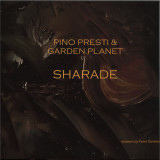
Beautiful release coming from Italy drawing inspiration from the intense colors of the works of the painter Tania Cantone on this work of love; "Sharade" by Pino Presti & Garden Planet. Mediterranean and Balearic lushness from the talented Pino Presti, and the eclectic keyboardist Claudio Calzolari, his son Andrea Calzolari, bass player Andrea Verardi and the organist Guido Mazzella. All together they created that magic, that long-forgotten, set aside, almost hidden atmosphere, which covers various genres such as lounge, future jazz, bossa-nova, ambient, which obviously includes chillout and downtempo vibes from the hot summer nights in the Mediterranean. So much vibes on this one release coming from the Italian friends of BEST Record! Recommened!
2023 Repress
Shpongle came to light 20 years ago, emerging from the burgeoning Trance music scene. Simon Posford aka Hallucinogen and Raja Ram aka The Infinity Project were already leading lights on the pioneering new sonic realms of Trance music.
The Shpongle sound was formed out of the desire to share another side of the psychedelic spectrum of music and in doing so established themselves as important innovators and arguably, inventors of genres we now know as PsyChill, Psybient, Psydub or Psybreaks.
Are you Shpongled? contains 7 tracks of epic audio adventure. Each one taking the listener on a journey, with sensurround sounds emerging from the caves of tribal reality. Across the globe, both seasoned aficionados and new sonic surfers alike take delight in the original worlds of sound explored by these visionary pioneers on their debut album which still takes pride of place in many collections.
The Shpongle sound planted sonic seeds in fertile imaginations across the world and over the past 2 decades their fanbase has grown exponentially, creating an unforgettable impression on the minds ear of all who listen. With a full live band to compliment their studio origins, Shpongle have been headlining large scale concerts and festivals across the globe, most notably two sell out shows at The Roundhouse London in 2009 and more recently their legendary performance at Red Rocks in Colorado where Shpongle performed to a sell out crowd of 1000. They have also completed numerous tours of the USA with stateside crowds showing huge love for the band and establishing a loyal following.
Infinite Machine is proving again it's a label that refuses to sonically sit still. Having released everything from code-based compositions to bass-heavy techno in 2022, the imprint is readying the release of the black metal-tinged Ehkta by BOLT RUIN later this month. A musician whose work has been described as 'apocalyptic' more than once, on this new mini-album, the Belgian producer blends field recordings, twisted samples and rave signifiers with an eerie tonality born out of his nocturnal production sessions and time spent absorbing the silence of his studio garden.
Bridging the gap from his previous record to this one, 'Sktone' is a cinematic opener that unfolds like a bad dream in slow motion. Warped samples of Bulgarian choirs glide over synths wired in closed-circuit loops which feed back on themselves, degrading for infinity. Texture and space is added via field recordings of waves crashing over the ruins of Brighton West Pier. This track exemplifies the unexpected influence BOLT RUIN took from the wildlife he witnessed in the garden of his urban studio when working on Ehkta. Adapting to the material at their disposal, weasels and blackbirds create nests from organic waste and human trash - an astute metaphor for the Belgian producer's compositional approach.
Next up, BOLT RUIN drives up the tempo with the rave-ready 'Nehng', where a frenzy of trance arpeggios and frantic drum programming builds and intensifies over its 5-minute duration. Inspired by Yves Klein's 'Leap Into a Void', 'Nehng' definitely evokes that bodily rush of freefalling into the unknown. 'Nehng''s driving rhythm is switched out for the brooding 'Tzarhk' - an ode to the soundtracks of B-movies composed on a vintage Roland SH-2 (a prominent character of the Stranger Things soundtrack). BOLT RUIN runs thick, syrupy synth slabs and punishing drum patterns through a rain-soaked limiter the producer found lying on the street by chance.
Another master-class in self-destructive arrangements comes in the form of 'Rfohmdrá' as delicate pianos and synth tones atrophy through daisy chained pedals which erode the signal. Valgeir Sigurðsson's mastering skills shines through here, taking BOLT RUIN's sci-fi-meets-metal sonics and amping them up to a scale on par with the Björk or Ben Frost records he's previously worked on.
Conceived of as the mirror reflection of the LP's opener, 'Maevr' pushes the approach of 'Sktone' to an even more nightmarish extreme. Embracing chance, the clattering layers of beats are sampled of a knocked mic on a window as BOLT RUIN attempted to capture a recording of rain from his studio. A happy and very effective accident for the foreboding mood of the track!
BOLT RUIN rounds off Ehkta with 'Ekztamnh'; an ode to that specific sensation of entering through a corridor to a rave and hearing the rumble of a soundsystem from afar. Snarling melodies are run through a reverse granular delay effect which fragments the signal, reverses it and plays them back in irregular order; much like the shattered memories of a late night in a warehouse.
A musical magpie who finds inspiration in the most unlikely of sources, Ehkta is a restless exploration of salvage-punk aesthetics where doom-laden black metal melodies, amen breaks and an experimental approach to sound design sit in an irregular and uneven musical apocalypse. For fans of Blanck Mass or Caterina Barbieri - this is a must-listen material from a fresh producer establishing himself with a singular musical voice.
The third and final edition of the Pay It No Mind mixtape trilogy. A transatlantic link up where Sheffield meets LA, heavily inspired by Memphis rap classics; Three-6 Mafia, Gangsta Pat, DJ Paul and Lil Noid. Through a mutual love and respect for that era’s raw production values, Lean Low & DJ Dubplates set out to make a mixtape series with an affirmed nod to that style, whilst seasoning it with a contemporary twist.
Rising from the berliner underground, Longhair have earned with the years a notorious reputation on the scene supported by some of our favourite imprints. Amsterdam's Italo-tastemakers "Bordello a Parigi", "Permanent Vacation" and Paramida's "Love on the Rocks" have found a place for the trance-spacey sound of the berliner based duo.
"Axis Mundi" is a space oddity that rises from our living room all the way to the solar system, Earth, Saturn and Pluto until the end of the Galaxy, no borders, the limit is set by yourself. Hammering and corrosive basslines, full of small little details and shining hidden stars in form of brilliant melodies that will make an exciting journey thru the Milky way.
Longhair show here their great versatility blending different subgenres that vary from Indie dance, leftfield house, Nu-Disco and everything in between and adding their particular cosmic touch and some trancy elements. A record that will work great either at the club wearing our favourite dancing shoes or chilling at home at our sofa.
Get ready for a cosmic trip, to the infinity and beyond..
Before he co-founded the legendary Sunday afternoon event Body & Soul with fellow New York DJs Danny Krivit and Francois Kevorkian in 1996, Joaquin "Joe" Claussell was the driving force behind Instant House, an eclectic production outift who released a series of uplifting deep house records, several of which were spun by David Mancuso at the 90s iteration of his influential Loft parties.
In 1993, Instant House released their deepest single, Lost Horizons, through Jungle Sounds Recordings. The A-side, ‘Lost Horizons (The Mind Travel Saturday Night Sunday Morning Mix)’ is a seventeen-minute and twenty-second sojourn into the vibrant club sounds of early 90s NYC. Driven by a Latin-accented man-machine beat that marches into infinity, it comes backed by two shorter mixes, ‘Lost Horizons’ and ‘Lost Horizons (Percussion Bonus)’. Twenty-nine years later, Isle of Jura presents an official vinyl and digital reissue of this slow-burning deep cut.
The Instant House story begins in the late 80s at Dance Tracks, an East Village record store established by the businessman, DJ, and graphic designer Stan Hatzakis. Patronised by New York trendsetters like Frankie Knuckles and Larry Levan, Dance Tracks was considered one of the world's best underground dance music retailers.
During the winter of 1991, Stan got together with one of his best customers, Tony Confusione, to make music. A wall street guy by day and a keyboardist by night, Tony was also a serious DJ. Not long after their first recording sessions, they invited another Dance Tracks fixture, Joaquin "Joe" Claussell, to join them in Tony’s state-of-the-art home studio in Long Island. He brought a vibrant, percussive edge to the sample-based tracks Stan and Tony were cooking up. Emboldened, the three DJs began recording together as Instant House. That year, they released the Dance Trax EP.
In 1992, after Instant House had dropped two certified classics, 'Over' and 'Awade', for Jungle Sounds Records, Stan exited the group and sold Dance Tracks to Joe and his business partner, Stefan Prescott. Following Stan's departure, Joe and Tony headed into the studio for a special recording session. “I just remember how powerful the connection was while we were making that record,” explains Joe, recalling the creation of ‘Lost Horizons (The Mind Travel Saturday Night Sunday Morning Mix)’. “It was a very spiritual encounter in the studio.”
While laying out the drum patterns, sound effects, and arrangement, Joe explained the vibe to Tony, who played the lush cosmic chords and an effortless keyboard saxophone line over the top. “That was Tony completely feeling himself,” Joe reflects. “He performed majestically.”
After the release of the Lost Horizons 12”, Joe received a phone call from Cisco International Corp. A plane flight later, he was sitting in their label offices in Tokyo, talking to a senior record executive who wanted to introduce Lost Horizons to Japan. “What they were primarily doing at the time was pressing classical records - we’re talking thousand dollar plus classical reissues - and they wanted to license and distribute Lost Horizons,” Joe remembers. Three years later, Joe and Tony released 'Asking Forgiveness', their final 12” as Instant House, before parting ways with full hearts.
In the context of his career as a DJ, remixer, and producer, Joe is known for long songs and compositions. As Lost Horizons illustrates, he’s carried that impulse with him since his foundational days. “When I produce, I don’t believe in the beginning or endpoint of anything,” Joe explains. “I really despise the rules. To me, that’s not true to the art of creation. I just believe there is a flow in creation. When we were making music in the 90s, we were restricted by format, but that record could have gone on forever.”
The 12” is housed in a full sleeve jacket by Bradley Pinkerton based on the original release design.
The Person is back on the dancefloor and she brought the delicious Australian version of a good old Italian recipe - ITALOZ DISCO. Mouthwatering rhythms spiced with everyday hustle, cosmic boogie and the extra dose of synthesizer! Changing the Meatballs for Oddballs to worship the Magic $ properly. Sull' alto lato (aka on the B-Side) we're changing the Oddballs for the Mothballs as the one and only Hysteric warms up the magic ragout in his unique steam-powered kitchen. Now go to work!
You still need to be convinced? Take these great lines by Patrick:
"Magic $" beams into the discotheque direct from deep space; a shimmering body of squelching bass, nebulous pads and snapping percussion which hosts Minna's bewitching vocals. The arch delivery and vintage sequences flirt with kitsch, but that playful genius particular to The Person pushes this into wonderfully wonkier territories. Basslines climb, keys collapse and the whole thing chugs and bubbles through a flawless arrangement. We thought they didn't make them like this anymore, but we were wrong. Stepping in on remix duty, renowned (Moth)baller Hysteric turns out a treatment that's worth a million bucks, boosting the bottom end with an acidic sequence, supercharging the percussion and punching in some strange sampler fun to guarantee utter club chaos.
Every superhero needs a theme song, and "The Person" sees Minna step away from the dancefloor to deliver a synthetic ballad for lucid dreamers everywhere. Jamming on top of a malfunctioning Jomox, Minna channels chimes, piano and a gentle chug into the classiest chord progression this side of Mike Francis. Closing cut "Go To Work" gives us neon lights and nighthawks as The Person indulges in a little Antipodean electro, proving once and for all that Australians Do It Better.
Für Lacrimas Profundere, eine der innovativsten und erfolgreichsten deutschen Dark Metal-Bands der Gegenwart, ging es im Falle des neuen Studioalbums ‚How To Shroud Yourself With Night’ (VÖ. 26. August 2022, Steamhammer/SPV) vor allem um die vermeintliche Bürde ihrer 2019er Erfolgsscheibe ‚Bleeding The Stars‘. Denn deren Bilanz hatte indirekt riesige Erwartungen geweckt: „Album des Monats“ im ‚Metal Hammer‘, ‚Orkus‘ und ‚Dead Rhetoric‘, Top-10-Platzierungen in den anderen wichtigen Magazinen, dazu Charts-Einstieg sowie die bis dato erfolgreichste Headlinertour der Gruppe. Wer würde da nicht automatisch mit einer Fortsetzungsgeschichte liebäugeln? „Für mich ging es darum, sich vom Druck des Erfolges zu befreien und zu versuchen, die Messlatte höher zu hängen, dem Spiel voraus zu sein, sich selbst zu fordern und originell zu bleiben, anstatt auf Nummer-Sicher zu gehen und eine Art ‚Bleeding Part II‘ zu schreiben“, erklärt Gitarrist, Bandgründer und Hauptkomponist
Oliver Nikolas Schmid, der mit seinem Bruder und Texter Christopher Schmid erneut eine unverzichtbare Unterstützung fand. „Die neuen Songs klingen frisch, böse, überraschend und leidenschaftlicher als jemals zuvor. Zudem ist es das zweite Kapitel mit unserem Sänger Julian, der uns inspiriert und sich wundervoll eingebracht hat“, so Schmid weiter. „Wir haben verstanden, was ihm gefällt, und haben uns von alten Denk- und Vorgehensweisen gelöst. Noch nie waren wir eine solch eingeschworene Einheit und bereit, unseren eigenen Sound zu erweitern. Gerade deshalb ist ‚How To Shroud Yourself With Night’ unser mit Abstand mutigstes Werk geworden.“
"Prime Sequences" is the latest album by dj and electronic music producer GummiHz, real name Alexander Tsotsos. Alex has an ear for what he describes as elastic frequencies, thus gummi-hertz! In other words, low bass lines, airy synth phrases and shuffle rhythms, playfully arranged within loose forms. A philosophy that comes across throughout this long player. Elements fall in and out of order, time swings back and forth, all together in perfect harmony! Pushing the boundaries of what has become his signature sound, a fusion of house and techno all the way from Berlin to Detroit! This package features underground music coming straight from the heart, or the Hertz more appropriately! The story unfolds within no less than nine tracks showcasing Alex's versatility in making waves!
The opening track titled "Berlinopolis" is a sonic portrait of the city of Berlin, where Alex lives since more than a decade. A smooth soundscape produced by combining abstract melodies with field recordings of the city's ambience. "'Second Wave" follows airy jazz chords and drum parts to launch the listener into trajectory. It feels like the sort of track that would probably make it into Herbie Hancock's deep house collection! The title track "Prime sequence" is a Detroit brewed piece with some Berlin minimalism rawness in the rhythm section! Combining a mixture of drama, suspense and shaking drums to dominate the dance floor. Next up comes "Submerge", a tight and hypnotic affair carrying the right amount of subtle release. It locks in right from the start and doesn't let go! "Prime Dub" dives deeper into the frequency spectrum. Rhythm and sound stimulate the brain waves as a heavy chord phrase cycles to infinity. "Proto Sequence" follows a simple still infectious groove laced with various modulations. This track has party written all over it! Inspired by proto-house motifs pioneered by artists like Chi-town's Ron Hardy. "Metafunk" reaches out to Berlin's club culture at its core. That is, the youth and street culture! The phrase on repeat signifies the urge to reclaim the streets, while endlessly flowing within finely tuned electronics. "Mindloop" is a track written for the after hours looping state of mind. Another minimal house cut with a fair dose of psychedelic sound design. Lastly, "Descension" relaxes the mood through deep pulsating rhythms and playful arpeggios. Pushing towards a meditative state by stimulating mind, body and soul!?
"Prime Sequences" covers a wide range of styles like ambient electronics, peak time house and techno, as well as seriously effed up after hour minimalism! Made for both djs and music lovers, this is the second long player by GummiHz to come out on vinyl after his debut album "Sleepless Nights" back in 2009! While it succeeds his latest EP, "Groove is in the Hertz". What makes it even more special is that it comes out on brainchild Claap, giving the artist total freedom of expression.
Within 11 seconds of clicking “play” on “Lava Lamp Pisco” it’s instantly
apparent why Night Gnomes, the latest album from Psychedelic Porn
Crumpets might be their greatest offering yet
The track is a riffy monster that delivers a much- welcome Black Sabbath- style
slap to the head. It’s big, shiny, sleek and irresistible. It’s Psychedelic Porn
Crumpets giving their best and Jack McEwan the band’s fearless leader has the
battle scars from the four-second harmonica solo to prove it. “I hadn’t blown the
harmonica in five years. It was just sitting on my desk,” he recalls. “The first thing I
did was suck in all this dust, and I couldn’t talk for like a day. Afterwards, the rest
of the band was like, ‘You have to scrap that. It’s so cheesy.’ Anyone under 30
hates it, but it has the dad-rock vibe, so I kept it in.”
That devil-may-care spirit is present on each and every song on Night Gnomes.
With guitarist Luke Parish, drummer Danny Caddy, bassist Wayon Billondana and
multi- instrumentalist Chris Young by his side, McEwan bunkered down in his
home studio, creating a sonic pastiche that almost sounds like turning the dial on
a temperamental old radio every few minutes.
On their third album »Constant Connection«, West Australian-based Erasers create hypnotic compositions of synth, guitar and voice, evoking the vast expanse of their native landscape and the shrouded emotions behind the senses. Comprising of vocalist, synth player Rebecca Orchard and Rupert Thomas on guitar and synths, Erasers have developed their earthly kosmische music into an open language based on drone, variation in repetition and minimal song structures. Based in Perth, regarded one of the most isolated cities in the world, Orchard and Thomas’s music has brewed in the city’s vibrant DIY/Outsider community and evolved into a meditation on landscape, power, the shadow-world of human emotions and stream of consciousness. »Constant Connection«, with its waves of sound and chant-like vocals evokes a trance that suggests an infinity just beyond the senses.
At the heart of each Erasers composition is the interplay between the instrumentation, played with stoic restraint and recorded directly with minimal effects and the transcendental states induced in the listener. It’s a magic that is performed in plain sight and all the more powerful for it. The recognisable vibrato of Fender Rhodes keyboards and simple drum machine loops, the subtle strands of analog synth melodies that snake in and out of the ear, above all the towering encantations of Rebecca Orchard’s undeniably Australian-accented hymns; all of this is presented with minimal ostentation and yet it instantly engenders a dream state, hints at an infinity beyond the material.
Shades of John Cale’s 70s work with Nico, early 70s German synthesists Kluster and even fellow Australians Fabulous Diamonds can be seen as stylistic touchstones for Constant Connection. Where Nico hinted at the macabre and gothic, Rebecca Orchard’s similarly gliding vocal is more zoned in to a kind of oceanic openness, with words becoming chants and spells that suggested themselves to the singer during recording sessions. It’s this hidden hand of improvisatory, automatic writing that lends a sense of expanse to the music. On opener I Understand, while the lyrics might hint at discontent the emotional spectrum it opens up is far more rich and complex, as layered as the waves of droning chords that are the bedrock of each Erasers track. The title track talks of flow, continuum and balance, the protagonist in the song seemingly weightless, gently pulled through a walking reality that borders on dream. In Erasers’ world, it seems, the borders between reality and dream, consciousness and sub-consciousness are blurred and eroded.
On Constant Connection, Erasers’ music might be deeply evocative of landscape but it’s never clear which one. The vast, open terrain that surrounds Perth is dusty, burned by the sun into desert and Constant Connection feels like the product of the heat and relative isolation, the altered states these elements can create. But it’s these altered states of mind that appear to be the real landscape described by Erasers. It’s a landscape that’s hazy, in-and-out of focus, with emotional undertows pushing and pulling you into a weightlessness. On album closer Easy To See the band dispense with percussion all together, field recordings of the water at the edge of their native city ushering in two duetting synths. Orchard’s vocal undulates with the flow, viewing both the geographical and psychological landscape from the perspective of a consciousness not bound by bodies and from a timescale measured in millennia. The album ends as it begins, with field recordings of the real world that the music seeps out from, temporarily, before regressing back into the other realm it feels like it belongs to.
Between these two recorded hints of reality, Erasers manifest a deeply sensual dreamscape that constantly feels like it’s dissolving at its seams. A desert psychedelia emanating from a real world that might not be that real in the first place.
- A1: Tender Leaf - Countryside Beauty
- A2: Aura - Yesterday's Love
- A3: Aina* - Your Light
- A4: Lemuria - Get That Happy Feeling
- B1: Roy & Roe - Just Don't Come Back
- B2: Hawaii - Lady Of My Heart
- B3: Hal Bradbury - Call Me
- B4: Mike Lundy - Love One Another
- C1: Nova - I Feel Like Getting Down
- C2: Nohelani Cypriano - O'kailua
- C3: Brother Noland - Kawaihae
- C4: Marvin Franklin With Kimo And The Guys - Kona Winds
- D1: Greenwood - Sparkle
- D2: Chucky Boy Chock & Mike Kaawa With Brown Co - Papa'a Tita
- D3: Steve & Teresa - Kaho'olawe Song
- D4: Rockwell Fukino - Coast To Coast
‘Aloha Got Soul’ encompasses a vibrant era of contemporary music made in Hawai’i during the 1970s to the mid-1980s as jazz, rock, funk, disco and R&B co-existed alongside Hawaiian folk music. Hawai’i’s identity had undergone huge change: statehood into America in ‘59 and the Vietnam War were the backdrop as Hawai’i’s youth found inspiration in a new wave of international music led initially by The Beatles and Stones and, later, by US R&B bands like Earth Wind & Fire and Tower Of Power. Garage bands flourished during the ‘60s and, by the ‘70s, live music was at its peak. Waikiki was filled with clubs: The Point After, Infinity’s, Hawaiian Hut, Spats and more.
For the ‘70s generation of artists, some came through the talent contest ‘Home Grown’ and its accompanying compilation LP. In 1978, Hawaiian was made the official state language and a huge movement arose to revive hula and traditional music. Steve & Teresa’s ‘Kaho’olawe Song’ longs for an island long gone: the US military had used Kaho’olawe as a bombing range since Pearl Harbor. Nohelani Cypriano sang about the once sleepy town of Kailua, now a popular tourist destination: “Kailua needs no high-rise with her blue skies, not for our eyes. Can you realize?” Leading Hawaiian artists like Aura, Mike Lundy and keyboardist Kirk Thompson’s Lemuria took time in high quality facilities like Broad Recording Studio to make albums. Others grabbed studio time when they could: Tender Leaf’s Murray Compoc worked for the city bus by day and recorded an album during night sessions. Other albums were spontaneous. In 1983, Steve Maii & Teresa Bright recorded an acoustic set in just 3 hours after being invited to a studio following a gig.
For the artists of the ‘70s, the climate for music changed rapidly during the mid-‘80s as DJ culture grew and live venues shut down. Hawai’i’s R&B era shone brightly and relatively briefly but, despite brilliant musicians, regular gigs and LP releases, most of the music barely made it to the mainland. Thanks largely to Aloha Got Soul’s Roger Bong, a new interest in this fertile era of Hawaiian music has grown, culminating in this compilation of overlooked gems. ‘Aloha Got Soul’ is compiled and annotated by Bong and features rare photos and original artwork.
ALIEN FM / RELEASED 1995 ......definitive original broadcast double LP From the minds of Keith Tucker and Blak Tony 430 West records / Direct Beat were pushing the Detroit techno and electro sound to new heights with the original members of Aux88 doing aliases from every member this gem is no exception. Keith Tuckers and Blak Tony's work from the early nineties are master classes on the art of doing something different conceptually and musically. Electronic vocals on this lp. are classic as Tucker and Tony show from the start with the Art of illusion.......and nightmare. Pulsating arps and infectious bass lines round out the first two sides. Side two Infinity and Optaphonic Opera gives you a window into the styles of what was to come from Optic Nerve. Keith Tuckers solo project. This double LP has been sought after for a very long time.......
Tape
"Precision ambient might be a suitable genre description for metra.vestlud's work. Every element has a clearly delineated meaning and purpose, and the precise interaction between these elements makes the musical pieces seem more like songs rather than Eno-style ambiences. From flowing water, to nervous birds and rich emotional textures, ∞ sends us onto a deep and thoughtful sonic journey about the flow of life and the many springs therin."
Artem Dultsev was born in 1993, in Revda, Russia. In 2010 he started to write music and later released under different aliases: Artem Dultsev, Moon Rabbit, Virusmoto. In 2017 he founded with a friend Daniil the label Faktura, where they began to release records from the Urals region. The history of metra.vestlud began In 2019 with the release of the album - Hydrogen Lifeforms (Faktura).
metra.vestlud began as a protest against the standard principles of sound recording and musical theory. All the rules and boundaries were shifted towards the unconscious - that something unique would emerge. But on the album ∞ - the other side of this sub-personality showed itself, the sensual side. The music of metra.vestlud is inspired by the eco-futurism and new age of the 80's-90's.
“The album is dedicated to my wife. In April 2021 we had a son.”
"Two days before the birth of our first child, I was sitting at home alone while my partner was already in the hospital. I wasn't able to visit due to Covid restrictions. Anxiously waiting for any updates, while Germany being in complete lockdown, searching for distraction, I did something I rarely do: look into the public-facing email account of my previous label. Normally, I only find spam in there, but this time there was an email that looked different, it was a demo I was supposed to consider for release. I could tell this person had listened to previous music I had been involved with and deliberately chose to send this to me. I could also tell right away that something special was being sent to me. I downloaded the music, listened to it, and to my surprise, was moved to tears. This was on a Friday night in Leipzig, around 32 hours before our child was born.
Sometimes this world can be incredibly strange but in the most beautiful way. For some reason, someone from Yekaterinburg in Russia, close to where the European and Asian continental plates meet, decided to send me an unspeakably beautiful album for release on my new label (which I technically hadn't even founded yet). The album is centered around love and birth, and it sounds like emotion-fueled beginnings, like a meta-version of spring you can visit any season you like. And I received it less than two days before the birth of our child and a couple of months before the birth of their child - what are the odds? And not just that, I had visited Yekaterinburg many years ago with my parents due to a somewhat mysterious obsession my father had with the place and it had left quite an impression on me. There are some moments in life where you think: "please just pinch me". I am just not sure anymore how much of all of this can be attributed to chance. Probably a lot, but if so, it also means incredibly unlikely and beautiful things do happen even if they probably shouldn't.
In any case, I am grateful metra.vestlud reached out to me at this very special moment in time and I am grateful we have created something that will forever document a very special time in our lives. And we are incredibly happy that we are able to share this document with the world." - kofla tapes
∞ is dedicated to metra.vestlud's wife, In April 2021 they had a son.
Indie Retail Exclusive Water Spirits color vinyl LP More Energy Fields, Current is a definitive new peak in the recorded continuum of prolific producer/percussionist Carlos Niño. Featuring contributions from more than a dozen exciting voices in the creative music constellation of Los Angeles (of which Niño's has been a central force for over 2 decades), including Sam Gendel, Nate Mercereau, Jamael Dean, and Jamire Williams, the album collects 10 pristine gems of collaborative communication helmed by the Southern Californian sage, elegantly presented in his unique "Spiritual, Improvisational, Space Collage" style. The album is ripe with "ambient" passages that function like open portals between moments of consonance and clarity, and epic post-hip hop opuses like the heavy/heady "Thanking the Earth." But even in the occasional absence of drums, there is a powerful pulse implicit in the program's frequency of consciousness. It's a testament to Niño's foundations as a DJ. His distinct ability to craft a kinetic, cinematic sonic experience from dozens of independent, often rhythmically-ambiguous improvisational memories is more fluently displayed on More Energy Fields, Current than anything we've heard from him to date. It resonates, lucidly, with the way Niño's mentor Iasos - who is known to the world as an original founder of New Age music - has described his work: "Real Time Interactive Imagination, Flow Texturization." On More Energy Fields, Current, Niño immerses us in the watery depths of his world, spiriting us like a submarine through exotic nether-leagues of untouched sound. And when we arrive at the final, bookending piece "Please, Wake Up." (an extended version of the opening theme, featuring saxophonist Shabaka Hutchings), it's like a return, safely to shore.
Be No Rain, the moniker of South London’s Sam Frankl is a project that was born out of a studio decked out with disco balls, fairy lights and fake ivy; a perfect aesthetic to the sound that followed.“It felt like there needed to be a character that could be as flamboyant as I wanted to be and remove the constraints that being human leaves you with” Frankl explains “It was incredibly liberating”.It’s about being trapped into that infinity loop of emotions, like a cartoon character wandering through a world he never quite understood”.The debut album from Frankl comes on the back of a collaboration with Armin Van Buuren on single Hollow. All album’s come signed by Frankl.
The band that became Nightshift formed in 2019 in the ecosystem of Glasgow's current indie scene. The city's fertile & creative group of musicians have been committed to pushing the boundaries of and blurring the lines between DIY, punk, experimentalism and indie pop for decades now; a home to bands like Shopping, Vital Idles, Current Affairs, Still House Plants, and Happy Meals as well as forebears like Orange Juice, Teenage Fanclub and Yummy Fur. Nightshift slot right in with all mentioned, featuring members from current indie stalwarts Spinning Coin, 2 Ply and Robert Sotelo. Initially formed by guitarist David Campbell and bassist Andrew Doig as a "No Wave/No New York/ early Sonic Youth/This Heat-esque" group, the addition of Eothen Stern (keyboards/vocals) and Chris White (drums) instantaneously transformed their approach (guitarist/vocalist/clarinetist Georgia Harris joined as the band was writing "Zöe"). The band self-released a full-length tape on CUSP Recordings in early 2020, laying the foundation of their sound; hypnotic, melodic, understated indie post-punk with hooks that stick around long after you've heard them. "Zöe" is the band's newest effort, and first for Trouble In Mind. Unlike the band's previous album, the songs on "Zöe" weren't conceived live in the band's practice space, but rather pieced together and recorded remotely during quarantine lockdown, with each member composing or improvising their parts in homes/home studios, layering ideas over loops someone made and passing it on. The isolation actually allowed for an openness and creativity to flow and many of the songs took on radically different forms from when they were originally envisioned. Vocalist & primary lyricist Eothen Stern says "The process of writing these songs separately during lockdown was a kind of exquisite corpse - I liked this gesticulation of reaching out to one another and responding. Building up the next layer and passing it on." Stern says "poetic restraints" to writing & Eno's Oblique Strategies concepts were on their mind when composing the words to the songs on "Zöe" and lists the influence of author Rosi Bradiotti's book "The Posthuman". "Zöe" means "live drive", derived from the word conatus. Bradiotti defines conatus as "an effort or striving, endeavour, impulse, inclination, tendency, undertaking, serving is an innate inclination of a thing to continue to exist and enhance itself." and Stern views it as "...a kind of feminist re-claiming of communal public, anti- privatisation, looking to strive for social and environmental justice. Zöe kind of became a character of striving for me when writing.". "Zöe" kicks off with "Piece Together", a hypnotic song anchored by the band's chanted vocals and serpentine guitar licks. "Spraypaint the Bridge" showcases Harris' clarinet in an unexpected & delightful melodic shift during the song's anti-chorus. Elsewhere tunes like the swooning "Infinity Winner" and "Outta Space"s minimalist, slinky rhythm swirl in a late-night vibe, while "Make Kin" ruminates on "Looking to kinship as a way of engaging with entangled environmental and reproductive issues... how a band is a bond" and lurches forward with kinetic guitar strangling and staccato rhythmic percussion from White and Doig. "Power Cut" is the album's centerpiece, kicking off side two and lures the listener into its world over it's 7-minute runtime. Lulling them into involuntary movement with its waves of melodic harmonies, synth drones and metronomic pulse, until they all come crashing down in the song's dissonant midsection. The band acknowledges the whiffs of nostalgia prevalent in "Zöe"s songs (the title track in particular), and the nature of writing and recording the album is soaked in the self-work, reflection and reevaluations involved not only personally but creatively in each member's lives. Consequently, the album becomes a collection of sketches of hope, growth, awareness of the power of the world and the power of self, kith, kinship, friendship, resistance, and possibility.
- 1: Let's Do That Again Space Cadet
- 2: Tyler Moonlight
- 3: In The Mouth Of Sadness
- 4: Kodak Break
- 5: Thus Spoke My Father, The Coward
- 6: Drug Dealer, Drug Dealer
- 7: Sway Me, Sway Me Into The Arms Of The Lord
- 8: Dis Dumbass Ghost
- 9: Brian's #1
- 10: Für Arvo (In 2025)
- 11: Death Of A Hip Hop Dancer
- 12: Black Addicts
- 13: Hatred For Muzak Pt 2
- 14: (...)
African-born, Baltimore-based experimental hip-hop producer Infinity Knives joins PhantomLimb for the release of his unique debut album Dear, Sudan, a vibrant and polymathic labyrinth of moods and colours.
Infinity Knives - aka producer and musician Tariq Ravelomanana - moved from Tanzania (via Kenya, South Africa and Madagascar) to Baltimore with his family as a teenager, soaking up the raw,vociferous hip hop culture around him, devouring Western classical music, and embedding himself with the city’s verdant music scene. This unique combination of life experiences and contrasting strands of musical education empowered and enabled him to create his Infinity Knives guise, allowing us a window into his singular energy with Dear, Sudan.
Tariq writes “Music has always been my medium. Since I was a child living in Tanzania, music has been my babysitter. The one central idea I kept dwelling on was that all humans experience sorrow, but despite the fact that it's universal, we still experience it as if we were alone.”
Appropriately, Infinity Knives casts a wide and thrilling net. Dear, Sudan runs like a masterful showreel of deftly balanced disparate elements, a late night channel-hopping between multiple, vital, powerful musics. Tariq himself offers “experimental, drone, hip hop, leftfield minimalism, neo-classical and Baltimore” as his key styles. “I wanted Dear, Sudan to be a record of the things that I enjoy, the things that keep me coming back to this life and I wanted it to be in the language I understand the most. I hope that this album can be a companion to those in need.”
The band that became Nightshift formed in 2019 in the ecosystem of Glasgow's current indie scene. The city's fertile & creative group of musicians have been committed to pushing the boundaries of and blurring the lines between DIY, punk, experimentalism and indie pop for decades now; a home to bands like Shopping, Vital Idles, Current Affairs, Still House Plants, and Happy Meals as well as forebears like Orange Juice, Teenage Fanclub and Yummy Fur. Nightshift slot right in with all mentioned, featuring members from current indie stalwarts Spinning Coin, 2 Ply and Robert Sotelo. Initially formed by guitarist David Campbell and bassist Andrew Doig as a "No Wave/No New York/ early Sonic Youth/This Heat-esque" group, the addition of Eothen Stern (keyboards/vocals) and Chris White (drums) instantaneously transformed their approach (guitarist/vocalist/clarinetist Georgia Harris joined as the band was writing "Zöe"). The band self-released a full-length tape on CUSP Recordings in early 2020, laying the foundation of their sound; hypnotic, melodic, understated indie post-punk with hooks that stick around long after you've heard them. "Zöe" is the band's newest effort, and first for Trouble In Mind. Unlike the band's previous album, the songs on "Zöe" weren't conceived live in the band's practice space, but rather pieced together and recorded remotely during quarantine lockdown, with each member composing or improvising their parts in homes/home studios, layering ideas over loops someone made and passing it on. The isolation actually allowed for an openness and creativity to flow and many of the songs took on radically different forms from when they were originally envisioned. Vocalist & primary lyricist Eothen Stern says "The process of writing these songs separately during lockdown was a kind of exquisite corpse - I liked this gesticulation of reaching out to one another and responding. Building up the next layer and passing it on." Stern says "poetic restraints" to writing & Eno's Oblique Strategies concepts were on their mind when composing the words to the songs on "Zöe" and lists the influence of author Rosi Bradiotti's book "The Posthuman". "Zöe" means "live drive", derived from the word conatus. Bradiotti defines conatus as "an effort or striving, endeavour, impulse, inclination, tendency, undertaking, serving is an innate inclination of a thing to continue to exist and enhance itself." and Stern views it as "...a kind of feminist re-claiming of communal public, anti- privatisation, looking to strive for social and environmental justice. Zöe kind of became a character of striving for me when writing.". "Zöe" kicks off with "Piece Together", a hypnotic song anchored by the band's chanted vocals and serpentine guitar licks. "Spraypaint the Bridge" showcases Harris' clarinet in an unexpected & delightful melodic shift during the song's anti-chorus. Elsewhere tunes like the swooning "Infinity Winner" and "Outta Space"s minimalist, slinky rhythm swirl in a late-night vibe, while "Make Kin" ruminates on "Looking to kinship as a way of engaging with entangled environmental and reproductive issues... how a band is a bond" and lurches forward with kinetic guitar strangling and staccato rhythmic percussion from White and Doig. "Power Cut" is the album's centerpiece, kicking off side two and lures the listener into its world over it's 7-minute runtime. Lulling them into involuntary movement with its waves of melodic harmonies, synth drones and metronomic pulse, until they all come crashing down in the song's dissonant midsection. The band acknowledges the whiffs of nostalgia prevalent in "Zöe"s songs (the title track in particular), and the nature of writing and recording the album is soaked in the self-work, reflection and reevaluations involved not only personally but creatively in each member's lives. Consequently, the album becomes a collection of sketches of hope, growth, awareness of the power of the world and the power of self, kith, kinship, friendship, resistance, and possibility.
Fabrizio Lapiana continues to offer up deep musical escape from these troubling times with another expertly crafted techno EP, Cantamen, on his own Attic Music label. It features four of his own original cuts and builds on the success of his latest release, Collective Chaos, back in March.
For more than a decade, this Italian artist has been at the forefront of a techno scene that deals in deep and rolling drums, well sculpted synths and cavernous grooves that are rich in ambient detail. His Attic Music label has been at the centre of that thanks to careful A&R and always innovative releases, while he has also released on cult imprints such as M_Rec Ltd, ARTS, Figure Jams and Out-Er and many other collaborations.
Sleek opener 'Demons' is a mind melting and widescreen deep techno groove. Groaning synths creep across the face of the track as all manner of earthy and organic motifs drift by, as if you're racing through an underground network of caves. It's music for the mind as well as the body, and the hugely atmospheric 'Cantamen' is just the same - fizzing synth details and alien life forms fill the airwave with tension as the smooth and supple kick drums pound away down below.
The hypnotic masterclass continues on 'Kura' with rattling snares and harder hitting drums making you move your body before coarse claps and a majestic arpeggiated synth hook repeats up top and takes you to another level of rapture. Last of all is the fantastic 'Back Home', which has a skeletal electro groove run through with late night sci-fi pads. Its vast sense of cosmic infinity leaves you feeling floating adrift amongst the stars.
These are four evocative and cinematic techno tracks that take you into another dimension.
RICO PUESTEL debuts on his TIME IN THE SPECIAL PRACTICE OF RELATIVITY label with a mind-boggling journey of 41 minutes — split in two parts to fit on vinyl! HEPTAKAIDEKA is what it won't be and will be what it never was: Something from in-between worlds, a place beyond far beyond, where time dissolves into relativity...
Every modern electronic music presenter should be able to find joyful, elevated, convulsing or simply useful moments within the extent of this track that is designed to have its inherent connecting factors and starting points in place for every DJ set — letting it be just a few minutes, well-placed groove looping or bigger amounts of its entirety for diving into a long night, bringing it to an end or making it standing out in-between.
Starting off with a hazy half-grasp hint of what's to come, a mysteriously pervasive bionic loop emerges, slowly coalescing with a bone-dry groove on the rise. Taking up a first quadrant of the track, already gnawing into the long-term memory, it manages to gradually establish itself along the pathway while the "rhythmatics" endure some subtle layer-shifting with occult-like strings come sliding in from somewhere unknown like an admonitory subtext.
Being halfway through (and all the way in), everything smoothly crumbles down to its basic framework, still shaking off its own reminiscences while foregone vestiges almost perilously try to reassemble themselves. All of that leading to a clearly unforeseen yet fortunate drift into a 1980's-like synth peak time section after about 27 minutes being in that track, finally cherishing an evolving emotional felicity and the climax of its own being that tends to feel like an overarching salvation.
As everything being eventually finite, the track starts to bring to mind where it came from by assuredly falling back into a story told before with the well-established bionic loop that once used to run free, sounding somehow different and more tamed now. Ending with dignity, the consistently resurfaced admonitory strings lead the way to its conclusion and possibly new beginnings, solely leaving behind the heartbeat-like booming that carried it all, now fading away...
Coming into existence during a series of multiple productions of exuberant proportions with Rico making the studio his citadel-like stronghold, this is an extensive story of desires, instincts, pride, fall, mirth, solicitude, tension, détente and basically life itself while subtly yet versatilely entertaining on a dodgy yet accessible level throughout the wingspread of Techno, House, Minimal, Dub, Electronica and Ambient influences.
The CD version not only brings you the title track in the guise of its non-split completeness but eminently churns out the extra drumming dub treat DEKAEPTA for a pleasurable groove-delight as well as the trippy bonus beauty VOSEM' that transits as a precious component of infinity.
Ryan Crosson takes care of the fifth EP on tastemaking Detroit label My Baby Records with a fantastically forward-looking four-track vinyl offering. Ryan Crosson is a complex artistic creature who has roamed far and wide in his storied career. His always innovative music has come on groundbreaking labels including Wagon Repair, M_nus, Spectral Sound, and of course his own Visionquest. Each time he explores a new sound world and draws on things as diverse as musique concrète, Downtown New York funk, and East African jazz. Now he cooks up more beguiling brilliance on this fresh new EP. Opener ‘Speaker Dubs’ is a deep, bubbly rhythm track with dub chords rippling out to infinity. It’s a stylish track full of far-sighted reverence and supple groove that locks you in a trance. ‘Ogilvie’ is a piece of absorbing ambient with found sound recordings of muffled voices that sounds like you’re in an underground station. B-side opener ‘FutureTheory’ is another minimal masterpiece with glitchy sound design and eerie chords peeling off a tight, kinetic groove. Ghoulish voices add more late-night atmosphere and the whole track grows ever darker and more consuming as it unfolds. The excellent ‘OortCloud’ takes you back to the heart of a dance-floor with futuristic menace: the smooth drum loops are militant, the voices are dehumanised and the searching synths speak of a desolate landscape. It’s heady, brilliantly bleak stuff that is utterly infectious. This is another hugely inventive EP from one of the underground’s most consistent talents
The legendary Winter of Love was an athletic event of unprecedented scope and ambition held throughout the 1980's. For one beautiful decade, ice lovers from all four corners of the globe gathered at Mount Unity for two weeks of spectacular competition, dazzling snowscapes and glittering nightlife.
Ski Infinity is your official soundtrack to the Winter of Love. Inspired by the electric energy of the event, Ski Infinity will take you directly to the dizzying peaks of Mount Unity where you will experience the agony and the ecstasy of elite athletic endeavour. Bear witness to the epic ice dance battles held at the fabled Rink of Respect. Rub shoulders with the creme de la creme of sport, art and music all night, every night at the grand chalet of Peace Village.
Of course, located at the nexus of skiing, art and music, was the greatest Winter of Love event of all, ski ballet. No wonder the grand chalet named their beloved club, ‘Chaffee’s’ after prima ski ballerina Suzy “Chapstick” Chaffee. Above all, she epitomizes the glamour, the power and the artistry that the Winter of Love stood for.
... Take your ears on a wild ride where sport and music collide!
Fresh from the release of their third album ‘Autonomy’ earlier this summer, comes Autonomy Variations: four brand new perspectives from four exciting, innovative kindred spirits of the avant-pop duo.
South London’s Medlar breaks the seal. Following a series of incredible live collaborations with Dele Sosimi (Fela Kuti), he’s has turned ‘Autonomy’ into a minimal, percolating house track. Swapping the acid spikes for analog bleeps, Medlar’s signature can be felt every step through this vivid energetic stomper.
Fabric resident Anna Wall follows with another beautiful subversion as ‘New Politik’ is given a smouldering take. Moody, intimate, downtempo; there’s some serious late night HTRK-esque vibes to Anna’s twist.
Further into the remix trip we glide to find Dischi Autunno, Ombra International affiliate Curses pulling ‘Electric Light’ into the fringes. Taking the upbeat, crystalline pop of Penelope and Stephen’s original and flipping it into a stark postpunk Bauhaus-inspired take, Curses’ live bass and driving new wave beat shine a whole new light on the original and write it a whole new chapter.
Finally, brand new act, Isolating have the honour of closing the EP with industrial modular apocalyptic take on ‘Infinity’. A vast playground of contrasts, at points it’s dirty and pounding. At others it’s quiet and menacing. File under ‘Dystopian Techno.’
Four extensions on one of the most interesting electronic albums released this year, if you haven’t treated yourself to ‘Autonomy’ yet, you’d be wise to. DJ Mag stated it’s The Golden Filter’s best work yet while Clash called a it a bruising return. These remixes follow with complete forward-thinking consistency. Enjoy…
Moon Diagrams is the solo recording project of Deerhunter co-founder and drummer Moses John Archuleta. Two years after his acclaimed debut album Lifetime Of Love, Archuleta returns with Trappy Bats, a mini-LP that interweaves three brilliant new Moon Diagrams tracks with radiant reworks from Shigeto, Angel Deradoorian and Jefre Cantu-Ledesma. Trappy Bats was largely recorded in a single night as a means to process the intense intersection of Archuleta’s social, political and personal hysteria. Having been arrested for an unremembered missed court date, Archuleta spent 24 hours in a holding cell, offering ample time to reflect on his life, the current state of the nation (the jail televisions were showing a constant feed of the then-active Unite the Right rally in Charlottesville) and the other inmates. Upon being released the next day, Archuleta found himself suffering from a bout of insomnia and feeling the need to process everything through music. Here, Archuleta is in his freest and most grateful state, channelling the turmoil and confusion he was experiencing into an unencumbered fit of creativity. It’s pure, unadulterated escapism with an even more callous palette of sounds than before, clearly split between two moods. On what you might call the ‘up’ side, the title track could be the sonic spawn of Not Waving and Terrence Dixon: a snarling mix of percussive clatter and washes of orchestral tones coalesce into a pulsating groove across its almost 12-minute runtime, the underlying ’80s aesthetic making it feel like a turbo-charged Shep Pettibone remix of New Order, looped to infinity. Detroit electronica don Shigeto goes even further and implodes the track into a kaleidoscope of bone-jarring, viscerally giddy dance music. Over on the ‘down’ side, ‘Wipeout’ is a slow-motion waltz of dusty piano and clattering percussion loops that coolly stumble along with the woozy, nocturnal flare of The Caretaker or Philip Jeck. The haunted reverie ventures even deeper with a beatifically electrified ambient re-imagination by Jefre Cantu-Ledesma. Daisychain’ goes almost completely off the grid, offering up a sweetly submerged slab of constantly evolving murkiness in the vein of Demdike Stare or a dosed Andy Stott. The sweet shuffle levitates even higher with a celestial re-interpretation by sonic visionary Angel Deradoorian, formerly of the Dirty Projectors. The end result is an extended traipse through Saturday evening fever-dream techno, Sunday morning cigarette jazz-pop and every blank thought in between.
Following up on the release of his first album in eight years, Agoria has collaborated with enigmatic French musician Jacques on new EP ‘Visit’, out 14th June.
The two-track offering pairs electronic elements with organic, real-world sounds to masterful effect. Title track ‘Visit’ is the best example of this, with a wonky beat trudging through a plethora of immersive sounds. Meanwhile ‘Jardin’, with a grooving bassline, has a greater dancefloor focus.
“The first time I met Jacques, we were sitting at the same table but we didn’t exchange any words,” Agoria explains. The second time, a year later, we started speaking. A lot. During hours. About Vipassana, a technique of meditation that you practice in silence. The third time, I thought I should share his words and breaths, delivering the untold. So I offered him to record a Sapiens Talk. The fourth time, we both agreed it was finally time to record music together.”
Jacques is a musician who pushes back the border between music, sound and noise, using music as a medium of expression on his quest of transversality. Invited to several TEDx conferences to talk about his obsession with the idea of infinity, he has also revealed his new theory called “Vortex”, which he created with Alexandre Gain in 2015.
His first album in eight years, Agoria described Drift as “sitting on your sofa between your guilty pleasure and your tasteful opinion”. The deeply melodic 10-track LP came off the back of a much-lauded Essential Mix for Pete Tong’s BBC Radio 1 show, which was later nominated for Essential Mix Of The Year.
The new release comes amidst Agoria’s first ever Ibiza residency, which kicked off on 31st May at the Blue Marlin. Named after the new album and featuring everyone from DJ Harvey and Gerd Janson to Groove Armada and Idris Elba, the unique day-to-night parties will take place every Friday until 27th September. He will also take his all new live show on tour this summer, with dates including Barcelona’s Primavera Sound, Belgium’s Pukkelpop and Lowlands Festival in Amsterdam.
If there was one secret weapon to win a war for real techno music it is
Realmz out of Pittsburgh, Pennsylvania. After a series of digital only releases on Sonic Groove over the past three years, the timing for Realmz to hit with a 4 track EP on black wax is now with Sonic Groove's huge 20th anniversary event and label celebrations