After Dull Boy Johnny's previous release, a double EP with a tropical A-side and an erotic B-side, this time the three gentlemen are out on the dance floor. After all, the neighbours decided as much.
Unlike the recordings of their previous work that took place abroad, this time they stayed in a steamy attic room in Belgium, where guitarist and producer Jan built a studio. Unable to record at night because of neighbours who did not (yet) appreciate Dull Boy Johnny's music, they dove into Antwerp's nightlife.
The group's previous work took you on a cinematic journey where every musical nuance takes you to a specific setting. Be it an erotic seventies scene, a beach party in the Bahamas, or a blood-curdling chase in the Wild West, Dull Boy Johnny covers it all. Nard Houdmeyers, Rik De Bal and Jan found each other in a shared interest in film genres such as blaxploitation, neo-noir and spaghetti westerns. And therefore also the artists inherent to these genres such as Isaac Hayes, Curtis Mayfield and Ennio Morricone. Dull Boy Johnny's conceptual approach to music can be traced back to this passion for cinema.
For the new EP, however, they traded that cosy movie-watching for turbulent nightlife (the angry neighbours, you know). Besides, it was about time to get their inspiration in the flesh. Dull Boy Johnny immersed himself in the pulses, flashes and swell of downtown Antwerp. Thunder chasing crept under their skin and then into their guitars. In grandfatherly fashion, they then turned to composing, first with just bass, guitar and vocals. In that small lineup and with the sounds of the night still reverberating in their minds, the first pieces of the puzzle were laid out. After that, the sound was opened up and a solid rhythm boost was added. This defined the catchy, up-tempo nature of the upcoming EP that centres on themes of dancing, flirting and partying. Expect rousing riffs, catchy hooks and swinging rhythms. Details were meticulously laid out and bricked into the songs with delicate grouting. The fine polishing of the songs was done with patient finesse and a constant attitude to serve the song. With songs like Suspicion, She Can Groove and Dynamite, it is immediately clear that the gentlemen got their mustard from the club: action, party and spunk! All without losing their typical sensuality.
Despite the different working methods for the third EP, there are a lot of recurring elements that define Johnny's fresh sound. The essence? Catchy high vocals contrasted with a sensual baritone voice, carried by a groovy bass and rhythm section. Around it, the details that give the songs the right atmosphere swirl.
Dull Boy Johnny's music prefers to function as a soundtrack to your own imagination. As you listen, you are invited to wander through the various landscapes of their musical world, regularly giving a nod to the more lustful side of your brain. The songs have already been praised for their compelling melodies and irresistible energy.
With this release, Dull Boy Johnny proves their ability to create timeless music that both touches the soul and moves the body. So surrender to Dull Boy Johnny's punchy grooves and dance the night away. Long live the neighbours!
Поиск:inhere
Все
Born out of a summer (and time) most sadly lost forever - this new release on Souvenirs From Imaginary Cities will break your skull open most tenderly, so it's fine particles of audio-dust can mingle with the last rays of sunshine and the bitter storm of this autumn. Track after track, this LP draws you in with a natural flow and a deep-felt pulse - reminiscent of classic slices of raw and sample- based ambient like Susumu Yakota's 'Sakura' and 'Everyone Alive Wants Answers' by Colleen. These tunes are heartfelt and channelling tons of real emotions and other melancholia.
It's a very personal and unique blend of almost nineties chill out zoning with a dubby undertone, rich textured loops, mixing a whole range of crazy acoustic and electronic flavours - stuff that shouldn't work together but are dancing all the way to heaven anyways - with slow burning dusty slabs of melody and yes those deep choral pads ( some Rachmaninov vesper magic in the air ), everything rough around the edges and low slung but so damn precise. A subtle mélange between abstract and more concrete sonic territories, but delivered in an upfront, improvised manner with great intuition and a quite ruff but poetic touch.
Name of this piece of swampy, chopped up but most nicely selected ambient work is La Ho, by Purpurny Dyadya aka Purple Uncle aka Sergey Demitriev, originally residing in St-Petersburg but living now for obvious reasons in Armenia. Sergey has been busy on labels like Echotourist, Hair Del, Nazlo and most recently with fellow traveler Nikita Chepurnoi as Amkarahoi on Patience/Impatience. Using a bunch of old tapes from his childhood times, filled with all kinds of sonic memories and Russian underground hip-hop as sample ground, he loaded up his MPC with magic dust and jammed out the basis of this LP during a summer fest near St-Petersburg before current hell broke loose.
It's the kind of a record that needs some time to really let loose his inherent power, give it some air, let it hop along a bit and those sounds will bloom wide open.
Season by season, we raise a toast to our artists and guests by creating a new collection of sounds. Cafe Soda Selects Volume One captures all the memories of the past year. The A-side starts with Crymes . The track captures the essence of summer with its vibrant dub rhythms and sultry 90s vibes, featuring irresistibly sexy vocals that embody pure feel-good energy. A2 sets the stage for Ben Balances , a vibrant track that seizes the eclectic energies of people, weaving together dynamic rhythms and the deep essence of souls. It is a musical journey that celebrates the unique spirit and rhythmic soulfulness inherent in us all. On the flip, check out the two originals from FMN, the latest project by Frag Maddin and Najeh. is a catchy groove that easily grabs every dancer with its rolling bassline. The song has no breaks, allowing ravers to stay in trance. With , B2 celebrates a raw house anthem with a memorable theme, thick kick, banging clap, and a wild hi-hat swing. An homage to the 90s powerhouse era.
/Black Vinyl[18,91 €]
140g transparent blue and green galaxy marble vinyl housed in a matte 3mm cardboard sleeve with lyrics insert featuring photography and artwork by Hidrico Rubens. Limited to 300 copies. The creation of ‘Chrysalis’ was a retreat from a seemingly endless string of unfortunate events, a cocoon from which Zanias could weave hope from hopelessness. In each of its eight songs she has engineered unique worlds to express alternate facets of the modern human experience, from burnout and the toxicity of capitalism to processing death and the inherent isolation of personal trauma. Written and recorded between Berlin and the rainforest of Queensland, Australia, the sound design of ‘Chrysalis’ reflects the rich biodiversity of the latter environment, where she drew much of her inspiration. Her voice shifts and morphs into ghostly, alien forms between catchy hooks that plant this album firmly in the ‘pop’ genre, without losing the underground rawness and lyrical depth for which she is known. With her third full-length album, Zanias is expressing her truest form thus far, fusing her seemingly discordant influences into a genre-defying electronic artpop, as dark and evocative as it is ethereal and uplifting. Written and produced by Alison Lewis Bass guitar on ‘Lovelife’ by Laura Bailey Mixed by Ewan Kay Mastered by Alain Paul Photography and artwork by Hidrico Rubens Sigil by Nat Soba Design and layout by Alison Lewis Makeup by Eavan Derbyshire
Ten years after his first full-length effort ‘Man Is Deaf’ landed him firmly in the runnings for DJ Mag’s album of the year, prodigal son Michael Anthony Wright AKA Brassica returns to Civil Music with a deeply accomplished, painstakingly whittled LP of hydraulic electro slickness, rich synthscapes, and hooky, peak-time tearjerkers for the most discerning front-left lifers. ‘Tribeless Gathering’ is a barnstorming testament to Brassica’s stylistic and timbral deftness, touching down in the elusive epicentre of the club/home listening venn diagram with ease.
From the elastic, neon acid pointillism of opener ‘Hop Kweng’ to the mardy, miasmic plod of closing chugger ‘Changa Hill’, Brassica seamlessly segues between avenues of influence, his notoriously omnivorous musical knowledge roadmapping each turn. Raised on a diet of everything from early rave standards to metal, and schooled in avant garde sonics as a student of sound design at LCC, Brassica does a peerless job of sublimating his countless influences into a record of refined, heterogeneous, and most crucially, catchy, club moods.
Less spartan than his more recent oeuvre on Feel My Bicep, and less baroque than his technicolour experiments in postmodern synth pop with vocalist Stuart Warwick, Tribeless Gathering represents Brassica’s triumphant return to the main room, replete with rushy hooks primed for the planet’s finest soundsystems, and passages of heads-down tension bound to draw listeners right to the edge of their seats. Overall it is a concise and refined testament to Wright’s command of spectral sonics and effortless ability to pressurise a dancefloor. It is no surprise that he has also worked as a prolific mastering engineer, tuning music from a plethora of dance disciplines for maximum club impact. This work extends to his own projects (including this one), cementing them as rare expressions of complete artistry from studio to turntable.
As we delve deeper into the record, we are ushered through a series of accomplished and varied club moods, each channelling a unique cocktail of influences, but retaining a warm, ebullient analogue sensibility unique to Brassica’s work. This playful scope of influence calls to mind James T Cotton or Machinedrum’s experiments in dance music form, but Wright manages it all under one roof, wrangling everything from sashaying wub-laden two step to snarling Dillinja-esque FM damage into something inherently his.
Choice cut ‘Change Yourself’ layers an almost Cerrone-like piano refrain over radiant surges of saturated bass, dubby, strobing chords and a jagged, driving break, building to a jaw-clenching apex of dancefloor elation, while the rude, playful half-step of ‘Elevation’ breaks down the vintage speed garage formula into linear fragments, utilising a tight palette of resonant bass slugs, infectious synth leads and Papua New Guinea-style vocal strobes. The aptly named ‘Hold Tight’ fuses heart-in-mouth UK ‘ardkore pads with glissando acid disturbance and surgical snare fills in a formula which recalls the ethereal grit of Nubian Mindz’ 00s experiments in big-smoke break science, while the questing melodic arcs and arpeggiated squarewaves of ‘Pinball Marinara’ could easily have soundtracked an 80s sci-fi epic, beset with sparkling, bare-bones drum programming and hazy beds of sub sediment.
With ‘Tribeless Gathering’, Brassica both irreverently fuses and pays homage to the many unique and weird permutations of UK dance music. The short lived gathering of junglists, ravers and house hotsteppas of a similar name may have long since dissipated, along with the tribes themselves, but across these 11 tracks, he lays a blueprint for a new sound of togetherness.
Through the medium of a distinctly synthesised, sustained ambience, seasoned artist and composer Jasmine Guffond arrives on OOH to explore the tension between technology and human creativity in an increasingly ambiguous playing field.
Alien Intelligence came into being during Guffond's residency at fabled Parisian institution GRM in 2021. While learning how to generate sound and make music with the in-house Serge modular synthesiser, the Australian artist noticed the typical role of human input for machine output was being subverted by the behaviour of certain electronic elements, which came to exercise their own influences on the direction of the music.
Taking this idea one step further, Guffond proceeded to explore the programming environment MaxMSP, a customisable interface which allowed her to blur the lines between human input and machine directives even further. Across the three extended pieces which make up Alien Intelligence you can hear the results of Guffond's inquisitive approach as she coaxed the machines into bringing their own ideas to bear on the music.
The tension inherent in this thematic duality is mirrored by the contrast between glacial ambience and chaotic interference across the album. On 'Serge & Maxine Variation One' the presiding mood is a slow and patient one, as undulating waveforms rich with harmonic overtones spill out over one another across 10 minutes. The track's latter passage, driven by steadily intensifying oscillations, is then interrupted with an unexpected flurry of pitch shifting. This kind of complex technical movement features more prominently at the start of 'Serge & Maxine Variation Three', which then gradually shifts into a gentler ebb and flow of rising and falling frequencies.
Angled slightly differently and residing on the B side of the album, 15-minute quiet epic 'Serge & Maxine Variation Two' bookends a louder passage of synth work with serene, sustained notes that ring out a sort of hymnal melody. Throughout, the movement in the music evolves in subtly modulating, hypnotic, ways, but there are also unexpected turns or melodic diversions which feel much more incongruous. In its closing stretch, the notes dart around more freely as though played by hand, but it's hard to be sure whether these shifts in the otherwise delicate tonal music were a human conceit or a programming by-product. In the end, the two inputs logically become one.
As Guffond says herself, "More-than-human logics emerge, a kind of alien intelligence that questions an assumed central position of human subjectivity in socio-technical assemblages and considers the philosophical, socio-political and cultural implications beyond music practice in an increasingly technologically mediated world."
As AI creeps into art as much as other aspects of modern life, Guffond applies her playful instinct to the theme of these works by re-considering machine intelligence as 'alien', crediting its contributions with a more robust yet enigmatic identity in the creative process, leading to an end result which is far from artificial.
►Mastered by Giuseppe Ielasi, cover art by Ilan Katin, layout by incepBOY, photo by Camille Blake, words by Oli Warwick
Acid Reflux is an EP compiled by Acid Adams that focuses on acid sounds from different times, genres and genders. The journey starts with the deep and melodic excursions by Nihilist and softcoresoft before we enter a sweaty basement to get lost to rough and punchy tracks by ADSX and Ida Bux. On both sides, a track from the 90s (which has never been released on vinyl before) is followed up by a new composition that was inspired by its predecessor and has been produced especially for this release. Since the 90s-tracks are exclusively by male producers, the concept tries to balance this era-inherent state of affairs with the fact that the new tracks are solely by finta* artists. On a meta-level, this release is about connecting times, genres and genders, beyond forms of binary thinking. The record comes in a reused sleeve from the 90s with a fresh logo sticker designed by Frieedland and a promo sheet like back in the days.
In spring,
Again.
But it's true this time.
In Spring is the second record by Tara Clerkin Trio, a Bristol-based group who appeared to emerge from below the radar of near-all in early 2020 and in the presence of one of the most captivating records of that year. This latest 23 minute, four song collection, recorded in various stages and locations over the last twelve months, does nothing to detract from those first impressions, refining the woozy and shimmering oddness of their debut into an avant-pop sensibility that is increasingly their own.
If the group did arrive fully formed, what that form was did feel supple and hard to grasp. They were, in a sense, essentially new sounding, or at least ghosts between the established lines, and with this new record have doubled-down on their inherently Delphian instinct. At its heart, In Spring is a record of subtle contrasts, experimental yet familiar in its intimacy, obviously modern though tied to certain lineages, and driven by a pop logic which is also free-form and seemingly improvised. Their approach to sound is perhaps the guiding principle here, less concerned with genre as it is texture and feeling, drawing from jazz, folk, modern composition, trip hop and downtempo electronica, yet evading all of those categorisations. Tara Clerkin Trio are too generous of heart to be ripping up any rulebook, they simply seem oblivious to its need.
Their geography does provide some context. Bristol's progressive sonic heritage inescapably bleeds into these four tracks, the enclave of open-minded artists around Planet Records in the mid 90s perhaps the closest point of comparison. There's that same magpie spirit which is both futuregazing and aware of its past, though is mostly set on finding its own path. This is in essence what defines Tara Clerkin Trio, feeling their way through freedom of instinct and curiosity, forging their own desire lines. Not so much taking the road less trodden, just walked at their own winding pace.
"Done before,
And I'll do it again"
Ringing in my head
While I try
To feel
Steel Drum covers of Drake, Snoop Dogg & Dr Dre, Claudja Barry, The Game & 50 Cent, A$AP Rocky, Stranger Things Theme, and more. Bacao Rhythm & Steel Band, the mysterious steel pan outfit hailing from Hamburg, Germany have amassed a cult following around the globe. With a slew of classic 7”s and three critically acclaimed full length albums, they set a high bar for themselves, one they clearly intend on pushing even higher with this new offering. On their fourth album BRSB, Bacao are back with more of the same, but more of the same with them is inherently different. Covering songs that span genres and range from mega hits to underground album cuts, they make them their own with their unique approach to the traditional steel pans of Trinidad and Tobago. While part of the allure of a new Bacao Rhythm & Steel Band album is finding out what covers they do it is equally intriguing to see what original tunes they cooked upland this record is foul of standout originals. The album opener, “In The Crosshairs” is a rough and tough mid-tempo head nodder while both “Grilled” & “Treasure Quest” pick up the tempo with heavy African Funk in‑fluences on both. Bacao goes deep with “Hazy Memories”, a bass heavy slow burner that walks a line between hypnotic and hype. All these originals stand as testament that the term “cover band” is a shoe that could never fit Bacao. However, in the tradition of steel pan music, they do a heavy amount of covers. This time around there is a big West Coast Hip Hop influence with covers of Game & 50 Cent’s “How We Do”, Dr Dre & Snoop Dogg’s “Nuthin But A G Thang”, and Tupac’s “Got My Mind Made Up” all of which take on new energy and lend themselves to the BRSB steel treatment. Bacao puts another certified dance‑floor filler on their resume with their cover of Claudja Barry’s uber Disco classic “Love For The Sake Of Love” which they flip into a dubbed-out affair aptly changing even the title to “Love For The Sake Of Dub”. Pulling from the contemporary smash hit section of Hip Hop they cover Drake’s “Hotline Bling” and “Love$ick” by Mura Masa & A$AP Rocky. Then they go very unexpected with “Stranger Things Theme” where they take the synth heavy theme song to the hit show and give it a more hypnotizing tone than the original. By the time BRSB is through, Bacao has taken the listener on a journey spanning a myriad of energies, tempos, and moods while keeping it all under one umbrella. For all that, these songs are alive, and they will be taken out of the context of this album and sewn into the fabric of DJ sets around the globe for many years to come. Bacao Rhythm & Steel Band continues building their legacy and pushing the boundaries of steel pan music forward with another rock solid musical offering. Enjoy
St. Virus is a Covid-themed album born in Covid times. It processes the pandemic phenomenon from the aspect of the individual and sometimes of the pandemic itself on a philosophical level.
The opening track, "Isolation", takes the listener on a journey plagued by the sense of loneliness created by isolation. The ever-present melancholy slowly deepens into an overflowing anxiety without release. The eponymous "St. Virus" is a piece that considers the relationship between man and nature and the viruses that appear in it. They work in their own expected and, upon consideration, very honest way. Are we humans honest like this? Are human beings on some level similar to a virus? “Inherently Destructive” presents the idea of the unsustainability of the current situation. The events around us are fundamentally destructive for the individual person, for society and for the culture it carries. St. Virus is a personal soundtrack through Covid times. Record featuring artists are Tapani Rinne, Wimme Saari and Ville Kuukka.
Inherently dark but aflush with pop sensibility, Constellations is the 2014 full-length debut from synthpop duo Dead Astronauts (Jared Kyle and Hayley Stewart). The follow-up to 2013’s eponymous EP, it’s an album full of post-punk and new wave inspiration, sure to please fans of Joy Division, Echo and the Bunnymen, and Depeche Mode.
Midnight Mannequin Records is proud to present this deluxe reissue of Constellations, on vinyl for the very first time. A nearly decade-old synthwave classic is now poised to become a modern darkwave hit. Dead Astronauts has always had one foot firmly on synthwave ground, but the band’s willingness to eschew genre limitations and explore the vast spaces of darkwave, goth and everything in between is one of the main reasons Constellations still feels so fresh and unique. An album way ahead of its time. An album that sees two artists at the top of their game who complement each other perfectly. When Kyle’s deep baritone meets Stewart’s ethereal, subdued delivery, the results are magic. A timeless album now in a timeless format; that magic captured and preserved, tactile and eternal
Limited edition on 2xLP transparent neon pink vinyl, housed in a gatefold jacket. Includes OBI strip.
Composed, produced and arranged by Evangelia VS, the artist behind Abyss X, Freedom Doll is the culmination of a year of emotional unloading through songwriting, offering an introspective journey into the ocean of her mind. Produced and recorded between an artist residency near the Mayan jungle in Mexico and her Berlin home, the album chronicles transformations the performer tackled mentally during the writing process, tracing the rollercoaster of falling in love during the pandemic, as well as the pleasures and tribulations of womanhood.
Freedom Doll encapsulates the romantic escapade between her voice and the guitar. The amalgamation of seduction, sexual tension, vulnerability and assertiveness pulses throughout the entirety of the album, spiralling out of the cracks spawned from her vocal chords. From the twirling dance between her lush harmonies and the progressions of the acoustic guitar in tracks such as Ascend and From Hot to Cold, to the explosive confrontation between the metallic and operatic qualities of her voice, the searing sound of the electric guitar in industrial rock / psychedelic anthems such as Torture Grove and Banyana and the cathartic momentum found in the gospel inclined chants in A CHEW - Freedom Doll untethers the dramatics and theatricality that defines Abyss X’s vocal performance and music production, while maintaining the sensual vibrations of her creative essence.
Freedom Doll is the encapsulation of the Minoan woman, the elusive harlequin tiptoeing her way through the “circus of terror” that is living and loving her way through womanhood. With this visual reference, Abyss X pays tribute to her ancestors and their groundbreaking ancient artistry. The back cover of the vinyl features a reiteration of depictions of bulls leaping found in Minoan frescoes; an inherently male cultural act that in the ancient Minoan times presumably gave expression to a tension that underlies man's somewhat tenuous mastery of nature. Freedom Doll’s artwork challenges this preconceived notion through an eco-feminist approach, bringing the Minoan woman slash Gaia in the seat of the bull leaper, taming the unhinged and predominantly male earth - threatening human force.
- A1: Dancing As An Act Of Rebellion
- A2: Fuck Green New Deal
- A3: Your Miserable Fake Flag Is Not Your True Homeland
- A4: La Maté Porque Era Mía (Feat Espectra Negra)
- A5: Semiconducteur Dopage (Poupees Electriques Remix)
- B1: Embrace Capitalism (Until It Strangles You)
- B2: Fake News, Good News
- B3: Religious Music For Atheists (Feat Bavs)
- B4: Quiet Before The Last Storm
- B5: Europe Is Dead (We Are Not Brothers Rework Feat Ana Curra)
- C1: Your Miserable Fake Flag Is Not Your True Homeland (Melting Dogmas Remix)
- C2: Religious Music For Atheists (Feat Bavs) (Hbk Remix)
- C3: Fake News, Good News (José Rodríguez Remix)
- C4: Fuck Green New Deal (Soj Remix)
- C5: Embrace Capitalism (Until It Strangles You) (We Are Not Brothers Remix)
- D1: Fake News, Good News (Geistform Remix)
- D2: La Maté Porque Era Mía (Feat Espectra Negra) (Smforma Vs. Morbia Remix)
- D3: Fake News, Good News (Ober Dada Remix)
- D4: Embrace Capitalism (Until It Strangles You) (Pandemian Mascletà Dework)
Dancing as an act of rebellion is the first Abraxas LP in collaboration with the Valencian label Soil Records. A compilation of the first project recordings released between 2020 and 2021 plus some new tracks and, in addition to this, a second vinyl by other darkwave electronic artists remixing the first one: Geistform, We Are Not Brothers, Ober Dada, Melting Dogmas, SMforma, HBK1, José Rodríguez, SOJ and PanDemian.
Abraxas is a halfway project between dark dance electronic music, philosophical reflection, socio-political activism and musical entrepreneurship. Its main goal is to shake bodies and minds by spreading messages of individual and social self-criticism from the point of view of duality, extremes and contradiction, inherent to the human being and capitalist society.
Known as the “Dynamic Duo” Pig&Dan celebrate twenty years by making a long-awaited debut on Crosstown Rebels next month. The two-track Rock You All Night EP draws inspiration from the USA’s heritage house scene, with a slice of Hot Filtered Disco!
The influences of Chicago and New York are heard right from the offset, with rolling homegrown stabs coupled next to heavy and wholesome bassline grooves. There’s an inherent feel-good atmosphere to the piece, reflective of the era’s freedom and openness, before Let Yourself Unwind finishes proceedings on a similarly euphoric close. Disco-esque melodies flitter beneath an upbeat, repeating vocal as choir-like instrumentals build to create the perfect synergy for both dancefloor and radio play.
Pig&Dan have firmly established their presence as one of electronic music’s most esteemed duos. The pair’s releases speak for themselves, be it on Sven Väth’s Cocoon, Adam Beyer’s Drumcode or John Digweed’s Bedrock to name a mere few of the labels they’ve found success on. Their DJ performances are similarly impressive, with recent years marking the launch of a new live show that debuted across some of the biggest global stages, including Fabric (London), Warung (Brazil) and AIM festival (Canada).
- A1: Cha´kwaina (Marcel Dettmann Remix)
- A2: Beauty Begins With Us (Μ-Ziq Remix)
- B1: Clouds Over Clifden (Dauwd Remix)
- B2: Sun (Placid Angles Bonus Track)
- C1: Our Love Is The Place (Baltra Remix)
- C2: Natsukashii (Plaid Remix)
- D1: Deep Blue (Cassy Remix)
- D2: Touch The Earth (Feel The Rain) (Jakojako Remix)
- D3: When The Sun Shines Through (John Beltran Remix)
One year after its original release, the Placid Angles album Touch The Earth is being remixed by an impressive array of artists from the extended Figure family. With John Beltran being a distinct voice within the electronic music scene for over thirty years now, Figure is thrilled to reveal a whole LP’s worth of reinterpretations, including two works by the original artist himself.
Opening up is Marcel Dettmann, who seamlessly has integrated the lush soundscapes of the original album into a beat-driven but equally serene journey. Picking up on the LP’s underlying dark garage tropes, Planet Mu headmaster M-ziq infuses his rework with even more rolling drums and ethereal vocal chops. The also inherent IDM roots of Touch The Earth have been kept close by Warp-veterans Plaid who deliver a shuffling flurry full of horns, synths and syncopated rhythms. More straightforward interpretations include Dauwd’s dazzling piece of feathery, fast, atmospheric techno; a gorgeous melodic house remix by Baltra and Cassy who turns in a rigid UK stomper.
Amidst all the reworks, John Beltran himself makes two appearances across the record. As Placid Angles he adds another heads-down percussive/ambient swirl, which represents exactly what the producer has been hailed for since more than three decades now. His own remix finishes the record on an epic note, with an organic drum track that celebrates life and the necessity for communal gathering in order to dance.
Beltran’s own additions to this LP are like the essential glue that makes it all bind together, forging the old and the new into something equally exciting as already intimately familar.
“One foot out the door, another in the otherworld…”
So begins Hannah Lew’s debut, self-titled solo record, soaked in imperious, wide-eyed pop songwriting and a girl-group/post punk aesthetic that belies the artist’s history in the U.S. underground. A towering, hook-laden album, it’s infused with an optimism and surrealism that conversely deals with the times we find ourselves in.
Recorded at home in Richmond, CA and in The Best House studio with Maryam Qudus in Oakland CA, with the assistance of a crack team of West Coast musicians, this album sees Hannah Lew stepping out from behind the legacy of her two groups Grass Widow and Cold Beat. While musically bearing similarities with her previous work, “Hannah Lew” is a bold leap into direct pop territory, making ample use of a vocal style that teases out the inherent melancholy in her melodies. Mastered by Sarah Register, each song is a perfectly honed nugget that frequently pulls the heart in two directions at once.
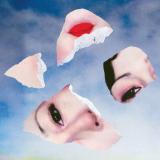
Themes of change, breaking up, shattering old ways of being are shot through the record. For the front cover, a photograph of the artist’s face was printed, ripped up and re-assembled, resembling the creative process embarked upon by Lew for her first “solo” material. The album feels instinctual, almost dream-like in its assemblage of sweeping synths and pulsating, propulsive drum machine beat patterns with Lew’s vocal performances sensitive and caressing over the top. Increasingly relying on the subconscious and dreams to guide her creative process, Hannah Lew frequently abandons literal interpretations or linear narratives, the songs seeming to exist in a swooning, effortless flow-state while remaining emotionally hard hitting.
On an album where every song could be a single, there are kaleidoscopic shades and varying emotional tones in abundance. First single Another Twilight is carried along a pumping, Italo-disco-style 4/4 beat and mono-synth bass line, the low end pulling at the heart and body. Lew’s vocal melody teases the track before swan-diving into a gorgeous chorus as she sings “it’s all over baby and I don’t mind… in decline, I take my time…” The album is suffused with moments like this. On slow builder Damaged Melody, an arpeggiated synth elongates the verse before a cascading synth showers down melodic glitter. The stunning Replica uses dual swirling synth patterns before a driving, synthpop chorus for the ages carries Hannah Lew’s vocal into the stereo field, sailing in on a high register singed with the embers of a break up.
In a departure from previous groups, her solo songs are guided by dreams and free association inspired by Dada and the Surrealist movement and sculpted afterwards. As such, the songs reveal themselves on repeated listens, revealing traces of heartbreak inspired by both personal and global elements - Hannah Lew regards the album “a wartime album.” On Move In Silence, Lew intones “there’s a war outside, just out of view,” revealing the dichotomy at play throughout. With the songs evolving naturally and in a flow state, the pressures and sadnesses of the modern age bleed through, mixed in with Lew’s inherent love, sensitivity and fractured-but-intact optimism. On the swooning, sublime Sunday layers of Numanoid synths open up for the commanding vocal performance pontificating on grief, love, pain as she “feels the ache on Sunday…” As the chorus builds and Lew’s call-and-response vocal adds to the emotional tension, it almost feels like too much to take.
Elsewhere, there are echoes of Hannah Lew’s previous work. On Time Wasted a bass guitar comes in with a heavy, punk attack before the synths and vocal harmonies reminiscent of later Cold Beat elevate everything. The glassy, sweetly resigned closer The Clock sounds like so classic it could be cover, a sweetened Jesus & Mary Chain tune perhaps, before it erupts into volcanic chorus that could only come from Hannah Lew in 2026.
BLUE & WHITE COLOUR IN COLOUR VINYL
In the culinary arts, it’s easy to overcomplicate the final product. Theme, presentation, texture…they’re important but should work to complement the raison d'etre of any food. At the end of cooking a dish, it should taste good and feed people. Some dishes, like barbeque or provoleta, resist the tendency towards hollow showmanship. One of their expressions can be more or less aesthetic, but the first purpose is to be simple and tasteful. Argentinian provoleta goes so far as to blur the line between ingredient and dish. It relies on the inherent flavor of provolone being heated at the right speed for the perfect amount of time. You can add garlic or chives or red pepper to the slice, but ultimately they serve to bring out an essence that’s already there.
Los Angeles’ Cousin Feo has developed his rapping acumen in the five years since releasing Provoleta, but returning to the project today shows that he always had the penmanship, grit and delivery that christens an emcee worthy of remembrance. Like the bubbles rising up in the appetizer that is the album’s namesake, Feo showed that true profundity is found in the simple gestures.
Since dropping the project in 2019, Cousin Feo has expanded his vision of a world where hip-hop and football, two proletarian art forms, mingle in creative and compelling ways. He has collaborated across multiple continents, chronicled football histories, aided in canonizing legends, kept the flames high in age-old rivalries and constantly forced his audience to search for the last time they heard bars this hard. In anyone else’s hands it would be too great a task.
The maturity he showed on Provoleta wasn’t nascent, it was an inherent quality forcing itself to the surface. The songs refract his experience as a working class Angeleno through the archetypes of Argentinian football legends. The kernel that unites the two worlds is hustle. When Feo was coming up, missteps had greater consequences than crashing out in the group stage and street deals had the weight of a Boca-River Plate match.
Each track uses slightly different ingredients to let Feo’s underlying talent shine. “Maradona” feels salvific, fitting for a football legend canonized from the Andes to the Alps and a Los Angeles rapper looking to inspire similar hope in the neighborhoods that raised him. On “Di Stefano” Feo massages the instrumental with the same composure of the late forward, until he pierces through the headphones like one of Di Stefano’s arrows. It’s also refreshing to hear a song celebrating Messi before his meme-ification, focusing on the universal truths contained in his footballing talent instead of using number 10 as a stand-in to make a point in a fruitless argument. And he still finds space to show deference to Batistuta, Kempes and other members of the Argentinian pantheon who’ve been erased from the popular imagination by the national team's contemporary success.
Real ones know that true players, true rappers, and true artists will always stand the attacks of time and consensus. In Provoleta’s first verse, Cousin Feo says he moves with the hand of God. Maybe one day he’ll tell the whole truth and let us know how he was able to wrestle the pen away too. Limited edition of 300 hand-numbered copies.
Artist and multi-instrumentalist Flaer embraces the search for quiet miracles on first full-length LP Translations.
In 2023, Realf Heygate - who makes music as Flaer - released his debut mini-album Preludes, composed on his mother’s piano and his childhood cello.Returning to ODDA for his debut full-length album, Heygate is now looking in another direction. A record that embraces transition and movement, Translations is in many ways more internal, less rooted to a single place and reflective of the process of laying new foundations in Cornwall.
Like Preludes, Translations is coloured with found sounds and field recordings, from the starlings which can be heard singing through the open window of his studio, to the brittle recordings of his mother, who was a linguist, learning Spanish on a set of language tapes. In both cases, Heygate embraced the translations and memories inherent to the sounds.
“When I digitised my mother’s tapes, they warped and stuttered in a very similar way to the starling’s song,” he explains. “They had this uncanny rhythm and pulse that I couldn’t quite decode, but was saying something." These decayed transmissions hint at loss, resisting clarity in favour of the ineffable.
Translations is also a record of ambiguities and in-betweens, suggested by the double meaning of the album’s opening track ‘Entre’. At once intricate and expansive, threaded with birdsong and acoustic guitar motifs, this and ‘Starling Descends’ (a reference to Vaughan Williams’ ‘The Lark Ascending’) act as a bridge away from the pastoral themes of Preludes towards a more assertive sound. At times intimate in its textured instrumentation and at others more overtly grand in orchestration, reflecting awider palette of influences.
“Flaer began in many ways when I picked up my mother’s instruments, seeking a form of reconnection. Where words evaded me, they became the tools through which I found a language for grief – and above all, for love.”
Recorded between 2023 and 2025 – what Heygate calls “A gradual process of sowing and harvesting ideas rather than a single intense creative period” - each track follows a rhythm similar to the small maquettes and sculptures he has been working on in his visual practice, whereby structures and melodies form intuitively in moments that are as rare as they are fleeting.
“It's that feeling of searching that I really enjoy,” Heygate continues. “I never know what the destination of the composition is going to be, and I never really find what it is."
Translations is released on limited edition off-white vinyl LP (500 copies worldwide) with one of five signed and numbered handmade risograph prints. It's also available as standard black vinyl LP and digitally.
The Owl (real name John Deevechis) has long used his Owl imprint to deliver high-grade, inventive and irrepressibly addictive re-edits. Here, the York-based producer hands over the reins to the previously unheard Nite Hawk, an artist whose identity has so far been a closely guarded secret. Our shadowy hero begins with the superb 'Disco System', an infectious, effects-laden revision of a low-slung, turn of the 80s disco workout rich in dubbed-out vocal samples, super-funky bass and piano loops, and tease-and-release dynamics that only add to the track's inherent energy. On flip-side 'Search Lite', Nite Hawk makes merry with a boogie-era workout, turning it into a glorious fusion of non-stop dub disco bass, rolling house beats and chanted vocal snippets.
The sibling duo behind the music on Graceful Degradation — organ and drums, nothing more, nothing less — carve out a sound that feels unmistakably organic in a world drifting steadily toward the synthetic. Their interplay is entirely live, subtle in its details yet dynamic in its momentum, built on the kind of instinctive communication only brothers can share.
The music is fully instrumental, unfolding in a borderland where dreamy retro pop dissolves into the hazy textures of shoegaze and the unruly pulse of noisy, electronic leaning jazz. It’s a sonic world that feels both familiar and elusive, nostalgic yet inherently restless. Melodies shimmer and blur, rhythms swell and contract, and the space between the notes becomes as expressive as the notes themselves.
What emerges is a sound that resists easy categorization: warm but unpredictable, intimate yet expansive, grounded in the physicality of two musicians performing in real time. The organ breathes like a living organism, shifting from soft focus ambience to swirling, saturated harmonics, while the drums move with a fluid, human elasticity — sometimes whisper quiet, sometimes erupting with raw, kinetic force.
In this in between terrain, the duo has always found its identity and its freedom. Their music doesn’t chase perfection; it chases presence. It embraces imperfection, celebrates spontaneity, and insists on staying alive in a landscape where so much is becoming weightless and automated.
This is instrumental music with a pulse: subtle, dynamic, and unmistakably human.