Puckered with ruggedly pointillist swagger and evoking discrete worlds hidden in plain sight, »Traditional Music of South London« is a riveting masterwork by experimental music’s distinctive and cherished modernist, Dale Cornish. It is a concrète grimoire of recent and ancient folklore that binds Dale’s music, lyrics, and background into a strikingly personal synecdoche of South London.
Since emerging as part of London’s shouty electroclash movement in the mid ‘00s, and assuming the role of deconstructed rave pioneer and poet in 2011, Dale Cornish has been (lo)key to new movements in electronic music’s underbelly for the best part of this century. His 12th LP, proper, »Traditional Music of South London« is Dale’s definitive record; a confident testament to artistic maturity that comes with doing your thing against the grain over decades, and a potent expansion on ideas chiselled during his run of releases with the inspirational (now sadly defunct) label, Entr’acte, who helped foster Dale’s explorations of concrète rave and industrial pop tropes during the ‘10s.
On one level the album reads as a deep topography or psychosexual-geography of London’s lost gay club haunts, with the meat-motoring deep house of ‘Great Storm’ recalling DJ Sprinkles taking Loefah to the darkroom in its concrète carved and flesh trembling 8:08 perfection; or more literally in »Foxhole«, with Dale’s deliciously Croydon-toned accent describing urban gay mythologies with pungent lyrics about rotten fox cadavers synced to drily ricocheting hand claps, while the tight swinge of his “requiem for all the dead gay venues” in the gut-level bass of »Hoist Crash Fort«, and the playful evocation of “internecine conflict within the gays - live!” on »Palace Intrigue« just utterly slap like nothing else.
Yet it’s in the LP’s slower, bloozier and folky vocal bits that Dale’s dare- to-differ character comes into its own. The clandestine skulk of ‘My Geography’ portrays him like a modern Jandek traversing London’s brutalist- meets-semi rural meridian, and at its gooier core flashes of folk-classical brilliance such as the groggy ‘Norman Lewis’ give way to the writhing foley orgy of »Crowd Scene«, while the naked, one-take end of szn paean of »SCY BFR HNH« and slurred, Tricky-esque confessional »Shout Outs« consolidate and temper the conflicting aspects of his persona with a deep burning pathos in the LP’s fading phosphorescence.
In an era of overproduction and imitation-not-innovation, Dale’s strikingly original, sensually brutalist industro-folk-dance-pop critically cocks a snook at conventional, careerist music while embracing its heartical truths. An extremely personal record certain to resonate with those who believe art in music still matters.
Search:innovatio
Well known as the Deep’a half of Deep’a & Biri, and a huge influential source of energy and innovation in Tel Aviv’s house and techno community, Yaron Amor goes solo for the very first time with an incredibly personal project. Introducing Zeena…
“The decision about the solo project was made during a visit to Morocco, in the main city square of Marrakesh I came across an improvised jam of 20 drummers from all over the country, the crazy rhythms they played together spontaneously amazed me and made me realize that the perfect beat I've been looking for, for so many years, was under my nose. In Arabic and Moroccan music that was constantly played in the house where I grew up…”
Home is where the soul is… Zeena translates to beauty in Moroccan and this label exists wholly to celebrate and push cutting edge Arab electronic music. It starts here with Yaron’s first solo EP. The result of an inspired creative series of recordings with drummers and musicians from Israel, Algiers, Morocco, and Berlin, across three tracks we’re taken on a beautiful excursion of emotions, tension and introspective places.
“I tried to merge together influences from the world of techno which I have been active in for almost 20 years along with the rhythms of Arabic music while paying respect to each of the genres.”
From the tension and powerful emotion of ‘The Pain Body’ (a mesmerising kick-less tableaux that would work perfectly for an intro or mid-set game-changer) to the powerful synth-laced Detroitian drive and thump of title track ‘Zeena’ via the wild rolling toms of ‘Omipresence’, this is Yaron Amor as we’ve never heard him before… Raw, honest, direct and totally at home. The middle east has played a huge role in so many inspirations, influences and sample sources since the very start of electronic music. Now its time to bring that to the fore and celebrate it on a whole new level. Zeena is that level. Stay tuned…
Longtime underground star Francesca Lombardo steps up to Ovum with a trio of superb new signature sounds. Italian Lombardo has been crisscrossing the globe and headlining all its most tasteful clubs and festivals for many years. Her powerful, heartfelt grooves have come on the most influential labels of the day and her critically acclaimed debut album 'Life of Leaf' showed that she can do all sounds and styles from downtempo to pop with equal skills. Her mix of innovation and compelling grooves continues on this latest EP. The vocals on the opener 'Magic Moment' are a poem Francesca's friend Victoria sent to her. She kept them for four years before ?nding the special inspiration that encouraged her to use them in these writing sessions. They lend the tune an intimate feel and draw you in deep to the elegant house drums and warming synths. It's an uplifting and classy tune with a standout Moog bassline that will lock in the floor. After the dub version is 'Sea,' a much more twisted and peak time techno tune. The synths are spangled over jacked-up drums, with edgy textures and late-night menace all making it a sure-?re winner This is another tasteful take on techno from Francesca Lombardo.
Moiré's rain-streaked and masterful Circuits album dropped this past September. RA's Andrew Ryce stated the eight-track album cast the shadowy producer into "a rarefied air occupied by the only the finest and most influential of ambient techno artists."
Now, in short order, the label returns with a remix EP charting out multiple hubs of oblique dance floor innovation. If there's a sonic motif on the A-side, it's vastly reactive interpretations of the "factory floor" element that inspired techno's pioneers. Matthew Herbert, a pioneering force in his own right, mixes steam engine percussion with the dreamy atmospherics of "Circuit 15" and comes up with eight minutes of cerebral machine funk. Tolouse Low Trax, meanwhile, continues his masterclass in modern motorik on his remix of "Circuit 7," integrating a chiming piano into a fascinating, perfectly-timed 110 BPM rhythm.
The B-side, meanwhile, doubles down on the oneiric nature of the original material. Workshop head and Avenue 66 alumnus Lowtec builds allows "Circuit 04"'s synths to billow into Gas-like immersive layering, sheets of melody are anchored by a restrained beat for an ambient techno track that doesn't tip the scales too far in one direction or the other. Rather, it achieves a perfect balance. Hamburg/Dial mainstay Lawrence closes things out with his version of "Circuit 18," which also concludes the original album. While the original has a wistful, Deckard's dream quality, Lawrence's version is deeply-rooted in the late-night German style; a low-slung bassline will keep dancers deeply rooted while those wistful chords sweep in like the violet before dawn.
- 1: Rapp Payback (Where Iz Moses?)
- 2: Mashed Potatoes
- 3: Funky Men
- 4: Smokin' & Drinkin
- 5: Stay With Me
- 6: Honky Tonk
By 1980 James Brown did one album for Henry Stone"s T.K. While this doesn"t have Brown bubbling over with innovation, he still provided a more substantial alternative to disco. On this album, we have a sublime sped-up version of "The Payback," which rocks like nobody"s business. Or on the remake of "Mashed Potatoes", Brown is reuniting with Bobby Byrd. Shortly afterward they both go through a travelogue of cities and states like it"s "Night Train" all over again. Soul Syndrome has Brown still full of ideas. The inane "Funky Men" has a killer reggae/funk guitar riff and a fantastic Latin horn arrangement...In the end, it makes it a nice album that counts in the rich carrer of the master of Funk !
blue marbled vinyl
One of the most revered and respected artists to ascend in the immediate wake of the Autonomic wave - Sam KDC's innate understanding of depth and emotive layering has marked his path as one that leaves an indelible impression.
While his innovative adventures with Grey Area and the outer edges of Techno continue unabated, a collaboration with like-minded artist Flaminia has drawn Sam back to his original home in 170bpm.
Flaminia is a versatile and extremely skilled musician who has lent her talents to luscious dark ambient, and experimental Techno and continues to work on rediscovery and innovation. In our view, Flaminia is one of the more interesting artists currently rising in prominence in the electronic music scene.
Sam and Flaminia are an apt pairing and Grounding brings out a new side to both of them. Textures are applied with considered discernment, never overdone, and always embellishing the delectable grooves. Grounding has a truly ethereal, almost mystical overlay, while also brandishing dance-floor potency - a now inherent skill both artists have spent years assimilating into their construction processes.
Repress!
Originally released in 2011 with a limited pressing and repressed once a few years later in 2016. “Right now in cities across the globe, there are plenty of great Afrobeat revivalist bands aping the sound and groove of Fela Kuti’s legendary sound. Yet, surprisingly few of the new groups have strayed from an orthodox interpretation of the genre or done much real innovation. ..Ikebe Shakedown is here to change that. The band takes signature Afrobeat elements—big unison horns, slinky bass lines, tight little guitar licks—and blends them with tasty grooves culled from '70s-style horn-driven funk”. -Marlon Bishop, WNYC
Ikebe Shakedown, the self-titled album and Ubiquity Records debut from the Brooklyn-based band, plays with elements of Cinematic Soul, Afro-funk, Deep Disco, and Boogaloo in all the right ways. Pushing their globally-informed sound and eclectic approach to tune-writing into new territory, “Self-titling the album is a way to introduce the audience to the many facets of the band -- to provide a more complete understanding of what we do,” bassist Vince Chiarito says. “Our sound has grown to incorporate our influences without overtly representing any one in particular. It just sounds like us," he adds.
We Jazz Records presents the second volume of their reworks albums dealing with source material from the Helsinki-based label's catalog. This time around, it's Carl Stone's turn to tackle the source albums at hand and filter the label's output through his musical lens.
We Jazz Reworks is an idea that repurposes some of the label's output 10 albums at a time. That is, the label invites producers whose music they love on board, and one by one, they tackle 10 albums worth of source material, of which they are free to use as much or as little as they choose. The series evolves chronologically, so this volume being number two, the source material is pulled from We Jazz LPs numbers 11 through 20. The artist has complete freedom.
Volume 2 in the series happens with Carl Stone, a legendary figure in creative music. His career spans decades of unlimited musical innovation. Stone's recent output on Unseen Worlds, the label who has also been instrumental in issuing some of his remarkable earlier work, ranks among the most original art of our time and renders notions such as "genre" virtually meaningless.
Here, We Jazz originals by Terkel Nørgaard, OK:KO, Jonah Parzen-Johnson and more are met here with a fresh sense of discovery, spun around and delivered ready for the turntable once again.
Carl Stone says:
"It was wonderful that We Jazz gave me carte blanche to work with any materials from the set of ten releases in its catalog. This freedom to work with everything could have been a mixed blessing though, as it could be a challenge to try to deal with so much musical information. In the end I did what I almost always do: Let my intuition be my guide and to seize upon any musical items that seemed to fit into an overall approach."
"To make a new piece I usually start with an extended period of what really is just playing, the way a child plays with toys. Experimentation without necessary expectation, leading to (hopefully) discovery of things of musical interest, then figuring out a way to craft and shape these into a structured piece of music. Each track uses a different approach, which I found along the way during this play period."
This conceptual approach becomes complete with the design, in which album graphics are treated in a similar fashion, reworking what's there. This time around, the artwork is reinvented by Tuomo Parikka, a regular cover collage contributor for the We Jazz Magazine.
CURACAO BLUE TRANSPARENT VINYL, INSIDE OUT SLEEVE, OBI W/ LINER NOTES, PRINTED INNER SLEEVE WITH SOURCE ALBUM DESIGN REFLECTIONS.
TOHO, the creators of GODZILLA, unleash SPACE AMOEBA aka Gezora-Ganime-Kameba: Kessen! Nankai No Daikaijû! A space probe is lost while on its way to the planet Jupiter but returns to Earth after being overtaken by a deadly and dastardly single-celled organism.
The organism then mutates into giant kaiju that mimic a cuttlefish, a stone crab, and a matamata turtle, and uses these destructive forms in their plan to take over the planet. The only thing that stands between humanity and the insidious invertebrates is a group of photographers doing recon for a tourism company!
Directing, of course, is the legendary Ishirō Honda (MOTHRA, RODAN) alongside producer Tomoyuki Tanaka, with the dreamy Akira Kubo (DESTROY ALL MONSTERS) as photographer Kudo. As with GODZILLA, Honda recruited the great Akira Ifukube to compose the thrilling score, and Ifukube brought his trademark innovation and dramatic grandeur.
The title theme is beautifully distinctive, mixing thick brass and low piano to match the destruction of the kaiju with higher horns and trumpet, providing a lighter contrast. Ifukube scores action and horror with his iconic lumbering colours but provides suspense with piano and otherworldly strings, with a unique slithering theme for the evil amoeba. Another Ifukube triumph! (Charlie Brigden)
Composed by Akira Ifukube
Artwork by Matt Taylor
Manufactured in Czech Republic
"They push everything right to the brink and then pull back at precisely the right moment" - Pitchfork
"'Growing Up Pains (Unni's Song) gives a tantalising glimpse of where their future could lie. Matching lucid pop elements to daring innovation, ALASKALASKA allow the song to become a portal to their own potential." - Clash
"It’s impossible to walk away without the repeated promise 'I won’t let you down' in 'Growing Up Pains' stuck in your head – and it’s a mantra we should all be following as we as a species continue to fight for our future." - Beats Per Minute
ALASKALASKA announce their superb new album, Still Life, arriving October 14th on Marathon Artists (Lava La Rue, Courtney Barnett, Pond).
'Still Life' finds writers and producers Lucinda Duarte-Holman and Fraser Rieley embrace a more free-form electronica, giving a taste of what's to come with this fantastic new record produced by Jas Shaw (of Simian Mobile Disco)–full of digital sounds, drum machine and synth melodies cunningly sat beside rich, organic, acoustic instrumentation, it's a looping tug of war between existential dread and everyday simple pleasures.
Listen to / watch the video for 'Still Life' (shot by Jacek Zmarz) here: https://youtu.be/TL7s6QJ3ANc
Four seasons of dawn chorus, panoramically framed by fruit trees and more analog synths than can comfortably fit in a cow shed-come-recording studio...the scene is set for the recording of ALASKALASKA’s second album Still Life. Ordinarily located in South East London, writers and producers Fraser Rieley and Lucinda Duarte-Holman were eager to get out of the city. Taking advantage of this rustic countryside scene, they were able to capture something uniquely their own.
Following their debut album in 2019, they resurface into a new era embracing all the things that first put the band on the map, attracting the likes of Tame Impala, Hot Chip, Porches and Nilüfer Yanya for tour support slots. For Rieley and Duarte-Holman, writing began in 2019, pre-lockdown-era, although the subsequent alone together/together alone time added a new spin on ALASKALASKA's process of experimentation and fine-tuning. The band now push their foundational ideas further and explore the freedom of playing with new sounds. Duarte-Holman explains, “...with everything going on at the time, the restrictions led us to try working in a new way. The limitations were different, but meant we were able to adventure into a more electronic soundscape that we're really looking forward to expressing live."
The ‘Still Life’ LP has been pressed on recycled black vinyl to reduce the carbon intensity of the finished product.
DJ Scriby - Izingoma zeGqomu / DJ MARIIO - ZULU MAN / DJ Skothan – Nevegation. Highlighting the continuing evolution of Durban's globally influential gqom sound, this special trilogy of releases showcases three separate artists from South Africa's fertile musical landscape. The set captures a fresh wave of gqom innovation from veteran producer DJ Skothan/DJ Scoturn, DJ Scriby, and 20-year-old DJ MaRiiO. DJ Skothan/DJ Scoturn has been a key figure in Durban's underground scene for many years, producing alongside Phelimuncasi, Bhejani, Tweeyking, Lafaristo, MaRiiO and DJ MP3. His gqom and house tracks have quietly provided a rumbling engine for the city's scene, and "Nevegation" is his debut full-length, providing a complex diagram of his dancefloor versatility. This isn't the gqom you might expect to hear: immediately on opener 'The Gringo' familiar sounds - shovel kicks, chopped vocals, sampled gasps, horror movie strings - are shuffled into atypical patterns, creating jerky soundscapes rather than the expected four-on-the-floor bump. 'Salut to DJ Lag' pays respect to Durban's Beyoncé-approved pioneer, but twists the template into a propulsive new form, adding rolling and evolving percussion that teases fractal shapes each bar. But the album's most unexpected and forward-thinking moment arrives with the aptly titled 'The King of Gqom', a track that simmers the genre's percussive sounds into limber sci-fi club futurism, tweaking the bass sounds into patterns that nod to dubstep, Jersey club and ballroom. 25-year-old DJ Scriby has been working behind the scenes since 2013, assisting the first wave of gqom innovators promote their sound both inside Durban and beyond. In 2017 he joined London's Trax Couture to release "The Clermont EP", and here he introduces his long-awaited follow-up "Izingoma zeGqomu". Scriby's approach to gqom is well-studied and self-aware, which gives him the ability to stretch the sound's scope across the diaspora: just peep the Atlanta trap synths on the dynamic 'Friday 13th', or the absorption of tight grime snares on opening track 'Goi'. Scriby's engineering skill pushes his productions to the next level, lending slithering downtempo tracks like 'Ouuu1' and 'Igqom Libuye' a widescreen, big-room punch without losing the genre's undulating funk. And the producer even eyes the EDM mainstage with 'Qumqum!!', balancing saccharine synths with jerky kicks, claps and rolling toms. The youngest artist featured in the collection, DJ MaRiiO started producing when he was just 12 years old, watching YouTube production videos. "No one told me how to use FL Studio," he admits, "and no one helped me doing different genres." This might be why his music sounds so completely unique; the basic structure of gqom is still present, but MaRiiO augments these elements with youthful energy and carefree use of unusual sounds and production methods. "Zulu Man" opener 'GQom NyeGe' manages to mash together trance synths, DMZ bass and a driving woodblock rhythm that reminds you of its Durban roots, while the bizarre 'Ngom ya Phesh', featuring MaRiiO's regular collaborator Hot Chicks on vocals, pushes the gqom template into the red, with overdriven kicks and disorienting environmental sounds. All three records provide a 360 degree view of Durban's contemporary underground, nodding to the past, present and future of gqom. It's a genre that's constantly in flux as it moves from South Africa's bedrooms and basements to main stages and movie screens across the globe.
Limited repress
AZOTO is a Celso Valli’s project, one of the most important exponents of Italo-disco. He pioneered the whole italo sound, with incredibly ahead of their time productions going right back back too ’70’s. “DISCO FIZZ” contain ‘San Salvador’, one of the most covered disco tracks of all time, which has reared its head under countless of remixes and cover versions, however if you dig a little deeper this album is packed full of incredible and timeless italo disco: ‘Anytime Or Place’ literally jumps out the speakers to get you moving, while ‘Exalt-Exalt’ showcases their take on the darker side of electronic disco. “DISCO FIZZ” bridging traditional disco from america ‘s 70s with the spaceage syntheziser/vocoder powered Italian brand of Disco that was beginning to invade with new innovations at that time (1979).
The record is officially reprinted on LP for the 1st time from original master tapes, and includes a sticker inside. A must-have for any DJs.
Issued on BBE Music, “Reflections” is the new album by London based harp player and composer Alina Bzhezhinska, alongside her HipHarpCollective. Following up her critically acclaimed debut album “Inspiration” (Ubuntu 2018), Bzhezhinska puts together a second long player, collaborating with British jazz stars Tony Kofi (Saxophones), Jay Phelps (Trumpet), Julie Walkington (Double Bass) and vocalist Vimala Rowe, strongly supported by international talents Mikele Montolli (Electric Bass), Joel Prime (Percussion), Adam Teixeira (Drums) and Ying Xue (Violin & Viola).
Alina creates a unique sound on the harp with layered effects and electronics, combining original works and covers to pay homage to some of jazz, funk and hip-hop’s greatest innovators. Throughout the record she draws from a variety of influences, including the likes of Dorothy Ashby’s ‘Afro-Harping’, Alice Coltrane’s spiritual outputs, Joe Henderson’s free-form jazz experimentation, 90s Acid Jazz and Trip Hop.
“This album is very vibrant and reflects directly on London’s multicultural community. We had so much fun making this recording - it truly built up our morale in the middle of the pandemic and I hope our fans will feel this energy too. For ‘Reflections’ I tried to break from any stereotypes and limitations - what you hear is my own choice of sounds and influences, taken from the many mixtapes I've been making since I was a teenager. I put together the music I like to listen to when I am happy or sad, when I feel like dancing or meditating. The tunes we play are my own reflections on what I love the most - a free spirit, courage, innovation and all the beautiful things life gives us. I hope our music can reach people’s hearts and evoke all the spectrum of colours and emotions that only the arts can do.” - Alina Bzhezhinska
Reflections is released on double LP vinyl, limited edition CD & digital formats.
Leaving Records presents Under the Lilac Sky, the debut LP by Arushi Jain, an India-born, US-residing composer, modular synthesist, vocalist, technologist, and engineer. At six songs spanning 48 minutes of ambient synth ragas intended to be heard during the sunset hours, Under the Lilac Sky invites the listener to transport themselves through intentional listening. Jain states, “You know that moment when the sun is bidding farewell to the sky, and the colors turn into beautiful hues of purple and pink and everything in between? That is the moment that this album will shine the most. The deeper you listen, the more shades you’ll see.”
Jain’s work focuses on reinterpreting traditional Indian classical music through the lens of electronic instrumentation. She re-contextualizes ancient sounds in a modern framework, carrying the torch of electronic luminaries such as Suzanne Ciani and Terry Riley while pursuing personal explorations of her musical heritage and upbringing. Under the Lilac Sky is a cinematic statement of intent, an album that reverently nods to Jain’s musical history while presenting a bold sonic point of view. Jain states, “This album is the coming together of two distinct cultures of Hindustani classical and modular synthesizers representing the two parts of me that evolved into one whole in between my time in India and California”
Voice is emphasized as an essential element of the album, not just for the lyrics or the melodies but also as a source of texture. It is most recognizable when Jain sings aalaaps or sargam of the different ragas the songs are composed in, however her voice is deeply embedded in other, sometimes quieter layers of the record. Jain, who spent her childhood studying indian classical as a vocalist says, “At any given point, there is at least one layer in the record that carries my voice. The human voice is powerful and unique to every individual. My voice is unique to me, so I decided it should be present at all times even if it’s unrecognizable.”
Another core theme of Under the Lilac Sky is the time of day, and the role it plays in influencing how one interacts with the music. “Intrinsic to Indian classical music is the concept of Time and Seasonality. For each raga, there is a specific time of the day when it is meant to be heard for it to shine in it’s authenticity. It harkens to the question of when the environment around you is most in tune with your own sound and breath, and how it supports you in realizing your vision of the moment. This album is meant to be an ode to those timely rituals, and is best heard while you take a moment to do what you love.”
Jain’s exploratory musical ethos finds a like-minded home within Leaving Records’ “All Genre” philosophy. Jain is acutely aware of her role as a composer and modular synthesist reinterpreting a historical art form. “For Indian classical music, this is atypical. The music I compose is inspired by a centuries old tradition, yet aestheticized in a novel way, using the tools and technical innovations of analog synth movements. My art is crafted using machines that I’ve slowly fallen in love with and made my own.”
Music for the Moon and the Trees by classical guitarist Morgan Szymanski and experimental musician Tommy Perman is the result of a long-held wish that the two childhood friends would get the chance to create an album together. It's a meditative album; a gentle thing of serene beauty and quiet innovation.
Global techno titan Josh Wink returns to his own Ovum Recordings for big new single 'Balls Back', which comes with a remix from Marco Faraone. Philly-born DJ, legendary producer and the man behind many of techno's most iconic cuts, Josh Wink remains as prominent now as he did a quarter of a century ago. That is because of the constant sense of innovation in all he does, as well as his rare understanding of dance floor dynamics and mastery of his studio. Says Josh of his latest track, “Every time I play this people rush over asking 'what is this track that says “get your balls back”?' Its reaction after playing has been amazing and reassuring that it hits hard, works on the floor, and sticks in people's heads.“ He's not wrong: the powerful 'Balls Back' is a spatial, acid-tinged techno stormer that builds and builds until it ultimately explodes in signature Josh Wink fashion. The 303s are saturated in deep processing along with heavy 909 percussion and a ‘slap-you-in-your-face’ vocal sample that will lead to dance floor devastation. The dub version is a raw, stripped down and faster-paced bass jacker that turns up the heat, and a Balls Tool is also included for dexterous DJ deployment. Italian Marco Faraone is a fellow techno heavyweight and one of the scene’s most versatile producers. He has brought his always impactful sounds to labels like Drumcode, Rekids and Etruria Beat. His remix is typically robust: vast, rolling drums power it along while glitchy percussion peels off the groove and the percussion gets ever more wild and heavy. It's a real main room monster. This is no-nonsense techno that perfectly marries form and function into a dynamite package.
- A1: Goi
- A2: Esheee!!!
- A3: Friday 13Th
- A4: Igqom Libuye
- B1: Ouuu1
- B2: Qumqum!!!
- B3: S3
- B4: Siyangqongqoza
- B5: The Night
- C1: Gqom Nyege
- C2: Pink Light
- C3: Ngom Ya Phesh*
- C4: Izandla
- D1: Umshini*
- D2: I Xhaphozi
- D3: Ushukela
- D4: Ubhuku
- E1: The Gringo
- E2: Salut To Phelimuncasi
- E3: Salut To Dj Lag
- E4: Qhafaza
- F1: Section A
- F2: Shadow
- F3: The King Of Gqom
- F4: Congo Dance
- F5: Uzalo
Highlighting the continuing evolution of Durban's globally influential gqom sound, this special trilogy of releases showcases three separate artists from South Africa's fertile musical landscape. The set captures a fresh wave of gqom innovation from veteran producer DJ Skothan/DJ Scoturn, DJ Scriby, and 20-year-old DJ MaRiiO. DJ Skothan/DJ Scoturn has been a key figure in Durban's underground scene for many years, producing alongside Phelimuncasi, Bhejani, Tweeyking, Lafaristo, MaRiiO and DJ MP3. His gqom and house tracks have quietly provided a rumbling engine for the city's scene, and "Nevegation" is his debut full-length, providing a complex diagram of his dancefloor versatility. This isn't the gqom you might expect to hear: immediately on opener 'The Gringo' familiar sounds - shovel kicks, chopped vocals, sampled gasps, horror movie strings - are shuffled into atypical patterns, creating jerky soundscapes rather than the expected four-on-the-floor bump. 'Salut to DJ Lag' pays respect to Durban's Beyoncé-approved pioneer, but twists the template into a propulsive new form, adding rolling and evolving percussion that teases fractal shapes each bar. But the album's most unexpected and forward-thinking moment arrives with the aptly titled 'The King of Gqom', a track that simmers the genre's percussive sounds into limber sci-fi club futurism, tweaking the bass sounds into patterns that nod to dubstep, Jersey club and ballroom. 25-year-old DJ Scriby has been working behind the scenes since 2013, assisting the first wave of gqom innovators promote their sound both inside Durban and beyond. In 2017 he joined London's Trax Couture to release "The Clermont EP", and here he introduces his long-awaited follow-up "Izingoma zeGqomu". Scriby's approach to gqom is well-studied and self-aware, which gives him the ability to stretch the sound's scope across the diaspora: just peep the Atlanta trap synths on the dynamic 'Friday 13th', or the absorption of tight grime snares on opening track 'Goi'. Scriby's engineering skill pushes his productions to the next level, lending slithering downtempo tracks like 'Ouuu1' and 'Igqom Libuye' a widescreen, big-room punch without losing the genre's undulating funk. And the producer even eyes the EDM mainstage with 'Qumqum!!', balancing saccharine synths with jerky kicks, claps and rolling toms. The youngest artist featured in the collection, DJ MaRiiO started producing when he was just 12 years old, watching YouTube production videos. "No one told me how to use FL Studio," he admits, "and no one helped me doing different genres." This might be why his music sounds so completely unique; the basic structure of gqom is still present, but MaRiiO augments these elements with youthful energy and carefree use of unusual sounds and production methods. "Zulu Man" opener 'GQom NyeGe' manages to mash together trance synths, DMZ bass and a driving woodblock rhythm that reminds you of its Durban roots, while the bizarre 'Ngom ya Phesh', featuring MaRiiO's regular collaborator Hot Chicks on vocals, pushes the gqom template into the red, with overdriven kicks and disorienting environmental sounds. All three records provide a 360 degree view of Durban's contemporary underground, nodding to the past, present and future of gqom. It's a genre that's constantly in flux as it moves from South Africa's bedrooms and basements to main stages and movie screens across the globe.
- A1: The High Numbers - I’m The Face
- A2: The Action - Never Ever
- A3: The Hollies - Bus Stop
- A4: Small Faces - Don’t Burst My Bubble
- A5: Georgie Fame & The Blue Flames - Sweet Thing
- A6: Tony & Tandy - Two Can Make It Together
- A7: Jimmy James & The Vagabonds - Ain’t No Big Thing
- A8: Geno Washington & The Ram Jam Band - Michael (The Lover) (The Lover)
- A9: The Artwoods - I Take What I Want
- B1: Dusty Springfield - Little By Little
- B2: The Richard Kent Style - I’m Out
- B3: Bluesology - Come Back Baby
- B4: Wynder K Frog - Henry’s Panter
- B5: The Organisers - The Organiser (Feat Harold Smart)
- B6: Timebox - Soul Sauce
- B7: The Spencer Davis Group - High Time Baby
- B8: The Syndicats - Crawdaddy Simone
- C1: Fleur De Lys - Circles
- C2: Rod Stewart - Good Morning Little Schoolgirl
- C3: The Yardbirds - Over Under Sideways Down
- C4: The Birds - How Can It Be
- C5: The Creation - Makin’ Time
- C6: The Carnaby - Jump & Dance
- C7: The Eyes - I’m Rowed Out
- D4: The Quik Bert’s - Apple Crumble
- D5: Apostolic Intervention - Madame Garcia
- D6: Madeline Bell - Picture Me Gone
- D7: Sharon Tandy - Hold On
- D8: Pp Arnold - (If You Think You’re) Groovy (If You Think You’re)
- D9: Love Affair - Everlasting Love
- C8: The Kinks - She’s Got Everything
- D1: The Mike Cotton Sound - Soul Serenade
- D2: John Mayall & The Bluesbreakers - Crawling Up A Hill
- D3: The Alan Bown - Set Emergency 999
Demon are proud to release “Eddie Piller Presents British Mod Sounds Of the 1960s”, the follow up the “The Mod Revival”. This 2LP set serves an introduction to 'British Mod Sounds of the '60s’ and features 34 tracks.
Curated by Acid Jazz Records and Modcast founder Eddie Piller, this collection features the stapes of the British Mod scene including Small Faces, The High Numbers, The Action, The Fleur De Lys, The Kinks, Spencer Davis Group, The Creation, Rod Stewart, The Yardbirds, and The Love Affair.
"Be in with the In Crowd once more."
Every great youth cult deserves a great soundtrack, and when the '60s Mods adopted classic American R&B, with a side order of hip Jazz, they undoubtedly found the right music for their exuberant and stylish way of life. And yet, buying expensive imports, hoping for a local release or praying for a rare visit from overseas talent was never going to be enough to satisfy British youth with a thirst for the latest sounds. Certainly not those on the dancefloor and definitely not those with their own musical ambitions.
It was a music scene that began with imitation, before skill and imagination lead curious minds to innovation, a scene that evolved from average (at best) copies of releases on the Chess, Motown and Stax labels, to become something more sophisticated,something quite unique, something very British.
5 Year Anniversary Repress of the seminal debut album, on Black Ice vinyl with special Black Foil Gatefold packaging. Original Sales Text Below: The new project from The Dillinger Escape Plan's Greg Puciato, Telefon Tel Aviv/Nine Inch Nails's Josh Eustis and programmer Steven Alexander, The Black Queen have announced details of their debut album. 'Fever Daydream' will be released on 5th Feb, supported by a couple of new live dates: one on the day at Complex LA in Glendale, California and one on 5th February at Oslo in Hackney, London. The band have also unveiled a video for featured track 'Maybe We Should' Setting down somewhere between goth soaked synth pop, shoegaze and the neon bathed desolation of the Blade Runner soundtrack, Fever Daydream showcases frontman Greg Puciato's unquaestionable artistic talent. An album of Raw Nerves, dense textures and confessional fervour for fans of Depeche Mode, Nine Inch Nails and Joy Divison. The ten song Fever Daydream was written, recorded and produced by the band themselves, with Justin Meldal-Johnsen (Beck, M83, The Naked and Famous) executive producing and offering insight along the way. With the level of talent, innovation, and the air of mystery that surrounds the band, it is an unexpected journey through sound merging the past and laying groundwork for a hauntingly beautiful future. Band Members: Greg Puciato Josh Eustis Steven Alexander
Freakout/Release ist das achte Album der britischen Electronic-Pop-Legenden ist ein weiterer Meilenstein in einer mehrere Jahrzehnte andauernden Karriere der Band.
Freakout/Release ist das achte Album der britischen Electronic-Pop-Legenden ist ein weiterer Meilenstein in einer mehrere Jahrzehnte andauernden Karriere, in der Hot Chip immer wieder für Innovationen gesorgt und eine vielseitige, klangstarke Songstruktur entwickelt haben. Und während sie unverändert in Topform unterwegs sind, fühlt sich Freakout/Release wie ein ganz neues Kapitel für die Band an - ein kühnes und selbstbewusstes Album mit Texten voll dunkler Emotionen und dennoch so erbauend, wie es nur eine Hot Chip-Platte sein kann.
Freakout/Release ist das achte Album der britischen Electronic-Pop-Legenden ist ein weiterer Meilenstein in einer mehrere Jahrzehnte andauernden Karriere der Band.
Freakout/Release ist das achte Album der britischen Electronic-Pop-Legenden ist ein weiterer Meilenstein in einer mehrere Jahrzehnte andauernden Karriere, in der Hot Chip immer wieder für Innovationen gesorgt und eine vielseitige, klangstarke Songstruktur entwickelt haben. Und während sie unverändert in Topform unterwegs sind, fühlt sich Freakout/Release wie ein ganz neues Kapitel für die Band an - ein kühnes und selbstbewusstes Album mit Texten voll dunkler Emotionen und dennoch so erbauend, wie es nur eine Hot Chip-Platte sein kann.
Der WARWOLF erhebt sich aus den tiefsten Abgründen der Hölle, um sich für die Vernachlässigung der gebrochenen Menschheit zu rächen. Er ist Peiniger und Erlöser zugleich, geschaffen von den Kräften der irdischen Natur, sowie den bösen Mächten höllischer Herrscher. Wenn das Leben jeden Glanz verloren hat, liefern die dunklen Hohepriester die perfekte Waffe für die Erschaffung der Stadt der Toten. Willkommen in NECROPOLIS! Die Kölner Formation ist keineswegs unbekannt in der Szene. Die Band entstand aus den altgedienten Mitgliedern der altbekannten WOLFEN, die viele Jahre mit hunderten von Konzerten und mehreren Tourneen die Szene aufmischte. WARWOLF konzentrieren sich auf die Fundamente des
Heavy Metal und präsentieren sich in feinster NWOBHM-Manier. Die Vorlieben der Musiker für IRON MAIDEN bleiben definitiv nicht verborgen. Im Gegenteil – diese Band lebt ihre eigenen musikalischen Wurzeln aus und zollt mit dieser Motivation gewissermaßen dem 80er Metal Tribut. Der musikalische Fokus ist ein bewusster Schritt zurück, eine Zeitreise in die frühen Jahrzehnte der Heavy Metal Music. Die Aufmerksamkeit richtet sich nicht auf Innovation und Fortschritt, sondern wird aus der Liebe zum klassischen Heavy Metal gespeist! Diese Begeisterung teilt auch Chris Boltendahl, Leadsänger der deutschen Metal-Institution GRAVE DIGGER. Man kennt sich schon länger, da WARWOLF-Sänger Andreas auf einigen der letzten GRAVE DIGGER-Alben viele Backing-Vocals eingesungen hat.
Am Ende hat es ein paar Jahre gedauert, bis die Idee ausgereift war und das Timing stimmte. Chris ist nun als Produzent am Ruder und mit diesem Team gibt es keine stilistischen Zweifel mehr! 2022 taten sich die deutschen Metal-Meister mit Metalapolis Records zusammen, um NECROPOLIS zu veröffentlichen. Das Album setzt das NWOBHM-Vermächtnis fort, wo IRON MAIDEN 1985 aufhörten, gewürzt mit WARWOLF-DNA. Dröhnende Drums, schreiende Gitarren, pumpender Bass und Gesang auf höchstem Niveau machen diesen WARWOLF zu einem wilden Tier!
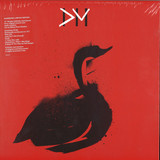
Depeche Mode - Speak & Spell 12" Single Box
Depeche Mode realized the format's potential and embraced the power of 12" vinyl and the avenues of innovation it opened up. The 12" single allowed the band to explore new sonic possibilities while the physical beauty of the packaging gave Depeche Mode room to develop a sophisticated and commanding visual aesthetic. Depeche Mode used their singles discography as a means of offering left field remixes and other delights for their fans.
Each box set in the series will contain the singles from each Depeche Mode album on audiophile-quality 12' vinyl, with audio remastered from the original tapes and cut at the legendary Abbey Road Studios. The artwork for the exterior of each of the new box sets draws on street art iconography inspired by the original releases, while the vinyl sleeves themselves feature the original vinyl single artwork.
Speak & Spell | The 12' Singles contains a facsimile reproduction of the rare Flexi Disc 'Sometimes I Wish I Was Dead' b/w 'King of the Flies' (the Fad Gadget track as on the original release); Dreaming Of Me 12': 'Dreaming of Me' b/w 'Ice Machine'; New Life 12': 'New Life (Remix)' b/w 'Shout! (Rio Mix)'; Just Can't Get Enough 12': 'Just Can't Get Enough (Schizo Mix)' b/w 'Any Second Now (Altered)'; original single poster reproduction; download card.
Dana Kelley, aka DKMA, is a much revered writer, producer, remixer, performer and creative force whose releases have become timeless classics and Holy Grails amongst DJs, music heads and collectors alike. A true artist and innovator, his productions possess the unique ability to engage, transport, challenge and enthral as only next level musicians can.
Grounded in the deep, soulful US House sound of the mid '90's, his earliest releases can be found on Strictly Rhythm, before moving on to produce under his DKMA alias as well as releasing music as Callisto on Guidance. Although Dana sadly passed away in 2013, he left us with a remarkable body of work that has remained both exciting and relevant throughout the last 2 decades and beyond.
Boston Boy Vol.2 is the 2nd in a series of compilations that focuses on Dana's visionary work as DKMA, during his most compelling and creative phase between 1997 and 2002. The compilations themselves are collated from an incredible & far reaching archive of over 20 of Dana's original DATs that have been generously shared with us by the Kelley Family. In the archive, some of Dana's most sought after & cherished works were uncovered, restored and meticulously assembled alongside previously unheard archival material.
The tracks themselves are bold, clever and inventive, characterised by a need for innovation. Passages of deep soulful house underpin more forward thinking electronics without ever losing dance floor appeal. Jazz solos sit imaginatively on top of gritty swinging rhythms, deep infectious b-lines, eerie textures and chord sequences are warm and effortlessly soulful yet with a sound design, sonic range, dynamism and a technical prowess that most could only dream of.
These compilations celebrate the life, vision and art of one of house music's most hallowed producers. Unique and essential, these collections pull together DKMA's most coveted works. Respectfully sourced, restored and compiled from all audio sources courtesy of the Kelley family and Above Board Projects.
Mastered by Frank Merritt at The Carvery, London, with special artwork by Atelier Surplus featuring a special unseen image of Dana from his family's photo albums.
"Animist Pools" was released July 1, 2016 in a cassette limited edition on Human Pitch records. Originally released as "Hippies Wearing Muzzles", pseudonym of Lee Evans. "A shifting center in a stream of rippling analog tones, the music of Hippies Wearing Muzzles is orchestrated to transfix, echoing sounds heard in nature with modular synthesizers and the powerful element of chance. Evoking the Fourth World Music of Jon Hassel or the kosmische innovations of Cluster, Animist Pools marks its composer, Lee Evans’ first full-length release for Human Pitch. Accompanied its popping, glyphic art design and video, the project’s hypnotic aptitude is heightened to full-effect. Citing his background in painting as a chief influence on his musical approach and thought process, Evans composes with a strong sense of space––each sound an event in a slowly expanding landscape, zooming out to reveal a world of scale in which depth and contrast take precedent over rhythm and melody. Embracing the generative compositional nature of working with the modular synthesizer, Evans himself is the final filter through which all sounds pass. The boundary between programmed repetition and human choice is subtle, but detectable, highlighting Evans’ careful, nuanced guidance of his auto-compositions. The result is ultimately an improvised structure––a living, breathing, musical creature, acting on a mixture of impulse and memory. Animist Pools is a functional body of music for everyday human applications, with the implied invitation to tune out and back in at one’s discretion. The cleanly organized musical space of Animist Pools encourages a tidying up of the mind. On a psychoacoustic level it is one, breathing life into the dusty corners of one’s headspace. Animist Pools is an immersive, meditative, and therapeutic experience."
What is possible in the field of electronic music? What can you get out of
a cutting-edge ecello, that he helped to develop, from the instrument
itself? What possibilities do loop machines, samplers and many other
technical innovations offer? The classically trained cellist, who embraces
experiment, moves without gravity into the pulsating core of a musical
universe, that has expanded exponentially in recent years, on his solo (in
the true sense of the word) album
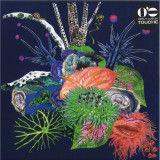
O’o share many of the musical characteristics of their ornithological namesake. The Kaua’i O’O produced the most exquisite birdsong before its extinction in Hawaii in the late 1980s. The beauty and character of its voice was delicate and mysterious, tuneful and surprising. You can experience it with just a cursory websearch, a haunting cri de coeur from the last century. If the poor O’O is consigned to history, then life is just beginning for this French duo, based in Spain, who’ve won plaudits and awards already in their short musical lifespan.
O’o are about to release their sublime debut album Touche. This is not an endling, it’s just the beginning: “I found the name on a website of weird English language words, and I loved the way the letters were arranged like a pair of glasses,” says O’o singer Victoria Suter. “Afterwards, I went onto YouTube and started listening to the last bird of its species, calling for a mate that would never come. I thought: ‘Oh my God, that’s so sad’. Then we talked about the name and we thought it could be a nice thing to honour it and keep it alive in some way.”
Suter met her musical partner Mathieu Daubigné at college in Agen, South West France, when the pair were studying music theory in their teens. Victoria moved to Barcelona in 2010; Mathieu followed six years later. Their debut EP, Spells, appeared in 2018 a beautifully crafted patchwork of vocals and samples that is redolent of the uncanny vocalese of Laurie Anderson. The bird makes an appearance at the beginning of the EP: “Sweet tooth beak. Soft melody peak / Oh O’o, go round and round in circles / Looking for a honeydrop, til you vanish, til you drop”.
That sense of profound longing for something lost is carried over to Touche, as well as the same heightened sensory awareness of the world around them. What has developed in spades is the creative process. O’o have blossomed organically, augmenting their pop sensibilities. Avant-garde techniques have been brought to heel as the pair create off-kilter pop music that warms the heart and nourishes the brain. The catalyst that enabled this bold pop transformation came with the song ‘Touche’ itself, a saucy chanson at the heart of the album. Suter’s wry narrative about a botanical femme fatale is inserted into a lithe and skittish song with reggaeton beats and an inviting, balmy atmosphere.
“The song is about a flower which attracts male insects, producing the very same smell as the female of the species,” explains Victoria. “The poor male is fooled by the sex-appeal of this botanical trap, and gets so excited that he exhausts himself and wastes all his other chances of ulterior mating and having any offspring. The flower entices the insect in in mermaid-like fashion, to come nearer and touch her. It’s the hot track!”
‘Touche’ reaches into hitherto unexplored areas of pop, while the rest of the album is accessible in the way that James Blake, Radiohead or Kate Bush are accessible, and it always challenges, in a way that pop isn’t supposed to. Suter writes playful, poignant, observational songs that tell stories as well as tell us something about ourselves. Songs like ‘Dorica Castra’ are built upon the voice as an instrument, centrifugal and layered from its core.
Complimentary to this method is Daubigné, who brings startling innovation with found sounds, samples and clever vocal manipulations—creating unique, otherworldly sonic flourishes. A guitar whirs like a musical spinning top on ‘Spin’, created in Ableton; an Ondes Martenot appears to make a guest appearance on the title track, though it’s the ingenuity of the Prophet 8 synthesiser. “I’ll often say to Mathieu, ‘what’s that?’” says Suter, He’ll reply, ‘that’s your voice’.”
O’o found their own voice when they won a competition held by the legendary festival organisers Primavera Sound. Victoria entered the band into a competition she saw on Instagram, sending off rough demos on the final day of entry, thinking little more about it other than the fact Mathieu might be annoyed. Soon they would have to build a live set from scratch and figure out how to present their music for the first time. At stake was seventy hours of recording time at Aclam studios, used by Rosalía and Kendrick Lamar, and for the winner a coveted spot at the festival. A pool of 350 acts were whittled down, and then O’o triumphed at a Battle of the Band style face off.
The O’O might be extinct, but O’o the band have learned how to fly. Just watch them go.
- Eye For An Eye
- No Hope = No Fear
- Bleed
- Tribe
- Bumba
- First Commandment
- Bumbklaatt
- Soulfly
- Umbabarauma
- Quilombo
- Fire
- The Song Remains Insane
- No
- Prejudice
- Karmageddon
- Back To The Primitive
- Pain
- Bring It
- Jumpdafuckup
- Mulambo
- Son Song
- Boom
- Terrorist
- The Prophet
- Soulfly Ii
- In Memory Of…
- Flyhigh
- Downstroy
- Seek 'N' Strike
- Enterfaith
- One
- L.o.t.m
- Brasil
- Tree Of Pain
- One Nation
- 9-11: 01
- Call To Arms
- Four Elements
- Soulfly Iii
- Sangue De Bairro
- Zumbi
- Prophecy
- Living Sacrifice
- Execution Style
- Defeat U
- Mars
- I Believe
- Moses
- Born Again Anarchist
- Porrada
- In The Meantime
- Soulfly Iv
- Wings
- Cangaceiro
- Ain't No Feeble Bastard
- Possibility Of Life's Destruction
- Chaos
- Soulfire
- I Will Refuse
- Under The Sun
- Tribe (Tribal Terrorism Mix)
- Quilombo (Zumbi Dub Mix)
- Umbabarauma (World Cup Mix)
- Terrorist (Total Destruction Mix)
- Berimbau Jam
Driven by Max Cavalera's unrelenting energy, unmistakable growl, and instantly recognizable riffage, the earthy tones and motivational rhythmic bounce of Soulfly maintain a gritty spiritual heart while pushing the boundaries of what's possible in metal. Nowhere is that more apparent than on the four triumphant, redemptive, and crucial eclectic offerings presented in this brand new box set, celebrating the first six years of the band career.
Soulfly (1998) was a riotously heavy escalation of the innovation established on Max's final album with Sepultura, launching a brand-new era. Primitive (2000) and 3 (2002) stomp with tribal groove; Prophecy (2004) is as unsettling but evocative as the tombs of the martyrs across Europe. Max introduced metalheads to the berimbau. His music is brutal yet unapologetically transcendent punk-infused extremity. To commune with the burning muse of metal's shamanistic tribal leader is to envelop oneself inside a post-modern sonic sweat lodge. Brutal riffs, trippy esoteric ritual, unrelenting percussion, primal screams; no matter what Cavalera hammers out on his four-string guitar, it always sets souls free.
The Diva Faïrouz.
Her real name Nouhad Haddad, she was born in the Zokak el Blat district of Beirut. The eldest of a modest Maronite family, she developed a passion for singing very early on. Her parents are too poor to afford the luxury of a radio, so she spends most of her time listening, her ear glued to the wall, to the neighbors. Nouhad quickly memorizes the songs she hears and gives a few samples at parties organized by her school. It was there that she seduced her comrades with her vocal abilities and that she was noticed in 1947 by the composer Mohammed Fleyfel.
The echo of his velvety voice reaches Halim el Roumi, talent scout, renowned singer-songwriter and director of Lebanese Radio, who asks to audition him immediately. Literally fascinated, el Roumi introduced him to the choir of Radio Beirut, baptized it with the name of Faïrouz and became its appointed composer. Then, he introduces her to Assi el Rahbani, a young avant-garde composer who, in the company of his brother Mansour, wishes to renew a Lebanese song under profound Egyptian influence.
The teenager Faïrouz succumbed to the personal charm of Assi, whom she married in 1954, and to that of his compositions (the model couple of Arab song would be separated by the death of their husband in 1986). The heavenly trio causes, from the publication of its first titles, a real musical revolution. Traditionalists howl at sacrilege and distortion while sympathizers of the rejuvenation and modernization of Lebanese folklore, weary of insipid refrains and pale copies, show their enthusiasm.
In 1957, Faïrouz opened the International Festival of Baalbek (a locality mentioned in one of his flagship titles) and sang in the middle of the six columns of the Roman temple. This initial encounter with his audience, who warmly welcomed him, earned him the nickname "seventh column". Faced with this fabulous galloping success, the Rahbanis are stepping up their offensive and courageously playing the card of constant innovation. They wrote for Faïrouz musical sketches, operettas and, from 1962 to 1976, about fifteen sung plays in which she plays the role of a woman in love with Love, the true, the pure, the innocent. , and that of hope. She also appears in a few films but she quickly interrupts her cinematic odyssey.
It is still and always one of the major references of Arabic song and many of its titles, such as "Bint el Chalabia", are hummed as much by the new generation as by the old.
This acoustic body experiment will intoxicate your ears and veins. “Ectomorphin” by Chris Baumann is a straight confession for athletic acid underground – as the artist himself describes his style: “The border between timeless old school quality and new school upfront innovation in today’s techno music – just call it raw, hypnotic techno.” And this new release on Snork Enterprises presents a full load of proof for this bold hypothesis.
Ironically referring to some curious scientific concepts such as “Ectomorphin”, “Brainwave limiter”, “Neurotraxin”, and “Bioport” one may ask himself how the artist may well hypnotize our body and brain. Listening to the four forward moving techno tracks, you will soon know the answer. Just turn up the volume and get your body cells moving.
Modern Obscure Music turns to Japan for inspiration. Suemori debuts on the Barcelona based imprint with an album of striking textures and sounds. From the first track, you can feel the influence of the Far East in both the melodies and rhythms created by Suemori. The music is complemented by Mayte Nicole Esteban fs impressive artwork.
Suemorifs real name is Yoshinobu Hoshina. He previously recorded as Hoshina Anniversary. Under this alias, Hoshina released music on labels such as Boysnoize Records and ESP Institute. As Suemori he released the Maebashi album earlier in 2021 on Elena Colombifs Osare! Editions imprint.
Tawamure is an album of richly textured compositions. Pianos and electronics are equally important. Some tracks are beatless and others have an unorthodox approach to percussion. We begin with the playful yet sombre pianos and strings of Mou Aenaindesune ‚à‚¤‰ï‚¦‚È‚¢‚ñ‚Å‚·‚Ë. Honshin –S has a magical beauty and Konton ¬“× Chaos is as chaotic as you would expect. There is so much to explore on this wonderful album from Suemori.
- A1: End Transmission (Album Version)
- A2: Too Little Too Late
- A3: Ashes
- A4: Mother
- B1: White Cells
- B2: Avissos
- B3: Womb
- C1: Neon Dream
- C2: All Else Fails
- C3: Time To Die
- D1: End Transmission (John Beltran's Sweet Sunny Mix)
- D2: White Cells (Yui Onodera Remix)
- D3: Neon Dream (Elwd Vinyl Edit)
- D4: Time To Die (Heathered Pearls Remix)
Stelios Vassiloudis enters an inspiring new phase as he unveils his sophomore LP All Else Fails available March 25th via Balance Music.
Hailing from Athens, Greece, Stelios Vassiloudis poses a triple threat as a composer, producer and DJ. Having been active in the electronic music scene since the early 2000s he has cultivated his own brand of distinctive ambience reflective of his rich and diverse musical background; transcending the dance floor via an emotional narrative of complex soundscapes, intricate harmonies and hypnotic rhythms. Over the past decade Stelios has released music under various other monikers, yet this new endeavour is his most diligent to date - allowing him to rediscover his love for making music during the process, "I'm more hopeful, inspired and determined than ever before."
Ten years on from the release of his debut LP, Stelios' detail-oriented offerings remain incomprehensibly thought-provoking and thorough with this new album. Noticeably dissimilar to any previous efforts, Stelios consciously took a step back from the pressure of maintaining a steadily flowing supply of functional, club-oriented music and as the world stood still amidst the pandemic, he embraced the opportunity to reconnect and express himself with a broader musical vocabulary. He admits that: "with the world around us seemingly on the fast track to Armageddon, the music ended up being very much reflective of the sadness and helplessness I felt."
All Else Fails is a stimulating odyssey to anyone listening. Harmonically dense, arcadian glistens seep throughout the ten tracks, each complementary to the next. Bask in the wistful iridescence and you won't be disappointed.
Stelios carved his way into electronic music by traversing around the globe as a DJ and performer - performing at intimate underground bars in Beirut, festivals in Miami, after-hours in Tokyo, beaches in Goa and mega clubs in Argentina. Having developed a formidable discography on esteemed labels such as Bedrock, Poker Flat, Ovum, Constant Sound and Darkroom Dubs, among others, Stelios' studio prowess and coveted productions cemented his reputation as a versatile and acclaimed artist. His intense passion and drive for innovation in music serves as the fuel to keep him inspired and relevant, qualities that no doubt ensure his reputation as an artist of the highest calibre, will endure.
Scott Walker, PJ Harvey, Coil, Matmos, Autechre & Pan Daijing. 180g LP with inner, 12”x24”poster + DL card. The Debut Full-Length By Montréal Producer Kee Avil, The Project Led By Avant/Improv Guitarist Vicky Mettler, Also Known As A Member Of Sam Shalabi’s Land Of Kush And As Co-Founder Of Concrete Sound Montréal. Advance Single “See, My Shadow” Premiered By Mary Ann Hobbs On BBC6 And Picked Up By Music & Riots, Backseat Mafia, Aural Aggravation, Etc In Dec 2021. Kee Avil, a project led by Montréal producer and guitarist Vicky Mettler: a singular expression of fractured dream logic concretized in chiselled postpunk guitar, sinuous low-end electronics, a panoply of organic and digital samples creating alternately twitchy and propulsive rhythm, and the anxious intimacy of her finely wrought lyricism and vocals. Bound by an outstanding production sensibility throughout, Crease unfolds one oblique earworm hook after another, with compositional innovation anchored to an inscrutable and compelling voice across 10 songs of tremendous and imaginative sonic detail. Kee Avil brings a contemporary electroacoustic sensibility to bear on traditions and conventions of pop, postpunk, electronic and sound-art songwriting, where touchstones range from Scott Walker and Coil to Fiona Apple, (early) PJ Harvey and (later) Juana Molina to Eartheater, Pan Daijing and Smerz; or Grouper produced by Autechre. Her unconventional alloys also conjure the guitar-inflected deconstructions of Gastr del Sol and the crystalline micro-worlds of Bjork, Matmos and Rashad Becker. Crease is one of those debut records that excites a wide range of peerless references precisely because it's so compelling in its own idiosyncratic authority, originality and execution. Each song on Crease is its own sculpture, meticulously assembled to resemble disassembly: “each of these worlds was built without consideration for the other; it felt impossible to me, once I would enter the atmosphere of a song, to try to start another until that idea was finished.” The album nonetheless unfolds in impressive holistic integration through a palette of textures and techniques deployed in recurring but continually refracted ways. Alongside her superb austere guitar work stitched into electro-industrial, dark-ambient and minimal-techno soundworlds, it’s her voice and lyrics confidential, hermetic, implacable that provide the galvanizing, always captivating through-line. Her more compositional, exacting, (de)constructed musical identity was first unveiled with the self-titled Kee Avil EP (Black Bough Records) and further honed by pre-pandemic tours sharing stages with Pere Ubu, Marc Ribot and Bill Orcut among others. Woodshedding since then, Crease presents a quantum leap in Kee Avil's exploration of studio-based experimentation, arrangement and production, signaling the arrival of a brilliantly genre-melding, refined and assiduous new voice in avant-garde songcraft.
2LP with a 4-page colour insert
As Guadeloupean vocalist and composer Marie-Line Dahomay writes in her liner notes to the compilation, gwoka is more than a style of music, it is “a way of living and thinking.” Rooted in the social, musical and ritual practices of enslaved African people and their descendants on Guadeloupe, gwoka has always sought to express the spirit of independence and resistance authentic to the island.Building on its traditional call-and-response form and the ideas of pivotal figures like Gérard Lockel and Christian Laviso, modern gwoka evolved throughout the second half of the twentieth century to include funk, jazz and electronic influences.
Defined by its propensity for innovation and experimentation, this compilation charts the most radical changes to modern gwoka, capturing a sensory riot of traditional répertoires, rhythms and makè techniques fused with genre-defying experimentation.Whether heard in the deeply cosmic, spiritual music of Dao, Freydy Doressamy and Gaoulé Mizik, or the jazz funk inflections of Gui Konket and Horizon, the music here is united by the feeling of santiman ka, crucial not only to gwoka music but the identity of Guadeloupe at large.
As co-curator Cédric Lassonde (Bueaty & The Beats) writes: “What unifies these selections is the depth of the compositions, the experimentation around the santiman ka, and the spirit of resistance and liberation against slavery, be it modern or ancestral. With a thirst for innovation typical of the island’s creole culture, the ka spirit is deeply rooted in collective history and in a quest for identity.”
Co-curator Brandon Hocura (Séance Centre) continues: “The creative energy of these musicians is powerful and demonstrates a universal pursuit of resistance, freedom and identity. Their voices are distinct, but the chorus rises high and carries their message far across the sea.”
Lèsprit Ka: New Directions in Gwoka Music from Guadeloupe 1981-2010 is the first compilation of its kind to bring the sound of modern gwoka to a wider audience, with many of the featured musicians still active today. Presented as a double LP, the release features a specially commissioned essay by Guadeloupean musician Marie-Line Dahomey, and extensive liner notes from Cédric Lassonde and Séance Centre’s Brandon Hocura.
True to the hybrid nature of the music, the compilation seeks not to provide a definitive sound, but express the variety of contemporary forms that have evolved from gwoka. Just as Guadeloupean trailblazers Kassav fused gwoka with funk and cadence to create zouk, so did the musicians on this collection push gwoka in new directions rarely heard beyond its shores.
In the words of Gérard Lockel, “gwoka is the soul of Guadeloupe”
'Still Life' Carson McHones drittes Album und zweite Veröffentlichung bei Loose Music erscheint Ende Februar. Nach ihrem 2019er Album "Carousel" zählt die aus Austin, Texas kommernde Musikerin zu einer der innovativsten Künstlerinnen aus den Staaten. Inspiriert von u.a. John Cale, The Kinks, Richard und Linda Thompson – gleichgesinnte Künstler der späten 60er und frühen 70er, einer anderen Ära des Übergangs und der Innovation. McHone schrieb die Songs von 'Still Life' in ruhigen Momenten zwischen den Tourneen in ihrer Heimatstadt Austin und nahm sie dann in Ontario mit dem kanadischen Musiker und Produzenten Daniel Romano auf. Diese erstmalige Zusammenarbeit zwischen McHone und Romano offenbart eine unwiderstehliche Dynamik von den präzisen Arrangements bis hin zu den ausgefeilten Lyrics der Songs. 'Still Life' ist mehr als zeitlos, es ist zeitgemäß, von Natur aus modern und ist für Alternative Country Fans ein Highlight!
This is a four track E.P by little known alias of The Future Sound Of London. These tracks were originally released in 1991 and more recently have become in demand again, driving up the price of rare copies remaining in the second hand market. The early 90s was a time of musical innovation and experimentation within the electronica genre, and these guys lead the way. Issued in original artwork.
"It’s a voice that soars –pure, clear and true —above bass and synths, traditional percussion and infectious Mande guitar grooves. A stop-you-in-your-tracks voice instantly familiar to anyone in Mali, West Africa: Rokia Koné, aka the Rose of Bamako. On her debut international release, she’s teamed with Irish-born, California-based rock producer Jacknife Lee —and reimagined the Malian sound in ways leftfield and ground breaking.
BAMANAN is a collaboration that connects the great ancient kingdoms of Mali and the bustling modern street life of its capital, Bamako to a remote recording studio nestled within California’s Topanga Canyon. That bridges deep tradition and forward-facing innovation. One of Mali’s most beloved and dynamic artists, Rokia Koné is a force to be reckoned with. Her captivating performances in the city’s local maquis clubs very often last for hours, as Koné runs the gamut of emotion from joy to despair, fury to tenderness, wielding that astounding voice with grace and power. In 2016, she joined feminist supergroup Les Amazones d’Afrique and made her debut on an international stage alongside the likes of Oumou Sangaré, Angélique Kidjo and Kandia Kouyaté. Jacknife Lee is the acclaimed producer of bands including U2, R.E.M and The Killers, and has a Grammy for his work on Taylor Swift’s multi-million selling Red. Stadium-sized soundscapes are his speciality. Yet BAMANAN finds Lee upholding the stark beauty of Rokia’s voice with subtlety and sensitivity. Every nuance and breath is heard, each inflection and melismatic improvisation carefully preserved on this exciting debut."
Additional Artists: McCoy Tyner Wynton Kelly Paul Chambers Jimmy Cobb Elvin Jones Steve Davis
John Coltrane's Coltrane Jazz on 180g 45RPM 2LP from ORG Music!
180g 45rpm Double LP Mastered From Original Analog Tapes!
Pressed at Pallas and Mastered by Bernie Grundman!
Mastered from the Original Master Tapes : You Will Not Hear a Better Analog Version
Meticulous LP Pressing Boasts Incredible Tones and Presence
1960 Atlantic Set Followed Groundbreaking Giant Steps
Originally released in 1960, and on the heels of Giant Steps, Coltrane Jazz came in the midst of the saxophonist's peak Atlantic period. The album is among several recordings that Coltrane issued from 1959-1961, and which, ultimately, forever changed the face of music.
Featuring pianists Wynton Kelly and McCoy Tyner, bassists Paul Chambers and Steve Davis, and drummers Elvin Jones and Jimmy Cobb, the set was recorded at three separate sessions. The expert personnel are a harbinger of the great quartet Coltrane soon would assemble for 1960's My Favorite Things. And while not as famous as that iconic title, Coltrane Jazz belongs in the pantheon of phenomenal jazz albums and is an absolute must for any music fan.
In addition to boasting superior performances and playing, the set marks Trane's first use of multiphonics, the practice of extracting more than one tone at a time from the horn, which here, and unlike on any other Coltrane record, is querulously pitched, allowing him to explore new tonalities on tracks such as "Harmonique." Innovations abound. Every cut is an original composition save for Johnny Mercer's "My Shining Hour." Not surprisingly, Miles Davis' influence is felt throughout; his rhythm section is used on all but one selection.
ORG Music continues its praiseworthy archival vinyl series, presenting this landmark jazz effort cut at 45RPM and on first-rate 180g vinyl. Mastered from the original master tapes with meticulous care, Coltrane Jazz teems with new life, with the headliner's horn playing and tonalities assuming lifelike richness, boldness, and presence. The supporting cast's movements and fills are heard in pristine clarity, and the airiness that all jazz lovers prize is here in spades.
Musicians:
John Coltrane, tenor sax
McCoy Tyner, piano (on "Village Blues")
Steve Davis, bass (on "Village Blues")
Elvin Jones, drums (on "Village Blues")
Wynton Kelly, piano
Paul Chambers, bass
Jimmy Cobb, drums
KORN changed the world with the release of their self-titled debut album. It was a record that would pioneer a genre, while the band’s enduring success points to a larger cultural moment. The FADER notes, “There was an unexpected opening in the pop landscape and KORN articulated a generational coming-of-angst for a claustrophobic, self-surveilled consciousness. KORN became the soundtrack for a generation’s arrival as a snarling, thrashing, systemically-restrained freak show.”
Since forming, KORN has sold 40 million albums worldwide, collected two GRAMMYS, toured the world countless times, and set many records in the process that will likely never be surpassed. Vocalist Jonathan Davis, guitarists James “Munky” Shaffer and Brian “Head” Welch, bassist Reginald “Fieldy” Arvizu, and drummer Ray Luzier, have continued to push the limits of the rock, alternative and metal genres, while remaining a pillar of influence for legions of fans and generations of artists around the globe.
The level of KORN’s reach transcends accolades and platinum certifications. They are “a genuine movement in a way bands cannot be now,” attests The Ringer. They represent a new archetype and radical innovation, their ability to transcend genre makes barriers seem irrelevant.
Pressed on 140g Black Vinyl Including a signed print from Eddie Piller, limited to 750.
Demon are proud to release “Eddie Piller Presents British Mod Sounds Of the 1960s”, the follow up the “The
Mod Revival”. Featuring 100 original tracks across 6LPs, its a deep dive into the Mod scene in '60s Britain.
Including a selection of classic and rare tracks, tracing the scene from its R&B rootsto a soulful finale
Curated by Acid Jazz Records and Modcast founder Eddie Piller, and featuring new sleeve notes from
respected author and broadcaster Paul 'Smiler' Anderson.
As Eddie Piller points out in the forward to the extensive sleeve notes that accompany this collection, he
chose the word 'Sounds' carefully, reflecting the variety of talent contained here, from uncool session
musicians without an ounce of style in them, acts who saw an opportunity to jump on the Mod bandwagon
and bands who whole heartedly embraced Mod way of life.
And so this new collection mixes the Mod mainstays (Small Faces, The High Numbers The Action, The Fleur
De Lys), with a generous selection of future superstars (David Bowie, Rod Stewart, Elton John, Marc Bolan,
Jeff Beck and Graham Gouldman of 10cc are all represented here), and a few artists so obscure, so rare, that
they never got to release a record in the '60s, but Eddie has tracked down the tapes nonetheless.
"Be in with the In Crowd once more."
Every great youth cult deserves a great soundtrack, and when the '60s Mods adopted classic American R&B,
with a side order of hip Jazz, they undoubtedly found the right music for their exuberant and stylish way of
life. And yet, buying expensive imports, hoping for a local release or praying for a rare visit from overseas
talent was never going to be enough to satisfy British youth with a thirst for the latest sounds. Certainly not
those on the dancefloor and definitely not those with their own musical ambitions.
It was a music scene that began with imitation, before skill and imagination lead curious minds to innovation,
a scene that evolved from average (at best) copies of releases on the Chess, Motown and Stax labels, to
become something more sophisticated,something quite unique, something very British.
All formats are stylishly packaged (of course) and include new sleeve notes by Paul 'Smiler' Anderson, author
of the best-selling and highly regarded books'Mods: The New Religion' and 'Mod Art'.
At the center of Dadub's SA020 lie the myths of the ancient Greek goddess Demeter - her search for daughter Persephone, the drink at the Eleusinian Mysteries ceremonies in her honour, and the fungus which gave the drink its psychoactive properties. The opening track is 'Mistresses March', a thumping narrative of Demeter's search for her abducted daughter Persephone. At the fundament lies a test of a new generation VST - 'Diachronic' - which is used to manage audio samples. The textures which merge during the near 12-minute march scrape and plummet, raining down upon the ominous marching band beat. This is an odyssey, unhappy and unflinching. Based on the handmade modular synth system from Nicola Buono and Lino Monaco, the representation of ceremony drink 'Kykeon' is on one hand a flowing narrative and on the other a demonstration of intense artistic scrutiny: a perfect, unremitting thud. There is, at five minutes, a subtle key pattern, light but not impermanent under the cacophony of chaos. This is indicative of the ceaseless self-examination. Little details, significant differences. Powered by a sound and groove generator invented by Daniele de Santis (Grün), 'Ergot Kernel' is a chemical cauldron. It's a beat continuously emerging from the undergrowth; an imperious column rising; a train ploughing on, coursing through an arid landscape. Conversely, the atmosphere is bright, full of electricity and warmth, with moisture descending. Dadub's SA020 is a journey through a Greek myth, with textural magnificence and technological innovation.
Miles Davis Kind of Blue meets Analogue Productions' UHQR, the pinnacle of high-quality vinyl!
Best-selling album in jazz history; mastered from the original master tapes by Bernie Grundman
Pressed at Quality Record Pressings using Clarity Vinyl® on a manual Finebilt press
Purest possible pressing and most visually stunning presentation and packaging!
Dream team of Davis, Adderley, Coltrane, Evans, Kelly, Chambers, Cobb make history.
Legends have a way of sticking around. If there was ever an album awaiting a high-fidelity, custom-pressed vinyl treatment of the level you now hold in your hands, it is Miles Davis' Kind of Blue. The top-selling jazz album of all time, it has been lauded, entered into "Best Of" lists and Halls of Fame, and universally acknowledged as a landmark recording — a five-track masterpiece of melancholy mood and melody.
It continues to be one of the most listened-to and studied recordings of all time, a required primer for many young musicians, and one of the most transcendent pieces of music ever recorded. Davis played trumpet sublime with his ensemble sextet featuring pianist Bill Evans, drummer Jimmy Cobb, bassist Paul Chambers, and saxophonists John Coltrane and Julian "Cannonball" Adderley with Wyton Kelly playing piano on "Freddy the Freeloader."
Now Analogue Productions, together with Quality Record Pressings, is putting Kind of Blue where it belongs: the Ultra High Quality Record (UHQR) pressed on Clarity Vinyl on a manual Finebilt press with attention paid to every single detail of every single record.
The 200-gram records will feature the same flat profile that helped to make the original UHQR so desirable. From the lead-in groove to the run-out groove, there is no pitch to the profile, allowing the customer's stylus to play truly perpendicular to the grooves from edge to center. Clarity Vinyl allows for the purest possible pressing and the most visually stunning presentation. Every UHQR will be hand inspected upon pressing completion, and only the truly flawless will be allowed to go to market. Each UHQR will be packaged in a deluxe box and will include a booklet detailing the entire process of making a UHQR along with a hand-signed certificate of inspection. This will be a truly deluxe, collectible product.
Kind of Blue is more than Miles Davis's most enduring recording, it's a testament to Miles' experimental approach, drastically simplifying modern jazz by returning to melody unlike the chord complexity more often heard at the time. "The music has gotten thick," Davis complained in a 1958 interview for The Jazz Review. "... There will be fewer chords but infinite possibilities as to what to do with them." Kind of Blue is, in a sense, all melody — and atmosphere.
None of the musicians had played any of the tunes before heading into the first of two recording sessions in early spring of 1959. In fact Miles had written out the settings for most of them only a few hours before the session. Miles also stuck to his old recording procedure of having virtually no rehearsal and only one take for each tune.
Miles remained proud of the album, performing at least two of its tracks — "So What" and "All Blues" — for years after, until his musical path took him in a different direction.
History was on the side of Kind of Blue; it was born in 1959, at the peak of the golden age of high-fidelity, featuring innovations in studio equipment (magnetic tape, high-quality condenser microphones), matched by advancements in home audio reproduction (long-player records — LPs; high-end turntables, and other stereo components). Kind of Blue also benefited from Miles' being signed to the leading major record company of the day — Columbia Records, a part of the CBS media conglomerate. Columbia had the means and wisdom to invest in cutting edge recording technology, and their own professional recording studio.
A minor audio complication with Kind of Blue has been addressed with this UHQR edition. The motor on the studio's 3-track master recorder was running slowly the day of the album's first session. This speed issue affected the album's first three tracks, "So What," "Freddie Freeloader" and "Blue in Green," making them a barely perceptible quarter-tone sharp. Before now, it was only addressed in 1995 for the Classic Records edition and by Columbia Records — or their latter-day parent, Sony Music — on a CD reissue in the late '90s.
Sixty years have passed; this LP bridges that time span in the best way possible, struck from the master reel of Kind of Blue, free of speed issues and replete with all the instrumental detail, sonic environment and minimal noise. As we set out to make our UHQR series the world's best-sounding vinyl records, we have also used Clarity Vinyl, which is free of any carbon black pigment which might introduce surface noise. All-in-all this edition of Kind of Blue meets the highest audiophile standards and offers the truest sound for the most enjoyment.
A sublime techno reissue from the vaults of one of London's leading electronic labels of the last 25 years, remastered and re-presented for 2022!
Originally released in 1994 on Mr.C's cult UK house and techno label Plink-Plonk and composed and performed by Laggy Panteli and Zeno Messis (aka Megalon) in their London studio, 'Pandora's Box' is a truly unique record. Sleek, futuristic, fathoms deep and wholly original, the music contained on these 2 discs sounds as modern and as vital as it did on it's arrival all of those years ago.
Exploring a deeper vein of electronic music, Megalon craft their own sonic landscapes that are undoubtedly inspired by all forms of cerebral electronic music. Ambient, Detroit techno, electro, European electronics and of course the duo's experiences in London's early acid house and rave scene all filter through their lens to bring something brand new to the table. The arrangement, sound design and mix on the album is outstanding, lending a totally visionary and modern feel to the tracks that continues to echo today.
'Pandora's Box' is a record that has existed within the shadows for many years, with a hardcore cult following. The kind of record that one might hear deep into the early hours, at the hands of a seasoned selector or an 'insider' who has the knowledge. It is redolent of a time when innovation, ideas and imagination trumped the run of the mill and the homogenous, which goes a long way in explaining what makes this record so exciting some 25+ years later.
A totally essential mid 90's UK techno and electronic classic, as much a treat for the mind as for the body.
Reissued in full conjunction with the artists and remastered by Curvepusher from DAT and original source materials. Redesigned by Atelier Superplus and distributed worldwide by Above Board distribution, 2022.
1st solo album in 5 years, recorded, produced and written by Richard H. Kirk, founding member of Cabaret Voltaire, the album was constructed at Western Works, Sheffield, over a three-year period. Work began with recording on midi and analogue synthesisers before guitar and vocals (Kirk's first use of vocals in 10 years) were added. Kirk explains, A lot of time was spent on post-production, editing and then living with the material and I think it benefited from stepping back and then revisiting after doing other things.'
Although not an overtly political album, it's hard not to hear a reaction to recent years' world events in the overwhelming urgency of 'Nuclear Cloud' or '20 Block Lockdown' or in 'New Lucifer / The Truth Is Bad'. When questioned Kirk admits, It's not really a political album, but over recent years - during the recording - all manner of horrorshow events have cropped up and now we seem to be in a rerun of the Cold War with Russia back as the Bogeyman.' The album's title, Dasein (a German word meaning being there' or presence', often translated into English as existence'), is a fundamental concept in existentialism. Kirk explains culture succumbs to nostalgia in much the same way that an individual looks back wistfully to adolescence or childhood - the nostalgia is partly for a time when he or she wasn't nostalgic, just lived purely IN THE NOW.' In 2014, during the recording period, Kirk began work on Cabaret Voltaire live and so the two projects coexisted in tandem. Although Kirk's varied projects have always existed separate to one another, says Kirk, in the past some solo works served as a blueprint for what I did later with Cabaret Voltaire'. Billed as a performance consisting solely of machines, multi-screen projections and Richard H. Kirk, Cabaret Voltaire recently announced the first UK performance in over 20 years at the Devil's Arse Cave (aka Peak Cavern) in Castleton, Derbyshire on Saturday 29 April. Kirk will perform entirely new material for a performance relevant to the 21st Century with no nostalgia. RECENT PRAISE FOR RICHARD H. KIRK One of the UK's pioneering electronic agitators' - Electronic Sound In five decades of key-bashing and knob-twisting, Richard H. Kirk has remained at the vanguard of electronic music' - FACT ...decades of electronic innovation, forged in Sheffield' - Uncut
Kirk was toying with distorted realities from 1970s onwards' - Record Collector
"Free Jazz " - Ornette Coleman (as); Eric Dolphy (b-cl); Don Cherry, Freddie Hubbard (tp); Charlie Haden, Scott LaFaro (b); Billy Higgins, Ed Blackwell (dr)
The term 'free jazz' was already inexistence – but it had a quite different meaning, namely jazz without paying for an entrance ticket. The album "Free Jazz", however, was intended to lend its name to a quite different style of jazz. 'Free' playing – now this meant that no one was bound to conventions, you could let your imagination run loose. Free jazz gave one the chance to find new rules for every new composition. And it was to be the greatest boost to innovation in the world of jazz. Ornette Coleman’s album from December 1960 stands at the beginning of the free jazz era like a massive portal. Coleman thought big: he brought two quartets into the studio at the same time, both with two wind instruments and no piano, and let them play together for 36 minutes without a break – a collective improvisation. There aren’t any precise themes, although short, fanfare-like motifs do exist in which the winds come together. A continuousdense rhythmic beat underlies the music almost throughout – and the pulse is felt rather than heard. One musician after the other comes into the foreground to improvise, almost like at a jam session. First Coleman, then Dolphy, then the two trumpeters. The other winds, however, never remain silent, then make comments and support one another continually – the energy level is immense the whole time (it was cold in the studio ...). Only when it is the turn of the bass and drum players do the winds remain silent for about eleven minutes. This album is not only a historic caesura, but a truly great experience over andover again.
This Speakers Corner LP was remastered using pure analogue components only, from the master tapes through to the cutting head. More information under pure-analogue
All royalties and mechanical rights have been paid.
Recording: December 1961 in A&RStudios, New York City, by Tom Dowd
Production: Nesuhi Ertegun
- A1: Noriko Miyamoto - Arrows & Eyes
- A2: Mishio Ogawa - Hikari No Ito Kin No Ito
- A3: Yoshio Ojima - Days Man
- B1: Mkwaju Ensemble - Tira-Rin
- B2: Rna Organism - Weimar 22
- B3: Naoki Asai - Yakan Hikou
- B4: Takami Hasegawa - Koneko To Watashi
- C1: Mammy - Mizu No Naka No Himitsu
- C2: Dip In The Pool - Hasu No Enishi
- C3: Wha Ha Ha - Akatere
- D1: D Day - Sweet Sultan
- D2: Perfect Mother - Dark Disco-Da Da Da Da Run
- D3: Neo Museum - Area
- D4: Sonoko - Wedding With God (A Nijinski) (A Nijinski)
LTD. COLORED VINYL
Somewhere Between: Mutant Pop, Electronic Minimalism & Shadow Sounds of Japan 1980–1988 hovers vibe–wise between two distinct poles within Light In The Attic’s acclaimed Japan Archival Series—Kankyō Ongaku: Japanese Ambient, Environmental & New Age Music 1980–1990 and Pacific Breeze: Japanese City Pop, AOR & Boogie 1976–1986. All three albums showcase recordings produced during Japan’s soaring bubble economy of the 1980s, an era in which aesthetic visions and consumerism merged. Music echoed the nation’s prosperity and with financial abundance came the luxury to dream.
Sonically, Somewhere Between mines the midpoint between Kankyō Ongaku’s sparkling atmospherics and Pacific Breeze’s metropolitan boogie. The compilation encompasses ambient pop, underground electronics, liminal minimalism and shadow sounds—all descriptors emphasizing the hazy nature of the nebula. Out–of–focus rhythms wear ethereal accoutrements, ballads are shrouded in static, and angular drums snake skyward on transcendent tones. From the Avant–minimalism of Mkwaju Ensemble and Yoshio Ojima, to the leftfield techno-pop of Mishio Ogawa and Noriko Miyamoto (featuring members of YMO), and highlights from the groundbreaking Osaka underground label Vanity Records, these are blurry constellations defying collective categorization.
These tracks also exist in a space of transition when the major label grip on the Japanese recording market began to give way to the escalation of independents. Thanks to the idyllic economic climate and innovations in domestically–manufactured music gear, creators on the edges were empowered to focus on satisfying their artistic visions in the open headspace of home studios. While labels like Warner Music and Nippon Columbia explored new sounds through traditional channels, it was possible for Vanity, Balcony and other indie labels, not to mention self–released artists like Ojima and Naoki Asai, to publish their work via affordable media such as cassettes, 7" vinyl, and flexi–discs.
Expertly curated by Yosuke Kitazawa and Mark “Frosty” McNeill (dublab), Somewhere Between is a collection of music, much of it released for the first time outside Japan, that is bound more by energetic vibration than shared history, genre or scene. They are the sounds of transition and searching—a celebration of the freedom found in floating.
Note: The track “Days Man” by Yoshio Ojima is only available on the LP and Cassette versions.
- A1: Signal From The Noise
- A2: Unfolding (Momentum 73) (Momentum 73)
- A3: City Of Mirrors (Feat Arthur Verocai)
- A4: Beside April (Feat Karriem Riggins & Arthur Verocai)
- A5: Love Proceeding (Feat Arthur Verocai)
- A6: Open Channels
- A7: Timid, Intimidating
- A8: Beside April (Feat Arthur Verocai - Reprise)
- A9: Talk Meaning (Feat Arthur Verocai, Terrace Martin & Brandee Younger)
Colored[29,03 €]
Das kanadische Ensemble BADBADNOTGOOD machte sich einen Namen als sie kurzerhand Jazz und HipHop miteinander verbanden - nun kehren sie mit ihrem Debüt auf XL Recordings zu ihren instrumentellen Anfängen zurück! Mit dem Talk Memory reflektieren sie die Geschichte und die Innovationen der Musiker und Komponisten, die sie auf dem Weg zum eigenen Sound beeinflussten. Die Band formte sich 2010 im Humber College Jazz Kurs in Toronto, das feste Trio-Line-Up mit Alexander Sowinski (Drums), Chester Hansen (Bass) und Leland Whitty (Gitarre und Holzbläser) existiert seit 2015. Für die drei ist ein Song ein lebender und atmender Organismus, der sich natürlich entwickelt und je nach Umgebung anders klingt. "Talk Memory" ist ein Album, das ganz in diesem Sinne entstanden ist und markiert auch einen Wechsel vom Ego hin zum Kollektiv, zur Balance und zur Harmonie. Es enthält musikalische Beiträge von Arthur Verocai, Karriem Riggins, Terrace Martin, Laraaji und der gefeierten Harfenistin Brandee Younger, die bereits mit Moses Sumney und Thundercat gearbeitet hat. Die Visuals entwarf Virgil Abloh mit seiner Designfirma Alaska-Alaska_äó, der auch das Albumcover gestaltet hat. "Talk Memory" ist ein Album, das betont, wie Musik als Konversation unabdingbar kollektiv und improvisiert sein muss. Es erinnert dabei an die typischen Momente einer Live Jazz- oder Soul-Show, in der der Frontmann jedes einzelne Bandmitglied vorstellt, um ihm/ihr den gebührenden Applaus zukommen zu lassen. Und so ist ein Album voller tiefer Zuneigung zur Musik und zur Community entstanden.
- 1: Michael Stipe - Sunday Morning
- 2: Matt Berninger - I’m Waiting For The Man
- 3: Sharon Van Etten - Femme Fatale
- 4: Andrew Bird & Lucius - Venus In Furs
- 5: Kurt Vile - Run Run Run
- 6: St. Vincent & Thomas Bartlett - All Tomorrow’s Parties
- 7: Thurston Moore Feat. Bobby Gillespie - Heroin
- 8: King Princess - There She Goes Again
- 9: Courtney Barnett - I’ll Be Your Mirror
- 10: Fontaines D.c. - The Black Angel’s Death Song
- 11: Iggy Pop & Matt Sweeney - European Sun
The Velvet Underground is regarded as one of the most influential bands in rock history.
Their first 4 albums were included in Rolling Stone's list of The 500 Greatest Albums of All Time.
Ranked 19th greatest artist by the same magazine and the 24th greatest artist in a poll by VH1.
Inducted into the Rock and Roll Hall of Fame in 1996.
Critic Robert Christgau considers them "the number three band of the '60s, after the Beatles and James Brown and His Famous Flames".
AllMusic wrote that "Few rock groups can claim to have broken so much new territory, and maintain such consistent brilliance on record, as the Velvet Underground during their brief lifespan ... the Velvets' innovations – which blended the energy of rock with the sonic adventurism of the avant-garde, and introduced a new degree of social realism and sexual kinkiness into rock lyrics – were too abrasive for the mainstream to handle."
Once again we teamed up with Ubisoft to bring the music of high-tech action game Watch Dogs: Legion to good ol’ fashioned vinyl. This triple LP set features original score tracks by Stephen Barton and tracks “Rainfall (feat. Tiana Major9)” by Brit Award-winning Stormzy and “In the Jungle” by Baby Knoxx.
Watch Dogs: Legion builds on the open-world stealth-action gameplay of its predecessors, delivering a never-before-seen gameplay innovation. Players can recruit and play as anyone they see in the iconic city of London: an MI6 agent, a tough bare-knuckle fighter, or an inconspicuous old lady.
Composer Stephen Barton has amassed an enviable AAA credits list, including co-composition on Call of Duty 4: Modern Warfare (with Harry Gregson-Williams), the Titanfall series, Apex Legends, and Star Wars Jedi: Fallen Order. For Watch Dogs: Legion’s pulse-pounding original score, Barton blends a dizzying array of electronic and percussive elements, with flashes of breakbeat and layers of atmospheric ambience.
25 tracks specially mastered for vinyl will be pressed onto three audiophile-quality, heavyweight 180g discs.
Five sides include music, with the sixth side featuring a custom etching of the iconic DedSec pig mask. LPs will be housed in a deluxe triple gatefold.
Dj Ham (aka Hamilton) is a Kniteforce original artist, one of the ones who were there from the beginning and were part of the original success of the Kniteforce label as a whole. His classic work includes Most Uplifting and Let Yourself Go, the second of which gets a huge remix on this EP! But that’s the last track on the EP, because as good as it is, it is eclipsed by Dj Hams new work. Give It To Em contains all the elements you would expect – an old skool sound, sure, but innovation and trickery to stun and amaze while forcing the dancefloor to explode. Likewise, Noise Up grabs you by the ears and will not let go until its had its wicked way with you. A big EP from a big artist, not to be missed….
Marc Moulin’s debut LP Sam Suffy (1975) is a compelling and unique mosaic of jazz, soul, and electronic elements that employs sampled sounds and sequencers to startling effect, vividly anticipating the music of the not-so-distant future.
While rooted in collective improvisation, cuts like the opening “Le Saule” and “Le Beau Galop” foreshadow the emergence of house music via their underlying electronic motifs; even more impressive is the five-part, 17-minute epic “Tohubohu,” a remarkable update of Musique Concrète sensibilities that creates drumbeats from water drops and pits trumpeter Richard Rousselet against a herd of hippos.
But for all its complexities and innovations, Sam Suffy is above all a sublime listening experience, closer in spirit and scope to trip-hop than the more abstract fusion classics it follows
Sam Suffy is released as a limited edition of 1000 individually numbered copies on translucent vinyl.
Finnish producer Sasu Ripatti has been torching the fringes of electronic music since the mid 1990s, a process that's found him melting a wide spectrum of musical innovation into his cult brand of experimental minimalism. From the skeletal jazz deconstructions of his 1997 Vladislav Delay debut "The Kind of Blue EP" to the blurred dub techno variations of 2000's "Multila" and 2012's "Kuopio", Ripatti has betrayed a restless, voracious passion for sound. "Fun is Not A Straight Line" builds on this impressive legacy, retaining his sonic signature and adding a playfulness that harks back to his beloved deep house smash, Luomo's "Vocalcity". After becoming frustrated by the inflexibility of the 4/4 house idiom, Ripatti found solace in rap and bass music's rhythmic complexity and anarchic structures. "I bought Nas's 'Illmatic' when it came out in '94 and have more or less been listening to rap since," he explains. "I'm not really sure why now, but that rap influence wanted to come through." Chopped rap vocals, booming subs and gritty, neck-snapping beats are the primary colors of "Fun is Not A Straight Line", painted into the foreground and blended into an immediately recognizable rhythmic palette. The tracks cross into the same continuum as Chicago footwork, with stuttering samples that build thick walls of bass and flurries of wordless rhymes amid a narcotic haze of beats. On 'monolith', Ripatti's love of New York rap is in full focus as he obscures chipmunked vocals with tight, crackling percussion that disintegrates into rolling kicks; 'speedmemories' is even more upfront, channeling the raw sunshine energy of So So Def electro into rhythms that are powerfully skeletal. Elsewhere, syrupy Southern-fried TR-808 bass womps are tangled with molasses-slow vocals on 'videophonekitty', fuzzed into textured, dissociated ambience. Since the beginning, Ripatti has tried to find a balance between his experimental urges and drive to create more universal music. As his more recent albums have traveled into darker, more extreme realms, he has craved something different for balance. By drawing a crooked line between DJ Premier, DJ Screw and DJ Rashad, Sasu Ripatti has emerged with the most accessible and unashamedly enjoyable album he's produced in years.
Before there was Rimarimba, Suffolk-born, Felixstowe-based musician and home recording enthusiast Robert Cox assembled a cast of friends, some musicians and some not so much, for an experiment in group exploration and ecstatic expression under the name The Same. Sonically and gravitationally defined by Cox’s collaboration with guitarist Andy Thomas (a partnership which formed in 1976 to record as General Motors), Sync or Swim, The Same’s one and only album, also featured keyboards by Florence Atkinson and Paul Ridout, and vocals by Robert’s sister Rebecca.
Originally released in small cassette and vinyl quantities on Unlikely Records, Cox’s imprint and a meeting point for many other musicians found at the fringe, the back cover of the original album jacket is as much a map of the personnel, place, and process
fundamental to Sync or Swim as it is a table of contents for DIY music-making at the beginning of the 80s: “Recorded in peaceful Wiltshire between September 18th and October 6th 1981 (using a miscellany of home made devices) onto a Teac A-3300SX via a Teac A-3440. No noise reduction systems were used.”
The additional equipment listed – a combination of consumer technology and DIY innovation – speaks to an unpretentious, improvisational ethos that pilots Sync or Swim, and Cox’s career as a whole. Rimarimba, whose near complete discography Freedom To Spend made available again in 2019, showcased Cox’s simultaneously hermetic and prolific creative process, while The Same celebrates making sound for sound’s sake and the serendipity surrounding those moments.
Wiltshire, home to the Stonehenge stone circles and a county of empty plains in the southwest of England, is worlds away from the commerce and industry of Glenn Branca’s New York City or Neu’s Düsseldorf. While The Same may feel in some ways like a British blend of these minimalist and motorik machinations, Cox and Thomas were curiously fascinated with The Grateful Dead and Frank Zappa’s brand of psychedelic music.
Cox’s own definition of British psychedelia is “folk music meeting technology and going bonkers.” It’s by this definition that Sync or Swim takes unexpected forms, from tape-speed tomfoolery, concrète sound collage and analog delayed marimbas, to the colorful spectrum of interwoven guitar play between Cox and Thomas reminiscent of Ghanaian Highlife but more accurately indebted to Jerry Garcia.
Riding the razor’s edge between rigorous experimentation, innovation, and tradition, London based, Italian composer, cellist, and electronic performer, Sandro Mussida, joins the Die Schachtel family with Rueben, his 3rd solo LP.
Active since the early 2000s, Sandro Mussida worked extensively with Mark Fell, Curl Collective, Lorenzo Senni, Oren Ambarchi, and Alessandra Novaga, among others, as well as a founding member of the interdisciplinary artists' group TQS Collective, before releasing his solo debut, Ventuno Costellazioni Invisibili, on Metrica in 2017, followed by Eeeooosss, released by Soave in 2019. Rueben, like its predecessor, deploys a microtonal vocabulary within a three-instrument sound palette and builds upon Mussida’s long-standing investigations of active listening, augmented by a developing practice that challenges aural perceptions of historical, non-equal-tempered tuning systems.
The 3rd instalment of Die Schachtel’s Decay Music series - launched to highlight inspired contemporary experimental efforts in the ambient, ethereal, and emotively abstract music - Rueben was recorded during 2018 in the church of St.Giusto in Volterra, Italy. Deeply inspired by Italian Renaissance paintings encountered by Mussida during the work’s composition, and conceived at the intersection of acoustic and electronic aural fields, in careful response to the space itself, the sounds of electric guitar, bass clarinet and cello - treated as minuscule sound atoms, rapidly projected to form structures of evolving densities - harmoniously enter into dialogue, forming a multi-layered, contemplative sonic landscape, within the interwoven complexity of their own reflections.
Central to Mussida’s work is the role of the performer, the experience of sound in a given space, and the relation of those sounds to memory and observation. Across the length of Rueben, bound to the work’s inspiration in the visual realm, the interplay between the senses blurs, presenting the act of listening as a mirror for the experience and legacies of seeing. In Mussida’s hands, sound emerges as a trace or memory suspended in a non-linear conception of time, where imprint, movement, and event, as they relate to place and happening, are perceived by the ear, recalling the Russian theologian Pavel Florenskij’s idea of ‘reverse time’, that likens temporal condition activated by experiences with art as similar to that of dreams.
Vast in scope and intricate detail, the 9 discrete compositions that form Rueben unfold in a series of interconnected, shimmering landscapes of tone and texture, each, through the interplay of their elements, configuring a radically dense rendering of minimalist, ambient music that challenge the perceived boundaries of those historical definitions. The identity of individual sound sources fades against their collective whole, sculpting an inward-looking aural image of the church of St.Giusto, that echoes the radiance of the paintings that lay at the heart of the album’s inspiration.
An inspired and radically forward-thinking realization of electro-acoustic music, Mussida pushes toward innumerable possible futures of experimental practice, imbued with ghosts and histories of the past. Rueben is issued Die Schachtel on vinyl in a one-time edition of 250 copies, pressed to 180g marble vinyl and housed in a pro-printed inner sleeve and jacket, featuring an original Sumi-e painting by Japanese artist and avant rock drummer Akihide Monna (Bo Ningen), contained in a silk-screen PVC sleeve.
Finnish producer Sasu Ripatti has been torching the fringes of electronic music since the mid 1990s, a process that's found him melting a wide spectrum of musical innovation into his cult brand of experimental minimalism. From the skeletal jazz deconstructions of his 1997 Vladislav Delay debut "The Kind of Blue EP" to the blurred dub techno variations of 2000's "Multila" and 2012's "Kuopio", Ripatti has betrayed a restless, voracious passion for sound. "Fun is Not A Straight Line" builds on this impressive legacy, retaining his sonic signature and adding a playfulness that harks back to his beloved deep house smash, Luomo's "Vocalcity". After becoming frustrated by the inflexibility of the 4/4 house idiom, Ripatti found solace in rap and bass music's rhythmic complexity and anarchic structures. "I bought Nas's 'Illmatic' when it came out in '94 and have more or less been listening to rap since," he explains. "I'm not really sure why now, but that rap influence wanted to come through." Chopped rap vocals, booming subs and gritty, neck-snapping beats are the primary colors of "Fun is Not A Straight Line", painted into the foreground and blended into an immediately recognizable rhythmic palette. The tracks cross into the same continuum as Chicago footwork, with stuttering samples that build thick walls of bass and flurries of wordless rhymes amid a narcotic haze of beats. On 'monolith', Ripatti's love of New York rap is in full focus as he obscures chipmunked vocals with tight, crackling percussion that disintegrates into rolling kicks; 'speedmemories' is even more upfront, channeling the raw sunshine energy of So So Def electro into rhythms that are powerfully skeletal. Elsewhere, syrupy Southern-fried TR-808 bass womps are tangled with molasses-slow vocals on 'videophonekitty', fuzzed into textured, dissociated ambience. Since the beginning, Ripatti has tried to find a balance between his experimental urges and drive to create more universal music. As his more recent albums have traveled into darker, more extreme realms, he has craved something different for balance. By drawing a crooked line between DJ Premier, DJ Screw and DJ Rashad, Sasu Ripatti has emerged with the most accessible and unashamedly enjoyable album he's produced in years.
The Süddeutsche Zeitung hailed Johanna Summer’s performance
at the Young Munich Jazz Prize in 2018 as “a small sensation.”
The pianist, born in Plauen in Saxony in 1995, had encompassed
the whole gamut, from jazz freedom to classical rigour. The critic
from this respected newspaper marvelled at her “amazing gift to
make well-known melodies sound so convincingly her own, they
develop a real sense of creative urgency.” Summer’s winning of
the prize itself became almost incidental; far more significant was
the fact that this competition heralded the arrival of one of the
most interesting new pianists in European jazz.
For her debut album, Summer has chosen to make compositions
by Robert Schumann the point of departure for her journeys into
pianistic fantasy. Schumann’s cycles of piano pieces
‘Kinderszenen’ (scenes from childhood) and ‘Album für die
Jugend’ (album for the young) had been familiar to her since
childhood, not just as player and listener but also - because
Schumann was from nearby Zwickau - as works by someone from
her region of Germany. From an early age she was enchanted by
both the melodic and the pictorial aspects of these short pieces.
And yet, to make her own adaptations of seven of the pieces was
a far from a simple task: “I worked for a long time on re-casting
them, trying out all of the pieces in all keys and in a lot of different
time signatures, creating several miniature interpretations and
finally arrived at this selection, which I shaped into a cohesive
sequence with a single arc.”
The depth of her involvement with the original Schumann pieces
comes across strongly on the album. As does her impressive and
complex personality as a jazz musician with a very wide range of
expression: romantic passages and an instinct for melody but also
powerful grooves and exciting innovations. And all imbued with a
sense of how to tell stories through music, a mature and clear
vision of dramaturgy, dynamics, tension and atmosphere. A
sentence written by Schumann seems to predict exactly the kind
of new life that Johanna Summer has breathed into these pieces:
“How infinite is the realm of forms, with everything that can be
used and worked on for centuries to come.”
Production of the album “Klezmer Explosion” by Moritz Wei Klezmer Trios & Friends on CD & vinyl. In terms of content, the album opens up its own compositions, traditional pieces & songs and compositions from the
international Yiddish Music and Klezmer scene.
If the first pieces are still in the trio formation, different guest musicians gradually join the line-up and form an 8-person ensemble in the finale. MWKT has been walking the tightrope between tradition and innovation from the very beginning. “Klezmer Explosion” is another attempt to draw an arc from the past into the future.
On the one hand you will find traditional pieces and songs from the repertoire of great revivalists of the past century G. Feidman, the Klezmatics and Ch. Alberstein. In return, new (klezmer) compositions by M. Wei , I. Trenev, N. Waltersdorfer and H. Eisel stand for a contemporary approach to the world genre
“Klezmer”
Over the past several years, the recorded output of Carl Stone has been turned on its head. In previous decades, Stone perennially toured new work but kept a harboring gulf of time between the live performances and their recorded release. This not only reflected the careful consideration of the pieces and technical innovations that went into the music but also the largely academic-minded audience that was themselves invested in the history and context of the work. The time span of Stone's recorded output in both sheer musical duration and year range was generously expansive. Following multiple historical overviews of Stone's work on Unseen Worlds and a re-connection with a wider audience, the time between Stone's new work in concert and on record has grown shorter and shorter until there is now almost no distance at all. Stone's work has often at its core explored new potential within popular cultural musics, simultaneously unspooling and satisfying a pop craving. On Stol en Car, the forms of Carl Stone's pieces have also become more compact, making for a progressive new stage in Stone's career where he is not only creating out of pop forms but challenging them. Stolen Car is the gleeful, heart racing sound of hijack, hotwire, and escape. Stone carries the easy smirk and confidence of a car thief just out of the can, a magician in a new town setting up a game of balls and cups. With each track he reaches under the steering wheel and yanks a fistful of wires. Boom, the engine roars to life, the car speeds off into the sunset, the cups are tipped over, the balls, like the car, are gone. "These tracks were all made in late 2019 and 2020, much of when I was in pandemic isolation about 5000 miles from my home base of Tokyo. All are made using my favorite programming language MAX. However distinct these two groupings might be they share some common and long-held musical concerns. I seek to explore the inner workings of the music we listen to using techniques of magnification, dissection, granulation,, anagramization, and others. I like to hijack the surface values of commercial music and re-purpose them offer a newer, different meaning, via irony and subversion." - Carl Stone, Los Angeles, September 2020
Over the past several years, the recorded output of Carl Stone has been turned on its head. In previous decades, Stone perennially toured new work but kept a harboring gulf of time between the live performances and their recorded release. This not only reflected the careful consideration of the pieces and technical innovations that went into the music but also the largely academic-minded audience that was themselves invested in the history and context of the work.
The time span of Stone's recorded output in both sheer musical duration and year range was generously expansive. Following multiple historical overviews of Stone's work on Unseen Worlds and a re-connection with a wider audience, the time between Stone's new work in concert and on record has grown shorter and shorter until there is now almost no distance at all. Stone's work has often at its core explored new potential within popular cultural musics, simultaneously unspooling and satisfying a pop craving.
On Stolen Car, the forms of Carl Stone's pieces have also become more compact, making for a progressive new stage in Stone's career where he is not only creating out of pop forms but challenging them. Stolen Car is the gleeful, heart racing sound of hijack, hotwire, and escape. Stone carries the easy smirk and confidence of a car thief just out of the can, a magician in a new town setting up a game of balls and cups. With each track he reaches under the steering wheel and yanks a fistful of wires. Boom, the engine roars to life, the car speeds off into the sunset, the cups are tipped over, the balls, like the car, are gone.
“At times it feels like Stone’s music is a secret decoder ring unlocking the in¬nite possibilities hidden within other recordings... deft manipulation and recreation of pop music’s emotional impact out of apparent chaos is a substantial part of what makes much of the music on Stolen Car the most fully realized of Stone’s career." - Jonathan Williger, Pitchfork, 7.8 Scored Review
"'Stolen Car,' by the sample-driven American composer Carl Stone — presents up-tempo found-melodies, pristinely rendered into fresh guises." - Seth Colter Walls, The New York Times
Built on a foundation of authenticity, passion and innovation, Archie Lee Hooker & The Coast to Coast Blues Band is a spearheading group that has established itself in the world of music. Formedby Archie Lee Hooker, the nephew of John Lee Hooker, Archie and his leading handpicked team arehighly recognised for creating compelling, soul-enriching productions that leave their audienceswanting more.
Archie was born on Christmas Day of 1949 in Lambert, Mississippi, just 20 miles from thecrossroads where Robert Johnson supposedly sold his soul to the devil. He was the son of a sharecropper, and up until age thirteen, that was the life he was accustomed to. That all changed when he headed up north and found himself standing in the big city of Memphis,Tennessee.
The paved roads and city lights felt like a new world to Archie, one that was filled with opportunities. Inspired by the Memphis music scene, it didn’t take long for Archie to begin singing with his first gospel group called The Marvellous Five. However, December of 1989 was when hispassion for Blues started to surface. During this time, Archie lived with his uncle, John Lee (the Boogieman himself) until his death in 2001. Being surrounded by him and other committed, talented, and influencing musicians is what became the catalyst for Archie to crave sharing his own life experiences through music and leave his lasting impression.
Though Archie left for France in 2011 to join Carl Wyatt & The Delta Voodoo Kings to tour Europe, he eventually chose to seek the right musicians to have on his side. He wanted a team that resembled family, chemistry, and a bond unlike any other. Once he found them, Archie founded the Archie Lee Hooker & The Coast to Coast Blues Band, which was specially named after the late John Lee’s Coast to Coast Blues Band. Since then, the crew has done nothing but thrive and impress.
They released their first album called ‘Chilling’ under the French label Dixiefrog in 2018, which received a 5-star review in Rolling Stone Magazine. Fast forward to today, they have recorded a new 12 song CD called ‘Living in a Memory’, and this all-original playlist of storytelling art is set to be released through Dixiefrog worldwide on April 16th, 2021. In the end, every song and performance that Archie Lee Hooker & The Coast to Coast Blues Band creates paints an incredible picture that inevitably provokes uplifting emotional influences and invested attraction.
They are entirely passionate about delivering remarkable music, and continuously provide fully authentic productions that have shaped them to become what they are today. With their immense drive and determination, it is exciting to see what they will launch next.
The fifth album from Oklahoma-bred singer/songwriter Parker Millsap, Be Here Instead emerged from a wild alchemy of instinct, ingenuity, and joyfully determined rule-breaking. In a departure from the guitar-and-notebook-based approach to songwriting that shaped his earlier work, the Nashville-based artist followed his curiosity to countless other modes of expression, experimenting with everything from piano to effects pedals to old-school drum machines (a fascination partly inspired by the early-’70s innovations of Sly Stone and J.J. Cale). As those explorations deepened and broadened his musical vision, Millsap soon arrived at a body of work touched with both unbridled imagination and lucid insight into the search for presence in a chaotic world. Produced by John Agnello (Kurt Vile, Sonic Youth, Waxahatchee) and mainly recorded live with Millsap’s full band, Be Here Instead marks a stylistic shift from the gritty and high-energy folk of his previous output, including 2018’s acclaimed Other Arrangements and 2016’s The Very Last Day (an Americana Music Association Awards nominee for Album of the Year). With its adventurous yet immaculately detailed sonic palette, the album warps genres to glorious effect, at one point offering up what Millsap aptly refers to as a “disco-Americana showtune.” In another creative breakthrough, Be Here Instead forgoes the character-driven storytelling of his past in favor of a more introspective and endlessly revelatory form of lyricism, an element he traces back to the charmed nature of his songwriting process. “Because the lyrics were appearing seemingly out of nowhere and with no prior intent, some of them started to feel like transmissions from my subconscious, rather than the preconceived linear stories or waking thoughts of my earlier songs,” says Millsap. “They feel like words I needed to hear from myself, and not just things I wanted to say to someone else.”
First-ever official re-issue of the Ecuadorian composer's stunning electroacoustic composition "Oeldorf 8" on vinyl and CD. Remastered by KASSIAN TROYER at D&M, Berlin.
MESÍAS MAIGUASHCA (b. December 24th, 1938 in Quito / Ecuador) is a composer of Neue Musik, especially electroacoustic music, who studied at the Conservatorio Nacional de Quito, at the Eastman School of Music in Rochester, NY (1958–65), with ALBERTO GINASTERA at the Instituto di Tella in Buenos Aires, at the Hochschule für Musik in Cologne and, after a short return to Ecuador, attended the Internationale Ferienkurse für Neue Musik in Darmstadt and the Fourth Cologne Courses for New Music in 1966–67 where he studied with KARLHEINZ STOCKHAUSEN. From 1968 to 1972, MAIGUASHCA worked closely with STOCKHAUSEN in the Electronic Music Studio of the Westdeutscher Rundfunk in Cologne and joined STOCKHAUSEN's ensemble for performances at the German Pavilion at the Expo '70 in Osaka. In 1971 he became a founding member of the OELDORF GROUP of composers and performers, and began work at the Centre Européen pour la Recherche Musicale in Metz, at IRCAM in Paris, and at the ZKM in Karlsruhe. From 1990 – 2004 MAIGUASHCA was Professor of Electronic Music at the Musikhochschule of Freiburg im Breisgau where he still lives today.
The OELDORF GROUP, named after the small village 40 km away from Cologne where they lived and worked in a rented farmhouse where they set up their own studio for electronic music and studio productions, was a musicians' collective active during the 1970s. In the adjacent barn, the group held concerts for audiences up to 300 people with an emphasis on live-electronic music and other kinds of new and avant-garde music. Thanks to a long-standing contact with the Westdeutscher Rundfund, the core members of the OELDORF GROUP (PETER EÖTVÖS - electronics and keyboards, the violinist/violist and composer JOACHIM KRIST, electronics specialist and composer MESÍAS MAIGUASHCA, who also played keyboards, and his wife GABY SCHUMACHER – cello) received commissions for compositions, invitations to perform in the Musik der Zeit concert series, as well as having many of their summer concerts recorded for the late-night broadcasts of WDR3.
One of these commissioned compositions is "Oeldorf 8": a retrospective portrait of the OELDORF GROUP consisting of a series of ten short pieces for four instrumentalists (clarinet, violin, cello, electric organ/synthesizer) and tape which may be played either simultaneously or continuously without a break. It premiered in 1974 at the Darmstädter Ferienkurse and was released on LP two years later and turned into a sought-after, but not very well-known rarity achieving collector's prices., and was later unofficially reissued on KEITH FULLERTON-WHITMAN's Creep Pone CDr label.
Conceived as a sonic diary with an edge to encompass radical electronic synthesis, the 48 minute composition proves " … a thing of wonder; from the outset, MAIGUASHCA's spoken introduction of the players & concept gets slowly eroded by errant, pointillist electronic sound … which then lets loose for a good 10 minutes before a swarm of slowly rising held tones c/o the players acoustic arsenal slowly comes to the fore. On the second side, the acoustic sounds - patiently, elegantly state their cases across a good half of the segment until a rising pulse-wave drone essentially annihilates the more nuanced phrasing & slowly builds to an almost ROLAND KAYN-esque climax of raw oscillator gristle" (Soundohm).
44 years after its original release, MAIGUASHCA's stunning album finally sees its deserved and overdue re-release on CD and LP, carefully remastered by KASSIAN TROYER at D&M, Berlin.
"Maiguashca … is part of the first generation of South American maverick sound explorers that in the 1960s paved the way for a tradition of innovation that persists in the present noise and psychedelic scenes of the continent. Along with Edgar Valcárcel, César Bolaños, Beatriz Ferreyra, Mauricio Kagel or José Vicente Asuar, he contributed to expand the possibilities of musical language beyond the dominant Western canon …"
David Jarrin / Kraak Festival
- I Remember Clifford (Benny Golson)
- Pandemic Of Ignorance
- (David Helbock)
- Prelude In E-Minor, Op
- 28: No. 4 (Frédéric Chopin)
- Truth (David Helbock)
- Hymn For Sophie Scholl (David Helbock)
- Time After Time (Cyndi Lauper & Rob Hyman)
- Solidarity Rock (David Helbock)
- I Feel Free (Jack Bruce)
- On The Shore (Arne Jansen)
- Korona Solitude #1 (Sebastian Studnitzky)
- Angel Eyes (Matt Dennis)
- Surrounded By The Night (Peter Madsen)
“It was my wish to cool things down a bit,” says David Helbock. The
Austrian-born pianist has formed a new trio with guitarist Arne
Jansen and trumpeter Sebastian Studnitzky and it is clear when he
talks about it how far he has already moved on since his previous
group: “In the Random Control Trio we had a lot of instruments on
the stage, there was a lot of changing from one instrument to
another… and a lot of notes.” And the new group? “It is more about
emotions. And emotions are the most important thing in music.”
There are other differences too. Whereas Helbock’s previous groups
have consisted of musicians from his native Austria, he has now lived
in Berlin for five years, and ‘The New Cool’ presents his first group
formed with players who have also adopted Berlin as their home city.
With Arne Jansen, originally from Kiel, what appeals to Helbock is
that “he is such an unselfish player, very centred and very calm - and
subtle too. With him it’s all about the music.” Studnitzky is originally
from the Black Forest and Helbock liked “his style of playing with that
very airy sound” and the fact the range of timbres and moods he
creates with just one effects device. And how does it work in the
trio? “All three of us are melody players, but we are all capable of
holding back and giving space to the others.”
It would be wrong, however, to see the elegiac feel of much of this
album as a response to the pandemic. Helbock and producer Siggi
Loch were having “a productive and fruitful discussion” about these
ideas a full year before the recording sessions took place at the Emil
Berliner studios in August 2020. Loch has a fascination for the way
cool jazz “turned the wheel around” to connect with a wide audience
and references and connections with the cool jazz movement are
scattered throughout this album. It is also the very first time that
Helbock has included a tune by his teacher for over a decade,
American pianist Peter Madsen, who toured extensively with Stan
Getz and also taught Maria Schneider.
Helbock has been inspired by the innovations and concepts of Lennie
Tristano and his sense of affinity with the Chicago-born genius runs
deep. Tristano once decreed that “the jazz musician’s function is to
feel.” Helbock, Jansen and Studnitzky have taken that maxim to their
hearts.
LP pressed on 180g vinyl with digital download included.
Guedra Guedra presents Vexillology, an elevation of tribal consciousness and futurism from underground musical universes. The album offers listeners an immersive experience made from hypnotic and rhythmic arrangements, rooted in ancient culture. Referring as much to Sub-Saharan as to North African cultures, Guedra Guedra presents a synthesis of his pan-African appreciation and a full immersion into the traditional rhythms of these lands, especially within the Berber culture which is found in countries such as his home of Morocco, and across Tunisia, Algeria, Libya, Northern Mali, Northern Niger and beyond. The body of work is a complete celebration of cultural roots and future bass, bubbling in hotbeds of the global underground. Guedra Guedra is synonymously known for his ability to explore tribal rhythms and instruments of the past, as well as dancefloor innovations from contemporary underground scenes. For Vexillology and in true Guedra Guedra style, a myriad of immersive recording techniques were applied. The album is built upon a multitude of field recordings capturing live and 'in the moment' cultural happenings, encountered in everyday life, at tribal festivities and also on his travels. By also using video in his field recordings, Guedra Guedra enables himself to encapsulate the heat and entirety of the moment, applying this 'moment' and evolving it into his productions.
- 01: The Cosmic Range Palms To Heaven
- 02: Vibration Black Finger Empty Streets
- 03: Abeeku Slow Sweet Burn
- 04: Wildflower Flute Song
- 05: The Pyramids Memory Ritual
- 06: Steve Reid Ensemble For Coltrane
- 07: Trane's Groove Carla Marciano
- 08: Angel Bat Dawid What Do I Tell My Children Who Are Black (Dr Margaret Burroughs)
- 09: Menagerie Nova
- 10: Teemu Akerblom Avo's Tune
- 11: Vessels The Jamie Saft Quartet
- 12: Jonas Kullhammar Paris
Modern sounds for the 21st century featuring modal, progressive and esoteric contemporary jazz from the UK, Spain, Netherlands, Finland, USA, Belgium, Canada, South Africa, Sweden, Germany & Italy.
The first 12 volumes of our hugely popular Spiritual Jazz series have unearthed a wealth of historic recordings in the genre, collating a variety of works from the '50s to the '80s by artists from all around the world.
And so, with Volume 13, we turn our attention to what's happening NOW.
Over the course of 24 tracks and spanning 2 x 2LPs, we present an overview of the contemporary exponents of Spiritual Jazz; musicians who are intent on bringing something personal to the table, as much as they recognize the importance of those who have paved the way for them. We feature music recorded within the past 20 years and from 15 different countries, including modern classics from veterans Steve Reid and Idris Ackamoor, providing a vital link between the past masters and the enlightened new generation.
It's pioneers such as John Coltrane, Sun Ra, Pharoah Sanders et al, with their innovations in reaching another plane of consciousness that was and remains uppermost in the minds of exponents of Spiritual Jazz. Fittingly, several of the artists featured on this compilation, such as Cat Toren and David Boykin, are practitioners of the art of music therapy and sound healing, and have absolute conviction in the role of song as solace. The pioneers may no longer be with us, but their saintly selves loom large, shining a light in the darkness, inspiring many a brave new disciple today, as this album will testify: the new wave of jazz is gathering pace and still sounds fresh, vibrant and as relevant as ever.
- 01: Benjamin Herman Lizard Waltz
- 02: Idris Ackamoor & The Pyramids An Angel Fell
- 03: Nat Birchall The Black Ark
- 04: Chip Wickham Shamal Wind
- 05: Jimi Tenor & Kabukabu Suite Meets
- 06: Black Flower Winter
- 07: Darryl Yokley Echoes Of Ancient Sahara
- 08: Damon Locks Black Monument Ensemble Sounds Like Now
- 09: Oiro Pena Nimeton
- 10: Cat Toren Soul0
- 11: Wisdom Of Elders Shabaka & The Ancestors
- 12: Gnawa Makaya Mccraven
Modern sounds for the 21st century featuring modal, progressive and esoteric contemporary jazz from the UK, Spain, Netherlands, Finland, USA, Belgium, Canada, South Africa, Sweden, Germany & Italy.
The first 12 volumes of our hugely popular Spiritual Jazz series have unearthed a wealth of historic recordings in the genre, collating a variety of works from the '50s to the '80s by artists from all around the world.
And so, with Volume 13, we turn our attention to what's happening NOW.
Over the course of 24 tracks and spanning 2 x 2LPs, we present an overview of the contemporary exponents of Spiritual Jazz; musicians who are intent on bringing something personal to the table, as much as they recognize the importance of those who have paved the way for them. We feature music recorded within the past 20 years and from 15 different countries, including modern classics from veterans Steve Reid and Idris Ackamoor, providing a vital link between the past masters and the enlightened new generation.
It's pioneers such as John Coltrane, Sun Ra, Pharoah Sanders et al, with their innovations in reaching another plane of consciousness that was and remains uppermost in the minds of exponents of Spiritual Jazz. Fittingly, several of the artists featured on this compilation, such as Cat Toren and David Boykin, are practitioners of the art of music therapy and sound healing, and have absolute conviction in the role of song as solace. The pioneers may no longer be with us, but their saintly selves loom large, shining a light in the darkness, inspiring many a brave new disciple today, as this album will testify: the new wave of jazz is gathering pace and still sounds fresh, vibrant and as relevant as ever.
Available as 2 x 2LP sets each with gatefold sleeves, extensive liners, download card & pics inside.
- Extreme Aggression
- Terrible Certainty (Remix)
- Endless Pain
- People Of The Lie
- Flag Of Hate
- Choir Of The Damned
- Pleasure To Kill
- Betrayer
- Toxic Trace
- After The Attack
- Awakening Of The Gods
- Terror Zone
- Renewal (Remix)
- Tormentor (End Of The World Demo)
- Behind The Mirror
- Some Pain Will Last
- Europe After The Rain (Remix)
- Under The Guillotine
Formed in Essen, Germany in 1984, Kreator are arguably the most influential and successful European thrash metal band ever, like many of their European speed metal brethren, Kreator fused Metallica's thrash innovations with Venom's proto-black metal imagery. Often credited with helping pioneer death metal and black metal by containing several elements of what was to become those genres. The band has achieved worldwide sales of over two million units for combined sales of all their albums, making them one of the best-selling German thrash metal bands of all time. The band’s style has changed several times over the years, from a Venom-inspired speed metal sound, later moving in to thrash metal, and including a period of transitioning from thrash to industrial metal and gothic metal throughout the 1990s. In the early 2000s, Kreator returned to their classic thrash sound, which has continued to the present. Their last studio album ‘Gods Of Violence’ charted top twenty in ten countries, including a number one slot in their home country of Germany.
The term 'tourbillon' has two meanings - it is the French word for "whirlwind" and also a device used in watchmaking to improve the accuracy of a timepiece. Both definitions feel apt when listening to Tourbillon, the latest release on Central Processing Unit from Australian producer Tim Koch. Following on from Koch's CPU debut Spinifex back in 2018 - an album that initially emerged via minidisc - Tourbillon is a four-track EP which dazzles with its perpetual-motion post-IDM productions.
These tracks draw you into their webs by forming dense interlocking sonic patterns over the course of several minutes. While the rhythmic programming and lattice of alien percussion tones can appear discombobulating at first, Koch also bewitches the listener with the slyly melodic synth work that he laces throughout Tourbillon.
Opening track 'Estranger' is a fine example of this combination. The first section here is a blend of blown-out drum sounds which comes off like an industrial electro tune run through a meat grinder. However, the track soon blossoms with the introduction of some amazingly atmospheric synth pads, and the two contrasting elements come together for a strange and rather beautiful whole.
'Estranger' finds a mirror-image in Tourbillon's final cut 'Hankert', a track in which more of those gurgling percussive tones play off the rich chord progressions that chirrup away in the background. Between 'Estranger' and 'Hankert' we get two propulsive grooves in the form of 'Disfugue' and 'Dreitark'.
How, then, to contextualize such unique material? Calum Gunn's recent outing for CPU is a good point of comparison, and the electronics here bang and whirr in a manner which nods to the post-IDM innovations of artists like μ-Ziq. One can also see Tourbillon as descended from acts like Cabaret Voltaire, the industrial electronics innovators from CPU's home city of Sheffield. However, Tourbillon is ultimately an EP which exists in its own lane, an open-minded and open-hearted set which runs with the futurist spirit of CPU and Koch's previous home of Merck Records.
Australian producer Tim Koch returns to Sheffield's Central Processing Unit with Tourbillon, an EP of otherworldly post-IDM productions.
RIYL: μ-Ziq, Calum Gunn, Proswell, Modeselektor
- L'eau A La Bouche
- Baudelaire
- La Javanaise
- Elaeudanla Teiteia
- New York Usa
- Couleur Cafe
- Qui Est "In", Qui Est "Out
- Docteur Jekyll Et Monsieur Hyde
- Comic Strip
- Chatterton
- Bonnie And Clyde (Brigitte Bardot)
- Initials B.b
- Ford Mustang
- Requiem Pour Un C
- Je T'aime Moi Non Plus (Ft. Jane Birkin)
- L'anamour
- 69: Annee Erotique (Ft. Jane Birkin)
- Sous Le Soleil Exactement
- Elisa
- Ballade De Melody Nelson (Ft. Jane Birkin)
- L'hotel Particulier
- La Decadance (Jane Birkin)
- Je Suis Venu Te Dire Que Je M'en Vais
- Comme Un Boomerang
- Ma Lou Marilou
- Aux Armes Et Caetera
- Lola Rastaquouere
"On March 2, 1991 Serge Gainsbourg bowed out and left France orphaned by one of the most important singer-songwriters of French song. Thirty years later, his songs are still with us, proof of their quality. Indeed, beyond the many successes that have marked a career spanning more than thirty years, Gainsbourg's repertoire is abundantly rich. Always at the forefront of innovation, he has been able to adapt his delicate and classical writing with the most modern musical styles: jazz, reggae, funk ... without ever losing his eloquence or his soul. This 2LP Set sends us back and shows how Serge Gainsbourg was an emblematic and major figure.Reviews L’Echo, London Macadam,
ADS - L’Echo, London Macadam"
Freestyle Records are proud to present the first ever reissue of this rare Black Ark-era Lee "Scratch" Perry production on LP & CD w/ bonus tracks. Both formats feature liner notes from author of the acclaimed People Funny Boy: The Genius of Lee 'Scratch' Perry and Solid Foundation: An Oral History of Reggae, David Katz.
The late Bunny Rugs was best known as the frontman for legendary reggae band Third World, but prior to that he completed an apprenticeship at Lee Perry's Black Ark resulting in this solo LP, originally released in 1975 and credited to Bunny Scott.
The album captures the laid-back sessions of the early Black Ark, with a few surprising innovations lurking amongst the soul covers and love ballads. Highlights include the sought after Blaxploitation-influenced funk track 'Kinky Fly' featuring members of The Chi-Lites' backing band, passing through Perry's infamous studio whilst in Jamaica for a series of shows - their horn section and Chinna Smith's wah-wah guitar give the track its outstanding difference as synth overdubs add to the moody feeling, underpinned by the ghostly click tracks of the Conn Rhythm Unit (constituting one of Perry's earliest experiments with drum machines).
Breakup track 'Second Avenue' shows how suited Rugs' powerful, deep tenor was suited to a soul framework, the Chi-Lites' horns again making a striking difference. The Bee Gees' evergreen 'To Love Somebody' takes James Carr's soulful rendition as its reference and 'Big May' re-works the 'Return Of Django'/'Sick And Tired' rhythm, with a new drum part. while the broken-hearted 'What's The Use' was cut at the request of Sonia Pottinger, who ultimately failed to release it.
Somehow the sublime rendition of William DeVaughans' 'Be Thankful', recorded during the same session, was left off the LP - but appears here as a bonus track on the CD along with I Never Had It So Good & Hip Harry + it's version track.
Looking back on the sessions documented on this LP, Rugs said that Perry's creativity taught him that music could be limitless. As he explained, 'It was so simple that it became complex. The approach he has to music and to recording, I think the music nowadays lack that kind of intuition. He's somebody that would use pliers and a screwdriver to create percussion; he wouldn't hesitate to experiment. He was a little...not crazy, but somebody with that kind of thinking must be somewhere else, in another zone sometimes.'
Laurel Halo, Donato Dozzy and Teheran sound artist Tegh give us their "Glassforms Versions"alongside a new edit by Max Cooper. The works of Philip Glass are reflected and refracted in a myriad of ways by some of the most renowned electronic artists alive, making for a blissful, multi-dimensional listening experience.
Textextext - (add your write up)
With "Glassforms", Max Cooper and Bruce Brubaker set out on an intimate, nuanced exploration of the works of Philip Glass. The resulting recordings, developed in a fluctuating exchange between the American pianist and the Irish scientist-artist, are an astounding testament to the innovation that artistic collaboration can achieve and what depths are yet to discover in Philip Glass' compositions. The two artists did not just rework, but fundamentally rewired the original songs using algorithmic software to process and augment the musical data it received from Brubaker's piano live on stage.
When approaching his remix, Donato Dozzy also tapped into that inspiration to create something new rather than just reworking it, which is one of the core motives that emanates from "Glassforms". The Italian producer and label owner is known for his drive to explore: he develops installations for public spaces and museums, uses obscure musical instruments and collaborates with classical singers or visual artists. "I chose "Two Pages" for it's hypnotic feel in the notes repetition", he says, "but I did not want to merely sample the piano, but instead ask someone I trust and admire to carve it from scratch and even go further." So he followed the lead of Brubaker and Cooper and teamed up with the renowned Italian percussionist and jazz musician Daniele Di Gregorio to completely rewire "Two Pages" into a gorgeous piece of endlessly modulating ambient electronica.
Laurel Halo, the second remixer on "Glassforms Versions", does not need a long introduction either: the American musician is at the forefront of electronic music in 2020, a bright star today after releasing her debut "Quarantine" on Hyperdub in 2012. Her remix of "Opening" brings to mind the string section of an orchestra tuning their violins before the performance - forever. They glide in and out of tune, sometimes individually, then together, then are accompanied by keys that are most likely a ghostly representation of Brubaker's piano, sampled and pitched down, but sound almost jazzy in the context of Halo's remix. It's a blissful listening experience, calling to mind her recent collaboration with cellist Oliver Coates on "Raw Silk Uncut Wood" and showing a deep understanding of Philip Glass' work.
Sound artist Tegh is the third on the remix bill - the electronic musician from Teheran delivers his take on "ƒTwo Pages", once again showcasing how versatile, how inherently complex the works of Philip Glass are. They can be interpreted in a myriad of ways - Tegh's version is a bounding, brooding piece filled with raw energy that feels like it is performed live, just for you, every single time you listen. His version is, at first, much more focused on the underlying moods, electronic undercurrents of the original than Dozzy's version, and yet, when the piano finally does break through, it becomes clear that we are listening to Philip Glass, reflected manifold: through the piano of Bruce Brubaker, the synths of Max Cooper, and then again through the mind of the artist Tegh.
Concluding the new "Glassforms Versions" is a previously unheard edit of "Two Pages". It's difficult to edit a piece of minimalistic beauty without losing it's essence, but Max Cooper - after many efforts and close conversations with Bruce Brubaker - managed to bring these shorter edit into a satisfying, conclusive form.
- A1: Noriko Miyamoto - Arrows & Eyes
- A2: Mishio Ogawa - Hikari No Ito Kin No Ito
- A3: Yoshio Ojima - Days Man
- B1: Mkwaju Ensemble - Tira-Rin
- B2: Rna-Organism - Weimar 22
- B3: Naoki Asai - Yakan Hikou
- B4: Takami Hasegawa - Koneko To Watashi
- C1: Mammy - Mizu No Naka No Himitsu
- C2: Dip In The Pool - Hasu No Enishi
- C3: Wha Ha Ha - Akatere
- D1: D-Day - Sweet Sultan
- D2: Perfect Mother - Dark Disco-Da Da Da Da Run
- D3: Neo Museum - Area
- D4: Sonoko - Wedding With God (A Nijinski) (A Nijinski)
Somewhere Between: Mutant Pop, Electronic Minimalism & Shadow Sounds of Japan 1980–1988 hovers vibe–wise between two distinct poles within Light In The Attic’s acclaimed Japan Archival Series—Kankyō Ongaku: Japanese Ambient, Environmental & New Age Music 1980–1990 and Pacific Breeze: Japanese City Pop, AOR & Boogie 1976–1986. All three albums showcase recordings produced during Japan’s soaring bubble economy of the 1980s, an era in which aesthetic visions and consumerism merged. Music echoed the nation’s prosperity and with financial abundance came the luxury to dream.
Sonically, Somewhere Between mines the midpoint between Kankyō Ongaku’s sparkling atmospherics and Pacific Breeze’s metropolitan boogie. The compilation encompasses ambient pop, underground electronics, liminal minimalism and shadow sounds—all descriptors emphasizing the hazy nature of the nebula. Out–of–focus rhythms wear ethereal accoutrements, ballads are shrouded in static, and angular drums snake skyward on transcendent tones. From the Avant–minimalism of Mkwaju Ensemble and Yoshio Ojima, to the leftfield techno-pop of Mishio Ogawa and Noriko Miyamoto (featuring members of YMO), and highlights from the groundbreaking Osaka underground label Vanity Records, these are blurry constellations defying collective categorization.
These tracks also exist in a space of transition when the major label grip on the Japanese recording market began to give way to the escalation of independents. Thanks to the idyllic economic climate and innovations in domestically–manufactured music gear, creators on the edges were empowered to focus on satisfying their artistic visions in the open headspace of home studios. While labels like Warner Music and Nippon Columbia explored new sounds through traditional channels, it was possible for Vanity, Balcony and other indie labels, not to mention self–released artists like Ojima and Naoki Asai, to publish their work via affordable media such as cassettes, 7" vinyl, and flexi–discs.
Expertly curated by Yosuke Kitazawa and Mark “Frosty” McNeill (dublab), Somewhere Between is a collection of music, much of it released for the first time outside Japan, that is bound more by energetic vibration than shared history, genre or scene. They are the sounds of transition and searching—a celebration of the freedom found in floating.
Note: The track “Days Man” by Yoshio Ojima is only available on the LP and Cassette versions.
- A1: Idrissa Soumaoro Et L´eclipse De L´ija - Nissodia
- A2: Rail Band - Mouodilo
- A3: Ambassadeurs Du Motel De Bamako - M’bouram-Mousso
- B1: Super Tentemba Jazz - Mangan
- B2: Sory Bamba - Yayoroba
- B3: Super Djata Band - Worodara
- C1: Zani Diabate Et Le Super Djata Band - Fadingna Kouma
- C2: Salif Keita, Ambassadeurs International - Mandjou
- C3: Alou Fane & Daouda Sangare - Komagni Bela
- D1: Super Djata Band De Bamako - Mali Ni Woula
- D2: Idrissa Soumaoro Et L´eclipse De L´ija - Fama Allah
Malian music is arguably deeper, more sophisticated and lyrical than any other form of African music. Those of us deeply entranced by Malian culture, and, in particular, the immense hypnotic beauty of Malian music, have put together a selection of songs from across the country.
Compiled by Vik Sohonie & Dave 'Mr Bongo’ Buttle, the story of this release began in 2015 when Dave happened upon the Soul Bonanza blog. A treasure chest of rare finds from around the world! One mix in particular stood out and totally enthralled Dave - le monde à change: a tribute to mali 1970 - 1991. He already knew of Malian legends such as the Rail Band, Salif Keita, & Les Ambassadeurs du Motel de Bamako, but this mix was something else! Deep & culled from the collections of some of the heaviest African music collectors in the world; legends like Vik Sohonie, Hidehito Morimoto, Philippe Noel, Gregoire Villanova, and Rickard Masip. Dave immediately contacted Vik and a journey of discovery tracking down the rights-holders began. He also turned to the font of Malian music knowledge; Florent Mazzoleni. Florent has written the definitive book about Malian music – 'Musiques modernes et traditionnelles du Mali’. He proposed some incredible tracks to include and provided the back bone of the sleeve notes and photos that are used in the album. No Malian album would be complete without a striking front cover photo, and ours is sourced from the late great Malian photographer Malick Sidibé.
On this album you will find well-known artists sitting next to rarer discoveries. The Rail Band, who are one of the best known of all the big bands in Mali, gave us the stars Mory Kanté and Salif Keita. Les Amabassedeurs du Motel de Bamako were another big act that had Idrissa Soumaoro, Kanté Manfila, and for a while Salif Keita in their ranks. Sometimes Salif would play in both bands in one night, quite a feat considering the bands were fierce rivals. As an albino Salif has had to face considerable prejudice from society, focusing on his musical career to help overcome this.
A major discovery on the album has been Idrissa Soumaoro et L'Eclipse de L’Ija. L'Eclipse de l'Institut des Jeunes Aveugles was a Blind teenagers institute and their record was produced by the German association that took care of blind Malian teenagers in Bamako. It was never properly released commercially and was the first recordings by the legends of Malian music Idrissa Soumaoro, Amadou Bagayoko and Mariam Doumbia. Amadou & Mariam later got married and became household stars, including making an album with Manu Chao.
This album is a concerted global effort to showcase the most vital cornerstone of Malian culture in an attempt to preserve its reputation in the face of its current, grim reality. We hope our highlights of Mali's rich history of musical innovation will serve as a starting point for reclaiming an image tainted by unnecessary conflict. May peace and music return to Mali soon.
Four albums in, the convenient and generalized catchphrase for Here Lies Man’s erudite sound — if Black Sabbath played Afrobeat — might seem a little played out. But Ritual Divination is perhaps the best rendering of the idea so far. Particularly on the Sabbath side of the equation: The guitars are heavier and more blues based than before, but the ancient rhythmic formula of the clave remains a constant.
“Musically it’s an opening up more to traditional rock elements,” says vocalist/guitarist/ cofounder Marcos Garcia, who also plays guitar in Antibalas. “It’s always been our intention to explore. And, as we travelled deeper into this musical landscape, new features revealed themselves.”
The L.A. based band comprised of Antibalas members have toured relentlessly following their breakout 2017 self-titled debut. Their second album, You Will Know Nothing and an EP, Animal Noises, both followed in 2018. Third album No Ground To Walk Upon emerged in August 2019. All of them were crafted by Garcia and cofounder/drummer Geoff Mann (former Antibalas drummer and son of jazz musician Herbie Mann) in their L.A. studio between tours. Ritual Divination is their first album recorded as the full 4-piece band, including bassist JP Maramba and keyboardist Doug Organ.
Ritual Divination continues with an ongoing concept of HLM playing the soundtrack to an imaginary movie, with each song being a scene. “It’s an inward psychedelic journey, the album is the trip,” Garcia says. “The intention and purpose of the music is to create a sonic ritual to lift the veil of inner space and divine the true nature of reality.”
Likewise, musically and sonically, the album is self-reflexive. “On this album the feel changes within a song,” Garcia says. “Whereas before each song was meant to induce a trancelike state, now more of the songs have their own arc built in.” Similarly, the guitar sounds themselves herein eschew the fuzz pedals of previous recordings, going for the directness of pure amp overdrive and distortion using an interconnected rig of 4 amplifiers. And, here, the well-versed live band is able to record as a unit, giving it much more of a live and dynamic feel.
Rough Trade named the band’s self-titled debut in their prestigious Top 10 Albums of 2017. BBC 6 & Classic Rock Magazine deemed it among the year’s best, as well as countless other press outlets singing its praises. Each subsequent album furthered the band’s reputation for genre-smashing rhythmic experimentation, topping many year-end lists as well as earning features from countless metal and indie rock outlets, plus cover stories in weekly papers.
“We’re very conscious of how the rhythms service the riffs,” Garcia explains. “Tony Iommi’s (Black Sabbath) innovation was to make the riff the organizing principle of a song. We are taking that same approach but employing a different organizing principle: For Iommi it was the blues, for us it comes directly from Africa.”
Ritual Divination will be available on LP, CD and download on January 22nd, 2021 via RidingEasy Records.
Four albums in, the convenient and generalized catchphrase for Here Lies Man’s erudite sound — if Black Sabbath played Afrobeat — might seem a little played out. But Ritual Divination is perhaps the best rendering of the idea so far. Particularly on the Sabbath side of the equation: The guitars are heavier and more blues based than before, but the ancient rhythmic formula of the clave remains a constant.
“Musically it’s an opening up more to traditional rock elements,” says vocalist/guitarist/ cofounder Marcos Garcia, who also plays guitar in Antibalas. “It’s always been our intention to explore. And, as we travelled deeper into this musical landscape, new features revealed themselves.”
The L.A. based band comprised of Antibalas members have toured relentlessly following their breakout 2017 self-titled debut. Their second album, You Will Know Nothing and an EP, Animal Noises, both followed in 2018. Third album No Ground To Walk Upon emerged in August 2019. All of them were crafted by Garcia and cofounder/drummer Geoff Mann (former Antibalas drummer and son of jazz musician Herbie Mann) in their L.A. studio between tours. Ritual Divination is their first album recorded as the full 4-piece band, including bassist JP Maramba and keyboardist Doug Organ.
Ritual Divination continues with an ongoing concept of HLM playing the soundtrack to an imaginary movie, with each song being a scene. “It’s an inward psychedelic journey, the album is the trip,” Garcia says. “The intention and purpose of the music is to create a sonic ritual to lift the veil of inner space and divine the true nature of reality.”
Likewise, musically and sonically, the album is self-reflexive. “On this album the feel changes within a song,” Garcia says. “Whereas before each song was meant to induce a trancelike state, now more of the songs have their own arc built in.” Similarly, the guitar sounds themselves herein eschew the fuzz pedals of previous recordings, going for the directness of pure amp overdrive and distortion using an interconnected rig of 4 amplifiers. And, here, the well-versed live band is able to record as a unit, giving it much more of a live and dynamic feel.
Rough Trade named the band’s self-titled debut in their prestigious Top 10 Albums of 2017. BBC 6 & Classic Rock Magazine deemed it among the year’s best, as well as countless other press outlets singing its praises. Each subsequent album furthered the band’s reputation for genre-smashing rhythmic experimentation, topping many year-end lists as well as earning features from countless metal and indie rock outlets, plus cover stories in weekly papers.
“We’re very conscious of how the rhythms service the riffs,” Garcia explains. “Tony Iommi’s (Black Sabbath) innovation was to make the riff the organizing principle of a song. We are taking that same approach but employing a different organizing principle: For Iommi it was the blues, for us it comes directly from Africa.”
Ritual Divination will be available on LP, CD and download on January 22nd, 2021 via RidingEasy Records.
Azumah was the coming together of a group of talented young dancer-musicians from Soweto (South Africa) with musician and instrument-maker Smiles Mandla Makama of eSwatini (formerly Swaziland). Long Time Ago is the surprising and enticing, resultant album from 1985, recorded in the house of theatre stalwarts Des and Dawn Lindberg in Johannesburg.
Produced by David Marks (3rd Ear Music, Hidden Years Music Archive Project), Des Lindberg and Smiles Makama, this album takes us back to a priceless musical moment in the dark and wild eighties of apartheid South Africa. Smiles Makama is a gifted and visionary music-maker. He was born in South Africa but grew up in eSwatini, the small kingdom enveloped by South Africa and Mozambique on each side. He tells the story of the process leading to the recording of this remarkable album: “I was invited from Swaziland by a Soweto-based group, Azumah. … One of the members knew that there was a wizard in the mountains in Swaziland, building instruments. As I was in the mountains in my hut and then I saw people arrive. They found me. It all started there.”
Instead of simplistic images of a generic ‘Africanness’ or ‘South Africanness’ and pictures of constructed and exotic ethnic identity, a contemporary, fresh listen to this album encourages an appreciation of the composition and musical skill at play in this music. Few people speak about the individual innovation and experimentation involved in the creation of this music (or the music of Amampondo for instance). “Woza Moya” sticks out as a dark and melancholy creation, different tonally to what has come before, evoking the work of Naná Vasconelos or Don Cherry. One thing that remains the same decades later is that encouraging deeper listening to the sounds of the mbira, the nyunga-nyunga, the uhadi or makhoyane bows is still challenging. Discouraging the superficial, short-lived acknowledgement of this ‘unchanging’, ‘African cultural expression’ is the everlasting hurdle. This is made so much easier by albums like Long Time Ago: when artists create music to be loved and entangled with, to be challenged by, derived from the musical roots and structures of these instruments and then expanded upon with creative freedom, risk, humour and funk.
Azumah did this in 1985 and we have this album again today, newly released, to remind us of that moment and the moments since when musicians have urned inward and done similar. As Smiles has it: “Indigenous music doesn’t fade out. It’s just waiting to be discovered, all the time.”
Das ultimative Sammel-Vinyl-Album für alle Hans Zimmer Fans! Die vier 180 gram LPs dieser audiophilen Pressung enthalten erstmals alle 29 Tracks des legendären Soundtracks "Interstellar" - der ursprünglich nur als gekürzte Version mit 16 Tracks veröffentlicht wurde. Zusätzlich ist mit "Day One Dark" eine alternative, extrem düstere Version des Soundtrack-Themas enthalten, das nicht im Film verwendet wurde. Das Gatefold enthält einen Einleger mit Liner Notes von Hans Zimmer und Regisseur Christopher Nolan. Sein erhebender, atmosphärischer Soundtrack zu Christopher Nolans Sci-Fi Abenteuer "Interstellar" brachte Hans Zimmer im Jahr 2014 eine Oscar- und Golden Globe-Nominierung ein. Zur Einordnung der Bedeutung des zum modernen Klassiker gewordenen Klangerlebnisses von "Interstellar" reicht der Blick auf Hans Zimmers eigene musikalische Biographie nicht aus. Weit mehr als eine Weiterentwicklung des Hans Zimmer Signature-Sounds, stellt die Klangverbindung einer Orgel mit elektronischen und orchestralen Elementen eine Zäsur in der Geschichte der modernen Filmmusik dar und markiert eine viel kopierte und nie erreichte nachhaltige Sound-Innovation. Soundtracknet urteilt: "Hans Zimmer has created a close to perfect musical canvas for those extremely dedicated to the audio experience" und The Telegraph ergänzt "the vast sounds of a composer set loose on his grandest ever assignment."Herausragend ist auch die Entstehungsgeschichte der Musik: Hans Zimmer komponierte die ursprüngliche Musik ohne eine Szene von dem Film gesehen zu haben einzig auf Basis eines persönlichen Textes von Nolan.
Seit 25 Jahren gehört das Berliner Duo zu den Pionieren und führenden Vertretern des emotional-melodischen House & Techno und legt nun mit "Dear Future Self" sein neuntes Album vor, geschrieben und produziert auf seinen globalen Touren von Neuseeland bis Berlin, mit Künstlerkollabos aus Island, Südafrika, England und Deutschland. "Das ist unser cluborientiertestes Werk bislang, viele der Songs wurden in den letzten 18 Monaten rund um den Erdball live getestet. Von wunderschönen Sonnenuntergängen am Strand bis zu Fabrikhallen, von grossen Festivals bis zu kleinen Clubs, nur die wirklich essentiellen Tracks schafften es auf das Album", so Booka Shade. Ein weiteres Must-Have für die zahlreichen Fans, das die sich immer weiter entwickelnde und verfeinernde Palette von Booka Shade um ein Juwel erweitert. Zusätzlich belegt das Duo seine Innovationsfreudigkeit mit dem "Dolby Atmos 3CD Audio Blu-ray" Format, für dessen Mix Kraftwerk-Mitglied Fritz Hilpert verantwortlich zeichnet, der bereits für seinen Surround Mix von Kraftwerks "3D - Der Katalog" 2017 für den Grammy nominiert wurde.
2020 reboot for Detroit's legendary Metroplex.
The Label Say "Cologne based producer Bas Grossfeldt has crafted an outstanding release perfectly aligned with Juan Atkin’s brilliant Metroplex aesthetic. As a relatively new name in the scene, Bas Grossfeldt’s music sounds as if it were the results of decades of focused experience in the studio.
With a background in installation, choreography and performance art, Bas Grossfeldt is the artists alias to focus on the musical side of things. His deeply rooted interest in the relation of space and body is also translated into his music. The fusion of spaced-out textures, rhythmical distortions, cold waves of synthesis, and enough modern production prowess ensures a release saturated with innovation and abundant imagination. A rare release for the seminal Detroit label, which also represents Juan Atkins’ interest in the arts world and new, different approaches.
The exchange between the label head and the artist, initially came to life because internationally renown conceptual artist Mischa Kuball, knowing Juan from a joint project, sent him the demo of Bas Grossfeldt. Especially intrigued by the track „Lost In Translation“, Juan and Bas started exchanging, approaching the record as an „art project“ and a classical EP at the same time, for example leading into the cover being made by Bas Grossfeldt/Søren Siebel himself and including numerous hidden references to the sound.
Each track embraces an incredible array of sounds and styles, from soundscapes to mind-bending Techno – all equally as effective for the brain as the dancefloor.
“Lost In Translation” opens the release with a cinematic piece of electronica permeating with frozen emotion and melancholic soul. The beautiful track captures a foggy morning’s haze, the first chill of winter with only a gentle kick-drum keeping the cold from completely taking over. It is also accompanied with a hypnotizing abstract video by film-artist Svenja Voß.
Continuing in a dubby, winter haze is “Lost In Sensation” which floats alongside a sharp, metallic rhythmic arrangement and a gentle, ever-present kick drum. Deep, heavily saturated atmospheric textures sleep underneath the sounds while lucid melodies float in and out.
“Your Orbit” rounds out the release with the most club-ready production. Disorienting melodies and gritty synths capture a dreamlike perception while a tough kick drum and clattering percussion drives the music deeper into undiscovered dancing territories just left of center. "
‘Kind of Tango’ is a kaleidoscope of shifting emotions. Wolfgang Haffner’s conception of tango has drama and propulsion in it but also melancholy and longing, with room for frenetic outbursts too. All this is unified by his inimitable groove and feel that commentators have called “an absolute dream,” “magical” and “profoundly relaxed.” Alongside trusted co-protagonists Christopher Dell and Lars Danielsson, he has two guests with him who defy all the clichés associated with tango: guitarist Ulf Wakenius cut his teeth musically in Oscar Peterson’s band and his Swedish heritage always shines through in his playing; Vincent Peirani is one of the leading innovators on the accordion and he finds new ways to define the instrument’s role in the tango. Also, young pianist Simon Oslender makes a first appearance with the band. Jazz and tango find a natural yet constantly shifting equilibrium - to be heard particularly effectively on ‘Close Your Eyes And Listen’ by Astor Piazzolla. In addition to compositions by Haffner himself and by his band members, pieces by the celebrated Argentinian bandoneon player and composer are the focal point of the album. Piazzolla’s innovations with the tango, such as bringing jazz into it, date from around 1955. Haffner and the tango
seem perfectly matched to each other. Tango is no longer a fixed style nowadays, it is above all an attitude to playing and an attitude to life. Wolfgang Haffner’s approach to tango is both authentic and new. It is his and his alone and it is irresistible.
Siti of Unguja tells the story of pioneering women, of the ‘golden
voice’ of Siti Muharam, heiress to the singular legacy of her great
grandmother, the mother of taarab, Siti Binti Saad.
On the Corner teases this first taste of a landmark recording that the
label embarked upon two years ago on Zanzibar. Siti of Unguja has a
transformative atmosphere, brimming with romance, passion and
protest.
Zanzibar is an Island archipelago that lies 6 degrees South of the
equator and 30 miles off the East African coast out in the Indian
Ocean. Known for its spices, traditional Dhow sailing boats and being
a mercantile trading capital of Swahili culture.
The modern history of Zanzibar can be animated through the life and
legacy of one artist, Siti binti Saad. Born in 1890 in the small fishing
village of Fumba, on Unguja (Zanzibar’s largest island), she became
the first Zanzibari recording artist and her recordings sold in tens of
thousands across the swahili world.
The tracks recorded for Siti of Unguja demonstrate Siti Binti Saad’s
eclectic influence on Zanzibari taarab and her great granddaughter,
Siti Muharam imbues the compositions with feeling. Siti Muharam’s
golden voice carries the poetry and invects a timeless passion. It is
Muharam’s deep humility and love that brings the spirit of these two
women together.
With Sam Jones at the controls, taarab’s conservative layers were
opened up and given more than a little wiggle room. Under the
direction of Matona, the recording of this album paid homage to Siti
Binti Saad’s innovations by bringing back the percussive Kidumbak
style of music that originated on the streets of Zanzibar. By strippping
back the typically dense string section of taarab a space was created
for Muharam’s beguiling timbre that is gilded with emotion.
On The Corner Records is delighted to announce the release of Dialectic Soul, the debut album from one of Cape Town's most cuttingedge, visionary artists and musicians, the drummer Asher Gamedze. This is Jazz at its most spiritual, most progressive and most appealing form. As Asher himself says: Dialectic Soul is about motion and a refusal to remain static or stay still. It's the commitment to be continually moving'. Recorded live over two days at the Sound and Motion Studios in Cape Town with renowned musicians (Thembinkosi Mavimbela (bass), Buddy Wells (tenor sax), Robin Fassie-Kock (trumpet) Nono Nkoane (voc)), Dialectic Soul is breathtaking in its musical vitality and expression of soul seeking truth. By incorporating the concept of the Total Art for this project, it fits perfectly within On The Corner's aesthetic of music, art and vision for creative innovation. Label art director Victoria Topping created the sleeve design working with Asher's drawings and concept.
Part 1[11,13 €]
Coyu has a great time driving on rough roads. Techno paths where craft, not innovation, is the draw. The music on this 'Post Raw Era II' is relentless and has plenty of muscle.
This 3-tracker EP kicks off with 'Flangerism', tremendously vigorous and highly danceable. The mountainous excursion continues with hardly any time to catch your breath with 'Seeds of Hope', a composition of punchy multi-layered drum work, catchy synth lines and cutting acid.
Last but not least 'Always Wanting More' evoking long, dark tunnels as readily as mid-'90s hardcore vocal sounds.
This Spring, Life And Death hits a half century of releases with a suitably standout album from leftfield innovator Autarkic. Terms and Conditions is a 10 track window into the Tel Aviv artist's rich, wildly-infused electronica.
Critical acclaim has followed Nadav Spiegel's every move since he debuted in 2015. He is impossibly hard to pin down, and brings real songwriting ability to club tracks that colour far outside the usual lines. Weird dub, psychedelic rock, all forms of wave, sideways pop, swampy techno, Middle Eastern subtleties and plenty experimental in-between sounds all inform his work. It defies convention in ways many cannot, and has come on labels like Disco Halal and Turbo, as well as Life And Death with the Heavy Dreamer EP in 2018.
2016 and 2017 brought his first two albums, Can You Pass The Knife? and I Love You, So Go Away, both on Disco Halal. Both were full of intensely emotional wave, synth and lo-fi sounds that fizzed with innovation. Says the artist of its follow up, "Terms and Conditions was created to celebrate the moment in time that is now. The moment we became peasants in a new digital-feudal world, happily giving away our privacy for the privilege of owning a smart phone."
Terms and Conditions is a unique melting pot, a reimagining of familiar sounds in unfamiliar ways, and is another standalone record from Autarkic.
London's On The Corner Records proudly present "Son Of Sun'' - the new EP from Morroccan producer Guedra Guedra. Having previously turned heads with his mind-bending Boiler Room performance at last year's Atlas Electronic Festival, as well as delivering a storming remix of On the Corner signees Penya, Guedra Guedra (aka Abdellah M. Hassak) returns with six genre defying cuts.
His earth trembling debut is a relentless barrage of euphoric, high-energy, future dance music, demonstrating the rich product of North Africa's fertile club music scene. Hailing from Casablanca, Guedra Guedra is a DJ/Producer exploring tribal polyrhythms of the past-
and dancefloor innovations from the underground.
His productions are defined by high energy tribal bass, psychedelia that is rooted in the cadence and mystery of ancient rhythms.
At home, in the islands of Cabo Verde, there was grog, or grogu, a strong sugarcane moonshine not dissimilar to Colombian aguardiente, copiously consumed at Funaná parties. In the diaspora, in Europe, there was leite quente (hot milk). "I can still remember the taste of the first leite quente I drank in Lisbon," says Antonino Furtado Gomes, Pilon's drummer and current band leader.
Synthesize the Soul, Ostinato Records' second compilation, revealed chapter one of the Cabo Verde cultural story in Europe, zooming in on visionaries like Paulino Vieira who made Lisbon the headquarters spearheading the musical revolution taking place within Cape Verdean emigre communities across Europe in the 1980's. Musicians from across the diaspora would eagerly travel to the Portuguese capital to record.
Grupo Pilon represents the second chapter of the Krioulu diaspora story. In smaller pockets, second generation musicians were independently contributing to one of the most lush periods of cultural innovation by immigrants in Europe. In Luxembourg, in 1986, a group of teenagers formed the largely unknown (outside of Cape Verdean circles) but consistently brilliant band named after the blunt instrument used in the islands to pound corn for Cabo Verde's national dish, cachupa.
With only five members, Pilon combined searing estilo Krioulu drumming and the hybrid ColaZouk style with blissful synth work and rugged guitar licks, creating a stripped-down, addictive sound that masterfully straddled two worlds, a seductive electro-Funaná carnival born from the first few sips of hot milk.
The band drew from the inspiring political changes of the day: the release of Nelson Mandela in South Africa and the fall of the Berlin Wall. The right to democracy became a constant theme in Pilon's songs.
With access to better opportunities than their parents' generation, Pilon's roster were part time musicians. Music was not part of their academic upbringing nor a full-time gig. Their rhythm and style were wonderfully imperfect, made out of rawer skills and inexperience. Pilon did not follow the templates established by revered Cabo Verde bands. Keyboard player Emilio Borges played off beat and the band preferred arranging their songs to start from the beat normally heard in the middle of a composition rather than the beginning.
These two elements made Pilon's music simple, unique, and inimitable. From 1997-2015, a lack of concerts and professional musicians proved near fatal. Today, Antonino and what remain of the original quintet are slowly piecing back together the puzzle of their once mighty outfit from an unlikely pocket of Europe. In it's heyday in the 90's, Pilon serenaded audiences in Paris, Lyon, Marseille, Lisbon, Rotterdam and Frankfurt, securing their reputation as a respected and unifying cultural force.
This LP, drawing from the six most powerful songs from Pilon's three-album catalog, is the serving of still fresh leite quente to spice the summer and maybe even fuel the next generation of musicians in the Krioulu corners of Europe.
Pedro "Ramayá" Beltrán, born in Patico, a small town in Colombia's Bolívar province, is a maestro of Colombian folkloric music known as the King of the 'caña de millo' flute, although he is also proficient in various percussion instruments as well as the reed instrument known as 'gaita'. He founded La Cumbia Moderna de Soledad in the early 1970's. With this group he set out to "modernize" the folkloric music of his people, adding electric bass and a brass section to
fresh arrangements of cumbias, porros, fandangos, puyas and other costeño genres. "La Clavada" (1979) was La Cumbia Moderna de Soledad's sixth record and first for Codiscos' Costeño imprint.
The LP has many excellent examples of Beltrán's inventive mix of the ancient and the modern, making for a collection of tunes brimming with tradition and yet fearlessly bristling with innovation, not the least of which is 'Crees que soy sexy', with its gaita refrain mimicking the main melody of Rod Stewart's international disco smash 'Da Ya Think I'm Sexy'.
The album's title song was a massive hit in Colombia and has become a standard of the genre. Restored to its original glorious sound, this LP is poised to be rediscovered as an innovative yet rootsy gem. Presented in facsimile artwork and pressed on 180g vinyl.
Part of Vampisoul's reissue series of classic LP's from Colombia's Codiscos and it's sublabels such as Zeida, Costeño and Famoso.
DeForrest Brown Jr. is an outspoken theorist, journalist, curator, visual artist and musician. Raised in the deep South, DeForrest moved to New York a few years ago and has been shaking things up IRL and online ever since.
- He asks difficult questions that make us relook at how we think
about race, class, post-racial ideas, historical events and the social
structures in America.
- His work defies narrow bags and he’s truly a unique cultural polygot
comfortable booking an artist like Felicia Atkinson at Issue Project
Room or shaking up people on the street with his “Make Techno
Black Again” hat line.
- His project Speaker Music was inspired by Rhythmanalysis, a book
of essays by urbanist philosopher Henri Lefebvre as well as
considerations of momentum and the “chronopolitical” from British
cultural theorist Kodwo Eshun. Mobilizing freely improvised
electronic percussion and stereophonic audio recordings, Speaker
Music yearns to caress, engineer and sculpt sentiment into a multi-
textural rhythmic body, quivering moments into a collapsed
“nonpulsed time.”
- His debut for Planet Mu centers around weary sonic portraiture of
sonorous and cybernetic energy music – a music encoded with an
encrypted heat but made “with empathy and without excess.” His
“touching of frequencies” unveils a romantic abstraction of sonic
narratives that recalls previous innovations by musicians such as
Les McCann, Urban Tribe and James Stinson.
DeForrest Brown Jr. will be present at Unsound Festival in October at which he’ll be launching a new publication w/ Primary Information.
He will also present a special event at respected New York art gallery Artist Space on Friday December 13th at which he’ll be launching a book related to the album.
Additional dates will happen between October and next Spring - A Video will also be launched when the album is announced in early October (...).
- A1: Thore Pfeiffer - Urquell
- A2: Max Würden - Diminish
- A3: Yui Onodera - Cromo 4
- A4: Joachim Spieth - Meteor
- B1: T Raumschmiere - Notre-Dame
- B2: Klimek - All The Little Horses
- B3: Morgen Wurde Feat Maria Estrella - Lässt Los
- B4: Markus Guentner - Clade
- C1: Thomas Fehlmann - Liebesperlen
- C2: Gen Pop - Iron Woman
- C3: Klimek - Requiem For A Butterfly
- C4: Leandro Fresco - Brenda
- D1: Max Würden / Pepo Galan - Stay
- D2: Leandro Fresco / Thore Pfeiffer - Neo
- D3: Thore Pfeiffer - Alles Bleibt Anders
- D4: Andrew Thomas - Song 9
- D5: Andrew Thomas - Sleep Fall
20 years of Pop Ambient. Already? One didn’t notice. It’s an anniversary which comes quietly. An anniversary with quiet tones.
In the spirit of the special restraint of pop-elegance, it has no reason to drawn attention to itself with a big „Tam-Tam“. Or better: „Bum-Bum“. The bass drum stays outside. Nevertheless, in fast-paced, overstimulated times of moving forward, it’s a joyful occasion to look back.
What strikes most by putting or listening to 20 years of pop ambient in a row is the central theme that holds together the dense aesthetic concept like the pearls of a necklace.
Floral beauty for digital naturalists. Music like flowers, that don’t wilt. Timeless. Ageless. But with all of the conceptual unity and resolution, Pop Ambient would not be Kompakt without the break, the friction, the expansion of musical boundaries in between tradition and innovation, in between conspiracy and the openness of the discourse.
Aestheticism, escapism, acting in the spirit of „nevertheless“. Swans drifting by, clouds pass over, everything is floating and: „Boredom is a stylistic device“ (Andy Warhol).
Pop Ambient Music is medicine against illnesses, that you don’t even suffer from. It’s giving everything, demanding nothing.
Musical lotus leafs, off which the virtual wastewater of our time is rolling like the reality is dripping off the matrix.
In this sense, we’re happy about the pop-ambient anniversary greetings from new and old companions like Thore Pfeiffer, Max Würden, Yui Onodera, Jörg Burger, Thomas Fehlmann, Morgen Wurde, Leandro Fresco aswell as contributions from T.Raumschmiere, Andrew Thomas and, after a long break, from friends from early days like Joachim Spieth, Markus Guentner und Klimek.
Pop Ambient 2020 is released digital, as CD and of course as a chic double vinyl. Also included in the package: The whole distinctive cover-series as an art book of 44 pages. And for all of the old and young fans and collectors there is the Pop Ambient 2001 in a overhauled original version out on vinyl for the very first time.
Breath in. Breath out. Thank you.
Wolfgang Voigt, September 2019.
20 Jahre Pop Ambient. Schon? Hat man gar nicht gemerkt. Ein Jubiläum auf leisen Sohlen. Ein Jubiläum der leisen Töne. Und ganz im Sinne pop-eleganter Zurückhaltung, kein Grund, großes Tam-Tam zu machen. Oder besser gesagt: Bum-Bum. Denn die Bassdrum bleibt ja draußen. Dennoch freudiger Anlass genug, in reizüberfluteten, schnelllebigen Zeiten auf dem Weg nach vorne einen Blick zurück zu werfen. Wenn man 20 Jahre Pop Ambient Platten hintereinander legt / hört, sticht einem zunächst der sprichwörtliche rote Faden ins Auge und ins Ohr. Der Faden, der das dichte, ästhetische Konzept zusammenhält wie die Glieder einer Perlenkette. Florale Schönheit für digitale Naturalisten. Musik wie Blumen, die nicht welken. Zeitlos. Alterslos. Aber Pop Ambient wäre nicht Kompakt, wenn nicht bei aller konzeptionellen Ge- und Entschlossenheit, auch der Bruch, die Reibung, das Ausweiten musikalischer Genregrenzen zwischen Tradition und Innovation, zwischen Konspiration und Diskursoffenheit, inkludiert wäre. Ästhetizismus, Trotzdemismus, Eskapismus. Schwäne treiben, Wolken ziehen, alles fließt – und: »Langeweile ist ein Stilmittel« (Andy Warhol).
Pop Ambient Musik ist Medizin gegen Krankheiten, die man gar nicht hat. Gibt alles und verlangt nichts. Musikalische Lotusblätter, an denen das virtuelle Schmutzwasser der Zeit abperlt, wie die Realität an der Matrix.
In diesem Sinne freuen wir uns über pop-ambiente Jubiläumsgrüße von neuen und alten Weggefährten wie Thore Pfeiffer, Max Würden, Yui Onodera, Jörg Burger, Thomas Fehlmann, Morgen Wurde, Leandro Fresco sowie Beiträge von T.Raumschmiere, Andrew Thomas und nach langer Pause, von Freunden aus frühen Tagen wie Joachim Spieth, Markus Guentner und Klimek.
Pop Ambient 2020 erscheint Digital, als CD und natürlich als schickes Doppelvinyl. Mit im Paket: Die gesamte unverwechselbaren Cover-Serie als 20-seitiges Kunstbuch. Und für alle neuen und alten Fans und Sammler, erscheint zeitgleich Pop Ambient 2001 erstmalig auch auf Vinyl, in generalüberholter Originalversion. Das Ganze gibt es zudem im schicken Jubiläumsschuber in limitierter Auflage und farbigem Vinyl, exklusiv erhältlich nur auf kompakt.fm …
Einatmen. Ausatmen. Danke.
Wolfgang Voigt, September 2019
- A1: Next To Nothing Feat Ego Ella May And Emma-Jean Thackray
- A2: Sonnet 17 Feat Ego Ella May
- A3: Still Here
- A4: Somebody Else Feat Andrew Ashong
- A5: Tape Loop
- A6: Stack Feat Pie Eye Collective
- A7: Before The Sun Feat Ego Ella May
- B1: Step
- B2: Joyfulness Feat Alexa Harley
- B3: Circle
- B4 2: Minute Switch
- B5: Wall Street
- B6: Communication Control
Born and raised in South London, Hector Plimmer is a multi-faceted producer, composer and DJ whose sound is drenched in tribal rhythms and beautifully crafted bass. Influenced by beat-makers like Flying Lotus and Theo Parrish, but with the subtleties of the classic Metalheadz era drum and bass, his second album 'Next To Nothing' is released on 25th October 2019. The album features guests Ego Ella May, Emma-Jean Thackray, Andrew Ashong, Pie Eye Collective and Alexa Harley.
After featuring on Brownswood Bubblers 11, curated by Gilles Peterson, Hector proved his talent when he was selected as a winner of the PRS Steve Reid InNOVAtion award. At a performance at ‘Sounds Of The Universe’ Record store, Hector caught the attention of Albert's Favourites' label heads Adam Scrimshire & Dave Koor. A conversation was started which led to the transfer of almost a whole album's worth of material and resulted in his debut full length record ‘Sunshine’.
'Sunshine' was met with rapturous acclaim. The record went on to be awarded Gilles Peterson’s album of the week on his BBC 6 Music show and was championed by both Lauren Laverne and Tom Ravenscroft on the station as well as Jamie Cullum on BBC Radio 2. Its success on the airwaves transcended to streaming with the inclusion in the top 50 viral US chart on Spotify.
"This album has been a real labour of love. I spent the most part of a year trying to make music I thought would be fitting to follow my last album, whilst not actually knowing what that might sound like. 'Sunshine' had been received way more positively than I had anticipated and although praise is a lovely thing, it was the cause of much anxiety when the time came to start on this record. I put a lot of pressure on myself to produce music and kept going down routes that felt forced or just didn’t click for me, in hindsight I realise this was me making music not for myself, but for what I imagined other people might want to hear. In a way 'Next to Nothing' is my first real album, 'Sunshine' was more like a collection of four to five years worth of music compiled into the shape of one. This is my first dedicated attempt at creating a cohesive project, something that shows who I am right now and what got me here."
- Hector Plimmer
As a DJ Hector has a monthly slot on NTS radio. He has played alongside the likes of Gilles Peterson, Kutmah, Alexander Nut, MNDSGN, Onra, Dego, Kaidi, Max Graef & Glenn Astro; Hector finds himself in the good company of those talented selectors who play genres across the spectrum of Hip-hop, Beats, Funk, Soul, Disco, Afro-beat, House and Jazz.
- Nothing Is Safe
- He Dead (Feat. Ed Balloon)
- La Mala Ordina (With The Rita) (Feat. Elcamino & Benny The Butcher)
- Club Down (With Sarah Bernat)
- Run For Your Life (Feat. La Chat)
- The Show
- All In Your Head (Feat. Counterfeit Madison & Robyn Hood)
- Blood Of The Fang
- Story 7
- Attunement (With Pedestrian Deposit)
- Piano Burning
There Existed An Addiction To Blood" ist das insgesamt vierte Album von Clipping und ihr drittes für Sub Pop. Es ist der Nachfolger des von Kritikern und Publikum gleichermaßen gefeiertes Album ,Splendor And Misery" aus dem Jahr 2016. ,There Existed An Addiction To Blood" enthält die Singles ,Nothing Is Safe", ,Blood Of The Fang" und ,La Mala Ordina" (Feat. Benny The Butcher, Elcamino, The Rita), die von Clipping produziert, von Steve Kaplan gemischt und von Dave Cooley bei Elysium Masters in Los Angeles gemastert wurden. Das Album enthält auch Gastbeiträge von Ed Balloon, La Chat, Counterfeit Madison und Pedestrian Deposit. ,There Existed An Addiction To Blood" ist Clippings Interpretation eines neuen Rap-Splitter-Genres unter Zuhilfenahme ihrer einzigartigen Lupe. Clipping wenden sich auf dem neuen Werk intensiv dem Horrorcore zu, eines bewusst absurden und kreativ bedeutsamen Subgenres, das Mitte der 90er Jahre blühte. Einige der bemerkenswertesten Pioniere hießen Brotha Lynch Hung und Gravediggaz, aber es umfasst auch bahnbrechende Werke der Geto Boys, Bone Thugs-N-Harmony und die nahezu vollständigen Veröffentlichungen des klassischen ,Memphis cassette tape rap". Der wahrscheinlich subversivste und experimentellste Rap hat sich oft als ,Alternative" zu konventionellen Sounds präsentiert, aber Clipping verzerren das Ganze respektvoll in neue Konstellationen. ,There Existed An Addiction To Blood" absorbiert die hyper-gewaltigen Horror-Symboliken der Murder Dog-Ära, stellt sie aber in einem neuen Licht dar: immer noch dunkel getönt und düster, aber in einem seltsameren und lebendigeren Farbton. Wenn der traditionelle Horrorcore mit ,Blacula", dem populären Blaxploitationsfilm-Klassiker aus den frühen 70er Jahren, verwandt war, so ist das neue Output von Clipping analog zu ,Ganja & Hess", dem blutrünstigen Kultklassiker von 1973, der als unbesungenes Wahrzeichen des schwarzen Independent-Kinos gilt, dessen Score von Sam Waymon, Clipping als Inspiration zum Titel des Albums diente und auch Samples auf dem Track ,Blood Of The Fang" lieferte.ENG The science-fiction visionary Octavia Butler once declared that "there is nothing new under the sun, but there are new suns." The aphorism could apply to any art form where the basic contours are fixed, but the appetite for innovation remains infinite. Enter Clipping, flash fiction genre masters in a hip-hop world firmly rooted in memoir. If first person confessionals historically reign, the mid-city Los Angeles trio of rapper Daveed Diggs and producers William Hutson and Jonathan Snipes have spent the last half-decade terraforming their own patch of soil, replete with conceptual labyrinths and industrial chaos. They have conjured a mutant emanation of the future, built at odd angles atop the hallowed foundation of the past. Their third album for Sub Pop, There Existed an Addiction to Blood, finds them interpreting another rap splinter sect through their singular lens. This is Clipping's transmutation of horrorcore, a purposefully absurdist sub-genre that flourished in the mid-90s. If some of its most notable pioneers included Brotha Lynch Hung and Gravediggaz, it also encompasses seminal works from the Geto Boys, Bone Thugs-N-Harmony, and the near-entirety of classic Memphis cassette tape rap. The most subversive and experimental rap has often presented itself as an "alternative" to conventional sounds, but Clipping respectfully warp them into new constellations. There Existed an Addiction to Blood absorbs the hyper-violent horror tropes of the Murder Dog era, but re-imagines them in a new light: still darkly-tinted and somber, but in a weirder and more vivid hue. The album contains interludes with hissing recordings of demonic invasions, and guest appearances from Griselda Gang's Benny the Butcher and Hypnotize Minds horror queen La Chat. Other tracks feature contributions from noise music legends The Rita and Pedestrian Deposit. It all ends with "Piano Burning," a performance of a piece written by the avant-garde composer Annea Lockwood. Yes, it is the sound of a piano burning. There Existed an Addiction to Blood fits neatly into the broader scope of the band's career, which has seen them expand from insular experimentalists into globally recognized artists. Since the release of their first album in 2013, Diggs has won a Tony and a Grammy (both for his acting/rapping work as Thomas Jefferson and Marquis de Lafayette in Hamilton), as well as co-written and starred in 2018's critically hailed Blindspotting, while Snipes and Hutson have scored numerous films and television shows. Clipping's last album, the 2016 afro-futurist dystopian space opus Splendor & Misery was recently named one of Pitchfork's Best Industrial Albums of All-Time. Commissioned for an episode of This American Life, their 2017 single "The Deep" became the inspiration for a novel of the same name, written by Rivers Solomon and published by Saga Press. But their latest masterwork embodies what the band had been building towards - a work that finds them without peer. This is experimental hip-hop built to bang in a post-apocalyptic club bursting with radiation. It's horrorcore that soaks up past blood and replants it into a different organism, undead but dangerously alive. It is a new sun, blindingly bright and built to burn your retinas.
This is a serious collaboration, two internationally acclaimed artists joining forces on a series of new recordings and live shows showcasing the unending diversity & innovation present in UK Reggae & Dub.
First up is “Sound System Girl” - digging deep into Sandra’s Sound System History on a future sounding re-cut of the Cuss Cuss Riddim , on the flip side ‘Fyah Bun’ is stepping spiritual dub music at it’s best.
Sandra Cross needs no introduction, she is a true legend whose career begun at the age of 14 with a no.1 hit in the UK Reggae charts. Since then she has gone on to be one of THE defining female voices of British Reggae. Sandra’s award winning career has seen her hook up with the likes of Mad Professor and Sly & Robbie for a near endless round of hit singles & albums.
Vibronics, the future sound of dub, have been vibrating the world with bass since 1996. Their music is at the forefront of the UK Dub scene, proven by over 60 releases on their own legendary SCOOPS label as well as a host of albums, singles and remixes for a myriad of other labels such as Jarring Effects, Dubhead and Jah Tubbys. In the studio they have worked with Michael Prophet, Iration Steppas, Macka B, Aba Shanti, Brain Damage, High Tone, Big Youth, Gaudi and an almost endless list of dub & reggae luminaries.
“Built By Humanoid” is Humanoid's second album, a mere 30 years after the debut, though Brian Dougans claims the first album wasn't really him anyway.
Humanoid's classic acid house single, ‘Stakker Humanoid’, highly regarded as one of the key tracks from the era (Richard James (Aphex Twin) sights the Stakker project as a major influence), enjoyed massive success in 1988. Reaching No.1 for 5 weeks in the UK dance charts, performances on Top of the Pops, a John Peel session for the BBC and European tours eventually led to an album deal.
Whilst all this was happening, Brian Dougans (one half of electronic legends Future Sound of London) claims he was returning to his squat in Kings Cross with no electricity or water. He not only became disillusioned with the business, but also became increasingly ill from the conditions he was living in. Around 6 tracks into the album, he left London and record label, Streetsounds, returning to Manchester to recover and regroup his thoughts. However, Steetsounds pressed ahead with the album and it was finished in Brian’s absence with guest performers.
Brian left Humanoid behind and went on to create FSOL with Gaz Cobain becoming leading lights in the burgeoning ambient scene, scoring a top 10 album "Lifeforms" on Virgin Records.
In 2003 Rephlex (Aphex Twin’s label) released a posthumous album of 1988 out takes compiled by Brian.
Recently Humanoid tracks have been popping up on modern compilation albums (Touched Music / Gasman, etc) signalling a possible return.
“Built by Humanoid” is a brand new nine track album of future acid cuts, breaks and electronics, a lot of which is credited to 2 synthesisers co-designed by Brian Dougans and English Electronics company Digitana. It is this innovation that has helped usher Humanoid back into the limelight and consequently the album has a rather new and unique sound and style.
The track ‘Polymath’ is created using a possibility / probability theory that results in a track which at no point repeats itself - 303 tinged acidic bubbles. Meanwhile ‘Traktion’ is a break beat, pulse laden, bass heavy monster. ‘Fu*k It’ is the future sound of 303. Fast, frantic and beat driven. Whilst ‘Post Humans’ combines thumping 909 and 303 into an acid hallucination.
Eagerly awaited debut album from oft-cited UK's most out-there band, features in the works with The Quietus and Wire already.
180GM PRESSING - 500 COPIES ONLY.
Difficult times required difficult music, my Yarns, that's why we had Guttersnipe; with its own sort of energy-kind there then.Reiner: A singular yield, a singular yield now.Barns: A whot
Reiner: A singular yield mate! Rich guitar strang, flow motive pounding underneath.Vox like Death come winding through the fields. Barns: Hell of a way to describe a vocal style.
Me: Nah but for real my Donny, Have you read a presser 1 sheet lately It's the most
They say the PR era, circa late 80's killed the golden age of music journalism:
They say Guttersnipe have continuously melted all the forms that they come up against. They are right. Because Guttersnipe is not part of a tradition we know well. You will identify the departure from it though, immediately, upon hearing My Mother The Vent. This LP, the promotional version of which, likely sits in your hands (disk, whatever). The innovation here is a FIRM commitment to the flowmotive polyrhythm underwriting the seared, nay fried, tonal rainbow and de-reasoned vox.
Not Nate Nelson, nor John the masseuse dude from Sightings but TIPULA CONFUSA. Don't want to put the captain obvious pants on so tight I can't jump around the yard because why waste a good yard hang. I'll put on my blighty nighty instead. UROCERAS GIGAS has bridged so many gaps, finally unlocked the AxeWeld CODE and is really playing the thing. Not to mention bringing forth a world-view so utterly unique. Good luck finding anything like it.
Finally some REAL disjunction in the music; clear and intended. In an age when most computer music composers use stochastic systems and still manage to drop some linear pathground shit, the brawler drums and slanky guitar constructions on My Mother The Vent are a genuine treat. I've spent too much of my adult life so far hearing too much of this shit to not recognize REAL GAME. And here it crawls out of the grey shadows of ol' BLIGHTY.
Our post-music age: after the fine human endeavour known as music, the result of letting the cybernetic run ITS horrible game on us. I'm not waxing confusingly in a rarefied tone here. Nor running the boring sci-fi script. I really think that is were we is. We left the human-music-on-a-human-scale behind and much to our detriment. Here we sit in our crumbling reality. But Guttersnipe come paleo, like the rhapsodes with long ass memories rattling off Homeric verse well into the age of manuscript culture, but here, with future tones. Luckily. Otherwise, me and the record label here wouldn't be wasting our time and yours with a 1 sheet for My Mother The Vent.
So a proper first time on wax for these amazing creatures is a welcome addition to the world of things. These drums and these guit-lines are so cranké, as they say here in my odd neighborhood. These voices are so utterly expressive without even the damn language at hand ; like the great horns. We'll rinse this record out, I'll put on my old blighty nighty and go dance in the street. Alex Moskos, Montreal, August 2018Guttersnipe is:UROCERAS GIGAS - Guitar, Analog Synth, VoxTIPULA CONFUSA - Drums, Drum Synth, Vox
Techno, Midwest Trap, Grime and Breaks synthesised This may sound like a rather experimental combination. Nevertheless the outcome of Leibniz' latest innovation is a very DJ friendly 4-Tracker called - Quake'. The artist is co-founder of the hundert label, half of the projects DJ OK and DJ Bwin and responsible for releases on Shtum, Ratlife, Ortloff and Fourth Wave. 'Orbb almost dodged Jay's rocket'. Mastered by Beni Brachtel aka Bartellow. Artwork by Paul Bernhard and Arthur Poitevin.
Laid back and chilled out, Andrew never lets anything or anyone bother him. He has an air of mystique about him which others often envy.
(Andrea Solitario) ANDREW SOUL Andrew from his real name, Soul as the part where his inspiration come from, is a native italian producer born in 1986.
Music has been the first and everlasting love for this guy who soon came into his city's underground scene: he was 15 years old when he walked into a club for the first time. Then everything came by itself: a fusion of house and techno, the passion for the acidized sounds filled his mind and his heart.
But listening wasn't enough: the love for the music was to much for not to create something.
So Andrew started a path made by wicked grooves, dropping acid synths and emotional vibes, huge baseline, soulfoul vocals, roland tr-707 on the drums: these featuring characterize at best Andrew's sound.
The love for the analog sound push him over the years to purchase some vintage drum machine and keyboards, to make his sound as better as he can, and to add to his sound some cool old flavour.
Having DJd for years in his native Italy, Andrew turned his hand to production a few years back and promptly set about making some of the most emotive and engaging analogue house and techno around.
Vinyl collector, record lover, for him there's nothing better than watching a wax riding a turntable and listen the music that come from it.
As an eclectic artist, in his sets, Andrew likes to mix from deep to techno, through the house, but people never know what to expect from his large underground music knowledge; old, classic, brand new tunes and own productions makes his set really sophisticated and different each time.
After working on music collaborations for several years, with some friends , early 2011 was time to start sharing solo productions with his first release on Paulatine Records, wellknowed Uner's label. 4 tracks that take attention of many wellknowed djs, like X-Press2 that played the tracks at MOS and on their radioshow, Adam Port who said "Finally something different..." and many others..
Then two vinyl release: first one on the great Barcelona based Kiara Records "Too Much Love Will Kill You", Julien Chaptal on remix, and second one on the New York based imprint Stranjjur Inc, on remix Kris Wadsworth and Baldo; "Close To You" placed 29th on RA Chart.
A great tune with the close friend Frank Naht alongside a remix for Fabio Monesi on friend's label Blackrose Records, and an EP on Espai Music to follow.
End of 2012 was good: EP come out on the Defected's sub label "Tenth Circle"
November 2012 was also time for releasing on Safari Numerique with David Labeji on remix, and the track "No Way" played by Richie Hawtin.
2013 full of work and innovation, with 2 remixes on italian Moan Rec for Meeph, and U.S. based Undulate Recordings for Frank Nath, a really deep EP on his new family Popcorn Records, and jacking mode on for the new release on Safari Numerique.
2014 starts with a vinyl only release on Popcorn Records Ltd, special collaboration with Peter JD and remixes from Amir Alexander and Franco Cinelli.
The path is long and Andrew's research is still long way to end...
serenitatem, the fifteenth installment of FRKWYS, RVNG Intl.'s collaboration series pairing intergenerational artists in creative conversation, joins Visible Cloaks with Yoshio Ojima and Satsuki Shibano, two trailblazers of the Japanese avantgarde music and visual arts scenes of the 1980s and 90s.
Yoshio Ojima began his career as a composer of environmental and ambient music, with a particular interest, and optimism, in the possibilities of generative software. His compositional pursuit of human synthesis with computerized forms was realized in its fullest potential alongside Satsuki Shibano, a pianist renowned for her interpretations of Erik Satie and Claude Debussy. Together, they were among a handful of influential Japanese artists whose innovations still resonate, if not more vibrantly than ever, well beyond the tightly-knit scene's original core. In the early 90s, Ojima was among the programmers of the influential satellite radio experiment St. Giga, a constantly-evolving sonic landscape that combined field recordings and sound collage with occasional readings of Japanese poetry. Satsuki was a regular reader for the station. This musical terrarium bloomed out of sight in a small Tokyo studio, a greenhouse of sound with no set start or finish time that audiences could tune into, absorb, and immerse.
The perpetual flow state of St. Giga — recordings of which Ojima shared with Visible Cloaks — would be highly influential to serenitatem's constitution. As Visible Cloaks, the Portland, Oregon duo of Spencer Doran and Ryan Carlile have developed their own set of creative strategies that form an aesthetic fuse point between human intention, aleatoric composition, and improvisation.
These are notions most recently reflected in 2017's Reassemblage and Lex, a respective album and EP in which the duo combined generative software and virtual representations of global instruments into lacy, interlocking patterns. Long time admirers of Ojima's work on albums like 1988's Une Collection Des Chainons, Doran and Carlile discovered after an online introduction that they shared with Yoshio and Satsuki an abiding interest in pre-classical composers, the Lovely Music, Ltd. label, and the British avant-garde, as well as a mutual respect for one another's techniques and processes.
The four musicians met in Tokyo, Japan at Sounduno Studios in December 2017, at the tail end of Visible Cloaks' first Japanese tour, to commence work on serenitatem. Leading up to the studio sessions, Doran and Carlile sent Ojima processed sound sketches recorded while on a European tour, which Yoshio would add to and return. Visible Cloaks would then fold Yoshio's edits back into the original compositions, which Doran and Carlile brought to the exploratory recording session. During that week together in Tokyo, the quartet made use of a number of creative strategies — 'echoing sound together,' as Yoshio puts it. Among the strategies, MIDI randomization gave the quartet melodic lines and what Doran calls 'randomized clouds,' or 'tightly grouped notes that become smeared tonal clusters functioning more like chords in themselves.' Carlile would also feed Ojima and Satsuki's text into Wotja, a generative music software which produced a MIDI language around which the quartet expanded their compositions.
'The aim,' Doran says of serenitatem, 'was to make a work that was not specifically ambient (or environmental), but something more multi-hued, weaving these deconstructive concepts into an album that has a deeper architecture underpinning it.' Accordingly, serenitatem is a marvelously sharp record, its sutures between human and machine virtually impossible to find but suggested everywhere you turn. The collaboration among Ojima, Satsuki, and Visible Cloaks is both musically and conceptually inseparable from the technology that made it possible. Throughout the album, Shibano's playing resonates like Satie's, her rhythms cascading like drops from leaves an hour after the rain. Overtones are stretched and warped like modeling clay, then spun around and shown off from multiple angles.
A single soaring note might seem to be suddenly plunged underwater, its richness of sound made shallow and its sharp edges blunted. Pittering chimes and rapidly warping vocal samples hang in the luxuriously glossy space, water trickles from ear-toear, familiar melodies rise from nothing and dissolve before they can be traced. With the depth of its emotional charge, serenitatem burns away the easy cynicism of the day, presenting itself as the kind of delocalized work of art the internet promised us decades ago — a synthesis of artistic visions, technological sophistication, futurist ambition, and, occasionally, ancient polyphony. Listening to it can feel a bit like tuning in to a 21st Century version of St. Giga: It's a place where the future still grows.
Visible Cloaks, Yoshio Ojima, and Satsuki Shibano's serenitatem, FRKWYS Vol. 15, will be available across LP, CD, and digital formats on April 5, 2019. The quartet will perform select live shows throughout 2019.
- A1: The Time Is Now For Change- Recorded April 27, 1974
- A2: Time Is Running Out- Recorded November 11, 1973
- B1: Of Times Gone By - Recorded April 27, 1974
- B2: Black Destiny - Recorded April 27, 1974
- B3: 13Th And Senate - Recorded April 27, 1974
- B4: He The One We All Knew Pt. 1 - Recorded April 28, 1974
Phil Ranelin's first record as a leader is worlds away from his later 1976 offering, Vibes From the Tribe. The Time Is Now is a vanguard jazz record, full of the spirit, determination, and innovation inspired by John Coltrane, Eric Dolphy, Cecil Taylor, Pharoah Sanders, and Archie Shepp. Recorded in 1973 and 1974 and released at the end of 1974, the set shows Ranelin to be an imposing composer and frightfully good trombonist. The original album contained six compositions that are a deep musical brew of avant-garde improvisation, hard bop jazz esthetics, and soulful melodic ideas that were superimposed as a jump off point for both harmonic and rhythmic (read: Latin) invention. The stamp of Detroit is all over this thing. Tracks like the title and "Black Destiny" reflect the anger and vision of the era, while moving it all in a positive musical direction. Soloists on the set include the rest of the Tribe collective -- Marcus Belgrave and Wendell Harrison -- as well as local players who deserved far more than they received in terms of national recognitions: bassist Reggie "Shoo-Be Doo" Fields, trumpeter Charles Moore, pianist Keith Vreeland, drummer Bill Turner, and others including Ranelin himself. The arrangements on The Time Is Now were ahead of their time, clustering a rhythm section as part of the horn's front line ("13th and Senate" and the title track) and a stylistic angularity that reflected both musical history and futurism in jazz and R&B ("Time Is Running Out" and "Times Gone By"). The Time Is Now is a must for any vanguard jazz aficionado or anyone interested in the strange, rhythm-oriented evolution of Detroit music. Thom Jurek/AMG
For the last 20 years London-based author and party organiser Tim Lawrence has dedicated himself to excavating the history of New York City party culture and bringing some of the most powerful aspects of that culture to London's dance scene, from where it has ricocheted around the world. Having conducted the first set of major interviews with David Mancuso, Lawrence started to put on Loft-style Lucky Cloud Sound System parties with David and friends in London in June 2003. In early 2004 he published Love Saves the Day: A History of American Dance Music Culture, 1970-79, which tracked the influence of the Loft on the wider New York DJ, dance and disco scene. In 2009 his biography of the iconic musician Arthur Russell became the first book to map the wider downtown music scene. These beautifully written and politically insightful histories have educated, inspired and celebrated the previously overlooked foundations of contemporary dance music.
Lawrence's most recent publication, Life & Death On The New York Dancefloor, 1980 - 1983, published in late 2016, shines a light on 'one of the most dynamic and creative periods in the history of New York City'. Falling between the more regularly celebrated sounds of disco, house and techno, the period produced a uniquely hybrid series of sounds that never acquired a settled name. This led them to be largely ignored by historians and even DJs, yet the power of the period's music and the scenes it birthed, Lawrence argues, remains undeniable. Met with a rapturous response, Life and Death On The New York Dance Floor saw Lawrence on the road for most of the next year as he spread the word about the characters, the records, the clubs and the bands that shaped the post-Disco, post-Punk, and burgeoning Hip Hop landscapes of New York City during the early 1980s—a period when freedom still ruled.
This, the first of a 2-part sonic tribute to the 1980 - 1983 era as well as a musical companion piece to Life & Death On The New York Dance Floor sees recognised musicians (David Byrne of Talking Heads) nestle up alongside the belatedly recognised (Arthur Russell's Dinosaur L and Loose Joints, and Suicide's Alan Vega) and the downright obscure (Gray, 2 Teens Kill 4 and Tuxedomoon). An indication of what's to follow, Dinosaur L's original album version of 'Go Bang' has been dramatically overshadowed by the definitive François Kevorkian remix yet received regular play by David Mancuso and remains an enthralling experimental Arthur Russell jam.
Lovingly curated across 2 slabs of vinyl, the album introduces listeners to a stunning array of sounds, styles, vibes and feelings that encapsulate this most fertile and forward-thinking era, when music, fashion, sound system innovations, leaps in music technology, a DIY attitude and a freedom from corporate politics combined with extraordinary expressivity. All music contained within this album has been hand-picked and programmed by Tim Lawrence. It represents a selective yet rich introduction to one of the most extraordinary periods in New York City's epic musical history.
This is the first release on Reappearing Records, a label led by Tim Lawrence and distributed worldwide by Above Board distribution. Licensing courtesy of Tracksuit Music. Mastering by Optimum Mastering, Bristol UK. Artwork & design courtesy of Atelier Superplus. 2018.
Coasting into the nebula from parts unknown, Admiral takes the helm with a debut LP release coming on Panoram's Wandering Eye Imprint. Ommitting rhodes licks, cosmic lunar drones and warbled space-funk, it exists in an ameobic state between the past, future and present, distilling down ideas of genres and musical innovation once played in clubs across the 9th planet. Alien terms such as "jazz", "brazillian music", "boogie and "left-field pop" could be said to grace it's bows - past ideas and innovations that would be eventually lost to glacial shifts, pacific waste dumps and rise of industrialised states.
Coming 14th October, it's the last ride out, with the final destination The tumescent aural seascape of the inner mind
After a short hiatus the ever-dependable Mark E returns to his own Merc label with three new tracks in his own inimitable style
Displaying a depth and flair for aural innovation like no other, Mark plots a course through a heady trio of beautifully constructed machine-funk jams. 'Twilight Fade' leads us seductively into a slowly unfurling Sound Signature style voyage through the soulful circuits. 'Quarttz' is a super deep, all enveloping synth-led workout, while 'First Thing' on the B, stretches a few simple ingredients into a sonic banquet of heady dancefloor bliss.
This one's super limited folks, so we encourage panic buying !
Mannequin Records is proud to present a trilogy of reissues from the avantgarde Italian-born producer Doris Norton, "Norton Computer For Peace" (1983), "Personal Computer" (1984), "Artificial Intellingence" (1985).
Apple's first music "endorsement" (later IBM consultant) and early Roland affiliate, Doris Norton is one of the most important women pioneer in the use of synths and in the early electro / computer music.
While the beat-oriented style of Norton's music aligns her with such global fellow-travelers as Yellow Magic Orchestra and Kraftwerk, her championing of the personal computer as a tool for self-sufficient musical creativity also connects her to more artsy musicians such as Pietro Grossi, Laurie Spiegel, and the League of Automatic Music Composers. Norton's predilection for the bright, glossy timbres of early digital instruments also recalls Hubert Bognermayr and Harald Zuschrader's bizarre 1982 one-off Erdenklang.
1 year after "Personal Computer", Doris Norton released 'Artificial Intelligence' (previous title: From Art-Physiol to Artificial Intelligence, changed before publishing) in 1985, setting a step up in her deep electronic music research and innovation.
- A1: Emad Youssef - Al Bareedo Ana (The One I Love)
- A2: Abdel El Aziz Al Mubarak - Ma Kunta Aarif Yarait (I Wish I Had Known)
- B1: Kamal Tarbas - Min Ozzalna Seebak Seeb (Forget Those That Divide Us)
- B2: Madjzoub Ounsa - Arraid Arraid Ya Ahal (Love, Love Family)
- B3: Khojali Osman - Malo Law Safeetna Inta (What If You Resolve What's Between Us)
- C1: Zaidan Ibrahim - Ma Hammak Azabna (You Don't Care About My Suffering) (Live)
- C2: Saied Khalifa - Igd Allooli (The Pearl Necklace)
- C3: Taj Makki - Ma Aarfeen Nagool Shino! (We Don't Know What To Say!)
- D1: Hanan Bulu Bulu - Alamy Wa Shagiya (My Pain And Suffering) (Live)
- D2: Abdelmoniem Ekhaldi - Droob A Shoag (Paths To Love)
- D3: Samira Dunia - Galbi La Tahwa Tani (My Heart, Don't Fall In Love Again)
- E1: Mohammed Wardi - Al Sourah (The Photo)
- E2: Abdullah Abdelkader - Al Zaman Zamanak (It's Your Time)
- F1: Mustafa Modawi & Ibrahim El Hassan - Al Wilaid Al Daif (The Youth Who Came As A Guest)
- F2: Ibrahim El Kashif - Elhabeeb Wain (Where Is My Sweetheart)
- F3: Mohammed Wardi - Al Mursal (The Messenger)
In Sudan, the political and cultural are inseparable. In 1989, a coup brought a hardline religious government to power. Music was violently condemned. Many musicians and artists were persecuted, tortured, forced to flee into exile — and even murdered, ending one of the most beloved music eras in all of Africa and largely denying Sudan's gifted instrumentalists, singers, and poets, from strutting their creative heritage on the global stage.
What came before in a special era that protected and promoted the arts was one of the richest music scenes anywhere in the world. Although Sudanese styles are endlessly diverse, this compilation celebrates the golden sound of the capital, Khartoum. Each chapter of the cosmopolitan city's tumultuous musical story is covered through 16 tracks: from the hypnotic violin and accordion-driven orchestral music of the 1970s that captured the ears and hearts of Africa and the Arabic-speaking world, to the synthesizer and drum machine music of the 1980s, and the music produced in exile in the 1990s. The deep kicks of tum tum and Nubian rhythms keep the sound infectious.
Sudan of old had music everywhere: roving sound systems and ubiquitous bands and orchestras kept Khartoum's sharply dressed youth on their feet. Live music was integral to cultural life, producing a catalog of concert recordings. In small arenas and large outdoor venues, musical royalty of the day built Khartoum's reputation as ground zero for innovation and technique that inspired a continent.
Musicians in Ethiopia and Somalia frequently point to Sudan's biggest golden era stars as idols. Mention Mohammed Wardi — a legendary Sudanese singer and activist akin to Fela Kuti in stature and impact in his music and politics — and they often look to the heavens. A popular story is of one man from Mali who walked for three months across the Sahel to Sudan because the father of the woman he wanted to marry would only allow it if he got him a signed cassette from Wardi himself. Saied Khalifa is said to be the one of the few singers to make Ethiopian emperor Haile Selassie smile.
Such is the stature of Sudanese singers and the reputation of Sudanese music, particularly in the "Sudanic Belt," a cultural zone that stretches from Djibouti all the way west to Mauritania, covering much of the Sahara and the Sahel, lands where Sudanese artists are household names and Sudanese poems are regularly used as lyrics until today to produce the latest hits. Sudanese cassettes often sold more in Cameroon and Nigeria than at home.
But years of anti-music sentiment have made recordings in Sudan difficult to source. Ostinato's team traveled to Ethiopia, Somalia, Djibouti, and Egypt in search of the timeless cultural artifacts that hold the story of one of Africa's most mesmerizing cultures. That these cassette tape and vinyl recordings were mainly found in Sudan's neighbors is a testament to Sudanese music's widespread appeal.
With our Sudanese partner and co-compiler Tamador Sheikh Eldin Gibreel, a once famous poet and actress in '70s Khartoum, Ostinato's fifth album, following our Grammy-nominated "Sweet As Broken Dates," revives the enchanting harmonies, haunting melodies, and relentless rhythms of Sudan's brightest years, fully restored, remastered and packaged luxuriously in a triple LP gatefold and double CD bookcase to match the regal repute of Sudanese music.
A 20,000-word liner note booklet gives voice to the singers silenced by an oppressive regime.
Take a sail down the Blue and White Nile as they pass through Khartoum, carrying with them an ancient history and a never-ending stream of poems and songs. It takes two Niles to sing a melody.
The first release on the newly established Greyhound Days imprint comes from Christian Kroupa alias Alleged Witches, hailing from Slovenia, who proved his skills and innovation as a participant at the Red Bull Music Academy in 2014. Since then he became one of the most prominent names of Slovenia's techno and house scene, with making appearance on the mighty Fabric mix compilation, producing a remix of Alex Smoke for legendary Belgian label R&S, while also releasing a 12" entitled Serve The Spirits on R&S sub-label Meda Fury.»One Skilled In The Black Arts« EP consists of four tracks, meant for dictating the dance floor with their drum workout, as well as luring you into its deep ritualistic feel, with distant native tongues echo.For an extra wonderful hypnotic polyrhytms, a rework has been provided by Passarani, one of the Italian leading dance music producers and DJs, who continues to be an inspiration and providing his knowledge and skills to younger generations. While Bristol based Jacob Martin alias Hodge demonstrated his expertise in percussion, resulting in an slamming rework, not meant for the faint-hearted. Just shows, why Hodge is one of Bristol's most exciting new names.
Following the completely sold out 'Imagine - A - Nation' and 'Le Fusion' reissues, Anotherday brings you a very special release from the vault of the enigma that is Spencer Kincy, AKA Gemini - we are very proud, and extremely excited to present Gemini's first 4 releases, lovingly re-mastered!
* Originally released on Relief Records; the Chicago techno label headed up by Cajmere, these releases were Gemini's introduction into the worlds of house and techno, and contain some of his most vital works.
* As one of Chicago's most mysterious and revered characters, the story of Gemini, aka Spencer Kincy has become something of a myth in recent years - blazing a trail throughout the 90's, prolifically releasing over 200 tracks from 1994 to 1999, Spencer's music had shades innovation and soul few of his peers could match. Then, suddenly, at the peak of his career, he disappeared.
* As before, this album has been licensed directly from the man himself, and the money made from its exploitation will go directly to him.
Following the completely sold out 'Imagine - A - Nation' and 'Le Fusion' reissues, Anotherday brings you a very special release from the vault of the enigma that is Spencer Kincy, AKA Gemini - we are very proud, and extremely excited to present Gemini's first 4 releases, lovingly re-mastered!
* Originally released on Relief Records; the Chicago techno label headed up by Cajmere, these releases were Gemini's introduction into the worlds of house and techno, and contain some of his most vital works.
* As one of Chicago's most mysterious and revered characters, the story of Gemini, aka Spencer Kincy has become something of a myth in recent years - blazing a trail throughout the 90's, prolifically releasing over 200 tracks from 1994 to 1999, Spencer's music had shades innovation and soul few of his peers could match. Then, suddenly, at the peak of his career, he disappeared.
* As before, this album has been licensed directly from the man himself, and the money made from its exploitation will go directly to him.
Following the completely sold out 'Imagine - A - Nation' and 'Le Fusion' reissues, Anotherday brings you a very special release from the vault of the enigma that is Spencer Kincy, AKA Gemini - we are very proud, and extremely excited to present Gemini's first 4 releases, lovingly re-mastered!
* Originally released on Relief Records; the Chicago techno label headed up by Cajmere, these releases were Gemini's introduction into the worlds of house and techno, and contain some of his most vital works.
* As one of Chicago's most mysterious and revered characters, the story of Gemini, aka Spencer Kincy has become something of a myth in recent years - blazing a trail throughout the 90's, prolifically releasing over 200 tracks from 1994 to 1999, Spencer's music had shades innovation and soul few of his peers could match. Then, suddenly, at the peak of his career, he disappeared.
* As before, this album has been licensed directly from the man himself, and the money made from its exploitation will go directly to him.
- A1: Dreaming Of Me
- B1: Ice Machine
- C1: New Life (Remix)
- D1: Shout (Rio Mix)
- E1: Just Can't Get Enough (Schizo Mix)
- F1: Ant Second Now (Altered)
- G1: Depeche Mode - "Sometimes I Wish I Was Dead
- H1: Fad Gadget - "King Of The Flies" (Flexi Disc)
Depeche Mode - Speak & Spell 12" Single Box
Depeche Mode realized the format's potential and embraced the power of 12" vinyl and the avenues of innovation it opened up. The 12" single allowed the band to explore new sonic possibilities while the physical beauty of the packaging gave Depeche Mode room to develop a sophisticated and commanding visual aesthetic. Depeche Mode used their singles discography as a means of offering left field remixes and other delights for their fans.
Each box set in the series will contain the singles from each Depeche Mode album on audiophile-quality 12' vinyl, with audio remastered from the original tapes and cut at the legendary Abbey Road Studios. The artwork for the exterior of each of the new box sets draws on street art iconography inspired by the original releases, while the vinyl sleeves themselves feature the original vinyl single artwork.
Speak & Spell | The 12' Singles contains a facsimile reproduction of the rare Flexi Disc 'Sometimes I Wish I Was Dead' b/w 'King of the Flies' (the Fad Gadget track as on the original release); Dreaming Of Me 12': 'Dreaming of Me' b/w 'Ice Machine'; New Life 12': 'New Life (Remix)' b/w 'Shout! (Rio Mix)'; Just Can't Get Enough 12': 'Just Can't Get Enough (Schizo Mix)' b/w 'Any Second Now (Altered)'; original single poster reproduction; download card.
On their very first shot, Count Five, one of America's most exciting mid-60s garage rock groups, hit the bulls-eye. And, fittingly, on Double Shot Records, a hot new label that was also making its debut. For both, it was a giant hit, "Psychotic Reaction," a driving, pulsating sound that zoomed to the top of the charts. To the five youngsters from San Jose, CA, "over-night" success came after 18 months of rehearsals, experimentations and unique innovations. Thanks to a tip from popular disk jockey Brian Lord, Double-Shot Records signed Count Five to a long-term contract in the summer of '66. The instant success of "Psychotic Reaction" prompted the release of this album of the same name, their one and only full-length studio record, which also includes covers of The Who's "My Generation" and "Out In The Street." 180g vinyl reissue with Stoughton jacket packaging.
LYBES DIMEM is a project by visual artist and musician Lukas Rehm. With a focus on digital sound-de- sign, elaborate beat structures and the use of error, the music plays with cognitive phenomena and abstraction while maintaining an emotional refuge. LYBES DIMEM is presented in formats ranging from spatial sound experiences to sy- nesthetic shows complementing the auditive layers with visualiza- tions of real-time data, computer graphics and moving image. Lukas Rehms installative art, and compo- sitions have been internationally presented and awarded with multi- ple emerging arts prices.
SYNCLEFT CHRONEM is the first album released by LYBES DIMEM in both digital and vinyl format and accompanied by a moving image artwork. The title reflects the pro- jects interest in the potential of difference, cognitive frictions and exertion: sync = variability in the processing of auditive and visual signals, syncleft = the synaptic cleft, which is a crucial empty spa- ce in biological neural networks, chronem = the chroneme as a the- oretical unit to measure the time of
an articulated sound. Mathemati- cally clean sounds juxtapose pat- terns and transitions familiar from the realm of organic acoustics. Multi-layered noise textures ex- plore the simulated space. A tem- porary continuity is provided by percussive and melodic elements, right until the next escalation, eventually awaiting a concluding resolution.
The visual language explores dif- ferent phenomena and techniques of cognition inspired by the rhe- torics of big science (computer graphics, discontinuity of materi- al, pop cultural references). Both the moving image artwork and the graphic design of the release pay tribute to the multi-layered appro- ach of the music. The design of the vinyl cover by studio BNAG.cc uses subtractive colour synthesis to interchange between abstract for- mality and representationalism.
SYNCLEFT CHRONEM is the first release by LYBES DIMEM on SVS Records following a first encounter at the SVS residency at the 4D Spa- tial Sound Institute in Budapest.
- Disc 1: The Beginning A1 | The Beginning
- A2: Floating
- B1: Klonopin
- B2: Klonopinless
- Disc 2: U Know How I Feel A1 | U Know How I Feel
- A2: Festival
- B1: Your Place Or Mine
- B2: For Love
- Disc 3: Imagine A Nation A1 | Imagine A Nation
- A2: Imagine A Nation Instrumental
- B1: Imagine A Beat
- B2: For The Crazy I
- B3: For The Crazy Ii
- Disc 4: Welcome To The Future A1 | Welcome To The Future I
- A2: Welcome To The Future Ii
- B1: Blast Me
- B2: Jovial
Following the completely sold out 'Imagine - A - Nation' and 'Le Fusion' reissues, Anotherday brings you a very special release from the vault of the enigma that is Spencer Kincy, AKA Gemini - we are very proud, and extremely excited to present Gemini's first 4 releases, lovingly re-mastered and packaged together in a very limited box set!
Originally released on Relief Records; the Chicago techno label headed up by Cajmere, these releases were Gemini's introduction into the worlds of house and techno, and contain some of his most vital works.
As one of Chicago's most mysterious and revered characters, the story of Gemini, aka Spencer Kincy has become something of a myth in recent years - blazing a trail throughout the 90's, prolifically releasing over 200 tracks from 1994 to 1999, Spencer's music had shades innovation and soul few of his peers could match. Then, suddenly, at the peak of his career, he disappeared.
As before, this album has been licensed directly from the man himself, and the money made from its exploitation will go directly to him.
This box set is limited to 500 UNITS ONLY - the last Gemini reissues sold out 4 x that amount in weeks, so put in your pre orders before they're gone forever.
more talking all that jazz, more high aiming music by fumio itabashi: mule musiq is ready to release another record by the legendary japanese jazz pianist, born in ashikaga, tochigi in the year 1949.
this time his first solo record ever: the heavy jazzing 'nature', which has never been reissued on vinyl since its birth in 1979. it has been recorded at nippon columbia 1st studio, tokyo from march 13 to 15 in the year of its release.
it features itabashi making feverish love with the piano and sharing the studio with the great bass players hideaki mochizuki and koichi yamazaki, drummers kenichi kameyama and ryojiro furusawa, soprano saxophonist yoshio otomo and vibraphone wizard hiroshi hatsuyama.
they all joined him to perform his very own songs, composed by itabashi himself and produced by ryonosuke honmura, who also produced japanese jazz heroes like saxophonist keizo inoue during his career.
but enough background information. what counts is sound. it is fresh, propulsive, twitchy and melodi-ous from the first to the last tone. sometimes the instrumentalists play a classic solo in an overall deep modal jazz atmosphere that seems to be made for cats that love the good old stars and inventors - from john coltrane to mile davis, from thelonious monk to art blakey.
'nature' also shows how deep itabashi studied the history of the genre, while keeping his very own vision of jazz alive. the man that made his professional debut as a member of the sadao watanabe quintet in 1971 and that also was a member of the elvin jones jazz machine world tour from 1985 to 1987, plays the piano in all tempos: nervous high-flying quick, deeply blue blues style slow.
besides the traditional jazz flavours, you get a feeling of mind-expanding spiritual jazz, that grand mas-ters like pharaoh sanders or gary bartz turned into a sacred music genre. a master-class record in ravishing big city jazz music, adventurous, sometimes meditative, sometimes faster than the speed of light, always grooving with a bright, pure-toned sensibility and deeply soulful melodic imaginations.
it extends the jazz history with a fine balance between tradition and innovation. and it stays infectious all the time while sounding surprisingly fresh due to a lot of thrilling musical spontaneity that touches profoundly even though all notes have been written down by fumio itabashi before he and his combat-ants entered the studio.
and maybe that's the mystery of these timeless five at times epic recordings: all notes been written on paper but each musician had the freedom to dance with them in his very own unique way. so, turn the volume loud and get ready to be steamrolled by fumio itabashi's 'nature', an inebriant album that is talking all that jazz deeply!
Sonic Groove Records presents the advent of a new strain of contemporary techno for 2018 and advancing electronic music culture further into the future with this release. This is a document of the convergence and alliance of two distinct artistic visions, that of veteran and pioneer Thomas P Heckmann under his Drax moniker and current dedicated activist Blush Response. The results of this cutting edge collaboration are pure dance floor revelations of the infectious and mind expanding kind. Four cryptic transmissions initiating a sequence of combined sonic DNA output.
This is an interpretation of techno rooted in radical experimentation and upgraded to the next level with compelling innovation. Side A initiates the drama with mysterious analog machine signals of both purist and experimental dark techno that are composed of elements crafted at the molecular level. Side B continues with intensity delivering more of the combined audio expression of the artists. The intense coded communication weaves through in waves of perfectly balanced synthesis that is reinforced with heavy percussion and complex intertwined and engaging rhythms. A new key to other dimensions in sound. Essential
It was 1970 when Curtis Mayfield left R&B group The Impressions, to set off on his own solo path. What followed was a rich and highly celebrated career, during which Mayfield produced some of the most influential R&B, soul, funk, and gospel recordings of all time. Along with Marvin Gaye and Stevie Wonder, Mayfield is credited with helping to ring in a new era of socially-aware funk and soul music, all while raking in numerous Billboard-charting hits both as a performer and a songwriter. Though he died in 1999, he left behind a vast legacy of innovation and long-lasting music, and has been ranked by Rolling Stone magazine as one of the 100 Greatest Artists of all-time. Coming hot on the heels of his powerhouse hit soundtrack for the film Superfly was 1973's Back To The World. Mayfield's music always had a socially-conscious and political bent to it, but the tracks on Back To The World cranked this conceit up to an even higher degree, largely inspired the increasingly industrial world around him, and the social and environmental concerns that followed it. (The album's lead single "Future Shock" was named for an Alvin Toffler book on the subject.) Though not the smash commercial success of his previous efforts, Back To The World still landed in the Billboard Top 20, and is considered an underrated, and overlooked entry in the soul innovator's catalog.
- A1: Po'ore Ye La Be De Geta Gurego
- A2: Bangere Tomme
- A3: Ete Songo
- A4: N'yella Be Bobere
- B1: Everything You Do, You Do For Yourself
- B2: Yelmengere De La Gu'usi
- B3: Nongre, Nongre - Sugre, Sugre
- B4: Sella N'de Hu Dene
Releasing an album into the world is a special moment for any artist but when you're an artist who grew up in remote northern Ghana with no schooling, spending a life herding cows and goats, building your own instruments and teaching yourself to sing, then there's a particular sense of occasion and celebration in finding recognition and an audience for that music.
This is the case for Guy One, an utterly unique artist who is writing and performing Frafra music, a style that originates from a small area in the north of Ghana. Whilst Guy One is already loved and adored locally by now - building up a fervent following in local villages in which no funeral or wedding would take place without his soaring voice and deeply rhythmic playing, before then transforming into an award-winning, TV appearing artist in Ghana - his music is now to find a much wider audience through Max Weissenfeldt's Philophon label (Jimi Tenor, Hailu Mergia, Alemayehu Eshete) on this Berlin meets Bolgatanga release.
Guy One's international debut #1 is an album rooted in tradition as much as it is the contemporary ("Frafra music Made in Germany" says drummer producer Max Weissenfeldt if he's forced to put a label on it) but given the fact that the traditionalism of Frafra music itself is a largely unknown force, the results are more even more potent and stirring in their creations. Choirs, trumpet, organ, bass, drums, synthesiser, vibraphone, saxophone and piano, the album is as bursting with instrumentation as it is ideas and innovation.
The album's perfect positioning between the old and the new and in taking that middle ground and launching it into completely new territory is enough to completely unglue the definitions of what music can be.
For the 9th instalment in DBA's Dubs series Ikonika and Big Strick square off head to head, following the Hyperdub artist's genre-defying Distractions LP earlier this year. Oral Suspension is an instrumental which switches rough-shod between a UK halfstep crunch and a Hoop Dreams era Chicago bounce. On the flip Big Strick brings his characteristic smooth groove to the table for the remix, which, though laidback, is nevertheless bound to energise the dancers.
Evading the ubiquitous pigeonholes, Ikonika has variously been known for her dubstep innovations, her uk funky experiments on Hum and Buzz and her post-urban sketches for Hyperdub. Meanwhile though an interest in techno and specifically the sounds of the Midwest have underpinned her work.
Osaka, not being Japan's capital city, has a history of producing some unique underground movements and artists. Without the attention or the funds Tokyo artists may have access to, Osakan artists over the years have had to make their own way with raw innovation.Iku Sakan, an electronic musician and DJ from Osaka, has spent most of the last decade living in Berlin. Prior to that, he was active in the underground club scene of Kyoto & Osaka. A previous unit was Sakan & Senju (with Muneomi Senju of The Boredoms). Together, they produced a 15 copy handmade edition of their music on CDr. Iku personally handed a copy to Karlheinz Stockhausen, when he was visiting Tokyo for his last festival appearance in Japan.Sakan began playing steel drum at the Görlizer park in Berlin, Tori Kudo of Maher Shalal Hash Baz then invited him to accompany the band. Immersing himself in the international DIY / noise / improv scene back in Berlin, he became active as an improviser, DJ and promoter, and has since worked with Sun Araw, Anders Lauge Meldgaard, Pekka Airaksinen, Günter Schickert, and Damo Suzuki.Playing and improvising, touring and DJing, has led to his sound, a kind of metaphysical music, with circular rhythms and an emotive, melodic feel. He combines analogue and digital devices (Omnichord, Roland MC303, and a DIY electronic doll synth. made by his friend Stephane Shibatsuji-Perrin in Tokyo), and pre-recorded materials, mixing and merging all four signals into one mixer (no MIDI sync.), through an effect pedal. When recording, he usually lets these devices run until something clicks. Then he records and starts to improvise, like he's playing an imaginary instrument, entering a timeless region where track length loses its meaning.2017 has seen some of Sakan's Berlin recordings released, initially on two tapes: 'Human Wave Music', for Natural Sciences, and 'Cepheidian' for Planet Almanac. The two track long player 'Prism in Us All' on Japan Blues' imprint is his first LP. His on/off-world sound, part kalimba, part gamelan, part E2-E4 - and at the same time, none of them. A hypnotic, musical mantra, centring the spirit, and resonating with the harmonics of the spheres.Prism In Us All' is the second release on Japan Blues' eponymous imprint, after featuring the album on his NTS show in January.300 copies only, in silk-screened sleeve.
Repress
Innovation distinguishes between a leader and a follower. This is the debut of Fabrizio Lapiana with a selection that will write history, Fabrizio crafted his own way of expressing techno, Precise, Chirurgic, on Point. This release shows to the world how music can be very strong, without exaggerations.
Al Massrieen: Disco, Funk and modernized Arabic Pop from Egypt
In the beginning of Habibi Funk, our search was focussed on vinyl records. Around a year ago though, we got to the point where we realized that it became substantially harder to discover music, that we enjoyed and hadn't heard before. It became apparent that it was time to start looking for other formats. Cassette tapes were the obvious alternative. These were introduced in the arabic world around the late 1970s. In some countries they took over a bit earlier, in others a bit later, but eventually they pushed the vinyl format out of the market in the 1980s. In Egypt this trend already even started in the late 1970s.
Al Massrieen was one of the first bands I learned about once I discovered the tape format for myself. They were really popular in Egypt in the 1970s and the more of their music I found on either tapes or Arabic pirate mp3 sites, the more I was becoming a fan. Only very few bands from the region can match the band's versatility as well as their strive for innovation. Hany Shenoda is the man behind the Al Massrieen band. He is a reknown figure of the Egyptian music scene and has worked with everyone from Abdel Halim Hafez to Mohamed Mounir. Al Massrieen was his attempt to introduce his ideas of modernizing Egyptian music, heavily encouraged by Naguib Mahfouz (Egypt's only winner of the Nobel Price for literature) after discussing his ideas with him.
Al Massrieen's sound goes from lush disco like 'Sah' to psych rock like 'Horreya' or incredible jazz fused pop on songs such as 'Edba Mn Gded'. I was shocked to realize the band seemed to be hardly known outside Egypt, even though I feel they're at least on the same level as Ahmed Fakroun. An relative obscurity which I largely attribute to the fact that their releases never have been pressed on vinyl (apart from a Greece best of LP which wasn't a strong compilation of the group's songs). One way or another it felt like this band and especially their composer, band leader and overall brain Hany Shenoda was in need to get some recognition outside of Egypt. The release is fully licensed from the band and comes with an extensive booklet with liner notes, interviews and unseen photos.
* Following the completely sold out Imagine - A - Nation reissue, Anotherday is very excited to announce a series of releases from the enigma that is Spencer Kincy, AKA Gemini - we are very proud to present Gemini's first 5 releases, lovingly re-mastered and pressed back onto vinyl! First up is Le Fusion.
* Originally released on Cajual in 1995, Le Fusion pairs Gemini's signature edgy techno tinged house bump with live instrumentation and frantic vocals over 3 untitled tracks in one of his most interesting releases.
* As one of Chicago's most mysterious and revered characters, the story of Gemini, aka Spencer Kincy has become something of a myth in recent years - blazing a trail throughout the 90's, prolifically releasing over 200 tracks from 1994 to 1999, Spencer's music had shades innovation and soul few of his peers could match. Then, suddenly, at the peak of his career, he disappeared.
* As before, this release has been licensed directly from the man himself, so unlike some other reissues out there, the money made from its exploitation will go directly to him.
* Imagine - A - Nation sold out almost instantly, and this is set to go the same way, so get your orders in early to avoid disappointment.
Art, of any kind, encompasses the unique and distinctive output of its creator: an inimitable human being. It points to a blueprint map of who this creator is, encapsulates their experiences and somehow points to how they arrive at their creation(s). This blueprint, although lending glimmer into one life, connects deeply into an unfathomable amount of other lives - lending an expression and effect. With this in mind, we go on a journey with Dowinowe - the first solo artist release for the Gqom oh! label - on his debut "GQOM004" Dominowe is a 19 year old producer from the Newlands east township of Durban, South Africa who started out making music just for his friends. This release snapshots important themes in his evocative personal journey - expressed in his own very unique style. Releasing on Vinyl in 27th of January 2017, the EP, titled SiyaThakatha', showcases Dominowe's original style in the context of the Durban electronic music scene especially when paced beside Gqom and Sghubu. The listener gets a real sense of his complexity and the variety of styles Dominowe is capable of producing. "SiyaThakatha", the EP name, is translated _black_ _magic,_ or, _we witching - _ which is right at the heart of this release: that listening to these sounds invite you into the universe of an unseen world, putting you in touch with what can only described as invisible energy - a combination of the ideal, the intangible, the unattainable and the other-worldly whilst on journey with a 19year old from Durban whose music is composed of influence and innovation. It is about gqom working its magic on the dance floor for people to move - to the distinctive beats and cultural rhythms. It features four tracks - including one skit outro - as well as three tracks on digital download. The tracks were chosen specifically as a reflection of the variety of styles Dominowe produces and the originality of his productions.
Not even a month has passed since Sierra Sam and Pascal Hetzel ´s CYRK project launched with the high impact homage 'Tribute' and they return with yet another respectfully rooted release.
Channelling the energies of Detroitian agenda-setters such as Inner City, Joey Beltram and Scott Grooves, CYRK celebrate the original template and ingredients that have gone on to inform every genre that's since passed. Easy to say... A dark art to master without repeating something that's already been done before. Safe to say that CYRK definitely have that art mastered...
Its deft ping-pong riff echoing through classic detuned synth tones and unrelenting beats refusing to stop even for the honeyed evocative tones of singer Christine Eusebio , 'Fantasy' is one of those tracks you'll feel you know but also understand its freshness instantly. The type of track that gets crowds grinning like Cheshire cats the second it pops on... Even though they've never heard it before. Rooted in history, coded in innovation, it's more proof that CYRK's three-headed formula is better than one.
Remix-wise both Pascal Hetzel and Gerome Sportelli remain in Detroit: Pascal looks towards the likes of Mills and UR's 'World Power Alliance' phase for inspiration with his heads-down, militant techno aesthetics while Gerome conjures up sensations of Cybotron and The Preps with his slinky, ice-edged electro adaptation. Both versions take Christine's surging, sensual vocals to new creative pastures... And they've invited you to do the same with the acapella version, too.
Celebrating a legacy while keeping it fresh, CYRK remind us where we've come from... And where we're heading.ind us where we've come from... And where we're heading.
Nach den zwei Klassik-Alben - Garrett vs. Paganini (2013) und - Timeless (2014) meldete sich David Garrett vergangenen Herbst mit - Explosive als Crossover-Künstler fulminant zurück. - Das neue Album ist einzigartig und überhaupt nicht zu vergleichen mit allen Sachen, die ich vorher gemacht habe , erklärt der Star-Geiger zur VÖ. Und Garrett sollte mit dieser Aussage Recht behalten: - Explosive begeistert Crossover-Fans wie Klassik-Liebhaber, platzierte sich gleich in der zweiten Woche auf #4 der Deutschen Album-Charts und hielt sich insgesamt 15 Wochen unter den Top 25. Das Album zeichnet sich durch seine spektakuläre Mischung an Eigenkompositionen Garretts und Crossover-Adaptionen berühmter Rock-/Pop-Klassiker aus. U.a. nimmt sich Garrett der Songs von Eminem (- Lose Yourself ), Michael Jackson (- They Don't Really Care About Us ) und Ed Sheeran (- Thinking Out Loud') an. Dass er für seine Eigenkompositionen - Serenity und - How Many Times Nicole Scherzinger bzw. Xavier Naidoo als Sänger/in gewinnen konnte, ist für David Garrett die Erfüllung eines Traums und Auszeichnung seiner Fähigkeiten gleichzeitig. - Explosive erscheint am 26. Februar 2016 als rote Doppel-Vinyl.
180gr! This 12" features remixes from Henry Wu and Ben Hauke, two rising South London natives whose dusty house sounds are reminiscent of the jazz-wise swing of the West London broken beat sound, a movement Sean Khan himself was heavily involved in.
London based jazz appassionato Sean Khan, will release his second album 'Muriel' later in 2015. Dedicated to the driving force behind his musical career, his mother Muriel McGinley, the album is virtuosic free, Latin and nu-jazz experimentation, drenched in soul with the help of the vocal talents of Omar, Sabrina Malheiros and Heidi Vogel (Cinematic Orchestra).
This 12' features remixes from Henry Wu and Ben Hauke, two rising South London natives whose dusty house sounds are reminiscent of the jazz-wise swing of the West London broken beat sound, a movement Sean Khan himself was heavily involved in.
On the A side, Henry Wu, a key member of the tight-knit label/ loose collective 22a Records (also home to the likes of Mo Kolours and Al Dobson Jr.), imbues the original track with a distinctly organic and off-kilter groove: a loose and earthy quality which is hallmark of the Wu sound and makes for a perfect complement to Khan's delicious melting pot of jazz, soul and broken beat flavours. Sturdy yet swinging with strong jazzy synth stabs and topped with a child-like, wordless, sing-along vocal, it's sure to be an underground summer club hit.
The B Side sees the mysterious Ben Hauke, whose previous releases have been courtesy of Melodica Recordings, steep Khan's 'Things to Say' in his own murky yet soul-drenched sound, one that falls somewhere between hip-hop and broken house. Not much is known about this young producer, but what we can glean from his work on this remix is a sound drenched in syrupy, slightly sinister keys and a plodding, unpredictable thump not entirely dissimilar from previous Far Out remix contributor Theo Parrish. Like the work of that Detroit innovation, these two young Londoner's contributions both look set to lend a funkily idiosyncratic and offbeat edge to all the right dance floors.
Bunny Lee's Flying Cymbals or flyers rhythms dominated the Dancehalls and the charts during 1974 and 1975.The style based around the Philadelphia disco or the Philly Bump ,the sound of an open and closed hi-hat was not necessarily novel but Striker's innovations of bringing a number of different elements into play most certainly was.
Johnny Clarke's interpretation of Earl Zero's 'None Shall Escape the Judgement' not only opens this se but also opened the floodgates for the flyers style.
The story had begun the previous year with Lowell'Sly'Dunbar.
'Sly played the flying cymbals first'....I said to Sly' You played it on the Delroy Wilson tune for Channel One named 'It's a Shame' AND Sly played it before that was with Skin, Flesh & Bones on 'Here I am Baby Come and Take Me' the Al Green tune, when Al Brown sung it for Dickie Wong with the 'tsk,tsk,tsk' sound on the hi-hat,I named it flyers but they didn't know what flyers was!!!'..Bunny Striker Lee
Before too long 'Every tune we put out we put the rhythm behind it' and every Kingston producer followed suit with their own variation of Striker's Flying Cymbals Rhythms...........
Since its 2005 debut, Torsten Profrock's T++ project has grown in stature and scope to the point where it's admired by fans of techno, dubstep, d'n'b and experimental electronics alike, and annexed by none. Anchored in the kind of scuffed, sub-heavy atmospherics Profrock developed in his 90s recordings for Chain Reaction, and naturally influenced by his work with Robert Henke as Monolake, the sound of T++ is singular, always evolving, difficult to fix.
Long ago snagged by the rhythmic innovations of the post-jungle underground, here Profrock makes explicit his debt to the radical fringe of UK garage. Snapping 2-step rhythms are at the heart of all four tracks; for all the distress, deconstruction and detournement they undergo at his hands, the spirit and swing of the British soundsystem tradition is unmistakable.
Further, Wireless is a kind of remix, a commission, shot through with the contorted samples of voice and ndingidi from a handful of old East African 78s (collected on the Honest Jon's compilation Something Is Wrong).
The result is a record that sounds at once ancient and modern, possessing a unique tonal language, and with it a curious, almost occult power — his most expressive, energetic and fully-realised work, affirming the enduring fundamentals of the T++ aesthetic even as it steers it into uncharted climes.
In what will certainly be ranked as one of his most intriguing releases so far, Kompakt staple MATIAS AGUAYO not only takes a quick breather from his commitment to Cómeme, but also opens up fresh and exciting paths for him to explore with his music: LEGENDE is both the continuation and alteration of Matias' well-established aesthetic canon, drawing from all stages in his production career und ultimately synthesizing various sonic strains into a wholly new listening experience.
Having established a firm artistic presence in the annals of electronic music through iconic collaborations like Closer Musik or his genre-defying solo work, MATIAS AGUAYO is an artist well known for his deep investment with innovation in club sounds and a keen sense of the varying social context that informs them. This led to the inception of Cómeme, internationally acclaimed label by day, breeding ground for the revolution by night, sonically and otherwise. One can safely assume that - besides constant performing and travelling - this makes for a pretty busy schedule.
Alex Font is a serious guy who knows that now is his time. A multi-instrumentalist, as well as a producer and DJ, he can sometimes be seen on stage in trademark shirt and bow tie. He declares himself a lover of vinyl and, above all, what he calls real house. I think that says it all.
'NOW IS MY TIME' is the fifth release on the Oblack label and is available in black vinyl and digital. It is undeniable proof that Alex Font has arrived and is now a permanent force on the House scene, mainly in soul and dance, but who also knows how to reinvent his sound using new tech. Always with an eye on the future of sound innovation, he still manages to keep hold of his roots and respect his great influences. Well, nothing less would do. On this EP you can tell that Alex Font (remember, this is one serious guy) knows what he has in his hands and spinning on his turntable. His knowledge of musical composition, harmony and engineering skills jump out at you as soon as the first beat of 'Now is my time' hits the speakers: darkness, sophistication, soul and groove. There's a perfect command of tempo, of where, when and how. You pick up on the instrumental skills which allow him to do what he wants, when he wants. That's what's so great about this: you're struck by the ease of how such perfect technique and astoundingly good taste come together. Digitally analogical (or is it the other way round), this is the deeply profound vs. the dancefloor. It fascinates and liberates, carrying you off through different dimensions before breaking out of itself, with no need for artificial fanfares as it's so perfectly defined by Chicagoan pianos, hi-hats, funkoid vocals, etc. He's simply extraordinary: Alex Font signed by Oblack 005.
The remix by Martinez gives this track a technical edge and club splendor. Leaving out the more classic elements of house that are present in the original, the Swedish producer slows things down so that it doesn't lose any of its elegance, but at the same time the track gains punch on the dancefloor, and there's no doubt that it works. As cool as it is effective at inciting dance and everything else that comes with gyrating your pelvis in the early hours of the morning.
Finally, the Argentinian Shall Ocin plays the scoundrel here by adding diverse electronic elements that take the track into a new dimension. By giving the vocal more prominence, here it takes centre stage, and over a well-layered tech-house base, it makes the tremendous savoir faire of the original literally surf, while at the same time respecting and completing it.
In the end, it's great that you know that this is your time and that you want to share it, through Oblack and on vinyl, with all of us. Thanks comrade.
Repressed !!
Jay Dee needs no introduction. Widely regarded as one of the most important figures in hip–hop alongside Pete Rock, Kanye West, Pharell, and Dr. Dre, his influence has reached far beyond the genre. Known widely as your favourite producer’s favourite producer, and having produced and remixed for legends like Janet Jackson, Daft Punk, A Tribe Called Quest, Brand New Heavies, Busta Rhymes, Common, Erykah Badu, Guru, The Pharcyde, The Roots, De La Soul, and Royce Da 5’9"—the list is endless—there is no questioning Jay Dee’s genius. Many have tried, but none have been able to duplicate his sound. Originally released in 2001, Welcome 2 Detroit marked Jay Dee’s first solo project and the groundbreaking debut of BBE’s Beat Generation series, where producers stepped into the spotlight with complete creative freedom. A paradigm-shifting record, it was short-listed for Artistic Achievement in Music in October 2001 (the U.S. equivalent of the Mercury Prize) and instantly set the bar for everything that followed. Now, 25 years later, Welcome 2 Detroit returns in a long-awaited repress, celebrating a quarter-century of influence and innovation. This anniversary edition brings the instrumental version of the album back into circulation after years out of print, allowing listeners to experience the full depth and complexity of Jay Dee’s production in its purest form. Stripped of vocals, the intricacy, texture, and brilliance of his work shine brighter than ever—revealing details you may have missed the first time around. Make sure you grab a piece of history.