Jazz Hands is Bob James' third outing for evosound, following in the
wake of 2018's Espresso and 2022's Feel Like Makin' LIVE
Produced by the pianist with his manager Sonny Abelardo, the ten- track album
was mostly recorded during the months of the Covid pandemic and featured
James in a number of different musical settings. It also features a stellar cameo
from the ex- Gnarls Barkley singer CeeLo Green on the sensuous title track and
includes production input from the legendary hip- hop turntablist DJ Jazzy Jeff,
who rose to fame as half of the hit-making '80s/'90s rap duo, DJ Jazzy Jeff & the
Fresh Prince, early samplers of James' music. Blending cool jazz tropes with
funky dance floor grooves, blues- tinged ballads, cinematic mood pieces, and
sensuous slow jams, Jazz Hands is the Missouri pianist's most eclectic album of
his long career. Simultaneously classic and contemporary, it's Bob James at his
majestic, ground-breaking, and timeless best.
The album will be available on 180g Solid Blue vinyl, black vinyl LP, SACD- Hybrid
Stereo and MQA-CD on the 15th September 2023.
Поиск:input
Все
Jazz Hands is Bob James' third outing for evosound, following in the
wake of 2018's Espresso and 2022's Feel Like Makin' LIVE
Produced by the pianist with his manager Sonny Abelardo, the ten- track album
was mostly recorded during the months of the Covid pandemic and featured
James in a number of different musical settings. It also features a stellar cameo
from the ex- Gnarls Barkley singer CeeLo Green on the sensuous title track and
includes production input from the legendary hip- hop turntablist DJ Jazzy Jeff,
who rose to fame as half of the hit-making '80s/'90s rap duo, DJ Jazzy Jeff & the
Fresh Prince, early samplers of James' music. Blending cool jazz tropes with
funky dance floor grooves, blues- tinged ballads, cinematic mood pieces, and
sensuous slow jams, Jazz Hands is the Missouri pianist's most eclectic album of
his long career. Simultaneously classic and contemporary, it's Bob James at his
majestic, ground-breaking, and timeless best.
The album will be available on 180g Solid Blue vinyl, black vinyl LP, SACD- Hybrid
Stereo and MQA-CD on the 15th September 2023.
Medhane is a rapper and hip-hop artist known for his introspective and thought-provoking lyrics. Do the Math, his latest full length release, features production from underground mainstays such as Navy Blue, and Wiki. Released only 6 months after Amethyst of Morning, the LP explores some of the same topics on the previous release mode in depth and features input from some of the most enticing voices in underground hip hop today. It is also his longest project clocking in at 18 songs, and 48 minutes.
- 1: Intro (Live)
- 2: Dfl
- 3: The Mosher
- 4: Dfl (Live)
- 5: U Don't Understand
- 6: The Mosher (Live)
- 7: U Don't Understand (Live)
- 8: Pizza Man
- 9: Pizza Man (Live)
- 10: Meter Maid
- 11: Monk's Honor
- 12: Meter Maid (Live)
- 13: Monk's Honor
- 14: Knucklehead Nation
- 15: Knucklehead Nation (Live)
- 16: America's Most Hardcore
- 17: Get The Fuck Out
- 18: America's Most Hardcore
- 19: Think About The Pit
- 20: Get The Fuck Out (Live)
- 21: Think About The Pit? (Live)
- 22: F.f.f
- 23: Smoke Bomb
- 24: F.f.f. (Live)
- 25: Don't Be A Kook
- 26: Cremecheese N' Hand Grenades
- 27: My Crazy Life
DFL is an American punk rock band founded in 1991 in Los Angeles, California, by Tom Davis, Monty Messex, Adam (Ad-Rock) Horovitz, and Tony Converse. The band, which included a noted skateboarder, a first wave punk rocker, and a Beastie Boy, turned heads by kicking out raw and ragged hardcore at a time when punk rock was becoming slick, poppy, and safe. Slamming riffs and lyrics that alternated between serious issues, such as depression, and the silly, like why pizza is so tasty, garnered them critical acclaim and a loyal fan base that continues to exist through to today. Now available for the first time ever on 12-inch vinyl, the entire album was remastered by Mario C with the band’s input. The deluxe reissue also includes a 20-page full-color oral history, a massive full color zine packed with unpublished flyers and, the pièce de resistance, a complete, totally unreleased, live show that was recorded at a huge party at G-Son studios the day after album tracking was completed.
But after collectively moving across the country from Burlington, VT to Seattle, WA, the scrapped tracks transformed substantially into florid, at times entrancing compositions.
The pulsating "Circles" opens the album with lilted reflections on empathy, breathing in midtempo syncopation with subdued guitar tip- toeing around melodic drumming. supernowhere's cast of Meredith Davey (bass, vocals), Kurt Pacing (guitar, vocals), and Matt Anderson (drums) share a collective ambition for maximum interplay and collaborative writing, materializing cleanly knotted compositions that evoke vivid dreamscapes and the profound epiphanies drawn from them ("The Hand", "Ecdysis"). On upbeat "Dirty Tangle" Davey's voice glides through Pacing's angular arpeggiations, carving her own rhythmic lane with her distinctive, descanting singing style.
"Skinless Takes A Flight" notably would not have come to fruition without the help of engineer Dylan Hanwright (mix. Gulfer, mem. Great Grandpa, I Kill Giants), whom the band met shortly after relocating to Seattle. Hanwright offered up the studio where the album was recorded as a temporary rehearsal and writing space during the pandemic, which in turn gave him intimate familiarity with the music, resulting in an album that was recorded as intimately as it was written. Hanwright helped make the little moments shine too, as heard in the fleeting vocal harmonies on "Augury", or the spiraling chaos in "Basement Window," a further testament to the collaborative, everyone's-input-matters nature that characterizes supernowhere's dizzying yet meditative sophomore record.
In 2015, Cico Beck ( Joasihno, Aloa Input, the Notwist ) and Markus Acher ( the Notwist, Tied & Tickled Trio, Rayon ) started the project "You + Your D.Metal Friend" as a collective for improvisations and ideas apart from their other bands.
They will experiment with different settings and instrumentations and will collaborate with other artists for the music and the cover-artwork.
For "Sonnier", their first recordings, Cico and Markus started with percussion instruments from around the globe, analogue synthesizers and all kinds of acoustic and electronic devices to layer music that sounds like the memory of Gamelan, Italian library-records and minimal electronic experimentation... music, they listened to a lot before recording.
"Sonnier" will be available on vinyl (incl. download-code), limited to 300 for the world, and will not be repressed. Packaged in heavy-cardboard-LP-covers from second-hand records, they collected from their local record-stores with a screen-printed and numbered artwork glued on it. Designed by Richard Greenan from kit-records, London, and printed by Senor Burns (Red Can). Each cover is unique and hand numbered.
As a band, Taryn and Austin’s journey happened both unexpectedly and fortuitously. At the start of the COVID pandemic, Austin and his wife moved back into his parents’ house, where Taryn was also living at the time. Faced with nothing but time, he got back to songwriting, regularly asking Taryn for input — or as the two playfully put it, “Gen Z quality control.” The immediate result of their musical partnership was the pop-punk/alternative anthem “Who’s Laughing Now,” which leads with wry, tongue-in-cheek lyrics about the futility of young adulthood in 2023. After posting an unfinished version of “Who’s Laughing Now” on TikTok, it swiftly took off, galvanizing thousands of viewers who shared their coming-of-age frustrations. Clearly, the song’s sentiments - which land somewhere between a shrug and a clenched fist - resonated with millions of listeners, and today Durry have recorded a fully fleshed-out version of “Who’s Laughing Now,” which is set to appear on their riveting, perfectly sardonic debut LP, Suburban Legend. Whether Suburban Legend is tackling romantic love, late-stage capitalism, mental health woes, or teen nostalgia, the thread tying it all together is its utter relatability. Regardless of where you are in life — city or suburbs, school or work, or pursuing a creative dream of your own — Durry will meet you there with a wink and a high five.
For their fourth album, »Bear In Town«, indie avant-pop supergroup Spirit Fest made a virtue of distance, with group members split across Europe, and recording sessions taking place after a brief 2021 tour of Europe. It’s an object lesson in perseverance and commitment, as the music here is some of Spirit Fest’s most moving yet. The six songs on this album illuminate different aspects of the transnational quintet’s character – lovely, heart-rending pop songs; melancholy chants; the joys of simple repetition – with the group’s guitar pop tended by gentle flourishes of piano and electronics.
Some of those flourishes were spirited onto »Bear In Town« across the waves, with Mat Fowler (Bons, Jam Money) contributing from Britain, while the body of the music was recorded in a small apartment studio in Munich by the other members of Spirit Fest: Saya and Ueno (Tenniscoats), Markus Acher (The Notwist) and Cico Beck (Joasinho, Aloa Input). »Bear In Town« is concise and powerful, the infectious joy of the spirit communicated, beautifully, by melodies that balance the heartfelt with the melancholy. Reflecting on those sessions, Acher says, »I think the album captures how well we played together at that time.« It’s all the more impressive given this material was put down live in the studio, with a few vocal overdubs. The depth of feeling at the core of Spirit Fest’s music is evident from the opening notes of »Bear In Town«.
»Kou-Kou Land«, the first song on the album, recalls several earlier Tenniscoats songs, like »Baibaba Bimba«, in the way the musicians weave gentle complexity around a simple, repeated chant; the stop-start structure of »Kou-Kou Land« builds anticipation, while Saya’s simple melody is lovely, delivered in an absent-minded hum that’s deeply affecting. »Lost & Found« revolves around a delightful descending chord change that breaks up the swaying, folksy verses, gorgeous electronic whirrs and purring winds floating through the song. The following »In Our House« possesses such sweet sadness, it’s one of Spirit Fest’s most moving songs yet.
»Like A Plane« repurposes a song that Markus Acher originally wrote and recorded for his solo EP of the same title, released on a 2022 10-inch single on Morr Music. The original was a gentle, introverted lament, but the version on »Bear In Town« has a widescreen tenderness, its melancholy framed by raindrop piano. The album concludes with two moments of playful splendour, the bossa-inflected »Hill Blo«, and the driving title track, both led by Saya, who is in stunning voice on this album; on »Bear In Town«, her awestruck wonder perfectly captures the sense of possibility in the song’s capacious chords. Like the rest of the album, it’s full of kindness, rich with psych-pop splendour… a balm for troubled times.
‘Dubism’ is the name of a new Pressure Sounds in house studio project. The first single, entitled ‘Moves’ features flutes by Diggory Kenrick and mixing and bass by Paolo Baldini, with added input from Pete Holdsworth at Pressure Sounds. Instrumentals feature mixes and guest players from the extended Pressure Sounds family.
The Jamaican influence is strong. The bass is deep. ‘Moves’ comes with a version on the flipside.
- A1: Vortex Count - Growthh
- A2: Translate - Nyquist
- A3: Pulso - Unexpected
- A4: Aural Research - <>
- B1: Droneghost - Cartographer
- B2: David Bowman - Ligo
- B3: Animatek - Black Cat
- C1: Hd Substance - Kormoran
- C2: Groof - Al Caer Sube
- D1: Dorian Gray - Arcadia
- D2: Andrey Detochkin - Brain Impulses
- E1: Pedro Pina - Peakoil
- E2: Victor Santana - The Feeling Of Never Giving Up
- F1: Hironori Takahashi - Velk
- F2: Subtraum - Binare Code Ii
- G1: Plural - Stowaway
- G2: Hanton - Astral Travel
- H1: Eleck & Alex Schultz - Engine Control
- H2: Lakej - Someone Lead The Way
Neurotwin is a Trilogy:
Part I
In the fight against Alzheimer's, epilepsy, schizophrenia and other diseases characterized by an imbalance in neuronal activity, there are chemical weapons, such as those that try to prevent the protein fragments known as beta-amyloid plaques from developing in the cerebral cortex , and physical, such as electrical stimulation that allow to restore the functionality of brain cells. This last resort, which has already been shown to be effective in modifying the activity of the cerebral cortex, is today a weapon of general intervention. Converting it to precision requires the development of individualized and predictive brain models that allow identifying where and how much to stimulate each patient. To achieve this, an international European team is working on the creation of virtual replicas of the most unknown organ in the body: the Neurotwin project.
According to recent research, the decrease in power in the neuronal oscillations of the gamma band of the cerebral cortex (a pattern whose frequency ranges between 20 and 50 Hertz) favors the development of protein fragments related to Alzheimer's.
Transcranial application of weak electrical currents has proven to be an effective and painless way to modulate brain activity without side effects.
The objective is to create complete computational models of the brain with real data of living beings (human patients) and that allow to anticipate and specify the effects of non-invasive stimulation techniques on neurological mechanisms.
"Never turn your back on a friend."
- Alfred Hitchcock
Part II
The Neurotwin project is the successor to an initiative that encompasses many projects called Virtual Physiological Human, which was based on the idea of creating a complete model of a human being on a computer, to perform non-invasive tests at the computational level. Now the concept has been derived to "Digital Twin", which seeks not only to have an equal computational model for everyone, but to create "twin" digital models of each patient in order to be able to make personalized medicine from the genome of each individual. Specifically, in our project, we have focused on digital twin brains, which would be representations of patient brains created from data extracted with current neuroimaging and brain activity monitoring techniques.
"Mirrors are used to see the face, Art to see the soul."
- George Bernard Shaw
Part III
A digital twin is a computer system programmed in such a way that, receiving the same inputs as the physical object or process it is a twin of, it provides the same outputs.
Characteristics of digital twin technology
1 Connectivity
2 Homogenization
3 Reprogrammable and intelligent
4 Digital traces
"There is no light without shadows and no fullness of mind without imperfections. Life requires for its realization, not perfection, but fullness. Without imperfection, there is no progress or growth."
- Carl Gustav Young
"The Tragically Hip announce they will be releasing a special version of their sophomore album, Road Apples 30th Anniversary Deluxe, on Friday, October 15. The album is available in comprehensive physical deluxe CD and Vinyl and Pure Audio blu-ray audio box set editions.
Created to mark the 30th anniversary of the band’s second studio album which became their first record to hit #1, the Road Apples 30th Anniversary Deluxe editions were carefully crafted with input from each living member of the band. The outcome is a deep dive behind the scenes of what made this album one of the most beloved in The Tragically Hip’s vast catalogue. With all tracks completely remastered in 2021 by Ted Jensen at Sterling Sound in Nashville, for the first time, fans will hear music from the band with all the grit, vibrancy, and passion of their original recordings, second only to being in the recording studio with them. The physical box set editions, (CD and Vinyl), of the release will contain special Dolby Atmos, 7.1, 5.1 and binaural mixes by Richard Chycki of Road Apples and 5 cuts from Saskadelphia, ensuring fans have a one-of-a-kind listening experience. Fans and collectors will also appreciate the brand-new artwork for each of the packages within the physical box sets.
The expansive deluxe editions of the release are jam packed with rare and more previously unreleased and never heard before pieces of music chronicling The Tragically Hip’s Road Apples era, including:
• Road Apples, the original album re-mastered in 2021 by Ted Jensen at Sterling Sound in Nashville.
• Saskadelphia, as released earlier this year.
• Live At The Roxy Los Angeles, May 3rd 1991, originally recorded for a Westwood One radio show, often bootlegged and sought after by fans for many years. It has been re-mastered and expanded and includes the rare “Killer Whale Tank” version of New Orleans Is Sinking. This legendary Roxy show is now a double vinyl album. This album is available exclusively in physical product.
• Hoof-Hearted, an album of previously unreleased demos, outtakes, and alternate versions."
After the release of 2001's 'Fuck Art', The Dirty Nil jammed in their practice space for weeks, not overthinking anything or taking any external input. They didn’t sweat the small details or fret over transitions and arrangements. Less second guessing, more reckless abandon. It’s the same approach to rock they’ve taken since they were kids. “We had the best time pulling these songs together. It made me feel like a teenager in my parents’ basement again,” Bentham says. What came out was the appropriately titled Free Rein to Passions. Their youthful rock-worship approach is immediately apparent on the album’s opener “Celebration,” which cuts in via a chugging metal riff, a subtle ode to one of the Nil’s influences, Power Trip’s late frontman Riley Gale. From there, the band indulges their loudest, gnarliest inclinations, making casual nods to their more chaotic favorites, including everything from the Jesus Lizard to the Blood Brothers. And on the album’s catchiest single, “Nicer Guy,” the Nil reminds listeners that they also still wield the power to stitch a perfect, infectious pop hook into their rock fabric. Free Rein to Passions keeps things simple lyrically as well, and doesn’t get bogged down with overly complicated messaging. Nothing overwrought, nothing didactic. Just songs about working soul-sucking jobs, shredding on guitar, and striving to be a kinder person. “The only real central theme of the album is an acknowledgment of the crazy circumstances that we all occupy at this point in time, and being nice,” Bentham stresses. “It’s about being nice to everyone around you, and enjoying your silly little life and not getting too smashed down by prevailing negativity in the air.”
Long time Leng recording artists 40 Thieves are back with one of their most notable singles to date – a surprise collaboration with two NYC disco originals, storied vocalist Cinnamon Jones and multiinstrumentalist/producer Gary Davis.
San Francisco outfit 40 Thieves has been serving up cosmic, dubbed-out and otherworldly contemporary disco treats since the mid 2000s, and have been part of the Leng family since 2011. The crew, headed up by Layne Fox, Jay Williams and Corey Black, have released countless killer cuts on the label, as well as an expansive
debut album, 2014’s The Sky Is Yours.
They’ve worked with other artists before, but nobody at the same legendary level as Cinnamon Jones and Gary
Davis. The latter cut his teeth as a musician working with iconic disco producers Patrick Adams and Peter Brown at their P&P Records stable, before becoming a producer and artist in his own right writing and arranging the disco classic ‘Got To Get Your Love’ performed by Clyde Alexander & Sanction.
Jones, meanwhile, has enjoyed a hugely successful career both in her native New York (as Joyce Jones, an original member of First Choice) and on the West Coast, where she not only became an in-demand performer, but also snagged a role in the Supremes biopic Dream Girls.
‘The Gift’ is one of Jones’ most cherished solo songs – a joyful celebration of a new day dawning that has long been popular in her live sets. With input and instrumentation from Davis and a fantastic delivery of her own lyrics by Jones, 40 Thieves has successfully re-framed the track as a sunrise-ready future Bay Area free party
favourite; a dubbed-out, suitably cosmic creation that’s presented in three potent versions.
Leading the charge, and stretched across side A of the vinyl version is the band’s ’Disco Mix’ which boasts a fully realised instrumental arrangement and extensive use of passages from Jones’ vocals. Not all the lyrics are present as the Bay Area band has chosen to focus on selected lines that most neatly fit their musical vision and
celebrate the joys of dancing at sunrise. There are more spaced-out keyboard solos, sharper guitars (smothered in effects in true 40 Thieves fashion) and sound design that’s as immersive as it is heady and intoxicated.
On the flip is the ‘Disco Dub’. A bona-fide dub disco chugger rich in relentless synth-bass, addictive guitar licks, echo-laden vocal snippets, sparkling nu-disco electronics, tactile, deep house style electric piano stabs and cosmic effects aplenty, it’s a track tailor-made for slowly shuffling while the sun peeps over the horizon.
To complete an inspired package, 40 Thieves have also included a killer DJ tool: a ‘Beats’ take that wraps energy packed percussion hits, trippy electronic noises, trailing dub delays and sparse melodies around a metronomic drum machine beat. It’s a wavy, groovy and pleasingly mind-altering way to conclude one of 40 Thieves’ most magical EPs to date.
Images Of Goo is what Munich sound bricolageurs Leo Hopfinger aka LeRoy (head of Das Hobos, H, Spiritual Emojis and others) and Cico Beck aka Joasihno (active member of The Notwist, Aloa Input, Spirit Fest and others) call their first musical dialogue in album format.
It is equally a dialogue with the elements of their sonic repertoire of echo variations and sonic shadows from the percussive instrument box. In their sum, a Wunderkammer of a panaudic, which can be approached and departed in six tracks per side.
There we pass a fuzzy factory flow music of sound tiles and find ourselves in the next station in a game of pot banging and gong shower with firecrackers and other sound explosions. Tinpan tinkertoy and sparkler warehouse become an offbeat downbeat of sound loops, and already we imagine ourselves amid the hammering and pounding of a magic sound forge at the center of the earth, which may be the center of a distant galaxy.
On side two, we enter a dripstone cave boogaloo ("Let's start tripping") and it drips candle wax from a vocoder space-age melody, emoting and coagulating into a Morse-coding cumbia chant. Wax music this is - music that grows out of itself, even if by the means of tape and collage.
At the end there is a music snake, which, having become snake music itself, disappears in front of our ears with a swing. And maybe this is the beginning ...
- A1: Drawing Future Life - 1969
- A2: Ruutu Poiss - Ihatsin
- A3: Digital Distortion - Mellow Bug
- B1: French Audacity - The Final One (Feat. Valerie)
- B2: Dj Spike - Gaps In Space
- B3: Interdance - Kurz
- C1: Bad Behaviour - Living On Smoke (Edgware Mx)
- C2: Frequency - Systematic Input
- C3: Diffusion - Lushes
- D1: M.f.a. - Blue To Be Happy
- D2: R.i.p. - E.o.pan
- D3: Mad Professor - Oh Hell
Orpheu the Wizard has a magic touch at finding records that fall between the gaps in music - oddities, curios, the weird, the wonderful. But that's just half the trick. It takes a sensitive and selective ear to construct a coherent, accessible narrative from them. So you get DJs who can play for the crowd and "selectors" adept at mining the black gold. In Orpheu, you've got yourself someone who can do both. On a festival main stage, he can keep it weird enough for the heads. In an audiophile setting, he'll keep the flow.
These skill sets come into play on the fifth The Sound of Love International compilation. Jumping between genres, decades, continents, the truly rare, and many B-side cuts that passed you by. But never eclecticism for its own sake; this collection makes sense. Orpheu never loses sight of the listener - he's a friendly and knowledgeable guide to the cosmic outer reaches.
He opens his account with the warm, psychedelic electronics of Drawing Future Life, with ‘1969’. Tucked away on the B-side of an LP of ambient/trance hailing from Fukuoka, this is a very pretty piece of music on a truly rare piece of wax. Then, leapfrogging a couple of decades and timezones, we have Rutuu Poiss' "IHATSIN." Off-kilter, experimental sounds with an endearing melodic hook, followed up by the with lethargic ambient breakbeat of Digital Distortion's "Mellow Bug".
On the B-side, things start to get lively. French Audacity featuring Valerie's "That Fine One" is Gallic garage that has simultaneously got it hugely wrong and massively right. Owing as much to new wave as New York house, this is propulsive and quirky dance music at its finest. Next, we're on a ferry over the channel for DJ Spike and "Gaps In Space." Up-tempo electro with a fondness for sampled vocal cut-ups, like its predecessor.
lnterdance's "Kurz" (another B-side) is the perfect segway - house from 1990 with that sweet, slightly goofy naivete. Things move toward the gnarly with Bad Behaviour and "Living on Smoke," a lesser-known cut on the legendary Atmosphere records. The tempo edges upward on "Systematic Input" by Frequency, hectic hardcore techno that still retains a lightness of touch.
"Lushes" by Diffusion spins us off into space, filigree techno with an emotive trance edge. The chiming intro of "Blue to Be Happy" by MFA lulls us into a sense of false security before massively putting the boot in with a pounding kick drum, bassline, and arpeggiation. From there, it's a sharp left turn into the urban psychedelic dub of R.I.P's "E.O Pan" on cult label Digi Dub.
Sticking with UK sound system music but taking it down a notch, Orpheu closes proceedings with a leftfield reggae excursion from the master of the mixing desk, Mad Professor’s"Oh Hell".
It's a compilation as varied as the many moods and grooves of Love International itself - from sun-dappled olive groves to moments deep in the strobes. This is serious music for party freaks or party music for serious freaks. Tisno is calling.
- 1: Secretly Bad 03:08
- 2: I Like To Pretend 0:53
- 3: Rude Body 02:57
- 4: If I Ask Her 02:18
- 5: Stripey Horsey 03
- 6: Lean 03:2
- 7: I Have A Lot To Say 03:09
- 8: Born To Care 03:00
- 9: Done With The Day 03:30
- 10: Lighter Better 03:12
- 11: Wakey Wakey 01:57
PURPLE VINYL[22,65 €]
In a world of endless, bottomless content, to find something that stands out from the crowd is a rare thing. But it’s something that 7ebra manage without breaking a sweat. Based in Malmö, twin sisters Inez and Ella Johansson deal in sparkling indie-rock that’s pretty without being soft, sweet without losing its edge and catchy without being cheap. With Inez on guitar and vocals and Ella on keys, organ and Mellotron, their minimal set-up makes a virtue of simplicity – with a sliver of guitar fuzz, and organ lines snaking around stark, striking vocals, augmented by shivering harmonies, they don’t need a lot to make music that’s colourful, kaleidoscopic, and effortlessly original.
7ebra debuted in 2022 with the double-single “I Have A Lot To Say”/ “If I Ask Her”, two helpings of psych-tinged, street-smart rock and roll, and the music scene around them wasn’t slow to notice. They opened for the Future Islands and the Dandy Warhols, were picked out by Apple Music’s Matt Wilkinson as a Hidden Gem of 2022 and were booked for prestigious showcases SXSW and Eurosonic. With a packed schedule of shows across Europe and the UK already planned for 2023, their world looks set to get a lot bigger – something that their debut album Bird Hour makes certain. The record is a warm, elegant introduction to the sound 7ebra have crafted. The songs are full of personality and character, but also retain a little bit of enigma, a sense of keeping something secret to themselves. To unwrap that elusiveness is a daunting task, but one the listener can’t resist leaping into.
Ella and Inez’s parents played in bands as they were growing up, so picking up music was a natural thing for them. The origins of 7ebra start with Inez whiling away the hours playing guitar in her bedroom. “I learned by playing covers by myself in my room”, she says. “Ella didn’t do that as much, but we sometimes played and sang together, country songs”. Eventually she would start writing her own. Ella wasn’t involved originally (“we did play together a few times”, she says, “and it just went to shit laughs. We fought a lot”), and Inez was originally reluctant: “I was a bit unsure whether I wanted to be in a band with my sister. Because you get clumped together all the time, when you’re twins”. But Ella was keen to join, and eventually persuaded Inez to let her join for a show. It went – so well that producer Tore Johansson (The Cardigans, Franz Ferdinand), saw it and asked if they’d like to record with him. That changed things, says Ella: “It made us think there might be something in this music”. As a duo, 7ebra were in flight. “In the end, it’s kind of a nice thing too being sisters in a band”, Inez says. “It doesn’t bother me anymore. It just made sense to play together”.
On the album that they eventually came up with, the talent that caught Johansson’s eye is immediately obvious. Opener “Secretly Bad” has a way of walking along your nerves, an eerie echo of a hymn in Inez’s vocal backed by a swirl of woozy blend of guitars and organ. That’s followed up by “I Like To Pretend”, an easily charming song that has a sleepy brightness about it, like morning sunlight breaking through a window. They take a couple of different genres for a whirl on Bird Hour – they’re tense and snappy on “If I Ask Her”, breezy and cocky on “Lighter Better”, and there’s even a couple of droplets of blues and folk in the mix, in the raw intensity of the emotions in the slower songs, the vulnerability and aching of songs like “Lean” and “Stripey Horsey”. The record has a way of sweeping you along in its mood and tones, fuelled in part by the band’s use of repetition, sometimes fast and fevered, sometimes crawling and hypnotic. The duo’s musical input blends perfectly, with Inez’s guitar and vocals forming the core, and Ella drawing in the detail with keys, organ, and harmonies, to really bring out the vivid nature of the songs. Indie rock that’s melodic and sweet, but with enough shadow mixed in to make it really compelling.
On Bird Hour, what strikes you first about 7ebra’s sound is how fully formed it is, how much they’ve carved out their own sonic territory, perfected by trial and error in the studio with Johansson. “Tore wanted us to try everything possible”, says Ella. “We had moments where things weren’t working. But that was necessary in order to find the good stuff”. 7ebra’s signature might be found in the deft way they deal with emotion – unafraid of being open, but a little too clever to make things too clear cut: “You can’t take yourself that seriously. It’s too emotional to take it seriously, to start hating yourself. But at the same time, it is quite serious”, says Ella. Another trademark is the simplicity – a 7ebra song has just enough to make it work, and nothing more. “I think it was important for me that our voices were at the centre of the songs”, says Inez, “that all the little melodies have their place, and don’t get overwhelmed. With lyrics, I sometimes come up with something, and just feel ‘there’s no need to add more to this’. Sometimes a line works by itself. You don’t have to add a bunch of lyrics”. Finally, the album’s themes are ones that will resonate with most people that have set foot on this planet. “I guess it’s about trying to understand yourself, in relation to others. Just life. ‘Why am I not good at this, why is this thing happening to me, why is this thing so hard, why am I so stupid?’”, laughs Ella.
7ebra haven’t been around for very long – but a handful of songs and their fizzing live shows have stirred up the biggest buzz in Scandinavian music in quite a while. Their debut album justifies it all. It showcases the magic they’re capable of conjuring up, and hints at even more to come in the future. But from where they are right now, they’ve made something very special. Bird Hour takes all that promise and turns it into something concrete, in the form of one of the year’s best rock debuts.
In a world of endless, bottomless content, to find something that stands out from the crowd is a rare thing. But it’s something that 7ebra manage without breaking a sweat. Based in Malmö, twin sisters Inez and Ella Johansson deal in sparkling indie-rock that’s pretty without being soft, sweet without losing its edge and catchy without being cheap. With Inez on guitar and vocals and Ella on keys, organ and Mellotron, their minimal set-up makes a virtue of simplicity – with a sliver of guitar fuzz, and organ lines snaking around stark, striking vocals, augmented by shivering harmonies, they don’t need a lot to make music that’s colourful, kaleidoscopic, and effortlessly original.
7ebra debuted in 2022 with the double-single “I Have A Lot To Say”/ “If I Ask Her”, two helpings of psych-tinged, street-smart rock and roll, and the music scene around them wasn’t slow to notice. They opened for the Future Islands and the Dandy Warhols, were picked out by Apple Music’s Matt Wilkinson as a Hidden Gem of 2022 and were booked for prestigious showcases SXSW and Eurosonic. With a packed schedule of shows across Europe and the UK already planned for 2023, their world looks set to get a lot bigger – something that their debut album Bird Hour makes certain. The record is a warm, elegant introduction to the sound 7ebra have crafted. The songs are full of personality and character, but also retain a little bit of enigma, a sense of keeping something secret to themselves. To unwrap that elusiveness is a daunting task, but one the listener can’t resist leaping into.
Ella and Inez’s parents played in bands as they were growing up, so picking up music was a natural thing for them. The origins of 7ebra start with Inez whiling away the hours playing guitar in her bedroom. “I learned by playing covers by myself in my room”, she says. “Ella didn’t do that as much, but we sometimes played and sang together, country songs”. Eventually she would start writing her own. Ella wasn’t involved originally (“we did play together a few times”, she says, “and it just went to shit laughs. We fought a lot”), and Inez was originally reluctant: “I was a bit unsure whether I wanted to be in a band with my sister. Because you get clumped together all the time, when you’re twins”. But Ella was keen to join, and eventually persuaded Inez to let her join for a show. It went – so well that producer Tore Johansson (The Cardigans, Franz Ferdinand), saw it and asked if they’d like to record with him. That changed things, says Ella: “It made us think there might be something in this music”. As a duo, 7ebra were in flight. “In the end, it’s kind of a nice thing too being sisters in a band”, Inez says. “It doesn’t bother me anymore. It just made sense to play together”.
On the album that they eventually came up with, the talent that caught Johansson’s eye is immediately obvious. Opener “Secretly Bad” has a way of walking along your nerves, an eerie echo of a hymn in Inez’s vocal backed by a swirl of woozy blend of guitars and organ. That’s followed up by “I Like To Pretend”, an easily charming song that has a sleepy brightness about it, like morning sunlight breaking through a window. They take a couple of different genres for a whirl on Bird Hour – they’re tense and snappy on “If I Ask Her”, breezy and cocky on “Lighter Better”, and there’s even a couple of droplets of blues and folk in the mix, in the raw intensity of the emotions in the slower songs, the vulnerability and aching of songs like “Lean” and “Stripey Horsey”. The record has a way of sweeping you along in its mood and tones, fuelled in part by the band’s use of repetition, sometimes fast and fevered, sometimes crawling and hypnotic. The duo’s musical input blends perfectly, with Inez’s guitar and vocals forming the core, and Ella drawing in the detail with keys, organ, and harmonies, to really bring out the vivid nature of the songs. Indie rock that’s melodic and sweet, but with enough shadow mixed in to make it really compelling.
On Bird Hour, what strikes you first about 7ebra’s sound is how fully formed it is, how much they’ve carved out their own sonic territory, perfected by trial and error in the studio with Johansson. “Tore wanted us to try everything possible”, says Ella. “We had moments where things weren’t working. But that was necessary in order to find the good stuff”. 7ebra’s signature might be found in the deft way they deal with emotion – unafraid of being open, but a little too clever to make things too clear cut: “You can’t take yourself that seriously. It’s too emotional to take it seriously, to start hating yourself. But at the same time, it is quite serious”, says Ella. Another trademark is the simplicity – a 7ebra song has just enough to make it work, and nothing more. “I think it was important for me that our voices were at the centre of the songs”, says Inez, “that all the little melodies have their place, and don’t get overwhelmed. With lyrics, I sometimes come up with something, and just feel ‘there’s no need to add more to this’. Sometimes a line works by itself. You don’t have to add a bunch of lyrics”. Finally, the album’s themes are ones that will resonate with most people that have set foot on this planet. “I guess it’s about trying to understand yourself, in relation to others. Just life. ‘Why am I not good at this, why is this thing happening to me, why is this thing so hard, why am I so stupid?’”, laughs Ella.
7ebra haven’t been around for very long – but a handful of songs and their fizzing live shows have stirred up the biggest buzz in Scandinavian music in quite a while. Their debut album justifies it all. It showcases the magic they’re capable of conjuring up, and hints at even more to come in the future. But from where they are right now, they’ve made something very special. Bird Hour takes all that promise and turns it into something concrete, in the form of one of the year’s best rock debuts.
A digital twin is a computer system programmed in such a way that, receiving the same inputs as the physical object or process it is a twin of, it provides the same outputs.
Characteristics of digital twin technology
1 Connectivity
2 Homogenization
3 Reprogrammable and intelligent
4 digital traces
«There is no light without shadows and no fullness of mind without imperfections. Life requires for its realization, not perfection, but fullness. Without imperfection, there is no progress or growth.»
Neon is eviscerated across the wet light of pavement dreams, splashed back and absorbed by the darker shapes coalescing in the shadows. Through the broken concatenation of the night, neuron inputs are fed relentlessly by hardwire bodies. Mainlined subtle as a fetishist’s whisper, they in turn feed a punishing progression of rhythms dragged like a dream through your body. Against this digital dystopia, Sequence 87’s I Am Sequence propels the ear through a high-intensity array of blackened beats at once familiar and fresh. The grimey pulse of underground techno bridges the DNA of early industrialized electronics, a chimeric construct which heaves with the chrome breath of EBM’s heavy assembly. Shawn Rudiman, the Pittsburgh pioneer behind alias, has been crafting techgnosis solo and as part of the experimental dance duo T.H.D., and these veteran bona fides show in how deftly he parses the language of that era’s heavy synthesis into a work that easily translates into the modern languages of club movement. I Am Sequence retains that chunky ‘80s analog bounce, while injecting a wriggling sheen of HD intensity through its veins. Vocals emerge from the glistening shards, bursting against a wash of sine waves before remerging in a fusion of funked-out bass. Headlights crashing as horns blare, an autobahn nightmare funneling you down some future highway where machines crash ceaselessly across a horizon of endless red night. Lifting the psyche upon high, corroded harmonies herald the last chants to dance before the inevitable systemic collapse. An album for a foreseen Apocalypse, experienced through the language of dance floor speakers. All songs written and recorded by Shawn Rudiman Artwork by Shawn Rudiman Mastering at Dadub Studio Distributed by ReadyMade Distribution Braid Records 2023
A bubbling name within the UK house landscape for several years, it’s fair to say that 2022 was the year that ALISHA truly emerged as a surging name of note, dropping stand-out material via Eastenderz and making appearances at Warehouse Project, Shelter, INPUT and Amnesia for Jamie Jones’ iconic Paradise events. Taking things up a level as she gets set for an even bigger twelve months, her first release of 2023 comes on Jones and Lee Foss’ globally renowned Hot Creations with her latest single ‘Changes’ - accompanied by a classy remix from ever-excellent house music icon Mike Dunn.
A warping and driving production armed with tough kicks, rumbling low-ends and squelchy synths, all guided by the track’s hooky and infectious vocal sample from South Street Player’s iconic 1993 record ‘(Who?) Keeps Changing Your Mind’, ‘Changes’ is a rugged yet vibrant production geared to keep dancers moving as much as ALISHA’s own high energy presence in the booth. Switching up the aesthetic and diving deep into a swirling, soulful journey, Mike Dunn’s remix harnesses the vocal to pair with rich chords for a delightful slice of house music.
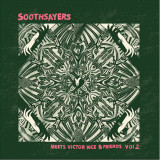
“On new album, Brixton’s dub/jazz/Afrobeat stalwarts Soothsayers offer 11 emotive instrumentals, their sonic textures afforded greater depth through the input of some of São Paulo’s finest musicians, including Criolo’s drummer, Bruno Buarque, and renowned guitarist/soundtrack composer Joao Erbetta of production team Capitão Monga. Led by the distinctive melodies of saxophonist Idris Rahman and trumpeter Robin Hopcraft, and supported by various colleagues in the UK and Brazil, the instrumentally-charged music is balm for the soul in these challenging times and the absence of vocal distractions allow the listener to fully absorb the group’s superb musicianship; there are 11 hefty companion dubs too, expertly crafted by the renowned producer and dub remixer, Victor Rice, resulting in what is easily the unit’s most instrumentally compelling release to date. ........David Katz”
Wistful, quietly positive, and a little bit melancholic; ambient artist Umber is set to release kaleidoscopic new album ‘Sometimes that light, that shine, seemed like a pretty nice thing’ on 17th March 2023. Focused on melodies that engage the heart as much as the mind, the album brings his electronic influences to the fore, combining shimmering soundscapes with a throbbing pulse of movement.
Umber, the project of Nottingham based Alex Steward, has been steadily releasing sublime music since 2011. Living in a small town provides Alex with a balance between the peace of rolling green fields and the energy of community. This life on the edge of the countryside comes across in his music, which finds the verve of night life enveloped in organic textures and environments.
Wistful, quietly positive, and a little bit melancholic; ambient artist Umber is set to release kaleidoscopic new album ‘Sometimes that light, that shine, seemed like a pretty nice thing’ on 21st April 2023. Focused on melodies that engage the heart as much as the mind, the album brings his electronic influences to the fore, combining shimmering soundscapes with a throbbing pulse of movement.
Umber, the project of Nottingham based Alex Steward, has been steadily releasing sublime music since 2011. Living in a small town provides Alex with a balance between the peace of rolling green fields and the energy of community. This life on the edge of the countryside comes across in his music, which finds the verve of night life enveloped in organic textures and environments.
Alex draws from his experience as a part time palliative care giver, which has had a significant impact on this record. He says, “Through caring for elderly patients, whose time is in short supply, I have discovered that life needs to be celebrated. Even if it’s just playing a game of Scrabble or the way that the shadows of trees dance on a living room wall on a sunny day; there is beauty everywhere. Sometimes we just need to slow down and look a little harder.”
The evocative track titles stem from phrases Alex has heard or read, with the album’s title taken from Stephen King’s book The Shining. They range from the literal (‘It Is Going To Be Ok’, ‘The Last Perfect Day’) to the oblique (‘Hologram Shut Stability’, ‘Sun House Chant’), bestowing the everydayness of fleeting inputs and thought processes to more conscious mantras.
“I feel that my music taps into a part of who we all are”, says Alex. “I try to create music that will emotionally resonate with the listener. Ultimately the album is about finding hope in the smallest actions, something that can often be overlooked or discarded in a world that doesn’t always make a lot of sense.”
Umber’s ‘Sometimes that light, that shine, seemed like a pretty nice thing’ is set to be released on vinyl and digital formats via California-based label Subtempo on 17th March 2023.
Repress!
Using an old door, 17 strings, chopsticks and combining them with phasers, echo units and amplification, the new device was to become his signature sound, mixing Irish folk influences with Asian and North African sounds in a mesmerising and soulful new way that brought him to the attention of the leading improvisers of his day - Alice Coltrane, Ravi Shankar, Don Cherry and more.
A logical follow up to AllChival's recent reissue of Stano's debut LP, Michael O'Shea's self titled LP was originally released on Wire's Dome Imprint in 1982.
The background to the album is as interesting and inspiring as the artist who created it - born in Northern Ireland but raised in the Republic, O'Shea was keen to travel and escape the troubles of his home.
Wandering throughout Europe and the Middle East, O'Shea found himself living and working as a relief aid in Bangladesh in the mid Seventies where he learned to play sitar while recovering from a bout of hepatitis. A later period spent busking in France accompanied on zelochord by Algerian musician Kris Hosylan Harp led to O'Shea's idea of combining both instruments as a homebuilt instrument - Mo Chara (Irish for "My Friend").
He later described the process on the back of the LP himself saying:
"Having sold my sitar in Germany and being desperate for money to travel to Turkey, I conceived of the idea of combining both sitar and zelochord. The first Mo Cara was born, taken from the middle of a door, which was rescued from a skip in Munchen"
A combination of dulcimer, zelochord and sitar, O Shea would play it with a pair of chopsticks, striking the strings softly using Irish folk rhythms mixed with the rich, nostalgic sounds of of the many Asian artists he'd encountered on his travels.
It was a pan cultural sound standing at an unusual crossroads of folk, traditional, rock, progressive, jazz, electronic and post-punk worlds without hesitation.
Perfecting the instrument on the streets, there were further spells spent busking in the underground stations and cafes of London's West End and Covent Garden during the heady days of the 1970s when they were full of eccentric street entertainers, jazz improvisers and musical pioneers.
His work with Rick Wakeman never saw the light of day but O'Shea's contact with the world of post-punk London ensured his name would live on.
Introduced to Wire's Bruce Gilbert and Graham Lewis via cartoonist Tom Johnston, O'Shea eventually acquiesced to an open invite to record at their studio. Turning up unannounced in the summer of 1981 the LP was recorded in a day in the legendary Blackwing Studios and released on Dome the year after.
The first side features the fifteen minute masterpiece "No Journeys End" with the B side featuring more input from Wire in processing the Mo Chara sound.
Lewis himself said years later of the forgotten masterpiece: 'I always said it was the best job we ever did.'
After an aborted LP with The The's Matt Johnson the following year, O'Shea quietly disappeared from the formal recording world and his brief but unique contribution to the music world came to a sad end in 1991 when O'Shea was struck by a post van and died a few days later in hospital in London.
This repress on All City's AllChival imprint has been remastered and reissued with the approval of both Dome and his surviving siblings.
Sepia returns to Infernal Sounds for his 4th outing on the imprint and on this occasion he unveils a 4-track EP featuring both Rider Shafique and Ickle. Spanning all the way back to 002 on the label with 'Remember', Sepia provided some of the rawest music he'd provided the label, whereas this new batch of tunes arguably showcase his progression and evolution of sound.
The title track 'Time Stands Still' is a perfect example of this, using the off-beat and beautifully floaty mainframe to allow Rider Shafique to ride perfectly between the space, and stylishly provide his trademark storytelling. 'Gatekeeper' on the other hand is the stripped back, tough Sepia sound we know and love, giving you the grit right between your teeth. 'Whispers' swirls into a different vibe, cross threading dubbed out vibes with the added input from Bristol's Ickle. 'Trust' is the final track and a perfectly solemn note to finish the EP on, divisely placing drum pads amongst dripping atmospheres and voice snips. The EP is finished off elegantly with full sleeve artwork from Lewis Optics.
Calisthenics is the first album by Institute for Certified Nomadic Illicit Sonic Practices (ICNISP), the Berlin-based duo of Brazilian musicians Marina Cyrino (flute) and Matthias Koole (el.guitar).
With a mixture of electronic and acoustic sound sources, objects and preparations, inside amplification and no-input mixing, the duo leads guitar and flute towards a common hybrid terrain. Sound perspectives are shifted, instrumental identities are displaced. The piccolo can function as a noise generator and a percussion instrument, the guitar can sound like a bird, the alto flute can be played by an external balloon that moans. Partly inspired by drawings of the Handbook of Calisthenics and Gymnastics: A Complete Drill- book with Music to Accompany the Exercises by J. Watson, first published in 1864, ICNISP came up with a series of musical exercises to stay healthy and fit during the several lockdowns over the past few years. In a playful way, the title Calisthenics also translates an agitation present in many of the duo's energetic playing modes.
On Side A, Calisthenics comprises 7 tracks - or exercises - of different lengths, with a focus on specific instrumental materials or preparations. Side B consists of one track in which a larger form unfurls, with elements of the exercises concatenated into a Full Arch.
No cuts or overdubs.
Marina Cyrino - Amplified Piccolo and Alto Flute.
Matthias Koole - Electric Guitar.
Recorded and mixed by Rabih Beaini at Morphine Raum in Berlin.
Mastered by Paulo Dantas in Rio de Janeiro.
Cover art by Sara Lambranho.
Nat Birchall continues apace with his “one-semble” recording projects, this album being the fourth one to feature only Nat himself playing all the instruments.
The Infinite presents seven original compositions loosely based around various mystical aspects of the universe.
The recording demonstrates Nat’s belief in the music having its own life outside of any human input, and also that it has its own laws and innate sense of balance and form, as does the universe itself. As the ancient saying goes - as above, so below.
The track Kalaparusha Arha Difda is named for the late, great tenor saxophonist who Nat considers to be one of the deepest and most Spiritual musicians that have had an influence on him.
I Tried Words began with words, mostly words. Moriah Bailey laid the lyrics out on several pages. The words were crafted over many months with feedback from Bailey’s sister and input from the growing melodies and body of music that began to take shape around those words. The contributing musicians, Sarah Reid (violin), Ryan Robinson (percussion), and Ricky Tutaan (guitar), recorded their own parts and sent them to Bailey. The result is lush, intricate arrangements that complement a solid base of harp and vocals. The album explores dualities: yes/no, future/past, darkness/light, giving/taking, masculinity / femininity, wants/needs. It is in part about Moriah Bailey’s struggle to learn healthy boundaries but also about the harmfulness, complexity, and entanglement of many social boundaries. With I Tried Words, Bailey relies less on experimental sounds, and instead, lyrically focuses on her struggles to understand and make sense of definitions and expectations of femininity. It explores these themes through an intimate narrative of losing oneself in a relationship and struggling to find a way out of the relationship. The album ends with a triumphant goodbye and joyous new beginning in “Not Staying”. She sings: “I contorted my body and stretched myself thin to form a bridge between now and when. So, as I'm gathering my strength to say goodbye, please quit saying I should've tried
With its name indicative of the music's boundary-testing diversity and Southwestern inspiration, On the Border finds the Eagles leaving everything on the table and embracing a harder edge that takes the band out of more relaxed territory and establishes it as a group that knows how – and wants – to rock. Glenn Frey, Don Henley, new member Don Felder, and company immediately announce their intent on the defiant album-opening hit "Already Gone" and never look back, crafting a gem of a record that from start to finish is arguably their most consistent and balanced effort.
Limited to 10,000 numbered copies, pressed on dead-quiet MoFi SuperVinyl at RTI, and mastered from the original analogue master tapes, Mobile Fidelity's ultra-hi-fi UltraDisc One-Step 180g 45RPM 2LP collector's edition pays tribute to the record's significance and enhances the experience for generations to come. Playing with reference sonics that elevate an effort revered by audiophiles, it provides a lively, dynamic, transparent, and intimate view of a release whose contemporary importance continues to grow. The opportunity to zero in on the particulars of the Eagles' golden harmonies, distinct vocal timbres, and cohesive interplay has never been better.
Visually, the premium packaging and gorgeous presentation of the UD1S On the Border pressing befit its select status. Housed in a deluxe box, it features special foil-stamped jackets and faithful-to-the-original graphics that illuminate the splendor of the recording. No expense has been spared. From every angle, this UD1S reissue exists as a curatorial artefact meant to be preserved, touched, and examined. It is made for discerning listeners that prize sound quality and production, and who desire to fully immerse themselves in the art – and everything involved with the album, from the iconic Navajo cover painting to the meticulous finishes.
And with On the Border, there's plenty to take in and soak up. Declared by famed critic Robert Christgau as "the Eagles' best album," the 1974 set claims a rich backstory. Initially recorded amid tumultuous sessions with producer Glyn Johns in London shortly after the release of the group's sophomore Desperado set, On the Border took a new turn after the band elected to scrap most of the prior work, return to its native California, and team with producer Bill Szymczyk to give the material less of a smooth, polished sheen and more toughness. Szymczyk also afforded the Eagles more input and freedom in the arrangements, and suggested adding another guitarist to play on "Good Day in Hell." Felder got the call, and so won over the Eagles with his skills, he quickly became the fifth member of the band.
While the late-arriving Felder only plays on one other album cut, "Already Gone," his mates more than prove their muster on the remainder of a double-platinum affair that established the Eagles as a force whose range transcended the calmer country-leaning style it perfected on their first two LPs. Primarily written by Jackson Browne and shelved during the Desperado sessions due to its higher-energy nature, the throttle-twisting "James Dean" ricochets with barbed riffs and rebellious swagger. Listen without limits to how Szymczyk's raw production stamps the song with a leather-and-jeans cool befitting its protagonist. Similarly rugged, the slide-guitar-fueled "Good Day in Hell" boasts its own mean streak. And the funk-laced, boot-stomping title track cautions "don't you tell me 'bout your law and order." Throughout On the Border, the Eagles are in no mood to mess around.
Not that the band skirts sentimental territory. On one of the era's finest covers, the Eagles nail the bittersweet feelings and bring high-definition detail to the vivid scenery of Tom Waits' "Ol' '55," a song the group makes its own. The rustic ballad "My Man" serves as a tribute to the recently deceased Gram Parsons, with singer-guitarist Bernie Leadon taking the lead on the microphone as he pours his heart out to his former Flying Burrito Brothers mate. And when it comes to romance, is it possible to top "Best of My Love"? Graced with Henley's honey-dipped vocals, refined wordless group harmonies, brushed drums, and the gentle strum of acoustic guitars, the Johns-produced cut soared to Number One and set the stage for what would soon be the Eagles' reality: global dominance.
More About Mobile Fidelity UltraDisc One-Step and Why It Is Superior
Instead of utilizing the industry-standard three-step lacquer process, Mobile Fidelity Sound Lab's new UltraDisc One-Step (UD1S) uses only one step, bypassing two processes of generational loss. While three-step processing is designed for optimum yield and efficiency, UD1S is created for the ultimate in sound quality. Just as Mobile Fidelity pioneered the UHQR (Ultra High-Quality Record) with JVC in the 1980s, UD1S again represents another state-of-the-art advance in the record-manufacturing process. MFSL engineers begin with the original master recordings, painstakingly transfer them to DSD 256, and meticulously cut a set of lacquers. These lacquers are used to create a very fragile, pristine UD1S stamper called a "convert." Delicate "converts" are then formed into the actual record stampers, producing a final product that literally and figuratively brings you closer to the music. By skipping the additional steps of pulling another positive and an additional negative, as done in the three-step process used in standard pressings, UD1S produces a final LP with the lowest noise floor possible today. The removal of the additional two steps of generational loss in the plating process reveals tremendous amounts of extra musical detail and dynamics, which are otherwise lost due to the standard copying process. The exclusive nature of these very limited pressings guarantees that every UD1S pressing serves as an immaculate replica of the lacquer sourced directly from the original master recording. Every conceivable aspect of vinyl production is optimized to produce the most perfect record album available today.
Debut album by Dutch producer w1b0, who passed away in August, to be released in November on U-TRAX.
Wibo Lammerts' sudden death on August 15thshocked the worldwide electro community, and also left the record label, that had been working on the debut album with the artist known as w1b0 for the past two years, dumbfounded and in grief.
Wibo had jokingly always called his upcoming debut album 'his legacy', which now sadly has become a painful truth. With the support of Wibo's family, U-TRAX is now doing the only thing that doesn't feel totally wrong: proceed as planned, and release 'When Humans Ruled The Earth' on November 11.
W1b0 made quite a name for himself with heavy electro tracks that he released on labels like Bass Agenda, Hilltown Disco and Discos Antónicos. Standing at 202 meters, and combined with a cheerful character, most people remember him as the gentle giant of electro.
For this album, Wibo wanted to steer away from the dark and heavy electro he mostly made until then. The idea of having a platform to create delicate electronic music in different styles, and make it a showcase of his versatility, was very appealing to him. And that is where he and U-TRAX found each other.
The full-length album (over 75 minutes on cd and digital) comes after 'The Pilex Program EP', released in October, that featured a remix by Detroit's Ectomorph of 'Pilex Driver' and saw 'Program Yourself To Feel' remixed by a well-known Dutch producer that recently created the new 'techno alias' Human Form.
As usual with U-TRAX, the album comes in three different editions, with the 11-track double vinyl version containing the Ectomorph and Human Form remixes. The CD and digital version boast original versions only, plus four additional tracks: 'Alternate Reality Interface', 'Mixed Matter Fluctator', 'Synthetic', and 'In There'. The cassette version more or less has the same track list as the CD/digi version, but has both aforementioned remixes and a bonus track in the incredibly hypnotizing 'I Wanted You', a track that unfortunately couldn't be on the CD and vinyl versions.
Buyers of the physical releases get treated on superior quality products, another trademark of U-TRAX. The vinyl edition boasts over one hour of music, on two 180 grams, green vinyl discs, in a black & white & neon green gatefold sleeve. The eye-catching artwork is created by Utrecht artist Leffe Goldstein, known amongst others for his psychedelic beer can designs for Utrecht brewery Maximus. Wibo, being the beer lover he was, had zero doubts about having Leffe Goldstein do the cover for his album. The CD has a total playing time of 75 minutes and comes in a beautiful 6-panel digipack, while the cassette will have full-color on-body print and comes in a plastic-free Maltese cross fold-up sleeve.
Opener 'Acid Whip' is one of the oldest compositions on this album, in which a dark 303 bassline hums over layers of spacey strings. Wibo named it after the legendary Whip It party in Amsterdam's De Melkweg. 'Alternate Reality Interface' then presents bouncy rhythms toying around with all sorts of analog (bass) synthesizers, before we go really deep with the epic ambient techno track 'Wandering Souls'.
Then things get a little lighter spirited: 'Mixed Matter Fluctator' is an electro track that builds on sounds created by Matt Buggins. It has very strong Detroit influences, the city Wibo loved so much and that he made a pilgrimage to with a group of friends that called themselves 'The Techno Tourists'. The tempo goes up a notch in 'Program Yourself To Feel', that halfway opens up in wide science fiction strings that evoke memories of Star Wars, the movie series that Wibo was a great fan of, and that was the source of many of his tracks' names. The Human Form remix opens the vinyl edition of this album and is a downright belter of a track.
Next is a somewhat experimental intermezzo named 'Synthetic'. Erratic beats and pounding bassdrums get accompanied by very subtle eerie-sounding strings, before melancholic synthesizers and piano chords take over. This is an excellent prelude to the epic 'Hologram Computing', a track that is one of our favorites. It slowly and softly builds and builds, before a pounding bassdrum breaks loose and a hypnotic arpeggio takes you to higher planes.
Not ready to letting the listener relax, w1bo then serves 'Beilstein Reference', which again presents his trademark cocktail of down-to-earth electro rhythms and catchy melodies, covered in all sort of little sounds and noises, giving the song a lot of energy. What follows is 'Hit me', a track loosely based on a song by Dutch indie rock band Mr. Joe Abe. Wibo met the band's singer on a camping site while being on holidays and the two decided Wibo should do a remix of one of their songs. Nothing was left of the original except the vocals, and the result is a remarkable cheerful, poppy electro song.
'Anticipated Input' is one of the more recent tracks Wibo made for this album, combining electro, acid and, yes: epic strings. But not all is peace and quiet on this album, as 'Pilex Driver' shows. This is w1b0 going experimental in a danceable fashion: Industrial sounds make the track sound like we're passing a construction site that is playing loud electro music. On the vinyl version of this album, Ectomorph totally decomposed the original and made it into a mysterious, almost subdued, and totally brilliant electro track that sees a main role for the retro Roland CR drum machines sounds.
TFHats, Wibo's fellow member of the Transhumanism collective, added lyrics to 'Cartesian Coordinates'. His vocals add a pleasant New Wave flavor to this song, that has breaks that remarkably reminds one of Nirvana's 'Smells Like Teen Spirit'. What follows is the most personal track on this album. 'Fornan' is a song that Wibo made for his wife Nanette, and was added as the last piece of the puzzle that creating an album is. The warm Detroit techno atmosphere in this electro song couldn't be a more beautiful tribute to his love, and mother of their two young boys.
The album then takes a surprising detour through a 1980s landscape with 'In There', that features the Joy Division-esque vocals of another one of Wibo's friends, indicated only as Vincent. The super slow and gloomy track is a treat for anyone that loved the darker side of New Wave. The album has a worthy closer in the sensitive, yet playful 'Schlegel Diagram'.
h 08: Hit Me (w1b0's Slugfest Assault Dub) feat. Mr Joe Abe
- 1: A Plague Tale Requiem
- 1: 2 Beautiful Morning
- 1: 3 Hide And Seek
- 1: 4 The Dream
- 1: 5 No Turning Back
- 1: 6 The Friendly Lucas
- 1: 7 Arnaud's Men
- 1: 8 The Men After Me
- 1: 9 The Rage Within
- 1: 0 Unwilling Violence
- 1: The Rats And Hugok
- 1: 2 Reunion
- 1: 3 A New Foe
- 1: 4 A Wreck
- 1: 5 Along Togtherk
- 1: 6 Siblings
- 1: 7 Fragile
- 1: 8 The Wall
- 2: 1 The Storm
- 2: The Island
- 2: 3 L'efant Divin
- 2: 4 L'efant
- 2: 5 The Spirit Of The Island
- 2: 6 Heavy Heart
- 2: 7 The Truth
- 2: 8 La Nuit
- 2: 9 The Count
- 2: 10 The Duel
- 2: 11 A Knight
- 2: 1 At Peace
- 2: 13 Love And Friendship
- 2: 14 La Haut
- 2: 15 Brother
- 2: 16 Ma Belle Lune
Black Screen Records has once again teamed up with Focus
Entertainment to release the soundtrack to A Plague Tale:
Requiem - the sequel to the award-winning adventure game A
Plague Tale: Innocence - by IFMCA award-winning and BAFTA
nominated composer Olivier Derivière on 180g double vinyl and
CD. After signing the soundtrack for A Plague Tale: Innocence,
Olivier Derivière is back to enrich the intense emotional journey
of A Plague Tale: Requiem with his poignant compositions.
Olivier Derivière is a passionate video games composer and an
international star in the field, who won multiple awards and a
nomination for the 2017 BAFTA. His degree of implication is rare
among video games composers, putting the gameplay at the
center of his considerations and even influencing the
development through his input. The compositions also feature
the cellist Eric-Maria Couturier, and the Estonian Philharmonic
Chamber Choir. Eric-Maria Couturier is a distinguished member
of the Ensemble intercontemporain, a contemporary music
ensemble founded by Pierre Boulez, whom Eric-Maria Couturier
collaborated with among other eminent modern music icons.
The two-time Grammy Award-winning Estonian Philharmonic
Chamber Choir is one of the best-known Estonian ensembles in
the world. With a repertoire that extends from Gregorian chant
to contemporary music, it le
Green Vinyl
Föllakzoid are nearly unparalleled in the hypnotic lysergic drenched neo-psychedelic experience. On their debut it is mostly a rather bulky one, determined by the downright dirty, distorted electric guitar, which is also usually accompanied by a spacey, howling and herbaceous howling one. In addition, there is fat bass and powerful drums. During the prolific post-napster musical era dominated by myspace, the Chilean musical field opened up so that many bands could broaden their creative spectrum by taking global and timeless references as an aesthetic holy grail. This experimentation had the internet and specialized forums as a search engine, which not only provided the world parameters in trends, but also allowed to find true hidden gems, bands that were adored by a few connoisseurs of the real quality left behind by the record labels. In this context, a group of university students who have known each other from school began to rehearse in the Caracol Vip underground (Santiago, Chile), in a room owned by a local heavy-metal legend, Juanzer. Equipped with tube amplifiers, Marshall and other custom made, the members of that time: Gonzalo Laguna on vocals, Juan Pablo Rodriguez on bass, Domingo García-Huidobro on guitar, Diego Lorca on drums and Francisco Zenteno on second guitar, they began to play endless jams without a strict sense of songs or directed compositional notion. The rule was to follow the noise in a journey through valleys and peaks that allowed the spontaneous appearance of textures, lyrics, phrases and some invented chords that did not resemble anything that had been heard at that time. The rehearsals were transformed into true live performances without an audience, which were only seen by a few curious, among alcohol, smoke and deafening noise, which could only end when the owner of the room (Juanzer) entered to turn off the equipment. Over time he himself stayed as an auditor, witnessing how the musicians stripped themselves in their rehearsals. Considered at that time as play or fun, the idea of forming a band with a name came with the real live performances to which they were invited, without yet having songs made, at the end of 2006. The myth of their first live performance alludes to a numerical superstition, on July 7, 2007, in a small bar in Providencia (Santiago), which also provided the band with an upward recognition for the psychedelic-punk music they were doing, with a voracious vocalist who destroyed everything on stage and a band that stood firm on the endless songs they built. The name that was invented for that occasion was the result of a nonsense about the German word feuerzeug brought to the group by their close friend Alfredo Thiermann (who would later make the cover of the first album and become keyboardist), which the members of that time took and Spanishized at will. This neologism represents the second founding myth of the band since the interest in bands like Can, Neu! and AMON DUUL II and the characteristic motorik rhythm would soon arrive, in the form of kosmische musik. By 2008 the band had already added several live performances and some songs appeared, among which were Directo al Sol and Loop (nod to the English band), which allowed a greater deployment of ambient-noise resources, almost close to the 'concrete' music. The deconstructed rock of Spacemen 3 was also present in the form of repeated sequences on the bass and drums, as the layers of shrill guitars formed the foam of the tide bursting in the darkness of space. With the ideas and general feeling of the sound that they already had, the band made the decision to record their first album with the sound engineer and Juan Pablo's brother, Ignacio 'Nes' Rodríguez, who later together with JP would form the BYM label to make the first CDs of the forthcoming debut of Föllakzoid and other bands that Nes was recording. Sheltered that winter in the studio that Nes had built in an old house in Recoleta, the band recorded the bulk of the songs on the album with a new jam that emerged in that room composed of 1 note and moments of rising intensity: Sky Input I and II appeared to complete a set of songs that came from rock but were slowly passing to a level of trance and cacophony typical of orchestrated and atonal music. With three takes per song but only one take of the jam, the album was finished with a few extra takes and overdubs, some made in the house of Nes himself, who contributed a guitar to Loop, although it does not appear in the credits, and additional takes of "Pelao" Zenteno with delay and reverse for almost all songs. The names of the songs came from the lyrics that Laguna had worked from the live versions to the studio finals, except for Loop, Sky Input and El Humo. The cover of the album, which as mentioned was made by Thiermann, represents well the spirit of those days, when creative magma looked for an outlet through the instruments without any restriction or explicit direction from any of the members of the group. The image of the tree towards the sky speaks of the roots that rise towards the immensity, the nature projected towards the stratosphere. Ideas that the neo-psychedelia of those years seemed to capture well, echoing in the Chilean bands that at that time were gathering around the BYM label. Both the creative fluency and the lack of a musical director ensured that Föllakzoid was an original band that did not impose themselves a way of doing things or sounding, collective music took shape in the most wonderful way, without characters, without a record name, without faces. Just an instant in space. 2022 GALAXY GREEN coloured vinyl
The Don Killuminati: The 7 Day Theory (commonly shortened to Makaveli) is the fifth studio album by Tupac Shakur, his first posthumous record and the last released with his creative input. Recorded in seven days in August 1996, it was released on 5th November, 1996, almost two months after his death, under the stage name of Makaveli, through Death Row Records, Makaveli Records and Interscope Records.
The Don Killuminati: The 7 Day Theory debuted at number one. It is his only album released under the new alternative stage name and features guest appearances from his rap group Outlawz and rapper Bad Azz, as well as R&B singers Aaron Hall, Danny Boy, K-Ci and JoJo, Val Young and Tyrone Wrice, along with uncredited vocal contributions from reggae musician Prince Ital Joe.
Originally intended as an underground release and preceded by the release of “Toss It Up” as the lead single, the album peaked at number one. “To Live & Die in L.A.” and “Hail Mary” were released later as singles and both garnered praise as standout tracks from the album. All singles charted within the top twenty of the UK Singles chart.
Mando Diao is back on full effect having played all the major rock-festivals across Europe in summer 2022 including Southside and Novarock. Just before the summer-season they rolled out the first in a series of volumes with sizzling hot and high octane ROCK fresh of the studio. Vol 1 produced the radio-success "Frustration" that managed to climb all the way to No 2 at rock-radio in Germany. Now we are happy to announce Vol 2 to drop 23rd of September having parts of the band in Hamburg for an exclusive and personal 20 YEARS OF MANDO DIAO panel during Reeperbahn Festival. The lead-track "Primal Call" is a hippie-like sounding one that draws inspiration from Led Zeppelin and King Crimson, a much punkier version. No logic whatsoever in the changes throughout the track but hey, that's how the band likes it. Full of surprises. As if the producer was a total lunatic out of control. "Fire in the hall" is a short, intense song written by Björn and Jens. Once again, a blend of primitive rock'n'roll feel and electronics. For example, the drums are based on samples of Patso's drumming. The lyrics are simple and almost trivial, with a "La Vida Loca" vibe: start a great fire, for yourself and others. Most things can be solved with a cleansing dance - both in reality and in lyrics. "If you write the lyrics together with someone, it's easier to avoid becoming pretentious and over-analytical," they summarize. Finally, "Charlie", about their current producer (Charlie Storm). One of the greatest there is having worked with so many big releases (Roxette, In Flames, Hurl etc). At least partly. They were excited about him and felt that he deserved a song. Or maybe they didn't have anything else to write about. Everyone had different inputs, but it ended up being a pure rock'n'roll song. And a real banger.
“Klangstof are conducting deliciously evil experiments on indie rock.” – Clash. Klangstof recently returned to attention with the ‘Ocean View’ EP, which was one of two projects they recorded simultaneously in 2021. Its release added to the anticipation for the bigger set that was recorded at the same time, their third studio album ‘Godspeed To The Freaks’, which will be released on September 16th. The band today launch the album by sharing its lead single ‘Disguiser’. ‘Godspeed To The Freaks’ will see the Edison Award (the Dutch equivalent to the Grammy or BRITs) winning band add to the widespread tastemaker attention that has greeted their previous two albums. It’s an album which focuses on self-reflection; finding the courage to confront your inner self and being at peace with your demons. There’s a power that comes with the acceptance that every good day might have a touch of darkness to it. And in a further contrast to the electronic-orientated 2020 set ‘The Noise You Make Is Silent’, this record is focused primarily upon the warmth of its live instrumentation and the intuitive interplay between the band members. Remarkably, the bulk of ‘Godspeed To The Freaks’ was recorded in just two weeks. The trio - Koen van de Wardt, Wannes Salomé, and Erik Buschmann - were boosted by the addition of their touring guitarist Wouter Van Nienes and channelled the energy of their live show, an approach further amplified by recording in a temporary studio in De Bolder, a music venue on the tiny Dutch island of Vlieland. Klangstof essentially rehearsed, recorded and produced the core of the record themselves in that serene environment, giving them a bubble of freedom amidst a world in chaos. Any outside input only followed later, with additional mixing by Sam Petts-Davies (Radiohead, Frank Ocean) and mastering by Heba Kadry (Björk, Slowdive, Big Thief). The album campaign’s visual aesthetic features band portraits courtesy of the iconic photographer and director Anton Corbijn. His timeless photography includes shoots for R.E.M., U2 and Nick Cave, while Nirvana, Metallica and Depeche Mode lead his numerous renowned music videos. He is also a feature-length film director who is best known for the Ian Curtis / Joy Division biopic ‘Control’. Klangstof will play several European shows this summer as guests to Pixies, including Manchester’s Castlefield Bowl on July 5th. They will again link up with Pixies in December for a tour of Australia and New Zealand.
Eric Dolphy's final studio album is hailed as one of the finest examples of mid-'60s post bop. Its reputation is purely one of backwards significance. Dolphy, having recorded the album in February 1964, was in Europe less than six weeks later and his all-too-brief life ended less than two months after that. Though likely he never held a copy in his hands or heard any critical opinion of it, it marked his last flurry of original compositions and is considered his apex. It is fascinating to consider whether he would had moved past or away from the album in 1965, had he lived.
Though Dolphy should not be considered an avant-garde musician by the term's most common definitions, most interpretations of Out To Lunch have been done by players working squarely in that area. So it is with this album, the most ambitious in its recreation of the five-tune disc (with one original added to the final "Straight Up and Down, extending the piece to almost thirty minutes). All five compositions from the original quintet LP are revisited in the same order, the record sleeve even duplicates the old album jacket, down to the typeface and black-and-blue color scheme, although a photo taken by Daidō Moriyama inside Tokyo's massive (and massively busy) Shinjuku railway station replaces the Dolphy's album's enigmatic "Will Be Back" sign, whose clock hands indicated no conventional time of expected return.
Otomo Yoshihide first came to international prominence in the 1990s as the leader of the experimental rock group Ground Zero, and has since worked in a variety of contexts, ranging from free improvisation to noise, jazz, avant-garde and contemporary classical. The always surprising and sometimes confounding turntablist, sound artist, onkyo improviser and now avant jazzer heading up a 15-piece aggregation of Japanese and European experimentalists. Who better to grapple with Dolphy's legacy -- so idiosyncratic in its day and yet so influential to creative improvisers who followed -- than a musician with his own singular take on how sounds can be organized in the jazz realm over 40 years later and half a world away? In other words don't expect the conventional from Otomo any more than you would from Dolphy himself. That's not to say that recognizable themes ("Hat and Beard," "Out to Lunch," "Straight Up and Down") don't appear, or that individual players -- including Alfred Harth on bass clarinet bursting into the mix and leaping across the instrument's tonal range in a way that recalls the master himself -- don't carry forward echoes from the past in the spirit of a sincere and heartfelt homage.
However, a good deal of the time all bets are off; in addition to the usual brass, reeds, bass, and drums (and of course a bit of vibraphone, here played by Takara Kumiko in far less prominent role than that of Bobby Hutcherson) are such sonic paraphernalia as sine waves, contact mike, no-input mixing board, and, of course, "computer." (Otomo himself plays skronky electric guitar.) From composition to composition and even during episodes within compositions, the band takes radically different approaches. There are blasts of free jazz energy not too far removed from the Peter Brötzmann Tentet, an impression reinforced by the presence of spluttering wildman Mats Gustafsson on baritone sax. Not surprisingly and often in contrast with the Dolphy original, the music is dense and filled to overflowing with sounds -- sometimes due to fundamental reworkings in structure rather than just the larger size of the ensemble. The middle section of "Something Sweet, Something Tender" somewhat belies the original's title with elongated howls and cries from the horns over slo-mo bass, drums, and electronic noise poised somewhere between dirge and drone, and the sudden explosion of punk-ish rock energy in the following "Gazzelloni" is a startling contrast.
At times, the feeling is that of listening to the original Out To Lunch while a séance is going on to contact Dolphy's ghost, with supernatural sounds swirling around the stereo. The effect is disconcerting, as is the post-apocalyptic cloud hanging over the arrangements, but it makes the effort more than an unnecessary tribute album. Instead, Dolphy is transported into the 21st Century and allowed to romp through modern developments in music. An inspiring concept and an album that will stretch the boundaries of anyone who comes into contact with it.
Dies ist das wichtige zweite Album von DARKANE. Nach dem Debütalbum "Rusted Angel", bei dem DARKANE noch nicht wussten, wie sie klingen wollten, hatten sie dieses Mal einen Stil zu entwickeln.
Christofer sagte 2001 in einem Interview: "Ich mag es, Musik zu schreiben, die aus technischen, brutalen Teilen besteht, die sich zu einem eingängigeren Refrain auflöst, bei dem man sich von all dem schwierigen Input erholen kann".
DARKANE wollten, dass "Insanity" schneller und melodischer wird, einfach mehr von allem im Vergleich zu "Rusted Angel". Diesmal luden sie auch einen größeren Chor und ein Orchester ein, um das Intro ("Calamitas") aufzunehmen, das auch als Intro für kommende Live-Shows dienen sollte. Lawrence Mackrory hatte DARKANE nach den Aufnahmen zu "Rusted Angel" und vier Liveshows verlassen, und sein Platz wurde von Andreas Sydow eingenommen. Nach fünf intensiven Aufnahmewochen bei Dug Out Productions in Uppsala, Schweden, wiederum mit dem Produzenten Daniel Bergstrand, war das Album endlich fertig.
In der letzten Nacht im Studio schlug ein Blitz in das Studio ein und zerstörte das Mischpult. Das war der Zeitpunkt, an dem DARKANE beschlossen, das Album "Insanity" zu nennen.
Nach der Veröffentlichung von "Insanity" spielten DARKANE unter anderem ihren allerersten US-Auftritt auf dem Milwaukee Metal Fest XV.
- 1: Can I Sing With You? Ft. Sidi I.b
- 2: No Hay Pescado Ft. Sidi I.b., El Latigazo & Mame Samba
- 3: Neuron Landfill (Vertedero De Nueronas)
- 4: Smelk
- 5: The Light Mandem Forward Ft. Kiki Hitomi W/ Javier Afonso
- 6: Guidance & Healing Ft. Mame Samba
- 7: Monsanto Ft. Troy Harkin*
- 8: Mike Input At Loud Speakers Corner*
- 9: Bus Meter Ft. Zeeteah & Sidi I.b
- 10: Assuage No.9 Ft. Zeeteah
Helmed by Dave Watts aka D.WattsRiot (Fun-da-mental), the debut KingL Man album, ‘Headonix’ is beat-laden shout out in response to the perpetual state of war we seem to find ourselves at. Outrage and disgust, love and hate, history and presence.
Contributions come from four continents.
Fresh on the scene is Senegalese vocalist Sidi I.B., who arrived on Canarian shores with two hundred other compatriots, cold, wet and hungry after seven days at sea with nothing but his future in his hands.
Temporarily housed at the infamous migrant holding centre in Las Raíces, Tenerife, the studio environment provided an avenue of relief from the inadequate conditions at the overcrowded camp.
Also from Senegal, living in Santa Cruz de Tenerife, is rapper Ibrahima El Latigazo who delivers his lyrics in French, Wolof, Spanish, English & Sérère. Rounding up the Senegalese contingent is Mame Samba, a group that hold the spirits close when performing. Their contribution is from recording sessions they had with François R. Cambuzat & Gianna Greco (Putan Club / Ifriqiyya Electrique).
Kiki Hitomi (Waq Waq Kingdom/King Midas Sound) returns to the fold, exhaling positivity with Canarian multi-instrumentalist Javier Afonso (Grenouille). The Canarian faction also includes violinist Mónica Viñoly, Dani Garcia (Lagoss/Tupperwear) and Vakawuare. Further guests include percussionist Miroca Paris (Cesária Évora/Madonna); Hamid Mantu (TransGlobal Underground);
Ramjac (Dub Colossus), drums and percussion respectively.
Coke Bottle Clear Vinyl[21,22 €]
Ecomix Random Colour Vinyl[21,22 €]
Cassette[21,22 €]
Nika Roza Danilova, die Sängerin, Songwriterin und Produzentin, die seit 2009 unter ihrem Künstlernamen ZOLA JESUS veröffentlicht, hat eine Stimme, die die Faszien der Realität durchschneidet und den rohen Nerv der Erfahrung trifft. Auf früheren Alben hat ZOLA JESUS weitgehend die Rolle der Autorin und Alleinherrscherin gespielt und jeden Aspekt des Sounds und des Aussehens ihres Projekts akribisch für sich ausgearbeitet. Diesmal erkannte sie jedoch, dass ihr gewohntes Bedürfnis nach Kontrolle sie von ihrer Kunst abschnitt. Als die Frustration darüber, dass sie nicht in der Lage war, etwas zu erschaffen, unerträglich wurde, bat sie zum ersten Mal in der Geschichte von ZOLA JESUS um externen Input. "At some point, I had to work with other people. I needed new blood. I needed somebody else." Sie schickte ihre Demos an den Produzenten Randall Dunn, der für seine Arbeit mit Sunn O))) und an Johann Johannssons Filmmusik für "Mandy" bekannt geworden ist. Außerdem begann sie, mit dem Schlagzeuger und Perkussionisten Matt Chamberlain zusammenzuarbeiten, der bereits an Alben von FIONA APPLE, BOB DYLAN und DAVID BOWIE mitgewirkt hat. In ihrem kreativen Prozess begann Danilova, eine Beziehung mit dem Unbekannten aufzubauen...