Heavenly Recordings announce the debut solo album from
acclaimed Bay Area multi-instrumentalist, producer and
composer Dougie Stu.
Dougie grew up outside of Chicago and his early education
began in jazz clubs and festivals as a teenager - frequenting
sessions with Jeff Parker, Fred Anderson, Nicole Mitchell and
other members of the AACM. Left exceedingly inspired, he
continued on to the University of Michigan, studying bass
under Detroit jazz royalty Robert Hurst and Geri Allen, where
he deepened his practice in Jazz and Contemplative
Studies.
Now, based out of Oakland and Los Angeles, Stuart
collaborates within many Jazz, Hip-Hop, and Experimental
music scenes. His works include compositions for the NPR
podcast Snap Judgement, along with co-writes and
production with various groups including: Brijean, Bells Atlas,
Meernaa, Luke Temple and Jay Stone.
Dougie Stu’s ‘Familiar Future’ is a uniquely jazz-attuned
album that is soulful and ethereal. It draws inspiration from
artists and producers like Lonnie Liston Smith, Charles
Stepney, David Axelrod and Alice Coltrane. Stuart has
arrived at a sound that harkens back to the golden era of
soul jazz and R&B, while still sounding contemporary.
The band feature the immediately recognizable guitar
stylings of Jeff Parker (Tortoise), who was one of Stuart’s
biggest influences growing up in Chicago, Maya Kronfeld
(Georgia Anne Muldrow, NYEUSI) on Fender Rhodes, Steve
Blum (Bells Atlas) on synthesizer, percussionists Brijean
Murphy (Toro Y Moi, Poolside), John Santos (Tito Puente,
Dizzy Gillespie) and drummer Hamir Atwal (tune-yards).
Special guests include Marcus Stephans on flute, Shaina
Evoniuk on violin and Crystal Pascucci on cello. The album
was engineered and mixed by Rob Shelton at Tiny
Telephone and he also appears on synthesizer on one song.
Search:inspired
'New limited 12” from XCPT posse coming under label headz new alias: Sativa Club. Three tracks exploring a wide spectrum of jungle inspired club music.
Phonato Riddim spreads instantly a bulging bag of breaks merged harmonically with heavyweight drum patterns, room quaking subs, and synapse bending vocal samples emerging forcefully from hazy soundscapes. Sound of Silence opens the flip side in a beatless smoky environment where blurry hypnotic frequencies quickly get squashed in a rolling drum break. Finally, the 176 bpm full-throttle payoff of Amen Drake: slabs of processed amens, paradroid percussions, gently layered synth lines and fucked up wet-dream vocals.
Hypnotic dubwise galore on both sides.'
Those who pay close attention to DJ Harvey’s sets should already be familiar with NuNorthern Soul’s next single, a fully licensed reissue of a sought-after 1980 promotional seven-inch from legendary Spanish Flamenco singer Manuel Mancheño Peña, better known as El Turronero (‘The Nougat’).
Both ‘Las Penas’ and ‘Si Yo Volviera A Nacer’ have long been secret weapons in the sets of dusty-fingered Balearic DJs, with Harvey regularly dropping the tracks during his sessions at Pikes Hotel on the White Isle.
Both tracks first appeared on Pena’s 1980 album New Hondo, a set that updated the then veteran Flamenco artist’s sound for the disco era. Whereas most of his previous albums were more traditional Flamenco affairs, New Hondo combined his throaty, effervescent Flamenco singing style with the driving grooves, swooping orchestration and spacey synthesizer sounds of European disco.
To promote the album, Spanish label DB Belter pressed up a promotional “45” featuring two of the most club-friendly cuts on the album. It’s this release that is being reissued for the very first time by NuNorthern Soul.
A-side ‘Las Penas’ is undoubtedly an off-kilter, late-night disco classic. Built around a flanged, action-packed disco-funk bassline, metronomic beats. soaring and layered female backing vocals, intergalactic synth sounds and stirring strings, the track steps up a level when ‘El Turronero’ takes to the microphone to belt out an infectious, energetic vocal in his trademark Flamenco style. It’s the kind of cut that’s as haunting and intoxicating as it is funky and floor friendly.
Flipside ‘Si You Volviera A Nacer’, another of New Hendo’s most sought-after tracks, is another unique and righteous concoction. Looser, groovier and warmer in tone, it sees another sublime, Flamenco style lead vocal from Pena accompanied by even funkier bass, spiralling ’70s synthesizer sounds, sweaty drums and some seriously exotic instrumental flourishes (think sitar and kalimba). It’s every bit as alluring as the more driving A-side, and equally as playable.
Both tracks may be unusual in comparison to the artist’s other releases, but they expertly capture a moment in time, when disco dominated dancefloors all over the world and inspired even the most traditional and historic of European musical styles. Quite a number of flamenco-disco records were made in Spain during the late ’70s and early ’80s, but very few are quite as magical as these.
BUILDINGS was born out of a creative merger between Detroit’s 313 Acid Queen (Rebecca Goldberg) and Italian maestro Sickboy (Stefano Piseddu), their 4th and 2nd releases on Detroit Underground respectively. The duo have thoughtfully arranged a half dozen tracks inspired figuratively and literally by the landscape of Detroit. Working 7,000km and multiple time zones apart, having never met in person, their individual expressions intertwine in soundscapes reminiscent of techno’s origin and exist in a way only capable in our present time. Devoted as ever to the roots of Detroit techno, Goldberg and Piseddu have built a magnificent album around the Detroit Map Series theme conceptualized by DU label founder Kero and designed by Neubau Berlin.
Opener GUARDIAN pays homage to Detroit’s Art Deco landmark skyscraper exploring rigid textures and a mosaic of tones reflective of the building’s diverse composition.
STRUCTURE escalates through synth leads and drum breaks ascending into a powerful high-rise track.
MCS carves through an array of percussion and crooning acid as you might imagine the sounds of Detroit’s former train depot, at one time used by thousands of passengers per day traveling to and from Detroit.
FOUNDATION’s original mix and rework get down to the literal with vocal samples calling out the project’s muse. Sickboy’s dynamic hits and 313 Acid Queen’s bubbling acid lines are truly reflective of both producers’ individuality within the collaboration.
RENAISSANCE represents a continued era of rebirth and is more literally named for the group of connected skyscrapers whose central tower stands as Detroit’s tallest building.
The Scientists’ powerful brand of deranged swamp-rock returns with
a vengeance as In the Red Records unleashes Negativity, an allnew
magnum opus featuring the first new full length album by the
Australian band’s penultimate line-up in thirty-five years.
The bruising eleven-track collection features a Scientists
configuration much beloved by connoisseurs of the band’s work:
singer-guitarist Kim Salmon, lead guitarist Tony Thewlis, and bassist
Boris Sujdovic, all veterans of the group’s defining 1981-85 outfit,
and drummer Leanne Cowie, who replaced drummer Brett Rixon on
the storming 1986 release Weird Love.
A solid crop of fresh originals is highlighted by the opening
statement of purpose “Outside”; the offbeat, yowling waltz “Naysayer”;
the hilarious, self-mocking “Suave,” which Salmon says was inspired
by the work of his countrymen the Moodists; and the utterly surprising
“Moth-Eaten Velvet,” a Velvet Underground homage in ballad form
that features a three-piece string section. Instrumental guests on the
album include producer Mumford, who contributes trombone on
“Make It Go Away,” and Salmon’s daughter Emma, who essays piano
and background vocals.
Negativity is the third Scientists release and the first fulllength
album for In the Red. The current quartet cut the single
“Braindead”/“SurvivalsKills” in 2018 and the five-song 2019 EP
9H2O SiO2, the title of which translates (in a hat tip to the lyrics of
the group’s classic “Swampland”) as Nine Parts Water, One Part Sand.
Those recordings were issued in conjunction with the group’s first two
U.S. tours during that period.
Raw, freewheeling, and spattered with the high-voltage sound, the
Scientists have drawn from such influences as the Stooges, Suicide,
the Gun Club, and the Cramps, Negativity is jubilant, unpredictable
listening.
‘Miracle’ is the new album from Manchester singer songwriter Francis Lung,
released on Memphis Industries.
“For me, ‘Miracle’ is about the struggle between my self-destructive side and my
problem-solving, constructive side,” says Francis. “I suppose through a lot of
these songs I’m dealing with these emotional problems, acknowledging the
negative aspects of my behaviour instead of burying them, and providing an
alternative point of view for myself.”
Despite its serious subject matter, ‘Miracle’ is far from austere in sound, marrying
the cinematic, dreamlike quality of Francis’s earlier music with the pared-back
charm of great singer-songwriters like Judee Sill, Jeff Tweedy and Elliott Smith.
The album opens with ‘Bad Hair Day’, a relentlessly catchy - and deceptively
upbeat - ode to hangovers and missed connections. “I’ve been calling on you all
night / But I never get through, I just get in the way” Francis laments; “I am a
cloud in the sun’s light / Whatever I do, whatever I say.”
Elsewhere, the title track finds him pondering the fickle nature of the music
industry: “I think of [‘Miracle’] as acknowledging and even encouraging the
feelings we’re not supposed to succumb to - giving up, giving in - just because it
can be comforting to hear it from someone else. ‘Why am I climbing these social
ladders and jumping through the hoops of this creative industry? Does this make
me happy?’”
These themes of longing and lacking, missing and being missed, reoccur
throughout ‘Miracle. “When I die / Will I be missed / Or am I missing the point?”
asks ‘Say So’; while ‘Lonesome No More’, inspired by the Kurt Vonnegut book of
the same name, begs the question: if loneliness was eradicated, would we miss
it?
By confronting these feelings, Francis is able to move forward, as triumphant
album closer ‘The Let Down’ proves. Its lyrics serve as a call to action, as
Francis wills himself (and the listener) to “Get up / Get something going / Do
something, do it / Do it now.”
‘Miracle’ was produced by Francis in collaboration with Brendan Williams (Dutch
Uncles, Matthew Halsall, Kiran Leonard) and Robin Koob (who co-arranged and
performed strings). The opportunity to take creative control was one Francis
relished. “I’m quite bad at delegating,” he admits, noting that he played every
instrument except strings on ‘Miracle’. The result is a cohesive, deeply personal
record, which is as vital as it is vulnerable. “I don’t want to be defined by my
anxiety, my depression or any history of substance abuse,” Francis says, “but I
do want to reach out to other people who have had similar experiences,
especially if it’s in a way that helps them feel a little better. To me, this music is
celebrating healing as much as it focuses on the darker sides of the human
psyche.”
Germany’s Tilman inaugurates his new imprint Pleasant
Systems this June with the ‘Adventures’ EP, featuring
collaborations with Will Buck and Rhode & Brown. Mainz,
Germany based producer and DJ Tilman has been dropping
his twist on contemporary house over the past decade on
labels such as Shall Not Fade, Life Is For Living and Quality
Vibes as well as his own Fine imprint, run in collaboration
with Johannes Albert. Here though, Tilman marks a new
beginning with the launch of Pleasant Systems, a new
imprint designed to shine a light on vintage inspired house
sounds from both himself and friends. Up ¦rst is ‘What’s
Mine Is Mine’, a collaboration with Brooklyn’s Will Buck which
lays down an amalgamation of airy synth pads, choppy bass
stabs, bright piano lines and enchanting §ute like melodies
atop a swinging drum groove. ‘Strawberry Fields’ follows,
stripping things back to shu©ed percussion, billowing
ethereal textures and wandering sub bass tones while
§uttering brass tones and resonant leads ebb and §ow
within. ‘Velvet Park’ opens the §ip side, this time joining
forces with Rhode & Brown, embracing a classic sound with
raw crunchy drums, delayed piano chords, bumpy bass
stabs, cinematic strings and brass hooks throughout. ‘Lovin'’
then rounds out the release, dropping the tempo, featuring
the voice of Tilman himself and laying focus on off-kilter
organic percussion, twinkling resonant tones, eighties tinged
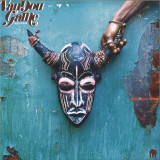
African, funky, sarcastic, bewitching, green, ecstatic: these words collide to describe Vaudou Game and all of them are true.
Noussin is the fourth album of the french Afro Funk band. Forced into lockdown, like much of the planet, Peter Solo and his Vaudou Game had no choice but to retreat into the studio. A reunion to once again invoke the spiritual forces of the Voodoo Deities. A reunion that was Initially imagined for an EP…yet these spiritual forces behind that imagination yearned for something more, and as we all know, these forces are impossible to push away once they have decided to stay.
Under the strain enforced by the current socioeconomic climate, as much as by the environmental peril that faces us all today - they diverted the course of the groove towards daring new vibrations. Without extinguishing or diminishing its highly communicative power, they released Vaudou Game from its origins of pure Afro-Funk to gradually engage into compositions which crystallized themselves into tones resembling more rock than funk.
On this fourth album, with an entirely revisited line-up, Peter Solo separates for the first time in his career from his brassy guard, leaving saxophone, trumpet and trombone outside to invite an arsenal of keyboards to define, with him, this new voodoo sound. A sound, as usual, built on vintage and precise analogical material - grime even on the white side of the tape, a blunt instrument used to blanket anything that strived to shine too much in the mix.
Graced with tapered guitars stringing out rhythmic bumps or withdrawing a few beats to indulge in infectious solos, this album is boisterously alive with vintage 70's Funk, infused with a few digressions into other ethers of the funk timeline, nicking different sounds and frequencies to render the black and white keys of an inspired keyboard to reach new euphoric levels of melodic acidity.
Tearing off the enigmatic mask to reveal his true face: on a few titles, Peter Solo ventures outside of his sacred voodoo range to reconnect with his London years, these titles feature small nods to the time he spent in “The Smoke” where the incantations of British music culture were written within him.
Noussin which means “Stay strong” in Mina, a dialect spoken in the south-west of Togo. Noussin, a message of hope as much as a call to come together to weather the turmoil and to come out better on the other side. Don’t let them grind you down…Noussin!
The Journey is the autobiographical account of Folamour's last two years, spent between airports and stages, London, France and the rest of the world, between crowds and solitudes, between highs and lows. The album, due out in June, is composed of metropolises and no-man's-land, inspired by moments that surprised and touched the artist. To express all these emotions, Folamour puts aside samples and computers to concentrate on writing lyrics, recording strings and brass, drums and vocals in order to be as close as possible to the moment. No limits of format, nor of genre, the total freedom to choose the tool adapted to the picture. This album is the sum of chance and encounters, an initiatory rite, as much in form as in content, the tale of a life with all that it can contain of joys and trials, as much in its writing and production as in its message, "The Journey" mixes contemporary sadness, isolation of artists, but also wonder at the simple pleasures of life and the discoveries it brings with it, it is neither a joyful nor a sad and disillusioned tale, it is the sum of all that and the rest too. Cover album adapted from a painting by Tomás Sánchez "Meditador en la laguna" from 1995. Edited by Koria
LP black vinyl with Download Code. Ltd. Edition of 500. "Free-spirited rapture" Gareth Thompson RNR Magazine Nov 2020. A statement of intent from The NJE. Spirit of Indo takes up the whole first side of their RSD 2021 mini-album - and it certainly doesn't outstay it's welcome. Improvised over a gently incessant yet soporific loop, bassist Mark Bedford and drummer Simon Charterton fall in and out of grooves while multi-instrumentalist Terry Edwards deftly moves between saxes, trumpet and melodica to invent topline melodies within that comfortable straitjacket. As the track progresses bigger instrumentation is suggested by the tunes - and so the track builds with more horns and percussion, the resulting climax making way for the comforting loop to bring us back down to the start. Side 2 opens with an instrumental version of Bowie's Five Years, even more pared down than Edwards' previous take on the tune for a John Peel session in the nineties. Bedders' acoustic and electric basses weave around each other while Simon's understated cymbal-work buoys up the fragile melodica melody. Tizita raises the tempo slightly and is inspired by Ethiopian jazz-legend Mulatu Astatke who Terry had the pleasure of working with a few years back. Title track Nought to 60 is driven by Teutonic beats on electronic Wave drum, a Motorik bassline and heavily effected saxes which thunder towards the buffers - after which you'll want to flip the album and start all over again.
Carrying on a new white label series of killer garage cuts, Bristol's Time Is Now have hand-picked British duo Cortese for their next installment. Expect playful, niche-inspired garage sounds with a unique touch of modernism.
The EP opens with "Abbey Park"; a glistening neo speed-garage track with delicate synth chords dancing over the cavernous slow attack bassline. It purrs into the squelchy bassline style "Where You At", that compliments upbeat piano stabs with autotuned vocals.
"Floaty" uses an iconic Aaliyah vocal chops, dancing around a chunky El-B inspired snare. This one has a melancholic breakdown which is perfect for a dancefloor breather, before the growling bassline is reintroduced to devastating effect. A collaboration with Brighton-based DJ Movement, "Things That Make You Go 'Hmm'" is pure bassline garage energy let loose in a furore of bass patches in a moodier track that still doesn't take itself too seriously. Closing out, "Figure 1" brings a searing synth melody which complements another rolling bassline. The understated drums make excellent use of a syncopated kick pattern whilst diva vocals chime along in the background.
Green Vinyl
Following breakout releases on Love-Hz, Heresy, Genosha and Meta4 Recordings, rising industrial hardcore producer Strange Arrival makes his debut on PRSPCT Recordings. Inspired by a range of science fiction literature, cinema and narrative video games, Anticitizen channels the eerie atmospheres of post-apocalyptic wastelands and the artist's own feelings of isolation into a moody, rollicking four-track self portrait in sound. This one is for all the anticitizens out there!
Ahead of their sophomore album, ‘Now is a Long Time’, subversive electronic-punk provocateurs Otzeki are unveiling the latest track, ‘Unthunk’, alongside a striking visual directed by Frankie Roberts. ‘Now is a Long Time’ is set to be released on 19th March 2021 via Akira Records. Singer Mike Sharp on the song: “Unthunk is a sardonic ‘maditation’ on pop. In terms of musical references, I was inspired by the kitschiness of Billy Joel’s ‘We didn’t start the fire’ after overhearing it at the Stapleton Tavern in Finsbury Park, I was also watching a bunch of music videos by the band Devo, Daft Punk, Throbbing Gristle and Kendrick Lamar. The seed grew out of a quirky drum loop Joel and I made using his TR8 drum machine, which gave the song a far slower vibe before Beni Giles later introduced vocoder and synths into the mix, taking it back to the 80’s.”
Drumcode treasures Alan Fitzpatrick and Joel Mull link for their debut collaboration, complemented by a rare Adam Beyer remix. This is special in every sense.
Tis the season for something different; interesting collaborations and the broadening of creative boundaries is the order of the day. Long-time friends and techno colleagues Alan Fitzpatrick and Joel Mull are the latest to connect for a fresh production outing, ‘We Don’t Know Anything Yet’. Inspired by the Buddhist saying ‘Nothing is forever except change’, the duo work alongside Swedish band Frangie to craft an ascendent techno cut that explores existential questions about the future, all the while being propelled by a strong rhythmic underbelly.
Beyer’s first remix in two years is inspired. The boss sharpens his focus on the vocal, while teasing out the melody, ripening the track for a mid-morning post-peak-time moment when the sun starts to bathe the dancefloor is a hazy gentle glow. A masterstroke.
“Listening to the track, it’s obviously very connected to what’s going on in the world right now. When I heard it for the first time, I fell in love with the parts so much I decided to do a remix on the spot. It’s two of the old school crew, so the release is very dear to my heart.” – Adam Beyer
Following a limited 7” vinyl release of SunPalace edits in 2020, BBE Music finally delivers the full-length versions of Moodymann and Kenny Dope’s ‘Rude Movements’ remixes, alongside brand new interpretations by François K, Frankie Feliciano and OPOLOPO, plus a special edit by Phil Asher.
François Kevorkian needs no introduction to fans of House and electronic music. Featuring keys by Eric Kupper, his ‘SATS Dub’ and ‘TradMix’ versions of ‘Rude Movements’ are simply classic works, summoning House music’s golden era forward in time, to the here and now.
Bonus spaced-out ‘Flerken Space Bubbles’ and beat-less ‘Atmosphere’ revisions are also included in the digital version: both invaluable tools for DJs. Ricanstruction label founder and
long-time champion of the good groove, Frankie Feliciano delivers a slick and faithful update of ‘Rude Movements’, with a slight Latin soul twist. Swedish mix-king OPOLOPO turns in a typically live-sounding, funky and dancefloor-ready jam (ready whenever the dancefloor is,
anyway) The full, extended version of Moodymann’s remix retains the original ‘jammed’ feel of Rude Movements, adding stellar flute, sax and piano solos to that hypnotic vibe. Kenny Dope’s Afro-Latin inspired ‘Dancefloor Powder’ version is joined this time by a rough’n’ready, street tough ‘O'Gutta’ mix; calling all b-boys and b-girls! For the expanded digital package, we are also including a special edit by our sorely missed brother Phil Asher, created for his
own DJ sets and now available to all.
Made famous by David Mancuso at his New York Loft Parties, ‘Rude Movements’ was an obscure Brit-funk b-side recorded in the home studio of Mike Collins. The track’s unique sound, coupled with pristine sonics and production values caught the audiophile ears of
Mancuso, and the rest is history. Soon the track found its way into the hands of Loft Party denizens Larry Levan, Nicky Siano, Frankie Knuckles and Danny Krivit and continues to influence House and electronic producers through to this day.
From the moment she began writing her new album, Japanese
Breakfast’s Michelle Zauner knew that she wanted to call it
‘Jubilee’. After all, a jubilee is a celebration of the passage of time
- a festival to usher in the hope of a new era in brilliant technicolor.
Zauner’s first two albums garnered acclaim for the way they
grappled with anguish; ‘Psychopomp’ was written as her mother
underwent cancer treatment, while ‘Soft Sounds From Another
Planet’ took the grief she held from her mother’s death and used it
as a conduit to explore the cosmos.
Now, at the start of a new decade, Japanese Breakfast is ready to
fight for happiness, an all-too-scarce resource in our seemingly
crumbling world.
‘Jubilee’ finds Michelle Zauner embracing ambition and, with it, her
boldest ideas and songs yet. Inspired by records like Bjork’s
‘Homogenic’, Zauner delivers bigness throughout - big ideas, big
textures, colours, sounds and feelings. At a time when virtually
everything feels extreme, ‘Jubilee’ sets its sights on maximal joy,
imagination and exhilaration. It is, in Michelle Zauner’s words, “a
record about fighting to feel. I wanted to re-experience the pure,
unadulterated joy of creation… The songs are about recalling the
optimism of youth and applying it to adulthood. They’re about
making difficult choices, fighting ignominious impulses and
honoring commitments, confronting the constant struggle we have
with ourselves to be better people.”
Throughout ‘Jubilee’, Zauner pours her own life into the universe
of each song to tell real stories and allowing those universes, in
turn, to fill in the details. Joy, change, evolution - these things take
real time and real effort. And Japanese Breakfast is here for it.
Available on clear with yellow swirl coloured vinyl.
What began as a challenge to fight creative stagnation, soon grew into a fully-fledged audio-visual project for Belgian DJ, producer and live artist, Biesmans. Setting himself the goal of making three tracks per week for a month, he re-scored ‘80s pop culture moments – including films, TV shows and games, resulting in a brilliant 12-track work encompassing new wave, indie, dark wave, electro and
disco.
Moving his modular-heavy studio to Berlin in 2014, the ensuring years saw Joris Biesmans drop heat on Correspondent, Disco Halal, AEON, 17 Steps and Future Disco. He’s been a core member of Watergate
family since his arrival in the capital, working as the club’s sound technician. He made his debut on Watergate Records in 2020 with the well-received ‘Electric Love’ EP.
The ‘Planes, Trains & Automobiles’ album took shape in April last year as the lockdown was starting to take grip and Biesmans needed a positive distraction. Ensconced in the music of his childhood and ‘80s
pop cultural fodder, he locked himself in his studio and set about creating, later digging through archival footage to match the music. Biesmans, who previously undertook work scoring films, was so absorbed by the process, he’d sometimes do it in reverse; allowing the vintage media be the guide. Throughout the period, the clips were shared each Monday, Wednesday and Friday on his Instagram, building up a firm following from fans, friends and colleagues. And thus, the project found its wings, developing into an album.
Throughout the dozen tracks, highlights are plentiful; from the neon ambience of the Kraftwerk-inspired ‘ ‘Cosmic Cruise’, which later accompanied a smoky scene between Tom Cruise and Rebecca de Mornay in ‘Risky Business’; the sun-soaked, retro-pop title track, which became the album’s first single, and was paired with a jubilant dance scene from the Breakfast Club; ‘Cold Void’, the album’s second single, which saw Biesmans link up with fellow Belgians Boi Wonder and Tom the Bomb for a dark wave creation built around a heavy guitar solo and set against a backdrop of Blade Runner clips; and the silky electro funk of ‘Another World’ that soundtracks scenes from Miami Vice.
Biesmans explains about ‘Planes, Trains and Automobiles’: “I started this as a lockdown challenge, in which I would make three tracks per week for a month, alongside providing videos where I re-scored
footage of 80s pop culture moments. Inspired by the movie of the same name, I picked the title because it ties to the theme of ‘mobility’. Our society is based upon being mobile and when Corona hit us, we
could taste a bit of being immobile. As an artist that meant, I could focus on making music 100%. No distractions, no weekend gigs, no parties just making music. This new lifestyle resulted in my first album.
A journey into the past but looking forward to the future, experimenting with other genres and techniques to make a real album that goes beyond club music.”
Since 1994, when "Eins Zwei Polizei" climbed to the top of the European charts, if you happen to type the keyword "polizei" within Google search engine you will see on top of the ranking Mo-Do's first video.
If we consider that thousands of videos were inspired by this song viewed everyday on Youtube, we understand that almost thirty years later its popularity has not diminished at all.
To the young generations who discover this evergreen today we dedicate the reissue of the Picture Disc of "Was Ist Das?" the only album by this unforgettable artist.
Audio visual sculptor Kero operates the multidisciplinary arts collective Detroit Underground record label and continues to produce bit crushed experimental electronic music with over two decades under his belt.
Demo Vectors showcases Kero's sonic range—bouncing back and forth between IDM fractures, broken electro shapes and an all around low-end forcefield. Splicing machined modular tunes with syncopated rhythms and Detroit-inspired slivers, Kero's fingerprints can be found on imprints like Blueprint, Wild oats, Ghostly International, Shitkatapult, Semantica, Touchin' Bass, BPitch Control, and many others.
Using different studio setups from 1998 to 2021, Demo Vectors culminated from many different locations including Detroit, Windsor, Barcelona, Berlin and Los Angeles and reveals Kero's curriculum vitae packaged in a 60 minute robust collection.
The downtempo groove of "ABSTR_B&B" offers a classic bricolage of collapsed mechanical percussion straight from the foundry as the definitive sound design and glitchy bits of "BLISS" take shape. Fluid robotics and bass jabs progress on "GROUNDZEROBACK" pushing each pixel to their breaking point. You'll also find stark industrial elements on tracks like "PREFREAK.EPS" and spastic acid on "COMOFFICE-1" displaying the wide angle lens Kero employs to capture improvised dark drill'n bass techniques with a Squarepusher sheen. From the slow burning "PILL'LATHE2" humming its way across laid back digitized acrobatics to the aptly titled "COLOR_CUB" that clicks, cuts and collects subtle low frequency modulations, Demo Vectors is a tightly compacted and forward thinking IDM album.
Sandblasted electronics mixed with shattered glass and corrosive blips'n bleeps, Demo Vectors acts as Kero's raison d'etre as each piece eclipses itself.
Lotus Wash drops his debut album on LBD Sounds, bringing a whole load of fresh material which came out from his experience as a session musician, and performing his experimental live sets around the Czech Republic. He connects the dots between classically trained musician and modular synth-head, working in Prague's DIY shop and creative community Noise Kitchen. The album spans across 6 original tracks of pure analogue bliss and live ideas, alongside three remixes from his closest allies, local producers Oliver Torr, Vision of 1994, and Hrtl.
The Field Theory was created during a period of deep fascination with quantum physics, with the tracks being conceptually and aesthetically inspired by some of its phenomena. Acoustically, it's mostly a slow and dark affair, with Lotus Wash only letting the light in very briefly when the sun is young (Magnetic Moment), keeping the shutter firmly closed for the rest of the record. His music does not rely on banging beats to drive it, instead letting intense grooves do the job from deep underground, just like on earth-shattering album opener Vacuum Fluctuation. He masters his craft of building atmosphere, a skill learnt during multiple collaborations with various Czech theatres. Of course, he lets the steam out occasionally, and always with devastating effect (Higgs Field, Casimir Force), but mostly choses to keep it capped, humming and hissing. When the sky clears, he opts for a minimalistic and hypnotic approach, only to disturb this peace with a killer bassline in one of the album's highlights – Spooky Action in A Distance – later re-imagined and re-electrified by Oliver Torr. Standard Model is anything but your standard techno, while Hrtl's remix of Magic Moment flirts with techno too, but on a dubbier and brighter side. Bringing the album to a close is Vision of 1994's downtempo take on the same track, finally letting you breathe out.