Montenegrin born in Istanbul, precocious pianist growing up in an embassy, brilliant musician. Prolific composer speaking eight languages, he arranged music for jazz, pop music, adopting multiple identities.
For one label, he is Andy Loore; for another, Emiliano Orti. For others, he is called Alan Blackwell or Johnny Montevideo, but behind all these aliases, there is only one man: Janko Nilovic.
Exploring the shelves of musical production, venturing into the less-illuminated corners of library music, Janko Nilovic's name lights up dozens of shelves on which his soundtracks, his records for Editions Neuilly or Sforzando, but above all his twenty albums for Editions Montparnasse, are stored. A considerable and imposing work, rich in orchestrations of keyboards, strings and brass instruments, themes, atmospheres and melodies. A repertoire in which the cinema, television and advertising have come to find their delight ...
Subjected to the sharp blades of samplers, reduced to a few effective seconds, joined with rhythmic beats, some of his tracks have infiltrated hip hop for a long time , leading the most curious to go back to the source to get the complete albums from which the precious loops had been taken.
Almost unknown to the general public, Janko Nilovic is a master for the initiated, whether they are at his side in the studio or comfortably seated in their armchair savouring the final result on their turntable. His discretion combined with his long years of silence on the record could lead one to believe that he had cleverly arranged his disappearance from the radar to make Janko Nilovic a mystery that has never been completely solved.
Until this message from The Soul Surfers.
A few miles away, in their studio fired up by analog funk, the Muscovites had been put back on the Nilovic track by multi-instrumentalist Shawn Lee. A few passionate discussions later, and the desire for a joint album was already lighting up the amps, making the bass strings shiver and the drum skins tighten.
Initiated by the coming and going of scores, the collaboration finally continued in studio for a real exchange, instantly bouncing off proposals, developing ideas in a live group dynamic that distance would have made impossible.
To feel the vibrations accumulated for decades at the CBE studio (like Chatelain Bisson Estardy), a mythical place founded in 1966, in which many albums, especially library, were immortalized. A place where consoles, equipment and instruments were kept as they were, accumulating in their wiring, meters and speakers, endless hours of experimentation and recording.
A place that Janko knew well and where an old acquaintance was waiting for him. A Hammond organ with a Leslie booth whose keys he had already flattered in the past and behind which an improvisation and a single take were enough to complete the eponymous title.
Together, Janko Nilovic and The Soul Surfers have built Maze Of Sounds, a musical labyrinth paved by the master's keyboards where the soul-funk groove of the fiery Russians is the listener's thread, his point of reference in this maze of atmospheres and emotions, at once cinematic, nostalgic, dancing, dreamlike and contemplative.
An album where, however, nothing is compartmentalized. Where, blown by the whirlwind strung by a violin quintet, the barriers move preparing the entrance of a Slavic choir, letting a screaming guitar come and go alongside the crystalline liveliness of the Fender Rhodes, organize some rhythmic aerations at the disposal of the samplers.
A fusion between the cleverly blackened scores, between the science of precisely written arrangements and the soul-funk feel of The Soul Surfers. An album such as Janko Nilovic has been dreaming of making for years.
Поиск:instruments of science
Все
toechter is an all-female trio operating from Berlin. toechter’s 2nd full-length album »Epic Wonder« sees its classically trained members blend elaborate string arrangements with ethereal indie pop and delicate rhythms. Katrine Grarup Elbo, Lisa Marie Vogel and Marie-Claire Schlameus exclusively use analogue sound sources (such as violin, viola, cello, and their voices), which were then electronically processed.
Named after the Greek god of the wind, toechters 2022 album »Zephyr« exhaled deeply with concurrently invigorating and confusing sounds. »Epic Wonder«, their second album, was created in the spring and summer of 2023. Playing with forms and contours, the music sounds like the awakening of something new. One seems to be listening to an ongoing conversation, an exchange about what music could be, where it wants to go and how it contributes to our view of life. It all rests on a simple premise:
»Every sound you hear in our universe comes from us. The string trio is the core of toechter, the starting point of all our work.«
Those looking for new worlds of sound can find them in the work of this classically- trained musicians. Whether they add voices or percussive instruments, sample the sounds, or manipulate them electronically; ultimately they are exploring the string trio's place in a world shaped by the digital.
»Prelude« opens the album, seemingly a conversation, yet not only between humans. We catch the word ›love‹ which soon morphs into pure sound images, while a violin theme tentatively takes over. Is it the dawning of a new day? The chorus of sound transforms into a fascinating rhythmic figure, creating a club-like experience that fades out in delicate structures. A perpetual transformation.
According to toechter, »Epic Wonder« is all about making connections. Connections between people, animals, plants, fungi, rocks, soils, oceans, ice caps, stars, and planets. One imagines oneself in a folk-pop song of the 60s, or even blown around by Morricone's desert wind:
»The world as we see it is in desperate need for a deeper understanding; for compassion, for empathy. We have to understand that we are all part of the same organism. Epic Wonder is a dream, a wish, a longing for kinship between all species that share the world - all that is alive.«
The acoustic throbbing and knocking in »Sea Of Serenity« makes you think of encounters with mythical creatures or planetary oceanography; and out of the mechanically clacking groove of »Shift Souls« a gentle, but steady movement awakens with voices that seem to sound from the depths of the sea. Everything is in flux, floating in and out of dimensions and elements.
The album ends with »Mercury«, spherically elegant and almost science fiction-like. Here, a pizzicato melody leads us back to the baroque, simultaneously representing a detail of intertwined sonic worlds, while the steady, housy baseline develops its driving theme.
»Creating the music for the album, we allowed ourselves to waft away with the aspiration that connections are possible. Sometimes dwelling on subtle, yet marveling phenomena like the evening fog covering a valley on Midsummer, sometimes on grandiose splendors like the genesis of mountains or the birth of a child - letting interactions and encounters with other beings float through the musical universe as drips of emotional perceptivity.«
For the visual manifestation of »Epic Wonder«, toechter has engaged with Finish up-and-coming lens-based artist Aino Kontinen. Her work will grace both the cover art of the album and accompany the first single and video as an ephemeral tale in motion.
First Word Records is very proud to welcome Ruby Wood to the label, with her debut solo EP 'Sincerely'.
Ruby is a vocalist & songwriter hailing from Huddersfield, West Yorkshire. Her soulful yet distinctive voice has enabled her to front numerous projects; perhaps best known as lead vocalist of the critically acclaimed Submotion Orchestra, since 2009.
She also toured as lead vocalist for Bonobo's live band, for Nubiyan Twist, and with hugely successful 1940's-esque vocal trio, The Sugar Sisters. There have also been features for dance outfits such as GLXY & Franky Wah, additionally to writing & recording for the likes of Krept & Konan, Alfa Mist, Roska, Hemai, Barney Artist and XOA, to name just a few.
In 2021, Ruby was awarded a DYCP Arts Council grant to fund her own creative project, which was taken as an opportunity to go back to the drawing board creatively, spending time working out how her own music would sound and what messages she wanted to convey.
After initial sketches on her Native Instruments Maschine, she began to work with fellow Submotion Orchestra member, Chris 'Fatty' Hargreaves; a long time friend and collaborator, and a revered musician in his own right, with his low-end theory science triumphantly stamped across his other projects, such as Pengshui and Outlook Orchestra. Ruby and Chris began bouncing ideas back and forth, and gradually this solo project started to take shape and form the bulk of this debut EP.
In Ruby's words "After years of working in big projects with lots of people, I often struggled to feel like my voice was being heard. Branching out on my own is an opportunity for me to make music that I would actually listen to myself! This process has been healing for me, and I'm so proud of myself for continuing to learn and develop my craft, whilst learning how to produce songs from scratch.
Becoming a mother also changed me for the better, and provided me with a wealth of experiences and challenges that have gone on to fuel my lyrics. I've grown a lot, and this EP gives a snippet of my life thus far".
'Sincerely' is comprised of five tracks, firmly based in the realms of hip hop soul and neo soul sonically, with an unashamedly '90s R&B vibe throughout. Throughout the EP, Ruby's story tells tales of motherhood, relationships, commitment, independence and inspirations. Further collaborations on the set come from vocalist Isaac Malibu (on 'Mr. Unavailable'), wind player Arran Kent (on 'My Favourite Song'), and assistance on a couple of beats from acclaimed hip hop producer, Pitch 92 and San Diego's Martel Howard, along with more Submotion alumni, Danny Templeman, Dom Howard and Bobby Beddoe and the debut performance from Ruby's daughter, Amber!
A truly triumphant body of work, this is just the start of a new chapter for Ruby Wood.
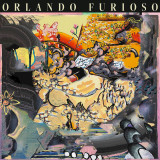
“Orlando Furioso is a haunting, one-of-a-kind statement, from an important new voice in improvised music.” - Steve Lehman
“…imagining instruments that haven’t been invented yet: space harps, cosmic gamelan, Venusian banjo. It’s the purest distillation of Atria’s musical language, simultaneously grounded and unearthly.” - Stewart Smith for The Wire (November 2022)
“Making liberal use of microtonal harmony and hypnotic, ostinato rhythms – as well as the occasional stylistic smash-cut, reminiscent of John Zorn – Orlando Furioso announced itself on Wednesday as a punchy, creative force on the New York scene. (…) Atria’s rhythms had a welcoming, social propulsion, and the microtonality of his writing for keyboard proposed an individual – even insular – language.” - Seth Colter Walls for The New York Times.
Early European composers felt that their work reflected in its structure the divine nature of the material world. Via tuning, form, and contrapuntal alchemy, these musicians sought to illuminate and edify the complex and perfect order of existence. The music recorded here also reflects the contours of an ordered world, but it is no place any of us has ever visited. By assembling far-flung building blocks from the detritus of a 21st-century musical vocabulary, Orlando Furioso brings the listener into a bizarre new cosmos. The result is deeply expressive music that speaks not with the voice of a narrator or memoirist, but with that of a cartographer.
Like a science-fiction Dante, the listener is taken on a tour of many diverse and colorful provinces of an alien world. Though each composition references its own set of real-world musical locales (from the Andes to Indonesia to Italy to New Orleans), they are bound by stylistic consistency into a coherent, continuous geography. Permeating this world is an uncompromising commitment to microtonal harmony, rhythmic intensity, and an ability to deploy the esoteric (Nicola Vicentino's notorious 31-tone temperament) and the head-smackingly obvious (a surprise djent breakdown) with equal conviction. Though Vicente's compositions are steering the ship, serious recognition is due to all the players on the record for their ability to meet these demands.
Our omnivorous musical diets offer real abundance. They enrich our craft by providing access to limitless approaches from which to choose - more masters to study, traditions to absorb, and techniques to hone than is possible in multiple lifetimes. They can also inflict heavy and often contradictory burdens of influence. When every corner of the map has been charted, it becomes difficult to find a new direction in which to travel. One solution I hope to see more often is the one pursued on this record: breaking down distinct musical worlds into component parts and reassembling them into a language. When completed with precision and with no stone left unturned, the seams between the pieces vanish and the listener is deposited somewhere beautiful and strange, left to assign their sensations meanings of their own. - Mat Muntz
Orlando Furioso is led by Vicente and features David Acevedo, David Leon, Andrew Boudreau, Alec Goldfarb, Daniel Hass, Simón Willson, and Niña Tormenta. Orlando Furioso celebrated its release at Roulette Intermedium in Brooklyn, NY, as a part of Wet Ink Ensemble's 24th Season opening concert, a performance which The New York Times heralded as "virtuosic", "punchy, creative" and "even revelatory."
Winner of the Deutscher Jazz Preis: Best International Debut Album 2023
Gatefold single vinyl LP with an 8 page 12" size bookelt in the other side of the gatefold.
We're thrilled to announce the return of Tobor Experiment, the visionary musical project led by the enigmatic Giorgio Sancristoforo, to the Bearfunk fold. After a twelve-year hiatus, Tobor Experiment emerges from the shadows with their second LP, "Available Forms". Picture the ethereal ambiance of a dimly lit jazz club colliding with the futuristic vibrations of a 1970s sci-fi TV show, and you'll begin to grasp the sonic experience that awaits. Giorgio draws on a whole host of musical inspirations, from the name checked Tim Gane & Letitia Sadier to the moog pioneers Claude Denjean & Jean Jaques Perrey. With the moogsploration of contemporary jazz Tobor Experiment invites listeners on an extraordinary musical odyssey where jazz meets electronica meets nu-disco.
Prepare to be captivated from the very first note of the infectious opener, "Lowpass Risotto" as Tobor Experiment masterfully combines familiar elements with their unique artistic vision. Resonating with undertones reminiscent of the timeless classic "Take Five" the track immediately grabs your attention. While the familiar drum shuffle sets a comforting foundation, Tobor Experiment takes an unexpected twist by infusing the composition with squelchy Moog lines and captivating hollow body guitar solos. The result is a harmonious blend of nostalgia and innovation that transports you to an entirely new sonic realm.
Continuing the journey, the mesmerizing 6/8 rhythm of "Up!" pays homage to the iconic sounds of Stereolab while showcasing Tobor Experiment's innovative spirit. As enchanting synth pads weave through the air, you find yourself immersed in a dream-like state, carried away by the hypnotic shifting patterns of the bass and drums.
With "Astounding Stories" Tobor Experiment returns to the energetic vibes of the album opener, inviting you to surrender to a sonic tapestry rich with musical exchanges. In traditional jazz style we receive solo's from all parties. Each instrument adding its unique voice to the narrative, creating a dynamic and engaging musical conversation.
As the album progresses, "Moonscape Dust" emerges, drawing inspiration from the atmospheric brilliance of "Low." This track serves as a portal to an otherworldly sonic landscape where time and space lose their hold. Here, organic drums step aside, making way for a low-fi drum pattern that lays the foundation for ethereal synth pads. The composition invites you to explore the depths of your imagination, transcending earthly boundaries and allowing you to float in an immersive soundscape.
The album's closing track, "Monsters" has an air of "Air" about it... the ethereal synths beckon you to surrender to the weightlessness of space, just allow yourself to be carried away by the infectious rhythms, intricate melodies, and atmospheric textures that shape this extraordinary musical journey.
Each track on "Available Forms" showcases Tobor Experiment's exceptional ability to transcend musical boundaries, creating a genre-bending album that defies all expectations. From start to finish, the soundscape presented is a testament to Tobor's relentless pursuit of musical innovation. Each composition is a fusion of diverse elements, seamlessly blending organic instruments and electronic textures in a way that challenges traditional genre classifications.
The AI-generated artwork serves as a portal to an alternate dimension. Paying homage to the retro-futuristic aesthetic of 1970s science fiction TV shows, it captures the essence of the album's fusion between organic and electronic realms.
Marc Richter aka Black To Comm released his debut record 20 years ago. In 2023 he is still busy releasing music under various disguises and is currently signed to the Thrill Jockey label. To celebrate this anniversary his own Cellule 75 label is re-releasing some classic out-of-print vinyl albums that originally came out on the defunct Type and De Stijl labels. The LP will feature a full-colour printed inner sleeve exclusive to this edition.
In 2009 the Type Recordings label run by John Twells had just released seminal records by Grouper, Jóhann Jóhannsson and Yellow Swans when they signed Richter and put out his breakthrough Alphabet 1968 album. The LP sold out within two weeks, receiving a glowing full-page review in The Wire Magazine by the late Mark Fisher (later reprinted in his book Ghosts Of My Life), was selected for Boomkat's Top 10 releases of the year (alongside debut albums by Leyland Kirby, Demdike Stare and Oneohtrix Point Never) and was greeted with universal praise in the underground blog network as well as established magazines such as The New Yorker and Pitchfork.
The music itself played with the notion of nostalgia without being nostalgic itself. It's the sound of half-remembered dreams, a surreal distorted vision of the past, an aural polaroid of long forgotten musics, a ghostly voice from a non-existent era.
From the original Type one-sheet:
"The mission statement for Alphabet 1968 was to write an album of "songs" for want of a better word. Short tracks which represented genre points, the milestones which stuck in Richter's mind when he thought back to his favorite records. What we arrive at is a breathtaking 10-track album which, over the course of 45 minutes, explores world music, techno, noise, avant-garde, ambient music and even exotica. Each track is linked with a loose thread of radio static or environmental sound, dragging you through the album, as if tuning in to a stray broadcast or a particularly adventurous mix. Richter has pieced the album together from hours of recordings made at his studio with home made gamelan, small instruments and loops gathered from a collection of ancient vinyl and 78 records. The scope of the album is admirable, but ignoring this, it is simply a shockingly arresting collection of experimental oddities, with references ranging from Moondog to Basic Channel by way of Bernard Herrmann. It's not hard to fall in love with Alphabet 1968, far harder would be to place exactly where the record should fit into your collection."
Mark Fisher in The Wire:
"But what if we were to take Richter's provocation seriously - what would a song without a singer be like? What would it be like, that is to say, if objects themselves could sing? It’s a question that connects fairy tales with cybernetics, and listening to Alphabet 1968, I’m reminded of a filmic space in which magic and mechanism meet: JF Sebastian’s apartment in Blade Runner. The tracks on the LP are crafted with the same minute attention to detail that the genetic designer and toymaker brought to his miniature automata, with their bizarre mixture of the clockwork and the computerised, the antique and the ultramodern, the playful and the sinister. Richter’s musical pieces have been built from similarly heterogeneous materials - record crackle, shortwave radio, glockenspiels, all manner of samples, mostly of acoustic instruments. ….. JF Sebastian's apartment was itself an update of older spaces in which science and sorcery co-existed: the workshops of ETA Hoffmann's inventor-magicians, or of Pinocchio's creator, Geppetto. I think, too, of Auguste Villiers de l'Isle-Adam's astonishing 1886 tale The Future Eve in which Edison, using the expertise he has recently acquired from inventing the phonograph, sets himself the task of constructing an artificial woman. But if there are songs here, they are sung by the gramophone and other recording and playback machines. Richter so successfully effaces himself as author that it is as if he has snuck into a room and recorded the objects as they played (to) themselves. Rather than simply automating his music, as in the case of Pierre Bastien and his mechanical machines, Richter makes us feel that he has merely recorded the unlife of objects. ….. Indeed, the impression of things winding down is persistent on Alphabet 1968. Entropy has not been excluded from Richter's enchanted soundworld. It feels as if the magic is always about to wear off, that the enchanted objects will slip back into the inanimate again at any moment."
Foyer Red’s debut LP, Yarn the Hours Away, plays out as a collection of short stories, each with its environment and protagonist(s) meticulously crafted by the band, with lead singer, vocalist, and clarinetist Elana Riordan at the helm. Foyer Red’s debut EP, Zigzag Wombat, showcased their playfully chaotic arrangements, which bridge art-punk, math rock, and sweetly sung indie with a dash of the zoomies.
The band synthesizes their homespun take on magical realist indie rock that was centered on their EP with their varied musical influences; taking cues from the otherworldly melodies of Cate Le Bon, Yucky Duster’s jangle-filled crayon rock, and the organized chaos of Deerhoof’s iconic polyrhythms. The songs that makeup Yarn the Hours Away are fantastical, surrealist stories that hinge on contemporary, post-digital life.
The lead single “Etc” captures this dynamic perfectly. Anchored by Eric Jaso’s hypnotizing bass line, the song unfolds with off-kilter call-and-response vocals between Riordan and Kristina Moore, their stilted deliveries bouncing around the mix. The track is searching but discontent with the algorithmic and claustrophobic realities of daily life: singer/guitarist Mitch Myers throws the song for a loop singing, “gathering information / will set you free once you’ve reached / 37 percent / of the database.” While there’s paranoia and cynicism undergirding the lyrics, the song itself is a thrilling and playful listen.
The songs on Yarn the Hours Away are uniformly exciting and compelling; each track feels distinct and sometimes even in direct conflict. The peppy opener “Plumbers Unite!” belies its themes of gamification of our daily lives and delves into the science fiction and fantasy songwriting of Foyer Red’s debut EP. Centered around a relentless rhythm section, their dueling vocals never abate; Moore and Riordan’s honey-sweet but getting more frantic as the song progresses, while Myers’ erratic talk-singing culminates in one final frustrated scream. Juxtapose this with “Gorgeous,” a lovely song about Riordan and drummer Marco Ocampo’s relationship that sees the band slowing their pace into a blissful sway. Riordan coos and sighs over the track while recalling “Marco-isms”; botched colloquialisms that Ocampo uses.
“Gorgeous” shares little in common with “Pocket,” a loose lamentation on late capitalism that touches on time travel and human evolution. Moore and Riordan’s exclamations are chopped up and used as rhythm instruments, layered over the intricately frenetic guitars of Myers and Moore. Foyer Red thrives on these extremes and contradictions. Where their first release was self-recorded, this LP found them in Figure8 Studios with a deadline. “It was really liberating,” says Jaso. “We're all just kind of throwing in our own voices and challenging each other to make the songs better.”
Yarn the Hours Away comes from a lyric on the closer “Toy Wagon.” The song that first marked the time Moore and the rest of the band worked together, a promising spark of a thrilling collaboration to come. “It harkens back to all of us coming together and spending the hours together in music,” says Moore. “There are few moments where you get to relax and exhale,” adds Riordan. “It's what happened when the five of us got together and started writing. We just wrote all of these out there songs and we didn't see a reason to dial that back. Its natural form is in its chaos and layered craziness.”
Limited colour variant "battlefield aftermath with blood & dirt swirl" Following their 2020 debut, Ruin, FORETOKEN's latest album sees the group expand upon their foundations of meticulously lofty soundscapes, mythological narratives, and elaborate musicianship. Utilizing traditional narratives of myths, legends, and folklore from a wide range of Western and Middle Eastern origins, Triumphs examines the ignored collateral damage of the cost of victory through these established mythos. Taking musical inspiration from melodic and tech death metal, as well as power, folk and black metal, Foretoken's core sound on Triumphs is bolstered by subtle and captivating use of traditionally Scandinavian, Southeast Asian, and Middle Eastern instruments for atmospheric depth. Reunited once again with Hannes Grossmann (Hate Eternal, Alkaloid, Obscura, Necrophagist, Blotted Science, and Triptykon) on drums and boasting a guest guitar appearance by The Black Dahlia Murder's Brandon Ellis, FORETOKEN's technical prowess shines through without overpowering any of the nine songs' rhythmic charge. Triumphs was penned throughout 2021 by both Steve Redmond (guitar and orchestration) and Dan Cooley (vocals), with the pair settling on eight original compositions and a cover of Naglfar's I Am Vengeance. Grossmann then commenced drum tracking at his own studio, Mordor Sounds, with guitars recorded by Redmond himself and vocals captured at Trepan Studios by Tony Petrocelly, before mixing and mastering duties were placed in the accomplished hands of Jacob Hansen (Arch Enemy, Fleshgod Apocalypse, The Black Dahlia Murder, and more) at Hansen Studios. Visually tied together by portrait artist Tomas Honz's detailed cover painting, depicting a protagonist's journey in the aftermath of battle, Triumphs aesthetic component is a symbolic embodiment of the duo's enduring fascination with historial consequence via a folkloric lens. Taking fables and fantasy to extreme sonic heights, FORETOKEN's Triumphs is as lofty in ambition as it is accomplished in its musicianship and songcraft.
- 1: Anthem
- 2: I Like That - Janelle Monáe
- 3: Outernet
- 4: Spider
- 5: Ballet Memory
- 6: I Got 5 On It (Feat. Michael Marshall) - Luniz
- 7: Beach Walk
- 8: First Man Standing
- 9: Back To The House
- 10: Keep You Safe
- 11: Don't Feel Like Myself
- 12: She Tried To Kill Me
- 13: Boogieman's Family
- 14: Home Invasion
- 15: Once Upon A Time
- 16: Run
- 17: Into The Water
- 18: Spark In The Closet
- 19: Escape To The Boat
- 20: Femme Fatale
- 21: Silent Scream
- 22: News Report
- 23: Zora Drives
- 24: Death Of Umbrae
- 25: Somber Ride
- 26: Immolation
- 27: Down The Rabbit Hole
- 28: Performance Art
- 29: Human
- 30: Battle Plan
- 31: Pas De Deux
- 32: They Can't Hurt You
- 33: Finale
- 34: Les Fleurs - Minnie Riperton
- 35: I Got 5 On It (Feat. Michael Marshall)
Waxwork Records is proud to present the Us Original Motion Picture Soundtrack featuring a score by composer Michael Abels. Us, released in March 2019, is an original nightmare written, directed and produced by Academy Awardr-winning visionary Jordan Peele (Get Out). Set in present day Santa Cruz on the iconic Northern California coastline, the film, starring Oscarr winner Lupita Nyong'o and Black Panther's Winston Duke, pits an ordinary American family against a terrifying and uncanny opponent: doppelgängers of themselves. A blockbuster that earned raves from critics and audiences alike, Us earned more than $250 million at the worldwide box office to become one the highest grossing R-rated horror films of all time, buoyed by an unexpected and innovative soundtrack and by a groundbreaking, terrifying original score by Abels. Us marks the second collaboration between composer Abels and Peele, who first worked together on Peele's 2017 Oscar-winning horror film, Get Out. For the Us score, Abels explored themes of duality and discord. "Sonically, what defines 'scary' is the unfamiliar," Abels says. "It is the things that we can't place, and that we don't expect, that take us to that place of fear. We wanted to really strike terror into the audience." Central to the score was the opening track, an anthem for the doppelgängers, known in the film as The Tethered. Abels hit on the idea of using choral elements. "Jordan really loves the sounds of voices, and the human voice is an incredibly expressive instrument that anyone can relate to," Abels says. "The anthem sounds a little like a march of people preparing for battle, like an uprising maybe, but the sounds are not in a recognizable language. In other parts of the film there are vocal effects, just these strange sounds. They're designed to really freak people out." Abels featured a 30 person choir, a third of them children, in the "Anthem," and implemented Eastern European instruments, violins, percussion and a virtual instrument called a Propanium drum. "It makes this trashy metal sound, but you can also play melodies on it," Abels said. "The Propanium drum has a sound that's both otherworldly but not electronic or like science fiction. It's a sound you can't quite put your finger on, which is why it works well in this film." Also included on the soundtrack is the 1995 hip-hop hit "I Got 5 On It" by Luniz and the stand-out track "I Like That" by Janelle Monáe. Abels also helped with a new arrangement of the Luniz hit, which is featured on the soundtrack as the 'Tethered Mix from Us'.
[xi] 35 I GOT 5 ON IT (FEAT. MICHAEL MARSHALL) [TETHERED MIX FROM US] - LUNIZ
Timeless atmospheres, hypnotic sonorities, minimal arrangements. And a composer gifted with a never ending passion for music, experimenter in his genetic code, innovator by vocation, at ease with various instruments in order to forge avant-garde themes. Piero Umiliani was already forward in building completely new sounds in the late Seventies. “Tra Scienza E Fantascienza” finds his alter ego Moggi experimenting with alternative grooves, electronic music, jazz tunes and soundtrack motifs. One of the most interesting music libraries in the Italian composer's discography, reissued with a new remastering by Musica Per Immagini, is in full harmony with its title.
Science fiction has opened up our eyes to a variety of scenarios, possible or impossible, sometimes with a happy ending, sometimes apocalyptic, at times familiarly near, more often disarmingly far away, and always capable of inspiring our imagination. For the histrionic artist it took, perhaps, less of a cosmic leap to create this masterpiece. Centred on the cover, a strange creature with only one eye, its hands on a beaker containing a mysterious red liquid. To its right, a symbolic circle is imprinted on a sandy surface, and three bizarre constructions, similar to the volumetric flasks found in a laboratory, of differing heights and shapes. There is a strange blue planet in the distance.
- A1: I Love, Love, Love, Love It 03 22
- A2: Postcard Dimension 03 52
- A3: The Science (Behind Shoes) 04 18
- A4: It's Not Just Country Birds That Are Attracted (To This Blue Glass Bird Bath) 04 02
- A5: Incredibly Comfortable Slippers 04 13
- B6: Not Your Ordinary Blanket 07 44
- B7: Music For A Plank Press 04 38
- B8: Something Is Going To Happen (Bolt, Bonk, Bound, Bowl) 03 02
- B9: Memory Foam 03 57
Faitiche presents Groupshow’s Greatest Hits: The ten tracks on this first vinyl album by Groupshow (Hanno Leichtmann, Andrew Pekler, Jan Jelinek), recorded between 2005 and 2018, document concert recordings and studio improvisations by the trio.
In improvisation there are no mistakes, only missed opportunities. Groupshow found their first opportunity in the routines of live performance and they used this opportunity to break with these routines. The trio consisting of Jan Jelinek, Hanno Leichtmann and Andrew Pekler came together in the context of Kosmischer Pitch, playing live versions of the music from Jelinek’s 2005 studio album of that name. During this project, the musical interaction between the three participants quickly emancipated itself from the original programme, departing from fixed roles and finding a distinct form in constant change.
Groupshow sessions – rehearsal, concert or recording – are always improvised. The interplay of the various sound sources, converging from the directions of “electronics”, “percussion” and “guitar”, does not follow the Krautrock wave logic of crescendo and morendo. Jelinek, Leichtmann and Pekler have established a method of transparent density in which links and breaks are not concealed but remain audible. The music works through attraction and repulsion, with a loosely organized structure that always leaves enough room for the next intervention.
The principle here, repeated even in the smallest units, is that of duration. Groupshow think of their music in terms of an installation: no starting point, no dramaturgy, and ideally no end. Concerts take place not raised up on a podium, but in the middle of the room on a level with the audience, who only enter the space with the musicians and instruments once their interaction is already underway. In 2008, Groupshow used this approach to create a live soundtrack for Andy Warhol’s film Empire, over the full length of eight hours and five minutes.
Recordings in general and the “Greatest Hits” format in particular are another key aspect of this ongoing work on a collectively modulated continuum. The ten tracks on this first vinyl album by Groupshow, recorded between 2005 and 2018, document the ephemeral capturing of opportunities that were not missed. Extracts and essences of an endless movement of searching. The sprawling form of the whole, suspended in succinct, separate units.
To paraphrase Lao Tzu and Roland Barthes, one might say: Once their work is done, they are no longer attached to it. And because they’re not attached to it, it will remain.
Arno Raffeiner, 2022
Batsaykhan is the rebirth of the first project to ever release on Favela Discos, only a few hours after the label’s blogspot was put online back in 2013. Formerly known as Batsaykhantuul, Batsaykhan is not only one of Nuno Oliveira’s alter-egos but also something between a science fiction character and an ancestral spirit doomed to wander the earth in an apparently human physical manifestation.
The first album, Maestro Ir Noras, is a small and simple collection of tracks featuring only guitars and other stringed instruments, the second, being even smaller (only a single track) already seemed to lead us on through the psychedelic desert that would define the sound of the project.
After a long hiatus, Batsaykhan finally emerged from the drawer, or maybe it was from the desert, only to reveal that he had shape-shifted, now taking the form of a trio. With the help of André Azevedo and Tito Silva, Nuno started working on old demos of unpublished compositions and adapting them to the new formation. The trio started the process of refining the songs and the sound of the record, using only a strict selection of synths, percussions, bass and guitar.
They ended up settling down on a terrain of moving sands for those who feel the need to define their sound, between a forest of psychedelia, a river of ambient and the obvious desert that has buried the guitars under its “western” sand.
Batsaykhan’s self-titled release, and the project’s first long play will finally unveil itself on the last day of February, digitally and on 12’’ vinyl, with design and artwork by Rita Laranja.
strumentalist Teddy Lasry's story is noteworthy not just in regards to the music he released, but in the ways approached the craft of composing and experimenting with sounds and sonics.
Always intrigued with the capabilities of instruments, their groove and their feel, it was very much his family’s influence that helped to fuel these life long affections. As a performer in a parisien cabaret, Teddy’s father Jacques would mingle with giants like Serge
Gainsbourg and Charlie Chaplin (impressed by his ability to improvise, Chaplin wanted him to become his accompanist, but the pianist politely refused). Jacques and his wife (Teddy’s mother Yvonne), would later become members of the innovative experimental group Les Structures Sonores, and surround their children’s lives with sounds. Electronic music was still in its infancy and Les Structures Sonores, with their resonators that produced long, mysterious tones, were deemed ‘cosmic’. It was the era of the launching of the first Russian Sputnik and every time a radio or television station wanted music for their science fiction programs, they turned to one of their compositions. Showing a natural ability with multi instrumentalism, Teddy was rewarded with a spot in the band, allowing him to really explore unconventional methods of composition.
Following a brief stint with Ariane Mnouchkine's avant-garde Théâtre du Soleil after graduating school, Teddy joined the pioneering prog band Magma, with whom he would record three groundbreaking records during the early 1970s (According to former member
Laurent Thibault, their album Mëkanïk Dëstruktïẁ Kömmandöh and its sound were strong influences on David Bowie during the recording
of Low and Iggy Pop’s The Idiot at Hérouville). Despite the successes with these projects, Teddy was constantly searching for new ways
of expressing himself through music, leading him into the beginnings of a solo career that would last the better part of three decades.
Teddy’s transition into his solo career came with contrasting fortunes, in that he was now becoming a music to image composer but with the unfortunate realisation that his eyesight was gradually worsening (due to being diagnosed with retinitis pigmentosa at an early age). Nonetheless, his solo career would begin in 1975, and for the rest of the decade his sound would become increasingly mired in electrified Funk-Fusion and its endless sonic possibilities. The resulting music would serve to highlight Teddy’s love affair with the possibilities found within tireless instrumentation, with the flute and particularly synthesisers becoming a mini-obession of his (he once spent a 7,000 Francs loan, which was meant to be spent on fixing his roof, on synths).
To this day Teddy continues to record and experiment with music, a passion which in many ways has never left his sid, even at the age of 75. His career was one that was fuelled by innate curiosity and an intrinsic desire to discover new methods of expressionism, be it through the realms of Jazz-Funk, ambient electronics, Swing music or indeed through the medium of instrumentation itself. On this compilation, we look to encapsulate the essence of his innovative sound, and from start to finish a sense of his ingenious approach to composing structure and mood is made abundantly clear. The funk-jazz fusion style that embodied the majority of his 70s work is on full display here, with the vibrant flute driven "Los Angeles", the Miles Davis inspired "Blue Theme", the progressive and driving
"Chamonix", and the deeply intricate "Krazy Kat", along with one of his finest 80s slow jams, "Funky Ghost". Two cuts off the ‘Back To
Amazonia’ album are also featured (Teddy’s last album including his Prophet T8, Yamaha DX7 and Oberheim drum machines). "Raising
Sun in Bali" and the title piece both emphasise an ever present passion for synthesisers. "Birds of Space", a standout track off the e=mc2 album, closes the comp, and is a fitting way to end this journey.
Pulled together in close collaboration with Teddy and his family, this collection of songs looks to introduce new listeners to his work and we are proud to present this limited and carefully remastered compilation on vinyl, including extensive liner notes.
Schneider TM is the multidimensional music project of Dirk Dresselhaus which has been operating since the mid 90's. His latest opus is also his first for release for Editions Mego.
With an extensive catalogue under his belt, one may wonder where this one takes us? The 8 of Space orbits the realm of "pop" more overtly than the project has done for 14 years, residing in the line of works that temporarily ended with "Skoda Mluvit" from 2006. In the age of scattered streaming listening habits The 8 Of Space champions the classic album format with connected tracks that act like chapters adding up to what could be framed as an 'audio-movie'. The 'plot' revolves around a post-dystopian landscape which posits the make up of reality in the future.
The vessel is electronic pop music but one which takes inspiration from the spirit of a multitude of musical forms absorbed into a trans human sound world where biological & technological elements complement each other (We are NOT The Robots!). The music unifies the analog world of acoustic and electric instruments with electronic & digital possibilities that range from heavily processed acoustic & electric guitars and bass, tube organ, analog modular synth units, acoustic drums and percussion, analog & digital drum machines & effect units, hardware and software processing. Experimental & extended musical techniques build a world of musical elements that is sometimes upside down and mirrored. Electric guitar becomes rhythm machine & modular system, voice becomes sound object & synthesizer, effects are used as instruments, acoustic guitars are being modulated by voices etc. Reality and illusion are getting mixed up. One can hear short moments of longer recordings in the tracks which are snapshots of bigger musical pictures that lurk behind what's actually audible. Generative music, audio spirals like clockworks create ever changing musical combinations; thrown-in sounds, polyrhythms & cascades based on the concept of chance attributed to the service of the SONG.
The lyrics are a key component. Holistic, associative poetry acts as interactive trigger points for the mechanisms of existence in times of a paradigm shift that are open to the listeners discretion. Autobiographical elements combine with science fiction and dreams, protagonists shift where the 'I' or 'me' is not necessarily the voice of the artist, nor even the same person. Alongside a more naturalised voice another protagonist appears represented by a processed voice. This character, named iBot, evolved around the start of the millennium and has appeared on some previous Schneider TM recordings. It can be seen as a post-human, or even a trans-human character, a combination of human & technology, uncertain of the future, which lends iBot it's melancholic tone.
In the opening song "Light & Grace" iBot appears in an advanced form of AI, which managed to hack & hijack a commercial space travel program (eg, Virgin Galactic) to invite those rich, who profited most from the destruction of planet earth, for a holiday trip into space to unknowingly fly them directly into the middle of the sun. In this episode it seems to have developed higher ethics than humanity itself with ambition to save the planet with as much of its cooperative life as possible."Light & Grace" serves as an intro / opener for this album to be followed by 7 other tracks featuring different windows of consciousness represented by diverse characters & protagonists.
All the elements on The 8 of Space, the music, sounds, vocals and artwork fit together as a whole, creating a dazzling electro pop future questioning it's own certainty. This is experimental electroacoustic pop music featuring glorious melodies dancing along human/machine voices, each track is a small universe that triggers the physical mind and tickles the subconsciousness.
The Spaces Between were formed out of creative studio sessions in the summer of 2020 and comprises of bona fide house legend Terry Farley, electronic music producer Wade Teo and renowned author and co-owner of Club Chi’ll Records, Ian ‘Snowy’ Snowball. The idea for ‘Ghosts’ came from Terry’s idea to reference the Jazz greats who have gone to glory leaving behind their astonishing musical legacies. Within days of emailing a comprehensive list of jazz artists to Chicago House luminary and The It/ Jungle Wonz member, Harry Dennis, an answer with Harry’s sparse, haunting vocals was received. These were laid down over a bed of live instruments and electronic sounds and the combined talents of The Spaces Between created the compelling jacking jazz vibe of ‘Ghosts’.
Snowy ran the track past Jo Wallace at F*CLR Records – it was love at first listen. Jo suggested the track should be part of an EP with remixes from the newly reformed Black Science Orchestra. It was agreed and provided an ideal opportunity for Ashley to work with Terry once again, reinforcing the Junior Boy’s Own heritage.
The first incarnation of Black Science Orchestra began life in 1992 when Ashley Beedle joined forces with Rob Mello and their debut release, ‘Where were you’ exploded onto the global dance scene via the iconic UK house label JBO. Broken in the US by the Godfather of House, Frankie Knuckles, ‘Where were you’ entered into the hallowed halls of immortal dance music. Black Science Orchestra has become one of the most respected deep house acts of the 1990s, with the revered album ‘Walter's Room’ and the legendary genre crossing 'New Jersey Deep' track that is considered one of the top dance tracks of all time and rarely leaves discerning DJs' record boxes. Fast forward 29 years and original BSO founding fathers, Ashley and Rob decided that both they and the world needed the sound of Black Science Orchestra again and decided to reform, inviting long time musical and studio accomplice Darren Morris to join the collective now in its 6th incarnation!
When presented with the original version of ‘Ghosts’, Rob, Ashley and Darren loved it and all heard various ways it could be reworked in a true Black Science Orchestra way. Donning their pandemic production hats and remotely getting their feet back under the studio desk again, they worked together to create distinctly different remixes ranging from the deep, spacy electronic to the tough and psychedelic sleazy funk. With original BSO productions included on this EP, 'Ghosts' has helped square off the circle and the Black Science Orchestra conductors are back and mean dance floor business!
The New Studio Album Of Epic Black Heavy Metal From The
Norwegian Legends
“Five heavy dinosaurs looking in wonder and bewilderment at the stars” Fenriz
With the highly revered Norwegians remaining ever-dedicated to the art of the
riff after 35 years of existence, Darkthrone return for album number nineteen
and a new dose of metallic godliness. On the back of 2019’s triumphant ‘Old
Star’ opus, the duo of Nocturno Culto & Fenriz present a 41-minute maelstrom
of Epic Black Heavy Metal across five sprawling compositions.
Organic and dynamic, the album is an exploration of the very finest vintage
metal and the best of doom, all delivered in the unmistakable Darkthrone style,
whilst also incorporating instruments such as the Moog to further expand upon
these soundscapes.
Eschewing the process of using their own Necrohell II studios - which has
served the band so well over the last 15 years - & welcoming a change of environment and the opportunity to experiment with new ideas, ‘Eternal Hails......’
was recorded at Chaka Khan Studio in Oslo, & engineered by Ole Ovstedal &
Silje H gevold, breathing new life into the sound while retaining the essence of
Darkthrone’s natural, raw feeling.
The cover artwork features the piece “Pluto and Charon” (1972), from renowned science fiction artist David A. Hardy; a hugely inspirational image for
both Fenriz & Nocturno Culto spanning several decades, and this also stands
as a symbolic link between the genre-bending styles apparent on Darkthrone’s
earliest works, to those same traits evident on ‘Eternal Hails......’.
All music improvised by Michael Wollny, Emile Parisien, Tim Lefebvre
and Christian Lillinger (except ‘Nostalgia for the Light’, written and
arranged by Michael Wollny).
The music we hear doesn’t fit into any category. We’re in uncharted
territory, so a good way to capture its essence might be to break it
down into its four component parts. First there’s Michael Wollny, here
for the very first time playing only on electronic keyboard instruments.
He creates a characterful world of retro-futuristic sounds that is very
much his own. We find the occasional nod to early Jean-Michel Jarre,
references to science fiction and horror movies and also vivid
memories of the sounds of avant-garde Krautrock: Can and Irmin
Schmidt and Klaus Schulze.
As for Tim Lefebvre, here is a musician who has plied his very great
craft with stars such as David Bowie, the Tedeschi Trucks Band, John
Mayer, Knower, Steely Dan, Elvis Costello and Wayne Krantz. Here
he is like a rock in a tempestuous sea. He propels the music forward
with a combination of bass and effects. He builds structures and
tames unruly elements. The way he lays down a groove is
overwhelming.
As a counterbalance we find the explosive yet highly sensitive playing
of drummer Christian Lillin-ger. He stacks layer upon layer of rhythms
and textures.
And the melodic lines of Emile Parisien on soprano saxophone
always have an astonishing springy inventiveness. Such is Parisien’s
latent energy, it seems as if at any moment he could suddenly
become airborne.
The players’ eager curiosity as to what the next turn, the next
impulse, the next push will be is palpable to the listener. One can
sense the tension between the urge to construct forms, lines,
grooves, harmonies, textures, versus the illicit joy of tearing such
fragile structures apart before they have even been heard. There are
beats and patterns from the 90s, 80s and 70s, all coalescing into
cinematic bacchanalia of sound. These four master improvisers and
composers all have the urge to rewrite the rules of their musical world
- and to do so in real time.
LP pressed on 180g vinyl with digital download code.
Nèg Ginen is a song composed by Jean Claude Dorvil on a traditional Nago rhythm (from Benin). Nèg in Haitian creole means “the dude“, “the guy“. It is about pride of being Haitians with solid African roots. As a matter of fact, when we mention Ginen, we talk about Africa. Like the majority of Chouk Bwa’s songs, this one is full of references mentioning Haitian voodoo rituals and spiritual /igures. For instance, Simbi Ganga is a lwa (voodoo spirit) from the Lakou Soukri Danach (voodoo temple) that lives in the water. Wild and brutal when he is chained up, he faithfully represents the Iwa Kongos, notorious for being real party-starters! Kebyesou is an Iwa who lives in the Lakou Souvnans (another temple). He is a royal /igure, like the Dahomey Iwas in general. The voodoo families are, so to speak, all present in this project!
Biography
After a /irst European performance in 2015 at Roskilde Festival leading to many other performances all around Europe, including WOMEX and WOMAD, Haitian traditionnal vodou band Chouk Bwa met the Brussels based duo The Ångströmers in 2016. Their new project combines a renewed dub sensitivity and Haitian rhythm science and spirituality. The ensemble has performed in Haiti and in European festivals including Trans Musicales de Rennes before releasing their /irst album Vodou Alé via Bongo Joe in 2020.
Modular synths and other vintage electronic instruments bring another dimension to Chouk Bwa’s music, although obviously it is always the band’s groove and /luent tempo that leads the energy of the ensemble: no laptops, no drum machines. There are certain freedoms that cannot be coerced. Even more, the electronic instruments are wired directly to the drums that feed them with impacts and caresses. All the Vodou families are there with their many rhythms and songs. Radical Vodou roots for urban audiences.
All sounds recorded at various locations in Europe, South America and at EMS, Stockholm using the Buchla 200 modular synthesizer.
soar, all sounds recorded with Klara Lewis in Montreal 2018
Mastered by Russell Haswell. January 2020
Cut at Schnittstelle, Berlin by Andreas Kauffelt, January 2020
Image : Mark Hogben
Layout: Nik Void
The last two years have seen me maintaining an association with an unusual bedfellow, death. The loss of Mika Vainio, as well as three members of my own family, has had a profound effect on me and spurred a lengthy reflection on life, death, and everything in between.
Parallelly, while studying the philosophy of science, I came across shadow photons:
"Tangible photons are the ones we can see or detect with instruments whereas shadow photons are intangible (invisible) detectable only indirectly through the interference effects on the tangible photons.
There is no intrinsic difference between tangible and shadow photons: each photon is tangible in one universe and intangible in all the other parallel universes.
They travel at the speed of light, bounce off mirrors, are refracted by lenses, and are stopped by opaque barriers or filters of the wrong colour. Yet, they do not trigger even the most sensitive detectors. The only thing in the universe that a shadow photon can be observed to affect is the tangible photon that it accompanies. This is the phenomenon of interference.
Shadow photons would go entirely unnoticed, were it not for this phenomenon and the strange pattern of shadows by which we observe it.
Thus the existence of a seething, prodigiously complicated hidden world of shadow photons has been inferred."*
I have drawn a parallel between shadow photons and death. The interference phenomena, parallel universes, and how shadow photons affect tangible photons they accompany, offer, in my opinion, similarities, an unknown universe which is death and how we, remaining tangible human beings, are affected. This quest has led me to be more willing to accept chaos in my life and to conclude that Death is perfection, everything else is relative.
Uniting cosmic tones and lovely notes, unique sound collages and electronic noises, Muzak pour ascenseurs en panne ("Muzak for Broken Lifts"), Brigitte Barbu's first album, explores a dreamy universe, at the crossroads of electronica and the 70s’ post-tune-in/drop-out, echoing shadows of the peculiar doppelgänger; Pépé Bradock. Ça Plane pour Brigitte Barbu…
Resonant guitar notes, odd sounds, electronic hallucinations, and unexpected warm synth layers all gather together in Brigitte Barbu's first enigmatic album. Recorded and mixed during a reclusive one-week residency in a very special studio, under the benevolent cubic radiation of "Our Lady of the Ark of the Covenant,” using a computer, synthesizers, and various string instruments, giving birth to this resolutely unique album. The guitars were sharply disciplined, propelling strings into strange and hypnotic limbos, somewhere between a weightless journey through time and a fresh science lab experiment.
A perky cosmic album running away from rules and gravity.
"I wanted to compose an ethereal abstract Hip-Hop LP" says Brigitte, "with guitar as a brainwashed instrument, mirroring machines and computers, even if surely far from being unplugged". So much for that… With a real introspective dimension, the record stands out for its pure whimsical mood. The artist had strict rules for composing: “Each track is based on the association between a title chosen for its consonances, an open tuning, a random tempo and frequencies chosen for their supposed effects, real or imagined, on the mind, body & soul.” For example: Taro Patch -> Whale -> 93,75 BPM or Dobro -> Bear-> 118,125 BPM, Air Resistance -> Open Em -> Panther-> 480 BPM etc.
Brigitte surgically framed an electro-acoustic compendium, finding its atmospheric mothership… Brigitte Barbu, referring to a special interlude from a vintage release "Escalope de Dingue” (Fool’s Cutlet), explains that Muzak pour Ascenseurs en Panne is in fact a custom tribute to family, friends, triggered cosmonauts, René Clément and the card game where the winner is the bearded monarch nonchalantly stabbing himself in the head. It’s a lot!