''Sulla Rotta Dei Venti'' (On the Route of the Winds) is the brand-new album of Italian ska-jazz maestros North East Ska*Jazz Orchestra (NESJO). A collection of eleven own-penned original tracks, written and composed between 2020 and 2023, that frames a new chapter in the ten-year career of the band. In this record, NESJO bravely explores other worlds through music, which, as we know, is always also an inner quest. It is at the same time an effort to place their own music at the centre of the time and space in which they live, even at the cost of going beyond the stylistic limits linked to the band's chosen musical genre. Although, these new 11 cuts are built around rhythms that are undeniably of Jamaican origin, melodies are tainted with music from other traditions and sometimes also feature pop elements. Somehow, in this new album, NESJO has chosen to let the jazz big-band out of the orchestra pit and to mix with the popular sound of the street. Through the tracks of the record, NESJO creates mixed ensembles with the use of instruments such as strings, accordion, flute, clarinet, horn, tuba… together with the band's regular branding of sax, trumpets and trombones. Another novelty of this work is that the non-instrumental tracks are sung in Italian by the three singers Freddy Frenzy, Michela Grena and Rosa Mussin. And the musical journey takes us to exotic but at the same time very close sounds in 21st century Europe: Balkan (“Piazza Della Liberta”, “CiganSka #1”), Arabic (“Petrolio”), African (“Nimi Muzima”), Italian (“Roma Tokyo Paris”), and ska (“Donna Di Chi”) and a sophisticated ska-jazz suite (“Sulla Rotta Dei Venti”). The opening words of the first track of the album give us a glimpse of the feeling of vindication, brotherhood and hope contained in this set of songs: "Where is the empathy for those in difficulty / in the streets of Trieste that shout with vitality / indifference hearts of stone / dense black Balkan agony".

Поиск:instruments
Все
Suns of the Heart is a follow up to Junior Boys and Caribou live collaborator Colin Fisher's Reflections of the Invisible World and the preceding album V le Pape.
Suns of the Heart was created as part of the process of building on the relationship of documenting Fisher's live solo process and augmenting it over the course of 3 records with studio compositional ideas.
With Suns of the Heart, Fisher connected with his good friend David Psutka, who released Reflections of the Invisible World on his label Halocline Trance, to engineer and produce the project.
The concept for the album was to deconstruct Fisher's live process and apply a studio sampling methodology from hip hop to establish foundational layers for each track. Psutka was the perfect partner for this endeavor considering his long history of electronic music as well as his appreciation for interesting conceptual ideas.
Psutka essentially became a co-composer for a few tracks and was an indispensable force in constructing this unique document. Together they sampled various sounds, textures, incidental sounds from me on various instruments, reconfigured them in Psutka's daw and then built compositions on top of them.
Conceptually this reflects Fisher's live process, where he samples and loops sounds in transparent ways and orchestrate textures, sounds, chord changes into fully realized compositions in real time. The freedom in the studio scenario enables complete separation of each sound and texture for mixing, orchestration, and composition. The result is a compelling augmentation of his live process with the addition of Psutka's skill and conceptual sense for an entire new synthesis of ideas to something not previously possible or imaginable.
The album title and track titles were all inspired by the work of Henry Corbin.
New album of piano pieces by Matthew Bourne, provocatively titled This Is Not For You. The album is a return to solo piano following a series of recent collaborations with other artists playing a variety of instruments, including Keeley Forsyth, Alabaster Deplume, Keith Tippett, MINING, Nightports, Mzylkypop, Visionist, Paula Rae Gibson, Shiver, Jameszoo, Emil Karlson and Marcus Vergette. This Is Not For You. showcases Bourne"s more contemplative side, but there are flashes of the unpredictability that makes him such a unique and inspirational performer.
Steve Reich remains one of the most important figures in 20th century music. As part of the so-called "Big Four" of New York minimalists (along with La Monte Young, Terry Riley and Philip Glass), Reich influenced both the classical world and contemporary pop music.
Back in print ! Steve Reich remains one of the most important figures in 20th century music. Though he studied at the prestigious arts institutions Julliard and Mills College, by the mid-1960s Reich set about dismantling the very orthodoxy that he had been trained in. Forming a new musical language based on repetitive processes, Reich became established as part of the so-called "Big Four" of New York minimalists (along with La Monte Young, Terry Riley and Philip Glass). Reich's influence can easily be seen today in both the classical world and contemporary pop music."Four Organs" is the ultimate minimalist composition. Performed by Reich, Glass, Art Murphy and Steve Chambers, four identical Farfisa organs strike a single chord and gradually lengthen each note to produce polyrhythms between the players. Anchored by Jon Gibson's stoically-steady pulse on maracas, the piece deconstructs its opening burst to a sustained mass of sound – stretching the tones to create (in Reich's words) "slow-motion music."
Inspired by Reich's early training on drums, "Phase Patterns" treats the keyboards like tuned percussion instruments: a basic rhythm pattern is played in unison and almost imperceptibly increases tempo to move out-of-sync. Each progressive cycle emphasizes unique figures that are not generated by an individual alone, but rather emerge from the communal expression of the group. Originally released on Shandar in 1971, Four Organs / Phase Patterns is one of the most highly regarded avant-garde recordings of the past 50 years. This first-time vinyl reissue features cover photography by artist Michael Snow and is recommended for fans of Neu!, Glenn Branca and Tim Hecker.
This latest installment of Mr. K Edits focuses on two midtempo cuts for the roller skaters and lowdown groovers, with a couple of deep album tracks that are appearing on 7-inch for the first time — both with unique Mr. K edits.
First up is “Felix Leo” from Californian keyboardist Rodney Franklin. A subtle instrumental that was overshadowed at the time by the monster hit “The Groove” (also known to UK’s jazz dancers as The Freeze), “Felix Leo” is that creeper that makes its way into your consciousness and won’t let go. As he so often does, Mr. K trims the track to its leanest, meanest measures, starting directly from the menacing, hypnotic chord progression that forms the root of the composition. Proceeding at a stately leonine pace befitting the title, the song spirals beautifully, as a lush string section encourages the listener to get lost in the unfolding sonic textures.
“In Love” is a very early Prince track, in fact it’s the very first cut in which we hear Prince play instruments on his debut album, released in 1978. And play instruments he does, every single one of them — drums, bass, guitar, and above all, those creamy ARP and Moog synth lines that power this tune. Bouncing along on a rhythm that blends a solid four-on-the-floor stepper’s groove with a hint of the staccato upbeats of reggae, this one’s an easy warmup for dancers and a perfect tempo for skaters. Mr. K’s edit gives us the extended mix the album never did, adding nearly two minutes to the LP timing without ever feeling strained or repetitive.
“I learned both of these songs for roller skaters in my early Roxy days,” Krivit says, referring to the legendary downtown NYC roller rink, “both had those grooves that stood the test of time.” We think this exclusive 7-inch will do the same!
As always, these are mastered and cut to vinyl with both home hi-fis and club systems in mind, and the sound is unmatched.
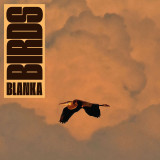
After releasing Flares, the multi-hatted producer and member of La Fine Équipe is back with « Birds », an ode to Lo-Fi and a testament to his love for nature and birds.
While Blanka remains the sole captain on « Birds », he also takes the opportunity to invite several of his long-standing collaborators (Sara Lugo, Onra,…) as well as new encounters (De Phase, King Krab, Papa Rua,…). All the tracks were created on the spot with the same direction. Whether in the choice of textures or instruments, all the guests and musicians put themselves at the service of the chosen theme.
- 1: Betty Baker
- 2: Blackberry Blossoms
- 3: Pompey Ran Away
- 4: Cluck Old Hen
- 5: Chimes
- 6: Lost Girl
- 7: Can't Jump Josie
- 8: Red Bird
- 1: Rockingham
- 2: Prettiest Little Girl In The County
- 3: Drunken Hiccups
- 4: Hog Went Through The Fence, Yoke And All
- 5: Polly Put The Kettle On
- 6: Shortening Bread
- 7: Billy In The Lowground
Past collaborators of Decosimo include indie/folk artists Jake Xerxes Fussell, Wye Oak, and Hiss Golden Messenger. Past collaborators of Schrey include experimental/sound artists Alvin Lucier, Gordon Mumma and Yasunao Tone. In April 2021, Joseph Decosimo, Luke Richardson, and Cleek Schrey three of the most compelling interpreters in the American traditional music scene gathered at a cabin in Tennessee to explore their collective repertoire of Old-time fiddle and banjo tunes, gleaned from visits with older players, field recordings, and vintage 78s. Working with fiddle, hardanger d’amore (a fiddle with sympathetic strings), banjos, and a 19th-century pump organ, the trio captured both the sonic details of their instruments and a generous musical interplay rooted in a dozen years of collaboration. Their debut album, Beehive Cathedral, presents resonant, thoughtful, and expansive explorations of Appalachian and American music. The results showcase deep Details study and enveloping, exhilarating performances. A rich vein of stories and relationships to people and places underpin Beehive Cathedral. Much of the album draws on Decosimo’s experiences learning the music of Tennessee’s Cumberland Plateau, where he grew up and worked as a folklorist. A key source of inspiration was fiddler Clyde Davenport (1921-2020), “Clyde was a social and musical trickster who knew hundreds of old tunes and had an uncanny ability to recall each piece in exquisite detail,” says Decosimo. “During my visits, he’d play breathtaking local pieces from his father Will, who was born in 1868. His father had learned some of them from a neighbor who was born in 1829.” "This record expresses some of what we hear in Southern traditional music: the ring of the strings, the buzz of the tunings, the hum of the organ,” explains Schrey. Spending time listening to old recordings and imagining how those sounds were made has made the trio keenly interested in the relationship between physical motion and sound in their source material. The result is a dense layering of sounds and interaction. Of this sonic interplay, Irish fiddle luminary Martin Hayes observes, “The sound of a beehive conveys the idea of a unified harmonious soundscape which is how this recording sounds. Beehive Cathedral is a sonic delight, a beautiful blend of Old-time soundscapes and more. This is a hypnotic recording that is grounded, subtle and refined
Dando Shaft’s third LP continued their explorations into the progressive and psychedelic strands of folk, now with shifting time signatures evidencing an increasing sophistication, as well as an ongoing commitment to experimentation; more varied in theme than their previous releases, there were shades of blues in places and an array of new instruments in the mix, including harpsichord, accordion, and slide guitar, yet the progressive folk that was always at the core of the group is still intact. With original copies costing in the hundreds, this is another worthy exploration for Dando Shaft fans, and all lovers of progressive folk music.
- A1: Kemp's Jig
- A2: Sir Gavin Grimbold
- A3: Touch & Go
- A4: Three Jolly Butchers
- A5: Pastime With Good Company
- A6: The Unquiet Grave
- B1: Estampie
- B2: Crossing The Stiles
- B3: The Astrologer
- B4: Tea Wrecks
- B5: Juniper Suite
- B6: The Devil & The Farmer's Wife
Non-standard prog act Gryphon made their mark by incorporating abandoned instruments and ancient classical elements in their work, giving their self-titled 1973 debut outstanding differences to standard rock fare. With co-founder Richard Harvey on recorders, mandolin, harpsichord, and glockenspiel and Brian Gulland, on bassoon, crumhorns, and vocals, backed by guitarist Graeme Taylor and drummer/percussionist Dave Oberlé, Gryphon expertly channelled contemporary English folk through forgotten medieval and Renaissance styles; unlike later rock-oriented work, Gryphon showcases the band’s unadorned beginnings.
Fulltone is warmly welcomed back to Lee Burridge’s esteemed imprint to unveil his newest body of work, the four track Alba EP
In crafting the Alba EP, Fulltone embraces the endless expanse of creativity. Reflecting on the elusive nature of inspiration, he compares it to the act of fishing, where patience and persistence are essential to reel in moments of brilliance. "Sometimes you catch a fish immediately, sometimes it takes hours or days, but you won’t catch any fish unless you go to the sea with a fishing line. In my case, the sea is my studio and the fishing line is my instruments."
- Last Epoch Theme
- Burning Forest
- In Preparation
- Keepers Camp
- Escape From The Fortress Vaults
- What She Left To Remember
- Fires Before Dawn
- Bastion Of The Sun
- War Machines Of Solarum
- Eterra
- Highlands
- Ascending The Summit
- Inferno And Fury
- The End Of Time
- Crystal Mines: Crystal Lotus
- Shattered Remains
- The Temple Of Eterra
- Twisted Fire
- The Precipice
- Above The Black
- The Council Chambers
- The Sheltered Wood
- The Forsaken Trail
- The Ritual Site
- Guardian Of Ruins
- The End Of Ruin
- Ruins Of Welryn
- Shadows Whisper
This epic loot sees the epoch-making score for time-hopping action RPG Last Epoch blessing heavyweight wax.
28 tracks chosen by composer Erik Desiderio have been specially mastered for vinyl and will be pressed onto heavyweight discs. These slip into a deluxe double gatefold sleeve with artwork by the team at Eleventh Hour Games.
Desiderio had to cast his mind through time to soundtrack each of the game’s four different epochs of Eterra, with the music of this release focusing mainly on the brighter Divine Era and the darker, apocalyptic Ruined Era. Most eras of the game have a natural, acoustic sound to them with more traditional instrumentation, while the Ruined Era focuses on warped synthetic and acoustic sounds. Over the course of the game’s Early Access period, the composer was able to gather fan feedback, which in turn helped shape the final score.
Some less well-known instruments and techniques colour the music. The sound of the lute helped capture the beauty of the world, while the scratchy, intense tagelharpa embodied the conflict of a war-torn land. In the Ruined Era, fretless bass guitar and expressive Ebow serve to create a sense of unease, with melodic material returning from earlier eras.
Choral lyrics were sung in Old Norse, in particular on the “Last Epoch Theme” with its stirring refrain “Fyoern Oowled” (trans. “Ancient Era”). Vocalists include Ffion Elisa, Colm McGuiness, Mason Lieberman and Matt Lambert.
January 2023, Dorset. Snow is piled at the door, icy roads are closed, and Emily Cross is in a coffin. Not a setting typical for a rebirth. But for Loma, this is where they bring their band back from the brink. "It's like a demon enters the room, whenever we get together", writer, singer and instrumentalist Cross says of the struggle to bring new Loma music into the world. Following the release of their 2020 second album Don't Shy Away, Loma's three members were cast around the globe and the band-not for the first time-entered a deep sleep. Multi-instrumentalist and recording engineer Dan Duszynski remained in his studio in Don't Shy Away's central Texas heart, but Cross, a UK citizen, moved to Dorset, and writer and instrumentalist Jonathan Meiburg left the US for Germany to research a book. In the pandemic years, even being in the same room was impossible, and attempts to start a new record faltered. The following winter, in an attempt to salvage the record and the band, Cross suggested they regroup in the UK, in the tiny stone house-once a coffin-maker's workshop-where she works as an end-of-life doula. With minimal recording gear and few instruments, Loma turned two whitewashed rooms into a makeshift studio, using a padded coffin as a vocal booth. It was a turning point. They scrapped much of what they'd made, letting a new place set a new course. The one-lane roads, hedgerows and dark skies of Dorset gave the new songs an ineffable but unmistakable Englishness. The band used the ruin of a 12th-century chapel as a reverb chamber-surprising hillwalkers who peeked in to find them singing to no one-and the sounds of Cross's chilly workshop wormed their way into the recording: a leaky pipe, a drummer's brushes on a metal lampshade, the voices left on an ancient answering machine. What emerged was How Will I Live Without A Body?: a gorgeous, unique, and oddly comforting album about partnership, loss, regeneration, and fighting the feeling that we're all in this alone. Many of its songs have a feeling of restless motion; faceless characters drift through meetings and partings, tangling together and slipping away. "I Swallowed A Stone" is like a nightmare with a happy ending; "How It Starts" and "Broken Doorbell" reflect on the challenge (and necessity) of wrestling with agoraphobia. Though the record nods to the trio's separate lives- a German percussion ensemble, a pair of Texan owls, and the surf at Chesil Beach make guest appearances-the core of Loma's sound remains intact: earthy, organic and deeply human, anchored by Cross's cool, clear voice. Loma's previous album, Don't Shy Away, was galvanized by the unexpected encouragement and contributions of Brian Eno. This time, they found inspiration in another hero, Laurie Anderson, who offered a chance to work with an AI trained on her entire body of work. Meiburg sent her a photo from his book-in-progress about the once and future life of Antarctica; Anderson's AI responded with two haunting poems. "We used parts of them in a few songs," he says. "And then Dan noticed that one of its lines, 'How will I live without a body?' would be a perfect name for the album, since we nearly lost sight of each other in the recording process." In the end, Loma's efforts to reconnect with one another are the album's central focus: what do you owe a shared past, when everyone and everything has changed? "Making this record tested us all," says Duszynski. "I think that feeling was alchemized through the music." Alchemized, because How Will I Live Without A Body? is by no means a stressed-out record: an undercurrent of deep calm runs through it. But maybe 'relaxed' isn't the right word. It's more like a feeling of relief, of making it through a tough journey together.
Flunk's third ordinary album 'Personal Stereo' was released in 2007.
The album "Personal Stereo" is similar to the first two ("For Sleepyheads Only" (2002) and "Morning Star" (2004)) in that it is centered around Anja's elf-like vocals over Ulf's programmed electronica and Jo's layers of guitars and other stringed instruments. And even if uplifting melancholy is still the Flunk trademark, and Anja sings more beautifully than ever, "Personal Stereo" is in some ways darker than its predecessors. But it also sees a return to the debut album notion of cutting and pasting from the last 30 years of popular music, sometimes in an obvious way (as on the title track and "Change My Ways"), other times as more obscure nods to Flunk heroes. One of them, cult favorite Daniel Johnston, contributes with vocals on "Haldi".
As usual, Flunk's "budget pop" is recorded and produced in its entirety in bedrooms in two different apartments in Oslo, at Ulf's and Jo's.
The album has not been available on vinyl. Until now! It will be printed in a limited run of 200 copies.
Like an unsent love letter to a psychedelic London where everyone is trying to find their way to a secret Television Personalities gig, Cuneiform Tabs emerge with an astounding debut of lo-fi pop and DIY experimentation. A hazy collage of joyful heartaches, twisted children's TV themes and sing-song melodies, the album echoes the sounds of '60s AM radio from a dozen narrow alleyways to the North.
Over 18 months, the Tabs' Matt Bieyle and Sterling Mackinnon traded 4-track tapes between the Bay Area and the UK. While they previously played together in indie band Violent Change, the duo's physical distance and their songwriting process of building, blurring and distorting across the Atlantic would create something no one saw coming. Grabbing any instruments at their disposal and splitting vocal duties, Bieyle and Mackinnon pushed their Tascam to its limit to make glittering, odd-shaped gems.
There is an insular feel to Cuneiform Tabs, suited for late nights after the entire city has stumbled into dreamtime or lazy afternoons when you can't quite recall where you need to be, but you know you won't make it there on time. It's like a pirate radio show where Bob Pollard alternates Swell Maps and Cleaners From Venus records while randomly unplugging various bits of gear and reading passages from a book on R.D. Laing.
Originally released in a hyper-limited artist edition, W.25TH / Superior Viaduct is thrilled to bring this kaleidoscopic LP to a wider audience.
Joanna Gemma Auguri releases her new album "Hiraeth" on 28th June via Duchess Box Records Joanna Gemma Auguri is a Berlin musician, songwriter and actress. In the various stages ofher musical solo and band projects, she incorporates influences from folk, ambient andavant-garde music.Being five years old she escaped with her parents from Poland, which was under martial law,and had to learn at an early age what uprooting means. This experience is reflected in her music as an expression of personal sadness, compassion, but also despair about the state of the world.2021 she released her solo debut "11" on her own label Lavender Music. It was mainly characterized by accordion, zitherand her vocals. Her new album "Hiraeth" was recorded at Candy Bomber Studios in Berlin by Ingo Krauss, with a large number of musicians. Besides choir, double bass, lap steel guitar, drums, cello, horns , different organs and keyboards her original instruments accordion and zither still shine through from time to time. Joanna's voice sits unmistakable on top of the majestic,nearly monumental compositions which despite their richness always stay basic and delicate. "Hiraeth" is an untranslatable Welsh word that describes the longing for a home, a place or a feeling that no longer exists or never existed.The album will be released June 2024 on Duchess Box from Berlin.
- A New Era (Mortal Kombat 1 Main Theme)
- The Beginning
- Huckster Sorcerer
- Fengjian
- Cage Mansion - Stage
- Katara Vala,' In Theaters Now
- Wu Shi Academy - Stage
- Liu Kang's Champions
- Outworld Parade
- Feast Of Jerrod
- The Great Hall - Stage
- Defender Of The Tarkatans
- The Flesh Pits - Stage
- Through The Living Forest
- The Living Forest
- Soul-Stealer
- Reptile's Run
- Sun Do - Stage
- The Story Of Sento
- The Lin Kuei
- Treasure Chamber - Stage
- Sentinel Of The Hourglass
- Dark Doubles
- The Fire Tempte - Stage
- The Pyramid - Stage
- Timeline Faceoff
- The Pyramid Summit - Stage
- The Realms In Balance
- Second Chance
- Reunion
- Summon The Titans
Enjoy The Ride Records in conjunction with WaterTower Music, Warner Bros. Games, and NetherRealm Studios proudly presents the Mortal Kombat 1 (Original Video Game Soundtrack).
It's In Our Blood. Mortal Kombat 1 is the latest title in the acclaimed Mortal Kombat video game franchise developed by award-winning NetherRealm Studios. The game introduces a reborn Mortal Kombat Universe that has been created by the Fire God Liu Kang, featuring reimagined versions of iconic characters as they’ve never been seen before, along with a new fighting system, game modes, bone krushing finishing moves, and more.
Mortal Kombat 1 (Original Video Game Soundtrack) showcases the game's music by Wilbert Roget, II and features stage music composed by Dan Forden, Stephanie Economou, Nathan Grigg, Dan Negovan, Dean Grinsfelder, Casey Edwards, and Joel Corelitz.
Wilbert Roget, II is a veteran composer in the video game and film industries. He joined LucasArts as a staff composer in 2008, where he scored several games in the Star Wars universe, including Star Wars: The Old Republic and Star Wars: First Assault. He later became a freelance writer, scoring Mortal Kombat 1, Star Wars: Outlaws, Call of Duty: WWII, the Emmy Award-winning Star Wars: Vader Immortal, and many other high-profile game scores. He has also written for Japanese anime, scoring the upcoming Gundam: Requiem for Vengeance. His work has earned him several awards and nominations from ASCAP, the Game Audio Network Guild, the Academy of Interactive Arts and Sciences (D.I.C.E. Awards), and others.
Roget also co-founded Impact Soundworks, a successful music software company, and is an accomplished lecturer on game music. He frequently gives online masterclasses and tutorials on music composition and production and has a passion for teaching the craft. He is an avid multi-instrumentalist, performing solo flute, keyboards, world instruments, and guitar on many of his scores.
Available on vinyl for the first time, Mortal Kombat 1 (Original Video Game Soundtrack) is a 3xLP, housed in a soft touch gatefold jacket with spot gloss accents. It includes a full-color double-sided 12" x 24" poster.
SABÏRE has now returned in 2024 with a 15 track epic, self-styled "half-concept" album, "Jätt", 5 years in the making. SABÏRE began at the tail end of 2010 as an idea to have a band that played simply what came naturally on guitar to Scarlett Monastyrski with no set genre or category. Simply the natural music. Shortly thereafter, the concept grew to accompany that sound with a big show and distinctive stylisation. The biting and sharp sound production, along with their personal lyrics, birthed for them a label for their music: ACID METAL. Not to be confused with the mind altering substance, Acid Metal took its name from the concentrated corrosive fluid not unlike the blood of the Xenomorph in the Alien films. The instruments are awash with acidic modulation, "like a drop of acid in the dark." The lyrics all hold a tinge of biting realism that once realised by the listener, stings them like a droplet of acid resting upon their skin. To take their metaphor further, their distinctive production style let's stand apart from the rest of the "modern" sound that degrades the potentcy of many new bands. They call it "brick culture," because it all sounds the same. Concentrated acid burns all the way through anything solid leaving a hot trail behind it, like the band continues to do so with garnering the attention of the world of heavy music. Band leader Scarlett Monastyrski comments : " 'Jätt' is meant to be THE sound of SABÏRE. A monolith to what we stand for artistically. We wanted this album to be its own art piece rather than simply a collection of arbitrary songs, a really 'blue' coloured sound. The physical copies hold beautifully styled texts detailing the concept for those chosen songs, as well as small epistles to accompany each track," says . “ 'Jätt' is a “blue” sounding album; the colour. You may understand that more when listening to the album yourself. The cover of 'Jätt', “Dante and Virgil in the Ninth Circle of Hell” - Gustav Doré, 1861, could be seen through a symbolic lense in which the listener is symbolised as Dante, the artist as Virgil, and the bodies locked within the ice of frozen lake as the music surrounding them; we as the artist are shepherding the listener through the mire. This could be perceived like this, or you may just see it as an attractive album cover. “ "We put our heart and soul into this one and can't wait to give our Wild Ones and Acid Fiends what they've been so patiently waiting for
- A1: My Old Man 3 42
- A2: This Old Dog 2 31
- A3: Baby You're Out 2 38
- A4: For The First Time 3 02
- A5: One Another 2 46
- A6: Still Beating 3 02
- A7: Sister 1 18
- B1: Dreams From Yesterday 3 27
- B2: A Wolf Who Wears Sheeps Clothes 2 49
- B3: One More Love Song 4 01
- B4: On The Level 3 48
- B5: Moonlight On The River 7 03
- B6: Watching Him Fade Away 2 23
LP im Klappcover! Es war der Abstand - der zeitliche, räumliche und methodische - der Mac DeMarco zu "This Old Dog", dem ersten Longplayer seit "Salad Days" von 2014, inspirierte. Mit einer Handvoll Demos in der Tasche, die er in New York geschrieben hatte, zog er von Queens nach Los Angeles und realisierte nach ein paar Monaten in der neuen Heimat, dass dieser Abstand ihm neue Perspektiven eröffnete. Mac DeMarco sagt: "I demoed a full album, and as I was moving to the West Coast I thought I'd get to finishing it quick. But then I realized that moving to a new city, and starting a new life takes time. Usually I just write, record, and put it out; no problem. But this time, I wrote them and they sat. When that happens, you really get to know the songs. It was a different vibe." Mit dem Poppen und Klicken der CR-78 und dem akustischen Geklimper des Album-Opener "My Old Man" sowie dem von Synthesizern durchzogenen zweiten Song "This Old Dog" wird schnell klar, dass Mac DeMarco diesmal tief in die Trickkiste gegriffen hat. Auf "This Old Dog" sind die Synthesizer stärker verwurzelt als auf seinen bisherigen Releases, aber trotzdem achtet DeMarco sorgfältig darauf, dass diese den Rest der Instrumente und den "unplugged"-Eindruck des Albums nicht überschatten. Oder wie er erklärt: "This is my acoustic album, but it's not really an acoustic album at all. That's just what it feels like, mostly. I'm Italian, so I guess this is an Italian rock record." ENG Gatefold LP! This Old Dog by Mac DeMarco (A.K.A. 26-year old McBriare Samuel Lanyon DeMarco) is his third album and first full-length since 2014's Salad Days. The album opener "My Old Man" and title track "This Old Dog" show a new sonic direction and a glimpse into the very personal nature of this record. It was a little space-in time, location (he moved from Queens to Los Angeles), and method-that inspired DeMarco while making This Old Dog. Arriving in California with a grip of demos he'd written in New York, he realized after a few months of setting up his new shop that the gap was giving him perspective. DeMarco says, "I demoed a full album, and as I was moving to the West Coast I thought I'd get to finishing it quickly. But then I realized that moving to a new city, and starting a new life takes time. Usually I just write, record, and put it out; no problem. But this time, I wrote them and they sat. When that happens, you really get to know the songs. It was a different vibe." DeMarco wrote some demos for "This Old Dog" on an acoustic guitar, an eye-opening method for him. "The majority of this album is acoustic guitar, synthesizer, some drum machine, and one song is electric guitar. So this is a new thing for me." And right from the offset, from the pops and clicks of the CR-78 and acoustic strums on the album-opening "My Old Man," and the synth-drenched beauty of the second track, "This Old Dog," it's clear that DeMarco's bag is filled with new tricks indeed. This Old Dog is rooted more in a synth-base than any of his previous releases, but he is careful not to let that tactic overshadow the other instruments and overall "unplugged" mood of the work. "This is my acoustic album, but it's not really an acoustic album at all. That's just what it feels like, mostly. I'm Italian, so I guess this is an Italian rock record."
- A1: Dennis Coffey And The Detroit Guitar Band - Scorpio
- A2: The Jimmy Castor Bunch - It's Just Begun
- A3: B T. Express - Energy Level
- A4: James Brown - Get On The Good Foot
- A5: Afrika Bambaataa & The Soul Sonic Force - Planet Rock
- B1: Manu Dibango - Soul Makossa
- B2: Esther Williams - Last Night Changed It All
- B3: The Mohawks - The Champ
- B4: Herman Kelly & Life - Dance To The Drummer’s Beat
- B5: Spanky Wilson - Sunshine Of Your Love
- C1: James Brown - Give It Up Or Turnit A Loose
- C2: Candido - Soulwanco
- C3: Arthur Baker - Breaker's Revenge
- C4: Manu Dibango - The Panther
- D1: Abaco Dream - Life And Death In G & A
- D2: The Jackson 5 - Dancing Machine
- D3: Mongo Santamaria - Cloud Nine
- D4: Edwin Starr - I Just Wanna Do My Thing
- D5: Badder Than Evil - Hot Wheels
Compiled by legendary producer Arthur Baker, ‘Breakers Revenge’ is a near-definitive collection of original Funk, Soul, Latin, Disco and Electro classic tracks from 1970-1984. These tracks, a combination of classics and obscurities, have all since become legendary to Breakdancers everywhere.
First played at South Bronx block parties, community halls and park jams in the 1970s and 80s, spun endlessly by the first three major hip-hop DJs – Kool Herc, Grandmaster Flash and Afrika Bambaataa – and found in the record crates of any DJ of note ever since. Seminal funk and soul tracks such as Dennis Coffey’s ‘Scorpio’, The Jimmy Castor Bunch’s ‘It’s Just Begun’, James Brown’s ‘Get on the Good Foot’, The Mohawks’ ‘Champ’ sit side-by-side here with the ground-breaking, classic electro of Afrika Bambaataa’s ‘Planet Rock’, and Arthur Baker’s own definitive ‘Breaker’s Revenge.’ Breakdancing has come a long way from its New York roots to its respected position as an art form today where, for the first time ever, it is to be featured in the Olympics held in Paris this August 2024.
The ‘breakbeat’ remains at the very heart of hip-hop, the mercurial funk, soul and disco tracks, always 100% guaranteed to get B-Boys, B-Girls and Breakdancers moving at any block party, with the percussive breakdown of each track the pinnacle soundtrack to any dance/battle between Breakdancers of any note. Similarly these tracks have been sampled many 1000s of times over by every hip-hop artist and producer of note. KRS-ONE, Marley Marl, Kanye West, Jay-Z, Public Enemy, Eric B, The Fugees, Outkast, Mos Def, Main Source, Jungle Brothers, LL Cool J, De La Soul and, well, everyone!
Compiler Arthur Baker played a pivotal role in hip-hop history when in 1982 he produced Afrika Bambaataa’s seminal ‘Planet Rock’ (as featured here), introducing electronic instruments into hip-hop for the first time ever and in the process created electro. After ‘Planet Rock’, Arthur Baker went on to remix or produce every major artist of note – from New Order to the Rolling Stones, Al Green to the Pet Shop Boys
Cloudy Vinyl[25,00 €]
Baby Blue & Halloween Orange Vinyl. In their decade-plus together, the four-piece_Julia Shapiro (guitar, vocals), Lydia Lund (guitar, vocals), Gretchen Grimm (drums, vocals), and Annie Truscott (bass, vocals)_have created a resonant body of work. Live Laugh Love is a natural continuation. Against the bizarre backdrop of the past few years, Chastity Belt remained a supportive space for the members to grow and experiment, drawing on the ingredients most essential to their process since the beginning: authenticity and levity. Recorded over three sessions in as many years (January 2020, November 2021 and 2022), the focus became more about enjoying their time together in the studio than making it feel like work. Their ease and familiarity with engineer Samur Khouja in LA, who also recorded their last album, made for a particularly enjoyable process. Once completed, they returned to renowned engineer Heba Kadry who mastered the album.Album opener "Hollow" sets the tone with a gently driving rhythm while guitar layers stream like sun rays through an open car window. A warmth radiates through Shapiro's voice, even while grappling with feeling lost and stuck. "The older I get," Shapiro says of the lyrics, "the more I realize that I might just always feel this way, and it's more about sitting with the feeling and accepting it, rather than trying to fight it." That wisdom seems to anchor Live Laugh Love. Chastity Belt has never shied from navigating the spectrum of difficult emotions, and an existential thread weaves throughout the subject matter. And yet the songs feel more grounded than ever; there's a sense of quiet confidence and self-assurance that comes with being less numb and more present. Facing discomfort takes more fortitude, after all.Live Laugh Love finds the members in their prime as musicians. Their parts trace intricate patterns over one another, but there's room to breathe between the layers. Everyone contributes to the writing, sometimes switching instruments, and for the first time, all four members sing a song. It's never been more apparent that they are creative siblings, cut from the same belt. "We've been playing music with each other for over a decade," says Shapiro, "so it really does feel like we're all fluent in the same language, and a lot of it just happens naturally.""Laugh" seeks in the balm of friendship, aware of the anticipatory nostalgia that hits during a good time that you're already missing before it's gone; the heavier guitar tones on "Chemtrails" streak ominous chord progressions over Grimm's precision timekeeping, lamenting memories that won't fade easily. During a transitional time, Truscott came across a note in their phone that read, "it's not hard all day, just sometimes," which inspired a poignant line in the chorus of "Kool-Aid," their first song as lead vocalist on a Chastity Belt recording. Another standout, "I-90 Bridge" shines with a silvery melody that soars as Lund belts one of the most resounding moments on the album: "Tell your girlfriend she's got nothing to fear/I'm set in my head/My body's a different story." The track "Blue" saunters nonchalantly with a wink; you can almost hear Shapiro's smile as she sings "Faking it big time/So I can hit my stride/Man, it feels good to be alive," channeling early Chastity Belt channeling early '90s before channeling the late Elliott Smith in a spiral of distortion and insight: "Don't get upset about it/It's gonna pass/Tell all your friends about it/They're gonna laugh.""We have such a strong sense of each other's musical inclinations" says Lund. "I think this allows for a lot of playfulness_we can kinda surprise each other, like a good punchline would."