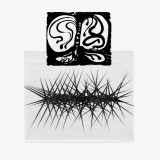
Berlin-based Swedish bassist and producer Petter Eldh returns with a new Koma Saxo album Post Koma, out on We Jazz Records, 10 November. The title Post Koma aptly describes the vibe of this one: The Koma Saxo sound continues its evolution, morphing into a holistic vision of jazz now and soon, where live instrumentation and repurposed sampling lose their boundaries.
Over the course of its three iterations (self-titled debut in 2019, LIVE in 2020, Koma West in 2022) Koma Saxo has sounded at times "liquid" and postproduced, at times raw and direct, at times acoustic and at other times oddly electronic (even while still being made with acoustic instruments). Post Koma is a culmination of this sonic study by Eldh, resulting in a music vision that never second-guesses throwing tasty hooks and everlasting melodies out the window after a mere bite of them. But fear not: there are even more new ideas just around the corner.
Eldh's compositions and ideas merge together in a way that just flows. There are quality musicians in the mix, including Koma Saxo live band members Sofia Jernberg, Jonas Kullhammar, Otis Sandsjö, Mikko Innanen, Maciej Obara and Christian Lillinger, but that's like saying that a cake includes flour and sugar. This music is not about playing, it's essentially about how the music is and how it takes its shape, so you quickly lose track of who did what, and that's all in the benefit of encountering this music as an entity that is constantly challenging itself while moving forward. The musicians are valued contributors, and an integral part of what's here, but this is far from traditional jazz playing where a band sits in a room playing takes after takes of compositions on sheet.
That being said, this is jazz to the fullest. That is, music that understands its past but always moves forward, and is never afraid of taking risks. Petter Eldh uses jazz as a starting point, not the end goal. This gives his music edge and mobility beyond what can be contained on one album. In a way, an album, then, becomes a snapshot of a creative process in constant flux and evolution.
Opening track "Koma" is literally drum & bass. It only consists of those two elements, yet what comes out of it is an open invite, a way of clearing your palette. It would be useless to describe individual tracks beyond that, but there's a strong sense of deliverance to the set. It feels like an ending, and also like a new beginning.
Cerca:instruments
Beloved Polish downtempo / nu jazz masters Skalpel present an exquisite collection of the older Skalpel’s classics and some exclusive material performed live by a masterful 17-piece Big Band. Skalpel’s “Big Band Live” brings mellow, smoky vibes, hypnotic grooves and vibrant, occasionally blissful mood. Polish jazz at its best!
Skalpel is a nu-jazz classic. On their debut and sophomore albums “Skalpel” and “Konfusion” (Ninja Tune) they were able to resurrect the dusty spirit of the 60s & 70s jazz and reimagine it for the 21st century audiophiles. They created emotionally charged music, sophisticated in its structure. After ten years Skalpel returned in 2014 with “Transit” an album that segued from sample-based music into compositions created on virtual instruments. Their critically acclaimed 2020 album “Highlight” together with the follow-up: „Escape Remixes EP” (which included a remix by rising modern classical star Hania Rani and globally respected house duo Catz‘ N Dogz ) had almost 6 million streams on Spotify alone. Their last studio album „Origins” was an inspiring contemporary vision adapting various currents of electronica and dance music of the millennium era. The latest release earned them a „Polish Grammy” - Fryderyk Award.
The journey continues as Marcin Cichy and Igor Pudło present Skalpel Big Band. Patryk Pilasiewicz, composer and musician from Poznań, who is the originator of the idea, dissected and revised Skalpel’s music for a seventeen-person Big Band. The idea was to weave new, acoustic interpretation of Skalpel’s compositions with their original electronic sound.
The band’s true skill, though, lies in how their instruments interlock, the structuring of movements that grow songs from rotted dirges to triumphant war cries, rhythmic tension building until a riff explodes it into something unexpected and completely satisfying. Notably, the band welcomes Andre Sanabria to take over vocal duties, “Andre has been a musical force in all his previous bands. His vocal intensity is compelling,” Howell says. Sanabria screams like he’s trying to tear the songs apart, though he manages to find moments of almost zen-like contemplation. It’s a deft and mesmerising performance, aided by his deeply thoughtful lyrics about, as Howell says, the steady dismembering of the things that bind us.Whilst the album is a depiction of people losing connection with each other, the shows that the band put on see their audiences coming together in catharsis and fighting back against this separation. In this case, hope inspires action - a knock-on effect of community through art.
Mick Jenkins, lyrical hip-hop mastermind and Chicago's Finest, returns with the album "The Patience." He chose to title it "The Patience" because it was that patience that he needed to get to the point in his career where he is now.
Waiting to get free from a label that didn't share his vision was very frustrating, especially since he had to consciously hold back his musical gems in order to release them in collaboration with a partner and team that believed in his art and supported him in his vision for his music.
During this time, Mick worked on his upcoming amazing body of work that has evolved into something very special. Mick at times compares himself to a star chef, brewing up lyrics, seasoning each line to perfection. The album is bursting with offbeat rhymes, sophisticated grooves and complex metaphors. On 'The Patience', the artist shows in an impressive way that he is one of the best in his genre.
Features on the album include JID, Freddie Gibbs, Benny The Butcher and Vic Mensa, who are no less eloquent as rappers and round out the record excellently. Also the production, peppered with live instruments and many jazz influences, makes the hip-hop hearts beat faster.
This is the fifth of Nat’s “one-semble” recordings where he plays all the instruments himself.
This album celebrates our collective ancestors, in particular the ones who carried the Music
in their bones and blood and spread it around the Earth, from the earliest times until now.
Music crosses continents and cultures and time itself, and when it speaks of the truth it
transcends musical genealogy, and continues a timeline from the earliest sources up to the
present day. The music in the album is inspired by many things but particularly the master
musicians - John Coltrane, Pharoah Sanders, Cedric Brooks and Count Ossie.
Started in the Winter of 2021 and completed in early 2023, “Lights Out On The Shore” is a 12 song cycle written and performed by Scott Reeder, drummer of the band FU MANCHU. Having treaded many stages and studios over the past 22 years laying the foundation for the titans of “fuzz-wah” rock over 5 studio releases and playing live with artists as varied as Orianthi and Social Distortion, Scott has stretched into a melodic heavy and lyrically dense area of songwriting, rich in harmony and memorable riffs. Collaborating with Grammy winning producer/engineer Ryan Mall (Dropkick Murphys, Old Crow Medicine Show/Gaslight Anthem), Reeder played all the instruments on the album and sings all vocals. Fu Manchu bandmate, Bob Balch, contributes lead guitars on all tracks except “Everything But Right” and the album closer, “As She Drifts,” which feature contributions from Mitchell Townsend (Matt Costa/Jack Johnson).
This limited edition 500 unit LP run is pressed on blue/black splatter and includes a full color insert featuring photos taken by Reeder himself. All tracks were mastered specifically for this vinyl release
I want to introduce this work ‘Halos of Perception’ to you in the way Lisa introduced me to it, through the sharing of experiences.
Lisa and I met for a walk near South Yarra station to talk about this work, when inclement weather made it too wet to visit the tunnels. Moving almost seamlessly from a world of leisurewear, infinite milk alternatives and blaring neons to stretches of green by the water that brimmed with sounds and life, we saw a few people climbing the Burnley bouldering wall, butterflies suspended in the hot wind and lots of plants I wish I knew the names of. Overhead the cars rumbled like a ceaseless animal as we talked about hidden ecosystems, imagined spaces and networks of care.
Stemming from a serendipitous encounter with an original Cave Clan member that led to many underground adventures, this work explores the worlds that exist outside of our perceptions. By the river, I leafed through a selection of tunnel photos Lisa had printed off at Officeworks, revealing alien textures, tunnels that stretch on into abysses of their own, underground flowing streams. Light is sparse and delicate, something reflected by the flickering and wavering in Lisa’s piano compositions.
As we walked, we noticed the ways in which infrastructure is often designed to keep people out—cut doors into fencing and clipped wires show an active and ongoing defiance of this. We spoke about how her Cave Clan friend used to go down to this painted room and read in solitude, using candles for light. The way sound exists underground, encased in these hollow cement tunnels, a painted room with its own deep hum. How people used to hold underground shows, how there were rules for safety (no exploring after rain, never alone) that was shared with each other. This warmth and absorption of other’s experiences is present in Lisa’s work—it’s immersive, like wading in water.
We paused on the walk to eat berries and talk about how The Caretaker creates transitory worlds with recorded sound, how this technology captures memory, and the exploratory pursuits of Pauline Oliveros’ Deep Listening Band. These citations of memory and deep listening inform Lisa’s use of analogue and classical instruments, playback artefacts and acoustic feedback in her own world-building. When speaking about ‘Halos of Perception’, she describes it as a fascination with timbre and acoustic artefacts.
Ideas of networks and enmeshment are felt deeply in Lisa’s compositions, motifs overlaid over each other evoking the image of many hands interlinking playfully, tenderly, softly. The way her compositions delve into refraction and echo makes me think about the tunnels and the way they splinter off into many possibilities. Manipulated textures reminiscent of the chalky, earthy, moss air that perfumes the tunnels’ subterranean air. Tactile details that gesture towards close attention, verging on obsession.
This work is also about imagining ecosystems of potential. Lisa shared with me that during this project, she has been reimagining subterranean networks in dreams, thinking about oral traditions, and the way water moves—from the sky to the earth, through the ground, connecting all these spheres. Realised in collaboration with hyperreal video artist Tristan Jalleh, Lisa’s dream landscape melds waterfalls, leaks, flower graffiti, and hidden messages lit up by imagined light sources with existing subterranean networks. There’s a real sense of wonder in this world she has built, how the city can reveal itself to you with some patience and care, how the city and its secrets can find its way into your dreams.
— Panda Wong
The second of four vinyl release from DJ 3000’s “Mezë’ album continues to shine with ‘Pitë EP’. ’Pite’ as close to classic House as DJ 3000 gets, a testament to his versatility on this new release. 'Red & Black' is a heartfelt homage to Franki Juncaj's Albanian heritage, evident not only in its title, which echoes the national colors, but also in the seamless integration of traditional Balkan instruments. 'Ishalla' hints at the influence and inspiration drawn from Middle Eastern and Balkan musical traditions. Bringing this EP to a poignant close is 'Dua' a title derived from Albanian, signifying "I want," adding a meaningful linguistic layer to this captivating musical journey.
2023 Repress
Reiko Kudo first debuted on the Tokyo underground music scene in 1980 with NOISE, a duo which apart from herself under her then maiden name Reiko Omura on voice, guitar and trumpet featured Tori Kudo on organ. Their only album TENNO (1980 on Engel) is probably one of the most outstanding and uncompromising records of all time.
Like other pioneering female producers from Japan such as NON (of NON BAND), PHEW and HACO, who had all begun their startling careers in the early days of the japanese Punk era, Reiko Kudo can surely be regarded as one of the most unique, uncategorisable and daring voices in the entire field of electronic and experimental music ever.
RICE FIELD SLOWLY RIPING IN THE NIGHT was REIKO KUDO's second album under her own name. It features TORI KUDO (MAHER SHALAL HASH BAZ) and SAYA and TAKASHI UENO (TENNISCOATS) on various instruments. The recordings took place in 2000 at Reiko' s and Tori's house in the rural surroundings of Shikoku island.
All recorded music on this album sounds like it originates in a parallel dimension where time and key signatures simply don't exist, Some might describe this as outsider music, but this doesn't really begin to do justice to the quality of the tracks, there is nothing accidental or forced here, this is simply music created in a very different way. Yet again REIKO KUDO had conceived of something utterly beautiful.
"After producing the album "Souvenir de mauve" with Maher Shalal Hash Baz which we released on our label Majikick, the idea came to us, to release Reiko Kudo's work. For Reiko's work, we brought our recording equipment from Tokyo to Shikoku and recorded the entire album at her house.
The piano was positioned in a room with a high ceiling. We would set up our small recording equipment in the room and started to record. The basic tracks were recorded without any rehearsal and just a few overdubs were added on top of it. To have a distant sound on the recording, Tori played trumpet in the next room. The choir was standing outside the house, singing "Enya-totto, enya-totto" through the open window. It was early spring, I remember that it was still a bit cold and the members of the choir were freezing outside.
Reiko plays only at certain times of the day, so that we were able to complete only two or three recordings a day. Therefore we had plenty of free time. We went to a hot spring, to a cafe, or we tried pottery on a spinning wheel at Tori's workshop. It was a very rewarding time.
When this album was finished, we brought it to her to listen to. She said happily "I think this is the best work I have ever done." We felt that all our efforts were richly rewarded. Secretly, we thought the same, so we are delighted that this album will be re-issued." - Saya and Ueno (Tenniscoats), Tokyo 2018
Originally released on Majikick Records, Japan, 2000 Restauration and mastering by Detlef Funder at Paraschall Mastering, Düsseldorf. Vinylcut at Calyx, Berlin Translation by Miki Yui and Claus Laufenburg. Many thanks to Reiko Kudo, Tori Kudo, Saya and Takashi Ueno, Satoru Higashiseto.
Dreyblatt"s minimalist conception - a rhythmic drone played on a double-bass strung with piano wire, playing in concert with other stringed instruments performing in 20 unequal microtones per octave and changing key but keeping the same fundamental pitch - dates back to the 1970s, while he studied under La Monte Young and Pauline Oliveros. Resolve acts in intermittent dialogue with the first Orchestra of Excited Strings release, 1982"s Nodal Excitation.
Since then, Dreyblatt has formed new orchestras across various countries and decades, with each phase of his music requiring several overlapping periods of gestation and arrangement.
The current Orchestra is formed by Konrad Sprenger, Joachim Schütz and Oren Ambarchi. On Resolve, each of the members" playing brings new angles to the compositions. Konrad Sprenger"s involves solenoids, sine waves and a computer-controlled multi-channel electric guitar (as well as a relentless style behind the drum kit and oversight of the album production), while Joachim Schütz"s individual conception of electronics and electric guitar and Oren Ambarchi"s undeniable innovations with signal path work together with Dreyblatt"s bass (still strung with piano wire) as magnetic component parts of Resolve.
These contributions lead to Resolve"s dialogue with the early Orchestra of Excited Strings canon - for instance, the track previewed here, "Flight Path" takes off at a pace not often found in the minimalist genre - a rolling lope! Yet the sense of play is palpable: the ensemble scale their microtonal keys with punkish brio, a stance sharing much with the original Orchestra"s downtown pulse, even as as the new Orchestra burn their own path through Dreyblatt"s music.
Approaching his 70th birthday, with over 40 years of work as a solo artist, collaborator, composer, educator and bandleader, Arnold Dreyblatt views Resolve as an important expression within the long story of The Orchestra of Excited Strings. The album title"s tendency to mean different things is an indicator of the dynamic qualities of his music in all its different phases - an evolution that continues to produce new dimensions in acoustic sound with every new release.
It's been a little over ten years since Hailu Mergia reemerged on the international music scene. Following the first in a series of his classic recordings reissued in collaboration with Awesome Tapes From Africa, Mergia assembled a band and began performing live again after many years driving a cab in Washington, DC. His first show back appeared on the front page of the New York Times along with a stellar review and he took off from there performing his flavor of Ethiopian jazz all over the world in the years since, including Radio City Music Hall and Montreal Jazz Festival. Finally, we have a recorded document of the keyboard player's powerful DC-based trio _ which practices each weekend in his basement _ featuring Kenneth Joseph on drums and Alemseged Kebede on bass. Beautifully captured at one of their fiery live shows at the venerable Brooklyn non-profit cultural center Pioneer Works on July 1, 2016, the concert was recorded by PW staff and mixed by Ted Young with mastering by ATFA's expert audio extraction collaborator Jessica Thompson. The performance clarifies what many people across the globe already know: in his fifth decade of music-making Hailu Mergia continues to push the boundaries of his remarkable abilities. Mergia and his veteran band energetically and playfully unpeel layer after layer of harmonic and rhythmic interest out of a spectrum of Ethiopian repertoire. Modern jazz demands constant reinvention and improvisation, night after night creating new works out of known modes and classic standards. This band is unstoppable when it comes to turning age-old melodies (like "Tizita" or "Anchihoye Lene") upside down and inside out until they emerge as molten new works, often spontaneously. Mergia's original compositions (like "Yegle Nesh") shine brighter than ever here as well. Moving from keyboard to organ to accordion to melodica, he deftly switches instruments _ often during the same song. Mergia at 77 years old seems to be working harder than musicians half his age. "Pioneer Works Swing (Live)" brings into focus the kind of onstage group improvisation and deadly solo passages that reach for places Mergia and the band have never gone, on festival and club stages across four continents. Now that Mergia has released two new recordings along with four classic reissues, he is eager to let everyone hear what he's been doing on the road since he re-took the global stage for his victory laps. So much more than an old act from yesteryear, Mergia balances his legendary Ethiopian recordings with good old fashioned sweat-soaked live concert triumphs such as the one we have here.
The last twelve months have been a whirlwind for Henry Counsell and Louis Curran, the men who make up Joy (Anonymous). Having established themselves during the Covid-19 era by playing impromptu meet-ups on London’s South Bank, they have graduated to bigger venues, travelled to far-flung locales and recorded their second album, Cult Classics, while maintaining the spontaneous energy and irrepressible joy that made their name. Their music revels in the euphoria of being alive and all the feelings, good or bad, that come with it. It invites us into a community, draws us close and promises the night of our lives.
Recorded over the course of a year, the blueprint for Cult Classics was laid down over a two-week span at Imogen Heap’s Round House in east London. Joy (Anonymous) invited friends old and new to visit - they’d record live instruments in jam sessions upstairs and then retreat to a second room to flip and loop and generally mess with the sounds, moulding them into sizzling dance tracks. “Loads of people were coming up to me like ‘I thought this was going to be a dance record?’” Louis says, remembering the quietly beautiful music they’d be recording. “I’d be like, don’t worry about that, just keep playing.” He’d send it back to people later and they’d be floored - “That was my bit and you’ve made it... jungle!”
It was an organic and creatively fulfilling approach, one that didn’t allow any of the music to get stale or stagnate. As they built the tracks from the sounds they’d collected, Joy (Anonymous) would weave the new songs into their famously improvised live sets, testing them, refining them, taking note of the audiences’ reactions. In a year punctuated by a lot of travel, they’d also incorporate the voices of people they met along the way - “Beazley’s Poem”, which opens the record, features the words of a man who was working security at a Fred Again show at New York’s Terminal Five. “He was basically doing the opposite of his job and being a hype man, climbing on the fence and ramping up the crowd - we ended up hanging out with him - like, who’s this legend?” Louis explains. “He just speaks really amazingly about his life, all these amazing thoughts and opinions - he started jumping on the mic when we were playing, preaching these amazing messages to the crowd, like that we all need to be nicer to each other. The first time we played the record in its entirety, he introduced us and that’s the recording we’ve used.”
Joy (Anonymous) remain dedicated to the spirit of spontaneity. They shut a street down with a surprise waterside party in New York. On a trip to Copenhagen they played an impromptu set in a cafe, which turned into a house party and a night-long good time. In Lithuania, they ended up playing in a decommissioned prison. It’s harder, perhaps, to keep that spirit alive now that they are operating more within the confines of the music industry but they will keep lugging their kit to wherever the party calls for as long as they can. “I think if we lose that, we’ve kind of lost what makes us us,” Henry says.
Bursting with multi-genre reference points and disparate influences, Cult Classics is very much a dance album. The samples we made ourselves or we took from music that is quite different to dance music, but we definitely wanted to shout out a lot of the dance influences that we love,” Henry says. They listened to a lot of Daft Punk and Basement Jaxx as well as The Prodigy (“more rage stuff”), taking songwriting tips from their dance forebears, but also recording bits that felt more like jazz and motown (see: A Place I Belong and the lovely album closer, You’re In Or You’re Out). Emir Taha’s gentle classical guitar runs like a thread throughout Cult Classics, washing into the undertones of the record, tying it all together.
The album follows the beat of a night out, from frenetic, sweaty movement to the gentler winding down as the dawn breaks. At times it is euphoric, celebratory and pure, whirling fun, at others it seeks the joy in the darker emotions that life throws our way. 404 is designed to encapsulate everything about the Joy (Anonymous) journey so far. Skittering beats and ghostly vocals give way to vibrating house chords: sirens blare as we approach a dubstep drop. It’s dramatic and wild, ratcheting up, seeming to settle then hitting you with an intense and frantic breakdown before the ghostly vocal returns to lull us back into the world. It has the feel of a hungry cat playing with a mouse, toying with it before letting it get away.
What sounds like someone playing the spoons on playful, housey How We End Up Here is actually Louis’ restless habit of clicking his rings on everything, one of a myriad of calling cards and easter eggs that day one fans will recognise. They rework Miley Cyrus and Swae Lee’s Party Up The Street into a French-electro-inspired future classic, adding a note of melancholy to a tune that you can imagine hearing blaring from every car on a summer drive. The lyrics on Cult Classic are generally reassuring, inspirational, originally drawn from Henry in stream-of-consciousness freestyles. You’re fine the way you are, they seem to say - the repeated “No need to try” of A Place I Belong, the assurance that “It’s in me all the time” on In Me All The Time. Even the summery but regretful Did You Wrong hints at the growth that is possible from less than ideal behaviour. For Joy (Anonymous), joy isn’t about just being “happy” all the time - it’s about relishing every element of your being.
The name ‘Joy (Anonymous)’ is taken from the work Henry did with Alcoholics Anonymous groups: it is a way to build a community around sharing joy. Their impromptu live sets are known as ‘meetings’; they encourage fans to share moments of joy to their website. They care deeply about the scene they’ve come up in and are determined not to leave it behind. Every show is another chance to reach out and connect with people who love to come together and revel in music as loud as it can go.
Support slots for Fred Again and The Streets, wild B2Bs with Fred and Skrillex, and a set at Four Tet’s Finsbury Park all-dayer this summer have given the duo the opportunity to live out childhood dreams and introduced their infectious live shows to new audiences at huge venues.
With an album as assured and joyful as Cult Classics on the horizon (and a killer collab with The Blessed Madonna coming up), they’re only going to reach higher heights. But the essence of Joy (Anonymous) remains on the South Bank. Between shows at Ally Pally in September, they dragged their camping chairs and gear back down to the banks of the Thames: and it just felt right.
Denovali presents Spark and Earth, the ninth full length album from NYC-based composer and performer Mario Diaz de Leon. Celebrated for his electroacoustic chamber music, Spark and Earth is the first of Diaz de Leon’s solo albums to foreground his performance as a metal guitarist, alongside a vividly textured electronic ensemble of terse synth stabs, woodwind and vocal timbres, floor rattling synth bass, and propulsive kick drums. Songs such as Cruces, Templo, Kepha, and Elemental evoke rave-metal anthems, foregrounding a vibrant alchemy of thrash guitars with percussive synths. Aqua, Breath of God, and Carnelian seamlessly weave lead and chiming guitar lines with meticulously charted electronics and hammered dulcimer timbres. Carnelian charts the alluring flow of a single melodic line through the instruments of the ensemble, while the haunting analog synth interplay of Mirror Spirit recalls the vivid electroacoustic works of previous releases. Over nine songs and 30 minutes, Spark and Earth is an alchemical journey through Diaz de Leon’s electronic chamber metal.
Since 2009, Diaz de Leon has released four recordings of his collaborations with chamber ensembles (International Contemporary Ensemble, Talea, TAK), while from 2012-2016 he produced three solo electronic albums under the project name Oneirogen. With the two-song album Heart Thread (2022), he began releasing electronic works under his own name. His music has been celebrated over the last decade for its “hallucinatory intensity” (NEW YORK TIMES), “snarling exuberance” (PITCHFORK), and “remarkable textures and vivid atmosphere” (NEW YORKER MAGAZINE). As collaborator, he is guitarist and vocalist in the extreme metal duo Luminous Vault (Profound Lore Records), and performs synth and drum machine in Bloodmist, an electroacoustic improvisation trio with Jeremiah Cymerman and Toby Driver. In 2023, he collaborated with Eartheater and members of Krallice in a performance of songs from her album Trinity. Since 2019, he has taught at Stevens Institute of Technology as Assistant Professor of Music and Technology.
Heading to a new millennium, people in the 80s and 90s were looking for brighter days to come and Techno was the music of this utopic future, themed by rushed beats made by electronic instruments that resembled a new era of technology, endless excess and possibilities.
40 years later the world is more complicated and dystopian than ever as we face crises everywhere. Mental issues are a natural consequence of the troubled environments we live in and more people around the world suffer from them. At the same time, we haven't lost the appeal for euphoric and fast dancing, either to leave our problems behind or face them head-on on the sweaty dance floor.
This EP is dedicated to some of the feelings associated with the tribulations of mental issues. What seems like a dark take still points out that we are not alone, as music unites us being the source for help and change. Mental States 777_31 offers four sick cuts perfect for insane clubs - fast and furious like an attack, rushed and energetic embracing positivity in the darkness.
Swiss vocal acrobat Andreas Schaerer and Finnish
guitarist Kalle Kalima have some things in common. As
artists, each is essentially in a category completely of his
own. Both are musicians who can always conjure
something special from their chosen instruments. Both are
known on the international jazz scene for the completely
distinctive and original ways their music constantly crosses
genres.
Both have played together for several years in the quartet,
A Novel Of Anomaly. And now they have recorded a first
album together in which the focus is on the two of them.
However, for this ‘evolution’ (as the album title has it), they
have also involved - and drawn inspiration from - a
musician whom they both admire, Tim Lefebvre. The
American bassist has worked with many pop and jazz
stars, notably Sting, Elvis Costello, David Bowie, Mark
Guiliana, Wayne Krantz... Lefebvre’s involvement in the
Michael Wollny Trio’s breakthrough was, incidentally,
anything but tangential. In other words, his playing is at
home in practically every context.
Listeners familiar with Schaerer’s and Kalima’s previous
work may find ‘Evolution’ somewhat surprising. “An album
is such a different platform from playing live on stage,”
explains Schaerer. “Over the course of our many
recordings, we have become increasingly aware quite how
differently one has to play.” That awareness has also
resulted in a particularly careful focus on the postproduction phase of ‘Evolution’.
With ‘Evolution’, Schaerer, Kalima and Lefebvre have redrawn the roadmap for the production of a jazz album.
New avenues are constantly opening up in these complex
but also catchy songs which are just made for repeated
listening... and, of course, listening to the album is also a
reminder that it will all sound completely different again
when heard live.
It’s been a little over ten years since Hailu Mergia re- emerged on the international music scene. Following the first in a series of his classic recordings reissued in collaboration with Awesome Tapes From Africa, Mergia assembled a band and began performing live again after many years driving a cab in Washington, DC. His first show back appeared on the front page of the
New York Times along with a stellar review and he took off from there performing his flavor of Ethiopian jazz all over the world in the years since, including Radio City Music Hall and Montreal Jazz Festival.
Finally, we have a recorded document of the keyboard player’s powerful DC-based trio—which practices each weekend in his basement—featuring Kenneth Joseph on drums and Alemseged Kebede on bass. Beautifully captured at one of their fiery live shows at the venerable Brooklyn non-profit cultural center Pioneer Works on July 1, 2016, the concert was recorded by PW staff and mixed by Ted Young with mastering by ATFA’s expert audio extraction collaborator Jessica Thompson. The performance clarifies what many people across the globe already know: in his fifth decade of music-making Hailu Mergia continues to push the boundaries of his remarkable abilities.
Mergia and his veteran band energetically and playfully unpeel layer after layer of harmonic and rhythmic interest out of a spectrum of Ethiopian repertoire. Modern jazz demands constant reinvention and improvisation, night after night creating new works out of known modes and classic standards. This band is unstoppable when it comes to turning age-old melodies (like “Tizita” or “Anchihoye Lene”) upside down and inside out until they emerge as molten new works, often spontaneously. Mergia’s original compositions (like “Yegle Nesh”) shine brighter than ever here as well. Moving from keyboard to organ to accordion to melodica, he deftly switches instruments—often during the same song. Mergia at 77 years old seems to be working harder than musicians half his age.
Pioneer Works Swing (Live) brings into focus the kind of onstage group improvisation and deadly solo passages that reach for places Mergia and the band have never gone, on festival and club stages across four continents.
Now that Mergia has released two new recordings along with four classic reissues, he is eager to let everyone hear what he’s been doing on the road since he re-took the global stage for his victory laps. So much more than an old act from yesteryear, Mergia balances his legendary Ethiopian recordings with good old fashioned sweat-soaked live concert triumphs such as the one we have here.
“Azazel” is the second vinyl release of this year and the EP debut from Priorato (MX), with some interesting and outstanding remixes by Colossio, Ludviq, and Chinosynth. This vinyl release will offer a diverse range of remixes, each bringing its own interpretation and style to the original track "Azazel".
A1. Led by Rubén Torres, a DJ and producer from Ciudad Juárez, Chihuahua, focusing on indie dance and techno, the original track for "Azazel" is characterized by a solid bass sequence, hypnotic vocals, and a blend of electronic and organic elements.
The song creates an enigmatic and immersive atmosphere, gradually building a powerful and addictive groove, it offers a musical experience that transports listeners to a trance-like state, inducing feelings of euphoria and escapism.
A2. For the first remix we have the honor to have again on board Colossio, he’s also known as one of Mexico's most talented producers, with previous releases on labels like Duro, Calypso, and Exit Strategy. His remix of "Azazel" is expected to bring a mix of high energy and darkness to the track, showcasing his signature style.
B1. Originally from Guadalajara, Mexico but now based in Barcelona, Spain, Head honcho Ludviq, delivers a remix that promises to be energetic, groovy and psychedelic, incorporating unconventional percussions and sounds recorded from the city chaos and nature calmness environments.
B2. Based in Culiacán, Mexico, Chinosynth's remix aims to infuse a human touch into the track by incorporating analog sounds from studio instruments such as guitars, bass, and synths, while maintaining a dance floor-oriented vibe.
Sounds While Waiting documents the latest organ works by composer and musician Ellen Arkbro – following her phenomenal debut, 2017's For Organ And Brass, and the more recent CHORDS. Recorded at a centuries-old church in Unnaryd, Sweden in June 2020, these pieces reveal the enchanting qualities of sustained harmonic sound, how patterns of listening dissolve and emerge as textured space. On opening track "Changes," long radiant tones ebb and flow like divine breaths, while "Leaving Dreaming" builds with dynamic tension to unlock a subtle, otherworldly ambience.
As the composer states in the sleeve notes, "These recordings are traces of something I have come to love to do in large resonant spaces, which is to set up sustained chords on multiple organs and then move slowly through the sound. The instruments are usually far apart, which makes for the emergence of large fields of continuous change, spaces of harmonicity that can be passed through layer by layer and which contain within them points of both clarity and overwhelming complexity. The organ pipes are tuned and retuned, though sometimes I leave them just as they are. What I'm searching for is the moment when a particular kind of sounding texturality is revealed – it is rough, focused and yet strangely transparent."
Arkbro composes for acoustic instruments, for synthetic sound and for combinations of both, including music for orchestra and smaller chamber ensembles and large scale installation works. She currently performs in Catherine Christer Hennix's Kamigaku ensemble, and she previously studied with La Monte Young and Marian Zazeela. Recommended for fans of Sarah Davachi, Eliane Radigue and Charlemagne Palestine.
Artist and multi-instrumentalist Flaer looks to the landscape to explore pastoral melancholy on debut release, Preludes.
Ensconced in his family home in rural Leicestershire in the early months of 2020, painter and musician Realf Heygate (b. 1994) picked up his childhood cello for the first time in several years and began to play. Setting himself parameters to only record onto 4-track tape with acoustic instruments – cello, piano and acoustic guitar – he assembled a suite of instrumental compositions that form the basis of Preludes, his debut album as Flaer and the inaugural release on Odda Recordings.
Channelling the tension and unease between the pastoral idyll of the English countryside and the darkness which lurks beneath the surface, the mini-album draws inspiration from the analogue aesthetic of 1970s folk horror films, weaving field recordings of birdsong, church bells and the natural environment into chimerical melodies that reflect on Heygate’s childhood experiences of rural England.
“It was really important not to isolate the sound from its environment,” he explains, describing the compositional and recording process as “site-specific”. Developed over a series of intuitive musical enquiries, the mini-album’s uncanny quality emerges from combining raw demo takes with overdubs of almost orchestral grandeur.
Heygate points to the final track as indicative of the work as a whole: “‘Follow’ really is the mantra for the release and embodies the practical approach I was taking to music making: not to force the music but see where it takes you.”
As a painter, Heygate’s practice takes artefacts through sequences of reproduction that embrace the fluctuating materiality of the copy. Since obtaining a degree in Fine Art from Central Saint Martins in 2017, he has exhibited solo at Peter von Kant and Springseason galleries in London, and has participated in group shows at Saatchi Gallery, Cob Gallery and Senesi Contemporanea.
Describing his artistic practice as one of self-erasure, music instead provides Heygate with a more personal and autobiographical outlet. Where the two worlds combine is on Preludes’ striking artwork, which features paintings of 13th century stone carvings from the font of the church in the town where he grew up.
Speaking to a time where people were connected to the land in a more profound way, each symbol is assigned to a track on the album, which Heygate likens to giving them a title.
“To add that one juxtaposition might open a whole new interpretation or language that might be hard to find otherwise,” he explains.“Over time it might reveal itself to you, which is why I'm excited about it being released. To throw them out there and see what comes of it.”