Available again this first pressing of this reissue is on neon yellow vinyl. Chapter Music presents a vinyl reissue of Australian post-punk icon David Chesworth's mutant punk-funk second album, 1981's Layer On Layer. After his revered 1979 debut 50 Synthesizer Greats (reissued by Chapter in 2017), David swapped the solo home-recorded synths for something very different - infectious, percussive art-funk weirdness. Aged 21, David recorded nights and weekends at the studio in his university's music department, building Layer On Layer from the ground up, using non-instruments like telephone directories, cardboard boxes and car parts. He created an art-damaged sound world, driven by irresistible rhythms but emphasizing chance and experimentation. Robert Goodge, Chesworth's bandmate in the celebrated Essendon Airport, contributes his trademark cyclical guitar, with Tsk Tsk Tsk's Ralph Traviato on sax and other Tsk members Philip Brophy, Jayne Stevenson and Maria Kozic on backing vocals. Layer On Layer was the beginning of David's investigations into rhythm, and remains one of his most striking works. His 70s/80s records and productions have become sought-after collectors' items and DJ holy grails. Chesworth is now a renowned composer sound artist. For digital bonus tracks, David has revisited Layer On Layer tracks to create mutant DJ versions. Also Available From David Chesworth: 50 Synthesizer Greats LP
Suche:instruments
Repress!
LA producer Blake Robin aka LUXXURY’s new full-length album finds the bassline obsessed disco addict experimenting with funk, synthpop and even (gasp!) pure instrumentals. ‘Increasingly in my most recent singles I’ve been treating vocals like instruments’ says Robin, ‘backgrounding and balancing them as sonic elements instead of centerpieces, so the listener gets lost in the groove.’ And indeed the star of these 11 songs is undoubtedly the 11 stellar basslines that ground the swirling synths and melodies as vocal fragments coolly dip in and out of the mix along.
Highlights include: KCRW fave ‘What Are We Gonna Do?’; the slap bass workout ‘Somebody Tonight’; the contemplative ‘…At Any Moment’ (playlisted by Purple Disco Machine) and its sister track, the title track ‘Alright’; while playful disco-house burner ‘Let’s Stay Together’ blends house and jazz funk rhythms with his trademark dusty basslines.
The album was 100% created by Robin, who wrote, performed, recorded and mixed all 11 songs, and even created the artwork. The 11 songs on LUXXURY’s album are all infectiously rhythmically-oriented while exploring new disco direction
The story of the invention of the term, 'deepfunk' is probably only known among fans and practitioners of this niche-genre. In short, it all started in the 1990s when DJs like Keb Darge, Mark 'Snowboy' Cotgrove and others began spinning obscure and feral Funk 45 RPM singles from local American bands, ostensibly generating another sub-category branch off of the mighty Northern Soul tree. The dance-club phenomenon inevitably spilled over to contemporary groups on the funk scene which immediately tried to record their music the way their idols did. The 'rare groove' and 'acid jazz' movements had run their course and there was a concerted effort to reinstate primitive idiomatic styles and techniques into the music, most notably by 90s funk collective The Poets of Rhythm. As more years passed by the number of bands steadily increased (although in tiny numbers, compared to the mainstream market). Almost every country had a representative with the majority of them coming from the United Kingdom. The deepfunk sound was still a niche, however a very few bands made it onto the mainstream charts, most notably Sharon Jones & the Dap Kings.
At the height of the retro-soul movement a questionable development took place. As more bands arrived on the scene, the production became more and more polished and pop-ish. Some of that squeaky-clean tidiness began to creep into the recordings, encouraged in part by the signature sounds of the digital recording technology available at that time. Some bands even tried to jump onto the possibility of promoting their music as 'deepfunk' although they were actually playing slick, funky pop music. This way some people who thought they were listening to raw, energetic funk actually felt quite ambushed when hit with real deepfunk. In fact, a certain percentage of funk music produced within the past 20 years does not deserve to be described as 'deepfunk' at all. Fortunately there were (and are) some pleasant exceptions which did not just imitate but actually rendered amazing funk music just like some of the finest funk combos of the 1960s and 70s.
One of those creative minds is without a doubt Joel Ricci aka Lucky Brown. Originally from Seattle, Washington, USA, he has enriched the deepfunk community since the mid-2000s with his stellar abilities. He is not only an amazing musician playing multiple instruments, but also a brilliant composer, arranger, and producer too. But for us here at Tramp he is much more, a close friend and remarkable human being. Whenever we were struggling, whether with the label or in private life, Joel and his musical work helped us to overcome everything and to keep going our path.
So here we are in 2023. The songs you are listening to right now are the complete Space Dream collection, split into two parts, representing the two living-room recording sessions from which his 2011 Tramp Records debut was compiled. Each fully remastered album contains unreleased material and comes with brand new, beautifully reimagined artwork by Ricci himself, housed in an authentic 1960s tip-on cover. A first class product from a first class musician for the discerning funk enthusiast.
The story of the invention of the term, 'deepfunk' is probably only known among fans and practitioners of this niche-genre. In short, it all started in the 1990s when DJs like Keb Darge, Mark 'Snowboy' Cotgrove and others began spinning obscure and feral Funk 45 RPM singles from local American bands, ostensibly generating another sub-category branch off of the mighty Northern Soul tree. The dance-club phenomenon inevitably spilled over to contemporary groups on the funk scene which immediately tried to record their music the way their idols did. The 'rare groove' and 'acid jazz' movements had run their course and there was a concerted effort to reinstate primitive idiomatic styles and techniques into the music, most notably by 90s funk collective The Poets of Rhythm. As more years passed by the number of bands steadily increased (although in tiny numbers, compared to the mainstream market). Almost every country had a representative with the majority of them coming from the United Kingdom. The deepfunk sound was still a niche, however a very few bands made it onto the mainstream charts, most notably Sharon Jones & the Dap Kings.
At the height of the retro-soul movement a questionable development took place. As more bands arrived on the scene, the production became more and more polished and pop-ish. Some of that squeaky-clean tidiness began to creep into the recordings, encouraged in part by the signature sounds of the digital recording technology available at that time. Some bands even tried to jump onto the possibility of promoting their music as 'deepfunk' although they were actually playing slick, funky pop music. This way some people who thought they were listening to raw, energetic funk actually felt quite ambushed when hit with real deepfunk. In fact, a certain percentage of funk music produced within the past 20 years does not deserve to be described as 'deepfunk' at all. Fortunately there were (and are) some pleasant exceptions which did not just imitate but actually rendered amazing funk music just like some of the finest funk combos of the 1960s and 70s.
One of those creative minds is without a doubt Joel Ricci aka Lucky Brown. Originally from Seattle, Washington, USA, he has enriched the deepfunk community since the mid-2000s with his stellar abilities. He is not only an amazing musician playing multiple instruments, but also a brilliant composer, arranger, and producer too. But for us here at Tramp he is much more, a close friend and remarkable human being. Whenever we were struggling, whether with the label or in private life, Joel and his musical work helped us to overcome everything and to keep going our path.
So here we are in 2023. The songs you are listening to right now are the complete Space Dream collection, split into two parts, representing the two living-room recording sessions from which his 2011 Tramp Records debut was compiled. Each fully remastered album contains unreleased material and comes with brand new, beautifully reimagined artwork by Ricci himself, housed in an authentic 1960s tip-on cover. A first class product from a first class musician for the discerning funk enthusiast.
On Rock Island, their second LP, Palm produces evidence of a distinct musical language, developed over time, in isolation, and out of necessity. On the island, melodies are struck on what might be shells or spines. Rhythms are scratched out, swept over, scratched again. Individual instruments, and sometimes entire sections, skip and stutter. There is the sense of a music box with wonky tension or a warped transmission in which all the noise is taken for signal.
Like other groups so acclaimed for their compulsive live show, Palm has been burdened by the constant comparison between their recorded material and their touring set. On Rock Island, they render this tired discussion moot, using the album form to present that which could never be completely live, reserving for performance that which could never be completely reproduced.
Despite appearing behind the instruments typical of rock music, Palm trades in sounds of their own making. On these songs, one of the guitars and the drum kit are used as MIDI triggers, producing an index that can be combed through later and replaced with new information. The percussion is sometimes augmented so as to suggest a multiplication of limbs. The strings are manipulated to choke, crack, and hum like other instruments, or other bodies, might.
Working again with engineer Matt Labozza, the band spent the better part of a month in a rented farmhouse in Upstate New York. With the benefits of time and space, Palm recorded the various elements piecemeal, only rarely playing together in groups larger than two or three. While some members tracked, others holed up in the next room, experimenting with quantization, beat replacement, and other methods borrowed from electronic music. Even accounting for the many labors that brought them to be, these materials seem produced by an organic logic. Their complex friction forms a habit of thought, scores a network of grooves on the floor of the mind.
This is music with dimensionality. Sonic objects are deployed, developed, and dissected in various states of mutation. The listener flits about between the field and the lab. The tone is warm in a way only the sun could make, the pace as forceful and as variable as a gale. Whether one locates Rock Island in a sea or in a refinished attic (as in Greg Burak's album cover), whether one escapes to there or is banished, its psychic environs are charted clearly enough. Only at this remove from the mainland can we sense the conditions necessary for such a strange species of sound.
- A1: Boku No Kakera (Lp1 Hidari Ude No Yume Japanese Edition)
- A2: Saru To Yuki To Gomi No Kodomo
- A3: Kacha Kucha Nee
- A4: The Garden Of Poppies
- A5: Relache
- B1: Tell 'Em To Me
- B2: Living In The Dark
- B3: Slat Dance
- B4: Venezia
- B5: Saru No Ie
- C1: Boku No Kakera (Lp2 Hidari Ude No Yume Instrumental Mix)
- C2: Saru To Yuki To Gomi No Kodomo
- C3: Kacha Kucha Nee
- C4: The Garden Of Poppies
- C5: Relache
- D1: Tell 'Em To Me
- D2: Living In The Dark
- D3: Slat Dance
- D4: Venezia
- D5: Saru No Ie
RYUICHI SAKAMOTO'S LANDMARK 1981 ALBUM REISSUED FOR THE FIRST TIME IN DECADES OUTSIDE OF JAPAN. THE ALBUM WILL BE REISSUED IN ITS RARE JAPANESE EDITION TOGETHER WITH A 2-LP LIMITED EDITION FEATURING THE ALBUM PLUS A 2ND LP FEATURING ITS NEVER-RELEASED FULL INSTRUMENTAL MIX, ALL REMASTERED BY BERNIE GRUNDMAN.
Wewantsounds is proud to announce the reissue of Ryuichi Sakamoto's third solo album "Hidari Ude No Yume" (Left Handed Dream), originally released in 1981 on the Alfa label. Save for a small-scale Dutch vinyl release in 1981, it is the first time the album's original Japanese edition is released outside of Japan (the European release on Epic Records included significantly different tracks and mixes). Newly remastered from the original tapes by renowned engineer Bernie Grundman, this LP edition comes with original artwork featuring a striking cover shot by famous photographer Masayoshi Sukita (sourced from the original negative), OBI strip and 4-page insert with new introduction by journalist Anton Spice. The album will also be released as a 2-LP limited edition gatefold including the album's full instrumental mix.
Ryuichi Sakamoto's third album, "Hidari Ude No Yume" was recorded at the legendary Alfa Studio 'A' in Tokyo during the Summer of 1981. it came after "B-2 Unit" in 1980 and his debut album "Thousand Knives Of" in 1978, the very year Sakamoto was invited by Haruomi Hosono to join Yellow Magic Orchestra alongside Yukihiro Takahashi. In the process, they became global stars as the group rewrote the rules of electronic pop and toured around the world, yet Sakamoto was keen to remain active as a solo artist.
?In 1981, the musician decided to record an album rooted in Pop, following "B-2 Unit" which had a more of an experimental edge and his landmark electro debut from 1978. For this new album entitled "Hidari Ude No Yume," Sakamoto invited British producer Robin Scott, who had had huge hit with 'Pop Muzik,' to co-produce. They entered the Alfa studio in July 1981, accompanied by a handful of musicians. These included his fellow YMO musicians Haruomi Hosono and Yukihiro Takahashi, keyboard programmer extraordinaire Hideki Matsutake who'd been on Sakamoto's first two albums and became YMO's unofficial fourth member, violinist Kaoru Sato, saxophonist Satoshi Nakamura and American guitarist Adrian Belew who'd played with David Bowie, The Talking Heads' "Remain In Light" and more recently, Tom Tom Club’s debut (co-writing 'Genius Of Love').
?Together, they created a fascinating mix of pop, ambient and electronic music with elements of avant garde and traditional Japanese music, the whole firmly rooted in a solid groove. Sakamoto wanted to give the album a spontaneous feel and decided to let ideas flow and evolve organically during the sessions as musicians would develop them together. From the funk of 'Relâché' to the new wave feel of 'Venezia' and the ambient minimalism of 'Slat Dance,' the album is remarkably consistent while displaying a wealth of global influences as shown by the diversity of instruments featured on the credits: Marimba, didgeridu, traditional Japanese instruments such as the Sho and Hichiriki flutes.
?The album was released in Japan in 1981 and Epic Records picked it up for Europe a year later but decided to release it in a significantly altered version. The sequencing was completely reshuffled and two tracks, 'Saru No Ie' and 'Living In The Dark' were completely dropped while three others, ‘Relâché’, ‘Tell 'em To Me’, ‘Venezia’ were heavily remodelled with english lyrics and became 'Just About Enough', 'Once In A Lifetime' and 'The Left Bank'. Last but not least, a new English-sung track, 'The Arrangement,' was added, making the album nine tracks instead of ten for the Japanese edition.
Altogether this International version called "Left-Handed Dream" was a very different album from the Japanese one and although both were successful at the time and further established Ryuichi Sakamoto as a global solo artist, the Japanese edition of "Hidari Ude No Yume" remains largely unknown to international ears.
Wewantsounds is now delighted to release this original Japanese edition for the first time in decades as a single LP together with a 2-LP limited-edition set adding, as a bonus, its fascinating instrumental mix, discovered in the label's vaults a few years ago (Note that 'The Garden Of Poppies', 'Slat Dance' and 'Saru No Ie' are instrumentals but for the consistency of the album we kept them on the Instrumental Mix). "Hidari Ude No Yume" is an essential album in Ryuichi Sakamoto's rich discography. It is now available in its purest original Japanese form.
Woods are in bloom again, inviting you to disappear into a new spectrum of colors and sounds and dreams on Perennial. Formed in Brooklyn in 2004, Woods have matured into a true independent institution, above and below the root, reliably emerging every few years with new music that grows towards the latest sky. Operating the Woodsist label since 2006 and curating the beloved homespun Woodsist Festival for the musical universe they’ve built, Perennial is the sound of a band on the edge of their 20th anniversary and still finding bold new ways to sound like (and challenge) themselves. Perennial grew from a bed of guitar/keyboard/drum loops by Woods head-in-chief Jeremy Earl, a form of winter night meditation that evolved into an unexplored mode of collaborative songwriting. With Earl’s starting points, he and bandmates Jarvis Taveniere and John Andrews convened, first at Earl’s house in New York, then at Panoramic House studio in Stinson Beach, California, site of sessions for 2020’s Strange To Explain. With a view of the sparkling Pacific and tape rolling, they began to build, jamming over the loops, switching instruments, and developing a few dozen building blocks. The album’s resulting 11 songs, 4 of them instrumental, are in the classic Woods mode--shimmering, familiar, fractionally unsettling--but with the half-invisible infinity boxes of Earl’s loops burbling beneath each like a mysterious underground source. From source to seed to bloom, each loop unfolds into something unpredictable, from the jeweled pop of the aching “Little Black Flowers” to the ecstatic starlit freak-beat of “Another Side.” They are blossomings both far-out and comforting, like the Mellotronic cloud-hopping of “Between the Past,” or sometimes just plain comforting, like the widescreen snowglobe fantasia of the instrumental “White Winter Melody,” touched by Connor Gallaher’s pedal steel. Woods have long used the studio as a place of songwriting, naming 2007’s At Rear House after their shared dwelling and recording space. But Perennial also carries with it an even longer view of Woods. Emerging from the process alongside the music was Earl’s reflection that “perennial plants and flowers are nature’s loops,” an idea rolling under the album’s lyrics like the loops themselves. It certainly applies to the band, too, who have quietly tended to a long, committed project of being a band in the weird-ass 21st century, both individually and communally. Though separated by coasts, the communal sprit carries through Earl, Taveniere, and Andrews’ collaboration, a living embodiment of the freedoms rediscovered every time a new collectively created piece of music emerges. For nearly two decades, Woods have survived subgenres, anchored in the fertile soil below hashtags like lo-fi and freak-folk and psychedelic and indie, and built a shared history that’s something to marvel at. As the flagship band for Woodsist, they’ve accumulated a striking extended family of collaborators (and Woods alum) that have made the label one of the most dependable imprints in the kaleidoscopic low-key underground. It’s a glow that’s transferred whole to the blissed-out Woodsist Fests held in Accord, New York in recent years, which have folded in a wide range of diverse sounds, from the the jazz cosmoverse of the Sun Ra Arkestra and adventurous legends Yo La Tengo, to a hard-to-even-count family tree of contemporaries, like Kevin Morby (who served a few tours of duty as Woods bassist) and Kurt Vile (who released his 2009 debut on Woodsist), a living community in sound. Perennial carries all of this, shaped by decades, but made in the moment, and here right now. The smell of the flowers doesn’t remain, but sometimes the flowers do. Jesse Jarnow Recorded and mixed by Jarvis Taveniere at Panoramic House in Stinson Beach, CA with additional recording at The Ship in Los Angeles, CA and Cottekill Bird Sanctuary in Stone Ridge, NY. Produced by Jarvis Taveniere and Jeremy Earl. Mastered by Timothy Stollenwerk at Stereophonic Mastering in Portland, OR. Jeremy Earl - vocals, guitars, drums, percussion, sk-5, mellotron, vibraphone, autoharp, loops Jarvis Taveniere - guitar, bass, upright bass, hammond, vocals John Andrews - piano, organs, mellotron, drums, vocals Connor Gallaher - Pedal Steel Kyle Forester - sax, wurlitzer

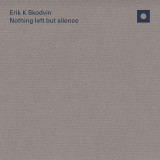
'Nothing left but silence' is Erik K Skodvin’s third solo album for Sonic Pieces and his most quiet to date. Subtitled as "Musical improvisations and quiet collages from the subconscious”, Skodvin reduces his instruments to guitar, reverb and amp - and creates a skeleton of eight hypnotic ragas that meanders in an eternal loop between ephemeral and singular.
Only on the horizon it’s possible to sense that Skodvin has also touched the neoclassical terrain in earlier productions - on Nothing left but silence, however, he acts as a twilight player who is not afraid of the coldness of endless space and who knows how to subjugate the shadowiness of the visible world. Carried by the noise of the amp and the occasional click of the effects pedals, a monolithic, reduced blues emerges, whose mediumistic quality nevertheless reveals that Skodvin's music always comes from the body - and as such is always searching for space. A space that - in this case - blends the vastness of the Norwegian steppe with the brittleness of American wasteland (as if Deathprod and Loren Connors were one and the same person), creating a persistent state between deceleration and absence of presence - that leads Skodvin ever closer to the inner essence of sound.
Initially recorded at Saal 3, Funkhaus, Berlin by Nils Frahm in 2015, the album has itself been subjected to silence as a forgotten relic, re-found and now released in a time where it might connect more with the contemporary state of mind. Welcome to the entrance to the periphery.
Woods are in bloom again, inviting you to disappear into a new spectrum of colors and sounds and dreams on Perennial. Formed in Brooklyn in 2004, Woods have matured into a true independent institution, above and below the root, reliably emerging every few years with new music that grows towards the latest sky. Operating the Woodsist label since 2006 and curating the beloved homespun Woodsist Festival for the musical universe they’ve built, Perennial is the sound of a band on the edge of their 20th anniversary and still finding bold new ways to sound like (and challenge) themselves. Perennial grew from a bed of guitar/keyboard/drum loops by Woods head-in-chief Jeremy Earl, a form of winter night meditation that evolved into an unexplored mode of collaborative songwriting. With Earl’s starting points, he and bandmates Jarvis Taveniere and John Andrews convened, first at Earl’s house in New York, then at Panoramic House studio in Stinson Beach, California, site of sessions for 2020’s Strange To Explain. With a view of the sparkling Pacific and tape rolling, they began to build, jamming over the loops, switching instruments, and developing a few dozen building blocks. The album’s resulting 11 songs, 4 of them instrumental, are in the classic Woods mode--shimmering, familiar, fractionally unsettling--but with the half-invisible infinity boxes of Earl’s loops burbling beneath each like a mysterious underground source. From source to seed to bloom, each loop unfolds into something unpredictable, from the jeweled pop of the aching “Little Black Flowers” to the ecstatic starlit freak-beat of “Another Side.” They are blossomings both far-out and comforting, like the Mellotronic cloud-hopping of “Between the Past,” or sometimes just plain comforting, like the widescreen snowglobe fantasia of the instrumental “White Winter Melody,” touched by Connor Gallaher’s pedal steel. Woods have long used the studio as a place of songwriting, naming 2007’s At Rear House after their shared dwelling and recording space. But Perennial also carries with it an even longer view of Woods. Emerging from the process alongside the music was Earl’s reflection that “perennial plants and flowers are nature’s loops,” an idea rolling under the album’s lyrics like the loops themselves. It certainly applies to the band, too, who have quietly tended to a long, committed project of being a band in the weird-ass 21st century, both individually and communally. Though separated by coasts, the communal sprit carries through Earl, Taveniere, and Andrews’ collaboration, a living embodiment of the freedoms rediscovered every time a new collectively created piece of music emerges. For nearly two decades, Woods have survived subgenres, anchored in the fertile soil below hashtags like lo-fi and freak-folk and psychedelic and indie, and built a shared history that’s something to marvel at. As the flagship band for Woodsist, they’ve accumulated a striking extended family of collaborators (and Woods alum) that have made the label one of the most dependable imprints in the kaleidoscopic low-key underground. It’s a glow that’s transferred whole to the blissed-out Woodsist Fests held in Accord, New York in recent years, which have folded in a wide range of diverse sounds, from the the jazz cosmoverse of the Sun Ra Arkestra and adventurous legends Yo La Tengo, to a hard-to-even-count family tree of contemporaries, like Kevin Morby (who served a few tours of duty as Woods bassist) and Kurt Vile (who released his 2009 debut on Woodsist), a living community in sound. Perennial carries all of this, shaped by decades, but made in the moment, and here right now. The smell of the flowers doesn’t remain, but sometimes the flowers do. Jesse Jarnow Recorded and mixed by Jarvis Taveniere at Panoramic House in Stinson Beach, CA with additional recording at The Ship in Los Angeles, CA and Cottekill Bird Sanctuary in Stone Ridge, NY. Produced by Jarvis Taveniere and Jeremy Earl. Mastered by Timothy Stollenwerk at Stereophonic Mastering in Portland, OR. Jeremy Earl - vocals, guitars, drums, percussion, sk-5, mellotron, vibraphone, autoharp, loops Jarvis Taveniere - guitar, bass, upright bass, hammond, vocals John Andrews - piano, organs, mellotron, drums, vocals Connor Gallaher - Pedal Steel Kyle Forester - sax, wurlitzer
'Drummer Roy Haynes swings as the leader of this 1962 Impulse! session, featuring A-list jazzmen Roland Kirk (multiple instruments including stritch and nose flute!), Tommy Flanagan (piano) and Henry Grimes (bass). Verve’s Acoustic Sounds Series features transfers from analog tapes and remastered 180-gram vinyl in deluxe gatefold packaging.
In 2015, Cico Beck ( Joasihno, Aloa Input, the Notwist ) and Markus Acher ( the Notwist, Tied & Tickled Trio, Rayon ) started the project "You + Your D.Metal Friend" as a collective for improvisations and ideas apart from their other bands.
They will experiment with different settings and instrumentations and will collaborate with other artists for the music and the cover-artwork.
For "Sonnier", their first recordings, Cico and Markus started with percussion instruments from around the globe, analogue synthesizers and all kinds of acoustic and electronic devices to layer music that sounds like the memory of Gamelan, Italian library-records and minimal electronic experimentation... music, they listened to a lot before recording.
"Sonnier" will be available on vinyl (incl. download-code), limited to 300 for the world, and will not be repressed. Packaged in heavy-cardboard-LP-covers from second-hand records, they collected from their local record-stores with a screen-printed and numbered artwork glued on it. Designed by Richard Greenan from kit-records, London, and printed by Senor Burns (Red Can). Each cover is unique and hand numbered.
Brussels-based power trio Don Kapot are set to release their rousing new album 'I Love Tempo' on the 15th of September via W.E.R.F. Records - NEWS distribution.
A lifeboat of free jazz, afrobeat and krautpunk sailed by Giotis Damianidis (bass), Viktor Perdieus (baritone saxophone) and Jakob Warmenbol (drums), the album follows the release of their critically acclaimed 2022 album 'Un Peu Live' recorded with Dutch multi-instrumentalist, vocalist and composer Fulco Ottervanger, and described by Bandcamp Daily as a 'very fun mix of modern jazz and krautrock.'
Don Kapot strike hard with their fourth album, mixed and co-produced by Greg Saunier (Deerhoof). Using a wide range of instruments, they evolve their sound into a solid complex rhythmic wave, shaken by demented samples and punk attitude.
From the vibrant, pounding rhythms of opening track 'Me Pig' to the off-kilter, whimsical beats of 'Macarona' and 'Terryble,' Don Kapot integrate new instruments and sounds into their repertoire, including keyboards and sampling. The groove remains a central element to the sound as the trio deliver a palpable blend of high tension and joyous energy where genres are demolished.
Elsewhere, the funk-heavy 'Bernadette' allows the magical, freestyle sax work of Perdieus take centre stage while 'Don Be No' is an urgent, flippant blast of vigour and zest before the album title track 'I Love Tempo' is an exhilarating and hypnotic journey that combines the freedom and verve of free jazz with the trance-like zeal of artists such as Tony Allen, Fela Kuti and Kologbo
Releasing their self-titled debut album in 2018 via Mr. Nakayasi Records, in 2021 they signed to Flemish record label W.E.R.F. Records and have released three albums under the label and have performed sold-out shows across Belgium and the Netherlands.
The players in Don Kapot also extend their musical adventures to other projects. Damianidis leads Punk Kong and has performed with Akira Sakata, Sakis Papadimitriou, Oghene Kologbo, Tony Allen, Baba Ani, Balasz Pandi and Gonzalo Almeida among others. Warmenbol was a member of The Unrevealed Society, Robbing Millions and M(h)ysteria. He also performs with Ruth Tafebe & the Afrosoul Messengers (with Giotis), Under The Reefs Orchestra and Monolithe Noir. Perdieus performs in Punk Kong and with Pompelmoes and The Milk Factory and took part in Ifa y Xango, Laia Arkestra, Bolhaerd, Nest and VVolk. He has also recorded and played with Andrew Cyrille (Bambi Pang Pang).
Invisible Inc is back with another remarkable release, this time diving even further into ambient, spiritual and folk-infused psychedelia.
“Mondo Organico”, as the name suggests, is a concept compilation that captures the “organic” side of Invisible Inc. The use of non-electronic instrumentation is a familiar theme explored by the label previously with the likes of Komodo Kolektif, Immaculate Rivombo and Peter Power...but this time the instruments and voices, tranquil and meditatively hypnotic in places, display an even deeper spirituality.
Featuring the talents of Andi Otto and his fello (electronic cello), Anna vs June's ethereal vocals, Tyler Ov Gaia's zoned-out mantra rhythms, Pieter Kock's 8-minute bass and guitar psych odyssey, as well as label favourites Sordid Sound System and Puma & The Dolphin, the record is enthralling and mesmerizing from start to finish - and yet another notch in Invisible Inc's rather idiosyncratic belt.
This record was pressed on eco vinyl. Everything from the sleeve to the inks are recycled too, in an attempt to address some the environmental issues we face today, albeit fractionally.
“Mondo Organico” is the future.
Today, Anjimile Chithambo, better known as Anjimile, announces his new album, The King, out September 8th, his first full-length since 2020’s breakthrough Giver Taker. To herald the announcement, he shares lead single, ‘The King’, accompanied by a visualiser by Daniela Yohannes, whose striking painting takes centre stage on the album cover.
Highlighting the artistic shift from Giver Taker to now, ‘The King’ opens with a lofty, melodic choir, an intro that belies the song’s motives. Suddenly, sinister arpeggios interrupt the reverie, and the voices grow darkly serious. Deeply steeped in the confusion, grief, and rage of being Black in America, ‘The King’ pushes back against the tired adage, “what doesn’t kill you makes you stronger,” hissing, “What don ’t kill you almost killed you// What don’t fill you//pains you// drains you.”
“If Giver Taker was an album of prayers, The King is an album of curses.” In his second album, Anjimile continues exploring what it means to be a Black trans person in America. The brutally honest reflection of 2020’s deadly summer is less reminiscent of the pink cloud of early sobriety and more rooted in the reality of seeing brutality with clear eyes. Drawing from influences ranging from religion, Phillip Glass, and lived experiences, the album is a grand step forward for Anjimile. Nearly every sound you hear on The King comes from two instruments: an acoustic guitar and Anjimile’s own voice. Other than a few beautiful contributions from Justine
Bowe, Brad Allen Williams, Sam Gendel, and James Krivchenia (Big Thief), the album is the result of a year in LA working intimately with Grammy and Juno winner Shawn Everett.
Today, Anjimile Chithambo, better known as Anjimile, announces his new album, The King, out September 8th, his first full-length since 2020’s breakthrough Giver Taker. To herald the announcement, he shares lead single, ‘The King’, accompanied by a visualiser by Daniela Yohannes, whose striking painting takes centre stage on the album cover.
Highlighting the artistic shift from Giver Taker to now, ‘The King’ opens with a lofty, melodic choir, an intro that belies the song’s motives. Suddenly, sinister arpeggios interrupt the reverie, and the voices grow darkly serious. Deeply steeped in the confusion, grief, and rage of being Black in America, ‘The King’ pushes back against the tired adage, “what doesn’t kill you makes you stronger,” hissing, “What don ’t kill you almost killed you// What don’t fill you//pains you// drains you.”
“If Giver Taker was an album of prayers, The King is an album of curses.” In his second album, Anjimile continues exploring what it means to be a Black trans person in America. The brutally honest reflection of 2020’s deadly summer is less reminiscent of the pink cloud of early sobriety and more rooted in the reality of seeing brutality with clear eyes. Drawing from influences ranging from religion, Phillip Glass, and lived experiences, the album is a grand step forward for Anjimile. Nearly every sound you hear on The King comes from two instruments: an acoustic guitar and Anjimile’s own voice. Other than a few beautiful contributions from Justine
Bowe, Brad Allen Williams, Sam Gendel, and James Krivchenia (Big Thief), the album is the result of a year in LA working intimately with Grammy and Juno winner Shawn Everett.
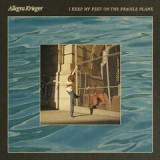
It contains all the signatures of her best lyricism: delicate and precise phrasings, moments that flicker between beauty and banality, meaning that forms through the accretion of observations, memories, and unexpected adages. This is an album that is at once post-theistic and devoted to a relationship with the divine, each song blinking in and out of "the fragile plane," a place Krieger describes as "a middle ground in the universe," both abstract and peaceful, where time, bodies, and names don't exist.
Krieger initially collaborated with Luke Temple and Jeremy Harris to record her vocals and guitar to tape at Panoramic Studios in West Marin, CA. As the album continued to form, Krieger envisioned instruments - like the French and English horn (Nancy Ranger and Priscilla Reinhart), electric guitar (Jacob Drab), and pedal steel (Kevin Copeland) - as characters which would walk in and out of the soundscape. What emerged from conversations with composer Sammy Weissberg, are brass parts that have a dark, almost surreal logic: horns arise to emphasize a word or phrase, fall out completely, only to rush back with dissonant orchestrations that gesture simultaneously toward deterioration and generation.
While Krieger takes inspiration from Elliot Smith's honesty, Judee Sill's cosmic reaching, and Joni Mitchell's sharp noticing, the dream-like association, harmonic dissonance, and angular melodic ascensions in each song are singularly and delightfully Krieger's.
"I Keep My Feet on the Fragile Plane" is a daring collection of songs by an artist who scries with both the cold glass eye of truth and the beating heart of empathy; who portrays life in all its twisted complexities.
The sessions with Walla (Death Cab for Cutie, Tegan and Sara, Foxing) struck the perfect balance between preparation and experimentation, injecting new life into the band's style of soft- hearted Midwestern indie rock with an ever so subtle Americana twist. The solidified Ratboys lineup stretched and expanded their vision in the studio, adding unexpected elements and instruments like rototoms, talkboxes, and fiddles. The result is Ratboys' most sonically diverse record, shifting wildly from track to track. It flexes everything from fuzzy power pop choruses on "Crossed That Line" and "It's Alive!" to a warm country twang on "Morning Zoo" to mournful folk on the titular track. After more than ten years and four studio albums, The Window finally captures Ratboys as they were always meant to be heard--expansive while still intimate, audacious while still tender--the
sound of four friends operating as a single, cohesive unit.
The sessions with Walla (Death Cab for Cutie, Tegan and Sara, Foxing) struck the perfect balance between preparation and experimentation, injecting new life into the band's style of soft- hearted Midwestern indie rock with an ever so subtle Americana twist. The solidified Ratboys lineup stretched and expanded their vision in the studio, adding unexpected elements and instruments like rototoms, talkboxes, and fiddles. The result is Ratboys' most sonically diverse record, shifting wildly from track to track. It flexes everything from fuzzy power pop choruses on "Crossed That Line" and "It's Alive!" to a warm country twang on "Morning Zoo" to mournful folk on the titular track. After more than ten years and four studio albums, The Window finally captures Ratboys as they were always meant to be heard--expansive while still intimate, audacious while still tender--the
sound of four friends operating as a single, cohesive unit.
The music heard on this album was originally the result of a commission to score the second half of the film Nico/Nico Crying made by Andy Warhol in 1966. The commission was made by Art Cinema OFFoff in collaboration with B.A.A.D.M for a screening of the film together with a live presentation of the score in September 2021 at Ancienne Belgique in Brussels. The recording presented here was made in the last week of that year and mixed soon after in January 2022. These recordings are essentially live-recordings performed by the composers together in the same room and recorded in a manner reminiscent of the record making process as it was in the late 1960s. The instrumentation used to make the sounds on this album consists of modular synthesis, zither, voice, contaminated field recordings and metal percussion.
Mats Erlandsson is a composer and musician part of the vibrantly re-emerging field of drone music in Stockholm, Sweden, and is associated with practices characterized by the extensive use of sustained sound. Erlandsson presents his work both as a solo artist and in collaborations, most notably together with Yair Elazar Glotman and Maria W Horn. Recent releases include Gyttjans Topografi on XKatedral, Minnesmärke on Hallow Ground and the collaboration Emanate made with Yair Elazar Glotman on the label 13070. In addition to his own artistic practice Erlandsson holds a position as studio technician and was temporarily, from October 2022 to September 2023, the acting studio director at Elektronmusikstudion in Stockholm.
The compositions of Maria W Horn implement synthetic sound, electroacoustic and acoustic instruments and audiovisual components, often devicing generative and algorithmic processes to control timbre, tuning and texture. She employs a varied instrumentation ranging from analog synthesizers to choir, string instruments, pipe organ and various chamber music formats. Acoustic instruments are often paired with digital synthesis techniques, in order to extend the instruments timbral capacities. Often based on minimalist structures, her music explores the inherent spectral properties of sound and their ability to transcend time and space, reality and dream.
NEW 45 BY DEEP-FUNK PIONEER LUCKY BROWN RECORDED DURING THE NOW LEGENDARY SPACE DREAM SESSIONS!
In around 2001, Joel Ricci, the trumpet player/composer behind his former stage alias, Lucky Brown, went traveling on a worldwide "quest for funk". During that pilgrimage, he went to London England in time to attend Keb Darge's 'Legendary Deep Funk' 6-year anniversary at Madame Jojo's. While in the middle of the dancefloor, he was moved so significantly by this obscure brand of 'deep funk' Mr. Darge was unveiling, he became overcome by a mystical sense of 'coming home'. Additionally, he spent a week at Camden's Jazz Cafe to meet The Poets of Rhythm, The Breakestra, The Sugarman Three, DJ Snowboy, DJ James Trouble, and others. When Joel mentioned the nature of his quest to Neal Sugarman, he warmly invited him to come visit Brooklyn and kick it with members of Antibalas, Binky Griptite & The Mellomatics, and the Dap Kings. But before the trip back to the states, Joel spent some time in Paris playing his trumpet at a club called 'Cithea' where they would host weekly 'rare groove' jam sessions. During the jams, Parisian students of Tony Allen would overtake the stage with their instruments and their full African clothing, chant the word, 'Fela', and begin to play this intense free improvised funk and afrobeat. While traveling by train from Paris to the south of France to visit family, Joel began hearing this inspiring polyrhythm swirling in his inner ear and mixing with the "clack-clacka" of the train moving down the track. As soon as he arrived at his destination, he sat down at a piano and jotted down the polyrhythm, bass line and fundamental horn cluster on a piece of sheet music paper. The simple tune was finally rendered to tape ten years later with Lucky Brown's Crawdad Farmers aka The Funk Revolution on the Magik Carpet at drummer Olli Klomp's Lakeside log cabin in Stanwood, Washington. The tune became the title track to Lucky's first full-length on Tramp Records (Lucky Brown's Space Dream, TRLP-9011).
Space Dream is so titled in part to commemorate a soulfunk masquerade party Joel threw at a temporary all-ages Bellingham Washington music venue called 'The Pickford Dream Space'. This is Joel's stripped-down tape-only remix and re-edit which has never before appeared on 45RPM and commemorates the re-release, remaster and repackaging of upcoming Tramp LPs, "Space Dream" and "Don't Go Away", the fully realised 'director's cut' featuring Ricci's early group funk experiment: "The Funk Revolution."