
pre-order now24.04.2025
expected to be published on 24.04.2025
41,39 €
expected to be published on 24.04.2025

expected to be published on 24.04.2025

The OM Q.Bert on the SH-4 Black headshell is a practical and convenient solution for our customers who wish direct and easy mounting and replacement on their S-shaped tonearm.
Features:
Universal mount fitting a wide range of S-shaped tonearms
Ultra high output
Low wear characteristics
Q.Bert neon printed logo on the top of the headshell
Stylus Type Spherical
Tracking Force 3.0 g
Output Voltage 11 mV
Frequency Range 20-18.000 Hz
Technische Daten:
Output voltage at 1000Hz, 5cm/sec. - 11 mV
Channel balance at 1kHz - 1,5 dB
Channel separation at 1kHz - 22 dB
Frequency range at -3dB - 20-18.000 Hz
Tracking ability at 315 Hz at recommmended tracking force - 980 μm
Compliance, dynamic lateral - 12 μm/m N
Stylus type - Spherical
Stylus tip radius - R 18 μm
Tracking force range - 2 - 4 g
Tracking force recommended - 3 g
Tracking angle - 20°
Internal impedance, DC resistance - 1.680 Ohm
Internal inductance - 920 mH
Recommended load resistance - 47 kOhm
Recommended load capacitance - 200-400 pF
OM cartridge weight incl. extra weight - 5 g
Replacement stylus unit - Q.Bert
Order now and we will order the item for you at our supplier.

Whether Re-defining Experimental Fusion Sounds With The Hugley Acclaimed Yussef Kamaal, Or His Catalogue Of 12's For Imprints Such As Mcde, Eglo, And Rhythm Section As Henry Wu, South London's Kamaal Williams Has Been A Key Figure In His Thriving International Scene For The Past Few Years. The Return Is A Natural Evolution From The Yussef Kamaal Project, Mining The Influence Of Visionary Jazz But Blended With All Kinds Of Texture, Sounds And Signals From The Over-saturated London Streets.
At Times The Keyboard Work Evokes The Classic 70s Fusion Work Of Lonnie Liston Smith Or Roy Ayers, But Underpinned By Rhythms More Reminiscent Of Blunted Hip-hop And Arrangements Subliminally Laced With The Cut-ups Of Pirate Radio. Progressive, Funky, Cosmic, Exploratory And Effortlessly Musical, This Is The Sound Of A Musician Honing Their Craft Into Thrilling New Shapes.
In The Us The Like Of Kamasi Washington And Thundercat Have Made Great Strides In Opening A Whole New Dialogue Between Jazz And Hip-hop, Drawing In A Young, Highly Engaged New Audience In The Process. Kamaal Williams Mine A Similar Seam On The Other Side Of The Atlantic Alongside Other Exciting London Talents Such As Ezra Collective, Ruby Rushton And Shabaka Hutchings.
The Return Is Exactly That: A Return And Refinement To The Sound Yussef Kamaal Were Progenitors Of, And First Set The Scene For One Of The Most Exciting Musical Movements London Has Had In Years.
Notable Tracks For Old And New Listeners Are 'slow', 'situations', 'medina', 'london Shuffle' Which Features Mansur Brown (of Mansur's Message) And For Those Die Hard Yussef Kamaal Fans - They Should Hear The Interpolated Roots Of 'strings Of Light' In The Title Track 'the Return'. And That Signature Wu Funk Can Be Heard On Broken Theme, And High Roller.
The Return Will Be The Debut Album Released On Wu's New Label Black Focus Records.
Order now and we will order the item for you at our supplier.

Following the launch of his solo career in 1988, “Moz” would spend the next 10 years composing and releasing six studio albums and a string of hit singles before going on a brief recording hiatus. On November 6, 2001, THE BEST OF MORRISSEY, a collection that brought together his most memorable work as a solo artist up to that point which was originally released on CD in North America only. In celebration of Morrissey’s career, we will revisit that classic compilation this year by releasing it, for the first time ever, on vinyl. THE BEST OF MORRISSEY will be available on 30th August as a black double-LP.
All the other studio albums the singer released between 1988 and 1997 are represented on THE BEST OF MORRISSEY with “Sing Your Life” from Kill Uncle (1991), “Do Your Best And Don’t Worry” from Southpaw Grammar (1995) and “Alma Matters” from Maladjusted (1997). Other tracks on the collection include the non-album single “Sunny” and the B-sides “Sister I’m A Poet” and “Lost.”
Order now and we will order the item for you at our supplier.

Rickets EP is the second 12” and tenth release from the label signed by the Valladolid artist Alf.
“The theme of this EP revolves around the hyperactivity that both the capitalist system and ourselves demand of us, thinking that this ultra-productivity will make us feel happy and fulfilled at some point, how we isolate ourselves in our small fortresses and see foreigners as viruses that must be eliminated or expelled.”
The 5 original tracks on this EP have been designed with few tracks but processed thoroughly to create a powerful atmosphere ready for the dance floor.
The technical side of this work is once again the work of Dan Böhler, who has mixed and mastered this album and has also given us a “house brand” remix of the title track of the EP. The visual work is by Marcos Abella.
Order now and we will order the item for you at our supplier.

To celebrate the 15th anniversary of DJ Hell's groundbreaking album Teufelswerk, this limited anniversary edition brings back the legendary release in a deluxe 3xLP set, pressed on transparent Neon Yellow, Orange, and Red vinyl. Included is an exclusive poster featuring the original vinyl front cover, along with a special hype sticker for collectors. Originally released in 2009, Teufelswerk remains a milestone in electronic music, seamlessly blending techno, ambient, and experimental elements. The album features collaborations with the likes of Bryan Ferry, exploring the duality of Day and Night-contrasting euphoric club tracks with deep, cinematic soundscapes.
Order now and we will order the item for you at our supplier.
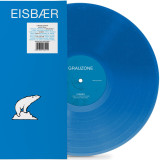
2025 Blue Vinyl Repress
WRWTFWW Records is very honored to announce the official reissue of Grauzone's essential 1981 maxi single with timeless classic "Eisbär", proto-techno beast "FILM 2", and romantic synth ballad "Ich Lieb Sie", just in time for the 40th anniversary of the Swiss band's formation. The three-track vinyl is sourced from the original reels, cut at 45rpm, and comes with its iconic artwork on a 350gsm sleeve.
Ich möchte ein Eisbär sein...Written by Martin Eicher after a nightmare in which he saw talking polar bears on the walls, and with music by the Grauzone crew consisting of Martin and his brother Stephan Eicher, Marco Repetto, Christian "GT" Trüssel, and Claudine Chirac (on saxophone), "Eisbär" is the most recognizable title from the band, a sublime mix of ingredients reflecting the transitional era it comes from - the raw energy of punk music still palpable, combined with the audacity of early electronics, the warm groove of a disco gem, beautifully fragile lyrics, and one of the best basslines ever. It became a mega hit, totally unplanned, but how could you resist such a track
"FILM 2" is the ultimate b-side monster, a menacing all-instrumental pre-techno masterpiece, slowly building to a magnetizing frenzy. An instant underground favorite, it was famously heard played at both speeds depending on the scenes and DJs you were frequenting, 45rpm as it was first intended, and 33rpm for the cosmic experience (search Daniele Baldelli's Cosmic C75 1982 mixtape online for a great example of this).
The maxi single ends with "Ich Lieb Sie", a synth-pop meets doo-wop ballad, a true love song oozing with innocence. Simple, stylish, and just right.
At the crossroads of post-punk, new wave, pop, and electronic experimentation, the Eisbär maxi offers three songs that are technically different but hold the same spirit, the perfect embodiment of Grauzone's music - wild, unpredictable, and youthful, yet sophisticated, catchy, and ingenious. The magic recipe for the good stuff.
Stephan Eicher went on to be, arguably, the most successful Swiss musician ever, with an international career extending from pop chanson to experimental escapades and collaborations with Moondog, artists Sophie Calle and John Armleder, and author Martin Suter among many other luminaries. Marco Repetto flourished as a techno and ambient producer, releasing multiple projects including releases on Aphex Twin's Rephlex label.
Grauzone and WRWTFWW will continue to collaborate on the band's 40th anniversary reissue campaign, with numerous projects planned for the year, including a vast selection of music, visuals, and literature never available before.
Order now and we will order the item for you at our supplier.

Order now and we will order the item for you at our supplier.

Running Back is delighted to introduce RB Studio Sessions, a new sub-imprint of music envisioned, recorded and fully realised at Running Back’s in-house studio.
Built on the promise of unfettered creative freedom and aided by agreeable local autobahn connections in the Hesse region, the RB Studio Sessions project is christened with the work of Running Back’s founder, chief dreamer, and Geschäftsführer, Gerd Janson.
For this debut edition, he is joined for a momentous jam by the new-school hero of the house, good friend and kindred spirit, Narciss.
Just as Running Back’s earliest releases dropped a stylus to preserve timeless ideals of club culture, the four tracks on ‘No Maze Like Heaven’ further this continuum by turning back the sonic clock just a decade or so. Picture, if you will, a nascent Narciss, youthfully club
hopping and deeply inspired by the selections of Gerd himself, alongside a selection of DJs coaxing the Panorama Bar blinds open with exquisite, mid-tempo precision.
As such, new light immediately floods in for ‘Chicco’s Chips’, which captures many of those irresistible elements—Italo-tinted synths, hooky vocals, and perfect percussion— regenerated with the wide-eyed, high energy of Narciss’s own solo productions. ‘Elka,
meanwhile, is a richer, deeper dish, masterfully interlocking multiple heavenly melodies under layers of optimistic analogue fuzz.
Narciss and Gerd then look to the Netherlands for further collaboration with one of electronic music’s best-loved vocalists and another fine producer, Coloray, who fills ‘Look For You’ with a yearning performance in the vulnerable, synth-pop tradition. Finally, ‘No
Maze Like Heaven’ builds on this mood and melody for a finale that hits the sweet spot between machine power and oh-so-human emotion.
Featuring labyrinthian artwork from the mighty Gasius., via a sleeve that appears to blend M.C. Escher with MC Hammer, ‘No Maze Like Heaven’ proves to be a divine foundation of RB Studio Sessions. For Narciss, “a memory they will cherish forever.”
For Gerd, a taxdeductible working lunch. For DJs and dancers? Four ebullient hits-in-waiting, sounding great and meaning more.
Order now and we will order the item for you at our supplier.

DJ Support: DJ EZ, Dr Banana and Enzo Siragusa.
ODF is a Leeds-based DJ and producer originally from London known for his eclectic genre-bending sets. Many of his productions have caught the attention of some high-profile artists such as Ben UFO, Bicep, Ilario Alicante, Michael Bibi and Interplanetary Criminal, as well as support on Radio 1, Kiss FM, Rinse FM and Reprezent.
Kicking off his new Imprint On Da Floor with a banging double header Tell Them & Underground.
The A side, Tell Them, is a dark, speed-garage-laced roller that oozes intensity, showcasing the gritty, bass-heavy sound that has defined ODF’s unique style. Its driving rhythms and shadowy undertones make it a late-night anthem for dancefloor aficionados.
The B Side, Underground, mirrors ODF’s signature sound with a bubbly organ top line and hip-hop-influenced vocal chops, delivering a playful yet irresistibly groovy vibe.
Limited Pressing Buy or Cry.
Order now and we will order the item for you at our supplier.

Ferdinger, a producer and DJ from southern Germany now based in Paris, has established himself as a
key figure in contemporary techno. His sound, deeply inspired by the textures of the '90s, stands out for its modern and immersive approach, blending hypnotic rhythms with meticulously crafted grooves.
His new EP, Up at Night, set for release on RAW in both vinyl and digital formats, delves into the restless experience of sleepless nights, those hours spent trapped in relentless thought loops, unable to find peace. Through four hypnotic tracks and a digital bonus, Ferdinger translates this mental state into pulsating motifs, dissonant harmonies, and atmospheric dub-infused textures, capturing the unease and intensity of nocturnal overthinking.
Order now and we will order the item for you at our supplier.

Koinè is the new album by Pellegrino & Zodyaco, a record that explores the desire to escape by interpreting it as an act of emancipation, an aimless journey in search of creative freedom. The demonstration that escapism, when it is conscious, can bring us back to the heart of things. Inspired by Éloge de la fuite by Henri Laborit, the album embarks on a journey to discover a “common language” (Koinè), blending Neapolitan roots with a global and contemporary musical vision. It blends melodic traditions with disco, funk, jazz fusion, and world music, experimenting with vintage instruments, ethnic percussion, and Mediterranean atmospheres. Pellegrino, a pioneer of the “new school” Neapolitan sound, after 4 years since his last LP “Morphé” (2020) continues the path started with Zodyaco I (2018), painting an authentic portrait of modern Naples and celebrating musical contamination as a form of creative euphoria.
Order now and we will order the item for you at our supplier.

The Ibex Band, with Giovanni Rico and Selam Woldemariam at the creative helm, provided the musical backbone for legends like Aster Aweke, Girma Beyene, Tilahun Gessesse, Mulatu Astatke, and Mahmoud Ahmed, including the iconic album Ere Mela Mela, shaping modern Ethiopian music as we know it today. This 1976 album (Ge’ez Year 1968) played a pivotal role in that legacy and has now resurfaced to set the record straight.
There’s a tendency to talk about the seventies as a golden age of Ethiopian music. There are good reasons for that, and just as good reasons against it. However, the notion of a golden past privileges the role of Western explorers and suggests that the pinnacle of Ethiopia’s musical culture is something only a foreigner can appreciate and unearth. It downplays the complexities of Ethiopia’s culture and history, creating an artificial divide between then and now. And it underestimates the constantly evolving sound that has followed.
The legendary musical outfit The Ibex Band, later metamorphosed into The Roha Band, has played a central role in defining the sound of many of the greatest stars on the music scene of Ethiopia from the mid-seventies onwards–but their golden output has never really waned. The story of the origins of the band that provided the musical backbone for greats such as Aster Aweke, Girma Beyene, Tilahun Gessesse, backing the solo career of group member Mahmoud Ahmed as well as backing Mulatu Astatke and many others has yet to be properly told.
Two misconceptions plague the image of Ethiopian music, one is that the music is pure because it is, by some notion, unexploited, the other is that it is all traditional. To begin with, a combination of political changes between the late sixties and the mid-nineties created an environment where only the most dedicated and skilled musicians struggled on and pursued a musical career against fierce odds. The whole Ibex Band, with Giovanni Rico and Selam “Selamino” Seyoum Woldermarian at the creative helm, are arguably the origo of the vibrant scene in the mid-seventies, and the said pair are foremost responsible for not only navigating the band through troubled times, but also modernizing the 6/8 chickchicka rhythm to a contemporary form. Giovanni laid the rhythmic foundation with heavy looped basslines that reinvented traditional melodies as dance music, and with Selamino’s innovative guitar work they influenced scores of musicians from Abegaz Kibrework Shiota to Henock Temesgen. Even Giovanni’s Fender bass and Selamino’s Gibson guitar inspired younger musicians in their choice of instruments. Not only in choice of instruments but also in sound–even as the digital revolution hit Ethiopian music, a lot of popular music still took its cue from the masters from Ibex and Roha.
Ibex emerged out of the ashes of the sixties group the Soul Echos band, adding Giovanni and Selamino to their ranks and taking their cues from a slew of influences, such as Motown and The Beatles, fused with traditional music. A tighter-knit unit than most bands at the time – Ibex has remained six to seven members throughout their whole career, compared to many bands that were as large as fifteen or sixteen men strong when Ibex set out. Their playing has been viciously focused, economical yet heavy. Just a year before the recording sessions of the album in your hands, Giovanni and Selamino made a contribution to the popular musical lexicon of Ethiopia that was simply defining the popular sound: their arrangement and recording of bandmate Mahmoud Ahmed’s solo effort and real commercial breakthrough tune and eponymous album, Ere Mela Mela, from 1975.
Selamino has never limited himself to being an adroit lead guitarist, but has always been a scholar of history, and as such he has probably contributed as much to modern Ethiopian music with his guitar playing and compositions as with a deepened understanding of modern or contemporary – Zemenawi – Ethiopian music. Selamino’s contributions serve as a metaphor for those of the whole band, at one and the same time creating and defining a new, danceable and updated sound anchored in Giovanni’s bass, whilst also elevating the broader scene through their support for others on the scene and on top of that, increasing the understanding of the music.
There is an understandable desire to romanticize the musical heyday Ibex and Roha were at the forefront of, because so much of the output is sorrowfully hard to come by. Ibex creativity was nothing short of ridiculously fierce compared to many of their Western contemporaries. Based on their sheer recorded output alone they could have usurped the title “hardest working in show business” from James Brown, recording more than 250 albums or 2500 songs in the seventies and eighties. Some only surface as cassettes today, others were never given full LP release, and some are simply impossible to find today. In the light of that, it’s nothing short of a miracle that the recording Stereo Instrumental Music from 1976 (Ge’ez Year 1968) has resurfaced. Unearthed in perfect condition on a chrome cassette, this is musical history comes alive–to set the future straight. Stereo Instrumental Music was recorded in collaboration with Karl-Gustav Lundgren, a Swedish national working for the Radio Voice of the Gospel. It took two sessions at the Ras Hotel ballroom in Addis Ababa. The Ibex Band was the first band in Ethiopia to employ a four-track recorder for their recording (the first available in the country, lent by Karl-Gustav). Later the same week, Giovanni and Selamino realized that, lengthwise, the recorded material fell short of what they wished for, so they recorded four more tracks in one more session on a single-track recorder. The Ras Hotel and Ghion Hotel, where the Ibex Band held musical residencies were to Ethiopia in general and Addis Ababa in particular what Motown was to the USA and Detroit a few years earlier – a hotbed of musical creativity and showmanship.
The most astonishing thing about Ethiopian music of the last half century is how tradition and modernity are intertwined. Because of this feature, it’s kind of hard to tell when there ever was or when we are in a “golden age”. So much of music from the past has been criminally neglected, but because of the hardships in the past, it would be an oversimplification to say that said past was a golden age. Probably, the golden age is what we are approaching, because for the first time both the past and future are accessible, and the monumental contributions from before can lay a firm foundation for a thriving music scene today. The Ibex Band stands firmly in the past, present and the future. That, if anything, is golden.
The detailed history of Stereo Instrumental Music is in many ways unique. To begin with, it couldn’t have been recorded earlier (there were no four-track recorders available) and it really couldn’t have been recorded afterwards either, at least not in the years directly following, because of the toll the musical scene took from the unfavorable political climate that followed when the nascent Derg regime and rival groups tried to assert themselves, the musical equipment lent from The Voice of Gospel Radio simply disappeared from Ethiopia when the radio station folded in 1977. Karl-Gustav Lundgren,
the Swedish foreign national who assisted during the recording, worked with the Ethiopian Evangelical Church Mekane Yesus at the time, recalls how they only had about fifteen minutes to get the microphones in place for the recording as to not alert neither the management at Ras Hotel nor the authorities and most importantly, to complete the recording before the curfew came into effect at midnight. In leaping to the opportunity to use previously unavailable equipment to push their sound forward and improvising to meet the logistical challenges, the Ibex Band displayed the very avant-gardism and adaptability that explains their longevity as a band through the years. The recording of Stereo Instrumental Music is from a given time in history, but it sounds as beyond time.
Much of the energy that burst out of the scene that Stereo Instrumental Music came out of dissipated or got sidetracked during the societal changes Ethiopia went through in the 1970s and 80s. Whilst leaders might have professed to be revolutionary, the work ethic of the Ibex Band can truly be described as that. They never called it quits, but adapted, toured extensively abroad in Africa, Europe, and the Middle East, and found ways to work even in the face of the curfew that curtailed a lot of musical life. They even played major arenas in the nineteen eighties, despite said curfew and restrictions. The whole extent of their legacy has never been told, but their music speaks louder than words, so therefore… tune in to the Ibex Band’s Stereo Instrumental Music.
Order now and we will order the item for you at our supplier.

For their second album 'The Foel Tower', Quade holed up in an old stone barn in the cradle of a Welsh mountain valley.
The valley was a stark and windswept backdrop with little daylight, as the band would huddle around crackling fires each evening. “There was very much a feeling of being on the complete fringes of society,” the band says. “The last vestiges of settlement before the unrelenting barren moors that loomed over us.”
It was an environment that would shape the band – a Bristol four piece made up of Barney Matthews, Leo Fini, Matt Griffiths and Tom Connolly – and the record they have made. It’s an album that is as dreamy as it is melancholic, and as quiet and tender as it is forceful and potent – gliding across genres like winds blowing over those wide-spanning Welsh hills – to arrive at something the band half-jokingly, yet somewhat accurately, describe as “doomer sad boy, ambient-dub, folk, experimental post-rock.”
Quade is a band but it’s also a very close-knit group that have been friends since childhood who use this musical vehicle for interpersonal explorations and connections. “We’ve individually experienced a lot of difficulty over the last several years and Quade has represented a space to shelter from these,” the band says. “This means we often communicate extensively with each other about the issues affecting us individually and collectively. These conversations and concerns are central to The Foel Tower.”
In many ways, the making of this record – or any Quade record – goes way deeper than the simple writing, construction and recording of music. It is a profoundly deep and meaningful experience. “A key theme of the album relates to why we connect with specific places in the way that we do,” the group says. “We often remove ourselves to isolated valleys, sheltered from some of the painful personal struggles that we have experienced as a band. These become spaces in which we collectively purge ourselves of some of these difficulties hoping to make Quade a physical and emotional place of solace. This album celebrates these places that we’ve been able to retreat to and recuperate.”
It is a deep, dense record that is stuffed with musical, cinematic and literary influences – from Ursula La Guin and Cormac MacCarthy through to RS Thomas and Yeats – but despite the heavy, introspective and anxious nature of some of the material, it is also a record that is remarkably deft, agile and considered.
Made with producer Jack Ogborne and mixer Larry ‘Bruce’ McCarthy, there is a pleasing duality to the final sound of the record. One that feels fragile and intimate but also powerful and forceful, as introspective as it is expansive, and a record that is as detailed and textured as it is wide open and spacious.
The album title also pays homage to the place that shaped it so greatly. Within this remote Welsh valley stands the Foel Tower, a stone structure filled with valves and cylinders that can raise and lower the level of the reservoir to draw off water. Which it can then send as far as 70 miles to Birmingham. However, in the late 1800s this land was occupied by local farmers and families in the hundreds until the British Government acquired the land, cleared the valleys, and promptly displaced them in order to begin serving the vastly expanding industrial English city. The band dug into the history and politics of this and wove it into the themes they were already thinking about, using what the Foel Tower stands for as something of a contemporary metaphor. “This tension was something that we wanted to explore without the haughty judgement of our more metropolitan lifestyles,” they say. “And to explore how this specifically relates to ourselves: how can we envisage a genuinely ecological future for ourselves – one that is accessible, affordable and in harmony with endangered rural practices.”
What makes The Foel Tower such an incredible record is that it feels born of a time, place and situation that only existed in that very moment. It’s a snapshot of those 10 days spent in rural Wales and all the feelings and anxieties the band were experiencing at that specific time, magically caught on tape. “The album very much feels tied to this valley for us and the conversations and experiences we shared there,” they say. “It brings up a great deal of poignancy for us, an emblem of some fleeting respite from the strains we all have to experience. But there’s also deep sadness knowing how transient these moments are – in fact, there’s just a great deal of sadness in this album. But it’s also a record that while personal, resigned, and emotionally burdened, is ultimately hopeful.”
Order now and we will order the item for you at our supplier.
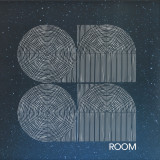
ANAN is a project born from the musical inspiration of DJs Roberto Agosta and Massimo Napoli (Galathea). The name ANAN comes simply from the repetition of the initials of their surnames. Room, their new album, refers to the space in Catania, Sicily, where the two artists create their music.
Room is a mature and intense album that draws inspiration from the two composers' favourite musical genres: jazz, 70s psychedelia, afrobeat, cumbia and soul. The ethereal sound of the album draws the listener into a melting pot of these musical styles that blend perfectly together, making the album versatile and innovative. Valuable arranger and performer Salvo Bruno ‘Dub’ masterfully colours and enriches the deep melodies of the recordings, as if it were a live session coordinated and directed by the two DJs on a super cinematic journey.
Order now and we will order the item for you at our supplier.

Âsan’s self-released Beychen EP is a raw odyssey through the chaos and catharsis of creation. Across four relentless tracks, the producer mirrors the turmoil of nearly losing their passion for music—only to rediscover it by dismantling old habits and surrendering to the unknown. What emerges is a vortex of psychedelic techno, where layered rhythms spiral into the deep-down and morphing soundscapes warp time itself.
The title track Beychen channels the claustrophobic unease of a creative block with its brainmelting progression, only to erupt in a complete loss of control and, therefore, relief. The other three tracks deliver visceral techno in similar fashion, each piece evolving like an own entity with hypnotic force. This is music for darkened rooms and muddy forest stages, where the dancefloor becomes a mirror for Âsan’s internal reckoning. Here, the anxiety of creation is not conquered, but alchemized.
Âsan, a New York-based producer and co-founder of the label Cellar Door, always chases a certain feeling in his work—an elusive sensation that guides his creative journey. For him, dancing begins in the head, as rhythms and soundscapes take shape in a space between thought and intuition. His music invites listeners to step into that headspace, where the body follows the mind’s spiraling patterns.
Order now and we will order the item for you at our supplier.
Konsudd finds the hyperkinetic Konduku teaming up with close pal Aa Sudd as they match subtlety with intensity. Their high-definition production leads on these spacious works of art, with dynamic layers of atmospherics punctured by dense kick drums. They take care to address soundsystem physicality, loading their kicks with irresistible subs down low and finely chiselling the double-time rhythms up top for an extra boost of energy.
Order now and we will order the item for you at our supplier.

Released in late 2012, Odes was the fourth studio album from The Flowers of Hell. It is a covers record and the first release from the group to feature vocals and verse-chorus-verse song structures. Never available on vinyl until now. Greg Jarvis, front man of The Flowers of Hell, has created something very special; the artwork features a die cut outer sleeve, revealing the printed inner sleeve and when removed, revealing more artwork on the inside of the 300gsm outer sleeve. The music has been remastered for LP by Odes co-producer Peter Moore.Pressed in a red 180g heavyweight vinyl, the whole package is stickered and poly bagged, a real show stopper!
expected to be published on 22.04.2025

Exclusively designed E.T. character on top and "THUD RUMBLE" and "OSGEMEOS" tags on both sides of the cartridge. Features the exact "industry standard" audio specifications of DJ Q.Bert's Concordes with the deluxe allure of Gold.
The Q.Bert has a supreme ability to trace the grooves of your records and it is tailored specifically for scratch.
Due to its enomous output, it is perfect for scratch of all music with deep bass frequences.
Q.Bert Gold stylus Technical data
- Output voltage at 1000Hz, 5cm/sec. - 11 mV
- Channel balance at 1kHz - 1,5 dB
- Channel separation at 1kHz - 22 dB
- Frequency range at -3dB - 20-18.000 Hz
- Frequency response - 20-20.000 Hz -3 dB
- Tracking ability at 315 Hz at recommmended tracking force - 980 μm
- Compliance, dynamic lateral - 12 μm/m N
- Stylus type - Spherical
- Stylus tip radius - R 18 μm
- Tracking force range - 2,0-4,0 g (20-40 mN)
- Tracking force recommended - 3,0 g (30 mN)
- Tracking angle - 20°
- Internal impedance, DC resistance - 1.680 Ohm
- Internal inductance - 920 mH
- Recommended load resistance - 47 kOhm
- Recommended load capacitance - 200-400 pF
- Cartridge weight - 18,5 g
Compatible with cartridges - Q.Bert Gold Anniversary (discontinued and no longer available) and Q.Bert
expected to be published on 20.04.2025
