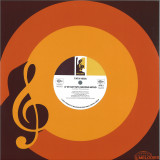
Thanks to this mini-LP format, Interface Palm gets to showcase more of his talent. He explores a wide range of influences and offers an overview of his wide musical palette, from broken beat, to cosmic jazz, hip-hop and house music. A true milestone for Interface Palm, this “Curated Space” mini-LP is the perfect example of artists willing to set new standards by blurring the lines of musical styles.
Welcome to the Broken District !
out of Stock
Last delivered 4 years ago available to reorder, subject to availability
LNDFK (aka Linda Feki) presents her ground-breaking debut album, "Kuni" on Brooklyn-based Bastard Jazz Recordings. Undeniably on the rise after her 2019 breakout performance at Primavera Sound, LNDFK has already caught the attention of Pitchfork, Rolling Stone, Clash Magazine, Noisey, and Brooklyn Vegan (among many others) while being championed by the likes of Gilles Peterson, Tom Ravenscroft, and Jamz Supernova & landing spots on tastemaker playlists like Spotify's "Pollen" and "Fresh Finds."
"Kuni" is a spellbinding exploration of dichotomies: Love & Death (Eros & Thanatos), Flower & Fire, Delicacy & Violence, Poetry & Realism, Purification & Destruction. These opposites are reified in the 10-track LPs multifarious and multifaceted sounds, elegantly meandering through a variety of styles and genres, spearheaded by Linda and features the production wizardry of Darrio Bassolino who co-wrote the album.
"Kuni" opens with "Hana-bi," an ambient instrumental piece that sets the tone for the album. Inspired by the Takeshi Kitano 1997 film of the same name – particularly Joe Hisaishi's stunning soundtrack, as well as Kitano's paintings which appear in the film. "Hana-bi" expresses the dialoguing opposites of flowers and fire, the first of many dichotomous representations throughout the album. "Takeshi" acts as an extension and to "Hana-bi," albeit one of opposing sound, with its driving, highly syncopated drums (which reappear throughout "Kuni") – à la Karriem Riggins, Questlove, or Yussef Dayes – frenetic bass line, and jazz chords. Linda's sultry voice is interspersed, initially jumping around in scat fashion, being triggered as if a sample, before her lyrics come in; her vocals are used like an additional instrument, adding to the song's rich texture. "Kuni" truly hits its stride with the next song, "Smoke – a moon or a button" (its title lifted from the 1959 book by Ruth Krauss and Remy Charlip), which is structured like a jazz standard yet flows into neo-soul territory sonically with those prodigious drums a highlight once again.
LNDFK touches on experimental hip hop in two songs on the record (both of which were released as singles in 2021): "Don't Know I'm Dead or Not (feat. Chester Watson)" – track #4 – and "How Do We Know We're Alive (feat. Pink Siifu)" – track #9. Although they embrace a more hip hop-leaning sound, these songs by no means shy away from the exploratory theme, and feature two of the alt-rap scenes rising stars with Chester Watson and Pink Siifu who offer provocatively impressing verses, combining dense word play with unconventional flows. While these tracks may first appear to be outliers on the album, they are undeniably in tune with "Kuni's" message and sonic palette, acting as testaments to LNDFK's willingness to explore and experiment.
Meanwhile, "Ku" – the third and last single before the album release – furthers the pre-established future soul sound while meandering through nu jazz and left-field electronic. Inspired by the graphic novel and film, "Sin City," and its female assassin protagonist Miho, "Ku" is a musical interpretation of Miho's story, incorporating both her beauty – the first half of the song – and murderous tendencies – the second half – to create a stunning juxtaposition, culminating in an ambient finale that suggests the character's vulnerability and inner peace. The song gracefully bridges the gap between Hiatus Kaiyote-esque songwriting, Dilla's rhythmic syncopation, and Thundercat's instrumental prowess (LNDFK has shared a stage Brainfeeder labelmate Kamasi Washington).
Mixed in throughout "Kuni" are a series of instrumental pieces that function as something akin to an interlude. The aforementioned intro, "Hana-bi," and the album closer "se mi stacco da te, mi strappo tutto:" act as bookends, while "Om" indicates the half-way mark, and "Ktm" sees Jason Lindner add his sound the album. These tracks are the ambient foundation of "Kuni," representing the thematic duality of the work. Clocking in at only 24 minutes, "Kuni" packs an astonishingly diverse array of sounds, styles, and themes, all while showcasing virtuosic musicianship and instrumental prowess.
Appearing on "Hana-bi" and "Ktm," renowned international artists Asa-Chang and Jason Lindner add an additional perspective to "Kuni": Asa-Chang on "Hana-bi," and Jason Lindner on "Ktm." Asa-Chang - famously of the Japanese avant-garde group Asa-Chang & Junray - provides vocals and percussion to an alternate version of the instrumental opener, while the acclaimed keyboardist Jason Lindner offers his synth expertise on "Ktm." These features highlight the spirit of collaboration found in LNDFK's music, always willing to try out new ways of working.
LNDFK is a singer and songwriter, born of two cultures – an Italian mother and Arab father. She grew up in Naples, away from her father, the Sahara, her homeland and traditions, which has helped nourish the desire to rediscover – through art – an engagement to her roots. Her music melts with jazz, neo-soul and hip-hop influences, filtered through her experiences and sensibility.
Her first EP, "Lust Blue," was composed with the artistic production of Dario Bass and released by Feelin' Music; after that she released several singles that saw international radio support (BBC, NTS, Wordwide FM) and gained a massive audience on digital platforms. Together with her band, she toured around Europe, performing alongside such notable artists as Kamasi Washington and Mndsgn, among others. Most recently she toured Italy, and performed at Primavera Sound Festival 2019 in Barcelona.
"Kuni," is due out on NYC label Bastard Jazz Recordings in February, 2022, while the vinyl LP will follow shortly after.
out of Stock
Last delivered 4 years ago available to reorder, subject to availability
Comprising Marco Simioni, Mattero Mazreku, and Francesco Pio Nitti, Qualia are a group of Italian producers who have never met in person. Due to the covid pandemic, they had to colaborate in the cloud, yet the results are impressively coherent.
Having previously released records on Detroit Underground and fellow Utrecht label 030303 between them, they arrive on U-Trax in April 2022 with their eponymous EP of four deep tracks taking influence from a range of genres, including acid-techno, ambient, noise, and beyond.
Leading the release, 'Perception' brings beautiful strings, funky 808 drums and acid tones for a deep and moving opener. The track clearly reveals the inspiration Qualia got for this release from the early Gescom releases. Stretched across the A2 is the ambient bliss of 'VV Cephei A', which brings Boards of Canada-esque drones and tones.
On the flip, the title track 'Qualia' brings a headsy dose of braindance to the mix, recalling the early experiments of Aphex Twin with merciless 303 squelches and distant reverberations. Closing track 'Until I Break Apart' leads with dark, moody strings before a pounding kick introduces a stark tempo shift before deep ambient atmospheres engulf the final minutes.
“Nice EP. Need a proper listen in a dark room with only the speakers and me ;)”
Minus Magnus — Mhost Likely
“Beautiful Ambient soundscapes!”
IDA — Ectotherm, Boiler Room Glasgow
“Excellent release from U-Trax. Perception and Until I break apart are my fav's.”
Drox — Nightimedrama, Crobot Muzik, Analog Cabin, Southern Outpost
“Interview & Premiere”
— Parkett Channel
“The best part is “VV Cephei A”, where a floral intro leads to colliding drone pulses.”
— Terminal 313
out of Stock
Last delivered 4 years ago available to reorder, subject to availability
Taken from, Hard Up, the acclaimed 10th studio album from the Melbourne Soul / Funk trailblazers, "Nothing I Wanna Know About" is a crisp funk number with Kylie Auldist delivering her reliably storming vocals plus an absolutely killer percussion breakdown.
Motown styled soul swinger "Bad Line" makes its first viyl appearance on the flip after being released on the expanded Deluxe digital edition of Hard Up in late 2021.
This black vinyl 7" is packaged in a specially designed printed Bamboos logo sleeve.
Both tracks have been supported by Craig Charles on BBC.
The album received great media support across Europe and the UK with glowing reviews in print such as Rockerilla (4 page feature), Rumore, Blow Up (ITA) Stadtkinder, Na Dann (GER), Soul Bag (FRA), Jazzism (4 page feature) (HOL). Radio support from FIP, France Inter, C-Lab Radio, Radio Galere, RDWA, Radio Krimi, Canal B, Radio Capital(FRA),
Radio Popolare, Radio Citta Fujiko, Contatto Radio, Radio Regione 100, Radio Start, Radio Per Passione, Radio Base, RKO (ITA), Radio 3, Saltamontes,Sateli 3 & Sonideros, EITB, Enlace Funk, Onda Local Andalucia, Radio Catalunya (SPA), Deutschlandfunk Kultur, Ego FM, Byte FM, UKW, Radio X (GER)
out of Stock
Last delivered 4 years ago available to reorder, subject to availability
Vordergrundmusik’s Rittik Wystup returns with a slightly-so avant-garde collage of Piano and Beats. Little melodies awake spuriously, welcoming Spring; they interplay with sizzling cymbals and flamboyant drums. The usage of wind is the carrier throughout the record, just as coastlines bring a strong breeze of cool or warm air.
The overture "Rhythm of the Wind" opens a space of gusts and drafts which circle the EP’s leitmotif. Shifting keys only slightly, it’s a calm prelude to the following track.
"Drums in the Deep" tells the story of a drifting wanderer, voiced by Stepan Terteryan, at the shore of Armenia’s Lake Sevan. His poem can be heard throughout the track, mumbling away as he feels the ground beneath him shaken by roaming bears.
"Three Droplets in Space" presents falling water drops, lifted by a steady, sharp beat. As they approach a large pool, they increase in size and weight, becoming more round and abundant. A gnarly FM bass and frozen hi-hats make way for the passage through the thickening air, blitzing the little leitmotif here and there.
Staying in key, "I Exhale" whispers an ascending piano phrase into the air, which upon reaching for the sky reforms into an unwavering, repeated, slightly melancholic expression. A homage to a valley of bells and chimes, it bursts and blasts into tiny fractions before it evaporates.
Traditional drums and plucked strings progress through "Might y Mist". Before they lose themselves in a faraway landscape, feet stomp and heads bob. As they meld into a fog, carrying debris of the wanderer’s voice and his melody, they spread like a mist: over the water’s surface.
Finally, Timo Maas drops a hefty and punchy remix of "Drums in the Deep". He picks up on the poem and its inclinations but keeps the dancefloor in mind when shattering glassy bits over distorted fragments of the melody. A splendid pumpy finisher to a fairly eccentric EP.
out of Stock
Last delivered 4 years ago available to reorder, subject to availability
Before Madvillain, before Yesterday’s New Quintet and before Quasimoto or any other of his several alter egos, Madlib perfected his craft as an MC/producer in the Lootpack. Along with DJ Romes, and fellow rhymer Wildchild, they released the dusty full-length, Soundpieces: Da Antidote back in 1999, that laid down the foundation for the unique and dusty sound now associated with Madlib. The loose, freeform recordings on this collection are circa 1996 when the group was managed by Madlib’s father, and they show the now-renowned maverick producer in comparatively restrained form. Madlib’s scope and imagination was clearly fixated on East coast jazzy hip-hop production from the early ’90s, laying down soundscapes for his hungry crew including the likes of Kazi, Declaime and Medaphoar, who have all become well known underground rap vets. Madlib’s own strong mic presence is noticeable given his now only-on-rare-occasion rhyming, but it’s his production that is the most fascinating element here. While a resolutely hip-hop project, the burgeoning jazzy flourishes and Madlib’s heavily accomplished ear for sound makes the record an important starting point for adherents of his more recent exploratory work.
Melodies International are glad to be back, starting off 2022 with their new reissue 12” comprising two big big club soul/disco classic versions of “I’ve Got My Second Wind”. Out late March/early April, vinyl only!
Lead singer Al Johnson and Tom Fauntleroy, two US soul & R&B greats who founded their first band at University in Washington D.C. originally wrote and released the song on Johnson’s first solo independent album “Peaceful” in 1978. They’d later go on to rerecord the track for Johnson’s follow up album on major label CBS “Back For More” which introduced the song to a wider audience and is the version featured here on this 12”
Tata Vega, American singer from New York would go on to cover the track that same year. Starting her career in the 60s featuring in musicals and performing with various groups, she got signed to Motown by Berry Gordy on the spot who was in the audience at a concert one of Vega’s groups was performing at. Tata Vega’s version of “I’ve Got My Second Wind”, in duet with soul singer George Curtis Cameron was originally released on her fourth solo album on Motown, “Givin’ All My Love”. Reissued and now available on loud 12” for the first time!
Remastered from the tapes by the great Matt Colton, pressed in Italy at Mother Tongue, comes in printed inner and outer sleeves, out late March / early April, play loud!
out of Stock
Last delivered 4 years ago available to reorder, subject to availability
Leyla McCalla finds inspiration from her past and present. Whether it is her Haitian heritage or her adopted home of New Orleans, she - a bilingual multi-instrumentalist and alumna of Grammy award-winning African-American string band, the Carolina Chocolate Drops - has risen to produce a distinctive sound that reflects the union of her roots and experience.McCalla has produced a multi-disciplinary music, dance and theatre work, Breaking the Thermometer to Hide the Fever, which follows her personal journey as she uncovers the history of Radio Haiti, the first radio station in Haiti to report news in Haitian Kreyol - the voice of the people. Through this juxtaposition of voices - the personal and political, the anecdotal and the journalistic - McCalla gives expression to the enduring spirit of Haiti's marginalized poor in the face of several centuries of political oppression. Performances of the theatre work are currently scheduled in New Orleans and Philadelphia with more to be announced in soon.The process of creating Breaking the Thermometer to Hide the Fever included listening to countless archival recordings of interviews by Radio Haiti's journalists, and McCalla specifically wrote "Fort Dimanche" after listening to a testimonial interview that Michele Montas - the prominent former journalist and station director at Radio Haiti - had conducted with a survivor of Duvalier's political prison. In the interview, the man outlined his living conditions, the daily terror and torture that these political prisoners were subjected to and the events that led to his arrest.This album is a soundtrack of sorts to the theatre piece, featuring the songs that Leyla McCalla wrote and performs in this work.
EXTENSIVE COLLECTION OF SIGH'S EARLY DEMOS, EP's & RARITIES,
PRESENTED ON DOUBLE CD FORMAT - INCLUDES INTERVIEW & LINER
NOTES COURTESY OF MAINMAN MIRAI KAWASHIMA ON THE
FORMATIVE YEARS OF THE JAPANESE LEGENDS.Cult Japanese black
metal legends Sigh formed in 1989/90, featuring mainman Mirai
Kawashima, Satoshi Fujinami & Kazuki Ozeki
Following initial demos, Shinichi Ishikawa was brought into the band, & Kazuki
removed from the line- up. It was following this shift that the band set about
recording the masterpiece debut 'Scorn Defeat' for Euronymous' Deathlike Silence
Productions, going on to become one of the country's greatest & most revered
metal exports. With a journey through the strange & the psychedelic,
incorporating a whole eclectic mix of genre styles & experimentation throughout
their career, Sigh has remained a vital creative force in the avantgarde field.
However, at its core, Sigh has always remained true to its roots of old school
metal. 'Eastern Darkness' contains a comprehensive collection of Sigh's early rare
works showing their swift musical evolution as well as the strong utilisation of
keyboards in their compositional process throughout. The collection includes the
band's legendary demo tapes, 'Desolation', & 'Tragedies', plus their EP's & rarities,
as well as contributions to various compilation releases in the mid 1990's.
Considering Sigh's well- known regard for UK legends Venom throughout their
career, 'Eastern Darkness' also contains the band's own tribute to the 1980's black
metal pioneers, in the form of tribute 'To Hell & Back', originally released on tape
in 1995.
This edition of 'Eastern Darkness' is presented on double disc CD format &
includes a 12- page booklet featuring an interview with Mirai Kawashima about
the early years of the band, along with his recollections of the origins of each title
contained within the release, three decades on from Sigh's formation.
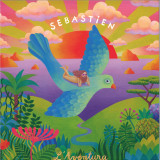
L'Aventura arose from the Brazilian heat and the French romanticism. This is the history of Sebastien Tellier's fantasy childhood in Brazil, arranged by the local cult figure Arthur Verocai. A wild mixture of love, dreams, sun and landscapes.
"For this album I wanted to rewrite my childhood. I chose to place this adventure in Brazil, land of splendour and joy, with an eternal childish soul." Sebastien Tellier
The recording produced by the artist took place between Paris and Rio de Janeiro during the year 2013. These adventures brought him into Jean-Michel Jarre's, Bernard Estardy's, and Philippe Zdar's (Cassius/Phoenix) studios. Zdar who knows so well how to make the French music sound internationally sublimates the ten tracks of this album, in halfway between the elegancy and the required level of a maestro and the immediacy of a popular song.
This sixth opus was composed and writed by Sebastien Tellier. For the first time of his career, all the lyrics are written in French. Gainsbourg is not far, like a tutelary figure, Christophe as a springboard, who lets him more space to express himself, and Lucio Battisti, the Italian made him understand that singing in his native language was possible.
L'Aventura is a record of shores stretching in an everlasting restart. Naive art carried by an openheart and childish vision of the creation, close to his classic Sexuality (2008).
out of Stock
Last delivered 4 years ago available to reorder, subject to availability
Stars Are the Light, the luminous seventh album by the American psych explorers Moon Duo, marks a progression into significantly new territory. From a preoccupation with the transcendental and occult that informed Ripley Johnson and Sanae Yamada’s guitar-driven psych rock, and reached its apotheosis in the acclaimed Occult Architecture diptych, Stars Are the Light sees the band synthesize the abstract and metaphysical with the embodied and terrestrial.
Branching out from Occult Architecture Vol. 2, the album has a sonic physicality that is at once propulsive and undulating; it puts dance at the heart of an expansive nexus that connects the body to the stars. These are songs about embodied human experience — love, change, misunderstanding, internal struggle, joy, misery, alienation, discord, harmony, celebration — rendered as a kind of dance of the self, both in relation to other selves and to the eternal dance of the cosmos.
‘Wax Limousine’ is the third solo album from London’s Wesley Gonzalez. Set for release on 18th March via Moshi Moshi Records, the record is the follow up to last year’s critically acclaimed ‘Appalling Human’ and finds the indie stalwart delivering his most personal album to date, via a collection of 12 irresistible pop songs. The announcement arrives alongside the title track, which received its first play from Marc Riley on 6Music and its accompanying video, the second to be revealed from the record following ‘Greater Expectations’, released earlier this year. In support of the release, Gonzalez heads out on tour this November, headlining Electrowerkz on 25th and supporting Young Knives across the country (full dates below).
With its truly eclectic range of musical influences drawing on Gonzalez’s ever developing sonic palette, the album’s uplifting sound juxtaposes its themes, documenting the end of a long-term relationship and the overwhelming experience of dealing with a family member’s cancer diagnosis and subsequent treatment. ‘Wax Limousine’ navigates these hurdles with a razor-sharp wit and often brutally perceptive self-awareness, nowhere more so than on the new single. Inspired by both 'Faithless' by Scritti Politti and Aretha Franklin, it is Gonzalez’s version of an 80’s gospel song and, as he explains, written at a crucial point over the last 12 months
“This was written right after the breakup and cancer diagnosis. It was that early stage of a breakup where you can't really understand what went wrong for you or for your ex. There was resentment for the extreme change I had suddenly found myself in, and I was asking what it really was I did wrong. The title Wax Limousine came from old phrases like "as useless as an ashtray on a motorbike". I was trying to express how useless I felt within every situation that had just arrived at my doorstep.”
Wesley Gonzalez first made a name for himself as the leader of Let's Wrestle, whose tuneful and eccentric punk earned critical accolades and a devoted audience with three albums, including 2011’s Steve Albini produced ‘Nursing Home’. Gonzalez wasted little time forging his own path and quickly assembled a live band for his solo work, expanding upon the guitar-driven music of his former band, with an interesting concoction of classic 70’s pop, soul, and indie rock. Gonzalez released his debut solo record ‘Excellent Musician’ in 2017, then the follow up ‘Appalling Human’ in June 2020 through Moshi Moshi Records.
Three years have passed since the world first learned of Ursula Bogner's work. Since then, her identity has been surrounded by rumours, her graphic work have been exhibited (CEACC, Strasbourg, France, 2011 and elsewhere) and her compositional instructions have been performed (by Mo Loschelder, Andrew Pekler, Kassian Troyer, Jan Jelinek among others). The release of Sonne = Blackbox brings together all of these aspects in one CD and book: compiled by Andrew Pekler, the CD presents Bogner's early experiments with voice and tape music – a previously unknown emotional side of her music is revealed here through her singing. The 126 page book contains, along with drawings, photos and other curiosities from Bogner’s life, an introduction by Jan Jelinek, texts by Momus, Andrew Pekler, Tim Tetzner, and Bettina Klein as well as interviews with the orgone researcher Jürgen Fischer and the ethnographer Kiwi Menrath. Sonne = Blackbox attempts to locate Ursula Bogner, the sound experimentalist within broader cultural history. A central theme is the phenomenon of fake: how did the erroneous suspicion of fakery come about in the case of Ursula Bogner and what is a post-fake? Answers in this book.
out of Stock
Last delivered 4 years ago available to reorder, subject to availability
Based in Bamako for sixteen years, Philippe Sanmiguel has been the producer of albums by the famous Malian bluesman Samba Touré since his international debut. Over the years, Philippe has expanded his work with other artists such as the legendary Tuareg band Tartit, Anansy Cissé, Mariam Koné or Djimé Sissoko among others.
While working on the albums of these artists, he often had the inspiration to add influences from his original rock culture but in small measures. That's how Black Mango was born, to gather his favorite musical collaborators around his own compositions and expand the vision. It started with an EP released on Glitterbeat Records in 2014 from which the idea for a full-length album was born.
Black Mango's Quicksand album was recorded in Bamako over a period of several years, in various recording sessions, giving each musician free range to play on a rhythmic and melodic basis prepared in advance. The alchemy was immediate in all cases, often from the first takes.
Philippe originally met producer and musician Hugo Race with Chris Eckman during their stay in Bamako for the recording sessions of Dirtmusic's Troubles & Lion City albums. Hugo loved the raw feeling of the tracks and offered to remix the album in his Melbourne studio, bringing his own unique touch.
The fruit is ripe!
Recorded at Akan Studio & Funhouse Studio in Bamako, Mali by Konan Kouassi & Philippe Sanmiguel
Produced, mixed and mastered by Hugo Race at Helixed Studio
A few words about the main " stars " :
- Samba Touré is Samba Touré.
- Anansy Cissé is a young songhoy artist for whom Sanmiguel has produced two albums, including the recent and acclaimed "Anoura".
- Mariam Koné is one of the most beautiful voices of Mali, who has a self-produced album and teaches music at the conservatory of Bamako.
- Singer Bocar Sana Coulibaly & Ali Traoré are singer and guitarist from Niafunké, nephews of the great Ali Farka Touré and have a band called Espoirs de Niafunké
Proprietary rhythm: Vector Rituals sees techno polymath Stefan Goldmann constructing polymetric rites of percussion. Synthesized from the ground up, timbral characteristics, metric properties, dynamic expression and microrhythmic phrasing are shaped by the interactions of layered control voltage functions. The result is an assembly of abstract dances ranging from the intricate to the powerful.
Near-humanoid behaviour emerges from liquid patterns, laid out and brought to life by the freewheeling encounter of modular waveforms and snappy envelopes. Sounds evoke metallic textures
– ringing, scraping – and group into virtual shapes from tiny spikes to vast surfaces.
Some of the parametric relationships employed are as loose as to imply chance drifts. Others lock in with strict regularity as found in the 13 vs. 17 polymeter pattern of opening track 'Nayba'. By contrast,
in the strictly repetitive yet highly asymmetrical sequence of 'Yukagir' each metric step has its own uniquely irregular duration. The center piece of this collection is 'Ayon' with multiple autonomous and
highly agile timelines. Its constituent layers break away in radial fashion and fall back together at widely spaced points of congregation.
All compositions herein present powerful proof of the unlimited capacity of electronic music to yield new principles of organisation and to solidify their expression into clear-cut gestalt.
out of Stock
Last delivered 4 years ago available to reorder, subject to availability
The Diva Faïrouz.
Her real name Nouhad Haddad, she was born in the Zokak el Blat district of Beirut. The eldest of a modest Maronite family, she developed a passion for singing very early on. Her parents are too poor to afford the luxury of a radio, so she spends most of her time listening, her ear glued to the wall, to the neighbors. Nouhad quickly memorizes the songs she hears and gives a few samples at parties organized by her school. It was there that she seduced her comrades with her vocal abilities and that she was noticed in 1947 by the composer Mohammed Fleyfel.
The echo of his velvety voice reaches Halim el Roumi, talent scout, renowned singer-songwriter and director of Lebanese Radio, who asks to audition him immediately. Literally fascinated, el Roumi introduced him to the choir of Radio Beirut, baptized it with the name of Faïrouz and became its appointed composer. Then, he introduces her to Assi el Rahbani, a young avant-garde composer who, in the company of his brother Mansour, wishes to renew a Lebanese song under profound Egyptian influence.
The teenager Faïrouz succumbed to the personal charm of Assi, whom she married in 1954, and to that of his compositions (the model couple of Arab song would be separated by the death of their husband in 1986). The heavenly trio causes, from the publication of its first titles, a real musical revolution. Traditionalists howl at sacrilege and distortion while sympathizers of the rejuvenation and modernization of Lebanese folklore, weary of insipid refrains and pale copies, show their enthusiasm.
In 1957, Faïrouz opened the International Festival of Baalbek (a locality mentioned in one of his flagship titles) and sang in the middle of the six columns of the Roman temple. This initial encounter with his audience, who warmly welcomed him, earned him the nickname "seventh column". Faced with this fabulous galloping success, the Rahbanis are stepping up their offensive and courageously playing the card of constant innovation. They wrote for Faïrouz musical sketches, operettas and, from 1962 to 1976, about fifteen sung plays in which she plays the role of a woman in love with Love, the true, the pure, the innocent. , and that of hope. She also appears in a few films but she quickly interrupts her cinematic odyssey.
It is still and always one of the major references of Arabic song and many of its titles, such as "Bint el Chalabia", are hummed as much by the new generation as by the old.
out of Stock
Last delivered 3 years ago available to reorder, subject to availability
Protean producer Jaymie Silk returns to Shall Not Fade with an intensely club-driven LP. On "The Rise & Fall Of Jaymie Silk & Rave Culture" a range of vocal samples tell a story over assertive rhythms that switch rapidly so that hard-hitting acid becomes breaks before melting into sleazy, low-end bass techno. Strap in!
It"s not easy to anticipate how any release from the Paris-based Jaymie Silk will sound. A self-proclaimed musical nomad and a real jack-of-all-trades, his artistic identity is defined by its undefinability. With this release - a follow-up from "The Legend of Jack Johnson" EP released on Shall Not Fade last year - Jaymie references the kaleidoscope of sounds which inspired him to make music in the first place.
Sampling an iconic Malcolm X speech, the force of which is bolstered by giant synth swells and clattering percussion, "Freedom For Everybody" places the album in the context of diaspora and resistance - themes that run ever-present through Jaymie's music. With "The Heat", he pays tribute to late '80s dance music, with a classic Lyn Collins drum break sample and diva-esque vocals. The hard-hitting acid-tinged techno of "Start Swinging" sees the album at its most assertive before "Bad B" takes things camper with deep bass pulses and
pitched-shifted vocals which affirm "I'm a bad bitch, yeah you heard about me". "Cats Love Drums" offers another direction completely with polyrhythmic percussion and real meow's before the two closing tracks leave a taste of sentimentality, with a major-key vocal melody and a giddy 150BPM pulse ("Waiting For The Day") and an intimate slow burner ("Take Time To Breathe").
The Rise & Fall Of Jaymie Silk & Rave Culture LP drops 6th May via Shall Not Fade.
out of Stock
Last delivered 4 years ago available to reorder, subject to availability
Origu teams up with HiPNOTT and 2 Hungry Bros once more for two slices of dope Hip Hop vinyl!
Deep of Deep Breez returns under the 2 Hungry Bros banner, with a nasty piece of boom bap and MC Likwuid brings her surgically sharp lyricism, to collaborate on "IllFayted". Likwuid's commanding presence is inescapable as she delivers powerful messages between her similes, commonplace catchphrases, and cynicism. Dj Evil Dee of Da Beatminerz layers "IllFayted" with some signature cuts to engage your Hip Hop senses! Though, don't be too distracted by those cuts and the hot 2 Hungry Bros beat, because Likwuid's rhymes are so precisely interwoven you might miss an comedic analogy or sociopolitical statement. illFayted is for the true lover of Hip Hop that appreciates all the fresh elements that make it classic and undying.
In the spirit of letting go of negative energy, toxic relationships and flakey individuals, "Hold That (Faybles)" offers an escape plan for folks who are just ready to move forward in 2017. Tired of being outcasted, misinterpreted or just shut out by your peers? Then here is the gateway to redirecting that energy back to the source...hold that! Deep of 2 Hungry Bros lends his magic by providing a melodic canvas with signature heavy alternating drums and sinister deep loops and chops. The song features Donwill of Tanya Morgan and Hipnott's P.so the Earthtone King.
out of Stock
Last delivered 4 years ago available to reorder, subject to availability
Belgium, not the first place you'd think of when it comes to Latin or Afro funk. Yet one of the greatest records to blend both styles came from the small northern European country, masterminded by Nico Gomez and his Afro Percussion Inc.
Ritual was originally released in 1971 on the Dutch label Omega International (Gomez was born in Holland before moving to Belgium in the late 40s) and is being reissued by Mr Bongo in 2013, bringing its blazing funk grooves to both new ears and those already tuned in to this masterpiece's legacy.
Across its 11 tracks Ritual delivers the kind of production, arrangement and musicianship that rightfully belong in a dictionary next to the definition of professional. Gomez' band was tight and they knew it, showing it off on their covers of Perez Prado's 'Caballo Negro' and 'Lupita' by injecting the originals with a deep funk that blends both Afro and Latin influences. On 'Samba De Una Nota So' and 'El Condor Pasa', another pair of covers, they switch to soulful downtempo with mesmerising ease. The title cut remains one of the album's highlights, a devastating dancefloor groove with horns to match that has aged beautifully and was heavily sampled by Liquid People for 'The Dragon'. 'Pa! Pa! Pa! Pa!' adds touches of rock with fuzzy guitars for one of the album's headier experiences.
Until recently, it was thought that we had heard all there was to hear from Saâda Bonaire. The German studio project's 1980s recordings had been compiled on the now cult-classic double LP Saâda Bonaire, released by Captured Tracks in 2013. Though the group had continued working until 1994, founder Ralph "von" Richtoven had firmly stated that all of their post-1986 work was lost. Released now for the first time ever, 1992 compiles the band's long-lost early nineties material. Produced between Bremen and New York City, the 12 songs presented here capture the group's attempts at steering their trademark fusion sound (reggae, afro-funk, Eastern music, and sultry German female vocals) into uncharted nu jazz, trip-hop, and house territories. It's no surprise, given both the time lapse and the fluid nature of the project, that these recordings differ sonically from the 1980s material. 1992 finds Saâda Bonaire folding new influences from the time (house, hip-hop, rap) into their eclectic sonic universe. Vocalist Andrea Ebert's soulful voice -the result of a church choir background and an early love of American soul and jazz music- offset Stephanie Lange's laid-back, more German-sounding vocals. This unique interplay bolstered the band's new direction - evident in their inspired takes on James Brown's "Woman" and Syreeta Wright and Stevie Wonder's "To Know You Is To Love You". The American influence was also made literal via contributions by renowned DJ Matthias Heillbronn and rapper Jimmy Lee Patterson, both of whom lent some stardust to the tracks at François Kevorkian's Axis Studios in NYC. Unfortunately, the demo recordings were considered too bizarre for 1990s record label standards, and as a result were never published. As with all things Saâda Bonaire, the discovery of these discarded recordings feels like a sort of magical impossibility. It's been nearly ten years since the release of the last compilation, and thirty since the recordings were originally captured. That they still manage to sound fresh and avant garde is a testament to Saâda Bonaire's flair for creating pop music for past, present, and future outsiders.
out of Stock
Last delivered 18 months ago available to reorder, subject to availability
Nyami Nyami Records presents a reissue of a rare gem from the Gramma Records catalog , the historic Zimbabweean label. Dumisani Maraire, the leading creator of modern mbira, settled in the USA in the late 60s where he popularized the traditional music of the Shona people.
Tichazomuona is the first album he recorded in liberated Zimbabwe, in 1986, with his wife Maichi and daughter Chiwoniso.
You can hear the very young singer on lead vocals on the title track, long before she went on to perform solo on the international stage.
We launched Nyami Nyami with her last recording Zvichapera and are happy to also release now her very first.
out of Stock
Last delivered 4 years ago available to reorder, subject to availability
JOYFULTALK returns with its third album for Constellation; another vibrantly divergent stylistic take on the analog materiality and sensibility of electronic composer-producer Jay Crocker, whose previous two records forged trance-inducing polyrhythmic intricacy, each from a distinct angle and sound palette, each enlisting a single instrumental collaborator. Familiar Science rallies contributions from a larger cast of musicians into a looser, cosmic recombinant combo_still shot through with JOYFULTALK's singular mixing desk kinetics, but this time deep-diving into gnarled and twisted, spliced and diced out-jazz. Crocker draws inspiration from 1980s M-Base music and Ornette Coleman's harmolodic funk period, while his own prior history as an improv guitarist also resurfaces for the first time in many years_an element in this polyvalent artist's chemistry set that hasn't appeared prominently in his own music for over a decade. Familiar Science finds Crocker folding time (as lockdown will do), immersed in his present-day kaleidoscope of solitary art and music practices in rural Nova Scotia, while channeling his former life as a bustling jazz collaborator in Calgary, Alberta. Building outwards from roiling resampled acoustic drums, Crocker extracted additional sonic and rhythmic textures, then formed the head of each song using dusted-off archival recordings and his own bass, keys and midi sequencing. Albertan percussionists Eric Hamelin (Ghostkeeper, Chad Vangaalen) and Chris Dadge (Lab Coast, Alvvays) provided improvised drum tracks to be chopped and harvested; Nova Scotia-based Nicola Miller (Ryan Driver, Doug Tielli) laid down resplendent excursions on saxophone and flute; Crocker's own dexterous guitar appears on several cuts. Familiar Science also poignantly features samples from live recordings by the late Calgary saxophonisticonoclast Dan Meichel, catalysing some of the album's heaviest contortions. Crocker weaves all these raw materials into exuberant compositions that blur the line between sizzling corporeal combo and sampledelic futurist jamz, variously conjuring (leftfield) Flying Lotus, (later) Tortoise, BADBADNOTGOOD and Squarepusher's Music Is Rotted One Note. The rubbery hyper-compression of boom-bap opener "Body Stone" initiates the séance, and the album offers a panoply of skittering grooves and soaring melodic pathways thereafter, through quags of heady jazz alternately streaked with dayglo delirium and other more vaporous states of revelry. Crocker's own wordless stacked vocals are the giddy secret sauce on several cuts, and his lead guitar work (in kinship with the lean progressions of Mary Halvorson or Jeff Parker) features on "Take It To The Grave", "Stop Freaking Out!" and the album's title track. More honeyed passages on songs like "Blissed For A Minute" and "Ballad In 9" center around Miller's bouyant alto sax and flute. Familiar Science is a rousing feast of noise-tinged polychrome electronic avant-jazz: richly harmolodic compositions teeming with intersecting textures and turbulences; exploratory, exhilarated and indeed joyful.
In the past few years, Clarice Jensen has forged her own path. Recently, her focus has shifted to film scoring, successfully recording work for three feature films between 2020 and 2021. At the same time, Clarice continues to serve as artistic director of the American Contemporary Music Ensemble, while continually collaborating with an impressive array of musicians, such as Max Richter, Björk and Stars of the Lid, to name a few.
That being said, it was her 2019 tape release on Geographic North, »Drone Studies«, that initially caught the attention of a wider audience, with the work showcasing a compelling assembly of deeply immersive drones, and elegantly orchestrated compositions, in which neoclassical elements collide with electric density.
Three years later, the work has lost none of its innovative character and appeal. It also documents a turning point in Clarice's career, one where her classically trained background started to converged and overlap with her interests in improvisational electronics and drone music. As a result, the aptly titled »Drone Studies« shows Clarice at her most exploratory, introspective, and daring, channeling her areas of interest into a collage of richly textured timbers and cello movements of sublime tension.
Now for the first time, the original album can be experienced through an expanded vinyl reissue, mastered by Rafael Anton Irisarri, and carefully adjusted for vinyl by Ian Hawgood. The new reissue also features an additional track by Clarice called »Platonic Solids 2«, which was originally conceived around the same time as »Drone Studies«, and which has now been made available exclusively for the vinyl edition.
We hope that this new reissue will aid in introducing Clarice's groundbreaking »Drone Studies« to a new crowd of listeners through this expanded edition.
out of Stock
Last delivered 4 years ago available to reorder, subject to availability
Internationally-renowned British singer-songwriter Emeli Sandé with her forthcoming album Let’s Say For Instance, and her first release on an independent label, and it marks a new era of Emeli’s expansive artistry after a decade on stage and on the airwaves. Exploring new sonic territory through shades of classical, disco, nostalgic R&B and more, it sees Emeli freeing herself from the expectations of others, flexing her holistic skills as a songwriter, producer and vocalist in new, versatile ways. In her words: “‘an ode to resilience, rebirth, and renewal”.
Edizioni Ishtar and Schema Records proudly celebrate the 15th anniversary of one of their most successful releases and artists (more than 30 million streams and 300 thousand monthly listeners on Spotify) with the first ever vinyl edition of Toco’s Outro Lugar. Produced by S-Tone Inc., this record includes fan-favourite tracks “Outro Lugar”, “Samba Noir
” and most of all “Guarapiranga”, which was chosen for the soundtrack of “Silver Linings Playbook”, a film that awarded Jennifer Lawrence an Academy Award prize as best actress in a leading role in 2013. The strings at the beginning of the title-track have also been sampled by PinkPantheress for her song “Nineteen”, out of her latest album “To Hell With It”.
Outro Lugar hasn’t aged a bit during all these years, for various reasons; first of all it benefits from the outstanding contribution of bossa nova pioneer and inspiration source Roberto Menescal, who played guitar in every track. Most of the album was recorded in Rio De Janeiro at Menescal’s studio, with the participation of some of the best ‘carioca’ musicians, especially double-bass player Adriano Giffoni and pianist Adriano Souza. All these elements gave the album exactly the taste requested by the artist and the producer: inspired from the past yet, through thorough attention, aimed at a sound at the same time fresh and modern, slightly electronic, filled with grooves perfectly blending into acoustic instruments. The second part of the recording was carried out in Milan, with some of the best musicians in the Milanese jazz scene.
The album also sees the contribution of Rosalia De Souza, singing in several tracks and standing out in “Bom Motivo” especially. French chanteuse Coralie Clément appears in “Contradição”, her own piece here re-interpreted by Toco.
Outro Lugar is an album for any kinds of Brazilian music lovers that showed the world what Toco was capable of: a refined and cultured musician, a gifted performer of a warm and smooth voice able to awaken the emotions of the most sensitive listeners.
out of Stock
Last delivered 2 years ago available to reorder, subject to availability
The West Coast Pop Art Experimental Band make an interesting case for being one of the era's more unclassifiable bands. Vol 3. A Child's Guide To Good And Evil was a great example of this. This album is considered to be the band's most accomplished work and a masterpiece of the psychedelic genre. Released just nine months after Volume 2, the band explores their incredibly creative psychedelic pop song writing with an accomplished mastery of studio technique.
The album cover features iconic original artwork by Jon Van Hamersveld, who also created covers for the Beatles and the Rolling Stones. During their short existence The West Coast Pop Art Experimental Band became known for their strange compositions, sometimes referring to the sound of the Byrds, while at other times exposing the weirdness of Captain Beefheart and Frank Zappa.
The new 7" features the single, 'Romantic' which is a song about struggling to fit in, feeling down and finding comfort in romance. Connecting with someone because you both feel like you don't belong. "I gravitate towards things that bring me down, I always have, at least I know that now. Never forward, I thought all I had was the past. I used to think each birthday would be my last." "I sat inside on the brightest, warmest days. Everything I loved would always run away. Misery taught me everything I knew and then there was you." The B-Side is a cover of the Wedding Present song 'Octopussy" from their 1991 album Seamonsters. David Gedge himself said about the cover "Thanks... nice. Always interesting to hear different interpretations!" "God knows I've always had to fear the worst, but not that time. You brought me home and then you kissed me first. You were all mine." "A celebration of personal freedom" - DIY Magazine "Hekt's solo debut is part self-interrogation and part community offering, serving up tiny bursts of joy and doubt as refuge for anyone navigating a similar path." - Pitchfork "A first-person directness and grunge-schooled contrasting of melody" - Mojo
Intimacy is manifested in every moment of Radiator, the debut album from Philadelphia’s Sadurn. This feeling of closeness, of being able to lend your every sense to one’s confessions of internal conflict, is due in large part to the circumstances under which this album was created.
Much of the world fell apart in 2020, but Sadurn tucked themselves away in a Pocono’s cabin, creating and recording what would become their first full-length. Within the confines of their close quarters, passing animals as the only auditory witness to a make- shift recording studio created by moving furniture, Sadurn created an album that will break your heart and then slowly piece it back together.
"This area of the throat," says Chelsea Jade, resting three fingers roughly where her neck meets her chest. "It's particularly soft, and it's connected ... it's halfway between the heart and the mouth. And that's an interesting place of vulnerability." Soft Spot, the Los Angeles-based New Zealand artist's second album, dwells somewhere between feeling and expression, certainty and doubt. It ventures beyond the exploration of delusions of grandeur that formed the focus of the critically acclaimed Personal Best (2018), and simultaneously promotes and undermines romance, specifically, in a more solemn way. "Less glib," offers Jade, who has opened for Lorde and Cat Power among others. Still deliciously glib in places: "Give your worst my best," she sings on the wryly antagonizing, bass-heavy "Tantrum in Duet." Soft Spot's big pop tracks go hard on the interpersonal, physical and amorous, inviting the listener to entertain flirtation, lust, sex, even the experience, rare during its recording in 2020, of being in a room with more than three other people.
"Second Skin" ist das zweite Album des Kölner Musikers Vomit Heat. Klang und Struktur dieses zehnteiligen Meisterwerks zeigen sich abstrakt betrachtet in einer überaus dichten Oberfläche, in dynamischen Rhythmen, in treibenden Bassläufen, flächigen Gitarren und Synthesizern, verbunden mit einer selbstsicheren und facettenreichen Stimme. Sie lassen eine Dichte erklingen, die Vomit Heat aus den zahllosen übereinanderliegenden Soundebenen erschaffen hat, die er in den letzten sechs Jahren aufnahm und immer wieder verwarf, bis er schließlich zu jener zweiten Haut gefunden hatte, die hier nun vorliegt. Die Produktion gelobt die teppichartigen, soghaften Soundflächen von My Bloody Valentine, der kluge und enthusiastisch auch an den Avantgarden geschulte Pop-Zugriff mahnt an Bradford Cox' Deerhunter, die Repetition zeigt sich inspiriert von Wolfgang Voigts frühem GAS.
Der Eurovision Song Contest geht in die 66. Runde. Dieses Jahr ist die Ukraine der klare Favorit, was aufgrund der aktuellen Situation nicht verwunderlich ist. Deutschland wird in Turin von Malik Harris mit
seinem Song ”Rockstars” vertreten.
Die Compilation mit allen 40 teilnehmenden Songs gibt es in diesem Jahr nicht nur als 2CD und 2MC sondern h als 4LP
To celebrate the 45th anniversary of iconic Dutch jazz label Timeless Records, Music On Vinyl is releasing a series that features albums that are part of the Timeless Records legacy and will be released mainly throughout 2022.
To this day, jazz pianists are influenced by Bill Evans by his use of impressionist harmony, interpretation of traditional jazz repertoire, and his trademark rhythmically independent, “singing” melodic lines. Evans gained his first spotlight when joining Miles Davis’ sextet during the time Kind of Blue was recorded. After leaving the sextet, Evans began his career as bandleader. As trio with Marc Johnson on bass and Joe LaBarbera on drums, they recorded The Brilliant in 1980, just before Evans’ passing.
The Brilliant is pressed on coloured vinyl for the first time and available as a limited edition of 750 individually numbered copies on gold coloured vinyl. The package includes an insert with other titles from the Timeless Records 45th Anniversary Jazz Series
Praised for his genuine originality, the American-Canadian Rufus Wainwright has established himself as one of the great male vocalists and songwriters of his generation. In 2004 he released Want Two, his fourth studio album. According to Wainwright himself, it is the darker sibling of 2003’s Want One - its subject matter concerned with “the world we live in” after Want One focus on the intensely personal. Wainwright produced the album in collaboration with Grammy Award winning British producer Marius de Vries, who is best known for work with U2, Madonna and Björk.
His mother Kate McGarrigle and aunt Anna McGarrigle both sing on the track “Hometown Waltz”. The album also features Wainwright’s popular tracks “The One You Love”, “Agnes Dei” and “Old Whore’s Diet”. The latter features Anohni from Antony and the Johnsons.
Deluxe Reissue of "House With No Home" - Pressed on Clear Blue with
Gray Streaks Colour Vinyl with bonus 7" included
The cover of House with No Home, the second full- length album from Horse
Feathers, a dusty west coast folk duo comprised of Justin Ringle and Peter
Broderick, depicts a wintry farm dusted with snow It's an image that's easily
conjured throughout each of the 11 songs that make up Home, a subtle, nuanced,
and quietly noble collection of Americana-kissed alternative folk that echoes the
work of Bonnie "Prince" Billy, James Yorkston, Iron & Wine, and Bon Iver. Ringle,
who blends Richard Buckner's soft, serpentine delivery with Andrew Bird's "I can't
open my mouth all the way" mumble populates his songs with the kind of
woodsy, heart and soul-broken characters that one would expect to find lurking
between the pines on a frosty Oregon morning in February, but it's Broderick who
provides the chill. His string arrangements are grandiose in their simplicity and
busy without ever interfering with Ringle's poignant, icy prose. From the heady
opener "Curs in the Weeds" to the surging, banjo-led "Working Poor," the two carve
up each track like master craftsman, finding the perfect middle ground between
the sparse, reverb- laden landscapes of the Great Lake Swimmers and the
orchestral, aching beauty of Hem. This deluxe reissue includes a bonus 7" with a
2021 reworking of 'Curs In The Weeds' with a full band as well as 2 songs from a
radio session recorded during the European tour for the original album release.
Limited edition 180g premium vinyl for super fidelity, presented in a
deluxe gatefold sleeve
'Porgy & Bess' was the third and final album collaboration between Ella Fitzgerald,
Louis Armstrong and producer Norman Granz. Featuring songs from the George
& Ira Gershwins opera, which was inspired by the DuBose Heyward play 'Porgy', it
received both critical acclaim and commercial success internationally.
"As the tracks progress, you think she is cutting Armstrong - only to turn around
and believe that Armstrong is cutting her. The truth, of course, is that they are
outdoing themselves. This is a Porgy performance you would be ill- advised to
miss." - Gene Lees, DownBeat
Continuing with the theme of finding and releasing quality 21st century CD-only tracks on to 7” vinyl, Jai Alai now are proud to present their fourth release which showcases the stand-out tracks from the only two albums released under the name Sir Wick.
Chad ’Sir Wick’ Hughes is probably best described as a musician (trombone, piano, percussion), composer, teacher, adjudicator and clinician, but somehow that doesn’t seem quite enough to describe such a unique musical talent. Born in Detroit, and graduating from the same High School as Diana Ross, Paul Thompson, & Ron Carter, he went on to study composition and arranging, and holds regular clinics around the north and mid-west US states sharing his expertise.
The topside on this limited edition release is the lead track from his debut album “An Interpretation Of A Universal Language” (2007 Sir Wick Entertainment LLC) which features the sublime vocals of Sedalia Marie, a beautiful mid-pacer, whilst the other side “I Love You” features the mellow vocals of Anthony Saunders on a track from Chad’s opus work “A Tale Of Two Fools”, which he began in 1996 but only finally orchestrated and released as his second album in 2017 - a soundtrack featuring a full orchestra comprising eight woodwind parts, full strings, big band brass, and seven-piece rhythm section.
Originally intended as an operetta, it was evolving into something bigger; an opera, musical or stage play maybe, but he finally referred to it as a ‘novical’ (a musical novel), which best describes this story of a young musician falling in love for the first time. A biopic, maybe?
One could easily take these two fabulous tracks at face value as simply just another great double-sider, but isn’t it nicer to know the full story?
Famed free jazz concert registration of an early New Direction for the Art performance. Recorded in 1971. Old-style Gatefold LP, with rare photographs & extensive liner notes by Alan Cummings.
The performance by Takayanagi Masayuki New Direction for the Art at the Gen’yasai festival on August 14, 1971 was an intense, bruising collision between the radical, anti-establishment politics of the period in Japan and the febrile avant-garde music that had begun to emerge a few years before. The ferocious performance that you can hear here was received with outright hostility by the audience, who responded first with catcalls and later with showers of debris that were hurled at the performers. Takayanagi though described the group’s performance to jazz magazine Swing Journal as a success, “an authentic and realistic depiction of the situation”.
In 1962, Takayanagi, bassist Kanai Hideto and painter Kageyama Isamu went on to form an AACM-style musicians’ collective called the New Century Music Research Institute. Every Friday, members gathered at Gin-Paris, a chanson bar in the fashionable Ginza district of Tokyo, to push the outer limits of jazz creativity.
But the pivotal moment for his music was the creation a new trio version of his New Directions group in August 1969, with the free bassist Yoshizawa Motoharu and a young drummer Toyozumi (Sabu) Yoshisaburō. Experiments eventually led to the creation of two basic frameworks for improvisation that Takayagi referred to as Mass Projection and Gradually Projection.
“La Grima” (tears), the piece that was played at the Gen’yasai festival, is a mass projection and listening to it, you can get a clear sense of what Takayanagi was aiming at. Mass projection involves a dense, speedy and chaotic colouring in of space that destroys the listener’s perception of time, and thus of musical development.
The ferocity of the performance of “La Grima” at the Gen’yasai Festival in Sanrizuka on August 14, 1971 was consciously grounded by Takayanagi in a particular historical moment, ripe with conflict and violence. A month after the festival, on September 16, three policemen would die during struggles at the site. This was the context that the three-day Gen’yasai Festival existed within. The line-up reflected the radical politics of the movement, with leading free jazz musicians like Takayanagi, Abe Kaoru, and Takagi Mototeru appearing alongside radical ur-punkers Zuno Keisatsu, heavy electric blues bands like Blues Creation, and Haino Keiji’s scream-jazz unit Lost Aaraaff.
New Direction for the Arts trio topped the bill on the opening day, playing an aggressive, uncompromising “mass projection” set of polyphonic improvisation. Alongside drummer Hiroshi Yamazaki and saxophonist Kenji Mori, Takayanagi soloed hard and continuously for forty minutes. This was performance as precisely calibrated metaphor: three musicians responding to the demands of the moment with instinctive force and fury, untethered by rules, leaderless yet not rudderless (the direction part of the group’s name was no accident). The piece was entitled La Grima – tears - and the fusion between the palpable anger of the performance and hopeless sadness of its title were also perfectly apt for the situation. This was a fight that the state was always going to win. Yet, by all accounts, the band’s set went down like a fart at a funeral. The band were showered with catcalls and debris throughout, and by chants of “go home” when the music finally came to an end.
However, looking back at the event in the year-end issue of Japan’s leading jazz magazine, Swing Journal, Takayanagi was surprisingly upbeat: New Directions brought a solid political consciousness to our performance and succeeded in an authentic and realistic depiction of the situation. But journalism revealed its superficiality in its inability to penetrate the core of the music. I don’t know much about anyone else, but we at least left behind a competent record.
It’s a fascinating statement in many ways. Perhaps on one-hand it can be read as stubborn, solipsistic and self-justifying, yet in conjunction with his statement in 1971 there are points that guide us towards an understanding of just what Takayanagi intended with his performance at the festival. As Kitazato Yoshiyuki has argued, it becomes an almost religious act, directed at the earth deities of the land. A union of anger, sorrow and malevolence that can be placed nowhere effective, all it can do is find expression and channeling. The forcible land seizures at Narita, the eviction of farmers from land that had been in families for generations, the destruction of communities: none of this can be prevented, not least by an artistic action. All that can be done is an attempt to mark the land itself, to soak it with the combined force of emotions and the volume of the performances, to bury something there that cannot be drowned out, even by the coming roar of jet engines.
This sprawling collection by Belgian loner blues savant Bram Devens aka Ignatz encapsulates the mystery, murk, and melancholy of his uncanny craft at its most windswept and wayward. Originally issued via Goaty Tapes in September of 2015, this long-anticipated vinyl edition expands the saga with an additional 17 minutes of archival material. Deven’s palette remains constant throughout: feathery fingerpicking, modal loops, and intuitive six-string navigations interspersed with candlelit passages of mournful voice, alternately whispered, mumbled, moaned. His is an aesthetic of embers and resin, cracked masks and distant lights, of what’s left behind and what lingers on.
I Live In A Utopia was recorded following a relocation from his longtime base of Brussels to Landen, with a second child due soon: “I remember the weather being nice and having just bought a hammock.” The change of scenery seeded a promise of slower days and lighter times – no utopia perhaps, but a sense of faint hope glowing on the horizon. The songs slide between loose acoustic spirituals and smoky basement ragas, late afternoon haze and midnight moons, a seesawing restlessness reflected in the titles (“I Have Found True Love,” “Time Does Not Bring Relief,” “We Used To Smoke Inside”). The fidelity is grainy but vivid, refracted by tape warp and Flemish dust.
As always, Deven’s playing is deceptively elegant, raw but precise, attuned to resonance, radiance, and negative space. Echoes of Fahey and Jandek reverberate in certain moments but ultimately the world Ignatz maps is one incomparably his own. A landscape both doomed and dawning, weary but undefeated, tracing outlines of lengthening shadows. “I walk in the sunshine,” he sings, uneasily. This is music of a rare inner wilderness, poised at cryptic crossroads, devoted to its ghosts. I Live In A Utopia stands as an apex work by one of the underground’s most veiled and visionary talents.
Double album in gatefold sleeve with artwork by Zully Adler. In co-production with House Rules & released in an edition of 500.
Tibor Szemző's new LP features two composition, »The Other Shore« & »CUBA«. As the album title implies, »Snap #2« can be considered a sequel to his cult album »Snapshot from the Island« (released in 1987). Back then the island was a metaphor for isolation, while »Snap #2« offers Szemző’s reflections of his visits to real islands, Cuba (1988-1990) and Japan (1992-1994). As usual, Tibor Szemző processed the themes both visually and musically and has presented them many times live as cinematographic performances.
A previous version of »The Other Shore« was released in 1999 on CD. On this album, the original recording from 1997 is used; it has been recomposed, remixed and remastered and some additional recordings have been included. The core of Szemző’s Gordian Knot ensemble of the mid-nineties (Tibor Szemző on bass flute, Péter Magyar on drums and Tamás Tóth on bass guitar) has been enlarged by a string section and additional percussionists. The Other Shore composition has a multilayered texture; it starts with strings and is followed by prerecorded voices reciting the Sutra of the Lotus Flower of the Wonderful Law (Myôhô-Renge-Kyô in Japanese), the most important sutra of Mahayana Buddhism. Then percussion introduces the basic beat of the piece and the voice of the 102 year-old Buddhist priest Ônishi Ryôkei giving a lecture on Kannon sutra is heard. The following uneven entries of drums and bass guitar are like paint brush strokes in Zen calligraphy. The long tones of Szemző’s bass flute enters the piece as the last element suggesting itself as a connecting thread through all previous layers.
When Tibor Szemző first visited Cuba in 1988, he had just started shooting film on 8mm, something of a personal diary. When he met Jonas Mekas in Budapest a few years later, he realized that this footage could be screened publicly and also be an integral part of live performances. »CUBA« is the recording from 2000 of one such performance and was remixed by the author in 2021. It is as similar to and yet different from »The Other Shore«. The Gordian Knot band seemingly structures the piece in the same way, but the resulting sound is much heavier especially thanks to drummer Péter Magyar. Nevertheless, the contributions of Szemző on bass flute, Mihály Huszár on electric bass and T. Bali on prepared electric guitar also inject the proper rock sting. Incorporated Havanna street sounds and local radio broadcasts recorded by the author provide even more steamy roughness to the sound of Szemző’s »CUBA«.
The cover design of the »Snap #2« with photo reproductions from Szemző’s films reflects the aesthetics of the Snapshot from the Island album. This vinyl LP runs at 45 RPM for better sound quality.