Five years after the release of their last studio album, legendary UK musical institution, Soft Machine, return with a brand new CD/LP,
Other Doors. Boasting new material and two numbers drawn from their extensive historical repertoire, Other Doors finds the band on their usual fiery form.
Featuring John Etheridge (guitars), Theo Travis, (saxes, flutes, Fender Rhodes piano, electronics), Fred Thelonious Baker (Fretless bass),
John Marshall (drums), Other Doors also features two guest appearances from long-serving bassist Roy Babbington, who retired from the band in 2021.
Other Doors was recorded at Temple Music Studios, a facility owned by the late Jon Hiseman during July and August 2022.
It’s a location of which the band is particularly fond, explains John Etheridge. “Working at Jon Hiseman’s studio was special,
especially with Ru Lemer who is a brilliant engineer. He’s fantastically quick and that’s very good as we record mainly live in the studio. It’s come out really well and I think it sounds great.”
On Other Doors they’ve revisited the very first album, originally released in 1968, to include Kevin Ayers ‘Joy Of A Toy. Fred Baker, makes his studio debut with Soft Machine.
A well-known figure on the Canterbury Scene not only is he the perfect choice for the group but he’s also is a long-term fan of the repertoire.
“The way I look at it is that this is all great music which we’re continuing to preserve and keep alive as we play it but also we’re adding to it all the time,” he explains.
The idea for revisiting the number was Theo Travis’ he says and has been part of the band’s live setlist for a while.
The album also contains Penny Hitch, a track originally heard on 1973’s Soft Machine Seven.
If the album ushers in a new member in the shape of Fred Baker, it also acts as a fond farewell to drummer John Marshall, who joined Soft Machine midway through the recording of 1972’s Fifth.
At the age of 81 Marshall has decided to retire making Other Doors his final studio album with the group. “I’ve known John since 1975 when I first joined Soft Machine and of course,
we’ve worked through the years together intermittently ever since. His drumming always meant a lot to me,” says Etheridge.
“We worked over three days in the studio and John played great. It sounds terrific.”
Indeed, Marshall is on whip-cracking form throughout the album bringing his trademark musicality and decisive presence.
With Other Doors, he brings his distinguished career to a rousing conclusion.
Intense, celebratory, and consistently impressive. Other Doors is the sound of a group determined to press forwards with an
integrity and sense of purpose that’s quintessentially and definitively Soft Machine.
Buscar:intense
Phi-Psonics is a meditative, deeply soulful immersive jazz group from
Los Angeles, led by bassist Seth Ford-Young and featuring Sylvain
Carton on woodwinds, Mitchell Yoshida on electric piano, and Josh
Collazo on drums. Their deeply soulful music draws on jazz and
classical influences together with Ford-Young’s own musical
experiences, relationships, and his introduction to spirituality, yoga and philosophy at a young age, along the way they create something
uniquely their own, beautiful landscapes for your thoughts to roam
within.
Octava is their second album and like the Cradle before it’s emotional,
introspective, and unusual approach to spiritual jazz offers us a
beautiful space for uplifting contemplation and wields a quiet power to create a spiritually inspiring world of timeless, warm melodies and
instrumental exploration for the deep listener. Originally from
Washington DC area, Ford-Young moved to California in the early 90s
and fell in love with the deep sounds of the upright bass and the music of Charles Mingus, John and Alice Coltrane, and Duke Ellington along with Bach, Chopin, Pärt, and Satie. He immersed himself deeply in music and keen to learn combined intense personal study with
collaborations, tours, and recordings with artists such as Tom Waits,
Beats Antique, and John Vanderslice. In 2010 he moved from the SanFrancisco Bay area to the Los Angeles hills and continued his
explorations and although Phi-Psonics music has been described as
spiritual jazz, or deep immersive listening music but this is music for
fans of Radiohead and The Invisible as well as fans of Alice Coltrane
and Pharaoh Sanders.
The album opens with Invocation as we embark on our journey. The
repeated melody at the end feels ancient but also contains an energy
that is driving forward. An Offering is a humble but beautiful tune full of texture and colour. We Walk in the Gardens of Our Ancestors shows clear eyed reverence for those who came before us as we walk through their gardens. Green Dreams is a tender, gentle love song to Seth’s wife.Where We've Been Is a group improvisation centered around the drums. Lunar Reflections is a romantic ode to nature that draws inspiration from where Seth lives a green oasis within the sprawling cityscapes of LA. Becoming draws on memories of the dark days of 2020 but this was a period that was also full of beauty and light and this song elevates and uplifts us. Finally New You offers hope of change
Phi-Psonics is a meditative, deeply soulful immersive jazz group from
Los Angeles, led by bassist Seth Ford-Young and featuring Sylvain
Carton on woodwinds, Mitchell Yoshida on electric piano, and Josh
Collazo on drums. Their deeply soulful music draws on jazz and
classical influences together with Ford-Young’s own musical
experiences, relationships, and his introduction to spirituality, yoga and philosophy at a young age, along the way they create something
uniquely their own, beautiful landscapes for your thoughts to roam
within.
Octava is their second album and like the Cradle before it’s emotional,
introspective, and unusual approach to spiritual jazz offers us a
beautiful space for uplifting contemplation and wields a quiet power to create a spiritually inspiring world of timeless, warm melodies and
instrumental exploration for the deep listener. Originally from
Washington DC area, Ford-Young moved to California in the early 90s
and fell in love with the deep sounds of the upright bass and the music of Charles Mingus, John and Alice Coltrane, and Duke Ellington along with Bach, Chopin, Pärt, and Satie. He immersed himself deeply in music and keen to learn combined intense personal study with
collaborations, tours, and recordings with artists such as Tom Waits,
Beats Antique, and John Vanderslice. In 2010 he moved from the SanFrancisco Bay area to the Los Angeles hills and continued his
explorations and although Phi-Psonics music has been described as
spiritual jazz, or deep immersive listening music but this is music for
fans of Radiohead and The Invisible as well as fans of Alice Coltrane
and Pharaoh Sanders.
The album opens with Invocation as we embark on our journey. The
repeated melody at the end feels ancient but also contains an energy
that is driving forward. An Offering is a humble but beautiful tune full of texture and colour. We Walk in the Gardens of Our Ancestors shows clear eyed reverence for those who came before us as we walk through their gardens. Green Dreams is a tender, gentle love song to Seth’s wife.Where We've Been Is a group improvisation centered around the drums. Lunar Reflections is a romantic ode to nature that draws inspiration from where Seth lives a green oasis within the sprawling cityscapes of LA. Becoming draws on memories of the dark days of 2020 but this was a period that was also full of beauty and light and this song elevates and uplifts us. Finally New You offers hope of change
Producer Endemic Emerald has provided top-notch beats for
many in the rap game over the years - notable names such as
various members of the Boot Camp & Wu Tang camps,
Tragedy Khadafi, Ill Bill, and Planet Asia. On ‘Renegade
Soul’ he digs deep into his sounds to bring us his 1st
instrumental album. The set features an array of soulful
soundscapes, accompanied by a gritty undertone. The album
moves through different moods, utilising a range of jazzy
pianos, intense strings, and heavy basslines. Accompanied by
soulful voices throughout a real edge is provided and makes
‘Renegade soul’ guaranteed head-nod material. The album
will be available on 12” Vinyl, Cassette & CD on June 30th.
Produced by Endemic Emerald who has
worked with members of Wu Tang, Boot Camp
Clik, Roc Marciano, Ill Bill, Planet Asia,
Skyzoo
A wild and funky collection of Afro grooves that was ahead of its time in 1977 and has become a collector’s item in recent years, especially due to the growing international interest in Colombian picó sound system culture. Fruko and his studio bands Wganda Kenya and Kammpala Grupo treat us to a diverse set of African and Caribbean styles, laced with crazy synths, psychedelic guitar and infectious pan-African polyrhythms. By the time Discos Fuentes released the album “Wganda Kenya Kammpala Grupo” in 1977, Wganda Kenya’s discography was expanding with many 45 singles and appearances in various artists collections. The group’s 1975 debut record “África 5.000” was a full length LP in the U.S. and a various artists compilation in Colombia, which was followed by the self-titled long player the following year. However, Kammpala Grupo, which shared the album’s title and was credited to three songs on the record, had never appeared before, yet was basically the same studio group as Wganda Kenya. Most likely the creation of this short-lived studio band was just a ploy by the label to make it seem like there were more groups playing the type of exotic afro tracks favored by the picotero DJs of Colombia’s Caribbean coast (especially in Barranquilla and Cartagena). 1974 Discos Fuentes’ management had sent musician, band leader and producer Julio Ernesto “Fruko” Estrada to the coast on an A&R mission to discover what people were dancing to in the verbenas (communal open air neighborhood parties) run by the owners of picó sound systems (decorated mobile DJ rigs). Always game for an adventure, Fruko was tasked with bringing some popular examples of these esoteric, hard-to-find African, French and Dutch Antillean records back to Medellín to serve as inspiration (or to outright copy) so that the label could enter into the growing regional market and spread its popularity to the interior of Colombia and other Latin American countries via its own studio creation, Wganda Kenya. Fuentes was always returning to exploit the rich African-rooted culture of the coast as it had with the cumbia and other regional genres before, so in a way it was not surprising that they were attuned to this particular niche phenomenon from a marginalized sector of the population. The most popular genres with the champeta dancers in the 70’s and 80’s were styles like Congolese rumba, highlife, afrobeat, juju, mbaqanga and soukous as well as the music of Haiti, Guadeloupe, Martinique, Curaçao and Dominica, all of which were fiercely guarded by the DJs who had managed to acquire them often through extreme means of travel, barter and intense digging. The record kicks off with the joyful ‘El Gallo Africano’ which features exquisite interplay between Sepúlveda’s highlife style guitar and an authentic-sounding African style saxophone, perhaps played by Carlos Piña. In reality it was ‘Go Call Police Chief’ by prolific Nigerian highlife guitarist Chief Oliver Sunday Akanite, aka Oliver De Coque. Next up is Kammpala Grupo’s ‘La Yuca Rayá’ (‘Grated Yuca’), written by Isaac Villanueva in a style he termed son haitiano which sounds much more like Zimbabwe Shona mbira music. Wganda Kenya’s ‘Caimito’ (star apple, a type of tropical fruit), on the other hand, is actually a cover of a relatively well-known Haitian merengue song. Kammpala Grupo then takes us from the French Antilles to the multi-cultural discotheques of Paris, where a cover version of Black Soul’s Afro-boogie anthem ‘Black Soul Music’ is retooled and renamed ‘King Kong’, perhaps in a nod to the 1976 remake of the monster flick of the same name. Side two introduces us to the infectious merengue rebita of Angola via ‘La riphyta’ with “Paparí”, aka Mariano Sepúlveda, doing the vocals and faithfully replicating the Angolan guitar style. ‘La Trompeta Loca’ (‘The Crazy Trumpet’), probably the nuttiest track on the album, is an ingenious cover of ‘Ye Gbawa Oo Baba (Tribute To Nigeria)’ by Joe Mensah of Ghana. As with all their covers of African tunes, this rendition tightens up the original with some pop sheen, more consistent drumming and higher production values, remaking it into a powerful slow-burning dance floor filler. This is followed by one of the most powerfully original songs to come out of the entire Wganda Kenya project, Mike Char’s reggae anthem ‘El Nativo’ with Joe Arroyo on vocals. The record ends on a more authentically Caribbean sounding note with the instrumental ‘El testamento’, a cheerful islands banger with bright brass, syncopated calypso beats and chunky cuatro guitar (or ukulele). The original was in the mento genre and titled ‘Sweet meat’, written and recorded by Jamaican trumpeter Bobby Ellis. First time reissue. 180g vinyl.
New York City's loudest band A Place to Bury Strangers have had their intense live performance captured and immortalized directly to 12” wax. The post-punk legends are the 9th & latest entry in the Live at Levitation archival vinyl series. “Levitation 2021 was our second show as a new band and I felt so psyched to bring the new band members to such an epic festival. It was like a homecoming for me. Bob Mustachio was doing lights and playing with Ringo Deathstarr, Kikagaku Moyo & the Black Angels all on the same bill had me so rev’d up and excited. I knew it had to be an epic show. I remember right when we started I was flailing around so much like a freak on speed that I almost flung my guitar off the stage. By the time we got out into the crowd I thought I was gonna pass out. I remember we rented this PA speaker from Rock N Roll Rentals and for some reason they trusted us with this top of the line like $5000 12” monitor that we rolled around in the crowd while I was screaming at the top of my lungs. I love Levitation and Austin Psych Fest. They are always a UFO of a good time.” - Oliver Ackermann (APTBS)
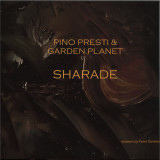
Beautiful release coming from Italy drawing inspiration from the intense colors of the works of the painter Tania Cantone on this work of love; "Sharade" by Pino Presti & Garden Planet. Mediterranean and Balearic lushness from the talented Pino Presti, and the eclectic keyboardist Claudio Calzolari, his son Andrea Calzolari, bass player Andrea Verardi and the organist Guido Mazzella. All together they created that magic, that long-forgotten, set aside, almost hidden atmosphere, which covers various genres such as lounge, future jazz, bossa-nova, ambient, which obviously includes chillout and downtempo vibes from the hot summer nights in the Mediterranean. So much vibes on this one release coming from the Italian friends of BEST Record! Recommened!
It's always good to have Norbak onboard again with this brand new slice of plastic. Four cuts of precise and gymnastic techno aimed for the most advanced dancefloors energetic and intelligent at the same time, as we like.
A side starts with "Tell me I'm wrong" a fast paced hypnotic exercise with adrenalinic synth lines running over complex rhythms, properly arranged in a constantly changing structure.
"Amongst Them" follow, textured flanged sounds running across the stereo field, shuffled beats and lots of space, the definition of how profound techno should be.
Flipping the vinyl, B1 is "Pure and Faithful", funk infused sequences constantly altered in shape, complex grooves and as always a profound structure full of twists.
Last cut in this exercise is "Unbearable Lightness", continuous and repetitive randomized synth lines spiced with lots of reverb over a well crafted drum workout, intense and spacious at the same time.
Another demonstration of studio skills and sound design from this young Portuguese producer.
Worldwide pressing of 300 copies.
Ursa Major Moving Group, the solo alias of singer and composer Ursula Russell, announces her self-titled debut album, due out June 9th via Faith & Industry Records.
Known for her mesmeric drumming for Snapped Ankles, Alabaster DePlume, Drop Out Venus and Blue House, the album showcases the London-based artist’s stylistic and instrumental virtuosity - she played all instruments herself - on an intense, dynamic and intimate musical journal that shifts between delicate folk, stirring indie rock, flamboyant chamber pop and angular post-punk styles.
Its complex themes reflect a multihued blend of musical styles that recall artists as diverse as The Pixies, Talking Heads, Joni Mitchell, Arthur Russell and Julia Holter. Having built a reputation for her brilliance of musicianship as a band member, Ursa Major Moving Group sees Ursula establishing herself as a solo artist of brilliant, open-hearted originality.
Amongst the album’s many highlights is the driving, emotive opening track, Reverse Invisible, which dives into memories of childhood alienation .The winsome Goodbye George, which finds Ursula’s delicate vocals and acoustic guitars melding with Alabaster DePlume’s Ethio-jazz saxophones, delves back into her childhood.
Ursa Major Moving Group play End of the Road Festival 2023.
...And I Mean It is an amalgam of girl group, new wave, blues, pop, and folk-rock by Genya Ravan. To hear her exquisite voice on "Night Owl" soaring above her own backing vocals is intense, imagine Etta James backed by the Sex Pistols doing a rock version of "Earth Angel." Of all Ravan's work, ...And I Mean It is possibly the most concise and picture-perfect statement of what the woman is musically about. A girl group pioneer who worked with Richard Perry prior to his finding the Pointer Sisters groove, there is no doubt Ravan influenced that major producer, and his work did the same for her. "Pedal to the Medal" is high-end treble rock before it came into vogue. This is the other side of Siren, the album Genya produced for Ronnie Spector, with more emphasis on a good-time rocking party. "I'm Wired, Wired, Wired" is a rock & roll anthem for people who burn the candle at both ends, while "I Won't Sleep on the Wet Spot" embodies the unbridled sexuality of this album. The music crunches while Ravan uses her voice, her production skills, and her legacy to create something far removed from her days in Ten Wheel Drive. The horns are replaced by searing guitars and Charlie Giordano's magical piano work. The sound of the keyboard and its erratic splashes really are key to "I Won't Sleep on the Wet Spot," while the guitar and bass battle it out. "Steve...," on the other hand, is Goldie & the Gingerbreads ten years after. This Ravan/Conrad Taylor composition was the 45 from the album, and it has "hit" written all over it. 20th Century just didn't have the right mechanisms in place to get some of the great music they put out on radio, such a pity as Harriet Schock, Randy Edelman, and the fake soundtrack for All This and World War II (a Beatles tribute album) contained songs that should have been big hits. What did hit off this album, on FM radio as an album track, is the brilliant duet by Ian Hunter and Ravan, the subtle and folky "Junkman." Released on Hunter's excellent Once Bitten Twice Shy CD on Legacy in 2000, the song and the performance are timeless. Ravan once said: "I was asleep with the tv on, and was saying to myself...that's my voice...that's my song...that's me! I woke up to find "Junkman" on TV in a film." The song got placed in a cable movie without the producer's knowledge! "Junkman" was a sound not heard on FM radio prior to its release, much like MTV's "unplugged" versions of songs, but it is more unplugged than most of this material -- take the rocked-out version of Motown that is the cover of Marvin Gaye's "Stubborn Kinda Girl," or the Springsteen-style blast that is "It's Me," a tune Springsteen should cover.
- 1: Home
- 2: Prana 10:9
- 3: Holy 0:58
- 4: Amok
- 5: Open
- 6: Game Over
When I first heard Natalie Rose LeBrecht's time-suspending, air-ionizing music, more than twenty years ago, I thought "this kid is on to something." She's been proving that thought right ever since. Her recordings, from the teenage 4-track tapes she made as Greenpot Bluepot to the recent albums under her own name, have been fascinating dispatches from her progressively deeper dives into her gorgeous, weird, wildly idiomatic aesthetic. Holy Prana Open Game is a jewel of intensely personal cosmic music, created through a remarkable process of openness, craftiness, addition and subtraction. It belongs to a tradition of albums that document a rich, meditative sound as it rises up to join the world outside its creators' minds: Alice Coltrane's Universal Consciousness, Harmonia's Musik von Harmonia, Philip Glass's North Star, Talk Talk's Laughing Stock.
"Meditative" is specifically the idea here: Holy Prana Open Game had its origins in the fourteen days LeBrecht spent silently meditating in her home's small music room in the summer of 2019. "I came out of that bursting with the will to create new music," she says, and she created it sound-first. LeBrecht taught herself to program an analog synthesizer's timbres from scratch, and built a new set of glacial, heady compositions out of them, eventually singing to accompany the keyboard parts she was playing.
Then she closed her eyes at her computer, "let my mind be clear and open, imagined light pouring down through me, and began auto-writing to my memory of the music playing through my mind. Most of the lyrics emerged this way, and then I used my conscious mind to refine them a bit at the end." One other song came along with LeBrecht's new pieces, a cover that seems wildly unlikely from the outside and makes total sense in its context: it's a version of Atoms for Peace's "Amok" (which had been created by improvisation and editing, too), mutated into her own idiolect.
In early March of 2020, LeBrecht recorded Holy Prana Open Game's analog synth parts with Martin Bisi at his studio in Brooklyn--and then the world shut down. As you may have gathered, LeBrecht is very much a spiritual, head-in-the-stars type. She is also extremely hardcore, and if making the art she wants to make means doing things the hard way, she cracks her knuckles and gets down to it. Within weeks, she had taught herself how to record, mix and edit with a digital audio workstation. She recorded her vocal parts (sometimes multi-tracked into a radiant choir) at home, assembled a rough mix of the album, and sent it off to her collaborators.
LeBrecht spent some years studying with and assisting La Monte Young and Marian Zazeela at their legendary sound-and-light installation, the Dream House. As with their work, her singular, precisely focused vision is shored up by its openness to artistic voices beyond her own. For Holy Prana Open Game, she worked with the Australian guitarist Mick Turner and drummer Jim White (both of Dirty Three, the Tren Brothers and innumerable other projects), as well as woodwind player David Lackner, a longtime presence on her recordings.
Turner and White have been playing together in one context or another since 1985; in the summer of 2020, they were only blocks from each other in Melbourne, Australia, whose strict lockdown meant they couldn't meet up to record together. So both of them, as well as Lackner, recorded their improvisational additions to LeBrecht's rough mixes individually, often without hearing each other's contributions. "I had asked them to play as much as they could on each track," she says, "and told them that I would edit it all down in post, so I had a lot of source material of theirs to work with."
LeBrecht arranged and edited the recordings from all four of their homes to flow together like breath across the duration of her suite. Prana, one of the album's central conceits, is in fact the Sanskrit word for breath, with the connotation of the breath of life. Like LeBrecht's music, prana flows at its own pace, and demands stillness to take in fully--but it's also subtly playful and surprising, a force that can be as light as air or as immersive as the atmosphere itself.
U.S legendary producer Debonaire returns to Fdb Records to deliver his third EP to date!!! Thirteen years after “The Rise Of The Bass Planet” on French imprint run by Vstee, one of the Miami Bass pioneers, Claudio Barrella introduces “Badass”, a future classic EP taken from his eponymous album published in 2022 on Debonaire Records Inc.
Fulfilled with timeless electro references, this collection of four untouchable joints pushes once again the boundaries of old-school sound to the next-level. Ode to the glorious days of electrofunk, relentless “He Is The Master” on A side serves up a brilliantly dancefloor Hip-Hop/Electro monster enhanced by a nice flow of cut’n’paste samples featuring Newcleus, Schooly D, Dynamix II, Man Parrish, Cybotron and thousands of other unmissable classics. Here comes an outstanding Time Machine that will definitely break out your linoleum.
Second tune of the opus, slow “Badass Reprise (Wax Version)” signs a hip-rock masterpiece a la Rage Against The Machines characterized by a dirty Californian spirit. Fat!On the flipside, robotic “Computer Program”, written along with his partner in crime DJX aka Maggotron, offers a cutting-edge mayhem bas(s)ed upon crystal clear sororities, some heading vocoder robot lyrics fusing with Sci-Fi tones in the background. Ace!
The Absolute climax of the 12’’, “You Feel Me Now” brings a massive cocktail of beats and low frequencies, injecting serious 80's vibes over frantic scratches and sharp 808 programming.
Packed in a beautiful white sleeve and brilliantly illustrated by DJ and Plastic designer Julien Dumaine, this collectible wax will provide intense cyber vocals and retro flavored electro to your subwoofers! Must have!
- A1: Samba Per Un Amore
- A2: Non Chiedermi Più
- A3: Il Tuo Volto
- A4: Stasera Resta Qui
- A5: Fino All'ultimo Minuto
- A6: E Dai
- A7: Primavera A Roma
- B1: Ti Ho Sognato
- B2: L'angelo
- B3: Quando Il Giorno Tornerà
- B4: In Una Strada Qualunque
- B5: Qualcuno Tornerà
- B6: Hai Lasciato A Casa Il Tuo Sorriso
- B7: Sono Stanca
- B8: Non Chiedermi Più (Duetto Con Piero Ciampi)
The story of Lucia Rango, an Apulian singer who was active for a short period during the Sixties, rightfully belongs to that category and meets all requirements for becoming a legend. In 1967, when she was almost unknown, she recorded Lucia Rango Show, an entire album made of songs taken from the repertoire of her friend Piero Ciampi, who worked closely with her on their selection and arrangements. Being one of the most maudit and personal authors of national songwriting, Ciampi had always been a perfect outsider: blunt, shy, extremely talented, and unable to adapt to the rules of the music business. But above all, the Leghorn-born singer was a superb songwriter. The match between his songs and Rango's classical voice and ethereal beauty looked like a very promising one, but never brought any success.
Arranged and orchestrated by Maestro Elvio Monti, and embellished by the participation of Alessandro Alessandroni's I Cantori Moderni, the record is a perfect child of the Sixties, featuring beat tunes and “yè-yès”, Italian canzone, intense ballads, Brigitte Fontaine-like atmospheres and a rediscovered duet of Lucia with her friend Piero, Non chiedermi più, whose recording was known among insiders at the time but sadly appeared to be lost forever. Ciampi's voice lives again in a song that has remained unreleased for more than 50 years within this new expanded version of Lucia Rango Show, thanks to the long research of journalist Lucilla Chiodi (Musica Jazz). Needless to say, the album is an enormously valuable historical document for all fans of Ciampi's output and Italian music in general: along with classics such as Fino all'ultimo minuto, Quando il giorno tornerà and Hai lasciato a casa il tuo sorriso – all originally included in Ciampi's first LP released under the alias Piero Litaliano in 1963 – Lucia Rango's voice consigns to history as many as six songs conceived and written specifically for her recording debut by Ciampi along with Elvio Monti. To date, Rango's invaluable interpretations are the only versions ever recorded of Samba per un amore, Il tuo volto, Stasera resta qui, Primavera a Roma, Ti ho sognato and Sono stanca.
A1 - Divine Intervention - ASC opens up with intent a heavy piece, thick analogue kicks thumping around the expertly crafted breakbeats, switching the pace effortlessly as the backdrop melodies float along with some trademark vocal hits. ASC once again proves himself to be a true master of his craft, delivering an emotive, powerful track that's both technically impressive and emotionally resonant.
A2 - Variable State - Changing the pace we see ASC introduce an edgy, nervy energy to Variable State, combining classic breakbeats more modern beat accompaniment before a catchy wavy key melody overtakes. Soon the anxious vibes pull us back as Variable State lives up to its name, ebbing and flowing several times before we reach our conclusion, almost serving as a commentary on modern times in old school language.
B1 - Azure - A delightful roller continues the proceedings with Azure, featuring gentle, lingering bells that craft the melody over a bed of deep, rolling basslines and intricate percussion. The track is both uplifting and introspective, perfect for late night listening while the rain dots the window and you gaze out into the twilight hours.
B2 - Loose Ends - Tying things up for the EP we have Loose Ends, opening with off-beat breaks and FX, slowly enveloped by haunting synthwork. Soon the intense, moody bassline notches up the intensity before the track does a 180 and an uplifting rhythmic key melody provides some respite. The creepy ambience returns soon enough, completing this curiously cohesive creation in style.
A1 - Dreamcatcher
A gentle kickoff to the EP sees ASC flex the ethereal side of his compositional range with Dreamcatcher. Bleeps and subtle bongos intro the track before a cymbal-heavy beat rolls into play, urged along by warm 808 basslines. Several samples will trigger the scene veteran's nostalgia glands, and as the Arthur O'Shaughnessy quote proclaims: "We are the music makers, and we are the dreamers of dreams", you cannot help but smile.
A2 - Tranquility
Filtered breakbeats with emphasised kicks begin our journey through Tranquility; a calming piece enriched with luscious synths, glorious pads and echoing vocal samples. ASC takes the listener through a crash course in DJ-friendly classic atmospheric drum & bass, inviting the crowd to take a step back from the chaos of the world and bask in the tranquility of the moment in true Spatial style.
AA1 - Drifting Thru
Remember Demon's Theme? For many it was their introduction to a new world of amen breaks in a birthing jungle / drum & bass landscape, and here ASC pays homage to that break - as well as a certain iconic classic on the Deejay catalog - rewritten impressively with a pure, intensely driven atmosphere and a thumping sub bass to boot as the eerie melody allows this incredible break to take center stage - as it should.
AA2 - Flotation
Closing the EP is Flotation, a building track which fuzes classic breakbeats chopped and punctuated with a slow-burning, gradually intensifying atmosphere. The interplay between breaks, bassline, pads and washing vocals is a delightful experience to behold, the bassline never relenting. Flotation is curiously catchy and will stay long in the memory.
Words by Chris Hayes (Spatial / Red Mist)
epressed! Proto-punk and garage Zamrock: the celebrated guitarist Paul
Ngozi’s essential debut album. Featuring Chrissy Zebby Tembo
Guitarist/vocalist Paul Ngozi’s debut album – under the name Ngozi Family - is an important record: not just in the Zamrock genre,
but in the global rock canon. Day of Judgement is an introduction to the most intense, raw and inimitable golden era Zamrock
recorded, as it paved the way for a dozen Paul Ngozi and Ngozi Family releases (the most famous being drummer Chrissy Zebby
Tembo’s My Ancestors) that straddled the line between funk and punk, of driving hard rock and Zambian folk melodies and rhythms.
Day of Judgement was released in 1976, the same year as other, now famous, Zamrock albums, from WITCH’s Lazy Bones!! to Rikki
Ililonga’s Zambia. But it sounds like none of its counterparts. Part of that stems from its frenzied primitivism, the Ngozi Family’s
attempt to overcome a lack of musical acumen with sheer force of will.
That will allowed Paul Ngozi to overcome a humble upbringing to become the most unlikely combination: Zamrock’s most beloved
star in its brief but now-well chronicled arc; the only musician to maintain his fame and recording prowess in the dark ages of the
’80s; an inspiration to not only aging but young Zambians — and now others, beyond Zambia’s borders.
But one cannot imagine Paul Ngozi without this album, a full-on aural assault that sounds as wild nearly forty years after its release
as it must have sounded in the developing Zamrock landscape from which it emerged. We listen to this anachronistic yet prescient
album now as a wholly original, completely unpredictable album in line with those from mavericks from across the world – from the
Ramones to the Sex Pistols to Death. And, though it’s been over two decades since Paul Ngozi’s passing, his voice and vision still
seem exciting, powerful, unique, unvarnished, new.
Band: VORNA Album: Sateet palata saavat Release Date: September 27th Clichés almost always have a true core. That artists from the (European) Far North tend to melancholy is one thing that has already been confirmed many times. VORNA is no different. The band from Tampere has been in existence since 2008, and still is today in its original line-up. The six-piece group is well-rehearsed and has continuously developed its sound over the years. With pride and self-confidence the musicians grasp their playing as "Finnish melancholic metal". This means songs with a dark mood and an emotional state-of-mind, which cause reactions from the developing atmosphere. The melancholy comes to bear on different levels, but without ever slipping into pessimistic gloom. VORNA's access to the heavy spectrum is broad and open-minded. The six musicians are guided by their emotions and transform them into dark tuned music. Starting from a base between Folk and Black Metal, the Finns have enriched their playing since 2008. The symphonic extension of the third album underlines the atmospheric and melodic composition of the songs. "Sateet palata saavat" means something like "Return to Rains". In other words: something is brewing before the sky opens its floodgates and the power of nature discharges. This picture fits very well to what VORNA musically have to offer. "Sateet palata saavat" develops to be tense and intense. VORNA's vocals, left in Finnish, don't compromise the access to VORNA's "Finnish melancholic metal". The underlying emotions can be empathized and create an interaction with the listener right from the beginning. The organic songwriting of VORNA underlines the down-to-earth approach, the Finns are following. Partially, however, "Sateet palata saavat" sounds uncanny and creepy.
Standing in a Greyhound Bus station, wearing a Sylvester t-shirt and huge duct-tape-covered glasses, Baltimore ’s Dan Deacon doesn't invoke the image of a composer to the other bus riders. The two suitcases he loads under the bus, which accompany him from city to city, hold the sweat-and-grime-soaked electronics that he uses to craft his raging, maxed-out party music and light show. After 12 tours and 300+ shows in little over 2 years, the gear is beaten and battered, but the show and the energy it produces is anything but.
Dan Deacon has garnered a reputation in the underground as an intense performer and classic showman. The table top full of pedals, a sine wave generator, vocoder and casio blasting through the PA, joined by a makeshift light board with various bulbs and green skull strobe light, make his all out dance-til-you-drop performance a complete experience.
But it isn't all fancy feet and bouncy beats. Deacon is a classically trained composer with a Masters degree in electro-acoustic composition. He has released 7 albums from 2003 to 2006, but those self-produced recordings do not contain the vocal-based experimental pop that he has fine-tuned in live performance. His latest full length, Spiderman of the Rings is the first album bridging the gap between party performer and genuine composer. A mixture of his live show dance anthems, intricate instrumentals and humorous monologues, 'Spiderman of the Rings' establishes Dan Deacon as a new type of entertainer in the contemporary underground.
"La Zarra is the enigmatic sensation that is representing France at the Eurovision Song Contest
The album “Traîtrise », now released on Vinyl The voice of La Zarra is theatre, a cabaret in full performance. Canadian-born singer-songwriter, La Zarra mixes genres, erases eras and outlines a new path where clichés implode and finally disappear. Influenced by Piaf, Barbara or Brel, she also finds her inspiration in Damso, PNL or SCH. while hip hop crosses into the songs. On her album ""Traîtrise"", human relationships are laid bare and it is often poignant, intense. Free woman, femme fatale, and future star. Format; LP"