On Chastity’s upcoming, self-titled fourth record, Williams decided to write a fully non-fiction work. Out Friday, September 13 2024 on Deathwish (US), Dine Alone (Canada), and Big Scary Monsters (UK/E) ‘Chastity’ is a 13-track record about the things that have always run through the band’s records—struggle, death, despair, redemption, darkness, and light—but this time, the songs ascend to new depths of intensity and desperation, new heights of resolution and power. “It’s really about the first nosedive that I did as a young person,” says Williams. “It’s a record about struggle, about the missing years. It’s also a thank you to some people in my life.” The record hurtles through melodic hardcore, shoegaze, and emo, all magnificently and enormously rendered thanks to slick work from John Paul Peters (Propagandhi, Comeback Kid), who engineered and mixed the record. Chastity’s first three full-length records—2018’s Death Lust, 2019’s Home Made Satan, and 2022’s Suffer Summer—formed a trilogy that defined a 4-year arc of the band’s contribution to outsider music. Each record was informed by Williams’ life, but each was also conceptual and interpretive, refracting his experiences through a level of remove. On the self-titled record there’s a beautiful and affirming ending to it’s closer, centered on the band’s first and enduring idea: life is less shitty if we live it together.
Suche:intensity
Formed in 1995 in the small Swedish city of Mariestad by key players from Sweden's legendary hardcore scene, Wolfbrigade (known as Wolfpack until 1999) remain among Scandinavia's most respected, influential and reliable purveyors of real-world brute-force hullabaloo. On this eleventh album, the niftiest skills honed to a fine edge over 30 years are dispatched with greater style and intensity than ever.
Rain and experimental music have had an interesting connection for decades. Under the umbrella of American film music promotion, Hanns Eisler was already looking for "Vierzehn Arten, den Regen zu beschreiben” (fourteen ways to describe the rain) in 1941. A good 20 years later, The Cascades interpreted the periodicity of rain as a rhythm of mourning. For the Beatles ("If the rain falls, they run and hide their heads"), the precipitation inspired the band to use backward running tapes. However, it seems that there has always been a lot of rainfall in popular music. In the early seventies, David Toop and Paul Burwell even had a band project with the great name Rain In The Face...
That was a long time ago and today, rain, which in the age of climate catastrophe mainly occurs as heavy rain or an enervating endless loop, has lost a great deal of its inspiring quality. Perhaps as a reminder of the musical quality of rain, but knowing full well that it can only be enjoyed in theory, Razen call their new album "Rain Without Rain". In the music of the Brussels collective led by the two multi-instrumentalists Brecht Ameel and Kim Delcour, it certainly pours down on the roofs. In fact, the album opens with the sound of pouring rain before we hear the sequence of an oscillator played through a guitar amp on the first track „Lazy, Lazy Eye“.
The album is the captivating result of an one-night mobile studio field recording in an abandoned pedestrian tunnel in the centre of Düsseldorf, and it is finding beauty with brutal(ist) means: recorder, oscillator, guitar amp and reverberation, two musicians and four microphones, early electronics versus Early Music. “Suicide meet Hildegard von Bingen”, as Stefan Schneider, who recorded the session, admits. “Ghostly occurrences”, he adds.
Brecht Ameel states: “We do put a lot of weight and care on acoustics. On some of our recordings, the room acts as another band member, or as the main ‘mixing board’. Most of the albums we have recorded so far are not mixed in the traditional sense: they are simply „captured”, and we let the room decide what is left on the tapes. The studio recordings, then, give us the possibility of bringing other elements to the fore; precision of interplay, or tiny variations in breathing.”
The group Razen exists since 2010 and has since released numerous records on labels such as KRAAK, Marionette and Hands In The Dark. "Rain Without Rain" is their debut on the Düsseldorf label TAL. If there has been an increased international interest in experimental music from Belgium in recent years, this is not least due to musician collectives such as Razen. In terms of its electro-folkloristic intensity and instrumentation, Razen's music is quite unique worldwide. What does Razen actually mean? “We took the word from a poem by Paul Van Ostaijen, not specifically because of its meaning but because of the way it looked on paper”, Ameel explains. “But the meaning goes in the direction of ‘thundering / raging / speeding’ … although we prefer playing with a strong notion of restraint, building our world from (and with) silence.”
Olaf Karnik, Köln 2024
Lukas de Clerck brings us the ancient greek instrument, the aulos, of which his new interpretation of long form expression is coaxed forth on this tremendous recording. Lukas de Clerck explores a niche of archaeological research in music; the aulos is a historical Greek instrument that Lukas analyzed and reinterpreted by a luthier in modern times_navigating this impression as an artwork or living sculptural object, as there is an absence of historical partitions or written information about how to recreate technique on the instrument. Lukas de Clerck has interpreted information from the rare archaeological resources and visual art of the classical Greek period to recreate both playing technique and possible sound timbres with the instrument. With his contemporary approach to drone, post-minimalist music, and contemporary folk, we find a deeply satisfying and compelling, even playful set of songs, timbral exercises and compositions. An important document of new music meets contemporary archaemusicological research via Stephen O'Malley of SUNN O)))'s label Ideologic Organ. _ The telescopic aulos is speculative: might it have existed? It takes on features from the historical aulos, a double-reed instrument of which we know how it looked but little about what music was played on it or how it would have really sounded. It's an instrument without the limitations of canon or manual, providing creative freedom and awakening curiosity. The new instrument featured on this album is ancient and futuristic at once. The aulos has no tone holes; instead, each of the two tubes consists of three parts that can slide into each other. In this sense, the metal pipes bear a certain resemblance to the principle of a trombone. However, since both hands are already in use to hold both tubes, the sliding has to be done by way of gravity and the help of a «phorbeia», a leather mask which helps keep the reeds in place. The aulos's material is metal (instead of wood), which gives it a certain electronic allure and intensity, as well as a variety of sonic possibilities and textures. It produces overtones efficiently and allows them to play with their microtonality. The aulos Lukas plays on this recording was developed at Brasserie Atlas, a temporary occupation of a former brewery in the heart of Brussels where Lukas lives. It is quite a poetic coincidence that the birthplace of the instrument is named after the Greek titan condemned to carry the sky, while this instrument needs to be turned skywards to lower its pitch with the help of gravity. At Brasserie Atlas, Lukas has found collaborators who have shared in the process of building this new instrument: the collective Noir Métal has constructed the tubes, in this way becoming instrument builders; the phorbeia has been manufactured by Jot Fau; a former water reservoir in the vast cellar of the building carried the instruments' resonance for its first sounds. The place has left an imprint on this new instrument. With all of the telescopic aulos' layers, its sonic, musical and extra-musical components are still unfolding their potential as a medium for discovery and research, next to being an instrument of great musical potential. The music on The Telescopic Aulos of Atlas reflects this spirit. In several miniature pieces, it presents an encyclopaedia of musical possibilities that the instrument offers while keeping an intense and corporeal sonic specificity. The short pieces are studies that reflect on the sonic possibilities of this instrument that are yet to be explored. It meanders, searches and interacts with itself and the space. It needs to answer common expectations of old instruments being harmonious or pleasing. It transports a kind of experimental archaeology that, by formulating hypotheses in the present, allows us to reflect on what might have been in the past and simultaneously questions concepts of beauty, harmony or virtuosity. However, in the end, this instrument might have never existed before. -Julia Eckhardt
Cardinal Fuzz and Feeding Tube Records are proud to present to you the 2nd LP from TOMOYUKI TRIO (Tomoyuki Aoki, Mike Vest & Dave Sneddon) following their debut LP ‘Mars’ on the esteemed Riot Season Record Label. Tomoyuki Aoki is the founding member and lead guitarist of the legendary Tokyo Psych Monsters UP-TIGHT. Of all the Japanese psych-rock groups that emerged in the late nineties and early noughties, Up-Tight are the most reverent, the most directly plugged into the source, from their name (Velvet Underground) with knowing referential song titles like “Sweet Sister” to their extended heavy, dark black clad acid fried one chord psych melters -- we're talking bands like Fushitsusha, White Heaven, Kousokuya, Shizuka, and the grandaddies of 'em all, the deservedly-legendary, Les Rallizes Denudes. Shitsuren If anything has got an even heavier, dronier edge than what we heard on the last one. Super fuzzed guitars, sad ballads, grinding distorto epics and numbed, narcotic rhythms. This is one to play at maximum volume so that you can soak up its molten magik as over 2 sides of Shitsuren’s grueling guitar hypnotics you uncover the darker side of the ensembles personality to find them digging deep to drag the audience with them into the shadows of stoner psyche. If you can picture Okhami No Jikan, Asahito Nanjo. Musica Transonic & Toho Sara then you’re close to the outrageous levels of psychedelic excess captured here, a riotous concoction of ferociously brooding, locked down heavy bearing intensity of fierce/brutal speaker battering in the red levels.
Air, Nico, St Etienne, Kid Loco, Young Marble Giants, Sandy Denny, Vashti Bunyan, Andrew Weatherall, Robert Wyatt and Serge Gainsbourg. Limited edition first pressing of 500 copies on "Mock Turtle" Blue. International collaboration between artists in Glasgow, London, Paris & New York. Mastered by Shimmy-Disc founder Kramer. Accompanying visual art work by Film and art director Tim Saccenti. Inspired by the intensity of lockdown, the self-titled debut album by electro-pop project Gates of Light, is the result of a collaboration between five artists across four cities, three time zones and two continents. Hailing from Glasgow, singer-songwriter Louise Quinn and producer Bal Cooke teamed up with London-based DJ and producer Scott Fraser; Parisian musician, DJ and producer Kid Loco; and film director and photographer, New York’s Tim Saccenti - who has previously worked with Run The Jewels and Pharell- to create a sublime, electro-pop reflection on the grief, insularity and peculiar highs of lockdown. Immediately after hearing the album, revered post-punk musician and producer Kramer offered to release the vinyl edition on his iconic cult label Shimmy-Disc, which boasts an impressive back catalogue of artists including Daniel Johnson, Low and Galaxie 500. A project grounded on collaboration - born from a period of disconnect - Gates Of Light perfectly amplifies the longing, confusion, lucid dreams and appreciation of the outdoors that the pandemic ignited in so many over the last couple of years. Originally written and recorded by Louise and Bal from their bedroom studio in Glasgow whilst their one-year-old twins slept, the tracks were then sent to Scott and Kid Loco who remixed the tracks from home studios in London and Paris before Tim created the artwork and a video for the track ‘When The Leaf Falls’. Gates Of Light is the latest project from Louise and Bal who have released music in the past as A Band Called Quinn and DAWNINGS. Louise and Scott Fraser have also previously collaborated following a chance encounter at a nightclub in Glasgow. Their single ‘Together More’ was released on Andrew Weatherall’s renowned Birdscarer vinyl imprint in 2019 and featured a remix by the Guv’nor himself who described the track as “sublime magik”.
Norwegian talent Meera makes her Crosstown Rebelsdebut with the atmospheric ‘Stikk’. Landing on 30th August, the EP sees the young artist flex her production prowess with remixes from Dennis Cruz and Tripolism.
Riding the success of her debut single ‘Music For Humans’ in 2023, Norway’s Meera was swiftly recruited by Damian Lazarus, joining him at his Hï Ibiza residency before heading to Rebellion for the release of the resonant ‘Teflon’. The sought-after artist has shown no signs of slowing, releasing a series of remixes this year amongst European shows, festival appearances, and Ibiza
pit stops. Continuing this momentum, she now makes her label debut on Lazarus’ renowned Crosstown Rebels with ‘Stikk’, with imprint regular Dennis Cruz joining on remix duties alongside melodic Danish trio and former collaborators Tripolism, who also make their first outing on Crosstown.
Landing in realms of afro-house, Meera’s production is cool, confident, and creative. With eclectic influences audible throughout her standout sound, her ‘Stikk’ EP proves why she first garnered the attention of artists such as Jimi Jules and John Digweed. The title track leads with minimal climbing percussion, introspective piano melodies and delicate, dreamlike vocals. In contrast, Tripolism’s remix turns up the intensity to a biting crescendo, adding sharp synths for a more dancefloor-focused feeling. ‘Sykkelkurv’ reaches for higher planes of emotion with its atmospheric soundscape, moody chords and driving drums, toeing the line between light and dark. Next, Dennis Cruz’s interpretation drives the track off the line and into deeper rhythms with chunky low-ends, picking up the pace for peak time. Digital purchasers are treated to a bonus track titled ‘Stikk Reprise’, a pulsating trip back into the lead single, with a heightened focus on the song's hypnotic vocals and raw emotive energy.
The impact, influence, and importance of Run-D.M.C.'s self-titled debut – the album that invented hardcore hip-hop and bridged rap, rock, and funk in then-unparalleled ways – cannot be measured. The first full-length record released by Profile Records, the 1984 set permanently changed the sound of music, broadcast streetwise wisdom to every corner of the country, and made the notion of a one-man band a distinct reality. Bolstered by an incendiary blend of staccato deliveries, stark beats, aggressive exchanges, evocative hooks, and socially conscious messages, Run-D.M.C. still hits listeners in the jaw with the same intensity it did nearly 40 years ago when it could be heard booming from ghetto blasters carried around city blocks nationwide.
Sourced from the original master tapes, pressed on MoFi SuperVinyl, and strictly limited to 3,000 numbered copies, Mobile Fidelity's 180g SuperVinyl 33RPM LP is the definitive-sounding version of the groundbreaking work cited by Rolling Stone as the 378th Greatest Album of All Time. This reissue also represents the first time this gold-certified effort has been presented in audiophile quality. Benefitting from the ultra-low noise floor, superb groove definition, and dead-quiet surfaces of SuperVinyl, Run-D.M.C. now plays with a clarity, immediacy, punchiness, and directness worthy of the artistry, urgency, and intellect of the trio's material.
The brilliance of Russell Simmons and Larry Smith's production comes into view as if the music is being broadcast on a giant system in a small club — only more focused, lively, and unlimited. Free of dynamic constraints and fatiguing harshness, this LP invites you to turn up the volume and experience the raw, rough, invigorating songs that changed the look, sound, and feel of hip-hop overnight. Think the trio’s sparse framework of drum machines, tag-team rhymes, keyboard accents, and turntable scratches is stuck in the mid-80s? Spin MoFi’s SuperVinyl LP and gain new appreciation for the music, messages, and production on display on Run-D.M.C.
Recorded in the wake of two successful and pioneering singles, both included on the album, Run-D.M.C. effectively took a sheet of coarse-grit sandpaper to the polish, sheen, and linear presentation of all the hip-hop that preceded it. Stripped to bare-bones foundations, the songs grab your attention and shake you by the collar with a combination of industrial-leaning rhythms, staggered deliveries, dance drama, and hard, minimalist percussion. Then there are the lyrics.
The LP broadcasts a smart mix of boots-on-the-ground reports, uplifting advice, and then-nascent b-boy culture. In one fell swoop, its narratives and music rendered the scene’s proclivity toward glamor and softness passé. Run-D.M.C.’s tough, cool-minded fashion sense showed the trio walked its talk and gave fans — particularly those living in long-ignored urban areas — heroes which with they could identify. Kangol hats, black jeans, leather jackets, Adidas sneaks, and gold chains were the new currency.
In every regard, Run-D.M.C. signifies the birth of modern hip-hop. Never more obviously than on the groundbreaking “Rock Box,” where rap and rock were first fused. As the first hip-hop video to receive regular rotation on MTV, the track eviscerated racial and social boundaries, awakened musicians and listeners to new possibilities, and redefined both popular music and, ultimately, popular culture. As the Roots’ Questlove has stated, it “ knocked down many obstacles, enabling hip-hop to become the new gospel."
Such teaching includes the real-world scripture of “Hard Times,” utopian hopefulness of “Wake Up,” and observational truths of “It’s Like That.” Released as the group’s debut single well before its eponymous album, the latter tune established themes and outlooks Run-D.M.C. would embrace during its career. Namely, the keen awareness of various prejudices, economic ills, and disruptive violence as well as the knowledge that education, self-motivation, and hard work were the ways to escape disadvantages and disillusionment.
Inspired and inspirational, the song reflects the spirit and shrewdness that courses throughout Run-D.M.C. That includes a detailed account of the trio’s not-so secret weapon (“Jam-Master Jay”), purpose statement (“Hollis Crew (Krush-Groove 2)”), and a revolutionary hybrid autobiographical narrative-dis track (“Sucker M.C.’s (Krush-Groove 1)”) widely regarded as one of the best hip-hop songs ever created. The same can be said for every moment on Run-D.M.C.
MoFi SuperVinyl
Developed by NEOTECH and RTI, MoFi SuperVinyl is the most exacting-to-specification vinyl compound ever devised. Analog lovers have never seen (or heard) anything like it. Extraordinarily expensive and extremely painstaking to produce, the special proprietary compound addresses two specific areas of improvement: noise floor reduction and enhanced groove definition. The vinyl composition features a new carbonless dye (hold the disc up to the light and see) and produces the world's quietest surfaces. This high-definition formula also allows for the creation of cleaner grooves that are virtually indistinguishable from the original lacquer. MoFi SuperVinyl provides the closest approximation of what the label's engineers hear in the mastering lab.
- A1: Peaks & Ferns
- A2: Sit In Your Discomfort
- A3: The People's Changes
- A4: The People's Shadow
- A5: To The Before Time
- A6: When We Could Dance Together
- A7: African Folk Song
- B1: Back In The Days
- B2: A Night In Berlin
- B3: Two Chords & The Truth
- B4: Quinnies For The Boys
- B5: Ancestral Mathematics
- B6: Crisis & Oppprtunity
Having gathered up praise from Mary Anne Hobbs, Cerys Matthews, Jamie Cullum, Gilles Peterson, Huey Morgan, The Guardian, Jazzwise and more, for his lauded ‘Crisis & Opportunity’, drummer and composer Myele Manzanza returns with the fourth instalment of his series, titled ‘Meditations’.
On ‘Meditations’, we see Myele revert to a purely acoustic line-up, channeling a focused and razor-sharp return to his Jazz roots. Showcasing an incredible level of musicianship between three musicians at the top of their game - including Matthew Sheens (Ross McHenry, John Patitucci) on piano and Matt Penman (Joshua Redman, Sfjazz Collective) on double bass - the trio exchange motifs over the length of 7 tracks.
Opening proceedings with frenetic rhythmic improvisation, complimented by melancholic and cinematic layers of sound, ‘Crayford’s Room’ is a tribute to Myele’s musical mentor back in New Zealand. Remembering his time as a student in Wellington, Myele shows his deep connection to his origins, manifesting itself as lament on ‘Winter’ and ‘Homesick’. Introducing hypnotic, contemplative melodies take centre stage on ‘Something Old Something New’ (the first single to be released from the project)’ It maintains a sense of tension and intrigue throughout, and intensity rises to a crescendo sending sonic particles sprawling into space.
Intuitive, darker and deeply contemplative, Myele shares his innermost thoughts on ‘Crisis and Opportunities Vol.4 - Meditations’. He divulges:
‘The personal angst and existential frustration I was going through across 2020 - 2022 I believe is well reflected here. The album is deeply informed by the musicianship and sound of my trio, Matthew Sheens on piano and Matt Penman on double bass. Knowing that musicians of their calibre were going to be involved gave me licence to go further in my writing, deploying odd time signatures, sharing the melody roles across the piano and the bass, and delving deeper into the nuances of what the acoustic piano / bass / drums trio can do. The compositions present a challenge even to the best musicians, and I knew that it was essential to have a team on this level to really move the music beyond an academic exercise and draw out the emotion and colour from the material.’
The world of ENDON is one of constant evolution and revolution. The Tokyo-based ensemble of Taichi Nagura, Koki Miyabe, and Taro Aiko have made a name for themselves with their relentless exploration of sonic extremes in the vein of artists such as the Boredoms and Merzbow. The resulting music is a powerful emotional release for both artist and listener. Their commitment to evolution and dystopian noise as a playground for exploration and pure expression carried them through the recent departure of their drummer Shin Yokota and the tragic death of brother and band member Etsuo Nagura in 2020. Where some might have tried to replace members, ENDON"s core pressed forward with an autobiographical work exploring these changes and the shifts in their lives. Honest and raw emotions delivered with uncompromising sonic intensity, Fall of Spring is a thrilling tidal wave of sound and raw emotions born of the psyche of three individuals musically congregating into one tumultuous voice. Fall of Spring captures the electricity and unpredictability of ENDON"s live performances in vivid detail. The album harnesses the power of their storied performances through unpredictable movements, deft arrangements and an exhilarating textural palette. By imbuing their sound with raw feeling at every edge of obliteration, the trio are able to create what they call "organic music with inorganic material." For ENDON, those moments of suspense and surprise are the core of their music. As with their shows, Fall of Spring is a vessel for band and audience to share moments, to suspend time and move through grief and pain, and to bask in catharsis and resilience. ENDON continues to be a mercurial force in the world of extreme music.
There are ghosts all across AVANTI, the debut album from Malice K. At points it's howling and unhinged, a grungy layer atop a lush foundation of melodic capital-s Songwriting, but in other moments it dissolves into a gentle, wistful haunting. Malice K's songs are blunt, uncomplicated and unflinching as he probes the interiority of memories, of mistakes - saturated with an innate intensity that sucks you into his gnarled and visceral world, so barbed it could draw blood. Malice K is helmed by visual artist and songwriter Alex Konschuh, New York-based but born and raised in Olympia, Washington. Following a stint living in Los Angeles, where he became a member of the artist collective Death Proof Inc., a trip to New York resulted in him simply never leaving the city. A period of chaos ensued, Malice K exhausted and unmoored and ultimately, unwell. The record is unpredictable across its 11 songs. The album opens with a jarring scream on "Halloween," Malice K's breathless vocals buried beneath a grungy, roving Nineties riff. The track emanates a manic energy, enveloping. It's a fitting entrypoint for the record, and for the vividness of Malice K. The snarling and obsessive "You're My Girl" has a swaggering paranoia: "I got so high I thought my hand touching my hand was your hand." But AVANTI exists in quieter moments too; "Radio," with its fluttering morose cello, moves at an almost glacial pace comparatively. The aching wistfulness of "The Old House" is an album stand-out, anchored in an acoustic guitar, an uneasy lullaby that never quite settles into itself: "I think to myself I got the things that I wanted, but I can't help think there's something else that I forgot to do." A recent press interview called Malice K a shapeshifter, but he's not amorphous in that way. He's decisive and intense, more concerned with carving his own path, and building his own world. Every part of Malice K is distinctly himself: from his sweaty high-octane shows to the high-flash high-contrast photos; from his gnarled and unsettling illustrations to the studio recordings that vacillate between grief and tenderness, there's an exceptional ferocity across everything Malice K touches. AVANTI feels lived in, like peering into an abandoned house through a window smeared with grimy fingerprints, relics of a life well-lived scattered inside - despite being a debut, there's the sense that Malice K arrived fully-realized, imperfections and all.
- Lost
- Control
- Nothing
- Acf
- Lies
- Ungod
- Throw
- Violent Mood Swings
- Red On White
- Can T Happen Here
180g Black Vinyl[30,46 €]
Ungod is the debut album by industrial rock band Stabbing Westward, released in 1994. The album blends aggressive guitar riffs with dark, brooding electronic elements, capturing the angst and intensity of the early 90s alternative scene. Produced by John Fryer, known for his work with Nine Inch Nails and Depeche Mode, Ungod features standout tracks like ""Violent Mood Swings"" and ""Nothing,"" showcasing Christopher Hall's raw, emotive vocals and the band's gritty, atmospheric sound. Although it didn't achieve mainstream success, Ungod gained a cult following, establishing Stabbing Westward as a significant force in the industrial rock genre. The album's dark, introspective themes and innovative production remain influential in the industrial rock landscape. Ungod is being reissued for the first time since its original release and is available as a 30th anniversary edition of 1000 individually numbered copies on translucent red & black marbled vinyl. The vinyl package includes an insert.
Assistert Sjølmord (translation - Assisted Suicide) release their debut 7 track 7” EP, after an outstanding demo in 2021. Thirty seconds in to 'Klimabombe' and we reach maximum velocity and there's no let up. The intensity and feral nature of their sound is laid bare with a sharp production and guitar tone that is both clean and harsh at the same time. The vocals rage and are totally ferocious and are in a similar vein to Chitose from The Comes. It looks, sounds and feels like a classic Norwegian hardcore single from the 80’s and released on X-Port Plater (home of Svart Framtid, Stengte Dører, Bannlyst etc) mixed with the classic UK82 push and shove proto hardcore sound of The Mau Mau’s
- A1: The Coin-Op Guillotine
- A2: Holy Smoke (2005)
- A3: A Psychic Wound
- A4: I Spit; Or, A Bite Mark In The Shape Of The Sunflower State
- B1: Long Throes
- B2: Feast Of Tongues
- B3: The Order Of The Seasons
- C1: Ii Music For Aerial Toll House
- C2: To Hell In A Handjob
- C3: Clown Blood/Orpheus’ Bobbing Head
- C4: Kms
- D1: Iii Surfing A Contrail
- D2: Moonstruck
- D3: 0898 Heartache
- D4: Adult Acne Stigmata
Cassette[12,82 €]
The UK’s first and only emo band Los Campesinos! return with their highly-anticipated seventh album, All Hell. It is perhaps their most ambitious and assured album yet, whilst simultaneously recalling everything we’ve come to love about LC! over their faultless discography. Recorded between October 2023 and February 2024, it is the first album to be wholly self-produced by band member Tom Bromley (having co-produced previous albums Sick Scenes and NO BLUES). The album is also self-released on the band’s own Heart Swells record label.
In the band’s words All Hell is an album about…
Drinking for fun and drinking for misery // adult acne // adult friendship // football // death and dying // love and sex // late-stage capitalism // Orpheus // day dreaming // night terrors // the heart as an organ and as a burden // suburban boredom // Tears of the Kingdom // the punks on the playlist // increments of time // climate apocalypse // the moon the moon the moon ///
Los Campesinos! have become one of the most important and influential cult acts in the UK since they formed in the mid-2000s. Starting out in the Cardiff indie scene and soundtracking Budweiser adverts, the seven-piece’s musical evolution since then has been slow, steady and remarkable. From the frenzied chaos of debut album Hold On Now, Youngster… (2008) through 2010 breakthrough Romance is Boring and the self-mythologising of latter day highlights NO BLUES (2013) and Sick Scenes (2017), their discography is an interconnected web of niche references, big swings and unflinching honesty.
Making self-professed sleeper hits for weeping dipshits, they’re as influenced by The Beautiful South as they are US emo, with emotional intensity and connection always at the core. Their lyrics are a treasure trove of football references, tales of romantic woe and painfully frank exorcisms, which have been tattooed across hundreds of fans’ bodies and served as comfort and insight during that break-up you had (there’s a reason the band’s tagline is “your ex-girlfriend’s favourite band”).
Now with the release of All Hell, Los Camp! approach their third decade as a band more brilliant, more potent and more vital than ever.
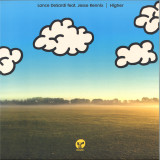
Returning to Classic with his first solo original in 20 years, prolific producer and audio engineer Lance DeSardi unveils ‘Higher’, a three-track release featuring vocals from Jesse Rennix. A frequent studio partner of Luke Solomon, Lance DeSardi has collaborated with the label boss on numerous projects, including on Luke’s Powerdance project and Honey Dijon’s LP ‘Black Girl Magic’ which garnered significant media attention, appearing in The Guardian, Pitchfork, NME, The Line Of Best Fit and more. Now returning to the label, Lance DeSardi showcases his original sound alongside singer, songwriter and producer Jesse Rennix, an established dance vocalist who has released on Om Records, Wolf + Lamb and Legwork. Together the two create studio magic with their EP ‘Higher’, opening with the sultry and expansive title track, stuffed to brim with bright synth goodness as Jesse’s haunting vocals build with menacing intensity. Next up, Lance delivers the ‘Higher’ Space Dub, before ‘The Runaway (House Is A’ Pealin’)’ closes the release with its wickedly dark yet deliciously intense underground club sound.
Horse Jumper of Love thrive on patient and pummeling songs. Since 2013, the Boston trio of singer-guitarist Dimitri Giannopoulos, bassist John Margaris, and drummer James Doran have slowly stretched the fringes of indie rock across five full-length LPs. Their music unwinds with gutting emotional intensity thanks to Giannopoulos' impressionistic lyrics and how the arrangements violently lurch from delicate to bludgeoning. Disaster Trick, the band's new album out August 16 via Run For Cover, is their most direct and uncompromising LP yet. Its 11 songs tackle self-destructiveness and healing with jolting lucidity. Where the band's last LP 2023's Heartbreak Rules excelled with quiet, bare-bones songwriting, Disaster Trick cranks up the volume and boasts some of the most expansive arrangements of the band's catalog. Recorded at Asheville, North Carolina's Drop of Sun Studios with producer Alex Farrar, the recordings soar with searing guitars and a thunderous rhythm section. "I tried the quiet thing on the last album and I realized there's definitely two parts of me: I like really heavy music, and I like really gentle music," says Giannopoulos. "The two albums I was listening to the most, while we were in the studio were the Leonard Cohen's Songs From a Room and Hum's Downward is Heavenward." Disaster Trick is a dark record but it's never dour. There's a glimmer of hope and humor throughout these 11 songs, written with the grace that only time and growing up can bring. As he sings on "Death Spiral," "I know it sounds dramatic / But I must describe / The way that it felt." There's catharsis when it's needed most. "This album is a reflection on destructive behavior from a lens of more clarity," says Giannopoulos. "A lot of the songs came out of this point where things in my life were going well but I couldn't accept it. I was being a brat. Disaster Trick is me cleaning up my act a bit and reflecting on it."
Vomitorium' is the new album from ever-evolving Eindhoven band Radar Men
From The Moon. Due out August 16th on Fuzz Club, it's an eight-track
collection of abrasive experimental punk that unleashes their latest line-up
and musical incarnation in typically confrontational form.
Revelling in cathartic excess and a bludgeoning intensity, they power through
90s industrial electronics, discordant noise-rock and the darkest post-punk
extremes. 'Vomitorium' is the band's eighth full-length in an extensive, shapeshifting discography that has also seen collaborations with the likes of Gnod
(as Temple ov BBV), The Cosmic Dead and 10 000 Russos. INDIE ONLY! Clear
Yellow Vinyl.
Black Truffle is thrilled to announce a reissue of Chico Mello and Helinho Brandão’s self-titled release from 1984, the first return to vinyl of this classic of Brazilian experimental music with its original cover art and complete track listing. An under-recognised figure whose work inhabits a singular terrain where radical new music techniques and music theatre meet musica popular brasileira, Mello has lived and worked in Berlin since the late 1980s. A student of Dieter Schnebel, Mello played in the 90s iteration of Arnold Dreyblatt’s Orchestra of Excited Strings alongside compatriot Silvia Ocougne, with whom he produced a radical and hilarious deconstruction of MPB classics on Musica Brasileira De(s)composta (an early and rather atypical release on Edition Wandelweiser).
On this release, his only recording predating his move to Europe, Mello works with the alto saxophonist Helinho Brandão, who appears to be otherwise unknown outside Brazil. The record’s six tracks range from solo saxophone improvisation to densely layered ensemble works bridging minimalism, acoustic sound art and a plaintive melodic sensibility that calls up Edu Lobo or Milton Nascimento. Beginning with a dramatic, dissonant wind and string surge from which emerge ominously pounding piano chords, opener ‘Água’ slowly builds in intensity, a halo of clustered vocal harmonies gradually closing in on Brandão’s squealing sax until the piece opens up to reveal a gorgeous passage of melodic singing. The piano accompaniment reduces to tolling bass notes as the voice begins a repeated incantation, suggesting a ritualistic atmosphere reminiscent of parts of Xenakis’ setting of Oresteia. Dissonant, sawing tremolos on the strings climb to a crescendo before disappearing into the sounds of water being poured and splashed into metal vessels, presented not as a field recording but as a percussive element performed by the ensemble. A child’s voice then appears, singing to piano accompaniment the same melody heard earlier in the piece. After a brief solo alto improvisation from Brandão, working with the guttural pops and fleeting melodic gestures of Braxton or Roscoe Mitchell, the remainder of the first side is dedicated to the leisurely unfolding of ‘Baiando’ over the course of twelve minutes. A trio for Brandão on soprano saxophone, Mello on a very period-appropriate phased nylon string guitar and Edu Dequech on bongos, the performance eases its way hypnotically through subtle variations on a set of rhythmic and melodic patterns, almost derailed at points by Brandão’s wild forays into extended technique but held together by Mello’s droning guitar notes.
The second side opens with another multi-part epic for a larger ensemble, ‘Matraca’, which makes use of strings, electric guitars and a wide range of South American percussion instruments. Rasping violin harmonics hover as drum hits, repeated guitar notes and triangle accompany a slowly descending bass glissando. A sudden change in direction introduces a thrumming, incessantly repeated bowed bass tone, beginning a series of episodes of minimalist phasing and pattern variation, the combinations of electric guitars and orchestral instruments giving the ensemble an ad hoc charm like the early Penguin Café Orchestra but with more percussive drive. Eventually the piece is overrun by a cacophony of the titular matracas (a kind of ratchet/cog rattle). Following a lyrical trio improvisation by Mello, Brandão and Gerson Kornin on bass, the final ‘Danca’ focuses entirely on Mello’s layered acoustic guitars and vocals, using this restricted palette to build up a haunting piece of almost orchestral density, reminiscent of the 70s work of Egberto Gismonti in how it thickens a folkish ambience with harmonic sophistication.
Arriving in a starkly beautiful gatefold sleeve and sounding better than ever in its new remaster, one might call the stunning music contained on Chico Mello/Helinho Brandão ahead of its time. But what (other than some of Mello’s own work) produced in the years since its initial release has really touched the organic fusion of minimalism, free improvisation, radical instrumental technique and popular song achieved here? Forty years after its first release, Chico Mello/Helinho Brandão remains music of the future.