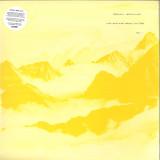
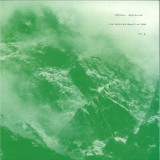
Lo! Soul’ is the fifth solo album from Roddy Woomble, following on from
his acclaimed debut, ‘My Secret Is My Silence’ (2006), ‘The Impossible Song
& Other Songs’ (2011), ‘Listen To Keep’ (2013) and ‘The Deluder’ (2017).
The record sees Woomble continue his unique and restless trajectory, gently
stepping away from his previous acoustic/folk intentions in favour of a more
explorative light, prevalent on 2020’s ‘Everyday Sun’ EP, which featured largely
spoken word pieces over an ambient, mediative soundtrack.
Produced and mixed by collaborator and Idlewild bandmate Andrew Mitchell (aka Andrew Wasylyk), ‘Lo! Soul’ was recorded remotely between Roddy’s
home in the Hebrides and Andrew’s studio in Dundee throughout 2020 while
Scotland was locked-down.
Roddy explains: “Andrew describes moments of the album as ‘Dystopian-pop’
which I think is as good a description as any. Lockdown gave me the sense of
a collective melancholy, a shared remoteness and isolation - that has been a
guiding influence throughout all the songs. It is the most unusual record I have
made, and made in the most unusual way.”
Across his twenty-five year career, ‘Lo! Soul’ may well be Woomble’s most inventive, creative album to date. From undulating synths and ambient soundscapes in the abstract narratives of ‘Atlantic Photography’ and ‘Secret Show’,
the sun-tinged horns of ‘Architecture in LA’, a mellifluous Mellotron or perhaps
a piano chime. Here, the path is embedded with Roddy’s words delicately unearthing the known and never known.
Cerca:intention
- A1: Logos Kill
- A2: Halloween Kills (Main Title)
- A3: The Myer's House
- A4: First Attack
- A5: Stand Off
- A6: Let It Burn
- A7: He Appears
- A8: From The Fire
- A9: Strodes At The Hospital
- A10: Cruel Intentions
- B1: Gather The Mob
- B2: Rampage
- B3: Frank & Laurie
- B4: Hallway Madness
- B5: It Needs To Die
- B6: Reflection
- B7: Unkillable
- B8: Payback
- B9: Michael's Legend
- B10: Halloween Kills (End Titles)
Orange vinyl[22,48 €]
Der renommierte Komponist/Regisseur John Carpenter und seine kreativen Mitstreiter Cody Carpenter und Daniel Davies haben auch zum zweiten Teil der neuen "Halloween"-Trilogie, "Halloween Kills", den Soundtrack beigetragen. Wie der Film selbst bleibt auch Carpenters Filmmusik dem Geist dessen treu, was das Original von 1978 so großartig gemacht hat, und bringt es gleichzeitig fest in die Gegenwart. Die Musik ist unverkennbar John Carpenter: die düsteren Vintage-Synthesizer-Klänge, das atemberaubende Gefühl der Bedrohung, das mit nur wenigen dissonanten Tönen hervorgerufen wird. Doch mit einer breiteren Klangpalette, neuen digitalen Techniken und einem tieferen Sinn für Musikalität ist der Score zu "Halloween Kills" das Werk eines Meisters, der auch nach fast 50 Jahren in seiner Karriere immer wieder an seine kreativen Grenzen geht und neue Wege findet, seine Fans zu begeistern und zu erschrecken. John Carpenters hypnotisches Thema zu seinem Horror-Meisterwerk "Halloween" aus dem Jahr 1978 hat mittlerweile für Generationen von Kinobesuchern die Angst vor Slasher-Stalkern verkörpert und sich so sehr in die Popkultur eingewoben, dass es zum musikalischen Kürzel für das gesamte Horror-Genre geworden ist. Es sind nur fünf Noten, die auf einem Klavier gezupft werden, so spärlich arrangiert, dass es sich wie kaum mehr als eine Skizze anfühlt, so einfach, dass ein ungeübter Spieler es leicht aufschnappen kann, aber es ist eine der größten musikalischen Errungenschaften des Kinos. 2018 kehrte Carpenter zum ersten Mal seit "Halloween III: Season of the Witch" von 1982 zu dem Franchise zurück, das er mit seiner ikonischen Schöpfung ins Leben gerufen hatte, ließ die 40 Jahre an Fortsetzungen und Reboots unter anderen Filmemachern hinter sich und kehrte zu seiner ursprünglichen Vision zurück. Während David Gordon Green die Regie für den neuen "Halloween"-Film und seine Fortsetzungen übernommen hat, ist Carpenter geblieben, um ihnen ihre unverwechselbare akustische Identität zu verleihen, die zu "Halloween" gehört wie die Totenmaske und das schimmernde Schlachtermesser von Michael Myers.
Making her stage debut in April 2019 and selling out her first
headline show at London’s prestigious Southbank Centre less
than a year later, A.A. Williams hit the ground running. Similarly,
the acclaim for her performances and her music has been
unanimous from the start. After one self-titled EP and a
collaboration with Japanese post-rockers MONO, the Londonbased singer songwriter signed to Bella Union and released her
stunning debut album, ‘Forever Blue’, in July 2020.
That Southbank show would prove to be the last time she would
take to the stage for a long while as the world struggled to cope
with unforeseen and extreme challenges. Never a musician to sit
still, the classically trained multi-instrumentalist focused her
creativity on arranging - firstly, by stripping back to the most
delicate bones on her ‘Songs from Isolation’ covers record and
now with a complete reimagining of her own material as the four
songs from her debut EP become ‘arco’.
Not many musicians have the ability - or indeed bravery - to
rework a collection of their own full band ‘rock’ songs into a stringand-voice arrangement. A.A. Williams, however, is not like many
musicians and the minimalism of Arvo Pärt and Gorecki has long
since sat beside Vaughan Williams' folk-inspired classical work as
important influences on her music. Indeed, the intention with the
EP was for Williams to challenge herself by not retaining guitars
and drums, meaning ‘arco’ had to be truly reimagined with a full
string ensemble.
As Williams describes it: “The main focus of the arrangements is
trying to maintain the authenticity of the original songs that, whilst
embodying some of the more familiar elements of the full-band
settings, draws focus on the voice.”
Conducting the ensemble of string musicians in the studio, A.A.
Williams has evolved her own compositions with new
instrumentation and arrangements, encapsulating the singular
vision of a unique artist.
12” pressed on 140g ‘Galaxy White Purple’ vinyl with signed
12”x12” print and digital download code.
- A1: Logos Kill
- A2: Halloween Kills (Main Title)
- A3: The Myer's House
- A4: First Attack
- A5: Stand Off
- A6: Let It Burn
- A7: He Appears
- A8: From The Fire
- A9: Strodes At The Hospital
- A10: Cruel Intentions
- A11: Gather The Mob
- A12: Rampage
- A13: Frank & Laurie
- B1: Hallway Madness
- B2: It Needs To Die
- B3: Reflection
- B4: Unkillable
- B5: Payback
- B6: Michael's Legend
- B7: Halloween Kills (End Titles)
Orange vinyl[22,48 €]
Der renommierte Komponist/Regisseur John Carpenter und seine kreativen Mitstreiter Cody Carpenter und Daniel Davies haben auch zum zweiten Teil der neuen "Halloween"-Trilogie, "Halloween Kills", den Soundtrack beigetragen. Wie der Film selbst bleibt auch Carpenters Filmmusik dem Geist dessen treu, was das Original von 1978 so großartig gemacht hat, und bringt es gleichzeitig fest in die Gegenwart. Die Musik ist unverkennbar John Carpenter: die düsteren Vintage-Synthesizer-Klänge, das atemberaubende Gefühl der Bedrohung, das mit nur wenigen dissonanten Tönen hervorgerufen wird. Doch mit einer breiteren Klangpalette, neuen digitalen Techniken und einem tieferen Sinn für Musikalität ist der Score zu "Halloween Kills" das Werk eines Meisters, der auch nach fast 50 Jahren in seiner Karriere immer wieder an seine kreativen Grenzen geht und neue Wege findet, seine Fans zu begeistern und zu erschrecken. John Carpenters hypnotisches Thema zu seinem Horror-Meisterwerk "Halloween" aus dem Jahr 1978 hat mittlerweile für Generationen von Kinobesuchern die Angst vor Slasher-Stalkern verkörpert und sich so sehr in die Popkultur eingewoben, dass es zum musikalischen Kürzel für das gesamte Horror-Genre geworden ist. Es sind nur fünf Noten, die auf einem Klavier gezupft werden, so spärlich arrangiert, dass es sich wie kaum mehr als eine Skizze anfühlt, so einfach, dass ein ungeübter Spieler es leicht aufschnappen kann, aber es ist eine der größten musikalischen Errungenschaften des Kinos. 2018 kehrte Carpenter zum ersten Mal seit "Halloween III: Season of the Witch" von 1982 zu dem Franchise zurück, das er mit seiner ikonischen Schöpfung ins Leben gerufen hatte, ließ die 40 Jahre an Fortsetzungen und Reboots unter anderen Filmemachern hinter sich und kehrte zu seiner ursprünglichen Vision zurück. Während David Gordon Green die Regie für den neuen "Halloween"-Film und seine Fortsetzungen übernommen hat, ist Carpenter geblieben, um ihnen ihre unverwechselbare akustische Identität zu verleihen, die zu "Halloween" gehört wie die Totenmaske und das schimmernde Schlachtermesser von Michael Myers.
David Wrench and Evangeline Ling - aka audiobooks - threw
absolutely everything at their 2018 debut album, ‘Now! (in a
minute)’, a hectic, head-spinning blast of freewheeling freak-pop
genius. On its follow-up, ‘Astro Tough’, via Heavenly
Recordings, they’ve somehow found a way to ramp things up
even further, concentrating their chaotic energy and inherent
weirdness into a record that’s bigger, deeper and more powerful
han even its predecessor.
“The first album was a photograph of the beginnings of the
project, recorded without any overall plan,” Wrench explains.
“‘Astro Tough’ is more scripted, but a script that still allowed for
ots of improvised scenes. There was more intention behind the
songs, and a lot more refining. We weren’t precious about
everything being spontaneous and a first take, like on the first
record, even though some of it ended up being that. We made a
ot more material for this record, but chose the tracks that best
worked together as an album.”
Multi-instrumentalist and super-producer Wrench is as
comfortable unleashing monolithic psychedelic wig-outs and
heavy dub-driven monsters as he is crafting irresistible synthpop bangers. Writer, vocalist and visual artist Ling is as
chameleonic as she is charismatic, able to jump from
detachment to rawness to aggression to tenderness to hilarity to
oe-curling awkwardness, sometimes within the same song.
Though the record is a product of increased refinement, the pair
were physically together only in bursts, cramming sessions
around their respectively hectic calendars. “We had much less
time together than on the first record, but every time I did see
David that thirst and the ability to come up with something was
there. I think this record is better than the first record, and I
think we’re dying to make more. We’re going to try and better it
again,” says Ling.
Eco-mix colour vinyl. Black vinyl format (HVNLP183) will be
made available once coloured vinyl is sold out.
Ben Bertrand weaves transverse waves into otherworldly compositions. He embodies the singular motion of these melodic and harmonic forms in order to draft new sonic possibilities freed from the laws of the physical plane. Pulsating at the kernel of Ben Bertrand’s musical universe are vivid dreams generating the fabric of these tapestries. Dokkaebi is deeply familiar yet refreshingly unknown, like a comforting whisper from your subconscious. It gently drifts into perception, glistening like the sun sparkling off a glacier gliding along the edge of your vision.
Deep listening to these tonal sculptures is enriching. By opening oneself to their deliberate unfolding, you will discover new principles for sound organization far afield from common modes of operation. The gradual, rhythmic progression of his compositions are ever-shifting grains, which upon thoughtful contemplation, reveal astonishing worlds. Bertrand’s music is constructed from blueprints drafted with honest intentions aspiring to bring humans closer to a sense of wonder.
Ben Bertrand welcomes each listener to discover his music anew from their own perspectives. It is infinitely in time with your time. These are the ripples in the wake of successive revolutions of universal evolution. Dokkaebi is an example of musical expressions adapting to the contours of the human psyche through gentle reflection of multiplicity. They are sounds reshaping themselves to suit the contours of each individual’s subconscious—sonic entities projected simultaneously as molecular and holistic.
Dokkaebi is an oceanic expression softly set in motion by honest aims that echo and grow. Ben Bertrand beckons you to listen up and look in. There is great reward in this generous flow.
Ben Bertrand was accompanied by Christina Vantzou, Geoffrey Burton, Indré Jurgeleviciuté, Echo Collective: Margaret Hermant & Neil Leiter, Otto Lindholm.
Soopasoul is an enigmatic producer, who's purist approach to jazz, funk and soul music has resonated with DJs, break-dancers, music connoisseurs, critics and casual listeners alike. Since furthering his legacy by creating a hugely successful edits series, Soopasoul returns with some more original cuts in the shape of 'A Wild Mad Beat' and 'Swing Down'.
'A Mad Wild Beat' does exactly what it says on tin. Kicking things off with a tough break that knocks so delightfully hard, this energetic vibe moves swiftly into a lead sax being given the freedom front and centre to flow over tight horn stabs, guitar licks, percussion and a monster of a bassline.
But it doesn't stop there. 'Swing Down' switches things up on the flip, with it's up-tempo feel-good rare groove. The band are in full swing here, deftly providing the playful call-and-response to the sexy call-to-action found in the lyrics, all skilfully delivered with the intention to get the dancefloor into the right mood to party all night long.
Caleb Landry Jones is a continual creator. The Texan-born star found fame as an actor - you’ll recognise him from key roles in X-Men: First Class, Three Billboards Outside Ebbing, Missouri, amongst others - but music is perhaps his first love, and his source of greatest comfort. A chance encounter with famed auteur Jim Jarmusch brought him into the orbit of Sacred Bones, and the stalwart independent released Caleb’s 2020 debut album The Mother Stone. Psychedelic in a defiantly non-retro way, this indulgent, freewheeling trip won critical acclaim, but masked a secret - he’d already finished another album.
Filming alongside Tom Hanks in dystopian themed Finch, Caleb found himself writing during those long evenings after the shoot in locations across New Mexico, idling away his hours by focusing on creativity. “I need it,” he says, “I’ve tried working without it. On one acting job, I intentionally didn’t bring a guitar to try and do it without music... but that didn’t last long. I need to create
something - it could be a drawing, it could be a song - because otherwise I feel like I’m wasting time. Which is something I do plenty of on my own!”
With his creative faculties burning, Caleb knew he had to get straight back into the studio when filming stopped. Linking with the same cast who formed The Mother Stone, he resumed his partnership with producer Nic Jodoin, based out of the elegant Valentine Recording Studio in Los Angeles. A studio steeped in history - everyone from Bing Crosby to Frank Zappa worked there - he interrupted mixing sessions for his own debut album in order to focus on something different.
Gadzooks Vol. 1 is unlike anything you’ve heard before - comparisons range from Skip Spence’s fractured masterpiece Oar through to skewed troubadour Robyn Hitchcock, via John Lennon’s black moods on The White Album and Frank Zappa’s caustic surrealism. Recording to tape, Caleb would hack away at each take, re-assembling the songs like Escher diagrams. “It’s like when you’re swimming in the pool,” he smiles, “and you’re doing a bit of butterfly, and then that gets old after a while. So then you start doing breaststroke, and then that gets old after a while. I think it’s just a reaction from the place where we were before.”
Part of a flood-tide of creativity - as its title suggests, a second half to this album is already on the horizon - Gadzooks Vol. 1 is thrilling, shocking, and wonderfully entertaining. Each song starts and finishes in entirely unique places, often totally divorced from each other. “I’m trying to write something very simple,” he says, “And it gets really abstract because I don’t know any other way.”
- Follow up to the critically acclaimed debut The Mother Stone
- Actor in Finch, Get Out, Twin Peaks, Three Billboards Outside Ebbing, Missouri
- Positive press for The Mother Stone ran in Pitchfork, Billboard, Entertainment Weekly, FLOOD, Newsweek, The AV Club, Document Journal, The New Yorker, The FADER, NPR and others
Caleb Landry Jones is a continual creator. The Texan-born star found fame as an actor - you’ll recognise him from key roles in X-Men: First Class, Three Billboards Outside Ebbing, Missouri, amongst others - but music is perhaps his first love, and his source of greatest comfort. A chance encounter with famed auteur Jim Jarmusch brought him into the orbit of Sacred Bones, and the stalwart independent released Caleb’s 2020 debut album The Mother Stone. Psychedelic in a defiantly non-retro way, this indulgent, freewheeling trip won critical acclaim, but masked a secret - he’d already finished another album.
Filming alongside Tom Hanks in dystopian themed Finch, Caleb found himself writing during those long evenings after the shoot in locations across New Mexico, idling away his hours by focusing on creativity. “I need it,” he says, “I’ve tried working without it. On one acting job, I intentionally didn’t bring a guitar to try and do it without music... but that didn’t last long. I need to create
something - it could be a drawing, it could be a song - because otherwise I feel like I’m wasting time. Which is something I do plenty of on my own!”
With his creative faculties burning, Caleb knew he had to get straight back into the studio when filming stopped. Linking with the same cast who formed The Mother Stone, he resumed his partnership with producer Nic Jodoin, based out of the elegant Valentine Recording Studio in Los Angeles. A studio steeped in history - everyone from Bing Crosby to Frank Zappa worked there - he interrupted mixing sessions for his own debut album in order to focus on something different.
Gadzooks Vol. 1 is unlike anything you’ve heard before - comparisons range from Skip Spence’s fractured masterpiece Oar through to skewed troubadour Robyn Hitchcock, via John Lennon’s black moods on The White Album and Frank Zappa’s caustic surrealism. Recording to tape, Caleb would hack away at each take, re-assembling the songs like Escher diagrams. “It’s like when you’re swimming in the pool,” he smiles, “and you’re doing a bit of butterfly, and then that gets old after a while. So then you start doing breaststroke, and then that gets old after a while. I think it’s just a reaction from the place where we were before.”
Part of a flood-tide of creativity - as its title suggests, a second half to this album is already on the horizon - Gadzooks Vol. 1 is thrilling, shocking, and wonderfully entertaining. Each song starts and finishes in entirely unique places, often totally divorced from each other. “I’m trying to write something very simple,” he says, “And it gets really abstract because I don’t know any other way.”
- Follow up to the critically acclaimed debut The Mother Stone
- Actor in Finch, Get Out, Twin Peaks, Three Billboards Outside Ebbing, Missouri
- Positive press for The Mother Stone ran in Pitchfork, Billboard, Entertainment Weekly, FLOOD, Newsweek, The AV Club, Document Journal, The New Yorker, The FADER, NPR and others
Exceptional recordings by this New age maestro. Only recently re-discovered by his friend JD emmanuel & the band Sun Araw. Originally released on cassette in 1983 and now for the first time vailable on 180g Vinyl. For fans of Joanna Brouk, JD Emmanuel and Pauline-Anna Strom.
Randall McClellan was a founding member of the electronic music studio at the Eastman School of Music in 1967 where he later received a Ph.D. in Composition, Theory and Musicology. A growing interest in North Indian music and vocal technique prompted him to develop his personal compositional practice into an active platform for inducing altered states of mind. He constructed his concerts to be spaces for harmonization of mind and body through a musical practice informed by his esoteric studies of ancient mystery schools and sacred geometry, believing these to be primarily teachings on intentional resonance.
These performances were given between 1977 and 1983 in semi-darkened spaces that allowed listeners to relax on carpeting while being enveloped by sound. Each improvisation lasts from twenty-five to forty-five minutes. An entire performance is up to three hours and is designed to provide an environment of meditative sound. They gained in popularity and were soon attended by larger audiences. His final live performance took place at New York City's Alternative Museum in October, 1983.
The “Music of Rana” Enviromental Series uses synthesizers, drone box, tamboura, voice and tape delay to create an environment of continuously evolving multi-layered melody. Described as subtle, graceful and of other worlds. The name RANA, meaning “Sunbreath”, has its origin in ancient philosophical concepts that recognized vibration as the fundamental creative force and central principle of the many esoteric mystery schools of the ancient world. It is now evident that the use of music for its ability to alter mind states and for its effectiveness as a therapeutic aid was music’s original purpose and an important concept of these mystery schools. In the broadest sense, the practice of music for its healing ability may well stand as our oldest continuous musical tradition.
This album is the first volume in the series, previously issued as a cassette in 1983, and part of the cassette box set published by Sun Ark in 2013. This music is based on principles outlined in Randall’s book, The Healing Forces of Music: History, Theory and Practice. These compositions are selected for their meditational and healing abilities. EQ settings of treble and bass levels determine the music's effect upon you. Please explore until the most comfortable settings are found.
FACT MAG: "These deeply meditative pieces are an expert take on how subtleties and concentrated listening go hand-in-hand. There is inherent beauty here, but it’s the deeper aspects that make the biggest impact."
Exceptional recordings by this New age maestro. Only recently re-discovered by his friend JD emmanuel & the band Sun Araw. Originally released on cassette in 1983 and now for the first time vailable on 180g Vinyl. For fans of Joanna Brouk, JD Emmanuel and Pauline-Anna Strom.
Randall McClellan was a founding member of the electronic music studio at the Eastman School of Music in 1967 where he later received a Ph.D. in Composition, Theory and Musicology. A growing interest in North Indian music and vocal technique prompted him to develop his personal compositional practice into an active platform for inducing altered states of mind. He constructed his concerts to be spaces for harmonization of mind and body through a musical practice informed by his esoteric studies of ancient mystery schools and sacred geometry, believing these to be primarily teachings on intentional resonance.
These performances were given between 1977 and 1983 in semi-darkened spaces that allowed listeners to relax on carpeting while being enveloped by sound. Each improvisation lasts from twenty-five to forty-five minutes. An entire performance is up to three hours and is designed to provide an environment of meditative sound. They gained in popularity and were soon attended by larger audiences. His final live performance took place at New York City's Alternative Museum in October, 1983.
The “Music of Rana” Enviromental Series uses synthesizers, drone box, tamboura, voice and tape delay to create an environment of continuously evolving multi-layered melody. Described as subtle, graceful and of other worlds. The name RANA, meaning “Sunbreath”, has its origin in ancient philosophical concepts that recognized vibration as the fundamental creative force and central principle of the many esoteric mystery schools of the ancient world. It is now evident that the use of music for its ability to alter mind states and for its effectiveness as a therapeutic aid was music’s original purpose and an important concept of these mystery schools. In the broadest sense, the practice of music for its healing ability may well stand as our oldest continuous musical tradition.
This album is the first volume in the series, previously issued as a cassette in 1983, and part of the cassette box set published by Sun Ark in 2013. This music is based on principles outlined in Randall’s book, The Healing Forces of Music: History, Theory and Practice. These compositions are selected for their meditational and healing abilities. EQ settings of treble and bass levels determine the music's effect upon you. Please explore until the most comfortable settings are found.
FACT MAG: "These deeply meditative pieces are an expert take on how subtleties and concentrated listening go hand-in-hand. There is inherent beauty here, but it’s the deeper aspects that make the biggest impact."
Early support by: Laurent Garnier, AME, Marco Bailey, Jennifer Cardini, Terrence Fixmer, Kyle Geiger, Marcel Dettmann, Apparat, Richie Hawtin, Vril, Charlotte De Witte, Sasha, Benjamin Demage any many more..
Fresh off of a remix for Grimes’ “My Name is Dark”, producer Julien Bracht has been powering through CV19 studio seclusion on full-power, with a distinct vision for brighter days ahead. Bracht’s new album, “Now Forever One,” an emblem of dark analog synthwave, is set to drop June 11. Bracht’s first solo album under his own namesake is cut with surgical precision for the shoegazing astral sound travellers who long to break out of their pandemic quarantines, and reconvene for techno-induced ascension. The album’s first single, “Melancholia,” and it’s accompanying video, is already breaking hearts and charts. An exquisite sonic hybrid of communal revelry and profound introspection, “Now Forever One,” focuses Bracht’s multilayered craftsmanship on resolving this era’s angst with sensory exploration and optimism.
As a lifelong drummer, Bracht’s insatiable musical energy lead him to bang out his first 3 EPs within one year of first being signed in 2011-12. In 2015 he founded the band Lea Porcelain with Markus Nikolaus in London. Their hypnotic post-rock debut release in 2017, “Hymns to the Night,” gained instant acclaim from UK tastemakers Lauren Laverne, Steve Lamacq and Zane Lowe, to name a few. The lads broke back onto the international stage with dates on several major festivals around Europe, including the Leeds/Reading Festival, Great Escape Brighton and Latitude. Rich output combined with the inclusion of live drums in his solo live sets quickly gained Bracht recognition and slots on the global tour circuit.
“Now Forever One” forges Julien Bracht’s transition from techno djing, while continuing the explorations of texture and timbre over functional song structures from Lea Porcelain, to a more open-ended search for the aural sublime — the substrate on which music, life and light glide to create momentary nodes of meaning in an increasingly meaningless sociopolitical atmosphere. These are crucial themes to Bracht’s process and approach. “The intention in my music is to strengthen people’s awareness and minds… I want us all to gather in spirit and stick together.”
The album exemplifies Bracht’s hunt for elemental juxtaposition with the warm Prophet 6’s sawtooth howls and bright pads against chillingly indifferent pulsing basslines and percussion. Clocking in at just under 65 minutes, “Now Forever One’s” tracks are sequenced to take the listener through the full emotional arch of a 15-hour rave, with an emphasis on those moments of collective epiphany where heaving techno floors become the perfect microcosm for an idealistic and interconnected future. Interspersed with improvisational one-takes, the album submerges the listener in polyrhythmic meditations, of which “Streets” and “Nocturne” are standout examples, and soars on the vaulted synth melodies of future dance floor favourites “Melancholia” and “Dreams of Euphoria.” Sascha Ring of Apparat & Moderat puts it perfectly: “I played “Melancholia” the night I got it at Mutek Festival in Mexico City, and instantly knew it’ll shine on a big floor at the right time. It’s just the right balance of majestic melodic deepness.” The sounds are both triumphant and exploratory.
Greater than the sum of its parts, Bracht’s latest release hints at the artist’s emerging potential for nailing our moment’s zeitgeist; learning to live smaller while constantly seeking higher heights. Inhabiting the fertile ground between solitary rumination and dance-floor convenance, the launch of “Now Forever One’s” lunar expedition into the techno oblivion of pandemic lockdown is oddly fitting.
Pokey LaFargeʼs 7th studio solo album, ‘In The
Blossom Of Their Shade’, showcases the positivity
of coming out of the darkness and into the light.
When the 2020 global pandemic hit, LaFargeʼs
rigorous work ethic powered him through the
potentially challenging creative period. As days
became a couple of months, songs blossomed
from embryonic ideas into fully-formed ones and
he was ready to move on, which typified his
mindset as a working artist.
With this record, LaFarge captures the thematic
notion of being the perfect summer afternoon
soundtrack... the type of music you want to listen
to while having a cocktail with your significant
other.
It makes sense musically as well - LaFarge
intentionally crafted songs that created space and
have melodies that can glide throughout a
composition thatʼs a far cry from the swing and
blues-infused songs of his earlier work.
LaFarge is an artist who refuses to rest on his
laurels and compromise. He's always motivated
and ready to create. ‘In The Blossom Of Their
Shade’ is one of LaFargeʼs strongest and most
mature efforts to date.
LP in gatefold sleeve.
Blue Vinyl with Bonus 7”
Charlotte Cornfield’s “The Shape of Your Name” was the inaugural release
from Next Door Records, originally launched in April 2019.
Next Door Records is proud to present a deluxe reissue of this monumental
album in time for the second anniversary of its release. The deluxe reissue
consists of the original LP, now pressed on Atlantic Blue vinyl, with bonus twotrack 7” In My Corner b/w Upstate.
From the original release sheet: ‘You free yourself when you take away the
script,’ says Toronto songwriter Charlotte Cornfield. ‘That’s where this record
came from, dismantling patterns and embracing the process.’
The album has a more honed studio sound than her scrappier 2016 release Future Snowbird, and for good reason: it was recorded in 5 different sessions over
the course of 3 years. The songs are her strongest and most striking to date -
contemplative and contemporary, funny and heart-wrenching - and they’ve got
that stuck-in-your-head-for-days quality that Charlotte is known for.
‘My initial intention wasn’t to make a record at all,’ Cornfield muses. ‘The
whole thing kind of happened by accident. I went to The Banff Centre to do
a residency and came out with these recordings that I knew I wanted to use
for something but wasn’t sure what.’ She brought the unfinished songs to her
former roommate Nigel Ward in Montreal.
‘He fell into the producer role seamlessly,’ says Cornfield. ‘We took it slow and
just tried things for a while until the vision settled in. There was no rush. It was
freeing, and it gave the songs a lot of breathing room to develop.’”
Nocturnes: Music For 2 Pianos was written during 2020 and 2021. There are 14 compositions, written mostly at night in lockdown. The decision to compose for two pianos gave me the ability to write more abstract compositions, blurring the melodies and harmonies to make a diffused sound. Other Nocturnes are more pure and focus on delicate melodic fragments, revealing their compositional process as they develop. Each short piece should stand on its own however the atmosphere and intention of each movement work together as a whole. Writing the work, which was composed and recorded at home was in a way therapeutic amidst the pandemic. I would like to think the beauty of the sound and reflectiveness of the music communicates and in turn perhaps might help the listener find some solace in these strange times. I wanted Nocturnes to be an acoustic album, playable by any two pianists who might want to perform them.” – Craig Armstrong
Emerging from the Toronto warehouse scene, Tush is a rising electronic music act powered by Kamilah Apong and Jamie Kidd. Taking inspiration from electro funk, early disco, post-punk and '90s house; their debut album 'Fantast' embodies the rawness, vulnerability, and intimacy of the dancefloor.
'Fantast' kicks off with the slow burning 'Wavy Baby', an invitation to get close, get intimate and submit to the groove: "Vulnerability is the key to us getting to that next step of intimacy". Up next is lead single 'Chrysalis', a high octane ride through a technicolour fantasy world of heady synths and driving rhythms that propel Kamilah's voice into an erotic stratosphere.
'Don't Be Afraid' is about having the courage to love defiantly, urgently, and with intention. Driven by Jamie's infectious bass lines and FX blasts, it smoothly transforms into an uplifting gospel-infused track.
Two high points of the album, 'Jessica F***' and 'Marathons', highlight Tush doing what they do best. These tracks are the sound of the warehouse scene that birthed the project in the first place and the late night jam sessions that were full of possibility pre-pandemic. Here, Tush really stretch their improvisational muscles - the interplay of raw soulful vocals, hypnotic basslines, synth pads, and heavy disco rhythms is at the core of what makes them so invigorating.
'Fantast' closes with the uplifting sunrise energy of 'My Joy', the light at the end of the tunnel. "This song is enchanted by the backing vocals of my friends and chosen family, who are my cornerstones to working through the wonderful mess that I am". Kamilah adds "The track gives me this feeling that - no matter how hard the world tries to beat it out of me - I can and I have had to work hard to cultivate my own happiness in my own sacred spaces - one of those being Tush. Ultimately, this is all I really need".
The core tenets of Morgan Wright's music have long tested club music's context; the rituals and customs that define it, and how each of those genres change once removed from their traditional settings.
It's a space Morgan Wright feels at home in; one where he's constantly asking questions of the structure club music resides within, and what it means to create a new space for familiar sounds. And over the course of his debut album, Class Tourist, Morgan has found new ways to elevate those same questions - whether by way of intention, or a pandemic-induced coping mechanism.
In Class Tourist, Morgan again borrows from familiar strains of the subgenres which have come to form his musical identity. This time, he fuses sounds of post-punk, IDM and breakbeat, hopeful they converge to form a bastardised rendition of the latter, with "Australiana" at its core.
It's a sound that was made possible by a change to his songwriting approach, after pivoting from a loop-based production style - one which he has applied to a slew of other projects, for the better part of five years - to one which lends itself to a more standardised, contemporary format.
Moving through the record, Morgan toys with musical tropes of contrast with a calculated refinement unheard throughout his previous work. The coalescence of melodic optimism and bleak, mournful soundscapes feature on Class Tourist again, as you would expect. But this time, contemporary structure - with the exception of a few songs - along with the features of label-mate, Purient, and frequent collaborator, ENDL355, breathe new life, and even a new genre, into Morgan's work.
- A1: Ash (2021 Remaster) 07 06
- A2: Chessa (2021 Remaster) 06 58
- A3: Blast (2021 Remaster) 03 04
- B1: Duh (2021 Remaster) 03 40
- B2: Marche (2021 Remaster) 05 21
- B3: Nerf (2021 Remaster) 03 40
- B4: West Nile (2021 Remaster) 02 16
- B5: Melt (2021 Remaster) 05 30
- C1: Logical (2021 Remaster) 03 01
- C2: Dead Leaves (2021 Remaster) 05 22
- C3: Scrapbook (2021 Remaster) 07 53
- D1: Habitat (2021 Remaster) 07 04
- D2: Bloom (2021 Remaster) 03 31
- D3: Angelic (2021 Remaster) 03 39
Keplar re-issues the fourth album 'Chessa' by Dan Abrams' project Shuttle358 on vinyl for the first time. The double LP edition includes 3 previously unreleased tracks from the same recording sessions back in 2004, as well as an extended artwork with unseen photographs by Dan Abrams.
While undoubtedly associated with the microsound and 'clicks & cuts' movement around the turn of the millennium, on 'Chessa' Shuttle358 left behind the classical rhythmic patterns of the genre and shifted further towards warmer territories, meandering between modern digital minimalism and the soft tones of ambient music. Counter to his microsound synthesis approach on Frame (2000), Abrams created Chessa by writing software that manipulated samples from his unreleased songs, guitar pieces, and vintage japanese films sampled from video tape. In particular, a special granulating technique was written and performed at intentionally low sample rates that gave the uniquely fragile, yet dense sound to the album. Over fourteen tracks Abrams arranges slowly evolving sonic entities of unfading elegance. Strayed and hazy melodies pulse and cascade, elongated but brittle harmonies shimmer and disappear, echoing far-off in the rounded corners of the mind. The patient and detailed way Abrams combines the broken with the beautiful in creating organic collages of sound that retain the euphonic essence of a song, makes this piece of work so powerful and timeless, sounding just as relevant today, as it did 17 years ago.
Under modern scrutiny in Abrams latest studio, he refocused the original recordings to emphasize the elements most important to the original vision. The final mastering and vinyl preparation was done in collaboration with Stephan Mathieu, vinyl was cut by LUPO.
From the original press release in 2004 by Taylor Deupree:
Without a doubt Shuttle358 has become one of the most admired artists to emerge from modern electronic music’s sea of musicians. From the humble beginnings of a demo CD in 12k’s mailbox to 4 critically acclaimed CDs, Dan Abrams is, to some, the one credited for bringing a warmth and human touch back into what has often been considered a very cold, sterile genre. It began with 1999’s Optimal.lp (12k1005), a groundbreaking debut release that immediately defined the Shuttle358 sound; a hybridization of the then-emerging “microsound” genre with Eno’s true ambient explorations. In 2000 Abrams outdid himself with Frame (12k1011) by honing his sound design and exploring production techniques at rates that made his “now” quite brief and creating what was to become one of the most sought-after CDs in the 12k catalog.
Chessa is the third release from Abrams’ Shuttle358 moniker on 12k and he continues to do what he does best: attempt to move microsound away from the world of theory and towards absolute real life. Like his photographs, Chessa is music about, and to be listened to in, unexpected places. It is a narrative, a simple slice of life that plays out through the incidental photography of the cover artwork. To achieve this Abrams fuses irregular granular sound particles, like the movements of everyday life, with a deliberate melodic base that captures emotion and simplicity.
"Transitional Being reveals another side of XVARR’s production palette — characteristically tranceinducing, this release highlights the transformational potential of dance music.
Spanning the last ten years, these six tracks handpicked by Aural Medium align with a particular relationship to technology that has formed the central pillar to the XVARR studio set up. Often starting with a drum pattern and sequenced bass-line, the physical rhythm is stripped out and surrounding elements are drawn out and manipulated to convey the ‘hidden’ intention behind the track. With the tracks compiled here, he lets the rhythms ride. The influence of more ‘club-orientated’ music has remained firmly embedded in XVARR’s psyche, although typically the trip has been more introverted. The approach here may differ from other XVARR outputs, but the mood most definitely remains the same, with an overarching desire to channel emotion and passion from the other side of nowhere.
XVARR recognizes the parallels between the ritualistic dance of the Witches’ Sabbath and a dark room filled with sweat, smoke, and sound. It is in this parallel void of transcendent possibilities that tracks such as “Running out of Time”, “The Crooked Path” (a nod to Andrew Chumbley) and “Universal” reside. There’s also a subtle presence of influences from Industrial music, with groups such as SPK, Conrad Schnitzler, Chris Carter and Cabaret Voltaire paving the way for XVARR’s early experiments with electronic music. The alchemical results on this EP float in a universe populated by such luminaries as AFX, Drexciya, and the constellation created by Chain Reaction, within a cosmos governed by the gravitational pull of Baldelli and Weatherall."
Once in a while an artist will come along that carves out a sonic aesthetic so distinctive it takes just a few bars of a record to know it’s one of theirs. Miguel Migs is undoubtedly one of these artists, with the Californian producer’s catalogue of deeply soulful house demonstrating his adept knowledge of atmospheric, dimensional and creative soundscapes. Now he delivers new album ‘Shaping Visions’ on Soulfuric Deep, his first LP since ‘Dim Division’ on Soul Heaven Records/Defected in 2014. Produced during the height of lockdown, the intimate connection between the listener and the 13 tracks on the album reflects a laid back and deeply emotive side of Migs’ repertoire. From the mellow groove of opening track ‘Midnight Memories’, to the seductive soulfulness of ‘Mood Lights’, and the laid back, driving feel of ‘Chasing Time’, this collection of mid-tempo gems showcases Migs’ distinctive style at its very best. With an emphasis on quality, song-driven material, featuring a host of talented collaborators including house favourite Lisa Shaw, guitarist and vocalist for Prince Andy Allo and Rebel Soul founder Martin Luther, ‘Shaping Visions’ thoughtfully intimate intentions are what make it a truly special listening experience.