Artwork by TZU TING WANG, Layout/Concept by Fiona Luigi
5 years since Midnight Shift's first release in 2012, the label assembles a collective of artists, most of them are in advance of their full EPs releasing later.
Representing the sounds of the label is this manual of secret moves, up in the sleeves. The mystic motley crew also comprises the alternate sides of familiar faces — Amato (The Hacker), Terry Lamborgini (Marco Bernardi), INNYSTER (Seixlack), Hodge in a new formation with Gramrcy, and an electro moniker from an undisclosed artist: Thermocline. From abstract acrobatics to the abrasive and the ultimate gob smack to the floor — The Midnight Manual.
Buscar:iron man
These rare recordings were recorded as part of the legendary prescription label
album series in the late 1990's that resulted in the album "Astral Disaster".
Coil were invited to record at sun dial's studios beneath the London Bridge Hop Exchange. This studio was originally know as Samurai studios that was originally built and owned by Iron Maiden. The premises in Victorian times was an old debtors prison which had three levels underground, and still had the original chains, manacles and wrought iron doors from the old prison. This caught the attention of John Balance and was very keen to record there.
At Gary Ramon's invitation, Coil spent a number of days recording at the studio during Halloween 1998 and they developed a number of tracks some of which resulted in the "Astral Disaster" album.
For various reasons, some of the unissued material and mixes released on this album were omitted from the original Astral Disaster album, and so now is the opportunity to listen to the "Astral Disaster" sessions.
The album includes previously unissued mixes, and the rare version of "I Don't Want To Be The One" that was only included on the very rare 1999 promo CD only Prescription sampler and the 14 minute track "Cosmic disaster" that was the original working title of the album.
Taken from the master tapes and remastered by Denis Blackham.
ossession Records proudly present the new album by Soft Riot, entitled 'The Outsider In The Mirrors'.Soft Riot is the stylised musical alter-ego of JJD, Canadian by birth and an ex-resident of London and Sheffield, now based in Glasgow (so not unfamiliar with sites of post-industrial decay!). With over twenty years of playing in various post-punk and synth-punk bands, he has been crafting the sound of Soft Riot since the early turn of the decade, releasing a slew of albums across a multitude of labels and touring obsessively around Europe and beyond.With 'The Outsider In The Mirrors', his sixth full-length, he has found a new home for his sound on Possession Records, a fledgling Glasgow imprint founded by JJD, Claudia Nova (aka Hausfrau) and Andy Brown (Ubre Blanca). Their aim is to bring together their pool of musical talents and provide a more permanent home for their future creative endeavours, whether it be music, video or otherwise and to experiment with what it is to be a 'label' in the ever evolving 21st century. Future projects and releases will see them getting a select group of their peers and friends involved in Possession's focused vision, locally or from further afield.'The Outsider...' is a consolidation of all the stylistic elements Soft Riot has pursued in the past; the manic propulsive energy of 'Waiting For Something Terrible To Happen', the infectious, off-kilter dynamics of opener 'The Eyes On The Walls' and the pulsing, elegiac synth washes of 'The Saddest Music In The World'. Throughout the album Soft Riot fuses his maximalist sonic palette with a sharp-edged sense of post-punk anxiety, unique synth interplay and brooding, claustrophobic new-wave dread. Comparisons to musical kindred spirits like John Foxx, DAF, early Depeche Mode, Fad Gadget and Virgin-era Cabaret Voltaire would be analogous, but JJD is defiantly fusing these basic references into something highly idiosyncratic and personal.
The music on 'The Outsider...' is evocative of an kind of nostalgic futurism, of a refusal to give up on a desire for the future (dystopic or otherwise) and the unpredictable nature of the urban situation. The music is tense, synthetic and precise, embodying and exploring issues of isolation, urban alienation and social paranoia. Yet despite these dark thematic preoccupations the Soft Riot sound is not without its warmth and humour. Wry and self aware without irony, the songs are hook laden, infuriatingly catchy and designed for dancing as much for static listening. It is a peculiarly Soft Riot take on the electro pop sound that will engross and captivate any adventurous listener.
Artwork by Jennifer Nastanovich
Iron Curtis has felt like a Polytone artist for quite a while now. He recently delivered a breathtaking remix for Matthias Vogt, and shared a split EP with the man himself, Terrence Dixon. He's also played several label nights, but indeed 'Unwind' is his first very own EP on Polytone. The opening track 'Riders' is our floor filler here. A subsonic bass experience of the more intensive kind. It´s a pure groover, with a surprisingly long lasting breakdown that never lacks on intensity. 'Cream' on the A2 is a stellar ambient joint, with rhythmic elements and cosmic pads. On the flip we have the title track, 'Unwind', with an unconventional basic groove, bleepy touches and trademark 707 drum machine sounds. Pure and stunning deepness. The Final track is a remix from Force/Emerge and leads 'Unwind' into techno territory. Polytone stands for diversity, and again demonstrates the labels vision of versatility here.
- A1: James Booms - Psalms 20
- A2: The Upsetter - Proverbs Of Dub
- A3: Errol Walker - Better Future
- A4: The Upsetter - Future Dub
- A5: Zap Pow - River
- A6: Earl Sixteen - Freedom
- B1: The Hombres - Africa
- B2: The Upsetter - Foundation Dub
- B3: Leo Graham - Voodooism
- B4: The Upsetter - Dubism
- B5: The Black Notes - African Style
- B6: Lloyd & Devon - Wolf Out Deh
- B7: The Upsetter - Shepherd Rod
2022 is the 40th Anniversary of Iron Maiden’s Iconic third album The Number of The Beast. The first Iron Maiden album to feature Bruce Dickinson on vocals, The Number of the Beast was also the band’s first album to hit the number 1 spot in the UK. The album spawned the crossover hit singles Run To The Hills and The Number of The Beast, and introduced the band to a truly global audience.
To celebrate this milestone anniversary Iron Maiden release a very special 3LP collectors vinyl featuring the original album with revised track list plus the legendary 1982 live show from Hammersmith Odeon ‘The Beast Over Hammersmith’.
The original album replaces Gangland with Total Eclipse in a revised track list. The accompanying double live album The Beast Over Hammersmith is presented on vinyl for the first time.
This collectible 180g 3LP vinyl set is packaged in a double gatefold sleeve featuring a special ‘split’ cover image and many rare photos from the time. Also, featured are excusive sleeve notes from Steve Harris.
Finder is the newest alias of Jeroen Liebregts, best known as Radial (Audio Assault / Mord) and as part of the duo Museum (Indigo Aera / MDR). For this EP on Lowercase Life he has provided us with four deep and raw techno cuts with an analog feel. As always available in limited edition vinyl with hand made silkscreen printed covers.
Early support by: Etapp Kyle, Marcel Dettmann, Speedy J, Shlomo, Ame, Abstract Division, Dave Clarke, Dustin Zahn, Artefakt, Fabrice Lig, Jeroen Search, 2000 and One, Par Grindvik, Luca Agnelli, Jonas Kopp, Dax J, Wrong Assessment, Iron Curtis, Bleak, Rebekah, DVS1
- A1: The Wicker Man
- A2: Holy Smoke
- A3: El Dorado
- A4: Paschendale
- B1: Different World
- B2: Man On The Edge
- B3: The Reincarnation Of Benjamin Breeg
- B4: Blood Brothers
- B5: Rainmaker
- C1: Sign Of The Cross
- C2: Brave New World
- C3: Fear Of The Dark
- C4: Be Quick Or Be Dead
- D1: Tailgunner
- D2: No More Lies
- D3: Coming Home
- D4: The Clansman
- E1: For The Greater Good Of God
- E2: These Colours Don't Run
- E3: Bring Your Daughter... To The Slaughter
- F1: Afraid To Shoot Strangers
- F2: Dance Of Death
- F3: When The Wild Wind Blows
Timedance drops a second instalment of remixes, featuring two interpretations of the Ploy track "Footprints In Solid Rock", taken from last years Iron Lungs EP. Beatrice Dillon contributes first with a sublime, dubbed out trip. She strips back the percussion of the original and adds a single dreamlike chord, it's a real zoner. Peder Mannerfelt supplies the flip. The remix takes on a stomping yet minimal form, before dissolving into one of the most wigged out uber-rave breakdowns, designed for the late night sessions!
Mini Album with very high quality packaging. printed clear pvc sleeve over printed outer wich creates a stunning grafic effect when pulled out!
shadowy multidisciplinary artist & videographer denial.of.service returns to FILM for an extended EP of wrought iron electronics, channeling the spirit of classic electro, Industrial & Noise. the artist, active since the 1980's producing video work for a host of high profile names - including not least david bowie, currently transmits sporadically from an undisclosed location, though contemporary work has appeared on the creators project, as well as making the vimeo staff picks on an almost regular basis. recently, video commissions for minimal wave & jealous god affiliate In aeternam vale have ap-peared online, showcasing the artist's trademark crushed, hallucinatory visual aesthetic. If 2015's sensou EP communicated a more brooding, emotive side to denial.of.service - then contour & shape works in stark contrast. the palette remains relatively unchanged, with the 808 providing the back-bone for most of the compositions, paired with the same warped vox and heady synth leads - but this time around the production aesthetic is harsh and abrasive and there's a powerful, burning immediacy to the work. gone are the delicate, introspective leads & gently saturated drums, and in their place bursts of caustic, high energy noise and twisted drum machine strikes - and though much of the more tentatively dance floor material sticks to a stepping half time rhythm, 4x4 moments make a welcome appearance. contour & shape is bold and direct - a thunderous, high-energy salvo from a true creative with a rich and unique electronic music heritage.
Versatility has got to be Iron Curtis' second name. There are only few other producers on the electronic scene who are able to display such a variety of musical facets as this talented man from Berlin. With his 'Maple EP' he underlines his reputation of an artist with many faces as his new release is quite a box of surprises: rarley have we heard Iron Curtis in such a dubby mood.
Beginning with the straight and bass centered title track 'Maple' Iron Curtis moves on to the almost beatless and moody 'Collision' and the chord driven Dub House of 'Entago Entery' and finishes the EP with the delicate, Ambient encore 'Reset Me' on B2. With its impressive display of variety this record is a celebration of reduced, understated Dub Techno performed with a distinct musical flair and a clear artistic vision which perfectly fits label owner Baaz' direction of his Office imprint so far. What's surprising is how effortless and 'natural' Iron Curtis' appearance on his long-time friend's record label feels. In such good shape his 'Maple EP' is a definitve tip for the lovers of sophisticated and detailed Dub Techno full of suspense.
Following the overwhelming success of the Fantastic Man EP, your pals at Kolour Recordings waste no time what-so-ever in returning Kolour LTD to the frey. For LTD006 we're proud to feature our friends from Delusions of Grandeur in Norm
De Plume featuring a remix by the mysterious Franc Spangler.
limited edition "PURPLE" vinyl so, you know the deal - ACT FAST! More soul than a sock with a hole!
DJ SUPPORT:
SLEAZYBEATS / THE TORTOISE / DEEP SPACE ORCHESTRA / TOOMY DISCO /
78 EDITS / CRAIG SMITH (6TH BOROUGH) / IRON CURTIS / TORNADO WALLACE DEADLY SINS / ANDY HART & MANY MORE...
- A1: Interview - Salut Des Salauds
- A2: Philippe Krootchey - Qu'est Ce Qu'il A (D'plus Que Moi Ce Négro-Là)
- A3: Gérard Vincent - Gérard Vincent Pas Gérard Vincent
- A4: Style - Playboy En Détresse
- B1: Pierre-Edouard - A Mon Age Déjà Fatigué
- B2: Casino - Pât Impérial
- B3: Bianca - La Fourmi
- B4: Trigo & Friends - La Dégaine
- B5: Hugues Hamilton - Je M'laisse Aller
- C1: Pascal Davoz - Cinéma
- C2: Anisette - Scratch Au Standard
- C3: Pilou - Ça Va
- C4: Henriette Coulouvrat - Miam Miam Goody
- D1: New Paradise - Easy Life
- D2: Gérard Vincent - Tas Qu'à Fermer Ta Gueule
- D3: Ich - Ma Vie Dans Un Bocal
- D4: Attaché Case - Les Crabes
- D5: Yannick Chevalier - Ecoute Le Son Du Soleilv
This is France in the Mitterrand years: fashions fleet as fast as governments. In the early eighties, the happy-go-lucky gather the nectar of each and every new release.
Believing in a bright future for videotex, and loosened up by the sexy talks broadcasted on the budding pirate radios, the new generation dreams of dance floors and holiday clubs. French Boogie, which preserves the spirit of these years of boodle and bunkum, is the ideal soundtrack to their dreams.
What the web now refers to as French Boogie is some synthetic funk reflecting the spirit of those days when nothing was impossible, or so it seemed. Its syncopated flow heralded the dawning of French rap. Often considered as some kind of post-disco, inspired as much by black music as by new wave, this carefree pop music with bawdy lyrics indulged in simple pleasures: holidays, swank and sun were recurrent themes. Totally in tune with its time, it incidentally glorified luxury, success, and a certain consumerism embodied, for instance, in Bernard Tapie.
In popular clubs such as La Main Bleue in Montreuil, or L'Echappatoire in Clichy-sous-Bois - where Micky Milan could be seen behind the decks - an enthusiastic audience discovered this new sonic wave, influenced as much by French pop as by Sugar Hill Gang or Kurtis Blow. The artists who first launched the movement engaged in it wholeheartedly, but as often the case with new music trends in France, humour and casualness quickly became a decoy to impose a new style. This explosive mixture, in which startling and typically Frenchy French lyrics go along New-York-style tunes, is sometimes reminiscent of the kinky comedies directed by Max Pécas or Claude Zidi. On this prolific scene, partly originating from the Jewish community, everybody was looking for success, trying to hit the jackpot with what was to hand. Famous media personalities, one-hit wonders or John Does in quest of fame, all had a go at French Boogie - more or less successfully. Apart from « Vacances j'oublie tout » by Elégance, « Un fait divers et rien de plus » by Le Club, or « Chacun fait ce qui lui plaît » by Chagrin d'amour (produced by Patrick Bruel), very few songs became hits: the story of funk in France is that of a half-baked robbery.
In this myriad of new musicians, the very young François Feldman and Phil Barney pioneered a fresh and hybrid style. Other well-known artists like Gérard Blanc from Martin Circus (Attaché Case), Richard de Bordeaux (Ich), or Jean-Pierre Massiera (Anisette, Pirate Scratch Band, Mandrake, Scratch Man...) added an eccentric touch to this sound-wave, making it often entertaining, and sometimes showy.
Capture d'écran 2015-10-26 à 12.55.43Singers like Agathe (the author of 'La Fourmi' and of the hit song 'Je ne veux pas rentrer chez moi seule') were far more than just window dressing. They even tried to give an ironic and subversive twist to this rather harmless genre. The very vindictive rebel Gérard Vincent shared in this spirit, but as a whole, French Boogie became associated with nonchalance and sauciness. Thus, Stéphane Collaro, Gérard Jugnot, Alain Gillot Pétré and other TV clowns would clumsily contribute to this French variation on funky sounds. In a few but intense years, French Boogie gave all the tips to party with style.
If some hits made it possible for the happy few to get a real house under truly exotic palm trees, the wave actually ebbed away very quickly, leaving quite a few musicians stranded on the shore. Whether they were sincerely motivated, or simply opportunistic, they had failed. In 1984, French Boogie was already breathless, and got merged with other genres: on the one hand, rap and breakdance adapted its flow to a more urban world, especially with Sydney's show, H.I.P.H.O.P, and Dee Nasty's broadcasts on Radio Nova; on the other, italo, new beat and house began to rule over dance floors, even more strongly asserting the will to develop music for clubs.
Squeezed in between the age of disco and that of modern electronic music, French Boogie was a transitional phase, but it remains an amazingly refreshing testimony to the intermingling of pop and underground cultures. The genre was hastily categorized as anecdotal in spite of its pioneering synthetic groove and matchless bass lines. An attentive ear will discover the poetry of the ephemeral beyond the eccentricities of the genre, as well as a certain unexpected avant-gardism. At the origin of major music trends, always cheerful and catchy, French Boogie is what you need to party.
- A1: The Eloise Trio - Come To The Caribbean
- A2: Cachao Y Su Ritmo Caliente - Trombon Criollo
- A3: Duke Of Iron - Bambouche
- A4: Lucho Azcarraga Y Su Conjunto - Tamboritos Panamenos
- B1: Alfredito - Timbales
- B2: King Scratch - Christmas Time In Nassau
- B3: Guy Du Rosier Orchestra - Panono M'tombe
- B4: Noro Morales Orchestra - Mississippi Mambo
- C1: Peanuts Taylor - Nassau Blues
- C2: Katherine Dunham Ensemble - Nago
- C3: Hubert Porter & The Jamaican Calypsonians - Rum & Coconut Water
- C4: The Bay Street Boys - Donkey Wants Water
- C5: Guy Du Rosier Orchestra - Anatole
- D1: Sonny Burke & His Orchestra - West Indies
- D2: Dioris Valladares & His Conjunto Tipico - Los Dos Merengues
- D3: Julio Gutierrez - Theme For Conga
- D4: Hubert Porter & The Jamaica Calypso Funmakers - Mary's Lamb
Soul Jazz Records’ new album 90 Degrees of Shade features the music of the Caribbean – Mambo, Calypso, Mento, Merengue, Latin Jazz and much more. The music of Cuba, Jamaica, Haiti, Puerto Rico, Dominican Republic and more all feature in this lightning journey through the many island sounds.
This is the sound of independence, righteous and hot jump-up sounds from the 1950s and 60s, an exciting period of endless new musical styles that would travel across the world – Mento, the Jamaican precursor to reggae; mambos and descargas from Cuba, Dominican merengue, Haitian compas – and more.
This album coincides with the release of Soul Jazz Records’ massive new deluxe large format hardback book 90 Degrees of Shade: 100 Years of Photography In The Caribbean (with foreward by Paul Gilroy) featuring hundreds of fascinating and unique photographs spanning one hundred years of Caribbean history.
The new album comes as a deluxe two-CD pack complete with large outsize booklet, packed full of info and original artwork. There are also two limited edition separate heavyweight double LP vinyl editions, each one housed in gatefold sleeves complete w
- A1: The Eloise Trio - Come To The Caribbean
- A2: Cachao Y Su Ritmo Caliente - Trombon Criollo
- A3: Duke Of Iron - Bambouche
- A4: Lucho Azcarraga Y Su Conjunto - Tamboritos Panamenos
- B1: Alfredito - Timbales
- B2: King Scratch - Christmas Time In Nassau
- B3: Guy Du Rosier Orchestra - Panono M'tombe
- B4: Noro Morales Orchestra - Mississippi Mambo
- C1: Peanuts Taylor - Nassau Blues
- C2: Katherine Dunham Ensemble - Nago
- C3: Hubert Porter & The Jamaican Calypsonians - Rum & Coconut Water
- C4: The Bay Street Boys - Donkey Wants Water
- C5: Guy Du Rosier Orchestra - Anatole
- D1: Sonny Burke & His Orchestra - West Indies
- D2: Dioris Valladares & His Conjunto Tipico - Los Dos Merengues
- D3: Julio Gutierrez - Theme For Conga
- D4: Hubert Porter & The Jamaica Calypso Funmakers - Mary's Lamb
Soul Jazz Records’ new album 90 Degrees of Shade features the music of the Caribbean – Mambo, Calypso, Mento, Merengue, Latin Jazz and much more. The music of Cuba, Jamaica, Haiti, Puerto Rico, Dominican Republic and more all feature in this lightning journey through the many island sounds.
This is the sound of independence, righteous and hot jump-up sounds from the 1950s and 60s, an exciting period of endless new musical styles that would travel across the world – Mento, the Jamaican precursor to reggae; mambos and descargas from Cuba, Dominican merengue, Haitian compas – and more.
This album coincides with the release of Soul Jazz Records’ massive new deluxe large format hardback book 90 Degrees of Shade: 100 Years of Photography In The Caribbean (with foreward by Paul Gilroy) featuring hundreds of fascinating and unique photographs spanning one hundred years of Caribbean history.
The new album comes as a deluxe two-CD pack complete with large outsize booklet, packed full of info and original artwork. There are also two limited edition separate heavyweight double LP vinyl editions, each one housed in gatefold sleeves complete with insert, full text and free download code. Also comes as a worldwide digital release.
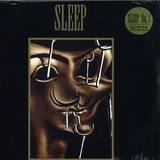
BACK IN STOCK NOW!! "Volume One is the debut album. It was the only album recorded with original guitarist Justin Marler, before he became an Orthodox monk. Volume One showcases a darker sound and stronger doom metal influence than Sleep's later work. The image featured on the cover is taken from the Salvador Dali painting "Soft Self-Portrait with Fried Bacon".
Their only album as a four piece of Al Cisneros, Matt Pike, Justin Marler and Chris Haikus
LP repressed for first time in many years.
allmusic
"For all their budding, precocious talent, Sleep's 1991 debut, Volume One, quickly betrays their still quite heavy debt to doom metal forefathers like Black Sabbath, Witchfinder, and Saint Vitus. Driven by Matt Pike and Justin Marler's lumbering mass of low-tuned guitar riffs, Al Cisneros' (still going as Luke here) serpentine bass and ragged screams, and drummer Chris Haikus' cyclopean kit pummeling, occasional highlights such as "The Suffering," "Nebuchadnezzar's Dream," and "The Wall of Yawn" prove less memorable than they are sensorially overwhelming. And yet, ironically, Sleep's rhythm guitars would never again be kept as under control, nor would their leads sound quite as refined as they do here (see the cleaner harmonies employed to good use on "Numb" and "Catatonic," for example). This was probably due to the onetime involvement of the significantly less stoned Marler, who would soon exchange the group for a monastery where he would study to become a monk. Fittingly enough, however, losing the versatility of a second guitarist was exactly what Sleep needed to focus their singular power into a crushing force, and the remaining trio would flourish immediately behind the sheer physicality of Pike's six-string style, as proven by 1993's superlative sophomore LP, Sleep's Holy Mountain."
Neuauflage der Vinyl-Edition von "No Sleep Till Hammersmith". Das ultimative Motörhead Live-Album! "No Sleep Till Hammersmith" (1981) ist Motörheads erstes Live-Album und baut auf dem erfolgreichen Vorgängeralbum "Ace Of Spades" auf. Das Album gibt gut die Intensität wieder, die Mötorheads Konzerte zu entfachen vermögen. Von Fans wird stets die gute Soundqualität dieser Aufnahme gelobt.
Sitting down and writing about our latest EP was a fun but challenging exercise, we scratched our heads and this may sound bad but we couldn't think of deep, dark interesting stories on how we made these tracks or what they represent. These jams are simply a combination of previous and random happy accidents that have come together and saying anything else would be a lie. This however does not mean that the thinking behind them is completely random, the three cuts that we selected for this EP we feel are a journey of experimentation and a culmination of unexpected sounds and feelings. A word that we found best described the EP was 'Irony'. The most ironic thing we feel is that the main basis of these tracks were born on the stage during our live performances and they have now been reworked and moulded into a record. We however feel that this brings an interesting element to the EP that yes it is recorded and set, but you are not quite sure where the next sound or feeling will come from. A hi hat A kick It is pure 'organised randomness'... I suppose we should talk about some of the music and try and explain what we mean! We start with 'Pe dos', which in plain English means inside out and it was a track that we had started back in 2011. We were flicking through our 'curiosity closets' one day and found it, we played around with it and heard a kick drum that was not arranged correctly in the sequence due to a random manipulation of the sequencer. Our first thought was to just change it, but then we decided to wait..... when all the other sounds of the tracks came together we threw the kick back in and BAM, Even the acapella voice of the track was screaming. Therefore it was a simple for us to name this track as we worked on it in a completely back to front and 'Inside Out' way!
MF DOOM is the man in the iron mask. The most mysterious figure in hip-hop has also become one of the most popular, supplying beats and rhymes for Gorillaz, De La Soul, Madlib, Danger Mouse, and Wu-Tang Clan, and drawing praise from heavyweights like Just Blaze, Nas, and Mos Def. Since 2002, DOOM has released numerous volumes of Special Herbs, one of the longest-running instrumental series in hip-hop history. Now, volumes three and four of the acclaimed series are available on vinyl for the first time in years. With obscure loops and dusty samples galore, Special Herbs Vol. 3 & 4 is a must-have for any DOOM fan or hip-hop head. Also includes a limited-edition bonus 7', featuring two beats from DOOM's days as a member of 90s hip-hop trio KMD.
A new era is when a significant event or a discovery or
invention changes the past life and the circumstances of many
or even all people sustainably. It basically involves a positive or
neutral evaluation of this age.
- Thus, the discovery of America by Christopher Columbus in
1492 heralded a new era, the conquest and colonization of
America by Europeans.
- Similarly, the first public steam railway built by George
Stephenson in 1825, marked the beginning of a new era
of mobility.
- Also the theses of Martin Luther at Wittenberg initiated the
era of the Reformation.
- Not to forget the fall of the Iron Curtain, the Berlin Wall in
1989 and the resulting german reunification, thus initiating a
new era of world history
Lee Perry's time at WIRL Records, later to be renamed Dynamic Sounds Studios, was a very productive time
in his career. A run of great singles and the shaping of a new sound, the beginning of what we know today as
Reggae .
Lee Perry (b. Rainford Hugh Perry, 28 March 1936, Hanover,Jamaica) began his entry into the music business at
the age of 16.Moving up to Kingston Town and working around various Sound Systems, before finding
employment at Coxonne Dodd's Studio One set up, in the late 50's early 1960's. Perry started out as a record
scout, organising sessions and supervising auditions at Dodd's record shop on Orange Street. Helping to make
hits for Delroy Wilson ( 'Joe Liges','Spit In The Sky') and the Maytals, which would lead to his own vocal records
released through Studio One.The musical backing for which, came from legendary Studio One house band The
Skatalites. Another important relationship for Perry, his first recordings with Bob Marley came in the form of
the Wailers, also providing backing, alongside the Soulettes who featured Rita Marley. Cutting such tunes as
'Chicken Scratch' around 1965/1966. This tune was also to provide him with one of his future nicknames
'Scratch'. A dispute over credits and money saw Perry leave Studio One and work with various producers
including Clancy Eccles and J. J. Johnson, before arriving at the door of producer Joe Gibbs in 1967. Here he
would write songs and produce hits for artists such as, Errol Dunkley and the Pioneers. A tune cut during his
time with Gibbs, voiced a snipe at fellow employee Dodd, a trademark that would become an outlet for his
frustrations in the business.This particular tune 'The Upsetter' would also provide another moniker and a name
for his label 'Upsetter'. Again lack of musical credit and financial reward saw Perry move on this time to WIRL
(West Indies Records Limited) Records, working alongside manager Clifford Rae, who would provide studio
time and pay for pressings in return for helping to promote and distribute WIRL product, which Perry would
carry out on his trusted Honda 50 motorcycle around Kingston town.
This period at WIRL saw some inspired work from Perry. 'Run For Cover' was another musical blow to a
previous employer, Coxonne Dodd and featured the Sensations on backing vocals and Lynn Taitt's guitar
picking skills. 'People Funny Boy' was a massive hit for Perry going on to sell over 60,000 copies. Joe Gibbs
would be at the end of this musical attack. Perry had felt Joe Gibbs had turned his back on him, after he had
provided hits for groups like, The Pioneers amongst others. The song would be one of the first records to
feature a New Beat (Reggae) inspired by the sounds coming out of a Pocomania Church, Perry had heard one
night.The congregation inside, wailed in a more slower way than the current musical style of the time Ska!. Perry
worked up this new style with Clancy Eccles, who would come under attack himself in 'You Crummy'. Their
closeness, which as detailed in that song would find them, 'Even shared the same Gal' but 'Now it's plain to see we
reached the end'. 'Set Them Free' was an answer record to Prince Buster's 'Judge Dread' (which had
featured Perry on it) a plea to the Judges in Jamaica that handed out extremely harsh sentences to the young
offenders of the time. The track was cut on the same rhythm as 'Run For Cover' . 'Django Shoots First'
inspired by the Spaghetti Western film of the same name, features Sir Lord Comic. One of the early DJ's who
used a jive talking style over rhythms. 'Night Doctor' was a hit instrumental that featured the organ talents
of Ansel Collins, that really push the tune along. 'Something You Got' was a cover of an USA R& B track by
Chris Kenner and 'Wind Up Girl' was cut at the same session. 'Water Pump' was a rude style track that
was cut later and originally released in 1974.As was 'People Sokup Boy' a later version of 'People Funny Boy'.
'Labrish' which means idol talk and gossip, was one of the first great talk over tunes that features Lee Perry
and producer Bunny 'Striker' Lee talking about the Political situation in Jamaica at the time and their own
financial situation and stories of various comrades.The track was originally released in 1973.
Bunny Lee would play a major part in lee Perry's career around this time and they were very close, often
sharing sessions and rhythms. Ironically it would be Bunny Lee that took over Perry's roll at WIRL and become
responsible for the labels products in years to come. Clifford Rae who give control to Bunny for a lot of the
WIRL product and even gave him his shop 101 Orange Street. So here we have a collection of music born out
of a time spent at WIRL Records and providing an important chapter in Lee Perry's career and indeed to the
story of Reggae itself.
Hope you enjoy the set.