Dutch powerhouses Parrish Smith and Interstellar Funk team up for their debut collaboration on L.I.E.S. with a new four track ep. Striking up the perfect balance of both their signature styles, this record hits the sweet spot between metallic synthwave, slow beat industrial, and clanging EBM hybrids. The duo effortlessly weave together a sonic narrative with nods to the past but unmistakable emphasis on their ever expanding foward thinking future sound. Recommended!
Cerca:isf
- 1
Pomegranate Skies is a new album from Sepehr exploring sonic themes of heaven and hell, dualities, split identities, and chaos. The music in this album is a reflection of the ever-constant existential chaos in his mind, reflecting a musical journey through all the different influences and inspirations of genres and electronic music eras throughout his life but also a nod to the amorphous weight of divine weirdness that inspires his music. Music that is reflecting a split identity, music in between cultures. Music that is both good and evil, both sensical and non sensical, both angelic and hellish, secular and divine. Music to give you visions of geographic wonders that don’t really exist. The absurdism of everything from Earth but also of Heaven. Music that doesn’t follow tropes but also sounds familiar. It makes you want to laugh and cry; the in betweenness of everything. Music that makes you want to reach up and taste the pomegranates growing in the skies.
Comes with an insert with exclusive pictures and condensed interview about the serie with Lloyd Miller made in March 2022 printed on 300 gram Favini "Remake" paper, plus exclusive goodies!
Personnel:
Manucher Paydar - Tar Drum
Lloyd Miller- Drum (Zarb), Lute (Oud), Lute (Kamanche), Lute (Sehtar)
Marilyn Miller -lute
Jan Otterstrom - Guitar
Stan Wood - Percussion
Anna Claire Eastmond - Vocals
Notes:
The second and last chapter of Dr Miller's journey between cultures and its uses, which began with "The Far East", dissected and looked into the root of the sound of distant Asia, continues with this new chapter dedicated instead to the countries bathed by the Mediterranean and contiguous to Central European history. From Spain to Arabic sounds, a new compendium that takes us back to other places and times, Dr Miller is once again able to dissect and encapsulate sounds and spices from distant places and spaces in a time machine. Thanks to these historical documents, we have the opportunity to discover feelings that are impossible to find 50 years later, sucked up and watered down by globalization and social capitalism.
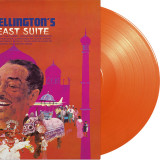
Far East Suite is a 1967 concept album by American jazz musician Duke Ellington, inspired by his group's tour through Asia. Ellington and longtime collaborator Billy Strayhorn wrote the compositions. Strayhorn died in May 1967, making Far East Suite one of the last albums recorded during his life to feature his compositions. The album won the Grammy Award in 1968 for Best Instrumental Jazz Performance – Large Group or Soloist with Large Group. The Penguin Guide to Jazz gives the album a four-star rating, noting that ""Ellington's ability to communicate points of contact and conflict between cultures, assimilating the blues to Eastern modes in tracks like ""Blue Pepper (Far East of the Blues)"", never sounds unduly self-conscious. This remains a postwar peak."" Allmusic calls this one of Ellington's ""more memorable recordings,"" describing it as an example of ""Ellington and Strayhorn in their late prime,"" and as such, ""quite essential."" Far East Suite is available on coloured vinyl for the first time as limited edition of 1500 individually numbered copies on orange coloured vinyl.
- A1: Camels To Cairo
- A2: Segah Leaves
- A3: Orientation (Kheneccordian)
- A4: Carnatic Clarinet
- A5: Intercollegiate Jazz Festival Introduction
- A6: Takseem It Seems "Beautiful Eyes
- A7: Orientation The Telling Of Thai'me
- B1: Mellow Cello (Mid 1970'S Television In Tehran, Iran)
- B2: Shahin
- B3: Pentakarnatica (Rehearsal)
- B4: Orientation (Poetically Past The Present) (#3)
- B5: Piano, Santur & Drum (Interlude)
- B6: Persuasian
- C1: Orientation (Of Mandarin Myth)
- C2: Pacific Breeze
- C3: Humalayan (Edited Version)
- C4: Summer Thyme In Tehran
- C5: Ketch Me If You Can (Improvisation)
- C6: Orientation (Central Asian Occasion)
- D1: Improv In Isfahan (Extended - Full Version)
- D2: Camels From Cairo
raid on the values of oriental jazz master and pioneering ethnomusicologist Lloyd Miller.
As we’ve said before on the rare encounters we’ve had with Miller’s work, he’s quite a unique figure within the worlds of jazz, traditional Middle-Eastern folk and musicology. Few in history seem to be so heavily embedded within local music scenes and have been capable of absorbing so much from their surroundings. His original works (almost all self-released) are extremely hard to find and are pretty much out of reach for most.
This double LP ‘Orientations’ is really what we’ve been longing for though. With unrestricted access to Dr Miller’s archives, local Utah label FOUNTAINavm have combed through previously unreleased recordings from the early 60’s to the early 00’s, capturing the breadth and scale of this unique artist. The cultural clash between east and west underpins each piece, where Miller’s astonishing dexterity on at least 15 different non-western instruments is infused with European Jazz standards. Like listening back in time, the fragrant humid air of the old orient hangs heavy in the atmosphere, capturing a time of great change in the area where the osmosis of culture between East and West would really take off, not without its problems. But these are recordings we keep coming back to, like the lilting romance of piano piece ‘Shahin’ recorded in early 70’s Tehran, or the hypnotic South Indian inspired Carnatic Clarinet from 1960’s. Miller’s work exists at an interesting historical intersection where jazz, folk, spiritual and documentary aspects of music all overlap. (Mint / New - heavy 2LP gatefold).
This double LP album is sourced from Lloyd Miller’s personal archives of masters and personal recordings.
Archival, Curation, and Tape Transfers by Adam Michael Terry.
Hypnagogia remains one of the most mysterious and haunting daily states of mind. Moments of revelation are wont to traditionally hit us particularly in the hinterland between dream and waking, It’s this particular headspace that’s very much the world of ‘Pö om pö’, the second Rocket Recordings released full-length record from Sweden’s equally mysterious OCH. Pö om pö (meaning ‘little by little’) is a journey further into inner space from ‘II’, the previous Rocket outing (which followed a 2014 cassette only release) What’s mapped out here is a trajectory on the kosmische continuum that touches on the terrain of late-‘70s Sky records style ambience, the more overgrown quarters of Swedish experimental prog and the sun-baked lo-fi DIY cassette culture of the US early ‘00s.Dwelling in a smoke-clouded glow that’s equal parts sunset gold and effects pedal red, OCH have here transcended all influences to creating a tapestry of potent psychotropic sound. A record in which new horizons open up beyond the small hours, and where primeval wah-wah-abetted skronk and mantric folk tinged repetition can collude to reveal new third-eye perceptions. Little By Little, Pö om pö , these forty minutes are here to bridge the chasms between conscious and subconscious, and in style.
- A1: Improvisation In Bayat-E Turk (Barg-E Sabz #34)
- A2: Improvisation In Shur (Golha-Ye Rangarang #182B)
- A3: Improvisation In Mahur (Yek Shakheh Gol #259)
- A4: Improvisation In Dashti (Golha-Ye Rangarang #430)
- A5: Improvisation In Shur (Barg-E Sabz #113)
- A6: Improvisation In Bayat-E Turk (Yek Shakheh Gol #259)
- A7: Improvisation In Mahur (Yek Shakheh Gol #146)
- A8: Improvisation In Afshari (Golha-Ye Rangarang #260)
- A9: Improvisation & Avaz In Isfahan (Golha-Ye Rangarang #254)
- B1: Improvisation In Bayat-E Zand (Yek Shakheh Gol #134)
- B2: Improvisation In Homayun (Barg-E Sabz #30)
- B3: Improvisation In Mahur (Barg-E Sabz #119)
- B4: Improvisation In Afshari (Yek Shakheh Gol #179)
- B5: Improvisation & Avaz In Bayat-E Zand (Golha-Yi Rangarang #290)
The second part in a collection of stunning Persian-tuned piano pieces, cut from Iranian national radio broadcasts made for the Golha programmes between 1956 & 1965.
Morteza Mahjubi (1900-1965) was a Iranian pianist & composer who developed a unique tuning system for the piano which enabled the instrument to be played in all the different modes and dastgahs of traditional Persian art music. Known as Piano-ye Sonnati, this technique allowed Mahjubi to express the unique ornamental and monophonic nature of Persian classical music on this western instrument - mimicking the tar, setar & santur and extracting sounds from the piano which are still unprecedented to this day.
An active performer and composer from a young age, Mahjubi made his most notable mark as key contributor and soloist for the Golha (Flowers of Persian Song and Poetry) radio programmes. These seminal broadcasts platformed an encyclopaedic wealth of traditional Persian classical music and poetry on Iranian national radio between 1956 until the revolution in 1979.
Presented here is a collection of Morteza Mahjubi's stunningly virtuosic improvised pieces broadcast on Golha between the programme's inception until Mahjubi's death in 1965 - mostly solo, though at times peppered with tombak, violin & some segments of poetry & song.
The vast collection of Golha radio programmes was put together thanks to the incredible work of Jane Lewisohn & the Golha Project as part of the British Library's Endangered Archives programme, comprising 1,578 radio programs consisting of approximately 847 hours of broadcasts.
i 09: Improvisation & Avaz in Isfahan (Golha-ye Rangarang #254) feat. Marzieh
feat. Abdolvahab Shahidi
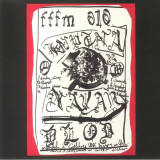
Swedish progg is not to be confused with "prog" as in progressive rock music. When we are talking about progg, we are referring to the Swedish music movement influenced by the political climate of the late 60's, to some extent the hippie movement and in many cases also Swedish folk music. Music highly driven by a political agenda. Blod's Knutna Nävar, originally released in an edition of 150 copies on Förlag För Fri Musik in 2018 and later a small cassette run, is pretty much a lost progg classic from the 70's. This is not a case of copying a certain sound though, far from it, neither are ideas really rehashed nor does the album feel nostalgic in that sense. Rather it feels like if someone has read about the progg movement and all the records but never actually heard it, yet decided to do an album and somehow managed to succeed big time. Further developing the sound palette and ambience initiated with parts of the Leendet Från Helvetet recording, the music feels slightly louder and more in your face. It's like it's more of everything. The melodies are immediate and it's quite impossible to resist the brash catchiness of it all. Albeit mentioning progg music and its importance for this recording, the actual musical side of Knutna Nävar has in reality more in common with soundtrack/library music and Swedish composers like the late Björn Isfält when you attempt to break it down. The crude DIY approach and anything-goes mentality just adds an extra dimension to it all and ultimately places the music somewhere else. There's a rather blunt use of samples throughout the record (sources probably best to leave out, though you don't have to be a Einstein to figure these out), but then again this is made by the same guy that gave the world the ABBA album. Those samples has managed to become an integral part of the music through the few years that has passed and though well familiar with the records those snippets are now to me genuinely Blod and nothing else. It seems like everyone has their own favourite but Knutna Nävar is the Blod album I have returned to the most. It has that extra something that sets it apart and if I would have to pick up a few records that sums up why Gothenburg has been a pretty damn awesome place to be in the last 10 years or so, this would definitely be one of the top picks.
Sam Gendel and Antonia Cytrynowicz didn't set out to make a record – it just happened. LIVE A LITTLE, a collection of songs resulting from one late summer afternoon in Gendel's Los Angeles home, is less an album and more a moment. The ten tracks here were recorded mostly in one sitting, fully improvised, in the order in which they appear. It was the first and last time the songs have been played – a snapshot of an idea, an artifact of inspiration, at once both a beginning and an end. At the time of recording, Cytrynowicz was only eleven years old. The younger sister of Gendel's significant other and creative partner Marcella, Cytrynowicz is an artist in her own way. She has no formal musical training, but is the product of a creative family and is someone who makes art the way many kids do – in the purest way, simply because they are moved to. On LIVE A LITTLE, she spontaneously crafted all the melodies and lyrics on the spot as Gendel played alongside her. Cytrynowicz's musicality is sophisticated, strange, and other-worldly, and the resulting record is experimental jazz colliding with some sort of fantasy universe. Because of that, LIVE A LITTLE is a stand-out amidst Gendel's extensive and varied catalog. Over the years, the multi-instrumentalist has been known for his prolific musical output as both a sought-after collaborator and as a solo artist. During 2021 alone he collaborated with Vampire Weekend, Maggie Rogers, Moses Sumney, Laurie Anderson, and Mach Hommy, as well as released Notes With Attachments with Blake Mills & legendary bassist Pino Palladino. In the same year he also released the 52-track Fresh Bread, as well as the follow-up to the acclaimed Music for Saxophone & Bass Guitar with Sam Wilkes. Then Mouthfeel / Serene, AE-30, Valley Fever Original Score, and singles "Isfahan" and "Neon Blue." LIVE A LITTLE, though, exists on its own island. For one, the majority of Gendel's work under his own name skews instrumental, but here the playfulness of his saxophone and nylon-string guitar work alongside the twinkle of Cytrynowicz's voice. It’s the sound of unapologetic imagination running amok – and really, more than anything, the sound of having fun. Cytrynowicz is the ideal collaborator for Gendel, who throughout his career has remained largely unconcerned with the pageantry and presentation of the music business, instead focused solely on the music-making itself. Here, he found the purest sort of writing partner – he admires Cytrynowicz' "supreme openness," explaining: "Whatever is happening, she's there with you. We really meet right where we are. She's all ears, I'm all ears. I don't even know how to explain what it is. It just works out somehow." LIVE A LITTLE is a series of "what ifs" cascading into one another, off-kilter and experimental, a kaleidoscope of spontaneity and imagination. It's a sweet distillation of the musical present, of daring to follow through on an impulse – what happens when a project is helmed by someone who doesn't have time for second thoughts or self-doubt. The moment is the thing, and LIVE A LITTLE just happens to capture it.
- 1