At the tender age of twenty-five, while he was working part-time at an Italian restaurant in Tokyo's Kamata district, Kazuki Tomokawa released his debut record, fittingly titled Finally, His First Album. While he had already penned hundreds of songs, including his first single "Try Saying You're Alive!," written on a long train ride past fields and rice paddies, it was this recording that introduced Japan to one of its most unique musicians of the postwar era. Each track, as record label exec Kiichi Takahara writes in the LP's liner notes (here translated for the first time), is not a song but a "flesh-and-blood human being," birthed by the singer-songwriter and the raw, guttural cries that would become a hallmark of his incomparable sound. 1970s Japan was a time and place marked by a profound desire for authenticity amidst the onset of television and media saturation. Tomokawa arrived on the scene as a musician with "the personality of a hydrogen bomb," to borrow a phrase from his frequent collaborator Toshi Ishizuka. In an unwieldy interview included here, members of the notorious leftist band Zun? Keisatsu (Brain Police) put it bluntly: here was a man surrounded by the "disingenuous," the "wishy-washy," and the "superficial," who was delivering "real life, unvarnished." These songs are lullabies for the lost, staring not into the void but-as the fourth track declares-from inside it. Finally, His First Album is the first of three Tomokawa records to be reissued by Blank Forms Editions in conjunction with the US release of Tomokawa's memoir, Try Saying You're Alive!, the first-ever English translation of his writing. This debut captures the self-assured trademarks that Tomokawa would hone over the course of decades. Multiple tracks are performed in his native Akita dialect, a distinct and highly regional vernacular of northern Japan seldom heard outside the prefecture-and even more rarely heard in music. Tomokawa's lyrics locate profound interiority in the rituals of everyday life, and are sung against sparse folk arrangements of tender, lilting chords-a prelude to the rock and electronic stylings to come in later years. A self-proclaimed "living corpse," Tomokawa wallows, whispers, shouts, and cries, yet still, through his existential doubt, asks to be heard.
quête:ishi
- A1: Weakness Within
- A2: Desolation Of My Mind
- A3: Mentally Numb
- A4: Death Throes
- A5: Sigh
- A6: Mentally Numb
- A7: Desolation Of My Mind
- B1: The Knell
- B2: Desolation
- B3: Taste Defeat
- B4: The Zombie Terror
- C1: Suicidogenic
- C2: Schizo
- C3: Carnage
- C4: The Seven Gates Of Hell
- C5: Black Metal
- C6: The Shadowking
- D1: Black Metal
- D2: The Seven Gates Of Hell
- D3: Schizo
- D4: Welcome To Hell
- D5: Poison
- D6: Witching Hour
EXTENSIVE COLLECTION OF SIGH'S EARLY DEMOS, EP's & RARITIES,
PRESENTED ON DOUBLE CD FORMAT - INCLUDES INTERVIEW & LINER
NOTES COURTESY OF MAINMAN MIRAI KAWASHIMA ON THE
FORMATIVE YEARS OF THE JAPANESE LEGENDS.Cult Japanese black
metal legends Sigh formed in 1989/90, featuring mainman Mirai
Kawashima, Satoshi Fujinami & Kazuki Ozeki
Following initial demos, Shinichi Ishikawa was brought into the band, & Kazuki
removed from the line- up. It was following this shift that the band set about
recording the masterpiece debut 'Scorn Defeat' for Euronymous' Deathlike Silence
Productions, going on to become one of the country's greatest & most revered
metal exports. With a journey through the strange & the psychedelic,
incorporating a whole eclectic mix of genre styles & experimentation throughout
their career, Sigh has remained a vital creative force in the avantgarde field.
However, at its core, Sigh has always remained true to its roots of old school
metal. 'Eastern Darkness' contains a comprehensive collection of Sigh's early rare
works showing their swift musical evolution as well as the strong utilisation of
keyboards in their compositional process throughout. The collection includes the
band's legendary demo tapes, 'Desolation', & 'Tragedies', plus their EP's & rarities,
as well as contributions to various compilation releases in the mid 1990's.
Considering Sigh's well- known regard for UK legends Venom throughout their
career, 'Eastern Darkness' also contains the band's own tribute to the 1980's black
metal pioneers, in the form of tribute 'To Hell & Back', originally released on tape
in 1995.
This edition of 'Eastern Darkness' is presented on double disc CD format &
includes a 12- page booklet featuring an interview with Mirai Kawashima about
the early years of the band, along with his recollections of the origins of each title
contained within the release, three decades on from Sigh's formation.
- A1: Intro / Pathos, Pathos
- A2: Manchester
- A3: Bright Whites
- A4: It All Began With A Burst
- A5: Wonder Woman, Wonder Me
- A6: Chester's Burst Over The Hamptons
- A7: Atticus, In The Desert
- A8: I Am The Antichrist To You
- A9: Beat The Bright Out Of Me
- B1: Intro / Pathos, Pathos (Demo-Arigato Version)
- B2: Manchester (Demo-Arigato Version)
- B3: Bright Whites (Demo-Arigato Version)
- B4: It All Began With A Burst (Demo-Arigato Version)
- B5: Wonder Woman, Wonder Me (Demo-Arigato Version)
- B6: Unicorns Die When You Leave (Demo-Arigato Version)
- B7: Chester’s Burst Over The Hamptons (Demo-Arigato Version)
- B8: Atticus, In The Desert (Demo-Arigato Version)
- B9: I Am The Antichrist To You (Demo-Arigato Version)
- B10: Beat The Bright Out Of Me (Demo-Arigato Version)
- B11: Winter From Shiki (Demo-Arigato Version)
Note vinyl rel date is later. 10 Year Anniversary Reissue. 2LP / 2CD featuring the album proper & demos of each song + rarities. Colored clear vinyl, includes digital download. Recommended If You Like: The original ‘151a’ release, of Montreal, Regina Spektor, Andrew Bird. They say that you spend your entire life writing your first album, piecing every formative moment, scribbled turn of phrase, and thematic epiphany into a fantastical collage. Multi-instrumentalist K. Ishibashi (aka Kishi Bashi) disproves that old adage. The title of Kishi Bashi’s 2011 debut album,‑151a, is a riff on the Japanese phrase‑“ichi-go ichi-e,” roughly translating to “one time, one place.” That’s exactly what this debut is: A singular time, an inimitable place, a launchpad for bigger and better things to come. “It’s a play on words that translates as a performance aesthetic of having a unique performance in time, with imperfections, and enjoying it while you can,” Ishibashi‑told NPR at the time of the album’s release. “The saying reminds me to embrace my mistakes and move forward.” From the deconstructed Beach Boys-esque doo-wop of “Wonder Woman” to the menacing marriage of Eastern Hues and Western operatics of “Beat the Bright out of Me,”‑151a‑is a mediation between opposing drives, offering possible reconciliation but never promising it. The album’s emotional wellspring, “I Am The Antichrist To You” was reimagined in 2021 when it was featured on the animated sci-fi sitcom‑Rick and Morty, introducing Kishi Bashi to a new generation of awestruck fans. Kishi Bashi uses‑151a‑as a vehicle to explore his cultural background. Using Japanese refrains as a compositional and textural device (the polyrhythmic grandeur of “Bright Whites”; the gleeful surrealism of “It All Began With a Burst”), Kishi Bashi celebrates his heritage with earnestness. Japanese phrases and couplets are sung as the response to Kishi Bashi’s resplendent calls, offering listeners a conversation that dovetails with the album’s themes of love, sentimentality, and self-discovery. Today, the “one time” and “one place” that151a‑inhabited seems further than ever, almost broaching celestial realms of time and space. But, rest assured, with each listen, the world that Kishi Bashi built springs back to life. The world of‑151a‑never left—it was just waiting to be rediscovered.
- A1: Main Title
- A3: Activating Mechani-Kong I
- A4: Activating Mechani-Kong Ii
- A5: Mondo Island
- A6: King Kong Appears
- A7: King Kong Vs Gorosaurus I
- A8: King Kong Vs Gorosaurus Ii
- A9: Kong & Susan I
- A10: The Explorer Returns
- A11: Opreration Capture Kong I
- A12: Opreration Capture Kong I
- A13: At The North Pole
- A14: Kong's Chance Encounter
- A15: Hypnosis Machine
- A16: Element X
- A17: Awakening Of Kong
- A18: King Kong Escapes I
- A19: King Kong Escapes Ii
- A2: The Base At The North Pole
- A20: Kong In Tokyo
- A21: Kong & Susan Ii
- A22: Mechani-Kong Appears
- A23: Kong Showdown
- A24: Confrontation At Tower I
- A25: Confrontation At Tower Ii
- A26: King Kong's Triumph
- A27: King Kong Goes To Tokyo Bay
- A28: The End Of Dr Who
- A29: Ending
- The complete 1967 Film Score by Akira Ifukube - "Element X" Radioactive Green Colored Vinyl - New artwork by Ross Murray - 12" x 12" Art Print - Heavyweight Gatefold Packaging with Matte Finish // Prepare to plunge into panic with Waxwork Records' release of KING KONG ESCAPES Original Motion Picture Score by Akira Ifukube (Godzilla, Mothra vs. Godzilla, War of the Gargantuas, & more) Directed by the king of kaiju, Ishiro Honda, KING KONG ESCAPES follows evil genius, Dr. Hu, on his mission to manipulate Kong into retrieving radioactive Element X from the North Pole. The film stars Rhodes Reason, Linda Miller, Mie Hama, & Akira Takarada. Waxwork Records is honored to release the complete original film score by Akira Ifukube (Godzilla 1954, Mothra Vs. Godzilla, Destroy All Monsters, and many others) as a deluxe vinyl album officially for the first time outside of Japan. Enjoy the dynamic orchestrations that range from tranquility to combat as King Kong fights monsters and the wicked influence of Dr. Hu. We are thrilled to present the official King Kong Escapes score with 180 gram "Element X" colored vinyl, deluxe packaging, new artwork by Ross Murray, heavyweight gatefold jackets with matte coating, a 12"x12" art print, and more!
South African-born, Amsterdam-based Lee Ann Roberts served up plenty of fresh techno in the last 12 months. It has taken her to the top end of the Beatport Hard Techno chart and to labels like Octopus Warehouse Series as well as her own NowNow Records. Fans of her tough sounds include Charlotte de Witte and Ken Ishii, while Lee Ann herself has played festivals like Caprices and BPM. Now she kicks off a new year in thrilling fashion.
The monstrous 'March Of The White Fireflies' is built on earth-shattering kicks drums and run through with edgy synth lines. The whole tune has a dark, dystopian atmosphere and muffled vocals add to the intrigue as the drums march on into ever more shadowy realms. First to remix is Glasgow's Frazi.er, a leader of the Scottish techno scene with his standout sets at mega-events like Terminal V amongst others. His tracks are as powerful as his DJ sets as this remix proves. It is an explosive rave tune lacerated by machine gun synths and flat-footed, insistent kick drums. Industrial textures and late-night paranoia all infuse this most peak-time weapon.
Next comes a remix from Charlie Sparks, an up-and-coming young artist notorious for his high energy sounds on labels such as NineTimesNine, COUP and Märked. His remix adds a little swing to the drums, but there is no less urgency in the synths. The scuffed-up kicks bring texture while the pulsing sonar pads add a sense of intergalactic space travel as lashings of acid light up the whole track. Brussels-based Jacidorex is a neo acid pioneer and runs a label of the same name. He has made everything from drum & bass to techno on labels like Molekül, Acid Night and Rave Alert and offers a superb remix here. His take on the original is sleek and stripped back but full of techno potency. The percussion is twisted, the synths corrugated and the groove unrelenting.
Black Truffle is pleased to announce For McCoy, a new work by Eiko Ishibashi dedicated to the widely loved character of Jack McCoy, portrayed by Sam Waterston in Law & Order. Following on from Hyakki Yagyō (BT064), For McCoy finds Ishibashi further exploring the unique space she has carved out in recent years, bringing together musique concrète techniques, ECM-inspired jazz, lush layers of synths and hints of pop into immersive and affecting structures crafted in her home studio, aided by a group of close collaborators.
Beginning with overlapping layers of descending flute lines, the expansive ‘I Can Feel Guilty About Anything’ (whose two parts stretch out over more than thirty minutes) unfolds with a free-associative logic, embracing dreamlike transitions and unexpected cinematic cuts. As a hovering cloud of synthetic tones and multi-tracked voices fans out from the spare opening moments, Joe Talia’s skittering cymbals settle into a gently propulsive groove, soon joined by melodic fragments performed by Daisuke Fujiwara on multi-tracked saxophone. As the drums cede to field recordings and ominous synth figures, the uncommon meeting of saxophone and electroacoustic techniques call to mind the more spacious moments of Michel Redolfi and André Jaume’s Synclavier-propelled oddity Hardscore or the early work of Gilbert Artman’s Urban Sax. As the piece continues on the LP’s second side, distant dialogue rumbles beneath a surface of processed flutes, blurring into a cavernously reverberant backdrop for stark ascending lines performed by MIO.O on violin. Eventually, the piece settles into a gorgeous passage of abstracted dream pop, where Ishibashi’s multitracked vocal harmonies glide atop synth chords, errant pings and snatches of outdoor sound.
Fragments of melodic material reappear throughout the spacious opening piece, finally stepping to the forefront on the closing track, ‘Ask Me How I Sleep at Night’. Here, over a shuffling groove supplied by Jim O’Rourke on double bass and Tatsuhisa Yamamoto on drums, layers of flutes, saxophones and guitars sound out melodies whose combination of twisting irregularity and soulful immediacy calls up prime Keith Jarrett, while their closely voiced harmonies suggest Kenny Wheeler or even Wayne Shorter’s Atlantis. In a classical gesture of closure, the web of melodic lines eventually leads back to the descending flute figures with which the record began. Presented in an immersive, impeccably detailed mix by Jim O’Rourke and arriving in a sleeve featuring Ishibashi’s beautiful drawings of Jack McCoy, For McCoy is an essential release for anyone following the enchanted and unique path being forged by Eiko Ishibashi.
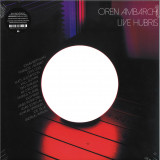
Black Truffle is pleased to announce Live Hubris, documenting the hypnotic and electrifying live performance of Oren Ambarchi’s 2016 LP Hubris by a fifteen-strong band at London’s Café Oto. Over three days in May 2019, Oto toasted Oren Ambarchi at 50/Black Truffle at 10 with Ambarchi and a large group of close friends and collaborators in a series of performances that interspersed existing projects with new collective endeavours, culminating with this: fourteen members of the extended Black Truffle family together on stage, joined by one special virtual guest, to translate the intricately studio-constructed layers of Hubris into a muscular live band workout.
Operating with only the bare minimum of pre-gig preparation after the planned afternoon rehearsal had to be wrapped up prematurely due to noise complaints, the gargantuan group lurches into motion with a 21-minute rendition of ‘Hubris Part 1’, powered by the pulsating electronics of Konrad Sprenger (the ‘ringmaster’ at the ensemble’s core) and no less than seven electric guitars spinning a web of intricately interlocking palm-muted polyrhythms. The layers of closely related but metrically distinct lines create ripples of shifting accents, flickering changes in emphasis that ricochet along the endless central pulse. Gradually building in density, this motorik continuum becomes the backdrop for the haunting tones of Eiko Ishibashi’s processed flute and an extended feature from long-distance guest Jim O’Rourke on guitar synth.
After the brief interlude of the second part, where Albert Marcoeur-esque guitar arpeggios accompany a halting attempt at phone conversation, the full ensemble gears up for the epic side-long rendition of ‘Hubris Part 3’. Now joined by the astonishing triple drum line-up of Joe Talia, Will Guthrie and Andreas Werliin, the layered pulse of the opening piece becomes a burning funk-fusion groove. Beginning on a medium simmer, the ensemble initially stick to its pulsating one-note mantra, over which Ambarchi unfurls a beautiful example of his signature shimmering Leslie-toned guitar harmonics, eventually joined by Ishibashi’s flute and some brooding, distorted dissonance from Julia Reidy’s guitar. Building steadily for the first nine minutes, the heat then rises dramatically with a first, gloriously loose chord change: with the all drummers now rolling and tumbling like a twice-cloned Jack DeJohnette circa 1970, Mats Gustafsson enters on baritone, his tortured roars and shrieks driving the band to peaks of insane intensity. Finally, the exhausted ensemble drops out, leaving only the jagged, skittering fuzz of Ambarchi’s guitar, brought to an abrupt conclusion at the command of crys cole. Arriving on hot pink vinyl with artwork by Lasse Marhaug and an extensive selection of live photos by Ivan Weiss and Fabio Lugaro, Live Hubris brings this ambitious and outrageous evening of music to the safety of the home stereo.
Following their recent solo releases Soniscope (Dauw) and Cells #5 (Important Records), Berlin-based multi-instrumentalist Midori Hirano and Tokyo based string experimentalist Atsuko Hatano have teamed up for their first collaborative full-length: Water Ladder. An intense, multilayered continuation of earlier collaborations (Atsuko was featured on Midori’s debut LP back in 2006), the foundation for this new collaborative album was laid when they shared stages in Berlin (Ausland) and Japan in 2019. Working remotely at first, they later recorded parts of the album in Nara’s snoihouse (using omnidirectional polyhedral speakers).
“As we rallied back and forth with our recordings in the process of creating this album, unanticipated fluctuations and irregularities emerged, coming together into a kind of music with a unique resilience and buoyancy that cannot be confined to existing molds. It was as though we had built a Water Ladder to bridge the gap between us,” explains prolific composer and viola player Atsuko Hatano, who’s been busy recording solo and with colleagues such as Jim O’Rourke, Eiko Ishibashi, Mocky, Tatsuhisa Yamamoto, Takeo Toyama, and Anzu Suhara (Asa-chang & Junrei).
Kyoto-born, Berlin-based Midori Hirano, who’s also been releasing music under her MimiCof moniker, adds multiple instruments to the ever-changing sonic landscapes of Water Ladder – an album defined by suspenseful and seemingly suspended compositions that often feel like floating in midair, a sensation the musicians compare to “that distinctive feeling you get from riding a high-speed elevator, where you can no longer tell whether you’re going up or down.”
Devoid of birdsong, the late summer air is nevertheless full of buzzing, whirring, hissing sounds on foreboding album opener “Summer Noise,” a cinematic intro with slow-moving piano chords and an ominous build-up over the course of its sprawling eight minutes. Elsewhere, sudden bursts of viola cut through nighttime peace (“Nocturnal Awakening”), followed by “Cotton Sphere” – which makes the sensation of floating in midair complete: harmonies and melodies rise and form to fall apart again, leaving only trails of previously defined space shimmering in their wake…
Whereas the title track truly explodes half-way in, the final “Cascade” brings closure to the electro-acoustic six-track collection: the floating continues, but the interlocking musical planes are no longer ruffled or rippling, no longer torn in many directions at once. Instead, the sonic streams merge and eventually disappear like ephemeral water falls after heavy rain or sudden snowmelt.
“Water cannot retain its form on its own, and can take any shape as effected by external forces. Its movements cannot be captured by eyesight alone: A body of water that appears to be crashing down into a deep, bottomless waterfall could actually be rising up very slowly into midair,” says Atsuko. “This is an invitation for you to cross the ever-transforming Water Ladder built between Midori and myself.”
ArtPlay and Brave Wave Productions are proud to unveil their first soundtrack collaboration : GS-011: Bloodstained: Ritual of the Night The Definitive Soundtrack for vinyl.
Contains 4x 12” 150g black vinyl discs, art-decorated sleeves, a full color booklet, and download code for high-fidelity digital versions all 46 tracks.
Originally funded via Kickstarter in 2015, Bloodstained: Ritual of the Night, spearheaded by legendary game creator Koji Igarashi, was released in June 2019 to critical success. One highly rated element of the game was its melodic, moody and catchy music, composed by Michiru Yamane, along with Keisuke Ito, Ryusuke Fujioka, Atsuhiro Ishizuna and Ippo Yamada.
GS-011: Bloodstained: Ritual of the Night The Definitive Soundtrack will come in a 4-LP box set containing all 46 tracks. The set will come with a booklet containing liner notes (in English and Japanese) from Michiru Yamane and Koji Igarashi.
‘Different Frequencies’ is a compilation album,
pressed on transparent blue vinyl and released on
National Album Day 2021.
With each track a standout record in its own right,
this compilation album showcases a new
generation of exciting artists at the start of their
journeys.
The album features Different Recordings artists
such as Greentea Peng, p-rallel, NAYANA IZ,
Kojaque and many more, with genres ranging from
UK Rap, R&B and Electronic.
‘Different Frequencies’ brings together some of the
highlight releases over the last couple of years
from the label, this being some artists’ first tracks
cut to vinyl.
New school techno star Lee Ann Roberts continues to light up 2021 with another brand new single on her own NowNow Records. Her standout original is backed by remixes from MRD and D.A.V.E. The Drummer.
This year already belongs to South African-born, Amsterdam-based Lee Ann Roberts. Her new label has had high-profile support from tastemakers like Charlotte de Witte & Ken Ishii, and is already well known for its off-grid techno sounds. Roberts herself debuted only last year on Suara. She immediately hit the number 2 spot on the Beatport Hard Techno chart and followed up with more on Octopus Warehouse Series. She has played festivals like Caprices this year and is lined up for BPM as well as plenty more headline gigs.
The excellent 'Feel' is a nine-minute, hard-edged roller. The drums are flat-footed and unrelenting, the synths bring turbulence and dark vocals add dystopian unease. The edgy textures and caustic pads make for a visceral groove that is perfectly designed for shadowy warehouse spaces. An Acid Trip Mix sees the track erupt on wild acid lines that spray about the mix and cannot fail to blow up the dance floor.
Remixer MRD hails from Norway and has released plenty of EPs and an album in a short space of time. He has a ferocious sound that fuses new wave, hardcore and banging techno as evidenced here. His version is break-neck techno with trance pads lighting up the airwaves in euphoric fashion.
The second remixer is the legendary London techno titan and label boss D.A.V.E. The Drummer. He heads up Hydraulix Records and Apex Recordings and always brings the fire. His take on 'Feel' is a wall-rattling banger with oversized bass. Saw-tooth synths rip up the track while the stark, strobe-lit stabs and some buried vocals make the floor sweat.
Japanese import exclusive!
Cosmic Suite is a long 35 minute jam cut in two pieces, it blends house, techno, jazz, reggae and dub
It's a collaboration with iconic musicians including the legendary Jeff Mills, Osunlade, Mutabaruka, Tanaka Tomoyuki (FPM), Yashiki Gōta and Watusi (Coldfeet), among others.
Written by Yasushi Ide
A.Guitar:Kazuma Fujimoto
E.Guitar:Akihiro
E.Guitar:Masayuki Ishii
Drums Sampling:Gota Yashiki
Drums:Hideo Yamaki
Drums:Yukari Uehara
Rhodes:Nobuyuki Nakajima
Keyboards:Mitsuhiro Toike
Percussion:Hiderow Nishioka
Steel Pan:Gen Tamura
Trumpet:icchie
Sax:Motoharu
Electronics:Jeff Mills Rhythm
Treatment:Tomoyuki Tanaka, Hiroshi Nakamura
Vocal Sampling:Osunlade
Dub Poet Sampling:Mutabaruka
Programming,Keyboards:Watusi
Mixed by Watusi at brickwall
talian pianist, performer and composer Giovanni Di Domenico presents 4 new pieces in collaboration with Eiko Ishibashi, Jim O'Rourke, Joe Talia and Tatsuhisa Yamamoto.
Side A: The Walk (with Eiko Ishibashi: flute, electronics, synth and field recordings) 23:56
Side B: Peach Rino (with Jim O'Rourke: electronics) 25:11
Side C: Manyfold (with Joe Talia: drums) 22:35
Side D: Jaws Of Life (with Tatsuhisa Yamamoto: synth, electronics, sound processing) 22:39
If you collect vintage 70's soul-jazz vinyl, there is a good chance that you already own a record that features the amazing vocal talents of Dee Dee Bridgewater. Whether it be Roy Ayers, Norman Connors, Billy Parker or Carlos Garnett - Dee Dee is the glue that fuses these artists together. Although best known for her jazz work, Dee Dee has had a wonderfully rich and varied career encompassing soul, musicals, gospel, and underground disco from the 70's to the present day. She is still active as a vocalist, composer, and producer and remains one of our favourite vocalists at Mr Bongo HQ. We take things back to the early years of Dee Dee's career with her debut album 'Afro Blue'. Recorded in Tokyo in 1974, the album was released exclusively in Japan via two different Japanese labels (Trio Records in 1974 and All Art in 1985 respectively). Each release had unique cover art and we have opted to present the album in its original 1974 form.
'Afro Blue' features an exquisite collaboration of American and Japanese musicians, such as Cecil & Ron Bridgewater, Motohiko Hino and producer Takao Ishizuka. The result is a sublime deep soul-jazz masterpiece with timeless versions of 'People Make The World Go Round', 'Love From The Sun', and 'Afro Blue'. It is arguably one of the finest albums in its genre. This record has long been a sought-after item for DJs and collectors alike, so we are delighted to finally make this wonderful music from an understated great available to all.
- 01: Transcievers
- 02: A Mould Beyond Perception
- 03: False Fusion
- 04: The Bird Of Paradise
- 05: Everything Is Bleeding
- 06: Self-Mutilation
- 07: Phantasies From The Schema
- 08: Scope
- 09: Hallucinatory Violence
- 10: Grotesque. Empty. Spaces
- 11: Open As A Glade Unfolding
- 12: Emersion
- 13: Intramuscular Administration
- 14: Locked Within Herself
Dalhous end the 5-year silence with the long awaited follow up to 2016's House Number 44, presenting the second volume of The Composite Moods Collection. "Point Blank Range" reinterprets the established narrative with an inverse look at the proceedings. Taking the “point of view of the disease", the perspective is now turned inside out, revealing an alternate account from the eyes of the photographed subject of House Number 44. If Vol.1 was a documented presentation of another person's condition, Vol.2 takes the listener behind the facade.
From the outset, the album offers a narratively uncooperative stance, weaving together layers of anxiety and painful specificity that often overtly manifests the psychotic protagonist's stormy interior state. A clearly subjective assault, which is made evident right from opening track 'Transceivers' through to the imploding nature of 'Intramuscular Administration’, to the vulnerable, psychedelic mania of 'Open As A Glade Unfolding'. Continuing to work within the framework of a soundtrack-like structure, Dalhous ramps things up to provide the aural equivalent of sound and picture, manifesting an almost quasi-visual experience.
The entire record can be listened to as a continuous piece, each track seamlessly linked together as though part of an interconnecting nervous system. Where House Number 44 offered airy, widescreen soundscapes of detached detail, Point Blank Range presents an altogether different form. Creating airtight vacuums of agitated twitching feeling, tracks are pulled to the forefront of the stereo field, continually mutating their densely painted neurochemical hallucinations with a breadth of sound previously unheard on previous releases.
Listeners will be able to decipher nods to long standing soundtrack influences from composers such as Fabio Frizzi, with his use of strikingly bold and haunting melodies, to Tangerine Dream’s distinctively foggy atmospheres of The Keep. There are moments that evoke the nihilistic drones of Brian Gascoigne’s soundtrack to Phase IV, and the more horrific passages of metal clanging ambience from the likes of Chu Ishikawa with his scores for Shinya Tsukamoto.
After their former record label Blackest Ever Black disbanded, Dalhous found themselves out on a limb. It took 5 years to find a new home with Denovali. Given the unusually extended period between records, Dalhous had the time to dive deeper into the material, rendering a level of experimentation previously unavailable to them. Over 4 hours of material was created, a total of 1TB of data. Countless revisions to the track listing ensued with some of the unused material being reutilised in the making of the final chapter in the trilogy to form a direct companion piece.
- A1: The Way Of The Ghost
- A2: Jin Sakai
- A3: Komoda Beach
- A4: The Way Of The Samurai
- A5: Lord Shimura
- A6: No Mercy
- B1: Lady Masako
- B2: A Reckoning In Blood
- B3: The Last Of Clan Adachi
- B4: Heart Of The Jito
- B5: The Tale Of Sensei Ishikawa
- C1: Forgotten Song
- C2: Khotun Khan
- C3: Honour To Ash
- C4: The Fate Of Tsushima
- C5: Sacrifice Of Tradition
- C6: The Way Of The Ghost (Feat Clare Uchima)
- D1: Tsushima Suite I Seion
- D2: Tsushima Suite Ii Shurai
- E1: Tsushima Suite Iii Bushido
- E2: Tsushima Suite Iv Kodoku
- F1: Tsushima Suite V Seiiki
Ilan Eshkeri and Shigeru Umebayashi score the music to the highly anticipated actionadventure game developed by Sucker Punch Productions and published by Sony Interactive Entertainment. Ilan Eshkeri is a critically acclaimed film, television and video game composer. Eshkeri has been nominated for a BAFTA, an Ivor Novello Award and a International Film Music Critics Association Award. Shigeru Umebayashi is an internationally acclaimed composer who has won numerous awards. He has scored the music for many notable films including ‘True Legend’, ‘Rise of the Legend’ and ‘The Wasted Times’. Triple black vinyl set with tri-gatefold sleeve and printed inner sleeves. Specialist marketing activity.
"From Nishinari Osaka Japan Weird Wild Obscure Spooky exotica burlesque toy junk Muzak Trash One Man Band music made with broken cassette desks and fucked up record players feat members of (Acid Mother Temple)" - VRR 20202 Vinyl LP, starker Karton, bedruckte Innenhülle, Download inklusive. Willkommen in der wilden obskuren und seltsamen Welt von DEGURUTIENI und seiner ONE MAN BAND. teuflisch exotischer Striptease Kinder Spielzeug Krach mit ausgedientes Tonbandgerät und zerbrochenen Plattenspielern mit Mitgliedern von ua Acid Mother Temple in einigen Songs. Dies hier ist eine Zusammenstellung mit älteren Songs (selbst Veröffentlichungen und auf kleinst Labels) und viele neue Songs die noch nie vorher veröffentlicht wurden. Ich dachte, es ist an der Zeit, dass die Welt etwas über DEGURUTIENI erfährt (ich hatte Wochen, bis ich seinen Namen richtig buchstabieren konnte, hahaha ) Er tourt ständig durch die ganze Welt (pre Covid-19) und tritt in regulären Konzertsälen sowie in Theatern, Kunstgalerien oder sogar auf der Straße auf. wenn man ihn zum ersten mal sieht ist es eine Lebens Erfahrung die man nicht wider vergisst und es bleibt ein großes Lächeln im Gesicht und ein verzerrtes Fragezeichen in deinem Gehirn. Alco Degurutieni wurde Ende der 60er Jahre im Nishinari Ghetto von Osaka geboren (Alco Degurutieni: Diese Zeit in den 1970er Jahren war eine harte Zeit für alle, einmal im Monat Unruhen auf den Straßen. Rot Licht viertel Prostitution und die Yakuza-Mafia waren uns vertraut. Diese Erinnerungen an ein jugendliches Chaos sind seitdem ein Katalysator für mein Peter-Pan-Syndrom.) Degurutieni schafft Harmonie durch Gegenüberstellung, indem er ihnen Melodie aus Chaos und Dekadenz aus Abfall extrahiert. Mit 13 Jahren bekam er seine erste Boombox und wurde der beste Kunde in seinem örtlichen Leih-Platten und Trödler laden. Er arbeitete sich durch alle Genres von den Beach Boys bis zum Black Sabbath. Ab 16 Jahren begann er, seine eigenen Songs mit den einzigen Dingen zu kreieren, zu denen er Zugang hatte; Müll, umgebaute Kinderspielzeuge und ein ausgedientes Tonbandgerät. All dies spielt noch heute eine wichtige Rolle in seiner Musik. Auf diesem Album findest du ,Acme in the afternoon, ein komplett Hit, Tom Waits Blues Jazz Burlesque, dann mit ,Blur Blur Blur, hörst du ihn super minimalistisch und verloren im All Blues, oder den unglaublichen ,Midnight Express' mit einem orientalischen Trash-Flair der dich in einen neuen Blade Runner film katapultiert, und Zigeuner Fanafare und Rock'n'roll in ,13th Floor City ' zusammen mit: Orchester du Belgistan (aus Belgien) oder mein favorit ,Dreaming party' das wie ein psychedelischer horror film Soundtrack daher kommt LINE UP Alco Degurutieni (mostly all instuments) aditional Musissians on the Album Jyonson Tsu (ACID MOTHERS TEMPLE) Machiko Kuniki (Sujiko Sumoguri) Akiyoshi Kajitani (MOHIKAN FAMILIES) Atsushi Sekitani Watanbe (BRO TÜRK,PATO LOL MAN) Naoya Takami (Ichibanboshi Crue) Kwandae Park (UMA UMA UMA) Akira Ohno Tadahiro Ishihara Keigo Matsunaga (Rock'n'TASUKE'Roll & THE CAPTAIN SWING,MOHIKAN FAMILY'S) Tom Manoury (Orchestre du Belgistan) Mbengue Ndiaga Jordi Grognard (YOKAI) Akiko Igaki (TAYUTAU,COLLOID) Kiri Mochida Takeo Touyama (PATO LOL MAN) Shuichi Hirose (HUMNED) Takeo Touyama (PATO LOL MAN)
- A1: Toshiko Yonekawa - Soran Bushi
- A2: Takeo Yamashita - A Touch Of Japanese Tone
- A3: Tadaaki Misago & Tokyo Cuban Boys - Jongara Reggae
- A4: Chikara Ueda & The Power Station - Cloudy
- A5: Chumei Watanabe - Downtown Blues
- B1: Kifu Mitsuhashi - Hanagasa Ondo
- B2: Monica Lassen & The Sounds - Incitation
- B3: Norio Maeda Jiro Inagaki & The All-Stars - Go Go A Go Go
- B4: Akira Ishikawa & The Jazz Rock Band - The Sidewinder
- B5: Masahiko Sato Jiro Inagaki & Big Soul Media - Sniper's Snooze
Back in stock!!
Active as a professional DJ in Japan since the late eighties, DJ Yoshizawa Dynamite is also a renowned remixer, compiler and producer. An avid record collector and an expert of the Wamono style, Yoshizawa published the Wamono A to Z records guide book in 2015 which instantly sold-out. The book unveiled a myriad of beautiful and rare records from a highly prolific, but still then unknown, Japanese groove scene.
After many years working as a record buyer for several stores, DJ Chintam opened his own Blow Up shop in 2018 in Tokyo's Shibuya district. A member of the Dayjam Crew and a specialist of soul, funk, rare groove and disco music, Chintam is also an expert of the home-brewed Wamono grooves. He supervised and wrote the Wamono A to Z records guide book together with Yoshizawa.
With this first volume of the Wamono series, our two DJs here guide you through some of the best and rarest jazz funk and rare groove tunes produced in Japan between 1968 and 1980. Put the needle on the record, turn up the volume and dig right now into the Wamono sound - the cream of the Japanese funk, soul, rare groove and disco music developed throughout the years since the end of the sixties in Japan!
Black Truffle is pleased to announce Ashioto, the first international solo release from Japanese drummer-percussionist-composer Tatsuhisa Yamamoto. Active for over a decade, Yamamoto has performed and recorded extensively with artists such as Jim O’Rourke, Eiko Ishibashi and Akira Sakata, as well as participating in innumerable improvised and ad hoc groups.
Ashioto presents two wide-ranging pieces that combine Yamamoto’s percussion work with piano, field recordings, electronics, and contributions from guest musicians Daisuke Fujiwara and Eiko Ishibashi.
Beginning with a passage of chiming metal percussion, the first side slowly builds into a rolling, open groove reminiscent of Yamamoto’s work on Eiko Ishibashi’s acclaimed Drag City LP The Dreams My Bones Dream. Spacious piano and synth notes, along with Ishibashi’s spare melodic figures on processed flute, hover above this propulsive rhythmic foundation, the whole effect adding up to a more abstract take on the area explored on Rainer Brüninghaus’s ECM classic Freigeweht. The LP’s second side opens up a cavernous space filled with ominous electronics and shimmering metallic percussion, which organically transitions into a passage of rumbling piano chords and mysterious concrète sound. Later in the piece, Daisuke Fujiawara’s saxophone enters, playing melancholic melodic fragments that are looped and layered, creating a seasick swaying effect familiar to listeners of James Tenney’s works with tape delay systems. Beginning as delicate bass drum pulses, Yamamoto’s accompanying percussion eventually builds the piece into a raging torrent of free-improv splatter, processed sax and fizzing electronics.
Though grounded in instrumental performance, Ashioto is very much a studio construction, making inventive use of electro-acoustic principles in its editing and mixing. Together with its sister Ashiato – a different take on the same ‘script’ released simultaneously on Japanese label Newhere – Ashioto demonstrates to an international audience for the first time the true breadth and ambition of Yamamoto’s work.
Mastered by Jim O’Rourke. Cover photos by Kuniyoshi Taikou. Design by Lasse Marhaug.
Black Truffle is pleased to announce a new solo album by Eiko Ishibashi, her first for the label, following on from the duo recording Ichida alongside bassist Darin Gray. Hyakki Yagyō (Night Parade of One Hundred Demons) was produced for the ‘Japan Supernatural’ exhibition at The Art Gallery of New South Wales, Sydney focusing on ghost stories and folklore from the Edo period onwards. As with The Dream My Bones Dream (Drag City, 2018), the album is a response to troubling questions about Japanese history, and the influence of the past upon the present, but finds Ishibashi shifting further away from her earlier piano-led songwriting and showing a deepening interest in electronics and audio collaging.
The two sidelong parts of Hyakki Yagyō feature layered synthesisers, acoustic instrumentation, recited verse and field recordings, at times densely mixed but always with a subtle interplay of changing elements. The influence of European and American forerunners as diverse as Alvin Curran, David Behrman and Strafe Für Rebellion can be traced, yet at the same time Ishibashi evokes the flute and string sounds associated with Japanese storytelling, and draws directly on the subversive literary tradition of Kyoka (‘mad poetry’) with a verse by the 15th-century poet Ikkyū Sōjun repeated throughout the album. Revisiting what has gone before, re-thinking what is possible musically, as a way of articulating what else might be possible in the future.
As Ishibashi’s liner notes make clear, the album reflects an attention to persistent dangers, myths and evasions in Japanese culture – as well as the lurking uncertainties that might threaten positive change. This would seem to be manifested in the emerging melodies soon met by dissonance, erratic collisions and near silence, as well as the eerie manipulation of the double-tracked vocals. Ishibashi’s underlying concerns ring true more widely of course. Hyakki Yagyō is a work of multiplicities, and mystery, a landscape where nothing is as it seems at first, and everything is vulnerable to sudden violent interruptions.
The album was produced with regular collaborators Jim O’Rourke (double bass) and Joe Talia (percussion), and features dancer and choreographer Ryuichi Fujimura performing Ikkyū’s satirical tanka. O’Rourke’s immersive mix creates a three-dimensional effect, with Ishibashi’s various sound sources enmeshing and interacting in captivating ways.
Pressed on coloured vinyl and presented in a deluxe package with an inner sleeve featuring and artist portrait and liner notes from Eiko Ishibashi. Cover and label design by Shuhei Abe.
Back cover design by Lasse Marhaug. Mixed and mastered by Jim O’Rourke.
key selling points:
- Black Truffle is pleased to announce a new solo album by Eiko Ishibashi, her first since her acclaimed 2018 Drag City release The Dream My Bones Dream.
- This album finds Ishibashi shifting further away from her earlier piano-led songwriting and showing a deepening interest in electronics and audio collaging.
- Hyakki Yagyō (Night Parade of One Hundred Demons) was produced for the ‘Japan Supernatural’ exhibition at The Art Gallery of New South Wales, Sydney focusing on ghost stories and folklore from the Edo period onwards and is a response to troubling questions about Japanese history, and the influence of the past upon the present.
- Produced with regular collaborators Jim O’Rourke (double bass) and Joe Talia (percussion), O’Rourke’s immersive mix creates a three-dimensional effect, with Ishibashi’s various sound sources enmeshing and interacting in captivating ways.
- The two sidelong parts of Hyakki Yagyō feature layered synthesisers, acoustic instrumentation, recited verse and field recordings, at times densely mixed but always with a subtle interplay of changing elements, hinting at an influence of European and American forerunners as diverse as Alvin Curran, David Behrman and Strafe Für Rebellion.
- Pressed on coloured vinyl and presented in a deluxe package with an inner sleeve featuring an artist portrait and liner notes from Eiko Ishibashi. Mixed and mastered by Jim O’Rourke.
If you collect vintage 70's soul-jazz vinyl, there is a good chance that you already own a record that features the amazing vocal talents of Dee Dee Bridgewater. Whether it be Roy Ayers, Norman Connors, Billy Parker or Carlos Garnett - Dee Dee is the glue that fuses these artists together. Although best known for her jazz work, Dee Dee has had a wonderfully rich and varied career encompassing soul, musicals, gospel, and underground disco from the 70's to the present day. She is still active as a vocalist, composer, and producer and remains one of our favourite vocalists at Mr Bongo HQ. We take things back to the early years of Dee Dee's career with her debut album 'Afro Blue'. Recorded in Tokyo in 1974, the album was released exclusively in Japan via two different Japanese labels (Trio Records in 1974 and All Art in 1985 respectively). Each release had unique cover art and we have opted to present the album in its original 1974 form.
'Afro Blue' features an exquisite collaboration of American and Japanese musicians, such as Cecil & Ron Bridgewater, Motohiko Hino and producer Takao Ishizuka. The result is a sublime deep soul-jazz masterpiece with timeless versions of 'People Make The World Go Round', 'Love From The Sun', and 'Afro Blue'. It is arguably one of the finest albums in its genre. This record has long been a sought-after item for DJs and collectors alike, so we are delighted to finally make this wonderful music from an understated great available to all.
- A1: Yoko, Ai To Kako (Mimikazari) (3 43)
- A2: Noriko, Ai To Omei (Utsukushiki Emono) (3 11)
- A3: Chie, Ai To Shinjitsu (Ame No Hi No Wana) (3 45)
- A4: Miyako, Ai To Tsuiseki (Koi No Wana) (2 53)
- A5: Nobuko, Ai To Tobo (Shi To Sora To) (5 15)
- B1: Miyako, Ai To Gisei (Aoi Kemonotachi) (4 11)
- B2: Misako, Ai To Kibo (Tobosha) (2 53)
- B3: Sakiko, Ai To Uragiri (Hitokui) (3 43)
- B4: Sanae, Ai To Kyofu (Konoha No Fune) (4 45)
Presented by Mitsuko & Svetlana Records, distributed by WRWTFWW Records.
A golden era gem from the master himself.
Archival reissue of long lost treasure from genius pianist and composer Masahiko Satoh whose resume includes hundreds of legendary albums and collaborations with Midori Takada (Lunar Cruise and Ton•Klami) among many others.
Very rare soundtrack of a 9-episode suspense drama that aired on TV in 1969 and 1970. Filled with exquisite jazz, soul-jazz, folk-jazz, and mystery-jazz, plus groovy affairs, classical moods, and 70s flair.
Highly recommended to Japanese jazz collectors, soundtrack collectors, Masahiko Sato collectors, lovers of rare gems and wearers of vintage trench coats.
All compositions and arrangements by Masahiko Sato
Masahiko Sato: piano, keyboard
Yoshiko Goto: vocal
Kiyoshi Sugimoto: guitar
Kunimitsu Inaba: bass
Yasuo Arakawa: bass
Akira Ishikawa: drums
Originally released in November 1970 as an LP on Toho Records (BL-1001)
Mecanica Popular is back 9 years after their LP “Neguentropia” and 4 years after Dead Cert reissued their first LP “”Que Sucede Con El Tiempo”
Mecánica Popular is ’s an experimental and industrial band formed in the late 70s by Luis Delgado (Finis Africae, Ishinohana...) and Eugenio Muñoz (Randomize), who rapidly gained cult status between the genre fans. The band experienced a renovated international success after their record "Que Sucede Con El Tiempo" (1984) was repressed in 2015 in Andy Votel and Demdike Stare's Dead Cert imprint.
Arriving 9 years after “Neguentropia”, “Estridentismo” is the group’s fourth record and the product of new material that was developed over the last 3 years.
“Estridentismo” is based on the avant-garde movement of the same name that was born in Mexico during the early 1920s (known as Stridentism in English). Each track uses this lens to explore a different thematic concept, from “Jouer Avec Schaeffer,” based on musical pioneer Pierre Schaefer, to “Mikado,” which draws inspiration from the sounds of Mikado steam locomotives.
Following the sound of their previous releases while also introducing elements that reflect their continued evolution, “Estridentismo” is a record that owes as much to the Industrial movement as it does to the work of early electronic pioneers.
Mecánica’s inventive style, and their blending of older techniques like tape manipulation with newer digital technology, allows the record to incorporate Industrial and experimental aesthetics to create a sound that plays with categories and ultimately creates its own.
The record has received praise from the press and artist alike, and it has been played by the likes of JASSS, Demdike Stare, Cera Khin and Ossia.
“Estridentismo” comes in a luxury vinyl edition with a printed inner sleeve full of text and pictures.
Artwork by Hiroshi Yoshimura, 350gsm Sleeve with selected UV High Gloss Varnish, Liner Notes by Midori Takada, Satoshi Ashikawa, and Gareth Quinn Redmond, Sticker
Initially released in 1982 as part of the Wave Notation series*, Still Way is, without a doubt, a seminal Japanese environmental/ambient/minimalism album, often mentioned alongside Midori Takada's Through Looking Glass and Hiroshi Yoshimura's Green as one of the genre's most important pieces.
"Like the moment of stillness, after the wind passes through the garden, when the rain stops for a brief second…" Notably inspired by Erik Satie's Furniture Music and Brian Eno's ambient work, Satoshi Ashikawa aimed to compose music "intended to be listened to in a casual manner, as a musical landscape or a sound object…not something that would stimulate listeners but music that should drift like smoke and become part of the environment."
The result is simply phenomenal, subtle minimalism and emotional elegance exquisitely orchestrated by Satoshi Ishikawa and his team consisting of his wife Masami Ashikawa (on flute), Midori Takada (on vibraphone), Yuko Utsumi (on harp), Tomoko Sono (on piano), and Junko Arase (on vibraphone).
In conjunction with Still Way, WRWTFWW is releasing Laistigh den Ghleo, a companion album by Irish ambient/minimalist composer Gareth Quinn Redmond, inspired by Ashikawa's approach.
*The Wave Notation series also includes Hiroshi Yoshimura's Music For Nine Postcards album.
- A1: Tomoko Soryo - I Say Who
- A2: Taeko Ohnuki - Kusuri Wo Takusan
- A3: Minako Yoshida - Midnight Driver
- A4: Nanako Sato - Subterranean Futari Bocci
- B1: Haruomi Hosono - Sports Men
- B2: Izumi Kobayashi - Coffee Rumba
- B3: Foe - In My Jungle
- B4: Akira Inoue, Hiroshi Sato, Masataka Matsutoya - Sun Bathing
- C1: Hiroshi Satoh - Say Goodbye
- C2: Yukihiro Takahashi - Drip Dry Eyes
- C3: Masayoshi Takanaka - Bamboo Vender
- C4: Shigeru Suzuki - Lady Pink Panther
- D1: Haruomi Hosono, Takahiko Ishikawa, Masataka Matsutoya - Mykonos No Hanayome
- D2: Yasuko Agawa - La Night
- D3: Hitomi Tohyama - Exotic Yokogao
- D4: Tazumi Toyoshima - Machibouke
Pacific Breeze is a collection of choice cuts that range from silky smooth grooves to innovative techno pop bangers and everything in between.
Long-revered by crate diggers and adventurous music heads, this music has never been released outside of Japan until now. Including key artists like Taeko Ohnuki and Minako Yoshida, as well as cult favorites Hitomi Tohyama and Hiroshi Sato, the long-awaited release also features newly commissioned cover painting by Tokyo-based artist Hiroshi Nagai, whose iconic images of resort living have graced the covers of many classic City Pop albums of the 1980s.
Many of the key City Pop players evolved from the Japanese New Music scene of the early '70s, as heard on Light In The Attic's acclaimed Even a Tree Can Shed Tears: Japanese Folk & Rock 1969-1973, the first release of the ongoing Japan Archival Series. In fact, you could say City Pop set sail with a champagne smash from Happy End, the freakishly talented subversives who included amongst their ranks Haruomi Hosono and Shigeru Suzuki, both featured on this compilation. As Michael K. Bourdaghs noted in his book, Sayonara Amerika, Sayonara Nippon, this music was, 'Deconstructing the line between imitation and authenticity.' Some of the best City Pop teeters in this zone—easy listening with mutant exotica, tilted techno-pop, and steamy boogie bubbling beneath the gloss.
2xLP housed in a deluxe wide spine jacket with over sized fold-out booklet, full color printed inner sleeves, and custom die-cut obi card
Black Truffle is pleased to announce the release of this genuine head-scratcher, the first collaboration between DJ/mixtape-compiler Kayo Makino and underground legend Tori Kudo. Originally created to be played between acts at the launch of Eiko Ishibashi’s acclaimed The Dreams My Bones Dream and then reworked and refined for LP release, the two side-long pieces are sonic environments constructed by Makino for Kudo’s piano to inhabit, or, as the LP’s credits suggest, a cinéma pour l’oreille in which Kudo’s piano plays the starring role. Beginning with a soothing field recording of crickets dramatically punctuated by smashing glass, the first side finds Kudo playing his way repeatedly through one of Satie’s 1897 Pièces froides. Best known to many listeners for his role as leader of the ecstatically shambolic rock unit Maher Shalal Hash Baz, Kudo’s performance of Satie’s whimsical yet haunting melody is alternately halting and fluid, delighting in the hesitations of unstudied technique and the subtle variations between repeated attempts. While the combination of Kudo’s piano and the background of crickets initially suggests a documentary approach to recording – as if the we are simply hearing incidental sounds creeping through an open window – things take an unexpected turn a few minutes in when Kudo’s piano is suddenly doubled. Layering two separate attempts at the same piece of top of each other, Makino’s unorthodox mixing blurs Satie’s original into a fog of stumbling echoes that becomes increasingly dreamlike as the chirping crickets are overtaken by pattering rain, German dialogue and traffic sounds. The second side begins in a similarly inscrutable vein, with snatches of birds and film music providing a gentle backdrop for Kudo’s improvisational variations on a chord progression that, as his performance builds over its twenty-minute duration, somehow begins to suggest the sadly swaggering grandeur of Mick Taylor-era Rolling Stones. Makino accompanies and eventually overwhelms Kudo’s piano with a bizarre layer of digitally processed voice and drums, stretched out into a disorienting haze before suddenly retreating to leave Kudo’s piano accompanied only by a barking dog. Seemingly unrelated to anything else being produced in the world of contemporary music, this is a striking collaboration between two unique musical personalities that bridges the mundane and the surreal, opening up a dream-space both haunted and hospitable.
Schmer Schmer has been looking for the next Prototype 909 since 1995. While they may never be found, we have instead found a few artists that with the same spirit of adventure have taken electronic music to new frontiers of unimaginable creativity. Primary among them is Lena aka Galcid aka Lenacid.
Lena's electrifying live performances utilizing eurorack modular synths with vintage and modern machines follow three simple 3 rules:
NO PCs, NO Presets, NO Preparation!
She has been called Jeanne d'Arc of modular because her style her appearance and her fearlessness.
For Schmer, Lena has created an EP made for the melting of your mind, if it doesn't first melt your speakers.
Lena uses her electronics in the most effective way possible. The classic acid machines are deployed to establish the themes the modular synths bring in sounds that take these tracks to another level. The eponymous track will hypnotize you into the state of focus necessary to allow you to go deep inside. Then the Acid Police show up! A funky drum machine rocker sure wake you out of your trance. Steel Vein has the intensity to rewire your modular mind. bpmf provides an hard driving aggressive take on Melting to help us turn on the switch.
Legendary DJ and producer Hisashi Saito has been making acid and techno since the early 90s. Using his unique
skills this EP has a rare clarity of sound not often heard on such ambitious recordings. Lenacid “Melting EP” opens up a new frontier for acid, for Schmer and for Lena that you are invited to explore with us this spring.
As Galcid, she has played alongside world renowned artists such as Nina Kraviz, Daniel Miller, Oval, DJ Nobu, Isao Tomita, Takkyu Ishino, Ken Ishii, G-man (LFO) among others. In 2016, she was invited by the Japan Media Art Festival to play at the special exhibition, held at the Eyemyth Media Arts Festival in Mumbai, India. Her 1st album “Hertz" received a worldwide release in digital format on the Detroit Underground label. The release attracted the attention of Karl Hyde (Underworld), Chris Carter (Throbbing Gristle) among other well-known musicians the world over. Shortly thereafter, Galcid played at "Boiler Room Tokyo". In July 2017, she embarked on her first EU tour playing shows in Barcelona, London, and Madrid, after she came back, she participated in Iron Island Festival and Mutek Japan garnering high praise in the media. In December 2017, she was invited to headline Future Mix's 20th Anniversary event and workshop in Shenzhen where she performed and held a talk with techno pioneer Mijk Van Dijk.
In late 2017 Hyperdub released 'Diggin In The Carts', a compilation put together by Nick Dwyer and Kode9 of pioneering and rare Japanese video game music from the 1980s and 1990s.
Since then, from Sonar Festival in Barcelona to Liquid Rooms in Tokyo, Kode9 has been touring a live audio-visual set in collaboration with visuals from anime legend Koji Morimoto, who also designed the artwork for the original compilation.Finally, on this first new Kode9 EP since 2014, a handful of these remixes see the light of day.
9 rivets his 80/160bpm rhythms onto these classic 8bit and 16bit melodies, re-animating the Steve Reich-ian arpeggios of Soshi Hosoi, the grimelike horn fanfares of Yuzo Koshiro, the sour pads of Koichi Ishaibashi, and pitching Tadahiro Nitta down into a slow building, frantic low end grind.
Sleeved in artwork by Konx-om-Pax, adapted from the visuals from the live A/V performance
Blend Architect is a techno producer out of Japan in the lineage of DJ Nobu or Ken Ishii. 'Uncloud' - his very first release - is composed by 2 movements with 2 variations each.
Cloud 1.1 sets the initial atmosphere for 1.2 to jump in and offer a more tense body that will play deeply with our intellect and physicality. An apparent minimal universe but full of subtle details.
Cloud 2.1 opens the B side with a futuristic high voltage cut. Finally, Cloud 2.2 brings the time back to present tense and the dance continues!
EFFECTIVE96 PRESENTS
THREE ANGELS AND NINJA RIDDIM EP VOL.1
Label boss Ishio D coraborat with three female Balearic' singer in this V.A compiration EP .
3 styles song for 3 style free electro musics.
First one' Jungle riddim shake Asian vibes' blue sea song from Yokohama Japan .
Second riddim Hawaiian funky lady' rapping high .
Third deep dub beats meets traditional August ' Yoga dance in hot summer Japan.
(Minyo dub .Bon-odori dub)
Nothing others ' Balearic Vibes meets brand new beats from somewhere this planet .
Ishio Dai (Japanese electro beat maker) is new generation of dance music talent in U.K capital London .He making new style' organic jungle/drum and bass dubstep jazzy Brokenbeats and contemporary techno. His music education are influence by 90's euro rave culture . But he is 100% japanese that this is special case .
His 2017' 12inc vinyl Mirage was quick sold out in London/Soho and east london. Richard Fearless (Death in Vegas) played on I.D magazin'mix. and Rinse FM' Jungle proguram DJ RON interviewed . A lot time NTS Radio' DJ's played his new dubplate.
U.K finest dubstep artist 'Horsepower production' (Tempa Swamp81) support his new label Effective96 .They colaborate new electro beats that's nothing others .(cutting number EF-011 )
Echocord's Echo Echo sub-label continues with its third releases this August, courtesy of German producer and Credo founder Alex Bau with his 'Zenstory' EP. Germany's Alex Bau has been a prominent name on the underground DJ circuit on his home turf, and further afield, for three decaces as well as racking up an impressive back catalogue as a recording artists for labels like Cocoon, CLR, Sleaze and of course his very own Credo label which has been a platform predominantly for his own material whilst welcoming the likes of Kyle Geiger, Takkyu Ishino and Electric Rescue onto the imprint also. Here though we see Bau joining the roster of Echocord's fledgling sub-label Echo Echo with a new four-track EP and taking the lead on the package is 'Clouds' with pulsating low-end tones, hissing analogue noise and dusty drums samples all flowing in unison with ethereal chords and sweeping pads. 'Contour' follows, tipping the focus over to bubbling delayed stab hits, fluttering sub bass and evolving white noise bursts throughout. The 'Prelude' of 'Zenstory' opens the flip side and as the name would suggest it's a cinematic build up to the title-track featuring tension-building, expansive atmospherics ahead of the original mix which features a thumping muted kick, stuttering atmospheric echoes and spoken word vocal tucked into the depths of the record.
- A1: Smith & Mudd - Mhor (Lexx Mix)
- A2: Freshro! - Pacifc State (Phil Mison Mix)
- B1: Okinawa Delays Feat. Satoko Ishimine - Nariyama Ayagu (Max Essa Dub)
- B2: Mudd & Pollard - Far Away (Ron Trent Mix)
- C1: Paraíso -Teu Sorriso (Jex Opolis Remix)
- C2: Bison - Familiar Stranger (Baldelli & Dionigi Remix)
- D1: Jack Cutter (Feat. David Harks) - Serpent Strut (Fingers Deep Mix)
- E1: Paqua - Ruby Running Faker (Emperor Machine Extended Vocal)
- F1: Smith & Mudd - The Surveyor (40 Thieves Remix)
- F2: Bison - Salmon Spungcake
- G1: Smith & Mudd - Nether (Bjørn Torske Extended Mix)
- H1: Paqua - Late Train (Mushrooms Project Remix)
- H2: Zee Erf - Southern Freeez (Sean P's India Navigation Mix)
- I1: Holger Czukay - Music To Be Murdered By
- I2: Leo 'Almunia' Ceccanti - Andromeda Bound
- J1: U-She - Blue Sky (Mudd Mix)
- J2: Statues - River Darkness
10 Years Boxset
In the spring of 2007, musician and producer Paul 'Mudd'
Murphy decided to launch his own label. Named after the house
he grew up in, Claremont 56 would release beautiful music by
friends, associates, collaborators and like-minded musicians.
In the 10 years that have passed since, Claremont 56 has more
than surpassed Murphy's modest expectations. It has built up
a cult following around the world, with listeners responding
positively to the label's combination of magical music, beautiful
artwork, and impeccable packaging.
To mark the label's frst decade, Murphy has put together
a sumptuous vinyl box set of previously unheard material,
produced and presented with the same attention to detail that
listeners have come to expect.
Each copy of Claremont 56: 10 Years contains fve weighty slabs
of wax and a bespoke info sheet, housed in a specially designed,
hand-numbered box with debossed logos on the front and rear.
However impressive the packaging, it's the music that makes
Claremont 56: 10 Years stand out. Featuring a mixture of
unreleased tracks and brand new remixes of vintage label
releases, the highlights come thick and fast.
As you'd expect, some of the most impressive contributions
come from those artists you could describe as legendary',
including Chicago deep house originators Larry Heard and Ron
Trent. Can legend Holger Czukay kindly contributes one of the
standout moments, the eccentric 'Music To Be Murdered By',
from his own unreleased catalogue, while Afro-cosmic pioneer
Daniele Baldelli joins forces with Marco Dionigi to deliver a
typically spacey remix of Bison's 'Familiar Stranger'. There's also
an epic, Afro-tinged dub disco remix of Smith & Mudd's 'Nether'
by Norwegian scene founder Bjorn Torske.
Elsewhere, Good Timin' man Jex Opolis turns an overlooked
track by Paraiso into a samba-boogie killer, Sean P dubs out
Zee Erf's beautiful cover of 'Southern Freeez', and Phil Mison
turns FreshRo's laidback electrofunk cut 'Pacifc State' into a
breezy, Balearic gem. Look out too, for the emotion-rich beauty
of Statues' 'River Darkness' - a track arguably worth the cost
of the box set on its own - and the deep space explorations of
Almunia's Leo Ceccanti.
We could go on, but we're running out of space. Sufce to say,
Claremont 56: 10 Years is a lovingly compiled, curated and
presented celebration of the label's frst decade.
- A1: Bye Bye Session Band - Lily
- A2: Sentimental Hotel - Rie Nakahara
- A3: Bara To Yajyu - Haruomi Hosono
- A4: Why Don't You Move In With Me - Yasuko Agawa
- B1: Jiken Ga Okitara Beru Ga Neru - Pink Lady
- B2: Summer Champion - Yuko Asano
- B3: Dancin' - Junko Ohashi
- B4: Rainbow Paradise - Masayoshi Takanaka
- C1: Uragiri - Mari Natsuki
- C2: Maboroshi No Hito - Miyako Chaki
- C3: Tornado - Minako Yoshida
- C4: Banana - Kay Ishiguro
- D1: Funky Miyo-Chan - Masaaki Hirao
- D2: Yashow Macashow - Ebonee Webb
- D3: Lovin' Mighty Fire - Naoya Matsuoka & Minako Yoshida
Lovin' Mighty Fire' is Howard Williams' third Japanese music compilation for the Ace Records house of labels - this time, for BGP International. Assembled in between his job as a record distributor and his monthly Japan Blues show for NTS radio, the first two have taken a look at the late 50s for a blast of Japanese rockabilly ( Nippon Rock'n'Roll' CDWIKD 313), then the 60s and 70s for a romp in Japanese surf music ( Nippon Guitars CDWIKD 297). Following his retrospective of jazz singer Maki Asakawa for Honest Jon's, this new outing searches for the soul music of Japan, from the early 70s to the early 80s.
Japan has long been known as the final destination for many a collectible soul record. Yet, who suspected that some fine soul grooves were recorded for the domestic market, from ballads, to funk and disco Strangely enough, some of the busiest writers and producers in this field came from a late 60s rock band, Happy End, but on listening to their collaborations, their rhythmic, soulful feel is immediately apparent.
The bluesy funk of Lily, the soul-diva brilliance of Minako Yoshida - represented here in both slow-grind mode and epic disco, the maverick genius of Haruomi Hosono, the lively songstress Yasuko Agawa, and the sultry steaminess of Mari Natsuki, and more. This album finally plants a Japanese flag firmly on the global map of soul.
A-TON ist eine neue Edition und Plattform des Berghain-Inhouse-Labels Ostgut Ton und konzentriert sich auf Ambient-, Archiv- und andere Musiken, abweichend von den
clubfokussierten Veröffentlichungen des Hauptlabels. Darüber hinaus markiert das erste Release auf A-TON - Chronicles I - den Beginn einer Serie von Veröffentlichungen Luke Slaters unter dessen Alias The 7th Plain und präsentiert geremastertes, zuvor veröffentlichtes als auch bislang ungehörtes Archivmaterial.
Zuerst erschienen auf General Production Recordings zwischen 1993 und 1996, lotete Slaters The 7th Plain die sich stärker ausbreitenden Facetten von Ambientmusik aus und trieb sie gleichzeitig an die Genregrenzen, indem sich The 7th Plain nicht auf beatbefreite Synthflächen beschränkte, sondern treibende Progressionen, nuancierte Rhythmen und raffinierte Melodien mit einbezog. The 7th Plains außerweltliche Musik entzog sich somit der genauen musikalischen Einordnung, nachzuhören auf den beiden Alben The 4 Cornered Room und My Yellow Wise Rug (beide GPR, 1994) - emotionale, gespenstische und eskapistische Musik, bei Erstveröffentlichung vorwärtsdenkende Alben, die in Rückbetrachtung die Zeit besiegt haben.
Ursprünglich aufgenommen in Slaters Spacestation Ø, nun für A-TON komplett geremastert, zeigt Chronicles I die futuristische Ästhetik und musikalische Agenda der Neunziger in einem zeitgenössischen Kontext, ohne Nostalgie aber mit dem Wissen um die Zeitlosigkeit dieser Musik. Mit sieben originären Stücken und einem unveröffentlichten Ken Ishii-Remix klingt The 7th Plain so beseelt und relevant wie eh und je.
Während "Boundaries" (von My Yellow Wise Rug), "Grace" und "Surface Bound" (beide von The 4 Cornered Room) Slater-Aficionados bekannt sein dürften, sind "The Super 8", "T Funk States", "Slip 7 Sideways" und "Chords Are Dirty" bislang ebenso unveröffentlicht wie der zuvor erwähnte Remix von Ken Ishiis "Extra".
Mit Chronicles I erweitert The 7th Plain die Wärme und Kälte analoger Synthesizermusik auf das digitale Zeitalter: Während A-TON Chronicles I als Doppel-LP und CD
veröffentlicht, wird die Musik selbst in verschiedenen Digitalformaten zum ersten Mal überhaupt erhältlich sein - wodurch The 7th Plain einer neuen Generation von Hörern zugänglich wird, die die Vielfalt elektronischer Musikgeschichte erst für sich entdecken.