Originally from West Wales now residing in Amsterdam in a studio nestled beside the river Ij, Maroki now joins the ROOS family following a string of stellar releases. He leaves nothing to chance, using his classically trained skills and expertly engineered sounds into a pool of influences that range from breaks, moon-lit acid and headsdown chuggy goodness.
The record launches with title track 'Emerald City' a moody cut that whisks you away from the city's bustling streets and off the beaten track. Maroki's fixed hand helps elements blend seamlessly into another, in what feels like a personal guide through the emerald's subterranean. Then comes the gentle and tranquil electronics of 'Alfred Stole My Brain' both welcoming and meditative, while the swing in drums provide dance-floor functionality and set the pace. The A side comes to a grand close with 'Talk2Me' a brooding acid cut that mixes in elements of breaks and aquatic synths. The track's swelling energy feeds from the A side's previous two, culminating in a build up of emotion and speed.
'Total Recall' raises its hypnotic head, a series of winding synths and 4/4 kick drums creating a maze of sound, before perhaps the record's hidden gem 'All Be Over' arrives like an old friend. The track's familiar sound design coupled with Maroki's distinct personality create a warm and lasting friendship; melting together old and new perspectives. 'Slower' rounds off the EP, an equally stunning and fiery mix of breaks and angelic electronics.l
Search:it electronics
“A rather gorgeous and engrossing collection, that borrows stealthily from a rich history of sound effect and soundtrack to build a tender poem to the night time.” - CLASH
“The plan was to make twenty 90-second tracks designed as TV themes,” says Arab Strap’s Aidan Moffat, of the initial thought behind his new instrumental album as Nyx Nótt “But it wasn't a satisfying listen, it was too gimmicky and silly.”
So instead, Moffat decided to stretch the idea out, plunge deeper, and expand the music into full tracks, “making some of them quite long and dramatic, with the odd swift turn here and there.” In fleshing these tracks out into more fully realised songs he began sourcing samples from professional TV and film music libraries. “The focus then turned to making a proper album out of these modern library sounds,” he says. “I decided to stick with the Themes From title and named the tracks after the sorts of shows they made me think of when I listened back.”
The result is a record that explores genre themes such as: ‘Thriller, ‘Porno’, ‘Caper’ and Swashbuckler’, and acts as an audio equivalent of channel hopping through a unique TV station programmed by Moffat. “I still wasn't sure about all this until I did the album cover, which brought it all together,” he says, of the artwork that places an old smashed TV unit front and centre with a woman perched on top. “It has echoes of old TV compilations but is pretty cheeky and slightly sexy in that old 70s compilation style. I wanted this one to look a bit more fun than the last one, as well as hopefully sound a bit more fun too.”
Aside from being a fun experience, it is also a stirring and immersive listen, one that allows the listener to imagine their own accompanying visual scenarios to each musical theme. The opening ‘Docudrama’ marries a gently creeping beat with strings that glide from tense to sweeping, while ‘Porno’ is all seedy smoky jazz that feels plucked right out of Travis Bickle’s late night trips to porn cinemas in Taxi Driver.
Touches of jazz pop up in other places too, on ‘Hardboiled’ this merges with subtle pulses and gargles of electronics that build to a rousing crescendo of horns and bleeps, and on ‘Caper’ there’s a vivacious full jazz band skip to the lively swinging rhythms. “There's a few more jazzy elements here,” Moffat says. “Although I'm not quite sure where that came from. Although, like everyone else, I've had plenty of time to be introspective recently, so I decided the next Nyx Nótt album should be more upbeat and encourage some occasional foot-tapping.”
However, what becomes apparent, the longer you spend in the world of Themes From, is how singular and unique the tone of each composition is. “Each track has its own individual feel,” says Moffat. “The idea was to sound like a different composer and band throughout.” It’s a stylistic leap that continues Nyx Nótt’s trajectory as one that shares no direct link to Moffat’s other projects. “I approach them in completely different ways and with a different purpose in mind,” says Moffat. “I don't think Nyx has ever heard of Arab Strap, and certainly doesn't own any of their albums.” It’s also a notable shift from the debut album under this moniker, and suitably given the theme, Moffat has created a visual comparison between these two sonic worlds. “If the first Nyx Nótt album was like looking out on dark prairies before dawn, this is more like a walk through a neon Soho after a few cocktails.”
Alga Marghen presents the last chapter from the Feedback Works documentation series, a brand-new LP including "In Memoriam-Ostinato" and "Danse des Dakinis", two previous unreleased tracks by Eliane Radigue. Among the works of fixed duration from the feedback period, "In Memoriam-Ostinato" is the link between "Jouet Electronique" (ALGA 029LP) and "Opus 17" (ALGA 045LP), and allows you to understand the evolution of her approach. "In Memoriam-Ostinato" is a game of mirroring symbols which glide into a non-measured, bent and elastic, temporality. Eliane Radigue's working method and her aesthetic direction are evident in this work from 1969: her very own unique temporal space of sonic experiences. Even though it bears the same name as the third part of "Adnos III", "Danse des Dakinis" is a peculiar work in Eliane's oeuvre. Conceived in a short time, with all kind of tapes from the composer's past work, it fluently shows a kaleidoscopic vision of Radigue's sensibility for sound. In 1998 she put together a curious self-portrait in sound. There is a feedback ostinato conceived around 1969 and which refers to "In Memoriam-Ostinato" and "Opus 17". All through "Danse des Dakinis" you plunge into the sound of a creek recorded at Mills College campus that brings you back to the field-recordings from the beginning of the 1960s, made on the coasts of the Mediterranean Sea. Such elements construct "Elemental1" (ALGA 029LP) as well. There are also some discreet interventions on the ARP 2500 synthesizer. It is indeed a peculiar work, which doesn't have the same features of her other compositions, especially at that time of her compositional path. There is an explanation for the composer producing this kind of sound material in 1998, and not limited to the sound waves of the ARP synthesizer. Invited to a workshop at Mills College in 1998, Eliane Radigue could not load herself down with her bulky instrument on such a trip. So, she left with just a few tapes taken from her own collection, drawn from different periods, and composed "Danse des Dakinis" with those old elements. There is tension in this composition, a certain wildness, an unpredictability of elements, those which are recognized as fundamental elements, which give structure to the universe. "Dance des Dakinis" is an intimate and wild symphony, alive and unpredictable, which is to be the next-to-last gesture of the composer before completely stopping her work with electronics.
Inspiration comes in many forms; the city in which we live, the culture from countries across the globe and our love for TV, film and books.This rings true for FFF as a move from his home of Vlissingen in 98 to Rotterdam, combined with his love for UK sounds and comic books created a unique, outward-looking perspective. The DJ, producer and long term party thrower now turns in a record for Low Battery; so come and see for yourself.
Opening track 'In Toom' launches a satellite straight into deep space, picking up transmissions from an unknown source. The track deploys alien electronics and other-worldly vocal snippets, building a curious and ghostly atmosphere. Bass lures heavy around the mid-way point creating an increasing sense of unease, as unidentifiable objects head straight for earth. The aptly titled 'Desperately Seeking Summer' is a giant leap toward the good times ahead. You can sense its energy in the air; the smell of freshly cut grass, the charcoal from a newly lit BBQ and the coastal breeze on a warm summer's day. Summer is almost here and we could all do with a serotonin boosting elixir.
The B-side opens with 'Voices' as candy-floss vocals topped with xtra sugar taste even better with every play; while ascending basslines and frenetic drums join hands to produce that FFF energy we all know and love. 'Full of Light' provides tranquility at the end of a wild ride, as shimmering synths shine with radiant bliss with the power to transcend "bathed in light and lifted in what I can only call another dimension."
Over the last two years, the Innate and We’re Going Deep labels – run by friends Owain K and Placid respectively – have become must-check imprints for those seeking brand-new, timeless-sounding electro, deep house, acid and techno. Now the pair are joining forces on a new collaborative venture that looks to the past for inspiration: InnDeep.
Focused on unearthing and showcasing slept-on gems from across the deep spectrum, the reissue-focused label will have an emphasis on UK producers and imprints whose work in the ‘90s and 2000s has arguably been criminally overlooked.
To kick things off, they’re taking a deep dive into the back catalogue of Headspace Recordings and Emoticon co-founder Tom Churchill, a Welsh producer whose trademark take on deep house achieved cult status in the late 1990s and early 2000s.
The Personal Interpretation EP was first released on Headspace way back in 1997, and dates back to a time when Tom was the very definition of a bedroom producer. He created the EP’s three tracks while still a teenager and mixed them down using the same pair of headphones he used for DJing.
Now painstakingly remastered, the EP sounds every bit as immersive and intergalactic as it did at the tail end of the last millennium. On the EP-opening title track, Churchill builds a sturdy, chunky groove out of clicking, hissing and metallic percussive elements and a wonderfully deep, tactile bassline, over which gorgeous chords, melodic motifs and eyes-closed vocal snippets stretch out as if reclining in the afternoon sun.
Churchill opts for a deeper, Detroit-influenced sound on ‘First Principles’, with undulating electronics and a raw analogue bassline working in unison with ghostly chords and deep space melodies, while ‘Crossed Wires’ is a tispy, off-kilter epic – all breathless drum machine rhythms, pots-and-pans percussion, woozy chords and weighty sub-bass. It provides a fittingly energetic, out-there end to a long-overlooked EP that remains as fresh now as it did back in 1997.
Mr Projectile, one of our favorite IDM producers from back in the day, has given La Luna the chance to share some of his unreleased IDM tracks from the early 2000’s. The album is an eclectic blend of ambient, IDM and experimental electronics.
These sounds are a time machine to simpler, less chaotic times and have become essential listening these days. We envision this album spinning on a sunny Sunday afternoon, filling your room with the delicate and deep textures of electronic music and soothing your uncertainty. Enjoy a nice cup of coffee and explore your thoughts as you speed through time and space. Hopefully serving as a special reminder that we are all in this madness together.
Not only is the music stellar, but we are honoured to have Marcello Raeli, an Italian artist and car designer, accompany the music with his wonderfully mind bending artwork. Marcello is an artist who has designed some of the most insanely beautiful/fast cars on the planet. Here we get to take a deep look into his mind and marvel at the incredible interconnectedness created in this piece and appreciate the sense of depth and space created for this album.
Blue Vinyl
2019 saw Firescope release a seminal album, The Lonely Machine by Britain’s John Shima. The world has become a very different place since then. The pandemic, economic turmoil and global crises prevail. It is amidst such uncertainty that Shima returns with a new collection to combat the savagery of our times, enter Empty Lands.
Dauby basslines and silken strings introduce “Component”, saturated snares giving ballast as Shima’s signature style immediately comes to the fore. A throbbing kick and orbiting notes are peppered with hi-hats for “Neglected”, a sonorous stratum synergising beautifully. Shima is a student of techno. His appreciation and knowledge of the sound is central to the album as he composes within the traditions of the UK and US canon while exploring new plains. The influence of “bleep” is woven into the tapestry of pieces like “Depart” and “Mettle” with the minimalism of the 90s genre reimagined through new textures. “Sayaka” flows with a different current. Rhythms are understated, lapping against undulating keys as dawn rises. Harmony and melody are cornerstones of record, the gentle ebbs and flows of key and drum merging. Inspiration arises from home as well. The steady pulse and metallic tang of “Projection” recalling the industry of Sheffield and the pioneering electronics that sprouted from that rust red earth.
Track titles, and the album name itself, suggest periods of challenge and difficulty. “Paralysis”, “Desolate”, “Empty Lands”. Words that conjure certain feelings and responses. Shima’s music is a counterbalance to these emotions. Positive compositions of subtle shifts, complementary percussion and welcoming warmth acting as a tonic to the negativity that swirls; the ten audio works on offer acting as a balm to soothe the soul in these troubled time
Many Worlds Interpretation is a collection of cosmic Americana for electronics, guitar, and percussion culled from Jon Iverson’s extensive home-studio archive. 1984, Los Osos, California. In a small cinderblock cottage, hand-painted with bright psychedelic flora, Jon Iverson created vibrant new worlds. He spent long days and nights immersed in sound, perfecting home recording on his 8-track reel-to-reel, combining his love for kosmische and Berlin School electronics with an infatuation with ethnographic sounds and expansive guitar music. In a duo with fellow sonic traveler Thomas Walters, Iverson released missives from the studio on a self-titled LP released on country legend Guthrie Thomas’ Eagle Records. That release featured
three electro-acoustic compositions (“Naningo”, “River Fen”, and “Fox Tales”) as well as a gathering of guitar duo tapestries. Many Worlds Interpretation re-imagines those interplanetary works alongside several unreleased compositions that also feature synthesizer, guitar, and percussion, creating a re-visioned album which leans into Iverson’s electronic studio wizardry.
All songs have been carefully transferred from analog tape to high resolution digital, retaining their vintage studio warmth, but mixed and mastered for modern ears and audio systems. The album is pressed at 45rpm, further enhancing the audiophile experience.
Artist Statement
I worked in a Harley Davidson parts warehouse in the summer of 1976 in the San Francisco Bay Area. The goal was to save enough money to buy transportation for college and a Teac 4 track 1/4" reel to reel tape machine. By September there was a rusting monkey-vomit green car in the driveway and shiny new Teac with a Sony condenser microphone in the bedroom. At this point I had been playing guitar for a dozen years and like most children of the sixties, dreamed of joining
a band.
Went to college instead to study business.
But all was not lost. 1978-1979 was spent as Weird Al Yankovic's roommate and we recorded and created enough songs to play shows around San Luis Obispo, California, where we were attending college. Many of those recordings have yet to be heard by the public, including the first performances of My Bologna and many other parodies of pop songs of the day. We sent tapes to Dr. Demento, we auditioned for The Gong Show and were barred from playing at the local college after one memorable performance. Wild times.
I, however, was more intent on working on "serious" music, with albums from Vangelis, Tangerine Dream and Jean Michel Jarre providing inspiration. DJing at the local college radio station and then public radio outlet provided exposure to an endless stream of obscure albums (Sky Records from Germany was a particular favourite). Most of them would never make it to the air, but my buddies and I would pass them around like exotic treasure.
Fast forward a couple more years and I had picked up a Mini-Moog and eventually a Prophet V synthesizer as well as starting a collection of instruments from around the world. The Teac and synths formed the basis for a growing DIY studio that had taken over a modest-size garage (pictured on the cover) that had been converted into a two room cottage in Los Osos, California.
The Teac was eventually joined by a rented Otari 1/2" 8-track and then finally a vintage MCI JH-100 2" 16-track. The compositions on this album were recorded on these three machines between 1982 and 1989. At some point an Apple II computer with Alpha Syntauri sound card and keyboard were added and then later the first personal computer sampling hardware/software kit, the Decillionix DX-1. The DX-1 forms the rhythm track for “Fox Tales” and the Alpha Syntauri was programmed to create the pulsing synth for “Naningo”. “River Fen” was tracked with both the Alpha Syntauri and the Prophet V.
I knew this music wasn't commercial, but didn't care. It was inspiring working with the first computer-based synths and semi-pro gear. Home studios were still rare in the early 80s until the Tascam Portastudio blew the DIY door wide-open. But I was more interested in sound quality so stuck with reels of tape instead of lower fidelity cassettes.
During the time these songs were recorded, I was also collaborating with my good friend and mandolinist, Tom Walters. “River Fen”, “Naningo” and “Fox Tales”, were solo recordings that also ended up on the first Iverson & Walters album, First Collection. The other four pieces on this new LP were never fully finished or released until now.
— Jon Iverson, September 2022
Leipzig-based musician, engineer, and producer Friedrich Brückner has, despite his youthfulness, been a decisive figure in the Leipzig music scene for literal decades, being involved, in one way or another, in many, if not most notable releases coming out of the city. Having received a classical musical education, Brückner most recently figured as part of the German-American band White Wine, playing the bassoon and bass, but has also, as either musician, producer or sound designer, toured internationally with the likes of Yoko Ono, Get Well Soon, Modeselektor, or Dear Reader.
For a few years now, Brückner has been working on his solo debut, which now comes in the form of his remarkable »Polyism«, out on Altin Village & Mine. On it, Brückner puts his considerable musical chops to use, in the service of a rollercoaster of an album that truly eschews categorization, being, as its title suggests, a work of being multiform. While the sound takes wide ranging cues from jazz, new age, dub, electronics to post punk, Brückner’s compositions never feel accidental in the slightest. Instead they share a distinctive sense of dramaturgy, a pronounced attention to sonic texture, and a sense of purpose both within the individual pieces as well as in the context of the album as a whole. The result is an LP that is astonishingly coherent, considering the multitude of means it employs.
On »Polyism«, Brückner also enlists a veritable all-star cast of guest performances, ranging from his parents Isabell and Bernd Brückner, both professional musicians, on saxophone, clarinet, and flute, Martin Wenk (Calexico) on trumpet, to Hendrik Otremba (Messer) and Brückner’s four-year-old daughter Rosa both on vocals, to name but a few. Each lend their own notes to »Polyism«, a work of what it means to live, that is, to be many. Truly exceptional stuff!
Blue Vinyl
Leipzig-based musician, engineer, and producer Friedrich Brückner has, despite his youthfulness, been a decisive figure in the Leipzig music scene for literal decades, being involved, in one way or another, in many, if not most notable releases coming out of the city. Having received a classical musical education, Brückner most recently figured as part of the German-American band White Wine, playing the bassoon and bass, but has also, as either musician, producer or sound designer, toured internationally with the likes of Yoko Ono, Get Well Soon, Modeselektor, or Dear Reader.
For a few years now, Brückner has been working on his solo debut, which now comes in the form of his remarkable »Polyism«, out on Altin Village & Mine. On it, Brückner puts his considerable musical chops to use, in the service of a rollercoaster of an album that truly eschews categorization, being, as its title suggests, a work of being multiform. While the sound takes wide ranging cues from jazz, new age, dub, electronics to post punk, Brückner’s compositions never feel accidental in the slightest. Instead they share a distinctive sense of dramaturgy, a pronounced attention to sonic texture, and a sense of purpose both within the individual pieces as well as in the context of the album as a whole. The result is an LP that is astonishingly coherent, considering the multitude of means it employs.
On »Polyism«, Brückner also enlists a veritable all-star cast of guest performances, ranging from his parents Isabell and Bernd Brückner, both professional musicians, on saxophone, clarinet, and flute, Martin Wenk (Calexico) on trumpet, to Hendrik Otremba (Messer) and Brückner’s four-year-old daughter Rosa both on vocals, to name but a few. Each lend their own notes to »Polyism«, a work of what it means to live, that is, to be many. Truly exceptional stuff!
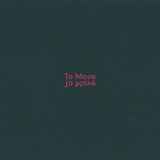
To Move is a new project by the trio of Anna Rose Carter (Moon Ate the Dark), Ed Hamilton (Dead Light) and Alex Kozobolis. Four-handed piano meets analogue manipulations to absolute wondrous effect from the London based friends.
We´re carried into a time and place not afraid to embrace a sense of optimism - even if it comes wrapped in a certain distorted shape. Transporting, blissful tones emanate free of concerns from the unifying keys; at least until the melodies are pulled and dragged from purity to become something wholly else – their own lived life; fitted with obstructions and unpredictability. The intertwining pianos linger like lovers in unison, full of drift, rhythm and life; all while analogue electronics and tape manipulations degrade and move them from their original form and closer towards earth itself.
The album came to light while Anna and Ed were temporarily residing in the English countryside between 2016 and 2019. Musical weekend visits from Alex turned into the fruitful collaboration presented here. 'To Move' is a compelling musical storyboard with a name that captures the essence of their music better than any written essay could do. This is music to resonate to, music to dance to, music to engulf your being. As for fans of the Sonic Pieces sound – if there is one – this record hits as close to home as it could do.
Sound: An Exhibition of Sound Sculpture, Instrument Building and Acoustically Tuned Spaces opened at the Los Angeles Institute of Contemporary Art in the summer of 1979 (and was also on view later that year at PS1 in New York). Curated by Bob Wilhiteand Robert Smith, the exhibition surveyed the field of sound art. The forty-four participants were painters pivoted toward performance, conceptual artists attracted to time-based mediums, self-styled creators of environments, and musicians (formally trained and otherwise) fashioning new instruments from household items and consumer electronics. They were more or less object-oriented and, at the same time, more or less music-oriented. What brought them all together, as the exhibition catalog gamely asserted, was sculpting in three-dimensional space.
The Sound exhibit included installations, recordings played in the exhibition space and a series of live performances, demonstrating instruments that otherwise rested inert in the gallery. For a broader sense of the show than a single visit provided, the curators also produced a compilation album featuring short pieces, or excerpts from longer works, by many of the participants. (Artists in the exhibition, but not on the LP include Alvin Lucier and Mike Kelley.) Selections from bright lights of the 20th century avant-garde – such as composers Bill Fontana, Yoshi Wada and Paul DeMarinis; conceptual artists and performance artists Terry Fox, Tom Marioni and Jim Pomeroy; experimental vocalist Joan La Barbara; and Los Angeles Free Music Society members Tom Recchion and John Duncan – feature alongside the sounds of Jim Hobart's tuned jars, Ivor Darreg's fretless banjo, Doug Hollis' aeolian harp and Richard Dunlap's rubber bands.
This first-time reissue is limited to 500 numbered copies. Comes with poster.
Second Editions presents a new collaborative work by Marja Ahti and Judith Hamann.
After their distinguished duet ‘Portals’ for Cafe Oto's Takuroku label, ‘A coincidence is perfect, intimate attunement’ is a wonderful sophomore collaborative work pieced together over two years of changing seasons, ideas, moods, and feelings. The release is formed from a shifting field of sound correspondence that pivots on moments of coincidence, of a tuning in.
What are we opening ourselves to when we tune in to sound? How can one be truly open to a sound? How can the activity of recording move beyond notions of capture and release into more generative frames? Rather than a tool purposed for preservation or ‘conservation’ of memory, of time and place, can recording sound instead form new vibrant or vibratory spaces of attunement?
‘A coincidence..’ is an LP length composition of multiple interlocking parts, created through exchange, alignment, unpredictability: the title borrowed from poet Fanny Howe falling right into place, a flock of birds in flight, pitches matched and moved across different geographies and temporal frames. Marja & Judith have created an intuitive, lyrical longform piece that considers the idea of attunement itself as, in some sense, the smallest form of measure or denominator connecting their respective practices: across field recording, just intonation, electronic sonorities and instrumental bodies. ‘A coincidence..’ reflects a sense of a willingness to tune in to impulses given, or gifted to the other, a position that embraces an intimate synchronicity.
Recordings & correspondances between 2020-2022. Mixed by Marja Ahti & Judith Hamann. Mastered and cut by Anne Taegert at Dubplates & Mastering in Berlin, 2022. Title quotation from Night Philosophy by Fanny Howe, Divided Publishing, 2020. Photogrpahy by Joshua Bonnetta. Thanks to Nino Bulling, Niko-Matti Ahti and leo. The work was supported by Kone Foundation, Akademie Schloss Solitude and NEUSTART KULTUR.
Marja Ahti (b. 1981) is a Swedish-Finnish composer and sound artist based in Turku, Finland. Ahti works with field recordings and other acoustic sound material combined with synthesizers and electronic feedback in order to find the space where these sounds start to communicate. She makes music that rides on waves of slowly warping harmonies and mutating textures – rough edged, yet precise compositions, rich in detail. Ahti has presented her music in many different contexts around Europe, in Japan and the United States. She is currently active in the duo Ahti & Ahti with her partner Niko-Matti Ahti and in the artist/organizer collective Himera.
Judith Hamann is a cellist and performer/composer from Narrm/Melbourne in so-called Australia, currently based in Berlin. Their work encompasses performance, improvisation, electro-acoustic composition, field recording, electronics, site specific generative work, and micro-tonal systems in a deeply considered process based approach to creative practice. Currently Judith’s work is focused on an examination of expressions and manifestations of 'shaking’ in solo performance practice, a collection of works for cello and humming, as well as ongoing research surrounding ‘collapse’ as a generative imaginary surface, and the ‘de-mastering’ of bodies (human and non-human) in European settler-colonial heritage instrumental practice and pedagogy. Judith likes working with and thinking-with other artists which sometimes includes people like Joshua Bonnetta, Dennis Cooper, Charles Curtis, Golden Fur (with James Rushford and Sam Dunscombe), Lori Goldston, the Harmonic Space Orchestra, Sarah Hennies, Yvette Janine Jackson, and Anike Joyce Sadiq.
URBAN WARFARE
Music has always been a common means to deal with global events – so does this new release on Snork Enterprises by Lee Holman. Having actually performed in Ukraine shortly before the war, Lee Holman clearly has chosen the title of his new release by purpose. “Urban Warfare” dedicates for titles, all of them bearing names with military connotation, to the recent events in Ukraine and beyond.
The musical means of his choice to process the happenings are raw, straight forward electronic sounds echoing from the underground. His combination of beeping, roaring and crooked tunes creates a dystopian atmosphere in each track – yet, each in its unique way. This makes the release a diverse collection of four tracks of unadorned urban club sounds dashing through present day history.
LEE HOLMAN
An uncompromising underground ethos, Lee Holman has garnered support from a host of Techno's brightest names.
Performing in clubs since the late nineties, he has travelled throughout Europe, North America, South America, Asia and everywhere inbetween, compounding a reputation for his unique vision on Techno. Playing a fusion of deep, raw and energetic electronics, his sound creates a myriad of tension, constructing the perfect combination of musicality for club appearances.
Performances both as a live act and as a DJ have unlocked opportunities to share hallowed ground with Techno’s elite, appearing in prestigious underground venues such as TRESOR Berlin, Corsica Studios London, 8Bahn Arnhem, Sub-Scape Antwerp, Move Medellin, Tag Chengdu, Arkham Shanghai, Nechto events Kyiv + many more.
Production has earned him international recognition, leaving his mark at the forefront, building a reputation for consistency, originality and delivering his dynamic sound on both cutting edge and classic Techno Labels. Generating consistent support, he has remixed for high profile artists such as Aubrey and Gary Beck and has himself been remixed by leading Techno mainstays ranging from Orlando Voorn to Mike Dehnert.
Founding the Kawl Imprint, the label’s aim was to provide diversity in Techno and this formula was immediately picked up on and amounted to rave reviews and impressive charts and plays by leading connoisseurs of the underground.
This year, his releases have been frequent and in demand, with his production skills confirmed for Knotweed Records, Science Cult, Shaded Music, Nechto and more, adding to an already excellent discography.
With an ever expanding release schedule, combining remixes and a new label project called Demarcation, Lee Holman promises to be unrelenting in his definition of essential timeless Techno.
We have a very special new artist for you from Berlin. Dutch native Pete Bandit relocated to Berlin some years ago where we first met in 2018 when he was part of the “Times Are Ruff” collective. They contributed a track on Dirt Crew for our “Deep Love 2018” compilation.
Now recently going solo he developed his sound even more towards Detroit-ish house with dabs of techno and a bit of high tech jazz in there as well. This debut EP offers Loads of deep soulful grooves, spiritual “computer” music at it’s best!
The A-side “Wild Feelings” is such a beautiful opener to this record, with it’s lush spread out intro it paves the way with that perfect mood for what is to come, a mix of soul, funk and electronics and overall well crafted deepness. The keys on this one were contributed by the mysterious “Nelson of the East” topped with vocals by Pete himself. “It’s Happening Again” continues the story with soulful deep house textures and this one especially reminds us a lot of those early 90s Chicago/ New York House gems, the track is building towards a great breakdown key change and with its atmospheric strings and pads it’s a truly uplifting “Good Times” tune.
On the flip we have “Computer’s Creativity”. This track picks up the pace and is centered around a funky, almost slap like, bass line. Here again topped by a vocal add of Pete about “Computer’s Creativity” and with it’s cool break this one will also be a sure floor filler, guaranteed! The closing track on this record is the driving “Luv Your Body”, great percussion guides us through a loose set arrangement and make this one a perfect late hours or early mornings tune in any mix, it could go on forever!
All tracks have been mixed by Ariel Schlichter in Berlin and mastered by Salz Mastering in Cologne. Photography & Art by Break 3000.
On the album Opening, Tord Gustavsen reveals a fresh angle to his
particularly unique trio investigations into Scandinavian folk hymns,
gospel, chorale and jazz, as he introduces a different voice on bass
With a new fellow- traveller on board and its recording premiere in Lugano's
Auditorio Stelio Molo, the trio discovers inspired new ways to interact with each
other, using innovative approaches to sound and technique in the process. Made
up in equal parts of intricately textured improvisations and understated melodic
hooks, the group's conversations bring an enticing unfamiliarity to the language
the Norwegian pianist has developed over almost two decades of collaboration
with ECM.
Tord Gustavsen: piano, electronics
Steinar Raknes: double bass, electronics
Jarle Vespestad: drums
Press:
"Vibrates between the introspective and the dramatic in rich and singular ways.
Scene-setting opener 'The Circle' sees Gustavsen exploring a modal melodic line
of beguiling simplicity, with the trio's sotto voce approach creating an atmosphere
of hushed intimacy." - **** Jazzwise (Editor's Choice)
"The focus of Opening remains the playing from Gustavsen and the rich
accompaniment from his fellow musicians, creating an atmosphere perfect for a
walk by a cabin at dawn, with the sun peeking in through the trees." - Pitchfork
"Norwegian piano star Tord Gustavsen's long-honed recipe of low-key folk songs,
gospel, classical music and jazz gets a graceful makeover on Opening - with new
bassist Steinar Raknes, a player of uncannily responsive precision alongside
regular percussionist Jarle Vespestad, while subtle electronics sometimes create
ghostly horn-player effects." - The Guardian
"For Gustavsen, pieces such as Floytelat and Vaer Sterk, Min Sjel are routes into
the sort of cerebral mysteries that the former church pianist has made his own.
The first is a funereal theme where the notes he sprinkles like raindrops build into
a fatalistic flood. The second, from the Norwegian Hymnal, is played with an
innocent simplicity. Both are equally powerful...Remarkable music, Norwegian
blues." - The Times
"Quietly beguiling release...With lesser artists the uniformity of mood and
reluctance to turn up the volume would pall. But there's an artistry to Gustavsen's
compositions, a skill in their execution, and a warmth to their spirit that keeps the
listener engaged." - LondonJazz News
Etceteral are a Slovenian experimental trio (saxophone & electronics, drums, visuals) who create a propulsive, polyrhythmic futurist jazz. It is a sound marked by abstract modular explorations, hypnotic drumming, ricocheted horn textures and crystalline production. Interzones between Dub, Krautrock, Afro-rhythms, free improvisation and quantized electronic music are brightly lit on this thrilling second album. The idea of musical elasticity is central to Rhizome, the sophomore album of the Slovenian audio-visual electronic jazz trio Etceteral, the newest member of the Glitterbeat family, who debuted in 2020 with the album Ama Gi for Kapa Records. Following a series of domestic and international gigs, the band consisting of Bostjan Simon (saxophone, synth, electronics), Marek Fakuc (drums) and Lina Rica (visuals) returned to the studio, taking their ambition to meld audio and visuals to a whole new level on their debut for the tak:til imprint. On Rhizome, the band explores the interzone between groove-driven contemporary jazz, quantized electronic music, abstract modular explorations and free improvisation. Like rubber that is able to stretch and be returned to its original shape, Etceteral expands its arrangements to the point of no return, pushing its sonic architecture to the maximum without ever letting it collapse onto itself. "I like to think in terms of sonic rubber bands. We can stretch our music both rhythmically and harmonically, change tonality and return to the main theme through a different key. This process opens up new space for discovery. We recently listened a lot to Joshua Abrams and Evan Parker, musicians who know how to make their music airy and spacious," says saxophonist Simon
- A1: Love Song
- A2: Young Bastards
- A3: Stop It
- A4: Blind Man
- A5: Skin O Daayba - Complex Habits No.3
- A6: We Are Waiting
- B1: Mantra
- B2: Skin O Daayba - Feedbackless World
- B3: Cupping Glass
- B4: Half Monk Half Herring
- B5: Ukoidm - Fishing (Edit)
- B6: Eric
- B7: In The Garden
- B8: Sequencer
- C1: Who Are We
- C2: Hit
- C3: Yozti 2
- C4: Voices Cricket
- C5: Attempt To Raise Hell
- C6: Anna's Assignment
- D1: In Our Culture (Surname Version)
- D2: Lesson 4 Voices
- D3: Intermission
- D4: Chicken
- D5: Untitled
- D6: Against Soap
- D7: Bereshit
- D8: Caretakers
Black Truffle is pleased to announce Uri Katzenstein’s Audio Works, produced in collaboration with Holon’s Centre for Digital Art. Spanning sculptural installation, performance, video art, and many other media, Katzenstein’s absurdist, poetic, and often hilarious work made extensive use of sound and music. This, however, is the first release dedicated to the artist’s audio work, collecting 28 tracks produced between the early 1980s and 2017. Compiled from dozens of hours of recordings left uncatalogued (and in some instances unheard) at the artist’s death in 2018, these four sides are a treasure trove, offering a captivating glimpse into a uniquely uninhibited creative practice. Predominantly recorded alone, with some contributions from regular collaborators such as Ohad Fishof on the later pieces, many of these tracks stem from Katzenstein’s time living in New York in the 1980s. Feeding on the cross-pollination of post-punk energy, radical art practice, and new media possibilities that characterised the New York scene at this time, many of Katzenstein’s recordings squeeze multilayered vocal experimentation into synth-based miniatures with a distinctively pop twist, their forms ruptured with anarchic bursts of free-form electronics, sounds from self-built instruments, and field-recorded snatches of the outside world. Katzenstein’s electronic production calls up touchstones of skewed 80s art pop like Laurie Anderson, Ambitious Lovers, and Scritti Politti, but imbued with DIY directness and economy of means. The arrangements of synths, percussion, and noise elements are invigoratingly raw and, at times, almost austerely minimal. On ‘Intermission’, thick distorted chords accompany a wandering portamento melody, inhabiting the wayward carnival space of Roedelius’ most unhinged efforts. Many of the tracks centre on Katzenstein’s multi-tracked vocal performances, often moving between multiple languages, (most commonly English, German, French, and Hebrew). A bewildering range of vocal approaches are present on these pieces, from sweet wordless harmonies to hammed-up growls and monastic recitations. On ‘Skin O. Daayba – Complex Habits no. 3’, improvised resonance singing against a backdrop of echoing electronics and radio snatches. ‘Half Monk Half Herring’ layers multi-lingual syllabic fragments, crossing sound poetry techniques with melodic invention in a way rarely heard outside of Caetano Veloso’s Araçá Azul. On ‘Attempt to Raise Hell’, Katzenstein’s distorted voice spits out streams of alliterative nonsense (‘the hemlock of Henry, he was a hermit…purple pumpkin pulsates to pops’), while on the hilarious ‘Eric’, Katzenstein appears to instruct a small boy simultaneously in basic French and German conversation. On ‘Chicken’, vocal harmonies accompany the pecking and clucking of the titular fowl. Moving from bent, outsider synth pop to snatches of Jo Jones-esque automated instrumental clang and absurdist linguistic experiments, these are far more than footnotes to an artist’s gallery works. Accompanied by extensive, beautifully written liner notes by Roee Rosen and the little information that exists on the individual tracks, Katzenstein’s Audio Works inhabits an outer fringe of DIY pop and sonic experiment reminiscent of Pascal Comelade or Die Welttraumforscher, where accessible forms convey radical interrogations of song, word, and sound.
What It Means To be Human is the second in a series of four albums from Jasper Høiby’s Planet B, featuring saxophonist Josh Arcoleo and drummer Marc Michel, that focus on global topics of vital importance - Humanity, Climate Change, Artificial intelligence and Monetary Reform. This album seeks connection. A connection between humanity and the planet, between the problems we all face and about an opportunistic optimism to fix them. The mastermind is Jasper Høiby, the esteemed and revered Danish bassist and the deeply reflective, expressive and visionary artist. Whilst there are many moments that display the virtuosity and hard-hitting grooves of Phronesis, the long-standing band that shot Jasper to the limelight, Planet B offers additional rewards of subtle expression. The music is captivating and highly absorbing, enhanced by soundscapes of electronics and interspersed with powerful, emotive speech by some unique and forward-thinking female minds including Grace Lee Boggs, Ruby Sales and Jane Goddall. They all share a profound understanding of the world, only achievable through practical wisdom, each offering their individual take on where we are as a species and what we can do to improve. At the heart of the album is the trio. A group of like-minded and creative souls where the focus is all about the collective sound. As a whole, the music is a powerful, mesmerising and poignant display of musicianship, integrity and storytelling. What it Means To Be Human is an album at the forefront of the creative European scene.
In 2016 lutenist Sofie Vanden Eynde put her instrument aside for nine
months in order to recover from a severe burnout
Five years later, she felt the need to look back. Would it be possible, she
wondered, to use the intense, shared concentration between musician and
listener to convey sensations of over- stimulation, contrast, excess, stagnation,
emptiness, beauty and movement? Would it be possible to articulate the inner
reality of a burnout musically: to make a burnout audible, tangible,
understandable and, who knows, avoidable? The result is Vanishing Point /
Verdwijntijd, an autobiographical recital, a musical narrative, a journey:
somewhere between fragile comfort and cautious happiness. Writer Annemarie
Peeters drew on her interviews with Sofie to write a text that reflects the three
phases of a burnout. The run- up, the phase of total stagnation during, and the
cautious way out. Three colours, three seasons, three ways of being. Lurking
beneath Sofie's personal story are experiences that many will recognize: the
craving for efficiency, the sudden faltering, the unfamiliar and at the same time
disconcerting sense of emptiness, and the tentative search for a new balance.
But also the questions Sofie asked herself – about the connection between her
own little story and the big world that surrounds her – evoke wide recognition. Is
burnout a personal failure or a social symptom?
Sofie went in search of pieces from the solo lute repertoire that she intuitively
associated with the various phases of the text. This resulted in a recital with a
surprising palette of colours, styles and atmospheres. At times she chose the
rich, powerful sound of the theorbo. At others she chose the fragile, hushed
sound of the Renaissance lute. The Prelude by the French baroque composer
Robert de Visee combines phrases full of grandeur with breathing pauses filled
with intimate doubt. The music of John Dowland draws on the typically English
penchant for melancholy. In the fantasias and ricercars of Francesco da Milano, it
is not only the bright colours of the Italian Renaissance that resound, but also the
constant search for a new beginning. Luis de Narvaez's Cancion del emperador is
an arrangement for lute of the famous chanson Mille Regretz by Josquin Desprez,
a song that emanates serene regret for everything that is not. And in Robert de
Visee's Chaconne the same chord sequence revolves around its own axis. Hope,
tenderness, revolt and acceptance each step to the fore in turn.
At Sofie's request, Vladimir Gorlinsky created a new composition, one which
reflects the state of mind in the middle of a burnout. Vanishing Point balances on
the edge of total emptiness, a stagnation that at times is hard to bear. Vanishing
Point starts out from this stagnation to explore the different facets of burnout:
resistance and acceptance, fear and hope, stagnation and movement, absolute
solitude and the desire to interact again with the surrounding world. Vanishing
Point / Verdwijntijd can be listened to in different ways: not only as a lute recital,
but also as a radio play with voice, lute and soundscapes. Annemarie Peeters'
text was recorded by actress Katelijne Damen (NL) and voice artist Caroline
Daish (EN). Vladimir Gorlinsky created soundscapes based on the sounds of the
lute, which were magnified as if under a microscope. The soundscapes weave
themselves between the text and the lute music. Jo Thielemans created the
sound design and provided the live electronics.