Crave Tapes is thrilled to announce the first vinyl release on the label which will be the second album from Frankfurt's underground post-punk/dark wave band Babes of Enola Grey, Krieg und Wohlstand.
Krieg und Wohlstand sees Babes of Enola Grey follow the path of their 2021 debut, Anfang vom Ende, and take a step further into the realm of melancholic and disillusioned soundscapes. While keeping a certain retro character to the songs, Deborah Vision, Salvador Islero and Fabian van Castorp focus on quite contemporary themes, which some might call the most German obsessions:
War and prosperity.
But this is not the only reference to the band's heritage. Sometimes more, sometimes less, there are musical allusions to various German influences and contributions to (modern) music and music history. While Doppelt Frei is a nod to EBM and bands like DAF or the early Die Krupps and Wie auf Schienen as well as Die Heuschrecken pay homage to German düster punk bands like Fliehende Stürme or EA80, Panik and the title track Krieg und Wohlstand refer to the romantic German art song tradition of the 19th century (not to mention the obvious hint at a certain successful German Schlager in Die Kugeln und das Herz).
This makes Krieg und Wohlstand not only a worthy epigone of the band's debut, but also takes the album and the artistic approach to another level.
Commenting on the chosen format (12" vinyl), the band members said: "It was clear to us that we wanted to release this album on vinyl. When you look atGerman history, war and prosperity have to be seen as two sides of the same medal, or in this case of a record".
quête:it takes two
Crave Tapes is thrilled to announce the first vinyl release on the label which will be the second album from Frankfurt's underground post-punk/dark wave band Babes of Enola Grey, Krieg und Wohlstand.
Krieg und Wohlstand sees Babes of Enola Grey follow the path of their 2021 debut, Anfang vom Ende, and take a step further into the realm of melancholic and disillusioned soundscapes. While keeping a certain retro character to the songs, Deborah Vision, Salvador Islero and Fabian van Castorp focus on quite contemporary themes, which some might call the most German obsessions:
War and prosperity.
But this is not the only reference to the band's heritage. Sometimes more, sometimes less, there are musical allusions to various German influences and contributions to (modern) music and music history. While Doppelt Frei is a nod to EBM and bands like DAF or the early Die Krupps and Wie auf Schienen as well as Die Heuschrecken pay homage to German düster punk bands like Fliehende Stürme or EA80, Panik and the title track Krieg und Wohlstand refer to the romantic German art song tradition of the 19th century (not to mention the obvious hint at a certain successful German Schlager in Die Kugeln und das Herz).
This makes Krieg und Wohlstand not only a worthy epigone of the band's debut, but also takes the album and the artistic approach to another level.
Commenting on the chosen format (12" vinyl), the band members said: "It was clear to us that we wanted to release this album on vinyl. When you look atGerman history, war and prosperity have to be seen as two sides of the same medal, or in this case of a record".
With »News from Planet Zombie«, The Notwist return to view after years of exploration and experiment with an album rich in both melancholy and positivity, sketched across a suite of thrilling, fiercely committed pop songs. It’s an album reflecting a chaotic world, but responding with warmth and generosity, to achieve creative and spiritual consolidation. Recorded in their home base of Munich, it reconnects with the security of the local to explore the troubles of the global: a guiding impulse writ large across this album’s eleven songs. It’s also the first studio album since 1995’s »12« that the entire band recorded together in the studio in its expanded live formation.
A new album by The Notwist is always a curious endeavour; their musical language is as consistent and resilient as the contexts for creativity are unpredictable and ever shifting. For »News from Planet Zombie«, the core trio of Markus and Micha Acher and Cico Beck embraced the plural possibilities of writing together, bringing songs to the collective and then arranging, rehearsing and recording that material live, in the studio.
The result is an album that’s energised, fully in ›the now‹, with spectacular moments where you can hear the magic bubbling up in the dynamic between the Achers, Beck, and fellow members Theresa Loibl, Max Punktezahl, Karl Ivar Refseth, and Andi Haberl. If »Teeth« begins »News from Planet Zombie« quietly and reflectively, by »X-Ray« everyone’s supercharged, blasting out future anthems with the collective energy cranked up high. The chiming keys of »Propeller« skim the instrumental’s surface like stones across burbling water; »The Turning« clangs its way into one of the album’s most heartwarming melodies.
»News from Planet Zombie« was recorded over one week at Import Export, a non-profit space for arts and music. You can tell, too; there are some pleasingly rough edges here, as though The Notwist’s striving for hazy perfection means they’re also confident enough to let the songs breathe and mutate between our ears. That openness to chance also takes in guest turns from friends both local and international, reflective of a cosmopolitan Munich: Enid Valu joins in on vocals, while Haruka Yoshizawa guests on taishōgoto and harmonium, Tianping Christoph Xiao on clarinet, and Mathias Götz on trombone.
The Notwist aren’t best known for cover versions, but »News from Planet Zombie« features two: a gorgeous version of Neil Young’s »Red Sun« (from 2000’s »Silver & Gold«), which the group originally developed for a theatre play directed by Jette Steckel, and a take on Athens, Georgia folk-pop gang Lovers’ »How the Story Ends«. They slot into the album’s narrative perfectly, nestling in like old friends, revealing The Notwist as poetic interpreters. Played well, the cover version is both acknowledgement of fellow travellers and act of generosity, and The Notwist nail both aspects here.
And that narrative, the way the album plays out? »News from Planet Zombie« acknowledges the distress of our current geopolitical impasse, while reminding us there are collective ways forward. Fed through the figure of the zombie, Markus Acher explores our anxieties: »In the title and some lyrics I reference B- and horror-movies, which is a reference to the crazy world at the moment, which seems to be like a really bad and unrealistic B-movie.« But there’s a reminder here not to lose the thread entirely, that these things, too, will pass.
»The river here in Munich I often go to has been there forever and will be there long after us,« Acher reflects, pinpointing an important source of succour for him, »always the same but always changing. Very calming, but also always reminding me that like this river time only flows into one direction and you can’t go back. Every moment is very precious.«
Artwork by Marie Vermont
The Notwist:
Markus Acher: vocals, guitar
Micha Acher: bass, sousaphone, euphonium, trumpet
Cico Beck: electronics, keyboards, guitar, recorder, percussion
Theresa Loibl: bassclarinet, clarinet, piano, harmonium, organ
Max Punktezahl: guitar
Karl Ivar Refseth: marimbaphone, vibraphone, glockenspiel, congas, percussion
Andi Haberl: drums, dulcimer
+
Enid Valu: vocals on 1, 2, 3, 4, 5, 7, 9, 10, 11
Haruka Yoshizawa: taishōgoto on 6, harmonium on 9, 10, 11
Tianping Christoph Xiao: clarinet on 4, 10, 11
Mathias Götz: trombone on 4, 10, 11
If you could go back in time ten years, what would you want to tell yourself? This was a question Khruangbin posed to themselves when approaching the ten-year anniversary of their debut album, the once cult classic, now genre-defining work The Universe Smiles Upon You. “If we could go back and tell ourselves how much was going to happen to us after that record, what would we want to
celebrate?” asked Laura Lee, bassist, vocalist, and founding member of the band. Instead, they thought: “Let’s do it again.”
The Universe Smiles Upon You ii was recorded on January 4-6, 2025, in the same family barn of guitarist Mark Speer, across the
same dates where TUSUY was first conceived ten years earlier. Though the conditions were the same–dirt floor, brutally cold,
minimal sound isolation, all takes live–the songs aren’t. They’re re-approached, some changed more than others, harnessing the lightning-in-a-bottle energy of TUSUY while discovering what would be unique this time around, in this stage of the band’s life.
The result moves like ripples on the water across ten hypnotizing tracks, the barn creating a sense of spaciousness, serenity and creative freedom, nearby wildlife (listen out for the birds on “August Twelve ii”), rattles and creaks of the barn and all. It’s a tapestry of small movements in nuanced arrangements, slowly revealing the new life, stories and character of someone you’ve met again for the first time in ten years.
Siren Selector presents the first voyage of Remy Solar, as the producer takes a break from composing sound system exclusive dubs to expand his horizons with this by-turns lush, textured, menacing and plaintive album.
‘Heavy Terrain’ emerges from the depths of a lifetime inside the dub fraternity: reared on a potent diet of Lee Scratch Perry and Augustus Pablo, The Disciples and Digital Mystikz, it’s an album which stuck its head in a bass bin in an abandoned bingo hall in north London before striking out on a musical road-trip to imbibe sounds and rhythms from further afield.
The album opens with the militant drums and ethereal pads of 'Sound in the East' before being bookended by two mixes of 'Star Trail', where unformed musical space and time cross uncharted distances to coalesce into the beginning of direction and rhythm. The lush deep house chords and drilling synths of 'Lila #3' summon ghostly presences, while in its counterpart 'Lila #7' layers of melody rise and hang like mist before dissipating in percussive heat. 'Dakhla's’ swelling and retreating drones fade into swirls of drums. In the eponymous 'Heavy Terrain', off-beat keyboard chops respond to each other from uncertain depths while electronic horns pulse across miles of open space. 'Empty City 'sees walls of sound coalesce and fragment, falling into bursts of white noise.
Remy Solar explores a deliberately constrained hardware set-up to create the primordial conditions of trance, locking down a rhythmic foundation while semi-improvised excursions form and reform above it. It’s an album that takes the listener on a journey between order and chaos, past and future, all the while underlaid by a counterpoint of cavernous bass lines and echoing percussion, yang and yin, shade and light.
- 1: Private Symphony (Feat. Stuart Murdoch)
- 2: The Cold Collar (Feat. Gruff Rhys)
- 3: Love Is A Life That Lasts Forever (Feat. Molly Linen)
- 4: First Moonbeams Of Adulthood
- 5: Road To The Amber Room
- 6: Hachi No Su (Feat. Saya From Tenniscoats)
- 7: In Portmanteau (Feat. Field Music)
- 8: Irreparable Parables
- 9: Spectators In The Absence Of God (Feat. Kathryn Joseph)
- 10: Soul Enters The Ocean Sun Climbs Out The Sea
White Vinyl[26,26 €]
Very limited numbers, orders will need to be confirmed.
For his new album, Irreparable Parables, Andrew Wasylyk felt a strong desire to write a set of songs featuring an element hitherto rare in his work: the human voice. Equally strong was the conviction that he did not want to sing them himself.
The Scottish multi-instrumentalist and composer set about assembling a group of guest singers, sending out the songs to wherever they were in the world. The vocals were recorded remotely and then, like migrating birds, winged their way back to Scotland. The result is an album of great beauty which, perhaps preeminently in Wasylyk’s work, expresses the vulnerability and resilience of the human spirit.
Six singers appear on the record, represented by six songbirds illustrated on the sleeve by Clay Pipe Music’s Frances Castle. The cuckoo is a nod to Belle and Sebastian’s 2004 single ‘I’m A Cuckoo’, that band’s Stuart Murdoch being the first voice you hear on the new album. When the vocal for ‘Private Symphony #2’ arrived, says Wasylyk, “it was everything that I was looking for and more. But this is Stuart Murdoch. Of course he’s going to make something incredibly beautiful and thoughtful.”
The song lyrics were, for the most part, written by the singers. The music is Wasylyk’s creation. He navigates a sound world that lies somewhere beyond the borders of classical and jazz, ambient and abstract. It is difficult to describe, but easy to understand, which is to say to feel. That is the way Wasylyk’s work is experienced: as a feeling. It takes you back to childhood, perhaps, to feelings of comfort and safety, or to memories of walks at sunrise and sunset, or to the way a shadow falls on a particular field in a particular place at a particular time in your life. This is consoling music. That is why, though pretty, it is not merely pretty. These are songs to shore up the soul.
Wasylyk writes in a room, in his native Dundee, full of “half broken” instruments. He picks these up, plays a little, seeking an idea, a feeling, a door that lies ajar. The musical palette of Irreparable Parables includes brass and woodwind, a six-piece string section, guitar, bass, drums, vibraphone, Mellotron, Fender Rhodes, tape loops, synthesisers and percussion. The strings were arranged by the cellist Pete Harvey, a long-term collaborator.
Among the other guest vocalists are Gruff Rhys of the Super Furry Animals, Saya Ueno from Japan’s Tenniscoats and Peter Brewis from Field Music. Wasylyk himself takes the lead vocal on the title track, though a throat infection and touch of pitch-shifting have altered his singing in a way that even he, having fallen out of love with his own voice, finds acceptable.
The heart of the record can, arguably, be found in two tracks, ‘Love Is A Life That Lasts Forever’ and ‘Spectators In The Absence of God’, sung respectively by Molly Linen and Kathryn Joseph. The former, bright with trumpets, was inspired by the writing of Derek Jarman. “I was feeling deeply upset about the world and wanted to try and write some- thing that was obviously hopeful,” Wasylyk says.
‘Spectators …’ offers an emotional counterpoint. It is an “apocalyptic hymn” that seems to grapple with watching human suffering from afar, too distant to be at physical risk, but experiencing the psychological wounding, and feelings of helplessness, even complicity, that come with constant awareness of other people’s pain. “Kathryn’s a pal, I love her dearly, and she’s a brilliant artist who really feels what she writes,” Wasylyk says. “The cracked tenderness of her voice is spellbinding.”
The album closes with an instrumental piece, ‘Soul Enters The Ocean Sun Climbs Out Of The Sea’, all piano and strings, that offers a sense of resolution and ascension. A good moment, too, for Wasylyk to reflect upon the artistic companionship that he enjoyed while making this record – the songbirds that answered his call: “These humans are incredible at what they do. I’m deeply grateful and feel so lucky. It blows my mind.”
- 1: Tinkerbell
- 2: Lights On, Nobody Home
- 3: Coping
- 4: Astro Boy/Ochanomizu
- 5: Duuude
- 6: Friends Of Fire
- 7: A Chance Of A Lifetime
- 8: Turn Of Luck
Turquoise/Black Smoke Vinyl[24,33 €]
KALEIDOBOLT’s fifth album is pungent to the ears – KARAKUCHI out in March Karakuchi is one record you can judge by its cover. The first time Kaleidobolt’s faces have adorned an LP, they have been fused into a torpedoing biomechanical vehicle. Echoing The Birthday Party’s Junkyard or Motörhead’s Orgasmatron (…on acid?!), the illustration epitomises perfectly Kaleidobolt’s agenda of “hyperkinetic rock”. Their feverish, psych-prog sound is full of motion. It jerks around at different speeds, threatening to spin out of control and crash into flames at any given moment. What’s more, it isn’t taken too seriously. This is heavy and intricate music, yes. But as bassist and co-singer Marco Menestrina puts it, the Kaleidobolt attitude is “an ugly smirk more than an angry face with a fist.” On their fifth album since forming in 2014, the Helsinki-based outfit lean into their strengths as a formidable power trio. With their previous two records, 2019’s Bitter and 2022’s This One Simple Trick, they had thrown everything at their disposal into the recording with no expense spared on overdubs, effects and kitchen sinks. Produced again by Niko Lehdontie (Oranssi Pazuzu), Karakuchi comes from tightly rehearsed, live-in-the-studio takes. Kaleidobolt realise that greater sparsity can be a strength, and they’ve allowed their instruments extra space to breathe. It makes for their earthiest, purest and perhaps most authentic record to date. Karakuchi’s exuberant style emerges from the individual members’ contrasting listening habits. These span classic prog, Japanese city pop, noise rock, post-hardcore and historical podcasts. One record they can all agree is a masterpiece, the centre of the Venn diagram where all three members meet, is King Crimson’s Red. As for their new album’s title, that’s as suitable as the cover art. “Karakuchi” is the slogan of the Japanese beer brand Asahi Super Dry. Translated literally, this means “pungent to the mouth”. As drinkers of that product, Kaleidobolt acknowledge its parallels to their songs. “It’s very intense, right at the front, like at the first bite,” explains Menestrina. “And then it leaves your mouth feeling refreshed. The flavour doesn’t linger in your mouth, basically. It has a quick, hard finish. With a bit of a stretch, we thought that that could also be said of our music.” Karakuchi is Kaleidobolt at their hardest, fastest, tightest and super-driest. Pungent to the ears. -JR Moores, November 2025
- 1: Tinkerbell
- 2: Lights On, Nobody Home
- 3: Coping
- 4: Astro Boy/Ochanomizu
- 5: Duuude
- 6: Friends Of Fire
- 7: A Chance Of A Lifetime
- 8: Turn Of Luck
Black Vinyl[23,49 €]
KALEIDOBOLT’s fifth album is pungent to the ears – KARAKUCHI out in March Karakuchi is one record you can judge by its cover. The first time Kaleidobolt’s faces have adorned an LP, they have been fused into a torpedoing biomechanical vehicle. Echoing The Birthday Party’s Junkyard or Motörhead’s Orgasmatron (…on acid?!), the illustration epitomises perfectly Kaleidobolt’s agenda of “hyperkinetic rock”. Their feverish, psych-prog sound is full of motion. It jerks around at different speeds, threatening to spin out of control and crash into flames at any given moment. What’s more, it isn’t taken too seriously. This is heavy and intricate music, yes. But as bassist and co-singer Marco Menestrina puts it, the Kaleidobolt attitude is “an ugly smirk more than an angry face with a fist.” On their fifth album since forming in 2014, the Helsinki-based outfit lean into their strengths as a formidable power trio. With their previous two records, 2019’s Bitter and 2022’s This One Simple Trick, they had thrown everything at their disposal into the recording with no expense spared on overdubs, effects and kitchen sinks. Produced again by Niko Lehdontie (Oranssi Pazuzu), Karakuchi comes from tightly rehearsed, live-in-the-studio takes. Kaleidobolt realise that greater sparsity can be a strength, and they’ve allowed their instruments extra space to breathe. It makes for their earthiest, purest and perhaps most authentic record to date. Karakuchi’s exuberant style emerges from the individual members’ contrasting listening habits. These span classic prog, Japanese city pop, noise rock, post-hardcore and historical podcasts. One record they can all agree is a masterpiece, the centre of the Venn diagram where all three members meet, is King Crimson’s Red. As for their new album’s title, that’s as suitable as the cover art. “Karakuchi” is the slogan of the Japanese beer brand Asahi Super Dry. Translated literally, this means “pungent to the mouth”. As drinkers of that product, Kaleidobolt acknowledge its parallels to their songs. “It’s very intense, right at the front, like at the first bite,” explains Menestrina. “And then it leaves your mouth feeling refreshed. The flavour doesn’t linger in your mouth, basically. It has a quick, hard finish. With a bit of a stretch, we thought that that could also be said of our music.” Karakuchi is Kaleidobolt at their hardest, fastest, tightest and super-driest. Pungent to the ears. -JR Moores, November 2025
Cheeba’s Funky Rock Ensemble are back with two sides of funky rock breaks for hairy b-boys !
After the great feedback of their debut release 18 months ago, they went back into the studio soon afterwards to record some more slices of hip-hop orientated funky-psyche beats aimed at the dancefloor. Since then, both new tracks have been on a one-off dubplate and getting aired all over the country to an enthusiastic reception - so it’s about time we got them out there for everyone else to, like , just dig, maaaaan !
DRUG-CRAZED LONDON HIPPIES takes you down to the seedy back street clubs of late 60s swinging Soho - to the early discotheque scene and the psychedelic experience of numerous young rock groups and their fans. With heavy fuzz, funky beats and dirty flute loops this takes you straight to those hedonistic dancefloors in the early hours.
YOU WANNA RIDE ? Stays in the same era and same counter-culture, but on the other side of the Atlantic with the free festival vibe of alternative lifestyles in California. More fuzz-rock sounds, blended with heavy beats , screaming hammond and wordless female vocals to take you on a deep trip - to lose yourself in a field as the sun rises.
- A1: Medication
- A2: Little Sally Tease
- A3: There Is A Storm Comin
- A4 19: Th Nervous Breakdown
- A5: Dirty Water
- A6: Pride And Devotion
- A7: Sometimes Good Guys Don't Wear White
- A8: Hey Joe, Where You Gonna Go?
- A9: Why Did You Hurt Me?
- B1: Rari
- B2: Why Pick On Me
- B3: Paint It Black
- B4: My Little Red Book
- B5: Sunshine Superman
- B6: Elanor Rigby
- B7: Try It
- B8: Barracuda
- B9: Riot On Sunset Strip
The debut studio album by the American rock band The Standells, Dirty Water was released by the Tower label in June of 1966. Taped in the midst of touring in a two-day session on April 4–5, 1966 at Audio Recording in Seattle, Washington, the LP takes its title from the homonymous song, which, along with its B-side "Rari," had been recorded on March 5, 1965, at Western Recorders in Hollywood, California and issued as a single. Dirty Water became the band's best-selling LP, peaking at #52 on the Billboard charts, and #39 in the Cashbox listings. The "Dirty Water" single peaked at #11 in Billboard and #8 in Cashbox. Along with Why Pick on Me, this is considered the group's strongest album.
- 1: Roses
- 2: Paper And Stone
- 3: Robin's Egg (Feat. I'm With Her)
- 4: Singing Saw
- 5: In Your Ocean
- 6: Defiance, Ohio
- 7: Wait Up (Feat. I'm With Her)
- 8: Grace Notes
- 9: Dates And Dead People
- 10: Half Measures
Die Indie-Folk-Ikone Sam Beam, auch bekannt als Iron And Wine, bringt ein neues Studioalbum raus, das voll mit wunderschöner, natürlicher Americana ist, darunter zwei Kollaborationen mit dem weiblichen Folk-Trio I'm With Her. „Ich wollte schon immer diesen Titel verwenden", sagt Sam Beam über „Hen's Teeth“, sein achtes Album in voller Länge und sein sechstes für Sub Pop Records. „Ich liebe ihn einfach. Für mich steht er für das Unmögliche. Hühnerzähne gibt's nicht. Und genau so fühlt sich dieses Album an: wie ein Geschenk, das es eigentlich nicht geben dürfte, aber doch da ist. Eine unmögliche Sache, aber sie ist real."
„Hen's Teeth“ und sein vorheriges Album „Light Verse“ sind so was wie Geschwister. Sie wurden während derselben Sessions nach einer einjährigen Pause mit derselben Band im Waystation Studio in Laurel Canyon aufgenommen. „Wenn ich gerade richtig in Schreiblaune bin und die Band mich dort abholt, wo ich gerade stehe, treiben sie mich zu etwas, das ich mir nicht hätte vorstellen können. Ich bin an einem Punkt in meinem Leben, an dem Spontaneität für mich viel wichtiger ist. Ich muss nicht mehr so viel beweisen wie früher. Ich bin viel freier und liebe es mehr denn je, Musik zu machen. Es gibt keine richtigen oder falschen Antworten. Man betet einfach um Glück und gibt sein Bestes." In diesem Fall wurden die Gebete erhört und das Glück schlug voll zu. Die Musiker fanden so schnell zueinander und inspirierten sich gegenseitig so sehr, dass sie Songs oft in nur wenigen Takes aufnahmen, manchmal zwei oder drei pro Tag. Die beiden Alben können daher als zweieiige Zwillinge betrachtet werden: Sie teilen sich die DNA und ergänzen sich, haben aber unterschiedliche Identitäten und zeichnen sich ebenso durch ihre Unterschiede wie durch ihre Gemeinsamkeiten aus. Die Welt von „Hen's Teeth“ ist erdiger, dunkler, robuster und greifbarer als die von „Light Verse“. Die Songs haben Titel wie “Roses", “Robin's Egg", “Dates and Dead People" und “Singing Saw". “Run into the one you love forever / Laugh into each other's empty mouth", singt Beam in “Roses", dem ersten Titel des Albums. Es ist einer von mehreren Songs, in denen Liebende so tief miteinander verbunden sind, dass sie physisch verschmelzen. “Paper and Stone" erinnert daran: “But for the time we fell in two / You'd be me and I'd be you / One crust of bread could fit in our mouths / You'd breathe in and I'd let it out." Und in “In Your Ocean" finden wir Beam betend: “Praying for dry ground / Though I only want to drown / When I find myself swimming in your ocean".
Alex Rex, the project of acclaimed musician and former Trembling Bells bandleader Alex Neilson, is set to release his fourth and final studio album, The National Trust, on March 28th. Written in the wake of the sudden death of his younger brother, Alastair, the album is a poignant reflection on loss, love, and renewal, deeply rooted in the landscape of Carbeth—a cabin community in the Scottish countryside that Alastair called home. For Neilson, the cabin became both a physical and emotional project, a symbol of restoration and reconnection.
"For the first four years after Alastair died, his cabin lay empty and exposed to the remorseless Scottish weather. It came to look like a rotten tooth in a beautiful mouth. Cladding was dropping off its veneer, the ashen baubles of dead wasps nests clung to the rafters, all his possessions were just as he'd left them but eaten by mice, moths and time. Ashtrays still carried the crushed centimetres of his old tab ends. The cabins are so joyfully animated by their host's specific personality and this one looked like a haunted house. Guilt, unrealised hopes and encroaching nature yoked together in a wandering sadness. Combined with the fact that I didn't know the right way round to hold a hammer made the project of its restoration seem hopeless.”
Neilson, however, gradually began chipping away at the task, determined to transform the cabin into something he hoped would resemble “a National Trust site occupied by a psychopath,” with a little help from some friends, including Lavinia Blackwall and Marco Rea.
“They poured love into the cabin and helped restore Alastair's original vision. The project also helped restore my relationship with Lavinia which had fractured after Trembling Bells broke up in 2017. Alongside long-term Rex lieutenant Rory Haye, we applied the same intensity of dedication that we did in renovating the cabin, into creating The National Trust.”
As with Neilson’s previous albums, the recording process was intentionally unpolished, with songs presented in the studio with no rehearsals and captured in just a few takes. This raw, immediate approach amplifies the emotional weight of the album, which Neilson describes as being at a “personal apex of sour self-reflection, mock misanthropy, and self-exposure.” Longtime collaborators Lavinia Blackwall, Marco Rea, and Rory Haye return, alongside guest musicians like Jill O’Sullivan (Jill Lorean) and Trembling Bells guitarist Mike Hastings, to bring Neilson’s vision to life. The result is a deeply personal and multifaceted work, blending acid wit with haunting introspection.
The songs on The National Trust traverse a wide emotional and thematic range. The title track opens the album with a sharp and confessional edge, exploring love, loathing, and cultural critique with Neilson’s signature wit. “Boss Morris” pays tribute to the all-female Morris dancing troupe that reinvents British folk with vibrant energy, while “Two Kinds of Song” turns self-referential humour into an avalanche of remorse, culminating in the unforgettable chorus: “I’ve got two kinds of song. Which one will it be; one where I hate myself or one where you hate me?” Elsewhere, tracks like “Psychic Rome” draw from the decadence and hysteria of ancient Rome, while “The Coward in the Tower” breaks new ground as the only song Neilson has composed on an instrument before recording.
Throughout the album, Neilson’s lyricism is as vivid as ever, transforming personal tragedy into poignant and often darkly humorous art. Yet, there is a sense of finality to this work. "Songwriting has encouraged me to see the whole world as a resource. The things people say and throw away can be chiselled and polished and plopped into a lyric. It’s the same with building the cabin- scouring the edges of society for pallets, discarded wood, ornaments for the garden. But while song writing brings to life orphaned parts of my personality, the cabin is a synthesis of all my interests – nurturing my emotional health instead of exploiting it. With that in mind, I think this will be my last album as Alex Rex.”
With The National Trust, Neilson closes a significant chapter of his career, blending masterful musicianship with deeply personal storytelling. Known for his collaborations with artists such as Bonnie "Prince" Billy, Shirley Collins, and Current 93, as well as his decade-long tenure leading the psych-folk outfit Trembling Bells, Neilson has long been celebrated for his eclectic and uncompromising vision. This final album serves as a fitting culmination of his journey as Alex Rex, capturing the essence of his artistry while offering a profound exploration of loss, renewal, and the enduring power of love.
Macclesfield 3-piece Cassia make their extremely welcome return with the announcement of their most ambitious release yet in new studio album everyone, outside - out April 11th.
The album marks a bold new chapter, and recently served up a tropical-tinged first offering in ‘heat’ - with today serving a superb Round Two with the stomping, insatiable, hook-laden new single ‘friends’.
everyone, outside takes Cassia’s sound to new heights. Written fresh off the back of two years of relentless touring, the band channelled every ounce of their renowned live energy into the album, returning to a studio they built themselves in Macclesfield, after creating their previous album in Berlin. The journey provided an added twist, recording the majority of tracks live on TikTok, giving fans a unique, inclusive experience to be part of the process.
The album’s title is a metaphor for embracing your truest self and reflection of a band who are at their happiest outside. It’s a message that speaks to the idea of reconnecting with nature and Britain’s finest summers. As frontman Rob explains, “That title, ‘everyone, outside’ started as a song about how weird it is that we stay inside all the time when being out in nature always makes us feel better. Over time, it came to mean more than that - like a metaphor for being your truest, most natural self, unburdened, like when no one’s watching.”
Drawing influences from a host of genres and cultures, everyone, outside reveals Cassia’s venn diagram of global sounds and intimate storytelling. A trip to Mexico during the writing process injected the record with a new energy, while their time spent in their new space back home gave the band a freedom to try new instruments, new sounds, acquire new tools to hone their production skills - and to simply have fun and explore. “The time we spent in Berlin taught us so much, but coming back home to Macclesfield allowed us to really focus on making something that felt like it came from us. No distractions, just pure creativity,” says drummer Jacob Leff.
Cassia’s rise has been impressive. From their early days busking the streets of Cornwall to playing major festivals, touring the world and receiving critical acclaim from BBC Radio 1, Radio X, The Independent, Rolling Stone UK, Clash & many more, the band has carved out a unique niche. Their sound, influenced by the African music Rob’s father introduced him to, combined with the indie heritage of nearby Manchester, combines the positivity of bands like Foals and Vampire Weekend, with the jazz-tinged afrobeats of Fela Kuti and Ebo Taylor.
After signing to Distiller Records in 2018, the band gave up their full-time jobs and ventured to Bath to record their debut album, Replica. Tracks such as ‘Right There’, ‘Drifting’ & ‘100 Times Over’ have amassed millions of streams, seeing the band sell out multiple headline Tours both in the UK and Europe. Playing to a homecoming capacity crowd at Manchester’s O2 Ritz, as well as sold out headline shows at London’s KOKO & The Garage, the band have accrued a huge, loyal following and their live shows earned them a nomination for Best Live Act at the AIM Awards alongside Idles and DMA’s, as well as making them the winners of Reeperbahn’s Anchor Award in 2022.
Cassia will tour the UK in May 2025, playing songs from the new album and some of their biggest tracks - headlining Leeds, Bristol, a newly added night in Southampton, a special Manchester homecoming, Glasgow, Birmingham, & a huge show at London’s HERE @ Outernet - dates below & Tickets Here. The band will also take things Stateside this year for their first ever run of headline shows in the US & Mexico.
Macclesfield 3-piece Cassia make their extremely welcome return with the announcement of their most ambitious release yet in new studio album everyone, outside - out April 11th.
The album marks a bold new chapter, and recently served up a tropical-tinged first offering in ‘heat’ - with today serving a superb Round Two with the stomping, insatiable, hook-laden new single ‘friends’.
everyone, outside takes Cassia’s sound to new heights. Written fresh off the back of two years of relentless touring, the band channelled every ounce of their renowned live energy into the album, returning to a studio they built themselves in Macclesfield, after creating their previous album in Berlin. The journey provided an added twist, recording the majority of tracks live on TikTok, giving fans a unique, inclusive experience to be part of the process.
The album’s title is a metaphor for embracing your truest self and reflection of a band who are at their happiest outside. It’s a message that speaks to the idea of reconnecting with nature and Britain’s finest summers. As frontman Rob explains, “That title, ‘everyone, outside’ started as a song about how weird it is that we stay inside all the time when being out in nature always makes us feel better. Over time, it came to mean more than that - like a metaphor for being your truest, most natural self, unburdened, like when no one’s watching.”
Drawing influences from a host of genres and cultures, everyone, outside reveals Cassia’s venn diagram of global sounds and intimate storytelling. A trip to Mexico during the writing process injected the record with a new energy, while their time spent in their new space back home gave the band a freedom to try new instruments, new sounds, acquire new tools to hone their production skills - and to simply have fun and explore. “The time we spent in Berlin taught us so much, but coming back home to Macclesfield allowed us to really focus on making something that felt like it came from us. No distractions, just pure creativity,” says drummer Jacob Leff.
Cassia’s rise has been impressive. From their early days busking the streets of Cornwall to playing major festivals, touring the world and receiving critical acclaim from BBC Radio 1, Radio X, The Independent, Rolling Stone UK, Clash & many more, the band has carved out a unique niche. Their sound, influenced by the African music Rob’s father introduced him to, combined with the indie heritage of nearby Manchester, combines the positivity of bands like Foals and Vampire Weekend, with the jazz-tinged afrobeats of Fela Kuti and Ebo Taylor.
After signing to Distiller Records in 2018, the band gave up their full-time jobs and ventured to Bath to record their debut album, Replica. Tracks such as ‘Right There’, ‘Drifting’ & ‘100 Times Over’ have amassed millions of streams, seeing the band sell out multiple headline Tours both in the UK and Europe. Playing to a homecoming capacity crowd at Manchester’s O2 Ritz, as well as sold out headline shows at London’s KOKO & The Garage, the band have accrued a huge, loyal following and their live shows earned them a nomination for Best Live Act at the AIM Awards alongside Idles and DMA’s, as well as making them the winners of Reeperbahn’s Anchor Award in 2022.
Cassia will tour the UK in May 2025, playing songs from the new album and some of their biggest tracks - headlining Leeds, Bristol, a newly added night in Southampton, a special Manchester homecoming, Glasgow, Birmingham, & a huge show at London’s HERE @ Outernet - dates below & Tickets Here. The band will also take things Stateside this year for their first ever run of headline shows in the US & Mexico.
- 1: Human Rights
- 2: Being
- 3: Human Impact
- 4: Filia
- 5: Human Spirit
- 6: Human Nature
- 7: Human Instinct
Denmark s forward forward-thinking trio Human Being Human return with a luminous new collaboration featuring acclaimed American saxophonist Chris Cheek. Rooted in lyricism, groove, and connection, Being captures the essence of what it means to create music as a shared act of humanity. Formed by bassist Torben Bjornskov, pianist Esben Tjalve, and drummer Frederik Bülow, Human Being Human have quickly earned a reputation as one of Europe s most distinctive piano trios. Their blend of Nordic lyricism and modern rhythmic vitality has drawn international acclaim for its compositional voice and cohesive ensemble sound. On Being , the trio expand their world through the unmistakable voice of Chris Cheek - a player known for his warm tone and intuitive lyricism, whose credits include work with Paul Motian, Brad Mehldau, and Charlie Haden. A long long-time admirer of Cheek s work and humility, Bjornskov reached out and invited him to Denmark to collaborate with the trio. In the studio, the chemistry was undeniable, as most of the album s tracks were captured in just one or two takes, preserving a sense of immediacy and spontaneity. Reflecting on what it means to be human, our capacity to make decisions and shape the world around us, as well as the damage our species has done to our planet, the quartet channels a spirit of contemplation and rediscovery through elegant, organic compositions. Tracks like Human Rights showcase the group s deft interplay and melodic clarity, while the tender ballad Being highlights Cheek s burnished tone and Tjalve s spacious harmonic sense. On Filia , a duo between bass and saxophone, the music unfolds in weightless dialogue and pure musical empathy. True to the group s name, Being reflects on what it means to live, connect, and create as humans in a complex world. The essence of music is working together, being open, being positive, and wanting to experience new things, things," says Bjornskov. That s essentially what jazz is - it s influenced by any and every culture in the world, every kind of music and race, and every person is part of it.
- I Was Born To Boogie
- Communism, Hypnotism & The Beatles
- Cocaine Cowboys
- The Girl With The Strawberry Hair
- I Used To Dream In Colors
- I Remember Everything
- She Wanted Me To Be A Junky
- Glam Girl (In An Indie World)
- You Get On My Nerves
- Fake Punk
- The Girl Is Mine
- Ramalama
- Disco Junky
- She's A Mystery To Me
- The Good Times We Had
- You're My Sister
- Sexy Young Thing
- The Sadness Of It All
- Bad Vibes (Part One)
- The Destruction Of Lower Manhattan
- I'm Never Satisfied
21 songs are barely enough to show the "Many Faces of Memphis Electronic"! From less than a minute twisted psych pop and heartbreaking ballads to two minutes something fuzzy rockers, electronic r'n'r and sexy glam, you'll find all you need and much more in this incredible album! It takes at least 21 songs - and 30 Polaroids on the cover! - to show the "Many Faces of Memphis Electronic"! On the XYZ, Dum Dum Boys and NON! guitar player third solo album, entirely home recorded, you will find plenty of fuzzy bangers, trashy rockers, electronic r'n'r, lo fi disköpunk, sexy glam, twisted psych pop and heartbreaking ballads, 21 different faces on just 2 album sides! With the help of 60s fuzz pedals, analog synths, a wild organ, an out-of-space Theremin, raw drum machines and tons of delay, reverb and strange noises, all used to maximize the minimalism of the tracks, Memphis Electronic manages to create an orgy of arousing sounds, an overdose of aural pleasure, an irresistible avalanche of exciting songs, all ranging from 49 seconds snapshots to 2 minutes something instant classics!
You‘re feeling great, just bought new records and you’re ready to toss ‘em on the decks and let ‘em spin. Nevermind your bank account has you on a strict diet of yum yum noodles instead of that expensive, slow, regional stuff you normally get. „Anyway it was a good choice, I love records. It’s an investment..“ you are telling yourself while sliding the record out of its sleeve. „Cheap Fast Worldwide“ — black letters on a white background. You put the needle on the disc.
Punchy drums bathe in lush chords and you’re pulled into a smooth, lounge vibe. Tonight it’s caviar, not yum yum noodles. A playful bassline bounces in, with a nod towards disco roots and a modern twist. An unmistakable cheesy 90s melody is the cherry on top.
Aptly named, the inner track on this side greets you when a „One, two, three, quattro“ rings out over a tight, breaky groove. Meanwhile, rather deep, monotonous pads carve out space for your mind to wander…
As you flip it over, things start to shift. Strange melodies and dirty drums tease the unknown. Out of nowhere, the pitch drops, and a low, driving bassline takes hold. It pushes forward with a relentless energy that keeps you on the edge, unsure of what’s coming next.
A highly sophisticated fade out leads you to the last track — a raw and infectious drum groove laced with choppy vocal snippets and warm crackles. Stripped back, yet the beautiful chords slice through, adding depth and the right sense of movement, taking you deeper into the night.
The Helsinki-based Bowman Trio return with their second LP on We Jazz Records on October 18. "Persistence" is a strong effort, showcasing the young trio's knack at creating dynamic, sparse and memorable music which carries well the term "loft jazz" occasionally attached to it. Here, drummer Sami Nummela, trumpeter Tomi Nikku and bassist Joonas Tuuri present 9 strong originals, 8 of which are penned by Nummela and one by Nikku.
On the course of the new album, Bowman Trio moves from the introspective, calm moments of "Badwater", "Mac Elliot" and "Mä en jaksa" to the full swing of "The Chase" and the solid grind of "Persistence". The album closing track "Sista sommardagen" ("The last day of summer" in Swedish) is a hauntingly beautiful, delicately breezy ballad. Two years in the making, the album is a testament to the album title and a fine example of a band taking time in developing their sound to perfection.
Bowman Trio debuted in 2016 with the group's first LP also being the first release on Helsinki's We Jazz Records, and since then their reputation has grown in Finland and beyond. The trio is known for making music which invites the listener in and takes it sweet time in unraveling its secrets. Their sound is somewhat dry, naturally relaxed and there's a lot of room for manoeuvre within it for all of the players. That being said, each of the musicians in the trio know how to play for their team, and the compositions move forward constantly and effortlessly. Bowman Trio makes music which always feels close to you, like you're right there in the room with the band. That's "loft jazz".
Koma Saxo, the explosive quintet led by Berlin-based Swedish bassist/producer Petter Eldh, returns on We Jazz Records with their new album, cut live at We Jazz Festival in Helsinki, December 2019. Whereas their lauded debut was a triumph of remapping the goal posts for an acoustic jazz combo for the 2020's, "LIVE" takes you right to the heart of the actual ensemble sound, with 5 musicians tearing the place down, no post production. From the fiery opening sequence kicking off with "Euro Koma", on to the much calmer beauty of "Waltz Me, Waltz Me Baby, All Night Long" and the first single "Fiskeskärsmelodin", the 8-song set is pure fire, never failing to convey the extraordinary intensity of the group: Eldh on bass, Otis Sandsjö (Y-OTIS), Jonas Kullhammar and Mikko Innanen on saxes, and Christian Lillinger on drums.
An excerpt of liner notes by Peter Margasak:
"When I first saw Petter Eldh's quintet Koma Saxo in Berlin in September of 2019 I was floored. The raw, sprinting energy of the band was both infectious and astonishing, but what I most remember was a sense of cognitive dissonance. Was this the same combo that recorded a fantastic eponymous 2019 studio album that represented one of the most convincing, pleasurable, and driving hybrid's of searing post-bop and the production ethos of hip-hop? There have been endless stabs by producers trying to remap the machinations of an organic, all-acoustic jazz band with electronic post-production, but Eldh, channeling a sonic language heavily informed by J Dilla, nailed it in a way I'd never experienced before. Having the trust of his three imaginative, high-octane saxophonists—Jonas Kullhammar, Otis Sandsjö, and Mikko Innanen—he used their grainy sound as raw material, smudging and smearing it like a painter creating new hues on a palette, and then extending, editing, and powering it up within the imperturbable grooves meted out by he and drummer Christian Lillinger. He didn't really alter the essential core of the band's performances. There's no question that a seriously burning quintet had laid the tracks down, even if the performances reflected the kind of concision many jazz groups adapt for a studio endeavor. But the way his jacked-up bass lines and Lillinger's impossibly peripatetic, stuttering rhythms buffeted the massed saxophones elevated Koma Saxo to plane all its own, and I repeatedly returned to that place—half the time trying to figure out what the hell Eldh had done, and the other half lost in giddy ecstasy.
The live show, on the other hand, featured the band without any production tricks. Its soaring, pithy repertoire came alive in a different way, and this excellent live recording from the 2019 We Jazz Festival, has reminded me of how fun and visceral that experience was."
Koma Saxo "LIVE" is released by We Jazz Records on 30 April 2021 on two vinyl editions (silver + black), as a bundle with an unreleased 7" (+ silver vinyl edition), on CD and digitally. The vinyl versions plus the CD come complete with silver embossed lettering. The vinyl is delivered on heavy-duty tip-on sleeve, complete with an insert featuring liner notes by Peter Margasak, Andreas Müller, Matti Nives and Petter Eldh.
a 01: Euro Koma (Live) feat. Otis Sandsjö, Jonas Kullhammar, Mikko Innanen & Christian Lillinger
b 02: Puls Koma (Live) feat. Otis Sandsjö, Jonas Kullhammar, Mikko Innanen & Christian Lillinger
c 03: Fanfarum for Komarum III (Live) feat. Otis Sandsjö, Jonas Kullhammar, Mikko Innanen & Christian Lillinger
[d] 04: Waltz Me Baby, Waltz Me All Night Long (Live) [feat. Otis Sandsjö, Jonas Kullhammar, Mikko Innanen & Christian Lillinger]
[e] 05: Otis and Christian (Live) [feat. Otis Sandsjö & Christian Lillinger]
[f] 06: Blumer (Live) [feat. Otis Sandsjö, Jonas Kullhammar, Mikko Innanen & Christian Lillinger]
[g] 07: Fiskeskärsmelodin (Live) [feat. Otis Sandsjö, Jonas Kullhammar, Mikko Innanen & Christian Lillinger]
[feat. Otis Sandsjö, Jonas Kullhammar, Mikko Innanen & Christian Lillinger]
Silver Vinyl
Koma Saxo, the explosive quintet led by Berlin-based Swedish bassist/producer Petter Eldh, returns on We Jazz Records with their new album, cut live at We Jazz Festival in Helsinki, December 2019. Whereas their lauded debut was a triumph of remapping the goal posts for an acoustic jazz combo for the 2020's, "LIVE" takes you right to the heart of the actual ensemble sound, with 5 musicians tearing the place down, no post production. From the fiery opening sequence kicking off with "Euro Koma", on to the much calmer beauty of "Waltz Me, Waltz Me Baby, All Night Long" and the first single "Fiskeskärsmelodin", the 8-song set is pure fire, never failing to convey the extraordinary intensity of the group: Eldh on bass, Otis Sandsjö (Y-OTIS), Jonas Kullhammar and Mikko Innanen on saxes, and Christian Lillinger on drums.
An excerpt of liner notes by Peter Margasak:
"When I first saw Petter Eldh's quintet Koma Saxo in Berlin in September of 2019 I was floored. The raw, sprinting energy of the band was both infectious and astonishing, but what I most remember was a sense of cognitive dissonance. Was this the same combo that recorded a fantastic eponymous 2019 studio album that represented one of the most convincing, pleasurable, and driving hybrid's of searing post-bop and the production ethos of hip-hop? There have been endless stabs by producers trying to remap the machinations of an organic, all-acoustic jazz band with electronic post-production, but Eldh, channeling a sonic language heavily informed by J Dilla, nailed it in a way I'd never experienced before. Having the trust of his three imaginative, high-octane saxophonists—Jonas Kullhammar, Otis Sandsjö, and Mikko Innanen—he used their grainy sound as raw material, smudging and smearing it like a painter creating new hues on a palette, and then extending, editing, and powering it up within the imperturbable grooves meted out by he and drummer Christian Lillinger. He didn't really alter the essential core of the band's performances. There's no question that a seriously burning quintet had laid the tracks down, even if the performances reflected the kind of concision many jazz groups adapt for a studio endeavor. But the way his jacked-up bass lines and Lillinger's impossibly peripatetic, stuttering rhythms buffeted the massed saxophones elevated Koma Saxo to plane all its own, and I repeatedly returned to that place—half the time trying to figure out what the hell Eldh had done, and the other half lost in giddy ecstasy.
The live show, on the other hand, featured the band without any production tricks. Its soaring, pithy repertoire came alive in a different way, and this excellent live recording from the 2019 We Jazz Festival, has reminded me of how fun and visceral that experience was."
Koma Saxo "LIVE" is released by We Jazz Records on 30 April 2021 on two vinyl editions (silver + black), as a bundle with an unreleased 7" (+ silver vinyl edition), on CD and digitally. The vinyl versions plus the CD come complete with silver embossed lettering. The vinyl is delivered on heavy-duty tip-on sleeve, complete with an insert featuring liner notes by Peter Margasak, Andreas Müller, Matti Nives and Petter Eldh.
a 01: Euro Koma (Live) feat. Otis Sandsjö, Jonas Kullhammar, Mikko Innanen & Christian Lillinger
b 02: Puls Koma (Live) feat. Otis Sandsjö, Jonas Kullhammar, Mikko Innanen & Christian Lillinger
c 03: Fanfarum for Komarum III (Live) feat. Otis Sandsjö, Jonas Kullhammar, Mikko Innanen & Christian Lillinger
d 04: Waltz Me Baby, Waltz Me All Night Long (Live) [feat. Otis Sandsjö, Jonas Kullhammar, Mikko Innanen & Christian Lillinger]
[e] 05: Otis and Christian (Live) [feat. Otis Sandsjö & Christian Lillinger]
[f] 06: Blumer (Live) [feat. Otis Sandsjö, Jonas Kullhammar, Mikko Innanen & Christian Lillinger]
[g] 07: Fiskeskärsmelodin (Live) [feat. Otis Sandsjö, Jonas Kullhammar, Mikko Innanen & Christian Lillinger]
[feat. Otis Sandsjö, Jonas Kullhammar, Mikko Innanen & Christian Lillinger]
[a] 01: Euro Koma (Live) [feat. Otis Sandsjö, Jonas Kullhammar, Mikko Innanen & Christian Lillinger]
[b] 02: Puls Koma (Live) [feat. Otis Sandsjö, Jonas Kullhammar, Mikko Innanen & Christian Lillinger]
[c] 03: Fanfarum for Komarum III (Live) [feat. Otis Sandsjö, Jonas Kullhammar, Mikko Innanen & Christian Lillinger]
[d] 04: Waltz Me Baby, Waltz Me All Night Long (Live) [feat. Otis Sandsjö, Jonas Kullhammar, Mikko Innanen & Christian Lillinger]
[e] 05: Otis and Christian (Live) [feat. Otis Sandsjö & Christian Lillinger]
[f] 06: Blumer (Live) [feat. Otis Sandsjö, Jonas Kullhammar, Mikko Innanen & Christian Lillinger]
[g] 07: Fiskeskärsmelodin (Live) [feat. Otis Sandsjö, Jonas Kullhammar, Mikko Innanen & Christian Lillinger]
[feat. Otis Sandsjö, Jonas Kullhammar, Mikko Innanen & Christian Lillinger]
- A1: Lazlow X Oaty - Brioche L
- A2: Ost & Proud X Wun Two - Deep Sea
- A3: Farewell X Tenpō - Summer’s Over
- A4: S I M X Mfakka - School Trip
- A5: Aimless X The Deli - Late Again
- A6: Yasumu X Dennisivnvc - Morning Jam
- A7: Screen Jazzmaster X Zmeyev - Sideways
- A8: Xander. X Phlocalyst - Skateboard Kind Of Day
- B1: L’indécis X Ødyssee - Backseat
- B2: Cap Kendricks - One Day
- B3: Nogymx - Conkers
- B4: Eli Filosov
- B5: Azula X Blue Wednesday - Second Nelson
- B6: C4C X Nuncc - Muted Mornings
- B7: Toti Cisneros X Yungmerrin - Radience
- B8: Mr. Käfer X Leavv - Waterwood
- C1: Ariel T X Guillaume Muschalle - Maze
- C2: Sling Dilly - Pick Up
- C3: Sleepermane X Dennisivnvc - Open Windows
- C4: J’san - Past 3Am
- C5: Bashful X Hazy Year - Dusk
- C6: Takeo X Spencer Hunt - Pianta
- C7: Shopan X Ian Ewing X Saint Rumi - Daybreak
- C8: Jxsn X Marsquake - Late Evenings
- D1: Shoganai X Dosi - Crates
- D2: Dimension 32 X Lucid Keys - Racines
- D3: Rook1E X Softy - Evening Glow
- D4: Nytø X Swink X Liid. - High School Rooftop
- D5: No Spirit X Fool Parsley - Ziplocked
- D6: Monma - Setup
- D7: Towerz X Quist - Stick Around
Get ready for the new school year with our latest compilation,
Back to school. Featuring 31 old-school lofi hip-hop tracks with warm vinyl textures and smooth, head-nodding rhythms, this mix is perfect for studying for exams, sketching in your notebook, enjoying a coffee break, or simply watching the leaves turn.
Sometimes, all it takes is the right soundtrack to make even the busiest school days feel a little easier, and a little more yours.
l B4. eli filosov p h i l o - doinfine
Prolific powers in rave and counterculture, Luca Lozano and Mr. Ho debut on Phantasy with the deliciously gnarly ‘WREKONS’ EP. Already locked in close collaboration at their own Klasse Wrecks label, this temporary migration to Erol Alkan's peerless London imprint with four outsider-electro variations that sit comfortably amongst the more bombastic moments in Phantasy's history.
‘Reach Out and Touch’ sets the tone, bursting sound systems wide open with an introduction that takes Lozano and Ho out of the basement and into the widest festival fields, overdriven with sheer energy and a flawless arrangement that sets up all manner of musical twists until the final chord. ‘Psycho Rasp’ expands from a simple cowbell beat to a circuit-frying melody, a machine rush that isn’t afraid to strip back to bare essentials for a devilishly simple, extremely effective breakdown.
On the flip, ‘WREKONS' pushes things further still, particularly on the lubricious ‘Grease Beat’, an unrelenting symphony of rubber-faced bass, crashing cymbals and demented drums, ideally composed to pair daring DJs with submissive dancers. ‘Tin Can Hustler’ closes off the EP with the duo’s leftfield take on jackin’ house, its dense groove bubbling up from underneath the strangest analogue signals.
The title and sleeve artwork for 'WREKONS' makes reference to the PERKONS HD01, a drum machine made by Latvian wizards Erica Synths, and one that was used heavily throughout the two-day session in which these tracks were recorded
Nick Holder’s Iconic ‘Dance, Dance, Dance’ Finally Arrives Digitally with New Remixes from Jason Hodges and Trackheadz.
Definitive Recordings proudly presents a long-awaited milestone: the first-ever digital release of ‘Dance, Dance, Dance’ by Nick Holder’s Fruit
Loops project, originally released in 1995 and repressed countless times on vinyl since. This timeless house anthem, a pure expression of discodriven groove, now returns remastered and refreshed — accompanied by two brand-new remixes from fellow Toronto house legends Jason
Hodges and Trackheadz.
The original version of ‘Dance, Dance, Dance’ captures the raw magic of mid-90s house — a stripped yet irresistible jam that fuses classic 70s
disco sampling with a deep, rolling bassline and a straight house groove. It’s simple, it’s soulful, and it’s pure disco-house sexiness.
Jason Hodges delivers a playful rework that modernizes the cut while keeping its soul intact. His remix adds shuffled percussion, chopped vocals,
and a subtly reworked bassline — injecting a fresh rhythmic twist that stays true to the track’s roots while enhancing its dancefloor punch.
Trackheadz then takes the track into deeper territory, layering lush synth chords, organ lines, and sweeping strings over a steady, hypnotic build
— a masterclass in musicality and atmosphere for the late-night crowd.
A true veteran of Toronto’s house scene, Nick Holder rose to international acclaim in the late ’90s and early 2000s with releases on Definitive,
NRK, Stickmen, and Studio K7, shaping the sound of deep and soulful house. As the founder of DNH Records, he’s been a driving force behind
countless underground classics, including ‘Da Sambafrique’, ‘Trying to Find Myself’, and ‘Summer Daze’.
Jason Hodges, another staple of the Toronto underground, is known for his tough yet groovy sound that bridges New York swing and Chicago
grit. Having remixed the likes of DJ Sneak, Derrick Carter, DJ Heather, and Kaskade, Hodges continues to be a name synonymous with timeless,
floor-filling house. Trackheadz, helmed by Kaje Trackheadz, brings decades of experience in blending sweet strings, soulful brass, and deep club
energy. Responsible for underground staples like ‘Our Music’ and ‘Feel’, he has remixed everyone from Todd Terry to The Sunburst Band, and
continues to expand his vision through Trackheadz Records.
Nearly three decades on, ‘Dance, Dance, Dance’ still grooves as hard as ever — now revitalized for the next generation of house lovers.
- A1: Robert Pico - Le Chien Fidèle
- A2: Annie Girardot - La Femme Faux Cils
- A3: Spauv Georges - Je Suis L'état
- A4: Zoé - Zoé
- A5: Jacques Da Sylva - Fou
- A6: Valentin - Je Suis Un Vagabond
- A7: Jacques Malia - Histoire De Gitan
- A8: Bernard Jamet - Raison Legale
- B1: Jean-Pierre Lebort - Barbara Au Chapeau Rose
- B2: Les Concentrés - Fils De Dégénérés
- B3: Les Missiles - Publicité
- B4: Hegessipe - Le Credi D'hegessipe
- B5: Marechalement Votre - Ethero Disco
- B6: Mamlouk - Decollez Les
- B7: Mozaique - L'amour Nu
- B8: Jean-Marc Garrigues - Je Dis Non
- B9: Penuel - Astronef 328
The journey through French-speaking pop archives continues with this fifth volume, packed with fuzz, gimmicks, and dissent. Far from the charts, the selected tracks display a great creative freedom, often backed by corrosive humor. Welcome to the surprising, kaleidoscopic, and colorful world of the late sixties and early seventies, Wizzz!
Born in Montauban, Robert Pico stumbled into music by chance when he met René Vaneste, then artistic director at Pathé-Marconi. René brought him to Paris to record his first 45 RPM EP in 1964. A year later, Pierre Perret introduced him to Vogue, where he recorded his second album with Claude Nougaro’s orchestra. Sylvie Vartan then introduced him to RCA, where he recorded four singles, including the astonishing "Chien Fidèle," a track backed by a hair-rising fuzz guitar. Alongside his solo career, he also composed for other artists like Alain Delon (the song was recorded but remains unreleased), Magali Noël, Bourvil, and Georges Guétary. In the Paris of the sixties, he mingled with Mireille Darc, Elsa Martinelli, Marie Laforêt, France Gall, Françoise Hardy, Petula Clark, Régine, Dani, Serge Gainsbourg, Joe Dassin, Franck Fernandel, Charles Level, and Roland Vincent. Despite his efforts and winning a Grand Prix Sacem for his final record, Robert Pico didn’t achieve the expected success in show business and decided to leave Paris and return to the Southwest, where he devoted himself to writing. He is the author of 23 books (including Delon et Compagnie, Jean-Marc Savary Editions 2025, a memoir about his youth and his many encounters). Today, he is relieved to never have become a celebrity and devotes himself to his work with passion.
In 1969, the Franco-Italian movie Erotissimo was released, directed by Gérard Pirès (who later directed Taxi in 1998, written and produced by Luc Besson). This pop comedy features Annie Girardot, Jean Yanne, Francis Blanche, Serge Gainsbourg, Nicole Croisille, Jacques Martin, and Patrick Topaloff. The soundtrack was written by Michel Polnareff and William Sheller, with lyrics by Jean-Lou Dabadie. "La Femme Faux-cils," performed by Annie Girardot. It recounts the feelings of a rich CEO's wife who seeks to develop her sex appeal under the influence of advertisement and magazines. Groovy, sparkling and light, this track, with ITS lush arrangements humorously critiques consumer society and feminine beauty standards.
“Je suis l’Etat” (1967) is the flagship track of the first EP by singer-songwriter Spauv Georges, aka Georges Larriaga, better known as Jim Larriaga (1941-2022). Born into a family of bakers, the young man was initially planning to become a hairdresser when he discovered English-speaking music through Elvis Presley and the Beatles. After this revelation, he decided he would become a songwriter and gave himself five years to succeed. He recorded his first two EP’s independently for RCA under the pseudonym Spauv Georges; meaning “that poor George”, a nickname given to him by the mother of her friend Jean-Pierre Prévotat (future drummer of the Players, Triangle, or Johnny Hallyday). Portraying a depressed and eccentric young man, Spauv Georges created corrosive and amusing songs that didn’t reach a wide audience, despite a TV appearance with Jean-Christophe Averty.
Supported by his loyal friend and fellow songwriter Jean-Max Rivière, Georges Larriaga met the future singer Carlos in the early '70s, then Sylvie Vartan’s assistant. He wrote songs for Carlos, including the popular "La vie est belle," "Y’a des indiens partout," and "La cantine", which went onto become a huge hit in 1972. He also composed for Claude François (“Anne-Marie”, 1971), Charlotte Julian (“Fleur de province”, 1972), helped launch child singer Roméo (who sold 4 million records), and later wrote the hit "Pas besoin d’éducation sexuelle" (1975) for the young Julie Bataille. In 1971, Jim recorded an album for Disc'Az: “L’univers étrange et fou de Jim Larriaga”, which featured pop gems like “La maison de mon père”.
The story of the song "Zoé" began when Pierre Dorsay, artistic director at Vogue Records, asked Swiss singer and musician Pierre Alain to write a song for a new female singer. The inspiration came when he realized that Zoé (the artist's name) was also the name of France's first atomic battery, created in 1948, which consisted of uranium oxide immersed in heavy water! The lyrics reflect a bubbling energy that must be handled with caution, while the instrumentation echoes this atomic theme, notably with the use of a theremin.
Zoé’s career lasted only as long as a single 45 RPM, but it seems Christine Fontane was the vocalist behind this pseudonym, who is known for several EPs, a good "popcorn" album in 1964, and a handful of children’s singles in the '70s. Regardless, the photograph on the cover is of a different girl entirely.
Later, Pierre Alain continued his career, writing songs for himself, Marie Laforêt, Danièle Licari, Alice Dona, Arlette Zola (3rd place in Eurovision 1982), and achieving multiple gold and platinum records in Canada. Also an inventor with several patents, president of the Romande Academy, and head of the French Alliance in Geneva, he now composes atonal music, books, and poetry. Moreover, he is also the host of "Les Mardis de Pierre Alain" at "Le P'tit Music'Hohl" in Geneva.
Filled with oriental choruses and fuzz guitar, "Fou" is from Jacques Da Sylva's only EP released by Vogue in 1967. Despite the quality of this recording, all traces of this singer disappear after this first effort.
Valentin is a baroque pop singer born in Belgium. He is the songwriter and composer of most of the tracks on his three singles released in the late 60s in Canada. A legend says that he reincarnated himself as Jacky Valentin during the 1970s for a rock'n'roll revival career in Belgium, but his older brother sadly debunked this story. Valentin's first two singles were arranged by Claude Rogen, a Parisian session pianist who had come to Canada to promote the song “Mister A Gogo”, a cover of David Bowie’s “Laughing Gnome”, adapted by singer Delphine, his wife at the time. Far from his usual network, Claude Rogen arranged music for Polydor, including the arrangements for “Je suis un vagabond” in 1969, a jerk tune with string arrangements and a furious optimism.
Jacques Malia wrote, composed, and recorded his only 45 EP for Festival in 1966. “Histoire de gitan” is an incredible beat track with bohemian scat that tells the story of a gypsy musician who came to Paris to make it in the Music-Hall, to no avail. The hero of the song and its author probably shared a similar fate, as Jacques Malia faded into anonymity after this remarkable attempt.
Bernard Jamet recorded two EPs for Barclay in the late sixties and co-wrote several songs with Christine Pilzer, Pascal Danel, and prolific songwriters Michel Delancray and Mya Simile. The track “Raison Légale” (1968), his masterpiece, immerses the listener in a courtroom right when a murderer is being judged, with jerk rhythm and free arrangements. A unique, paranoid, judicial, and psychedelic oddity.
Jean-Pierre Lebrot-Millers started his career in show business in 1967 as a singer and songwriter for the Philips label. After three singles, he wrote several songs of a new kind with his friend Pierre Halioche, in the midst of the sexual liberation movement and the democratization of drugs. With provocative lyrics, “Les filles du hasard” and “Barbara au Chapeau Rose” were released on a Philips singles in 1968. The character of Barbara was inspired by a queen of Parisian nightlife during the psychedelic years: model Charlotte Martin, who dated Eric Clapton from 1965 to 1968, then Jimmy Page from 1970 to 1983. Jean-Claude Petit’s arrangements, with a table-filled intro, soul brass, and Hendrixian guitar, emphasize the flamboyance of a hedonistic and sexy character, whose dog is named Junkie because “Junkie est un nom exquis”! The track was recorded live in three takes with a full orchestra.
Upon its release, the record was censored by Europe 1 and RTL due to its references to drug use. Jean-Pierre Lebrot was then banned from the airwaves and later dismissed by his record label. He changed his artist name to Jean-Pierre Millers, while his companion Pierre Halioche became D. Dolby for a new dreamy composition, “Chilla”, which Jean-Pierre produced himself with arrangements by Jean Musy. Once again, the song was immediately censored everywhere. After this setback, he decided to stop singing and started taking on odd jobs to support his Swedish wife and their son until the day he met Jean-Pierre Martin, then production manager at Decca, who had worked with Manu Dibango. Martin offered Jean-Pierre Lebrot-Millers, then employed at Rank Xerox, the position of artistic director at Decca. He accepted and became, a year later, promotion director (radio, press, TV). He worked on Julio Iglesias’s first album for Decca, which became a massive hit and allowed him to meet Claude Carrère. The latter asked him to write new songs and find their performers, much like a “talent scout.” It’s through him that Jean-Pierre discovered Julie Pietri and Corinne Hermès. He composed “Ma Pompadour” for Ringo, Sheila’s husband, and took the microphone again for the syncope hit “Rendez-Vous” in 1982.
That same year, Jean-Pierre Lebrot-Millers tried to release a track for which he had heavily gone into debt: “Si la vie est un cadeau”. Having recorded it in London, he presented it to numerous professionals, all of whom refused to get involved. The same thing happened with Antenne 2 and the Sacem when he proposed the song as France’s entry for Eurovision. He then met Haïm Saban, who was producing cartoon soundtracks and had just launched the Goldorak theme song. Saban, having listened to the song, declared it had the potential to become a hit. He sent Jean-Pierre and Corinne Hermès to meet the CEO of the Luxembourg radio and television network. The latter received them, asked to hear a verse and chorus a cappella in his office, and immediately hired them to represent Luxembourg at Eurovision 1983. They reworked the arrangements and recorded a new version with Haïm Saban as co-producer. The song ended up winning Eurovision 1983, a great comeback for our hero. He continued producing and hung out with the band Nacash in Belgium when a couple came to introduce their daughter for an impromptu audition in a hotel room. The girl sang “Les démons de minuit” while dancing to a radio cassette. Impressed, he had her take singing lessons for a year and composed a song for her (for which he had the melody and title, but no lyrics). This required him to go on the hunt for a lyricist, who ended up being Guy Carlier. They recorded the song, which was initially a ballad, at Bernard Estardy’s CBE studio, and gave the singer a new name: Melody. They showed the song around their industry network without success. Later, Estardy called Jean-Pierre to suggest changing the rhythm and making it pop-rock. Orlando, Dalida’s brother, liked the result and decided to co-produce the track. “Y’a pas que les grands qui rêvent » became a classic hit. The song has since been covered by Juliette Armanet (as a ballad, like the original) and Valentina.
Born into an aristocratic Breton family, Hervé Mettais-Cartier worked as a DJ at Queen Kiss, a nightclub in Poitiers, where he formed the band Les Concentrés with Michel (an actor) and Christian (a radio technician). Together, they created a repertoire of whimsical songs (“Ma bique est morte”, “J’suis un salaud”, “Fils de dégénéré”...) that they performed on stage dressed in white (in homage to “concentrated milk”). They performed at Bliboquet and Olympia in 1968 for the 10th edition of the “Relais de la chanson Française” organized by L’Humanité-Dimanche and Nous les Garçons et les Filles, sponsored by Pepsi Cola. Winners in the author-composer category, alongside Danish singer Dorte, their visibility allowed them to record a 45, and appear on television in Jean-Christophe Averty’s show. The A-side of the disc features Bruno le ravageur, a casatchok dedicated to Bruno Caquatrix, the director of Olympia, nicknamed in the song “Coq Atroce” or “croque-actrices”. The B-side is dedicated to “Fils de dégénéré”, a quirky tribute to Hervé's aristocratic roots, mixing absurdity with sophisticated vocal harmonies.
After Les Concentrés, Hervé Mettais-Cartier formed the duo La Paire et sa Bêtise with his friend Olivier Robert. They performed in Parisian cabarets and toured with Pierre Vassiliu. In the late 1970s, Hervé began a solo career. He recorded two albums for the Motors label in 1978 and 1979, which did not achieve their anticipated success due to lack of promotion. In 1980, he met Bernadette, with whom he started a family and created a “Chansons à voir” (songs to see) show that he performed until his death at the end of 2024.
Publicité comes from the final EP by the Missiles (Ducretet Thomson, 1966), a disc that also includes “La (nouvelle) guerre de cent ans”, featured on Volume 4 of our Wizzz! series. Please refer to the booklet for the story of the band.
“He’s 1.82 meters tall, 28 years old, weighs 135 kg, is black and Belgian”: this is the description of singer Hegesippe on the back of his sole single (Decca, 1967). He appears on the album cover wearing a Greek toga, like a hippie gag – we are at the end of the year 1967. In “Le crédo d’Hegesippe”, this former bodyguard of Antoine and the Charlots plays the delightful card of the thick brute converted to Flower-Power and non-violence, with arrangements by Jean-Daniel Mercier, aka Paul Mille.
“Ethéro-disco” was released on a promotional record for clients of the Maréchal company (Liège, Belgium) for the New Year 1979. Over a funky rhythm, celebrity impersonations (Brigitte Bardot, Jacques Dutronc, Fernandel…) deliver an enigmatic text about pharmaceutical products like ether, bismuth, and aspartate. The track was composed by Dan Sarravah (responsible for Joanna's “Hold-up inusité” featured on Wizzz! Volume 3) and Tony Talado, who was also a singer (one 45 in 1967), songwriter (with over a dozen credits between 1964 and 1985 in various styles from surf music to disco), author (Devenez Végétarien, Dricot Editions, 1985), ad designer, and psychologist.
Décollez-les is on the A-side of Mamlouk's only single, a pseudonym for Marsel Hurten, who is known for his work on several EPs in the late sixties, as well as composing music for Hervé Vilard’s “Capri, c’est fini”, Claude Channes' “La Haine”, Annie Philippe’s “On m’a toujours dit”, and Nancy Holloway’s “Panne de Cœur”.
This strange song, with Afrobeat horns and absurd dialogues between a chef and his kitchen staff, is the result of a collaboration between Marsel Hurten and one of his neighbors, a photographer from Pavillon-sous-Bois (93), where the musician settled after returning from the Algerian War. A music video was shot to promote the record.
Marsel Hurten was born in Tourcoing (59) into a musical family. At a young age, he joined the brass band founded by his grandfather, playing the piston before studying trumpet at the conservatory, as well as teaching himself how to play the guitar. As an orchestra musician, he toured in France, Belgium, Germany, and England. He released a series of solo 45’s between 1965 and 1968 for the DMF and Az labels before stopping recording to focus on working for other artists (Gilles Olivier, Noëlle Cordier…).
“L’amour nu” (Vogue, 1971) is the work of the short-lived Belgian band Mozaïque. The track, written by singer Jacques Albin, closely resembles another of his compositions, “Carré Blanc”, which he recorded in 1969 for Disc’AZ.
Represented by the Lumi Son micro-label based in Marignane (Côte d'Azur), Jean-Marc Garrigues released two 45 RPMs in the late sixties, defending the French jerk sound. The song “Je dis Non” is a short, joyful ode to youth, pop music, and rebellion.
Songwriter and performer Jacques Penuel released three singles. The first one, “Astronef 328” (Fontana, 1969), features a dizzying series of chords punctuated by sound effects, a sci-fi story, and arrangements by Jean-Claude Vannier.
We would like to sincerely thank Pierre Alain, Moon Blaha, Marsel Hurten, Bastien Larriaga, Jean-Pierre Lebrot-Millers, Bernadette Mettais-Cartier, Robert Pico, Olivier Robert, Claude Rogen, Micky Segura.
Grupo um celebrate 50 years with release of lost dictatorship-era album nineteen seventy seven!
First time release - vinyl comes with printed innersleeves
Brazilian avant-jazz vanguardists Grupo Um celebrate their 50th anniversary, sharing a second previously lost 1970s album from the vaults. Nineteen Seventy Seven (titled after the year it was recorded) is another rip-roaring instrumental fusion treasure from the band which spawned from within Hermeto Pascoal’s famed mid-1970s São Paulo collective.
Like their debut album Starting Point, Grupo Um’s Nineteen Seventy Seven was recorded when Brazil's military dictatorship was at its most repressive. “There were no open doors to those who dreamt to be protagonists in creative instrumental music”, remembers drummer Zé Eduardo Nazario, “even popular composers and singers had to submit their songs to censors and many records were banned and confiscated from the stores.”
Just like Hermeto Pascoal's Viajando Com O Som (1977) and Grupo Um's previous album Starting Point (1975), both of which remained unreleased until the 21st century, Zé Eduardo asserts that the 1977 album was flatly 'without any chance to be released at that time."
Recorded at Rogério Duprat’s Vice-Versa Studios in São Paulo, the group were under both time and space restraints, “we chose the small Studio B,” Lelo Nazario recalls, “which had a Tascam (TE AC) 12x8 console and a 4-channel AMPEX AG 440 machine. Therefore, we had to record without overdubs, everything straight to tape.”
Expanding from a trio to a quintet, original Grupo Um members Lelo Nazario (keys), Zé Eduardo Nazario (drums), and Zeca Assumpção (bass) were joined by saxophonist Roberto Sion and percussionist Carlinhos Gonçalves. Carlinhos, Zé and Zeca had already played together in the group Mandala, while brothers Lelo and Zé had just finished a stint backing Hermeto Pascoal during his years in São Paulo.
Lelo was deeply immersed in modular synthesizer experimentation during this period, working extensively with the ARP2600 and EMS Synthi AKS. These electroacoustic explorations formed the sonic foundation for "Mobile/Stabile," one of his first compositions to merge modular synthesis with Brazilian music, a fusion that would ripple throughout the Brazilian jazz scene. The piece premiered at the first São Paulo International Jazz Festival in 1978, performed by Grupo Um with guest trumpeter Márcio Montarroyos. In a shocking moment, festival organizers interrupted the show mid-performance, sparking fierce backlash from both audience members and journalists who denounced the incident as artistic censorship during Brazil's era of political and cultural repression. The version on Nineteen Seventy Seven is the first recording of the composition.
Nineteen Seventy Seven combines Afro-Brazilian rhythm, modular synthesis and a plethora of whistles, percussion and effects pedals. Album opener “Absurdo Mudo” - so titled for the absurd difficulty it poses to the musicians performing it - starts out in a cloud of mysterious dissonance, before the haze breaks for a glorious keyboard and saxophone interplay atop an uptempo samba groove. “Cortejo dos Reis Negros (Version 2)” (Procession of the Black Kings), based on the maracatu rhythm, inverts the traditional jazz song structure by beginning with improvisations, which are followed by the theme and a final coda. “The studio also had two Parasound electronic reverb units,” Lelo notes, “and the timbre is very audible on the soprano sax and percussion.”
Grupo Um’s daring music represents a manifesto of resistance during the dictatorship years, but it’s one which remains just as relevant today. As Lelo puts it: “For me, the aesthetic issue has always been about combining contemporary avant-garde languages with Brazilian music, independent of categories and commercial interests. The result of this fusion takes music to a new level.”
Recording credits (1977)
Recorded at Vice-Versa B Studio, São Paulo, November 9, 1977
Produced by Lelo Nazario and Zé Eduardo Nazario
Engineered by Ricardo “Franja” Carvalheira
Lelo Nazario – Wurlitzer electric piano, acoustic piano, signal generator, percussion
Zé Eduardo Nazario – drums, percussion
Zeca Assumpção – electric bass
Carlinhos Gonçalves – percussion
Roberto Sion – soprano sax, clarinet
Release credits (2025)
Produced by UTOPIA Studio, São Paulo
Project Coordination in Brazil by Irati Antonio (Utopia Studio)
Tape Restoration and Digital Mastering by Lelo Nazario at Utopia Studio, July 2025
Liner Notes by Lelo Nazario and Zé Eduardo Nazario
Photography by Jorge Las Heras, Lelo Nazario, and artists' personal archives
Photo Restoration by Lelo Nazario
Artwork and Design by Alessandro Renaldin
Whitelands' second album Sunlight Echoes builds on their elemental debut - that won them fans from Slowdive to David Jonsson - with a more expansive sound that takes them out of the shoegaze shadows to somewhere bigger, better and brighter. Produced by long-time collaborator Ian Flynn and mixed by double Grammy Award-winner Eduardo De La Paz (New Order, The Horrors, The Charlatans, The KVB, Drug Store Romeos), there are soaring string arrangements (by Iskra Strings) and Lush guest vocals from labelmate Emma Anderson. "We're coming back with a lot more maturity and realness," says singer and guitarist Etienne Quartey-Papafio of their step up. "It shows in how much more emotional our music has become." With maturity comes a newfound confidence, so not only are there stunning melodies everywhere, but Etienne's vocals are front and centre throughout. "It's been really cool to watch Etienne push through boundaries," adds bassist Vanessa Govinden. "I like the direction we've taken on this album. We're taking a risk. It's half and half." She's right - the first half of the album has an almost Britpop breeziness, that belies the serious subject matter that inspired the songs, while the second half gets heavier, in all senses, with added grit and gravitas."This album is one of enduring," says Etienne of the overarching theme. "We had family that were dying, I was broke, there was a shortage of my ADHD medication_ I was suffering, but not just me, everyone around me was too." "The last two years have been challenging," concludes Vanessa. "The universe really fucked with us. That's why there are themes of loss, disconnection, fragmentation and yearning, but on the other side there is also unity and hope." Sunlight Echoes is a poetic, melodic statement of intent from this formidable band. Whitelands have fought back and triumphed in the face of adversity.
For AI-41 Astral Industries presents a vinyl reissue of Robert Henke’s multifaceted concept album ‘Layering Buddha’. An erudite masterclass on sampling and composition, ‘Layering Buddha’ encapsulates the material process of metamorphosis and a well of nascent, ever-present potentialities. This new edition comes remastered by Henke himself.
Originally released in 2006, ‘Layering Buddha’ began with a curious encounter with the ‘Buddha Machine’ - a pocket-sized, battery powered playback device that, over the past two decades, has quietly achieved a cult status around the world. Conceived by the Beijing-based group FM3 (Christiaan Virant, Zhang Jian), the machine takes inspiration from Tibetan Buddhist prayer boxes and consists of nine sound loop compositions of varying length, which can be toggled with a single switch. Due to low production cost and manufacturing imperfections, each Buddha Machine is unique, giving slight variations in sound, pitch and duration.
Using a state of the art A/D converter Henke made high quality recordings from a single machine, providing the source material for the album. Through various processing and arrangement methods, new pieces emerged, most of them all deriving from a single source loop. The pieces were then set up on the computer as generative arrangements, living as continuously permutating structures that could theoretically go on forever - just as the loops do within the Buddha Machines…
The final pieces featured on the album are rendered excerpts of these infinite permutations, and therefore exist as momentary views on a perpetual machinery, as opposed to closed works. Upon initial exploration, it also became a natural development to format the work into an immersive multi-speaker performance - which premiered on January 31, 2007.
Within the music, subtle artefacts and idiosyncrasies are transmuted into new realms of texture and timbre. Through the extractive hand of subtle augmentations, an array of ethereal dimensions emerge from the vast unseen ocean. Suspended in a sense of timelessness, their undulating rhythms point to a pool of endless mysteries.
- A1: Clean Up (Ep Mix)
- A2: Go Get Your Money
- A3: Beretta (Feat. Lucey Way)
- B1: Things
- B2: Rolling
- B:3 Go Get Your Money (B-Sharp Mix)
First Word Records are proud to bring you 'Penny Ballads', a 5-track EP from Royce Wood Junior. Royce Wood Junior is a Grammy & Mercury Award-nominated musician, songwriter and record producer from London, currently based in Brighton. As a multi-instrumentalist, he's collaborated with a litany of brilliant artists over the years, such as Jamie Woon, Nao, Disclosure, Jessie Ware, Olivia Dean, Joy Crookes, Jamie Lidell and Jordan Rakei, additionally to touring with the likes of the legendary Thomas Dolby. He's released two acclaimed solo albums to date ('The Ashen Tang' in 2015, and 'No Two Blue Ticks' in 2021). 'Penny Ballads' demonstrates RWJ's varied talents, with a collection of alternative soul compositions, each one as unique as the next. It includes the first two singles, the Poplife-Prince era flavoured 'Go Get Your Money', and the double-time future funk adrenaline shot, 'Clean Up', along with three previously-unreleased tracks. 'Beretta' is low-slung soul funk, beginning with quirky squelchy synths, before the soulful lead vocal of feature artist Lucey Way breezes in to melt everyone's hearts. 'Things' sweeps in next, an infectiously soulful midtempo heavy soul bop, with an instant earwork of a hook, like a modern-day Steely Dan / Doobie Brothers, complete with a head-nodding string section to end the track. The collection concludes on a more melancholy downtempo tip with 'Rolling'; an almost-folktronic anthem, with a key refrain that wouldn't be out of place on a 70's Stevie piece. RWJ (aka Jim Wood) says of this project… "Back in the 17 and 1800's Troubadours and minstrels would go from Tavern to Tavern selling Penny Ballads, single sheets of music and lyrics written quickly and frivolously to make a quick buck.. It strikes me that we're in a similar phase in the way we value music in 2025. An old Penny Ballad was cheap and dog-eared, ink-smudged, sung aloud by firelight, Now songs live in the digital ether, dissolved in the air, a ghostly breath paid in micro cents. The new era of Penny Balladry is here, and weird. This EP is a snapshot of my writing over a two year period. Focussed on minimal recording styles, one mic on the drums, generally first or second takes on parts and vocals, I wanted the music to feel like small moments with lyrics that talk about the weird nuances of being alive as a latter stage human on the cusp of the Ai revolution. Culturally so evolved, but physiologically still just a bunch of mammals walking about with primitive fears and needs. Just trying to reconcile it all moment to moment…" Previous support for Royce's music has included Radio 1's Future Sounds, BBC 6 Music's New Music Fix, Annie Mac, Clara Amfo, Jo Whiley (BBC Radio 2), Mary Anne Hobbs, Jamz Supernova, Tom Robinson, Huw Stephens (BBC 6 Music), Zane Lowe and MistaJam. There have been sessions previously for the likes of Red Bull and press from Huck, Line of Best Fit, Clash, Aesthetica & DIY magazine. Entirely self-written and self-produced, this EP gives a solid taste of RWJ's talents. A deeply funky diverse set of music from an immensely talented individual. 'Penny Ballads' is due to be released on vinyl & digital, 24th October 2025. The vinyl version also includes an exclusive additional mix of the first single 'Go Get Your Money'. TRACKLIST: 01: Clean Up (EP Mix) 02: Go Get Your Money 03: Beretta (feat. Lucey Way) 04: Things 05: Rolling 06: Go Get Your Money (B-Sharp Mix) Deconstructed Mixes
With her new album, Spira (Sprout), Olof Arnalds has found her joy in writing songs rekindled. In many ways it harkens back to her debut: it is exclusively in Icelandic, the arrangements are markedly stripped back compared to her last two records, and it is mostly recorded in single takes in the control room of Sundlaugin, much like Vio og vio. Although a classically trained singer and violinist, Olof has been an active practitioner of popular music for thirty years, the watershed moment was the 2007 release of her debut solo album Vio og vio (Now and Again, wider international release in 2009), produced by Sigur Ros' Kjartan Sveinsson in the band's converted swimming-pool studio Sundlaugin. It seemed to appear fully formed out of the ether, and became a local classic almost overnight, winning accolades such as 'Best Alternative Album' at the Iceland Music Awards, named 'Record of the Year' by Iceland's principal daily newspaper and recognised as one of the decade's 100 best albums by eMusic. Spira is produced by Skuli Sverrisson, who also contributes bass and guitar. His mind-melting resume includes musical direction for Laurie Anderson, recordings with Blonde Redhead and work with artists such as David Sylvian, Jon Hassell, Ryuichi Sakamoto, Bill Frisell and Arto Lindsay. Davio por Jonsson contributes piano and guitar to the record-much as he did during Olof's busiest touring schedule nearly fifteen years ago when the two of them toured the world for months on end. There is hardly a jazz musician in Iceland he hasn't played with but lately he is perhaps best known for his close collaboration with Ragnar Kjartansson, one of this century's most celebrated visual artists.
Are you Looking for Love? Advice? Good Luck? Then you’ve come to the right place. Fortune Three, the third release in the Psychic Readings catalog, Peach continues to explore her sound bringing 4 tracks dedicated to the dance.
It starts with In Ur Dreams, an ode to the dreamers and lovers in your fantasies. Peach gives some subtle organ hits a whirl with deeper basslines and punchy drums. Next, a track inspired by and sampling an old Christina Aguilera interview, What U Got is a warm, beachy roller which is reminiscent of hotter temperatures. Pretty pads, shiny stabs, and a weighty bassline create an endlessly playful groove – a Peach signature.
On the flip, we see Brady’s Song mixed two ways – the first being the deeper cut of the two, Brady’s Song slowly unravels melody after melody, playing with sassy stabs and a bassline on the subbier side. The Afters Edit takes a more upfront and jacking approach, focusing on the ability of the bass to roll through the whole track – shimmering percussion and the same stabs from the B1 carry us through until the last second.
All the tracks are a testament to her many moods as a DJ. From club use to home listening, this is an EP dedicated to the dance.
Man O To from the elusive producer NU is finally set to be released as a single on Crosstown Rebels, featuring remixes from Parisian producer Pépé Bradock who producers two amazing takes on the original. Since its inclusion on Acid Pauli's Get Lost Compilation in 2012, the track has gained huge support and become a modern-day electronic classic.
A nomad of modern times, NU has travelled the continents with his diverse music to unearth his imitable style. Represented heavily in Man O To, where instruments amalgamate with electronic production to become solid rhythms. An extra spark come from its lyrics, outtakes from an old Persian poem from the well known poet Rumi, who speaks of true happiness in love here performed by Ghazal Shakeri from an original recording made by renowned French composer Armand Amar.
Julien Auger aka Pépé Bradock is a widely respected producer best known for his ground breaking remixes and releases on labwes such a Avatisme, Classic and Versatile Recordings. As a DJ, he has spun in almost every major club in the world and is known for his versatile, and mesmerising style. Bradock conjures a trippy remix and dub version of Man O To and fitting ode to the original.
2025 Repress
Pampa is proud to present stunning remixes from Die Vögel for Dntel & DJ Koze for Matthew Herbert. Still impressed by the outstanding Dntel album 'Aimlessness' Die Vögel deliver a remix that broadens their multifaceted sound aesthetics once again with catchy Steve-Reich'esque melodies that cover the voice of Jimmy Tamborello just like they always been there. A very powerful fundament is carrying the house, so big and full of suprises. Also, this house has many windows to all cardinal points.It was 2001 when Matthew Herbert enchanted us all with his blueprint album 'Bodily Functions". 11 years later the distinctive DJ Koze takes on two of his all-time favs to remix, 'You saw it all' (which will be part of the re-release on Accidental) and 'It's only' which will be released by Pampa Records digitally AND on vinyl. The result is a breathtaking piece of modern music, The beautiful voice of Dani Siciliano has experienced a total new dress, she´s now the irrestible captain of a fat but flexible submarine, diggin' in deep waters for new ways to enlighten the dancefloor... An instant classic already....
Known for their exhilarating live-to-record albums such as last year's critically acclaimed Wood Blues and Giant Beauty, سماع Sama'a (Audition) is the first of two releases that will surface after أحمدAhmed’s first studio recording sessions at North London’s The Fish Factory in early 2025.
Since 2014, Ahmed أحمد have excavated and re-imagined the music of Ahmed Abdul-Malik, in an ever ongoing search for future music. Over a decade on, the group were given the opportunity to set up in the studio for the first time and, with the aid of meticulous engineer Benedic Lamdin, سماع Sama'a (Audition) is the quartet's most detailed work to date.
Fastidious fans may recognise the album's tracklisting as that of Ahmed Abdul-Malik’s Jazz Sahara. After his success collaborating with the pianists Thelonious Monk and Randy Weston, Jazz Sahara was the first record Abdul-Malik made as a leader and was released in 1958. It used the flame of late Fifties jazz to light the wick of North African folk music and acted as a reminder of the Arabic origins of jazz, creating a distinct, unique sound that was far beyond its time. In Malik’s Jazz Sahara, there is no piano. The ongoing work of each member of [Ahmed] then is to think differently, to wonder how the music will work and to take a risk on trying it out - an extraordinarily compelling feat of imagination. Using group improvisation strategies and recording in single takes, سماع [Sama'a] (Audition) tackled the full suite of Jazz Sahara in just one session, with ‘Ya Annas [Oh, People’] and ‘Isma'a [Listen’] being previously unrecorded. 'Farah 'Alaiyna’, also released on 2019’s Super Majnoon, sounds unrecognisable - the slow, heady stomp and repeated phrasing of 2019’s embryonic [Ahmed] having been blast furnaced and sped up four-fold. The result is four kaleidoscopic, relative miniatures that move, unfold and re-imagine at a very different scale and proportion than [Ahmed]’s previous records. It’s a dizzying, euphoric music and an extraordinary record of a group moving through space-time like no other.
[b] Isma'a [Listen]
[c] El Haris [Anxious]
[d] Farah 'Alaiyna [Joy Upon Us]
[b] b1 Isma'a [Listen]
[c] c1 El Haris [Anxious]
[d] d1 Farah 'Alaiyna [Joy Upon Us]
[b] b1 | Isma'a [Listen]
[c] c1 | El Haris [Anxious]
[d] d1 | Farah 'Alaiyna [Joy Upon Us]
- A1: Disco Mania
- A2: Miniminiminiminijupe
- A3: Noise Boys
- A4: Hungriges Afrika
- B1: One Second Too Late
- B2: Sweet Jane
- B3: Ping Pong Lied
2025 Reissue.
Münchenbuchsee, a suburb of Bern, Switzerland. Stephan Eicher is the youngest of three children. His father, a radio and TV repairman, is also a jazz violinist and a sound tinkerer in his spare time. In the family home's converted fallout shelter turned studio, Mr. Eicher experiments with homemade sequencers, tortures handcrafted drum machines, and abuses reel-to-reel tape recorders—all under the fascinated gaze of young Stephan.
The boy quickly develops a musical curiosity, exploring sound through various experiments and wanderings. Alongside his younger brother Martin, Stephan crafts audio plays on a homemade multi-track recorder (essentially several cassette decks hooked together!), which they write, record, add sound effects to, and perform for family and friends. Just a couple of nice kids, really...
Then comes 1972, and Lou Reed's Transformer album changes everything for the Eicher kids. For 13-year-old Stephan, it's a revelation—especially "Vicious", the opening track, which he plays on repeat for months. He convinces his father to buy him an electric guitar. Not stopping there, his father also builds him a tube amp using an old radio.
Then comes adolescence. A rough one. Stephan leaves home at 16 and moves to Zurich. With obvious artistic talent, he persuades his art teacher to help him get into F+F, a radical, alternative art school—despite his young age. Accepted, he starts learning video techniques, determined to become a filmmaker.
At F+F, Stephan organizes Dada-style happenings and concerts with a group of friends known as the Noise Boys. Among them: one of his teachers on bass, Veit Stauffer on drums (who would later found ReR/Recommended Records), his girlfriend Sacha on vocals, and Stephan on guitar. In one of their early performances, they release a remote-controlled mouse covered in dull razor blades into the audience to create panic and chaos. Keeping with this aggressive, confrontational spirit, they once played a concert while wearing headphones blasting Tristan and Isolde, trying to perform their own songs simultaneously—to maximize the cacophony. The goal was always the same: clear the room.
Their “songs,” if you can call them that, followed suit. Take "Hungeriges Afrika", for instance—performed entirely with power drills and some drum feedback.
To make ends meet, Stephan returns to Bern on weekends to work as a waiter at the Spex Club, the city’s main punk venue. On September 16, 1980, during a show by proto-electro group Starter, the police raid the club and arrest everyone. Stephan, who manages to avoid arrest, seizes the opportunity to “borrow” Starter’s gear left behind. He suddenly finds himself in possession of a Roland Promars synth, a Korg MS20, and a gorgeous CR78 drum machine, which he runs through a Big Muff distortion pedal to get that perfect gritty sound.
He then sets out to reinterpret some Noise Boys tracks, reworking them during impromptu sessions recorded on a dictaphone (yes, a dictaphone—now the lo-fi sound makes more sense, doesn’t it?). He ironically titles the resulting cassette "Stephan Eicher spielt Noise Boys" ("Stephan Eicher plays Noise Boys"). This gem features seven tracks, which are the ones reissued here.
Back in Zurich, he visits his friends Andrew Moore and Robert Vogel, who have a DIY cassette duplication setup. They make 25 copies of Stephan Eicher spielt Noise Boys for Stephan and his friends. Robert encourages him to visit Urs Steiger of Off Course Records and play him the tape.
Without much hope, Stephan shows up at Urs’s office. But Urs is instantly hooked and suggests releasing a 7” single. Due to space constraints, they reluctantly drop two of the seven tracks ("Hungeriges Afrika" and "One Second"). As for the musical score featured on the cover—it was randomly chosen and remains a mystery to this day. Calling all music theory nerds!
The 7-inch is pressed in 750 copies and released in the first week of December 1980—a date Stephan remembers well, as it’s the same week John Lennon was killed. Smartly, Urs sends a promo copy to François Murner, Switzerland’s answer to John Peel, who hosts a show on alternative station Sounds. Murner falls in love with the record and starts giving it airtime. To Stephan’s surprise, sales follow—and people actually seem interested in his music.
Even this modest underground success scares Stephan a bit. He stops making music for a year and moves to Bologna, where he works as a programmer at Radio Città, a feminist radio station.
Meanwhile, Stephan’s younger brother Martin, who’s also involved in the punk scene, joins the band Glueams as a singer and guitarist. Glueams, named after the fanzine run by two of its members (drummer Marco Repetto and bassist GT), eventually rebrands as Grauzone. Stephan is invited to their shows to project hacked Super 8 visuals live on stage.
Urs Steiger, now working on a compilation titled Swiss Wave – The Album, asks Grauzone to contribute alongside bands like Liliput, Jack and the Rippers, The Sick, and Ladyshave (Fall 1980).
For the album, Martin tasks Stephan with producing their recording sessions. Under Stephan's artistic direction, two tracks emerge: "Raum" and "Eisbär". During "Eisbär", Martin plays a minimalist bass line borrowed from post-punk band The Feelies (just an open string). Drummer Marco Repetto struggles to keep time. Later that evening, unhappy with the takes, Stephan builds a four-bar drum loop from a ¼-inch tape and uses it instead of the flawed original. He then adds bleepy synths and wind sounds to complete the track’s icy vibe before handing it over to Urs.
The Swiss Wave – The Album compilation is released quietly at first, but things snowball thanks to "Eisbär", which eventually becomes a smash hit—selling over 600,000 singles.
Meanwhile, Stephan plays in a rockabilly band called SMUV (named after Switzerland’s social security agency) and begins producing artists, including the debut album of Starter (1981), which includes a more pop-oriented version of "Minijupe".
By early 1982, Stephan starts spending time with the post-punk girl band Liliput (formerly Kleenex). They’re older than him, and he happily drives them around in his Renault Major, acting as their roadie.
By 1983, Grauzone—signed to the major label EMI, which turned out to be a misstep—is falling apart. Stephan begins to pivot toward a more mainstream pop sound with his debut solo album Les Chansons Bleues.
But that... is already another story.
- A1: A Coffee Cup Rendezvous Is The Best - Modern Style
- A2: Tea Party - Modern Style
- A3: Shopliftin' Blues
- A4: Charlie
- A5: Heartbreak Kitchen
- A6: The Charm Of English Muffin
- A7: Sand Pudding
- B1: Sun Oil
- B2: Hurry Up!
- B3: Questions And Answers
- B4: Wild Turkey
- B5: It Happened In December
- B6: The Final Theorem - Post-Modern Living
- B7: Days Of Heliotropy
The pinnacle of total art pop, "yes, mama ok?", celebrates its 30th anniversary.
The album includes a 14-track best-of LP featuring a comprehensive selection of tracks released between 1995 and 2000 on labels like LD&K, Nippon Columbia,
and Etiquette Recordings; a 26-track cassette tape featuring more best selections; a 7-inch single featuring the band's best killer tunes; and a long-awaited
two-disc CD featuring the works of legendary songwriter Takeshi Kongochi. These four titles, overseen by Takeshi Kongochi and Wataru Sawabe (Skirt), who
self-proclaims himself the world's biggest fan, are officially released in celebration of the band's 30th anniversary.
The long-awaited "yes, mama ok?" best-of album, a 14-track vinyl LP, is now available!
- A1: Q & A Call 65000
- B1: Megu My Dear
- B2: Shopliftin’ Blues
The pinnacle of total art pop, "yes, mama ok?", celebrates its 30th anniversary.
To commemorate their 30th anniversary, four titles have been officially released: a 14-track LP featuring a comprehensive selection of tracks released between
1995 and 2000 on labels like LD&K, Nippon Columbia, and Etiquette Recordings; a 26-track cassette tape featuring more best-of selections; a 7-inch single
featuring their best tunes; and a long-awaited two-disc CD featuring the works of legendary songwriter Takeshi Kongochi. These four titles, overseen by
Takeshi Kongochi and Wataru Sawabe (Skirt), who self-proclaims himself the world's biggest fan, are being released.
yes, mama ok?'s long-awaited three-track 7-inch vinyl EP featuring the killer hits "Q & A call 65000" and "Shopliftin' blues" is now available.
Italian duo Marsupials returns on Cut My Records with a two-track EP that blends the sophistication of deep house with the pulsating energy of afrodisco roots.
On side A, “Kaurna” opens with an elegant homage to the Detroit scene of the early 2000s: an intense and enveloping track, built on deep live bass, velvety strings, warm keys, and a groove that builds hypnotically until it completely captivates the listener.
“Sokoni”, meanwhile, takes the dance outdoors: a sunny and percussive track, animated by choruses recorded live at a Tanzanian market, intertwined with a driving and syncopated guitar enriched by played parts of bass and rhodes riffs. An explosion of rhythm and vitality that effortlessly blends tradition and club culture.
A very limited vinyl release (edition of 200 hand stamped and numbered copies) that speaks to the body and soul, designed for the dance floor but crafted from heart and with an increasingly mature and recognizable sensibility.
- Fabulist
- Just Don't Know (How To Be You)
- October
- Vera
- Doubt It's Gonna Change
- You
- Bo's New Haircut
- I'm Not Sad
- Yes It's True
- Weird Feeling
- Done With You
- Rather Not Stay
- When You Said Goodbye
Comprising of sisters Eva and Grace Tedeschi, The Cords are the brightest new indiepop band from Scotland and this is theri debut. They started playing drums when they were little kids and later found that they liked 80s and 90s indie music more than their peers did, and so formed a band, just the two of them, with Grace on drums and Eva on guitar - and the songs started to flow. With only a cassette and a flexi single released so far (both of which sold out in a matter of hours), Eva and Grace honed their skills by playing a whole series of gigs with some of the biggest names in Scottish pop. Their first show was with The Vaselines, and since then they have played with Camera Obscura, Belle and Sebastian, BMX Bandits and others, while also sharing stages with the new generation of indiepop stars: the Umbrellas, Chime School, Lightheaded. Like all great pop bands, The Cords have taken familiar ingredients and created something utterly fresh. Older indie fans will hear echoes of The Shop Assistants, The Primitives, Tiger Trap and Talulah Gosh, but they will hear something else too: a yearning, dreamy melodic power that takes the songs into darker, stranger places. Younger pop fans won't care about these old reference points: what they will hear is the sound of two young women doing something utterly exciting: playing loud guitar and loud drums, taking analogue instruments and hitting them hard in the service of immediate and infectious pop tunes, and not giving a second thought about the digital world that wants to own everything we do. The Cords sound free: they remind us that pop music, played right, is expressive, liberating, joyful and deeply personal. First single `Fabulist' is a sweet and catchy pop song that races along, so headlong and hooky that, on first listen, you could miss the fact that it's a wholehearted take-down of people who lie for a living. And the album is a fun rollercoaster ride from that point onwards, with the real stars of this record being Eva's sinuous guitar and silky vocals, and Grace's clattering, expressive sing-song drums. It's the sound of two sisters having an intense musical conversation with each other, pushing each other on to greater heights, exhilarated by the set of perfect pop songs they have magicked up. DIGIPAK CD, LP on BABY BLUE VINYL.
- Mobali Nakobala (Nico – Ngoma J 5127, © Sukisa) Rumba Lingala
- Nalingi Yo Na Motema (Nico, Chantal – Ngoma J 5130 © Sukisa) Kiri-Kiri
- Mokili Makambo (Nico – Sukisa 93) Kiri-Kiri
- Ata Osali (Chantal – Ngoma Dnj 5214, © Sukisa) Rumba Lingala
- 1: Er Boeing (Kwamy – Air Congo) Merengue
- Hommage A Lumumba Patrice (Sukisa 44) Mabanga
- Bougie Ya Motema (Nico – Sukisa 47) Rumba Lingala
- Okosambuisa Ngai (Mizele – Sukisa 66) Rumba Lingala
- Sule (Nico – Sukisa 50) Rumba Lingala
- Okosuka Wapi ? (Josky – Sukisa 110) Danse Kono
- Kamungaziko (Lessa Lassan – Sukisa 114) Danse Kono
- Mokili Matata (Nico – Tcheza 10.001; © Sukisa) Rumba-Kono Lingala
- Baoulé (Lassan – Sukisa 99) Kiri-Kiri
- Beauté (Nico – Sukisa 101) Rumba Lingala
- Mansanga (Nico – Sukisa 131) Rumba Lingala
- Souzi (Sangana – Sukisa 117) Rumba Lingala
- Naboyi Koswana (Sangana – Sukisa 120) Rumba Cha Cha
- July (Julie – Sukisa 120) Madre Rumba
- Runeme Mama (Nico – Sukisa 47) Cha Cha Cha
- A Morow (Arr. Nico – Sukisa 66) Cha Cha Cha
- Apôtre Del Si Boney (Apôtre – Sukisa 73) Charanga
- A La Savana (Arr. Nico – Sukisa 62) Pachanga
- Alto Songo (Arr. Nico – Ngoma J5126, © Sukisa) Rumba Espagnol
- Para Bailar (Nico – Sukisa 50) Pachanga
- Meta Fua Mudia (Kaba – Sukisa 118) Rumba Lingala
- Exhibition Show (Nico – Sukisa 135) Instrumental
- Exhibition Dechaud (Dechaud – Sukisa 71) Instrumental
- Bolala - Ayando (Nico – Sukisa 132) Extrait Show Kasanda
- Excitation - Makwandungu - Ngombele (Nico – Sukisa 132) Extrait Show Kasanda
- Kamulangu
'In collaboration with the children of Nico Kasanda, better known as Docteur Nico, Planet Ilunga proudly presents an anthology dedicated to African Fiesta Sukisa, available as a 3LP set and a digital release with bonus songs. This release is the result of many years of preparations and was realized in close partnership with Liliane Kasanda, Nico’s eldest daughter. Marking forty years since his passing, we felt that the year 2025 was the right time to honor Docteur Nico’s legacy with this original collection.
'Almost all of the African Fiesta Sukisa songs were released on Nico’s Sukisa label which translates in Lingala for “the final accomplishment”. The music on Sukisa, crafted by Nico and legendary vocalists such as Chantal, Sangana, Apôtre, Mizele, Lessa Lassan and Josky, embodies the essence of that powerful phrase with genius, class and depth. The label ran between 1966 and 1975 and released approximately 280 songs. Ngoma also issued the group between 1967 and 1971 and, in addition, reissued material from the Sukisa label. Many of these songs have become part of the collective memory of Congolese society and are still heard, discussed, and analyzed daily across digital platforms worldwide, as well as on numerous Congolese radio and TV stations.
'The album we put together features some of Nico’s signature songs alongside never before reissued tracks from the Sukisa catalog. It furthermore contains a large booklet with song commentary, testimonial interviews from well-known musicians, journalists, fans and Nico’s entourage, besides never before published photography about his personal and musical life.
'Alastair Johnston, author of the book ‘A Discography of Docteur Nico’ and longstanding Planet Ilunga collaborator, designed a stylish booklet and cover using all our collected material. Audifax Bemba, longtime admirer, compiler and connoisseur of Nico’s music, and the author of most of the song commentary in our accompanying booklet, offers his portrait of Docteur Nico:
“After displaying technical virtuosity with African Jazz, expert and accomplished guitar with African Fiesta, which musicologist Sylvain Bemba described as a dream guitar, Nico Kasanda was consecrated ‘dieu de la guitare’ by the public in the late sixties. With his band African Fiesta Sukisa, Docteur Nico displays his wide palette of unusual sounds. While exploring the Hawaiian guitar with its clear, airy, plangent, psychedelic effluvia, he continues to replicate the piano comping technique, and adds two missing strings to his bow: a simulation of the sanza (likembé or thumb piano), whose sounds he reproduces right down to the noisemakers of the tiny tin rings, on the one hand, and the sounds of the Luba balafon on the other. The right note, in the right place, at the right time, is the triptych on which Nico Kasanda’s playing is based, a note dressed in the perfect sound. A guitar of pure emotion. With African Fiesta Sukisa, his playing takes a ‘Chopin-esque’ turn, sending out more notes in a sublime adagio. The true artist is the one who simplifies everything. Docteur Nico is a genius of our time, whose style makes him the supreme exponent of the most important guitar school in Congolese music. He is recognized by his peers as the greatest African solo guitarist of all time. Sculpting sound in a tireless quest for beauty, Nico Kasanda has sublimated the guitar throughout his career.”
[xd] Kamulangu [Outro] (Dr. Kasanda – Sukisa 135) Folklore Baluba
- A1: In The Time It Takes To Drown 6 45
- A2: John The Baptist Was A Creature Of Habit 7 40
- A3: Under The Mariana Trench 3 35
- A4: The Double Life Of A Seahorse 5 25
- B1: Lamenting The Colours Of Melting Ice 4 27
- B2: If A River Runs Through It 7 09
- B3: Clouds Over The Rain In Spain 6 05
- B4: Blind To The Last Of Its Kind 5 55
Zwei Meister-Improvisatoren, die ihre wortlosen Gemälde aus dem Nichts komponieren, erforschen weiter den tiefen Raum der Zukunft/Vergangenheit. Ihre kollaborativen Kräfte sind noch lange nicht auf dem Höhepunkt, und diese Reise führt sie weiter ins Unerforschte. Diese Stücke entfalten sich als offenkundige Geistesblüten. Sie schaffen einen Baldachin aus Klangformen, in dem sie die seltene Sprache der Welterschaffung sprechen. Dies ist nicht einfach nur Musik, es ist eine Reise ohne Karten, Inside. Diese neue LP führt Nelson & Kramer tief unter die Meere der Erde und zieht den Hörer an ihrer Seite hinab, während sie die unbekannten Strömungen erforschen, die die menschliche Vorstellungskraft beflügeln, flüssig, immer in Bewegung und immer im Wandel. Es ist ein Ausflug in die tiefsten Tiefen der Ambient-Musik und ein Neuanfang an dem Ort, an dem das Leben selbst begann. Der Grund des Ozeans hat einen neuen Klang, und er ist atemberaubend schön. ENG Further explorations into the deep space of the future/past by two master-improvisors who compose their wordless paintings out of thin air. Their collaborative powers are nowhere near their peak and this voyage takes them further into the Uncharted. These pieces unfold as revelatory mind blooms. Creating a canopy of sound forms inside which they speak the rarified language of world creating. This isn't just music, it's a journey without maps, Inside. This new LP takes Nelson & Kramer deep under the earth's seas, pulling the listener down beside them as they explore the uncharted currents that fuel the human imagination, fl uid, always moving, and always changing. It is an excursion into the lowest depths of Ambient Music, and a new beginning from the very place where life itself began. The floor of the ocean has a new sound, and it is breathtakingly beautiful.
![Babes Of Enola Grey/artist] - Krieg und Wohlstand](https://www.deejay.de/images/l/4/3/1227043.jpg)
![Babes Of Enola Grey/artist] - Krieg und Wohlstand](https://www.deejay.de/images/l/1/7/1226617.jpg)




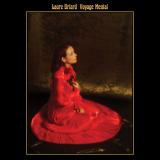






![حمد [Ahmed] - سماع [Sama'a] (Audition) LP 2x12"](https://www.deejay.de/images/l/7/3/1192273.jpg)