
Сделать предзаказ05.10.2026
он должен быть опубликован на 05.10.2026
19,75 €
он должен быть опубликован на 05.10.2026

Pianist Rob Clearfield, who has been a regular sideman for drummer Makaya McCraven, both live and in the studio, emerges from the shadows with an album that reveals the strength and originality of his talent.
In trio with double bassist and teenage friend Joe Sanders (Gerald Clayton, Charles Lloyd) and drummer Fred Pasqua, or in quartet adding trumpeter Itamar Borochov, the American pianist presents a dense, spellbinding opus as carefully produced as it is sensitively arranged, reconciling the creative heritage of the Chicago scene, of which he is one of the most fertile offspring, with a sense of lyricism that goes straight to the heart.
Includes two tracks produced by Makaya.
он должен быть опубликован на 30.05.2025

Early supported by Ame, Robert Owens, Alan Fitzpatrick, Slam, Marco Carola, Leon, Steve Lawler & many more.
Abstract Theory is back with a new vinyl release, this time coming from the Israelian techno master ITAMAR SAGI (Be As One Imprint, Ovum, Sci+Tec, Drumcode, Soma, Intacto) who delivered us three wonderful peaktime stuff.
Закажите сейчас, и мы закажем товар для вас у нашего поставщика.

Ovum's 20th birthday celebrations continues with the return of Itamar Sagi. Itamar Sagi debuted on Ovum in 2009 with the amazing Fiona/Agnes Blue. After a five year hiatus from the label, he triumphantly returns with the Invisible Key EP. Raised in the hot spot of Tel Aviv, with his artist roots deep in the techno underground. Itamar is from the new breed of the current techno wave. Already well respected, Sagi's reputation continues to grow with his unique floor filling productions. His productions have caught the attention of legends such as Laurent Garnier, Josh Wink, Carl Craig, Francois K and others. It wasn't long before he found recognition on a worldwide scale, including reviews and interviews with many of the world's most popular dance magazines and radio stations. With releases on Ovum, Be As One, Soma, Drumcode and more, Sagi has shown that he is here to stay. The Invisible Key EP kicks off with the title track 'Invisible Key", which is classic Sagi. The track slowly brings you in with it twists and turns. The track bubbles and builds and creates a tension that will keep the dance floor wanting more and more. The second track from this EP 'New Order' harkens back to the sound of Basic Channel, G-Man, and John Ciaffone. Sagi once again builds the tension with vocal samples and effects that deliver an absolute massive punch without being over done. For the final track 'Dub Superstitions", Sagi brings us a proper techno workout. The track percolates and builds and once again Sagi's amazing use of tension deliver a proper massive finish to this stellar EP.
Закажите сейчас, и мы закажем товар для вас у нашего поставщика.

Available again for the first time since 1970, Lobo’s melancholy masterpiece epitomizes the experimental evolution of MPB. With new liner notes by Edu Lobo.
Released in 1970, Cantiga de Longe is a defining record in the career of Brazilian singer, composer, and guitarist Edu Lobo and a significant contribution to Música Popular Brasileira (MPB). Created during Brazil’s military dictatorship, the album reflects the subtle, poetic strategies that artists use to convey meaning while subject to censorship. Rather than overt protest, Lobo expresses longing and introspection through refined musical language and evocative lyrics.
Musically, the album captures the sophistication of MPB at the turn of the decade. A foundation of acoustic guitar blends with jazz-influenced harmonies and elegant arrangements. The sound is both intimate and expansive: delicate vocal lines unfold over complex progressions, supported by understated rhythms, rooted in Brazilian traditions. Lobo’s controlled yet expressive vocal delivery keeps the lyrical nuance at the forefront.
A key element of the album’s texture is the involvement of Hermeto Pascoal. His imaginative instrumental contributions add subtle harmonic color and atmospheric depth, enriching the refined arrangements and enhancing the sense of openness.
Thematically, the album explores memory, distance, solitude, and time—personal reflections that resonate with the broader climate of uncertainty that dominated Brazil in 1970. This remains one of Lobo’s most mature recordings, exemplifying the emotional depth and artistic subtlety of Brazilian popular music in a creatively fertile era.
Есть у нас в наличии и готов к отправке

Two decades since they formed in New York City and over ten years since their last album, Tel Aviv based quartet Shotnez are back with Dose a Nova, an album of 10 exhilarating jazz filtered jams, with vibrations indebted to tuareg desert blues, Ethiopian-jazz, 1950's Afro Cuban recordings, surf- rock and folk from across the East Mediterranean basin.
Featuring the original Balkan Beat Box producers Ori Kaplan and Tamir Muskat alongside Uri Kinrot from Boom Pam and Itamar Ziegler from The Backyard, four musicians who are all producers and share love and deep connection to hip hop and jazz, Shotnez reunited in 2020 meeting up for improvised sessions and jams, once a week over a period of about four months at a carpentry turned music studio in suburban Tel Aviv.
Downing midi cards, triggers and synths, the day to day tools for these four producers and picking up and playing their respective traditional instruments - saxophone, clarinet, guitar, bass, percussion and drums – the group was immediately liberated by the moment. In the middle of a strict lockdown, they had no preconceptions, no deadlines, no labels or managers knocking on the door. This was an opportunity to rebuild the camaraderie that developed on the other side of the world two decades back, to reconnect as brothers and seek a higher spiritual plane, all the whilst fully encouraging each other to express their diverse musical backgrounds channelled within, during their time apart.
Есть у нас в наличии и готов к отправке

Tulipa Ruiz is a Latin Grammy Award-winning singer, songwriter, and illustrator from Sao Paulo. Born in a family of musicians (her father, Luiz Chagas, played with Itamar Assumpçao, and her brother, Gustavo Ruiz, is her longtime producer), she followsthe footsteps of the Vanguarda Paulista and offersa bold, genre-bending sound. Fusing MPB, soul, pop, and rock, her music is joyful, rich, and one of a kind. Since her debut album, Efêmera (2010), Tulipa has become one of Brazil"s most distinctive voices, with five critically acclaimed albums, collaborations with Elza Soares and Milton Nascimento, and performances at international festivalssuch as the Montreux Jazz Festival and Lollapalooza. From the hypnotic "Samaúma" to the infectious "Estardalhaço," Habilidades Extraordinarias seamlessly blends improvisation and groove. The duet "Disco Voador" with Joao Donato, one of her last recordings, bridges generations, combining bossa-jazz swing and the warmth of Donato"s Fender Rhodes with Tulipa"s luminous vocals. "Pluma Black" (feat. Negro Leo) explores pre-jazz abstraction, while "Novelos" and the album"s title track evoke the soul-jazz of the Hermeto Pascoal and Stevie Wonder era. Acclaimed throughout Brazil, Habilidades Extraordinarias established Tulipa Ruiz as a leading figure in modern MPB, combining melodic sophistication, humour, and emotional depth. Ten years after her spectacular climb to success and her Latin Grammy Award victory, she continues to enrich the Brazilian pop and jazz scene.
он должен быть опубликован на 06.03.2026

Закажите сейчас, и мы закажем товар для вас у нашего поставщика.

Nach ihrem preisgekrönten Debüt präsentiert die spanische Geigerin María Dueñas ihr zweites Album für
Deutsche Grammophon. Im Zentrum stehen die legendären 24 Capricen von Niccolò Paganini, berühmt als
eines der anspruchsvollsten Werke, das je für die Violine geschrieben wurde. »Die 24 Capricen von Paganini
sind ein Meilenstein für jeden Geiger«, sagt Dueñas. Der Zyklus ist bekannt für seine atemberaubende Finesse und Virtuosität und zeichnet sich zugleich durch seine musikalische Vielfalt und Tiefe aus. Um auch
»die sangliche Qualität der Capricen herauszuarbeiten», ist es Dueñas‘ Wunsch, »die Musik hinter der
Technik zum Vorschein» zu bringen. Das Album wird durch eine Mischung an Solo-, Kammermusik- und
Orchester-Capricen ergänzt, die vom Teufelsgeiger Paganini inspiriert wurden. Darunter sind ausgewählte
Stücke von Berlioz, Kreisler, Saint-Saëns, Sarasate, Wieniawski sowie zwei eigens für Dueñas geschriebene
Werke der zeitgenössischen Komponisten Jordi Cervelló und Gabriela Ortiz, letzteres in einer Weltersteinspielung. Begleitet wird Dueñas von Geiger Boris Kuschnir, den Pianisten Itamar Golan und Alexander
Malofeev sowie Gitarrist Raphaël Feuillâtre. Bei den Orchesterwerken von Berlioz und Saint-Saëns wird sie
vom Deutschen Symphonie-Orchester Berlin und dem Dirigenten Mihhail Gerts unterstützt.
он должен быть опубликован на 07.03.2025

Black Vinyl[26,68 €]
Some albums are game-changers in a genre. Take OutKast's Speakerboxxx / The Love Below or Primal Scream's Screamadelica, they observe, study, and then flip what an album can mean to a genre or moment in time.
From the very first listen of Rubel’s Latin Grammy-nominated third album As Palavras, Vol. 1 & 2, you can feel its transformative force for the MPB genre. Here we see one of Rio’s brightest stars, fusing the contemporary with the classic, soaking up the richness of Brazil’s musical heritage. The result is a marauding 20-track epic, incorporating traditional styles such as forró, MPB, pagode and samba with modern baile funk, rasteirinha and hip-hop.
The album exudes a sense of freedom and creativity, playfully and provocatively juggling the familiar with the forward-thinking. The tracks are divided across two records, navigating feelings of love, heartbreak and discovery, whilst balancing themes of violence, passion, irony and affection. Collaborating with some of the country’s most esteemed artists such as Gabriel do Borel, Liniker, Luedji Luna, Tim Bernardes and Ana Caetano, Rubel takes this fusion of styles, subjects and flavours to the global stage.
The grand, forró-blending, choral opener, ‘Forró Violento (Instrumental)’ sets the tone for the album, with references and links between tradition and modernity everywhere to be seen. From the Ana Frango Elétrico produced, funk flexing, samba-soul brilliance of ‘Não Vou Reclamar de Deus’, to the album’s title cut ‘As Palavras’, in collaboration with Tim Bernardes, that melds MPB influences with electronic elements and hip-hop touches.
Across both sides of the album, Rubel’s story-telling gift is given space to shine. ‘Torto Arado’ featuring Liniker and Luedji Luna, beautifully references the racial injustice, tragedy, hope and ambition found in one the most celebrated Brazilian novels of recent times by Itamar Vieira Júnior. Elsewhere, ‘Na Mão do Palhaço’ manifests a satirical march about a suicidal conservative middle-aged man, who is rescued by the miracle of the carnival.
At times the album is gentle and intimate with tracks like ‘Toda Beleza’ featuring Bala Desejo, or the ode to friendship ‘Lua de Garrafa’, composed with the legendary Milton Nascimento. At others, the grooves hit harder, with sounds from the favelas laced within. ‘Put@ria!’, explores the universe of baile funk, with BK’ and MC Carol trading off on the mic, as ‘Rubelía’ moves between reggaeton, funk, and hip hop. The latter is a tribute to a key influence of the album, Spanish star Rosalía and her parallel mix of current with classic.
Ultimately though the beauty of this album lies in its concept. In the midst of a country divided, ‘As Palavras Vol. 1 & 2’ sets out to bring together genres and generations, grounded in rhythms and words that have helped define Brazil through the ages.
он должен быть опубликован на 15.05.2024

Pink Vinyl[29,96 €]
Some albums are game-changers in a genre. Take OutKast's Speakerboxxx / The Love Below or Primal Scream's Screamadelica, they observe, study, and then flip what an album can mean to a genre or moment in time.
From the very first listen of Rubel’s Latin Grammy-nominated third album As Palavras, Vol. 1 & 2, you can feel its transformative force for the MPB genre. Here we see one of Rio’s brightest stars, fusing the contemporary with the classic, soaking up the richness of Brazil’s musical heritage. The result is a marauding 20-track epic, incorporating traditional styles such as forró, MPB, pagode and samba with modern baile funk, rasteirinha and hip-hop.
The album exudes a sense of freedom and creativity, playfully and provocatively juggling the familiar with the forward-thinking. The tracks are divided across two records, navigating feelings of love, heartbreak and discovery, whilst balancing themes of violence, passion, irony and affection. Collaborating with some of the country’s most esteemed artists such as Gabriel do Borel, Liniker, Luedji Luna, Tim Bernardes and Ana Caetano, Rubel takes this fusion of styles, subjects and flavours to the global stage.
The grand, forró-blending, choral opener, ‘Forró Violento (Instrumental)’ sets the tone for the album, with references and links between tradition and modernity everywhere to be seen. From the Ana Frango Elétrico produced, funk flexing, samba-soul brilliance of ‘Não Vou Reclamar de Deus’, to the album’s title cut ‘As Palavras’, in collaboration with Tim Bernardes, that melds MPB influences with electronic elements and hip-hop touches.
Across both sides of the album, Rubel’s story-telling gift is given space to shine. ‘Torto Arado’ featuring Liniker and Luedji Luna, beautifully references the racial injustice, tragedy, hope and ambition found in one the most celebrated Brazilian novels of recent times by Itamar Vieira Júnior. Elsewhere, ‘Na Mão do Palhaço’ manifests a satirical march about a suicidal conservative middle-aged man, who is rescued by the miracle of the carnival.
At times the album is gentle and intimate with tracks like ‘Toda Beleza’ featuring Bala Desejo, or the ode to friendship ‘Lua de Garrafa’, composed with the legendary Milton Nascimento. At others, the grooves hit harder, with sounds from the favelas laced within. ‘Put@ria!’, explores the universe of baile funk, with BK’ and MC Carol trading off on the mic, as ‘Rubelía’ moves between reggaeton, funk, and hip hop. The latter is a tribute to a key influence of the album, Spanish star Rosalía and her parallel mix of current with classic.
Ultimately though the beauty of this album lies in its concept. In the midst of a country divided, ‘As Palavras Vol. 1 & 2’ sets out to bring together genres and generations, grounded in rhythms and words that have helped define Brazil through the ages.
Закажите сейчас, и мы закажем товар для вас у нашего поставщика.
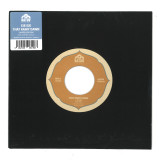
Batov Records' Middle Eastern Grooves 45s series welcomes the latest addition to its eclectic roster - a two-track EP from Eje Eje, the psych and funk inspired project from Şatellites band leader and producer, Itamar Kluger. Featuring the tracks "That Rainy Down" and "Coral Sex," the EP showcases Eje Eje's unique blend of Middle Eastern melodies, soulful grooves, and psychedelic sounds.
On the A-side "That Rainy Down," The electro baglama player takes the lead, building and building as if, “he is pushing himself to his limit”, says Itamar, “seeking catharsis as he walks to the edge of the cliff with confidence”, whilst the a baladi rhythm plays like an immense march of drummers. On the B-side we find the funkier "Coral Sex", which according to Itamar tells a story of a drunk tramp bothering the refined and self-important occupants of an exclusive hotel lobby. Reflecting this friction, the track juxtaposes a silky and sophisticated R&B sound, with loosely, pr even drunkenly, played take on rebetiko, a traditional Greek music associated with the poorest of city dwellers, played on a long-necked Greek lute known as a bouzouki.
As each track develops, new layers are revealed, inviting the listener to delve deeper. The effect is intentional. As Itamar says, "there is this kind of music that hooks you in a different way every time you hear it, different places in the songs lighting up in different colors, like slowly revealed layers. In our (Eje Eje) case, it is just such a hazed blend. It could make a very specific atmosphere, color a very specific movie scene that is lost in time or yet to be directed, or a very specific moment with your headphones on a long bus to the desert."
Itamar Kluger is best known for his work with the Şatellites, a six-piece band whose blend of Turkish folk and psych with funk and disco won them champions and listeners across the globe, from KEXP in Seattle to BBC Radio 6 Music, and FIP in France.
Eje Eje’s first 45 promises to be at least as quirky and original, if not more so, since the project is even more unshackled from traditional concepts of a band.
Закажите сейчас, и мы закажем товар для вас у нашего поставщика.

ENG Batov Records opens another chapter, introducing "Five Seasons, the debut album of Eje Eje, the brand new solo project of Itamar Klüger, of the Satellites, presenting a fresh and contemporary world incorporating the rich diversity of Middle Eastern and Mediterranean musical styles with psych, funk, dub and other internationally known sounds.
он должен быть опубликован на 14.07.2023

Israeli pianist Uriel Herman's sound draws from his classical piano upbringing with a mastery of complex Middle Eastern rhythms and melodies, and is blended with a heavy dose of contemporary jazz. 'Different Eyes' features special guest trumpet sensation Itamar Borochov. The album is an intimate portrait that begins in Uriel's childhood memories of Jerusalem streets and goes all the way to a lullaby that he sings to his son each night.
он должен быть опубликован на 30.06.2023

Batov Records “Middle Eastern Grooves’ 7” series have become staples in the sets of DJs looking to broaden their sets to incorporate psychedelic and Middle Eastern sounds alongside the familiar funk, jazz, and soul catalogue. In the process, the series has enjoyed support across BBC 6 Radio Music, from Gilles Peterson to Gideon Coe, and made waves around the world, from Radio Nova and FIP in France, across the Atlantic to KEXP and Music Is My Sanctuary,
and laid the seeds for debut albums from series staples, Sababa 5 and Şatellites.
The compilation opens with the desert funk sound of "Badawee" by the iconic producer and multi-instrumentalist, Kutiman, followed by the instrumental edit of "Ya Raiyat" by Tel Aviv digging pioneers Radio Trip. Other highlights include the deranged & spooky synths of “The Egyptian” by Baharat, a prime example of the label's core sound, the
psychedelic Middle Eastern groove bomb "Deli Deli" by Şatellites, and “Nasnusa”, Sababa 5’s acclaimed collaboration with Japanese vocalist Yurika Hanashima.
Batov Records is thrilled to announce the release of ‘Middle Eastern Grooves’, a double gatefold LP compilation of standout tracks from the label’s highly successful series of 7” singles released
under the same name, hand selected by label co-founder DJ Kobayashi. Spanning from 2015 to the present day, the compilation features a mix of classic favourites, new releases, and neverbefore-heard gems from some of the most talented emerging artists.
The compilation also includes some exclusive tracks, released here for the first time. Following their recent collaborative EP, Sababa 5 back the newly discovered vocalist Shiran Tzfira with a simple but
effective combo of synths and percussion on the haunting “Manginat Mahepeha”.
Şatellites band leader Itamar Kluger contributes “Saved From The Jazz” from his new psychedelic funk project Eje Eje - watch out for the drums on this!
And finally, underground belly dancing princess turned Mediterranean psych chanteuse, Cherry Bandora, contributes the hypnotic “Esý”.
This first volume of highlights from the Middle Eastern Grooves 7" series offers a comprehensive look at the evolution of the label's sound and its place in the wider musical context. From surf rock
to Mediterranean psych, this collection showcases the diverse and captivating sounds of the Middle East and its influence on modern music. The compilation will be available on double gatefold vinyl and for digital download and streaming from 19th May, 2023.
When he isn’t managing Batov Records, DJ Kobayashi can be found digging for grooves and melodies that stand out from the norm, and sharing them at the likes of Brilliant Corners, Spiritland, and his biweekly show on Soho Radio. His vast collection spans funk and beats from across the globe, and reflects, of course, a particular
predilection for Middle Eastern grooves. His refined tastes have created a great demand for his selections, leading to him playing alongside the likes of Islandman, Balkan Beat Box, The Apples, and Baba Zula.
он должен быть опубликован на 30.06.2023

"SHAOT REGISHOT" ("Sensitive Hours"), das Gold-Album, das Avishai Cohen zwischen "GENTLY DISTURBED" und "AURORA" auf Hebräisch aufgenommen hat und bisher außerhalb Israels unveröffentlicht war, ist jetzt überall auf CD und Vinyl erhältlich. Zum ersten Mal in seiner Karriere ist dieser Release kein Instrumentalalbum, sondern ein Album mit wunderschönen Liedern, die Cohen selbst geschrieben hat und selbst performt - stark vom Jazz und von traditioneller Musik beeinflusst, getragen von einer Stimme mit vielen Akzenten und unglaublichem Charme.
...Ein unverzichtbarer Meilenstein in seiner ohnehin schon reichen Diskographie.
Avishai Cohen (Kontrabass, E-Bass, Keyboards, Klavier, Gesang)
Und mit:
Shai Maestro (Klavier), Mark Guiliana (Schlagzeug), Amos Hoffman (Oud), Karen Malka (Gesang), Lenny Ben Bassat (Fender Rhodes, Schlagzeug, Keyboards, Programmierung), Alberto Pinto (Flöte), Bjorn Samuelson (Posaune), Lars Nilsson (Flügelhorn), Adam Sheflan (Gitarren), Avshalom Sarid (Bratsche), Tal Isenberg (Bratsche), Pavel Levine (Bratsche), The late Yitzhak Simcha (Gebetsgesang), Hila Zaharur (Gesang), Dana Adini (Gesang), Rea Bar Ness (Schlagzeug), Eyal Heller (akustische Gitarre), Gil Luis (elektrische Gitarre), Itamar Doari (Perkussion), Ran Salem (Altflöte), Oded Meir (Posaune), Itamar Doari (Cajon), Ilan Salem (Flöte), Steve Davis (Posaune), Jonathan Volchuk (Posaune), Din Din Aviv (Gesang), Ilan Kachka (Schlagzeug), Zohar Fresko (Schlagzeug), Ora Cohen (Gesang), Maya Belzitzman (Cello), Omer Valber (Leitung)
он должен быть опубликован на 20.01.2023

Закажите сейчас, и мы закажем товар для вас у нашего поставщика.
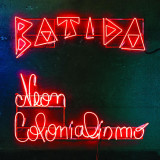
'Neon Colonialismo' is the new album -the first under his name since 2014- by musical agitator Batida, aka Pedro Coquenao, one of the main catalysts of the Afro-electronic scene. Carried by a subtle and refined electronic production, the eleven tracks (equally divided between songs and instrumentals), travel through the Portuguese-speaking world, from Portugal to Angola through Cape Verde and Brazil. They feature the presence of many distinguished guests: Mayra Andrade, Branko, DJ Satelite, Poté, Botto Trindade, Bonga, Ikonoklasta, Octa Push, Lia de Itamaracá, DJ Dolores, Joao Morgado, Pedro da Linha & Nástio Mosquito.
он должен быть опубликован на 14.10.2022

For nearly 10 years, there's been one address in Tel Aviv where people
know they can find pure, fiery musical energy: TIGRIS - And with UTRY,
we've collected all the band's tightest grooves and most exciting
melodies on one career-spanning compilation
It's a Raw Tapes celebration; consider it our gift to you - nine party- starting
polyrhythmic tunes that melt down Senegalese percussion, East African tezeta
jazz, swirling psychedelic keys and surf guitar into a potent brew. Keyboardist
Roei Hermon, percussionist Oded Aloni, bassist Amir Sadot, guitarist Ilan Smilan
and drummer Itamar Katzir first assembled their musical vision in an Ethiopian
restaurant in Tel Aviv, and they've been diving head-first into electrifying grooves
ever since. On "UTRY," you'll vibe with their finest cuts, pulled from TIGRIS's three
LPs. It's your own tailor-made house party playlist. Just don't be surprised when
the party spins out of control.
он должен быть опубликован на 30.09.2022

Lost somewhere between the mysterious alleys of 70s Istanbul and the scorching sun and crystal blue sea of Jaffa, Tel Aviv, Şatellites self-titled debut album is set to be released on Batov Records on April 1st.
The Şatellites’ sound shimmers between traditional Turkish folk and instrumentation, ethereal psychedelic guitar leads and groovy dance floor baselines. The resulting concoction of songs draws on cross continental influence yet at its core is a desire to illuminate the vivid qualities of classic Turkish music, honouring the Anatolian folk and psych artists from this golden era of music. From the funky disco beat of Disko Arabesque to the celestial lead guitar in Yağmur Yağar Taş Üstüne, the band add fire and flair to time-honoured pieces of Turkish music giving them new meanings. Covering important tracks such as female singer Kamuran Akkor’s track Olurmu Dersin, and musician and guitarist Zafer Dilek’s Yekte, the album covers an array of original pieces of different musical styles and sounds, that once have and continue to flow out of Turkey. The band boasts six members; Ariel Harrosh (Bass) Lotan Yaish (Drums), Yuli Shafriri (Vocals), Tsuf Mishali (Keys and Synths), Tal Eyal (Percussion) and Itamar Kluger (Diwan saz, both electric and acoustic, electric baglama, Greek 4 double string bouzouki). They came together some years after band leader Itamar Kluger discovered the saz whilst travelling the Kaçkar mountains in Turkey’s eastern region. The saz being a long necked, plucked stringed instrument native to the rural areas of the country, which remains an integral part of Şatellites’ union, and plays predominance throughout the bands’ album and music.
In the same way the guitar was electrified in the 1930s, the electrification of the saz in the 1960s led to an explosion of rock music dredged in middle eastern influence, a musical genre fittingly called “Anatolian Rock” and based on the principles of Anglo-American and psychedelic rock music, yet incorporating the style, rhythm, and scales of traditional Anatolian folk music.
As such, throughout the creation of the album, the band conceived the idea of intertwining differing elements such as the groove of funk, the rhythm of disco, and reverb of psychedelic, with traditional middle-eastern rhythm and structure, opening up the wealth of Turkish music to the western world, so that anyone and everyone can relate to something from the album. With that said, Şatellites emphasise that their music is not fundamentally Turkish music, on the contrary, they merely try to sound as close to the genre as possible. Their sole aim is to honour this amazing culture and to present it to the world in a more accessible and attainable form.
Закажите сейчас, и мы закажем товар для вас у нашего поставщика.

After 20 years working intensively as a drummer, singer, producer and composer in the city of São Paulo, the Brazilian based in Duisburg Mariá Portugal (Quartabê, Arrigo Barnabé, Elza Soares) releases her new album EROSÃO in November 2021. The album will be released digitally and on vinyl by Selo Risco (Brazil) and Fun in The Church (Germany).
EROSÃO has three layers: song material, acoustic improvisation and electronic manipulation. In each layer exists both the reminiscence and the oblivion of the precedent, like a stone that is built up of overlapping layers that also modify each other through mechanical and chemical processes.
Mariá Portugal’s songs are the first layer and the basis of the project. As any Brazilian singer/songwriter, she has strong roots in the Brazilian song tradition, going from Dorival Caymmi to Itamar Assumpção and Arrigo Barnabé to Caetano Veloso, besides being strongly influenced by same-generation composers, such as Negro Leo, Iara Rennó, Kiko Dinucci and Maria Beraldo.
он должен быть опубликован на 12.11.2021

Repress on purple vinyl!
Batov's Middle Eastern Grooves series has a new, funky, double-sided 7" addition titled ‘Big Baglama’ by Satellites: a fun release that gives vintage Turkish beats a new spin.
‘Big Baglama’ is a beautiful instrumental piece that captures the sound of an acoustic diwan saz - known as a baglama - integrating it in a series of riffs connected by a funky groove. The baglama gives off a fresh and lively feeling, despite the vintage flavour provided via the spacey synth and rippling drums. This track channels the energy and style of old school fuzzy vibe of Arif Sag’s saz recording of the ’70s but makes it new and entertaining to the ear, pulling the listener in for a fun ride.
The B-side ‘Deli Deli’ opens with a groovy bass riff and ululating synth, followed by a nifty melodic lead on the baglama and then Yuli’s enchanting vocals. The song is a new interpretation of an old piece by beloved 70’s Turkish folk singer Sakir Öner. This new version differs from the original in the more bright and poppy feel, conveyed by the 6/8 rhythm, and the addition of a whole new section by the band.
Satellites are another exciting act from the celebrated Tel Aviv music scene, and here at Batov Records we love them! Formed earlier this year, the group comprises talented vocalist Yuli Shafriri on the synth; Itamar Klüger on the baglama & bouzouki; Ariel Harrosh on the bass and Azriel ‘Raz’ Man on the drums. The band plays anything from Anatolian rock to vintage psych and spacey grooves. Satellites describe their sound as retro-fresh psych à la Turk, a musical "laboratory" lost somewhere between the mysterious alleys of 70’s Istanbul and the scorching sun and crystal blue sea of Jaffa-Tel Aviv, 2020.
Закажите сейчас, и мы закажем товар для вас у нашего поставщика.

Batov's Middle Eastern Grooves series has a new, funky, double-sided 7" addition titled ‘Big Baglama’ by Satellites: a fun release that gives vintage Turkish beats a new spin.
‘Big Baglama’ is a beautiful instrumental piece that captures the sound of an acoustic diwan saz - known as a baglama - integrating it in a series of riffs connected by a funky groove. The baglama gives off a fresh and lively feeling, despite the vintage flavour provided via the spacey synth and rippling drums. This track channels the energy and style of old school fuzzy vibe of Arif Sag’s saz recording of the ’70s but makes it new and entertaining to the ear, pulling the listener in for a fun ride.
The B-side ‘Deli Deli’ opens with a groovy bass riff and ululating synth, followed by a nifty melodic lead on the baglama and then Yuli’s enchanting vocals. The song is a new interpretation of an old piece by beloved 70’s Turkish folk singer Sakir Öner. This new version differs from the original in the more bright and poppy feel, conveyed by the 6/8 rhythm, and the addition of a whole new section by the band.
Satellites are another exciting act from the celebrated Tel Aviv music scene, and here at Batov Records we love them! Formed earlier this year, the group comprises talented vocalist Yuli Shafriri on the synth; Itamar Klüger on the baglama & bouzouki; Ariel Harrosh on the bass and Azriel ‘Raz’ Man on the drums. The band plays anything from Anatolian rock to vintage psych and spacey grooves. Satellites describe their sound as retro-fresh psych à la Turk, a musical "laboratory" lost somewhere between the mysterious alleys of 70’s Istanbul and the scorching sun and crystal blue sea of Jaffa-Tel Aviv, 2020.
Закажите сейчас, и мы закажем товар для вас у нашего поставщика.

Production of the album “Klezmer Explosion” by Moritz Wei Klezmer Trios & Friends on CD & vinyl. In terms of content, the album opens up its own compositions, traditional pieces & songs and compositions from the
international Yiddish Music and Klezmer scene.
If the first pieces are still in the trio formation, different guest musicians gradually join the line-up and form an 8-person ensemble in the finale. MWKT has been walking the tightrope between tradition and innovation from the very beginning. “Klezmer Explosion” is another attempt to draw an arc from the past into the future.
On the one hand you will find traditional pieces and songs from the repertoire of great revivalists of the past century G. Feidman, the Klezmatics and Ch. Alberstein. In return, new (klezmer) compositions by M. Wei , I. Trenev, N. Waltersdorfer and H. Eisel stand for a contemporary approach to the world genre
“Klezmer”
он должен быть опубликован на 03.05.2021

Following the release of Milton Nascimento’s Maria Maria, Far Out Recordings proudly presents Nascimento’s 1980 follow up. With the success of Maria Maria in 1976 behind them, Nascimento reunited with his writing partner Fernando Brant in 1980 to produce another ballet, ‘Ultimo Trem (Last train)’. This time, they chose to tackle a more contemporarily relevant subject, the impact of the closure of a train line that connected certain towns and cities in the North East of Minas Gerais to the coast. “The military government shut down the route and the whole region began to fade away,” explains Milton. “I love train rides” adds the composer, “But today there are almost no trains to Brazil. So when I go to the US and Europe, any time I can, I go by train. The longer the journey the better.”
Featuring much of the same all-star line-up as Maria Maria – including legendary Brazilian musicians Naná Vasconcelos, João Donato, Paulinho Jobim and members of Som Imaginário, amongst many others, like Maria Maria, the album holds what Milton himself considers to be the definitive versions of some of his most beloved tracks, including 'Saídas E Bandeiras' and 'Ponte de Areia'.
The title track, ‘Ultimo Trem’ – performed exquisitely by Zezé Mota with a choir and piano – is a mournful lament about the human consequences of the axed line. The ballet brought great media attention to the campaign against closure. “Most of Fernando’s lyrics have some political tone,” says Milton, “This one helped the area a lot because the politicians grew concerned about the subjects.”
Fernando’s and Milton’s shared passion for the sounds, smells and memories of trains, inspired the soundtrack for the production which premièred in 1980. ‘A Viagem (The trip)’, launched with a train’s steam whistle, sees Milton’s guitar moving to a train’s rhythm. In contrast to the usual lyricism, ‘Bicho Homen (Beastly man)’ and ‘Decreto (Degree)’ are atypically upbeat and funky, their vocals a mesh of wordless male voices resembling the then fashionable Swingles Singers’ renderings of Bach. ‘E Daí? (And so what?)’, and ‘Olho d’Agua (Water’s Eye)’ were both drawn from ‘Clube Da Esquina’. ‘Olho d’Agua’ is mellow and delicate and Milton’s homage to the great voices of Brazil whilst ‘E Daí? (And so what?)’ is a stunning mosaic of voices. The unusual ‘O Velho (The Old Man)’ conjures up an image of an old shaman singing alone into the wind against the cries of nature. Perhaps the most affecting songs are Nascimento’s ‘Itamarandiba’ and ‘Oração (Prayer)’. The latter is a cry for a change in the situation whilst ‘Itamarandiba’ ends with an upbeat, whirling Hammond organ and guitar timepiece. The closing track ‘Ponta de Areia (Sand Edge)’, was based on one of Fernando’s newspaper stories and became one of Milton’s most famous pieces, covered by musicians across the planet, including Wayne Shorter and Earth, Wind and Fire. It reappeared as a ghostly 45-seconds memory on the ‘Milton e Gil’ album, his millennial collaboration with Gilberto Gil.
After 27 years of being locked inside contracts and record company legalities, these sublime songs were finally released in 2003 as a double CD package, along with Maria Maria. Set for its first ever vinyl release for this year’s Record Store Day, on limited edition red vinyl, Ultimo Trem sounds as fresh and relevant now as when Brazilian music was still a South American secret.
Закажите сейчас, и мы закажем товар для вас у нашего поставщика.

The first release as Buena Vista Disco Club (Miami, Electric Pickle/Vinyl addicted) and collaboration with female Dj and label owner Yulia Niko based in Brooklyn. Incl. Remix by London techno guru Laurence Ci, who is currently a member of the op:um group and accordingly he mixing his music around the world.
Закажите сейчас, и мы закажем товар для вас у нашего поставщика.
