Toronto-based producer and DJ Ciel is renowned for a style of dancefloor material that’s as heady as it is visceral. The Xi’an-born artist’s ascendant profile has seen her cutting- edge and club-ready EPs released on UK labels Peach Discs and Coastal Haze, as well as Stateside imprints Spectral Sound and Mister Saturday Night.
As a member of the renowned collective Discwoman and the creator of femme-forward party Work in Progress Ciel’s thoughtful narratives are clear, running in parallel to the perception-altering sounds that are consistently woven deeply into her wide-ranging sets, beloved mixes and inventive collaborations. Now the Parallel Minds label co- founder is crystallising her imaginative and omnivorous sound with her !K7 Records debut, ORLANDO.
Written during her emergence from an uncharacteristic bout of writers’ block, the three original tracks of Orlando chart a return to the musical self, spurred along by a cinephile’s embrace of film, a love of classic literature, and a curiosity for the oddest corners of popular culture. “SCENES FROM A MARRIAGE” might share a name with the episodic series, but is rather a nuanced critique of the modern rite of union, moving through structured chapters, and mirroring the un-static nature of longtime love.Inspired by Virginia Woolf’s radical novel, and its superphysical protagonist, “ORLANDO” considers the cult literary figure who lived from the renaissance to the modern age, and embodies both sides of the sex binary.
The thrown sounds and aural illusions of “EL CALIFA” create the effect of a beckoning, beguiling psychedelic experience. To complete the EP, Ali Berger, Ciel’s recent collaborator on the Jacktone Records’ release Damn Skippy! repurposes the mind-bending flourishes of “El Califa” into a noodly and spacious deep house production, replete with pillowy, gauzy pads.
Cerca:its a musical
As a band, Taryn and Austin’s journey happened both unexpectedly and fortuitously. At the start of the COVID pandemic, Austin and his wife moved back into his parents’ house, where Taryn was also living at the time. Faced with nothing but time, he got back to songwriting, regularly asking Taryn for input — or as the two playfully put it, “Gen Z quality control.” The immediate result of their musical partnership was the pop-punk/alternative anthem “Who’s Laughing Now,” which leads with wry, tongue-in-cheek lyrics about the futility of young adulthood in 2023. After posting an unfinished version of “Who’s Laughing Now” on TikTok, it swiftly took off, galvanizing thousands of viewers who shared their coming-of-age frustrations. Clearly, the song’s sentiments - which land somewhere between a shrug and a clenched fist - resonated with millions of listeners, and today Durry have recorded a fully fleshed-out version of “Who’s Laughing Now,” which is set to appear on their riveting, perfectly sardonic debut LP, Suburban Legend. Whether Suburban Legend is tackling romantic love, late-stage capitalism, mental health woes, or teen nostalgia, the thread tying it all together is its utter relatability. Regardless of where you are in life — city or suburbs, school or work, or pursuing a creative dream of your own — Durry will meet you there with a wink and a high five.
- 1: Hello
- 2: A Love From Outer Space
- 3: Crack Up
- 4: Timewind
- 5: What's All This Then?
- 6: Snow Joke
- 7: Off Into Space
- 8: And I Say
- 9: Yeti
- 10: Conundrum
- 11: Honeysuckleswallow
- 12: Long Body
- 13: In A Circle
- 14: Fast Ka
- 15: Miles Apart
- 16: Pop
- 17: Mars
- 18: Spook
- 19: Sugarwings
- 20: Back Home
- 21: Down
- 22: Supervixens
- 23: Insect Love
- 24: Sorry
- 25: Catch My Drift
- 26: Challenge
A.R. Kive collates the three most astonishing works from that most miraculous of duos - A.R. Kane - comprising the ‘Up Home’ EP from 1988 that signified the band’s dawning realisation of their own powers and possibilities, their legendary debut LP ‘sixty nine’ (1988) and its kaleidoscopic, prophetic double-LP follow up ‘i’ (1989).
In founder-member Rudy Tambala’s new remastering, the music on these pivotal transmissions from the birth of dream pop, have been reinvigorated and re-infused with a new power, a new depth and intimacy, a new height and immensity. Vivid, timeless and yet always timely whenever they’re recalled, these records still force any listener to realise that despite the habits of retrospective myth-making and the
safe neutering effects of ‘genre’, thirty years have in no way dimmed how resistant and dissident to critical habits of categorisation A.R. Kane always were. Never quite ‘avant-pop’ or ‘shoegaze’ or ‘post-rock’ or any of those sobriquets designed to file and categorise, A.R. Kive is a reminder that those genres had to be coined, had to be invented precisely to contain the astonishing sound of A.R. Kane, because
previous formulations couldn’t come close to their sui generis sound and suggestiveness. This is music that pointed towards futures which a whole generation of artists and sonic explorers would map out. Now beautifully repackaged, remastered and fleshed out with extensive sleeve notes and accompanying materials, ‘A.R. Kive’ reveals that 35 years on it’s still a struggle to defuse the revolutionary and inspirational possibility of A.R. Kane’s music.
A.R. Kane were formed in 1986 by Rudy Tambala and Alex Ayuli, two second-generation immigrants who grew up together in Stratford, East London. From the off the pair were outsiders in the culturally mixed (cockney/Irish/West Indian/Asian) milieu of the East End, with Alex and Rudy’s folks first generation immigrants from Nigeria and Malawi, respectively. The two of them quickly developed and fostered an innate and near-telepathic mutual understanding forged in musical, literary and artistic exploration. Like a lot of second-generation immigrants, they were ferocious autodidacts in all kinds of areas, especially around music and literature. Diving deep into the music of afro-futurist luminaries such as Sun Ra, Miles Davis, Lee Perry and
Hendrix, as well as devouring the explorations of lysergic noise and feedback from contemporaries like Sonic Youth and Butthole Surfers, they also thoroughly immersed themselves in the alternate literary realities of sci-fi and ancient history (the fascination with the arcane that gave the band their name), all to feed their voracious cultural thirsts and intellectual curiosity.
It was seeing the Cocteau Twins performing on Channel 4 show the Tube that spurred A.R. Kane into being - “They had no drummer. They used tapes and technology and Liz Fraser looked completely otherworldly with those big eyes. And the noise coming out of Robin’s guitar! That was the ‘Fuck! We could do that! We could express ourselves like that!’ moment”, recalls Tambala - and through a mix of
confidence, chutzpah, ad hoc almost-mythical live shows and sheer innocent will the duo debuted with the astonishing ‘When You’re Sad’ single for One Little Indian in 1986. Immediately dubbed a ‘black Jesus & Mary Chain’ by a press unsure of WHERE to put a black band clearly immersed in feedback and noise, what was immediately apparent for listeners was just how much more was going on here - a
tapping of dub’s stealth and guile, a resonant umbilicus back to fusion and jazz, the music less a conjuration of past highs than a re-summoning of lost spirits.
The run of singles and EPs that followed picked up increasingly rapt reviews in the press, but it was the ‘Up Home EP’ released in 1988 on their new home, Rough Trade that really suggested something immense was about to break. Simon Reynolds noted the EP was: Their most concentrated slab of iridescent awesomeness and a true pinnacle of an era that abounded with astounding landmarks of guitar-reinvention, A.R. Kane at their most elixir-like.
If anything, the remastered ‘Up Home’ that forms the first part of ‘A.R. Kive’ is even more dazzling, even more startling than it was when it first emerged, and listening now you again wonder not just about how many bands christened ‘shoegaze’ tried to emulate it, but how all of them fell so far short of its lambent, pellucid wonder. This remains intrinsically experimental music but with none of the frowning orthodoxy those words imply. A.R. Kane, thanks to that second generation auto-didacticism were always supremely aware about the interstices of music and magic, but at the same time gloriously free in the way they explored that connection within their own sound, fascinated always with the creation of ‘perfect mistakes’ and the possibilities inherent in informed play.
‘sixty nine’ the group’s debut LP that emerged in 1988 had
critics and listeners struggling to fit language around A.R. Kane’s sound. As a title it was telling - the year of ‘Bitches Brew’, the year of ‘In A Silent Way’, the erotic möbius between two lovers - and as originally coined by the band themselves, ‘dream pop’ (before it became a free-floating signifier of vague import) was entirely apposite for the music A.R. Kane were making. Crafted in a dark small basement studio in which Tambala recalls the duo had “complete freedom - We wanted to go as far out as we could, and in doing so we discovered the point where it stops being music”. There was an irresistibly dreamy, somnambulant, sensual and almost surreal flow to ‘sixty nine’s sound, but also real darkness/dankness, the ruptures of the primordial and the reverberations of the subconscious, within the grooves of remarkable songs like ‘Dizzy’ and ‘Crazy Blue’. Alex’s plangent vocals floated and surged amidst exquisite peals of refracted feedback but crucially there was BASS here, lugubrious and funky and full of dread, sonic pleasure and sonic disturbance crushed together to make music with a center so deep it felt subcutaneous, music constructed from both the accidental and the deliberate, generous enough to dance with both serendipity and chaos. ‘sixty nine’ remains - especially in this remastered iteration - ravishing, revolutionary.
The final part of this ‘A.R. Kive’ contains 1989’s astonishing double-LP ‘i’ which followed up on ‘sixty nine’s promise and saw the duo fully unleash their experimental pop sensibilities over 26 tracks, plunging the A.R. Kane sound into a dazzlingly kaleidoscopic vision of pop experiment and play. Suffused with new digital technologies and combining searingly sweet and danceable pop with perhaps the duo’s strangest and boundary-pushing compositions, the album did exactly what a great double-set should do - indulge the artists sprawling pursuit of their own imaginations but always with a concision and an ear for those moments where pop both transcends and toys with the listeners expectations. Jason Ankeny has noted that “In retrospect, ‘i’ now seems like a crystal ball prophesying virtually every major musical development of the 1990s; from the shimmering techno of ‘A Love from Outer Space’ to the liquid dub of ‘What’s All This Then?’, from the alien drone-pop of ‘Conundrum’ to the sinister shoegazer miasma of ‘Supervixens’ — it’s all here, an underground road map for countless bands to follow.” Perhaps the most overwhelmingly all-encompassing transmission from A.R. Kane, ‘i’ bookended a three year period in which the duo had made some of the most prophetic and revelatory music of the entire decade.
After ‘i’ the duo’s output became more sporadic with Tambala and Ayuli moving in different directions both geographically and musically, with only 1994’s ‘New Clear Child’ a crystalline re-fraction of future and past echoes of jazz, folk and soul, before the duo went their separate ways. Since then, A.R. Kane’s music has endured, not thanks to the usual sepia’d false memories that seem to maintain interest in so much of the musical past, but because those who hear A.R. Kane music and are changed irrevocably, have to share that universe which A.R. Kane opened up, with anyone else who will listen. Far more than other lauded documents of the late 80s it still sounds astonishingly fresh, astonishingly livid and vivid and necessary and NOW.
Following nearly 20 years of working together as a trio, and numerous cross-collaborations in different configuration between them, Ideologic Organ presents Placelessness, the debut full-length by Chris Abrahams, Oren Ambarchi, and Robbie Avenaim, comprising two long-form works at juncture of ambient music, minimalism, rigorous experimentalism and improvisation, and machine music. Having carved distinct pathways across a diverse number of musical idioms for decades, Chris Abrahams, Oren Ambarchi, and Robbie Avenaim are each, respectively, among the most noteworthy and groundbreaking figures to have emerged from Australia's thriving experimental music scene. Ambarchi and Avenaim first encountered Abrahams when seeing the Necks - the project that has served as the primary vehicle for his singular approach to the piano since its founding in 1987 - together during the late 1980s, not long after having met in Sydney's underground music community. The pair's collaborations date back more than 35 years, criss-crossing Ambarchi's pioneering solo and ensemble work for guitar and Avenaim's visionary efforts for SARPS (Semi Automated Robotic Percussion System), robotic and kinetic extensions to his drum kit. In 2004, fate brought the three together in a trio performance at the What Is Music? Festival, the annual touring showcase of experimental music founded and run by Ambarchi and Avenaim between 1994-2012. For the nearly two decades since, Abrahams, Ambarchi, and Avenaim have intermittently reformed in exclusively live contexts, in Australia and abroad, cultivating and refining the fertile ground first tilled in that early meeting. Placelessness is the first album to present this remarkable trio's efforts in recorded form. Placelessness is the joining of three highly individualised streams, working in perfect harmony; the point at which friendship, mutual respect, and decades of creative exploration produce a singular spectrum of sound. Featuring Abrahams on piano, Ambarchi on guitar, and Avenaim on drums, the album's two sides draw on each artist's enduring dedication to long-form composition. Its two pieces, Placelessness I and Placelessness II, initially began as a single, 40 minute work, before being divided and reworked into distinct, complimentary gestures for the corresponding sides of the LP. Beginning with restrained clusters of reverberant piano tones, Placelessness I progresses at an almost glacial pace, with Abrahams' interventions increasing met by sparse responses, darting within vast ambiences, on guitar and percussion by Ambarchi and Avenaim. Remarkably conversational within its convergences of tonal, rhythmic, and textural abstraction, over the work's duration a progressive sense of tension unfurls and contracts, refusing release, as each of the ensemble's members contribute to an increasingly tangled sense of density at its resolve. While an entirely autonomous work, Placelessness II rapidly realises a distillation of the energy hinted at across the length of its predecessor. Following a luring passage of harmonious calm, Abrahams' launches into shimmering lines of repeating arpeggios, complimented at each escalation of tempo by Avenaim's machine gun fire percussion work and Ambarchi's masterful delivery of tonality and texture, as the trio collectively generate dense sheets of pointillistic ambience within which individual identity is almost lost, before slowly unspooling into unexpected abstractions and dissonances that deftly intervene with the work's inner logic and calm. What could easily be termed a maximalist take on Minimalism, Placelessness is a masterstroke of contemporary, real time composition, that blurs the boundaries between ambient music, experimentalism, free improvisation, and machine music. Drawing on Chris Abrahams, Oren Ambarchi, and Robbie Avenaim's decades of respective solo and collaborative practice, and the culmination of nearly twenty years of working together as a trio, it's two durational pieces - Placelessness I and Placelessness II - take form with a startling sense of effortlessness and grace, neither shying away from explicit beauty or rigorously tension within their forms.
A long-in-the-works project of ours, here comes A Tribe Called Kotori's first foray into full-length territories, as the immensely talented Rampue takes us on a melancholy-riddled ride across his phantasmatic mindscapes. A true sound explorer, deftly steering his ship down the junction of electronica, abstract and balearic-infused prog house, the Berlin-based vibist has us transfixed and elevated throughout the twelve cuts that form the backbone to this lushly textured promenade in sound - at times understatedly euphoric, at others rivetingly exotic.
Of the creative process that lead to 'Bubblebath Trance', Rampue explains "It all started and ended in the same moment: my cherished feline companion, my laptop awash with an unintended bath, and alas, a dearth of backups. The resultant calamity, an echo of chaotic tranquility." Under the generous layer of irony lies some unaltered truth about Rampue's debut long-player for A Tribe Called Kotori: this sense of serenity that goes with stepping into this warm and bubbling primitive chaos of sorts infuses the listening experience far and wide. Distantly emulating the "euphonious strains" of iconic PS1 video games soundtracks from his youth days, the album has us surfing a constant paradox of emotions, wistful but not abandoning itself to sorrow, dynamic yet suspended in some sort of mind-expanding stasis. As if you were looking at the world beneath you in exploded view, conscious of all thing, slowly moving up the many layers of our atmosphere towards uncharted skies.
A paragon of Rampue's most poignant take on classic electronica tropes, 'Harmonie' blazes with a poetic fire that engulfs about everything in its wake. Just figure yourself riding a chocobo across the sand-covered expanse of North Corel (toasting to the FFVII nerds here) as this blasts out in the distance. From this trancey bubblebath emerge lots of musical shades and nuances, from the nicely dubbed-out, brass-heavy coastal jazz of 'Schattenschranz' to the choppy, trip-hop-adjacent future electronics of 'Inside', via the exuberantly joyous mess of faux-organic number 'Tripomatic' and cinematic charisma of 'Ich hasse Sonne' high-flying orchestrations.
Connecting the dots between that trance-indebted ebullience and further downtempo-friendly attraction, 'Verfahren' perhaps encompasses best what 'Bubblebath Trance' is about: gracefully walking the tightrope in-limbo nostalgia-soaked inner movements and a powerful outward thrust, burning to let the feelings ooze out from the shell that holds them.Clad in purely 90s-compatible breaksy motion, 'Salz' is another attempt to reconcile emotional and physical dissonance, like kneading all states - solid, liquid and vaporous - into an impossible mega-vibe of its own; malleable, strong and enveloping in equal measure. Borrowing from two-step and UK garage, 'Take Away' is a definite high in Rampue's master unfolding of musical twists and turns, summoning a Boarder Community-esque atmosphere and clashing it alongside floor-ready footwork motifs to fascinating effect.
An ode to his studio companion, 'Buchla Trip' finds Rampue's exploring his machinic friend's quirky yet soulful array of electronic potentialities - making it sound like a conversation you'd have with R2-D2 in the heart of a Sandcrawler, whereas 'Kajal' beams us up to a fragmented headspace, halfway altered PC-Pop and arps-loaded electronica on amphetamines. Effusive and transporting, the title-track 'Bubblebath Trance' could well figure as the album's no.1 medley in essence: a bountiful lucid dream of dancing forms, colours and sentiments to wrap your head around, confidently drifting from a liminal state of consciousness down the rapids of one's troubled inner workings.
Rounding off the package, the languid ambient finale of 'Die Leiden des hungrigen Fruehstuecks' rubber-stamps the feeling that 'Bubblebath Trance' belongs to that rare category of albums. The ones that mint their own alphabet aside from typical norms and expectations, teaching you the ropes of their new language as it unreels between your ears - real and unreal, elusive to any other meaning than the one your guts and brains will be inclined to give it to, in real time. A crystal-pure object if you will, that shall not reveal its secrets, even after a thousand listens and just as many wowing moments.
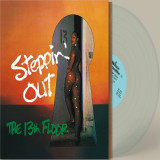
Originally released on Blue Candle Records in 1977, Steppin' Out by the 13th Floor is a true treasure that deserves a cherished place in the collection of every soul and funk connoisseur. This long-awaited reissue brings back the original magic, preserving the essence and impact it had on the music scene.
Its profound influence on bands like the Red Hot Chili Peppers is undeniable, solidifying its status as an essential gem in the annals of musical history. Now, with this reissue, you have the opportunity to experience the same captivating rhythms and infectious melodies that captivated audiences decades ago.
Are you ready to awaken your boogie spirit and infuse your living room with the long-lost spark of the mid-seventies? Brace yourself for an immersive experience as you surrender to the timeless grooves and soulful vibes that will transport you to a bygone era of musical
enchantment. Allow the music to ignite your soul, reigniting the vibrant energy of the past and instilling in you an irresistible urge to groove like never before.
Despite the name, the band does not perform exclusively in trio formation, but expands the lineup with illustrious guests of the jazz genre. In the past AMC Trio has collaborated with Philip Catherine, Bill Evans, Ulf Wakenius, Mark Whitfield, Michael Patches Stewart and many others, including the guest on 'Following the Light' Randy Brecker.
The AMC Trio band has been around for about twenty years and consists of pianist Peter Adamkovic, bassist Martin Marincak and drummer Stanislav Cvanciger. It has its musical foundations in mainstream jazz but over the years has managed to develop its very own musical sound and style. The band incorporates many self-experienced stories and emotions in their compositions.
Although their music is influenced by Slovak music, it goes beyond the usual jazz progressions and touches on a number of diverse genres. For example, the wide range of melodies is inspired by popular and classical music, melodies from Eastern Slovak folk music, nature, literature and spirituality.
You can't get Deeper if you're standing still. That's intentional, says the Chicago quartet's Nic Gohl. "Does it feel good when you're listening to this song? Does your body want to move with it?" These are the questions he asked himself as he and bandmates Shiraz Bhatti, Drew McBride, and Kevin Fairbairn were writing and recording Careful!, their third record and Sub Pop debut. "I wanted these to be interesting songs, but in a way where a two-year-old would vibe out to it," Gohl adds.
"It's pop music, basically." That "basically" qualifier is working pretty hard, as fans of 2020's Auto-Pain might suppose. On Careful!, they're not reimagining their sound so much as testing its limits. If you want to, you can hear echoes of David Bowie's Low in the snapping rhythm and gray-sky synths of "Tele," but you can also hear a bit of Auto-Pain in the nailed-in, stippling lines being spit out by Bhatti's drum programming and McBride's synthesizer.
"Fame" seems to stumble together and nearly fall apart, the dialed-up noise making the beat feel maniacal and a little invincible, the whole thing a series of short, snipped, autonomous gestures that are by now Deeper's trademark. "Build a Bridge" pushes in the opposite direction, using a prickly guitar line to launch into big, smeary art-pop, its emotional palette clear, well-defined, and easy to latch onto.
On "Sub," Gohl sings above and below the melody like Ian McCulloch, bellowing and wondering and ruminating and rounding into swaggering confidence that the band rises to meet. It's festival headliner music that still feels like it was written in a garage. That fraternal interdependence is near the center of Deeper's music. The musical and lyrical devotion to mutuality makes this restlessly curious, stylistically broad album feels like the most coherent portrait of who Deeper is. Or, as McBride ultimately frames it, "Careful! is about looking out for one another."
You can't get Deeper if you're standing still. That's intentional, says the Chicago quartet's Nic Gohl. "Does it feel good when you're listening to this song? Does your body want to move with it?" These are the questions he asked himself as he and bandmates Shiraz Bhatti, Drew McBride, and Kevin Fairbairn were writing and recording Careful!, their third record and Sub Pop debut. "I wanted these to be interesting songs, but in a way where a two-year-old would vibe out to it," Gohl adds.
"It's pop music, basically." That "basically" qualifier is working pretty hard, as fans of 2020's Auto-Pain might suppose. On Careful!, they're not reimagining their sound so much as testing its limits. If you want to, you can hear echoes of David Bowie's Low in the snapping rhythm and gray-sky synths of "Tele," but you can also hear a bit of Auto-Pain in the nailed-in, stippling lines being spit out by Bhatti's drum programming and McBride's synthesizer.
"Fame" seems to stumble together and nearly fall apart, the dialed-up noise making the beat feel maniacal and a little invincible, the whole thing a series of short, snipped, autonomous gestures that are by now Deeper's trademark. "Build a Bridge" pushes in the opposite direction, using a prickly guitar line to launch into big, smeary art-pop, its emotional palette clear, well-defined, and easy to latch onto.
On "Sub," Gohl sings above and below the melody like Ian McCulloch, bellowing and wondering and ruminating and rounding into swaggering confidence that the band rises to meet. It's festival headliner music that still feels like it was written in a garage. That fraternal interdependence is near the center of Deeper's music. The musical and lyrical devotion to mutuality makes this restlessly curious, stylistically broad album feels like the most coherent portrait of who Deeper is. Or, as McBride ultimately frames it, "Careful! is about looking out for one another."
Faitiche welcomes Andrew Black aka blackbody_radiation. His debut album Ultra Materials gathers six ghostly drones, created with the help of sound masking.
Andrew Black, who hails from one of the UK's post industrial North West Milltowns has a sensitive feeling for space and its acoustics. Having trained as a designer and operated within the realms of architecture and public space, it was only natural to extend his interest to manipulating field recordings.
The six pieces collected on Ultra-Materials provide an insight into Black's highly sensitive minimalism: they stand for a subtly meandering mediation on room acoustics and place, which are manipulated with the help of sound masking, among other things - that is, the addition and superimposition of artificially generated frequencies to mask unwanted sounds.
Sometimes the pieces are reminiscent of warm engine noise, sometimes one thinks of carefully captured natural phenomena. Their strength lies in their elusiveness: free of concrete attributions or musical location, they can unfold their hypnotic pull without revealing anything about their origins. Harmonics at times shimmer, at times warble and at times coexist. It is an attempt to get in touch with our listening abilities.
The fourth EP from HOMO-CENTRIC Records presents GIDEÖN's broad musical vision, with tracks that span genres such as house and techno, as well as other influences, and includes his latest offering, “A Road Called Destiny”, his headiest offering yet and hot on the heels of previous anthem “Brighter Day”. This latest gospel belter has been tearing up dancefloors all summer and the track reaches euphoric heights comparable with the Baptist sermons featured in the house classics from the likes of Kerry Chandler and Robert Hood. "Hector’s Revenge" is a dark sleazy queer techno anthem already slaying Berghain’s main floor, "Vasquez Goes East" is a "raw basement cut that tips its hat to Junior Vasquez’s Sound Factory classic "Get Your Hands Off My Man” whilst “Fridays” serves up classic Swing 52 style chopped-up vocal cuts straight from vintage 90s NYC. Scope, range and diversity, but all quintessentially GIDEÖN
Athens, Georgia's Telemarket emerges with force and finesse on its debut full length, Ad Nauseum, due out August 25th on Elephant 6 label affiliate Cloud Recordings and Science Project Records. The record by tums navigates loops of existential quandary, heartache, and hilarity in a world gone awry. Running at 34 minutes and 34 seconds, this thirteen track odyssey discovers itself through bouts of exuberant feedback and snappy hooks, and ultimately finds resolution surrounded by good friends in its musical home of Athens. Among these friends is John Fernandes of Cloud Recordings, a former member of projects Olivia Tremor Control and Circulatory System and longtime Elephant 6 collaborator, who teamed up with Telemarket to release and distribute the group's LP. Ad Nauseum features artwork from late Georgia artist Patrick Dean, to whom the record is dedicated. Dean’s piece ‘Welcome to Athens, Y'all” was featured on Athens GA publication Flagpoles cover in August of 1999, and now adjourns the Telemarket cover reflecting the themes of repetition, redundancy, and relief. Telemarket provides a distorted vessel for the shape-shifting songeraft of vocalist / guitarist Adam Wayton, and features collaborations with many of his talented Athens friends. Wayton together with guitarist and engineer Will Wise hunkered down in their Odd Street home studio (originally built by a former Widespread Panic fiddle player) for much of 2021-2022 a piece of time many would just as soon forget and managed to create something memorable together in Ad Nauseum
“Orlando Furioso is a haunting, one-of-a-kind statement, from an important new voice in improvised music.” - Steve Lehman
“…imagining instruments that haven’t been invented yet: space harps, cosmic gamelan, Venusian banjo. It’s the purest distillation of Atria’s musical language, simultaneously grounded and unearthly.” - Stewart Smith for The Wire (November 2022)
“Making liberal use of microtonal harmony and hypnotic, ostinato rhythms – as well as the occasional stylistic smash-cut, reminiscent of John Zorn – Orlando Furioso announced itself on Wednesday as a punchy, creative force on the New York scene. (…) Atria’s rhythms had a welcoming, social propulsion, and the microtonality of his writing for keyboard proposed an individual – even insular – language.” - Seth Colter Walls for The New York Times.
Early European composers felt that their work reflected in its structure the divine nature of the material world. Via tuning, form, and contrapuntal alchemy, these musicians sought to illuminate and edify the complex and perfect order of existence. The music recorded here also reflects the contours of an ordered world, but it is no place any of us has ever visited. By assembling far-flung building blocks from the detritus of a 21st-century musical vocabulary, Orlando Furioso brings the listener into a bizarre new cosmos. The result is deeply expressive music that speaks not with the voice of a narrator or memoirist, but with that of a cartographer.
Like a science-fiction Dante, the listener is taken on a tour of many diverse and colorful provinces of an alien world. Though each composition references its own set of real-world musical locales (from the Andes to Indonesia to Italy to New Orleans), they are bound by stylistic consistency into a coherent, continuous geography. Permeating this world is an uncompromising commitment to microtonal harmony, rhythmic intensity, and an ability to deploy the esoteric (Nicola Vicentino's notorious 31-tone temperament) and the head-smackingly obvious (a surprise djent breakdown) with equal conviction. Though Vicente's compositions are steering the ship, serious recognition is due to all the players on the record for their ability to meet these demands.
Our omnivorous musical diets offer real abundance. They enrich our craft by providing access to limitless approaches from which to choose - more masters to study, traditions to absorb, and techniques to hone than is possible in multiple lifetimes. They can also inflict heavy and often contradictory burdens of influence. When every corner of the map has been charted, it becomes difficult to find a new direction in which to travel. One solution I hope to see more often is the one pursued on this record: breaking down distinct musical worlds into component parts and reassembling them into a language. When completed with precision and with no stone left unturned, the seams between the pieces vanish and the listener is deposited somewhere beautiful and strange, left to assign their sensations meanings of their own. - Mat Muntz
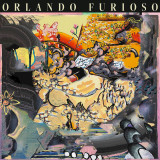
Orlando Furioso is led by Vicente and features David Acevedo, David Leon, Andrew Boudreau, Alec Goldfarb, Daniel Hass, Simón Willson, and Niña Tormenta. Orlando Furioso celebrated its release at Roulette Intermedium in Brooklyn, NY, as a part of Wet Ink Ensemble's 24th Season opening concert, a performance which The New York Times heralded as "virtuosic", "punchy, creative" and "even revelatory."
Winner of the Deutscher Jazz Preis: Best International Debut Album 2023
teely Dan's gold-selling third studio album Pretzel Logic, charted at No. 8 on the Billboard 200 and restored the group's radio presence with the single "Rikki Don't Lose That Number," which became the biggest pop hit of their career and peaked at No. 4 on the Billboard Hot 100. The 1974 album was produced by Gary Katz and was written primarily by Walter Becker (bass) and bandleader Donald Fagen (vocals, keyboards). The album marked the beginning of Becker and Fagen's roles as Steely Dan's principal members.
They enlisted prominent Los Angeles-based studio musicians to record Pretzel Logic, but used them only for occasional overdubs, except for drums, where founding drummer Jim Hodder was reduced to a backing singer, replaced by Jim Gordon and Jeff Porcaro on the drum kit for all of the songs on the album. Steely Dan's Jeff "Skunk" Baxter played pedal steel guitar and hand drums.
Pretzel Logic has shorter songs and fewer instrumental jams than the group's 1973 album Countdown to Ecstasy. Steely Dan considered it the band's attempt at complete musical statements within the three-minute pop-song format. The album's music is characterized by harmonies, counter-melodies, and bop phrasing. It also relies often on straightforward pop influences. The syncopated piano line that opens "Rikki Don't Lose That Number" develops into a pop melody, and the title track transitions from a blues song to a jazzy chorus.
Other standout tracks include "Any Major Dude Will Tell You," a reflective ballad with lush harmonies, and "Parker's Band," a playful ode to the jazz great Charlie Parker.
Lyrically, the album explores themes of nostalgia, lost love, and the struggles of the creative process. In "Barrytown," the band reflects on their early days as struggling musicians, while in "Through with Buzz," they offer a biting critique of the music industry and the pressure to conform to commercial expectations.
One of the defining characteristics of Pretzel Logic is its use of unusual chord progressions and unexpected musical twists and turns. The band's intricate arrangements and skilled musicianship are on full display throughout the album.
Rolling Stone praised the album, calling Steely Dan the "most improbable hit-singles band to emerge in ages."
"When the band doesn't undulate to samba rhythms (as it did on 'Do It Again,' its first Top Ten single), it pushes itself to a full gallop (as it did on 'Reelin' in the Years,' its second). These two rhythmic preferences persist and sometimes intermingle, as on 'Rikki Don't Lose That Number,' which jumps in mid-chorus from 'Hernando's Hideaway' into 'Honky Tonk Women.' Great transition." — the review said.
AllMusic gave the album 5 stars, with reviewer Stephen Thomas Erlewine noting that "instead of relying on easy hooks, Walter Becker and Donald Fagen assembled their most complex and cynical set of songs to date." Dense with harmonics, countermelodies, and bop phrasing, Pretzel Logic is vibrant with unpredictable musical juxtapositions and snide, but very funny, wordplay.
The album's cover photo featuring a New York pretzel vendor was taken by Raeanne Rubenstein, a photographer of musicians and Hollywood celebrities. She shot the photo on the west side of Fifth Avenue and 79th Street, just above the 79th Street Transverse (the road through Central Park), at the park entrance called "Miners' Gate."
After a brief battle with esophageal cancer, Walter Becker died on September 3, 2017 at the age of 67. Steely Dan has sold more than 40 million albums worldwide and were inducted into the Rock and Roll Hall of Fame in March 2001. VH1 ranked Steely Dan at No. 82 on their list of the 100 Greatest Musical Artists of All Time. Rolling Stone ranked them No. 15 on its list of the 20 Greatest Duos of All Time.
This stereo UHQR reissue will be limited to 20,000 copies, with gold foil individually numbered jackets, housed in a premium slipcase with a wooden dowel spine.
Overall, Pretzel Logic is a standout album in Steely Dan's discography. The album's blend of catchy hooks, complex arrangements, and thoughtful lyrics has made it a favorite among fans of classic rock and pop music.
Black Truffle is pleased to announce The Leisure Principle, a new solo LP from London-based bassist and sound artist Otto Willberg. A key player in the London underground, Willberg is often heard on acoustic and electric bass in free improv settings and bands with Laurie Tompkins (Yes Indeed) and Charles Hayward (Abstract Concrete), as well as the fractured No Wave unit Historically Fucked. His previous solo releases have ranged from extended technique double bass to explorations of the acoustics of a 19th century artillery fort. But nothing Willberg has committed to wax so far prepares a listener for The Leisure Principle, six unashamedly melodic improvisational workouts created almost entirely with heavily filtered bass harmonica and electric bass. On the opening ‘Reap What Thou Sow’, a single-note bass harmonica loop pulses along underneath a roaming bass solo, the side-chained envelope filtering (where the dynamic behaviour of the bass determines the filter for both bass and harmonica) fusing the two instruments into a single stream of burbling shifts in resonance. After several minutes of patient exploration of this low-end landscape, the music suddenly opens up in widescreen with the entrance of Sam Andreae’s graceful melodica chords, spreading out across the stereo field. From this epic opener, each of the remaining pieces goes on to explore a slightly different aspect of the terrain. On ‘Shadow Came into the Eyes as Earth Turned on its Axis’, a similarly buoyant harmonica bass line provides the foundation, but this time playing a soulful descending riff, its almost R&B feel abstracted and half-obscured by the filtering. On ‘Mollusk’, echoed bass arpeggios skitter between elegiac chords somewhat reminiscent of the opening of John Abercrombie’s ‘Timeless’, before settling into a hypnotic groove. On the record’s second half, Willberg pushes further into the possibilities of his idiosyncratic instrumentation. On ‘Wetter’, bass and harmonica come together into a monstrous, growling jaw harp; on ‘Had we but world enough and more time’, the subtly shifting pulsating patterns start to feel almost like a kind of evaporated, drum-less dub techno until an eruption of wheezing bass harmonica gives the piece a comically folkish turn. Willberg’s melodically inventive and virtuosic bass performance calls to mind any number of fusion touchstones, from Jaco Pastorius to Mark Egan’s singing tone in the early Pat Metheny Group—even Anthony Jackson’s work with Steve Kahn. But with its radically reduced instrumentation, The Leisure Principle is also an exercise in minimalism, and the absence of percussion gives even its funkiest moments a strangely abstracted quality. At times, its uncanny blend of the abstruse and the immediate suggests the fried pop experiments of David Rosenboom or the skewed but deeply musical DIY of 80s underground groups like De Fabriek. Both easy on the ear and profoundly strange, The Leisure Principle proudly takes its place among the most eccentric offerings on the Black Truffle menu.
In 1972, a foursome of design students set out to make a record. This was, in many ways, a strictly creative endeavor. The quartet — composed of Dave Pescod, Alan Lewis, Phil Rawle, and Ted Rockley — were all trained, not as musicians, but as creatives. Art school heavyweights, the four were well-versed in the methodology of intentional experimentation, in the delicate balance of pushing the limits without completely unmooring oneself from a guiding creative intention. Emboldened by a high-brow familiarity with thoughtful experimentation and all the non-conviction of non-musicians, Bowes Road Band’s stint in the world of popular music yielded a record that is as much mind-melting as it is a direct product of its time. Their sprawling LP “Back in the HCA” embodies the exigence “art for art’s sake,” but it is for art’s sake that this record, however off the deep end it seems to travel (hear: “Doctor, Doctor”), remains a unified, and stunning, body of work. The LP’s do-ityourself garage rock noisemaking meets highfalutin creative processes. “Back in the HCA” is warbling psychedelic freakout (“Two Fingers,” “Doctor, Doctor”), Donovan-esque English countryside folk stylings (“Inside My Head,” “Goodbye to Rosie”), and avant-garde jazz improvisions (“Grass is Grass,” “Tomorrow’s Truth”) in one luminous release.
Originally an 9-track LP, Jakarta, Uno Loop, and Bowes Road Band decided to mine the six most cohesive tracks for the reissue, though the extras may be released somewhere down the line. Cohesion efforts aside, “Back in the HCA” stands alone in its singular conception of a genre-bending continuum — it evades definition. That said, the LP can easily be situated in the sonic environment in which it was conceived. By the end of the 60s, England was crawling with blues-based rock outfits that were starting to venture into prog rock territory. You can hear this popular dint cast over the folkier side of the LP. But Bowes Road Band was armed with their non-musicianship: they existed completely liberated from the motivating yet ultimately paralyzing lust for stardom. Enjoying this liberation, Bowes Road Band was utterly free to make noise. This freedom meant drawn out sax interludes amidst sweetly folk stylings (“Grass is Grass”) and Shaggs-like fuzzed-out freakouts that spiral into a void (Doctor, Doctor). This freedom also meant straight-forward tuneful cuts like “Goodbye Rosie” that conspicuously introduce heavily distorted auto-organ accompaniment mid-track amidst poignant lyricism. Bowes Road Band crafts a unified sound and then cracks it open.
With a completely off-the-radar status, Bowes Road Band could only press 50 copies of the record — 10 for each of them and 10 for the school. The band’s lifespan was to end there, or so they thought. “Back in the HCA” was the accidental fruit of a Berlin flea market treasure hunt by Jannis Stürtz, DJ and co-founder of Habibi Funk and Jakarta Records. After finding and sharing the LP with a few colleagues, Stürtz managed to get in touch with the band, get ahold of the master tapes collecting dust in Ted Rockley’s attic, and start the reissuing process. The record is still adorned with its original cover art designed by Alan Pescod, both reminiscent of bygone school days and the Zoom calls of yesterday — in short, reunion. Its re-discovery was happenstance and ought to be listened to as such. That is, “Back in the HCA” was not made to be listened to on a broad scale, or, at least, was not made with this goal in mind; it is neither in its time nor of its time. Of course, the group explicitly cites the folk tunes of the English countryside, the distorted rock groups that reigned during the record’s conception, and the fringes of psychedelic music that only the uber-underground might recognize (e.g., “Dreaming of Alice”). Yet still with these obvious influences, “Back in the HCA” always existed beyond the domain of both traditional musicianship and conventional commodification. Bowes Road Band’s DIY musicality beams through in technicolor across “Back in the HCA.” The vinyl includes an 8-page booklet detailing the albums creation and interviews with the band.
Lead single “Grass is Grass,” out July 14 along with album pre-order, encapsulates the record’s range: the track unfurls into a sprawling sax-driven trip following a sundrenched, Donovan-esque intro w/ lyrics “naively about parks and gardens, not marijuana!” The keyed-down folk cut “Goodbye to Rosie” is single 2 and elevates stripped-down acoustics with golden tinges, out August 4th. Focus track “Tomorrow’s Truth” constructs the fuzzed-out underbelly of acid folk. Listen for echoes of late Beatles, Mark Fry, and Donovan (if they were armed by an unshakabele willful naiveté). Like Sgt. Pepper’s on a shoestring budget—take a trip to the underground with LP “Back in the HCA,” available everywhere physically and digitally on September 1st via Jakarta Records and Uno Loop.
Besides online promotion from label profiles, the album will be further promoted by external agencies within the UK and US.
2023 Repress Blue Vinyl
- Eagerly anticipated follow up to 2014 debut - number 7 in Mojo's best albums of the year.
- LP jacket is gloss laminate with front & back folds on the outside.The back panel is uncoated/matt varnish - 300 gsm card and 180g vinyl. Digital Download included.
- EU tour coming in April with Summer festivals later in 2017.
Sometimes it can take years to find your calling. Not so, for wanderer Julie Byrne, whose power of lyrical expression and melodic nous seems inborn. But often, what comes naturally demonstrates against speed. Julie's second album Not Even Happiness has taken time to evolve, but as it spans recollections of bustling roadside diners, the stars over the high desert, the aching weariness of change, the wildflowers on the coast of California and the irresolvable mysteries of love. Her new album archives a vivid world that would've otherwise been lost to the road and in doing so, Byrne exhibits her extraordinarily innate musicality.
In fact, some of the album's songs took two years of fine tuning to get where they needed to be. And if you were to ask her why the follow up to 2014's Rooms With Walls And Windows has taken so long, you'd only be greeted with a bemused smile as though it's the strangest question she's ever been asked, Writing comes from a natural process of change and growth. It took me up to this point to have the capacity to express my experience of the time in my life that these songs came from.'
Having counted Buffalo, Pittsburgh, Pennsylvania, Northampton, Massachusetts, Chicago, Illinois, Seattle, New Orleans as her home in recent years. For now, Julie has settled in New York City where she moonlights as a seasonal urban park ranger in Manhattan. Whether witnessing the Pacific Northwest for the first time ('Melting Grid'), the morning sky in Colorado after staying up through the night at a house party in the mountains of Boulder ('Natural Blue'), recording the passage of freight trains on the outskirts of Buffalo, New York ('Interlude'), or a journey fragrant with rose water, reading Frank O'Hara aloud from the passengers seat during a drive through the desert of Utah into the rainforest of Washington State ('All The Land Glimmered Beneath'), Not Even Happiness is Julie's beguilingly ode to the fringes of life.
Self-taught on the guitar after picking it up when her father became ill and could no longer play the instrument himself, Julie readily admits she can't read music and doesn't even listen to it all that much - the first vinyl she owned was indeed, her own. Recorded with producer Eric Littmann (Phantom Posse), Julie laid down the new album in her childhood home in western New York state and offers an altogether bigger picture to its predecessor through a wider, yet subtle, exploration of instruments and atmospherics, Not Even Happiness reveals an artist who has grown in confidence over time.
Byrne's debut album was released back in January 2014 on Chicago based DIY label Orindal after initially being as two separate cassettes releases. Rooms With Walls and Windows went onto become a true modern-day word of mouth success story (it would have to be for an artist who shuns all forms of social media) and ended the year being voted number 7 in Mojo magazine's best albums of the year, with the Huffington Post calling it "2014's Great American Album". A collection of hushed intimate front porch psych-folk songs, that unknowingly recalled the greats, but felt very much for our time. It saw her travel to Europe over two summers playing the Green Man festival and End Of The Road, as well as lesser trodden tour paths around Europe.
Julie Byrne will take the songs from Not Even Happiness (the first release on a new record label Basin Rock, based in the Lancashire / Yorkshire border town of Todmorden) on the road throughout 2017.
Made when mono was still king, Bob Dylan's self-titled 1962 debut is as understated of an entrance as any significant musician as ever made. Already well-versed in American roots music, Dylan simultaneously pays homage to tradition and extends it by putting his own stamp on classic material that metaphorically functions as the soil of our contemporary songs and styles. Free of ego, and performed with masterful conviction, Bob Dylan ranks with the debut efforts of similar artistic giants Elvis Presley and the Rolling Stones.
Mastered from the original master tapes, pressed at RTI, and limited to 3,000 copies, Mobile Fidelity's restored 180g mono 45RPM 2LP version brings the contents of this seminal release as closest as they've ever come to master tape-quality in the original mono configuration. Transparent to the source, the simple sounds of Dylan's voice, acoustic guitar, and harmonica take on lifelike perspective and directness – the "husk and bark" to which Robert Shelton referred in his now-legendary New York Times review of a Dylan appearance at Gerde's Folk City. MoFi has made possible an inexpensive time-traveling trip back to the Greenwich Village coffeehouses and folk clubs in which Dylan cut his teeth, albeit in much better fidelity and without any annoying background chatter. Wider grooves mean more information reaches your ears.
As the preferred mix at the time of the recording, the mono version presents Dylan as he and his producers originally intended. Since the separation of the stereo versions isn't as sharp, the mono edition places Dylan's vocals in the heart of the musical action and as one with the accompaniment. It paints listeners an incredibly accurate portrait of the attention-getting, concrete mass of sound that features no artificial panning and straight-ahead immersion into the music. This is how almost everyone first heard this timeless album – making the mono mix all the more historically valuable and truthful.
Much has been made of the commercial indifference that greeted the album upon its low-key release. Yet focusing on sales figures and the reaction of a public not yet hip to Dylan's name or music is to miss the forest for the trees. Distinguished from the era's other folk efforts by way of the determination, brazenness, and lived-through-this worldliness Dylan approaches the material and sings the songs, Dylan lays the groundwork for the path he'd soon trailblaze and everyone else would follow.
By nodding to Woody Guthrie at the same time he completely re-imagines a sobering tune such as Blind Lemon Jefferson's "See That My Grave Is Kept Clean," Dylan straddles the past and future. He also displays, with challenging authority and savant-like expertise, the ability to handle weighty topics such as death, sorrow, and lamentation with the vaudeville flair, bluesy mannerisms, and poignant command of an artist three times his age.
As Dylan scholar and pop-culture critic Greil Marcus observed in 2010, "Everybody knew Joan Baez and the Kingston Trio; if you knew Bob Dylan, you knew something other people didn't, something that soon enough everybody had to know. Within a year, an album could put an adjective in front of the singer's name as if it were already common coin." It all starts here.
Track List
Whispers is the first proper P.G. Six album since 2011"s Starry Mind. Time passes slowly, as they"ve been known to say out in the country, and before you know it, there"s a bunch of it behind you. After five releases in the first decade of P.G. Six, it may seem a bit of a surprise to have not heard something new in the past twelve years - but a cursory listen to Murmurs & Whispers will answer why, as the deep acoustic focus of the tracks imply an investment of the type of compassion and understanding that takes time and concentrated effort to conjure. Additionally, Pat Gubler"s always got a few pots going at once in his ever-expanding musical universe. He"s been active since the mid-90s, first with Memphis Luxure and Tower Recordings, then as P.G. Six, and as a member of Metal Mountains, Wet Tuna, Garcia Peoples and Weeping Bong Band. Additionally, some time was spent making collaborative records with Dan Melchior (in 2019) and Louise Bock (in 2021). Pat"s been playing the harp for more years than he"s been in bands, but when he realized that he was writing a set of songs centered around harp compositions, he spent some time in the woodshed with his instrument, a late 80s model Triplett Celtic 34 String Harp (which replaced a lovely Paraguayan harp he"d played for years previously). After the previous P.G. albums of electric band arrangements, he was in a place of writing songs with more silence in them. He ended up playing a lot of the parts himself on Murmurs & Whispers, adding guitar, bass, keyboards, recorder and hurdy gurdy, in addition to his harp and vocals. Clark Griffin and Wednesday Knudson, who Pat plays with in Weeping Bong Band, played and sang a bit themselves, and the record was recorded piece by piece in houses around upstate New York by Mike Fellows. Returning to the quiet acoustic sound of the first couple of P.G. Six albums, Parlor Tricks and Porch Favorites (which has seen a much-needed reissue in the past year after too many years OOP) and The Well of Memory, Murmurs & Whispers is more straightforward in expressing its vision of rural celestial wonder. Bucolic and comfortably lived in, Murmurs & Whispers nonetheless projects the transcendent heart of P.G. Six once again, and as ever, it is magnificent to hear it passing through us.