Set for release on June 23 via Asylum Records, x (multiply) is the hugely anticipated new album by Ed Sheeran.
It follows his critically acclaimed and hugely successful 2011 debut +; an album that was certified 6 times platinum in the UK alone and has achieved worldwide sales of over 4 million copies to date. It also saw Ed asthe recipient of various awards for the record, including 2 Brits, an Ivor Novello and multiple Grammy nominations.
Never an artist to stand still, Ed recorded x at various locations around the globe (all the while drawing on experiences and influences encountered on his over three years of unrelenting touring) with such luminary producers as Rick Rubin (Eminem, Jay-Z, Red Hot Chilli Peppers), Pharrell Williams (Daft Punk, Robin Thicke, N.E.R.D), Benny Blanco (Rhianna, Wiz Khalifa) and Jeff Bhasker (Alicia Keys, Jay-Z) adding new flavours to the classy work of key collaborators Johnny McDaid (Snow Patrol) and Jake Gosling (who produced +). xhas the musical ingredients to make it one of the most important global releases of this year.
The new set showcases the exponential growth (both vocally and musically) of an incredible artist, who at 23 exhibits the poise of a seasoned veteran. The songs for x came together whilst touring + and, in the same way as the latter was a snapshot of his life and relationship to-date, x charts his loves and life since. Only 'One', the perfect album opener and first song written for the record (in 2011 whilst on tour in Australia) looks back to that time and is the link between the two records. With 'One' under his belt, almost before he noticed he was writing, Ed had ten new songs and counting.
The breath-taking album-closer 'Afire Love' was written about his grandfather who passed away last Christmas. 'Always the hero of the family - such a cool guy - he'd been suffering with Alzheimer's for some time and I actually started writing that song two weeks before he passed away," Ed says. "I was thinking 'What if' and then he did...' Then there is the timeless ballad 'Photograph' written in May 2012 in a hotel room in Kansas whilst on tour with Snow Patrol. McDaid had a piano loop playing on his laptop while Ed was making a Lego X-wing Fighter to give to a charity auction. He just started singing as he put the pieces together and the song grew from there. 'Don't' started life as a riff on his phone and grew into another of x's massive moments. The deluxe version of the album also includes the original song, 'I See Fire', which Ed wrote, produced and recorded for the second Hobbit movie. This was after Academy award-winning filmmaker Peter Jackson personally commissioned him. With no promotion besides 3 tweets from his personal twitter account, it reached #2 on the UK iTunes chart.
However it's the Pharrell-produced lead single 'Sing', due out in the UK on June 1, that's pushing the envelope for Ed. #Sing was the number one trend on twitter globally ahead of launch with the track immediately tearing up airwaves nationwide including a 7-week add to Radio 1 and an unprecedented addition straight to the Super Hit list at Capital FM and Kiss Network. The audio upload on YouTube was Ed's biggest ever video launch, clocking 650k views in its first 24 hours. Already i-tunes Top 5 in 15 different countries (number 3 in the US), Top 20 in 36 countries and with all chart positions climbing, 'Sing' is well on the way to being a global smash.
On the back of 'Sing's' launch, x reached No.7 in the UK iTunes chart on pre-order alone with that success mirrored internationally with No.1 positions in the US and Canada, Top 5 in New Zealand, Sweden, Australia and Top 10 in 20 countries.
'I'm really proud of my new album and can't wait for people to hear it.' Ed says. 'It's definitely my best work.'
Поиск:its a musical
Все
It is said that every generation casts its mind back to a previous era in times of crisis; the resources that will allow us to decode the questions of our moment may lie in the myths of another era.
Le Renard Bleu, the new musical and cinematic collaboration between Lafawndah and composer Midori Takada, and filmmakers Partel Oliva, takes a cross- generational echo as ground zero for recovering a crucial myth for uncertain times: the blue fox.
As transmitted by Takada, the fox appears in both ancient Senegalese and Japanese folktales as the trickster archetype; belonging both to the heavens and to the earth, the fox is the agent of chaotic good, shaking the world up when its energy has become stagnant. Above all else, the fox is famous for its cunning nature.
Renard Bleu marks the first new music released by Takada in nearly twenty years; it would be difficult to overstate the importance of her return to the public eye. Her first solo record, 1983's Through the Looking Glass, has been rediscovered and heralded as a lost classic; the influence of her percussion trio, the Mkwaju Ensemble, continues to permeate and inspire a new generation entranced by its lucid beauty, playfulness, and sensual patience. Takada has performed in numerous film score orchestras, including the ensemble for Akira Kurasawa's Dreams, coincidentally a key influence on Renard Bleu.
In the ensuing years, Takada has worked closely with theater group the Suzuki Company of Toga on productions of Electra and King Lear, an experience, she says, that allowed her to pursue 'a unity of music, body and space.' Recent live solo performances have evinced the depths of her exploration of all three.
Equally, it is Lafawndah's freedom of tone, decentralized maps of ancient and modern music cultures, and alloying of devotional intensity with modern songcraft casts her as a distinct relative of Midori Takada's.
Over the course of two EPs, self- directed music videos, and countless live performances, Lafawndah has drawn out an uncompromising exploration of how theater, situational intervention, and choreography can amplify the affective palate of forward pop music. One can trace the influence of artists such as Meredith Monk, Carlos Sara, and Andy Kaufman as much as musical antecedents AR Rahmann, Missy Elliott, or Geinoh Yamashirogumi.
It is in a mutual commitment to this unity that Lafawndah, Takada and Partel Oliva find fertile aesthetic common ground.
The music of Renard Bleu originated in Takada's preoccupation with the legend of the fox; after constructing a vivid instrumental composition dramatizing the spirit animal's journeys through waterphone, bells, marimba and various forms of drums, Lafawndah responded - in her inimitable mix of fairytale and undertow-- with melodies and lyrics capturing a dialogue between her and the fox himself. Eventually, the duo met in Tokyo for a week of communing with the material at Avaco Creative Studios, where new elements were composed on site.
Created in partnership with KENZO and premiered today via their channels, it was Partel Oliva who imagined a contemporary cinematic frame for the myth of the fox to re- appear, creating a hybrid of choreography and narrative around Takada and Lafawndah's performance of their joint composition (also titled Le Renard Bleu.) Returning to film in Japan for the third time, Partel Oliva's moving image work (Club Ark Eternal, The Pike and the Shield) has set the standard for and revolutionized the fashion art film. Their deployment of original music, dance, and a highly stylized mis en scene coalesces here in the casting of Los Angeles krump artist Qwenga as the eponymous fox, stalking the halls of the ancient Noh theater in which Takada and Lafawnda's performance takes place.
Why call up the myth of the fox now In Le Renard Bleu, Lafawndah and Takada's collapsing of distance between generations, styles, and milieus intimates that the relationship to time must be shaken. The future lies in fragments in the past; to remember is to recover it; the fox rises to thicken the plot.
2022 repress
currently the rediscovery of long forgotten japanese electronic, jazz and new age music is at a peak like never before. but although many re-issues already flood the record stores around the world: the large, diverse musical culture of japan still got some gems in store that are really missing.
for example, it is still quiet around the the work of japanese bass player, new-age and ambient musi-cian motohiko hamase. when the today 66-years old artist started to be a professional musician in the 1970's, he quickly gained success as a versed studio instrumentalist and started to be part of the great modern jazz isao suzuki sextett, where he played with legends like pianist tsuyoshi yamamoto or fu-sion guitar one-off-a-kind kazumi watanabe.
he also was around in the studio when legendary japanese jazz records like 'straight ahead' of takao uematsu, 'moritato for osada' of jazz singer minami yasuda or 'moon stone' of synthesizer, piano and organ wizard mikio masuda been recorded.
in the 1980's hamase began to slowly drift away from jazz and drowned himself and his musical vision into new-age, ambient and experimental electronic spheres, in which he incorporated his funky medi-tative way of playing the bass above airy sounds and arrangements.
his first solo album 'intaglio' was not only a milestone of japanese new-age ambient, it was also fresh sonic journey in jazz that does not sound like jazz at all. now studio mule is happy to announce the re-recording of his gem from 1986, that opens new doors of perception while being not quite at all.
first issued by the japanese label shi zen, the record had a decent success in japan and by some overseas fans of music from the far east. with seven haunting, stylistically hard to pigeonhole compo-sitions hamase drifts around new-age worlds with howling wind sounds, gently bass picking and dis-creet drums, that sometimes remind the listener on the power of japanese taiko percussions. also, propulsive fourth-world-grooves call the tune and all composition avoid a foreseeable structure. at large his albums seem to be improvised and yet all is deeply composed.
music that works like shuffling through an imaginary sound library full of spiritual deepness, that even spreads in its shaky moments some profound relaxing moods. a true discovery of old music that oper-ates deeply contemporary due to his exploratory spirit and gently played tones. the release marks another highlight in studio mule's fresh mission to excavate neglected japanese music, that somehow has more to offer in present age, than at the time of his original birth.
The music on this EP was conceived in China, between 1989 and 1993. The original tracks were mixed to DAT in real time, in a small neighbour-proof studio inside my apartment in Macau, a 19th floor with a view to the hurricanes. There's a small, unexpected or improbable story behind each track, some little magic fused with the local atmosphere, certainly guaranteeing their lasting authenticity 25 years later.
TAIPEI DISCO
Late 80s Guangzhou was an exotic city where the traditional past coexisted in harmony with the present and even already with the future.
I'd rather spend my weekends in Guangzhou than diving into Hong Kong consumerism - as most ex-pats in Macau did. I took a cab at the border and travelled 150 Km through chaotic roads with family and friends until reaching the hot, humid, mega South China metropolis.
We ate on street joints in the evenings, went on to a karaoke bar and ended up at Taipei Disco, the only proper club in town. All the others were inside hotels and played generic music or they were seedy, sleazy, smoky cabarets.
Taipei Disco used to be a cinema and played cantonese pop music and anglo-saxon pop/rock (that was new). The spacious dance floor was generously lighted, the atmosphere was airy and modern. Boys and girls were in the habit of dancing in pairs, one in front of the other, observing a respectful yet sensual distance. When the girl took a few steps back, the boy went along and vice versa. With legs and feet (more than the upper bodies) synchronized with the music, they never exceeded in extroversion. Cool.
I always carried a MicroComposer and a portable DAT recorder in my travels through China and weekends in Canton. Any spontaneous musical idea was imediately recorded and memorized. The MicroComposer allowed multitrack recording, which was very handy on the road. Based on the emphatic choreography of Taipei Disco's dancers, i started to compose a rhythm track while sitting at a table, with headphones, listening to Cantopop in the background. As if by magic - not a rare occasion in music - everything began fitting together. Odd as it may seem, the track ended up sounding more germanic (Kraftwerkian) than Cantonese pop.
The story ends in a circle: the cantonese DJ at Taipei Disco, whom i used to ask to play certain records, wanted to play my music at the disco when it was basically only just a rhythm track and little else. From a cupboard under his set up he took out a battered keyboard (unrecognizable brand) and invited me to play over the track with the available sounds on the keyboard. The circle was complete, with Cantonese clubbers happily dancing forwards and backwards, as if it were another Cantopop hit.
I didn't get payed but the house offered us free ice cream cups in which little Portuguese flags were sticked.
The track would be finished later, in studio, with vocoder strings ensemble and synth solos.
TAIPEI DISCO (LIVE)
The live version of 'Taipei Disco' was recorded during a live set at the China Pop venue, in Macau, 1993. China Pop was a rock club built in the ample space of an old fishing warehouse, located in the labyrinthic Inner Harbour area. It was decorated with large Mao Zedong and Cultural Revolution posters and memorabilia and had a unique atmosphere, fusing Pop Art with film noir. We began our performance at 1AM, pretty early for Macau's nightlife standards. We were lucky. An audience showed up. And in Macau there were always several friends among the audience, which tranformed a musical performance into a relaxed party.
The atmosphere was particularly surreal on that night. The front row was dominated by French Crazy Horse dancers, a sort of Oriental Moulin Rouge. The girls had finished their last performance of the evening at the Crazy Horse and were still energized from their show. During our performance, right in front of us and perfectly synched, we could hear the famous irreverent screams of can-can dancers. You always had to expect the unexpected in Macau.
RED MAMBO (IMPROMPTU)
I was familiar with the Portuguese-speaking African countries well before having lived in China. I found myself returning several times to one in particular, always attracted by its magic and very distinct, identitary culture and music: Cape Verde.
During the early years of DWART a lot of the inspiration for drum machine rhythms (Roland's TR series) came from African music, especially from new musical trends that gained full autonomy with Cape Verde's independence from Portugal, as was the case with funaná.
I had the privilege of having known and befriended some of the greatest Capeverdian composers, musicians and singers during the 70s and 80s, such as Bana, Luís Morais, Cesária Évora, Paulino Vieira, Chico Serra, Tito Paris, and historical bands such as Bulimundo (ambassadors of funaná) and Os Tubarões (great innovators of morna, coladera and funaná, with the sonic impact of an afro-beat big band).
When Luís Filipe de Barros began playing Os Tubarões for the first time on Portuguese radio, that was the turning point for African music in Portugal. The 'Tabanca' album was so widely heard and talked about that it quickly got a Portuguese release through one of the big labels of the time.
The mystic of this band from the Santiago Island would reach the East. Os Tubarões played to a packed room in Macau in 1992, and after the bombastic gig we arranged a dinner and party at my place.
We ate and drank generously and the moment came for a jam session at the small studio on the 19th floor. Because Os Tubarões didn't all fit in the studio, we recorded an impromptu with only three of the musicians: Tótó Silva (electric guitar), Mário Russo Bettencourt (bass) and Zeca Couto (piano). And there we were improvising without barriers, suddenly detached from cultural roots, labels and constraints, a truly unique moment. The track is now being released exactly as it was recorded, imbued with the real communion between the musicians. And it could only be titled 'Red Mambo'. I wish to dedicate it to the memory of Ildo Lobo and Jaime do Rosário, founders of Os Tubarões, sadly and too soon departed from the land of music.
Apart from being known for founding the infamous vinyl imprint Subaltern Records and for his residency on SUB.FM, Gabriele Romeo aka. Mentha has made quite a name for himself with his Jazz-influenced bass music productions. This LP is a selection of tracks from his vault, showcasing his musical abilities and tasteful compositions in this self-release.
1 - All Or Nothing
Greeting the listener with melancholic yet optimistic vibes is the first track of the LP, 'All Or Nothing'. Setting the loungey and open space feeling for the release, captivating chords and soothing melodies join a potent sub-bass in this introspective overture.
2 - Same Spot ft. Vale
'Same Spot' picks it right up where the first track left it, emerging further into a vast ethereal space. Charming guitars pave the way to uplifting trumpet lines, masterfully executed by Vale. A meditative bass-line seamlessly merges all elements together into a seductive modal composition.
3 - Sunflower
Showing off his instrumental skills yet again, Mentha delivers a sunny and laid-back masterpiece with an apt title, rounded off by a perfectly executed contrast between bumping subs, crispy drums and radiant spaces. Bossa-inspired rhythms bond with Rhodes, jazzy horns and crystal guitars shifting through the realms of major and minor.
4 - Natural Rain
Natural Rain maintains the meditative vibe while entering mysterious spheres of consciousness. Like sunrise in an enchanted forest, this track is magically captivating and keeps the listener under its spell throughout. Oneiric melodies encounter pads and polyrhythms, leading to a climax which completes this mystical journey.
5 - Water March
Like a light breeze on a hot day, Water March takes it easy. Marked by Mentha's very own signature guitar and trumpet, this peaceful march unfolds playfully. While surprising with energetic bass frequencies and instrumental intricacies, this piece shows an insight of the artist's musical roots.
6 - In My Head ft. Aphty Khéa
A psychedelic masterpiece, 'In My Head' sets a strong statement at the end of the release. The unsettling atmosphere of the track is tastefully matched by Aphty Khéa's pristine voice. Creating an eerie yet soothing vibe, this track lets the mind roam freely through time signature changes, dynamic transformations and instrumental layers which remind of Steve Reich.
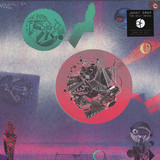
Jonny Drop's debut, Sub Plot, was the very first album release on the fledgling Albert's Favourites label at the beginning of 2016. The initial offering, a 7" of album favourites Mind Field and This Is The One had quickly been picked up on by the good people at BBC Radio 6 Music as well as some of Drop's personal heroes including Kenny Dope, Mr. Thing and Nightmares On Wax.
But when the infectious rhythms and warm production of the beat tape landed, its impact was greater than anyone at the label could have hoped.
Although Jonny never stopped producing beats in the following years, he was also kept busy as a drummer, playing live for Andrew Ashong, The Bongolian and Connie Constance, whose Boring Connie EP he also laid down beats for.
Then in early 2018 his band The Expansions delivered their celebrated Murmuration LP. All the while, with the support of his label family, Drop had been evolving his solo sound too.
'The Only Sound sees a huge progression in my writing direction, as I collaborated with multiple vocalists and musicians, instead of the usual 'one-man band' approach.
The development of these processes make this LP a steady departure from the beat-tape influence of my past releases, and hopefully, showcase the more original sound I've been working to achieve over the past few years.'
The new album is more atmospheric, emotional and expressive. It is filled with beautiful vocal performances, musical contributions from label partners and close friends Deoke and James O'Keefe, and inspirational London jazz composer, flautist and master saxophonist Tamar Osborn (Collocutor/On The Corner).
Voices here include Shea Soul, Grace Walker, former Myron and E soul man Eric Boss with his Lucid Paradise and Pendletons partner Ishtar, plus First Word Records producer/Golden Rules collaborator Sarah Williams White.
While there are thoughtful, down-tempo moments of electronica in abundance here, Drop brings his favourite elements of disco and soul into the picture too.
And there's no shortage of low end throughout. The Only Sound is a welcome next step from Jonny Drop, the sound of a beat maker not just finding his feet as a composer, but thriving in new territory.
Huey Morgan (BBC Radio 6 Music),
Music Is My Sanctuary premiere for All This Trouble, Bonafide Magazine premiere for Looking Glass
'A really talented musician, absolutely loving that" Lauren Laverne on This Is The One, BBC Radio 6 Music
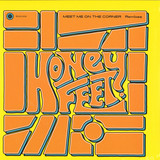
Meet Me On The Corner is taken from the band's sophomore album, Orange Whip, which itself was BBC 6Music's Album of The Day on its release. It follows previous singles Whatever You Do and Sinner, which garnered support from Craig Charles, Tom Ravenscroft and Huey Morgan. The song showcases Honeyfeet at their funkiest and chunkiest. A pounding beat beefed up by bass, guitar and brass propels forward while Rioghnach Connolly sings lyrics that could be straight out of the playground, but suggest something deeper, possibly mystical even, in its demands for a dalliance on the street.
Remixes on this more foot friendly single come courtesy of homegrown legends of funky house music, Crazy P who come through with both a vocal and dub version. Honeyfeet's latest opus is turned into a straight up soulful disco monster by the boys from Nottingham, with Rioghnach's rasping vocals playfully meandering over Hot Toddy and Ron Basejam's crisp beats and trademark live bass. Elsewhere, much hyped Russian production don, I Gemin, delivers his take - still aimed at the dance floor of course, but a slightly deeper house affair based around jazzy keys and chopped up vocals that take the song into more sonorous territories.
As a bonus, the 12" package also features the acclaimed remix of previous single, Sinner, courtesy of erstwhile Polish Innocent Sorceror, Envee - his shuffling, moody take only previously being available on vinyl via a super limited (and now impossible to find) 7-inch release late last year. For the last couple of years Honeyfeet (whose name comes from a line in the Blues Brothers film) have been a conduit for the ideas and expressions of an exotic mixture of Manchester based musicians. This genre-defying band incorporate styles including jazz, folk and hip hop into their music.
The band are fronted by Rioghnach Connolly - also known for her work with Real World artists Afro Celt Sound System and The Breath - "A remarkable singer and flutist who...can ease from Irish traditional influences to soul" (The Guardian). The line-up is completed by Rik Warren (vocals/harmonica), Gus Fairbairn (tenor sax), Biff Roxby (trombone/vocals), Ellis Davies (guitar), Lorien Edwards (bass guitar), John Ellis (keyboards) and David Schlechtriemen (drums).
Since their self-released debut album, 2013's It's a Good Job I Love You, keyboardist John Ellis jumped on board as full-time member, bringing his unique musical presence. This enabled the development of a more texturally adventurous style, as witnessed with the dual atonal solo between himself and guitarist Ellis Davies on Sinner. Similarly, for their current LP, Orange Whip, engineer, bassist and spiritual guide Lorien Edwards makes his Honeyfeet recording debut, so completing the 'kitchen' of this very special band.
- The album, Orange Whip, is out now.
Opening track 'In The B' kicks off proceedings in no uncertain fashion. It's 100% wall shaker material, the type of techno music best paired with strobe lights and towering speaker stacks. It mesmerises with its low-slung undulating bassline and Detroit rhythms before giving way to some riotous old school Essex stabs and sharp claps. No messing, this is a certified 3 AM red light burner! Track 2 'Chocolate Biscuit' accelerates proceedings! Beginning with unfussy drums and a robotic, bleep-heavy melody driving it off into a wonderfully off-kilter direction. Its arpreggio'd rhythms may be brutish and wrestle a growling sense of menace out of the track, but the overall feel, however, suggests considerable care and attention has been paid to make it sound this way. There's clearly an uncommon musicality at play here to make something this complex feel so simple.
The BPM drops next on 'Jenny's Hall' but from the offset, there's enough funk and thrust in the motorised synth line to get bodies gently grooving without the beauty getting lost in the slower loop. This is blissed out, psychotropic techno - the kind of track where it feels like you're floating and falling at the same time, but all the while making sure you still remain fit for purpose on the dancefloor. Ian Blevins takes on remix duties this time and the Berlin-based DJ/producer offers up a sleek peak-time banger that fizzes, bubbles and percolates. He gives the rhythm on 'Jenny's Hall' less space to swing and ties it to a tight motorik beat turning it into a slice of shiny, modern techno but with extra shoulder-checking force. Its vibe drawing from a sense of outsider-party fun with a wry smile, and a knowing wink running throughout before bringing the package to a suitably left of field crescendo.
New album from Anthony Ferraro aka Astronauts, etc, who for most of his music career, served as Toro y Moi's keyboardist, with this album 'Living In Symbol' being his debut solo record.
Sonically, the album weaves its influences into an alien drapery. 'The Border' introduces Latin psychedelia to a groove à la David Axelrod, setting the stage for a vocal performance that manages to be equal parts Lee Hazlewood and HAL 9000. On 'The Room', a Borgesian story gets dressed up in an eerily graceful string arrangement reminiscent of Les Baxter. And 'Who I Talk To' nods to George Harrison in a soft rocking arrangement that supports Ferraro's ghostly croon.
Living In Symbol Is An Ode To Ambiguity, The Future, And Saying 'so Long' To The Known. A Member Of The Last Generation To Experience Life Before Total Interconnectedness, Anthony Ferraro (digitally Known As Tony Peppers) Aims To Be A Bridge Between Two Very Different Realities.
The Spirit Of Change Is Especially Pronounced In California's Bay Area, Where Technologies Dawn And Disruption Is The Noblest Goal. Critics And Advocates Of All Stripes Write Columns And Fill Talk Radio Hours With Their Analyses Of The Times. Ferraro Is A Funny Case: A Sometimes Luddite With A Romantic Streak, He Would Probably Be A Doomsayer If It Weren't For His Being Situated In The Middle Of It All. As It Happens, He Ended Up Writing A Generative Music Algorithm That Sold On Auction At The Smithsonian For $5,000.
His Take On Tomorrow Is Nonjudgmental, Meditative, Imaginative. It Keeps Away From Unqualified Hope Or Outright Alarmism, Choosing Instead To Embrace The Indeterminacy As Food For Dreaming.
Ferraro's Friendship With Chaz Bear, Who Co-produced The Album, Began Modestly Enough: Bear Walked Into The Coffee Shop Where Ferraro Worked While Attending Uc Berkeley. The Two Became Friends, And When Ferraro Graduated The Following Summer, He Signed On As Touring Keyboardist For Toro Y Moi. Musical Bonds Were Forged Over The Next Few Years, And The Pair Began Collaborating On What Would Become Living In Symbol.
Living In Symbol Is A Series Of Rooms, A Choose-your-own-tomorrow Story. Step In And Peer Through Its Open Doors.
- A1: Desmond Dekker & Aces - Israelites
- A2: Dave & Ansel Collins - Double Barrel
- A3: The Maytals - Monkey Man
- A4: Harry J All Stars - Liquidator
- A5: The Pioneers- Longshot Kick The Bucket
- A6: The Upsetters - Return Of Django
- B1: The Paragons - The Tide Is High
- B2: Desmond Dekker & Aces - It Mek
- B3: Tony Tribe - Red Red Wine
- B4: Desmond Dekker & Aces - 0.0.7 Shanty Town
- B5: Dave & Ansel Collins - Monkey Spanner
- B6: The Maytals - 54 46 Was My Number
- C1: Ken Boothe - Everything I Own
- C2: Dennis Brown - Money In My Pocket
- C3: John Holt - Help Me Make It Through The Night
- C4: Susan Cadogan - Hurt So Good
- C5: The Pioneers - Let Your Year Be Yeah
- C6: Sophia George - Girlie Girlie
- D1: Althea & Donna - Uptown Top Ranking
- D2: Desmond Dekker - You Can Get It If You Really Want
- D3: Bob & Marcia - Young, Gifted & Black
- D4: Greyhound - Black And White
- D5: Nicky Thomas - Love Of The Common People
- D6: Errol Dunkley - Ok Fred
To mark the 50th anniversary of Trojan Records comes 'Trojan Ska & Reggae Classics', a double vinyl album comprising 24 of the most celebratory Jamaican music hits from the iconic label's legendary catalogue.
Released in tandem with the TV advertised 3CD version of the same name, this joyous collection showcases the very best in classic Caribbean sounds, from rude boy ska to dancehall anthems, with the set featuring an incredible 22 Top 50 UK chartbusters, including 4 UK Number 1s and 13 Top 10s.
The perfect musical accompaniment for the summer of 2018 and beyond, this blistering 2LP vinyl collection compilation ably demonstrates just what makes Trojan so special and why it remains the world's greatest reggae label, half a century since its launch.
As an integral part of the Trojan 50 marketing campaign, the LP will be heavily promoted via the label's website, Facebook & Twitter pages, Instagram and YouTube channel.
[T] D2 | Desmond Dekker - You Can Get It If You Really Want
This four-track EP named 'Curiosity' from techno duo, Abstract Man marks the beginning of the new On the 5th Day imprint, the latest branch to extend from the heart of the London-based underground techno project. The final outputs of a year-long creative journey in the studio with a focus on analogue machines, 'Curiosity' (including Mike Parker remix) represents a chapter of exploration into sound design and manipulation, and the unity and evolution of two separate musical identities through the collaborative process.
The debut release from Abstract Man begins with 'Curiosity' itself, portraying the first stages of the pair's collaboration and inspired by a shared appreciation for driving, hypnotic techno. Mesmerizingly linear and highly textured, the components forming Curiosity's foundations each command their own space, separately evolving with clear purpose whilst interacting in a compelling, ritualistic dance to lock in the listener. Its overall progression, including an emerging chant-like drone, signifies the manifestation of a new artistic voice, all together making this a symbolic achievement for Abstract Man, as well as a compelling and highly effective tool for the dance floor. The subsequent Mike Parker remix of the same track is another striking portrayal of his distinguishable sound and style, whilst developing to present something surprising and perhaps unexpected from the techno veteran, making this a must for collectors of his work.
Then follows 'Proposition', exploring the powerful possibilities through simplicity and symbolising the 'less is more' approach which fuelled much of the first chapter of Abstract Man's time in the studio. The joining of its elements creates a dark, seductive and unwavering tension, making it the ultimate tester for any venue's sound system!
Finally, 'Exploration' steps in a with an uplifting vigour and propulsive, rhythmic magnetism, rounding off the EP nicely with its feeling of freedom and completeness, leaving a sense of intrigue in readiness for their next instalment.
Following a self-titled EP last year, Dario Rojo Guerra aka Natureboy Flako is set to release his second album 'Theme For A Dream' on Five Easy Pieces on 20th July 2018. Exploring the boundaries of music, science and spirituality through a prism of colourfully synthesised-sound, heart-pounding rhythm and cinematic soundtracks; the core essense of 'Theme For A Dream' is the exploration of the human inne space, the balance of musical energies and music's healing capabilities. 'Theme For A Dream' is a more electronic sounding record than his debut. Guerra makes extensive use of old and new analogue equipment such as the Juno 106, Korg's MS-20, ARP Odyssey or Roland's SH-2000 synthesisers, alongside recordings of vocals, guitars and other instruments. This serves to create a dynamic and eclectic sound spectrum, all unique to his musical handwriting. 'Theme For A Dream' will be accompanied by an experimental and interactive website that allows users to preview music while being an immersive, unique multi-sensual 4D xperience of its own. Snippets of the music from 'Theme For A Dream' become audio visual poetry and an immersive exploration of state of the art technology and oneself. 'I don't think technology necessarily means not being natural. Technology can be very much in balance with nature, since it is mostly just trying to imitate or trying to understand something from within nature. Around recording 'Theme For A Dream', Guerra also co-produced/co-wrote and engineered Kutmah's recent debut and Jitwam's forthcoming album, as well as produced almost half of Fatima's follow up album to 'Yellow Memories'. He is currently working on a film project with a London based production company and is already working on a new album, which is expected to bring back his vocal talent, previously released under the moniker Dirg Gerner.
A warm human hand sculpts the icy machine-like sounds into a meticulous harmony over undulating bass and entrancing snares, clasps and industrial heartbeats. This continuous circulation of sound and its ever beating rumbling-flexed sub bass found in Rebecca Goldberg's newest batch of acid-techno arrangements effectively replicate the natural functions of omega 3, or -3, fatty acids albeit in musical-form. Whereas ingesting the special carboxylic acids found in plant and marine oils woll fortify your vascular system into a well-oiled machine, Goldberg is using a table of various analog machines to manifest a similar, yet uniquely propulsive flow of energy through a composite of frenetic hi-hats and trudling kick drums, looping under spacey Rolands waving out reverb splashed frequencies coiling synthetic intonations.
The beats reach the feet, the bass unlocks the hips and the synths pull and twist the shoulders, staving off stagnation or decimating a collective clotting - we are loosened in restorative ways to the sleek assemblages of one of Detroit's leading DJs/composers on the electronic music scene. Goldberg's 25-minute odyssey is unceasing in its sinuous stream of mesmeric techno music, as if powered on by relentless agents found in the healthful acids for which this EP gets its title.
Goldberg has distinguished herself by cultivating the seeds of techno into something that designedly meditates on the enduring vitality of the organic and the holistic in our lives--even as our socialization, and maybe even our dance floors, are predominantly digital in character and operation. -3 continues to stimulate our brains in two ways, just like 2017's 313 Acid Queen. Her previous record used field recordings and found sounds from the shores of Detroit's Belle Isle and other neighborhood sidestreets to thread the simple majesty of the flora and fauna that sustains even if at the corners of a concrete metropolis. -3 is bringing you from the outdoors into the inner workings of your body--particularly the blood cells that act as fuel for your limbs, your lungs and your brain. It's the -3 fatty acids that keep your system strong and smooth. It's Rebecca Goldberg's latest acid techno fever dream that keeps you perceiving that (and other things) even as you dance...
Taking a turn to some of its roots, Emotional Rescue offers a reissue of Ramjac Corporation's UK house/breaks anthem Cameroon Massif!. First released on the increasingly cult-status Irdial Discs in 1990, this was very much the sound of the big bang explosion of Acid House morphing and splintering, as subsequent multi-genres developed, formed, imploded and reformed in new ways that still subsists today.
Within the melting pot of anything goes, chemically-enhanced optimism that spread across the UK during that return to the summers of love from 1987 onwards, the nascent sounds coming from Chicago and Detroit were mixed with a hybrid of 80s British influences, taking in European synth pop, US electro, new beat, hip hop and reggae. Out of this appeared a new sound, mixing that love of techno and house with dub bass and break beats into a proto-jungle swirl.
Like many growing up through the ever-evolving 60, 70s & 80s British music scene, Paul Chivers' early years of learning piano and guitar, moved from Beatles era pop to take in punk, jazz and anything an eager musical mind could explore. Developing a long-term interest and study of Cuban and Afro-drumming, his acquisition of an Atari and sampler soon moved to programming of both drum machines and TB303 and with that, Ramjac Corporation was born.
Playing live at some of the earliest raves in 1988, as often through luck and "right time, right place", including the infamous Back To The Future and Energy parties, Ramjac went from playing from 50 to 10,000 ravers in a matter of months, as the nation was gripped, depending on your cultural standing, by either a mixture of drug apocalypse paranoia or ecstatic celebration.
It was a meeting with Akin Fernandez, founder of Irdial Discs, that led some of the first studio experiments and creation of Cameroon Massif!. Utlising Akin's in-house studio and production skills, alongside Chivers' jazz influenced outlook of improvisation over arrangement, the track took shape, mixing the live programmed percussion, heavy doses of phase, delay and reverb and Sun Ra inspired keys that resulted in a number of mixes of Massif!.
Collected here are the original 12" "Massive" and "Massing" mixes, plus a special live version taken from the "Live At The Brain" reunion gig of 2009. The sought after 1990 versions and original Live mix are taken a step further with this 13 mins + mix, in essence a resampling and remixing reversion with didgeridoo and live on mic MCing, that gives a real glimpse of those early live sets. With more Ramjac Corporation material upcoming and a live reel-to-reel show appearing soon, the return of Cameroon Massif! is now.
"Manchester has produced some of the world's most loved artists and bands - from indie to acid house - listened to by millions around the world.
Ad Hoc Records continues this musical tradition, as a record label dedicated to showcasing the very best of Manchester's music scene - with a firm 21st century, 'post-everything' mentality. First, Banana Hill's very own: Cervo (Black Acre/Lumberjacks in Hell); with its pulsing beat and bassline, Hesse Groove makes you want to discover a new part of town late at night. Next, is Taurtollo with an outstanding, universal composition that will be sure to delight ears and dancefloors. Penultimately, Paul Chamber's brings a raw, Fela Kuti sampling afro-house cut sure to get your head bobbing. Lastly, Ad Hoc regular Yadava (Church/Banoffee Pies/So Flute) brings the relaxing jazz-funk number Kadampa 125. If this doesn't get you moving whilst simultaneously achieving a zen state of mind, nothing will."
Death To Techno'Death to Techno is a new, futuristic ep of "The White Screen", ever before into a world of ruff beats, dark electronics and analog effects. Musical producer Dori Sadovnik, the sound genius from Red Axes, produced this ep at Garzen Studios, diving together with the whites into a new world of unknown pleasures and sins.
A mind and body bender between techno rhythms and broken rock n 'roll tapes, between the dancefloor and a campfire, between darkness and light - the new recordings are asking big questions about past and future, vintage and electro, about the screen and about the white.
"Death to Techno," the main track that opens the record, is also treated in a wildly remix version of the RED AXES pair. The cover of the album - "Hellenic Plasticine Party" - was created by multidisciplinary artist Oren Fisher, who has been accompanying the band since its inception.
Produced by: Dori Sadovnik
Musicians:
Stav Ben Shahar - Drums
Noa Ayali - Chello
Liat Raz - Vocals
Nimrod Goldfarb - Contra Bas
Shay Landa - Organs
Echocord's Colour sub-label returns early June with a four- track EP from Eindhoven's Albert Van Abbe in the shape of 'Klangbilder'. Dutch Techno artist Albert Van Abbe has nearly two decades of experience under his belt in various forms of musical and visual expression, releasing on his own Vanabbe imprint, Figure Jams, Semantica and No Comment, as well as playing live and DJing at hot spots across the globe such as Berghain, Tresor, DGTL and Awakenings festival. 'Klangbilder 1' leads with a robust rhythmic drive, employing bumpy toms, shuffled hats and lumpy kicks at its core as vacillating synths, tension building drones and menacing pizzicato strings develop throughout. 'Klangbilder 2' takes things deeper next, retaining the dusty drums sound of the previous cut whilst stirring in airy ethereal pads and choppy, resonant stab sequences. 'Klangbilder 3' kicks off the B-Side with modulating synth whirrs, emotive organ tones and a muted drum tones throughout before 'Klangbilder 4' closes the package, taking things beatless and cinematic via emotive synth leads, droning subs and expansive echoes.
The first chapter of Armand Jakobsson's musical career has been
nothing short of remarkable. After establishing himself with rough
but emotive house as Rimbaudian and jungle as Birds of Sweden,
he unveiled his DJ Seinfeld alias to the world, first with underground hit single 'U', then with his Time Spent Away From U album on Lobster Fury in November 2017. It was a post break-up love letter to the dance floor with heart-on-sleeve emotions colouring the dusty and analogue house grooves. Acclaim came in from far and wide, with everyone from Rolling Stone to Pitchfork fawning over its heart swelling nostalgia and melancholic immediacy. Jakobsson approached his DJ-Kicks with the intention of representing all the things that made him fall in love with dance music more than a decade ago, as well as showing some of the progression that has occurred in that time and 'reflecting the simultaneous fear of leaving something safe behind as well as the excitement of venturing into unknown territories, musically and emotionally.' In order to make it as personal as possible, he called upon the many talented people around him making music. They returned with an enthusiasm that reminded Jakobsson of his own early passion, and in turn invigorated him and the whole process of assembling the mix. It was finally recorded at Inkonst club in Malmo because, recently back from years in Barcelona, he has not yet set up a studio in his hometown. DJ Seinfeld's DJ-Kicks is not only a testament of his characterful DJ skills, but also a complete artistic statement that showcases his unique vision of dance music
As The Title Suggests, Joakim Recorded This New Album Last Year At Studio Venezia, The Installation/sculptural Ensemble/recording Studio Created By Xavier Veilhan For The Prestigious 2017 Venice Art Biennale. Built Inside The French Pavilion & Inspired By The Grotto-like Merzbau By Kurt Schwitters, Studio Venezia Had Dozens Of Artists Create And Record There Over The 6 Months Of The Biennale (from Chassol To Brian Eno, From Joakim To Sebastien Tellier), Invited By Xavier Veilhan Himself With The Help Of Co-curator Christian Marclay.
With An Impressive Collection Of Rare Instruments From Medieval Horns To Rare Modular Synths (baschet Crystals And Percussions, A Buchla, A Clavinet...), Studio Venezia Was An Amazing Creative Playground For The Adventurous Musician. Those Instruments Were Captured By A Team Of Sound Engineers In The Best Possible Way Thanks To Nigel Godrich's (beck, Radiohead...) Mobile Studio Loaded With State Of The Art Vintage Recording Gear.
Before Going There In May 2017, Joakim Examined The Instrument List And The Specific Context Of A Studio Open To The Public Within An International Contemporary Art Exhibition To Anticipate His Creative Process. Instead Of Drafting Compositions And Demos Ahead Of The Recording Session, He Decided To Have An in-situ' Approach By Creating A System Involving The Visitors Of The Studio In The Composition Phase. Joakim Asked Random Visitors Of The Pavilion To Pick A Word, A Letter (between A And G), Tap A Tempo And Sometimes Choose The Instruments That He Would Play For Each Piece. The Word Was Translated Into A Chord Using A Transcription Table Joakim Invented. Hence The Song Titles Made Of The Given Word Plus The Name And Origin Of The Contributor. The Music Was Then Mostly Improvised, Based On Those Chords, Scales And Tempi. The Recordings Were Then Taken Back To New York Where Joakim Made Some Light Editing And Mixed The Pieces.
In Terms Of Influences, Joakim Tried To Channel The Spirit Of Proto-ambient German Heroes Cluster, 60s And 70s Modal Jazz, Japanese Evocative Minimalism And Drone Composers' Hypnotic Transcendence.
One Can Hear The Studio Through These Recordings, Which Was The Point, To Use The Studio As An Instrument, Like The Kraut Rock Pioneers Did. You May Hear The Floor Cracking, People Talking Or Coughing, And The Peculiar Quality Of Music Recorded In A Large Space With Its Acoustic Properties, A Rare Occurrence When Everyone Is Now Working From Small Home Studios And Major Large Studios Are Closing Down. This Album Also Marks A Return For Joakim To His Musical Education As A Classically Trained Pianist As You Can Hear Him Improvise On The Piano ( arms', air', dream'), Fender Rhodes ( trust') Or Harpsichord ( absense').
Following The Release Of The Studio Venezia Sessions, Joakim Will Create A Live Performance Based On His Experience In Venice. The Premiere Of This New Solo Performance Is Commissioned By The Villa Medicis In Rome For Their Villa Aperta Festival Early June. More Shows Will Follow.
'syncho Sound System & Power' Features The Music Of Nigeria Fuji Machine,
Which Includes Some Of The Country's Finest 'fuji' Master Drummers And Singers, And Is Newly Recorded By Soul Jazz Records In Lagos, Nigeria. Fuji Is The Heavily Percussive And Improvisational Style Of Nigerian Popular Music, At Once Modern And Yet Deeply Rooted In The Traditional Islamic Yoruba Culture Of Nigeria.
Here On This Album Nigeria Fuji Machine's Striking And Powerful Lead Vocalist Taofik Yemi Fagbenro Soars Above A Wild And Energetic Backdrop Of Polyrhythms Played On Traditional Talking Drums, Trap Drums, Electronic And Street Percussion To Create A Powerful Wall Of Intense Sound. Fuji Is A Hi-energy Street Music, Heavily Percussive Which Evolved Out Of The Islamic Celebration Of Ramadan, Which Became A Major Event In Mid-20th Century Lagos. Groups Of Young Men Walked Through Muslim Neighbourhoods At Night Singing Improvised 'wéré' Music To The Accompaniment Of Pots, Pans, Drums, Bells
And Anything Else Available, Waking Believers For The Early Morning Prayer. By The Early 1970s This Music Had Crossed-over Into Popular Nigerian Culture Where It Came To Be Known As Fuji, First Made Popular By The Artist Alhaji Sikiru Ayinde Barrister, As The Music Began To Be Performed Commonly At Parties And Social Events. In The 1970s And 1980s Three Nigerian Artists - King Sunny Adé, Chief Ebonezer Obey And Fela Kuti - All Secured International Major Record Deals Bringing Popularity To The Nigerian Musical Styles Of Juju (adé And Obey) And Afro-beat (fela Kuti's Unique Mixture Of Highlife, Funk And Jazz) Abroad, But In The Process Ignoring Much Of Nigeria's Rich Musical Landscape. Fuji Is, Alongside Highlife, Juju, Afro-beat, Sakara, Afro-reggae, Waka, Igbo Rap, Apala And Numerous Others - One Of These Central Styles Of Nigerian Music. The Singer Barrister Described The Music As Follows: 'fuji Music Is A Combination Of Music Consisting Of Sakara, Apala, Juju, Aro, Afro, Gudugudu, And Possibly Highlife.' Juju Performer King Sunny Adé Described The Difference Between The Two
Styles Of Fuji And Juju Somewhat Competitively Thus: 'fuji Music Is More Or Less Like My Music Without Guitars. It's Like I'm Singing In A Major Key And They Are Singing In A Minor. The Music Itself Is The Music Of Juju Music.' Today Fuji Remains A Powerful Popular Music With Deep And Powerful Islamic Roots
Which Continues To Modernise And Attract New Generations Of Young Nigerians And Nigeria Fuji Machine's 'syncho Sound System & Power' Is A Powerful And Intense Musical Experience. This Album Is Released As A Limited-edition Heavyweight Vinyl Edition (+free Download Code), Deluxe Cd And Digital Format.