
Suche:its a musical

9
Radical Connector was originally released in 2004 and is now fnally back on vinyl. This re-issue is pressed on mixed splatter color vinyl and presented in a high gloss jacket with free download card.
Though reference points like Daft Punk and Prince have rightly been thrown around, Radical Connector is in fact a strange album that doesn't sound like much else.' - Pitchfork
Mouse on Mars is recognised as one of Germany's most defning and versatile electronic music projects. With their
anarchic mixture of sound that oscillates between uncontrollable chaos and meticulously arranged structures,
Jan St. Werner and Andi Toma have forged a unique musical language, which is readily decomposed by the
unpredictability of its myriad mutations. Free from schools of thought, genre conventions, and from the constraints
of the music establishment, they have worked under the Mouse on Mars alias for 24 years, mapping their own
idiosyncratic trajectory through a no man's land between pop, art, club music, and the avant-garde. - Jan Rohlf
Sexy robot vocals slip and slide all over juicy squeals, raindrop plops, and jungle-thick beats.'
- Entertainment Weekly
Stirring songs drift out of its frantic aural mishmashes, fnding a controlled center amid all the dizzy spin.'
- AV Club
Mouse on Mars have a gift for making electronic bleeps and buzzes sound like tangible objects that bounce,
bend and collide in physical space.' - Rolling Stone

DJ, producer and Rex Club resident Molly presents the third EP for her RDV Music imprint, drawing on talent from across her native France, featuring fellow Parisian Aleqs Notal (Clek Clek Boom, Sistrum) and 1977, as featured on Syncrophone's For Those Who Know imprint. While each side and artist offer their own distinctive flavour, percussive, classy late-night house music is the main course; ideal for late nights under dim red lights.Aleqs Notal pays tribute to the timeless appeal of spinning analogue wax throughout opening track, 'Sweet Rotation'; a simple hymn to the essence of house music, bubbling gently on bright keys and woozy basslines. 'Hands On' follows, offering a more nocturnal angle on this enduring aesthetic, reducing the energy but enhancing the atmosphere even further, both on-record and across any packed dancefloor.The more Southern sensibility of 1977 brings drumwork to the fore, weaving an exotic, patient tapestry of bubbling, alluring synths and analogue feedback across two confident, percussive jams. While 'Vodoom' indulges in tension and intrigue, EP closer 'Jdlf' is pure, unwinding pleasure, across which each of 1977's influences and instruments are offered freedom to breathe and evolve.With this installment of emminently classy and supremely confident house, RDV Music continues to prove itself as one of the most worthy musical institutions on the contemporary Parisian scene.

Transversales Disques present a reissue of Bernard Baschet and Michel Deneuve's 4 Espaces Sonores, originally released in 1982. Rare 1979 recording of Bernard Baschet performing on his Sound Sculptures.The Baschet brothers are known worldwide as creators of Sound Sculptures, fantastic shapes of moulded metal and glass, which combine the visual arts with music.François Baschet had always been fascinated by acoustics, by the relationships between the shape and material of an intrument and the beauty of its sound.Bernard Baschet was passionately interested in contemporary music and firmly believed that such instruments were the proper tools for modern music, for they offered to the artist and performer a personal means of expression denied by electronic devices.Together the brothers began to design and produce Sound Sculptures, which could also be regarded as musical instruments.Circa 1965, Bernard worked alongside Pierre Schaeffer as a member of the GRM (Musical Research Group) on the elaboration of what was to become Schaeffer's "Traité des objets musicaux" (Treatise on Musical Objects).The Baschet brothers also created structures and instruments of all sizes, including bell towers, windmills and fountains, using the natural elements of wind and water to make music. Bernard Baschet was especially proud of his pedagogical work amongst deprived and handicapped children, with the instrumentaium made up of fourteen pieces.

Following the release of Baba Commandant's debut album "Juguya" in 2014 on the mighty Sublime Frequencies label, Mawimbi is proud to present Wasso, one of the best cut from the
album in brand new mixing shape alongsides killer electronic remixes from the likes of Mawimbi signee Loya and Mr. Boom.
A rather eccentric and mysterious character from the Ouagadougou underground scene, Baba Commandant started out as a traditional Bobo dancer, before engaging in a rich musical career and joining Burkinabé star Victor Démé as one of his touring musicians. Influenced by the likes of Fela Kuti, King Sunny Adé and Moussa Doumbia, Baba Commandant plays dozo n'goni, an instrument associated with traditional Donso hunters, bridging the gaps between different generations and strata of Burkinabé society. Recorded at the notorious Ouaga Jungle Studios, "Wasso" is a prime example of the band's unpolished and raw sounds, merging Mandinka blues, dub and Nigerian afrobeat with a punk feel. The A-side also features a remix by Mawimbi signee Loya, whose leftfield reinterpretation moves at
a much higher pace with epic modular synth motifs and subtle organic layers of sounds. The B-side of the record is made of two DJ-friendly remixes with impressive mixing work from Toulouse-based producer Mr. Boom. Stripping the original track down to its most lively elements, both mixes are perfect club-ready weapons for tropical-minded and house DJs alike.

12
The optimum effect of Music of the Five Elements will be achieved if each side of this recording is played through, from beginning to end without interruption. Music of the Five Elements, when used as a meditational or body work tool, rather than entertainment, will increase in effect over time. Overplaying or improper use, however, may eventually diminish its designed effect'
.
Music is the healing force of the universe. It's an ancient idea bandied about by Pythagoras and Plato. In the last century, music as medication has been explored by musicians as diverse as Albert Ayler, Spacemen 3 and Pauline Oliveros. Nowhere did this concept gain more traction than in the so-called realm of New Age Music, an entire movement of synth droners and echoey flautists recording home-baked healing mantras on 4-track. In recent years, thanks to cassette collecting devotees and open-minded music journalists, New Age has shed its flowing robes and is being mined for the truly incredible music that swells under its pastel surface. Musician/acupressurist Sam McClellan's 1982 Music of the Five Elements is one of those revelatory discoveries, an unrivalled work of intense research and focus, simultaneously a near perfect work of art and a scientifically sound elixir for body and mind.
After studying electronic composition at Hampshire College with Randall McClellan (no relation), Sam McClellan became intrigued with the possibilities of healing through music. He explored this idea by applying the ancient Chinese philosophy of medicine to the principles of musical composition. Using the pentatonic scale (the traditional scale of Chinese music), McClellan related each of the notes to one of the five elements (Wood, Fire, Earth, Metal Water), and created five variations for each. He experimented with tempo, beat, pitch, duration, and sound quality, studying the effect on people's energy levels. Using the results of his tests he developed a comprehensive theory of sonic healing and spent the next year composing an album designed to help people achieve inner balance, reducing anxiety and energy depletion.
Music of the Five Elements is not only the acoustic massage' that McClellan set out to make, but is a fully realized and peerless piece of music. Taking cues from Minimalism, American Primitive guitar (Fahey & Basho) and even psychedelia, the album is a continuous sound voyage for voice, synthesizer, guitar, bowed bass, piano, effects and ciao (Chinese flute) all played by McClellan himself. Although divided into sections, the journey is best undertaken as a whole, without distraction.

11
· Bart Davenport's 7th album since his 2002 solo debut
· West Coast yacht rock meets '80s English pop
· Produced by L.A. Takedown's Aaron M. Olson
· Confirmed live dates in Los Angeles, San Francisco, Portland, Seattle, San Diego, Vida Festival (Spain)
Recorded in Boyle Heights, Los Angeles, Blue Motel is the new album by Bart & The Bedazzled, a brand new musical enterprise by Bart Davenport and his seventh album proper since his solo breakout in 2002. Alluding to Los Angeles with the lights down, it's an amalgam sound of '80s English pop and West Coast yacht rock jams, sprinkled with cinematic flourishes clearly influenced by the understated production of L.A. Takedown's Aaron M. Olson. The jangly pop aesthetic, resplendent with choppy chorus tinted guitar, snappy snares, sax and bass is underlined with life trodden stories about day jobs, dating, financial insecurities, lost innocence and most prominently, time travel.
The album lives somewhere in an imagined past (or future) that is curiously both the 1960s and 1980s conveying the groups's nostalgia for a fantasy world with a cheeky cynicism, despite a perception of a world that is, for Bart, on the downfall. To that end, Davenport's songs are, as always, delivered with a happy and sad sensibility reminiscent of the great Burt Bacharach. From the surreal yet humorous 'The House That Built Itself' to the sad surf music of 'Halloween By The Sea' or the romantic L.A. noir of the title track, Blue Motel arrives with a spoonful of tears, a nod and a wink.
The Bedazzled band lineup, united by their love of the 'Elegant '80s', includes the guitar of Wayne Faler (Dream Boys), drums, percussion and beats by Andres Renteria (Jose Gonzales) and post-punk bass lines from Jessica Espeleta (L.A. Takedown). The four friends from Los Angeles, united in their affection for the more sophisticated sounds of English '80s groups like Prefab Sprout and Style Council give the setlist a more distinctively pop flavour compared to Bart's soulful last outing on his album Physical World, also released on Lovemonk. Blue Motel features regular appearances from female vocalist Nedelle Torrisi (Domino, Asthmatic Kitty) who notably adds the lush layers of harmony on 'The Amateurs'. Saxophonist Billy McShane is also featured on three songs with improvisations that evoke the scene of whales in outer space.
Producer Olson often incorporates soundtrack and avant-garde elements in his own work. His gift for song arrangement, understanding of the synth and penchant for subtlety all shine brightly on Blue Motel.

From the redwood forests of Big Sur and the industrial warehouses of downtown Los Angeles comes PFEIFFER, a label dedicated to quality and a diverse musical output. Pfeiffer follows in the footsteps of labels such as Svek and Kompakt, known for releasing a wide range of techno and house with a common thread of unique and unpredictable energy. Looking to bring this type of eclectic curation into the modern era, Pfeiffer draws inspiration from the raw simplicity and effortless magnetism of its namesake location on the central coast of California.
The sophomore release from Pfeiffer is here, and with it new sounds and styles from the label's anonymous lead producer. 'Forgot' kicks things off with an off kilter, swinging groove and clever zany synth work to match. Shifting basslines bounce under classic Robert Owens vocals, evolving into a huge riff over the course of the tune. On the flip, 'Feel The Love' follows suit with a sub-heavy, stomping groove, staying in the deeper end of the spectrum. A playful synth riff grows throughout the track, weaving throughout the combination of chopped vocals, analog sounds and hand played percussion.

7
Fresh on Francis Harris' Kingdoms imprint comes Adamo Golán's seven track LP, 'Exile And The New'. Golán is the alter ego of British-German artist Laurens A. Schmidt, who has been pursuing a more club-focused techno project, while developing an ever deeper fascination with experimental music, ambient and film scores. Drawing influence from his adopted homes Berlin and currently London, the 26-year-old has been uncompromisingly trying to develop his own musical voice.
'Exile And The New' expresses this ongoing pursuit and, being the first full-length and first ever release by Adamo Golán, marks the start of his most personal project to-date. Stretching over seven tracks, it touches upon a diverse set of sceneries, moods, and emotions whilst a distinctive sound design gives the work a subtle framework and guiding thread.
'Fis' starts the proceedings, introducing drones and field recordings and enveloping the listener in Golán's distinct sound world. 'Just Friends' merges distant snapshots of disembodied vocals with granular sound design and a sense of both space and creeping claustrophobia simultaneously. It's an approach the young producer has mastered - 'Replica' maintains an ambience of the deeply personal and a wider, hazy focus, realised via exquisite melodic fragments against a backdrop of pads and chiming electronics. Title track 'Exile And The New' unfolds around another cinematic world scored via a single stringed instrument, static interference and oceans of space. 'Lie to Me' brings a piano refrain to the fore, wrapped in luscious ambience and more fragments of a conversation heard through the rain. 'Then Rely On Me' slowly develops out of a haunting atmosphere and finds an uneasy but strangely beautiful flow, before 'The Hungry Years' closes out the album as it started - floating in space.
The 26-year-old artist sees the album as a journey that should captivate but never impose itself on the listener. It´s a gracious and neighborly invitation to dive in, get lost and explore its facets and peculiarities

10
Bergen is the next, and natural step in the expanding career of Dutch producer Tom Trago. The acclaimed producer behind Voyage Direct will release his fourth LP, with the label and crew he's built a close relationship with over the past ten years - Dekmantel. With a new studio and approach to music, Bergen is Trago sounding at his very finest, returning to his roots with a focussed, and dedicated production ethos.
.
'If you change your environment, your music will also change with you,' Trago reflects on the new album. A staple in the Amsterdam club scene, Tom Trago has been a familiar face at the Dekmantel events for over ten years. 'I was even playing Dekmantel parties, before they were even called Dekmantel,' he states. Tom Trago's collaboration with Dekmantel has allowed him the space to grow and finish his most accomplished, and honest album to date. Bergen is an LP that connects his legacy, family, and commitment to dance music in one resplendent package.
Having relocated from Amsterdam, Tom Trago set up his new studio in the coastal town of Bergen, located in the northern Netherlands. Recorded in his family house, with the sea at one side, and the countryside to the other, the resultant record is a craftful piece of art, full of space, and the classic machine-driven, house music aesthetic that has come to represent Trago's sound. Bergen was made with the aim of re-creating a global-music sound, along with the music that has influenced him throughout his life, with a new approach influenced by Trago's immediate natural environment. 'I would take long walks in-between tracks,' explains Tom about the music making process, "and the creative ideas would happen in the forest."
The spacey-passively-paced LP intro 'Bergen' was the first to be picked up by Dekmantel's Casper Tielrooij, who upon hearing the track stated - 'now we are talking album business'. Yet it was the electro- orientated 'Zeeweg' that became the template for the rest of the record. 'The LP was built around this track,' Trago states. The b-boy electro vibe, with its melodramatic synth melody was influenced by the road that leads to his scenic retreat - with slow, steady curves, and a gentle, upward trajectory, Zeeweg and its album namesake, twist and turn in fluid synchronicity. 'The Creation of Lalibela' plays on this world music vibe, with ethereal and fun key patterns, influenced by the work of Mulatu Astatke. 'Always be with you' is one of the LP's standout tracks, epitomising the new album's country settings, and featuring his girlfriend on vocals; it swings at a steady, up-beat pace, rich with harmony, colour and melody. Elsewhere on the album, Trago sticks to his dance floor roots, 'Faith Belongs to Us' is moulded in a Chicago-to- Amsterdam house style, while album closer 'Working Machines' plays with resonance and atmospherics, creating a moody, pulsing yet stylish rhythm.
Having been raised in a musically-driven, and open-spirited household in which the producer grew up learning the piano, it didn't take long for Tom Trago to be indoctrinated into the new school of Amsterdam producers. Studying at a private jazz school while still a teenager, Trago would eventually come to cross paths with the hip-hop loving Dutch duo Rednose Distrikt, who left a permanent imprint on his approach to music. 'They showed me a world of music making using the MPC,' Trago says. 15 years later, the Dutch producer still sticks to this template. Looking to recreate this production approach that influenced him from the very beginning, Trago stripped down his studio to a simple setup with just a few, key 'weapons of choice'. Removing the computer from the setup, the MPC 2000 XL once again became the heart of the music making process. Bergen's analogue tools lend to its organic sound, one honed and crafted by its natural surroundings, and matured approach by one of the Netherland's most accomplished producers.

6
For over 4 years, David Coccagna aka Chaperone has been a constant part of Great Circles, as musician, art director, and muse. With Snapback Balaclava he once again fully embodies all of those roles, delivering three inspiring tracks, selecting his remixers with specific attention to their musical histories, and designing his cover art.
Across the A-side, Chaperone scrapes away at the grit - personal grit, the grit of anxiety, and Philly grit. These are meditations on loops, and loops on meditations. Each one appears on the surface to be a brief quote, but time dilation takes over, and minutes later we discover that Chaperone has welcomed us into and back out of his own healing moment.
Like Chaperone's P O N D release (GRCR-009), the B-side of Snapback Balaclava is a Great Circles extended family affair with a trio of diverse remixes that expose and exploit fragments of the chaos Chaperone so carefully contained.
Hitoshi Kojima (Thrive) reinterprets Pulse Feels Swells Beating with relentless syncopated rhythms and synth lines that hang like massive string drones. M//R lays down a signature percussion ensemble palette, zeroes in on otherwise peripheral elements of Grit Neglect, and then deftly navigates sea change with both. Matt Korvette and Sean McGuinness of Philly punk band Pissed Jeans open up the pit and finish the story, taking Femur Baseball Bat to its literal and brutal potential with monstrous vocals and kicks.

- A1: Gee Gee Shinn & Boogie Kings - Fever
- A2: Connie Kaye Trio - I'm A Woman
- A3: Bus Brown - Mr. L.b.j
- A4: Earl Demus Band - Her Spare
- A5: Chuck Finney Combo - I Want A Man Like You
- B1: Chick Willis - Sometimes Soon
- B2: Australia - Wide Awake
- B3: J.r. - Any Time Now
- B4: Joe Akens - Nice
- C1: Hummingbird 4 - Cho Cho San
- C2: Evangeline Made - Burnt Flesh
- C3: Dario & The Inferno - Brother, Where Are You
- C4: Swoop - Upside Down
- D1: You - You Got It
- D2: Hot Cakes - Harlem Shuffle Theme
- D3: Reunion - When The Well Runs Dry
- D4: The Counts - Get Up, Get Dancin
17
auch erhältlich
2x LP + 7"[22,65 €]
IT'S TIME TO PAAAARTY! Why The Universe knows that Tramp is celebrating their 40th trip around the sun in 2018. And what about planet Earth Well... it is as blind as it is in so many other situations. Therefore, it is time to shine the light on Tramp for all of its unremitting efforts. As musical diversity is vanishing, especially in the field of African American music from the 1960s/70s, it is our duty to stop the extinction of threatened species of music in the same way an animal welfare activist would do anything to save a gorilla's life. Tramp Records keeps this beautiful heritage alive, every single day, again and again and again. So we are here wondering why Earth people and especially to those from our beloved home country, why why are you just sitting there, going about your life unaware of this historic event What a pity!
The announcement is especially striking when it comes to the prestigious "Movements" series. Like all its predecessors, this ninth volume contains Rare Groove nuggets recorded between the early 1960s and the late 1970s. The fact that only one of the songs appear anywhere else is a jaw-dropping phenomenon! The chronological track listing starts with two amazing cover versions: "Fever" by Gee Gee Shinn & the Boogie Kings and "I'm A Woman" by Connie Kaye Trio. Bus Brown, Earl Demus and Chuck Finney remain in the same direction although their contributions are slightly jazzier. Chick Willis' gut-wrenching "Sometime Soon" easily rivals James Brown's "It's A Man's World" and the recordings by Australia, J.R. and Joe Akens are beautiful examples of privately produced soul from the 1970s. The latin-soul of "Cho Cho San" by Hummingbird 4 heads the sound in another direction for the next three tunes, highlighted by one more stunning cover version, Oscar Brown Jr.'s "Brother, Where Are You". The album closes with some pre-disco tracks from The Counts, Reunion and Hot Cakes' dance floor bomb cover of "Harlem Shuffle".
Over a hundred great unknown songs have been re-released on the first eight volumes in the "Movements" series, the majority of which can not be found elsewhere, and Vol. 9 is no exception. The work of Germany's tiniest but grooviest record label is still incomprehensibly underestimated. We know you diggers, collectors, mavens, aficionados, fanatics, completists, enthusiasts, and just plain record geeks know what's up and we heartily salute you! Without your support there would be no Tramp Records. But now it's time for a broader cultural shift for good music and a sweeping move to uphold the legacy of the unsung heroes of funk and soul. Therefore, we humbly petition you: in 2018, Don't keep all this glory to yourself! Turn your friends and neighbors on! Thank you!
- the double vinyl LP comes with a full album download code
- deluxe double-gatefold LP with detailed liner notes, label scans & unseen photographs
- all but one song appear on vinyl-LP for the very first-time

Born in Cameroon, Vicky began banging the drums at the age of 9. By 13 he had moved onto bass and within a couple of years he was playing every night from 10pm to 5am in the Castel Douala Cabaret. At the age of 19 Vicky moved to Paris to study Banking and Commerce and cram in even more music. He took classes at Épinay-sur-Seine Conservatoire music school and it was here that he met Bandmates of his Dikalo project.
Word spreads and he soon becomes one of the most sought after bass players in the Afro arena. His session work features on many scenes stars, Manu Dibango, Eko Tala AM, Kemayo, Sammy Massamba, Toto Guillaume and many more. A chance meeting with the Gibson brothers also see him play on two of their hit albums. In the 80's Vicky moved to the US for spell and excels as a session bassist and touring musician.
We pick up the story in 1981. With his stature as a musician and bass player riding high he takes a detour to Nigeria to record with the Afrodisia label in Lagos. The "Thank U Mamma" album is the result. It is repressed for the first time, here in 2018 on the revitalised Afrodisia label.
Musical proceedings open up with the heartfelt ode to his mother "Thank U Mamma", smooth pop meets afrobeat boogie. "Marina Drive" slows things down with its smoldering jazz. Side Two opens with "Its Not Serious" a catchy vocal number underpinned with funky guitars and striding basslines. "Stormy Rain" is lazy guitar jazz swansong. We close off the album with the ever so funky "You". Slick funk grooves powered along with a dose of slap bass. As a side note Vicky actually plays left handed but with a "upside down" right handed bass. This upside-down precursor making his effortless slap playing even more impressive.
Vicky went on to record a two other albums and still tours and plays as an ever-in-demand session musician.

12
Mouse on Mars' Andi Toma and Jan St. Werner return with their most
inventive album to date, Dimensional People. The electronic music pioneers
have been critically acclaimed for their playful and inventive sound and
production techniques on releases spanning from the early '90s to now. In
demand from a surprising array of artists their most recent contributions are
featured on the Grammy award winning album Sleep Well Beast by The
National.
The duo are joined on Dimensional People by an impressive list of guests
: Justin Vernon (Bon Iver), Aaron and Bryce Dessner (The National), Zach
Condon (Beirut), Spank Rock, Swamp Dogg, Eric D. Clarke, Lisa Hannigan,
Amanda Blank, Sam Amidon, Ensemble Musikfabrik, and about 20 more
musical collaborators. The cast of characters are as unique as they are vast,
clearly a rich quarry for the prodigious duo.
Dimensional People is by it's nature a collaborative album. Originally
premiering as a spatial composition using object-based mixing technology
playing with the possibilities of sonic design (4D Sound) and collective
musicianship, the recording expands upon these ideas. Dimensional People
expresses itself as a dynamic 50-piece orchestra, telling a story in sound.
Mouse on Mars offer sound as a means to encourage open-minded societies,
aided by cutting-edge technology including their own MoMinstruments
music software or a spatial mixing technique called object based mixing,
with which a spatial version of the work was created. It is a conceptual
puzzle composed around one harmonic spectrum within one rhythmic
scheme, mostly in the tempo of 145bpm (inspired by Chicago footwork,
so the dance oor is not entirely absent). Looking ahead, Dimensional
People will also be realized through installation, presenting the work as an
immersive listening experience, as well as performance.

11
Having grown up with and on the internet, Martin Steer (1986) has transformed its pull into a concept album that is just as immediate and intangible as the digital world. Bad Stream is guitars and machines vanishing in the spaces between Radiohead and Nine Inch Nails only to reemerge amidst Ambient, Noise, and Drone. Bad Stream, then, is his modus operandi - a hybrid soundtrack to the feelings of resignation, isolation, and cynicism within neoliberal cyberspace and to that strangely numbing comfort of bodies transmuting into zeros and ones in real time.
'I look at my phone even when I play guitar,' says Martin Steer, 'and that isn't even entirely voluntary. The 2010s really changed my perception of how digital technologies and social media affect me as a musician. Through Bad Stream I want to make sense of this particular kind of anxiety, and to use sensory overstimulation as a way to develop an independent and progressive musical language.'
The past seven years took Martin and his laptop and guitar from Berlin to Mexico and Nepal and, as a founding member of Frittenbude, into the German charts and to various festival stages. And yet, Bad Stream is a true 'Berlin album,' out of Friedrichshain, Neukölln, and Kreuzberg and will be released on Martin Steers own label ANTIME. It was recorded with real drums and programmed beats, with shoegaze guitars, acid baselines, piano, smartphone synths, violins, field recordings from the darknet and his voice, whose hopeless timbre conveys reflections on systems, the future, drugs, people, and his own place. In his ever expanding A/V live shows and in the music videos, this is supplemented by complex visuals.

The 12' you're about to read a few lines about is a laconic introduction to the music of an elusive new musician on Antinote. Biographical details about him would probably not help comprehend his music and might even seem slightly contradictory with the music itself, as Reigi / Haipa has been produced in Reims - at least, it would have been much more accommodating if the capital of Champagne was located somewhere in-between Sheffield and London...
.
Indeed, at first listen, Slowglide's music seems deeply rooted in a very British history of dance music. Reigi, on the A-side, unfolds a cavernous syncopated kick on which relies a compressed, flangered, smart but somehow handcrafted sound with an extra Kraftwerkian treatment (the obsessive robotic arigato gozaimasu' and the pocket calculator' bleeping melodic line), enlightened by discreet synth waves appearing in the middle of the track.
Haipa, the atmospheric B-side, is an even stronger throwback to a time when Intelligent Dance Music was ruling over electronic music, the likes of Aphex Twin and his fellow Warp-affiliates were about to be crowned kings and Ghost In The Shell was establishing itself as one of the most culturally significant pictures of the late past century.
Slowglide's music is not backward-looking, though. There's something that relevantly resonates with today's diffracted musical landscape, as the French producer gathers and updates bits and pieces from a thirty-andsomething yearlong history of electronic dance music. The result is probably Bass Music', something that one might have been tempted to describe as the future of Dance Music' a few decades ago - to quote these prophetic words written many times. It's probably not, but these two songs are certainly fresh and futuristic.

3
Hailing from sunny California, Subtle Mind have been making not so subtle waves in the US bass scene for quite some time. Their debut release on Subaltern Records brings in a different style to the imprint with a flavourful, melodic yet weighty selection.
Tracklist:
A: Ambitions feat. Ill Chill
Opening the EP, and featuring Bay Area artist, 'Universal Future MC' Ill Chill on the vocals, lounge vibes greet the listener before sinking into a bathe of bliss and bass. Words and synth lines transcending with low frequencies and space, 'Ambitions' is floating above clouds and diving in the deep ocean at the same time.
AA: Gelato
Subtle Mind are putting the classic 808 drum kit through its paces in 'Gelato'. Mellow pads disguise the heaviness at first, but once the ground shaking bass-line hits, there is no doubt that this one is a tactical weapon; it carries the dance easily while satisfying your melodic desires.
AA2: Standard Strain feat. Saule
With this high-grade collaboration we are welcoming the incredibly talented San Francisco-based Saule to the imprint. Carried by airy bells and soulful vocal hits, Standard Strain brings a jazzy twist to the table. Contrasted by dark synth shots and a bumping bass-line this track is an excellent showcase of the producers' musicality.

3
The second of Alma Negra's 12 Rhythms Series is dedicated to the Maloya sound from La Réunion, a tiny island where a
melting pot of cultures is reflected strongly in its music. Maloya's roots go back to the time of slavery, its quick tempo and raw
energy making it not only a popular dance music but also a powerful protest through movement.
On their Maloya EP, the Basel collective pay tribute to the hypnotic rhythms that were feared both by the Catholic Church and the French government for the musical form's subversive part in the rebellion against colonialism.
The release revolves around two contrasting Alma Negra re-workings of Lindigo's Tany Be. The first takes a classic call &
response structure in 12/8 and 6/8 rhythms, adding a driving bass line and guitar licks. A solid 909-kick locks things in step,
along with a sax flourish and FM synths. Their re-imagining of African and Tamil influences for modern dancers is a triumphant
manifestation of the music's origins.
With the main reworking focusing on a rolling dance floor groove, the Dub Mix concentrates on trance-inducing aspect of
Maloya. Using a modular set up to pick apart layers of percussion, it is a dense and heady trip into the spirit world.
The B side focuses on Christine Salem, one of today's stars of the Maloya scene. Without wanting to squeeze the soul from her
deep tones, Kabaré is slowed down a notch, with drums added sparingly. This sensitive treatment gives the track just enough
weight and tension to punch in on todays dance floors without losing the intent of the original.
The source material for this EP has been road tested from the very beginning of Alma Negra's journey. The collective have gone
to great lengths to ensure the original creators are on board with their treatment of their music and are honoured to be given the
chance to distil their own ethos into a record that is bubbling with today's dance floor drive. Their reverent treatment aims to
preserve the power and beauty of the source material, to bring uncovered gems to a new audience.
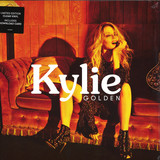
Limited Edition Clear Vinyl
Includes 12' Vinyl and Deluxe CD album, 30 page hard back book
Now that I've been to Nashville,' Kylie Minogue says with audible affection, I understand. It's like some sort of musical ley-line...'
Golden, Kylie's fourteenth studio album, is the result of an intensive working trip to the home of Country music, a city whose influence lingered on long after the pop legend and her team returned to London to finish the record: We definitely brought a bit of Nashville back with us,' she states. The album is a vibrant hybrid, blending Kylie's familiar pop-dance sound with an unmistakeable Tennessee twang. It was Jamie Nelson, Kylie's long-serving A&R man, who first came up with the concept of incorporating a Country element' into Kylie's tried-and-trusted style. That idea sat there for a little while, with Minogue and her team initially unsure about how to bring it to life. Then, when Grammy-winning songwriter Amy Wadge's publisher suggested Kylie should come over to collaborate in Nashville, a city Kylie had previously never visited, something clicked. You know when you're so excited about something,' she recalls, that you repeat it an octave higher and double the decibels I was like that. 'Nashville! Yes! Of course I would!'. I hoped it would help the album to reveal itself. I thought 'If I don't get it in Nashville, I'm not going to get it anywhere.''
Kylie's Nashville trip involved working alongside two key writers, both with homes in the city. One was British-born songwriter Steve McEwan (whose credits include huge Country hits for Keith Urban, Kenny Chesney and Carrie Underwood), and the other was the aforementioned Amy Wadge, another Brit (best known for her mega-selling work with Ed Sheeran). It was then a truly international project: Golden was mainly created with African-German producer Sky Adams and a list of contributors including Jesse Frasure, Eg White, Jon Green, Biff Stannard, Samuel Dixon, Danny Shah and Lindsay Rimes, and there's a duet with English singer Jack Savoretti.
However, the album's agenda-setting lead single Dancing was, significantly, first demoed with Nathan Chapman, the man who guided Taylor Swift's transition from Country starlet to Pop megastar. If anyone knows how to mix those two genres, Chapman does. Nathan was the only actual Nashvillean I worked with. He's got a huge studio in his house, which is probably due to his success with Taylor... there's plenty of platinum discs of her, and others on his walls.' There's something of the spirit of Peggy Lee's Is That All There Is, of Dylan Thomas' Do Not Go Gentle Into That Good Night, even of Liza Minnelli's Cabaret about Dancing, a song which not only opens the album but sets out its stall, providing a microcosm of what is to come. You've got the lyrical edge, that Country feel, mixed with some sampling of the voice and electronic elements, so it does what it says on the label. And I love that it's called 'Dancing', it's immediately accessible and seemingly so obvious, but there's depth within the song.'
The experience of simply being in Nashville was an overwhelming one, before Kylie had even arrived. Once I knew I was going to Nashville, people talked about the place with such enthusiasm. They said without doubt I would love it and, I would come back with songs. They were sending lists of restaurants, coffee shops and bars. It really was a beautiful and genuine response and it felt like I was about to have a life changing experience and in a way, I did.' The reality came as something of a surprise, when she found a far more modern metropolis than the vintage one she'd envisaged. I thought it would be like New Orleans: little houses and bars, with music spilling out onto the street. It reminded me more of Melbourne: apartment blocks going up everywhere! The main strip, Broadway, where the honky tonk bars are, that's where the street was filled with music and it was just amazing.' Mainly, Minogue remembers the heat and humidity. It was 100 degrees. It was like it was raining with no rain.' She also relished the chance to wander around unrecognised, visit a few venerable music bars and soak in the atmosphere. I didn't get to the Grand Ole Opry or the music museums but I managed to go to a couple of the institutions there like The Bluebird Cafe and The Listening Room, and just by being there, through some kind of osmosis, you get this rejuvenated respect for The Song, and the writing of The Song. There's no hoo-hah around it. There's a singer-songwriter there, talking about the song and singing the song, to an audience who are there to listen. Although, I have to confess I was guilty of starting to clap too soon during a long pause at the end of one of the songs. The guy made a bit of a joke out of it and got a laugh from it, but I thought 'Of all people in the audience, no...''
It's probably no coincidence, therefore, that every track on Golden is a Kylie co-write, making it arguably her most personal album to date. The end of 2016 was not a good time for me,' she says, referring to well-documented personal upheavals, so when I started working on the album in 2017, it was, in many ways, a great escape. Making this album was a kind of saviour. I'd been through some turmoil and was quite fragile when I started work on it, but being able to express myself in the studio made quick work of regaining my sense of self. Writing about various aspects of my life, the highs and lows, with a real sense of knowing and of truth. And irony. And joy!'
The songwriting process allowed Kylie to get a few things out of her system. Initially, she admits, it was cathartic, but it also wasn't very good. I think I was writing too literally. But I reached a point where I was writing about the bigger-picture, and that was a breakthrough. It made way for songs like Stop Me From Falling and One Last Kiss. It also meant I had enough distance to write an autobiographical song, like A Lifetime To Repair, with a certain amount of humour. The countdown in that song: 'Six-five-four-three, too many times...'. I don't know if that will be a single, but I can just imagine a girl with framed pictures of past boyfriends, and kind of going 'Oh god, when am I going to get this right'' When she listens back to Golden, Kylie can vividly hear the Nashville in it. It is, she'll agree, probably the first time that a Kylie album has sounded like the place it was made. You wouldn't normally relate my songs to the cities. Can't Get You Out Of My Head sounds more like Outer Space than London. But Shelby '68, for example, was written in London but it was done with Nashville in mind. It's about my Dad's car, and my brother recorded Dad driving it! I don't think I'd have written a number of the songs, including Shelby '68 and Radio On without having had that Nashville experience.'
The latter, she says, is about music being the one to save you.' Throwing herself into the making of the record, she says, crystallised that idea. If there's one love that will always be there for you, it's music. Well, it is for me, anyway.' That song, in particular, carries nostalgic echoes of the golden age of Country, as heard through Medium Wave transistors and tinny home stereos in the distant past. Like any child of the Seventies, Kylie had a basic grounding in Country music, mainly absorbed from older family members. My Step-Grandfather was born in Kentucky and though he lived most of his adult life in Australia, he never stopped listening to his beloved Country artists.' If there's any classic Country singer whose imprint can be heard on Golden, it's Dolly Parton.
Kylie saw Dolly live for the first time at the end of 2016, at the Hollywood Bowl. It was like seeing the light,' she beams. It was incredible. Everyone, whether they know it or not, is a Dolly Parton fan. When I was in Nashville, I did pick up a T-shirt that said 'What Would Dolly Do' Maybe that should be my mantra.' And, whether consciously or otherwise, there's a timbre and trill to Kylie's vocals on Radio On that is distinctly Parton-esque. My delivery is quite different on this album,' she says. A lot of things are 'sung' less. The first time I did that was with Where The Wild Roses Grow. On the day I met Nick Cave, when I recorded my vocals, he said 'Just sing it less. Talk it through, tell the story.' This album wasn't quite to that extreme, but a lot of the songs were done in fewer takes, to just capture the moment and keep imperfections that add to the song. I remember on my last album, a lot of producers were trying to take out literally every vibrato they heard. And that's not natural to my voice. I mean, I can make myself sound like a robot, but it's nice to sound like a human!' Working within the Country genre also gave Kylie permission to write in the Nashville vernacular. Because we were going there, I wasn't afraid to have lines like 'When he's fallen off the wagon we'd still dance to our favourite slow song', 'Ten sheets to the wind, I was all confused', 'I'll take the ride if it's your rodeo'. The challenge of bringing a Country element to the album made the process feel very fresh to me, kind of like starting over. I started to look at writing a different way, singing a different way.'
If ever Kylie lost confidence in the Country-Pop concept, and found herself pondering This is great, but back in the real world - my real world - how will this work', Jamie Nelson was there to badger her into sticking to the path. We found a way to make it a hybrid with what we'll call my 'usual' sound. It had to stay 'pop' enough to stay authentic to me, but country enough to be a new sound for this album. The closer we zoomed in, and the more we honed it, I knew Jamie was right. We sacrificed good songs that weren't right for this album, because we wanted it to be as cohesive as possible. The songs that were hitting the mark were these ones, so we decided to be strong, and that's how we wrapped up the album. What he said, that stuck with me, was that 'I'd hate to get to the end of this and really wish we'd gone for it.'' Having worked with Kylie for so long, Nelson was able to put this latest shift of direction into perspective. He said 'You've traditionally done it throughout your career. You had your PWL time, then you did a complete turn when you went to deConstruction, then another complete turn with Spinning Around, and R&B dance-pop, and then another turn with Can't Get You Out Of My Head, icy synth-pop, and this is another one.' He was right. It felt like the right time to have a change sonically. New label, new stories to tell, and a new decade almost upon me.'
Kylie Minogue will, it's scarcely believable, turn 50 this year. This looming milestone is partly behind the album's title, and title track. I had this line that I wanted to use: 'We're not young, we're not old, we're golden' because I'm asked so often about being my age in this industry. This year, I'll be 50. And I get it, I get the interest, but I don't know how to answer it. And that line, for my personal satisfaction, says it as succinctly as possible. We can't be anyone else, we can't be younger or older than we are, we can only be ourselves. We're golden. And the album title, Golden, reflects all of this. I liked the idea of everyone being golden, shining in their own way. The sun shines in daylight, the moon shines in darkness. Wherever we are in life, we are still golden.' One of the album's shiniest moments is Raining Glitter, an exuberant banger which ventures closest to Kylie's traditional dance-pop comfort zone. Eg White, who is one of the producers and writers and a great character, was talking about disco one day. I said 'I love disco, but you know the brief.' We needed to be going down the Country lane, so to speak. But we managed to bring them both together. When I wrote it, I was thinking about the Jacksons video for Can You Feel It where they're sprinkling glitter over everyone. And I think there's a Donna Summer record that's got that feel to it. I think that's my job: I basically leave a trail of glitter after every show I do anyway.'
Kylie is looking forward to the challenge of incorporating the Golden material into her live shows. Mixing these songs in with my existing catalogue is going to be fun. And it could be fun to do some of those songs with just a guitar. It'll make my acoustic set interesting...'Her incredibly loyal fans - to whom one Golden song, Sincerely Yours, is intended as a love letter' - will, she believes, have no problem with her latest stylistic shift. My audience have been with me on the journey, so I shouldn't be afraid that they won't come with me on this part. I've had fun with it, and I'm sure they will too.'
The time spent making Golden has, Kylie says, been a time of creative and personal renewal. I've met some amazing people, truly inspiring writers and musicians. My passion for music has never gone away, but it's got bigger and stronger.' And if there's an overriding theme to the record, it is one of acceptance. We're all human and it's OK to make mistakes, get it wrong, to want to run, to want to belong, to love, to dream. To be ourselves.'
I was able to both lose and find myself whilst making this album.'

Black Truffle is pleased to make Oren Ambarchi's Grapes from The Estate available once more on vinyl. Originally released on CD on Touch in 2004 and reissued on Southern Lord as a limited double LP in 2006 during Ambarchi's tenure as a member of Sunn O))), Grapes from the Estate was a landmark release for Ambarchi, seeing him expand his sonic palette beyond the clipped, bass-heavy electric guitar tones he was known for at that point. Incorporating subtle layers of strings, keyboards, percussion over a bedrock of his signature guitar tones, in retrospect this album can be seen as the beginning of a broadening and evolution in Ambarchi's work that would lead to his acclaimed, densely layered epics for Editions Mego, Quixotism (2014) and Hubris (2016). Beginning with the shuddering pure tones of opener 'Corkscrew', which looks back to previous guitar-only releases such as Suspension (2001), the album's next two pieces show a progressive broadening of the instrumental palette and a corresponding move away from textural abstraction and sustained tones towards more traditional notions of musicality. This reached its high point on the album's third piece, the fifteen-minute long 'Remedios The Beauty', where guitars, both acoustic and electric, strings, piano, and bells build from a murmur to an interlockinging web of repeating melodic patterns over gently swinging brushed snare and cymbals. The epic closer, 'Stars Aligned, Webs Spun', returns us to a space populated only by the electric guitar, but unlike everything Ambarchi had produced up until this point in his career, the piece has a liquid, psychedelic edge that looks forward to the shimmering harmonics of his more recent work. As Brendan Walls wrote at the time of the original release, this is 'another outpouring of personal, intimate and enduring music from Oren Ambarchi'. Presented in a stunning gatefold sleeve featuring the original artwork and design by Jon Wozencroft. Redesigned by Stephen O'Malley Remastered and cut by Rashad Becker at D&M, Berlin.
