RASTER MEDIA 30 YEARS ANNIVERSARY EDITION REPRESS / 180 G VINYL
Ich bin meine Maschine features remixes by Boys Noize, Function and AtomTM himself.
to underline this tryptic statement (and to demonstrate the diversity) of one of atom™'s compositions that appeared on his 2013 'HD' album, raster-noton now releases a vinyl ep featuring remixes by boys noize, function and atom™ himself. 'ich bin meine maschine', in an elaborate manner, illustrates uwe schmidt´s main musical concern - the exploration of electronics in pop music. inspired by a statement of the cybernetician heinz von foerster, atom™ constructed/generated a message that is playing around with a widely-cited kraftwerk quotation, turning 'ich bin eine maschine' into 'ich bin meine maschine' (i am my machine). besides the album version of 'ich bin meine machine,' the ep features some dominantly techno infuenced versions that perfectly connect the pop attitude of 'HD' with dancefoor functionality. the boys noize remix shows off alexander ridha´s deft skills for translating atom™´s futuristic pop into his own rough and driving electronic language. on the other hand, atom™'s 'linear remix' breaks down the original structure of the song and turns it into a reduced and much straighter, forward looking composition. function - one of techno's true underground heroes - provides a remix that is breathing the air of solid and hypnotic club music, in which just the essential elements are streamlined and ondensed into perfection. all 3 remixers adapt the track to their particular universe. by doing so, they prepare the 12' vinyl for its fnal destination - the club.
quête:its a musical
- A1: Svitanie - Jonáš Gruska
- A2: Yamaha Birds Pt 1 - Dialect
- A3: La Guardiana De Las Ondas Radiales 1 - Makakinho Do Amor
- A4: Sonderbare Ereignisse Am Lake Hillier - Baldruin
- A5: Kirkas Laulu, Haalea Valo - Olli Aarni
- A6: Wind Up Paradise Birds -Øyvind Torvund, Bit20 Ensemble, Trond Madsen, Jørgen Træen, Kjetil Møster
- A7: Whizz -Vic Bang
- A8: A Glitch In The Jungle - Grykë Pyje
- A9: Harpusta / Tarjous -Tomutonttu
- B1: Vögel Unserer Heimat - Native Instrument
- B2: Irekle Qoştar - Hmot
- B3: Ptakodisk - Artificial Memory Trace
- B4: Mijn Papegaai Fluit Pure Tonen - Floris Vanhoof
- B5: Aviary - John Also Bennett
- B6: Susurrus - Cheryl E Leonard
- B7: The Wild Birds Of Bluesealand - Mike Cooper
- C1: Un Signe Sylvestre - Matthias Puech
- C2: Barrockstadt Feathered Symphony - Enchanted Lands
- C3: Kolibřík - Ursula Sereghy
- C4: Pigeon Tones For Eggflute - Ecka Mordecai, Malvern Brume
- C5: Bird To Bottle - Banana, Alexandra Spence, Mp Hopkins
- C6: Whistle & Bag - Rie Nakajima
- C7: The Listener - Martina Lussi
- D1: Clivis - James Rushford
- D4: Synthetic Birdsong - Andrew Pekler
- D5: 030652_0125ꜱ12 ᴡᴀᴠ - Atte Elias Kantonen
- D6: Dive Woodz - Kensho Nakamura
- D7: Time Flys - Felicity Mangan
- D8: While They Gathered My Ears Grew - Maria Komarova
- D9: Birds In Gutter - Misha Kurilov
- D2: Three Calls - Kate Carr
- D3: Starlings Gulls Doves - Infant
When you listen to birds, they usually talk about food, sex/family, or anxiety. If they knew about the true nature of humanity's cruel and exploitative relationship with birds, they would be discussing rebellion. Humanity's current trajectory about birds is to cause the extinction of one-third of all bird species by the end of this century.
This record crystallises the borders between memory, beauty, and anxiety. At the core is an amalgam of all the birds we have met and heard, their sounds synthesised from a blend of memories. Esthetically it simulates the qualities of bird sounds, hitting similar frequential sweet spots. There is a great variety of birds captured here, from high to low frequencies, from solo voices to groups, from birds standing on their own to complex world-building, where the bird voices are part of an ecosystem, becoming one of the instruments.
You could stop there, enjoying this record on a musical level, but it invites us to do one step further, to consider reconfiguring our relationship with the Earth and its inhabitants. To question our impact, and to ask why we need synthetic bird music. Is it just a visionary endeavour or is it because we are failing at fostering a world in which organic birds and other creatures can thrive?
32 artists from the whole world, including our favourite artists from Eastern Europe, have contributed to this compilation both with new and previously released music. Their music is ordered from dawn to dusk and into the night. For many of the artists it's their first time on mappa, but some have previously released an album with us.
'Flowers', the new EP from Elizabeth Davis, finds itself at the cross-section of many factors. In part, it’s the result of Davis’ obsession with a seminal folk song. But it also coincides with her rediscovery of the voice and language as an instrument. It was recorded during an autumn residency at Sternhagen Gut, the cultural refuge run by Gudrun Gut and Thomas Fehlmann, located deep in the Uckermark countryside halfway between Berlin and the Baltic coast.
The six tracks on 'Flowers' all take Pete Seeger’s ‘60s protest-folk song 'Where Have All The Flowers Gone' as their starting point. However, they veer off in different directions, from vocal loops and deconstructed lyrics, to instrumental drones and glitchy, manipulated rhythm tracks. Like many musicians, Davis has learnt composition by a process of disassembly, analyzing musical works piece by piece, and 'Flowers' began as one such forensic exercise. “But sometimes,” says Davis, “a source is so loaded up on meaning that the studies and experiments can become worthwhile and meaningful works in their own right.” 'Flowers' began to take on a life of its own, raising renewed questions about age-old themes such as war, authorship, translation and historical structures.
Davis is no stranger to cover versions. From studying violin to playing in free jazz and punk bands, interpreting other artists’ works has long been a key part of her musical approach. And since her radio show 'Deep Puddle' recently drew to a close after seven years, her experiments with narration and sound collage have found their way into her musical work once again. For 'Flowers', she cut up the source material (with a nod to Gysin and Burroughs), and reassembled the lyrics, the musical notes, and recordings by different performers, to create uncanny new forms.
But perhaps the biggest influence on 'Flowers' was conversations about music, art and pop subcultures with Gut. These dialogues helped Davis find a balance between far-out sound design experiments and catchy melodies, combining a certain avant-garde element and modern day songcraft. And it’s this sense of conversation, this revisiting of topics and renewal of ideas, that will keep us coming back to 'Flowers' long into the future.
ince its opening in spring 2021, JUBG, a still young Cologne gallery for contemporary art, has specialized in the broad field of artists and collaborations working along artistic interfaces, especially those between visual art and experimental and/or electronic music. For example, JUBG has already hosted exhibitions by Markus Oehlen, Kim Gordon, Wolfgang Voigt, Matthias and Aksel "Superpitcher" Schaufler, Sven-Åke Johansson, and Emil Schult. Albert Oehlen, who is a kind of mentor and supporter of the gallery, was also a guest at Albertusstraße this summer, where he presented the exhibition D-I-E ORPHEUSMASCHINE together with Michael Wertmüller, Thomas Stammer and the poet Rainald Goetz.
It is only logical that the gallery now expands its sphere of activity to include its own label, on which music appears that comes from similar contexts as the artists listed above already suggest.
As catalog number 1, JUBG is now releasing the official soundtrack to "The Painter" from 2021. The film, German title "Der Maler", is a mixture of feature film and documentary and a collaboration between German director Oliver Hirschbiegel, best known for his Oscar-nominated film "Downfall", and Albert Oehlen, with whom Hirschbiegel has a long friendship, as they both once studied together at the Hochschule der Bildenden Künste in Hamburg.
The docu-fiction shows Oehlen struggling with a painting and pondering the meaning of his work. Oehlen is played by German actor and musician Ben Becker, accompanied by the off-screen voice of Charlotte Rampling. In the film, Becker makes a painting that Oehlen himself creates step by step behind the camera, while the actor improvises the process in front of the camera.
The wonderful music for this film comes from no less than two outstanding personalities whose individual biographies and musical signatures could hardly be better suited to this project. On the A-side it is Gudrun Gut, icon not only of the German electronic music scene since at least the 90's, singer, composer, DJ, label owner (Monika Enterprise) and of course founding member of the legendary 80's New Wave band Malaria. On the B-side it’s the world famous and award winning US avant-garde trumpeter and improvisational musician Nathan "Nate" Wooley, who has played with Fred Frith and John Zorn among others.
Gudrun Gut's tracks bear such beautiful titles as "Bewegung", "Küste" or "Weinen" and she once again pulls out all the stops of her great skills and decades of experience as a producer of the most diverse electronic music genres. These are unusual and much more experimental musical paintings that she creates here than on her recent solo works. Edgy, angular, raw and unpolished, yet always elegant and clever, she subverts the male artist madness depicted extensively in the film in her own unique way.
Nathan Wooley answers with the instrument he has been familiar with since childhood, the trumpet, with which he is able to create a ravishingly virtuosic noise. His pieces are more like sketches, often only 90 seconds or a few minutes long, but in all their abstractness underpin the narrative of the film almost perfectly.
A limited edition of 20 copies in total, painted and signed by Ben Becker, can be purchased directly through JUBG.
JUBG, eine noch junge Kölner Galerie für zeitgenössische Kunst, hat sich seit ihrer Eröffnung im Frühjahr 2021 auf das weite Feld von Künstler:innen und Kollaborationen spezialisiert, die entlang künstlerischer Schnittstellen tätig sind, insbesondere an denen zwischen bildender Kunst und experimenteller und/oder elektronischer Musik. So hat JUBG bereits Ausstellungen von Markus Oehlen, Kim Gordon, Wolfgang Voigt, Matthias und Aksel "Superpitcher" Schaufler, Sven-Åke Johansson und Emil Schult gezeigt. Auch Albert Oehlen, der eine Art Mentor und stiller Unterstützer der Galerie ist, war im Sommer dieses Jahres zu Gast in der Albertusstraße, wo er zusammen mit Michael Wertmüller, Thomas Stammer und dem Dichter Rainald Goetz die Ausstellung D•I•E ORPHEUSMASCHINE präsentierte.
Es ist nur logisch und folgerichtig, dass die Galerie ihren Wirkungskreis nun um ein eigenes Label erweitert, auf dem Musik erscheint, die aus ähnlichen Zusammenhängen und Sphären stammt, wie es die oben aufgezählten Künstler:innen bereits vermuten lassen.
Als Katalog-Nummer 1 veröffentlicht JUBG nun den offiziellen Soundtrack zu "The Painter" aus dem Jahr 2021. Der Film, deutscher Titel “Der Maler”, ist eine Mischung aus Spiel- und Dokumentarfilm und eine Zusammenarbeit zwischen dem deutschen Regisseur Oliver Hirschbiegel, vor allem bekannt für seinen Oscar-nominierten Film "Der Untergang", und Albert Oehlen, mit dem Hirschbiegel eine lange Freundschaft verbindet, studierten sie doch beide zusammen einst an der Hochschule der Bildenden Künste in Hamburg.
Die Doku-Fiktion zeigt Oehlen, wie er mit einem Gemälde kämpft und über die Bedeutung seines Werks nachdenkt. Oehlen wird vom deutschen Schauspieler und Musiker Ben Becker gespielt und von der Stimme von Charlotte Rampling aus dem Off begleitet. Im Film erstellt Becker ein Gemälde, das Oehlen selbst hinter der Kamera Schritt für Schritt anfertigt, während der Schauspieler den Prozess wiederum vor der Kamera improvisiert.
Die wunderbare Musik zu diesem Film kommt von gleich zwei herausragenden Persönlichkeiten, die mit ihren individuellen Biographien und musikalischen Handschriften kaum besser zu diesem Projekt passen könnten. Auf der A-Seite ist dies Gudrun Gut, Ikone nicht nur der deutschen elektronischen Musikszene seit mindestens den 90er Jahren, Sängerin, Komponistin, DJ, Label-Betreiberin (Monika Enterprise) und natürlich Gründungsmitglied der legendären 80er Jahre New Wave-Band Malaria, auf der B-Seite der weltberühmte und Preisgekrönte US-amerikanische Avantgarde-Trompeter und Improvisationsmusiker Nathan “Nate” Wooley, der u.a. mit Fred Frith und John Zorn zusammengespielt hat.
Gudrun Gut’s Tracks tragen so schöne Titeln wie “Bewegung”, “Küste” oder “Weinen” und sie zieht hier einmal alle Register ihres großen Könnens und ihrer jahrzehntelangen Erfahrung als Produzentin der verschiedensten elektronischen Musikspielarten. Es sind ungewöhnliche und sehr viel experimentellere musikalische Gemälde, die sie hier entwirft als auf ihren jüngsten Solo-Werken. Kantig, eckig, roh und ungeschliffen und dabei immer elegant und schlau, unterläuft sie den im Film ausgiebig dargestellten männlichen Künstlerwahnsinn auf ihre ganz eigene Art und Weise.
Nathan Wooley antwortet mit dem ihm seit Kindesbeinen vertrauten Instrument, der Trompete, mit der er in der Lage ist, einen hinreißend virtuosen Lärm zu erzeugen. Seine Stücke sind eher Skizzen, oft nur 90 Sekunden oder ein paar wenige Minuten lang, die in all ihrer Abstraktheit das Narrativ des Films nahezu perfekt untermalen.
Eine auf insgesamt 20 Exemplare limitierte Edition, bemalt und signiert von Ben Becker, ist direkt über die JUBG zu erwerben.
"Chuck Roth’s music wanders. The New York-based guitarist’s inquisitive style builds from rippling patterns that center the physicality of his instrument, roaming wherever they take him. watergh0st songs, his Palilalia debut, collects songs from the past half-decade, presenting an intimate snapshot of his music that draws from an eclectic background in classical guitar, electronic music, and improvisation." "The mark of watergh0st songs is its exploratory nature. Roth began his musical journey as a classical guitarist studying the canon works for the instrument, but he was never interested in playing fast or flashy. Instead, he wanted to roam down musical paths and see where they led him. He eventually became more interested in electronic music, where he found inspiration in subtractive properties and patterning. The music of watergh0st songs translates that electronic music to the guitar: many of the songs began as synth tones and later branched out through the physicality of his instrument." "When writing music, Roth wants melodies to feel comfortable in the body, focused less on setting a structure and more on letting music unfold how it happens in any given moment. His songs are fluid and his melodies are clear, plucked with careful attention but never too deterministically. His is the music of a traveler, floating around the strings of the guitar. It is about embracing the banal, or the everyday moments that shape a life." "Though Roth’s music often feels quite direct, there is a dreaminess that lives inside of it. His lyrics don’t feel too hot or cold, instead they have a wistfulness and melancholy of what it feels like to live through every passing day. His exploratory style bolsters these lyrics, giving the music its sense of ennui, as does his focus on texture. Each track takes on a different structure: 'Bunny Hop' unfolds like a squirrel jumping from branch to branch of a tree, while 'Private Boy' has a slower approach, growing from delayed harmonics that almost sound like bowed strings. His textures range from metallic and bristling to soft and feathery, evolving with gentleness. It is about ending up somewhere different than where it started, and watching the notes that fall in-between." The embrace of the routine colors Roth’s music. In it, there is a sense of presence, of admiring the smallest details and moments. Roth loves to take walks and look around, observing the beauty of his surroundings. Similarly, watergh0st songs feels like moving through the world at the pace of a comfortable trot and soaking in every sound as it emerges. It is a quiet evolution—but one that stays."—Vanessa Ague
- 1: When The Cold Wind Blows
- 2: The Death Of Me
- 3: Different Kinda Woman
- 4: If I Was King
- 5: Shakedown
- 6: Fire And The Flame
- 7: I'm Ready
- 8: Paralyzed
- 9: Carry On
- 10: Battered And Bruised
- 11: What The Future Holds
BLACK SWAN Return with Third Album “Paralyzed” — A Masterclass in Melodic Hard Rock Robin McAuley (McAuley Schenker Group), Reb Beach (Winger, Whitesnake), Jeff Pilson (Foreigner, The End Machine, ex-Dokken), and Matt Starr (Ace Frehley, Mr. Big) — collectively known as BLACK SWAN — are back with their explosive third album, Paralyzed. Following the critical acclaim of their previous releases, the supergroup once again delivers a powerful statement in modern hard rock. With all songs written and composed by McAuley, Pilson, and Beach, and expertly produced by Pilson, Paralyzed showcases Black Swan at their peak performance — offering a dynamic mix of towering vocals, razor-sharp riffs, and hook-laden melodies. The band’s chemistry continues to shine, elevating their songwriting and musical delivery to new heights.
Tracked at Pilson’s Los Angeles studio, the album reflects the tight-knit synergy among its members. McAuley’s commanding vocals remain as ageless, while the instrumentalists deliver with precision and fire. Much like its predecessors, the new record is a testament to the individual and collective talents of these seasoned musicians. Far from being a patchwork of their previous bands, BLACK SWAN has firmly carved out its own identity. Paralyzed is fresh, heavy, and melodically rich — a cohesive and compelling album that feels both classic and contemporary. Building upon the blueprint laid by their debut, Shake the World, the band expands their sonic universe. The result is a record that not only meets but surpasses expectations, cementing BLACK SWAN as a formidable force in the modern hard rock scene. Whether you’ve followed these legendary musicians since the heyday of '80s rock or you’re just now discovering their magic, Paralyzed is essential listening — a masterclass in melodic hard rock delivered by artists who continue to defy time and expectations.
- El Regreso
- El Encuentro
- Turbación
- La Mirada
- Sandía
- Indiferencia
- Conversación
- El Beso
- Fama
- Lluvia
- Nocturno
- Golondrinas
- Maga
- Otoño
- En La Esquina
La Margarita (1994) is an unforgettable collaboration between iconic Uruguayan musician Jaime Roos and legendary writer and playwright Mauricio Rosencof. Blending the rich musical traditions of Uruguay-candombe, murga, tango, and milonga-with elements of folk and rock, as he is known for, Roos sets to music a cycle of sonnets that tell a tender, naive love story. These poems were written by Rosencof under harrowing conditions during his imprisonment by the Uruguayan dictatorship in the 1970s. Includes 16-page booklet. Jaime Roos and Mauricio Rosencof are two of Uruguay's most beloved and influential artists. Roos, a groundbreaking musician, redefined Uruguayan music in the 1980s with his signature fusion of deep-rooted local rhythms and cosmopolitan flair. Rosencof, a celebrated writer and playwright who emerged in the early 1960s, was also a prominent figure in the historic Tupamaros guerrilla movement. Their paths converged in 1987, when Roos composed the score for Rosencof's play El Regreso del Gran Tuleque. During this collaboration, Roos discovered a series of sonnets Rosencof had written while imprisoned under Uruguay's brutal dictatorship. Held in solitary confinement for over eleven years, Rosencof composed these poems as a lifeline-scribbled on cigarette papers and hidden in the hems of clothes his family collected for laundering. Against all odds, both the author and his poems survived. The sonnets tell a delicate, moving love story set in 1950s Montevideo. Roos, inspired and captivated, rose to the challenge of transforming them into music. The result was La Margarita-a groundbreaking project in which Roos masterfully fused Uruguay's rich musical traditions-candombe, murga, tango, and milonga-with elements of folk and rock, creating a deeply evocative set of songs as only he could deliver. Beyond its beautiful music, La Margarita stands as a testament to resilience, creativity, and the enduring power of love and art.
- A1: Madre Terra
- A2: Destino
- A3: Occhi Fissi Feat. Madbuddy
- A4: Viaggio Nella Musica
- A5: L’attesa (Skit)
- A6: No Drama Feat. Claver Gold
- B1: Sott’ E Sop’
- B2: Sulle Nuvole
- B3: La Multa (Skit)
- B4: Funk4Ass
- B5: Riti Oscuri
- B6: Per La Mia Gente
- B7: L’attimo (Bonus Track)
Joe Allotta's solo project (drummer, composer, and singer) was born from his need for freedom of expression after numerous experiences
as a session musician for artists such as Davide Shorty, Johnny Marsiglia, Funk Shui Project, Mario Biondi, Leburn Maddox, Giles Robson,
Amy True, and Imaani (Incognito).
His compositions embody the desire to make jazz, in its various forms and influences, accessible to the widest possible audience without sacrificing the impact of an engaging and captivating live performance.
Joe Allotta blends hip hop, funk, and drum 'n' bass with contemporary jazz, perfectly blending vocals with his performances. He combines
his rhythmic exploration with a sweet and surprising voice, capable of lending further emotional depth to his music.
"Transition" is a musical journey that reflects a life in constant motion, where everything seems fleeting, fast, and fleeting, immersed in the
frenetic rhythms that surround us every day. The title also encompasses a more intimate dimension: the growth of his artistic identity. Joe is
no longer just a drummer and composer, but also a singer. His intense and surprising voice intertwines with his drumming in a continuous
dialogue, opening up new expressive possibilities and adding further depth to his musical language.
The album was produced in the studios of the Sghetto Club in Bologna, where Joe, together with his producer Jacopo Trapani, spent weeks
researching and experimenting: rehearsing, playing, processing and synthesizing sounds, developing and arranging ideas, thanks also to
the collaboration of extraordinary musicians. The result is a work that blends instinct and research, intimacy and openness, movement and
transformation: exactly what Transition aims to convey.
CREDITS
Giuseppe "Joe" Allotta: Compositions, Vocals, Drums, Bass, Keyboards
Jacopo Trapani: Compositions, Recording, Mixing
Chicco Allotta: Piano (Track 1)
Giovanni Galdo: Bass (Track 1)
Riccardo Dalle Vedove: Trombone (Track 1)
Piergiorgio Perrella: Guitar (Tracks 2, 5, 8, 9)
Elijah Lee Last Jacinto: Piano (Track 6)
Matteo Diego Scarcella: Sax (Track 6) Francesco Brini: Master
- 1: Jeu De Plomb
- 2: Honky Whale
- 3: Thirdal
- 4: Shallow Dive
- 5: Hildegund
- 6: Cantantor
- 7: Foremostly
- 8: Old Segotia
- 9: Swallow Dive
- 10: Reverse Burst
- 11: Oíche Crua Sna Sléibhte
From the opening notes – arriving as if in mid-air – to its final, cheerful burblings, Sean Mac Erlaine and Caoimhín Ó Raghallaigh’s Old Segotia is an album about friendship: both musical and human, the product of two distinctive musicians visiting each other’s worlds with a sense of veneration, and a sense of joyful wonder.
Here, Mac Erlaine (This is How We Fly, Quiet Music Ensemble) and Ó Raghallaigh (The Gloaming, This is How We Fly) meet on common ground developed over 20 years of playing together, with Mac Erlaine’s musical language rooted in jazz and sonic experimentation, and Ó Raghallaigh emerging from an Irish traditional music that he has shaped and reshaped in a deeply personal way.
In this place, Mac Erlaine and Ó Raghallaigh’s music is profoundly integrated and emotionally textured: at times bursting with explosive energy, at times almost sighing into life, but always searching. Here are the touching unison duets of ‘Cantandor’, the lyrical wanderings of ‘Swallow Dive’, or the flirtations with finding a groove in ‘Reverse Burst’.
The palette of instruments speaks to the album’s feeling of abundance, with Mac Erlaine performing on clarinets, chalumeau d’amore, three different flutes, car hooter, percussion, live electronics, Wurlitzer, synthesiser, vocals and alto saxophone; and with Ó Raghallaigh bringing his signature hardanger d’amore sound plus a turn on the flute and live electronics, too.
With the title echoing a well-worn Dublinese expression for “friend”, Old Segotia plays out with ‘Oiche Crua Sna Sleibhte’ (A Hard Night in the Mountains), with ornithologist Seán Ronayne’s field recordings of birdsong rising out of the musicians’ playful explorations, offering a taste of life echoing music, echoing life.
APORIAMOR noun 1. The death of love’s contradiction.
| “Embody APORIAMOR”
Etymology
aporia-: an irresolvable internal contradiction or logical disjunction in a text, argument, or theory. from Greek aporos ‘impassable’, from a- ‘without’ + poros ‘passage’
-amor: love. Sentimiento intenso del ser humano que, partiendo de su propia insuficiencia, necesita y busca el encuentro y unión con otro ser. Del latín amor.
-mor: latin for death.
APORIAMOR explores the affective ontological and organic processes of love and lust in the turmoil of an urban existence, through the female lens. It expresses the process of strengthening through heartbreak in its various forms.
With her debut EP The Art of the Concrete, elsas knew that by giving that name to a record which was ironically expansive and experimental, she would be calling for a distilled and clearer path further down the line. This is what she’s been incorporating into the sonic world of this new EP, APORIAMOR, signifying the birth of a more matured and distilled version of herself as an artist.
With APORIAMOR (“the death of love’s contradiction”) elsas conveys a personal process of healing in the romantic space. Through different experiences of heartbreak, elsas builds a language - a coping mechanism attached to its subsequent artistic expression – that isn’t founded on hardness or a closing-off, but instead, on a playful but profound reckoning, and learning of self-worth.
APORIAMOR embraces the complexities of being a lover-girl: of moving through life with an open heart. It celebrates the clarity, sweet hindsight, and detachment that come from processing emotion. APORIAMOR is both an affirmation and a release.
elsas makes canonical blends with a forward boundary-bending vision. Her sound in this record is naturally referential of both her Mediterranean heritage and UK alternative music — intrinsic parts of her lived experience. She has had the opportunity to collaborate with artists she deeply admires, each exchange enriching her creative world.
The experience of working hand-in-hand with Sampha for the last 3 years and ongoingly has been a core of her evolution as an artist. She has also collaborated in many forms with artists like Florence + the Machine, Little Simz, Jordan Rakei, Jockstrap, Obongjayar, Black Country New Road, Genevieve Artadi (KNOWER) and Duval Timothy. Additionally, her ongoing work with the Idrîsî Ensemble, of which she is a core member, continues to inform her artistic depth.
The making of this largely self-produced record unfolded over four years — “it’s a well-kneaded dough,” she says. These songs evolved through exposure to multiple environments: from early writing sessions in her childhood home in the Spanish countryside, to stages across the U.S. while on tour supporting Sampha.
Experimentation and modulation are an intrinsic part of elsas’ method, conceiving songs as organisms that respond to their surroundings. Collaborators on this collection of songs include Shrink, Will Lister, Gabriel Gifford, Ethan P. Flynn and more. The record was mixed by David Wrench (a long-time supporter of elsas’) and Nathan Boddy, and mastered by Matt Colton.
With APORIAMOR, elsas creates a visual world from the fabulation of the past, as an act of playful historical revisionism in which she embeds herself as both subject and storyteller. The songs function like an archive of her experiences across various years, each one unearthed and presented as some sort of archaeological artifact. Through this body of work, elsas begins to conceptualize herself as a legacy artist: one who honors the archive of her own becoming while emerging as a distinct and resonant voice in today’s musical landscape.
- 1: Ice Kingdom 04:48
- 2: My Hand With A Knife 0:58
- 3: Dreamology 02:54
- 4: Western Morning 03:03
- 5: Duplex 03:16
- 6: Brick Hotel 02:49
- 7: Space Available 01:51
- 8: A New Hope 03:09
- 9: Senka 03:05
- 10: Bike Rides Nostalgia 03:02
- 11: Small Dusty Living Room 02:02
- 12: Snake River 02:57
- 13: Simple Danger Sign 03:09
- 14: There Is (No) Fun End 03:38
Of the 200+ collaborations Hifiklub has created since its debut album in 2007, the one with Alain Johannes remains the most significant and recurring in the Toulon-based band's rich discography. Founding member of Eleven, Alain Johannes is known for his solo career and his work with Queens of the Stone Age, Them Crooked Vultures, Mark Lanegan, and PJ Harvey. This 25th Hifiklub album, with its more ambient aesthetic, celebrates nearly 20 years of a fruitful musical friendship.
- Beauty Of The Brain
- In The Woods
- Heavy Cloud
- Encore
- Manything Goes
Somewhere between jazz, progressive rock and cinematic soundscapes, Kabasse unfolds a world of intricate arrangements, bold sonic textures and heartfelt improvisation. The brainchild of Munich-based musician Sigmund Perner (also member of Carpet), this sextet blends composed structure with free exploration, layering lush harmonies, unexpected rhythms and a rich palette of wind, mallet and keyboard instruments. What began as decades of musical ideas-gathered quietly, never written down-found its shape through a group of close-knit musicians from Munich and Augsburg, including Perner's own son on drums. Together, they recorded in a live studio session, embracing risk and spontaneity. The result: a deeply personal debut album that feels both mature and raw, contemplative and gripping. Rather than demanding attention, the pieces invite it: About Sitting on Fences captures the art of waiting-for ideas to grow, evolve and resonate. Just like the name Kabasse, inspired by the calabash: a vessel, a resonator, a home for sound.
- Al Infitar
- Pour Un Tombeau De
- Anatole
- No. 4
- La Llorona
- Cohn's Dance
- Kirillow Und Die Berge
- Liquid Cancer
- Aderfluss
- Noctem
Rotes Vinyl[23,11 €]
NA ZAROT opens a portal into a universe of darkness, chaos and spiritual upheaval. The sound is raw, jagged like cold iron and radically unpolished-an antithesis to any romanticized or völkisch fantasy, firmly rooted in an anti-fascist stance. NA ZAROT shapes lo-fi black metal infused with traces of punk as a counter-space: a place where archaic directness meets a dense, spiritually charged atmosphere that unfolds a hypnotic pull even within the noise. The production remains deliberately fragmented and unrefined-a kind of emotional excavation protocol that exposes the core of the genre without glorifying it. Lyrically, the tracks revolve around death, decay, isolation, spiritual disintegration and those threshold moments in which the abyss releases a strangely unsettling calm. Musically, sawing guitars, brutal screams, driving drums, sickly strings, ghostly voices and a distorted piano collide. Above it all lies a weight of leaden sorrow, until sudden ruptures drag the pieces without warning into even deeper darkness. Side A presents the tracks from the On Death and Dying tape, where literary spaces intersect with personal experiences. The lyrics brush against literary references such as Mallarmé's death poems, the legend of La Llorona or motifs from Romain Gary's The Dance of Genghis Cohn.Side B offers new, previously unreleased material titled "Alpensterben." The four songs preserve those unheard screams that would otherwise vanish into nothingness. Alpensterben becomes a blood-marked journey through the final hours of an existence scraping against its own ending-an intense, haunting echo of lived despair. Comes with printed 28page 10" magazine!
- A1: Madre Terra
- A2: Destino
- A3: Occhi Fissi Feat. Madbuddy
- A4: Viaggio Nella Musica
- A5: L’attesa (Skit)
- A6: No Drama Feat. Claver Gold
- B1: Sott’ E Sop’
- B2: Sulle Nuvole
- B3: La Multa (Skit)
- B4: Funk4Ass
- B5: Riti Oscuri
- B6: Per La Mia Gente
- B7: L’attimo (Bonus Track)
Subconscio left the smallest town in Gargano to begin a new life in uncharted Bologna.
Leaving mother earth, he still retains a strong sense of that distant world, expressed through the senses of his inner child. The Subconscio
project finds its expression in music, where it blends Neo Soul, Hip Hop, and Electronica into a sound deeply influenced by individual experiences. Soft vibrations and relaxed lyrics are the means through which he expresses his devotion to creative freedom, moving with the urgency of someone who has finally found his voice. The word dáimōn originates from Ancient Greek and means divine messenger, a guiding
spirit that hovers in a middle ground, called metaxu, the same place where the soul resides, and acts as a link between God and humanity.*
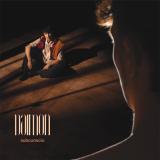
"Daimon" is Subconscio's debut album, produced by Luzee. It's the intimate vision of a person suspended in his imagination, questioning
the identity of his own memory and how the places that led him to his NOW are actually his future. The present doesn't exist in the narrative.
It exists only in the connection between childhood memories and the adult perspective.
Giulio is his son and also his parent: the Subconscious; the "daimon" is the musical journey that connects these two ways of observing the
same memory. Nostalgic turmoil meets the desire to recognize oneself and fuel the obsession with music, because only this—albeit the least
apparent art—is the only one that can be the voice and bearer of the dimensions of consciousness.
Featuring on the album: Madbuddy and Claver Gold
- 1: The Silver Frontier
- 2: North Terminal
- 3: Serpent In The Sea Of Tranquility
- 4: Greed & Wrath
- 5: Exodus
The story follows a protagonist through an alternate-history space race, imagining a future where humanity settles on the moon and leaves a dying Earth behind. Musically, the record delivers the tight, energetic, hook-driven sound that appeals to fans of Delta Sleep and Snooze. This special edition includes the 10" record in a proper 10" outer sleeve and a custom 12" slip mat in its own 12" outer sleeve. The artwork of the 10" aligns with the slip mat design to create the appearance of an ink or blood stain when displayed together. Only 50 copies were produced.
Following her compelling debut EP Mending, Frida Touray returns with Homebody, a work of raw emotional clarity, crafted duringa time when her voice was literally fighting back. Diagnosed mid-process with a rare condition that forced her into silence andstillness, Touray chose not retreat, but rebuild. From the quiet corners of domestic life, she’s shaped a collection of songs thatradiate warmth, vulnerability and quiet endurance.Musically, Homebody expands on Touray’s jazz-soul foundations with sparse, atmospheric production that amplifies her voiceand message. There’s a newfound looseness in her phrasing, a deeper sense of presence in every word she sings. You can hearthe letting go, of perfection, of control, and the deepening of purpose in its place. Each track lands with unfiltered intimacy andemotional architecture, a subtle act of defiance wrapped in softness.This is music built on stillness and shaped by resilience. A reflection on self-worth, illness, femininity, community and healing.Songs that speak to the unseen parts of recovery and the small rooms we build ourselves back up in. Homebody is a record foranyone rebuilding from the inside.
- Tomcat Disposables
- Becoming The Lastnames
- Cicada Days
- Euthanasia
- Falling Up
- That's Enough, Let's Get You Home
- Um, I Mean, It's Kind Of A Lot
- Half-Decade Hangover
- Vampire Reference In A Minor Key
- You Liked This (Okay, Computer!)
- The Main Character
- Against The Kitchen Floor
- Sex, Drugs, Rock 'N' Roll
- Big Fat Bitchie's Blueberry Pie, Christmas Tree, And Recreational
- Willard!
- White Noise
A pandemic album of songs of heartbreak, virality, and dead rats, which Wood called "goodbye cruel world: the musical." The revealing chamber pop/folk album "In Case I Make it" (ICIMI), which Will Wood playfully dubbed "Goodbye Cruel World: The Musical," turned out to be a surprisingly strong followup to his chaotic and sardonic previous release, "The Normal Album." While divisive among some fans due to its gentler sounds and more traditional vocal stylings than most of his last work, ICIMI attracted new, older audiences and showed a more personal side that provided a new context to his discography. Widely considered to be some of his most powerfully emotional work, both the harshly introspective and humorous songwriting, as well as its unique delivery, are still distinctly Will Wood in their experimental nature and uncompromising unwillingness to conform to the expectations of both die-hard fans and audiences at large. In 2021, the underground singer-songwriter was suddenly the subject of unexpected online attention, which, in tandem with mental health struggles, inspired him to put out a "musical suicide note," intended to express parts of his artistic and personal identity that had gone largely unseen by a fanbase he felt misunderstood. Leading the album with intentionally algorithm-unfriendly singles and putting an eight-minute love ballad as the second track on the LP, Wood aggressively redefined himself as being more than just a handful of wacky, unwitting viral pops. Ironically, the surprise viral success of the deep cut "The Main Character," a relentless satire of online culture, drew attention to the album and its second biggest hit, the angst-ridden yet danceable "Against the Kitchen Floor." However, the immense orchestration and vulnerable writing have kept audiences coming back. Songs like "Euthanasia" and "Tomcat Disposables" have developed reputations as tearjerkers, and songs like "Cicada Days" and "White Noise" have become fan anthems in the years since.
Gothenburg trio Dark Horse present their new album "Listen", released by We Jazz Records on 13 November. The band, comprising of John Holmström (piano), Alfred Lorinius (bass) and Mårten Magnefors (drums) recorded their second album in a remote cabin by the ocean in Norway, owned by Holmström's family. The natural sound of the album owes a lot to the relaxed surroundings and the result is some high degree of improvised music turning into collective composition as the music unfolds.
The album recording took place at a very active spot in the trio's calendar, following extensive touring in Europe, Japan and their native country Sweden. The two days of improvising were edited down to highlights that easily fill an album's worth of quality listening and reveal what playing live brought to the three musicians: A natural ability to react to ideas, build on them and form coherent, compositional tracks on the spot. A task much easier said than done.
"We're a non-conceptual basement band all the way", laughs pianist Holmström. "We have been moving from free form music into collective composition and this is our pinnacle recording with that idea thus far. We just set out to play as honestly as possible and this is what followed."
A testament to the power of a fixed band unit developing over time, "Listen" comes across as a work by a group constantly keeping its nose to the wind when it comes to developing their music. The long-form opener "Allas Favorit" is a monumental piece building and releasing tension along its 12+ minute length. First single "Brutet Groove" assumes a fascinating, almost mechanic-sounding swing while assembling and reassembling the pieces of the puzzle, and the closing track "Fjäll-låten" gives us something of an ever-shifting sonic landscape in glorious colors, much akin to its name ("Mountain Song" in Swedish).
"That one Fjäll-låten includes some of the best musical moments of my life so far" confirms bassist Alfred Lorinius. "It's actually an edit of a 20-minute improvised sequence, and it has the real feeling of the band coming together and doing something new and fresh in the moment. I feel it's something you can revisit as many times as you like and there's always something to find in there."
Dark Horse formed in 2012 after Lorinius joined Holmström and drummer Mårten Magnefors to complete the group. Things quickly started taking shape musically from there on, but the group took their time in honing their craft with a method they now refer to as "tryout development". Their self-titled debut album appeared in 2015 and the current We Jazz album "Listen" marks the first internationally distributed release for the trio.The roots of Dark Horse lay firmly in the buzzing creative music scene of Gothenburg, Sweden, where the members have close ties with local establishments such as the legendary venue BrÖtz, and the city's vast scene of highly-regarded musicians.
In brief, "Listen" presents Dark Horse gloriously putting into use their musical philosophy what they describe "improvising as composing together".
"Listen" by Dark Horse is released by Helsinki's We Jazz Records on 13 November 2020 on vinyl and digitally. The vinyl comes in a heavy duty tip-on sleeve and the album design features the painting "Overwhelming Structure" by the Helsinki-based visual artist Maija Lassila.
Swiss artist Lukas Traxel releases his powerful debut album One-Eyed Daruma on We Jazz Records, March 10. The trio features Traxel on double bass, Otis Sandsjö on sax and Moritz Baumgärtner on drums. Compact, deep, and organic to the bone, Traxel & co's sound echoes the innovations of rhythmically driven avantgarde jazz while keeping things moving at all times. There's both drive and freedom to this sound.
ONe-Eyed Daruma features eight new compositions by Traxel, who crafted the outline for the album while dealing with the loss of his father. The group came together after an open invitation from the Zurich jazz club Moods to present a new group. The trio of Traxel, Sandsjö and Baumgärtner creates a full, symphonic, and powerful body of sound despite the instrumentation without a harmony instrument. The trio functions as a collective where the boundaries between composition, melody, and accompaniment are in flux, while keeping the common goal of creating new music together in sight at all times. Traxel reports that after playing bass in various groups with guitar and/or piano, he wanted to create a counterpoint of sorts with his new group and specifically go about it with a more sparse setup. As One-Eyed Drama proves, the idea behind the trio dynamic is a strong one and the unit makes use of their extra space in creating evocative, moody, swinging creative jazz with a distinguishable fingerprint of its own.
Lukas Traxel says:
"The process of composing this music while dealing with the loss of a loved one resulted in a writer's block at first. The notes would just not flow out of my pen until I noticed a mysterious-looking figure in the right upper corner of my piano. It was a daruma, an eyeless figure that in the Japanese tradition brings luck and prosperity. According to the myth, the first eye must be drawn onto the figure while expressing a wish. The second eye can be added only if the wish comes true. My daruma is meant to stay one-eyed as my wish, strongly connected and intertwined with my now gone father, is not meant to be fulfilled. The feeling of unfulfillment and imperfection of life serves as a common thread throughout this album, right down to its title. In a similar fashion, a composition remains incomplete until it is interpreted by musicians, and given form as music. That being said, for me playing together with this trio symbolises the upside: the sense of fulfillment in music and life.
Our musical influences include the American composer and singer Caroline Shaw, Swiss pianist Colin Vallon's trio, and composer/singer-songwriter Gabriel Kahane. In addition, I have listened a lot to the trio albums of Jimmy Guiffre and Sonny Rollins. Besides that, my musical heroes like Charlie Haden, John Coltrane, and Keith Jarrett always flow into the music. Another very important influence in the music is the work of American visual artist Agnes Martin, in whose works the imperfection of a multiplicity of repetitions results in a lively big whole in the end. (See "Wild Flower")
Live, the trio takes a lot of freedom in interpreting this music, yet we have a deeper, almost pop-like attitude towards the live performance as an experience. For me it's always important to build a strong narrative with the band while on stage."
One-Eyed Daruma by Lukas Traxel is released on 10 March 2023 by We Jazz Records on LP/CD/digitally. The LP edition is shelved in an inside-out sleeve and pressed on white vinyl. The CD is housed in a cardboard digisleeve with UV lacquer finish.