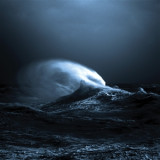
Under the right conditions, half-remembered dreams can meld seamlessly into hazy present moments. Time spent alone can be an emotional blank canvas, and an opportunity to deconstruct sense and feeling; a patchwork of snippets both rooted in memory and abstracted from reality. The title of ‘quilted lament’ perfectly captures the way Gretchen Korsmo and claire rousay’s overlapping missions come together to do just this. Worn polaroid melodies and snatched everyday noises seem overheard through windows onto the street. They feel emotionally twinned, claire and Gretchen, it’s not always possible to tell where one ends and the other begins. Their musical thoughts and DNA are sewn together into a mini symphony of warmly embracing movements.
Built remotely between pre-existing friends in the underground music scene, the duo layered ideas onto audio files, and sent them back (and forth). And these luscious instrumentals truly do feel assembled by intuition, casually crafted with little need for guidance. “claire and I are both emo,” explains Korsmo. “We are both former texas-dwellers too and relate over both the woes and beauties of being in the American DIY experimental music scene.” Buoyant piano keys and hushed layer vocals tracks sit alongside a humming field-recorded scrapbook; a neighbour caught in a moment of private inspiration while street noise elevates; a private hymnal in the bathroom while the washing machine ends its cycle. Both artists take field sounds from a wealth of Zoom and Tascam recordings made in the last half-decade in Santa Fe, San Antonio, Los Angeles, Kamakura, Japan and elsewhere – from a baseball game announcer in Santa Fe, to the sound of a friend eating a juicy peach. At times, the bedroom walls seem to grow thin amid atmospheric creaks and disembodied whispers. Despite its very emo core, this is a recording engulfed in an intense sense of bliss, more at peace than we’ve heard either artist before.
Поиск:its a musical
Все
Iori Wakasa, one of the leading lights of the Tokyo club scene is set to release his second 12” from his own label, “BOTANICA” which he established to express his own primal sensibilities.
The Concept of the Label:
Tokyo-based DJ/producer, Iori Wakasa launched BOTANICA to assert that his label’s activities in itself is art and a palette for his creative, self-expression. It is also based on 2 main concepts: To integrate the sensibilities of both "nature" and “artificial and human activities" and to “contribute music that presents a scenery from the listener's point of view”.
For Iori, his label is an interface of some sort and is also a symbol of his own personal musical expectations.
Iori produced these 2 new tracks during the recent pandemic when the world was under severe restrictions. While taking into account and focusing on both 'his current outlook' and returning to “the roots of his own production aesthetic', he strived to produce something that would substitute it and as a result, created these two new tracks and the artwork that are presented in the label's second release, 'The Party Is Here EP’.
In this EP, he also attempts to express the sentiment that 'the experience that music provides to people is invaluably infinite' and that 'if you truly want to go out and party, it will happen, then and there!’.
About the tracks:
For the track, ’Bedroom Disco’, Iori tries to express his memories of 'a virtual night of partying’ that he experienced during Covid and created this track while being ‘in a state of wanting to break free from oppression’ and reminiscing about a party in a bedroom at night.
He also wanted to express the idea that no matter what situation or environment you are in, you can go to anywhere you want if you really want to and with that sentiment, he wanted to express a scenerio that transcends it and at the same time, he also wanted to convey his feelings of nostalgia for the past, rebellion against the environment and his feelings of desire.
For this track, Iori did not use any sampled voices or field recordings and created it by layering pure sonic imagery repeatedly folded and desolved which triggered the creation of new developments while imagining the thought that “a party actually begins when you step out” and the swaying of emotions that take place from it.
’Tropica' is a track that Iori produced by heavily mixing a utopian feel that people have inside of them with his own sensuality and is designed to ‘guide you to a tropical seaside', regardless of what the listener may have experienced in the past.
Unlike 'Bedroom Disco', this track uses a variety of samples and envisages "many elements intertwining with each other, working together to create this sound structure”. And it also expresses that equal opportunity exists for anyone who wants to visit an imaginary tropical land as well as the hope that even a brief break of the mind can be created by yourself and those close to you, if one pursues it.
About the artwork:
The cover of this new EP, the concept text 'Is your window open?', and the label's logo was designed by illustrator, HILOSHI SHINOZAKI who also worked on the first release, BOTANICA EP. For over 10 years, he has been a regular visitor of Hawaii, where he tries to cultivate his "true way of life” in his art.
And, artwork for the cover and label design of the EP is complemented by the label design and art direction of the record by hiro, a graphic designer who has been his partner and best friend since the first Botanica EP.
hiro expresses Bedroom Disco track's shifting compositional changes and its complex series of sound waves by creating an intricately multi-layered design that is a perfect representation of the way he sees it.
Also initially inspired by the fluctuations of waves, islands, sun, rays, sky and time, the artwork of Tropica also found inspiration from a drawing that made by Iori’s daughter who drew a picture of a scenery when she listened to the track. So through this design, one of the label’s concept of “the label’s activities is in itself art” was realised via the surprising contribution coming from his own family.
Bonnie Banane and Joseph Schiano di Lombo present L'Orguasme, an album of bawdy and devotional songs accompanied by the organ of the Cité de la Musique / Philharmonie de Paris. Literally composed and written for pleasure, this work (of the flesh, naturally) pays tribute to the most spectacular expression of ecstasy - a paradise so near and yet so misunderstood. From the most restrained sighs to the most dazzling vocal outbursts, from the foreplay to the eruption, not to mention the bliss that follows the incandescence, Bonnie and Joseph sing about the art of reaching seventh heaven, of genuflection and "la petite mort" ("little death" a French expression for "climax") without shying away from the darker areas: those of guilty, forbidden, feigned, or selfish pleasures, for instance.
By turns light, explosive, mystical, burlesque, and poetic, this music diverts the organ from its centuries-old habits, achieving a union of the profane and the sacred, the crass and the beautiful, the body and the spirit, early music and pop - reminding us of the essential truth: it's better to come than to cry.
While the minimalism of the arrangements initially strikes the ear - no instruments other than the organ accompany these musical escapades - the album is infused with numerous unexpected influences: R&B (La petite mort), swing (Le cri), gospel (Simulation blues), jazz (Le calme après l'œuvrette), medieval ballads (Ronde génitale, Au plaisir), and even a famous 16th-century folk dance called the branle (Branle Censored).
A sexy, lush, stripped-down, and unabashed opus, glorifying what remains glorious: love, music, and the boundless joy of creation.
g B2. Branle Censuré
[g] B2. Branle [Censuré]
- 1: Galaxis
- 2: Galaxis (Short Version)
- 3: Polestar (Version 1)
- 4: Polestar (Version 2)
- 5: Flare Path
- 6: Flare Path (Alt. End)
- 7: Millenium
- 8: Sierra Nova
- 9: Perpetuum
- 10: Glory Road
- 11: Glory Road (Alt. Intro)
- 12: Robot Ton
- 13: Piccolette
- 14: Savannah Gold
The visionary 1983 album by Anthony Hobson, is a bold exploration of enterprising drama themes. Featuring hypnotic synth layers, commanding brass motifs, and the pulsating rhythms of electric bass and drum machine, each track resonates with confidence and ambition. Hobson's masterful compositions from this album were regular features on sports highlight reels throughout the 80’s and 90’s, including “Polestar 1” on NFL Films. From touchdowns and slam dunks to space age captains of industry, "Millenium" captivates listeners with its dynamic compositions, offering a compelling musical journey through the aspirations and achievements of the burgeoning digital age of the early 1980s.
- 1: Savanne
- 2: Lobbo
- 3: Diarabi
- 4: Tongo Barra
- 5: Tamalla
- 6: Mahine Me
- 7: Ali Hala Abada
- 8: Alakarra
Ali Farka Touré trekked the world, bringing his beloved Malian music to the masses. Dubbed “the African John Lee Hooker,” one could hear strong connections between the two; both employed a bluesy style of play with gritty textures that elicit calm and fury in equal measure. While the influence of Black blues music prevailed, Touré created a West African blend of 'desert blues' that garnered Grammy awards and widespread reverence. Though he transcended in 2006, Ali’s musical legacy lives on through his son, Vieux aka “the Hendrix of the Sahara,” an accomplished guitarist and champion of Malian music in his own right. On Ali, his collaborative album with Khruangbin, Vieux pays homage to his father by recreating some of his most resonant work, putting new twists on it while maintaining the original’s integrity. The result is a rightful ode to a legend. Ali isn’t just a greatest hits compilation. It’s a lullaby, a remembrance of Ali's life through known highlights and B-sides from his catalog. It is a testament to what happens when creativity is approached through open arms and open hearts. “To me, music is magic, it is spontaneous, it is the energy between people,” Vieux says. “I think Khruangbin understands this very well.” The genesis of the album dates back to 2019, when Khruangbin, coming off their breakthrough album Con Todo el Mundo, was beginning to play to bigger crowds. The record was finished in 2021, as a global pandemic shuttered businesses and forced us to take stock of what Earth was becoming. Indirectly, Ali captures this as a moment of peace within a raging storm, a conversation between past and present without allegiance to suffering. Now, given Khruangbin’s reach as a unit with legions of fans (including the likes of Jay-Z and Paul McCartney), they’re poised to bring Malian music to broader groups of listeners. Ali is a masterful work in which the love surrounding it is just as vital as the music itself, driving it to unforeseen places; Vieux and Khruangbin are spreading the good word to a completely new generation. “I hope it takes them somewhere new, or puts them in a place they haven't felt or heard,” Lee says. “It is about the love of new friendship and making something beautiful together,” Vieux continues. “It is about pouring your love into something old to make it new again. In the end and in a word it is love, that's all.”
José James just can’t leave the ’70s alone. Or maybe it’s the other way around. The singer, songwriter, bandleader, and producer was born in 1978, after all, but over his past 17 years of fundamentally forward-looking, blessedly mercurial music, he keeps getting pulled back in. His 2013 Blue Note breakthrough No Beginning No End revisited the hooky, funky, jazz-streaked songcraft of the time through a modern crate-digger’s ears. On 2020’s No Beginning No End 2 — James’ debut on his own Rainbow Blonde Records — he went back through the portal with a small army of fellow celebrated eclecticists. Just last year, there was the album 1978, a richly layered love letter to said year that felt deep, luxe, and cool. It’s as if — vested with the restless fluidity of jazz, the tuned-in sensitivity of soul, and the revisionist grit of hip-hop — he is trying to play his way into the exact moment when, culturally speaking, everything was about to change.
“I'm still so fascinated by the tension in that era of all these seemingly clashing things happening at once,” says James. “The loft scene, the jazz scene, Elton and Billy, Bob Marley, the Isleys, Funkadelic, disco being this behemoth in a way I don't think we even understand today… And then there’s where everybody went from there — into hip-hop, into punk rock, exploding jazz. It's like a summation of the ’70s, and it's about to transform. It's the peak of the rollercoaster.”
Literally breaking into history is impossible, of course, but James’ new LP, 1978: Revenge of the Dragon, does feel like breaking through or bursting out. In loving contrast to its predecessor, the fresh set plays hot, like a Friday night out at the Mudd Club in its prime. Though he’s dreamt up albums with collaborator counts approaching the dozens, James gathered a tight crew for this one. Himself and Taali on vocals. BIGYUKI on keys and analog synth. Jharis Yokley on drums. Bass split between David Ginyard (Blood Orange, Terence Blanchard) and Kyle Miles (Michelle Ndgeocello, Nick Hakim). And an all-star brass lineup: Takuya Kuroda on trumpet, young lion Ebban Dorsey on alto sax, and genre-spanning ronin Ben Wendel on tenor sax. They set up in Dreamland Studios near Woodstock, a restored 19th century church, and recorded live to tape, two tracks, drums pushed to the max — “a small homage to the rise of punk,” says James.
In that place out of time, the band laid down a handful of choice covers and some wild originals, like the single “They Sleep, We Grind (for Badu),” a decades-collapsing cut powered by an ugly groove. Steeped in dub, funk, and sampledelia, James chants an artists’ mantra (“They sleep, we grind / Man, f--- your nine to five”), makes lyrical callouts to Marley and Nas, and channels everything from George Clinton to J Dilla, not to mention the earthy mysticism of Erykah Badu. In 2023, James released and toured his Badu covers LP, On & On. “Living in her musical house for a year was transformative,” he says. “This is my summary of everything I learned through her, tying it to this idea that artists move differently. We are in society but we are outside, too, looking out and in at the same time. Our hours are different, our schedules are different.”
To that point, James and co. actually began each day in the woods, filming the album’s visual companion piece, Revenge of the Dragon, an honest-to-God kung-fu short complete with bad overdubs, training montages, camera tricks, and plot twists. The film pays tribute not only to the genre’s greatest year (1978, of course), but also its cinematic exchange with Blaxploitation, plus James’ own recent Shaolin training and admiration for Bruce Lee as a culture-bridging force (the LP’s cover recreates an iconic shot of Lee). On top of that, says James, “We had this immediacy in the studio. Live, one take, no overdubbing. I feel like that's where the martial arts piece comes in, where it's about being relaxed but also aware, and there's immediacy in your movements.”
Across the project, tribute takes that refracted, multifaceted form. From his personal late-’70s playlist, James chose four covers reflecting the era’s disco-fied churn: the MJ-meets-Quincy dancefloor masterpiece “Rock With You”; Herbie Hancock’s prescient vocoder fever dream, “I Thought It Was You”; and a pair of Black-radio hits from two bands whose fans typically wouldn’t have been caught dead in the same stadium: “Miss You” by the Rolling Stones and the Bee Gees’ “Inside and Out.” All of it gets filtered through a contemporary Black (and beyond) lens, coming out loud, free, funky, and buzzing — dynamic, yes, but also of a joyous piece.
1978: Revenge of the Dragon transports you to a crowded room where all this is playing out in real time. That feeling is helped out by opener “Tokyo Daydream,” a bass-driven swan dive into a neverending night of boutique bar-hopping and neon revelry. Later, “Rise of the Tiger” finds James bringing rare braggadocio to a propulsive track with growling synth lines and a hunger for whatever comes next. And then there’s the closer, “Last Call at the Mudd Club,” which with its upbeat energy and string of Stevie-inspired pickup lines, evokes the sort of unabashedly elated track the DJ throws on at 3:56 a.m. before everyone is kicked out. “I wanted to leave the album on that note,” says James. “If this was a night out in New York, this would be the last thing you hear before you get in that taxi and go back to your apartment.” Or, perhaps, back to 2025.
2025 Repress
OSLO is happy to welcome new artist Federico Lijtmaer to the family with his wonderful EP Impermanencia.
Inpermanencia on the A-side is a superb deep house track with the right kind of funkyness for the cool. Federico combines smooth bass with shifty drums and classy synth action. This track will conjure a smile on your face and we are happy as hell to be able to release this little gem.
Unselfish on the B-side is as funky as its big brother on the flip-side. A throwback to bygone times in a way, if you consider labels as Mosaic or Trelik. However, Federico definitely succeeded in terms of a modern interpretation. The inclined listener will recognize his musical roots anyway.
In Marking A Boundary With The Turning Point, Ard Bit and Radboud Mens explore the tension between stasis and movement. Operating within the realm of drone and electroacoustic music, they construct a sonic landscape where sustained tones and microscopic events constantly shape and reshape each other. What initially appears static reveals itself to be rich with detail: tiny acoustic shifts breathe life into apparent stillness, inviting focused and attentive listening. The album emerged from a process where sound research, improvisation, and sound design merge. Self-built instruments, the search for timbre and texture, and recordings of the learning process itself form the foundation of these compositions. Rather than following a traditional musical structure, the result is a sonic field in which the minimal continually transforms, depending on the listener's perspective. Ard Bit (Ard Janssen) is a composer, sound artist, and field recordist based in Rotterdam, trained at the Institute of Sonology in The Hague. His work moves between improvisation and system-based composition, exploring the space between ambient, drone, and sound art. Radboud Mens is a sound artist with a decades-long practice grounded in minimalism, acoustic subtlety, and physical resonance. His work focuses on the perception of sound, the materiality of audio, and the creation of spatial listening experiences. Together, they present a layered and handcrafted album that doesn't narrate but questions. Marking A Boundary With The Turning Point is not a boundary, it's an invitation to listen beyond expectation.
Repress of 2018’s classic compilation from Brownswood.
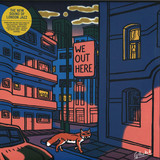
A primer on London’s bright-burning young jazz scene, this new compilation brings together a collection of some of its sharpest talents. A set of nine newly-recorded tracks, We Out Here captures a moment where genre markers matter less than raw, focused energy. Looking at the album’s running order, it could easily serve as a name-checking exercise for some of London’s most-tipped and hardworking bands of the past couple of years. Recorded across three long, fruitful days in a North West London studio, the crossover between each of the groups speaks to the close-knit circles which make up the scene.
Surveying the way that London’s jazz-influenced music had spread outside of its usual spaces in recent years, this album bottles up some of the vital ideas emanating from that burgeoning movement. Giving a platform to a scene where mutual cooperation and a DIY spirit are second-nature, it’s a window into the wide-eyed future of London’s musical underground.
Ubiquitous, much-lauded saxophonist Shabaka Hutchings is the project’s musical director. His own recent projects span from South Africa-connected, spiritually-minded jazz players Shabaka and the Ancestors to Sons of Kemet, who match diasporically-connected compositions with viscerally-direct live shows. His entry on the album, ‘Black Skin, Black Masks’, is typically difficult-to-define: with an off-kilter, shifting rhythmic backbone, repeated phrases – mirrored between clarinet and bass clarinet – shape the track with an alluring hue. His input ties together a deft, genre-agnostic sensibility that’s shared through all the players on the record.
Theon Cross – who’s also part of Sons of Kemet with Hutchings – starts his track, ‘Brockley’, with the solo, distinctive low rumble of his tuba. Winding and mesmeric, it sees tuba and sax lines winding together in rhythmic and melodic parallels. Ezra Collective – whose drummer and bandleader Femi Koleoso has toured with Pharaohe Monch – run a tight, Afrobeat-tipped rhythm on ‘Pure Shade’, with the final third changing gear into a melodic, momentous closing stretch.
Joe Armon-Jones, whose ludicrous chops on the piano have seen him touring with the likes of Ata Kak, showcases earworm-like, insistent motifs on ‘Go See’, balanced with a playful, improvisatory approach with room for ad-libbing and solos a-plenty. Taking a softer tact than many of the other entries, Kokoroko – whose guitarist Oscar Jerome has been making waves with his solo material – spin a lyrical, steady-paced meditation on ‘Abusey Junction’, matching chanted vocals with gently-played guitar.
Nodding to spiritual jazz influences, Maisha’s ‘Inside The Acorn’ is a wandering, explorative rumination, balancing delicate washes of piano and percussion with sharp interplay between flute and bass clarinet. In contrast, Nubya Garcia’s ‘Once’ is taut and carefully-poised, her tenor sax guiding a carefully-built energy to an explosive conclusion. And finally, Triforce’s ‘Walls’ is a performance in two parts: starting with Mansur Brown’s languorous, lyrical guitar, the second half switches up to a low-slung, g-funk-tipped groove.
- 1: The Moodists – Gone Dead
- 2: Voigt/465 – Voices A Drama
- 3: The Take – Summer
- 4: Essendon Airport – How Low Can You Go...?
- 5: The Apartments – Help
- 6: Ash Wednesday – Love By Numbers
- 7: Primitive Calculators – Pumping Ugly Muscle
Chapter Music's landmark collection of Australian 70s-80s post- punk, originally released in 2001, gets its first ever vinyl release!
Can’t Stop It! documents a fantastically inventive and dynamic era, when Australian acts stepped out of the shadow of overseas influence and asserted their own musical identity for perhaps the first time.
Featuring tracks by future members of bands such as Nick Cave & The Bad Seeds, Einsturzende Neubauten, Dirty Three and The Go- Betweens, Can’t Stop It! is a vivid survey of the creativity and innovation bubbling away under the surface of Australia’s fairly unadventurous music culture of the time.
All of the bands on Can't Stop It! released their music independently, either themselves or through the handful of visionary labels of the era such as Au-Go-Go, M Squared, Missing Link or Innocent Records.
On its original release in 2001, the compilation got Chapter Music its first major international attention, written up in The Wire magazine, stocked at Other Music in New York and selling out numerous CD pressings.
Remastered with updated liner notes and photos, this deluxe 2LP set expands on the original 20 track CD with six bonus never- before-reissued tracks.
"A bracing corrective to the Northern Hemisphere's stranglehold on post-punk nostalgia" - The Wire
Carrying on from recent archival releases from masters of Indian classical tradition such as Kamalesh Maitra and the Dagar Brothers, Black Truffle is pleased to present a previously unheard recording of a concert by Pakistani vocalist Salamat Ali Khan. Born to a musician family in Hoshiarpur in the northwestern state of Punjab, Khan moved with his family to Lahore in Pakistan after the 1947 partition of India, becoming a child musical prodigy. Khan was a master of the kyhal form of Hindustani classical vocal music, a style integrating influences from Middle Eastern musical traditions that gives the singer a great deal of improvisational freedom. Travelling widely across the globe from the 1960s until his death in 2001, Khan approached ragas performed in the kyhal style as expressive forums for risk-taking improvisation, enlivened by ceaseless ornamental invention.
This remarkable recording was captured by Michael Hönig (of krautrock legends Agitation Free) in concert at Berlin’s Neue Nationalgalerie as part of the MetaMusik festival in 1974 (which also featured Nico, Tangerine Dream, and Roberto Laneri’s Prima Materia, among many others). Khan, who is also heard accompanying himself on a specially tuned alpine zither (in place of the traditional swarmandal, an Indian style of zither), is joined by Shaukat Hussein Khan on tabla and Hussein Bux Khan on harmonium. The lack of a familiar underlying tanpura drone gives this performance a weightless, floating quality, with all three of the musicians playing masterfully with the interaction between silence and the pulse propelling each section of the raag.
As Khan explains in his opening remarks, this performance of the rainy season Raag Megh is divided into three parts, each with its own tempo and rhythmic scheme (tala). The opening vilambit, in a twelve-beat tala, stretches out for over twenty minutes, lingering for a long time in a space of meditative calm, Khan lightly strumming the zither while exploring the lower end of his range in languorously extended notes. Virtuoso tabla interjections at first barely state the tempo, and the interplay between musicians is so spacious that we hear scraps of audience noise and the squeak of the harmonium’s mechanism in between the notes. Gradually picking up rhythmic definition and melodic complexity, after around fifteen minutes the music builds dramatically, with Khan letting out emotive yelps and swooping scalar shapes ranging across his full vocal range. This flows seamlessly into the following jhaptal, at a faster tempo in ten beats, which then makes way for the concluding teental, very fast in sixteen beats, which becomes a frantic improvisational exchange of daring rhythmic disruptions from the tabla, flowing harmonium melodies, and a stunning variety of vocal approaches from Khan, ranging from rapid-fire staccato consonants to guttural growls.
Accompanied by stunning black and white concert photographs, the LP also contains a moving and entertaining recollection from acclaimed German musicologist Peter Pannke, looking back on his experience assisting Khan and his musicians in Berlin at the Metamusik festival (including a mouth-watering description of a feast cooked by the maestro himself). As Pannke describes in his account of attending the concert, the beauty and spiritual intensity of this music leaves the listener speechless.
Divine Dances. In plural form.
The fourth album from DjeuhDjoah & Lieutenant Nicholson couldn't have a more explicit title.
Masters of emotions and feelings, the duo has always known how to express melancholy and nostalgia with precision. Yet this time, all their efforts have concentrated on a single goal: taking listeners by the hand—no, by the ear, obviously!—to bring everyone back to the dance floor and explore a variety of atmospheres together.
And naturally, a variety of styles. Funk, ndombolo, electro, hip hop or zouk, each new vibration discovered carries away the previous one to form a dancefloor where all eventually come together.
Divinely light.
The body, surrendered to this call to dance in all its forms, has been so caught up in the whirlwind of groove that the mind has fallen in behind it to continue as one. Words explode into syllables that metamorphose into notes, then perfectly align with those from the score.
One second. A bit of attention. Caught by an irrepressible groove, then comes the moment to slalom through melodies to discover, at the turn of a rhyme, a new meaning. Approached head-on, certain overly serious themes would empty the room and bring the atmosphere down to lead levels. The diagonal approach, humor, and apparent nonchalance of the two men are the best weapons at their disposal. Their Trojan horse to put substance into their form(s). To evoke transidentity, consent, economic malaise as well as the spiritual, or to tell little stories of frustrated loves, seemingly insoluble but which will end well.
Anthony Hilaire for Creole words, Sarah Solo for hip-swiveling soukous, Patrick Bebey for pygmy flute notes, and Grégoire Mahé to bring electricity to DjeuhDjoah & Lieutenant Nicholson's songs; styles blend in a musicality worked into its smallest interstices.
Gathered on this dance floor illuminated with 80s disco brilliance, you observe brassy notes slithering under the electronic veneer, synthesizer keys splashed by furious hip movements. To raise your eyes to connect with the spiritual is to watch the sky become constellated with crystalline Fender Rhodes notes, destined to fall like rain on the heavy bass of afrobeat groove.
Smiles attached to faces, no one should think they can get through the ten tracks of Divine Dances while remaining seated : he's doomed to fail.
OUT MAY 2025 DELUXE WHITE VINYL 180 G /CD / DIGITAL
- A1: Concerning Celestial Hierarchy. 3:50
- A2: The Day The Angels Cried 4:22
- A3: The First Language 4:22
- A4: She Burns In Devotion, Her Virtue Sweet Like Honey 4:12
- B1: There Is No Answer 3:52
- B2: To Those Who Mourn 8:17
- B3: Concerning The Law Of Angels 4.19
Acclaimed director and musician Jim Jarmusch and experimental lute player and composer Jozef van Wissem met nearly 20 years ago, forming a close bond after they ran into each other on the streets of New York City. In 2011, they began performing and producing records together. The follow up to “American Landscapes “ entitled “ The Day The Angels Cried” releases June 6 and coincides with a world tour. The duo weaves an intricate Lute and guitar string tapestry of droning, minimal free-folk compositions destined to captivate listeners with their dark hypnosis. This time vocals and electronics are added as well. Van Wissem’s work comes from a tradition of avant-garde minimalism and lends itself well to the director’s stark cinematic works. Jarmusch has played guitar in bands on and off since the late ‘70s. Van Wissem’s compositional style involves hypnotic circular musical phrases that allow for a lot of contemplative space between the notes. Their first live performance was in Issue Project Room in Brooklyn in October 2011, where they appeared together for a Van Wissem curated concert program called “New Music for Early Instruments.” The idea for their first album, Concerning the Entrance Into Eternity (Important Records) developed from their live performance. Jarmusch has said that he considers these songs as Van Wissem’s compositions, and sees himself as someone filling in the background to Jozef ’s foreground, like the “scenic” on a film shoot, the one who paints the backdrops. “The sound of the lute is as bright as the sun, a beautiful red color and my stuff sounds sort of like the moon, more like blue, like mercury.” .According to Van Wissem: We started with layers of instrumental parts.. Jim recorded a otherworldly Passerelle bridge guitar part to which we added vocals. This became the title track " The Day The Angels Cried" The lyrics for this song came to me during a vision I had in a dream. It was much like a vision Swedenborg writes about. In it he converses with angels. In my vision the angel looked down from the heavens upon the earth engulfed in flames. Recent events in Los Angeles and other parts of the world, have led me to believe that this dream was a premonition. “The Day The Angels Cried” ( Inc 040/41) releases June 6th on Incunabulum Records, right before the duo start their World tour. releases June 6, 2025 Jozef Van Wissem Voice, Baroque And Renaissance Lutes, 12 String Electric Guitar, Slide Guitar, Electronics, Found Recordings Jim Jarmusch Voice, Electric Guitars, Acoustic Guitars, Passerelle Bridge Guitar, Electronics, Found Recordings
- 1: Cheryl!
- 2: Brutalised Robotics
- 3: Talk, Clown
- 4: Notopia
- 5: Your Love Shines Down Like A Supernova’s Death
- 6: Rights Down 50
- 7: What Ya Gonna Do With Yr Days
- 8: Light Touch Of The Man Spreader
- 9: Golden Cerebellum
- 10: I Only Cry From A Distance X Time = Frustration
- 11: Blistered Eyeballs
Dez Dare launches into 2025 with his 5th album, ‘CHERYL! Your Love Shines Down Like A Supernova's Death'. Blending his unique mix of existential wordplay and experimental riffage to create an album that is at arms with itself while cohesive; cheeky and upbeat, simultaneously breaking our hearts. How often do we think about what we miss when we are distracted by shiny things? While fencing with social media, long winded stories, dreams of other lives, unnecessary toys, and irrelevant social experiments with happiness, we miss the things that make up our world. This album looks at those morsels of time and the bits that fill them, soaking existence… as well as manspreaders. Those people should be added to the 7th circle of hell… or suburbia. Either is probably a similar commute!
Dez Dare (AKA Darren Smallman of labels God Unknown, BATTLE WORLDWIDE, Low Transit Industries, and bands Thee Vinyl Creatures, The Sound Platform, Warped) grew up in Geelong, Australia, where he became involved in the local punk and rock scene in 1990. Sharing stages with the likes of 5678s, Cosmic Psychos, Fugazi, The Dirty Three and the Hard-ons, before shifting his focus to running record labels. In the 2020s we see Dez Dare take form in a spare room in Brighton, UK, where Dez starts building his own studio and producing music and videos that have been described as "sounds like MONSTER MAGNET and DEVO caught in a drug bust… highly unique and highly recommended" by MAXIMUM ROCKNROLL Nick Odorizzi to The Wire’s Edwin Pouncey "dynamically armed with a ten-pronged set of lyrical barbs and musical hooks that, once heard, sink deep and hold fast" to Crossfire Metal "minimalistic, electronic psychedelic hippie poop that is only bearable with a hell of a lot of acid, angel dust and LSD". On this album Dez was joined by Laura Loriga on backing vocals and Jonny Halifax on backing vocals and lap steel, expanding on the sound of previous records and adding a new dimension to his trademark weird-n-roll.
[a] 1.Cheryl! [Loading...
The Ottawa composer/performer and head of Black Bough Records plays every instrument on his CST debut: an accessibly avant-garde work of dark/ambient modern chamber music. Mark Molnar has been a linchpin of the Ottawa experimental music scene for over two decades, spanning contemporary classical, electroacoustic, industrial/noise, and improv. As a string player in a wide range of projects, an organizer and curator of innumerable shows, and via his own avantgarde label Black Bough Records, Molnar's unflagging contributions to independent music culture in Canada's capital city have been significant. EXO is his Constellation debut: a remarkable and bracing suite of post-classical composition on which Molnar plays every instrument. Meticulously self-recorded, primarily with strings, harp, and piano, EXO balances thematic melodicism, polytonality, and dissonance across three elegiac pieces of exquisitely expressive dynamism. This is exacting modern chamber music that blends formal and harmonic complexity with a solemn emotive sensibility accessible to a broad audience. Listeners that yearn for some edge and disquietude in a landscape of often all-too-approachable post-classical music should find EXO eminently worth their time and attention. While Molnar is a highly trained string player, and studied music under Aubrey Wolfe, microtonality with James Tenney, and composition with R. Murray Schafer, his trajectory has been entirely and intentionally outside the academy, signalling a socio-artistic commitment to DIY culture, forged from an early passion for the sonic worlds of post-hardcore, post-punk, no-wave, free improv, power electronics, and other independent/underground musics. His classically-informed works have been described as "tense currents of musical modernism invigorated with punk's raw vitality." EXO carries an undercurrent influenced by dark industrial and ambient metal in particular, with microphones purposely placed to pick up the low-end frequencies of the piano body, and of a bass drum positioned as a resonant skin in the acoustic space; an electroacoustic strategy organically meshed to the crisply defined and pristinely recorded pointillisms and polychords of strings, harp, and piano, which feed into this noisefloor of crepuscular sub-bass disquietude and decay. It's a production aesthetic that lends EXO a distinct undertow of tension and feeling, a sort of roiling maximalism where the chamber instrumentation traces arcs and waves of form and flow as if drawn from a dark, impervious ocean below. It also reinforces the profound hermeticism of Molnar's process, as a forbiddingly solitary creative act of immersion and navigation. The album artwork, featuring semiabstract stills of the sea by British photographer Ed Allen, further reifies this metaphor. The album's opening piece 'Sub Luna' (and its shortest at 8 minutes) showcases Molnar's adeptness at naturalistic and flowing complexity: tight cascades of climbing and descending chordal clusters hold their polytonal densities for various durations, yielding to more clarified harmonic suspensions and motifs, as melodic themes led primarily by violins in the higher registers provide a fractured lyricism. Molnar says: "the opening and closing figures of this piece act as opposing shorelines; the shorelines provide a reliable expression of range and key signature, and the tides come in and swallow them up, the motion of a body that addresses the relationship between states of lucidity and melodic figures." On 'Terre Sacer' everything happens in soupier waters, as a slow and doleful theme, anchored by grinding bass notes, circles in a gyre of dark resonances, until glistening strings gradually ascend to enrobe a plaintive and gently harrowing single-voiced ostinato over the composition's final third. Molnar's drone, ambient, minimalist, and goth-industrial influences are on display here. Side Two of EXO features the 18-minute multi-movement 'pallida Mors' (pale death): a waterfall of heterophony introduces dense chordal movements where strings are recorded and mixed to evoke pipe organ, in the album's most overtly dissonant and (anti)liturgical sequence. This gives way to ever more open and fragile spaces, before a resurgence of dark clusters and noise treatments introduces a final repeating piano coda, shrouded in devastated bass resonance, settling into what Molnar calls "a meditative hollow." Constellation is honoured to release this work by Mark Molnar, a longtime fellow-traveler whose selfless and boundlessly generous activities as an independent arts enabler sometimes obscure his own accomplished and uncompromising artistry. We trust EXO can help shed some much deserved light on this fine composer. Thanks for listening.
Orbital London returns after a three - year hiatus with "Revenant EP" , marking its lucky number seven release — this time featuring Jack Michael and the debut of Romanian duo The Apricots , consisting of Alexandra and DJ Slim Fit . A destined musical match, as Alexandra has been an Orbital fan since the very beginning.
Staying true to its concept, the release features two original tracks — one from each artist — while pushing creative boundaries as they remix each other's work.
On Side A , Jack Michael’s “Infinity” goes fast and driving with a heavy bassline, blending breakbeat and techno flavors. A haunting winding melody and a mysterious vocal add to the track’s hypnotic energy. The Apricots’ remix of Jack’s track blurs the lines between electro and breakbeat, with a trance vibration in the underneath layers and surprise dubstep insertion with a dirty bassline.
On Side B , The Apricots’ “Subdued” is powered by the rich, broken - beat percussion and a wild, rave - inspired bassline. As the title suggests, the heaviness of the bas s is m omentarily tamed by the emotive pads and melodies — only to return stronger for a different , yet electrifying bass interlude, topped with a deep male vocal. Jack Michael’s re shape of "Subdued" takes a dreamier approach, crafting a deeper breakbeat journey, dominated by long hefty bass wave s and bathed in quirky synths and etherial pads.
Following the success of his debut album Echoes of Prayer - featuring singles like Communicate, Calm Waters, and Silent Chaos - Ghanaian-Dutch artist Bnnyhunna announces the album's first-ever vinyl release, set for May 30, 2025, via the renowned Belgian label Sdban Ultra.
Originally released digitally in October 2024, Echoes of Prayer stands as a deeply personal and spiritual work that reflects Bnnyhunna's faith, his early experiences growing up in church, and his West African heritage. Every track on the album serves as a form of prayer, a conversation with God. The album showcases his ability to weave poetic lyrics, vivid visuals, and captivating melodies, creating an immersive experience that resonates on a spiritual and emotional level.
Bnnyhunna's signature fusion of jazz, hip-hop, gospel, and Afro rhythms highlights his versatility and musical integrity. Next to the the warm jazz textures of Calm Waters, the vibrant Afrobeat pulse of Communicate, and the soulful, piano-driven Silent Chaos, Echoes of Prayer also blends elements of '70s P-Funk grooves, gospel harmonies, and modern hip-hop rhythms. Each song represents a different facet of Bnnyhunna's artistic vision. Tracks like SHOULD'VE BEEN YOU carry nostalgic R&B undertones, while Sum Love brings gospel-infused choir arrangements that recall sacred spaces. Interludes such asAvanti add moments of intimacy and reflection through gentle guitar lines.
The album's diverse sound is elevated by collaborations with The Cavemen, who lend their signature highlife revival, and Jembaa Groove, who contribute with West African-inspired rhythms.
His debut project EP SINTHA, released in 2021, quickly established Bnnyhunna as a rising talent, leading to collaborations with artists like Asake, Rimon, and José James. He gained momentum by selling out his first headline show, which included a surprise performance from Kokoroko, and receiving global recognition from platforms like Highsnobiety, VICE, and Complex, as well as performing at prestigious festivals such as North Sea Jazz and Montreux Jazz. Bnnyhunna challenges conventional music by engaging all the senses through photography, videography, and poetry.
The release of Echoes of Prayer follows a year of significant achievements for Bnnyhunna. In2024, he performed for Highsnobiety at Paris Fashion Week, appeared at prestigious festivals such as Dekmantel and Zwarte Cross, and played a standout performance at the Steam Down Weekly series in London. Additionally, he composed an original score for the Dutch National Opera and won the Edison Pop Award, one of the most prestigious music awards in the Netherlands (often referred to as the Dutch Grammys), in the Soul/R&B/Funk category.
With the vinyl release of Echoes of Prayer, Bnnyhunna offers fans a tangible, collectible edition of his powerful debut. The release via Sdban Ultra invites listeners to experience the full depth of his sound in its most intimate and analog form yet.
The Understated Debut That Launched a Peerless Career: Bob Dylan Is the Clearest Connection to the Singer-Songwriter's Folk Roots
Pressed on MoFi SuperVinyl for Reference Playback: Mobile Fidelity 33RPM SuperVinyl Mono LP Features the Direct Sound Dylan Intended
1/4" / 15 IPS analogue mono master to DSD 256 to analogue console to lathe
Bob Dylan's self-titled 1962 debut is as understated of an entrance as any significant musician as ever made. Well-versed in American roots music, Dylan simultaneously pays homage to tradition and extends it by putting his own stamp on classic material that metaphorically functions as the soil of contemporary songs and styles. Free of ego, and performed with masterful conviction, Bob Dylan ranks with the initial efforts of giants like Elvis Presley and the Rolling Stones.
Nodding to Woody Guthrie and re-imagining Blind Lemon Jefferson's "See That My Grave Is Kept Clean," Dylan straddles the past and future. He authoritatively displays the ability to handle weighty topics such as death, sorrow, and lamentation with the vaudeville flair, bluesy mannerisms, and poignant command of an artist three times his then-20-year-old age.
Sourced from the original master tapes, housed in a Stoughton jacket, and pressed on MoFi SuperVinyl at Fidelity Record Pressing, Mobile Fidelity's numbered-edition 180g 33RPM mono SuperVinyl LP brings the contents of this seminal release as close as they've ever come to live-in-the-studio quality. Transparent to the source, Dylan's voice, acoustic guitar, and harmonica come across with exceptional realism — the "husk and bark" to which Robert Shelton referred in his legendary New York Times review of a Dylan appearance at Gerde's Folk City — courtesy of the format’s nearly non-existent noise floor, groove definition, and quiet surfaces.
Heard in the original mono configuration, Dylan’s vocals are in the heart of the musical action and as one with the accompaniment. This reissue paints an incredibly accurate portrait of the concrete mass of sound that features no artificial panning and offers a straight-ahead immersion into the music producer John Hammond recorded in just two days in November 1961.
Though much has been made of the commercial indifference that greeted the album upon its low-key release, focusing on sales figures and the reaction of a public not yet hip to Dylan's name miss the forest for the trees. Distinguished from the era's other folk efforts by way of the singer-songwriter’s determination, brazenness, and lived-through-this worldliness, Bob Dylan lays the groundwork for the path he'd soon trailblaze and everyone else would follow.
As Dylan scholar and pop-culture critic Greil Marcus observed in 2010: "Everybody knew Joan Baez and the Kingston Trio; if you knew Bob Dylan, you knew something other people didn't, something that soon enough everybody had to know. Within a year, an album could put an adjective in front of the singer's name as if it were already common coin."
Mono is how almost everyone first heard Dylan’s opening salvo. A career like none other starts here.
MoFi SuperVinyl:
Developed by NEOTECH and RTI, MoFi SuperVinyl is the most exacting-to-specification vinyl compound ever devised. Analog lovers have never seen (or heard) anything like it. Extraordinarily expensive and extremely painstaking to produce, the special proprietary compound addresses two specific areas of improvement: noise floor reduction and enhanced groove definition. The vinyl composition features a new carbonless dye (hold the disc up to the light and see) and produces the world's quietest surfaces. This high-definition formula also allows for the creation of cleaner grooves that are virtually indistinguishable from the original lacquer. MoFi SuperVinyl provides the closest approximation of what the label's engineers hear in the mastering lab.
- A1: Motörhead
- A2: Vibrator
- A3: Lost Johnny
- A4: Iron Horse / Born To Lose
- B1: White Line Fever
- B2: Keep Us On The Road
- B3: The Watcher
- B4: Train Kept A-Rollin
- C1: City Kids
- C2: Beer Drinkers & Hell Raisers
- C3: On Parole
- C4: Instro
- C5: I'm Your Witch Doctor
- C6: Lost Johnny (Mix 2)
- D1: City Kids (Mix 1)
- D2: I'm Your Witch Doctor (Alternative Mix)
- D3: The Watcher (Mix 3)
- D4: White Line Fever (Mix 7)
- D5: Keep Us On The Road (Mix 1)
- D6: Motörhead (Alternative Vocal & Guitar Solo)
To kick off Ace Records 50th Anniversary we are delighted to offer up a 2-LP version of one of the most seminal and important heavy metal albums of all time.
Funded by and released on Chiswick Records in 1977, Motörhead’s debut album was a sonic blister of epic proportions capturing the musical lighting generated by Lemmy (bass/vocals), Phil Taylor (guitar) and Eddie Clarke (drums).
This 2-LP set not only offers up this classic first album featuring tracks like ‘White Line Fever’, ‘Violator’ and ‘Keep Us On The Road’ but also collates together, on sides three and four, ‘City Kids’ the “Beer Drinkers EP” as well as different mixed and alternative versions of ear-bleeding classics like ‘Motörhead’, ‘The Watcher’ and ‘Keep Us On The Road’.
The album cover features a silver hot foil replication Joe Petagno’s original Motorhead logo in all its glory. Sleeve notes are by Ted Carroll who takes the reader through the story of how Chiswick Records managed to scrape together the money to fund the recording and write themselves and Motörhead into rock and roll history.
It’s one hell of a way to kick off Ace’s 50th Anniversary re-issue schedule.
It’s always a pleasure to welcome Scottish producer Milton Jackson back on Freerange and this time he joins forces with a trio of Detroit heavyweights to deliver the Fire Emoji EP. Brian Kage is a producer / DJ, founder of record label Michigander and has released on esteemed labels such as FXHE and Planet E. Here, Brian is on co-production and mastering duties and helps bring a raw yet musical quality to all four tracks. HazMat Live is a Detroit native known for his unique approach to music and live performances having graced records and live shows with the likes of Kenny Dixon Jr, Amp Fiddler, Bilal, Soul Clap and Delano Smith. Finally, Jon Dixon adds his own inimitable touch to the release with his deft keyboard work. Jon Dixon not only leads the Underground Resistance live acts Galaxy 2 Galaxy and Timeline but has also performed with everyone from Jeff Mills, Carl Craig and Mike Banks through to Goldie, Leon Ware and Dwele.
Lead track Fire Emoji is probably best described as a serious stomper. A paired back club tool which pumps hard and will keep the energy levels simmering on any dance floor worth its salt. Echoing vocals and reverb-drenched hits add a trippy edge whilst an extended break adds extra drama and tension to the arrangement.
The Sunsetters lightens the mood with a euphoric slice of chunky, deep house which acts as the foundation for HazMat Live to deliver his epic synth solo, accompanied by lush strings, deep pads and punctuating 909 snares.
Wanna C U fuses US and UK Garage sounds to form a taught, muscular club groove which will lock you in with it’s fat stabs, swinging beats and repeating sampled vocal hook.