Forgotten in the mists of Dutch electronics, when Anacalypto Records began their quest for Fairytails, they uncovered more than they bargained for. Dusting off a 1994 DAT, lettering began to reveal itself—four tracks from the original release and two unheard, unreleased works! A decision was made: two tracks from the original 12” for Side A, and the two new discoveries for Side B.
The spellbinding Fairytail Track 3 opens the record. Rich basslines and ruffled beats dance as strings soar and swoop in this fantastical floor-filler. That touch of fantasy twinkles throughout the entire EP, with dreamy mellowness weaving through key shifts and stepping grooves. This dreamy atmosphere carries into Fairytail Track 4, where snares rasp and snap above delicate notes and mischievous pads.
The flip is dedicated to the DAT discoveries. Fairytail Track 5 is a joyous romp through twilight woodlands and sweaty basements, with cascading chords and lively piano lines reveling over earthy patterns of percussion. The journey concludes with Fairytail Track 6, a bright and magical finale. Overtones of rave energy glow in this ageless, tongue-in-cheek melody, infusing the EP with a timeless vibrancy.
Four trance-dipped house treasures returned to the faithful on this remastered gem that will sprinkle happiness on any floor.
Buscar:its not over
Over three years in the making, Needle Mythology Records is delighted to announce a super deluxe, expanded remastered reissue of The Lilac Time’s 1991 masterpiece, Astronauts. Released as a triple vinyl, triple CD or single vinyl, only 1000 copies of each format will be produced, there will be no further pressings. Both the 3LP and 3CD editions will come with an extensive 11,000 word oral history of Astronauts and liner notes by Needle Mythology co-founder and longtime Stephen Duffy fan, Pete Paphides.
All three albums including a 2024 remaster, a collection of works in progress entitled‘Softened By Rain The Making Of Astronauts’ and a live compilation ‘Any Road Up The Lilac Time Live 1990/91’ have been mastered for vinyl by Miles Showell at Abbey Roadand will be housed in a triple gatefold sleeve with a colour inner sleeve and new artwork for each disc, which has been especially created by designer Mike Storey. The main sleeve for Astronauts itself will replicate the original artwork but with the four distinctive “blobs” rendered in a red “foil” texture. In addition to these three disc sets, 1000 single vinyl remastered copies of Astronauts will also be made available, in a cherry red vinyl edition to match the outer sleeve.
With the shoegaze and baggy movements at their zenith, The Lilac Time’s fourth album was released at a moment when the left-field music zeitgeist was shaped by the nascent shoegaze, baggy and grunge movements. Whilst Astronauts conformed to none of those trends, neither was it the record Stephen had in his head when he finally finished working on it. We’ll never know how that record would have sounded, but it’s hard to imagine a better version of the album he did end up making. The songwriter who brought ‘A Taste of Honey’ and ‘Hats Off, Here Comes The Girl’ into the world envisaged the sort of choruses that would jump from the single speaker of your favourite transistor and lodge themselves into the collective memory bank.
But while he really was writing some of his most beautiful melodies, Astronauts is a family of songs that demands to be kept together in the sundazed cloud of inspiration that created it. It constitutes a partial retreat from the outwardfacing utopianism of its predecessors, choosing instead to dwell on the journey taken to get to this point. That this is an audibly different band to the pastoral expeditionaries of the group’s previous releases is almost entirely down to the departure of Nick Duffy and the arrival of Sagat Guirey. Suddenly, accordions, banjos and mandolins are out; jazz guitar is in. Sagat’s filigree work on the outro of ‘A Taste for Honey’ acts as a sublime parting shot to a lyric which acts as a wiser, wistful companion piece to Stephen’s 1985 solo hit ‘Kiss Me’, something tantamount to the camera retreating to reveal the years elapsed between the time depicted and the present day. The distance between the carefree youth of pop stardom and the first intimations of mortality can be measured between the first and second verses of the quietly devastating ‘Madresfield’; from the depiction of the deserted cricket pavilion obscured by fresh snowfall to the sudden shift in perspective from subject to protagonist: ‘No one ever told me/That killing time is harmful/For time cannot recover/What soon the ground will offer.’ For all of that, however, the resulting album didn’t correspond to the vision its creator had for it. At a loss as to what to do with it, Stephen surrendered Astronauts to Creation with no plans to promote or draw attention to it. The consciousness shift of which Stephen had hoped The Lilac Time might be a precursor hadn’t happened. Or, rather, it had – but it had happened elsewhere, in the Haçienda and Shoom and in Ibiza. Not on the hills of Herefordshire. In a nod to that sea change, Stephen handed over one song, ‘Dreaming’ to Hypnotone, who
- A1: The Soul Leaders & Carib Beats - Pour On The Sauce 2 45
- A2: Lynn Taitt & The Jets - I Spy 2 50
- A3: The Kilowatts - Real Cool Operator 2 20
- A4: Sir Collins & The Black Diamonds - Black Diamonds 2 43
- A5: Clive’s All Stars & George Murphy - San Sebastian 2 05
- A6: Eric Monty Morris - Cinderella 2 2
- A7: Dell Williams - Searching For Your Love 2 52
- B1: Derrick Morgan - I Who Have Nothing 3 45
- B2: Chenley Duffus - To Be A Lover 3 10
- B3: Lloyd Charmers - President Version 2 49
- B4: Tony Bins - Musical Shower 3 49
- B5: Annette Clarke - Just One Look 2 20
- B6: The Jay Boys - Del Gago 2 45
- B7: Desmond Riley - Tear Them 2 58
Here is our Hot Sauce Volume 5 showcasing some seriously groovy and rare Rocksteady,
Boss and Reggay tracks mixed expertly for yet another thrilling early Reggae experience on vinyl.
Here is the much anticipated volume 5 of the HOT SAUCE compilation LPs dedicated to the Trojan related labels between 1965 and 1975.
HOT SAUCE volume 5 features outstanding original Rocksteady, Boss Reggae and early Reggae (“Reggay”) tracks including rare songs, overlooked gems, hidden treasures and a couple of hits. The record labels showcased on this fourth volume are Amalgamated, Bread, Downtown, Duke, Explosion, Grape, Harry J Records , JJ Records, Rio, Splash, Upsetter and Techniques.
The tracks here have been selected according to their musical interest firstly, their rarity, and their complementarity.
These tracks are all outstanding tracks, “killer tracks”, there is no “filler” whatsoever.
Particular attention has been paid to the way the songs are sequenced (or “mixed”) so that the album builds up nicely and gradually, generally starting
with the Rocksteady songs on the A side and the 70s songs on the B side.
The HOT SAUCE series is a musical journey across Trojan and its labels showcasing early Jamaican Reggae’s diverse musical genres and outstanding artists.
Since the early 70s’ “Tighten Up” and “Club Reggae” series, no compilations have really explored these labels in depth on vinyl.
It might be the last volume of the series as we know it so we wanted to make a splash for volume 5.
It is a nod to self-censored lewd Reggae covers from Trojan and Pama in early 70s. So don't fret,
a collectible yellow sticker has been strategically applied on the shrink-wrap to cover Miss Rocksteady's bottom!!
With its striking cover and its thrilling Reggay selection, volume 5 is bound to become another successful album in the Hot Sauce series...
Oversized custom cut LP jackets (13” / 33.02 cm width)
Silkscreened with bespoke iridescent citrus green ink by Mark Rice
Short story by Natalia Zuluaga
Flexi 7”:
steaming mescaline (extended mix by bad lsd trips)
Citrus green metallic foil stamp
Pressed in full stereo
Edition of 150
I.
bad lsd trips is the collaborative duo of makers doris dana and domingo castillo flores. Respectively the two have fostered practices that have sprawled out through various approaches and, whether in the lanes of the musical or the contemporary arts, the phenomenology of the social and inclusive prevails. On ultrafest, this motif continues through the psychedelia of its eight time-defying recordings, welcoming the listener into an open temporal architecture of the stereo field as a signifier of environment. It is worth noting that the group began collaborating in Miami, Florida with longer form improvisations recorded to a stereo cassette deck. In these recordings, the paved geographical sprawl and oceanic view permeated the approach to amassing long swaths of sound material. Listening back on that work at the time of this writing, each track feels as though one is walking into an active space, arriving to an event already in full swing and finding your place inside of it. On ultrafest (this album) something different occurs. The space and events are built around you as you move through the record.
II.
The name of the album is ultrafest, which should effectively provoke your mind's eye the imagery of young people dancing, salivating, grinding, and imbibing chemical compounds to the perversely formalized musical genres of “Electronic Dance Music” and latter-era Dubstep often heard in European Uber rides and energy drink commercials. A far distance from the icy and machinic reverie of Techno’s finest rave eras or the notable historical contributions of Miami’s cerebral producers to IDM’s global output, ultrafest is a libidinal catharsis as festival scaled to a multinational corporation of hedonistic excess. The festival has been a hallmark of Miami cultural industry production and optical enticement for tourism, purportedly bringing in nearly a billion dollars in revenue to the city since 2012. Scores of documentation exist wherein this decadent escapism leaves the concertgoer, usually in some neon garment on a near nude body potentially adorned with fluffy faux fur leg warmers, facing a comedown from the combination of volume, sun, dehydration, and methylenedioxy-methylamphetamine. This MDMA experience characterizes an aspect of the way bad lsd trips employs vocals and pitch on this album. The detached, high octaved longing of a high pitched vocal is decoupled from its typical auditory body of song. High-pass clicks and pops touch the (h)air on the back of the neck, promising goosebumps and teasing towards euphoric rushes of dopamine, yet also exist decoupled from the body of song. As the dopamine depletes and the sun imposes itself, Miami’s downtown of skeleton real estate is your company as you meander towards your parked vehicle to rest your fatigued senses, elevated heart rate, and quench the need for air conditioning on your skin. The immediacy of bombastic social immersion to architectural alienation palpable here.
III...
- Nick Klein
Since launching her own club night, “Motivation,” back in 2018, B.AI has played a key role in bringing the underground’s club sounds to her home country, China. While introducing some of the scene's most exciting artists to her local audiences, she emerged as one to look out for as well: first as a DJ and quickly thereafter as a producer. Her original takes – a sensitive, highly personal approach to melody and a knack for playing with expectations – crystallized in a slew of A+ releases and a couple of international tours. This trajectory, shaped by taking matters into her own hands and self-empowerment, now sees a logical next step, with the inception of a label that will also operate under the “Motivation” banner and features her own “Hope” EP as its first release.
Sparkling mallets, with synth-pop quality catchiness, open the title track. Rather than further evolving, their two-bar arrangement gets looped over and again, serving as the foundation for a slick FM bass rhythm and a variety of hooks. Although these incline to the bright, the overall vibe is melancholic. In vintage B.AI style, the aptly titled “Hope” is more ambiguous than its patches suggest. Similarly, the vocal this type of palette would call for ultimately comes in the form of aloof, covert musings. A bit buried in the mix, they are most efficient – just like the tension that keeps brooding underneath the surface.
“Murderbot Diaries 1991” turbocharges four-to-the-floor synthetic drums with an arpeggiated rolling bass. The blue note melody on top feels sequenced via a pocket calculator, and the dissonant, electroclash-reminiscent stabs that follow might sound even more angular. The tune is frantic, sinister – and perhaps above all tongue in cheek. It reaches fever pitch with the arrival of a tubular bell theme between the two breaks.
“Once”’s slomo cutoff modulation on the 16th note mid-bass instantly creates a sultry atmosphere that meshes greatly with the pastel cool of the gently delayed DX7 leads. The energy drifts between effortless control and uncertain outcome. These contrasts are amplified as the drums alternate amidst moderation and beat-repeat rendered havoc.
On “Only We Know,” a progressive sine lead lays out the central motif. Yet as briskly as it appears, it makes way for detuned, gliding square waves taking on the same theme. This outlines the track’s structure: as slightly morphed repetitions keep getting introduced almost haphazardly, a dreamlike, mesmerizing ambience unfolds. Techy drum rhythms and a 101-type bass make sure everything stays fuelled. Within the ingenious tapestry of melodies and new twists, it never loses touch with the dance floor. It illustrates B.AI’s club savvy neatly and is therefore a perfect closer for this EP.
Scanning Backwards, Phase Fatale’s second full-length album originally released on Berghain’s in-house label Ostgut Ton in 2020 is now reissued via his label BITE on limited edition pink marble vinyl after being long sold out and sought after. Using the connection between weaponized sound and psychological manipulation as a conceptual foundation, Hayden Payne explores the ways in which music – and sub frequencies in particular – are used to influence thinking and to synchronize emotions and behavior: from military technology to sound systems and the physicality and sexuality of queer techno culture.
Known for his innovative post-punk takes of dance music as featured on EPs for unterton and Ostgut Ton, the Berghain resident draws on his background as both a guitarist and sound engineer to create a heady mix of broken rhythms, noise-, and shoegaze-inflected techno, often at slower tempos. The result is music with space and pace to expand, highlighting the intense rushes of frequencies found in both sonic warfare and functional dance music. Over eight tracks named after a combination of historical and fictional narratives from literature and science fiction, Payne’s rhythmic excursions explore different manifestations of sound as power – specifically within the context of seeing Berghain as an instrument itself. This is also reflected in the album artwork, taken from an early flyer for the SNAX party series and an obvious ode to the fetishization of power dynamics.
In his own words: “All tracks on the album, no matter the style, were tailored to sound a certain way in Berghain – something I figured out through years of dancing in the middle of the floor, DJing as a resident and investigating what frequencies really penetrate the body. This includes speech and high-frequency, brain-penetrating instrumentation and drilling textures that I had not utilized so often before, but which I think also have an effect on thought and memory. It’s especially true in a space where gay and fetish roots combine with music in unexpected ways, almost in a cultish manner. A musical and physical deprogramming and reprogramming, psychic driving and de-patterning, the erasing and replacing of memories.”
Ultimately, Scanning Backwards surveys not only the manipulative properties of electronic music (mantras, loops, subliminal messages) but also how rhythm facilitates both moving and thinking in synchrony; a pulse of coordinated sound- and brainwaves.
Phonomena are back and this time joined by Haste on a mission to Andromeda with 4 Hardcore Jungle tracks ready to do damage on the dancefloor.
Kicking off with a remix of Paul Renegade’s Multiverse from London based Jungle veteran Haste that has been floating around on dub for a little while. Taking the tempo of the original up a notch this is the perfect track to start the EP with its Mentasm fuelled mayhem.
Rage and Renegade then drop their first track on wax together with Best Served Cold, taking a sample from a 92 classic then twisting it up with some distorted bass before switching things up as the track progresses. This was made over a bunch of Saturday nights late in 2024 and continues the vibes from the first two records.
At the end of side A there’s some scratch samples for DJs to battle with, pitched to the perfect tempo to use with Hardcore and Jungle.
First up on the flip DJ Rage drops a bass heavy breakbeat workout with Ready To Roll. This was made to contrast with Haste’s remix, a bit more laid back at first but slowly building up to a euphoric tear out towards the end.
Paul Renegade closes out the EP with Dark Carnival, a trip to the underworld with haunted samples and effects that drops into some full on bass, no letting up here with more Hardcore pressure to rattle your speakers!
Coming on ice blue translucent vinyl with hand stamped labels, these Kniteforce exclusive versions come with in an Ice Blue (single colour) label or Electric (double colour). These special editions are limited to 30 copies each.
While they’ve been active for more than two decades, it’s only been in recent years that the Berlin and New York based contemporary sonic arts platform, Soundwalk Collective, has begun to gather the accolades and attention that they rightfully deserve. Firmly rooted within a multi-disciplinary practice that engages the narrative potential of sound within the contexts of visual art, dance, music and film, as well as tapping anthropological, ethnographic, and psycho-geographic research, they’ve gained great note for collaborations with Jean-Luc Goddard, Nan Goldin, Sasha Waltz, Charlotte Gainsbourg, and numerous others.
Building on the back of 2023’s brilliant “All the Beauty and the Bloodshed”, Soundwalk Collective now returns with “Khandroma”, one of their most fascinating and singular endeavours to date, which re-engages their enduring creative partnerships with Patti Smith. Issued by Ubi Kū, a brand new imprint founded by the Italian Buddhist Union dedicated to the relationships between Buddhist cultures, music, and sound, across the album’s stunning two sides this incredible ensemble draws inspiration from and conjures Tibetan deities, the Himalayan Plateau, the valleys of Nepal and the highest peaks where the most ancient Buddhist temples reside, culminating as a sprawling sonic tapestry like little else. Issued as a beautifully produced, limited edition vinyl LP and CD, mixed and mastered by Giuseppe Ielasi, complete with a booklet featuring liner note essays penned by Chiara Bellini and Filippo Lunardo, and images by Stephan Crasneanscki, it’s hands down among our favourite releases by Soundwalk Collective to date and not to be missed!
An international experimental sound art collective founded in 2001 by the artists Stephan Crasneanscki, who was joined in 2008 by producer Simone Merli, Soundwalk Collective is a contemporary sonic arts platform, featuring a rotating constellation of artists and musicians, that, in vastly varied number of ways, has continuously explored the remarkable potential of sound within the contexts of visual art, dance, music and film, offering particular emphasis to anthropological, ethnographic, and psycho-geographic research, examining conceptual, literary or artistic themes. In addition to their many collaborations and accolades that attend to an increased ambitious catalog of releases, they scored Laura Poitras’ film, “All the Beauty and the Bloodshed”, which won the Golden Lion at the 2022 Venice Film Festival, as well performed and exhibited at Berghain, CTM Festival, documenta, Manifesta, New Museum, and Centre Pompidou, where they notably opened “Evidence”, a exhibition with Patti Smith comprising an audio-visual journey from the work of French poets Arthur Rimbaud, Antonin Artaud and René Daumal. While Soundwalk Collective’s output and use of sonority - sometimes original composition and others manipulated archival recordings - and context is varied, the project’s endeavours are unified by a focus on sound as material that is both tactile and poetic, pursuing layered narratives that address ideas of memory, time, love and loss. Their latest, “Khandroma”, enlisting Patti Smith’s contribution on one of its tracks, stands among the most exciting and rich of these explorations yet.
Perhaps the best way of approaching “Khandroma” is through Soundwalk Collective’s longstanding focus on the discipline of psycho-geography - a practice that interrogates the impact of an environment’s embedded histories and meanings on the psychology of the present - as well as the group’s integration of observations of nature, and uses of non-linear narrative, as a vehicle for recording and the synthesis of meaning. Like previous projects that have encountered them traveling extensively across the world, occupying diverse environments for long periods of investigation and fieldwork, during which they source materials for subsequent works, the material roots of “Khandroma” are a body of field recordings made by Crasneanscki, Francisco López, and Merli at altitudes between 2,760 and 4,500 meters, in varying locations across Upper Mustang during 2016.
Drawing the album’s title from the Tibetan feminine deity who reigns the skies, the album’s two compositions weave a stunning sonic tapestry from collaged sounds of nature, bells, drones, unplaceable tones and vocals, and in the case of its second piece, “Chasing the Demon”, the voice of Patti Smith, culminating as a deeply emotive and imagistic expanse that taps something far more profound than any of its single parts. As the collective states: “the album traces the continuous morphing of the wind into sound expressions. The Himalayan Plateau seems designed to amplify and echo the encounter of the breaths, the prayers, and the chants emerging from around and within those temples; amid the sounding of bells, the turning of prayer wheels, and the billowing of flags. A resonant musical body that we recorded so as to capture its boundless mutations; an unstoppable force that cries, whispers, and blows through and over stones, wood, empty halls and monastic robes, etching an ever-changing sonic landscape onto the surfaces it encounters.”
Immersive, stunningly beautiful, and haunting, “Khandroma” draws the ancient and distant into the consciousness of the present, close to home, bordering on the profound. Issued by Ubi Kū as a beautifully produced, limited edition vinyl LP and CD, mixed and mastered by Giuseppe Ielasi, complete with a booklet featuring liner note essays penned by Chiara Bellini and Filippo Lunardo, and images by Stephan Crasneanscki, we can’t recommend it enough.
Marshall McLuhan said:
"Knowledge gets in the way. It is only the very ignorant person who can get past that problem because he is not fogged over by knowledge. When you're looking for new answers to new questions, it is knowledge itself that blocks progress. It is knowledge that creates rear currents just as wealth creates poverty. Knowledge creates ignorance."
We are very happy to announce the second instalment in our collaboration with SMEM. Dorian Concept spent 10 days at the Swiss Museum for Electronic Music Instruments to record Music From A Room Full of Synths. Even though he doesn't consider himself a "gear-guy," his unique approach led to a record defined by its playful curiosity and free-form arrangements. The entire album was recorded live, with no sequencing or programming involved. Thus, capturing the rawness of the moment, while celebrating the quirks and imperfections of older electronic-music gear, became the core of this project.
Dorian Concept is a highly respected electronic musician who has been releasing music for close to two decades. As a cross-genre "synthesizer virtuoso," he mixes experimental electronic sounds with jazz, ambient, and club music. Due to his unmistakable sound and singular live show, he has become a sought-after performer. Over the course of his career, he has collaborated with musicians and producers such as Flying Lotus, Thundercat, and Kenny Beats.
Limited Edition White Vinyl
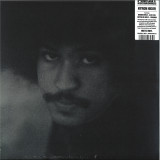
At the forefront of a rising wave of Brazilian artists captivating international audiences, Nyron Higor brings a quiet yet potent sense of wonder to his new self-titled album. Born in Maceió, Higor’s latest work is rooted in the traditions of Northeastern Brazilian music and golden-era MPB. Within the peaceful surroundings of his home, Higor weaves these roots together with global influences and contemporary production techniques, for a uniquely dreamlike vision of hope.
Following the success of his self-released debut Fio de Lâmina—an instrumental record of delicately balanced rhythmic and harmonic patterns, which earned support from tastemakers like Mr. Scruff, Gilles Peterson, and John Gomez—Higor’s new album is a move towards a more expansive, lyrical exploration of transcendence and triumph. As Higor explains, “This album is a test of resistance and a big event in my life as a young Black man from the Northeast and coming from a humble background, financially speaking, its context is political.”
Taking his demos and unfinished tracks to São Paulo, Higor worked alongside friends and collaborators from Brazil’s vibrant contemporary music scene—including fellow Maceioense artists Bruno Berle, Batata Boy, and New York-based Brazilian vocalist Alici Sol—assembling a rich musical landscape and a cutting edge development on the musical world from which he emerges.
For Higor, the process of recording and producing in close collaboration with Berle and Batata Boy allowed him to fully cultivate the emotive power of his compositions. Album opener "Ciranda" sets the tone with a slow frevo rhythm, as wistful trombone melodies and melancholic acoustic guitar harmonies create an atmosphere both intimate and grand. Lead single "São Só Palavras," featuring Alici Sol and Bruno Berle, captures both the lightness and depth of young love in an all too fleeting minute-and-a-half moment of soaring brilliance.
Building upon the instrumental sound of his debut, “Louro Cantador” with its playful organ, birdlike whistles and elegant acoustic guitar, emanates a kind of rare natural beauty, as each sound dances amidst the gentle pulse of Higor's bass—his main instrument.
Through ten carefully crafted tracks, Higor’s acuity for sound and silence draws listeners into a place that feels both deeply personal and universally resonant. “Above all, I value making music that brings me genuine satisfaction. I’m always looking for depth in the things I create.”
This album is a testament to the timeless themes that define Higor’s artistry, as well as his creative drive to overcome the obstacles he faces. Conveying his feelings of jubilance for his work, Higor notes, “This work is liberating, contemplative and victorious!” Each track invites the listener to experience the raw intimacy, the joy and longing, and the otherworldly ingenuity of Brazilian music, which seems to endlessly keep us coming back for more.
CREDITS
Ciranda (Nyron Higor)
Tico Lima: Trombone, Nyron Higor: Drums, Bass, Synthesizers, Electric Piano, Guitar, Molho de Jatobá, Ganzá, Caxixi, and Indigenous Whistle
Louro Cantador (Nyron Higor)
Nyron Higor: Drums, Bass, Keyboards, Guitar, Percussion, and Direct Sound
Demo Love (Nyron Higor)
Nyron Higor: Drums, Bass Synth, Keyboards, and Synthesizers
São Só Palavras feat. Alici, Bruno Berle (Nyron Higor, Batata Boy, Alici Sol, and Bruno Berle)
Alici Sol: Vocals, Bruno Berle: Vocals and Bass, Nyron Higor: Drums, Guitar, Keyboards, Synthesizers, and Whistles
Estou Pensando Em Você feat. Johanna (João Menezes, Rubens Adati)
Nyron Higor: Vocals, Johanna: Vocals. Bruno Berle: Vocals, Rubens Adati: Piano, Guitar, Programming, Stefan Costilhes: Bass, Batata Boy: Programming
Maravilhamento feat. Nathalia Grilo (Nyron Higor, Nathalia Grilo)
Nathalia Grilo: Vocals, Nyron Higor: Drums, Bass, Guitar, Keyboards, and Synthesizers
Som 24 (Nyron Higor)
Nyron Higor: Sampler, Keyboard, Bass Synth, Vocoder, and Steel Guitar
Pizzicato (Nyron Higor)
Nyron Higor: Double Bass and Keyboards
Eu Te Amo (João Menezes)
Nyron Higor: Vocals and Bass, João Menezes: Guitar, Batata Boy: Rhodes Piano, Bruno Berle: Xylophone
Me Vestir De Você feat. Johanna (Paulo Novaes and João Menezes)
Nyron Higor: Vocals, Johanna: Vocals, Bianca Godoi: Drums, Bruno Berle: Bass, Guitar, Percussion, and Rhodes Piano, Batata Boy: Rhodes Piano and Guitar
===================
Tracks 1, 2, 3, 4, 6, 7, and 8 were recorded by Nyron Higor in Maceió
Track 4: Bass and Synthesizers recorded by Ico dos Anjos. Vocals recorded by Batata Boy at Estúdio Rural
Track 5: Guitars, Bass, Programming, and Pianos recorded at Inhame Estúdio. Coproduced by Rubens Adati
Tracks 9 and 10 Recorded and Co produced by Ico dos Anjos
Mixed by Batata Boy, Ico dos Anjos, Bruno Berle, and Nyron Higor
Mastered by Batata Boy
Produced by Batata Boy, Bruno Berle, and Nyron Higor
Lacquer Cut by Caspar Sutton Jones @ Gearbox Records
Cover photo by Claudio Virginio
Vinyl centre label artwork by Tadáskía
Sleeve design by Alessandro Renaldin
- A1: Street Level Entrance (1:52)
- A2: Get At Me (4:08)
- A3: Diggin’ U Out (4:48)
- A4: Safe + Sound (4:49)
- B1: Somethin’ 4 Tha Mood (5:55)
- B2: Don’t You Eat It! (1:08)
- B3: Can I Eat It? (4:59)
- B4: It’z Your Fantasy (4:23)
- C1: Tha Ho In You (4:45)
- C2: Dollaz + Sense (5:53)
- C3: Let You Havit (3:40)
- C4: Summer Breeze (4:34)
- D1: Quik’s Groove Iii (2:37)
- D2: Sucka Free (2:11)
- D3: Keep Tha “P” In It (5:25)
- D4: Hooray 4 Tha Funk (2:11)
- D5: Tanqueray (4:19)
2025 Repress
DJ Quik is a giant of West Coast hip-hop. With 1995’s Safe + Sound, he scaled new levels of musical magnificence with his signature new age P-Funk/laconic G-Funk. A quintessential, sun-scorched LA album, this is pretty much essential. Typical for mid-90s albums the original vinyl copies are now rare so here’s the Be With re-issue, complete with “Tanqueray”, the hidden track from the original CD release.
A preternaturally gifted producer/rapper, DJ Quik has produced scores of LA gangsta rap classics. He’s released platinum and gold records of his own, as well as helped craft them for the likes of Tupac, Snoop Dogg, and Dr Dre. Quik has always been quirkier and more interesting than his gangsta rap peers, both musically and lyrically. An old-school funk producer at heart, he’s also incredibly nice on the mic. His raps often deal in boasts, jokes and good times but also cover his beefs, his trials and his trauma. Partying and pain, all mixed up. DJing and producing hype beat tapes from age 14, Quik’s tracks blended the languid funk and rubbery synths of Zapp and George Clinton with a gangsta aesthetic, creating a more danceable foil to Compton’s more typical nihilistic hedonism. Ultimately, his records sound custom engineered to drift out over sun-soaked barbecues.
By the time of his third album DJ Quik was a household name on the West Coast - California’s premier rapper/producer not named Andre Young. Released on Profile in 1995, Safe + Sound was certified gold. Less reliant on samples and more focused on live instruments, it elevated him from producer to fully-fledged composer. This sound — the quick, winding basslines, tinny high hats, smooth instrumental solos, soulful pipes, and Roger Troutman’s talkbox — defined him. This is an album of full-blown masterpieces. Rich soundscapes and masterfully arranged orchestrations with dense layers of sounds, intricate rhythms, and well-balanced songwriting.
The first track proper, “Get At Me” samples Cameo whilst Quik takes aim at the Judases in his life, the horn-laced chorus providing a triumphant feel. On the horizontal “Diggin’ U Out”, the soulful electric piano of Warryn Campbell lays a relaxed groove for Quik to talk over about one of his favourite topics: sex. Title track “Safe + Sound” chronicles Quik’s formative years over a slick instrumental. The moody bass locks a laidback infectious groove, the hook is catchy and Quik’s delivery is in fine form. On the uber-chilled “Somethin’ 4 Tha Mood”, Quik cooks up a breezy, feel good track of sparkly keyboards, syncopated claps, shuffling hi-hats, woozy synths and a floating two-minute flute solo courtesy of Robert “Fonksta” Bacon. Analysing the highs and lows of an average day in the hood, it echoes Cube’s “It Was a Good Day”.
“It’z Your Fantasy” is a silky smooth soundtrack to Quik’s detailed retelling of a sexcapade with a young lady and whilst “Tha Ho In You” is musically perfect for that midsummer family BBQ, its lyrical content is unsurprisingly decidedly less family-friendly. A real highlight, the infamous “Dollaz + Sense” is one of the most ruthless diss tracks of all time. The brutal lyrics ride a laidback West Coast beat, flipping a sample from Young & Company’s “I Like (What You’re Doing To Me)” as Quik fires lyrical shots at his arch Compton nemesis, MC Eiht. On the loping, hazy “Let You Havit”, Quik is again in gangsta mode, with more bars of barbs aimed at Eiht, rhyming over sun-kissed synthy-rollerskate funk.
Some of the finest tracks on Safe + Sound are those designed to de-stress. The evocative “Summer Breeze” is a classic warm-weather jam, anchored by a twangy funk guitar, breezy string arrangement, and a soulful hook delivered by Dionne Knighton. Quik’s nostalgic lyrics are not far from DJ Jazzy Jeff & The Fresh Prince’s “Summertime”, reminiscing over barbecues at the park, young love, and the brevity of halcyon youth. The relaxed and jazzy “Quik’s Groove III” is another highlight, as bass, guitar, piano and flute combine to create a smooth, soulful instrumental.
The swaggering “Shack Up”-sampling “Sucka Free” features a cameo from Playa Hamm, all funky braggadocio and over much too quikly (pun thoroughly intended). The jazz-flavoured “Keep Tha ‘P’ In It”, again featuring Playa Hamm but this time extending the cameo invitations to Hi-C, 2nd II None and Kam, is pure laidback P-Funk. The deep bass and industrial drums make sure the groove hits hard.
“Tanqueray” was originally a hidden track on the CD version of the album, but it’s too good to hide. This wild party samples Brass Construction’s gigantic “Get Up To Get Down” and soars in its drunk-ebullience. An apt way to close this party-driven set.
This 2022 Be With double LP re-issue has been mastered for vinyl by Simon Francis, cut by Pete Norman and pressed at Record Industry. Unusual for the time, Safe + Sound was originally pressed as a double, so all that was missing was the CD’s hidden bonus track “Tanqueray”, so we’ve fixed that. The original vinyl release never got a picture sleeve, so we’ve recreated the original’s promo-style silver-sticker and plain black jacket. A subtle cover for a wonderfully unsubtle record.
TENO - Debut Vinyl Release from Aum Recordings.
Marking a significant milestone, TENO's debut vinyl features four powerful tracks that are sure to captivate techno enthusiasts.
Each track embodies a unique yet straightforward approach, with intricately crafted and delicately nuanced sound design that immerses listeners in a rich sonic narrative.
Elevating the release even further, Japan's renowned DJ Wata Igarashi joins as a remixer, adding depth and refinement to the original compositions.
These story-driven tracks, combined with meticulously detailed soundscapes, unleash their full potential on the dancefloor.
This release is not only a bold new challenge for TENO but also a pivotal step forward for Aum Recordings, signaling its evolution into new realms.
Embark on a timeless musical journey: "Overture", one of the most iconic works from the golden era of progressive trance, is making a grand return.
Released in 1999, this Dutch masterpiece quickly established itself as a quintessential classic, starting in Belgium before taking dance floors across the globe by storm. A resounding success, played not only by club and trance DJs but also by those with a broader musical range, "Overture" is a track with a unique aura. Over 25 years after its release, it continues to electrify retro parties and remains an elegant, timeless standard.
To celebrate this legendary track, we are proud to present a special reissue, elevated by an exceptional remix from the talented Maxim Lany, the mind behind the iconic hit "Renaissance". The Belgian DJ and producer, renowned for reimagining classics with his modern touch, delivers a 2025 version that will resonate with both nostalgic fans and a new generation of listeners.
Maxim Lany shares:
"Reworking this epic classic has been an exciting creative journey. Inspired by the depth of the vocals and the power of the original strings, I set out to transform this track into a version worthy of 2025's dance floors while staying true to its timeless essence."
This exclusive vinyl release is a must-have for collectors, progressive trance enthusiasts, and DJs seeking a centerpiece for their collection. And as always, the Serious Beats touch ensures the original has been fully remastered to deliver an incredible sound, especially for vinyl purists.
Don't miss this chance to relive history while looking to the future. Act fast before it's too late!
La Pointe debut on Damian Lazarus’ Secret Teachings with ‘Umbra’, featuring remixes from Nathan Fake and Jonny Rock. The experimental label opens its 2025 schedule on 24th January with the Geneva-based trio’s warping original backed by a pair of late-hours remixes from two of the best in the scene.
Emerging from a confluence of rave culture and artistic mastery, La Pointe make an impressive label debut on Damian Lazarus’ Secret Teachings imprint with the enigmatic ‘Umbra’. The release, set for 24th January, is accompanied by stellar remixes from revered producer Nathan Fake and the ever-versatile Jonny Rock, delivering a sonic journey that transcends the ordinary. La Pointe, a trio formed by Geneva-based techno pioneers Crowdpleaser and Entlet alongside New York City’s Jonny Sender, represents a fusion of cultural and musical legacies. Rooted in the dynamic after-hours scenes of Geneva and New York’s underground club culture, the trio creates music that is both innovative and steeped in tradition. Their studio, located in an old factory by the meeting point of the Rhone and Arve rivers, lends its name—and its industrial inspiration—to their project.
The original mix of ‘Umbra’ is a hypnotic exploration of light and shadow, blending atmospheric melodies with deep, pulsating rhythms—a testament to their ability to craft soundscapes that resonate emotionally and physically. Nathan Fake’s remix ventures into intricate, textural layers, marrying ethereal tones with electronic intensity. Jonny Rock injects a raw, off-kilter groove and late-hours energy into his reinterpretation, blending his eclectic influences from disco, funk, house, and beyond. The genesis of La Pointe is as captivating as its sound. Crowdpleaser and Entlet are celebrated architects of Geneva’s rave scene, running the legendary after-hours party The Shark for over a decade and hosting luminaries like Alexander Robotnik, Boo Williams, and Sonja Moonear. Jonny Sender, a stalwart of New York’s downtown music revolution in the 80s to 00s and bass player of post-punk band KONK, brought his unique perspective honed in venues like Mudd Club to the trio when he moved to France. This debut appearance on Secret Teachings is not just a collection of influences but a narrative woven from decades of underground culture and musical exploration - making it a perfect fit for Lazarus’ label as he continues to champion boundary-pushing artistry, curveball signings and inspired remix curation.
‘One of the finest jazz guitarists of her generation, Halvorson is possessed of a questing, restless spirit.’ – Jazzwise
‘With an album of string quartet music as strong as this one, she is worthy of as much renown in the classical field as she holds in the jazz community.’ – New York Times
‘One of America’s finest guitarists. Halvorson’s musicianship is open-minded, demanding and richly engaging.’ – Uncut
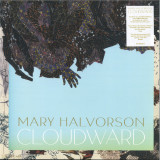
Nonesuch Records releases Cloudward by Brooklyn-based guitarist, composer, and MacArthur fellow Mary Halvorson on January 19. The album features eight new compositions by Halvorson, performed with her sextet Amaryllis, the improvisatory band that performed on her critically praised 2022 albums Amaryllis and Belladonna comprising Halvorson, Patricia Brennan (vibraphone), Nick Dunston (bass), Tomas Fujiwara (drums), Jacob Garchik (trombone), and Adam O’Farrill (trumpet). Labelmate Laurie Anderson also is featured on the album track ‘Incarnadine’. Halvorson and Amaryllis will tour internationally following the release of the new album, including January dates in Europe, as well as at the Big Ears Festival as part of Nonesuch’s 60th anniversary celebration.
Halvorson says, “All of the music on Amaryllis was written in 2020, during the thick of the pandemic, in one of the more bizarre time periods I’ve experienced in my life. While composing for Amaryllis, I expanded upon certain musical concepts I’d developed in my life up until that point—the ones that felt fruitful—and left others behind, hitting the reset button and attempting to build from scratch. Two years later, after the release of the first album, I was still writing music for Amaryllis.
“All the music on Cloudward was written in 2022, mostly in the fall and winter, when things started moving forward. Life felt like a creaky machine starting up again,” she continues. “Air travel, however chaotic, had resumed, and we were once again cloudward. Performances and tours and recordings were happening after a long hiatus and with a renewed sense of gratitude. This band, for me, was quite simply working, both musically and personally, and the main thing I felt while writing the music was optimism.”
The Guardian said Halvorson’s 2022 double release “shows how far this single-minded original has come, and affords a glimpse of how far she may go. Both sessions confirm how years of jaggedly lyrical solo and ensemble improvising and a quirkily subversive affection for mainstream music have now nurtured a composer of unpredictable but warmly expressive character… These are new landmarks in Halvorson’s already inimitable discography.” Pitchfork said, “Amaryllis and Belladonna are distinct statements; one could hear either album on its own without a sense that something is missing. But they are most powerful when taken together, like a landscape and its reflection in rippling water.”
Halvorson has released a series of critically acclaimed albums, from Dragon’s Head (2008), her trio debut featuring bassist John Hébert and drummer Ches Smith, expanding to a quintet with trumpeter Jonathan Finlayson and alto saxophonist Jon Irabagon on Saturn Sings (2010) and Bending Bridges (2012), a septet with tenor saxophonist Ingrid Laubrock and trombonist Jacob Garchik on Illusionary Sea (2014), and finally an octet with pedal steel guitarist Susan Alcorn on Away With You (2016). She also released the solo recording Meltframe (2015), and most recently debuted Code Girl (2018, 2020), a new ensemble featuring vocalist Amirtha Kidambi (singing Halvorson’s own lyrics), trumpeter Adam O’Farrill, saxophonist and vocalist María Grand, bassist Michael Formanek, and drummer Tomas Fujiwara.
One of New York City’s most in-demand guitarists, over the past decade Halvorson has worked with such diverse musicians as Tim Berne, Anthony Braxton, Taylor Ho Bynum, John Dieterich, Trevor Dunn, Bill Frisell, Ingrid Laubrock, Jason Moran, Joe Morris, Tom Rainey, Jessica Pavone, Tomeka Reid, Marc Ribot, and John Zorn. She is also part of several collaborative projects, most notably the longstanding trio Thumbscrew with Michael Formanek on bass and Tomas Fujiwara on drums.
10, 9, 8, 7, 6… the countdown to blastoff has started! Paris-based band Setenta is preparing for their upcoming 20th anniversary by releasing their sixth album, Apollo Solar Drive. The record is poised to be their best yet and is the culmination of an odyssey of artistic discovery. Setenta has been constantly striving for illumination through the years, yet also exploring the dark side of the human condition along the way. As the band describes it, this record is an Afro-Latin retro-futurist tribute to the sun. If their previous album, Materia Negra, launched the Setenta space shuttle crew into the void of “dark” matter and black holes, they now change course and valiantly approach the sun at full warp speed, taking us from darkness into the light. Miraculously, Setenta manage to bring some of the rhythmic and harmonic material they’ve explored on Earth with them, yet boldly dare to go where no one has gone before, challenging themselves to take their music, and their audience, to uncharted dimensions and new realms of existence.
In keeping with the themes of Materia Negra, FIP (Radio France) selection in 2020, Setenta’s sixth mission to explore “the great beyond” of “inner space” is aptly titled Apollo Solar Drive, emphasizing the band’s turning to the life-giving light of the sun for inspiration while playfully echoing the title of Eddie Palmieri’s Latin funk and social commentary masterpiece, Harlem River Drive. The overall vibe is warm and positive, propelled by the dual energy thrusters of funky, fierce beats and deceptively complex arrangements, yet going down smooth in the best sense of the word, like your favorite tropical cocktail or classic jazz dance fusion record of the 1970s. Of course this delicious treat is served with a special Setenta flavor all its own.
This time around, Apollo Solar Drive celebrates the trajectory of the band’s unique interstellar journey by deploying a resolutely jazzy, “funkadelic” angle to their beloved Afro-Latin music. Setenta’s band members tell their truths as a collective, with an emphasis on instrumental sections, focusing on the interweaving of multiple keyboards and guitars, while condensing the vocals to group choruses, as opposed to the solo voices of the past. The overall approach is more futuristic in its conception and realization, from the arrangements to the sonic engineering, although the rhythmic base still remains rooted in Afro-Cuban traditions as well as those of other Caribbean nations.
Pablo E. Yglesias (DJ Bongohead) of Peace & Rhythm (USA)
- A1: Vajolet (Feat Lukas Lauermann, Wolfgang Pfistermüller & Flip Philipp)
- A2: Autostrada Del Brennero (Feat Diggory Kenrick)
- A3: Latzfonser Kreuz (Feat Mamadou Diabate & Hamidou Koita)
- A4: Lago Di Garda (Feat Roger Robinson)
- A5: Alfa Romeo 145 (Feat Kwame Yeboah)
- A6: Feltuner Hütte (Feat Osman Murat Ertel)
- A7: Avrupa Köprüsü (Feat Osman Murat Ertel)
- A8: Europabrücke (Feat Susanna Gartmayer)
- B1: Ancient Atoll (Feat Reinhilde Gamper, Martin Mallaun & Flip Philipp)
- B2: Latemar (Feat Reinhilde Gamper & Martin Mallaun)
- B3: Brennerautobahn (Feat Taka Noda)
- B4: Echoes Part I (Feat Flip Philipp)
- B5: Echoes Part Ii (Feat Flip Philipp)
- B6: Transit Tribe (Feat Didi Kern)
- B7: Latemar (Reprise)
12"[23,49 €]
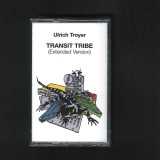
Ulrich Troyer has been producing music now solidly for over twenty years within a largely genre free framework, but whilst navigating forms such as avant-garde, techno, leftfield, field recording, electronica, glitch and ambient it is the aesthetics of dub that guide his creative direction. Not really recognisable in an orthodox form as remixed versions of roots reggae songs but in the way sonics are manipulated with space, the application and layering of delay, reverb and echo that fixes his output well within the scope of what might be called futurist dub.
The nearest comparisons to his new album TRANSIT TRIBE can only be established by a synthesis of some of the more adventurous explorations in modern music such as African Head Charge, Jon Hassell, Pole (Stefan Betke), Bill Laswell or even Miles Davis; featuring a diverse selection of artists and friends not only from Vienna and environs but also from around the world, sounds are not so much fused but allowed to float along the continuous flowing tide of warm waves of bass.
Rather than to allow the names of Ulrich Troyer's collaborators be merely listed in the album credits, what they bring to this joyful affair needs to be outlined, albeit briefly: Co-producer credits go to Osman Murat Ertel from Istanbul, who employed a variation on the old foolproof Nick Lowe method for checking out the impact quality of his own sound productions by playing tracks through his car sound system speakers!
Murat is a member of the electro-psych-folk group Baba Zula where he plays electric saz, oscillators and theremin and played a key part in the creative development of the album. Mamadou Diabate, the balafon master originally from Burkina Faso and now resident in Vienna, has developed his own unique technique of playing solos that replicate the sound of three instruments playing in unison; however the multi-talented Mamadou is engaged here on singing and playing the talking drum. From South Tyrol Reinhilde Gamper is a member of the experimental trio Greifer who are bringing the sound of the zither into the twenty-first century using new playing techniques and electronic gadgets. Susanna Gartmayer is an Austrian composer and bass clarinetist specialising in improv and multimedia sound research. Diggory Kenrick has been engaged with creating new dub fusions and also re-energising classic rocksteady and roots reggae classics, renowned for his interventions on flute. Didi Kern is an electronic dance musician and drummer from Vienna with a focus on free improvised music. Hamidou Koita, a singer and multi-instrumentalist, is from a traditional Griot family in Burkina Faso but now resident in Vienna and a regular musical partner of Mamadou Diabate playing drums and calabash. Austrian Lukas Lauermann is both a studio and live musician playing cello, also working on electronic sound design and writing string arrangements. He has recorded extensively and appeared on stage with both Mark Lanegan and Hans-Joachim Roedelius. Martin Mallaun is a Tyrol-born specialist in both the development of the zither in modern music and also as a researcher in the effects of climate change on the vegetation of Alpine ecosystems. Mystica Tribe is the musical alias of Tokyo-based dub/techno producer Taka (Takafumi) Noda. He collaborated with Vienna's own Vegetable Orchestra on 2020's "Transplants (Mystica Tribe Version)". After studying classical percussion Flip Philipp is now a jazz vibraphone player and member of the Vienna Symphony Orchestra. Wolfgang Pfistermüller is a member of the Vienna Trombone Quartet and the developer of the incredible bass-trombone Aurora with its uniquely warm and resonant sound. Roger Robinson is a renowned British poet, winner of many contemporary poetry prizes and member of the experimental music group King Midas Sound. Kwame Yeboah is a Ghanaian born UK based keyboard wizard who tours regularly with Yusuf / Cat Stevens, Ms. Dynamite and Pat Thomas.
So contained on the album is an astonishing mix of musicians and instruments: sounds of cowbells recorded in the South Tyrolean alps processed by modular synthesizers and heavy analogue bass synths combined with instruments such as zither, bass-zither, electro saz, flute, talking drum, trombone, cello, vibraphone, marimba, djembe, contra-alto clarinet, melodica, Farfisa - all bound together by organic live-drums and dub effects.
Liner notes by Steve Barker
Repress!
Mint Condition - A record label focused on excavating the outer fringes of classic House and Techno. Unreleased mixes, classics, overlooked gems and never heard before material, mined from the last 30+ years of contemporary dance music are the order of the day. From Chicago, Detroit and New York to London and beyond. Mint Condition have got their digging hats on to bring you exclusive heat and those rarer than rare jams that have been in your wants list for years. Dig in....
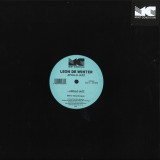
Tobias Menguser, AKA Leon De Winter, was a very influential figure in the 90's Frankfurt techno scene, releasing around 100 records under various aliases, including collaborations with Ricardo Villalobos, but it was his Leon De Winter alias that really caught the ears of legendary London label Eukahouse, who originally releases this 12" all the way back in 1997. A one-off, it is not only unique in its sound design but also genre defying, spanning deep house, tech-house, techno, electro and breaks.
A-Side 'Apollo Jazz' is truly that, sounding like it was composed from a freeform jam on a trip to the Moon. Opening with emotive chords, the track lifts off and builds, melodies effortlessly twist and turn, superbly pulling together a variety of well crafted synths, bass and percussion whilst keeping the energy to the fore. Over to the B-Side, 'Metamat', is bold and more playful in its execution, more sonic trickery abounds as the opening riffs and breakbeat percussion give way to a solid 4/4. The bass is as memorable as it is quirky, but again it's the strength in the way all the elements build and combine that creates some real tripped-out musical moments without ever losing its dance floor appeal.
This is one of Tobias's most sought after releases and it's no wonder his collaborative work with Ricardo Villalobos is legendary. The tracks themselves have remained exciting and relevant, achieving cult status amongst the most discerning DJs, record collectors and music heads alike. Legitimately re-released with the full involvement of Tobias Menguser, lovingly remastered by London's Curve Pusher from the original DATs especially for Mint Condition. 100% legit, licensed and released. Dug, remastered, repackaged and brought to you by the caring folks at your favourite reissue label - Mint Condition!
Follow-up album to cult-classic debut, Mantra Moderne.
‘Melodi’ is the second album from captivating duo Kit Sebastian (aka Kit Martin and Merve Erdem). Those familiar with the band's cult classic 2019 debut record 'Mantra Moderne' will instantly recognise their unique sound that blurs boundaries of world music, jazz and psychedelia. Not to be content replicating the same album, sonically the feel of ‘Melodi’ is a maturation. It is more diverse and provides glimpses into many different worlds from the Italian Riviera to the mountains of the Caucasus, the beaches of Bahia to the city streets of Istanbul and Paris. This joyous merging of soundscapes evokes a borderless planet with music as an international language, belonging everywhere and nowhere.
‘Melodi’ is imbued with Kit Sebastian's love of vintage records and world cinema, but it is not a retro homage. It celebrates its influences but is very much a modern record, being simultaneously brand new and retro. This is a credit to the duo's craft as musicians and songwriters, presenting their influences as a circular interaction between the present and the past rather than a linear one.
The music was written during the first UK lockdown and recorded that summer, a time of opening up that only briefly existed. In a world with a slower pace than before the Covid crisis, the band were able to spend more time experimenting in the studio. The album’s range of instrumentation has expanded from the previous record to include zithers, harpsichords, congas, bongos, bulbul tarang, and a mock-up choir on top of the synthesizers, balalaikas, organs, and saxophones. Session musicians and friends were also booked to introduce trumpet and string sections giving the album an added depth and orchestral texture. Despite the added complexity, the album was recorded using the same techniques employed for the previous album with various tape machines, bouncing back between cassette and ¼” tape for practicality and sonic abstraction. To pierce through this abstraction, the vocals are intentionally more expressive. Merve took cues from the Turkish singers of her youth, adding a slightly more melancholic, darker and more reflective style than 'Mantra Moderne’. Rooted in observations from everyday life, they speak often about the worlds and thoughts that arise from the end of the night.
Like with many of the best albums, the record seems over all too soon and has you instantly wanting to play it again. On each listen you decide on a track that you think is your favourite from the album only for it to be replaced with a different one on the next listen. The songs and production have hidden depths that seem to evolve and morph the more you devour them. Moments of pure pop, moments to fall in love, moments to contemplate. This journey is rich in musical vitamins and nourishment, but like all the best things still leaves you wanting more.
You Are The Morning was formed amid personal upheaval in 2021. "I came out as trans to my nearest and dearest," she says, "Some did not accept me, but some did." Jasmine got divorced, and a difficult home life meant she was writing while experiencing homelessness and precarious housing, sleeping on friend's couches and relying on community support. Despite the pain of some of its background, the record is an uplifting look at t4t love. Jasmine describes her first trans romance as the first time she experienced joy in a deep sense, because of her experience of living as a woman. First single `Skin on Skin' explores the new joy of physical touch. Usually a quick writer, it's a rare song that grew over time, during which a close connection with a friend began to form. "Sticking to the physical boundaries we wanted to have with each other became increasingly difficult. We were spending lots of time together, then falling in love. This song became a celebration of healing and physical catharsis found through unrepressed queer love." The first UK signee on Saddest Factory Records, the album was produced by Julien Baker, Phoebe Bridgers and Lucy Dacus. Jasmine and her band travelled to L.A. to record at Sound City Studios. It was made across 12 days in a highly collaborative and emotional process, and because Jasmine sees her songs as fluid and ever-changing, the recordings carry that free and spontaneous spirit. jasmine.4.t is supported by an all-trans band, Phoenix Rousiamanis contributes piano and strings, with Eden O'Brien on drums and Emily Abbott on bass. With Jasmine's voice and songwriting at the centre, the record incorporates a wider cast of voices. `Best Friend's House' features a chorus including her bandmates, Julien Baker, Phoebe Bridgers and Lucy Dacus ("the girls and the boys"), Saddest Factory Records label-mate Claud, Becca Mancari and E.R. Fightmaster. The song carries the communal spirit of the record's creation. On the closing track, `Woman', she is backed by the Trans Chorus of Los Angeles, a cross-generational group of trans singers who, like Jasmine, use their voice as a source of communal power. The song blossoms from solo performance to wider group catharsis. All the while, Jasmine sings unwaveringly about the power of knowing yourself at a core level: "I am, in my soul, a woman". The writing of You Are The Morning pulled from dark moments to tell its story. Surrounded by friends, the recording process was full of light. Through her performances, activism and artistry, jasmine.4.t is ushering in a new dawn.