Search:its not over

Styles
All
MEPHISTOFELES - VIOLENT THEATRE

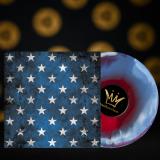
Reissue. Violet vinyl, limited to 350 copies. This is MEPHISTOFELES at their druggiest best - you can practically hear the sizzle of something brown cooking on its grooves - and thankfully, they've kept their doom locked in the garage. Mephistofeles continue to maximize the ROCK aspect of their sound over the doom here, with their swagger truly something to behold as those solos just soar downward into the abyss and the rhythm section push and pull right behind. If anything, Violent Theatre is a sterling example of true ensemble playing. Mephistofeles are nothing if not dependable, but just check out the 14-minute epic "Communion of the Vile" for the band really going for it. No other words needed: MEPHISTOFELES are cult for a reason, and Violent Theatre simply proves it further.

pre-order now07.08.2026

expected to be published on 07.08.2026

24,58 €
F.K. Raeithel - Aber Was Ändert Das? / Quantitative Unbestimmbarkeit I–IV (TAPE)

In December 2025, I performed alongside Asmus Tietchens and Jetzmann at the final Hörbar Ausklang Festival. This cassette was produced for that occasion. It contains preliminary studies for my live modular synthesiser performance.

The tape wasn't sold on the night, and its release ended up being postponed until now. At one point I had almost forgotten that I had even produced it. Now it's finally here—but what does that change?

Side A features a 24-minute piece titled Aber Was Ändert Das? (What Does That Change?)
Aber Was ändert Das? – Two oscillators coupled via a comparator and routed through a filter bank form the foundation of this piece. Eight filters within the bank are modulated by a synchronised octal triangle wave. Over time, the modulation gradually unfolds like an abanico (fan), shifting into different patterns. The impulses slowly dissolve into noise. A looping voice tape is added to the texture, and the piece concludes with a melody of comb-filtered sine tones.

Side B presents several variations and adjustments of a self-generative patch.

Quantitative Unbestimmbarkeit I-V (Quantitative Indeterminacy I–IV) – At the core of these pieces is a source of uncertainty and three function generators programmed in mutual feedback. The tonal material is derived from a wave-folded sine wave, a noise source, and a pinged state-variable filter. This type of self-generative patch is commonly known as a Krell patch.

The edition is limited to 50 copies. Release day will be the August 7th, 2026.

The title Miszellen Band is derived from the term Miszelle (plural: Miszellen), which refers to a short informative text or brief scholarly essay, often published in academic journals or collected volumes under a "Miscellanea" section. The word originates from the Latin miscella, meaning "mixed things". Such texts typically explore highly specific subjects without the scope or depth of a full-length study. They often consist of etymological notes, addenda to previously published work, concise discussions, or small discoveries from archives.

pre-order now07.08.2026

expected to be published on 07.08.2026

15,08 €
Wiregrass Sacred Harp Singers - Songs From The B. F. White Sacred Harp (Tape)
  • 01: The Happy Sailor
  • 02: Blooming Youth
  • 03: Weeping Pilgrim
  • 04: There We Our Jesus Shall Adore
  • 05: Bound for Canaan
  • 06: Cuba
  • 07: Firm Foundation
  • 08: Florida
  • 09: Desire For Piety
  • 10: Ragan
  • 11: Struggle On
  • 12: Ninety-Fifth Psalm
  • 13: Fallen by the Way
  • 14: Happy Home
  • 15: Coronation
  • 16: The Dying Boy
  • 17: The Fathers Boundless Love
  • 18: The Christians Flight
  • 19: Give Me Just a Little More Time

Recorded April 17 and 18, 1993, at the Union Grove Baptist Church, Ozark, Alabama.

The Wiregrass Singers' Dewey Williams began learning the shape-note tradition in his childhood. He studied under Judge Jackson, who authored the landmark 1934 hymnbook The Colored Sacred Harp. In 1971, Williams formally organized The Wiregrass Sacred Harp Singers to preserve the music full-time. This unified troupe began touring nationally and leading workshops, which ultimately launched them onto stages at the Smithsonian and Newport folk festivals up until Williams' passing in 1995 when the group disbanded. The African-American Sacred Harp tradition in the Wiregrass region has steeply declined since the start of the 21st century, due to an aging generation of singers, and today it is largely sustained through archival preservation and occasional multi-book singing meetups.

This raw recording, made at the Union Grove Baptist Church, Ozark in mid-April 1993 finds the group singing from B. F. White’s The Sacred Harp (1844), which together with his brother-in-law William Walker’s Southern Harmony (1835) formed the musical backbone of generations of Southern music and Southern musical styles.

"On almost any Sunday between the months of March and October, the season most conducive to travel and outdoor dinner-on-the- grounds, Sacred Harp devotés join with fellow songsters at the County Line Church in Slocomb, or the Mount Sinai Church in Henry County, or the Union Grove Baptist Church in Dale County, or at any one of a dozen or so churches in the southeast Alabama counties of Barbour, Coffee, Dale, Geneva, Houston and Pike, to form the square and sing fa-sol-la. Approximately fifteen African-American Sacred Harp singings occur annually in the Wiregrass region of southeast Alabama. A singing tradition characteristically associated with white culture in the Deep South, southeast Alabama has enjoyed a vibrant African-American Sacred Harp tradition for well over a century.

On a day of a typical African-American Sacred Harp Singing, the participants arrive casually in the late morning, seat themselves in the square according to voice part, and begin to sing. A dinner break occurs in the early afternoon, and the singers enjoy a covered-dish "dinner-on-the-grounds" (or in the church basement) prepared by the women. The most intense and emotional singing typically occurs after the dinner break. Each singer takes a turn leading the song of his choice. He walks to the middle of the square, calls out the song's page number and waits for the designated tuner to key the song. Singers are discouraged by the other singers from repeating a song that has already been sung, or "used." This proscription is often dispensed with, however, if the singer is particularly young, particularly old, or if the song has special significance to the individual song leader (perhaps the favorite song of a recently deceased relative).

Every singer is given an opportunity to lead a song. Often, older or more infirm singers will request younger singers to lead their songs for them. The motions of the song leaders are highly stylistic and often emotional. Young children are taught in singing school to mark time with their right arm while holding the book in their left. Typically, a singer will stand in place at the center of the square while leading the singing of the notes. When he begins to lead the lyrics portion of the song, he will often begin to "walk time," rhythmically pacing from one side of the square to the other, being careful never to turn his back on the tenor section. This "walking time" is unique to the African-American tradition. As a singer grows more confident he develops his own distinctive leading style. During fuguing songs in particular, he may gesture to each section of the square as its part joins in. Skilled song leaders often elicit applause or other emotional responses from the group. Occasionally a singer may fall into a state of spiritual ecstasy and "get happy." The episode might include a personal testimonial followed by a repeat of the last verse or refrain from the previous song. The singings break up around 5 P.M."
—Henry Willett, 1997 credits

pre-order now07.08.2026

expected to be published on 07.08.2026

16,77 €
DJ Bone - Ridding The Thinline

2026 Repress

Riding the Thin Line" is an EP by DJ Bone, an influential figure in the Detroit techno scene. Released in 1999, the EP showcases DJ Bone's signature style characterized by deep, driving beats and intricate rhythms. The tracks blend elements of classic Detroit techno with contemporary sounds, reflecting his ability to bridge different eras of electronic music. The EP is noted for its experimental approach while maintaining a dancefloor-friendly vibe. Each track offers a unique listening experience, highlighting DJ Bone's skills as a producer and DJ. His work often emphasizes a sense of journey, making "Riding the Thin Line" a compelling addition to any techno enthusiast's collection. Overall, the EP reinforces DJ Bone's reputation as a pioneer and an innovator within the techno genre.

out of Stock

Order now and we will order the item for you at our supplier.

Last In: 3 days ago
13,87 €
Isaiah Collier - Joy

Isaiah Collier

Joy

12inchBWOOD455LP
Brownswood Recordings
03.08.2026
 
3

In a world currently defined by unrest, uncertainty, and cultural fracture, acclaimed saxophonist, composer, and bandleader Isaiah Collier returns with Joy, a 5-track EP that reframes one of humanity’s most nuanced emotions both as a devotional grounding and political act.

Collier’s deeply personal compositions present joy as an act that isn’t rooted in escapism or abstraction, but rather, as something hard-won rooted in lived experience, shaped by transformation, and sustained through connection. Throughout the album’s five compositions, Collier positions joy as a guiding light during challenging times, an expression of challenging yourself to utilize your gifts, an affirmation of love and discovery, and as an affirmative source of reassurance.

“We are in a paradoxical time, where so much is being revealed to us,” Collier shares. “Everything feels political from every scope… our collective hearts feel the heaviness in the air. Yet I say to you all—don’t despair. For right now, the most political thing we can do is share joy.”

That ethos is made clear in the opening title track and lead single “Joy.” A pulsing rhythmic motif anchors the melody with a sense of both searching and certainty. Collier conceived the piece around 3 years ago reflecting on a time where many people in his life were experiencing loss of family and friends and experiencing profound life transitions. “Everything just felt like it was falling apart with no aim in sight,” he reflects. “Yet, there is a light at the end of it all.”

As he played the chords with a sense of urgency, he could feel the vibration of yellow in the piece. That initial triplet motif serves as the guiding light on the piano and the only word Collier could hear was Joy. In addition to Collier at the helm singing and playing piano and tenor sax on the track, it features an expansive 11-piece ensemble with a full horn and string section allowing Collier’s propensity for composition and arrangement to shine with an eclectic sonic palette.

“Landscape of Dreams” finds Collier serendipitously leaning into utilizing his gifts as a multi-instrumentalist. While he had a sketch of the piece going into the studio, a traffic delay caused musicians to be late arriving at the studio. Never one to waste time in the studio environment, Collier stepped into new creative territory and took up the challenge of executing playing all instruments himself as an act of trust and experimentation. “I’ve never done this before, and so it was a leap of faith for me,” he asserts. “I always dream of doing stuff like this, and being part of the small percentage of people who can do it like Prince, Steve Lacy, Frank Zappa, and Stevie Wonder. The end result finds Collier immersed in a hypnotic soundscape playing layered flutes, drums, Metatron, Wurlitzer, and auxiliary percussion.

Another layer of joy is revealed in “Where I’m Loved” that serves as a love letter and leaning into the process of stepping into the willingness to explore life and love with a partner. On the intimate meditation of vulnerability and connection, Collier's vocal prowess is on full display, exerting effortless falsetto reminiscent of D’Angelo over soulful Wurlitzer and guitar as he crosses over into more R&B-inspired realms. “I believe everyone deserves this feeling or to honor the memories of it. Furthermore, I believe you should also go where you’re celebrated and not tolerated.”

“When the Dust Settles” captures the electricity of live collaboration and Collier further steps out of being confined to any specific genre. He had just gotten a microKORG keyboard from co-producer Sonny Daze and was exploring the vast array of sounds on the instrument. Collier plays synth bass on the microKORG joined by the electrifying improvisation of Cole Runge on guitar and the combustible rhythm of his brother Jeremiah Collier on drums with additional post-production work from Sonny Daze.

The album’s final track “God’s By Your Side” reflects on perseverance and artistic legacy, directly inspired from the passing of D’Angelo, whose life’s work was a huge part of Collier’s childhood growing up in the late 90s and early 00s. With gospel flavor and direct influence both from D’Angelo’s vocal and instrumental arrangements, the track speaks to resilience and persistence in the face of obstacles—an affirmation of source and reassurance. “And what’s better than having God by your side, right?” asserts Collier.

Joy is a through-and-through expression of the arc of joy in its truest form. Joy transcends fleeting happiness and is conscious gratitude shaped by taking chances, leaning into your gifts, fostering community, and lived experiences.

“Joy is partially happiness,” Collier explains. “But to me it means happily being grateful for family, friends, lovers, teachers, and good times. These are the things that anchor us.”

The release of Joy comes off the heels of significant momentum for Collier, whose work continues to garner accolades and resonate across cultural spheres. He was featured on the cover of DownBeat’s April 2025 issue, where he was named “The Next Sax Giant,” and profiled on NPR’s Jazz Night in America for his ambitious 13-movement interdisciplinary suite The Story of 400 Years, that traces 400 years of Black American History. He released two full-length albums in 2024 with The World Is on Fire highlighted in The New York Times’ Fall Arts Preview and The Almighty named among the publication’s Best Jazz Albums of the year.

Beyond performance and recoding, Collier’s influence is recognized in broader cultural and intellectual spaces as he was the recipient of the Jazz Journalists Association’s 2025 Up and Coming Artist of the Year Award, the 2024 Chicagoan of the Year in Jazz, and was named a Steve Jobs Archive Fellow joining an elite cohort of the next generation of artistic visionaries through a yearlong program.

In addition to the release of Joy, Collier is touring his “Collier Plays Coltrane” program throughout 2026 in honor of John Coltrane’s centennial. Rather than presenting Coltrane’s expansive catalog as repertory, Collier approaches this music as something living, reshaping it in real-time with a sense of space and improvisational dialog reflecting both reverence to the past and present times.

out of Stock

Order now and we will order the item for you at our supplier.

Last In: 55 days ago
23,95 €
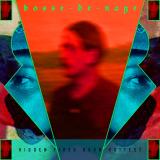
Bosse-De-Nage - Hidden Fires Burn Hottest (2x12")

There's a tendency in metal to mistake aggression for honesty, volume for depth. To confuse the performance of darkness with its actual weight. Hidden Fires Burn Hottest, the new album from San Francisco-based post-black metal band Bosse-de-Nage, sidesteps this entirely. It’s the group’s most fully realized work yet, precisely because it refuses to be pinned down.

Bosse-de-Nage have been working with The Flenser for over fifteen years. They were one of the first bands the label ever partnered with and have the longest active relationship in the label's history. But unlike most bands who build momentum through constant touring and visibility, Bosse-de-Nage has largely existed apart from the music world's usual machinery. They've evolved on their own terms, in relative isolation, allowing the work to develop without outside pressure or influence. What began rooted in black metal anonymity has mutated into something that actively defies categorization. The aggression is still there, but it's no longer the point. Hidden Fires Burn Hottest finds the band treating emotions like physical objects, feelings with spatial properties. “No Such Place"" describes a space that can't exist but does anyway, somewhere between thought and location. ""Immortality Project"" examines infinite possibility not as promise but as problem, endless options collapsing under their own weight. These songs don't use metaphor to describe emotion. They make emotion into something you could theoretically touch.
Tracked by Jack Shirley (Deafheaven, Oathbreaker) at Atomic Garden East and mixed and mastered by Richard Chowenhill of Agriculture, Hidden Fires Burn Hottest was years in development, with some tracks beginning in 2018.

The long writing process offered time that most records don't get. Time to live with ideas, revise endlessly, to let structures settle. For the first time, lyricist Bryan Manning wrote everything in advance, creating a surplus to pull from rather than working under deadline pressure. The difference shows.
Coming off Further Still, an album built on constraint and economy, Bosse-de-Nage sought the opposite: sprawl, strangeness, fewer rules. Space for ideas to develop without rushing them. Dynamics that move through quiet as much as noise. Presence earned through atmosphere instead of volume. The record even includes ""Mementos,"" which might be considered the first love song the band has ever written.

Nothing here coheres into a theme. These are pieces pulled from low moments and private feelings made public through sound. The band has never been interested in positivity, in music that resolves cleanly or offers comfort. But bleakness doesn't mean humorlessness. There's something darkly funny running through much of it, even when it shouldn't be.
Hidden Fires Burn Hottest doesn't explain itself. It just insists: what you feel is as real as what you can see."

pre-order now03.08.2026

expected to be published on 03.08.2026

34,03 €
1619 Bad Ass Band - 1619 Bad Ass Band LP

Mr Bongo presents a reissue of the 1619 Bad Ass Band’s self-titled album, originally released in 1976 on the ultra-rare tax-scam imprint TSG Records. Formed by Khalid Abdul Shalid, the record was the only album released by the group, and has since become a mythical, highly sought-after prize for collectors and DJs, ranking among the most coveted albums on the 1970s rare soul scene.

This New Jersey soul-funk gem captures the raw energy of mid-‘70s underground funk and soul. Its journey began in relative obscurity having been released on TSG, one of several US “tax-scam” labels operating at the time. These labels exploited loopholes in the tax system by inflating production costs to create write-offs against their tax bills, meaning commercial success was never the objective. Records were often pressed in extremely limited quantities, with little to no promotion or distribution and in many cases, artists were unaware their music had even been released. While this led to the 1619 Bad Ass Band’s album slipping into obscurity upon release, it later cemented its status as a holy grail for diggers and DJs. Unfortunately, like many releases of its kind, it also meant the band never received the recognition they deserved at the time.

Musically, the album is a unique listen with a varied palette that will appeal to fans of a broad range of tastes. From the luscious, dreamy ballad ‘Rain’, which will melt even the stoniest of hearts, to the raw, drum-heavy funk of ‘Love To Love’, it showcases the group’s depth and versatility. Highlights include the string-laden, floaty stepper ‘Just From You’, and ‘Nothing Can Stop My Loving You’, with its spacey synth lines, which will be a joy for modern soul fans. Elsewhere, ‘Step Out’ opens with a heavy drum break (later sampled on Latyrx’s ‘Interlude’ from their 1997 debut) before unfolding into a brilliant male-female vocal exchange.

Every track on here is a winner and it’s criminal that the band never received the publicity or credit they deserved when it was first released. Alongside the TSG Records release in 1976, the album was later released again in 1978 with alternate cover art on another tax-scam label, Graham International. Both versions have since become highly collectable and over time, the album has steadily gained the recognition it always deserved. This reissue by Mr Bongo offers a wider audience the chance to experience a truly special record, one that stands as a testament to the overlooked brilliance of the era’s underground soul and funk scene.

pre-order now31.07.2026

expected to be published on 31.07.2026

26,85 €
Creepxotica - Haunted Bossa Nova LP

Not all tropical escapes are meant to soothe. Some are meant to seduce… and unsettle.

On Haunted Bossa Nova, Creepxotica reimagines the language of classic exotica through a darker, more cinematic lens—where swaying rhythms and lush melodies drift through shadows instead of sunlight. This isn’t background music for a carefree afternoon. It’s a late-night transmission from a hidden lounge at the edge of a dream.

Built on the bones of traditional bossa nova and mid-century exotica, the album pulses with nylon-string guitars, vibraphone shimmer, and hypnotic percussion—but everything feels just slightly off-center, like a memory slipping out of reach. There’s a tension beneath the beauty, a sense that something unseen is moving just beyond the music. Each track unfolds like a scene, contributing to a larger atmosphere that’s immersive, cohesive, and quietly haunting.

What sets Haunted Bossa Nova apart is its intention. This is not nostalgia for nostalgia’s sake—it’s a deliberate evolution. Creepxotica honors the lineage of the genre while pushing it into more mysterious territory, blending tropical warmth with ambient unease and cinematic depth. The result feels less like a throwback and more like a lost soundtrack—discovered, not created.

Sonically rich and meticulously arranged, the album invites deep listening. Every tone, every pause, every echo has purpose. It’s exotica for those who crave mood over kitsch, atmosphere over imitation.

For listeners drawn to the edges of jazz, lounge, and ambient soundscapes, Haunted Bossa Nova offers something rare: a fully realized world that lingers long after the final note fades.

pre-order now31.07.2026

expected to be published on 31.07.2026

31,05 €
I Am An Instrument - Vol. 2 & 3

The recordings on Volume II were captured in Copenhagen, Denmark on January 18, 2020. Guided as much by human instinct as by musical intention, the ensemble moved through the evening with a shared sensitivity…listening, responding, and trusting the moment as it unfolded. Though Morten McCoy admits to having felt quite ill that evening, nothing in the music suggests restraint. Instead, what remains is a vivid, playful exchange, where McCoy and Johannes Wamberg carry both Part I and Part II as a flowing conversation, speaking through sound rather than words.

Part I begins abruptly, almost throwing the listener back in time to the exact moment the improvisation was born. Jonathan Bremer steps to the forefront, providing a solid, melodic bassline as Kristoffer and Eliel, perfectly in sync, lay down a steady foundation for whichever voice chooses to rise above the rhythm.

This is also one of the few I Am An Instrument recordings to feature two guitarists. Johannes Wamberg leads the way, shaping the harmonic direction, while Steven Jess Borth II adds subtle rhythmic textures through muted palm work, deepening the groove without ever stepping into the foreground.

Part II unfolds with Morten McCoy on his Moog One, delivering a beautiful, expansive solo. Using a carefully chosen patch, the sound pulses through the rhythm, moving with the groove rather than above it, riding the beat like a wave through the ocean.
Shaped by trust, presence, and collective improvisation, Volume II captures a group deeply attuned to one another, allowing intuition and momentum to guide the unfolding form.
——
Volume III was recorded in Copenhagen on March 5, 2020. Little did anyone know that only days later, the world would be placed on pause for years. Captured just before that moment of global stillness, this session carries a heightened sense of presence, a final gathering before silence reshaped everything. Recorded in a space more commonly associated with a club atmosphere, the music draws on a different kind of energy and immediacy. With Eliel Lazo unable to attend, the group invited Victor Dybbroe of Girls In Airports to join on percussion, subtly reshaping the ensemble while preserving its core spirit. Part I opens with Steven Jess Borth II calling out on tenor saxophone, answered by Morten McCoy on Wurlitzer electric piano. The piece gradually unfolds into a meditative groove, patient and expansive, carrying the listener through an eight-minute journey of layered rhythm and restraint.

Part II begins with Jonathan Bremer on stand up bass, slowly joined by the rest of the ensemble as each voice enters with intention. Midway through, an unexpected vocal melody from Borth emerges, drenched in reverb and delay, later reappearing as a melodic line on the tenor saxophone.

Part III is led by Morten McCoy on Wurlitzer electric piano. His signature melodic language sets the direction, guiding the ensemble while leaving ample space for the music to breathe and evolve through collective improvisation. Reprise returns to the closing moments of Part II, its title reflecting its origin. The familiar groove reappears, transformed into a distinctly Jamaican-influenced rhythm, over which Borth delivers a final tenor saxophone solo, bringing the conversation to rest.

Any questions about any of these products feel free to get in touch and we'll help you out!

a a1. Part I [Vol.2]
[b] a2. Part II [Vol.2]
[c] a3. Part I [Vol.3]
[d] b1. Part II [Vol.3]
[e] b2. Part III [Vol.3]
[f] b3. Reprise [Vol.3]

out of Stock

Order now and we will order the item for you at our supplier.

Last In: 65 days ago
25,63 €
PEALS - THE COMPOUND 76

PEALS

THE COMPOUND 76

12inchTHRILLX650
Thrill Jockey
31.07.2026
  • 1: Wild Honey (live)
  • 2: Become Younger (live)
  • 3: Essential Attitudes (live)
  • 4: Punk Migration (live)
  • 5: Lonestar (live)
  • 6: Believers (live)
  • 7: Floating Leaf (live)
  • 8: Pink Cloud (live)

Four years near the beginning of the last decade, William Cashion and Bruce Willen created quietly radiant instrumental music from two tessellated guitars, a few modest synths, and a slew of percussive and noisy toys, like walkie-talkies or the things that gave the pair their handle, bells. This 2016 live recording is taken from the band"s next-to-last show, cut in an artist-run space called The Compound in their hometown of Baltimore. Peals is the project of two bassists known best for their other livewire and loud Baltimore bands: Future Islands for Cashion, Double Dagger for Willen. This recording does not feel at all out-of-time, like some overlooked gem that was simply swallowed by its moment. It sounds relevant, welcoming, welcome. These 38 seamless minutes have clear predecessors: Manuel Göttsching"s E2-E4, Cluster and Eno"s Cologne dalliances, the way Midwest Emo could sound smarter than its lyrics read.

pre-order now31.07.2026

expected to be published on 31.07.2026

29,20 €
Apollo Brown & Ras Kass - Blasphemy LP

A cold sermon for warm-blooded sinners, Blasphemy pairs Ras Kass’ razor-edged theology with Apollo Brown’s sepia-toned soul loops—an album that feels like scripture rewritten in graffiti and gunpowder. Brown constructs a chapel out of dust-scratched vinyl: ironclad drums, gospel fragments, horns that sound like they’ve survived too many winters. Over that cathedral of grit, Ras Kass steps in like a rogue prophet, dismantling mythologies with scholar-level precision and West Coast snarl. His verses slice through religion, race, politics, and personal apocalypse—part history lecture, part street-corner sermon, part heretic’s prayer.

Guest appearances—Pharoahe Monch, Royce da 5’9”, Xzibit, and more—arrive like fellow priests of the unholy pulpit, sharpening the album’s edges without stealing its center. Blasphemy isn’t built for passive listening; it demands engagement, rewinds, and maybe even a dictionary. But beneath the intellectual shrapnel is feeling, too: bruised pride, survival-mode clarity, the restless search for truth in a world addicted to lies.

This is boom-bap as moral reckoning. A dusty-fingered gospel for those who don’t trust institutions but still crave meaning. A record that questions everything yet stands solid in its craft—Detroit drums welded to L.A. lyricism, both beating against the sanctimonious and the hypocritical with equal force.

Blasphemy is not here to comfort you. It’s here to wake you up.

pre-order now31.07.2026

expected to be published on 31.07.2026

32,56 €
Magyar Posse - Random Avenger
  • 1: Whirlpool Of Terror And Tension
  • 2: European Lover / Random Avenger
  • 3: Sudden Death
  • 4: One By One
  • 5: Popzag
  • 6: Black Procession
  • 7: Intercontinental Hustle
also available

Green Vinyl[26,47 €]


Magyar Posse’s third album Random Avenger out on vinyl for the first time ever in July via Svart Records Looking back, it was the golden age of Magyar Posse. The album Kings of Time had received a tremendous response from both critics and music lovers. The band was touring intensely in Finland and abroad. By now, the band was a well-oiled machine, ready to capture the successor to their celebrated second album. The band decided to follow a different path compared to the creation of Kings of Time: they would record their third album alongside the well-known, slightly eccentric engineer and producer Jani Viitanen. The recognizable Magyar Posse style was present in the pieces of Random Avenger, but something was slightly different. The new music was more rhythm-based, more riff-based and in places more joyous than the dynamic minor key avalanche of Kings of Time. Consciously or unconsciously, the band members saw that they had travelled the Slavic melancholy road as far as possible with the previous album. The success of Kings of Time felt like a positive push, not an extra pressure on their shoulders. It was only natural to strike again while the iron was hot. Many of the pieces had been already developed by the time Kings of Time was released, which eased the production of Random Avenger. After the meticulous but relatively swift mixing and mastering process, the band members were satisfied with the result. The only component that made some of them blush was the cover art – graphic designer Tom Backström had glaringly used photos of empty stages in forgotten community centres and the like. The beauty or the ugliness is once again in the eye of the beholder. Right after its release, Random Avenger got a very positive response, but not as overwhelming as Kings of Time – which was to be expected, as the previous Magyar Posse album had probably been the most universally praised Finnish album of the whole decade. Mikko Elo, musician / journalist, Pori, Finland, March 1st 2026

pre-order now31.07.2026

expected to be published on 31.07.2026

25,63 €
Magyar Posse - Random Avenger

Magyar Posse

Random Avenger

12inchSRE711LPB1
Svart Records
31.07.2026
  • 1: Whirlpool Of Terror And Tension
  • 2: European Lover / Random Avenger
  • 3: Sudden Death
  • 4: One By One
  • 5: Popzag
  • 6: Black Procession
  • 7: Intercontinental Hustle
also available

Black Vinyl[25,63 €]


Magyar Posse’s third album Random Avenger out on vinyl for the first time ever in July via Svart Records Looking back, it was the golden age of Magyar Posse. The album Kings of Time had received a tremendous response from both critics and music lovers. The band was touring intensely in Finland and abroad. By now, the band was a well-oiled machine, ready to capture the successor to their celebrated second album. The band decided to follow a different path compared to the creation of Kings of Time: they would record their third album alongside the well-known, slightly eccentric engineer and producer Jani Viitanen. The recognizable Magyar Posse style was present in the pieces of Random Avenger, but something was slightly different. The new music was more rhythm-based, more riff-based and in places more joyous than the dynamic minor key avalanche of Kings of Time. Consciously or unconsciously, the band members saw that they had travelled the Slavic melancholy road as far as possible with the previous album. The success of Kings of Time felt like a positive push, not an extra pressure on their shoulders. It was only natural to strike again while the iron was hot. Many of the pieces had been already developed by the time Kings of Time was released, which eased the production of Random Avenger. After the meticulous but relatively swift mixing and mastering process, the band members were satisfied with the result. The only component that made some of them blush was the cover art – graphic designer Tom Backström had glaringly used photos of empty stages in forgotten community centres and the like. The beauty or the ugliness is once again in the eye of the beholder. Right after its release, Random Avenger got a very positive response, but not as overwhelming as Kings of Time – which was to be expected, as the previous Magyar Posse album had probably been the most universally praised Finnish album of the whole decade. Mikko Elo, musician / journalist, Pori, Finland, March 1st 2026

pre-order now31.07.2026

expected to be published on 31.07.2026

26,47 €
RED DWARF STAR - LP1

RED DWARF STAR

LP1

12inch178030
Pelagic Records
31.07.2026
  • 1: LE MUR DU SON
  • 1: 2EX PATRIOT
  • 1: 3LE VIRAGE
  • 1: 4LADY AURORA BOREALIS
  • 1: 5DREAM SEQUENCE
  • 1: 6TWIN SUNS
  • 1: 7THORNS
  • 1: 8KISS

Red Dwarf Star emerges as a striking new chapter for Coley Taylor of famous US/CH based MASERATI, a new project that captures a deeply personal arc that spans continents, relationships, and creative reinvention. Working largely alone, Taylor embraced a deliberately stripped-down approach, navigating unfamiliar technology with joyously unpolished determination. Much of the material was recorded in a modest, direct manner that prioritizes feeling over finesse. This DIY ethos is balanced by key collaborations that elevate the record's sonic depth. Drums were recorded in Los Angeles by Kellii Scott, whose distinctive style adds weight and clarity, while contributions from Allen Epley and Jenna Fournier introduce subtle vocal textures that expand the emotional range of the songs. Despite its introspective origins, Red Dwarf Star is not intended to remain a solitary endeavor. What began as a personal outlet is evolving into a fully realised band, with a lineup assembled to bring these songs into a more expansive, dynamic setting. This shift signals not only a new phase for the project, but also a broader artistic trajectory. Taylor is known best for his work with Maserati, a legendary outfit that leans into collaborative, rhythm-driven expanses rooted in krautrock and electronic psych. Through Red Dwarf Star Taylor's lineage of influence is felt, echoing the raw emotional immediacy of `90s alternative, post-hardcore, and the textured atmospheres of jagged dream-pop that bleeds. These are sounds that have lingered in Taylor's creative subconscious for decades, now resurfacing with renewed urgency. For fans of MASERATI, FAILURE, SLOWDIVE, QUICKSAND, SHINER, HUM Black or coloured vinyl LP or CD available

pre-order now31.07.2026

expected to be published on 31.07.2026

22,65 €
Kathryn Mohr - Carve LP

Kathryn Mohr

Carve LP

12inchFR191LP
Flenser Records
29.07.2026

Carve is the second full-length by Bay Area artist Kathryn Mohr. Written over the course of five years and recorded over several weeks in a rural singlewide in the Mojave Desert, the album centers on love experienced as a form of grief, not as an aftermath of loss, but as a condition of intimacy itself.

Mohr describes Carve as an album about how memory exists outside the body, embedded in places and landscapes. It is shaped by her first return to the American Southwest since a childhood road trip at age five, and by the experience of moving through terrain that holds emotional weight long after its origins fade. The record considers how intimacy feels after years of isolation, and what it takes to carve out a life that allows for trust, presence, and feeling rather than mere survival. The project took form after a difficult tour that ended in Joshua Tree. Mohr pointed her car into the desert and drove alone, crisscrossing the Mojave on dirt roads. Months later, she returned to record the album, working alone with an acoustic guitar, a field recorder, and limited supplies. Following that period, Mohr began to allow for intimacy and connection. The time she spent recording Carve in the desert did not create isolation so much as mirror it. Working alone out of an old, western-themed jail Airbnb, the physical enclosure reflected the emotional conditions under which much of the record had been written: distance, restraint, and long stretches of stillness. In that context, love was not experienced as escape, but as something inseparable from impermanence and the awareness of loss.

This tension between connection and inevitability sits at the center of Carve. Some of the album’s songs were written earlier, during a prolonged period marked by emotional distance and apathy. Over those four years, Mohr was working through unprocessed childhood memories and their long-term effects on her ability to connect with others. The work was slow and difficult, involving a fundamental reshaping of how she related to herself and to the world. Carve was mixed by Richard Chowenhill of Flenser labelmates Agriculture. Rather than offering resolution, the album documents the act of remaining present within tension. Carve is not about escaping grief, but about accepting it as inseparable from love itself. Kathryn Mohr’s previous effort “Waiting Room” received the coveted ‘Best New Music' designation and a score of 8.4 from Pitchfork.

out of Stock

Order now and we will order the item for you at our supplier.

Last In: 68 days ago
28,15 €
Checki - EY AY (Deluxe Slay Jazz) (LP)

This special collector's edition is available in a strictly limited run of only 250 copies. The vinyl version is pressed on transparent vinyl and features metallic paper packaging along with a printed inner sleeve made from dyed paper stock. The entire release was designed by the exceptionally creative graphic designer Weronika Lipniewska, resulting in an edition that is as captivating visually as it is musically.

EY AY (Deluxe Slay Jazz) is the second album by Piotr Checki - an artist who, following the intimate, home-recorded debut PE, returns with something radically different: a living, spontaneous work captured in real time. If PE was a personal document of moments enclosed within a controlled studio environment, EY AY is its opposite - a sonic organism that breathes, pulses, and unfolds in the here and now.
The album was created in just two weeks during a period of intense inspiration. Ch?cki developed a series of compositional sketches which were then expanded together with drummer Tymek Papior and pianist Marcel Balinski during a single six-hour recording session. Crucially, the entire album was recorded as one-take performances. No overdubs, no edits, no second attempts. It is a document of pure presence - a moment that can never be repeated.
The subtitle Deluxe Slay Jazz carries an additional personal layer of meaning. It serves as a subtle yet significant nod to one of Checki's greatest passions: ski jumping. The initials "DSJ" may also evoke the cult classic ski-jumping computer game released in 1999, beloved by an entire generation of players.
With EY AY, Checki redefines his approach to music-making. Instead of constructing rigid structures, he places trust in the process. Instead of production, interaction. Instead of perfection, authenticity. This is music that does not strive to be finished - it simply exists.

out of Stock

Order now and we will order the item for you at our supplier.

Last In: 65 days ago
32,98 €
Phunk Investigation vs Boy George - Generations Of Love

Boy George's single "Generations of Love" has become a dance anthem. The single has been digitally released 12 times, with over 70 remixes. Mixes were created by Paul Oakenfold, Ramp, Phunk Investigation, Scream, De-Phazz, and The Scumfrog. So, like it or not, it's sure to be a hit whenever it's played on dance floors around the world.
Described as exuding joie de vivre (joy of life) and full of joy.
Suitable for clubs and house music: Praised for its laid-back, house-inspired grooves, perfect for clubs and living rooms.
One editor called it "full, smooth, and richly satisfying."
Considered a potential club hit, with critics urging people to buy it.
Smash Hits called it a "glossy, understated dance track."
Ultimately, reviews describe it as a feel-good dance track that successfully blends Boy George's iconic vocals with JL & Afterman's disco-house production, creating a joyful and very catchy remix.
This vinyl also includes The Scumfrog's fabulous version.

out of Stock

Order now and we will order the item for you at our supplier.

Last In: 69 days ago
13,87 €
Various - FIDESX (7x12")

Various

FIDESX (7x12")

7x12"-VinylFIDESX
Fides Records
27.07.2026
 
41

FIDES Records celebrates its 10th anniversary with 10Y OF FIDES: Mixed by Z.I.P.P.O, a landmark 41-track release capturing a decade of the label's artistic vision.

Centered around a continuous mix by label founder Z.I.P.P.O and accompanied by a limited 7×12" vinyl series, the project brings together 41 exclusive tracks from artists who have shaped and inspired the FIDES catalogue over the past ten years. Blending established names with emerging talent, the compilation reflects the label's distinctive sound and ongoing evolution.

Alongside the continuous mix, this complete digital edition includes all 41 unmixed tracks in their full-length versions.

out of Stock

Order now and we will order the item for you at our supplier.

Last In: 13 days ago
93,70 €
Cannon And Thrower - Thinking It Over / I’m In Love With You (7")

Not only were Derek Cannon and Hardy Thrower a music /songwriting duo from San Diego in California, they were also cousins. Its not often our paths come across such a duo that didnt sing on their own compositions.

Derek Cannon a prolific Trumpet player and Hardy a lyricist put these tracks together circa 1981 with a view to getting them a record deal. They paid for the sessions themselves and went into Golden track studio's located in Santee East San Deigo with a host of singers and musicians.

What came out was just two stunning mid temp hanuting ballad songs with exquisite playing and vocals. From the opening west coast waves crashing on the into of "Think It Over" you are already closing your eye's and painting a picture of the unfolding love story. James Higgins was hired for the vocals on this track and delivers such subtle tone's that are complimited by keyboards by Bill Santos.

Then wait until the flute solo by Ken Abady. Boy i fucking love this song. Its what soul music should be about. Love it stuff like this got recorded in 1982 when their heads could have easily been turned by what was happening in the music world.

"Im In Love With You" is slightly more uptmepo but not by a whole heal. Cannon And Thrower were far too soulful to just throw a 4/4 drum beat on the hope of a top ten winner. They cut way more deeper and soulful than that. Roosevelt Carter was hired for this vocal performance and not letting the duo down performs a beautiful take of the duo's love song. I think special shout out must go the female backing singers of Julie Reyes, Cynthia Hammond and Jamice Garcia.

The two songs were sent to none other than Lou Rawls in hope he may sign them to his record company. This never happened and the tape was later sold on an estate sale of Lou's. The buyer was Christian Peintner who was so kind to lend us the tapes and make this 45 happen. So thanks to him for allowing us to preserve the Cannon And Thrower legacy.

pre-order now24.07.2026

expected to be published on 24.07.2026

14,71 €
FAUSTIAN - PARABLE OF THE SEWER
  • 1: I CURSE YOU
  • 2: BROKEN BETTER
  • 3: I WANT THE RIDE TO BEGIN AGAIN
  • 4: IMMACULATE
  • 5: CEPHALOPHORE
  • 6: WE DO NOT USE NAMES HERE
  • 7: TENEMENTS (ONLY THE WICKED WALK IN CIRCLES)
  • 8: THE ROT SHALL INHERIT THE EARTH

Australian black metal force, Faustian, have been referred to as a super group of the Antipodean extreme metal scene; the members of this formidable three-piece having set their demons loose with the likes of Werewolves, The Berzerker, The Amenta, The Antichrist Imperium, Psycroptic, Abramelin and more. However, when confronted with the atmospheric, majestic inferno that is the sound of Faustian, whatever else its creators may have achieved is inconsequential - nothing else matters beyond experiencing the firestorm they unleash in this particular incarnation to its fullest enticing, exhilarating, unnerving extent. With a new deal signed with Apocalyptic Witchcraft, the band are now prepared to unveil their latest collection of unholy hymns. Following in the scorched earth wake of 2023s We Come As Angels, Faustian present Parable Of The Sewer_ From the first, breathless assault of 'I Curse You', with its storm torn atmosphere, dramatic darkness and furious speed, to the warped denouement of 'The Rot Shall Inherit The Earth', a sickly melodious foretelling of putrefaction and degradation, Parable Of The Sewer careers through fear-filled twilight and tenebrous realms of profane secrets. A combination of powerfully evocative lyrics and soul scarring music creates an unequivocal, yet irresistible invitation to damnation. From the indefatigable velocity of the wicked 'Cephalophore' to the precision guitar patterns and chanted revelations of 'Immaculate', the cruel, haunting and surely damned 'We Do Not Use Names Here' to the cold menace of 'Tenements (Only The Wicked Walk In Circles), steeped in the sweat and stench of terror, every moment of Parable Of The Sewer is a masterful expression of black metal art. Sinister and insidious, overwhelming and darkly glorious, walking the edge of a sacrificial blade between repulsion and temptation, Parable Of The Sewer is music at its most potent and dangerous.

pre-order now24.07.2026

expected to be published on 24.07.2026

33,57 €
Protector - Urm the Mad LP
  • 1: Capitascism
  • 2: Sliced, Hacked and Grinded
  • 3: Nothing Has Changed
  • 4: The Most Repugnant Antagonist of Life
  • 5: Quasimodo
  • 6: Urm the Mad
  • 7: Decadence
  • 8: Atrocities
  • 9: Molotow Cocktail
also available

Beer/ White Splatter Vinyl[25,59 €]


High Roller Records, reissue 2022, black vinyl, ltd 250, lyric sheet, poster, mastered for vinyl by Patrick W. Engel/ Temple of Disharmony
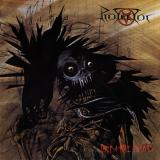
“Urm the Mad” was Protector’s sophomore album, recorded in the summer of 1989 at the Phönix Studio in Bochum, where the four-piece from Wolfsburg had already recorded their killer full-length debut “Golem”. Urm the Mad” was to become the last album before the split in 2003 that features Martin Missy; he should be replaced by Olly Wiebel in December 1989. Protector did not change too much about their style – genre-defining early thrash/death – but one of the most notable things about “Urm the Mad” was the sound: The album is famous for its heavy, noisy, dirty sound, for its raw production that makes the music all the more evil and menacing, with guitars in the front and Martin’s unmistakeable vocals lying on the riffs like poisonous mould. “Urm the Mad” is thrash metal walking the path of death. Protector’s special blend of thrash and death metal has always set them apart from their compatriots and even inspired German metal tabloid Rock Hard to declare Protector to be “Germany’s hardest band” – and this in 1989, the year both Kreator’s “Extreme Aggression” and Sodom’s “Agent Orange” were released! Protector, too, play fast and energetic thrash, but the overall feel of the album is that of creeping, lurking evil – crawling along on frequently slowed down, heavy riffs and Martin Missy’s sick death-like growls which seem to come straight from the charnel house. “Urm the Mad” does not sport that “positive” aggression usually found in 80’s thrash; on the contrary, the album is grim, dark and desperate, but nonetheless brutal and extreme. Back in the days, Protector’s contribution to the then-proliferating Teutonic thrash was mainly recognized within the underground scene, and the metal press played its own part in keeping Protector a bit below the radar: “We got pretty much the same response as we got for ‘Golem’: Good, positive feedback from our fans and ‘ok’-reviews from the bigger metal magazines.” Time to make up for that.

pre-order now24.07.2026

expected to be published on 24.07.2026

24,16 €
Dadawah - Peace and Love Wadadadow LP
  • A1: Run Come Rally
  • A2: Seventy-Two Nations
  • B1: Zion Land
  • B2: Know How You Stand

Ras Michael's Dadawah. The Singing Drummer, a devout Rastafarian musician. Dadawah brought Ras Michael together with veteran studio hands: bassist Lloyd Parks, drummer Paul Williams, guitarist Willie Lindo, and last but not least pianist/organist Lloyd Charmers, who also produced.

The resulting album Peace & Love is a work of faith. Although not a concept album in the strict sense of the term, it thematically evokes the Biblical final days. "Run Come Rally" calls together the world's righteous in preparation for the upcoming battle with evil. Having gathered together the brethren from "Seventy Two Nations," all bow before Jah in a celebration of His greatness, then give voice to their desire to return to "Zion Land." The set concludes with "Know How You Stand"'s call for freedom, and with it the ability to fulfill Jah's plan.

The extraordinary power of the set's themes is echoed by the equally phenomenal backings, all conjuring up the most haunting of atmospheres. While the hand drums give the album a grounation feel, Parks and Williams simultaneously ground the numbers deep in roots. Intriguingly, though, there's no reggae guitar, just Lindo's sublime riffs and licks that flick into the rock realm, while constantly sliding back into blues. Charmers' piano and organ occasionally take over the reggae guitar role, but mostly his keys intertwine around Lindo's leads, accentuating melodies, scattering elegant flourishes here and there, and subtly building up the atmospheres. Charmers' production is superb, the musicians inspired, and Ras Michael's power undeniable. An astounding album that's lost none of its potency over the years.

pre-order now24.07.2026

expected to be published on 24.07.2026

31,72 €
Protector - Leviathan's Desire LP
  • 1: Intro
  • 2: Humanized Leviathan
  • 3: Subordinate
  • 4: Mortal Passion
  • 5: Kain & Abel Extended Version)

“Leviathan’s Desire” was Protector’s first release with Olly Wiebel as the new man on the microphone, and he brought in a new and different style, one no less gruff and aggressive than that of his predecessor. With the “Leviathan’s Desire” EP, Protector left the musically mid-paced path they had followed on “Urm the Mad”, turning back to their key skills and delivering a short but sweet-and-extreme thrash metal attack. The EP contains a revised and extended version of “Kain and Abel” that fits in perfectly with the new tracks, which are full to the brim with raging riffs and violent hooks, relentlessly delivered by a band that’s fully aware of its great skills and abilities both with regard to song-writing and performance – rhythm changes, breaks and bridges are all thoroughly worked out and excellently delivered. But do not fear! There are no signs of giving in to any ideas of embracing the “progressive” side of Protector. This is still pure Teutonic Thrash to the bone. “Leviathan’s Desire” was recorded in the Phoenix Studio Bochum in 1990 and originally released by German label Atom H (based in Witten, North Rhine-Westphalia) in the same year. Ralph Hubert of Mekong Delta fame took over production duties of the record. Olly is very glad to see the vinyl re-release of “Leviathan’s Desire”, which has been mastered for vinyl by old comrade Patrick W. Engel at Temple of Disharmony. Protector also opened up their dusty cabinets to present us with a selection of previously unreleased pictures from those still good old days, which will be gracing the High Roller edition of “Leviathan’s Desire”.

pre-order now24.07.2026

expected to be published on 24.07.2026

22,65 €
Lockhart - City Pulse LP

Lockhart

City Pulse LP

12inchHRR1074LPSPK
HIGH ROLLER RECORDS
17.07.2026
  • 1: City Pulse
  • 2: Can’t Shake It
  • 3: The Dose That Made You Poison
  • 4: Together As None
  • 5: Under Fire
  • 6: Just Can’t Wait
  • 7: You Wouldn't Know Love
  • 8: Before The Fall
  • 9: No Chance In Heaven

Lockhart is a new melodic rock/AOR band from Canada, fusing synthesizer-fueled eighties arena rock with classic hard rock. The trio consists of Devon Kerr (vocals, guitars, keyboards), Jason Junop (bass) and Fabio Alessandrini (drums). Jason is best known for his work in Cauldron and Goat Horn. Devon’s main band is Axxion, and Fabio plays or has played in Bonfire, Enforcer, Annihilator, Hardline and many others. Lockhart issued their debut EP »No Chance« in 2022, followed by the single “City Pulse” in 2025. The band has signed with High Roller Records, and their first full-length album »City Pulse« is now ready to be unleashed to the public. It's hard to describe the specific sound of Lockhart in all its details but on »City Pulse« you will certainly hear a lot of Journey, Boston, Toto, Foreigner, REO Speedwagon, and maybe even some Starcastle. “The influences are endless,” comments the vocalist, guitarist and keyboard player Devon Kerr, “and they go deep. I appreciate the comparisons. These bands are monumental. Lockhart has a sound of its own though. Bands that existed during the times you mentioned definitely provide influence! However, if you look past the surface (overdriven guitars and old synthesizers), you’ll hear influences from 50s doo wop, legends like Brian Wilson, and straight up choral music, too.” Compositions such as “The Dose That Made You Poison”, “Under Fire”, “Before The Fall’” or “Together As One” are very well constructed and flawlessly performed. “For me, songwriting is a deliberate process,” explains Kerr. “I set out a time and carve out the songs. Lyrics are written last. Once the song is ready, it undergoes hours of polishing to mold the perfect choir parts, guitar leads, and so on. Everything is very deliberate and carefully selected. Nothing was written by accident.” You can clearly hear that on »City Pulse«. With their melodic, at times even poppy approach Lockhart may stand out a bit on High Roller Records. Devon Kerr: “Our music has so many elements that traditional metal fans value, but with something very different, too. Something that might be new for some of the High Roller Records fanbase. I mean for those unsure, we’ve got Nick from Municipal Waste shredding guitar leads on ‘You Wouldn’t Know Love’, and Ian from Cauldron on ‘Can’t Shake It’ …”

pre-order now17.07.2026

expected to be published on 17.07.2026

23,95 €
Joseph Toll - It Might Be Art LP
  • 1: New Dawn
  • 2: Oh the Madness
  • 3: I'm in a Darkness
  • 4: Invocation of the Evening Star
  • 5: Walking
  • 6: It Might be Art
  • 7: I Syrenens Tid
  • 8: Rebirth
  • 9: On Velvet Waves
  • 10: The Burial

Joseph Tholl is widely known as a Swedish multi-instrumentalist, singer and songwriter. He gained international recognition as a founding member and guitarist for the speed metal band Enforcer (officially leaving in 2019). Following his time with Enforcer, he formed Black Trip (later Vojd) and is currently playing guitar for Tribulation. Following 2019’s »Devil’s Drum«, »It Might Be Art« is his second solo album (and the second for High Roller Records). It was recorded and mixed at Humbucker Studio, which he co-owns with Robert Pehrsson (who’s also on High Roller Records). On »It Might Be Art« Joseph Tholl is singing, playing guitar and most of the bass, he also handles piano and synthesizer parts. Robert Eriksson (The Hellacopters) and Jakob Ljungberg (Second Sun) share drum duties on this album. Besides that, there’s a few guest appearances by musicians such as Johannes Andersson (Tribulation), Tobias Lindkvist (Tyrann), Pia Stjärnvind (Serpent Omega), Adam Zaars (Tribulation) and Robert Pehrsson (Dundertåget, Robert Pehrsson’s Humbucker). Joseph Tholl thinks that despite its broad variety »It Might Be Art« is still suitable for heavy metal fans: “I couldn’t see why not. I mean it’s not heavy metal. But I hope people will like it for what it is, a very honest and well-crafted melodic rock album.” “»It Might Be Art« is both darker and brighter than »Devil’s Drum«,” compares the Swede both his solo albums. “Musically it probably sounds a little brighter and poppy overall. But then there’s songs like ”I’m In A Darkness” or ‘The Burial’, which are very dark.” At times, influences of Sisters Of Mercy, The Cure, New Model Army and Midnight Oil can be detected on »It Might Be Art«, leading Joseph Tholl to ponder: “It’s incredibly hard to name a few bands as influences, there’s just too many. Besides those bands you mentioned, there’s a mix of grunge, heavy metal, Swedish pop/rock, AOR etc., that I mold into my own kind of rock n roll.”

pre-order now17.07.2026

expected to be published on 17.07.2026

23,95 €
The Caretaker - Persistent Repetition of Phrases

Originally released in 2008. Although this album invites aesthetic comparisons to works by the likes of Philip Jeck, William Basinski, and Janek Schaefer – draped as it is in an obfuscating, soupy crackle – there’s a very specific conceptual agenda at work here.

Part of the success of »Persistent Repetition of Phrases« comes from the attention it pays to the function of »the loop«, not only as a narrative ordering system in modern music, but as a means by which the brain itself recalls and interprets information; it’s as old as recorded sound itself, but in this context the repetition of small shards of auditory information becomes an elegy to fading memory and the worn-out synapses of old age. The track titles offer signposts through Kirby’s labyrinth of faulty remembrances, pointing their way towards the peculiarities dictating the manner by which the mind stores and attempts to recover information: »Lacunar Amnesia« references a condition that leaves a specific event absent from the sufferer’s memory, and Kirby’s music sounds suitably stuck on a prelude to something that never happens.

Bathed in gusts of crackle, the piece gets stuck on what might be a start of something, but we never get to hear what. Many of the pieces refer to different ways the memory might find itself caught in a holding pattern: »Von Restorff Effect«, »Rosy Retrospection«, and the title track itself are all suggestive of reliving a single event or point in time – here, both music and memory are united by the notion of »glitch«, whereby a fault or fissure causes the replaying of the same pocket of data over and over again, but what distinguishes Kirby from so many other musicians operating within the field of loops and broken recordings is the unnerving, ghostly sentimentality that courses through this process. »Long Term (remote)« is particularly explicit in its reaching back through the first half of the 20th century, exhuming snatches of music hall romance, now warped into a sinister new form by the erosions of time. It’s like watching John Carpenter’s »The Fog« only to find that instead of vengeful phantoms emerging from the mist, it’s The Glenn Miller Band. Which is infinitely more disturbing. More eerie still is the detachment from authorship endemic to this sound – at no point do you really sense the presence of a composer’s hand; this album just... is. A remarkable thing that only seems to have improved with age (which is either highly appropriate or highly inappropriate, I can’t quite decide which), »Persistent Repetition of Phrases« is an even better fit on vinyl, a medium which itself wears and fades just as the memory does.

out of Stock

Order now and we will order the item for you at our supplier.

Last In: 81 days ago
35,25 €
Deep Patterns - Completely Deep Patterns LP
  • Piano – Dan Harris (3,4,5,6,8)
  • Bass – Billy Fuller (1,4,5,10,13), B. Renshaw (11), Brandon Meeks (14)
  • Flute – Jamichael (2,4,8,9)
  • Saxophone – Kevon S (1,8,10), Ofat Messiah (6)
  • Guitar – Joshua Lascar (11)
  • Marimba – Luciano Slaibe (10)
  • Harp – Cecilia Cuccolini (13)
  • Vocals – The Epoch House Choir (2,12,13)
  • Sitar – Mahesh (9)
  • Synth – Austin Miller (13)
  • Strings – Rebecca Neville (11)
  • Double Bass – Maciej Placej (9)
  • Percussion – Mac G (4,6)

Due to demand, ‘Completely Deep Patterns’, the 2025 debut album of the Deep Patterns project of Bristol producer Ben Dubuisson, is to be reissued as a full vinyl release on 14th July. Originally released on very limited edition lathe-cut vinyl, tracks from Deep Patterns have been supported on BBC 6 Music, FIP, Jazz FM, KEXP, NTS, Rinse FM, and SWU; with Electronic Sound magazine describing it as “An immersive 1970s soul bath scented by lo-fi hip hop and dub” and Twisted Soul calling it “Nothing short of a triumph…indicative of its architect’s boundless talents and fascinating vision”.

Lush, late-night tracks rooted in hip-hop foundations, live instrumentation, rare samples, and recurring motifs; the album was crafted in collaboration with a revolving cast of musicians Dubuisson has built deep connections with over the years, including BEAK> bassist Billy Fuller, Dan Harris on piano, Jamichael on flute, and vocals from The Epoch House Choir. Sliding between soul, jazz, library, and cinematic soundtracks, the album is filtered through a gritty, modern Bristol lens. At its heart, it’s a meditation on loss, longing, and the strange beauty of the world we’ve made for ourselves. From running cult Bristol record shop Purple Penguin and co-founding the city’s influential club Native, to his releases as Hundred Strong, Dubuisson has long championed soulful, forward-thinking music. Having collaborated with everyone from Taskforce and A-Trak to Joseph Malik, Alison Crockett, Amp Fiddler and Boca 45; ‘Completely Deep Patterns’sees him push deeper still, weaving a sonic world that feels both timeless and freshly alive.

pre-order now14.07.2026

expected to be published on 14.07.2026

24,33 €
SIRS - Maxi Maximal Vol 2

Supported by the only man with a copy the one and only DJ Harvey, so you know what to expect.

The concept remains simple — extend what already works. With the second chapter of MAXI MAXIMAL, Leicht Matrose SIRS continues a DJ focused approach to reconstruction, taking timeless disco, synth pop and balearic moments and reshaping them into extended, more playable versions built for flow, space, and long-form mixing. This is not about rarity or obscurity, it’s about clarity. Not digging for forgotten gems here but refining familiar material into its most functional, immersive form. Each track is treated with a clear intention: to open up space, deepen the arrangement, and allow the original emotion to unfold over a longer timeline made for modern use, without losing its core feeling. you dig it .

stock from09.10.2026

Last In: 4 days ago
13,87 €
Eiko Ishibashi & Hiroshi Minami - Gasping_Sighing_Sobbing

Between her elaborately conceptual Drag City singer-songwriter albums and celebrated soundtracks for Ryusuke Hamaguchi, in recent years Eiko Ishibashi has quietly self-released a significant body of solo and collaborative work on her Bandcamp page. At times resembling her solo live performances in their organic interweaving of instrumental, electronic, and concrete sounds, each of these less feted online releases offers a snapshot of the experiments always underway at Atelier Eiko. Some Fine Legacy is pleased to announce a vinyl edition of one of the most intriguing of these works, Gasping_Sighing_Sobbing, made in collaboration with Hiroshi Minami and first released in 2021.

Active since the 1980s, Hiroshi Minami is a key figure in the Tokyo jazz scene, as well as a respected memoirist. Devoted to the great standards, which he explores with an Evans-ish delicacy of touch and Impressionist harmonic extensions, he is equally at home working up variations on tunes by Ryuichi Sakomoto and The Beatles or experimenting with ambient electronics. A single note from his piano is the first thing we hear on Gasping_Sighing_Sobbing, the space left by its decay unexpectedly filled by a synth arpeggio that quickly fades away as the piano returns with a balladic chord sequence.

Like her frequent collaborator Jim O’Rourke, Ishibashi possesses the virtue of patience, recognising the beauty of lingering at length in a single musical environment. Throughout its 40-minute duration, Gasping_Sighing_Sobbing remains lost in this maze of obstructed and fragmented piano balladry. The musical surface is in one respect placid, but close listening reveals dynamics and processes that are deeply strange: the resonance of a chord dying away is frozen, expanding to become a cloud that suddenly makes way for the piano’s return; or the piano is looped into a ticking glitch or a time-stretched shudder, momentarily sinking under lapping waves, distant bells, and snatches of conversation. Ishibashi’s subtle vocals and synths colour the piano passages like views through distorted glass. The metaphor of cinéma pour l’oreille is perhaps overused in discussions of the musique concrète tradition, but here the visual associations are almost unavoidable: especially when Daisuke Ijichi joins on upright bass, it’s hard to shake the cinematic image of a smoky jazz bar—shown in a sequence, perhaps, that cuts repeatedly to the musicians’ and audience’s thoughts and dreams. Like much of Ishibashi’s work, this collaboration with Hiroshi Minami is inconspicuously radical, shaped at the deepest level by electro-acoustic procedures even as it luxuriates in melancholic beauty.

pre-order now10.07.2026

expected to be published on 10.07.2026

24,79 €
Various - Tchic Tchic: French Bossa Nova 1963-1974  Colored Edition LP 2x12"
 
22

Ever since the late 1950s bossa-nova revolution, Brazil’s influence on French music has been undeniable. Pierre Barouh, Georges Moustaki and a vast array of lesser known artists, all made the Musica Popular Brasileira (MPB) an axis of promotion at the service of a cool and metaphysical, modern and mixed Brazilian lifestyle. Some were seduced by the poetic languors of the bossa, some were looking for fun, and others just loved the American hybridization of jazz-bossa, jazz-samba.


What is bossa nova? One of its creators, Joao Gilberto said: "Its style, cadence, everything is samba. At the very start, we didn't call it bossa nova, we sang a little samba made up of a single note - Samba de uma nota so .... The discussion around the origins of bossa nova is therefore useless”. It is nevertheless useful to remember that these magnificent Brazilian songs, which the guitarist describes as samba, were shifted and balanced around improbable chords. "I like things that lean, the in-betweens that limp with grace," said Pierre Barrouh, quoting Jean Cocteau.


With emotion, arrangements for violin and supple guitar licks, bossa nova rapidly changed. A transformation that can be heard in the Tchic, tchic, French Bossa Nova 1963-1974 compilation, the result of a cultural reappropriation, which traveled through the United States and supplemented itself in France.

A musical revolution that has remained significant, bossa nova was born in Rio. From 1956 to 1961, Brazil lived through its golden years. In five years, the country had invented its modernist style. Elected president in 1956, Juscelino Kubitschek de Oliveira, an elegant man with a broad forehead, brandished a promising slogan: "Fifty years of progress in five years". He quickly got to work. Not worried about increasing debt, he launched the project for a new federal capital, Brasilia, designed by the communist architect Oscar Niemeyer. Volkswagen opened state-of-the-art factories and created the “fusquinha”, the Beetle. In Rio, the Vespa made its first appearance. The Arpoador Surf Club crew run into the “girl” from Ipanema, Helô Pinheiro - the tanned garota ("chick"), between a flower and mermaid, who at 17 walked by the Veloso bar, where the fiery author and composer, Tom Jobim and Vinicius de Moraes, were getting drunk on whiskey. From then on, bossa symbolized cool.

In 1958, Joao Gilberto recorded Chega de Saudade, which the directors of Philips denied, calling it "music for fagots". The marketing director, who believed in it, secretly pressed 3000 78-inch vinyls and distributed them at schools around Rio, creating a tidal wave.

American jazzmen then took over. In particular, trumpeter Dizzy Gillespie and guitarist Charlie Byrd. In November 1962, the Brazilian Ministry of Foreign Affairs funded a "Bossa-Nova" concert at Carnegie Hall in New York, inviting the genre’s pioneers. Unprepared, the show soon turned to disaster. But the troupe was invited to the White House by Jackie Kennedy. The first lady loved "the new beat" and in particular Maria Ninguem, a song by Carlos Lyra, later covered by Brigitte Bardot.

In Brazil, the 1964 military coup quickly ended this euphoria. The destructive atmosphere that ensued pushed many Brazilian musicians to leave, if not to exile. Thus, Tom Jobim, Sergio Mendes and Joao Gilberto arrived to the United States. In New York, Joao Gilberto met saxophonist Stan Getz. At the time, he was married to the Bahianese Astrud Weinert Gilberto, who had a German father. She had never sung before, but she knew how to speak English. Getz therefore asked her to replace her husband on The Girl From Ipanema. The Getz/Gilberto record with Tom Jobim on piano, was released in March 1964. Phil Ramone, the "pope of pop" was in charge of sound.

Bossa nova arrived in Paris through the classic “guitar-voice” channel (Pierre Barouh, Baden Powell, Moustaki…) But France loved jazz and Paris had already welcomed its American contributors. All these good people were to pass through Saint-Germain-des-Prés. The cabaret l'Escale became the Mecca of Latin American sound where one could find Pierre Barrouh and his friends, such as the Camara Trio, samba-jazz aces, whose only record was published by the Saravah label. With a band strangely called Les Masques (a band that included Nicole Croisille and Pierre Vassiliu, among others), the Camara Trio recorded an interesting Brazilian Sound, including the track Il faut tenir which is present on this tasty compilation of rarities.

Other enlightened musicians can also be found on the compilation, such as Jean-Pierre Sabar (songwriter for Hardy, Auffray, Leforestier ...) and the French pop rock organist Balthazar. In 1975, Sabar recorded Aurinkoinen Musiikkimatka on a Finnish label, which featured the crazy Vai, Vai, included on this record. We are now following the footsteps of Brazilian electronic musicians such as Sergio Mendes, Eumir Deodato or Marcos Valle who created funk and disco sounds on their keyboards and synthesizers. A style that influenced Véronique Sanson when she wrote Jusqu’à la Tombée de la nuit in 1969 for Isabelle de Funès, the niece of Louis and a great friend of Michel Berger - Sanson did end up singing this track on her 1992 Sans Regret record.


The pinnacle of exoticism and travel, Sylvia Fels’ Corto Maltese includes bongos, sea mist and ocean sounds. The title was taken from Jacky Chalard’s concept album written in 1974, Je suis vivant, mais j’ai peur (I am alive, but I am scared), based on Gilbert Deflez’s science fiction novel.


However, bossa nova extended the scope of popularity. "In the 1970s, I was a fan of Sergio Mendes, Getz / Gilberto. I fell in love with this music that I knew because I had been an orchestral singer, " explained Isabelle Aubret, who in 1971 delivered a composite record of covers by the very funky Jorge Ben, Orfeu Negro, Tom Jobim, Vinicius de Morais and Jean Ferrat. "I recorded this album for Meys Records in Paris, far from Brazil, with wonderful musicians, François Raubert, Roland Vincent, Alain Goraguer...". The latter wrote the arrangements for Casa Forte, a very percussive title borrowed from Edu Lobo, one of the initiators of the bossa who spent time in California. "Jazz and bossa came together and produced very rhythmic music. I love singing, it allows me to dream, to have fun, to feel a high on stage, and these songs brought me joy, made me swing, my singing felt like a dance.”


The world tours of French singers and their desire for the tropics, often brought them to Rio with its hills, forests, caipirinhas and tanned bodies. There are surprises though, like this Iemenja (Iemenja is the goddess of the sea in the Afro-Brazilian candomblé religion). Not unlike the composer and musician Jean-Pierre Lang, based in Sao Paulo, Claire Chevalier taught Brazil to Brazil. In 1970, the singer and painter published a 45-inch vinyl, Mon mari et mes amants (My husband and my lovers), under the improbable pseudonym of Clarinha (little Claire). She was then living in Rio, with her husband, Joël Leibovitz, who founded a band called Azimuth, and who owned a record label specialized in "sambas enredos" songs for samba school parades.


For its B side, she asked Pierre Perret to come up with lyrics for a song composed by Carlos Imperial: "Oh goddess of the sea, o goddess Iemenja, I bring a white rose to adorn your long hair ..." . "Perret came to see us, and we had fun, remembers Joël Leibovitz. We wrote Lemenja for fun, we recorded it at the Havaí studio, behind the Central do Brasil the central station. Erlon Chaves, the arranger who worked with Elis Regina, joined us" adding his share of Afro-Brazilian percussions and funky brass to the mix.

There is a common misunderstanding in Franco-Brazilian history: that bossa, admittedly hedonistic, is perceived as funny, even though the poets who wrote the texts are often philosophizing on the human condition. Its French interpreters pull it towards a carnival inspired universe, far removed from its fundamental essence. Thus, Jean Constantin covered the famous Samba da minha terra, an ode to the art of samba written by the classic Bahian composer Dorival Caymmi, renaming it with the enticing title of Pas tant de tchi tchi pompon: "On your pier there is no tchi tchi / when you arch your back, you know everything is alright ”(lyrics by Gérard Calvi). This expedited bossa aims for the absurd, but retains a certain elegance.

Indeed, Jean Constantin was not an idiot, the rather large man had a huge mustache and liked fantasy, (Les pantoufles à papa, Le pacha, inspired by cha-cha-cha-cha, salsa and jazz) but he was also the lyricist of Mon manège à moi interpreted by Edith Piaf, the composer of Mon Truc en plume by Zizi Jeanmaire and the soundtrack of François Truffaut’s 400 Blows. Le Poulpe, published in 1970, from which this bossa is extract, was arranged by Jean-Claude Vannier, an accomplice of Serge Gainsbourg’s Melody Nelson. In short: "There is enough of samba / By looking at the parasol / Because my poor cabeza / Is going to die in the sun".

Even the American actress Marpessa Down, who was at the heart of the bossa nova revolution with her role as Euridyce in Marcel Camus’ film Orfeu Negro, winner of the 1959 Cannes Palme d'or, fed the clichée with Je voudrais parler au petit cuica - "Tell me how you manage to always make people want to dance / It's true, I must admit that I cannot resist your magic" - in consequence, once can hear the cuica, a little drum inherited from the Bantu.


But bossa nova had many angles. Societal, of course, pushing actresses who were symbols of women's liberation like Brigitte Bardot, Jeanne Moreau, or Sophia Loren to engage in the exercise of accelerated bossa. In February of 1963, Sophia Loren made a record in French in Rome, Je ne t'aime plus, featuring the song De jour en jour, a bossa written by two Italians, Armando Trovajoli and Tino Fornai, which was released a little later by Barclay. Bossa accompanied the 1960s, a decade of moral liberation. Ann Sorel, who interpreted La Poupée des favellas, caused a sensation with L’amour à plusieurs, a provocative song written by Frédéric Bottom and Jean-Claude Vannier. As for the actress Andrea Parisy, she displayed her bourgeois cheekiness in Marcel Carné's Les Tricheurs before interpreting Les mains qui font du bien. And Magalie Noël, the friend of Boris Vian, who sung Johnny fais-moi mal, was hired to sing Une énorme Samba, composed by Alain Goraguer (arranger to Gainsbourg, Bobby Lapointe and Jean Ferrat) with lyrics by Frédéric Botton.

But in the end, of what wood is bossa nova made of? The answer is given by Christianne Legrand, daughter of Raymond the conductor, and sister to Michel the composer: "With me, with jà" - jà means "immediately" in Portuguese. In 1972, the singer, an expert in vocal jazz and a member of the Double Six, published Le Brésil de Christianne Legrand. Two songs included on the Tchic Tchic compilation that demonstrate how bossa, jazz, funk, rock, etc. work like a swiss army knife: the music is used to denounce broken systems, or miracles, HLM et ciné roman, Cent mille poissons dans ton filet, two songs from the O Cafona soundtrack, a successful telenovela broadcast, at the time in black and white, on TV Globo. The first was adapted in French by the fighter and friend of the Legrand tribe, Agnès Varda. The second is content with a play on words, jostling them into a summer fun.


Véronique Mortaigne
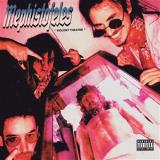
out of Stock

Order now and we will order the item for you at our supplier.

Last In: 87 days ago
27,31 €
Paul Valentin - Of Sand EP

After the dissolution of his wave-making duo project Ameli Paul, Berlin based musician and producer Paul Valentin aims to venture down new roads and finds help from illustrious folks like Liv Lisa Fries, DJ Koze, Thomass Jackson and Philipp Fein along the way. Valentin’s debut EP on Feines Tier marks his first solo release in 10 years and is a colourful journey through sonic worlds and emotions in the continuous search for his own sound.

Opener ELVAU is a collaboration with actor Liv Lisa Fries built around their intimate voice recordings which are woven delicately into a dreamy web of shimmering synths atop pulsating break beats that would make Bicep proud. For his remix, His Kosiness, the Tripsitter Himself also known as DJ Koze follows the breakbeat path further down, gleefully taking all sorts of wonky and fun diversions on the way, which makes one hope that the ride never ends.

Follow-up tune MALFUNCTION is a more straightforward affair with its rolling synth arps and is - in Valentin’s own words - “about personal failure, dissolution, and the distortion of the self“. Equally dark under- and overtones are throwing shades over WHATTHE!, dealing with anger and transformations, resulting in a banger for the heavier moments on the dancefloor or the mind between your headphones. The EP closes on a more hopeful note with LISTEN, which stands for „everything that could be, if we listened to each other“. And it’s never a bad idea to listen to chirping 303 basslines, especially when paired with melancholic synth pads and weird vocal samples, as is the case here. The rework of Thomass Jackson and FT-head honcho Philipp Fein feels beautifully anachronistic with its reduced tempo and could have been something Andrew Weatherall would have played when he was still playing our earthly dancefloors.

out of Stock

Order now and we will order the item for you at our supplier.

Last In: 4 days ago
17,23 €
Field Medic - Floral Prince LP
  • 1: h-o-u-s-e-k-e-y-z
  • 2: i want you so bad it hurts
  • 3: i will not mourn who i was that has gone away
  • 4: bundle of hyacinths
  • 5: HEADCASE
  • 6: it’s so lonely being sober
  • 7: better way
  • 8: talkin johnny & june (your arms around me)
  • 9: older now (it hurts)
  • 10: before your body goes
  • 11: TRANQUILIZED

For some time now, followers of Field Medic have been piecing together clues about Floral Prince. The name has been mentioned in late night Twitter hints, secret YouTube leaks, teaser riddles, Instagram live sets, and standalone single drops. This unconventional approach paints a bigger picture for the 11-track project as a whole, set for release October 2nd from Run For Cover Records. Part mixtape, part album, part collection, part musical patchwork quilt, Floral Prince is the latest offering from Field Medic, aka the preeminent Bay Area freak folk artist Kevin Patrick Sullivan. It’s a reflection of his unique approach to songwriting and a creative drive that can’t be contained to the traditional album format. Field Medic’s songwriting rarely slows down; even after the release of his 2019 full-length fade into the dawn and the busy touring schedule that followed, Sullivan still found himself flush with new songs and ideas. As he attempted to earmark certain songs for his next release Sullivan began to chafe at the pressures of a follow-up album. Longing for the spontaneity of Field Medic’s earlier work, Sullivan found inspiration in what he calls the “full-time freestyle” mindset where he writes and records songs on the fly with a four-track, usually with a self-imposed limit of three takes. “This style lends itself to more off-the-cuff lyrics and recordings that communicate their point much clearer to my ears,” he explains. “It’s also fun.”

The process proved surprisingly satisfying, often capturing the diary-like nature of Sullivan’s songwriting more accurately than some of the music he’d been poring over. “The songs born from this method aren’t always ‘hits,’ he says. “But they feel much more important to me…closer to how I really feel.” Some of these charming homespun missives made their way onto the internet, spurring fans to follow the breadcrumbs towards these first glimpses into Floral Prince and the ever-expanding Field Medic mythology. “I realized the songs I was saving for another album were much less focused and effective than some of the freestyles I had been creating and subsequently leaking,” Sullivan says. “I think that’s because I really enjoyed the process of writing and recording the freestyles, whereas the ‘hits’ I was attempting to make were being approached as more of a chore.” Floral Prince officially began to see the light of day through a series of stand-alone singles released throughout early 2020 in tandem with episodes of Sullivan’s homemade webseries, the field medic show. To invite fans further into Field Medic’s unique world of achingly beautiful melodies and conversational lyricism, songs like the atmospheric ballad “better way” and the Alex Menne (pickleboy/Great Grandpa) collaboration “talkin johnny & june (your arms around me)” were shared alongside the YouTube show’s accompanying live versions. Other tracks—like rousing opener “-h-o-u-s-e-k-e-y-z-” and the longing “i want you so bad it hurts”—were repurposed from the fade into the dawn sessions to finally find a home on Floral Prince. Elsewhere “it’s so lonely being sober” exemplifies the unvarnished appeal of the full-time freestyle attitude. The song’s direct lyrics and single-take phone recording preserve the deeply personal storytelling, relatable details, and palpable emotions that make Field Medic’s work so intimate and enthralling.

Although Floral Prince is culled from several years of Field Medic songs, its 11 tracks have a sense of cohesion that can be attributed to Sullivan’s singular vision and willingness to allow the listener into his life. “These songs were written through different seasons of my life but they all share a common theme of quiet, nagging, yet somehow defiant insecurity,” he explains. “To hear them all grouped together reminds me that I’ve always felt more or less the same way, and have had the same obsessive tendencies my whole life that have often led to self-destructive behavior. Maybe this is catharsis.” In the end Floral Prince is actually many things at once: a snapshot of an artist shaking off the perceived boundaries of his medium; a document of years of Sullivan’s life preserved in musical form; the closing of one songwriting chapter and the start of another. Or perhaps as Sullivan puts it, “All songs have their day…”

pre-order now03.07.2026

expected to be published on 03.07.2026

22,06 €
Nightshade, The 18th Parallel - Don't Tell Me To Smile

The 18th Parallel strikes hard once again with its new riddim series called ‘BONANZA CHARGE’. Carefully produced in its Geneva studio, the collective of musicians presents two vocal cuts and one horns instrumental released as three 7” singles with dubs mixed by Roberto Sánchez. This is heavyweight roots reggae tailor-made for the heaviest sound systems!

First song recorded on the riddim, ‘Don’t Tell Me To Smile’ is NIGHTSHADE’s debut single on Fruits Records and it really is music with a powerful message. Turning an everyday frustration into a universal cry, Nightshade sings out loud what she always wanted to answer to the countless strangers who told her – like so many other women – to smile… because “a woman who smiles looks so much prettier”.

She says: “If it’s really such an innocent thing to say as some claim, why do men never say it to other men? Why do some feel entitled to tell complete (women) strangers how they should look, feel or behave? These so-called ‘small comments’, repeated over and over, are just one piece of the constant scrutiny and everyday violence many women face – and we can’t take no more of it.”

Carried by three united voices, ‘Don’t Tell Me To Smile’ reminds us that a woman is not a decorative object meant to please the male gaze. It’s a call to see through the trap: under the guise of compliments, what is at work is control over women’s bodies and minds. A smile should come from the heart, never from an obligation.

out of Stock

Order now and we will order the item for you at our supplier.

Last In: 3 months ago
12,82 €
Stella Kola - Stella Kola

Originally self-released in 2023, Stella Kola, the debut album from Beverly Ketch (Jow Jow, Weeping Bong Band) and Robert Thomas (Sunburned Hand of the Man, Dalthom), now returns in a renewed edition—bringing wider attention to a record that already felt like a quietly essential artifact from the moment it first appeared.

Given the pair’s respective roots—and the presence of collaborators drawn from across the Northeast experimental underground—one might expect “a brutal blast of acid swirl.” Instead, what emerges is something far more unexpected. The album is “steeped, not in noise and dissonance, but in the fragrant, captivating folk of Linda Perhacs, Judee Sill, Karen Dalton, and Bridget St John.”

From the opening moments, especially on “Rosa,” the record reveals its core sensibility: “a ballad that digs deep into the psychedelic-folk tradition until it takes root in a freshly sporous permaculture.” What follows is a set of songs that feel both carefully assembled and organically grown—delicate structures held together by a wide circle of contributing musicians, including Wednesday Knudsen (flute), P.G. Six (harp, guitars, keys), Gary War (synth), Jen Gellineau (viola, violin), Willie Lane, L. Gray, and others.

Rather than functioning as studio additions, these collaborators form a genuine collective presence. “The family affair feeds into the album’s charms,” and the feeling is unmistakably communal. Like many of the ‘60s folk records it echoes, Stella Kola carries “the feeling of community and camaraderie” at its core, shaping a warmth that runs through the entire release.

The album’s emotional palette leans toward a quiet, persistent melancholy: “the best records from that era also carried with them an inherent sadness and Stella Kola’s songs wash over the listener with a beautiful woe.” Its sound edges into the terrain of Fairport Convention and Pentangle, with references to “Beggar’s, Kings, Dark Damsels, and Tarot,” yet never settles into revivalism. Instead, Ketch and Thomas extend the tradition outward, refracting it through their own distinctly American, underground language.

As one early description of the album notes, “the masterful restraint of ‘Rosa’ and the rest of Stella Kola’s shimmering debut evokes Anne Briggs, C.O.B., Pentangle and similar ancestors that knew the best way to honor traditions was to widen the heritage even further.”

Even among a prolific and unpredictable network of underground musicians, Stella Kola stands apart. “It’s early in the year, but it’s hard to see an album, especially a debut, capturing the heart as hard as this one.” With its return in reissue form, the album reasserts itself not just as a hidden gem, but as an essential document of contemporary folk experimentation—an intimate, collective work that continues to unfold with time.

pre-order now30.06.2026

expected to be published on 30.06.2026

23,95 €
STYLÓO® - WHY / MISS YOU – 40th Anniversary Edion

SELF Distribuzione is proud to present one of the most presgious publicaons dedicated to the
history of Italo Disco: "WHY / MISS YOU – 40th Anniversary Edion," the new double A-side by
STYLÓO®, available in two exclusive collector's versions.
This release will be offered on stunning Transparent Green vinyl, aimed at enthusiasts of the
format, and in a presgious Collector's Edion on Gold-colored vinyl, created to celebrate forty
years of career and designed for the most discerning collectors and lovers of Italo Disco.

"WHY" and "MISS YOU" are two authenc classics that defined an era and helped shape the sound
of Italo Disco worldwide. Forty years later, these producons retain their melodic power and ability
to move listeners, confirming their status as meless tracks to this day.
This special 40th Anniversary Edion does not merely reissue the original versions—fully
remastered for the occasion—but is further enriched by new remixes entrusted to highly
presgious names.
Roberto Tura@ and Carl Fath have craAed a new and elegant interpretaon of "WHY," while A.P.
Mono, one of the most highly regarded names in the contemporary Italo Disco scene, has given
"MISS YOU" a new look, maintaining its original spirit while offering a modern, current sound.
The result is a project capable of bridging the past and the present, demonstrang how great
classics can connue to live on and capvate new generaons without losing their identy.
To complete the project, two evocave, previously unreleased symphonic overtures, "Echoes Of
Why" and "I Sll Miss You," serve as a tribute to the composional quality of these tracks. Both
symphonic composions were conceived, wriFen, arranged, and produced by STYLÓO® (Rino
Facchine@) together with Alessandro Bonsignori, with the intenon of demonstrang how a great
melody can be reinterpreted through different musical languages while maintaining its elegance
and expressive force.
This arsc choice tesfies to how true musical quality can transcend me and style, confirming
that a great song can be "dressed" in different arrangements without losing its soul.
With over forty years of history, STYLÓO® connues to represent one of the most beloved and
recognizable names in the Italo Disco universe. This release is dedicated to all those who lived
through those extraordinary years and to those today who are ready to rediscover two songs that
connue to move and make people dance.
Because true classics do not belong to the past. True classics live on.

out of Stock

Order now and we will order the item for you at our supplier.

Last In: 31 days ago
18,70 €
Remy Solar - Dubs From Earth (Tape)
 
2
also available

SS01[13,87 €]


Siren Selector launches its mixtape series with a companion release to Remy Solar’s - ‘Heavy Terrain’ cassette.

“Jamaican music grows in rings like an old tree. From a core of early riddims, the genius of Studio One, versions of original basslines and melodies evolve over time New releases of the same tune follow each other through the 70s, 80s, 90s, into this millennium. Generations of the same family. And then there’s the unreleased versions, the frontier dubs built strictly for sound systems, held close by those who got them and only gradually circulated into the wider audience of selectors and collectors. These are the ones where the bass is heavier, the echoes more mind- bending, the effects wilder and the drums harder. Older sound followers tell stories of how these dubs defined dances, flattened opponents in clashes, inspired a dozen rewinds. Younger followers remember these tales and pass them down. These dubs are folklore.

Who knows how many such versions there are in the vast worldwide archives of Jamaican music? Not me. But as a little taster of a lifetime’s musical journey you can open your ears right now to a few moments: Lacksley’s Castell’s “Unkind”, transported from the sprightly riddim which underpinned it on his Princess Lady album and reengineered into a thunderous version of Ras Michael’s None A Jah Jah Children; “Deceivers” by the Heptones, stripped back into something simultaneously ethereal and bathyspheric; Keith Hudson’s “I’m No Fool” emerging from a pressure cooker of bass and drum; Jah Lloyd’s “Black Moses”, busting down walls with its epic echo and siren opening.

I started collecting these dubs in the late 90s. We were going to Shaka at the Rocket, Aba Shanti in the Arches, then Imperial Gardens. Entebbe somewhere off Mare Street. Iration Steppas in Kingsland Road, Jah Tubby’s in the Rec. We were doing our own parties at the time in east London, Bohemia Place, then Trenz, Dungeons, the old social services office by London Fields. Building up a sound, taking it on the road, crew sitting on the speaker boxes in the back of a Mercedes 508. Under the stars or in warehouses with sweat dripping from the ceiling, lugging crates and amps across fields or up flights of stairs, stringing up boxes under bridges, in car parks or on roundabouts. Waiting for the moment to drop the dubs.

This tape is dedicated to my crew and all the music providers and anyone who also knew or wants to know these moments.“

Fifty Physical Copies - 60 mins - No digital

pre-order now29.06.2026

expected to be published on 29.06.2026

13,87 €
Ragnar Johnson & Ralph Harrisson - Ethiopian Musics 1971 LP 2x12"

For nearly four decades, since its founding during the mid 1980s, the Belgian imprint, Sub Rosa, has continuously plumbed the depths of numerous, radical creative histories, assembling a catalog of releases that has almost no equivalent, while remaining nearly impossible to nail down. That said, for most of its run, Sub Rosa has been primarily recognized for its rigorous explorations of the lesser explored shadows of experimental sound practice (sound-art, sound-poetry, early electronic and electroacoustic music, free-improvisation, etc.), delivering a remarkable body of artifacts that have collectively helped to rewrite history in their wake. While it's always been impossible to anticipate where the label might take us next, threading their catalog are plenty of releases that throw further wrenches in the cogs, expanding our understanding of what they pursue, as in the case of a handful of titles, appearing as early as the 1980s, dedicated to ethnographic field-recordings from various parts of the world. Among the most striking and celebrated of these was 2017's Ethiopian Urban And Tribal Music: Mindanoo Mistiru / Gold From Wax, comprising an astounding body of recordings made by Ragnar Johnson and Ralph Harrisson in Ethiopia during 1971, reissuing material originally released by Lyrichord the following year. Now, Sub Rosa returns to the incredible work embarked upon by the pair and captured on that same trip with Ethiopian Musics 1971, comprising the recordings originally released by Ocora shortly after their completion, expanded in this edition to include an entire disc of never before released music. Widely regarded as some of the most important field-recordings ever made of indigenous Ethiopian folk music (as captivating and intoxicating as they are revelatory: providing insights into the roots of the country's singular traditions of popular music and jazz that have come to be celebrated the world over), this incredible collection is issued by Sub Rosa in a beautifully produced 2LP edition, complemented by a four page insert providing detailed descriptions of each song, as well as notes by the ethnomusicologists and recordists, as well as a 2CD edition, with a twelve page booklet. Insanely good and absolutely essential for any fan of field-recording, ethnomusicology, the music of Ethiopia, or the label's mission at large. Once again, Sub Rosa has defied our expectations and delivered a remarkably important intervention in the history of recorded sound.

Located in the Horn of Africa region of East Africa, few cultures are distinctly singular, while being so diverse (containing 80 distinct ethnic groups who speak 70 languages and 200 dialects) as that of Ethiopia. The home to some of the oldest surviving sects of Judaism, Christianity, and Islam (each contributing important aspects of its collective cultural body), particularly the country's culinary and musical traditions have become celebrated the world over, and (generally speaking) feel entirely independent of those of its neighbors. Given this, it's unsurprising that, during the summer of 1971, the young ethnographer, Ragnar Johnson, accompanied by Ralph Harrisson, traveled to Ethiopia to begin his brief career as a field recording ethnomusicologist, capturing material on reels of magnetic tape that would be subsequently released across three LPs for Lyrichord and Ocora, respectively, coming to form a cornerstone of documentation and study of the country's many indigenous musical traditions, as well as providing wide, global access to them for the first time. While Johnson's recording career was relatively brief, ending toward the end of the decade when he began to focus more on teaching in UK universities, with a focus on the anthropology of art and social anthropology, his impact on the field was lasting. Between 1971 and 1979, in addition to those he made in Ethiopia, he made hugely significant recordings in Yemen (also issued by Lyrichord before being reissued by Sub Rosa) and Papua New Guinea, which were originally released by David Toop's Quartz Publications to wide celebration, before being revisited by Ideologic Organ in 2023.

While it's worth noting that commercial releases of ethnomusicological recordings by labels like Folkways, Lyrichord, and Ocora were still in their relatively early days when he entered the field, Johnson's recordings quickly stood apart for their vivid qualities and clarity of space, allowing them to stand the test of time. As he later stated: "I used a Uher Report L stereo tape recorder, BASF quarter inch tapes at a recording speed of seven and a half inches per second with two directional microphones mounted to record an isosceles triangle of stereo sound," he reveals. "The location of the microphones and musicians was critical. The musicians were fully informed of all aspects of the recording process."

Johnson's recordings are extremely vivid, there is a clear sense of space and the cries of the flutes exist across the entire stereo field. It's a reflection of Johnson's skill as a field recordist that his recordings continue to be reissued over forty years later. "I used a Uher Report L stereo tape recorder, BASF quarter inch tapes at a recording speed of seven and a half inches per second with two directional microphones mounted to record an isosceles triangle of stereo sound," he reveals. "The location of the microphones and musicians was critical. The musicians were fully informed of all aspects of the recording process… I used to enjoy being in the moment and hearing something wonderful despite the stress of the vigilance required to ensure that the recordings were accomplished according to plan. The responsibility is to record and document the music as effectively as possible so that it has been preserved for posterity. It is better to actually record music than to sit in a seminar room debating the ethics of recording music." It is this very ethos and sense of clarity that can be encountered across the length of Ethiopian Musics 1971.

For the sake of clarity, the two LPs of material that comprise Ethiopian Musics 1971 should be regarded as a single body of recordings alongside those made in Ethiopia by Ragnar Johnson and Ralph Harrisson during the summer of 1971 (previously issued by Lyrichord and reissued by Sub Rosa), and as two that have, until now, remained historically distinct. The first LP gathers that material released by Ocora during the early 1970s on Musiques Ethiopiennes, while the second comprises (as far as we can tell) twelve never before issued recordings, expanding the journey and making this the definitive edition of the release with its incredible total of 23 recordings of songs, allowing it ever greater scope to achieve the recordists' modus operandi of capturing the broadest and most diverse cross section of Ethiopia's many musical cultures, ranging from different forms of urban music captured in Addis Ababa, documenting largely orally transmitted idioms within which lyrical content is given greater emphasis than the instrumental components (played on masenko fiddles, craar and bagana lyres, washint flutes and kabaro drums), to folk idioms hailing from the Danakil desert and the border regions with Sudan and Kenya. There are songs sung and played in bars, divination chants, laments, dances, Christian songs, and Amharic sung poetry, to only begin to scratch the surface.

Ethiopian Musics 1971 is one of those rare albums where each musical moment is pure, intoxicating gold, while also being greater through the sum of its parts. There are the many songs, forming a rich tapestry of remarkable range across the respective two LPs/CDs (moments that wondrously flirt with sonic abstraction; hypnotic rhythms; pulsing chant; melodies that, in structural arrangement and tonal combination, help us reframe how such a thing might be understood, and a great deal more), each imbued with a remarkable directness and emotive sensibility, and there is the stunning quality of these recordings themselves, transporting each sound to our ears as though we intimately share its creator's space, while being imbued with the pure heart and remarkable spirit with which they were made. As we said before, it's little wonder, once heard, why these recordings and this music feels as fresh and relevant (enduring more than 50 years) today as when they were made. Once again, Sub Rosa has raised the bar with this essential addition to the incredible work that Ragnar Johnson and Ralph Harrisson did back in Ethiopia during 1971, radically expanding our access to the sounds that they captured with these stunning, beautifully produced 2LP and 2CD editions. Absolutely engrossing from the first sounding to the last, this one can't be missed.

pre-order now26.06.2026

expected to be published on 26.06.2026

23,95 €
STYLÓO® - WHY / MISS YOU – 40th Anniversary Edion
also available

Green Vinyl[18,70 €]


SELF Distribuzione is proud to present one of the most presgious publicaons dedicated to the
history of Italo Disco: "WHY / MISS YOU – 40th Anniversary Edion," the new double A-side by
STYLÓO®, available in two exclusive collector's versions.
This release will be offered on stunning Transparent Green vinyl, aimed at enthusiasts of the
format, and in a presgious Collector's Edion on Gold-colored vinyl, created to celebrate forty
years of career and designed for the most discerning collectors and lovers of Italo Disco.

"WHY" and "MISS YOU" are two authenc classics that defined an era and helped shape the sound
of Italo Disco worldwide. Forty years later, these producons retain their melodic power and ability
to move listeners, confirming their status as meless tracks to this day.
This special 40th Anniversary Edion does not merely reissue the original versions—fully
remastered for the occasion—but is further enriched by new remixes entrusted to highly
presgious names.
Roberto Tura@ and Carl Fath have craAed a new and elegant interpretaon of "WHY," while A.P.
Mono, one of the most highly regarded names in the contemporary Italo Disco scene, has given
"MISS YOU" a new look, maintaining its original spirit while offering a modern, current sound.
The result is a project capable of bridging the past and the present, demonstrang how great
classics can connue to live on and capvate new generaons without losing their identy.
To complete the project, two evocave, previously unreleased symphonic overtures, "Echoes Of
Why" and "I Sll Miss You," serve as a tribute to the composional quality of these tracks. Both
symphonic composions were conceived, wriFen, arranged, and produced by STYLÓO® (Rino
Facchine@) together with Alessandro Bonsignori, with the intenon of demonstrang how a great
melody can be reinterpreted through different musical languages while maintaining its elegance
and expressive force.
This arsc choice tesfies to how true musical quality can transcend me and style, confirming
that a great song can be "dressed" in different arrangements without losing its soul.
With over forty years of history, STYLÓO® connues to represent one of the most beloved and
recognizable names in the Italo Disco universe. This release is dedicated to all those who lived
through those extraordinary years and to those today who are ready to rediscover two songs that
connue to move and make people dance.
Because true classics do not belong to the past. True classics live on.

pre-order now26.06.2026

expected to be published on 26.06.2026

20,13 €
Him & Earl - Falling Backwards LP

Him & Earl

Falling Backwards LP

12inchWAHLP038
Wah Wah 45s
26.06.2026
  • 01: Away
  • 02: Falling Backwards
  • 03: Better Days (feat. Liz Ikamba)
  • 04: Bottled Up
  • 05: Open Road
  • 06: Preside
  • 07: Inside
  • 08: Shadow Overhead
  • 09: Blindside
  • 10: Around Again
  • 11: You Can Only Know

‘Falling Backwards’ is the debut album from Him & Earl via Wah Wah 45s, serving up a mystic brew of desert blues, English folk, Americana and stirring southern soul, with tentacles stretching out into psychedelia and prog, across 11 hot and hazy tracks.

Singer-songwriter Olly Him and DJ, producer and composer Wyndham Earl both have deeply-dug roots in the south coast of England, with the former making his name as a solo artist before exploring his soulful folk/prog sound with a number of live acts, and the latter collaborating on albums and sharing stages with Bonobo, Khruangbin, Alice Russell and TM Juke, having remixes released by Tru Thoughts and Mr Bongo Records and releasing his solo projects on his Time Spun imprint.

The pair first met in 2015 when Wyndham produced some songs for now defunct hypnotic Afro-folk outfit Creatures Of The Deep, of which Olly was a founder member. They instantly clicked, but after the group broke up it was a few years before serendipity brought them back together; a chance encounter at a gig saw them begin hatching plans to make a full album under the name Him & Earl with Olly writing the songs and Wyndham arranging and producing the project.

After so long floating in the creative ether, the connective power of these songs has been strikingly immediate. The debut Him & Earl live show in early 2026, before any tracks had even come out, blew Olly and Wyndham’s expectations out of the water as their five-piece band found themselves toe-to-toe with a sellout crowd – a sweaty room full of happy music fans, on an otherwise bleak January night, throwing shapes to live percussion showdowns, losing themselves in psychedelic guitar and bass wig-outs, and singing along to choruses they’d never heard a note of before.

Since then, the first two singles “Bottled Up” and “Away” have had high profile airplay from the likes of BBC 6 Music’s Huw Stephens and Cerys Matthews, and Radio X’s John Kennedy, adding to widespread tastemaker and specialist support around the world, as excitement builds for the album.The LP’s introspective and philosophical lyrics are brought to life by a sonorous yet strangely uplifting sound palette that morphs by stealth into a darkly propulsive, psychedelic and bluesy trip.

Opening song “Away” taps straight into a key theme of the record – journeying, in both a physical and mental sense, and the quest to move on and embrace the unknown – and its sunny guitars, trumpet and violin barely even hint at the tumultuous sonic adventure that’s set to unfold. A stronger indication comes in the title track,“Falling Backwards”, as its elegant web of staccato finger-picked hook, fluid piano melodies and strings unfurls into a six-minute exploration of what Olly describes as “going through every day normality while feeling close to chaos and like things could fall apart at any moment… when there is a myriad of different things holding everything together and if one thing goes wrong everything can fall apart around it.”


“Better Days” swiftly restores a sense of upbeat calm, with lively Kora and Afrobeat-inspired guitar licks, atmospheric trumpet and a harmony-clad mantra of hope on the horizon; the folky “Bottled Up” continues that blissful notion with undulating finger-picked guitar, earthy clarinet counter-melodies and celestial murmurations of delicately plucked strings. The magnetic pull toward more mysterious horizons comes via the dusty twang of Wild West-esque guitars on “Open Road”, a nomadic journey of self-discovery through spacious sonic plains embellished with eerie flickers of flute and clarinet. This leftward turn gathers pace in the trancelike

psych-prog depths of “Preside”, an instrumental cut at the album’s pivotal halfway point. Hypnotic, guttural desert blues-infused riffs on “Inside” channel the feeling of a psychedelic or spiritual trip where, in Olly’s words, “something clicks and you understand things on a different level – it makes you see inside yourself and see things in a different way.” “Shadow overhead” brings a lighter touch to a darker subject – the feeling of paranoia and being locked away from the world – drawn from Olly’s own experience and also his years of working in and around mental health.

Exuberant horns lend hope to loosely looping suspense on “Blindside” (about being caught out by the unexpected, and searching for something to see or hear to pick you up again) and then mesh with urgent strings, low-slung guitars and subterranean bass on “Around Again”, which explores the modern fight to stay afloat amid the endless churn of information and distractions. Still plumbing the bassy, bluesy depths of this journey into the psyche, “You Can Only Know” is a dreamlike revelation about finding someone or something that helps to make sense of the world. Luminescent synths duck and weave, while a rock-solid bass riff is tracked by a soul-soothing four-part “hey hey” harmony, reassuring as a glowing lamp in the window at the end of a life-changing trip.

pre-order now26.06.2026

expected to be published on 26.06.2026

25,17 €
Imagination - Night Dubbing LP 2x12"

WRWTFWW Records unleashes the first ever release of legendary post-disco, funk, soul and electronic UK trio Imagination's cult album Night Dubbing in (well deserved) double LP format. The limited edition full-length comes with pristine audiophile treatment and luxurious packaging : a 45rpm and Half Speed Mastered DLP housed in heavyweight silver cardboard sleeve.
Imagination's singular 1983 album Night Dubbing is a refined deconstruction of black British soul and club pop, filtered through the deep studio and mixing techniques of dub music. Elegant, restrained, and, in its very own subtle way, radical, the record reshapes choice selections from the group's stellar catalogue into an immersive and out-of-this-world listening experience.

The special mixes on Night Dubbing are built on time and space. Basslines elongate and dissolve. Vocals appear, vanish, and reappear like ghosts. Drums fall away into vast silences, while echoes, tape edits, and precise engineering manoeuvres smoothly slide across the stereo field, revealing themselves like magic over repeated listens. Far from simple extensions or 12" versions, Night Dubbing treats the studio itself as an instrument, opening new dimensions of sound.

Often cited as a foundational record in the genesis of the house genre, the album also features the historic Larry Levan remix of "Changes", a Paradise Garage anthem that helped shape the direction of club music for decades to come.

More than 40 years on, Night Dubbing remains a seminal work. Its influence continues to echo through contemporary dance music, offering a blueprint for how pop could be transformed into something darker, stranger, more physical - a timeless sound that drifts effortlessly from the dancefloor into space.

Important note : it sounds amazing played on 33rpm too !

out of Stock

Order now and we will order the item for you at our supplier.

Last In: 82 days ago
30,21 €
Items per Page:

Language