Buscar:its not over

Estilos
Todo
Glyn Bigga Bush - Sunken Foal Stories

Glyn Bigga Bush has been producing electronic and sample-based music since the early 90s when he formed Rockers Hi Fi, going on to release numerous albums. Since the turn of the century he has produced and DJ'd as BiggaBush as well as various side projects such as Lightning Head (Sonar Kollektiv), the Dandelion Set (Buried Treasure) and the Magic Drum Orchestral (Tru Thoughts).

Bigga's latest project 'Sunken Foal Stories' represents a departure from much of his other work in that it is not primarily based on beats. Instead, his working method was to go with fascinating samples, accidental juxtapositions and irregular loops - inspired by pioneers of sound such as Faust and the audio experiments of Julian House as well as early stereo test records, soundtracks and library music.

The 21 concise tracks of Sunken Foal Stories link into two 15 minute segments on the LP. Bush explores the random elements created by overlaying disparate samples, where chimes of baroque psychedelia clash with ascending classical strings, or a haunting Eastern European folk song is looped into an eternal cadence of longing. Various voices float over the speakers, lost poets, disturbing therapists, dreaming vampires, chuckling cabaret singers. Sourced almost entirely from charity shops and carboot sales, the source material speaks of a forgotten yet relatively recent period, when stereo was something new and exciting, when home entertainment first came into its own and suburban homes thrilled to the exotic sounds of home organs, primitive beatboxes, LPs bought in unusual holiday destinations and 'glamorous' soundtracks.

No en stock

Haga su pedido ahora y le encargaremos el artículo en nuestro proveedor.

15,00

Ültimo hace: 7 Años
Carl Weingarten/walter Whitney - Dreaming In Colors

"Emotional Rescue begins the first in a series of reissues looking at the music of guitarist Carl Weingarten and his Multiphase Records label, starting at his highly sought after collaborate album with Walter Whitney, Dreaming In Colors. With an early interest in photography and Super 8 film leading to a degree in cinema production, Weingarten's other, self-taught, love was the slide guitar. Taking its blues roots and merging them with his visual arts background created a unique "painting in sound" style of playing. While looking to break into the film industry he began writing and recording his own film scores and other music for modern dance companies. From this, he founded Multiphase Records in St Louis in 1980. By the time of Dreaming In Colors, the label had released a series of cassettes and vinyl albums offering abstract, experimental, jazz-fusion, new wave and increasingly, new age compositions. Throughout this period the work of engineer, keyboardist and programmer, Walter Whitney was often present and by the 1985 release of Dreaming In Colors the duo had collaborated for a number of years and released several projects together, most notably as members of the Delay Tactics band. Recorded during off days from the Delay Tactics sessions, the album came together at Whitney's Subterranean Sound studio with a focus away from the bands guitar driven instrumentals to explore a multilayered approach to synthesis, blending textures with Whitney's original samples and sound design, while Weingarten's guitar moved from shining solo moments to complimenting the overall oeuvre, all with heavy washes of delay. This ecumenical approach led to the creation of this compelling album. A masterful conceptual whole that is linked by rich melodies and a concise playing style, heavy on substance while never forgoing the uplifting vibrations. "

No en stock

Haga su pedido ahora y le encargaremos el artículo en nuestro proveedor.

17,02

Ültimo hace: 7 Años
Sam McClellan - Music of the five elements

The optimum effect of Music of the Five Elements will be achieved if each side of this recording is played through, from beginning to end without interruption. Music of the Five Elements, when used as a meditational or body work tool, rather than entertainment, will increase in effect over time. Overplaying or improper use, however, may eventually diminish its designed effect'
.
Music is the healing force of the universe. It's an ancient idea bandied about by Pythagoras and Plato. In the last century, music as medication has been explored by musicians as diverse as Albert Ayler, Spacemen 3 and Pauline Oliveros. Nowhere did this concept gain more traction than in the so-called realm of New Age Music, an entire movement of synth droners and echoey flautists recording home-baked healing mantras on 4-track. In recent years, thanks to cassette collecting devotees and open-minded music journalists, New Age has shed its flowing robes and is being mined for the truly incredible music that swells under its pastel surface. Musician/acupressurist Sam McClellan's 1982 Music of the Five Elements is one of those revelatory discoveries, an unrivalled work of intense research and focus, simultaneously a near perfect work of art and a scientifically sound elixir for body and mind.

After studying electronic composition at Hampshire College with Randall McClellan (no relation), Sam McClellan became intrigued with the possibilities of healing through music. He explored this idea by applying the ancient Chinese philosophy of medicine to the principles of musical composition. Using the pentatonic scale (the traditional scale of Chinese music), McClellan related each of the notes to one of the five elements (Wood, Fire, Earth, Metal Water), and created five variations for each. He experimented with tempo, beat, pitch, duration, and sound quality, studying the effect on people's energy levels. Using the results of his tests he developed a comprehensive theory of sonic healing and spent the next year composing an album designed to help people achieve inner balance, reducing anxiety and energy depletion.

Music of the Five Elements is not only the acoustic massage' that McClellan set out to make, but is a fully realized and peerless piece of music. Taking cues from Minimalism, American Primitive guitar (Fahey & Basho) and even psychedelia, the album is a continuous sound voyage for voice, synthesizer, guitar, bowed bass, piano, effects and ciao (Chinese flute) all played by McClellan himself. Although divided into sections, the journey is best undertaken as a whole, without distraction.

No en stock

Haga su pedido ahora y le encargaremos el artículo en nuestro proveedor.

22,48

Ültimo hace: 7 Años
Sonae - I Started Wearing Black

"The kind of melancholia I'm talking about, by contrast, consists not in giving up on desire, but in refusing to yield. It consists, that is to say, in a refusal to adjust to what current conditions call 'reality' - even if the cost of that refusal is that you feel like an outcast in your own time." (Mark Fisher, Ghosts Of My Life, Zero Books 2014, p. 24) In Ghosts of My Life: Writings on Depression, Hauntology and Lost Futures', the author Mark Fisher outlines - to put it in a big way - a resistant melancholy. This stands in contrast to leftist melancholy resignation', as well as something which Fisher does not talk about: its common masculine counterpart, habitual post-left cynicism - as in seen it all before'. Fisher calls this hauntological melancholy. Haunting, spooks, ghosts and apparitions are an almost constant presence on I Started Wearing Black', the second album by the Cologne-based artist Sonae (pronounced so-nah'). The term hauntology shares a fate with retro-futurism when it comes to inflationary overuse and abuse. It's a conceptual container that looks good and can hold a lot, indeed, too much. Furthermore, hauntology has its peak season behind it, a term on the threshold of its expiration date. Nevertheless, I would like to rehabilitate hauntology and use it properly to characterize I Started Wearing Black', because the term is rarely as compelling to describe music as is the case here. The most recent other example could be Asiatisch' by Fatma Al Qadiri, but with a completely different frame of reference. What are the ghosts of this music It rustles, crackles, ruffles, crunches, rattles, scrapes, sometimes a beat emerges from the constant noise, sometimes an obscure voice mumbles incomprehensibly, sometimes a melancholy piano figure is prevented by this noise from coming too much to the foreground. It definitely is eerie - to bring into play another term used by Fisher in the title of his latest book, The Weird and the Eerie'. In British pop-jargon, eerie first occurred to me more often when referring to particularly leftfield, spooky and... well... ghostly dub, a bass-heavy, echoing noise, from Augustus Pablo to Creation Rebel to Burial. Unlike the Wald & Wagner records by Wolfgang Voigt, Sonae is not a kind of neo-romantic veiling with a tendency for escapist nebula. It is more a noise of latency. The noise signals a latent - not necessarily acute - threat, a latent uneasiness about... yes... about what About a System Immanent Value Defect' That's the name of a track on I Started Wearing Black' where something that sounds like a French Horn (or a foghorn) battles for attention through or against the background noise. An email from Sonae: The piece 'System Immanent Value Defect' should actually be called 'I See Turkey'. I wrote it for my fellow student Elif - she is a pianist and Gezi Park activist from Istanbul. Through her I witnessed the inner conflict and agitation that political circumstances can create: her feelings of guilt when there was an attack, with her safe in Germany as a student, watching the events from afar. It was horrible. When her mother begged her not to come home because she feared for her safety, I felt a cold shiver run down my spine. I started with the piece from this mood, beginning with the piano, then the noise (modulated sinusoidal curves), which reminded me of waves and the then heatedly discussed Mediterranean sea: atmospheric, melancholy motifs. In contrast is the anger, the pressure, represented in corresponding sounds - hopefully audible! - During this time I started to think about world views as they can be found around the globe, in how far they held by societies and their political representation. I realized that I know of no political system that is actually about the people and what would do them good. It's always about positions, power, money. I thought that was a lot more frightening on a global scale than merely viewing Turkey in isolation. That's why the piece is called "System Immanent Value Defect", because our world suffers from precisely that. Everywhere, it's all about the wrong things.' Between the wrong things there are happy moments. In the title track, after 184 seconds of rattling and hissing, a beat is unleashed, like an arrow released from a spanned bow, a beatific relief, if there is such a thing. White Trash Rouge Noir' first meanders along spookily, then after 144 seconds it transforms itself into a distant cousin of Einstu¨rzende Neubauten's Yu¨ Gung', but there is no Big Male Ego to be fed here, and the black in the album title is a completely different type of black from that of the Neubauten. Furthermore, I Started Wearing Black' was finished long before the black dresses were worn at the Golden Globes as a sign of protest against sexual violence. Sonae writes that she herself started wearing black some time ago. Her reasons are so-called personal ones: ... resulting from an individual situation (lovesickness), I started to wear black (gaining weight and feeling ugly).' The political dimension of gaining weight, feeling ugly and therefore dressing in black in I Started Wearing Black' lurks within the noise and never becomes explicit and only rarely manifest - or a manifesto. Sonae writes about the track We Are Here': A piece for minorities... in this case, considering the current pop-feminist discourse, explicitly for women. Female artists have long been saying loud and clear that 'we are here' and 'electronic music is not a boys club!' But this pop-feminist moment should only be seen as one part of the dedication of the piece. It is for minorities, for the oppressed, who didn't belong enough.'

Klaus Walter

No en stock

Haga su pedido ahora y le encargaremos el artículo en nuestro proveedor.

17,19

Ültimo hace: 7 Años
Various - Movements Vol. 9

Various

Movements Vol. 9

2x12inchTRLP9070TWO
Tramp Records
16.04.2018

IT'S TIME TO PAAAARTY! Why The Universe knows that Tramp is celebrating their 40th trip around the sun in 2018. And what about planet Earth Well... it is as blind as it is in so many other situations. Therefore, it is time to shine the light on Tramp for all of its unremitting efforts. As musical diversity is vanishing, especially in the field of African American music from the 1960s/70s, it is our duty to stop the extinction of threatened species of music in the same way an animal welfare activist would do anything to save a gorilla's life. Tramp Records keeps this beautiful heritage alive, every single day, again and again and again. So we are here wondering why Earth people and especially to those from our beloved home country, why why are you just sitting there, going about your life unaware of this historic event What a pity!

The announcement is especially striking when it comes to the prestigious "Movements" series. Like all its predecessors, this ninth volume contains Rare Groove nuggets recorded between the early 1960s and the late 1970s. The fact that only one of the songs appear anywhere else is a jaw-dropping phenomenon! The chronological track listing starts with two amazing cover versions: "Fever" by Gee Gee Shinn & the Boogie Kings and "I'm A Woman" by Connie Kaye Trio. Bus Brown, Earl Demus and Chuck Finney remain in the same direction although their contributions are slightly jazzier. Chick Willis' gut-wrenching "Sometime Soon" easily rivals James Brown's "It's A Man's World" and the recordings by Australia, J.R. and Joe Akens are beautiful examples of privately produced soul from the 1970s. The latin-soul of "Cho Cho San" by Hummingbird 4 heads the sound in another direction for the next three tunes, highlighted by one more stunning cover version, Oscar Brown Jr.'s "Brother, Where Are You". The album closes with some pre-disco tracks from The Counts, Reunion and Hot Cakes' dance floor bomb cover of "Harlem Shuffle".

Over a hundred great unknown songs have been re-released on the first eight volumes in the "Movements" series, the majority of which can not be found elsewhere, and Vol. 9 is no exception. The work of Germany's tiniest but grooviest record label is still incomprehensibly underestimated. We know you diggers, collectors, mavens, aficionados, fanatics, completists, enthusiasts, and just plain record geeks know what's up and we heartily salute you! Without your support there would be no Tramp Records. But now it's time for a broader cultural shift for good music and a sweeping move to uphold the legacy of the unsung heroes of funk and soul. Therefore, we humbly petition you: in 2018, Don't keep all this glory to yourself! Turn your friends and neighbors on! Thank you!


- the double vinyl LP comes with a full album download code

- deluxe double-gatefold LP with detailed liner notes, label scans & unseen photographs

- all but one song appear on vinyl-LP for the very first-time

No en stock

Haga su pedido ahora y le encargaremos el artículo en nuestro proveedor.

17,61

Ültimo hace: 8 Años
Slowglide - Reigi / Haipa

Slowglide

Reigi / Haipa

12inchATN041
Antinote
12.04.2018

The 12' you're about to read a few lines about is a laconic introduction to the music of an elusive new musician on Antinote. Biographical details about him would probably not help comprehend his music and might even seem slightly contradictory with the music itself, as Reigi / Haipa has been produced in Reims - at least, it would have been much more accommodating if the capital of Champagne was located somewhere in-between Sheffield and London...
.
Indeed, at first listen, Slowglide's music seems deeply rooted in a very British history of dance music. Reigi, on the A-side, unfolds a cavernous syncopated kick on which relies a compressed, flangered, smart but somehow handcrafted sound with an extra Kraftwerkian treatment (the obsessive robotic arigato gozaimasu' and the pocket calculator' bleeping melodic line), enlightened by discreet synth waves appearing in the middle of the track.

Haipa, the atmospheric B-side, is an even stronger throwback to a time when Intelligent Dance Music was ruling over electronic music, the likes of Aphex Twin and his fellow Warp-affiliates were about to be crowned kings and Ghost In The Shell was establishing itself as one of the most culturally significant pictures of the late past century.

Slowglide's music is not backward-looking, though. There's something that relevantly resonates with today's diffracted musical landscape, as the French producer gathers and updates bits and pieces from a thirty-andsomething yearlong history of electronic dance music. The result is probably Bass Music', something that one might have been tempted to describe as the future of Dance Music' a few decades ago - to quote these prophetic words written many times. It's probably not, but these two songs are certainly fresh and futuristic.

No en stock

Haga su pedido ahora y le encargaremos el artículo en nuestro proveedor.

10,29

Ültimo hace: 7 Años
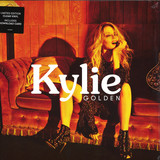
Kylie Minogue - Golden

Kylie Minogue

Golden

12inch4050538360806
BMG Rights Management
09.04.2018

Limited Edition Clear Vinyl

Includes 12' Vinyl and Deluxe CD album, 30 page hard back book

Now that I've been to Nashville,' Kylie Minogue says with audible affection, I understand. It's like some sort of musical ley-line...'

Golden, Kylie's fourteenth studio album, is the result of an intensive working trip to the home of Country music, a city whose influence lingered on long after the pop legend and her team returned to London to finish the record: We definitely brought a bit of Nashville back with us,' she states. The album is a vibrant hybrid, blending Kylie's familiar pop-dance sound with an unmistakeable Tennessee twang. It was Jamie Nelson, Kylie's long-serving A&R man, who first came up with the concept of incorporating a Country element' into Kylie's tried-and-trusted style. That idea sat there for a little while, with Minogue and her team initially unsure about how to bring it to life. Then, when Grammy-winning songwriter Amy Wadge's publisher suggested Kylie should come over to collaborate in Nashville, a city Kylie had previously never visited, something clicked. You know when you're so excited about something,' she recalls, that you repeat it an octave higher and double the decibels I was like that. 'Nashville! Yes! Of course I would!'. I hoped it would help the album to reveal itself. I thought 'If I don't get it in Nashville, I'm not going to get it anywhere.''

Kylie's Nashville trip involved working alongside two key writers, both with homes in the city. One was British-born songwriter Steve McEwan (whose credits include huge Country hits for Keith Urban, Kenny Chesney and Carrie Underwood), and the other was the aforementioned Amy Wadge, another Brit (best known for her mega-selling work with Ed Sheeran). It was then a truly international project: Golden was mainly created with African-German producer Sky Adams and a list of contributors including Jesse Frasure, Eg White, Jon Green, Biff Stannard, Samuel Dixon, Danny Shah and Lindsay Rimes, and there's a duet with English singer Jack Savoretti.

However, the album's agenda-setting lead single Dancing was, significantly, first demoed with Nathan Chapman, the man who guided Taylor Swift's transition from Country starlet to Pop megastar. If anyone knows how to mix those two genres, Chapman does. Nathan was the only actual Nashvillean I worked with. He's got a huge studio in his house, which is probably due to his success with Taylor... there's plenty of platinum discs of her, and others on his walls.' There's something of the spirit of Peggy Lee's Is That All There Is, of Dylan Thomas' Do Not Go Gentle Into That Good Night, even of Liza Minnelli's Cabaret about Dancing, a song which not only opens the album but sets out its stall, providing a microcosm of what is to come. You've got the lyrical edge, that Country feel, mixed with some sampling of the voice and electronic elements, so it does what it says on the label. And I love that it's called 'Dancing', it's immediately accessible and seemingly so obvious, but there's depth within the song.'

The experience of simply being in Nashville was an overwhelming one, before Kylie had even arrived. Once I knew I was going to Nashville, people talked about the place with such enthusiasm. They said without doubt I would love it and, I would come back with songs. They were sending lists of restaurants, coffee shops and bars. It really was a beautiful and genuine response and it felt like I was about to have a life changing experience and in a way, I did.' The reality came as something of a surprise, when she found a far more modern metropolis than the vintage one she'd envisaged. I thought it would be like New Orleans: little houses and bars, with music spilling out onto the street. It reminded me more of Melbourne: apartment blocks going up everywhere! The main strip, Broadway, where the honky tonk bars are, that's where the street was filled with music and it was just amazing.' Mainly, Minogue remembers the heat and humidity. It was 100 degrees. It was like it was raining with no rain.' She also relished the chance to wander around unrecognised, visit a few venerable music bars and soak in the atmosphere. I didn't get to the Grand Ole Opry or the music museums but I managed to go to a couple of the institutions there like The Bluebird Cafe and The Listening Room, and just by being there, through some kind of osmosis, you get this rejuvenated respect for The Song, and the writing of The Song. There's no hoo-hah around it. There's a singer-songwriter there, talking about the song and singing the song, to an audience who are there to listen. Although, I have to confess I was guilty of starting to clap too soon during a long pause at the end of one of the songs. The guy made a bit of a joke out of it and got a laugh from it, but I thought 'Of all people in the audience, no...''

It's probably no coincidence, therefore, that every track on Golden is a Kylie co-write, making it arguably her most personal album to date. The end of 2016 was not a good time for me,' she says, referring to well-documented personal upheavals, so when I started working on the album in 2017, it was, in many ways, a great escape. Making this album was a kind of saviour. I'd been through some turmoil and was quite fragile when I started work on it, but being able to express myself in the studio made quick work of regaining my sense of self. Writing about various aspects of my life, the highs and lows, with a real sense of knowing and of truth. And irony. And joy!'

The songwriting process allowed Kylie to get a few things out of her system. Initially, she admits, it was cathartic, but it also wasn't very good. I think I was writing too literally. But I reached a point where I was writing about the bigger-picture, and that was a breakthrough. It made way for songs like Stop Me From Falling and One Last Kiss. It also meant I had enough distance to write an autobiographical song, like A Lifetime To Repair, with a certain amount of humour. The countdown in that song: 'Six-five-four-three, too many times...'. I don't know if that will be a single, but I can just imagine a girl with framed pictures of past boyfriends, and kind of going 'Oh god, when am I going to get this right'' When she listens back to Golden, Kylie can vividly hear the Nashville in it. It is, she'll agree, probably the first time that a Kylie album has sounded like the place it was made. You wouldn't normally relate my songs to the cities. Can't Get You Out Of My Head sounds more like Outer Space than London. But Shelby '68, for example, was written in London but it was done with Nashville in mind. It's about my Dad's car, and my brother recorded Dad driving it! I don't think I'd have written a number of the songs, including Shelby '68 and Radio On without having had that Nashville experience.'

The latter, she says, is about music being the one to save you.' Throwing herself into the making of the record, she says, crystallised that idea. If there's one love that will always be there for you, it's music. Well, it is for me, anyway.' That song, in particular, carries nostalgic echoes of the golden age of Country, as heard through Medium Wave transistors and tinny home stereos in the distant past. Like any child of the Seventies, Kylie had a basic grounding in Country music, mainly absorbed from older family members. My Step-Grandfather was born in Kentucky and though he lived most of his adult life in Australia, he never stopped listening to his beloved Country artists.' If there's any classic Country singer whose imprint can be heard on Golden, it's Dolly Parton.

Kylie saw Dolly live for the first time at the end of 2016, at the Hollywood Bowl. It was like seeing the light,' she beams. It was incredible. Everyone, whether they know it or not, is a Dolly Parton fan. When I was in Nashville, I did pick up a T-shirt that said 'What Would Dolly Do' Maybe that should be my mantra.' And, whether consciously or otherwise, there's a timbre and trill to Kylie's vocals on Radio On that is distinctly Parton-esque. My delivery is quite different on this album,' she says. A lot of things are 'sung' less. The first time I did that was with Where The Wild Roses Grow. On the day I met Nick Cave, when I recorded my vocals, he said 'Just sing it less. Talk it through, tell the story.' This album wasn't quite to that extreme, but a lot of the songs were done in fewer takes, to just capture the moment and keep imperfections that add to the song. I remember on my last album, a lot of producers were trying to take out literally every vibrato they heard. And that's not natural to my voice. I mean, I can make myself sound like a robot, but it's nice to sound like a human!' Working within the Country genre also gave Kylie permission to write in the Nashville vernacular. Because we were going there, I wasn't afraid to have lines like 'When he's fallen off the wagon we'd still dance to our favourite slow song', 'Ten sheets to the wind, I was all confused', 'I'll take the ride if it's your rodeo'. The challenge of bringing a Country element to the album made the process feel very fresh to me, kind of like starting over. I started to look at writing a different way, singing a different way.'

If ever Kylie lost confidence in the Country-Pop concept, and found herself pondering This is great, but back in the real world - my real world - how will this work', Jamie Nelson was there to badger her into sticking to the path. We found a way to make it a hybrid with what we'll call my 'usual' sound. It had to stay 'pop' enough to stay authentic to me, but country enough to be a new sound for this album. The closer we zoomed in, and the more we honed it, I knew Jamie was right. We sacrificed good songs that weren't right for this album, because we wanted it to be as cohesive as possible. The songs that were hitting the mark were these ones, so we decided to be strong, and that's how we wrapped up the album. What he said, that stuck with me, was that 'I'd hate to get to the end of this and really wish we'd gone for it.'' Having worked with Kylie for so long, Nelson was able to put this latest shift of direction into perspective. He said 'You've traditionally done it throughout your career. You had your PWL time, then you did a complete turn when you went to deConstruction, then another complete turn with Spinning Around, and R&B dance-pop, and then another turn with Can't Get You Out Of My Head, icy synth-pop, and this is another one.' He was right. It felt like the right time to have a change sonically. New label, new stories to tell, and a new decade almost upon me.'

Kylie Minogue will, it's scarcely believable, turn 50 this year. This looming milestone is partly behind the album's title, and title track. I had this line that I wanted to use: 'We're not young, we're not old, we're golden' because I'm asked so often about being my age in this industry. This year, I'll be 50. And I get it, I get the interest, but I don't know how to answer it. And that line, for my personal satisfaction, says it as succinctly as possible. We can't be anyone else, we can't be younger or older than we are, we can only be ourselves. We're golden. And the album title, Golden, reflects all of this. I liked the idea of everyone being golden, shining in their own way. The sun shines in daylight, the moon shines in darkness. Wherever we are in life, we are still golden.' One of the album's shiniest moments is Raining Glitter, an exuberant banger which ventures closest to Kylie's traditional dance-pop comfort zone. Eg White, who is one of the producers and writers and a great character, was talking about disco one day. I said 'I love disco, but you know the brief.' We needed to be going down the Country lane, so to speak. But we managed to bring them both together. When I wrote it, I was thinking about the Jacksons video for Can You Feel It where they're sprinkling glitter over everyone. And I think there's a Donna Summer record that's got that feel to it. I think that's my job: I basically leave a trail of glitter after every show I do anyway.'

Kylie is looking forward to the challenge of incorporating the Golden material into her live shows. Mixing these songs in with my existing catalogue is going to be fun. And it could be fun to do some of those songs with just a guitar. It'll make my acoustic set interesting...'Her incredibly loyal fans - to whom one Golden song, Sincerely Yours, is intended as a love letter' - will, she believes, have no problem with her latest stylistic shift. My audience have been with me on the journey, so I shouldn't be afraid that they won't come with me on this part. I've had fun with it, and I'm sure they will too.'

The time spent making Golden has, Kylie says, been a time of creative and personal renewal. I've met some amazing people, truly inspiring writers and musicians. My passion for music has never gone away, but it's got bigger and stronger.' And if there's an overriding theme to the record, it is one of acceptance. We're all human and it's OK to make mistakes, get it wrong, to want to run, to want to belong, to love, to dream. To be ourselves.'

I was able to both lose and find myself whilst making this album.'

No en stock

Haga su pedido ahora y le encargaremos el artículo en nuestro proveedor.

26,01

Ültimo hace: 8 Años
Dabrye - One / Three

It was chance that brought about the release of One/Three, Dabrye's debut album. Early demos were tucked on the B side of a cassette Tadd Mullinix passed to Sam Valenti in 2000 while working at the Dubplate Pressure record shop in Ann Arbor. Mullinix had spent the late '90s producing jungle, techno, house, hip-hop and more using the All Sound Tracker software as a primary instrument. Each style pulled from a similar sound palette as Mullinix used limitations to define the contours of di-erent musical personalities. Dabrye was his hip-hop wildstyle, a captivating collage of sparse instrumentals inspired by the laid back vibes of midwestern hip-hop and east coast boom bap, the futuristic funk of Umma-era Jay Dee, and the calculated subtlety of Detroit dance music. Released in 2001 as the first in an intended trilogy, One/Three announced Dabrye's arrival with an unavoidable contribution to Detroit hip-hop. Ghostly International is reissuing the album in 2017 for the first time, including a long overdue vinyl edition.

On its release One/Three was the rare album that appealed to both fans of Slum Village's smooth yet rugged hip-hop and enthusiasts of the distinct American IDM released by labels like Schematic. Over the following decade, the inadvertent demo submission turned into a body of work that placed Dabrye alongside innovators such as Prefuse 73 amid the cannon of a new generation of producers. Today, One/Three remains a concise and intriguing study in instrumental hip-hop that helps join the dots between J Dilla and Flying Lotus.

One/Three is a record that says much with little. There are no obvious hip-hop tropes. Instead Mullinix captures the ingenious minimalism of '90s hip-hop instrumentals to build tracks both supple and hard, joyous and melancholy, full of sharply angled rhythms and warm rubbery basslines: 'The Lish' throws a sickly sweet saxophone against digitally fragmented melodies, 'How Many Times (with this)' draws you in with an irresistible, clipped guitar groove, the rhythmic stutter of 'Smoking The Edge' makes your head spin with pleasure. Playing with his inspirations, Mullinix injects omitted downbeats for imagined rhymes and repurposes the intricacy of ragga jungle for breakdowns.

But what really defines One/Three is the rhythmic sensibility and metric modulation of Detroit's school of hip-hop production, which Mullinix was a fervent student of. The beats feel like they're constantly escaping a rigid tempo grid even though they are, in fact, pretty tight. A lot of it is nuance,' Mullinix explains. I've been known to say that I'm not impressed by spectacle. I think that nuance is what really captivates people.'

If you like your beats with a dash of class, do not miss this. An essential purchase of the highest order.' -BBC

- First time all tracks from the original 2001 release appear on vinyl.
- Remastered by Daddy Kev
- Standard weight black vinyl is inserted in to 3.5mm matte finish vinyl jacket.
- Download card includes free download of the Payback EP

No en stock

Haga su pedido ahora y le encargaremos el artículo en nuestro proveedor.

22,65

Ültimo hace: 8 Años
J. M. Tim And Foty - African Funk Experimentals (1977-1979)

Tim (aka Jean Marie Tiam)and the sadly departed Maurice Foty who died in 2011. The musical cousins hails from Bafoussam in Cameroon. Their signature vocal harmony sound may be the first thing you hear, however they also have produced a host of funkiest African funk around. They sing in their native language Ngomâlah, as well as Duala and English.

We start the album off slowly with the scene-setting and largely instrumental "Douala By Night". Tight guitar and choppy clavi drive this song along. The groove is so deep even Missy Elliot couldn't resist a cheeky sample. "Funky Bafoussam" carries on the theme and expands it to include a kick-ass horn section. "More And More" is next and here the vocals burst forth over this up tempo punchy pop-funk track. With "Love Is Light" the pair show their versatility with a smooth English-sung soul ballad.

The hopelessly upbeat "Aie" is next with its earworm keyboard riff, slice guitar and catchy falsetto vocal. "Not So Bad" brings on the boogie. "I Love Yaounde" is a smooth swinging boogie-ballad with a killer chorus hook. "Eda" is a hit from early in their career. We close of the comp with the disco funk of "Funky Boogie Love" and synth grooves of "Eya Mba".

The songs on the comp represent only a 2 year period but some of the finest from the duo. These days Tim keeps the Tim and Foty flame alive. He currently lives between France and Cameroon. A musical flame that most definitely is burning bright.

No en stock

Haga su pedido ahora y le encargaremos el artículo en nuestro proveedor.

19,29

Ültimo hace: 8 Años
Various - The Originators

Various

The Originators

12inchGQOM007
Gqom Oh!
27.03.2018

Gqom Oh! records presents "The Originators", a five track EP respresenting the past, the present and the future of Gqom - the thunderous club sound from Durban, South Africa. The Gqom Oh! label was set up by Rome-based DJ and musician Nan Kolè to highlight the music and artists of Durban, the often overlooked cradle of the new South African sound. The label's 2016 compilation - 'Gqom Oh! The Sound of Durban Vol.1' - broke the sound out of South Africa, Pitchfork calling it The largest and most thoughtful survey of the genre available to western audiences to date'. Recently joining Kolè is Sboniso Brandon Luthuli aka Citizen Boy on the ground as local A&R. The EP's A-Side is dedicated to two of the genre's most prominent producers. DJ Lag is a frontrunner in pushing Gqom worldwide. Making music from a young age and building up a solid reputation in South Africa, he's known as the "King of Gqom". Griffit Vigo, a real innovator in the Gqom genre, grew up in the same area as DJ Lag and has attained a legendary status amongst his peers. "When I was in Durban the first time I noticed that Griffit Vigo was a kind of legendary figure, he'd been inspiring all the Gqom Durban artists for a long time. Nobody knew where he was but everybody was playing him and sometimes using his beats to make new songs. The main track 'Ree's Vibe' was the peak moment of DJ Lag's sets all over the world. If Lag is the Gqom King then Griffit Vigo is the Gqom Legend."- Nan Kolè. Sbucardo is one of the most respected DJs around the streets and the townships of Durban. Featuring Abnormal on 'Iphoyisa', whose lyrics in Zulu translate to We at the club, Mr police man don't disturb us", the track represents the South African scene and Gqom culture in Durban very well. Naked Boyz (officially the first in Durban to explore new territories in broken beat in 2011) 'Story Teller' is characteristic of the Sgubhu style, a blend of Gqom with more conventional house sounds, the new genre taking over Durban and finding its way onto mainstream radio. Scene kingpins Rude Boyz round off the release's line up of Gqom originators with 'Umshunto'.

No en stock

Haga su pedido ahora y le encargaremos el artículo en nuestro proveedor.

20,97

Ültimo hace: 6 Años
Le Millipede - The Sun Has No Money

Alien Ensemble's trombone man Mathias Goetz caused quite a splash when he released his eponymous debut LP under his Le Millipede moniker back in 2015: The multi-instrumentalist's initial offering was clearly something else, impossible to grasp, a musical vessel beyond genre, beyond style or era, seemingly beyond space and time even, a vessel that carried an almost cosmic kind of song-craft - music with no fixed stamp of origin, though it did somehow feel like an Alien Transistor release. Followed by remix album Mirror Mirror, which comprised reworks by 1115, Protein, LeRoy, Olaf Opal, and Saroos, to name a few, it's now time for album #2: The Sun Has No Money.Let's face it: There's nothing as majestic as the sun. At least not in our world. If it runs out of juice one day, it's game over: The End. Light's out. For everyone. At that point, it wouldn't even matter if you're rich or poor. We're all equal under the sun. Same level. And yeah, this might not be major news, but then again... we're talking about the sun. The sun! Guess it's about time to acknowledge its power and superiority, right In fact, you can feel it on your bicycle: pedaling at night, when it's on duty in other hemispheres, and you're working hard at the dynamo, sweating, you can actually feel how powerful it is. In the end you get off the bike all recharged, a tune on your lips - and somehow feeling like a miniature version of the sun yourself. And whenever you feel like that, that's exactly the right moment to grab a melodica and get to work.Following an initial warm-up round sans electricity, this new album soon begins to glow: Mathias Goetz aka Le Millipede doesn't need pedals, he boosts circulation by single-handedly* playing tons and tons of different instruments - it actually feels like thousands, easily. And thus begins a show that has countless levels to it: There are various sonic illusions... and yet Le Millipede doesn't hide anything: He's also willing to show the inner workings, the actual recording process and everything else. In short: he goes meta. Makes songs about making songs. That's right: why not use all these beautiful means to address the issue of money It's not the sun that casts shadows, all it does is recharge, fuel: growth & thriving, that's the sun's area of responsibility. And yet there came a man whose plan was simple: steal the fruit from your garden, only to sell it right back to you, for money. We can hear the sea gulls crying in the distance, as somebody is throwing breadcrumbs up into the wind that carries their voices...It's not the sun that casts shadows - all it does is radiate light. And yet there came a time when someone blocked those rays of light. Now if you're some kind of Diogenes, you'll simply say, Move at least a little out of the sun.' But if you're a teacher, you'll maybe light up your pipe and use that to lighten up. What matters is that the percussion parts, in this case, resemble some serious musique concréte. The sun doesn't know shadows - all it knows, is itself. And yet somebody entered the picture and built an entire city. A city full of streets, so that houses can cast shadows into these avenues. Plus, there's music in the streets, music originally written inside the walls of said houses.One of those streets is known as the Tin Pan Alley: a place that got its name from a music writer who compared the sound of so many pianos to the banging of tin pans. That sound: that's one side of the road that is this album. Some of these melodies appear to be shadows of earlier tunes, dating back to, say, 1898 or even before that, melodies that were first registered in the Tin Pan Alley publishers' offices back in 1912 or 1917. We actually get to see this Alley at that point in time. We see the ropes, the workings. How things come together, the actual act of creation. Suddenly, we can hear the shadows!
Okay, so one side of this street is America. The US of A. The opposite side: Russia. And smack dab in the middle: Europe. A pothole in the center. All the back-and-forth that occurs between these two poles ultimately depends on the movement of the sun. Night and day, taking turns, commuting in and out of sight. We get to meet Prokofiew's and Scriabin's ghost, among other spirits, reframed and published by Le Millipede's own imaginary label imprint on the historic Tin Pan Alley. Indeed there are moments on this album when Le Millipede seems to be playing Scriabin's clavier a` lumie`res (tastiera per luce), when his performance seems to be based on synesthesia, a wild cross-pollination of colors and sounds. In case you didn't know this: In the States, Prokofiew goes by the name Brian Wilson, and Scriabin's also known as Sun Ra - yet another guy who's usually broke, but gets to spend a lot of time out in the sun. Together, these assorted protagonists ask the people of the Antilles for Mutabor dance-tokens and send postcards to Moondog in Germany, right back into the darkness. On the postcards you can see people dancing the Biguine...Firing foreign fossil fuels from all pipes (Brennelementsteuer!), Le Millipede controls the very center of this hustle and bustle: going as far as to employ some southern Chopped & Screwed styles, he's 100% current and zeitgeisty! Houston, we've got a problem: there's some kind of myriapod, centi- or millipede on the loose! Well, give me another sip of lean, sizzurp, dirty Sprite, and on goes the journey in the Pullman coach. Let's follow the sun! Keep on moving, keep things motorik! Here comes the Trans-Eureka-Express. Cherish the backpacking days! A piercing rhapsody of sound (bohrende Rhapsodie), we'll remember them fondly! And thus things move on, the sun, the days, the earth: rise, set, action, round and round... onwards eternally. The sun: the biggest loop known to mankind. As if it was some kind of sonic Rube Goldberg contraption, time seems to be stretching out while listening to that hmmm. After all: time is a lot (a lot!) more than just money. And yeah, the sun is the real big shot on (or rather: above) Planet Earth. Le Millipede's live line-up also includes Markus & Micha Acher (The Notwist etc.), Nico Sierig (Joasihno), and Manuela Rzytki (G. Rag & die Landlergschwister, Kamerakino etc.).
*sole exception: Evi Keglmaier (Zwirbeldirn, Hochzeitskapelle) plays the viola. Words/sun worship: Pico Be

No en stock

Haga su pedido ahora y le encargaremos el artículo en nuestro proveedor.

17,61

Ültimo hace: 8 Años
The Grateful Dead - The Best Of The Grateful Dead Live Vol. 1 1969 - 1977
  • A1: Saint Stephen
  • A2: Bertha
  • A3: Wharf Rat
  • B1: Jack Straw
  • B2: Truckin
  • C1: Sugar Magnolia
  • C2: Morning Dew
  • D1: Brown-Eyed Woman
  • D2: The Music Never Stopped
  • D3: Estimated Prophet

The Grateful Dead forged its legend on the road, traveling countless miles between 1965 and 1995 to perform a world record 2,318 shows for millions of devoted fans. The band's refusal to ever play a song the same way twice has endeared generations of fans, many of whom prefer certain live versions of songs over their studio counterparts, and garnered the popular phrase among Dead Heads: There is nothing like a Grateful Dead concert.'

The live albums the band released during its 30-year career are the primary source for the collection, including tracks like Bertha' from Grateful Dead (Skull & Roses) (1971), Fire On The Mountain' from Dead Set (1981), and The Music Never Stopped' from One From the Vault (1991). A testament to its ongoing popularity, the revered double-album Europe '72 (1972), is represented by no less than five tracks, including Sugar Magnolia,' Jack Straw' and a searing rendition of Morning Dew.'

Other performances on the set were selected from the growing number of live releases that have emerged since the death of founding member Jerry Garcia in 1995. Some of those recordings include Touch Of Grey' from Truckin' Up To Buffalo (2005), a 1990 version of Eyes Of The World' with saxophonist Branford Marsalis featured on Wake Up To Find Out (2014), and Estimated Prophet,' which debuted earlier this year as part of Cornell 5/8/77, a recording of the Grateful Dead's mythic show at Cornell University in 1977, thought by many to be the band's greatest live performance.

Made for die-hard Dead Heads and new fans alike, The Best Of The Grateful Dead Live Vol. 1 1969-1977 will be available as a on 180-gram vinyl as a 2-LP set, covering the first half of the album, on March 23rd. The music will be available through digital and streaming services as well.

Reservar23.03.2018

debe ser publicado en 23.03.2018

42,82
Fumio Itabash - Nature

Fumio Itabash

Nature

12inchMULE223
Mule Musiq
23.03.2018

more talking all that jazz, more high aiming music by fumio itabashi: mule musiq is ready to release another record by the legendary japanese jazz pianist, born in ashikaga, tochigi in the year 1949.
this time his first solo record ever: the heavy jazzing 'nature', which has never been reissued on vinyl since its birth in 1979. it has been recorded at nippon columbia 1st studio, tokyo from march 13 to 15 in the year of its release.
it features itabashi making feverish love with the piano and sharing the studio with the great bass players hideaki mochizuki and koichi yamazaki, drummers kenichi kameyama and ryojiro furusawa, soprano saxophonist yoshio otomo and vibraphone wizard hiroshi hatsuyama.
they all joined him to perform his very own songs, composed by itabashi himself and produced by ryonosuke honmura, who also produced japanese jazz heroes like saxophonist keizo inoue during his career.
but enough background information. what counts is sound. it is fresh, propulsive, twitchy and melodi-ous from the first to the last tone. sometimes the instrumentalists play a classic solo in an overall deep modal jazz atmosphere that seems to be made for cats that love the good old stars and inventors - from john coltrane to mile davis, from thelonious monk to art blakey.
'nature' also shows how deep itabashi studied the history of the genre, while keeping his very own vision of jazz alive. the man that made his professional debut as a member of the sadao watanabe quintet in 1971 and that also was a member of the elvin jones jazz machine world tour from 1985 to 1987, plays the piano in all tempos: nervous high-flying quick, deeply blue blues style slow.
besides the traditional jazz flavours, you get a feeling of mind-expanding spiritual jazz, that grand mas-ters like pharaoh sanders or gary bartz turned into a sacred music genre. a master-class record in ravishing big city jazz music, adventurous, sometimes meditative, sometimes faster than the speed of light, always grooving with a bright, pure-toned sensibility and deeply soulful melodic imaginations.
it extends the jazz history with a fine balance between tradition and innovation. and it stays infectious all the time while sounding surprisingly fresh due to a lot of thrilling musical spontaneity that touches profoundly even though all notes have been written down by fumio itabashi before he and his combat-ants entered the studio.
and maybe that's the mystery of these timeless five at times epic recordings: all notes been written on paper but each musician had the freedom to dance with them in his very own unique way. so, turn the volume loud and get ready to be steamrolled by fumio itabashi's 'nature', an inebriant album that is talking all that jazz deeply!

No en stock

Haga su pedido ahora y le encargaremos el artículo en nuestro proveedor.

22,65

Ültimo hace: 7 Años
Wetware - Automatic Drawing

Wetware

Automatic Drawing

12inchDAIS109LP
Dais Records
23.03.2018

New York City has had a long history of dance music fused with confrontational performance. Whether it came from within the late 70's No Wave canon projected through venues like the Mudd Club or the downtown avant-garde galleries such as The Kitchen, the feeling that influences and infects Brooklyn-based duo Wetware's overall being as a cohesive and confrontational unit is as much enigmatic as it is familiar. Formed in 2015, Wetware eased into its performative role with their live shows around their home base of Brooklyn, NY.

Vocalist Roxy Farman, who's familiar voice was last seen on Drew McDowall's 'Unnatural Channel' album, stole audience's attention from the moment they started, using her body in tandem with her voice as a weaponised vehicle for the band's anxiety filled performance. Matthew Morandi cut his teeth in the electronic music world through his solo tech-industrial project Jahiliyya Fields and partner to Inhalants, the techno collaboration of Morandi and Max Ravitz (Patricia). The synergy that developed between Farman and Morandi has been explosive. Wetware's live antics and behaviour has caused alarm and envy amongst their local audiences, causing Wetware the group to 'not be missed' on any particular bill that they are allowed to take part in.


Wetware stepped out from their live persona and self-recorded a selection of songs that viewers had grown accustomed to and were debuted on the flawlessly curated Primitive Languages imprint. Shortly following their recorded premier was an EP collection of demo recordings on the much praised Bank NYC label. Once the band reconciled with documenting their work, they set out, with the help of engineer Kris Lapke (Alberich / Hospital Productions) to formalise their most recent output in the context of their first full length album entitled 'Automatic Drawing'.

Given Wetware's penchant for endurance, as displayed by their 3 hour long production at Koenig & Clinton Gallery in the Summer of 2017, one would expect the usual restlessness on Wetware's debut full length. All of the apprehension and unease in Wetware seems to have been channeled into a string of cohesive electronic statements found on songs 'Frequent Dreamlands' and 'Ode to Joe'. Industrial dance rhythms bounce around Farman's poetic stance on 'Where Ever You Were', causing flashbacks of an early 80's dystopia that jumps around a confusing, uncomfortable backdrop. Inter-spliced with modular electronic instrumentals like the album's opener 'Pantomime', Wetware's devastating portrait is that of a society in peril.

No en stock

Haga su pedido ahora y le encargaremos el artículo en nuestro proveedor.

17,27

Ültimo hace: 8 Años
Madfilth - Madfilth

Madfilth

Madfilth

12inchCACHE019LP
CACHE CACHE
23.03.2018

* From the pumping heart of The Magnetic System comes the 'dirtiest' Da-Da-dancefloor anti-jams with this lost 1979 blueprint of Italian conceptual cosmic disco played by the cream of the Goblin studio band. Ultra-rare and unscrubbed,Finders Keepers finally snip the trip from the cash machine to the trash machine.
* Carving its own grubby niche as an early prototype of cosmic disco cum Italo space funk whilst simultaneously harbouring Dada hat stand satire with a junkshop glam aesthetic, this ecological illogical poplitical crab cabaret clearly broke the mould before way before the jelly had set.
* Fans of 'other' obtuse outernational agit-camp might find a fantasy fusion between France's JP Massiera and Sweden's enviroMENTAL marvel Kaptain Zoom while trying to unravel the Madfilth tangle - but rest assured there were method men behind this madness and a portal to Italian funk royalty still festers
at the bottom of the psych rap scrapheap.
* Originally drip-fed out of Cesare Andrea Bixio's Cinevox stable as one of a tight grip of non-soundtrack LPs, made to test the label's commercial potential, Madfilth would follow the band Goblin (and their non-cinematic Roller) as well as the hens' teeth eponymous long player by the group The Motowns in what was perhaps the last-ditch attempt at custom built popsploitation - combining the skills of overqualified composers with undercooked conceptual mind belches. Naturally, after almost 40 years in the barrel, this micro-brewed oddity finally quenches the acquired taste of a new breed of shambolic psychotropic guzzlers proving that 1979 was obviously good year for fool's gold. The Madfilth medicine has finally come to cure your psychic ills so open wide and don't bite the spoon.
* It is beneath the flamboyant rhythm rants and vari-speed osric slop of alt-comedic sarcy-satirist Alberto Macaro (a genetic beneficiary of a vaudevillian comic bloodline) that we find The Magnetic System maestros Franco Bixio and Vince Tempera as the sonic driving force behind this unmarked treasure trove of
B-musical diamanté discoids. It will also come as little surprise that
Cinevox/Dario Argento favourites Goblin were not too distant from the whiff of this curate's egg with the men who many consider to be the group's greatest assets - bass player Fabio Pignatelli alongside sports rock drummer Agostino Marangolo. It was this unison that remained consistent throughout Goblin's career, weathering the temporary departure of Claudio Simonetti and
maintaining the stylistic heartbeat of the group. Madfilth's inclusion of Goblin synth Maverick Maurizio Guarini and the band's mid-period guitarist Carlo Penessi (founder of the band Etna) pinpoints the jobbing Goblin session group during the time they recorded the soundtracks for the films 'Buio Amiga' and 'Squadra Antigagsters'. This lesser-celebrated late 70s era also witnessed the mutating Goblin rhythm section providing discoid backbeats for records such as Giorgio Farina's 'Discocross' album, Simonetti's own Capricorn alter-ego and the homoerotic nightclub spin-off Easy Going - all of which, alongside Madfilth,
provide a strong mutual stylistic support system for their claim to cosmic disco's deep red bloodline.

No en stock

Haga su pedido ahora y le encargaremos el artículo en nuestro proveedor.

14,58

Ültimo hace: 8 Años
Django Django - Marble Skies

Django Django

Marble Skies

12inch5060525431357
Because Music
22.03.2018

Intimate November tour also announced After their 2012 Mercury Prize nominated debut and 2015's Top 20 follow-up 'Born Under Saturn', musical adventurers Django Django are back for 2017, exploring new sounds with their brand new album 'Marble Skies' which will be released on January 26th on Because Music. Today the album launches with first single 'Tic Tac Toe', a rousing, trippy upbeat rock track with an enormous echoing hookline which will excite fans of the band's rockabilly-influenced elements. The accompanying video for 'Tic Tac Toe' was directed by John Maclean, brother of Django Django drummer/producer David Maclean and director of the critically acclaimed modernist western 'Slow West'. It depicts vocalist/guitarist Vincent Neff enjoying a rapid-fire day-trip to Hastings which takes a turn into the surreal and sinister when a ghost train puts him on a collision course with a grim reaper inspired by Ingmar Bergman's The Seventh Seal. As John Maclean explains: The film could be about the fading era of the beach arcades, time moving too fast, love and games, horror and happiness but it is actually about a man who needs to go buy a pint of milk to make a cup of tea.' After the brilliant, rave-shaped grooves and expansive arrangements of its predecessor, 'Marble Skies' is a more concise and focused offering which recalls the dynamic, genre-blurring music of their debut. It's a return to form, an album which finds them returning to the handmade, cut-and-paste approach of the past. Upon finishing the 'Born To Saturn' tour, Dave ventured to LA to work on a production project, whilst the other band members went to India with the British Council. When they returned, the new album process began with a back-to-basics approach which recalled the DIY ethos of the band's early days, Django Django - minus an absent Maclean - assembled at Urchin Studios in Tottenham, London with Metronomy drummer Anna Prior to experiment with the idea of coming up with new tracks through loose jamming sessions. After ten days of recording, there was plenty of raw material to send up to Dave (then back in his hometown of Dundee) for him to edit, refine and evolve. As ever, all four band members (completed by Tommy Grace on synths and bassist Jimmy Dixon) contributed to the band's music, melodies and lyrics as the final album took shape. Parts of 'Marble Skies' find Django Django sailing into uncharted territories, not least the driving title track (propelled by Prior's drumming), with its echoes of Krautrock and Suicide. Meanwhile, the hazy Zombies-like summer pop of 'Champagne', which explores the joys and ills of alcohol, was inspired by the band's over-indulgence during a boat trip on the Seine that was hosted by their label. Those drawn to the more dance-orientated side of Django Django will find much to love in the twisted '80s electro pop of 'In Your Beat' and the dancehall-influenced 'Surface To Air', a dreamy-headed pop song fronted by Rebecca Taylor of Slow Club. The collaboration came as a result of the two bands meeting up at SXSW some years ago, where Rebecca and Dave in particular bonded over shared interests in R&B, hip-hop and dancehall. Another more surprising collaborator is Jan Hammer, the Czech-born, American-based jazz-fusion and electronic artist who shares writing credits with the band on the gorgeously floaty 'Sundials'. If there's a mood running through 'Marble Skies', it's one of reflection on things past and present, and finding some kind of peace with your place in the grand scheme of things.

No en stock

Haga su pedido ahora y le encargaremos el artículo en nuestro proveedor.

19,29

Ültimo hace: 8 Años
Various - Spiritual Jazz Vol.8 Japan: Part Two

Our latest examination of Esoteric, Modal & Progressive Jazz of the 20th Century has taken us to Japan. The liberating force of jazz has been created and felt all around the world, but few nations on earth embraced the jazz message with the passion and intensity of Japan. From the dawn of the jazz age to the present day, Japanese audiences have been renowned tastemakers, enthusiasts and champions of the music - in the 1980s, Japan was the biggest per capita market in the world for jazz records, and it has even been said that Japanese jazz fans kept the jazz record industry alive through the lean years of the 1970s, when the music fell from commercial favour in the land of its birth.

But while the jazz aficionados of Japan are celebrated as sophisticated fans and consumers of the music, comparatively little is known outside Japan of the remarkable and abundant music produced by generations of Japanese jazz musicians. Numerous Japanese jazzers have found enormous success on the international stage - Toshiko Akiyoshi, Sadao Watanabe, Teramasu Hino, and many others are household names among jazz listeners all over the world, and with good reason. But if such global figures are put aside, the stunning heritage of Japanese jazz remains poorly understood outside Japan. As a result, the work of many celebrated Japanese jazumen has remained largely unknown to international audiences, and the extraordinary scope and depth of Japanese jazz has not been widely recognised.

Compiled for the Spiritual Jazz series in collaboration with the celebrated collector and DJ Yusuke Ogawa (Deep Jazz Reality, Tokyo), this 2CD/twin set of double LPs aims to correct that omission by uncovering the uniquely deep sound of esoteric, modal and progressive jazz from Japan - music of the heart, soul and Japanese spirit!

Each 2LP set comes complete with OBI strip and thick, textured sleeve. Our extensive liner notes extend onto printed inners, and are in both Japanese and English.

No en stock

Haga su pedido ahora y le encargaremos el artículo en nuestro proveedor.

26,01

Ültimo hace: 7 Años
Tilbury - Execution

Tilbury

Execution

12inchBROADCAST14
Radio Bongo
16.03.2018

Les Adventures de President Bongo is a unique work that will reveal itself over the next seven years, give or take, in the form of 24 LP's.
What is a groove It is something that goes on and on, not changing much seemingly, like the growth rings exposed when you cut and fell a tree. It is no coincidence that tree rings resemble the spiral track of a record: they're both grooves of a sort.

A groove is a routine, a life lived. It may not always seem like much - a cup of bitter coffee, another day spent under the flickering fluorescent lights of an office, an overly long queue at the check-out of a suffocating supermarket. But it is also the scent of slightly burnt meat and birch by a gently flowing stream under a pink sunset, a silver fog clearing without notice to expose a starry sky and its familiar twinkling constellations, an impenetrable smile on a crowded morning train. It is the pattern exposed on the tree stump. A proper groove has ups and downs, it has drama. A good groove is a good story, a transmission into the future.

No en stock

Haga su pedido ahora y le encargaremos el artículo en nuestro proveedor.

21,81

Ültimo hace: 8 Años
Olde Gods - Gitanes

Olde Gods

Gitanes

12inchATMV054
ATOMNATION
12.03.2018

Gitanes is Olde Gods' new EP and longest output to date. Following a series of singles on the Minor Planets label, the Barcelona duo are up to a 12 four-tracker on Amsterdams' Atomnation. Gitanes brings echoes from Spains' not-long gone golden club era. Its cover depicts an abandoned club from the 90's in a coastal town in the Mediterranean, could be anywhere from Valencia to Barcelona. All four tracks are trippy yet solid-grounded, spacey voices and strings leads all flying up and magically suspended over gross rhythmical foundations. Dear CZ, a fetiche track, built around a moody Casio CZ synth stab topped up with acid videogame-like crazyness. Gitanes brings entrancing vocals intertwined with more CZ pad action. All Around is a foggy and paranoid late-night drive, and None of these Bitches, a homesick folks' walk around Tokyo's Daikanyama area. Olde Gods are JMII and Guillamino.

No en stock

Haga su pedido ahora y le encargaremos el artículo en nuestro proveedor.

7,19

Ültimo hace: 8 Años
Jules Henri Malaki - Makiyaj / Tes Idees

Following the success of the Retro-Zouk mixtapes series (4 volumes / 15k plays on Soundcloud), Secousse Radio proudly presents its first official vinyl reissue of a long lost Zouk banger.

Originally released in 1993-1994, those two tracks have been road-tested in various clubs and parties for months and the feedback is clear: it's dancefloor devastation business.

Their author is Jules Henri Malaki, an established and self-produced artist from Guadeloupe, a French overseas island in the Southern Caribbean Sea.

As the popularity of Zouk music keeps growing every day in Europe, America and Asia, just whisper the name Makiyaj' to any of the best DJs from the current tropical diggers scene and watch their eyes scintillate... This secret weapon shall not remain secret very long.

No en stock

Haga su pedido ahora y le encargaremos el artículo en nuestro proveedor.

12,56

Ültimo hace: 6 Meses
Artículos por página
N/ABPM
Vinyl