Zero One Zero is a no nonsense American Hard Rock Band. There comes a time when enough is enough and you want to take your music back! Rock music has turned into a bland cookie cutter version of its former self. Zero One Zero is going against the norm and providing a valuable service. Delivering a kick ass, grade A, American made product! No phony over produced, auto tuned garbage. This is Retro-Aggressive Hard Rock for the people! The Band is Rob ‘Boots‘ Zawisza – Vocals, James Ferrentino – Guitars, Mark Ahles – Drums, Marc Russell – Bass. The band’s latest release Traces Of Yesterday was produced by Grammy Award winner Paul Nelson (Johnny Winter). As the band explains, “We were approached by Paul in December of 2020 as he wanted to produce a record with us. After hearing our second studio album Full On. We were honoured to have a Grammy Award-winning Producer and talented musician find interest in us. We all met at his studio, The Music Room in February of 2021 and worked out the details of what would become our third studio album, Traces Of Yesterday.” Unfortunately, Paul passed away suddenly in March of 2024 but not without leaving his mark on Traces Of Yesterday. With standout tracks like the first single “You Knock Me Out” and follow up “I Am Calling”. Zero One Zero is now about to take their spot in Hard Rock as a force to be reckoned with.
quête:its not over
Not everybody has not one, not two, but twelve producers attached to her debut release. Not everybody has her one and only album pranked by British artist Banksy (who substituted a topless photo for the cover). Nope, not everybody is Paris Hilton, who has lived in the public eye since, well, forever. She first announced plans to make an album in 2003, during her run on the reality TV series The Simple Life. Originally entitled Screwed, and then Paris Is Burning, the record—finally simply entitled Paris—came out in 2006. And it was…uh… good? Yeah, for real. This record goes expensively pedicured cuticle to cuticle with anything Britney Spears, Jessica Simpson or any other pop culture chanteuse of the like ever put out, and the Paris the heiress displays some real savvy both in her taste of material and the Madonna-like manipulation of her sex symbol image. And her voice? Definitely respectable despite what the haters said. Indeed, the single “Stars Are Blind” went top 20, and the album itself went all the way up to #6, selling over 600,000 copies worldwide. Since Paris has finally answered the pleas of her fans and made a second album, we thought the time was right for a revival of Paris, so we’ve taken the fetching photos from the CD package and given them plenty of acreage to show their stuff, with a gatefold jacket and 4-color printed inner sleeve. And for this release, we’re pressing Paris’ album in her favorite color, pink…and of course it’s hot! A pop culture keepsake from an enduring pop culture icon!
- Hollow Inside
- Light The Beacon
- Not Like I Was Doing Anything
- Note On The Table
- You Know It's True
- What Time Is It There?
- I Can't Sleep Thinking You Hate Me
- Smitten
- Portland, Oregon
- Let Me Brush The Hair From Your Face
- Stay
- Shoot The Moon
- Barney & Me
- Firefly
- La International Airport
- Crying
- If Things Had Been Different
- I Take It That We're Through
Repress
Songs ’94-’98 is a smart selection of material from The Cat’s Miaow, an Australian indie-pop group that gifted their decade with some of its finest songs. Released on World Of Echo, the album draws from the group’s string of excellent seven-inch singles, a small clutch of compilation contributions, and features one previously unreleased song, “I Take It That We’re Through”, recorded in 1998. Part of the burgeoning international pop underground of the nineties, The Cat’s Miaow’s legend has only built over subsequent decades, as more people discover this most quixotic and curious of groups: a recent appearance on A Colourful Storm’s compilation of Australian indie-pop, I Won’t Have To Think About You, is testament to their enduring influence. In part emulating the selection of tracks on the 1997 CD-only compilation, Songs For Girls To Sing, Songs ’94-’98 is also the group’s first ever full-length 12” vinyl collection. The Cat’s Miaow started out in 1992 as a home-recording duo, Bart Cummings (guitar, bass, vocals) and Andrew Withycombe (bass, guitar) taking time out from duties with Girl Of The World and The Ampersands (respectively), knocking out songs on Withycombe’s four-track. Soon joined by Kerrie Bolton (vocals) and Cam Smith (drums), the quartet spent the next five years quietly, slowly working away in the suburbs of Melbourne, recording gem after gem of independent pop. Like many of their Australian precursors or peers – The Particles, Even As We Speak, The Cannanes – The Cat’s Miaow were more successful overseas, a sadly typical phenomenon within the Australian musical landscape. The Cat’s Miaow were always worldly and stylish, anyway, each seven-inch single a refined artifact, each song a peaceable jewel. You could hear some relationships with other music – someone (if not everyone) in The Cat’s Miaow was a Galaxie 500 fan; there’s a minimalism to the playing and melodies that recalls Young Marble Giants, Marine Girls, Beat Happening – but the spirit in these songs is endearingly individualised, the result of a hermetic vision, an ideal of what a simple, unadorned pop song could be. They had a winning way with simplicity, songs like “Autumn”, “Crying” and “I Can’t Sleep Thinking You Hate Me” passing by in the blink of a moistened eye, and when they stretched out, as on “Firefly”, you can hear hints of the drifting ambience they’d perfect in their other band, Hydroplane. It’s not much of a surprise that The Cat’s Miaow found a receptive audience, and no small amount of support, from the networked communities of indie-pop labels and fanatics that developed in the nineties – they released records on imprints like Drive-In, Darla, Bus Stop and Quiddity, shared a flexi-disc with Stereolab, and appeared on countless compilations over the years. But they also understood the importance of the local: their first few cassettes reached the world’s mail routes via Wayne Davidson’s legendary Melbourne tape label, Toytown; they turned up on a split single with Davidson’s group, Stinky Fire Engine; they appeared on a tribute cassette for one of Australia’s finest, The Sugargliders, and indeed that’s Josh Meadows of said group playing wah guitar on “Stay”. The Cat’s Miaow also rarely played live – one launch gig, for the Munch video compilation, and a few parties – which is a great way to maintain mystique. Cosmopolitan yet homely, dedicated to their craft, The Cat’s Miaow always felt a little like a group moving in slow motion, using that pace and focus fully to embrace the art of the perfectly stated pop song – every element in place, no flash and no fuss, no excess, just the core of the thing. Few managed to tease such fierce poetry from such understated, elegant means. From Australia or anywhere.
Katya Shirskova - David Maranha - Le Héron / A Reuniåo
Stellagedelivers a compelling split LP fromKatya ShirshkovaandDavid Maranha, "Le Héron / A Reuniåo," set for release in July 2024. Created and produced in residence at La Box contemporary art gallery at ENSA - École national supérieure d'arts de Bourges in 2023, this album is a profound exploration of the two artists' respective voices, showcasing their distinctive approaches.
Katya Shirshkovaopens the LP with side-long "Le Héron." This piece is an unadulterated exploration of voice, devoid of any field recordings or added effects. Embracing minimalism, the work revolves solely around vocal loops and re-recordings, creating choral structures that evoke folk traditions while delving into experimental realms. The ASMR-like techniques employed serve not merely as an auditory gimmick but as an intricate tool to illustrate the delicate flight of birds, mirroring the ethereal quality of the entire composition.
"Le Heron" aptly draws inspiration from its avian namesake, weaving birds into its fabric through the concept of vertical polyphony. The piece is underpinned by a profound understanding of this polyphonic approach, demanding meticulous precision in its looping technique. Each fragile construction is crafted in a single, unbroken take, showcasing an impeccable blend of simplicity and complexity.
David Maranhatakes over on the flip side with "A Reuniåo," delivering seven suites of powerful, minimalist drone compositions. Maranha's mastery of sustained tones and evolving harmonics creates a mesmerizing, meditative experience that is both intense and transformative.A dynamic interplay of harmonics creates a dense, immersive auditory environment, a study in sustained tones and subtle variation, leaving a lasting impression.
Mixed and mastered by Giuseppe Ielasi
Salétile return to the Keroxen tenfold with their second long play of 60’s inspired psychedelia and neo shoegaze tunes.
With its members hailing from a particular area of northern Tenerife with its ever present “panza de burro” —a layer of insistent low clouds overcasting the region—, the tone and feel of Salétile’s music had to be naturally clouded and sombre. A periphery sound from the periphery then, a local approach of a popular sound with a calm and serene atti-tude.
While their first album, Humanoides del abismo (Humanoids of the Abyss), evoked an underwater journey, for their second outing Salétile emerge swiftly into the surface to continue their peculiar sound explorations of their precious surroundings, adding different layers of pressurisation.
A more pronounced melodic intention is present but without abandoning the care for textures and atmospheres that defined their debut, as well as the use of contemporary techniques such as looping and real-time processing, encom-passing influences as diverse and timeless as classical music, 1950s R&B, 1960s pop, hip-hop, dub, 1990s English shoegaze, concrete music, slowcore or math rock.
A loopy pot of sources from a hermetic band that is not afraid of pushing their many influences to the foreground. Emerge!
Salétile are Daniel García, Elsa Mateu and Ruymán García
Mastered by Daniel García
Artwork by Gustavo García
Vinyl pressed in Spain
After the success of her breakout EP, 'Water-Based Lullabies', a playful, Zodiac-inspired odyssey through life and love, Mancunian fan favourite Abbie Ozard is back with a bang. The last release hinted at an evolution in sound, and in the soon-to-drop album 'Everything Still Worries Me', we see all that potential realised as Ozard's musical and personal growth is laid bare.
Growing pains and the overwhelm of those first steps into adulthood of stand out as overarching themes in this more serious, introspective body of work, in which Ozard explores beyond her bedroom-pop origins and lays bare the vulnerabilities that will resonate with so many young women becoming adults in a complex, confusing and ever-changing world. Even without the transcendent vocals that could belong to no one else, Ozard is present in every second of this album - from musical performances from close friends to samples of old family videos, she is enshrined in this spellbinding debut that could not be more authentic to its creator.
Since its founding back in 2014, Blume has carved a unique place in cultural landscape, issuing free-standing works, spanning the historical and contemporary, that represent singular gestures of creativity within the field of experimental sound. Joining their broad efforts in building networks of context and understanding that already includes the works by Werner Durand, Sarah Hennies, Bruce Nauman, John Butcher, Jocy de Oliveira, Mary Jane Leach, Valentina Magaletti, Alvin Curran, Julius Eastman, Alvin Lucier, and shortly after returning with the first ever vinyl release to attend to James Tenney’s legendary “Postal Pieces”, the label is now offering a brand new, ambitious work by the American composer Ben Vida, entitled “Vocal Trio”, conceived, performed, and recorded in Bremen, Germany, during the Spring of 2022. A truly stunning work of compositional conceptualism, combining the ideas of systems based synthesis with real-time vocal collaboration - issued in a highly limited vinyl edition of 200 copies mastered by Stephan Mathieu, featuring specially commissioned liner notes by Bradford Bailey and a leporello insert offering the piece visual score - it’s a landmark in contemporary experimental practice and arguably the most forward-thinking and exciting piece by one of the most exciting American artists working today.
Ben Vida first emerged during the mid 1990s within a loose constellation of experimental musicians, centred around a performance series of improvised workshops at the Myopic Bookstore in Chicago, alongside Jim O'Rourke, Kevin Drumm, Chad Taylor, and the other future members of Town and Country - Jim Dorling, Joshua Abrams, and Liz Payne - the band within which he would gain widespread recognition over the following years. Like many other members of that scene, Vida remains a restless product of a fleeting context - Chicago during the 1990s and early 2000s - continuously undermining concrete notions of idiom and signifier within a practice that witnessed him rendering bristling abstractions within Pillow, glacial melodies with Town and Country, the art-rock mayhem of Bird Show Band, and the angular, driving indie rock of Joan of Arc, before becoming immersed in a practice of systems based synthesis, beginning in the 2010s, that guided much of his first decade of output as a solo performer and composer.
As early as 2013, he began to incorporate acoustic sound sources - specifically the human voice - into his work. It was this shift, evolving and refining itself over the last decade, that underscores radically the leap in his practice represented by “Vocal Trio”, a work that encounters Vida composing for the human voice with the ideas that allow for synthesis - transferring the underlying concepts and structures of both subtractive and additive synthesis to the acoustic realm - without using a synthesiser.
During the Spring of 2022 Vida was in Bremen, Germany, collaborating on a dance piece with the choreographer Fay Driscoll, when the production fell into delays. Finding himself with time on his hands, a space at his disposal, and the company of two dancers - Amy Gernux and Lotte Rudhart - who were also singers, the idea for the piece - to utilising the larynx as audio paths (multi-harmonic or harmonically pure) while conceptualising each person’s mouth as a filter to sculpt the timbre and resonance of a given tone - began to take shape in his mind. Considering how typographical scores might be developed into a non-linguistic social framework, Vida drafted a single page of text - what became the score for “Vocal Trio” - accompanied by a set of harmonic suggestion and loose parameters, seeking a core meaning from each word's phonic make-up by each of the three singers (Vida, Gernux and Rudhart) singing as slowly as possible.
At the core of the pulsing vocal drones - intoxicating, harmonically rich long-tones - that make up the duration abstraction of “Vocal Trio”, is Vida’s regard for music as a social space. It is an experiment that seeks liberation through the act of collective music making, by challenging the terms through which the act of composing is perceived and then relinquishing control. The piece’s rehearsals were simply the three performers hanging out, allowing their knowing each other and natural dynamics to contribute to its form as the score, before recording during a single afternoon at the end of a number of days sharing company and space.
Creatively visionary and groundbreaking on numerous terms, as well as being intoxicatingly beautiful and remarkably listenable, Ben Vida’s “Vocal Trio” represents a striking step forward for one of the most ambitious and outstanding sonic artists working in the United States today. Issued by Blume in a highly limited vinyl edition of 200 copies mastered by Stephan Mathieu, featuring specially commissioned liner notes by Bradford Bailey and a leporello insert offering the piece visual score, this is hands down one of the most important contemporary records we’re likely to encounter in 2024.

goat (JP) are renowned for two albums released in 2013 and 2015 that took Kraftwerk’s man-machine concept back to its roots with swingeing, inch-tight drums, bass and guitar patterns that needed to be heard to be believed. For their long-in-the-making new album ‘Joy In Fear’, band leader Koshiro Hino (YPY, KAKUHAN) describes the process as “90 percent pain” - and we can well believe it - few other records we can think of transmute DAW-composed rhythmic precision into such an expressive instrumental performance. It really is a feat of determination, skill and execution that seems to defy human dexterity.
Make no mistake - an academic exercise it ain’t - in the most visceral sense, goat (JP) make BODY music, for dancing, flailing, for losing yourself in completely. As usual, Hino plays guitar, backed by bassist Atsumi Tagami, while Akihiko Ando joins on saxophone, while Takafumi Okada and Rai Tateishi step in to handle percussion, with the latter moonlighting on flute. Every sound is sculpted into a fragment of cadence: guitar and bass prangs alternately echo and dance between the drums, and Ando's sax is mutated into a respiratory slobber of guttural smacks and phantom breaths.
In some respects, it's tempting to label it jazz, but the kind of jazz that Miles Davis spearheaded on the game-changing 'On The Corner', the blueprint for so much post-punk, electronic music and avant rock. goat (JP) take that raw alloy and sharpen it like a blade, mangling the template with the knotty metrics of Autechre or Ryoji Ikeda. The accuracy is galvanic; it's almost impossible to comprehend each player keeping a mental note of the mathematical time signatures, and yet they floss them out with trills and icy stutters that seem to evaporate around the thick, taiko-like thuds.
They practically get our teeth gnashing with the bruxist rictus chatter of ‘III I IIII III’ , before ‘Cold Heat’ introduces subtly harmonised, new aspects to their sound with slivers of Hassellian flute and ringing overtones of their percussion, while the winding sensuality of ‘Warped’ slips down very nicely. Their links to OG no-wavers like Glenn Branca & Wharton Tiers’ Theoretical Girls - is manifest in the 8 mins of chipping stop/start pulse and parry to ‘Modal Flower’, while a total left turn into Mark Fell-meets-Ligeti-esque messed up metronomics in ‘GMF’ ties it off with a properly beguiling flourish.
Black Truffle is thrilled to announce a reissue of Chico Mello and Helinho Brandão’s self-titled release from 1984, the first return to vinyl of this classic of Brazilian experimental music with its original cover art and complete track listing. An under-recognised figure whose work inhabits a singular terrain where radical new music techniques and music theatre meet musica popular brasileira, Mello has lived and worked in Berlin since the late 1980s. A student of Dieter Schnebel, Mello played in the 90s iteration of Arnold Dreyblatt’s Orchestra of Excited Strings alongside compatriot Silvia Ocougne, with whom he produced a radical and hilarious deconstruction of MPB classics on Musica Brasileira De(s)composta (an early and rather atypical release on Edition Wandelweiser).
On this release, his only recording predating his move to Europe, Mello works with the alto saxophonist Helinho Brandão, who appears to be otherwise unknown outside Brazil. The record’s six tracks range from solo saxophone improvisation to densely layered ensemble works bridging minimalism, acoustic sound art and a plaintive melodic sensibility that calls up Edu Lobo or Milton Nascimento. Beginning with a dramatic, dissonant wind and string surge from which emerge ominously pounding piano chords, opener ‘Água’ slowly builds in intensity, a halo of clustered vocal harmonies gradually closing in on Brandão’s squealing sax until the piece opens up to reveal a gorgeous passage of melodic singing. The piano accompaniment reduces to tolling bass notes as the voice begins a repeated incantation, suggesting a ritualistic atmosphere reminiscent of parts of Xenakis’ setting of Oresteia. Dissonant, sawing tremolos on the strings climb to a crescendo before disappearing into the sounds of water being poured and splashed into metal vessels, presented not as a field recording but as a percussive element performed by the ensemble. A child’s voice then appears, singing to piano accompaniment the same melody heard earlier in the piece. After a brief solo alto improvisation from Brandão, working with the guttural pops and fleeting melodic gestures of Braxton or Roscoe Mitchell, the remainder of the first side is dedicated to the leisurely unfolding of ‘Baiando’ over the course of twelve minutes. A trio for Brandão on soprano saxophone, Mello on a very period-appropriate phased nylon string guitar and Edu Dequech on bongos, the performance eases its way hypnotically through subtle variations on a set of rhythmic and melodic patterns, almost derailed at points by Brandão’s wild forays into extended technique but held together by Mello’s droning guitar notes.
The second side opens with another multi-part epic for a larger ensemble, ‘Matraca’, which makes use of strings, electric guitars and a wide range of South American percussion instruments. Rasping violin harmonics hover as drum hits, repeated guitar notes and triangle accompany a slowly descending bass glissando. A sudden change in direction introduces a thrumming, incessantly repeated bowed bass tone, beginning a series of episodes of minimalist phasing and pattern variation, the combinations of electric guitars and orchestral instruments giving the ensemble an ad hoc charm like the early Penguin Café Orchestra but with more percussive drive. Eventually the piece is overrun by a cacophony of the titular matracas (a kind of ratchet/cog rattle). Following a lyrical trio improvisation by Mello, Brandão and Gerson Kornin on bass, the final ‘Danca’ focuses entirely on Mello’s layered acoustic guitars and vocals, using this restricted palette to build up a haunting piece of almost orchestral density, reminiscent of the 70s work of Egberto Gismonti in how it thickens a folkish ambience with harmonic sophistication.
Arriving in a starkly beautiful gatefold sleeve and sounding better than ever in its new remaster, one might call the stunning music contained on Chico Mello/Helinho Brandão ahead of its time. But what (other than some of Mello’s own work) produced in the years since its initial release has really touched the organic fusion of minimalism, free improvisation, radical instrumental technique and popular song achieved here? Forty years after its first release, Chico Mello/Helinho Brandão remains music of the future.
Not everybody has not one, not two, but twelve producers attached to her debut release. Not everybody has her one and only album pranked by British artist Banksy (who substituted a topless photo for the cover). Nope, not everybody is Paris Hilton, who has lived in the public eye since, well, forever. She first announced plans to make an album in 2003, during her run on the reality TV series The Simple Life.
Originally entitled Screwed, and then Paris Is Burning, the record—finally simply entitled Paris—came out in 2006. And it was…uh… good? Yeah, for real. This record goes expensively pedicured cuticle to cuticle with anything Britney Spears, Jessica Simpson or any other pop culture chanteuse of the like ever put out, and the Paris the heiress displays some real savvy both in her taste of material and the Madonna-like manipulation of her sex symbol image. And her voice? Definitely respectable despite what the haters said. Indeed, the single “Stars Are Blind” went top 20, and the album itself went all the way up to #6, selling over 600,000 copies worldwide.
Since Paris has finally answered the pleas of her fans and made a second album, we thought the time was right for a revival of Paris, so we’ve taken the fetching photos from the CD package and given them plenty of acreage to show their stuff, with a gatefold jacket and 4-color printed inner sleeve. And for this release, we’re pressing Paris’ album in her favorite color, pink…and of course it’s hot! A pop culture keepsake from an enduring pop culture icon!
One of the prominent growing voices in Timmion Record's roster, singer Emilia Sisco blesses your turntable with another deep soul ballad. Joining hands with Cold Diamond & Mink, Emilia pours a generous helping of deep soul magic into "Let Me In", gliding over the southerntinged beat with melodic grace. It's almost impossible to remain ambivalent to Emilia's talent when the spine-tingling chorus with its clever twists rolls in. The bittersweet love song's timeless feel pours over the listener like the flooding Mississippi, anthemic but understated. Flipping the single, we get to revisit Emilia's previous single "Love Can Carry Me" but this time in instrumental mode, titled as "Way Past Midnight". It's not just a vocal strip down, but this time Cold Diamond & Mink has equipped the track with a jazzy Grant Green styled lead guitar. Tasty. You would have to be a cold-blooded robot not to feel something from this soulful double sider. Forget the dance floors and bedrooms for a minute, these songs are the best fertilizer for your personal mind garden.
Since surfacing into the Scandinavian synth-pop scene 16 years ago, Nicklas Stenemo and Christian Hutchinson Berg aka KITE have steadily grown from local icons to a global phenomenon, yet until now they've never released a full-length studio album. VII breaks the ice, collecting 14 of the duo's deepest and most dynamic anthems into a stormy saga of immersive, apocalyptic emotion. Sourced from a series of six 7-inch singles released over the past half-decade, the collection persuasively showcases KITE's distinctly cinematic strain of Swedish darkwave in all its glory and desolation. Stenemo and Berg had both logged time in other bands before joining forces in the mid-aughts, although their unique chemistry became apparent immediately. After forming in Malmö, Sweden, they soon relocated to Stockholm, further refining their fusion of brooding synths, booming rhythm, and vocal theatrics over a string of celebrated, numbered EPs (named I through VI). Despite their rising profile, KITE then and now have largely refrained from publicity, allowing their music to speak for itself - which it clearly has, as KITE's live performances have become the stuff of legend, prompting frequent festival invitations, international tours, and limited engagements on prestigious stages (recently at the Royal Swedish Opera, and Dalhalla, the former limestone quarry turned open air amphitheater, to name a few). VII offers a compendium of KITE's potent recent discography, including collaborations with Blanck Mass, Anna von Hausswolff, and Henric de la Cour. From yearning dystopian pop ("Hand Out The Drugs," "Bowie `95"), to widescreen existential balladry ("Tranas Stenslanda," "Glassy Eyes"), and sleek New Romantica ("Remember Me," "Teenage Bliss"), KITE's wavelength is one of soaring heights and abysmal depths, anguish and ecstasy, pouring one's burning, battered heart into the here and now. Their years of visceral commitment and artistic integrity have been hard fought and hard won; it bleeds between the words and melodies in one holy moment after another: "I switch my ways / To seize the day / To face my life / Not fade to gray."
HLZhas comes correct with his debut solo single on Utopia Music.
For true drum & bass enthusiasts, Emilio Dimitri akaHLZ's name should already be on your radar. These tracks offer creativity and integrity, pushing the boundaries of his own respected style within the genre and nodding to times past with a modern update.
"Black Core" kicks things off with its icy break workouts, featuring raw, rasping drums with an industrial edge. It's not a high-speed roller but rather a sneaky creeper that satisfies those who want intricate beats backed with nightmarish overtones.
With "Arcane,"HLZtakes us on a journey of pure pressure in the way he knows best, stepping rhythms, stabbing yet gut-punching bass design, working in tandem with groovy tablas, clever fx builds, topped with lush euphoric pad work, 170 in the truest form.
Fera’s trajectory sticks out like a sore thumb, you need to invest time, carefully divided between body & mind, to truly take a deep dive into his audacious output. After the acclaimed ‘Stupidamutaforma’ and ‘Corpo Senza Carne’, Fera is back with ‘Psiche Liberata’, an oblique, imperfect and broken record, in other words, exactly the type of magical voyage you want to be on. The mind, finally liberated.
Fera is Andrea De Franco, electronic composer from Southern Italy now residing in Bologna, also known for his work as visual artist/designer and member of the Undicesimacasa collective. His musical cosmos is profound and imaginative, intergalactic atmospheres that condense fragmented IDM, scintillating textures, distorted synthscapes, crunchy technoid rhythms and swirling abstractions that weave gently, sometimes moody and stark, more often celestial and awe-inspiring.
Mixed in Berlin by Steve Scanu ‘Psiche Liberata’ encapsulates Fera’s dense and intricate thought process in contrast with his simple and direct approach to writing and recording that finds its more natural output in his rapturous live sets where a mono signal runs through a few analog pedals transforming instantly into menacing alien grooves and fluid ecstasis.
Like ‘Psiche Liberata’s artwork, hand-drawn by Fera, every detailed miniature leads to a single cell of sound, tracks collide against each other in a psychotic kaleidoscope where every safe space is confronted with subsequent noise, alterations or interruptions. The black terror of ‘Celestial Anacusma’ is followed by the space-jazz banquet of ‘Milk Tears In The Hug Chamber’ doped up cyber Sun Ra extravaganza featuring Laura Agnusdei and Luigi Monteanni (Artetetra) on saxophones and flutes; ‘Silenzio Solare’ sprinkles Mille Plateaux era minimalism all over hallucinations, while ‘Diluvia’ crosses industrial acid with perpetual motion; title track ‘Psiche Liberata’ murmurs mechanically, a downtempo drifter for the wide-eyed 7AM comedown: ‘Simulacrima’ melts Boards Of Canada’s mellow pastoralism with dystopian meta-level dreamland and ‘Riposa’ showcases an overwhelming melancholy executed with elegance in a slo-mo world where the ineffable transcends notions of ambient and becomes a warm embrace.
Created on a Monotribe, MS20 & Volca Sample/fm, ‘Psiche Liberata’s velvet heaviness was achieved by re-amping many of the instruments through a Leslie Rotary Speaker and a reel-to-reel Telefunken. Fera’s sonic tapestry is in constant flux, underlying themes of love longing and affection run through the record but in a turbulent, volcanic, unleashed fashion, almost on the brink of utter noise or complete silence, reminding us that this is an artist like no other amidst the ever changing electronic scene. These are transmissions from the gutter, where the inevitable meets the unattainable and collapses.
"Fera’s tarnished materials are destined for ruin; “Stupida,” full of longing and regret, sounds like an elegy for a fallen world." Pitchfork
"A cut of dark magic that fits like a glove to overcast days, wild winds and lashing rains. Insistent, the treacle-thick bassline oozes out, soaking the space between the melancholic synth lines." Inverted Audio
"The songs on Stupidamutaforma feel hypnotizing...it establishes De Franco as a composer who uses space and time to create a set of rich, immersive works." Bandcamp 'Album Of The Day'
Lullaby for the Debris is the second album from Moses Brown of Institute’s solo project Peace de Résistance. Those of us who loved Peace de Résistance’s 2022 debut, Bits and Pieces, will be pleased to hear that much of what made that album so memorable—the glam-infused art rock sound, the gritty yet richly textured production, and Moses’s bluntly class-conscious lyrics—carries over into Lullaby for the Debris. Yet Lullaby for the Debris also sounds more refined, more timeless than its predecessor, with “40 Times the Rent,” “Coddle the Rich,” and “Ain’t What It Used to Be,” all built around chooglin’ Lou Reed-style riffs beamed in from the great rock and roll beyond. Elsewhere on the record, Moses’s arty side shines through, with “The Funny Man” and “Pay Us More” full of uncanny sounds that invite the listener to bathe in their rich sonic textures. “I Am” and “You Are Absurd” move into a new territory Brown calls “despondent funk,” their rubbery bass sounds and eerily progressive soundscapes evoking Station to Station-era Bowie, while the title track closes the album on a pensive note, landing somewhere between 70s minimalist composition and the mellower moments from Eno’s solo albums. The real strength of this record, though, is Brown’s ever-developing songwriting skills, which meld wry social observation and Crass-style confrontational politics to melodies you’ll sing along with for the rest of your life
One of the prominent growing voices in Timmion Record's roster, singer Emilia Sisco blesses your turntable with another deep soul ballad. Joining hands with Cold Diamond & Mink, Emilia pours a generous helping of deep soul magic into "Let Me In", gliding over the southerntinged beat with melodic grace. It's almost impossible to remain ambivalent to Emilia's talent when the spine-tingling chorus with its clever twists rolls in. The bittersweet love song's timeless feel pours over the listener like the flooding Mississippi, anthemic but understated. Flipping the single, we get to revisit Emilia's previous single "Love Can Carry Me" but this time in instrumental mode, titled as "Way Past Midnight". It's not just a vocal strip down, but this time Cold Diamond & Mink has equipped the track with a jazzy Grant Green styled lead guitar. Tasty. You would have to be a cold-blooded robot not to feel something from this soulful double sider. Forget the dance floors and bedrooms for a minute, these songs are the best fertilizer for your personal mind garden.
Prepare to embark on a sonic journey that will ignite your senses with Incognito's highly anticipated remixes from the album, 'Into You.' This captivating collection reimagines 2 of the band's most iconic tracks with a blend of soulful house and funk. Groove to the infectious rhythms of 'Nothing Makes Me Feel Better,' reimagined with pulsating keys and soulful bassline. 'Keep Me In The Dark' is given a soulful and atmospheric reimagining, its lyrics floating over a thumping bassline. Incognito's remixes are an electrifying fusion of old and new, showcasing the band's enduring creativity and ability to blend genres seamlessly.
2024 Repress
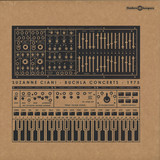
Finders Keepers invite you to witness the incredible first ever Buchla synthesiser concerts/demonstrations providing a distinctive feminine alternative to The Silver Apples Of The Moon if they had ever been presented in phonographic form. This is history in the remaking.
This spring Finders Keepers Records are proud to release an archival project that not only redefines musical history but boasts genuine claim to the overused buzzwords such as pioneering, maverick, experimental, groundbreaking and esoteric, while questioning social politics and the evolution of music technology as we've come to understand it. To describe this records as a game-changer is an understatement. This record represents a musical revolution, a scientific benchmark and a trophy in the cabinet of counter culture creativity. This record is a triumphant yardstick in the synthesiser space race and the untold story of the first woman on the proverbial moon. While pondering the early accolades of this record it's daunting to learn that this record was in fact not a record at all... It was a manifesto and a gateway to a new world, that somehow never quite opened. If the unfamiliar, modernistic, melodic, pulses, tones and harmonics found on this 1975 live presentation/grant application/educational demonstration had been placed in a phonographic context alongside the promoted work of Morton Subotnick, Walter Carlos or Tomita then the name Suzanne Ciani and her influence would have already radically changed the shape, sound and gender of our record collections. Hopefully there is still chance.
In short, Suzanne was a self-imposed twenty-year-old employee of the Buchla modular synthesiser company, San Francisco's neck and neck contender to New York's Moog. Buchla was run by a community of festival freaks and academic acid eaters whose roots in new age lifestyles and the reinvention of art and music replaced the business acumen enjoyed by its likeminded East Coasters. In the eyes of the consumer the creative refusal to adopt rudimentary facets like a piano keyboard controller rendered the Buchla synthesiser the more obscure stubborn sister of the synth marathon, steering these incredible units away from the mainstream into the homes and studios of free music aficionados, art house composers and die-hard revolutionaries. Championed and semi-showcased by composer Morton Subotnick on his albums The Bull and Silver Apples Of The Moon, Buchla's versatility began to open the minds of a new generation, but the high-end design features and no-compromise modus operandi was often confused with incompatibility and, in the pulsating shadow of Moog's marketing, the revolution would not be televised nor patronised. Suzanne Ciani, as one of the very few female composers on the frontline (and also providing the back line) did not lose faith.
These concerts' are the epitome of rare music technology historic documents, performed by a real musician whose skills and academic education in classical composition already outweighed her male synthesiser contemporaries of twice her age. At the very start of her fragile career these recordings are nothing short of sacrificial ode to her mentor and machine, sonic pickets of the revolution and love letters to an absolutely genuine vision of and 'alternative' musical future. In denouncing her own precocious polymathmatic past in a bid to persuade the world to sing from a new hymn sheet, Suzanne Ciani created a bi-product of never before heard music that would render the pigeon holes ambient' and futuristic' utterly inadequate. Providing nothing short of an entirely different feminine take on the experimental records' of Morton Subotnick and proving to a small, judgmental audience and jury the true versatility of one of the most radical and idiosyncratic musical instruments of the 20th century. These recordings have not been heard since then.
The importance of these genuinely lost pieces of electronic musics puzzle almost eclipses the glaring detail of Suzanne's gender as a distinct minority in an almost exclusively male dominated, faceless, coldly scientific landscape. Those familiar with Suzanne's work, a vast vault of previously unpublished non-records', will already know how the creative politics in her art of being' simultaneously reshaped the worlds of synth design, advertising and film composition before anyone had even dropped a stylus in her groove. Needless to say this record, finally commanding the archival format of choice, courtesy of the Ciani and Finders Keepers longstanding unison, was not the last first' with which this hugely important composer would gift society, and the future of a wide range of exciting evolving creative disciplines.
You have found a holy grail of electronic music and a female musical pioneer who was too proactive to take the trophies. With the light of Buchla and Ciani's initial flame Finders Keepers continues to take a torch through the vaults of this lesser-celebrated music legacy shining a beam on these non-records' that evaded the limelight for almost half a century. You can't write history when you are too busy making it. With fresh ink in the bottomless well, let's start at the beginning. Again. You, are invited!
"Nordvisor” is the inaugural chapter in a series of vinyl releases chronicling the musical essence of Nordvis and the artists whose passions fuel its fires. It focuses on analogue, folkish expressions – distilling the melancholy and beauty inherent in the wilderness, transforming them into music that resonates with the primal force of nature itself.
Born from a vision of collaborative creation, “Nordvisor” steps beyond the conventional compilation format that assembles rare and unreleased tracks. Each song is a bespoke creation, tailored specifically for this project, reflecting the communal ethos and artistic integrity of the participants.
“Nordvisor – Ett samlingsverk från Nordvis” will be released as a double LP, featuring a premium gatefold sleeve with Pantone elements, an 8page, 12-inch booklet, and multi-coloured vinyl.
This release is not merely a label sampler but a celebration of Nordvis’ heart and soul, forming a mosaic of connections between music, landscape, and the human experience. It features exclusive material from Örnatorpet, Bhleg, Blood and Sun, Hagathorn, Grift, Over the Voids, Fields of Mildew, JoDöden, Undantagsfolk, Prag 83, Sons of Crom, Draugurinn, Varde, Saiva, and Forndom.