2023 Repress Blue Vinyl
- Eagerly anticipated follow up to 2014 debut - number 7 in Mojo's best albums of the year.
- LP jacket is gloss laminate with front & back folds on the outside.The back panel is uncoated/matt varnish - 300 gsm card and 180g vinyl. Digital Download included.
- EU tour coming in April with Summer festivals later in 2017.
Sometimes it can take years to find your calling. Not so, for wanderer Julie Byrne, whose power of lyrical expression and melodic nous seems inborn. But often, what comes naturally demonstrates against speed. Julie's second album Not Even Happiness has taken time to evolve, but as it spans recollections of bustling roadside diners, the stars over the high desert, the aching weariness of change, the wildflowers on the coast of California and the irresolvable mysteries of love. Her new album archives a vivid world that would've otherwise been lost to the road and in doing so, Byrne exhibits her extraordinarily innate musicality.
In fact, some of the album's songs took two years of fine tuning to get where they needed to be. And if you were to ask her why the follow up to 2014's Rooms With Walls And Windows has taken so long, you'd only be greeted with a bemused smile as though it's the strangest question she's ever been asked, Writing comes from a natural process of change and growth. It took me up to this point to have the capacity to express my experience of the time in my life that these songs came from.'
Having counted Buffalo, Pittsburgh, Pennsylvania, Northampton, Massachusetts, Chicago, Illinois, Seattle, New Orleans as her home in recent years. For now, Julie has settled in New York City where she moonlights as a seasonal urban park ranger in Manhattan. Whether witnessing the Pacific Northwest for the first time ('Melting Grid'), the morning sky in Colorado after staying up through the night at a house party in the mountains of Boulder ('Natural Blue'), recording the passage of freight trains on the outskirts of Buffalo, New York ('Interlude'), or a journey fragrant with rose water, reading Frank O'Hara aloud from the passengers seat during a drive through the desert of Utah into the rainforest of Washington State ('All The Land Glimmered Beneath'), Not Even Happiness is Julie's beguilingly ode to the fringes of life.
Self-taught on the guitar after picking it up when her father became ill and could no longer play the instrument himself, Julie readily admits she can't read music and doesn't even listen to it all that much - the first vinyl she owned was indeed, her own. Recorded with producer Eric Littmann (Phantom Posse), Julie laid down the new album in her childhood home in western New York state and offers an altogether bigger picture to its predecessor through a wider, yet subtle, exploration of instruments and atmospherics, Not Even Happiness reveals an artist who has grown in confidence over time.
Byrne's debut album was released back in January 2014 on Chicago based DIY label Orindal after initially being as two separate cassettes releases. Rooms With Walls and Windows went onto become a true modern-day word of mouth success story (it would have to be for an artist who shuns all forms of social media) and ended the year being voted number 7 in Mojo magazine's best albums of the year, with the Huffington Post calling it "2014's Great American Album". A collection of hushed intimate front porch psych-folk songs, that unknowingly recalled the greats, but felt very much for our time. It saw her travel to Europe over two summers playing the Green Man festival and End Of The Road, as well as lesser trodden tour paths around Europe.
Julie Byrne will take the songs from Not Even Happiness (the first release on a new record label Basin Rock, based in the Lancashire / Yorkshire border town of Todmorden) on the road throughout 2017.
Cerca:its not over
teely Dan's gold-selling third studio album Pretzel Logic, charted at No. 8 on the Billboard 200 and restored the group's radio presence with the single "Rikki Don't Lose That Number," which became the biggest pop hit of their career and peaked at No. 4 on the Billboard Hot 100. The 1974 album was produced by Gary Katz and was written primarily by Walter Becker (bass) and bandleader Donald Fagen (vocals, keyboards). The album marked the beginning of Becker and Fagen's roles as Steely Dan's principal members.
They enlisted prominent Los Angeles-based studio musicians to record Pretzel Logic, but used them only for occasional overdubs, except for drums, where founding drummer Jim Hodder was reduced to a backing singer, replaced by Jim Gordon and Jeff Porcaro on the drum kit for all of the songs on the album. Steely Dan's Jeff "Skunk" Baxter played pedal steel guitar and hand drums.
Pretzel Logic has shorter songs and fewer instrumental jams than the group's 1973 album Countdown to Ecstasy. Steely Dan considered it the band's attempt at complete musical statements within the three-minute pop-song format. The album's music is characterized by harmonies, counter-melodies, and bop phrasing. It also relies often on straightforward pop influences. The syncopated piano line that opens "Rikki Don't Lose That Number" develops into a pop melody, and the title track transitions from a blues song to a jazzy chorus.
Other standout tracks include "Any Major Dude Will Tell You," a reflective ballad with lush harmonies, and "Parker's Band," a playful ode to the jazz great Charlie Parker.
Lyrically, the album explores themes of nostalgia, lost love, and the struggles of the creative process. In "Barrytown," the band reflects on their early days as struggling musicians, while in "Through with Buzz," they offer a biting critique of the music industry and the pressure to conform to commercial expectations.
One of the defining characteristics of Pretzel Logic is its use of unusual chord progressions and unexpected musical twists and turns. The band's intricate arrangements and skilled musicianship are on full display throughout the album.
Rolling Stone praised the album, calling Steely Dan the "most improbable hit-singles band to emerge in ages."
"When the band doesn't undulate to samba rhythms (as it did on 'Do It Again,' its first Top Ten single), it pushes itself to a full gallop (as it did on 'Reelin' in the Years,' its second). These two rhythmic preferences persist and sometimes intermingle, as on 'Rikki Don't Lose That Number,' which jumps in mid-chorus from 'Hernando's Hideaway' into 'Honky Tonk Women.' Great transition." — the review said.
AllMusic gave the album 5 stars, with reviewer Stephen Thomas Erlewine noting that "instead of relying on easy hooks, Walter Becker and Donald Fagen assembled their most complex and cynical set of songs to date." Dense with harmonics, countermelodies, and bop phrasing, Pretzel Logic is vibrant with unpredictable musical juxtapositions and snide, but very funny, wordplay.
The album's cover photo featuring a New York pretzel vendor was taken by Raeanne Rubenstein, a photographer of musicians and Hollywood celebrities. She shot the photo on the west side of Fifth Avenue and 79th Street, just above the 79th Street Transverse (the road through Central Park), at the park entrance called "Miners' Gate."
After a brief battle with esophageal cancer, Walter Becker died on September 3, 2017 at the age of 67. Steely Dan has sold more than 40 million albums worldwide and were inducted into the Rock and Roll Hall of Fame in March 2001. VH1 ranked Steely Dan at No. 82 on their list of the 100 Greatest Musical Artists of All Time. Rolling Stone ranked them No. 15 on its list of the 20 Greatest Duos of All Time.
This stereo UHQR reissue will be limited to 20,000 copies, with gold foil individually numbered jackets, housed in a premium slipcase with a wooden dowel spine.
Overall, Pretzel Logic is a standout album in Steely Dan's discography. The album's blend of catchy hooks, complex arrangements, and thoughtful lyrics has made it a favorite among fans of classic rock and pop music.
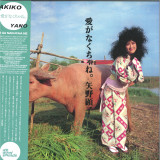
Wewantsounds continues its Akiko Yano series with the reissue of her cult classic 'Ai Ga Nakucha Ne' recorded in 1982 and co-produced by Ryuichi Sakamoto. Featuring Japan, the album includes additional recording in Tokyo with YMO and is mixed by Steve Nye and Shinichi Tanaka. It is the first time the album is released outside of Japan and the deluxe LP features the original artwork with gatefold sleeve and a lavish 24-page colour booklet with sessions photos by Pennie Smith (famous for The Clash's London Calling photo). The reissue also includes a new introduction by Mac DeMarco and a dual interview with Akiko Yano and Steve Jansen by journalist Paul Bowler. The audio remastered from the Original tapes by Mitsuo Koike.
'Ai Ga Nakucha Ne' ('there must be love' in Japanese) is Akiko Yano’s 6th studio album and follows 'Tadaima' in 1981. It continues exploring the electro-pop sound of its predecessor, hot on the heels of her touring with Yellow Magic Orchestra between 1979 and 1980. For this album, Akiko decided to try something new; she enrolled English fellow musicians Mick Karn, Steve Jansen and David Sylvian from Japan and booked the Air Studios in London under the supervision of engineer Steve Nye. Over a couple of weeks, the musicians created a fascinating soundscape full of catchy pop tunes, sung in both Japanese and English. Reminiscing about the studio sessions, Steve Jansen notes "Our music’s different but we maybe had a similar process of working. It was a great environment because the studio was a great place to work. It was very insular. There were four studios and there were always groups working in there 24/7."
The eleven tracks featured on "Ai Ga Nakucha Ne," mostly composed by Akiko - are a great collection of catchy tunes featuring her distinctive vocals and accompanied by the Japan musicians. As Akiko explains about the creative process, "I didn’t think to imitate or to make another Tin Drum. But I had Steve Jansen and Mick Karn, these excellent musicians. They were eager to understand the songs, then they put in everything they had. I knew the material was different from what they usually played in Japan. But it was a great experience working with them.
There are many highlights on the album, from the pop edge of "Aisuru Hito Yo" to the avant groove of "Another Wedding Song", each song is memorable and the album ends with the superb “Good Night” sung by Akiko and David Sylvian.
The original 1982 LP release included a 24 page booklet featuring many photos by Pennie Smith and Japanese photographer Bishin Jumonji. The booklet is reproduced in its entirety here and the album on top of contributions by Mac DeMarco, a longtime fan of the album, Akiko and Steve Jansen making this release of 'Ai Ga Nakucha Ne' a unique testament to Akiko Yano's greatness.
Pierre-Alain Dahan & Slim Pezin's Neo Rythmiques is an absolute KILLER Tele Music library classic from 1976. It's absolutely sensational throughout, all scorching, uptempo jazzy soul funk that Mr James Brown himself would've been envious of. This is serious business with breaks for days. French drummer, percussionist and composer Pierre-Alain Dahan was a key member of the legendary Arpadys, Disco & Co, Voyage, Tumblack (with Wally Badarou, Mallia et al!) and Jef Gilson Septet. With Neo Rhythmiques, he's joined by his eternal guitar colleague Slim Pezin (Voyage, Manu Dibango, Nino Ferrer), so you know this Be With reissue is fundamentally vital.
Opener "Soul Car" is a swaggering, horn-drenched jazz-funk beast whilst the slick JBs funk of "Happy Penalty" is just plain irresistible. Definitely influenced by American funk flavours, it stands alone on its own right as a brilliant piece of music, no question about that. The blazing "Kuzi-Kuza" is again horn-fuelled but has a more exotic, Latino feel, all loose grooves and bastard blues with funky organ and shredding guitars. The stomping, proto-disco of "Mercy Boa" is a guitar-sizzled Bohannon-esque hypno-groove for adventurous dance floors the world over. Outstanding. And if all that wasn't enough from one half of a 70s French library LP, the A side ends with the monumental, stratospheric "Slim Bertha"! I mean, what can you even say about this absolute monster?! Slo-motion, deep drama funk breaks with jazzy guitar and gleaming percussion. Just sensational.
Side B opens with "Country + Country", a rather forgettable slice of piano driven bluegrass funk (?!) Aaaaannyway, "Super Airship" follows and is a driving fuzz-guitar psych-rock workout of the highest order. We're back on track now. The brilliantly titled "Electronic Mutation" is a total highlight, the funk most definitely returning and, indeed, strong in this one with its deep clean breaks (with some particularly ace hi-hats), echoey effects and funky clavs. "Africa Semper" follows, all funky percussion, trippy echo and distorted, psychy guitar licks. To close out the set, "Neo Rythmiques 1 and 2" form a great salvo of top-tier, percussion-heavy synthy-funk-fusion. For our money, the bugged-out echoey space-soul of "N° 2" just about edges it.
One of the very best French drummers ever, Pierre-Alain Dahan began his career at the Blue Note in Paris with Sonny Stitt, Dexter Gordon and Daniel Humair. Some start, eh?! He also participated in the recording of Serge Gainsbourg's cult album 'La Ballade de Melody Nelson' before going on to make countless KILLER library funk records and be a key member - alongside his partner here, Slim Pezin - in the legendary Arpadys, Disco & Co and Voyage. Dahan also featured in Tumblack (with Wally Badarou, Sauveur Mallia et al) and Jef Gilson Septet (alongside Henri Texier), whilst the CCCP Pezin backed, among others, Manu Dibango and Nino Ferrer. Some pedigree.
The audio for Neo Rythmiques has been remastered by Be With regular Simon Francis, ensuring this release sounds better than ever. Cicely Balston's expert skills have made sure nothing is lost in the cut whilst the original, iconic Tele Music house sleeve has been restored here at Be With HQ as the finishing touch to this long overdue re-issue.
- A1: Rythmiques N° 4 2 03
- A2: Rythmiques N° 5 2 03
- A3: Rythmiques N° 6 2 10
- A4: Rythmiques N° 7 1 48
- A5: Rythmiques N° 8 3 50
- A6: Rythmiques N° 9 2 45
- A7: Piano + Piano 2 30
- B1: Auto Rythmiques 3 45
- B2: Rythmiques N° 10 2 00
- B3: Rythmiques N° 11 2 10
- B4: Océan Horizon 2 45
- B5: Super Carrousel 1 40
- B6: Gay Shopping 2 10
- B7: Suspense N° 1 3 50
Part of Tele Music Reissue Campaign, 2023 first time reissue, 140g vinyl
Wow! Pierre-Alain Dahan & Mat Camison's Rythmiques is another iconic release in the hallowed Tele Music catalogue. First appearing in 1973, it features tense funk, blunted jazz and heavy breaks all the way. Considered the rightful sequel to Continental Pop Sound, it's a vital album for producers and DJs; and you can probably guess that RHYTHM is central to the record's presentation. And you can really taste what's rhythm, to borrow a phrase. French drummer, percussionist and composer Pierre-Alain Dahan was a key member of the legendary Arpadys, Disco & Co, Voyage, Tumblack (with Wally Badarou, Mallia et al!) and Jef Gilson Septet whilst his partner here, Mat Camison, was a pioneering synth LORD. So, you know this Be With reissue is absolutely crucial.
The album picks up from where Continental Pop Sound left us, opening with the tense, stabbing thriller-funk of "Rythmiques N° 4". The dubbier "Rythmiques N° 5" is no less electric and definitely has a spacey air of wonky funk about it with the slightly off-kilter rolling piano. "Rythmiques N° 6" is more percussive-focussed with a brilliantly hypnotic opening that really stretches the drama out. “Rythmique N° 7” alternates between fast-paced, skipping drums and slo-mo funk, always with the clavinet high up in the mix. Wicked. The dope jazz of “Rythmique N° 8” truly mesmerises with licks of electric piano, funky bass flourishes and varied percussion. “Rythmique N° 9” has great, sloppy-yet-hard intro drums which sound like something Daft Punk could've pilfered circa Human After All, punctuated by a guitar rock refrain that repeats til the end but is never overdone. The A-Side closes with the beautiful, melancholic "Piano + Piano", a reflective jazzy piano track which could easily open a wide-ranging set this autumn and many after it. Stunning.
Opening Side B, "Auto Rythmiques" is a hectic yet compelling funk workout but it's all about the frankly devastating breakbeats on “Rythmiques N° 10 & N° 11” with effortlessly twisted funk bass lines over open drum breaks and enough tension and rhythmic switch-ups to keep your neck-snapping and your mind lifted. Downright essential. Taking leave from the heavy funk break action, the pastoral "Océan Horizon" is perhaps an unfairly overlooked highlight. A gorgeous, softly-aquatic, ambient gem, it's gently percussive with warm, floaty keys decorating the mellow rhythmic bed. The mercifully brief "Super Carrousel" is harmless fun-fair-funk but perhaps best skipped over whilst the intriguingly titled "Gay Shopping" is another throwaway exercise in inexcusable jaunt whilst. To close out this memorable set, thankfully, we're left with "Suspense N° 1" to get us back on course with its unsurprisingly tense mix of urgent stringed instruments that flirt with rhythm and melody yet the longer the track goes on. Deep.
One of the very best French drummers ever, Pierre-Alain Dahan began his career at the Blue Note in Paris with Sonny Stitt, Dexter Gordon and Daniel Humair. Some start, eh?! He also participated in the recording of Serge Gainsbourg's cult album 'La Ballade de Melody Nelson' before going on to make countless KILLER library funk records and be a key member in the legendary Arpadys, Disco & Co, Voyage, Tumblack (with Wally Badarou, Sauveur Mallia et al), Jef Gilson Septet (alongside Henri Texier) and many more. Some pedigree.
The audio for Rythmiques has been remastered by Be With regular Simon Francis, ensuring this release sounds better than ever. Cicely Balston's expert skills have made sure nothing is lost in the cut whilst the original, iconic Tele Music house sleeve has been restored here at Be With HQ as the finishing touch to this long overdue re-issue.
Its not always about super rares, we got to cover those LP tracks as well. How this never made it onto a 45 ill never know. Michael Henderson's brilliant 'Let Love Enter' has always been an underground classic and is about to get a fire lit under it once again, simply the finest Brazilian influenced soul Jazz fusion.
Michael's bass playing, Vocals and production are all over modern American black music, having played for Miles Davis. Norman Connors, Marvin Gaye, Stevie Wonder to name just a few, his influence is huge right through the industry as well being a million selling artist himself. You can still here his bass sampled in many a Hip-Hop track to this day.
- A1: Captain Parade 3 25
- A2: Mountain Echoes 4 09
- A3: Discowboy 2 42
- A4: Tombola Time 1 2 10
- A5: Tombola Time 2 2 08
- A6: Space Fiction 1 21
- A7: Mountain Trumpet 0 58
- A8: Tambours Parade 1 42
- B1: Deer Forest 4 32
- B2: Charly Guitare 3 01
- B3: Magic Lake 1 2 45
- B4: Magic Lake 2 2 45
- B5: Pop Fiction 1 43
- B6: Damnation Space 2 38
Pierre Dutour's infamous Top Fiction is the epitome of a 5-tracker. Coming to light in 1979 on Tele Music, its collection of environmental themes are *all astounding*. We're talking all-time heavy hitters, here. They come recommended as tracks you'd choose to elegantly elevate deep selector sets or mixes.
Skip the irritating whistle-laced marching-band funk of "Captain Parade" and head straight to the glistening synths and proud horns of beatless ambient wonder "Mountain Echoes". Arguably worth the price of admission alone. It's that good. The sci-fi atmospherics of "Space Fiction" are definitely sampleable whilst the proud horns of "Mountain Trumpet" definitely contain blasts that could be of creative use. "Tambours Parade" is more marching-band funk, only this time the drums go hard and there's a lot to like about this one.
Truly, it's all about the B-Side. A real B-Side for the ages, in fairness. It opens with the gorgeous "Deer Forest". It's one of the most beautiful songs you'll ever hear. Like something off Brian Bennett's Voyage, it rides dreamily melodic synths, and comes on, as one fan claimed "like something Angelo Badalamenti would have co-written with Final Fantasy composer, ???? Nobuo Uematsu". It's jaw-dropping. Be instantly beguiled by the deep eerie nostalgia and pretty delicate piano of "Magic Lake I" and the whistling-synth-augmented "Magic Lake II". The almost-title-track "Pop Fiction" is another hidden gem, containing dreamy, glistening arpeggios that are just begging to be sampled with a heavy knocking beat behind it. The set closes with "Damnation Space", 2 minutes of spooky Musique concrète.
So, 5 absolutely incredible tracks and 2-3 good ones. An excellent ratio for a library album, I think we can all agree. Trust us when we say that the heavy hitters are just absolute gold, rendering this one an essential, buy-on-sight purchase. Go listen and discover for yourselves...
The audio for Top Fiction has been remastered by Be With regular Simon Francis, ensuring this divisive release sounds better than ever. Cicely Balston's expert skills have made sure nothing is lost in the cut whilst the original space-age sleeve has been restored here at Be With HQ as the finishing touch to this long overdue re-issue.
During the latter half of the seventies very few came close to emulating the success of the productions of Joe Gibbs and Errol Thompson. 'The Mighty Two' took the greatest of Kingston's musical and technical innovations and transformed the cutting edge into a commercial proposition that crossed over to the rest of the world. 'Under Heavy Manners'' was an essential purchase as well as a defining statement on the sombre mood of the times in the year that two sevens clash and forty years after its original release, the raw reality of 'Under Heavy Manners' continues to hit home.
- A1: Manifest
- A2: Everything Was Set On Fire
- A3: Doba Extazy
- A4: Plague Remedy
- A5: Zmrzli
- A6: Odovzdat
- A7: Dialogicke Vyvolavania
- A8: Goddess Disappears In The Sky
- A9: Puhpowee
- A10: Artemisia
- A11: It Felt Like I Was Supposed To Follow It
- A12: Septat
- A13: Otvorit Zilu
- A14: Doba Odriekania
- A15: Devat Mien
- A16: Ked Si Pan, Zaplat Dzban
- A17: Pohar Viny
- A18: Crash It To Dust
- A19: The Catharsis Of Human Sorrow
- A20: Death Comes When You Stop Counting On It
- A21: A Goddess Comes From Within The Earth
- A22: Chytat Sa
- A23: 13Th Month
In 2020, electronic musician Nina Pixel was offered a track on a compilation album of songs from the Liptov region. What started as a rearrangement of a single folk song eventually grew in scope and size, eventually becoming a series of releases. Titled Ancestral Archaeology, the series counts two self-released EPs, an audiovisual show in co-operation with Adrián Kriška, and now, after two years, a double LP published by Weltschmerzen. In this definitive form of an album, Ancestral Archaeology reveals itself as a musical reimagination of traditional historical Slovak culture at large.
Nina Pixel averts the perils of lapsing into inauthentic fakelore by building her music with, rather than on, the ethnographic riches of Slovakia. With the eagerness of a genuine archeological prospector, Ancestral Archaeology invokes the always present but seldom perceived linchpins of folklore culture: the desperate clinging to the memory of pre-Christian paganism and witchcraft, songs with narratives of beautiful innate wyrdness that is utterly unfit for mass culture, and superstition as the most serious longing for the balance between sense and irrationality.
If we acknowledge the truism of folklore as the shared way of expression in rural society, the techno music on Ancestral Archeology proposes that, in the urban society of ours, this role is served by raves. The argument isn't as much declared as it's implied // in music and in the spoken-word lyrics that are rife with historical and contemporary sources. An 18th-century recipe by the writer and priest Juraj Fándly proposes snorting the grounded flowers of the medicinal weed Valerian as a way of curing bad vision. "It is a proven remedy!" we are repeatedly assured, and it's not hard imagining Fándly and his parishioners, strung out on Valerian, moving almost involuntarily to the rhythms of their era just as we can move to Ancestral Archeology.
Nina Pixel is a Slovak music artist based in Berlin. Lyrics are inspired by Slovak folklore traditions, songs and shared beliefs.
Manifestation tools: cello, overtone flute koncovka, fujara, gong, metal bowls, sheep bell, field recordings of Slovak forests, Andreas's tom and various drum machines.
- A1: Anna Gréta - Home (From The Album: Nightjar In The Northern Sky)
- A2: Cécile Verny Quartet - As Soon As They Have All Aligned (From The Album: Fear & Faith)
- A3: Dominique Fils-Aimé - Birds (From The Album: Fear & Faith)
- A4: Jamie Woon - Sharpness (From The Album: Making Time)
- B1: Friends'n Fellow - Time (From The Album: Lady)
- B2: Imaginary Future - Hey Jude (From The Album: Yesterday)
- B3: Josefine Cronholm - Blackbird (From The Album: Ember)
- C1: Martin Lechner - The Masquerade Is Over (From The Album: Somethin' Old & Somethin' New - Somethin' Else)
- C2: Thorsten Goods - Work Song (From The Album: Thank You Baby!)
- C3: Wolfgang Bernreuther - Can't Get Rid Of (From The Album: Still A Fool)
- D1: Vanessa Fernandez - Here But I'm Gone (From The Album: Use Me)
- D2: Julia Werup - The Thrill Is Gone (From The Album: The Thrill Of Loving You)
- D3: Mike Andersen - Over You (From The Album: Echoes)
There are different ways to celebrate an anniversary. We can look back and reflect on where we've been and how far we've come. Or we can look forward towards future possibilities. Alternatively, we can simply pause for a moment and be present - right here, right now. Rather like we are aware and mindful of what is happening at this very moment when we're enjoying superb music, excellently recorded and played.
That's how Clearaudio is celebrating its 45th anniversary. To mark the occasion, Clearaudio are delighted to present an album of music that embodies their passion for perfection, for nuanced and detailed sound, and for an intimate marriage of creativity and technical finesse. In other words, an album that reflects the key principles by Clearaudio.
"Take the best, make it better - only then it is just good enough." This well-known quote is as valid today as it was 45 years ago, and has inspired a host of colleagues and collaborators along the way. Ever since the release of Delta and Sigma speakers in 1978 and the development of the first moving coil cartridges, not a day has passed when Clearaudio didn't strive to set new standards for higher fidelity. This mindset continues to underpin their work to this day.
No matter where you've come from or where you are going, if your heart beats to the drum of truly authentic sound, then you'll find Clearaudio spirit, will and drive in every single one of their products - from the most towering turntable to the smallest cable.
While some creators may be content with merely looking closely, Clearaudio has always looked and listened closely. Very closely - and at both ends of the spectrum, from top-quality record engineering to excellent playback. So the early stages of every Clearaudio musical recording begin with questions like: "Does it sound exactly like in a concert hall?" and "Does the music feel as was intended when it was written and composed?"
In addition to their own recordings, a number of their favourite legendary productions from Deutsche Grammophon have also found their way onto this album. So why not take a pause, "take five," and enjoy these moments of exceptional music, lovingly produced? And join Clearaudio in celebrating 45 years of loving music!
Audiophile reviews rave about saxophone master John Coltrane's immortal Impulse! records, A Love Supreme (1964) and Ballads (1963). In fact, jazz critics have lauded A Love Supreme as Coltrane's most important recording. The rave reviews which appeared in the magazines Downbeat, Jazz Hot, Jazz Podium and Swing-journal reflected this: critics all over the world, in America, Europe and Japan recognized that Coltrane's deep religious belief had influenced both his approach to life and his music-making.
You're about to experience A Love Supreme at its peak of vinyl perfection — in UHQR format on Clarity Vinyl, with the added bonus of a double 45 RPM cut by Ryan K. Smith at Sterling Sound. Ryan's cut has his characteristic clarity and transparency all set against Quality Record Pressing's usual noiseless backgrounds on 200-gram flawless records. Each UHQR will be packaged in a deluxe box and will include a booklet detailing the entire process of making a UHQR along with a hand-signed certificate of inspection. This will be a truly deluxe, collectible product.
For this 45 RPM 2LP edition you'll also receive a 12" x 12" 12-page booklet featuring liner notes by Ashley Kahn and images from the Coltrane home.
The original master tape is available but it's not in the best shape. This LP was cut from a flat tape copy made by Rudy Van Gelder and used for cutting in the UK in April of 1965. Of course, the original recording was in December '64, so only a handful of months later. This tape was discovered at Abbey Road and had been untouched between 1965 and 2002. So while the original tape is available and while we would always opt for the original whenever we can, in this case this copy was the better choice as the tape has incurred less overall wear and sounds much better than the original.
A Love Supreme was Coltrane's pinnacle studio outing that at once compiled all of his innovations from his past, spoke of his current deep spirituality, and also gave a glimpse into the next two and a half years (sadly, those would be his last). Recorded at the end of 1964, Trane's classic quartet of Elvin Jones, McCoy Tyner, and Jimmy Garrison stepped in and created one of the most thought-provoking albums of their relationship.
The album not only enabled Coltrane to express himself with great intensity but also lent him the necessary inner peace to conceive a work of almost 40 minutes in length and to lead his quartet along the same path as himself.
When picturing the German techno scene, one likely imagines the concrete monoliths of its capital city Berlin rather than the vineyards and valleys of the enchanting city of Stuttgart in the southwest. But small cities lack the oversaturation and noise of the metropolis, allowing them to develop their own inspired and distinctive subcultural visions. Stuttgart’s David Löhlein exemplifies this potential, manifesting a singular style of sight and sound through his Vision Ektase project and residency at Lehmann Club. Now, Löhlein’s warm-blooded techno is slinking, slithering and seducing its way through BNR, with the upcoming Hotel Pool EP release.
There’s no hesitation before plunging into the EP’s titular track, with its rushing fingered basslines and rolling polyrhythms. Löhlein cites solo travels in Columbia as the source of his Latin influences, and one hears them throughout “Hotel Pool” in vocal and percussive samples. Elements more commonly found in Latin and tribal house feel uncommonly fresh once Löhlein recontextualizes them within a 144 bpm techno foundation. The words “groovy” and “sexy” are usually reserved for the stuff of Buddha Bar compilations, but “Hotel Pool” is exhilarating because it serves both of the former and none of the latter.
A stream of hedonism flows beneath all of the four-tracker, but if the opener is erotic, A2 “La Piscina” is psychedelic. The bass flutters like a mescaline come-up, as infinite loops of chattering voices and deep bamboo pipe notes mesmerize. Again, Löhlein takes certain genre tropes - in this case from psytrance - and transposes them through his own stylistic signature with thrilling results. Ask Löhlein if he likes psytrance and the answer might be “Yes, when it’s techno.”
Leading the flip, “Cuando Vengas” heats up around a dark and sticky loop of ambiguous, organic origin. Here Löhlein’s masterful sample and drum programming is clearly on display, with vocal chops and subtle rhythmic variations leading the dancefloor to shivering bliss. The EP closes with “I Just Want,” a sparse, cold, and bitcrushed stalker of a track that seems to answer Baudrillard’s famed question “What are you doing after the orgy?” That the Hotel Pool EP’s wild romp ends in the Berlin oeuvre perhaps proves the city’s primacy in the German techno scene, but after a few listens one begins to wonder what rare pleasures they’ve been missing in David Löhlein’s Stuttgart.
- Theres A Fish On Top Of Shandon Swears Hes Elvis
- The Glee Club
- Lorry Across The Lee
- Na- The Woodcutter Song
- Fishing For Compliments
- What Happened Your Leg
- Another Spark
- Beethoven - Day Tripper
- Knocknaheeny Shuffle
- The Glee Club - Jumping Joley
- Nun Attax - White Cortina
- Often
- Aunt Nelly
- Are You A Horse
- Elephants For Fun Anf Profit
Next on Allchival is a compilation tracing the musical pursuits of Cork’s (via Belfast) Finbarr Donnelly and his trilogy of bands – Nun Attax, Five Go Down To The Sea? and Beethoven - before his untimely death by drowning in London’s Hyde Park in 1989. From the post punk of the first band via the discordant indie of the second to the chaos of Beethoven’s short lived existence this compilation shines some light on one of Irelands most enigmatic frontmen over a ten year period. Released on 18th April Record Store Day on a 15 track LP and an expanded CD version with 24 tracks. Featuring tracks released on Setanta, Creation, Kabuki & Abstract plus previously unreleased Fanning Sessions, the LP also comes with a fanzine with detailed liner notes and ephemera.
Nun Attax, formed in the late 70s, are synonymous with the Downtown Kampus at Cork’s Arcadia Ballroom, the lynchpin of the city’s post-punk music scene. Their live performances being the stuff of Southern legend - unforgettable, incendiary events, examples of which can be heard on the tracks here White Cortina, Reekus Sunfare. In the early-80s the band changed its name to Five Go Down To the Sea? and recorded the Knot A Fish EP 7’’ for London–Irish label Kabuki Records and soon after the band left recession-ridden Cork for the UK capital.
Squatting south of the River, working on building sites and collecting welfare under several aliases recording and gigs were sporadic but by 1984 they had hooked into the early Creation scene, and played gigs at Alan McGee’s Living Room club. Working with The Mekons Jon Langford they release The Glee Club on Edward Christie’s Abstract Sounds label. Following it up with the last of their three releases as Five..on Creation itself the band’s chaotic existence led to its demise only re-emerging in 1988 as Beethoven. Down to two original members – Donnelly and guitarist Ricky Dineen – plus two new additions their only release – a 12” on the fledgling Setanta records – features a cover of “Day Tripper” backed with original tracks and was NME’s Single of the Week in the summer of ‘89 when such things carried weight. The planned second single doesn’t go ahead after Donnelly’s death.
Originally released in 1993, this collaboration between Jeff Hypp and Marnix B became an instant hit all over the world on the Music Man label with its anthemic house sound. Not only on the mainland but also upcoming stars John Digweed and Sasha picked up the Parrot Trance Mix (featured on the B-side of the release) for the US version of the first Northern Exposure mix compilation released by Ministry Of Sound. Later it was also released on Astralwerks in the US, the label that also released The Future Sound Of London in the US. An absolute must-have classic in your collection.
The issue was always: How could I transport my work as a producer and beatmaker on to a stage? How can something, that is happening behind locked doors in the studio, emerge into a live experience?" With this vivacious live quartet, he has found his answer.
Songs from a productive solo career spanning a period of over 10 years, Sepalot has a wide variety of songs to pick and choose from. Even in the live set up, his ove for electronic music remains unaffected and the subtle influence of Hip Hop is un- deniable. Despite this being the initial state of the project, a distinctive sound has evolved from jamming together in dark rehearsal rooms. The different characters compliment each other like a puzzle on stage, though Sepalot's part as producer and svengali is undisputable.
FABIAN FU?SS on the drums - longtime partner on the drum set and the voice behind Sepalot's unmistakable radio hit "Rainbows". ANGELA AUX on the bass and mostly the voice of the quartet is a writer and solo artist in his own right. Having released albums on Millaphone his roots are undeniably in hip hop with a heavy tinge of folk. MATTHIAS LINDERMAYR on the trumpet, who originated from a family of musicians, is highly decorated jazz virtuoso. His very own releases grace modern jazz specialist label Enja Records. ... and finally SEPALOT, bringing them together and making them more than the sum of its parts.
The electronic beats, the pulsating bass, Sepalot's enthusiasm for ambient sound design - all this remains unchanged and is garnished with the element of jazz. A unique, unequalled sound that strives for higher ideals and has immense international potential.
- A1: We Crossed The Atlantic
- A2: The Love You Bring
- A3: When I Was Howard Hughes
- A4: Failed Adventure
- B1: Stars (Twilight Mix)
- B2: Grand Central
- B3: International Exiles
- B4: Merry-Go-Round
- B5: Radios Appear
- C1: City Terminus
- C2: Min Min Light
- C3: Oregon Snow
- C4: Cherry Lake
- C5: Blackout
- D1: Please Don’t Say Goodbye
- D2: Museum Station
- D3: Blue Train
- D4: You Were There
- D5: Something Better Beginning
Selected Songs 1997-2003 compiles some of the finest moments in the recording history of Hydroplane, the Melbourne-based indie-pop three-piece that operated alongside The Cat’s Miaow through the second half of the nineties. It’s the third release in what feels, now, like a loosely planned series by World Of Echo, documenting the music made by this group of friends in Melbourne sharehouses (The Cat’s Miaow’s Songs ’94-’98, 2022), or in the case of The Shapiros (Gone By Fall, 2023), while traversing the International Pop Underground.
Hydroplane would be familiar to anyone already following these breadcrumb trails – Andrew Withycombe, Bart Cummings and Kerrie Bolton were the group’s core, all members of The Cat’s Miaow. With Cat’s Miaow drummer Cameron Smith itinerant, having moved to London, the trio used this opportunity to expand their music. It’s a subtle, but important shift. If The Cat’s Miaow was about the perfect, minimalist, two-minute pop song, Hydroplane’s music was far more open-ended, embracing the loops and drones, sampled house-y shuffle beats, the burbling of a Roland Jupiter-4 synth, all of which the trio joined, effortlessly, to their endless capacity for moving, elegant melodicism.
They may have only planned to release one seven-inch single, but the sound Hydroplane created was so bewitching, so compelling, that the project’s lifespan ran for around half a decade, and they ended up releasing three albums, including a self-titled debut recently reissued by Efficient Space, and seven singles. There are all kinds of compelling things happening in the music compiled here – the hazy repetition of the gentler side of Krautrock is in here, somewhere, which also suggests Stereolab at their most intimate and disarmed; the gently drifting guitars, gauzy and oneiric, set the songs adrift and floating, each one lost in its own imagined, distracted world. Songs like “The Love You Bring” set indistinct tonal floats across dance rhythms, in a way not quite heard since My Bloody Valentine’s “Instrumental” – but with the added gift of Bolton’s gorgeous voice.
This loose coalition with dance music, and the quiet experimentalism at the heart of Hydroplane, also gestures towards peers like Hood, Acetate Zero and Other People’s Children, and releases on renegade labels like Wurlitzer Jukebox and Enraptured. Like those groups and labels, The Cat’s Miaow were reconciling independent pop music’s past – sweet melody and melancholy, chiming and droning guitars – with the futures promised by DIY electronics and nascent digitalia, the interface of indie and IDM that led to some of the underground’s most blissful, texturally swoonsome music. All that is here, but also, the poise of the melodies is pure Cat’s Miaow, though, with Bolton’s voice sailing, pacifically, over some of the most pared-down, gorgeous music made during their decade.
It was a time, too, when such music could make waves – “We Crossed The Atlantic”, one of their early singles, was picked up by John Peel, who played it repeatedly on his legendary radio show, the song reaching #13 on his 1997 Festive 50. That the song itself was a cover of a tune by 1960s Australian beatnik-pop-poet Pip Proud felt even more perfect – a group of outsiders paying tribute to another outsider, played on the radio one of the few broadcasters brave and human enough to take a chance on this music. But it was a time where everything was up for grabs, and genres were flowing into each other: folk songs went drone; indie re-discovered noise; ambient pop floated, again, out onto the dancefloor. And while they may have been sequestered away in Melbourne, Australia, Hydroplane felt core to that scene, a quietly driving force.
Compiling material from across their brief but mercurial career, this double album perfectly captures the magic and mystery of Hydroplane’s dreamlike, perfect pop songs.
Featuring contributions from Brittany Howard, Daniel Tashian (Kacey Musgraves, Demi Lovato), Julien Baker + more. Since moving to Nashville to start their music career in 2012, Becca Mancari has been lauded for their dextrous songwriting and prodigious guitar playing. Their sophomore album The Greatest Part, released in 2020, was an indie rock opus that garnered acclaim from The New York Times, NPR, and more. After its release, however, Mancari was despairing. An illness in their family, coupled with a realization that their alcohol dependency had become untenable, led Mancari to begin the hard work of taking ownership of their existence by mending broken relationships and investing in their mental health. "I didn't realize it then, but looking back, I was a passenger in my own life," Mancari says. The transformative period of self-reckoning was the catalyst that ultimately steered Mancari to write and produce their triumphant new album, Left Hand. After a disheartening studio session with an outside producer, Becca became convinced that they were capable of rendering their vision independently. Close friend and musical ally Juan Solorzano, who has played on all of Mancari's albums since the debut of Good Woman in 2017, joined them in the studio to co-produce the majority of the record. In addition, Daniel Tashian (Kacey Musgraves, Demi Lovato) co-wrote and co-produced the song "Don't Close Your Eyes," encouraging Mancari to track every instrument on the initial demos. As much as self-producing this album was an act of resilience and growth in one's own craft, Mancari brought trusted friends like Brittany Howard, who they play with in Bermuda Triangle, Julien Baker and Zac Farro into the process. Insecurities that had dogged Mancari since childhood couldn't weather the force of energy in that studio, where they executed decisions with newfound certainty. The title track, "Left Hand," is named for the Mancari family crest. After a lifetime spent feeling like they didn't belong, Mancari unlocked a perfect metaphor in the crest: "In many cultures children born with a dominant left hand were taught not to use that hand, and were told that using the right hand was `normal' and `correct.' Similarly, queer children are often times told that it's not `normal' for them to love who they love and that they need to `change.'" On Left Hand, Mancari offers the listener a collection of songs that should be played in moments when we are in need of reassurance and encouragement. No song exemplifies this better than the ebullient track "Over and Over," which is a reminder to friends that happiness doesn't need to be fleeting. "I wanted to write a queer pop song that has meat on its bones," they say. Inspired by one of many reckless and joyful hangs with dear friends in Nashville, the enlivening pop song makes a promise to them, and to the greater community Mancari embraces on this album. "There is something to the feeling/ Head hanging out of the window/ Being ok that we don't know," sung on the chorus over a beat replete with congas and shakers. What follows is a promise to anyone who ever feels like the greatest moments of their life are disappearing in the rearview: "We can have it like we used to, over and over and over and over again." For Fans of boygenius, Phoebe Bridgers, Julien Baker, Julia Jacklin, Caroline Rose, Miya Folick, Molly Burch, Widowspeak.
Pianist and composer Harold López-Nussa has been steadily building a global following in jazz and beyond over the past two decades since winning the prestigious Montreux Jazz Piano Competition in 2005. López-Nussa has released nine acclaimed albums and captivated audiences across the world with his thrilling performances at esteemed venues and jazz festivals. Born into a musical family in Havana, Cuba, his music reflects the full range and richness of the Cuban musical tradition with its distinctive combination of classical, folkloric, and popular elements, as well as its embrace of improvisation. With the forthcoming release of his Blue Note Records debut Timba a la Americana, López-Nussa reaches a career milestone with a vibrant album teeming with joy and pathos that was inspired by the pianist’s recent decision to leave his Cuban homeland and begin a new life in France. Produced by Michael League (Snarky Puppy), Timba a la Americana presents 10 dynamic new compositions and features the harmonica virtuoso Grégoire Maret, Luques Curtis on bass, Bárbaro “Machito” Crespo on congas, and Harold’s brother Ruy Adrián López-Nussa on drums.
Sam Barker returns with his first solo EP since 2020's BARKER002, this time on Oslo's Smalltown Supersound. While Barker's previous releases (2018's Debiasing EP, 2019's Utility LP) explored the possibilities of kickless dancefloor tracks, Unfixed sees him inverting the musical equation and exploring both the variability and sonic possibilities of a kick-drum - though the final result is not a concept EP. The four tracks emerged from a session that started out as both a technical study in bass drum design and cognition, specifically problem of "functional fixedness", which describes a mental block that restricts the use of an object to its traditional application. Exploring the so-called "generic parts technique", whereby an object is broken down into its component parts to help reveal novel solutions, the typical bass drum elements of waveform, transient, and noise were re-combined through modular synthesis to become fluid, expressive and dynamic. However, what began as a rule-based experiment was overtaken by a more organic music making process without specific conceptual constraints, which allowed the music to live and breathe. Tracks were started and then left unfinished, only to be approached again and again over lengthy intervals. Stylistically the result a mix of raw, stuttering, psychedelic growl, kosmische techno, and infinite iterations and of a single groove. In this regard, Unfixed sees Barker not only deeply invested in musical experimentation but also exploring his own biases in both composition and sound design. The result is, once again, a sound and musical framework all of his own.
2024 BLACK VINYL REPRESS.
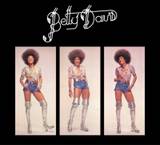
One can hardly imagine the genre-busting, culture-crossing musical magic of Outkast, Prince, Erykah Badu, Rick James, The Roots, or even the early Red Hot Chili Peppers without the influence of R&B pioneer Betty Davis. Her style of raw and revelatory punk-funk defies any notions that women can’t be visionaries in the worlds of rock and pop. In recent years, rappers from Ice Cube to Talib Kweli to Ludacris have rhymed over her intensely strong but sensual music.
There is one testimonial about Betty Davis that is universal: she was a woman ahead of her time. In our contemporary moment, this may not be as self-evident as it was thirty years ago – we live in an age that’s been profoundly changed by flamboyant flaunting of female sexuality: from Parlet to Madonna, Lil Kim to Kelis. Yet, back in 1973 when Betty Davis first showed up in her silver go-go boots, dazzling smile and towering Afro, who could you possibly have compared her to? Marva Whitney had the voice but not the independence. Labelle wouldn’t get sexy with their “Lady Marmalade” for another year while Millie Jackson wasn’t “Feelin’ Bitchy” until 1977. Even Tina Turner, the most obvious predecessor to Betty’s fierce style wasn’t completely out of Ike’s shadow until later in the decade.
Ms. Davis’s unique story, still sadly mostly unknown, is unlike any other in popular music. Betty wrote the song “Uptown” for the Chambers Brothers before marrying Miles Davis in the late ‘60s, influencing him with psychedelic rock, and introducing him to Jimi Hendrix — personally inspiring the classic album ’Bitches Brew.’
But her songwriting ability was way ahead of its time as well. Betty not only wrote every song she ever recorded and produced every album after her first, but the young woman penned the tunes that got The Commodores signed to Motown. The Detroit label soon came calling, pitching a Motown songwriting deal, which Betty turned down. Motown wanted to own everything. Heading to the UK, Marc Bolan of T. Rex urged the creative dynamo to start writing for herself. A common thread throughout Betty’s career would be her unbending Do-It-Yourself ethic, which made her quickly turn down anyone who didn’t fit with the vision. She would eventually say no to Eric Clapton as her album producer, seeing him as too banal.
In 1973, Davis would finally kick off her cosmic career with an amazingly progressive hard funk and sweet soul self-titled debut. Davis showcased her fiercely unique talent and features such gems as “If I’m In Luck I Might Get Picked Up” and “Game Is My Middle Name.” The album Betty Davis was recorded with Sly & The Family Stone’s rhythm section, sharply produced by Sly Stone drummer Greg Errico, and featured backing vocals from Sylvester and the Pointer Sisters.