Now here's a cover album with a few interesting angles to it -
First there is the fact that Matthews Southern Comfort have a, let's call it:
Woodstock history - Well over 6 million spotify streams confirm the
legendary status of Matthews Southern Comfort's global hit
And of course: although this collection is called the Woodstock Album, the song
itself is not featured on this album as it was written post festival and therefor
never performed at Mac Yasgur's farm.
In 2022 MSC were looking for a way to reactivate the band as a viable and touring
unit again. The concept they came up with was a Matthews Southern Comfort reinterpretation of songs that were all performed at the Festival by artists like Joe
Cocker, Creedence Clearwater Revival, Jimi Hendrix, John Sebastian and The
Grateful Dead
The songs very much speak for themselves, as do these new versions with a
distinct Matthews Southern Comfort signature.
Cerca:its not over
- A1: Cooliecut, Craig Xen & Killstation - Corey's Intro
- A2: Xxxtentacion - Nothing
- A3: Xxxtentacion, Flyboy Tarantino, Kid Trunks, Bass Santana & Kin$Oul - Sauce!
- A4: Kid Trunks, Flyboy Tarantino & Robb Bank$ - Gassed Up!
- A5: Tankhead & Ikabod Veins - Plottin
- A6: Bass Santana, Cooliecut & Kin$Oul - Pick Your Poison
- B1: Flyboy Tarantino & Craig Xen - Fall In Love With Death
- B2: Flyboy Tarantino, Craig Xen & Kidway - Love Hard, Fall Fast
- B3: Killstation, Cooliecut & Craig Xen) - Now Or Never
- B4: Xxxtentacion, Bass Santana, Kin$Oul & Reddz - Cold Weather
- B5: Bass Santana, Flyboy Tarantino, Kid Trunks & Craig Xen - Touch Eem Body
- B6: Ski Mask The Slump God - Jahseh On My Wrist
- C1: Bass Santana, Kin$Oul, Robb Bank$, Bhris & Absentwill - He Diddy!
- C2: Bass Santana, Xxxtentacion & Ski Mask The Slump God - You Are Not Mo
- C3: Craig Xen - Make Eem Run!
- C4: Kid Trunks - Proud Puppy Lover!
- C5: Tankhead, Ratchet Roach, Flyboy Tarantino, Cooliecut, Kid Trunks, Craig Xen, Sb, Kin$Oul, Bass Santana & Rawhool Mane - Woah (Freestyle) (Freestyle)
- C6: Ratchet Roach, Bass Santana & Robb Bank$ - Members Only!
- D1: Xxxtentacion, Bass Santana, Kin$Oul, Kid Trunks & Flyboy Tarantino - Radar
- D2: Cooliecut, Kin$Oul & Rawhool Mane - Hi Wendy!
- D3: Cooliecut & Kin$Oul - Over The Rainbow
- D4: Cooliecut, Craig Xen, Kin$Oul & Ski Mask The Slump God - Red Pills (Love In The Matrix) (Love In The Matrix)
- D5: Xxxtentacion & Killstation - Empty
- D6: Rebirth (2016)
Members Only is a group XXXTentacion formed as he was still bubbling beneath the surface of the mainstream. Group members have included Ski Mask the Slump God, Kid Trunks, Craig Xen, Killstation, Coolie Cut, Bass Santana, Flyboy Tarantino, Tankhead and Kin$oul. Following the release of their fourth project, “Members Only, Vol. 4,” the collective has gone on an indefinite hiatus, with some of its most prominent members such as Craig Xen and Wifisfuneral exiting the group. Three former members including XXXTentacion have sadly passed away.
Volume 4 was originally released via EMPIRE on January 23rd, 2019 which would have been XXXTentacion’s 21st birthday. 2LP + 24 tracks in length.
After taking time out from working together to focus on separate musical projects, maverick composer Alan Roberts (Jim Noir) and crowd-rousing vocalist Leonore Wheatley (International Teachers of Pop / The Soundcarriers) have re-joined forces to introduce Co-Pilot. Each the other’s wing person, they’re plotting an escape through Manchester’s claustrophobic grey skies with the pencil case colour of a hand-sewn multi-coloured primary school patchwork quilt. “We are both the creators in charge of navigating Co-Pilot’s overall sound which changes from track to track,” Leonore hints at what to expect. “There are about 6 different genres on one album, it's a pick n mix record!”
Happy in the haze of many boozy hours the album was recorded over just a few months whilst holed up and hanging out in Al’s city centre Dookstereo studio. The former Mill allowed the pair to relax, laugh and create without constraint. Armed with their original demos and vocal recordings from Al’s flat, they’d nip by the offie to pick up some Dutch courage before setting to work: building arrangements from a drum beat and basic chord pattern, the pair were so in tune they rarely spoke, allowing only the music to lead the way. “We’d communicate through nods of agreement or grimaces of dismay,” Leonore recalls. “Using the instruments with Al in production mode, we let the sound dictate the process whilst being drunk enough to follow it.”
The sound of life coming full circle after honing their separate crafts, Leonore had previously played keys and vocals in Jim Noir’s live band before moving on to front International Teachers of Pop for two critically lauded albums of joyous dancefloor filling bangers - their self-titled debut (2019) and Pop Gossip (2020). During that time Al would further expand Jim Noir’s universe with AM Jazz, which was celebrated as the no.1 album in Piccadilly Records’ ‘End of Year Review’ (2020), followed by the Deep View Blue E.P. (2021) cementing his status as one of Manchester’s finest songwriters.
As Leonore added her vocal magic to Al’s early demos of what would eventually become Co-Pilot’s ‘Spring Beach’ and a crooked original version of closing track ‘Corner House’, the vibe was prophetic “like the ending of Grease as Danny and Sandy take flight through the clouds”, letting their imaginations fly. The songs were the catalyst to spark a new phase of the pair working together, picking up where they left off. “From messing about with sounds during rehearsals in the very beginning it was always clear we liked the combination of sounds we made,” Leonore recalls.
Powered by a ‘try anything’ approach, Co-Pilot blends the musical DNA of what you’ve come to expect from each of the pair’s previous flight paths. “Whatever is switched on or nearby gets used. There's no 'correct' for us. If it sounds good, record it,” Al tells. United through typically turbulent wonky pop and lurking samples, whether culled from 70s TV themes or recreations of past and found sounds (see Al’s 60s tropicalia guitar on ‘Brick’, or the innocent ‘Swim to Sweden’ which opens with an ice cream van jingle Al recorded from his bedroom window) their process offers up a bucket load of Easter eggs. The album even features snippets from dearly departed pal Batfinks whilst ‘Motosaka’ is perhaps the most expensive 2-minutes on the album, featuring a Columbia Records Japan-cleared sample of Ryuichi Sakamoto’s ‘Thousand Knives’. Its synth squelches and Tom Tom Club funk also received the blessing of Haroumi Hosono, Godfather of Japanese Electronica, who agreed to being sampled in an original version of the song. “We just kept listening back and hitting gold,” Al recalls. “I was thinking ‘yeah, not sure what this is but I like it! We were buzzing with what we had made.”
But the sound wouldn’t come without self-imposed instrumental challenges. Thanks to an old mellotron sample on ‘Move To It,’ the moog riff and nautical accordion breaks on ‘Swim To Sweden’ and the 6/8 and 7/8 jaunt of ‘Brick’, time signatures were lovingly skewed to create Co-Pilot’s unique mood. “It was a bastard getting the drums right,” Leonore reveals, “but I like the wonkiness”. Levelling up through the lyrics, the words of smoky and evocative ‘She Walks In Beauty’ are based on a Lord Byron poem, with the sentiment of remembering Leonore’s late grandparents. “I wanted to see how much I could get away with just singing on one note, and how I could harmonically change everything else around it vocally,” she says. Elsewhere ‘Can You See’ was written from the perspective of a concerned sister to a brother which tells of keeping someone safe. “The lyrics are quite metaphorical about day-to-day happenings, people loved and lost. Others are rhythmic nonsense! It’s up to the listener to figure out what’s true.”
It’s clear from Al’s productive production techniques and Leonore’s knack for vocals and lyricism, Co-Pilot’s course is engineered by two aeronautically adept sonic storytellers. “We share a pretty similar sense of humour,” Al tells, “It is funny listening to this quite serious album but knowing we were giggling as we recorded it all. It’s been great to have another brain to bounce off.” Their destination might be unknown, but the clouds are about to part for a sound that is light years ahead. “You'll like at least one song,” Leonore suggests, “and hopefully them all.”
*REISSUED ON LIMITED EDITION BLUE VINYL*
London-based electronic songwriter Ryan Lee West aka Rival Consoles to release his most personal work to date in the form of a mini-album titled ‘Night Melody’ through Erased Tapes on 5th August 2016. During the release of his acclaimed full-length album ‘Howl’ and heavy touring in late 2015, Ryan came out of a 13-year long relationship and found himself making music throughout the winter months. The result of his efforts is a 34-minute, 6-track mini album ‘Night Melody’, born out of and shaped by long hours working into the night. It’s nocturnal in sound; mysterious in the way that the early hours so often are.
“I found myself, in a silent home, with the days getting dark very early. I’ve never before in my life been affected by the lack of light so much. I just remember it always being night time. I would either make music into the night, go out drinking with friends, or go to parties and dance into the early hours, every day, week after week, month after month, until eventually the days became brighter again.” The opening statement ‘Pattern of the North’ starts off with a collage of spliced synth melodies, inspired by anxiety that accompanies going home for Christmas. It’s followed by ‘Johannesburg’, an early sketch gradually filled out during his tour in South Africa.
“After playing it around some of the cities, I got a lot of inspiration to bring it to life and push it into something that really moves me. I think this is one of my most colourful pieces of music, with its driving rhythm and almost a homage to Terry Riley’s ‘In C’ towards the end, with a build of very simple, hypnotic parts. I especially love that for over five minutes the piece is tied to just one note. This makes the ending very dramatic, because all of a sudden there is this harmonic change.” ‘Lone’ started life around the time Ryan was working on his ‘Sonne’ EP in 2014. It’s the result of constant adjustments to find the perfect balance of fragility and assurance. As everything on the album, it’s a carefully considered, emotionally mature piece. “I think, as I get older, I need music to represent something and not just sound interesting, though of course the two are connected.” The closing statement ‘What Sorrow’ is a fitting end to the album, building from gentle melancholia to a joyous crescendo. It’s a sensibility that’s central to the record; joy and sorrow both find their counterpoints.
“This record is very personal to me and I hope it offers something for other people, as it helped me to make it and to listen to it. Almost every synth line was recorded intuitively, without perfection but with a lot of intention and expression. I’m not interested in making something sad or making something happy. I want music to be bittersweet, to be more complex, like life – containing moments of vibrant colour and hope, as much as darkness and sadness.” This summer will see Ryan follow on from his recent North American Tour with the appearance at many festivals including Lovebox, Secret Garden Party, La Route Du Rock, Sea Change and Tale of Us-curated Afterlife party at Space, Ibiza.
- 1: Splitterty Splat
- 2: Wreck And Roll
- 3: You?Re Full Of Shit
- 4: Tidal Wave
- 5: Refrigerator (Alt)
- 6: Cold Meat
- 7: Spinach Blasters
- 8: Jaguar Ride
- 9: Zoot Zoot
- 10: Giganto (Cyclotron)
- 11: Bunnies
- 12: Roll On, Big O
- 13: You Crummy Fags
- 14: No No
- 15: Sewercide (Alt)
- 16: Silver Daggers
- 17: As If I Cared
- 18: Natural Situation
- 19: Cards And Fleurs
- 20: Agitated (Orig)
- 21: Cyclotron
- 22: Black Leather Rock
- 23: Dead Man?S Curve
- 24: Safety Week
- 25: Accident
- 26: Anxiety
- 27: No Nonsense
The electric eels were the first punk band, full stop. They may not have “started” the genre, but they were the first to tick all the boxes. The eels rejected every 1970s rock convention—professionalism, virtuosity, subject matter, image. Dave E.’s caustic vocals, complete with an aggressive lisp and a head full of snot, would become de rigeur a few years after the group disbanded. Meanwhile, the songs’ focus on car crashes, suicide, neuroses, and generally hating people were as far out of the mainstream as possible. The two eels tracks that do approach the subject of romance couch it in terms of not really caring that much about it (“Jaguar Ride”) or placing it in the context of a grisly murder (“Silver Daggers”). Also consider John Morton’s signature guitar sound, a nails-on-chalkboard tone with brutally free soloing inspired more by Albert Ayler than the blues or aspirations to technical facility. Ditto Dave E.’s clarinet playing and affection for lawnmowers and vacuums during live performance. They were notoriously violent not only among themselves, but towards audiences, police, and anyone unfortunate enough to be around them when things went south. Then of course there are the leather jackets, the clothing festooned with rat traps or safety pins. And no bass player, why bother. There is simply no other “proto” band to have had all these pieces in place circa 1973- 1975. Yet it is a mistake to consider the eels exclusively in such a context. Yes, the eels could and did shock anyone who encountered them, but they also had great songs. While both Dave and John were visionary writers, they also had rhythm guitarist Brian McMahon, a melody and riff machine who wrote many of the band’s signature songs. And they were no one-trick pony. Although much of the band’s material is appropriately high-energy, there is also the downer eels—morbid, harmonically risky, and in full existential crisis. Although it’s not a focus of this compilation, the eels also had a penchant for completely free improvisation. Over the last forty plus years, there have been several electric eels compilations. Spin Age Blasters is quite simply the best one ever assembled, every single key track is here in its best version, properly mastered by John Golden, and sequenced with an eye towards both flow between tracks as well as individation between sides. A true monster of an album.
Carl Finlow keeps on keepin' on. Not only is Finlow one of the most respected names in electro, a producer who boasts a sprawling catalogue that takes in a wide variety of aliases, but he's also spent recent years establishing himself as a mainstay for Sheffield's Central Processing Unit label. Soft Robotics, the new EP from Finlow's Silicon Scally project, is the fifth Silicon Scally release in five years to boast one of CPU's instantly-recognisable black-and-white covers.
The reason that Silicon Scally and CPU keep linking up is simple; they're a perfect fit for one another. Central Processing Unit has established itself as a haven for post-Drexciya producers since launching in 2012, and there are few artists better than Finlow at building on the Detroit group's sound. The union bears fruit once more on Soft Robotics, an EP of lithe machine-funk jams that will both do damage in the dance and also reward more concentrated home listening.
Things begin at a steadier speed than one might expect. Rather than barrelling off with the kind of sinewy roller one associates with the CPU name, Soft Robotics' title-track takes things at mid-pace. The groove reveals itself without hurry, Silicon Scally adding or subtracting elements - twitchy modular loops, pensive pads, the occasional blurt of low-end - atop the chugging bass/drums groove. It's a track which wins you over with guile rather than force.
As the name of subsequent cut 'Jitters' intimates, this one picks things up a little after 'Soft Robotics'. The tempo is higher here, the central beat more nervy. At their cores, though, 'Jitters' and 'Soft Robotics' are kindred spirits. Here, another slyly insistent bit of drum programming comes swirled up with all sorts of extraterrestrial tones, from little nuggets of melody supplied by the keys to electrifying synth stabs and percussive squelches.
Things limber up further still on first B-side 'Spin Ratio'. The track's 808 kicks are punchier than those of the A-side jams, and there's a dizziness to the bass tone which gives 'Spin Ratio' an intriguingly off-kilter feel. Atop the booming beat we find ourselves hypnotised by cells of melody and harmony interlocking or moving apart - particularly the staccato module at the track's heart. Sure enough, 'Spin Ratio' is the Soft Robotics joint which cleaves closest to Drexciya, invoking other Detroit disciples like Jensen Interceptor in the process.
After Soft Robotics picks up speed in the middle, closer 'Super Fluid Tones' brings us back to where we started. This track returns to the more measured delivery of the record's opener - there's a steady pulse to the drums, and once again Silicon Scally packs the mix with so many intriguing whizzes, bangs, blips and blurts that it's impossible not be won over by this tune's construction. 'Soft Robotics' and 'Super Fluid Tones' bookend Soft Robotics very nicely, and Silicon Scally's smart pacing gives the EP a lovely ebb and flow.
The ever-excellent Carl Finlow drops a Silicon Scally release via Central Processing Unit for the fifth year running. Like its predecessors, Soft Robotics is an excellent and deftly-crafted collection of modern machine-funk.
RIYL: Drexciya, Jensen Interceptor, Fleck E.S.C., The Advent
Swami John Reis celebrates his 100th year in rock ’n’ roll with a brand new band and record! “Ride The Wild Night” is neither completely similar nor dissimilar to his previous bands (Hot Snakes, Night Marchers, The Sultans, Rocket From The Crypt, Drive Like Jehu, etc).
Yet the sound is immediately familiar and assuring (like an old friend you lost touch with that comes back into your life only to ask to borrow money).
The music is an amalgam of ’60s folk-punk, ’70s punk-punk and pre-Vietnam War rock ’n’ roll, filtered through the Reis’ unregistered, trademark sensibilities. “I wanted to celebrate some of my favorite rock n roll in its transitional periods. Flaming Groovies, Paul Revere and the Raiders, The Kinks, The Saints and others created some of the most exciting recordings while also connecting the musical past to its future. That really appeals to me”.
Although titled a “solo” record it is predominantly in name only. The record is built on stentorian bedrock of savage drumming by J. Sinclair K. of Hot Snakes and the pounding acoustic piano of Joe Guevara. Also adding their expertise to the mix is Chris Prescott (Pinback) Gar Wood (Hot Snakes), Glen Galloway (Truman’s Water), Jacob Turnbloom (Mrs. Magician) and Jordan Clark (PLOSIVS). With this backing, Swami John Reis finalizes it with his throaty basso and weaponizes the files with roaring electric guitars, rapid acoustic guitar strum and bass.
Hear his defiant, croak-howl in what might be his most autobiographical work yet. “All of these stories are real. They just might not be completely true.” Reis adds, ”The words come from what I overhear through my fence, what I see across the street, pictures I see in my head, experiences that I can’t forget or am grateful to remember.” If there is a loose theme throughout the record he offers, “Musically and lyrically there is a motivation to surrender to a restless and impulsive spirit that can only be satisfied by breaking things. Creating rubble for better or worse. “
Music critics and fans alike have long referred to Reis’s signature voice as “The Velvet Yawn” and never has that description been more apt. “Ride The Wild Night” was recorded by Reis at City Of Refuge (Night Marchers, Black Lips, The Spits) and mixed by Ben Moore (Hot Snakes, Diamanda Galas) at Singing Serpent.
Betty Davis was a musical maverick with vision. Image, substance, sex, and grit combined with a badass band that could deliver the funk bed backbone to the sultry music between the sheets. After cutting two notorious discs for the Just Sunshine label (Betty Davis and They Say I’m Different), and Nasty Gal for Island Records, Davis went to work on her most personal and expressive record yet. After capturing 10 hard-hitting tracks in 1976 at the remote Studio In The Country (Louisiana), a creative difference with her then label caused the platter to be unexpectedly shelved. Davis would cut one final album and soon retreat from the music business, completely disappearing from the public eye.
Is It Love Or Desire is a little-known gem in the Davis catalog. Mastered from the original tapes, and untouched for over 30 years, this release features detailed liner notes, the originally intended artwork housed in a lavishly packaged digipak, rare photos, archival material, and recent interviews with Davis and her skin-tight band Funk House.
Never bootlegged, never released, never heard until now, the secret story of this lost album will finally enter the history books and cement this bold soul sisters contributions to music and popular culture. Its time to get down…
- 1: Reforget
- 2: I Like Me Better
- 3: The Story Never Ends
- 4: Paris In The Rain
- 5: Enemies
- 6: Comfortable
- 7: Paranoid
- 8: Come Back Home
- 9: The Other
- 1: Question (Ft. Travis Mills)
- 2: Breathe
- 3: Easy Love
- 4: Bracelet
- 5: Getting Over You
- 6: Adrenaline
- 7: Never Not
- 8: Chasing Fire
Col Vinyl[30,29 €]
I Met You When I Was 18, the debut compilation album from multi-Platinum chart-topping singer, songwriter, producer, and multi-instrumentalist Lauv, celebrates its 5th Anniversary. The album features the global hit “I Like Me Better”, which earned platinum certification in seven countries (5X platinum in the US) and over 1 billion streams on Spotify. The compilation also features other hits including, “Paris In The Rain” and “The Other”.
Wildfire was a household name in Tropical Island music circles due to their excellent albums and performances throughout Trinidad, Tobago, the Caribbean & US Virgin Islands and French Guadeloupe. In 1962 they started off as ‘The Sparks’ (a well-respected Calypso outfit who released a bunch of successful singles) but with the release of their hit single ‘Come On Down’ from 1975, they exploded into Wildfire.
Wildfire had a very fruitful career and released four top full-length albums and a vast amount of singles before calling it quits. Led by bandleader Oliver Chapman (bass & guitar player, vocalist, arranger, producer and co-writer for the majority of the bands’ songs) and comprised out of high talented musicians, Wildfire was out there with the big boys in the niche they carved out for themselves.
On the album we are presenting you today (Time Is The Answer from 1980) you’ll find the perfect mix of funk, soul and disco, basically the popular sounds of the day, and all tracks are originals. The album is FUNKY and the production quality can rival with any of their peers and records produced/recorded in the US. The performance of Wildfire on this album is beyond excellent. This release was also the first time the group took control over production and getting their album out in the world. Also included is the hit single ‘Say A Little Prayer For The Children’ which is just one of those songs that will be stuck in your head forever.
Besides virtuoso Oliver Chapman: the talent that was featured on ‘Time Is The Answer’ is exceptional. Anstey Hamilton carries around a rich noticeable tenor voice. Arthur Byron who also did vocals on the album, has a beautiful rasping tone that can knock you out anytime he gets into his act. Fitzroy Isaac on keyboards and Donald Leid on drums are the guys that were responsible for keeping the groove tight. Clifford Wilson like Oliver had been with band since the start. He is calm in his approach, he played the bass guitar and sung background vocals, he also chipped in with Oliver whenever they wrote songs together. Finally we have Cyllan Charles, who was known as the Wildfire voice. Cyllan had been doing most of the lead vocals since he joined the group in 1972, he was the most experienced of all the members, and can really take you to higher heights anytime he gets into doing his thing both on stage and on wax.
“Time is the Answer" by Wildfire is a scarce and increasingly sought-after LP. Filled with hit-bound songs it comes as no surprise that the album has now become a much-wanted item due to its addictive and original-sounding nature. This is a must-have for any self-respecting record digger!
“All in the Golden Afternoon We Glide” (Realia006) is the forthcoming record from LATHE 00, the new moniker under which Umbria-based artist Leonardo Carloni has recently started to operate.
Preceded by several collaborative undertakings, LATHE 00’s debut solo album is akin to an experiment in autotheory, where art-making practice and theoretical inquiry are entwined to the point of being virtually inseparable. Through the combined use of autobiographical and philosophical elements, “All in the Golden Afternoon We Glide” meditates on individuality, technology, and new forms of (post-)human existence.
The record has been conceived as a three-act project, with each act comprising four compositions that correspond to as many recurring themes: birth, love, death, and emptiness. Produced over the course of two years, the album has a total of twelve tracks, the majority of which run for less than two and a half minutes. Upon closer inspection, these tracks feel less like standalone pieces of music and more like outtakes of a single but continuously mutating continuum.
LATHE 00’s first feature is a work of rare beauty. As a one-person debut project, its stylistic variety, compositional maturity, and technical rigor are outstanding. By combining a forward-looking production style with references as varied as ambient, hyper-pop, instrumental post-rock, world-beat, and modern classical and folk music, LATHE 00 develops a mode of expression that transgresses genres and is distinctively his own.
The result is a signature sound that feels equally primordial and hyper-contemporary, fleshly visceral and detached. The inclusion of the artist's own vocals in the music is a notable aspect of this style. Alongside sampled materials, his non-lexical vocalisations appear as both an affirmative and negative act, simultaneously gesturing towards bodiless dissolution and a desire to reclaim one’s all-too-embodied presence in this world.
Despite being a concept album grounded in a profound theoretical substrate, “All in the Golden Afternoon We Glide” surprisingly relies on wordless communication only. As such, in it, song titles become key vectors of information. Appealing primarily to the listener’s sense of sight, they are used in a way that seamlessly blends the aesthetics of the digital (“Loading of Image Aborted!”), nature (the title track), and ritual (Pouring Blood into the Lake).
The album will be released in digital format alongside a limited-edition printed publication conceptualised and designed by Lidia Ginga Cozzupoli and Bernardo Berga.
The Tribe co-founder’s debut, lacquered directly from his master tapes in an all analog transfer by Bernie Grundman. The definitive reissue of this Spiritual Jazz album which set the stage for his Vibes from the Tribe The Tribe label, one of the brightest lights of America’s 1970s jazz underground, receives the Now-Again reissue treatment. This is your chance to indulge in the music and story of one of the most meaningful, local movements of the 20th Century Black American experience, one that expanded outwards towards the cosmos.
In the words of the collective themselves, “Music is the healing force of the universe.” Included in an extensive, oversized booklet, Larry Gabriel and Jeff “Chairman” Mao take us through the history of the Tribe, in a compelling story that delves not just into the history of the label and its principals, but into the story of Black American empowerment in the latter half of the 20th Century. The booklet features never-before-seen archival photos and rare ephemera from Tribe’s mid-1970s heyday.
Spurred on by emergent footage of a recent live performance, Efficient Space delves deeper into the world of Spanish shoegaze outfit Bélver Yin, now solely helmed by founding member Pedro L. Orte-ga. An intimate collection of new recordings, Para Mi Madre is a parting gift to his mother, fulfilling a promise made in her final days.
Bélver Yin’s story begins at the turn of the ‘90s, blooming from a fixation with British ethereal alt-pop (Cocteau Twins, The Chameleons, The Cure et al.). Utilising guitar, bass and drum machine rhythms to record the cathartic 1991 debut Luz Bel, their quintessentially Mediterranean angle on slow, reverb and echo-laden atmospherics found a home on fleeting label Noisex Music. Despite radio play and con-certs around Spain, lack of distribution led to the album being largely overlooked, until Efficient Space’s faithful reissue in 2020.
With this newfound interest stoking Ortega’s fire, the wealth and strength of Para Mi Madre’s expres-sive impulses will woo fans and newcomers alike. Patiently moving from pastel hues, sepia-tones and balearic nostalgia, its crystallised instrumentals give a knowing nod to the wide-eyed possibilities of youthful summers as much as they do world-weary respite. Not wallowing in gloom, the deeply per-sonal and spirit-stirring memorandum documents Ortega coming to terms with the loss of his greatest champion.
Renowned agent and jazz pioneer Wim Wigt founded Timeless Records in 1975. This Dutch record label has specialized in bebop, although it also did a sub-series of releases of Dixieland, Swing and Classical recordings. As of today, Timeless Records has, together with its three sub-labels, released over 900 albums. Notable releases include Dizzy Gillespie Meets Phil Woods Quintet, McCoy Tyner's Bon Voyage, Lou Donaldson's Forgotten Man, Eastern Rebellion and albums by the George Adams-Don Pullen Quartet, Chet Baker, Bill Evans, Art Blakey's Jazz Messengers and many more.
To celebrate the legacy of Wim Wigt's Timeless Records, Music On Vinyl is releasing a 45th anniversary jazz series. The series features albums that are part of the Timeless Records legacy and will be released throughout 2021/2022. To kick off this series, Pharoah Sanders' Africa is released on the 19th of November 2021.
Pharoah Sanders possesses one of the most distinctive tenor saxophone sounds in jazz, which has earned him royal status amongst free jazz players, critics and collectors. Harmonically rich and heavy with overtones, his sound can be as raw and abrasive as it is possible for a saxophonist to produce. His 1987 album Africa is soulful but also searching for a strong groove at the same time. The album is recorded with John Hicks, Curtis Lundy and Idris Muhammad and was an explicit tribute to his late mentor John Coltrane, another giant of jazz.
Africa by Pharoah Sanders is available on black vinyl. The album includes an insert with upcoming Timeless Records titles from the Timeless Records 45th Anniversary Jazz series. The sleeve contains liner notes by Kevin Whitehead.
- A1: Introduçào
- A2: From The Foundation - Ft Dub Judah
- A3: City Walls - Ft Ras Addis
- A4: More Jah Songs - Ft Tena Stelin
- B1: Moses - Ft Ras B
- B2: Strictly Ital - Ft Ras Addis
- B3: Babylon Ambush
- B4: There's A Love - Ft Christine Miller
- C1: Respek I-Spek - Ft Levi Roots
- C2: Touch I Heart - Ft Afrikan Simba
- C3: Rua Joào Vieira 106
- C4: Sangue Brasileiro (Brazilian Blood)
- C5: Nyah Keith
- D1: Transformai - Ft Ras Bernardo & Jeru Banto
- D2: Zulu Dawn
- D3: Hail Jah - Ft Ras Addis
- D4: Foundational Dub
When Transform-I was released in 2009, Bristol’s Dubkasm were unmistakably prominent on the reggae scene but it is this LP - their tenth release - that put them on the map and cemented their status as outernational roots innovators and one of the most creative outfits in reggae. By 2006, Jah Shaka had been rinsing their percussive vocoder smash ‘Zulu Dawn’ (track 15) at the end of every dance for close to three years. Dubplates from the LP became firm favourites on some of the greatest soundsystems in the world, including Aba Shanti-I, Iration Steppas, and Channel One.
DJ Stryda and producer Digistep’s reputation grew still further when the pair managed to get an extremely rare vocal from the legendary Dub Judah, who at the time had not voiced a tune for many years. The resulting 7”, ‘From the Foundation’ (track 2) was the first tune to be released from Transform-I, an album which took the music world by storm with its singular blend of a deep, conscious roots reggae sound with instrumentation that drew on Digistep’s Brazilian heritage.
As the great DJ and journalist Steve Barker said in his rave Wire magazine review of the initial release, ‘Like many innovations heard for the first time, you wonder why this has not been done before’. Indeed, the LP’s blend of percussion instruments like zabumba, cavaquinho, and cuica with an absolutely stellar cast of vocalists including Tenastelin, Christine Miller, and Ras B, with a pre-Reggae Reggae Sauce fame Levi Roots recording from his living room, became timeless the moment it was released. Barker praised the album for being ‘more orthodox than expected’, by which I think he meant that the album is a completely authentic roots record, rather than an attempt to mix musical flavours to conceal a lack of ideas. Instead, ideas flew back and forth across the Atlantic, as basic tracks were laid in the Dubkasm Studio (then in Brazil, now in England) and overdubs and vocals were recorded in London, Nottingham, Bristol and Norway, with the final mixes being done at the Daddy Roots studio in Bristol. The combination is seamless both because Digistep grew up with Brazilian music, courtesy of his father, and because Dubkasm have lived and breathed reggae since their formation in 1994 – just go and listen to early releases like ‘Chemical Reaction Dub’ (1996) or ‘Hornsman Trod’ (2003) and you’ll hear heavyweight productions with a Rasta ethos immersed in U.K. soundsystem culture.
Since the album’s release, Dubkasm have gone from strength to strength and collaborated with a dazzling array of artists. Transform-I was remixed by some of Bristol’s best electronica producers in 2010, and 2013’s 12” ‘Victory’ became a huge soundsystem hit around the world, before being voiced by two of the greatest singers of all time, Luciano and Turbulence, and being remixed the following year by one of the world’s finest dubstep producers, Mala (who in 2016 released his own project fusing Latin music with electronic bass – the excellent Mala in Cuba).
The first project of its kind, beautifully reissued in its original format by Dubquake (the outfit behind France’s incredible OBF Soundsystem), Transform-I is the LP that launched Dubkasm on their current trajectory and has truly lived up to its name.
Repress!
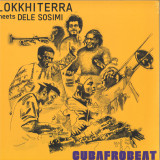
Funkiwala Records presents the third in the series of "Lokkhi Terra meets"albums, with the London fusionistas creating another unique sound-clash, this time with ex-Fela Kuti keyboardist and legendary UK Afro-beat ambassador Dele Sosimi, and members of his critically acclaimed Afro-beat Orchestra.
This particular collaboration has been bubbling away for a few years now, teasing audience expectations with a handful of sold out shows each year in between both bands busy schedules.
Featuring the two pianos of Kishon Khan and Dele Sosimi – Cuban percussionists/vocalists Geraldo De Armas (Yoruba Andabo), Oreste Noda (Ariwo), Javier Camilo (Ibrahim Ferrer) - a horn section led by Justin Thurgur (Bellowhead) featuring Yelfris Valdes (Sierra Maestra) and Graeme Flowers (Kyle Eastwood) to name a few – this is an All-star cast.
Kishon Khan's Lokkhi Terra have over a number of years now been quietly establishing themselves as one of London's more unusual heavyweight outfits, described as "Stunning Headliners… A majestic multi-cultural blend of sounds… effortlessly builds bridges between rolling Indian raga rhythms, Afro-Cuban grooves, Acid Jazz/funk and free flowing improvisation" (Timeout London). Included amongst the band members are London's top Cuban musicians, adding their infectious rich musical history to the city's melting pot.
When the band wanted to explore Cuban links with another of their favourite traditions, Afrobeat, who better to bring in then one of the Afrobeat originators – maestro Dele Sosimi – "Sosimi creates some of the most bewitching grooves in modern African music" E Jazz News.
Bringing together two Yoruba speaking musics - with different accents, from different sides of the Atlantic - Havana meets Lagos in London – A Cuban-Afrobeat-Experience. CUBAFROBEAT.
All About Jazz 4star review
A younger version of London's Grand Union Orchestra, founded by world-jazz pioneer Tony Haynes in 1982, Lokkhi Terra was put together by keyboard player Kishon Khan in 2005. Both ensembles have made a specialism of jazz / South Asian fusion, with Lokkhi Terra also giving as much attention to music from Cuba, where Bangladeshi-born, London-based Khan lived for a while in the early 2000s.
Cubafrobeat, as the title foretells, is a blend of Cuban dance music and Nigerian / Yoruban Afrobeat—a fusion rendered seamless by the synergies existing between Afro-Cuban and Yoruban music, language and mythology. The album is Lokkhi Terra's third and partners the band with the keyboard player and vocalist Dele Sosimi .
A young-going-on-child-prodigy member of Fela Kuti's Egypt 80, Sosimi went on to become musical director of Femi Kuti's Positive Force, before relocating to London and setting up Dele Sosimi's Afrobeat Orchestra, the finest Afrobeat band outside Nigeria, bar none, now with a string of consistently engaging albums under its belt. Cubafrobeat features Sosimi as lead vocalist on all four tracks, and on Fender Rhodes on two of them. His singing plays a prominent role in the Afrobeat Orchestra, but, such is the whirlwind impact of the band in full instrumental flight, that Sosimi is often thought of first and foremost for his keyboard and arranging talents. That may change by the time 2018 is over. Cubafrobeat is the third album in as many months to feature Sosimi as guest vocalist, spotlighting the gravitas, air of mystery, intimacy and ferocity his voice can bring to an occasion.
The first of these albums was the genre-bending spiritual-jazz band Emanative's Earth (Jazzman). One of the stand-out tracks, "Ìyáàmi," features Sosimi making obeisance to the titular Mother Goddesses of the Yoruba spirit worlds. His raw and intense invocations carry the track for nine mesmerising minutes. Otherwordly is not the half of it. Next up was dub / reggae / jazz band Soothsayers' Tradition (Wah Wah 45s), which featured Sosimi as lead vocalist on the compelling "Sleepwalking (Black Man's Cry)." Earth and Tradition are both outstanding albums and have previously been reviewed here.
Cubafrobeat is a total stonking blinder, too. It is an effectively nuanced affair, opening with the fiery "Afro Sambroso" and closing with the relatively reflective "Rumbafro." Sosimi's vocals light up the music, as do the several solos from trumpeters Graeme Flowers and Yelfris Valdes Espinosa and trombonist Justin Thurgur (a member of both Lokkhi Terra and the Afrobeat Orchestra). Sosimi and Kishon Khan's intertwining Fender Rhodes solos on "Cubafro" are also a delight, as is the drum and percussion section throughout.
The sound of summer, for sure, Cubafrobeat has enough depth and variety to make it something for all seasons.
Songlines 4star review
Lokkhi Terra are one of London's most authentic groups. They are a Latin-flavoured collective whose keyboard player and bandleader Kishon Khan segues from percussive montunos to complex Bengali rhythms and back, with jazz chops sparking funky and outward-looking fusions. Their collaboration with Dele Sosimi, Britain's foremost Afrobeat ambassador, has been bubbling for a while; here four tracks at ten minutes see musical conversations that never lose their sense of flow. An extensive line-up of stellar players, including trumpeter Yelfris Valdés, conguero Oreste Noda and trombonist Justin Thurgur, highlights the genre-crossing potential of world traditions. Opener 'Afro Sambroso' showcases batá drums from Gerardo de Armas Sarria before the track links Cuban grooves with Afrobeat. 'Timbafro' crackles and sways via Khan's organ, Sosimi's vocals and Oscar Martinez's timbales. 'Cubafro' features dazzling interplay between Khan, Sosimi and Javier Camillo's Spanish-language vocals. 'Rumbafro' is all rumba choruses, Yoruba vocals and Afrobeat horns. Rooted in their sources, but with musical threads intertwining, separating and reconfiguring – with grooves at a premium – this is a fusion lover's dream
Wisdom Teeth co-founder K-LONE returns with his second full length project, ‘Swells’: a kaleidoscopic and expansive record that looks to deep house, synthpop, leftfield R&B and beyond for a spellbinding masterwork of melodic electronica.
His debut LP ‘Cape Cira’ became the accidental soundtrack of the long strange summer of 2020 - its lush marimbas, hazy atmos and synthesised bird calls providing the ideal soundtrack for some much needed collective escapism. The record was widely deemed one of 2020’s standout electronic LPs, gaining glowing reviews in Pitchfork, DJ Mag, Mixmag and Resident Advisor, and ranking highly in end of year lists by Crack Magazine.
Approaching its follow up, the Brighton-based producer felt a fresh perspective was needed. Originally landing on the name ‘Swells’ as a secret pen-name to write the record under, the intention was to keep the project as separate as possible from ‘Cape Cira’ to avoid settling into familiar territories - but as the record took shape it became clear that it made perfect sense amongst his already diverse discography.
Like ‘Cape Cira’, there is a distinct and intentionally limited sound palette at play on ‘Swells’. Looping vocal cuts, rich cluster chords and undulating arpeggios sit front and centre here - as does the lo-fi plonk of of the CR78 drum machine. But while the record clearly takes influence from a range of vintage sound sources, its overall aesthetic is unmistakably contemporary. Sounds are not artificially degraded nor obscured under washes of sampled tape hiss. Rather, everything is processed with a gloss, hi-fidelity sheen. The record’s rhythms are bright, dry and snappy, and its melodies are processed with a neon poppy glow.
The producer’s unabashed love of contemporary pop music is most obviously exemplified by the appearance of British singer-songwriter Eliza Rose. The pair met for a session at a North London studio back in 2021, and the now Brit Award-nominated singer’s warm, emotive vocal takes became an immediate source of inspiration early in the record’s conception. As such, Rose’s voice is heard in various states of manipulation throughout its duration - initially as reduced and looped phrases, and then finally in full form on ‘With U’: a low-lit, dubbed-out slice of leftfield R&B that beckons comparisons with Tirzah, Little Dragon and even Erykah Badu.
Elsewhere, there are references to G-Funk (‘Oddball’), Autonomic drum and bass (‘Shimmer’), hip-house (‘Love Is’) and even Metronomy-era electro pop (‘Love Me A Little’).
As always, the true magic of K-LONE’s artistry is to present complex, subtle and original ideas in ways that feel familiar and immediate. Melodies are introduced as effortless earworms, only to be twisted out of shape into strange and unusual formulations. Looping rhythms unspool into washes of hazy, dubbed-out ambience before rebuilding themselves. Refined and endlessly creative, ‘Swells’ marks a captivating next step for a producer and record label that have both reliably positioned themselves at the very forefront of contemporary electronic music.
- A1: Let 'Em Know (Produced By Domino)
- A2: Live And Let Live (Produced By Domino)
- A3: That's When Ya Lost (Produced By Del Tha Funkee Homosapien)
- B1: A Name I Call Myself (Produced By Del Tha Funkee Homosapien)
- B2: Disseshowedo (Produced By Domino And Jay Biz)
- B3: What A Way To Go Out (Produced By Domino)
- B4: Never No More (Produced By A-Plus)
- C1: 93 'Til Infinity (Produced By A-Plus)
- C2: Limitations Feat. Casual (Produced By Jay Biz)
- C3: Anything Can Happen (Produced By A-Plus)
- D1: Make Your Mind Up (Produced By Del Tha Funkee Homosapien)
- D2: Batting Practice (Produced By Casual)
- D3: Tell Me Who Profits (Produced By Domino)
- D4: Outro (Produced By Domino)
Repress!
Repressed, note price increase. Remastered from the original masters and pressed extra loud for DJs. There are very few albums across any genre that stand the test of time better than 93 ‘Til Infinity, the classic debut record from the Hieroglyphics crew’s very own Souls of Mischief. In an era where Gangsta Rap and G-Funk dominated the West Coast Rap scene, Souls broke ground on a completely unique and thoroughly west coast sound. While the Dr. Dre’s and the Snoop Doggs were garnering much of the mainstream attention, Souls were quietly forging a charismatic, critically acclaimed, and cohesively shaped record that when categorized, sounded much closer to A Tribe Called Quest than N.W.A. The sound of their debut is characteristic of the distinct style explored by the collective, including a rhyme scheme based on internal rhyme and beats centered around a live bass and obscure jazz and funk samples. 93 ‘Til Infinity was propelled into success by its title track and lead single, which reached #32 on the Billboard Hot 100. It also featured singles “That’s When Ya Lost” and “Never No More” which also reached the Hot Rap Singles. In 1998, the album was selected as one of The Source’s 100 Best Rap Albums of All Time. Considered by many to be a textbook “slept-on” classic Rap record, 93 ‘Til Infinity has only grown better with age. The album simply defines the Hiero golden age with a sound that would later be fine tuned with strong releases from MCs Del The Funkee Homosapien, Casual and Pep Love. It takes some serious bravado to name your album 93 ‘Til Infinity, but certainly the goal of creating a Hip Hop “classic” must have been on the collective minds of group members A-Plus, Tajai, Opio, and Phesto when recording this landmark moment in Hip Hop history. It’s true, even seventeen years after the album’s initial release many people are still discovering it, and with this re-mastered reissue on double vinyl, fans all over the world will once again discover the brilliance that 93 ‘Til Infinity delivers and will continue to deliver beyond infinity. A1. Let ‘Em Know (Produced by Domino) A2. Live and Let Live (Produced by Domino) A3. That’s When Ya Lost (Produced by Del tha Funkee Homosapien) B1. A Name I Call Myself (Produced by Del tha Funkee Homosapien) B2. Disseshowedo (Produced by Domino and Jay Biz) B3. What a Way to Go Out (Produced by Domino) B4. Never No More (Produced by A-Plus) C1. 93 ‘til Infinity (Produced by A-Plus) C2. Limitations feat. Casual (Produced by Jay Biz) C3. Anything Can Happen (Produced by A-Plus) D1. Make Your Mind Up (Produced by Del tha Funkee Homosapien) D2. Batting Practice (Produced by Casual) D3. Tell Me Who Profits (Produced by Domino) D4. Outro (Produced by Domino)
Five years after the release of ‘Luyando’, Zimbabwe’s most celebrated music export returns with their long-awaited follow-up album ‘Tusona: Tracings in the Sand’. The six musicians from Victoria Falls are refining their unique sound: infectious Afro grooves deeply connected to Zimbabwe’s cultural DNA. ‘Tusana’ is their most danceable album to date, a DIY production recorded in Zimbabwe. It features horns by Ghanaian highlife outfit Santrofi.
Every Sunday, there is a gathering in the sweltering heat on grounds of an old local beer hall in the Chinotimba township in Mosi-o-Tunya (Victoria Falls). Entertainment is provided by various traditional groups including the Luvale Makisi masquerade. It is a day full of singing, drumming, dancing and storytelling. Mokoomba’s lead vocalist Mathias Muzaza can often be found here singing with a voice both soaring and vulnerable. In the course of the afternoon the other band members - guitarist Trustworth Samende, bass player Abundance Mutori, keyboard player Phathisani Moyo, percussionist Miti Mugande and drummer Ndaba Coster Moyo - often join in with singing. The drum driven song “Bakalubale” featured on their new album invites you to this gathering.
Mokoomba recorded ‘Tusona: Tracings in the Sand’, the follow-up album to ‘Luyando’ (2017, Outhere), in Zimbabwe during the pandemic. Instead of working with outside producers like Manou Gallo or Steve Dyer as they have in the past, this album was entirely recorded in a DIY fashion by Mokoomba. The collective from Zimbabwe put in all the experiences made over the previous years and have forged their music into a unique Zimbabwean sound. On popular demand from their fans in Zimbabwe they have even re-recorded three songs from their last more acoustic album ‘Luyando’ turning them into dancehall bangers (featured on the CD and digital versions of the album). In short, this album is more Mokoomba than any of the ones before.
On the album Mokoomba are singing about love, loss, courage in a changing society. The first single “Nzara Hapana” means “no money” in Shona. The song talks about a man who wants to ensure the future of his wife and family and is trying to protect them against the greed of his relatives. The danceable up-tempo song “Nyansola” praises the goddess of harvest and asks her for rain. “Makisi” is sung in Luvale. It celebrates the beauty of the initiation ceremony for which the whole community comes together. “Manina” is a song about losing a loved one. It was written during the pandemic and features the young singer Ulethu from Harare. Mokoomba sing in many different local languages. Their songs are in Tonga, Luvale, Shona, Nyanja and even Lingala used in “Makolo” when they team up with Congolese singer Desolo B. (The album also features horns by Nobert Wonkyi Arthur (trumpet), Bernard Gyamfi (trombone) and Emmanuel Arthur (sax) from Ghanaian highlife outfit Santrofi.)
The title of the album is a nod towards their immense respect for tradition. ‘Tusona’ refers to an ancient system of signs and symbols, drawn in the sand and used for instruction during initiation ceremonies by the Luvale in Southern Africa. Another important part of the Mukanda initiation ceremony is the incredible Makisi masquerade. Since 2008 the Makisi dances are on the UNESCO list of intangible heritage. The Makisi are masked characters, representing the spirit of deceased ancestors. During the yearly initiation ceremony the Makisi return to the living world to teach the young children to become responsible adults among the Lubale people of Southern Africa. In the last decade the interest - especially among the young people – has faded and the Makisi dances have nearly died out.
“Our inspiration comes from these gatherings”, Trustworth Samende explains, “from listening to and playing pure traditional music with everyone in the township. We then add influences from music that we listened to in our homes growing up and the sounds we experience travelling around the world.” It is the connection with the cultures around them that gives Mokoomba’s music its spiritual power. When you hear Mathias Muzaza singing and you watch closely, you will see the music carrying him away to a different sphere, a place where he is singing with the ancestors. Only a split second later though Trust Samende’s sparkling guitar riffs kick in, blending Congolese influences from neighbouring Kasai with Zamrock and Mbira inspired Chimurenga music, making you want to hit the dancefloor. It is this unique blend of local musical styles with contemporary dance music that is at the heart of Mokoomba’s music. The strong reference to tradition is also reflected in the cover illustration by young Zimbabwean visual artist Lomedy Mhako.
It has been nearly 10 years since this young energetic band from Zimbabwe has exploded onto the international music scene. Since then they have shared their music with fans all over the world: Mokoomba have performed in over 40 countries, rocking audiences in places like Roskilde festival (Denmark), WOMAD festival (UK), Sziget festival (Hungary), SXSW (USA), Apollo Theatre (New York) to name but a few.
Like anywhere in the world Africa’s musical output has become more and more producer based. Mokoomba are the living proof that Africa’s great guitar band heritage is well alive and ready to set any dancefloor on fire. Most important though is that deep below the surface of Mokoomba’s sound - flowing like the Zambezi River - you can still hear the heartbeat and the rhythm of a community connected by its music. Like ‘Tusona’, it is a source of rejuvenation, resilience and strength in these changing times. May the tracings in the sand not fade.